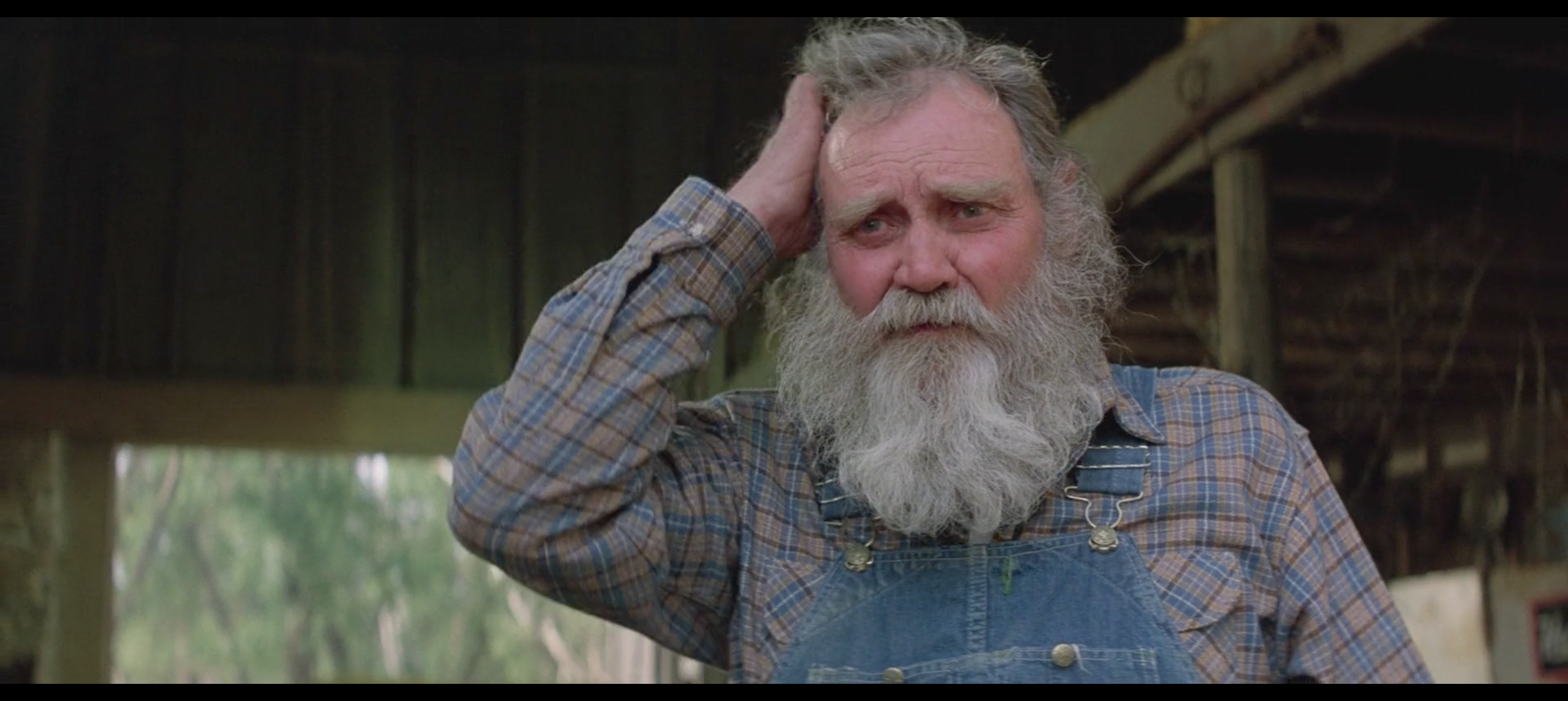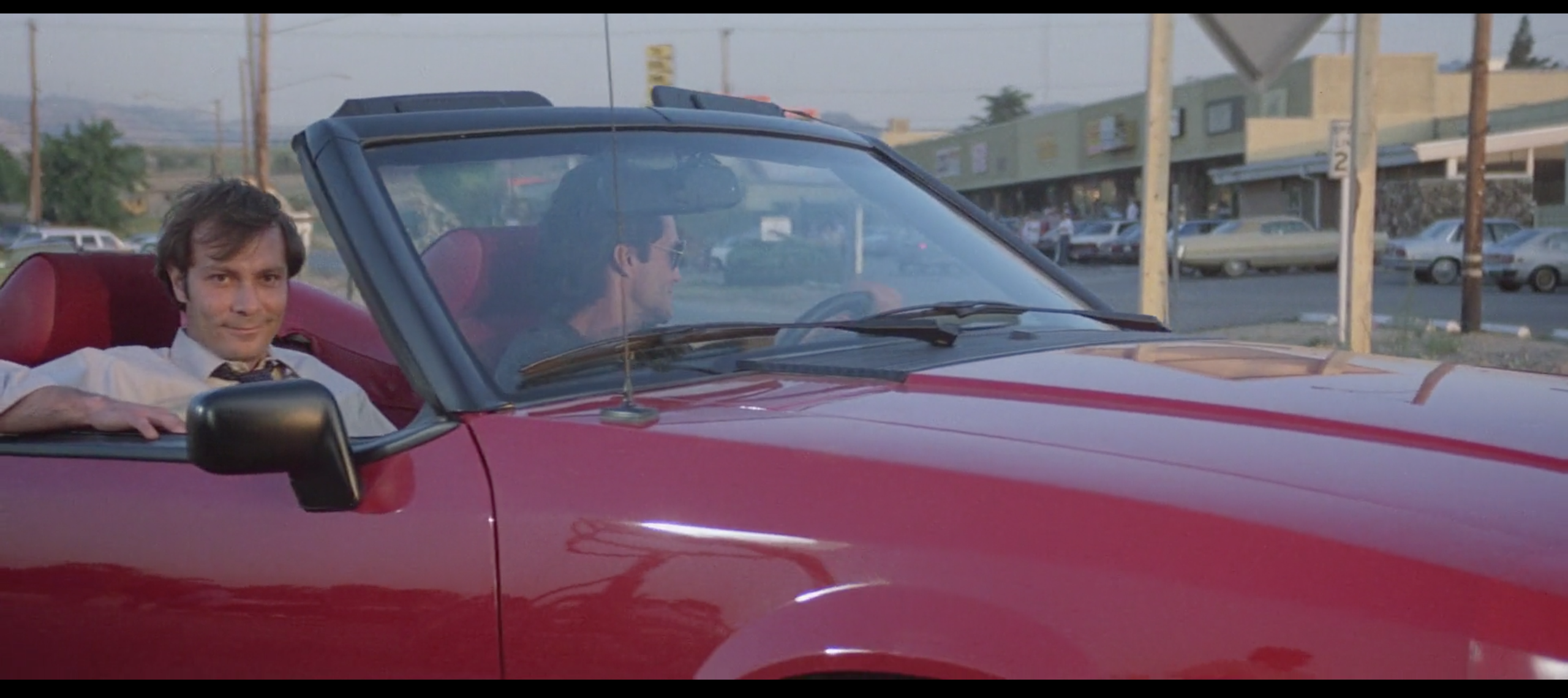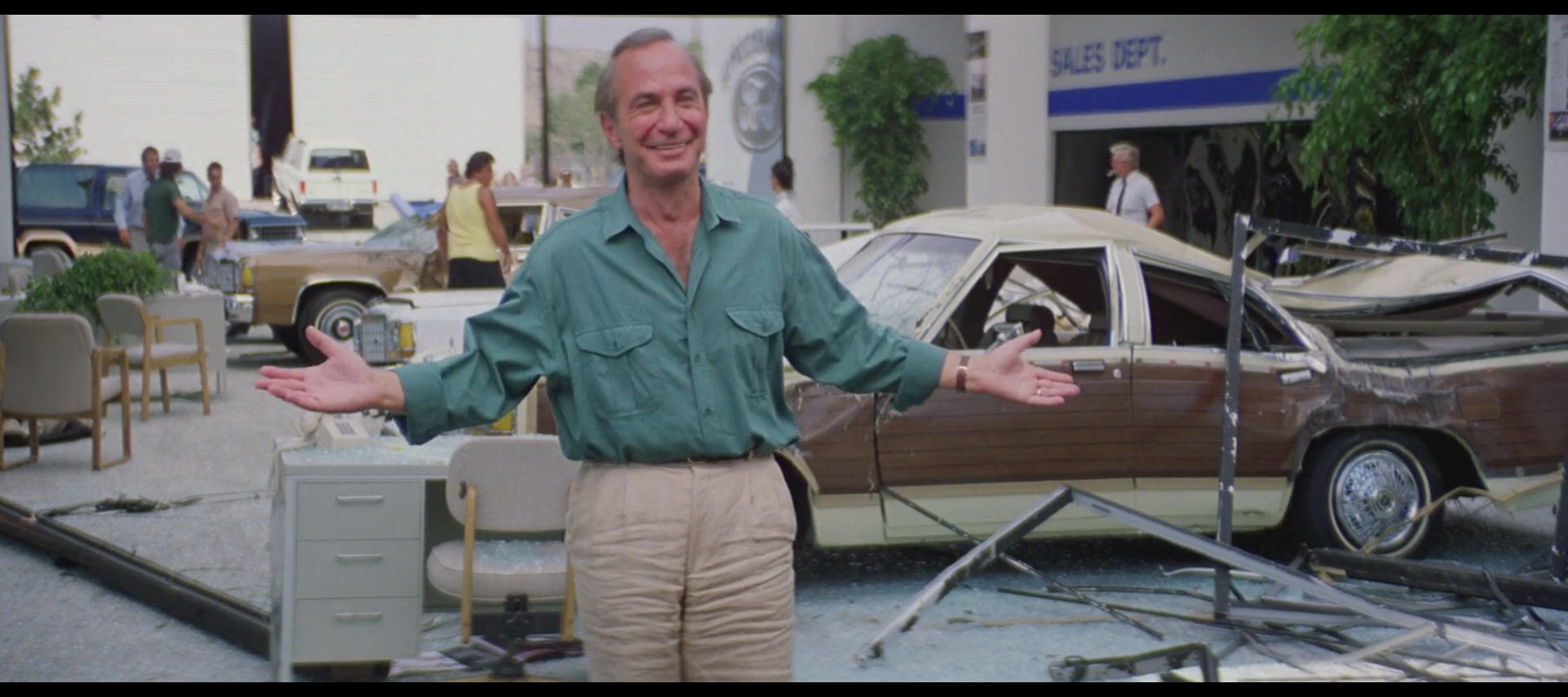
“The Punisher” thoughts, Season Two, Episode Ten: “The Dark Hearts of Men”

“The Dark Hearts of Men.” That’s the title of The PunisherSeason 2 Episode 10, and as they say across the pond, it does what it says on the tin. Juxtaposing the usual one-on-one heart-to-heart conversations the show is built on—this time focusing on what really makes Frank Castle and Billy Russo tick—with all-out savagery and depravity, it’s as extreme a statement as the Marvel Cinematic Universe has made to date.

I reviewed the tenth episode of The Punisher Season 2 for Decider.

“Kingdom” thoughts, Season One, Episode Five

Kingdom is doubling down on its The Lord of the Rings vibe. Does this shot of three heroes running across the fields in pursuit of their quarry look familiar to you, for instance?

kingdom 1x05 THE THREE GUYS RUNNING ACROSS THE FIELD

How about this supreme badass hacking his way through the monstrous hordes arrayed against him?

kingdom 1x05 STABBING AND BEHEADING

Or perhaps the giant column of heavily armored warriors marching toward a fortified location to seal the doom of everyone inside?

kingdom 1x05 ARMY GUYS

And that’s not all! There’s starving peasants, flaming arrows, last-minute rescues by wise men with beards, a kingdom overthrown from within by an evil advisor, a descendant of royalty who’s prepared all his life for one final confrontation with his arch-enemy. If you ever wanted to know what The Two Towers would look like if everyone had better hats, Kingdom has you covered.

There’s no reason to believe this isn’t sincere admiration on the part of the filmmakers, if indeed it’s even deliberate. (I have a hard time believing the beacon-lighting thing that’s appeared in two episodes is the handiwork of people who haven’t watched LotR, but I have the White Tree of Gondor tattooed on my arm, so my mind tends to go there regardless.) But there’s still a whiff of cynicism to the whole thing. Like Stranger Things before it, Kingdom is a mash-up of the world’s most popular entertainment. It’s a layup.

I reviewed the penultimate episode of Kingdom Season 1 for Decider.

029. Knife Nerds

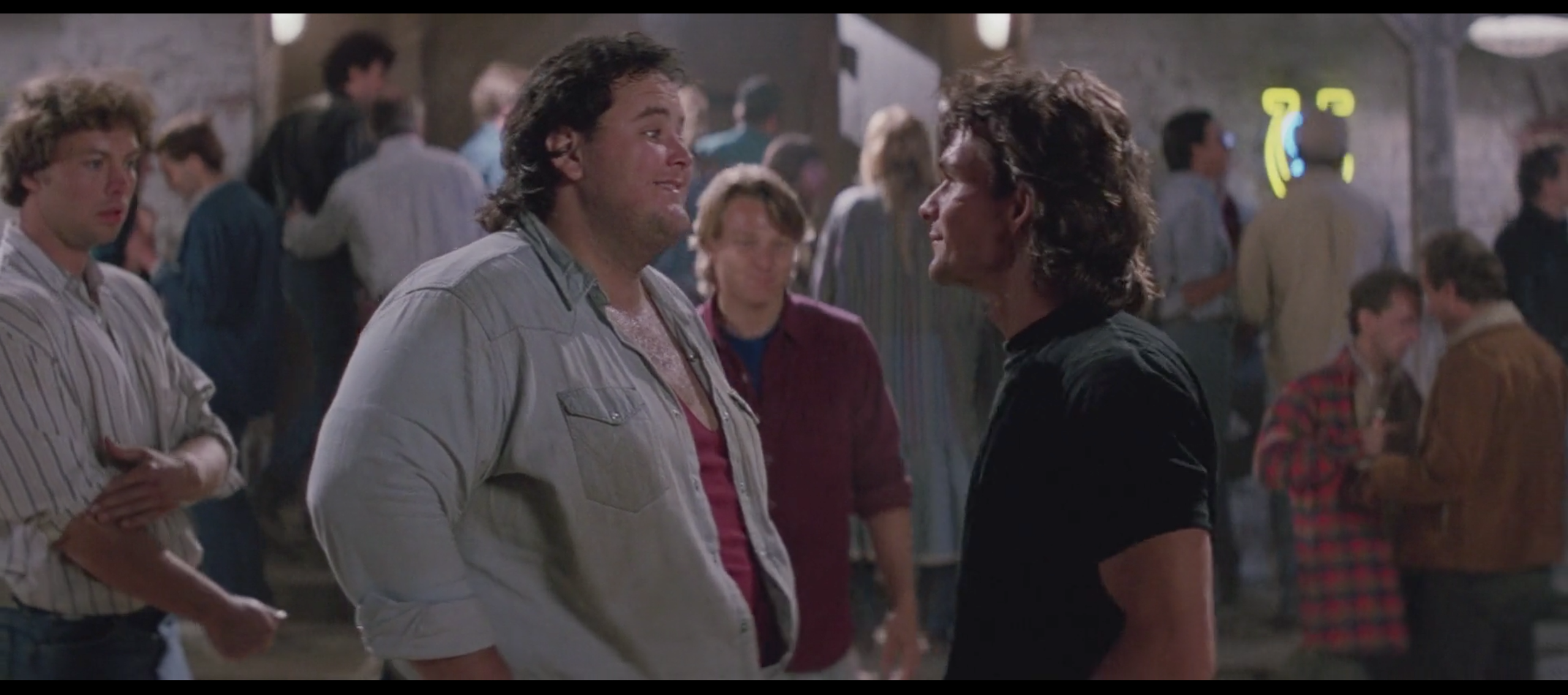
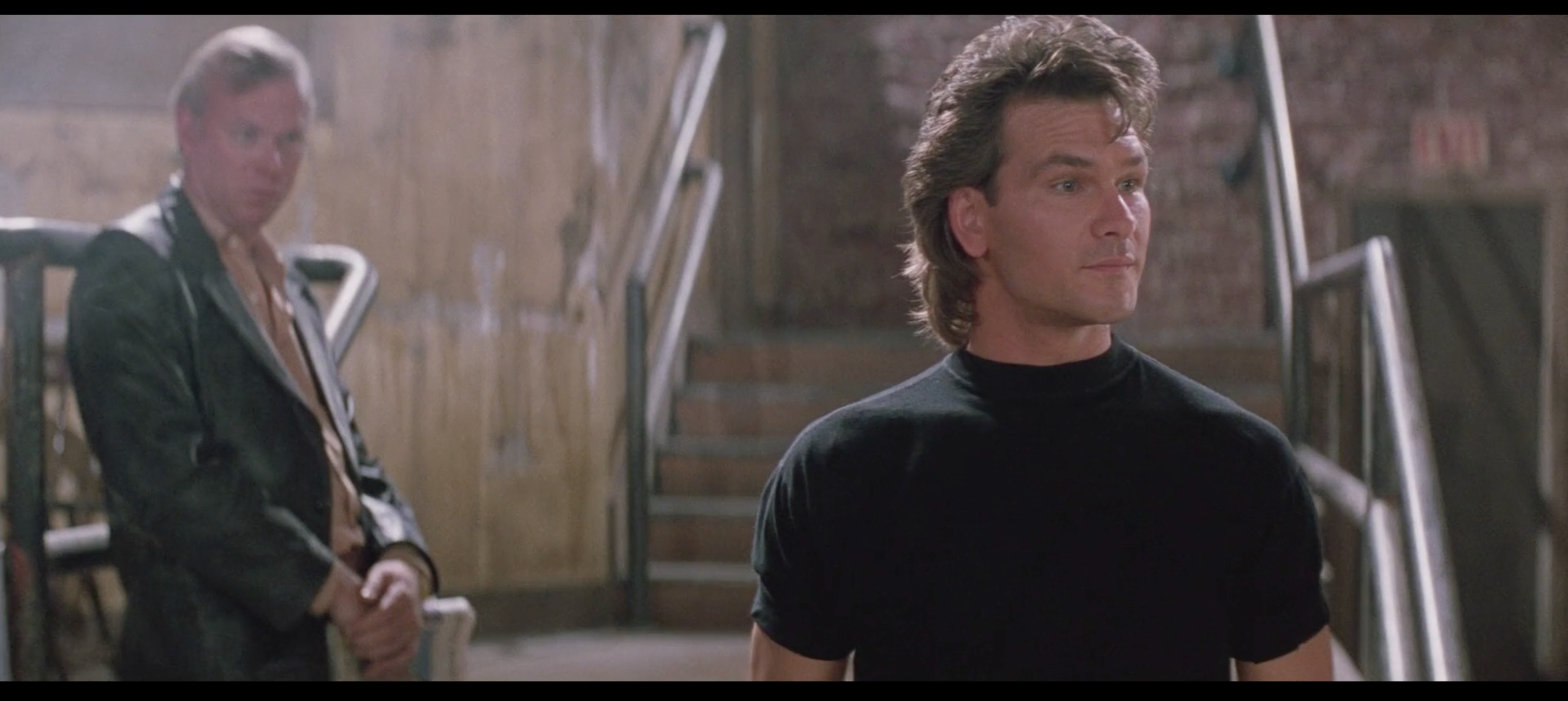
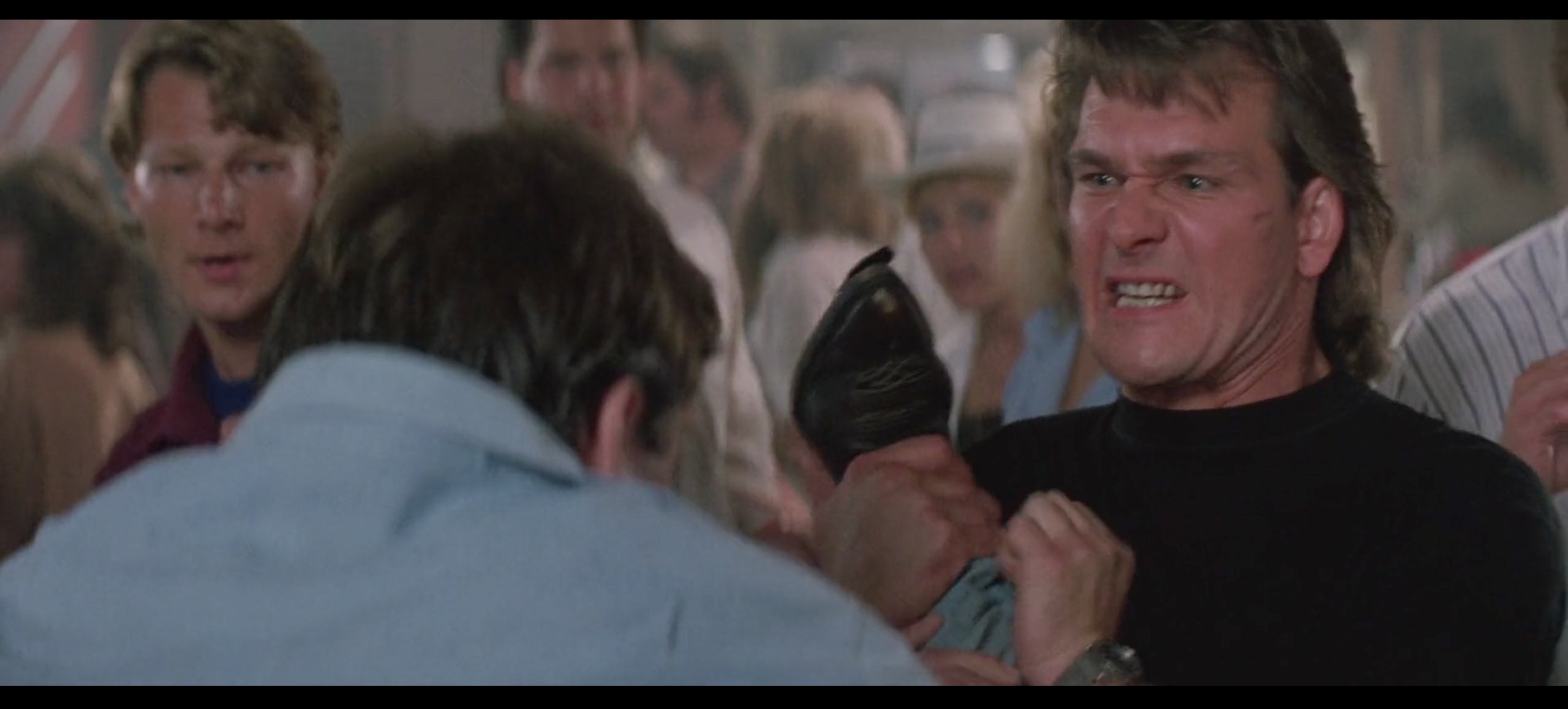
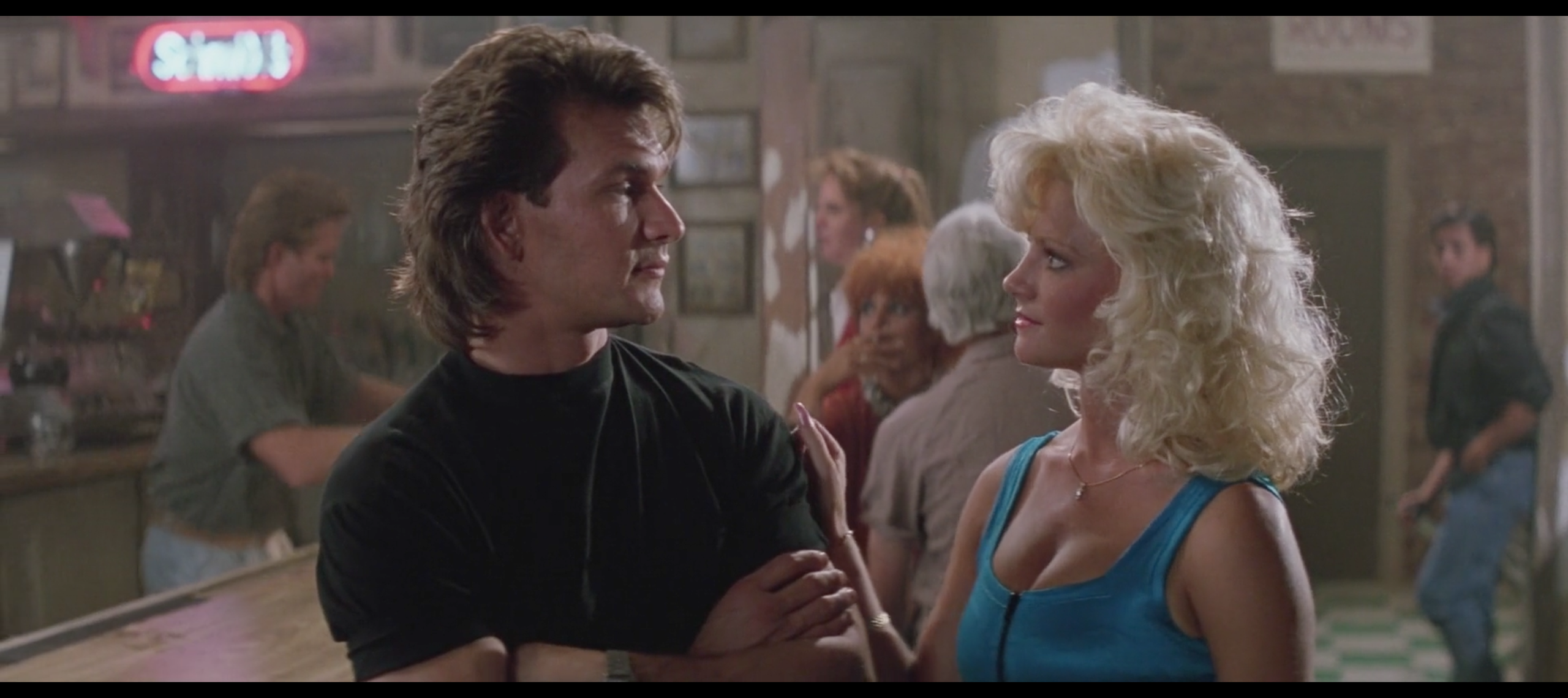
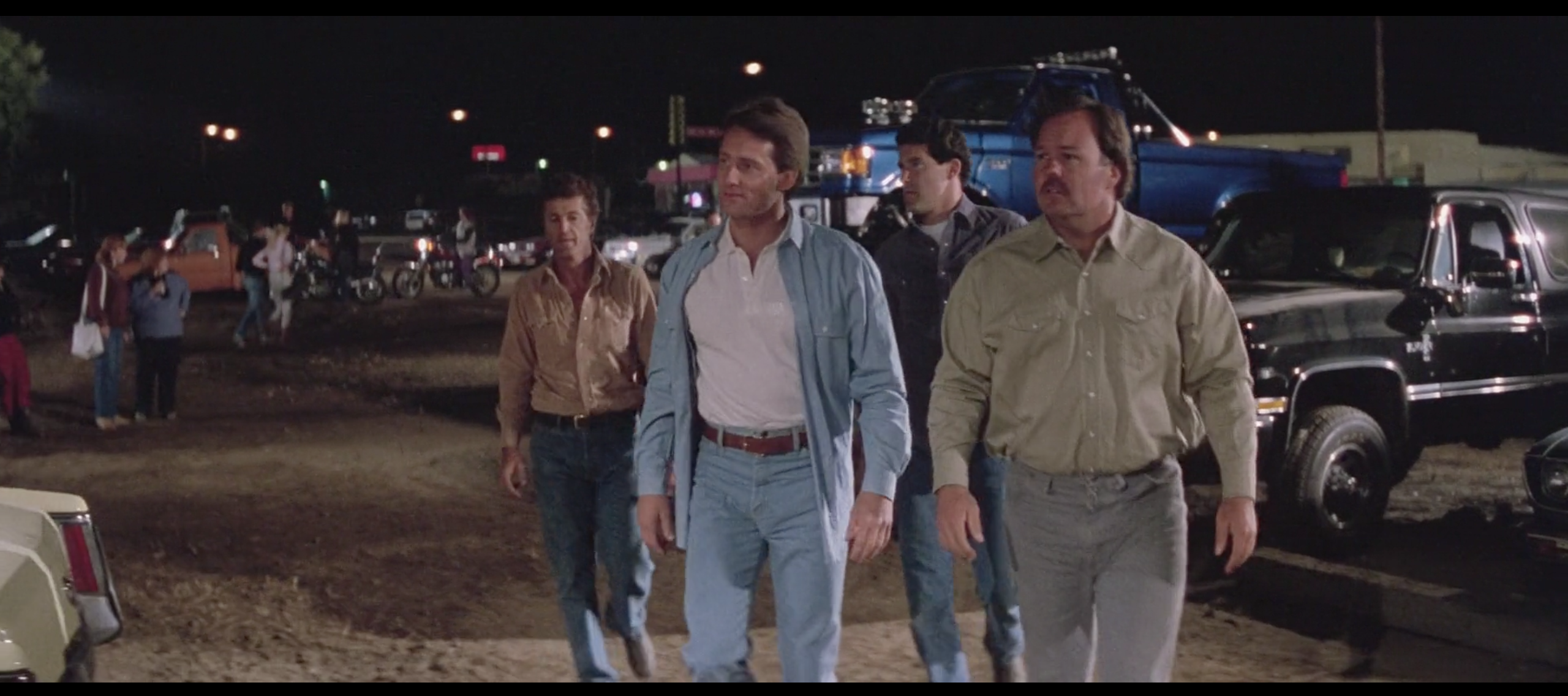
A person watching Road House from a remove of decades could be forgiven for wondering if packs of pointy-faced dorks with switchblades, roaming the land and stabbing bouncers, were the subject of some sort of ginned-up panic along the lines of Satanic nursery schools and wilding superpredators. No fewer than four blade-wielding wieners try to slice up Dalton before the film is even halfway over. Though as a category they are a distant second to brawlers in terms of goon prominence, they bear examination for what their presence tells us about Dalton’s world.

These two nitwits are the first people in the film to get bounced, from the Bandstand, before Tilghman hires Dalton away from the place to come work at the Double Deuce. The fellow on the right sparks a bounceable incident when he attempts to pay for the attentions of a young woman who finds the offer insulting and pins the hundred-dollar bill he offers her to the table with a knife; he knocks over her chair by planting a kick right between her legs and we’re off to the races. Dalton thinks he and his men have cooled things off, but this weaselly goof yanks the knife right back out of the table and takes a slice out of the cooler’s arm the moment his back is turned. He and his friend Farrah Fawcett are taken outside by Dalton and company, thinking they’re about to throw down with the man himself. (“I’ve always wanted to try you,” says the knife nerd to Dalton prior to exiting the premises. “I think I can take you.” This is another essay entirely.) But their date with immortality is cancelled when Dalton just turns around and goes back inside. They hurl invective at him in an effort to rile his temper or shame him into combat, but not even such vicious insults as “dirtball” and “moose-lips,” which are things these two people yell at the top of their lungs at a man they’re trying to intimidate, can change Dalton’s mind. Later, Dalton will caution the staff of the Double Deuce against taking such insults personally, since they’re just “two nouns combined to elicit a prescribed response.” That knowledge is clearly hard-earned.

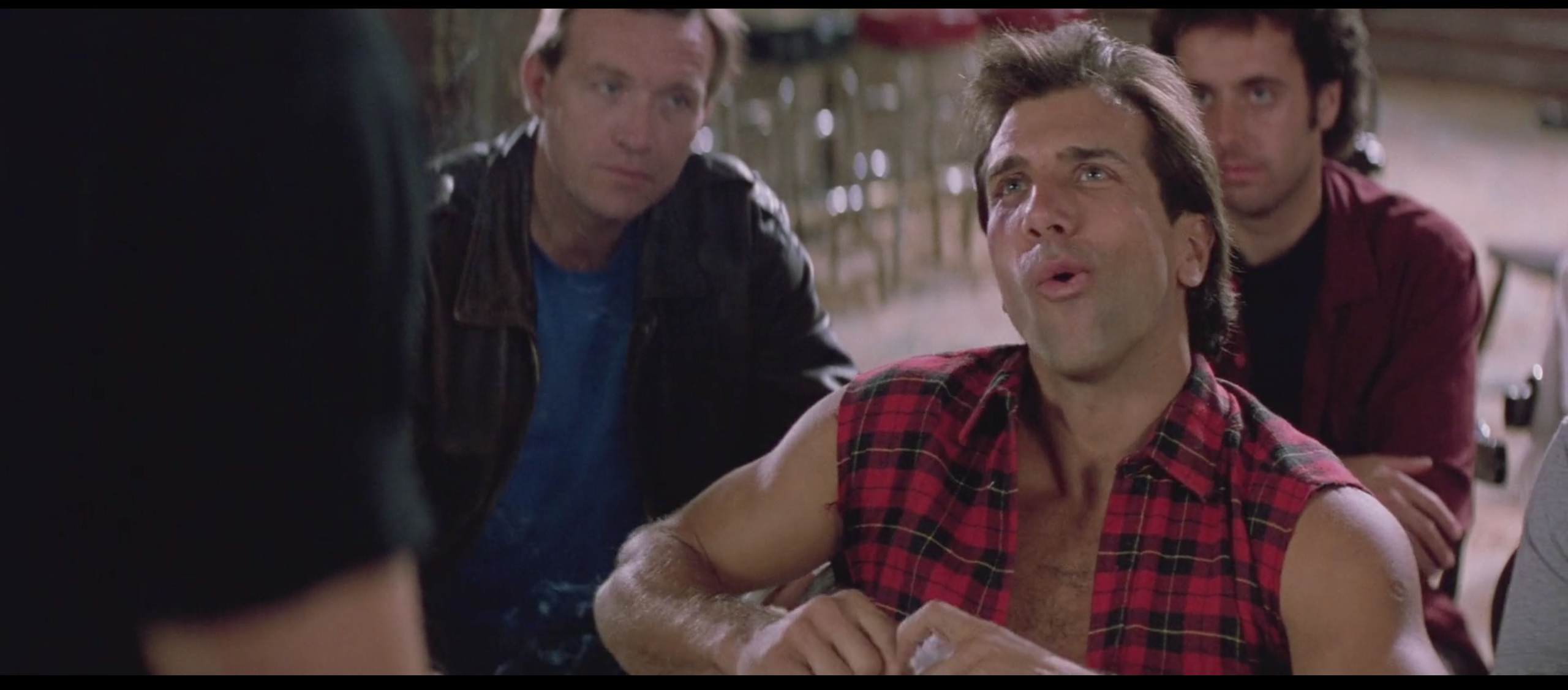
This beady-eyed Parrothead is the first person Dalton bounces from the Double Deuce, earning him the undying awe of the people there assembled. All he wants to do is watch his girlfriend dance on a table. Such a fan of her gyrations is he that he attempts to murder, with a knife, the bouncer who asks them to cut it out. “Motherfucker” is his preferred binominal, but what he lacks in creativity he makes up for in extremely loud shirts. Dalton breaks a table with his face, and thus the cooler’s head prevails.

Here’s our old friend Pat McGurn, Brad Wesley’s only sister’s son and the Double Deuce’s now-ex bartender. He’s returned with his fellow goons Tinker and O’Connor in tow to muscle Tilghman into rehiring him, lest Wesley shut down liquor distribution to the bar. When Dalton takes mild, even bemused issue with the idea, Pat whips out a monstrosity that looks like something Legolas would pull out of an Uruk-Hai before lobbing it into another one’s forehead. As he attempts to stab Dalton in the fucking face in front of multiple witnesses in a crowded bar that can be observed clearly through the glass window of the office in which the murder attempt is taking place, he calls Dalton “chicken-dick.” In the end it works out no better for him than it did for Store Brand Crockett and White Tubbs or Hawaiian Punch, but I’m pleased to note that he at least came up with the film’s most ridiculous insult.

For the purposes of this essay I almost didn’t count Ketchum, the unnamed and fundamentally anonymous Brad Wesleyan who drives the monster truck and for whom bladed weapons are a specialty, as we will later learn to tragic effect. Though he is an obnoxious prig, he actually seems like someone you’d think twice about getting in a fight with. That ought to—ought to—elevate him out of Knife Nerd territory. On the other hand, his first knife attack involves attempting to high-kick Dalton in the head with a blade embedded in the toe of his cowboy boot, one of the lamest attempted murders in the movie, and it’s not like the competition isn’t stiff. Dalton catches his leg in midair, twists it savagely, and drags the guy out of the bar on his ass, which he proceeds to kick. Ketchum may look tough. He may even be tough. He doesn’t call Dalton “shit-ass” or “poodle-sack” or anything. But watch him dragged out to the curb like so much stonewashed garbage and then deny the Knife Nerd within at your peril.

All of these men use the blade as surrogate bravery. They may talk a good game—alright, they may talk a game. But when push comes to shove, they attempt to stab. They can whip out whatever they want in their attempt to try and take Dalton. But Dalton’s blade is his body, honed to a nicety, and it will wind up inflicting a far more serious gash than any knife before the story is through. A true cooler is worth a hundred such cowards.

“Kingdom” thoughts, Season One, Episode Four

Goddammit, they’re still killing kids in this thing. And I just…I just don’t think the material quite justifies the extremity.

[…]

I’ve listened to multiple little girls scream in terror about their impending death, and I’ve seen an adorable kid lie dead with an arrow in her back from a government soldier and then get gently laid to rest by the woman she spent about one day viewing as the replacement for the mother she watched eat her sister alive. And for what? A six-episode Netflix zombie thriller? Doesn’t The Walking Dead abuse serious tragedy for cheap sentiment in much the same way? You can count apocalyptic or post-apocalyptic stories that put the suffering of children at the center and deal with it in a worthwhile way on two hands,maybe. Could Kingdom possibly be headed anywhere worth that journey?

I reviewed the fourth episode of Kingdom for Decider.

028. Lebowski (I): Windshields

Road House is a 1989 film in which a grizzled gray-haired man with a molasses drawl played by Sam Elliott dispenses wisdom to a practitioner of tai chi who finds himself at odds with a rich, sleazy business magnate with a personal goon squad played by Ben Gazzara. The Big Lebowski is a 1998 film about same.

We will be revisiting the Road House/Lebowski Cinematic Universe. Boy, will we! But for now let’s focus on what I like to call The Windshield Shots. In Road House, Wade Garrett has just arrived in Jasper, Missouri to lend a hand to his old running buddy Dalton as the latter wages an increasingly vicious war with Brad Wesley, the film’s Gazzara. After rescuing his ass from a four-on-one beatdown—seriously, they’re just holding him in place and punching him in the gut like he’s a human heavy bag when Wade finally shows up to save the day—Wade goes for a drive in the passenger seat of Dalton’s car, the abuse of which by the angry patrons of the Double Deuce is a running gag, one that runs too far by any reasonable standard in fact. For that reason, riding shotgun puts Wade in an unenviable position.

But look at Wade here. He’s tickled pink! I assume he likes the feel of the wind through his magnificent head of hair, but it’s more than that. We will see, time and time again, how his most dangerous and dirty exploits amuse him, and how the same is true of Dalton’s. Riding through Jasper with a gigantic hole of shattered glass in front of him reassures him that it’s business as usual for his treasured “mijo.” It’s a sign that Dalton’s pissing off all the right people. And since Wade is a firm believer in the cut-and-run strategy when shit gets too heavy, he’s no doubt aware that the car will not long outlive Dalton’s stay in town, however long that may be. “It seems to me you’d be a little more more…philosophical about it,” he says later (much later) that evening, about an entirely different matter. But that hole in the glass, framing his “Aw shit-hell kid, I’m in hog heaven” grin, is already our lens into the Wade Garrett Mindset. He looks at broken things and sees a chance to live a life defined more by parts than the whole they add up to. Moving from one sensation to the next, treating calamity as opportunity, riding the nightlanes, bound only to those who ride with him: That is Wade Garrett. All Dalton can do is grin and bear it. Currently, it is time to be nice.

The Lebowski triarchy is an entirely different matter. Put aside whatever this Windshield Shot does or doesn’t owe to its predecessor. (I certainly believe the Coen Brothers, who after all put Sam Elliott and Ben Gazzara in their movie about a pair of weirdos fending off some rich guys and some goons, had seen Road House, but it’s irrelevant.) Despite sharing the tonsorial sensibilities of Wade Garrett, the Dude, played by Jeff Bridges, is pointedly not enjoying this breezy night drive. There will be no next down for him to head to. His car is not something he can stand to sacrifice. The Dude does not abscond. The Dude abides. He’d prefer to abide with a windshield.

Walter Sobchak occupies the Wade position in the car, but again, the contrast is revealing. No smile for Walter, no “shyush, don’t this beat all” grin. Walter is a man who can never admit that things have not gone according to plan, that every eventuality has not been foreseen and warded against. If at the beginning of the evening he said they would swing by the In-N-Out Burger, then goddammit that’s what they’re doing. If, in the interim, they attempt to brace a teenage boy for money he didn’t steal, vandalize a car he didn’t buy, and antagonize the neighbor who is the real owner of the car until the Dude’s own vehicle winds up getting the worse of it…well, the In-N-Out’s still there, isn’t it? Then he’ll by god buy it and eat it. As he says elsewhere in the film, “I’m staying. I’m finishing my coffee. Enjoying my coffee.” Situation normal, et cetera et cetera. Ironically, only his fellow veteran of American imperialist adventure in East Asia, Brad Wesley, shares this need to control the narrative.

Oh, Donny? Donny’s literally taking a back seat, literally a few steps behind. (Windshield’s out, Dude.) Lacking any physical or intellectual agency, he’s just along for the ride. He has no character in Road House. Unless…unless…

“The Punisher” thoughts, Season Two, Episode Nine: “Flustercluck”

The storytelling flaws that keep The Punisher from being even better than it is still linger. With the exception of a very strong cold open in which Frank admits to his small circle of friends that “This is always who I was” and says his wife knew and loved him for it, so said friends should just “Let me be what I’m meant to be,” pretty much every conversation happens in the exact same way. Two people stand or sit together, usually after one of them arrives where the other has been waiting. After that there are two options: Either one character demands to know something and the other character tells them, or one character spills their guts and the other character does so in turn. Billy and Dumont, Anderson Schultz and John Pilgrim, Anderson Schultz and his closeted son David, Pilgrim and some guy who knows a crew of hitters, Curtis and Amy, Frank and a bartender who knows Billy’s location, Madani and Billy, Amy and her old friend and future betrayer Sean, Frank and Amy over the phone, Billy and Dumont again, Madani and Dumont after the latter lures the former to her place, Pilgrim (formerly known as “Robbie, apparently) and his old boss in whatever Nazi gang he used to run with, Amy and Frank after she shoots a person for the first time…you get the picture. You can tweak it around the margins a bit—Curtis and Amy are both in the same place when they start their little chat, Dumont and Billy are in bed during one of theirs, at one point Curtis talks to multiple veterans instead of just one—but virtually every human interaction on this show could be staged like My Dinner with Andre.

I reviewed the ninth episode of The Punisher Season 2 for Decider.

“Kingdom” thoughts, Season One, Episode Three

A few seasons into the run of Mad Men it was briefly voguish to speculate that one of Don and Betty Draper’s children would die. (People also thought that about Megan Draper, and Roger Sterling, and Don himself I believe. They also thought Don Draper was legendary airplane-heist perfect-crime architect D.B. Cooper. TV criticism gets weird sometimes.) I can never find the quote when I’m looking for it, but creator Matthew Weiner said something in response that has stuck with me for years. He said he’d never kill off a child on Mad Men, because any show in which children die must, in the moral-imperative sense, become a show about children dying. Anything less, he argued, is not commensurate with the life-remaking magnitude of such an event on the survivors. To do it for shock value, or for an individual story arc in a show that remains about, like, advertising or working in an office or whatever, is insufficient justification.

Weiner, it should be said, has not always taken his own advice on ethical issues, but on this one at least he practiced what he preached. In the episode of The Romanoffs that came closest to centering on such an event, in which an American couple had to decide whether to adopt a promised Russian infant who turned out to have severe developmental disabilities or abandon her to the orphanage system, was about the momentousness of that choice, and the cruelty of a world that makes such choices possible. To the extent that series ranging from Breaking Bad to Game of Thrones have involved the murder or attempted murder of children, the specter of those crimes informs everything that comes afterward. They are meant to demonstrate the inhumanity against which such stories warn us.

Whatever noises Kingdom makes about the evils of the aristocracy or the cruelty of the class system—and in this episode it makes plenty—are seasoning, not the main ingredient. The rich and powerful villains are so feckless and cowardly as to serve primarily as comic relief; their maltreatment of the poor is sledgehammer-subtle. What Kingdom really is is a show in which zombies eat people and people behead zombies with swords while wearing cool costumes, because these things are exciting and fun to watch.

You know what’s not exciting and fun to watch? You know what’s the kind of thing your period-action-horror-fantasy swashbuckler shouldn’t do unless it plans to dig way, way deeper into the subject that it clearly has any intention whatsoever of digging? Putting a terrified little girl on camera and having scream “Mommy, what is wrong with you? You’re scaring me! Stop it!” before her mother eats her alive.

I reviewed the third episode of Kingdom for Decider.

027. Red

DALTON: Dalton.

RED WEBSTER: Red Webster. How long you gonna be in town?

DALTON: Not very long.

RED WEBSTER: That’s what I said 25 years ago.

DALTON: Really? What happened?

RED WEBSTER: Oh, I got married. To an ugly woman. Don’t ever do that, it just takes the energy right outta ya! She left me though. Found somebody even uglier than she was. That’s life. Who can explain it.

This is a segment of the first conversation Dalton has with Red Webster, auto parts supplier and owner of the closest business establishment to the Double Deuce. When this exchange takes place, these men have known each other for exactly thirty seconds. Their only dialogue up to that point is about which parts of Dalton’s vandalized car need replacing, and whether he should put in a standing order due to the nature of his job or pay as he goes. Compare this interaction to the way Dalton speaks to the staff of the Double Deuce the night he arrives—spartan and only barely polysyllabic. Red, it seems safe to say, is an oversharer.

When Red starts the story of his failed marriage to his ugly wife, however, it’s not clear this is anything more than a take my wife please joke, “It just takes the energy right outta ya” being the punchline. But then he keeps going, in short little bursts that sound like Manic Street Preacher song titles from the Richey Edwards era:

she left me though

foundsomebodyevenuglierthanshewas

that’s life

whocanexplainit

And boy oh boy does it sound like he wants to keep going from there! Credit the naturalistic performance of actor Red West (yep), a former high school chum and entourage member of Elvis Presley’s; it sounds like he’s actually cleaning out his mental closet right in front of us.

Unfortunately the vicissitudes of capitalism demand that Red pause long enough to ring Dalton up. This gives the cooler a chance to reinsert himself into the conversation before Red can continue his bittersweet reminiscence. Seconds later Brad Wesley and his chief goon Jimmy pop in and the moment is gone. Yet I often think of what it might have been like had they never arrived, or had Dalton never piped up. How far down the Red Webster hole could we have fallen?

Oh, I got married. To an ugly woman. Don’t ever do that, it just takes the energy right outta ya! She left me though. Found somebody even uglier than she was. That’s life. Who can explain it. Went to a seminar once. Thought it’d sort me out. Est, they called it. Bee Ess, you ask me. Cost a pretty penny though. Had to sell the old place. Moved in with my stepdad. Hell of a man. Saved my mother from herself, I reckon. Daddy died at Anzio. Stepdad came into the picture a year later, think it was. Car salesman. Figure that’s where I got it from. Bum leg. Died in ’77. Boat accident. Hell of a thing. Seen that boat store cross the street? They’re the ones sold it to ‘im. Nearly went outta business. All that bad press. Settlement put my niece through med school. Brother never forgave me for it. Wanted her to go into the family business. Took over Momma’s apiary after the the cancer took her. Loved his little girl. Figured she’d follow in his footsteps. She had different ideas. People hate different ideas alright. Always do. Crazy ol’ world. Wound up sellin’ the bees anyways. ‘Llergic. Twenty-two years and not a sting. Tripped on a garden hose. Face first, right into the hive stack. Coma. Thought he’d lose the eye. Gotta wear one a’ them patches now. Looks like a pirate. Who’d’a thought. Car salesman, last I heard. Full circle I guess. Shame, though. First-rate dancer. Thought he’d go Broadway. “Red?” he says. “The dance never made nobody’s bread taste better.” Had a point. Always called it that, the dance. Fancy-like. Heard they’re bringin’ that Batman back. From the tee-vee. Gonna be a movie. Darker, they’re sayin’. Thought I’d read me one a’ his funnybooks. See what’s goin’ on. The Batman, they’re callin’ him now. Don’t that beat all. Drove up to St. Louis. Found one a them stores, sells nothin’ but funnybooks. Die-rect Market, they called it. Die-rect to who? Reminds me of that Home Box Office. Gotta be pig ignorant to want a box office in your home. People linin’ up, yellin’ at you when the picture’s sold out. Kids sneakin’ in. Cold at night. Thick glass. Got some good progr’ms though. Boxin’. Seen that Die Hard on there. Helluva film. California. Never been. Don’t know what to make a them Kids in the Hall. You seen ’em? Pythonesque. Nature a’ the format, you ask me. Anxiety a’ influence. Nothin’ for it. Five’ll get you ten that’s why I sell car parts and not the whole thing. Wanted to do things my way. Outta my stepdad’s shadow. They fuck you up, your mom and dad. May not mean to, but they do. Larkin. Poet. English fella. Ain’t half bad. Spent nine months in Cornwall once, ‘fore I met the wife. Thought it’d be educational. Learn them Celtic dialects. Did some fishing. Hated it. Boats. They they are again. Recurrin’ characters, you might say. Who’s the author. There’s the question. Can’t find no answer. Never been what you’d call a religious man. Couldn’t see the percentage in it. Master a’ my own destiny’s how I like it. Funny way a’ sayin’ it’s all my fault. There it is. Still. You blame yourself, stands to reason you can fix it too. Better’n believin’ it’s all random. Agency, causality. Free wlll. Love’s a neurochemical reaction? Over-reaction, in my book. But who’s to say. Could be it’s inexhaustible. Could be one a’ them zero-sum jobs. Give love here, gotta take it away from there. Wife thought so. ‘Bout yanked my heart out, ‘fore I saw the light. Blinded by the ugly I suppose. ‘Less I used to see clear, and it’s heartbreak what done for my way a’ seein’ things. Ain’t that a kick in the ass. Wonder what else I got wrong. Shaped by circumstance. Sum a’ your experiences. Nature, nurture. Either or. Can’t step outside a’ yourself. Didn’t need a seminar to teach me that. Times are I look in the mirror, can’t even recognize m’self. Who’s that old man? Still got all my hair, though. Red as ever. Caught hell in school for it. Carrot top. Tried tellin’ em the name didn’t have nothin’ to do with it. La Rouge. Momma’s maiden name. French Canadian. Way back anyways. Looked into it once. Microfiche. Didn’t get very far. Fine print. Need glasses. It’s like I said: Used to see clear. Just can’t bring m’self to do it. Proud a’ these eyes, always have been. Girls loved ’em. Baby blues, they said. Got me further’n anything else I had goin’ for m’self back then. Still remember that first time. Told Momma I was goin’ to the pictures. She was a picture alright. To a fault. Hair trigger. Over ‘fore it started. Recovered fast though. Kept at it for two hours. Next day neither a’ us was walkin’ right. Mm mm. She was a one. State senator now. Mail her a donation every cycle. Sends a thank you. Neither of us says anything about it. Figure we don’t need to. Said all we needed to say that night. More’n one way to tell someone how you feel. You gotta tell ’em, though. One way or the other. No point to it all otherwise. Connection. Long and the short of it. That’ll be $2.99 for the aerial.

026. The Treachery of Images

This is not a Road House. This is a woman’s ass. Other than a few moments that are so comically over-the-top they seem custom-built for people who use words like “bazongas” Road House does not really go in for random gratuitous objectification of women as a rule. In most instances where a man leers at a woman, that’s as sure a sign that bad shit is about to go down as the “DUNNNNNNN DUNN” string hit in John Williams’s score for Jaws. But this is where the title card devised by R/Greenberg Associates—the same company that designed the all-timer titles for Alien and Altered States—winds up.

This is normally the part where I come up with some deep-dive close-read no-prize explanation for the weird thing Road House just did. I’m hard pressed, however, to argue anything other than “they thought it would be fun to rile up the rubes by slapping the movie’s title across a woman’s butt.” I’ve seen this movie with enough people to know it usually succeeds in this aim. Not to mix the psycho-surrealist metaphor around which this post is constructed or anything, but sometimes a cigar is just a cigar.

How then, to explain the following?

This is not Patrick Swayze. This is the same woman who will subsequently be labeled Road House. Her feet, anyway.

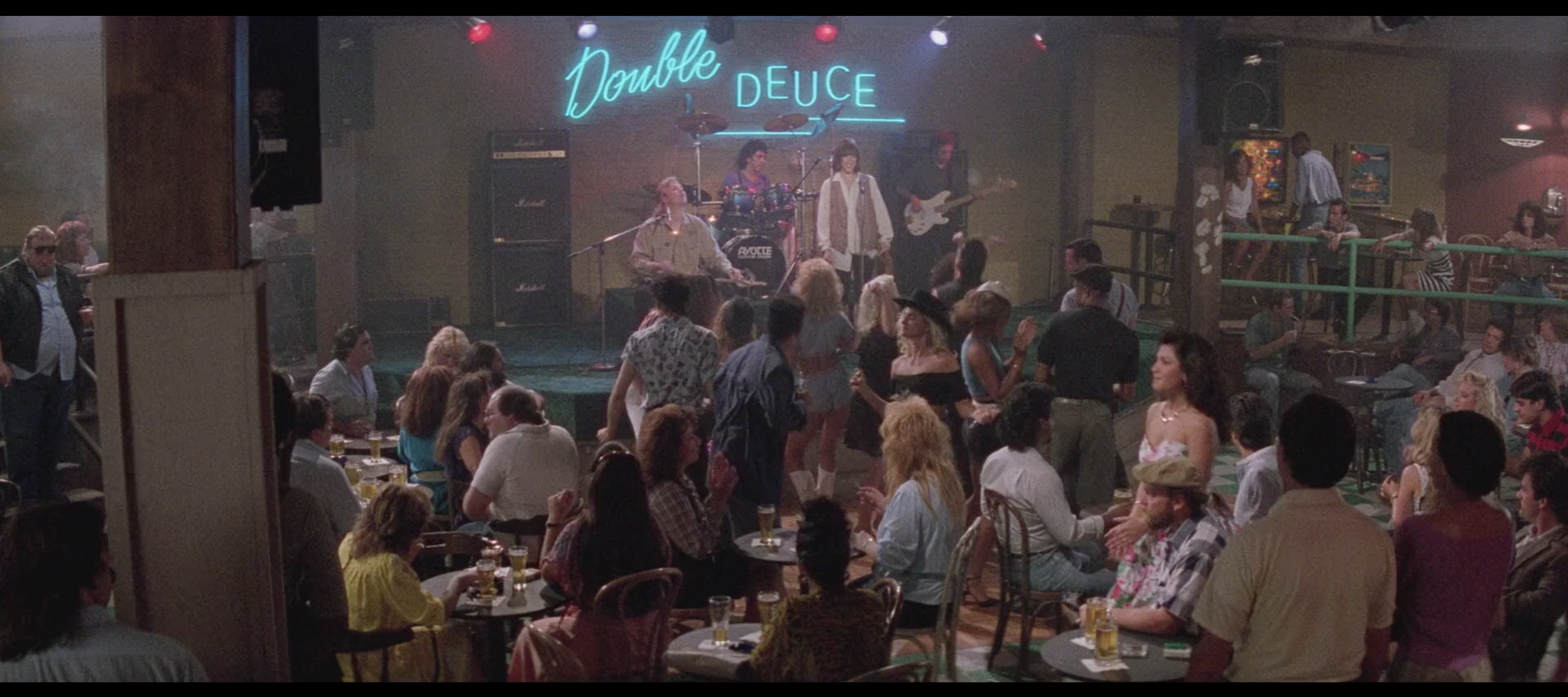
This is not Ben Gazzara. Not a single one of these guys is. This is Cruzados, the band that plays the opening song of the film. (Which is not the band that plays all of the other songs in the film.)

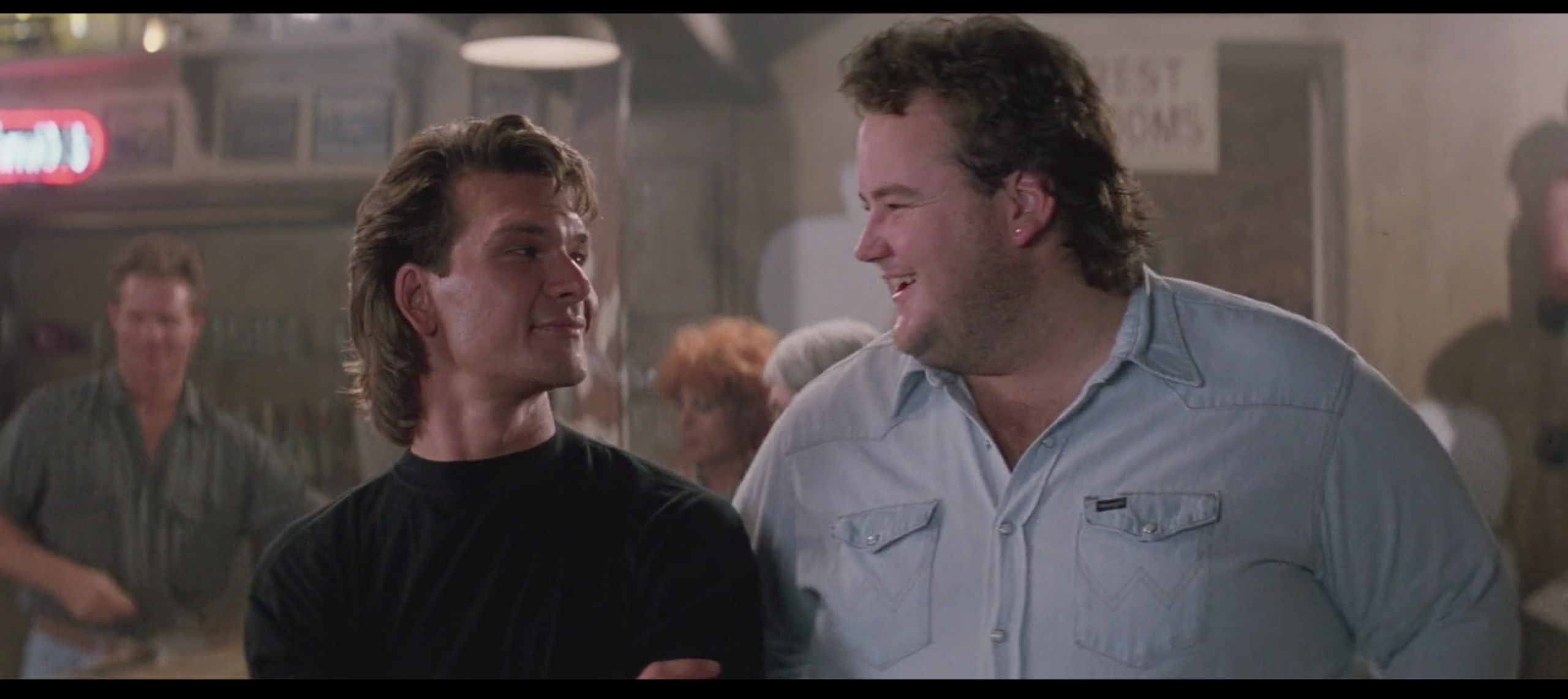
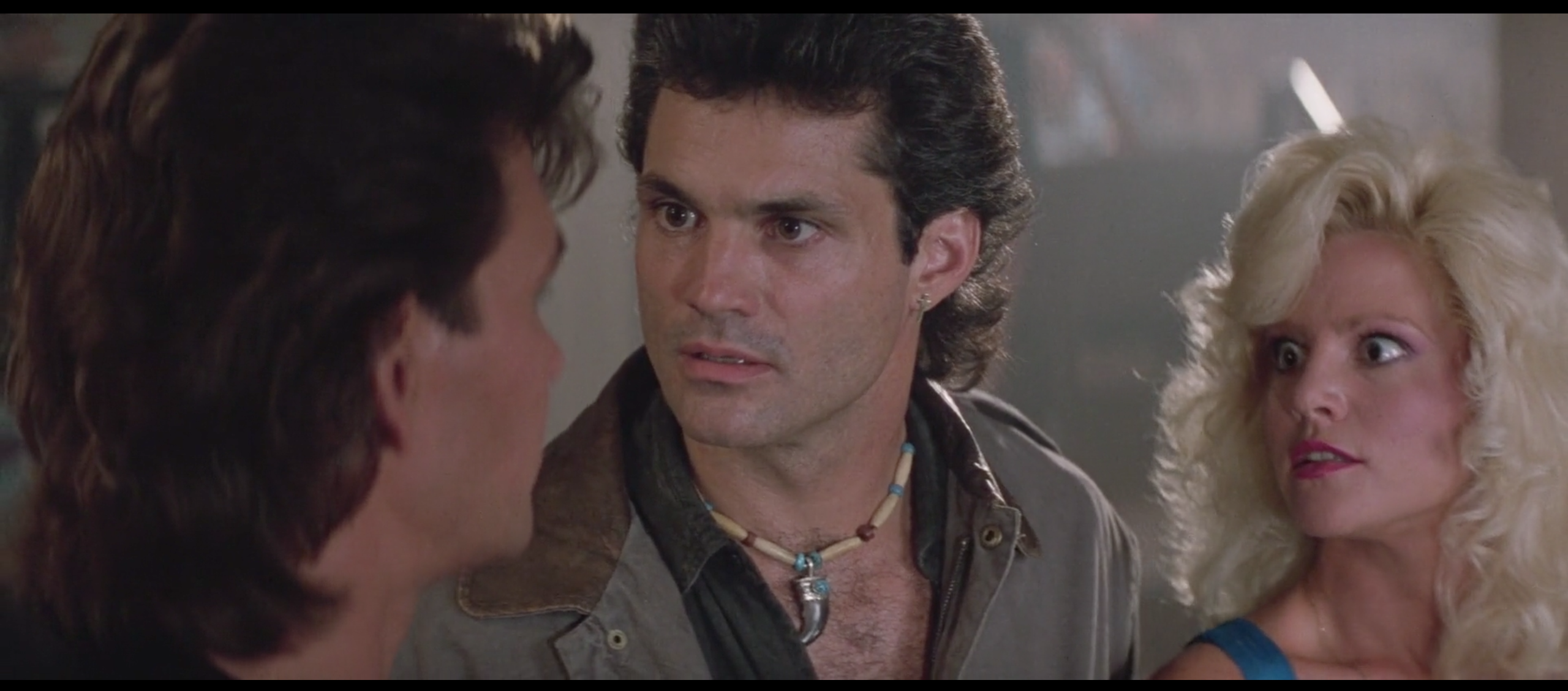
This is not Kelly Lynch. This is Kevin Tighe.

This is n—okay this is Kevin Tighe. CO-CO-CO-CO-COMBO BREAKER! Still, every rule needs an exception to prove it, as Dalton could no doubt tell us.

This is not Keith David. This is Kevin Tighe again. Moreover, Keith David is not an actor who has more than one line in this film.

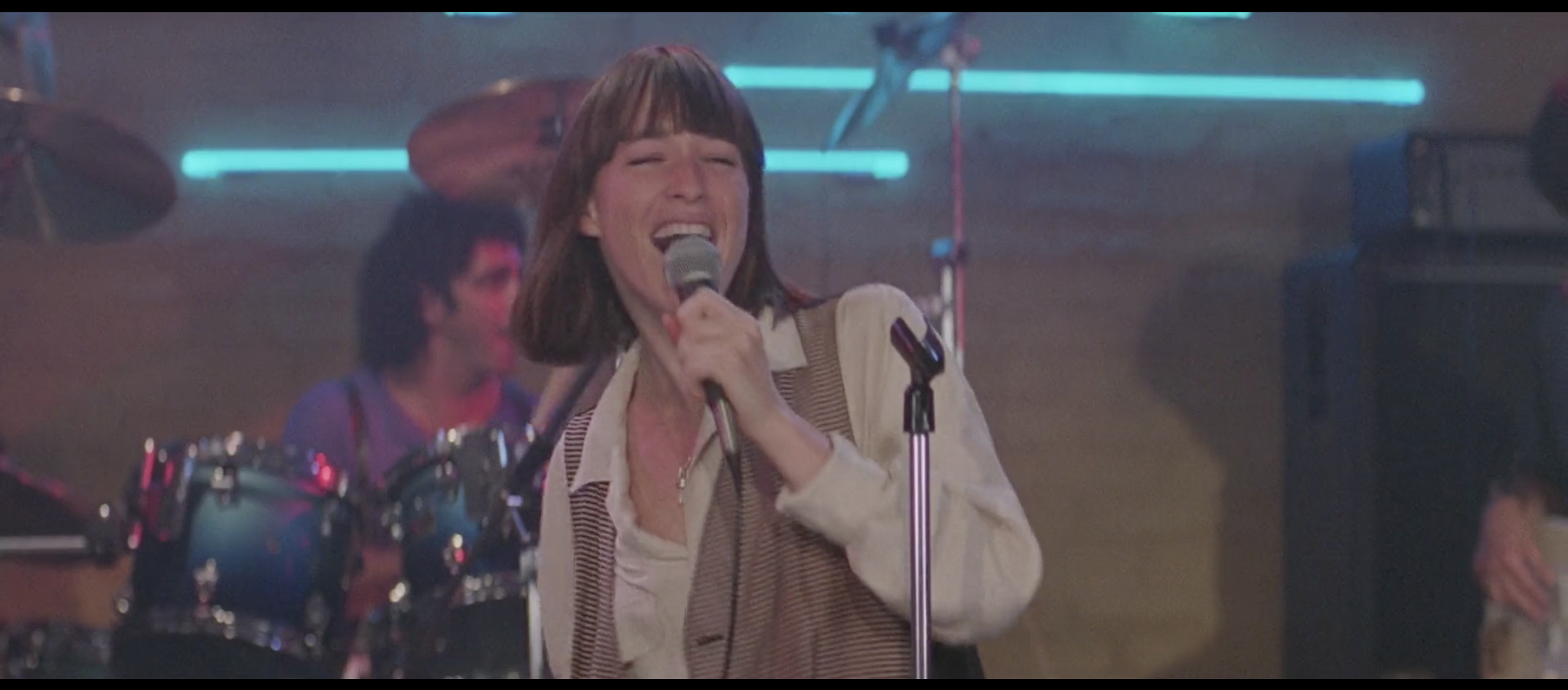
This is not Kathleen Wilhoite. You know who it is.

While the three people here conceivably could be “Sunshine” Parker, Red West, and Julie Michaels—the names fit—they are not. They’re two extras and, wait, what was his name again?

This, as the Motion Picture Academy of Arts and Sciences could tell you this year, is not Sam Elliott. It’s Tito Larriva, lead singer of Cruzados. Interesting fella in his own right, but not a future Achiever.

While this could, and in fact should, be the Jeff Healey Band, it is not. It is still Cruzados.

The centered positioning of the credits, the lack of attention-demanding dialogue (it’s just the song and some bar chatter), the anomalous presence of one of the lead actors in the film who is himself usually centered in the frame: All of these factors make the viewer want to connect the name they’re reading to the person they’re seeing. No such luck.

Even the exception, Kevin Tighe, is less of one than he looks. When he appears, you are about to spend five minutes watching one of the most skin-crawlingly unctuous performances of the decade, and you will most likely spend much of your first viewing of the film believing him to be the villain of the piece. Naturally he’s the only actor billed in straightforward WYSIWYG fashion.

Again, I’ve seen this movie with enough people to know that in the right mindset these credits are disorienting, in a goofy, tipsy way. It makes people a bit rambunctious. “Wow, Kelly Lynch looks different!” “This is clearly not Sam Elliott.” That kind of thing. It’s like receiving an invitation to start talking back to the movie, written in purple Palatino. Stick that in your pipe and don’t smoke it.


“The Punisher” thoughts, Season Two, Episode Eight: “My Brother’s Keeper”

The Punisher’s chief weapon is surprise. Surprise, and fear. Fear and surprise. His two weapons are fear and surprise, and ruthless efficiency…His threeweapons are fear, and surprise, and ruthless efficiency, and an almost fanatical devotion to his slain family…His four—no. Amongst his weapons— amongst his weaponry—are such elements as fear, surprise….I’ll start again. Amongst his weaponry are such diverse elements as: fear, surprise, ruthless efficiency, an almost fanatical devotion to his slain family, and a nice black uniform—oh, damn.

punisher 208 LIGHTING SKYLINE SHOT

All praises due to Monty Python, of course, but the Spanish Inquisition has nothing on Frank Castle. He shares pretty much all of their weaponry, plus one that goes unlisted but is the whole point of the thing: humor. No, really! Hardly for the first time this season —Billy Russo had a laugh-out-loud moment last episode when he talks about how he’s learned lost “my company…apparently,” the latter tacked on as a can-you-believe-I-can’t-remember-this-shit afterthought— The Punisher Season 2 Episode 8 (“My Brother’s Keeper”) kept me entertained as much with well-executed moments of comedy as with guns and psychopathy.

I reviewed the eighth episode of The Punisher Season 2 for Decider.

“Kingdom” thoughts, Season One, Episode Two

A six-episode season is too short to delve deep into character and give them room to breathe, the way a longer run would allow; and it’s too long to get away with having slight, sketched-out characters (likeable or loathsome though they may be, as befits their status as faces and heels). Without getting to know them all—and I mean see how they act when the cameras are off, so to speak, not just “here’s a scene where they have some camaraderie, now here’s a scene where they argue, etc.” With all-out zombie warfare on the horizon, I don’t see the show pulling that off. In addition to human flesh, zombies devour screentime.

I reviewed the second episode of Kingdom for Decider.

025. Tableau

Though Dalton gets stabbed within the first few minutes of Road House, it would be incorrect to refer to the incident as a fight. He weathers the cut with stoic grace, lures the wielder of the blade into the parking lot of the Bandstand under the false pretense of giving him the honor of a mano a mano throwdown, and then walks back inside, closing the gates of paradise behind him with a row of mountainous bouncers.

The real first fight occurs about 15 minutes in, when Dalton first arrives at the Double Deuce. Let us leave aside the manner in which the fight begins, for now; suffice it to say it involves the violation of a verbal contract and a subsequent falling-out between the negotiating parties. Let us also avoid discussion of the fight’s particulars, each of which will likely receive an entry of its own. Here our focus is on the fight’s gestalt. As much as the Shirtless Man or the Four Car Salesmen or the Bouncer Fame Index, it is an indication of the kind of movie you’re watching, and the most visceral and ambitious one at that. And it indicates this: You are watching a movie in which barfights achieve the colossal scale and cacophonous visual intensity of a painting from the Flemish Renaissance.

Road House (Rowdy Herrington, 1989)

Netherlandish Proverbs (Pieter Bruegel the Elder, 1559)

While, again, avoiding the instigating incident and the individual fight choreography beats, the effect of the first fight is intoxicating—a vertiginous ramping-up of wanton physical stupidity and destruction, from a starting point that is incredibly stupid itself, that simulates the effect of consuming an heroic amount of intoxicants in a time short enough to be the length of a song from Wire’s Pink Flag.

The first time I watched Road House I’d heard about it for a couple of years from the friends who wound up introducing me to it, but really had no idea what the fuss was about. By the time the first fight was over I wondered no longer. While I imagine there are those who do not give themselves over to the movie after this scene, I was not one of them, nor do I truly understand what it would take to be one of them. There’s no resisting the howitzer blast of shattered bottles, smashed tables, flying bodies, and punched heads you witness here, nor the rogues gallery of one-off stuntpersons who produce them.

And while Dalton himself stays out of the fray, watching it all unfold with the sangfroid only America’s second most famous bouncer could muster, you the viewer are afforded no such luxury. You pinball around with the camera as every act of stupendously dumb violence is rubbed right in your face. As a collection of individual moments, shots, characters, punches in the head, it’s truly impressive.

But when the camera pulls back and the full scale of the devastation is revealed for the first time? Breathtaking. Staggering. Clarifying. In that one moment you mentally whip-zoom from the trees to the forest, the way you might look back at a particularly harrowing stretch of events in your life and think “my god, how did I ever make it through?” The parts overwhelm moment to moment. The whole overwhelms on a whole other level, yet none of the parts are concealed. Everything is happening.

And you’ve emerged on the other side, with roughly a Tilghman’s eye view of the conflagration. You see the magnitude of the task Dalton has taken on, even as he casually strolls through the still-raging slobberknocker to confer with the bar’s owner. You see the movie you’re about to spend another hour and a half watching, itself a collection of individual moments, shots, characters, and punches in the head—just as chaotic as this one image, and just as cohesive a statement.

“The Punisher” thoughts, Season Two, Episode Seven: “One Bad Day”

You know how I spent the last review comparing the relationship between Billy “Jigsaw” Russo and Dr. Krista Dumont to the one between the Joker and Dr. Harleen Quinzel?

punisher 207 SEX SCENE TOUCHING HER SCAR ON HER BACK

Yeah. If you need me, I’ll be over here, awaiting my Pulitzer Prize for criticism.

Episode 7 of this season of The Punisher is titled “One Bad Day.” I know, I know: one bad day? Do any of these characters have any other kind of day? But the title references a key component of the definitive, if not technically canonical, Joker origin story, Alan Moore and Brian Bolland’s Batman: The Killing Joke. The thesis there is that all it took is one awful, awful day (albeit one that culminated in an acid bath) to turn a down-on-his-luck family man and wannabe standup comic into the deadliest serial killer on the planet. The Joker, who only vaguely remembered the details of his own life pre-Clown Prince, was determined to test this thesis on Commissioner Gordon, whom he kidnapped, stripped naked, and forced to look at gigantic photos of his daughter Barbara “Batgirl” Gordon, also stripped naked, after the Joker shot her in the spine, paralyzing her from the waist down.(It’s a problematic fave.) So it’s hardly like the show is trying to hide its homage to the Distinguished Competition’s supervillain supercouple.

I reviewed the seventh episode of The Punisher Season 2 for Decider.

“Kingdom” thoughts, Season One, Episode One

If you like this sort of thing, here’s the sort of thing you’ll likehas been Netflix’s mantra for a minute now. It’s not just the original programming that works this way, either. When ’80s nostalgists run out of Stranger Things or ’90s nostalgists run out of Maniac or people who love Pablo Escobar run out of, like, five different shows about Pablo Escobar, they can always watch the Big Red Machine’s library of the most popular shows on broadcast network television from the past couple decades, which not coincidentally are also the majority of the most popular shows on Netflix.

I’m not saying this approach never pays off creatively. Narcos is a fun show with a great theme song, a great performance in Wagner Moura, and an occasional Great Episode. The troubling German science-fiction show Dark snuck in on a wave of “It’s kinda like Stranger Things” early press (tonally they’re worlds apart but plotwise, yeah, a bit) and became its own engrossing thing. The Punisher, the best of the Marvel/Netflix shows, is a direct Daredevil spinoff from a line of six interconnected series set in the most popular franchise of all time. Still, if you’re looking for something to kick down the doors the way The Sopranos did…well, here are some cooking shows!

But you’ve gotta hand it to them with Kingdom, this sweeping new original Korean-language series. Plenty of networks and plenty of shows have tried and failed to capture the magic of Game of Thrones, the show on TV that is the sort of thing the most people like out of pretty much all the shows on TV at this point, and bellyflopped. (MTV’s The Shannara Chronicles, anyone?) But for whatever reason, none of them isolated one of the most instantly appealing elements of George R.R. Martin, David Benioff, and Dan Weiss’s baby, a concept so brilliant in its simplicity that it shows up before the opening credits of the pilot even roll and will be the subject of the entire final season. Yes, Game of Thrones is “The Sopranos with swords,” as the early buzz hailed it. But it’s also, and on a much larger and more immediately, nerdily impactful scale, The Lord of the Rings with zombies.

Kingdom has cracked the case.

I reviewed the series premiere of Kingdom for Decider.

(NOTE: These review summaries will be brief while I play link catch-up. Just read the reviews!)

024. Mr. Clean

Dalton’s first visit to the Double Deuce is, it’s reasonable to assume, a representative view of the establishment’s clientele. He is harassed in the parking lot by a gang of bikers angry at him for driving a Mercedes instead of Detroit steel. Inside the bar he passes two women pawing at their noses clearly after powdering them in the ladies’ room. (A minute or two later we see them approach the Double Deuce’s resident drug-dealing waitress to purchase the cocaine they just used, a transaction she tells them she will complete in the ladies’ room. I suppose it’s possible they just needed more and not that they entered the Moebius, a twist in the fabric of space where time becomes a loop.) He sees a hayseed who looks like Jeff Foxworthy sexually harass his future friend and Dionysian acolyte Carrie Ann. He watches Regular Saturday Night Thing Steve refuse to break up a rolling-around-on-the-ground fight because the participants are brothers.

The first person to actually acknowledge the presence of Dalton inside the Double Deuce is a man who is cueball Kojak bald, at a time when that was still unusual enough to be striking. When Dalton parks himself at the corner of the bar nearby, this fellow gives the newcomer a polite wave hello. He then stands up, tucks his chin against his neck in the fashion of someone who has just involuntarily re-tasted an hours-old meal, and raises his eyebrows like he’s surprised he’s still mobile. He is drunk as a lord. He toddles away in the fashion of a person who is mustering literally all of his physical and mental energy just to make it to the bathroom without exploding out of both ends.

I think of this guy as Mr. Clean, for obvious reasons, and for lack of a better descriptor. And why not? Despite being both friendly and nonviolent, he’s nevertheless exactly the sort of 40-year-old adolescent, power drinker, felon, and trustee of modern chemistry Dalton will go on to tell his underlings it is their job to expel from the Double Deuce forever. Dalton is here to clean up the likes of Mr. Clean.

Yes, Mr. Clean offers Dalton a comparatively warm welcome, before lurching out of frame and out of the film forever. What of it? This will hardly be the last time that those Dalton must destroy approach him in the guise of friendship. In the words of Dalton’s First Rule: Never underestimate your opponent. Expect the unexpected. Including a polite little wave hello.

“The Punisher” thoughts, Season Two, Episode Six: “Nakazat”

Now this is a weird one. Alternating between some of the series’ most vicious writing and some of its corniest, between passages of silent and dark visual poetry that suck you in and out-of-character moments that knock you right back out again, The Punisher Season 2 Episode 6 (“Nakazat”) is a viewing experience as fractured as Billy Russo’s psyche and Jon Bernthal’s prizefighter nose.

I reviewed the sixth episode of The Punisher Season 2 for Decider.

023. Valet

This man is Chino “Fats” Williams. A character actor with a string of bit parts from the ’70s through the ’90s, he appeared as a character called Fats in four different projects, from Baretta to House Party. In Road House he’s billed as “Derelict,” which coincidentally or not is the same title he receives in Rocky III, the third and final installment of that franchise in which he acted as a downwardly mobile person. It is unclear whether he was playing the same person in all three Rocky movies, and equally unclear if the Derelict from Rocky III is the same Derelict from Road House, and thus if Wade Garrett and Ivan Drago exist in the same cinematic universe. An enterprising mid-tier comics publisher should look into the rights situation, because that is the crossover event of the century right there.

Be that as it may. Dalton knows none of this when he drives up to the New York parking garage where he stores his Mercedes, which he plans to take to Jasper. By now you’ve read enough to know that he always stashes his fancy ride away when he’s working so that angry customers don’t take out their frustrations on it, replacing it with some old beater or other, the way you wear a ratty old t-shirt to do serious housecleaning or what have you. This means that after quitting the Bandstand and agreeing to work the Double Deuce, he has to get rid of his New York jalopy before he can head for Missouri.

He does this by parking in front of the garage and tossing his keys to the above individual, who’s seated comfortably outside the garage entrance. Both confused and irritated, the man says to Dalton, “What do I look like, a valet?”

The answer, frankly, is yes.

He is sitting expectantly in front of a parking-garage entrance in the middle of the night on an otherwise empty street. God knows what else he’d be doing there.

But this is beside the point. The important thing about Chino “Fats” Williams and his Derelict role is the voice with which he says his one line. The best way I can describe it—and I’ve thought about this for years—is that he sounds like if Statler & Waldorf from The Muppet Show gargled with razor blades and then sucked down a bunch of helium. “Elderly frog angry about getting thrown out of a bar for chainsmoking” could work as well. The man has the most memorable voice in the movie, which I remind you also stars Sam Elliott, Terry Funk, Kevin Tighe, Ben Gazzara, and Keith David (kinda). He may or may not look like a valet, but he sounds like no one else on earth.

Anyway, turns out Dalton neither knows nor cares who he is. He tossed the guy his keys because he’s giving him the car. “Keep it, it’s yours,” says the nation’s second-greatest cooler. “Mm?” murmurs the Derelict quizzically. “Mm,” he responds to himself firmly. With a little “Well, alright, if you insist” shrug, he gets up and heads to the car. Apparently he has places to be, though you wouldn’t have known it from the fact that he’s sitting by a parking-garage entrance alone in the middle of the night like…well, you know.

“The Punisher” thoughts, Season Two, Episode Five: “One-Eyed Jacks”

There should be a term for the “now that’s more like it” episodes every Marvel/Netflix show busts out after the ones that would be better off not existing. Maybe they follow a tonal miscalculation, or a filler episode, or a sudden turn for the implausible even by superhero standards. But they’re usually there somewhere, at least once per season, getting things back on track like a three-year-old realigning Thomas the Tank Engine’s wheels in the grooves of their wooden railroad playset. “One-Eyed Jacks,” the The Punisher Season 2 Episode 5, is exactly that kind of course correction.

I reviewed the fifth episode of The Punisher Season 2 for Decider.

“The Punisher” thoughts, Season Two, Episode Four: “Scar Tissue”

Before we get to the specifics, here’s my thinking on this, see if you agree. Superhero stories are a subgenre of multiple genres, depending on the character and the approach; there are elements of science fiction, fantasy, crime, sometimes mystery, sometimes war, usually a soupçon of character-based drama, often some comedy, and the basic template of heroism that you can map everything from Greek mythology to professional wrestling onto. But the key component is action, and great action films and shows employ action to convey emotion. They set up a closed system where conversation is insufficient to vent the turmoil beneath the surface, so it comes out in punching and lasers and so on, the same way that in opera or musical theater it comes out in singing, or in horror it comes out in demonic possession or people getting their faces torn off.

Now, a really good superhero story can manage the conversation bit too, of course. Or it can express intimacy in other ways, like we’ve talked about in this space before—tending to injuries, physical closeness, etc. But what it cannot afford to do is stop everything for an hour of samey two-person dialogues that a show with a smaller episode order could easily eliminate and lose absolutely nothing of value.

I reviewed the fourth episode of The Punisher Season 2 for Decider.

022. An elevator in an outhouse

“Callin’ me ‘sir’ is like puttin’ an elevator in an outhouse: It don’t belong.” So says Emmet, Dalton’s prospective landlord, to Dalton, Emmet’s prospective tenant, soon after they meet. Dalton is unflaggingly respectful to those his cooler-sense tell him deserve respect. Emmet, with his overalls and scraggly beard and extremely menacing hay-hooks, is such a fellow, hence Dalton’s use of that three-letter term of deference. Emmet in turn is determined not to put on airs, even at the expense of seeming less of an authority figure in the eyes of someone in whom he must trust to behave himself on their shared property on whom he will soon depend for income. In a minute or two he will rent Dalton a massive, fully furnished loft apartment for $100 a month, which is one-fifth of what Dalton makes every day, so he’s clearly willing to forego other markers of landlordism too. But in the meantime, an analogy that has never before passed the lips of man will have to do. I’d say it’s a singularly odd and vulgar expression to coin, but we’ve got “balls big enough to come in a dumptruck” and “does a hobbyhorse have a wooden dick” and “I used to fuck guys like you in prison” to contend with in this film alone, so “singularly” is out. Still, this is our first taste of Road House‘s penchant for turning a phrase until it gets dizzy and collapses, and thus it’s a memorable one.

But it wasn’t until yesterday, writing about the sign that welcomes weary travelers to Jasper, that I got to thinking about how well the expression sums up the existence of Emmet and Dalton’s soon to be shared enemy, Brad Wesley. Like an elevator in an outhouse, Wesley represents the intrusion of commodification (as opposed to commode-ification) and technological overreach in the Jasper ecosystem. His house is the biggest house. His businesses are the biggest business. His goons are the biggest goons. His truck has the biggest wheels. Were he to construct an outhouse, an elevator is not out of the question.

What’s more, so many of his scenes are literal intrusions into places he does not belong: the opposite lane of traffic, the post-cleanup Double Deuce, the auto parts dealership run by the uncle of his ex-wife, Pete Strodenmire’s Ford showroom, and—most importantly, since the “elevator in an outhouse” exchange is bookended by it—the airspace above Emmet’s ranch. As Emmet and Dalton meet and negotiate, Brad buzzes them with a helicopter that, like his in-ground pool and his monster truck and (one presumes) his JC Penney, feels about as out of place in this environment as…well, you know.

Brad Wesley livin’ in Jasper is like puttin’ an elevator in an outhouse: He don’t belong. If you’ll permit me to take the analogy one step further: No matter how far up he may go, he’s still just a pile of shit.