
Posts Tagged ‘reviews’
Breaking Bad thoughts: the end of Season Four
February 13, 2012* I finished Season Four and am all caught up with the show. LOTS AND LOTS OF SPOILERS BELOW.
* All I know is I’m glad I never googled “Gus gif” for any reason prior to finishing this season. (I just want to note that that final episode was called “Face Off.” Rimshot!)
* I’ll admit it: When that drug dog (hilariously!) popped out of Steve Gomez’s partner’s SUV at the laundry when they went to check it out in deference to Hank’s hunch, I was positive he had ’em. I didn’t count on Gus, Walt, and Jesse’s prideful fastidiousness, however. Then again, I also didn’t count on Hank’s after-the-fact deductive genius. Goddammit, the guy found probably the one tell-tale detail in all the photos Gomie took, the extra electricity running into the laundry. He had ’em dead to rights! One day he’ll get his reward, I hope…though I suspect that the final season will be Walt vs. Hank to the death. That seems like the only way it can go.
* I wish the brief scene between Skyler and Hank when she was checking to see if he’d spotted anything unusual in Gomie’s photos wasn’t brief. Have those two ever been one on one before in the whole history of the show?
* Jesse’s race to get the information about ricin to Andrea in time to save Brock’s life was the most “gasping/squirming/covering my gaping mouth with my hand on the train”-worthy moment the show’s served up in a long time, and as I seem to always be saying, that’s saying something. Heartpounding.
* The whole bomb sequence with Walt and Gus in the hospital parking lot — heartpounding as well. Not that I wanted Walt to blow Gus up, mind you! Gus’s conversation with Jesse in the hospital chapel — expressing ignorance as to how Brock could have been poisoned, backing down and giving Jesse a full week off to deal with his young friend’s medical crisis — made it pretty clear to me that Gus wasn’t involved in Brock’s poisoning after all, though at that point I hadn’t sussed out who was. It just didn’t square with the man’s respectful and trusting treatment of Jesse all throughout their Mexican odyssey, either. So no, I didn’t want Walt to blow him up. But nor did I want him to spot Walt on the roof across the way, which a single telltale gleam from his glasses or binoculars or (I thought the poetry would be fitting here) his bald head would have ensured. In the end, you just can’t root for the death of your protagonist. Or, y’know, so I thought.
* Anyway. I sure enjoyed my little private eureka moment when I realized that if you can ring a bell, you can press a button on a detonator, too.
* I enjoyed the cameo from Peggy Olsen’s mom as well.
* And I enjoyed our brief glimpses of the old, funnier, in-over-his-head Walt — the Walt who’d look like he was about to threaten or even attack Saul’s put-upon receptionist, only to pause and finally say “…I’ll be right back.”
* But then Jesse said “Lilly of the Valley—it’s some kind of flower,” and I wrote, in all caps, just like this:
OH
MY
GOD
WALT
POISONED
BROCK
I’ve done some googling since finishing the season, and discovered that the plot Walt related to Jesse in the second-to-last episode, the (bogus, as we come to find out) idea that Gus poisoned Brock knowing Jesse would blame Walt and kill him for it, was poorly received by many in the audience. They thought that required way too many coincidences, way too many instances of things going exactly the one way they had to go for it all to work, for a man like Gus to feel comfortable relying on. And of course, they were right. (This guy in particular, who figured out what was going on even before the finale made it clear, which is pretty amazing.) This wasn’t some master plan by Walt, it was a last-ditch plan by Walt. Like stripping naked in a supermarket, it was the only thing he could think of that could possibly save his hide. And it was so crazy it just might work. And it did! The horrible, horrible man won.
* I call him horrible despite my belief that however it was that he administered the poison to Brock, he did so in a way he knew would ultimately not kill him. It’s still horrible to inflict suffering on a child, and his family, whose suffering and fear is just as real as Walt and his family’s.
* But mostly, I call him horrible because I now realize why he spat Gus’s offer of clemency back in his face in the desert. Walt himself may not have even truly realized it. Perhaps not until he cracked in that crawlspace, letting forth an insane man’s peals of laughter, did Walt himself realize it. He has to protect his family, yes. But he has to win while doing it. Walter White has to be the smartest guy in the room at all times. Even more than wanting to remove the threat Gus posed to himself and his family (and Jesse — I do think he still would prefer Jesse not be killed, or he’d have killed him when they destroyed the lab) once and for all, I think it was wanting to beat Gus that drove Walt to do what he did. Not for Jesse, not for his family, but for him. That makes Walt worse than Gus. Gus’s hatred of the cartel and his desire to defeat them was born from the love he felt for his friend that they killed. Walt’s desire to kill Gus, to put himself and everyone he nominally cares about in harm’s way if that was the only way to do it, was born from Walt’s love for himself. That’s what makes him so easy to hate, now.
* More google treasure: Creator Vince Gilligan says part of the impetus behind doing Breaking Bad was doing a show where the protagonist slowly became the antagonist. Explains a lot. (That link comes via this Chuck Klosterman/Grantland piece, and you probably have feelings about that sort of thing, but note that Klosterman also sums up the ultimate limitation of The Wire (a show of politics rather than philosophy) as well as anyone I’ve ever read.)
* So what happens next season? Walt and Jesse have no real antagonist at the moment. Oh, I’m sure they can stumble their way into a new one in pretty short order — the whole history of the show, from the pilot onward, is the story of Walt and Jesse making life-or-death enemies at the drop of a hat. But the deaths of Gus, Tyrus, Hector Salamanca, and the entire leadership class of the cartel leave a massive, massive vacuum. I assume Gus’s mysterious past as some kind of untouchable big shot in Chile will play a role. I assume Mike will play a role. The great critic Matthew Zoller Seitz (whose reviews of shows like these I look forward to reading after I finish a series almost as much as I look forward to the actual act of finishing the series) points out that the mysterious German conglomerate that bankrolled the laundry and the air filtration system (I couldn’t help but notice some kind of HVAC was involved in the “guy who can disappear you and your family” service Saul tried to connect Walt with) will likely play a role, too. Seitz also notes that there’s a laptop full of surveillance footage sitting in Gus’s office at Los Pollos Hermanos, just waiting to be decrypted. We’re not done hearing about the death of Ted Beneke either, I’m sure. Saul and his goons could crack about that, or about their involvement in Walt’s poisoning of Brock. As I said, I think Hank will be the Final Boss. And in the end, there’s Walt vs. Jesse, which is just another way of saying Walt vs. Walt.
Breaking Bad thoughts: Season Four, Episode 11
February 9, 2012SPOILERS AHEAD.
* I had to write about this one right away. I had to.
* Yep, I’m still genuinely touched by Jesse’s newfound affection for Mike, and vice versa. I’m a sucker for people getting along, what can I say.
* And once again, Gus trusts Jesse enough to walk with him for six miles in the middle of nowhere while in a wounded state. That the show didn’t even bother showing us their long stroll together, the way they’ve done with Walt and Jesse in the past, tells us we can trust that trust.
* Tyrus has both the name and the sinister dandy look of an ’80s urban-apocalypse villain. “Does the laundry have to be dirty?” “…nope.” Nice to see a flash of personality from him, too.
* Sic semper Ted Beneke. It’s funny — I thought the little bit of business of Ted tripping over his rug on the way to answer the door earlier in the episode was accidental, that the actor then improvised and the moment was kept in by the filmmakers. Nope! Running away from a sloppy career-criminal abduction/assassination attempt and killing yourself in the process is Breaking Bad at its most Coen/Lynch, which is saying something.
* I’ve read enough Digby to know that tasers are less an law-enforcement alternative to lethal force and more a law-enforcement alternative to using no force, or more specifically to taking any guff. So I was quite pleased to see Tyrus’s use of a cattle prod on Walt — not a taser, but functionally indistinguishable from one in its narrative impact — not played for laughs in the slightest. That looked fucking awful. And he kept on using it even after Walt was down. This was about punishment.
* Christ, what a gorgeous shot composition, of Walt on his knees with a black bag over his head as Tyrus and company stand guard while Gus drives up. Watching the sun come in and out of clouds, their shadows on the desert…just lovely. Getting back into the mythic-weird territory of the plane crash.
* That desert scene was astounding in that just when you think you’ve plumbed the depths of your own disbelief and disgust where Walt is concerned, he takes you even further. He was out. He was free. Gus gave him a chance to leave the business with his life, and by doing so, he couldn’t help but show Walt that he couldn’t kill him. Walt figured this out, figured out that whatever their problems with one another, Jesse was still preventing Gus from killing him, and likely always would. He could have walked away. And what does he do? He proves himself incapable of not being a dick. He gets in Gus’s face, confronting the man with his own impotence. And thus he ensure that Gus will remain his enemy rather than washing his hands of him, that he’ll work on Jesse’s defenses until Jesse consents to Walt’s murder, that Walt’s family — his children; his baby — are now in the line of fire. He just couldn’t not be a terrible, angry person. And he paid for it.
* The final sequence of this episode…I mean…gosh. Frightening in how soul-curdling it was. Dave Porter’s score returns to pulsing, dissonant, Texas Chain Saw-indebted industrial, as Walt’s supine position in the cobweb-infested, dirty crawlspace, and his mad cackle, make that particular filmic comparison even harder for me to shake. When he first started laughing, I thought he’d figured something out, something that Skyler giving Ted their money enabled him to do that would help them out of their situation. But when I realized that he’d simply…lost it…god damn it. The look of mounting horror, real horror, on Skyler’s face as she looks down on what her husband has become, and realizes what it means? Her woozy walk down the hall as Marie reveals her life is in danger as well over the answering machine? The floating camera tracking upwards from Walt’s ruined face? My goodness. My goodness gracious.
Breaking Bad thoughts: dirty pool edition
February 9, 2012I’ve now seen Season Four episodes 7-10. Close to the end now. SPOILER WARNING
* Ha, remember back in Season Three when I said how much less intimate the show was, and how big the players had gotten? Little did I know! Straight-up Godfather/Scarface-level shit now, from “and Stephen Bauer” in the opening credits on down.
* Which is a development worthy of some study, I think, beyond just “wow, big things popping for the former Gang That Couldn’t Shoot Straight.” But to get there requires some preamble…
* Okay, so during these episodes — even in the first couple of them, when Gus was still largely at the margins, still the invisible man behind the cameras, and when Jesse’s position as Mike’s shadow still seemed much more like a combined act of charity and insurance policy — I realized that all of the major protagonists and antagonists on the show, i.e. the people whose actions truly drive the plot, were quite simply a lot of fun to watch at this point. I found myself really hating that these guys were at odds, that for any one of them to come out on top, one or more of the others would have to go down.
* Let’s start with, for lack of a better term, the good guys. Walt may have been largely coasting on sympathies earned over the past three and a half seasons, but I still didn’t want to see him get busted or killed. (I mean, even putting those sympathies aside, there’s a pleasure to “how’s he gonna get out of this one?”, you know? The Houdini act is fun to watch. Jesse only gets more sympathetic and more charismatic as the show progresses. And Hank is a cross between Sherlock Holmes and (to quote another actor on the show in another movie he was in) that guy from The Incredible Hulk — his detective work gets sharper and sharper, and his panache in presenting it to Gomie and Merket was an absolute joy, plus he’s very kind to both Marie and Walt now.
* Meanwhile, on the cold-blooded killer side of the ledger, Mike remains one of the most enjoyable characters on TV in terms of just watching the guy scowl and listening to him talk. And as I said, he’s deadly competent, and competence is compelling. This also applies to Gus, which the show makes crystal clear when they have him walk head-on into a hail of sniper bullets, and which reaches its apotheosis during that fateful pool party at Don Eladio’s. I mean, the second the Don took a drink and toasted all his men too, I started laughing out loud. “Hahahaha, he just poisoned all these assholes!”
* But in addition to making these guys scary badasses, the show’s also taking this time to humanize them, believe it or not. It’s become apparent by now that Mike’s growing trust in, even respect for, Jesse isn’t just an act. For one thing he saved his life at a time when it would have been quite easy to let him die without Walter really being able to blame him or Gus. But more than that, he seems happy for Jesse when Jesse proves his mettle. His smile down in that Mexican factory when Jesse told off the imperious chemist genuinely made me happy, goddammit!
* Even Gus gets his shades of grey now. We see signs of fear several times: He’s obviously rattled by his conference with Hank and friends; he’s flustered by the cartel’s refusal to actually negotiate; and most importantly, he was terrified during his initial meeting with Don Eladio in that majestically awful flashback sequence, and completely devastated — this was quite apparent even in a brief flashback dedicated to the death of a character we’d never met — by the murder of his friend and partner, the other Chicken Brother. I felt terrible for Gus. For Gus! Suddenly I felt like, okay, now I understand.
* And he too saves Jesse’s life when letting him die would have come at no cost, by sparing him from the poisoned liquor at Don Eladio’s house. His trust and respect for Jesse appears genuine as well. And I’d have to imagine that for both him and Mike, Jesse saving their lives (I think — haven’t seen the next episode yet) in Don Eladio’s driveway will only deepen their connection with him, and ours with them.
* But.
* Over in Walt-land, after Jesse beats him up, Walt Jr. comes over and finds his father wounded and doped up on painkillers. What followed would be under normal circumstances the kind of thing that would have me crying, sobs and tears and everything, on the train. A grown man weeping over his failures to his son, saying “I made a mistake, I had it coming, it’s all my fault, I’m sorry”? That stuff usually just murders me, murders me, man. But here? I spent the whole time thinking Walt was faking it.
* In short, I think it’s no coincidence that the show chose to beef up and round out the roles for its murderous antagonist characters at the exact same time that it reduced our sympathy for Walt to an all-time low ebb by making him almost completely unlikeable. Normally, to paraphrase Walt himself, in a contest between Walt and Gus, Walt would win every time. Now? With Skyler and the kids financially secure, with a legally lucrative future ahead of them, with Jesse in tight with the bigwigs and able to cook brilliantly on his own, with Walt bringing nothing but misery to everyone he touches and really not caring or even noticing that this is the case, we’re left to wonder if we’d honestly find it so terrible if he ended up in one of those barrels. He didn’t just damage or destroy his relationships with his family, Jesse, and his employers. He damaged his relationship with me.
* And as I said earlier, this bears some study. Competence is compelling, and with their daring in-the-lion’s-den decapitation of the cartel, Gus and Mike (and Jesse) have become, as best we can tell, arguably the most competent criminals in western North America. By contrast, Walt is a wash. Previously the show had offered us no alternative to his and Jesse’s gut-churning series of failures and disasters, narrowly averted or not. Now we have Michael Corleone or Tony Montana if we want them. And on the level of entertainment, we do want them, of course. I don’t want to see Gus and Mike get busted or killed now, not at all. And I want Jesse to keep his cool and stick with them. And after the finales of Season Two and Season Three, after we witnessed the moral consequences of behavior made possible by Gus and Mike, I’m not sure how I feel about how I feel. No, I’m not sure at all.
* Anyway. How good does Jere Burns look with a mustache, huh?
* Speaking of, Jesse’s brutally confrontational monologue in the support group was Aaron Paul’s finest hour. It mirrored Jesse’s primal scream at Walt for ruining his life while in the hospital after Hank beat him, but this time he was screaming at himself. The filmmakers hit us hard by conjuring imagery of crimes we find the hardest to forgive in fiction — killing children, killing animals. That’s how Jesse thinks of himself. No wonder I want Gus and Mike to grant him a new lease on life, poor kid.
* I was happy to see Steve Gomez return. Underutilized character, underutilized actor, I think.
* Man this is a clever, cheeky show. They cold-open an episode with blood in an unidentified manmade body of water, then make sure we hear, and hear about, but never actually see, Andrea’s “nice birdbath” at the new place Jesse’s helping to pay for for her and her son Brock. It’s the Season Two burnmarks-and-bodies swimming-pool fakeout in miniature, but no less effective for that.
* Saul’s good with kids. I like that.
* I’m sure I’ve said this before, but just like The Sopranos, this show gets funnier as it gets darker. Hank and Walt’s whole conversation in the Los Pollos Hermanos parking lot, as Walt is forced to feign surprise when Hank reveals his suspicion that Gus Fring is a drug dealer, and is then cajoled into bugging Gus’s car, while he and we alike watch Mike pull up a few spots away and watch them, was just about the funniest thing the show’s ever done. It was like Curb Your Enthusiasm: Crystal Edition.
* I liked the handsome young cartel representative. Thoughtful, unpredictable casting there. Too bad we won’t be seeing more of him!
* Let’s throw in a whole bunch of gorgeous time-lapse sunset/sunrise shots, because why not.
* As much as I enjoyed the Skyler/Ted Beneke side storyline and her cleavage-based attempt to resolve it, I couldn’t help but feel that maybe there are a few too many improvisatory geniuses in the White/Schrader family? Marie, Skyler, and Walt have all now proven to be able to spin bullshit into gold at the drop of a hat, and Hank’s no slouch in the storytelling department either, though he hasn’t deployed those talents in quite that way. For once I’d like to see one of these folks just blow it.
* I don’t see good things in Ted Beneke’s future, by the way. I suspect Skyler’s headed for her Walt/Jane, Jesse/Gale moment.
* I’ll leave you with a conspiracy theory. Now that we know Gus’s backstory, specifically the roles of the cartel and its representatives Juan and Old Man Salamanca in that backstory, doesn’t it seem possible that pretty much everything Gus has done — setting up the lab, hiring Walt, saving him from Juan and the angry Salamancas, siccing the brothers on Hank and then tipping Hank off about it, having Mike kill the surviving brother in the hospital, having the federales kill Juan, cutting off the cartel’s access to the States, using Walt to fill the vacuum with his own meth supply, drawing the cartel into a cold war with occasional flare-ups, backing off the plan to kill Walt and Jesse, keeping them both alive and cooking, building up Jesse’s confidence, presenting Jesse to the cartel as a peace offering, and then of course what we saw during the visit to Mexico — was all a plan for revenge? I mean, even agreeing to work with the man who caused the death of Tuco Salamanca to begin with, you know? Did the legendary businessman structure his entire business plan around something very, very personal? “This is where blood for blood gets us,” he tells Hector Salamanca in his nursing home, and at first you think it’s a reprimand. But what if it’s a master plan, hiding in plain sight?
Breaking Bad thoughts: The Season Four halfway mark
February 7, 2012I’m about halfway into Season Four — just finished episode six. SPOILERS, SPOILERS EVERYWHERE
* We start with silence. In the entire excruciating sequence in the season premiere during which we wait to learn the fate of Walter and Jesse from Gus — the entire episode, in other words — Jesse doesn’t say a single word to anyone until his (the writers’) cheeky Indiana Jones and the Last Crusade “What’s that?” “Ark of the Covenant.” “Are you sure?” “Pretty sure.” homage when Mike asks him if the acid they’re using will successfully dissolve Victor’s body: “Trust us.” Gus, of course, is silent as well, until he instructs the hapless pair to get back to work. Mike’s largely mute, too. This is a show that trusts its audience to know what to do with itself when no one’s talking, and there aren’t a lot of shows like that, same as, I dunno, Jaime and Gilbert Hernandez trust their audience to be able to follow comics in which locations and time frames can change dramatically in the space of a panel, with no obvious cues to hold your hand. I like that.
* Sad to say, Gale’s demise was spoiled for me by overenthusiastic mourners on Tumblr a few months back (although I didn’t know the specifics or the time frame for sure, so I thought there was every possibility Jesse let him off with a warning shot). And if you can believe it, Victor’s death was spoiled for me, too, by the goddamn Breaking Bad wiki page for a Season Three episode that I looked up a while back to help jog my memory as to what exactly happened in it — I caught some reference in the “trivia” section to “Gus’s new lead enforcer Tyrus,” and thought “Oh, terrific, so that means something happened to the ‘old’ lead enforcer then, great, just great.” And by the end of the interminable lab sequence I knew that Gus was gonna turn that box cutter on his right hand man. So kudos, I suppose, to the show for still making it awful to watch despite my foreknowledge: As he thrashed his head back and forth while being cradled in Gus’s arms, covered in blood as his mouth opened and closed in a vain attempt to draw another breath, he looked like my newborn daughter, fresh from an emergency c-section, trying and failing to breathe before the nurses and doctors put her on a ventilator. How’s that for some heavy shit?
* This chunk of episodes feel a bit like a waiting game to me, frankly — a certain amount of time needs to go by before the show can really cry havoc and let slip the dogs of Walt following his and Jesse’s audible on Gale. Maybe that’s why I mostly remember a succession of little touches and moments: Walt replacing his bloodied clothes with a Kenny Rogers t-shirt, because in the words of Jerry Seinfeld, “Well, he is the Gambler…” A cameo from Jim “Ellsworth” Beaver, sounding for all the world like a resident of Deadwood plopped into the present day as an underground gun salesman. Marie revealing her improvisatory genius with lines like “Between his pension and the income I bring in from hand modeling…” Fever Ray on the soundtrack. Jesse getting handsomer and handsomer. The painfully recognizable plight of Marie as she attempts to care for someone who’s completely emotionally unable to appreciate or return that care. Skyler’s weight gain, and Walt Junior’s weight loss. The urban and rural decay of Mike’s dead-drop locations. The flourescent-lit hell of Bogdan’s car wash. The guy in a dress shirt, tie, and tighty whiteys crashing on Jesse’s floor. Wonderful details one and all.
* So it turns out I have a competence-fantasy soft spot after all, and Mike lives right in the middle of it. What a wonderfully world-weary ruthlessly efficient killing machine he is, and how bummed I was to see him all out of sorts following Victor’s murder (the way he turned his gun instinctively in Gus and Victor’s direction as it went down was a beautiful touch on the actor’s part — it wasn’t in any way clear whether it was meant to be trained on Gus or Victor, because I think Mike wasn’t sure either). I was glad to see he got his mojo back during the attempt to hijack his truck, and I was even gladder to see him and Gus conspire to heal Jesse’s heart. Awww. I love the lovable old murderer, and the discomfort I feel when he’s uncomfortable makes me a lot more sympathetic to everyone who just wants Don Draper or Wolverine or Tony Soprano to stay on top of the world at all times.
* Hank is impossible to like for much of the proceedings here, but his fellow cops are still coming to him for advice. He really is a good cop, and as the show progresses he’s stealthily being built into the cops from The Wire — the rival protagonist to the charismatic lawbreakers. You’re never quite sure who you’re rooting for.
* Hell, even Walt seems unsure. His drunken assertion that Heisenberg’s still out there is a leeeeeetle close to an idiot plot, yet it’s also an unconsciously altruistic act on Hank’s behalf. The guy needs his white whale, and for whatever reason — ego, stupidity, a desire to get caught — Walt gave that back to him.
* “Since when do vegans eat fried chicken?” Good question, Hank!
* I’m always pleased to see characters catch on to schemes you’d expect to drive the plot for some time. Jesse wised up real quick to the fact that he’s now Mike’s right-hand man because Gus wants him babysat. And Walt got even wiser nearly as fast, correctly deducing that the attempted stick-up was a way to let Jesse play the hero. Of course, being Walt, he put this in precisely the worst possible way, and Jesse reacted with scorn. Mister “I AM THE DANGER, I AM THE ONE WHO KNOCKS” needs to revisit his Dale Carnegie.
Breaking Bad thoughts: Season Three wrap-up
February 2, 2012Finished Season Three. SPOILERS AHEAD.
* This is going to sound like an insult, but in a weird way it’s a compliment: This show is so much less intimate now. Bigger players, higher stakes, wider scope. Walt’s no longer a lone man trying to keep his head above water — an entire infrastructure is in place for him to keep going. Largely estranged from his family, the intensely personal domestic drama has largely been abandoned in favor of…I almost want to say a mythic story of a man entering the dark forest, likely never to return. The show’s doing this very, very well.
* And like The Sopranos, the darker it gets, the funnier it gets, too. This stretch of episodes contained two of the show’s lulziest moments. I laughed hard when Walt was forced to sit there and make small talk with “Mr. Fring” when he showed up to the hospital with free wings for everyone, ingratiating himself with Walt and Hank’s family, and of course sending Walt “Now you know that I know that you know that I know that you know that I know” vibes like a motherfucker. And I cracked the hell up when Skyler was relating her bubbemeise about Walt’s high-stakes gambling to Marie and got to the moment in the tale when things got super-illegal: Skyler leaned forward to whisper the secret, Marie leaned forward to hear what it was…and so did Walt, on the edge of his seat to find out where the story, his story, was headed. It was a scream. I mean, heck, the show’s not above bringing Jane back for an “I just threw up in my mouth a little bit” joke. Right on, Breaking Bad, right on.
* This back half of the season also saw the show solving the problem of its own planned obsolescence. When I first described the idea of the show to my wife, she was like, “Wait a second—how is it still on, then?” “Well, I guess he gets better” was my response (this is back before I’d watched any of it), but when you think about it, that only solves half the problem. If he beats the cancer, that explains why he’s still alive for four seasons, but not why he’s still making crystal meth. Skyler holding Hank over his head, insisting he pay to heal the injuries Hank never would have suffered but for Walt, is an shrewdly organic way of continuing the storyline.
* Though it’s not quite as striking in this regard as its sister show Mad Men can be, Breaking Bad is absolutely smarter than me at times, which is so much fun. For example, Walt twice figures out Gus’s machinations and devises solutions to them way before I did: First when he deduces not only that Gus sicced the Salamancas on Hank to keep them away from Walt and that he then tipped Hank off in hopes that he’d take them down, but also that there was a financial motive for all this: Using the ensuing increased law-enforcement attention to weaken the cartel and cut off its access to America, leaving Gus the sole provider of meth for the entire region. Later, he not only senses Gale’s positioning as his replacement almost immediately, he also senses his own indispensability to Gus if Gale were out of the picture, and keeps that plan in motion even with guns to his head. I love feeling like the characters I’m watching are streets ahead of me. I mean, I was simply excited to figure out that Walt won’t get sold out by Gus after his three months are up since no one’s around to sell him out to.
* Bonus from this section: Walt tells Gus “I respect the strategy,” echoing his earlier mantra: “The chemistry must be respected.” The spice must flow, folks.
* “What world do you live in?” “One where the dudes who are actually doing all the work ain’t gettin’ fisted.” I wish that were so, Jesse!
* Even though I enjoy virtually all of the performances on the show, it’s not one that I’d consider particularly well cast, if that makes sense. Like, if you consider the gestalt of a performance — how the actor looks and sounds as a person, plus what they do with the character as a performer — I tend to think that Mad Men, for example, is minor miracles from top to bottom. If it were a comic, you’d praise the quality of line. You know what I mean? By contrast, Breaking Bad‘s cast takes more getting used to, I would say. It took me quite a while to warm up to Hank, for example; Marie I’m still not quite sold on, though she was beautiful and mischievous in the scene where she gave Hank a handjob in his hospital bed, and that helped a lot. That’s why when those moments of “wow, that’s good casting!” come along, they really stand out: Michael Shamus Wiles as tall, stern, twinkle-eyed, mustachioed ASAC Merkert looms like some J. Michael Straczynski law-enforcement-totem of the Cop God, while Jere Burns’s earth-toned, owlish, kind, sad counselor seems like he wandered in from a show he’s holding down all on his own.
* And then we come to the bottle episode. After the intriguing opening sequence, which was just extreme close-ups of a fly soundtracked by Skyler singing “Hush Little Baby” and which made me think “Wow, they’re not even trying to give these weird quasi-abstract cold opens a story purpose anymore, now it’s all texture,” I must admit I was disappointed when I realized, oh, sigh, it’s a bottle episode, especially given that Walt’s sudden fly obsession felt like a really flimsy rationale for one in addition to being a kind of phony character development. But even in these diminished circumstances the show can impress: with the cringe-inducing suspense of Walt and Jesse riskily climbing to the rafters to catch the fly; with the unique and compelling use of sleep deprivation and sleeping pills to put Walt in a physical and mental place his character’s never been before; with dancing him up to the edge of confessing to his involvement in Jane’s death, but pulling back because he now has developed the self-control even under the influence that he lacked in the inadvertent hospital-anesthesia-cellphone confession he references in this very scene; and most importantly for my purposes — those of weirdness — by creating the image of Walter White, Lord of the Flies. Izzy Ruebens, call your lawyer.
* Speaking of the weirdness, I love the show’s reliance on coincidences. Love it. Jesse stumbling bass-ackwards into the story behind Combo’s murder is a textbook case: On a subtextual level it reinforces the perception that what he and Walt are doing is a violation, because the way life normally works is kind of violated in return by these portentous coincidences. But lives really are driven by out-of-nowhere flukes and coincidences, oftentimes. Mine certainly was: My wife and I met when I was 15 years old at a wedding reception for one of my cousins, three hours from where I live, because used to live next door to them and because at the reception itself we were the only people who knew how to do the Time Warp. I only became a writer — got my first professional writing gig — because I bumped into an old friend I hadn’t seen in years while wandering around the Lower East Side looking for a party that was in fact in Brooklyn, and the friend offered me a job. I absolutely believe that Walt could sit next to Jane’s dad at a bar, or that Jesse could seduce the sister of the little boy who murdered his friend.
* Badger and Skinny Pete, the world’s most adorable junkie gangster wannabes. I love the bluntness with which Badger described the idea of selling meth to people in a recovery program: “It’s like shooting a baby in the face.” I don’t think it’s any coincidence that the show chose to articulate this idea in this way given Walt’s attachment to Holly and Jesse’s seemingly quite sincere, profound, and unshakeable concern for children, either.
* Saul Goodman, top of his class at the University of American Samoa. Another LOL moment. (I guess he’d changed his name by then?)
* So now we have some more clues as to “What’s in it for Gus?” A very nice modest rich person house, for one thing, and a much nicer casual wardrobe than his fast-food-manager tie and dress shirts would lead you to believe. I’m still not quite sure how these aren’t things he couldn’t get without becoming a druglord, though, or how his apparent family factors in. Perhaps his smile on he phone as he listens to his former cartel partner get killed indicates that the object of power is power, as the fella says.
* I’m really enjoying the music at this point, both the found music and the score. Wendy the meth-head prostitute was the beneficiary of two of the show’s finest moments on either side of that divide: the gloriously black montage of a day in her life set to “Windy” by the Association, and the increasingly ominous and effective industrial score by Dave Porter during the conversation in which Jesse instructs her to execute her dealers on behalf of the children they’ve wronged. (Loved the dancehall “Shimmy Shimmy Ya” a few episodes back, too.)
* Speaking of Jesse, though I think the show ties things together well enough by the end of the season finale, his post-Hank storyline this season felt a little left-field, a little ad hoc. I mean, it was clear in the end that it was all done to move him into opposition with those other dealers and set up the kill-or-be-killed finale, but to get there…stealing from the lab, selling in small quantities with dudes who’d quit or been pinched in the past, selling at NA meetings, a relationship with his fellow addict that couldn’t help but feel tepid compared to his well-developed, doomed amour fou with Jane last season, the Tomas revelation, the showdown with the dealers, Walt’s intervention, their apparent total rapprochement, becoming an unwilling assassin…it was a lot to swallow for what felt like a series of random developments.
* Here’s a way that this whole storyline was useful to us, though: It established Jesse’s bright line. Jesse has a bright line — he cares about children — and he won’t cross it. Similarly, Hank has a bright line — he’s appalled by his own brutality — and once he does cross it, he refuses to put himself in a position where he might do so again. By contrast…Where is Walt’s bright line? You’re tempted to say “his family,” but he’s shown no compunction about bullying Skyler and deceiving his son into being his back-up. He doesn’t want them to die, or to go broke, but it’s very, very, character-revealingly important to him that he be the one to prevent these things. By the end of the season it seems like maybe “Jesse” is his bright line, but he’s broken that in the past and may well do so again, as happy as it made me to see the two of them so concerned for one another. (Jesse telling Walt to go to the police, knowing what it would mean for them both but still so scared for his friend? mentor? that he wanted him to do it anyway, was truly touching.) I wonder if Walt even has a bright line.
* “The moral of the story is that I took a half-measure instead of going all the way. [pause] I’ll never make that mistake again.” Oh, did I not mention that Jonathan Banks as Mr. Fix-It, whose name turns out to be Mike, when I was listing the casting coups? Because holy. Shit. As much as I like his menacing moments, or his casual awfulness, I think my favorite part of this chunk of episodes — during which he really came into his own as a main character — came from the same scene from which I took the line above, his monologue about the wife-beater he kept collaring back when he was a beat cop. (Which, yikes, but regardless.) It’s in his description of that half-measure he took, when he decided simply to warn the wife-beater instead of just killing him: “‘If you ever lay a hand on her again, then so help me, I’ll blah…blah…blah.'” The resigned, cynical, self-loathing way he dribbles those “blahs” out of his mouth, the indictment that carries for his empty threats, the knowledge that contains of what was no doubt to come…brutal and crushingly nihilistic. (And what a voice on that guy, jesus.)
* Nothing really much to say about these points: just wanted to say that the way they blurred Jesse’s head when it snapped back after he snorts meth for the first time in preparation for attacking the drug dealers was beautiful, that I loved the flattened perspective and silence as Walt waited for and then walked toward Mike, Gus, and Victor’s car, that I was thrilled by the return of the Heisenberg Hat, and that I wonder how wise Gale was to what Gus was up to with him (wiser than I suspected at first, I think).
* And now, at long last, we get to the big moment of the season for me: When Walter got out of the car he’d used to run over the dealers, picked up the gun, and shot the surviving, crippled dealer in the head, I started to cry. I didn’t cry, I just started to, I just got that sensation that part of your brain behind your face has been poked, and my eyes welled up and my mouth contorted and my brows lifted and my mouth opened. It was in that moment I realized how very, very bad I felt for Walter White. He had in many ways revealed himself to be a bully, a creep, an opportunist, and a narcissist, but here I watched him volunteer to do something truly heinous because he had gotten himself into a position where he had no choice but to do it himself or let someone else who deserved better do it. I felt like I was watching someone die. And not the guy who actually did die, either. It was an awful, awful feeling. It was watching a suicide.
Breaking Bad thoughts: No Parking edition
January 26, 2012I’ve now seen up through Season Three, Episode Seven. SPOILERS SPOILERS SPOILERS SPOILERS
* Normally I like to proceed in chronological order with these thoughts posts. This time around this plan was shot to hell by the accidental deletion of my notes, which, arrrgh. But I was already going to abandon that plan anyway, because
* JESUS CHRIST, THAT PARKING-LOT SHOOTOUT.
* By a comfortable margin, that was the tensest, most exciting five minutes of television I’ve seen since…well, let’s just call it “that fight from Deadwood” and leave it at that. People, you should have seen me watching this thing. As you know I do most of my Netflixing on the train to and from work, which gives my more vocal or physical responses to what I’m watching the added kick of coming at the expense of tacitly agreed-upon norms of demonstrative behavior on a commuter rail car. This time around I’m pretty sure I looked like I was being administered low-voltage electric shocks. I had my hands on my head and face and mouth when they weren’t simply flailing around; I was squirming and rocking in my seat; I was gasping and taking the Lord’s name in vain. I was totally beside myself. It was amazing.
* There are a couple of reasons why my outsized reaction was a bit ironic. For one thing, as I watched Hank leave the DEA office — waiting for the elevator, crying on Marie’s shoulder once inside, pulling it together in time for them to leave the building, and later walking through the parking lot with flowers in hand assuring Marie over the phone that everything was going to be alright — I pretty much knew Los Bros Salamanca would be waiting for him at some point or other. And I wondered why the show had chosen to go that route, to telegraph Hank’s appointment in Juarez Samarra instead of allowing it to emerge from nowhere and truly shock the shit out of us. As it turned out the answer was clear: to get a head start at building the suspense and tension it would ratchet up to literally physically unbearable levels during the shootout itself. If they’d sprung things on us by not opening with the Brothers’ origin story, or by not giving us all these long portentous but otherwise dramatically inconsequential shots of Hank obliviously going about his day, or even if they’d skipped the warning phonecall by whoever-it-was who placed it, we’d have been surprised, sure, and the scene would still have been effective, sure. But by priming the pump, by tuning us in to the at-any-moment arrival of death, the filmmakers made the sequence that much more effective. It played notes we were already practicing.
* The other reason is that just last night, I was chatting with a friend about spoilers, specifically in the context of this show (I knew where Jane was headed; I’m pretty sure I know where at least one other supporting character is headed too, unfortunately — thanks a lot, social media). He cited that study that went around to the effect that spoilers make fiction more enjoyable for most people, not less. While we both agreed that there are any number of cases where we still enjoyed spoiled work a great deal — Game of Thrones was a case in point for both of us — we both remained adamant that going into a story with little to no idea of where it’s headed is our preference, because those moments of surprise are basically a grown-up’s Christmas morning, one of the great pleasures of partaking in fiction in the first place. With the parking-lot shootout, though the show telegraphed its intention to stage it, I in no way knew how it would turn out. Still don’t! For all I know Hank will die on the way to the hospital. Or he’ll make a full recovery, his suspension will be lifted, and he’ll be named chief of the bureau for his bravery, with all its resources now committed to what is clearly a very important case he’d been working on. The point is that if I’d known either way, or if I’d known whether he lived or died in the shootout itself, or if the Brother who told Hank “too easy” when he had him dead to rights was going to go get an axe to kill him messier rather than simply walking away and coming back for him another day like I initially thought he was doing — if I’d known any of that for sure, it would simply have been a less effective viewing experience for me. And that’s why I hate spoilers so much. I don’t want to miss moments like these.
* Now that I’ve gushed about the damn thing for so long, I suppose I ought to mention a few of the things that made it so effective in the moment. The phone call, for one thing — the eeriness of it, the genre-ness of it (“Pop quiz, hotshot!”), the way it dovetailed so perfectly with Hank’s ever-growing panic and paranoia (including its quite justifiable phone-based manifestation, following Saul Goodman’s extravagantly shitty hoax/diversion). I might add that this is another example of the show’s admirable and intelligent use of television’s aural dimension.
* The sense of space and environment, for another thing. At all times, you knew where Hank and the two brothers were in relation to one another — unless they happened not to be aware at that moment, in which case you often weren’t allowed to be either. At all times, each physical beat of the shootout had an immediate consequence you could understand — when a bullet was fired, you saw where it went and what it did when it got there; when a car was moved, you saw where it started and where it ended up and what happened to the things it hit. And the specifics of the staging — the use of rear- and side-view mirrors, front and rear windshields, the rows of parked cars, trees and obstructions on the islands between rows, the presence of passers-by and bystanders, the use of wheels and bumpers and trunks — were all unique to that setting and that setting only. I harp on this sort of thing when I talk about action and violence in film and television because I am a comics person, and the amount of sloppy, lazy, generic fight scenes I’ve read even or especially in genres centered on fight scenes could turn you white. I can’t tell you how much it means for a writer or an artist or a director to think about these things, and use them thoughtfully.
* And though without watching the scene over again (which I can’t do because the disc is on its way to Netflix HQ) this is a bit harder to recall, especially since I was so transported in the moment, but I remember it being a beautifully shot, beautifully edited, beautifully paced sequence as well. In particular, when the surviving brother was approaching Hank, both at first with his gun and then again with his axe, I recall that being just marvelously well put together, alternating our points of view between Hank, the Brother, and the eye-view of their weapons. It was kinetic but not chaotic. Just thrilling.
* Phew, I’m exhausted all over again!
* The asskicker about all this was that it’s another demonstration, as if we needed one at this point, of just how good Hank is at his job. That’s his comedy and tragedy all rolled into one: For all his bluster, his casual jocular racism, his obliviousness to some of the Drug War’s excesses, his macho silliness, and, eventually, his growing terror, Hank is a great cop. Sure, he’s using the Heisenberg/Blue Meth/RV case as a retreat from a return to El Paso. But his instincts and his deductions are almost always correct both in the general sense — that this case is the tip of a truly massive iceberg, no pun intended — and in the particular — that the “Heisenberg” that the ABQPD arrested was a ringer, that the real Heisenberg realized he was for shit at running his own operation and hooked up with an out-of-state bigwig, that Heisenberg would start cooking again, that the “M” name provided by the meth-head they collared would pan out, that the ATM security camera would pan out, that the RV lead would pan out, that the way the RV rode high on its axles meant it had a meth lab inside rather than the usual fixtures, that sitting on Jesse long enough would pan out, that there’s a significance to the fact that his personal phone number and wife’s name were used to lure him away…He had the whole thing nailed. And despite the emotional toll that his brushes with death are taking on him, he’s acquitting himself breathtakingly in each of them, holding his own against professional killers and keeping himself and, to the extent he can, others alive. Finally and most importantly, he truly was devastated by what he did to Jesse, disappointed in and disgusted with himself for doing it. “I’m supposed to be better than that,” he tells Marie, apparently quite sincerely and brooking no consoling “you’re a good man and he’s a lowlife so don’t be so hard on yourself” bromides from her or his fellow agents. More than anything else that seems to be what led him to the conclusion that he’s not cut out to be a cop anymore — and that’s what shows you he was a good cop. I truly felt awful for him well before the bullets started flying.
* A bonus feature of this episode: Showing us at long last what’s in it for Hank and Marie as a couple. I don’t think I’ve ever really bought them, until now, until those honest and caring interactions in the elevator, in the bedroom on the morning of Hank’s hearing with the investigators, and on the phone in the parking lot. I blame the writers, frankly, for up till this point still failing to flesh Marie out. But putting aside my complaints about the shallowness of her character and basing things simply on a non-judgmental assessment of her and Hank’s personalities and goals in life, I had a real hard time seeing what the emotional, romantic, physical, or familial bond between them really was. Now I at least have an entry point.
* But with that mystery on its way to being solved, another remains: What’s in it for Gus? That is, why bother becoming a kingpin if you can’t live like a kingpin? I understand the need for a secret identity, and I understand the value of running a criminal enterprise in a low-key, businesslike fashion. But the dude doesn’t just front like the owner of a regional fast-food chain — he works the goddamn counter! He shows managers how to operate new machinery and asks customers if they’d like fries with that! If that’s how he has to live to maintain the business that brought him millions, what good are those millions? Can he use them at all? To do so would be to violate the secret identity, right? I assume we’ll learn a lot more about him just as we’ve learned more about the Salamancas and perhaps this mystery will be solved, but for now it’s hard for me to swallow.
* But now that I think of it, it’s possible he’s just in it for the power, and that the money is incidental. I’m suddenly reminded of the BTK killer, who obviously couldn’t drop his workaday façade any more than Gus could but had the added handicap of not making any money from his crimes. He was just a mild-mannered middle-aged guy with glasses who happened to occasionally murder people. Perhaps that’s the frame through which to view Gus as well. (I don’t even think his claim to Mr. Fix-It that he doesn’t believe fear to be “an effective motivator” is dispositive in this regard. “It is not enough to obey him. You must love him.”)
* One last thing about the shootout: I don’t know whether to blame the Postal Service or Netflix, but it used to be that I popped a disc in the mail on Monday and had a new one by Wednesday. This week, I mailed it in on Monday and have been informed this morning that I won’t get it till tomorrow, meaning I won’t be able to watch it till next Monday. In other words, I’ve got a genuine cliffhanger on my hands. So allow me to do some post-cliffhanger theorizing: My guess is that Gus tipped Hank off to the impending hit, most likely via his and Saul’s mutual Mr. Fix-It. Gus is the only person I can think of who’d have a bead on both the Brothers and Hank simultaneously, and who’d know what each of them was up to. It was a win-win situation for Gus, pretty much: If the Brothers were successful, it’s not like the hit could be traced back to him, since they weren’t a part of his organization, but still, that kind of heat can’t be good for business. Meanwhile, the Brothers had proven themselves to be loose cannons who didn’t respect Gus’s authority (and by accepting his permission to kill a DEA agent, they showed they didn’t respect their own boss’s authority either); if they failed and Hank got the better of them, Gus’s problem with them is solved, and again in a way that can’t be traced back to him, since there’s no way they told their boss that Gus gave them the go-ahead to kill a DEA agent. I know it was Gus who sicced the Brothers on Hank in the first place, but pointing them in the direction of a trained law enforcement professional rather than a chemistry teacher recovering from cancer protected Gus’s investment in Walt and bought him a fighting chance to see the Brothers go down in the attempt as well. Better to tip Hank off to his approaching date with destiny and let the chips fall where they may than to do nothing.
* So let’s rewind to episode four, the earliest in this stretch of eps I watched, and the big question it raises: Did the plane crash drive Walt insane? Okay, so it doesn’t raise this in so many words, and at every turn it offers alternate explanations for Walt’s dive off the deep end — Skyler leaving him, Skyler’s affair with Ted, losing touch with his kids, the brush with death in the form of cancer. Certainly that last bit is what motivates Skyler to contemplate letting Walt back in her and the kids’ lives once Marie mentions Hank’s analogous circumstances. But it’s important, I think, that the final scene of the episode, when Gus’s right-hand man tosses Walt his “half” of Jesse’s payment, begins with Walt frantically changing the channel on his car radio when he hears that Jane’s dad shot himself — just as it’s important that the second season ended not with Skyler’s departure, but with the plane crash itself. A lot of terrible things happened to Walt in close enough proximity to one another that it’s difficult if not impossible to pinpoint any one of them as the cause of what seems an awful lot, in this episode at least, like a mental breakdown (zoning out in class, blithely hitting on Carmen, trying to attack Ted, his overall bizarro demeanor around Skyler). But I think his guilt over Jane, her father, and the plane crash is ultimately what pushed him over the edge — more than the cancer, more than his previous killings, more even than the loss of his family.
* Once again the show leapfrogged over an expected moment in a refreshing way: We never see Walt and Skyler hash it out over Ted, we never even see Walt’s internal debate over whether or not to do so, we just hear it after the fact over Saul’s bug. I like being kept on my toes like that.
* Gale the lab assistant rang a little false to me, gotta be honest with you. Not because he’s over the top in his genial, perfect nerdiness, necessarily — this is a show with near-mute near-twin brother assassins, after all, so who am I to complain about being over the top — but just because, I dunno, the writing and performance felt a bit broad. I’m familiar with the actor really only through, like, Verizon commercials, and there were notes and beats in his performance that felt stagey to me. That said, I still felt awful for him when it became clear that Walt was looking for a pretext to hang him out to dry and bring Jesse aboard in order to get him off Hank’s back. I hate unfairness.
* Jesse was magnificent in telling Walt off at last. How many times had you thought to yourself “Jeez, bumping into Walt during that bust was the absolute worst thing that could possibly have happened to Jesse?” He was blackmailed into the partnership to begin, and it was all downhill from there: He lost his family, his house, his previous partner (probably not a bad thing given that the guy was a snitch, but still), the life of one of his best friends, the life of the woman he loved, his sobriety, another house, and, via all the kill or be killed situations he was placed in, his innocence. Aaron Paul had to convey all of that horror and anguish through a face full of makeup and succeeded well enough to make me recoil from the computer. I was horrified that he eventually gave in and re-joined Walt, because Christ, was he ever right about the guy.
* Heh, I like how the shootout knocked me so flat on my ass that I’d all but forgotten about the previous episode’s dilemma, with Walt and Jesse locked inside their mobile meth lab with Hank sitting outside and literally talking to Jesse through the door. Sometime’s this show’s a Houdini act: okay, how are they gonna get out of this one? And again, remaining spoiler-free helps make that work. Fingers crossed that what I think I know about what’s to come won’t take that away.
Breaking Bad thoughts: start of Season Three
January 22, 2012I’m three episodes into the third season. SPOILERS HO!
* Almost more than I like how the show is getting heavier as it goes on, I like how it’s getting weirder as it goes on. Weirdness, by which I mean pretty much anything that’s a little bit stranger and more sinister than is strictly called for by the demands of conveying a narrative and realistically depicting the world in which it operates, is very important to me. Even if you were to ignore the fifth season of The Wire which I absolutely hated, it’s why I feel less warmly disposed and super-excited when I think back on that show (with the possible exception of Omar) than I do about most any of the other shows I’ve gotten really into over the years. With Breaking Bad, we’re now at the point where the show can start a season with a bunch of people crawling on their bellies toward a death shrine with music that fairly explicitly references the industrial score of The Texas Chain Saw Massacre, or have an even more infernal scene involving two mute brother assassins communicating via Ouija board with a demonic old man and his accursed tell-tale bell, and yet it still feels like the show you were watching from the start. That’s a good place for a show to be, for me. I don’t want all the pieces of the puzzle to fit. I want some of the pieces to feel like they’re from some game that hasn’t been revealed yet, a game being played a few layers away from the one at hand.
* I was also really pleased to see that the emotional intensity of the Season Two climax was, perhaps even improbably given what happened during that climax, maintained in these first few episodes, particular the premiere. I felt close to tears the entire time. When you think back on the early episodes and how broad and loud it all was, the amount of silence in the S3 premiere, the amount of time spent with Walt, and also Jesse, just sitting or standing someplace and not speaking…well, it speaks volumes about the growing sophistication of the show and its willingness to leave you alone with your thoughts about it.
* On that note, and this is becoming a laundry list of things I really liked but what the hey: I really liked NuJesse. This has come up a few times both in these posts and in the comments, but both Jesse and actor Aaron Paul always seemed to come alive when something triggered him to momentarily drop the Slim Shady routine and interact with the world in a more direct and intense and less posed way. That appears to be his only interaction with the world anymore. He probably hasn’t said more than a dozen sentences yet, but what he has said have been among the best Jesse moments the show’s seen, from “I’m the bad guy” on down.
* Great eyes, he has, too. Never really saw it before, but now that he’s gone all crystalline and cauterized inside they’re quite piercing and haunting.
* I think a sign that a show is developing a real head of steam is when they inject Story Growth Hormone into the plot and get to something we didn’t think was coming for another half a season or so almost right away. In this case, we had Skyler confronting Walter about being a drug dealer, and Walter in turn revealing his drug of choice, within the first episode of the season. Given that this didn’t happen when she left him, I figured we’d spend most of this season watching her put it all together. Instead the moment we’d been waiting for since the very beginning was dropped on us in the middle of the first episode of a season. Obviously this will free up some real estate they can now spend on other things instead of building up once again to an inevitable moment of discovery, which they’ve already done several times now (the cancer, the money, etc.), but beyond that it shows that the filmmakers are confident enough in their abilities to toss a readymade multi-episode arc out the window.
* Glad to see the show take “contempt of cop” violations seriously rather than have Walt be humorously tasered or something like that. The whole sequence of events of him getting pissed off at the cop, the cop threatening to essentially assault Walt for being rude, and that final jump cut to Walt’s inflamed, tear- and snot-strewn face as he howls in misery when he’s thrown into the cop car was probably the show’s best evocation of police power, perhaps because that wasn’t really the point the way it was with, say, the kindly janitor whose life is destroyed when he takes the fall for Walt’s stolen chemistry equipment. It was less didactic and more effective.
* I was trying to put my finger on why Walt’s bullying of his way back into Skyler’s house and life felt so ugly, ugly, ugly. Some of it’s obvious: For the first time he couldn’t use “I’m doing this for Skyler’s own good” as a justification, since she’d made quite clear what her own good would be. Beyond that, though, this was the first time we saw his cutthroat, bullying nature used against Skyler the way he’d previously used it against, say, Tuco when he threatened to suicide-bomb his HQ, or the dudes at the Home Depot he confronts about infringing on his territory when he catches them ineptly buying cooking equipment, or god help us Jane when he leaves her to die. He has Skyler over a barrel and knows it, and exploits it shamelessly and ruthlessly despite all his aw-shucks posing. Every time he said “Now son, don’t make your mother the bad guy” was more unbearable than the last, since he’d quite deliberately made it impossible for Walt Jr. to see her as anything but. What a creep.
* But the final element of Walt’s ugliness in these episodes was that more so than ever before, he wasn’t our focal point. In several key instances, we are walked into a crucial Walt scene not by following Walt, but by following someone else watching Walt. Saul and Gus’s anonymous Mr. Fix-It watches him break into his own house — then watches the Salamanca Brothers show up to kill him. During the moments when Walt comes closer to death than ever before, he doesn’t even know it — only the Brothers, the characters whose POV we’ve been sharing as they make their way through his house, know what’s about to happen. Once Walt does finally ensconce himself in the house, we pull up with Skyler and share in her shock as she finds him there. When she tries to have him thrown out, we stay with her during her interview with the police, and like her we only overhear Walt’s interrogation. Later we come home from work with her to discover, and be disgusted by, his crass emotional manipulations as he fixes an elaborate dinner for Walt Jr. and one of his friends in order to prevent her from making any kind of scene. Walt has essentially been made a guest star, or better yet an antagonist, seen through the eyes of others, his own thoughts and emotions opaque. I think that’s a big part of why I found him so repulsive in these episodes: In a very real way he’s an alien presence.
* In addition to making my way through The Great Post-Millennial Television Dramas, I also watch the CBS soaps every day. Though the degree of subtlety and skill involved varies considerably, most soap storytelling involves one person or group of people with knowledge that another person or group of people (which may include the audience) wants or needs or ought to know but doesn’t. The moments of catharsis come when the people who’d been in the dark finally find out; depending on the nature of the storyline this could be because they’ve found it out themselves, or some pivotal go-between has revealed it, or, if it’s information that can be used to hurt the person who didn’t know it, because one of their enemies has finally thrown it in their face. So perhaps this explains why I fucking cheered when Skyler came home to Walt’s horrific family-man parody and said “I fucked Ted.” Eat it, you emotionally abusive creep! I’m very curious to see if Skyler continues to respond to the enormous shit sandwich Walt’s forcing her to eat by serving him some of her own, knowing he has as little choice to dig in as she does.
Comics Time: Kramers Ergot 8
January 18, 2012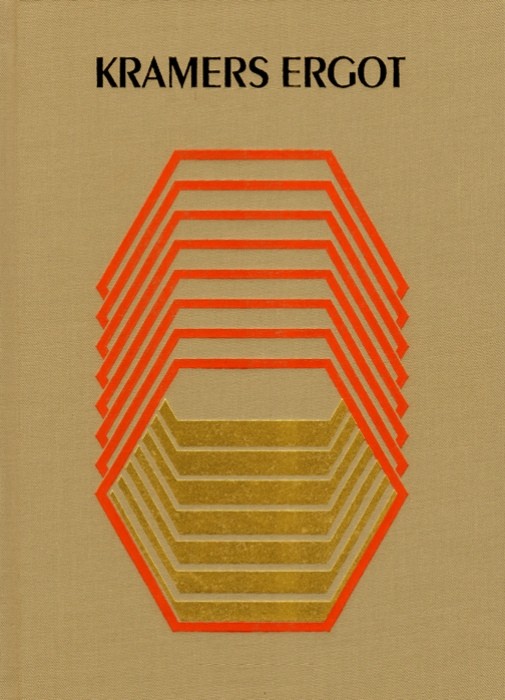
Kramers Ergot 8
Robert Beatty, Gabrielle Bell, Chris Cilla, Anya Davidson, Ron Embleton, C.F., Sammy Harkham, Tim Hensley, Kevin Huizenga, Ben Jones, Frederic Mullalley, Takeshi Murata, Gary Panter, Johnny Ryan, Leon Sadler, Frank Santoro, Dash Shaw, Ian Svenonius, writers/artists
Sammy Harkham, editor
PictureBox, January 2012
232 pages, hardcover
$32.95
Buy it from PictureBox
Buy it from Amazon.com

For today’s Comics Time review, please visit The Comics Journal.
Breaking Bad thoughts: Season Two finale
January 12, 2012SPOILERS SPOILERS SPOILERS
Breaking Bad thoughts: Season Two finale
* Well well well, look what we have here: a show about my favorite and most dreaded subject in fiction, mistakes from which we can never ever recover or atone.
* I mean, Christ Jesus, talk about upping the ante this season, and in this episode alone. The relentless focus on Jesse’s grief and Jane’s father’s grief was almost unbearable at times. Major, major kudos are due to Aaron Paul for sobbing as well as I’ve ever seen it done, just for example. And cutting from that poor sweet man talking about what a lovely dress he picked out for his dead daughter’s funeral to the infant daughter of the man who murdered her? Sticking the knife in and twisting.
* But the plane crash itself — that’s the big one. I don’t just mean in terms of the planning involved, since I’m past the point where “Wow, they had this all planned out from the beginning!” is anything but a trivia item. I mean the reliance on the power of imagery to make thematic connections that aren’t strictly tethered to the demands of the plot. Could anything that directly happened to or because of Walt personally been a more powerful indictment of his moral rot? Could some personal plot twist he understood as a ramification of his actions said more about where he is as a person and what his actions have set in motion than his look of abject horror as two planes collided in the sky and rained debris and death around him? For all I know Jane’s dad becomes a regular cast member and half of season three is dedicated to Walt and Jesse dealing with the fallout of their involvement in her death and her death’s involvement in the death of everyone on those planes. But it doesn’t matter at all if he does or if they do, any more than it matters for us to ever see Saul’s Mister Fix-It again to understand what his appearance in this episode says about Saul, Walter, Jesse, their world, the world. The images and the ideas make the point on their own.
Breaking Bad thoughts: Sweet Jane edition
January 11, 2012I have just one episode to go in Season Two. SPOILERS AHEAD.
* It’s been an eventful four or five episodes since last we talked, but in terms of Walter and Jesse’s business, the noteworthy thing for quite a long stretch there was how uneventful it was. Up until (let’s say) Jesse hired Badger, Combo, and Skinny Pete to work for him, our dynamic duo’s career really was, as I’ve said before, pretty much just a series of calamities flowing from Walter’s initial request to do a ride-along with Hank. But once Jesse and Walter go into business for themselves, you finally start seeing what I thought the show would be all along: a status quo for the science teacher-cum-meth dealer. There are bumps in the road, to put it mildly, but for the most part they’re no longer stumbling into kill-or-be-killed situations within half an hour of meeting someone else in the game. Skinny Pete getting mugged and Badger getting pinched really were just the cost of doing business, as Jesse always put it. Even “death by ATM” could have gone a lot worse for Jesse, and for a while at least it actually made his and Walter’s lives easier. (I’m not convinced it won’t come back to bite them if someone thinks to trace the bills from the machine, but we’ll table that for now.) A season and a half into the show, we finally got to find out what “business as usual” would look like.
* I think this is why the bottle episode in which Walter and Jesse get stranded out in the desert, as enjoyable as it was in the moment, felt so much like a throwback to the in-retrospect less-interesting first season. For one thing, it was in miniature what the whole series had largely been: Walter and Jesse careening from one catastrophe to the next. For another it required the two of them to drop down several levels in the competence they’d begun to display. (Although perhaps this was necessary to help set us up for Jesse’s drug-induced flameout of self-pity and resentment of Walter later in the season.)
* Though the show looks like it’s gonna slowfoot any involvement with the cartel, they gave the concept a big enough introduction to enable themselves to pay it off at any point down the line more or less at their leisure. A full narcocorrido music video (I thought I’d accidentally skipped to a bonus feature) threatening “Heisenberg”‘s murder followed by the memorably Boschian image of Danny Trejo’s severed head attached to a tortoise rigged with explosives is more than enough to establish the outfit’s deadly bonafides. The bomb sequence in particularly was beautifully shot, edited, and recorded — truly like hell on earth.
* And once again you have to grudgingly respect Hank, who despite his twin poles of bluster and panic had the presence of mind to run back into the fray, whip off his belt, and use it as a tourniquet to save his fellow agent’s life. It’s perverse that he’s so good in these life and death situations that are making him sick.
* Took me a while to get used to seeing Bob Odenkirk in a drama, even if he’s the comic relief. I kept waiting for him to sing the praises of Cinco’s new bowel-irritating gel or whatever. But he’s perfectly ridiculous in that role, and he’ll forever make me wonder if any of the ambulance-chasers whose commercials I see during episodes of Judge Judy are secretly some gangster wannabe’s consigliere.
* Shoulda seen Skyler’s storyline coming, I suppose. I mean, I guess I did — you knew the moment she asked to see Ted Beneke that she and this guy had some kind of history, and that her present circumstances might lead to history repeating itself. But I didn’t anticipate some of the particulars, like that history being a) sexual harassment, and b) a secret she kept from Walt all these years, which makes me wonder if c) it wasn’t sexual harassment at all, although d) you’d think it would have been addressed in one of their private conversations if it had been a fling and the harassment story was just a bowdlerized version Sky told her sister. At any rate, it’s the details that stick out here: Skyler’s quiet but unmissable reliance on a cleavage-centric wardrobe; the fact that Ted actually does seem like a prototypical “nice boss”; the excruciating “Happy Birthday, Mister President” song at Ted’s birthday; Ted watching Skyler walk back across the parking lot after she decides to stick it out with him despite his tax evasion. And of course, as it turns out, Hank’s not the only one in the family who’s pretty good at their job of ferreting out wrongdoing.
* As awkward as Skyler’s birthday serenade was, the sequence leading up to Combo’s murder was tense. I haven’t felt that way watching TV in a long time, that sickening dread when you know at any moment someone’s going to pop up and shoot someone. I’m easily spooked enough by loud noises to turn down the volume in situations like that so that when the inevitable gunshot rings out I don’t jump in my chair. The weird thing? I love feeling this way.
* Despite how awful Walter has become in many ways, I still beamed and clapped and “yesss!”ed when he got the good news about his cancer. Didn’t you?
* After more or less stopping for a third of the season or so, those ominous black-and-white opening flashfowards hinting at an unspecified, explosive disaster at Casa White returned with a vengeance — and two body bags — in the very same episode where Walt starts tinkering with the water heater and the floorboards. Clever of the show to tease us with a possible “way out” of these grim prophecies that doesn’t involve a meth-lab explosion or an attack by a psychotic rival. Extra high-school English class points for the “something’s rotten in the Whites’ foundation” metaphor, too.
* Jane was a toughie for me. For the longest time, she just rang a bit false. There were some too-writerly bits there — the tattoo artist who refuses to get any tattoos because it’s too big a commitment is like something out of a lousy Vertigo comic — but mainly the problem was this: What on earth would this lovely, sardonic, canny person see in a goofball loser like Jesse? Only the tackiness of her tattoo design gave us any indication that she’d ever give Jesse the time of day.
* It was only as time went on, not even when we find out she was recovering addict but only after she fully relapses and becomes a real cutthroat junkie, did it become apparent that her attraction to Jesse was at least in part her addict self’s compulsion for self-destruction. On some level this was a deeply unhappy person just aching to fall back off the wagon. Renting to Jesse, befriending Jesse, sleeping with Jesse — all stepping stones to the inevitable other side.
* A little too inevitable for me, alas and alack. Basically, I did a full-on Lando Calrissian “Hello, what have we here?” when I laid eyes on Krysten Ritter (I’ve mentioned my thing for pale dark-haired girls, right?) and couldn’t resist looking her up on the Internet. So I ended up spoiling her eventual fate for myself. It wasn’t so bad, though. I mean, it was clear that that would have been a distinct possibility the moment she turned back around from the door of Jesse’s apartment and joined him for a smoke in his bedroom. Plus, it gave her dad Q from Star Trek: The Next Generation‘s decision to give her till tomorrow, and his conversation about daughters with Walt in the bar later that night, an absolutely crushing weight of sadness. (I’m almost worried to watch the finale because I don’t want to find out how the poor man takes it.)
* But the big thing is that fortunately (? if that’s the right word for this), I didn’t know anything about Walter’s involvement in her death. That still hit me like a bus. Once again, I sat on the train watching the show on my laptop, utterly, physically aghast. It was a brilliantly acted scene: When he sees that she’s choking, Walter instinctively runs over to her side. But then we watch as he weighs the life of this girl who’d been awful to him against the lives of Jesse, his daughter, his son, his wife, and, yes, himself. Simply thinking about the decision was a decision, in this case.
* The filmmakers expertly toyed with our sympathies throughout the whole episode leading up to Jane’s death, too. She’d been a pretty sympathetic character, and a crushable one too, but her drug use brought out a really ugly side, and by the time she was on the phone with Walt threatening to burn his life to the ground, those crime-drama “aaaah! kill her!” audience instincts kicked in. But between Walt’s affection for his daughter and Jane’s Dad’s affection for Jane, it became impossible to root for her demise for every long, even after she choose to taunt Walt when he drops the money off instead of joining a contrite Jesse in assuring Walt that no further blackmail is forthcoming. And the way she died ended up being one of the most horrendously intimate death scenes I’ve ever seen. It’d be tough to root for Tuco going out like that, let alone Apology Girl. And it was next to impossible to root for Walt standing there and letting it happen.
* By the end of the scene I realized that Walt and I had had the exact same physical reaction to what he’d done: we both watched it unfold slackjawed, hands over our gaping mouths.
* Everyone else noticed that Jane said she was gonna kick tomorrow, right? She don’t mean no harm, she just don’t know what else to do about it.
The return of Breaking Bad thoughts
January 6, 2012SPOILER ALERT SPOILER ALERT SPOILER ALERT
* I took a break from Breaking Bad during the holidays — my train-commute viewing time was no longer a going concern, after all. Looking back, I think I skipped out on writing about the last episode I saw prior to the break, S02E04. From what I recall you had some pretty intense rock-bottom character work in that: Jesse gets thrown out of his aunt’s house and ends up crying on the floor of the RV, literally covered in shit. Walt lies to Skyler just about as brutally as he possibly could — lying about having no idea what he’s supposed to have been lying about; those living-room confrontations are pretty much always dynamite. And Skyler smokes a cigarette while pregnant, testing our tolerance for bad behavior even on a show like this (it’s pretty amazing what audiences will and won’t forgive) and exercising a shitty form of control over one of the few aspects of her life left for her to control.
* But even with all of that filed away in my brain, I was unprepared for how disorientingly good the show was right away upon returning to it a couple days ago with episode 5. (This is the episode where Walt and Jesse decide to go into business for themselves, while Hank has a panic attack following his promotion to the El Paso bureau.) And I think “disorienting” is the word that occurred to me because of the actual filmmaking, the way in which the show took images and abstracted them. The overhead shot of the river as two immigrants swim across it and a shot swooping down the hospital exterior as Walt exits following his last round of chemo were the most dramatic examples at first.
* But throughout the episode, inanimate objects became near-abstract containers of information, a la this David Bordwell essay. Lingering close-ups on the glass cube with the teeth inside, on the endlessly long bill printed out at the cancer clinic, on the pack of cigarettes Walter retrieves from the toilet, on the “hope is the best medicine” button he receives, on the food prepared by both Skyler and Jesse in separate attempts to pass off an abnormal situation as anything but — all of these items mean something to the narrative simply by existing, and all the show needs to do is show them for us to understand what that meaning is. Thoughtful and fun filmmaking.
* Nice character bits in this one too, of course. I really loved the question mark added by Walt when he says “thank you?” to the woman behind the counter at the clinic after she wishes him well, for example. And I loved “Jesse Comes Alive,” which is how I mentally referred to his competent, enthusiastic, clear-eyed behavior at the meeting with his meth friends when he directs them in the logistics of the new operation, in contrast to how pro forma all the “word up, yo” talk between all of them felt beforehand.
* But then.
* I want to be clear here: I was not IN ANY WAY prepared for that poor little boy to appear in the next episode, when Jesse raided the meth-heads’ house to get his money and meth back. Not in any way. I can’t recall the last time a show so dramatically raised its stakes, transforming a really well-done crime thriller into a brutally depressing meditation on the central crime’s effects at the drop of a hat.
* Oh wait, yes I can: “University” from Season Three of The Sopranos. Seriously, that wasn’t a rhetorical device just then — I realized at this very moment that really was the last time I felt the ground open up beneath a crime show that completely. Not even the best moments of Boardwalk Empire season two pulled it off like this, because those moments felt personal, not directed at, more or less, all of humanity like that beautiful little red-headed boy covered in filth did.
* The fact that he looked a bit like my daughter in terms of his facial features? I’d be lying if I said that didn’t have anything to do with how knocked out I was by this episode. By the end, as Jesse raced to round up his money, call 911, and rescue the little boy before the cops came, I had my hands in my hair, staring bug-eyed and slackjawed like a Brian Bolland drawing of the Joker. That was enormously powerful television. The business with Walt unleashing decades of fury at Gretchen was just icing, as was the fact that he’d essentially ordered a pair of murders the episode before. Suddenly the show proved itself willing to look something very, very ugly right in the face. Thrilling.
The 20 Best Comics of 2011
January 1, 201220. Uncanny X-Force (Rick Remender and Jerome Opeña, Marvel): In a year when the ugliness of the superhero comics business became harder than ever to ignore, it’s fitting that the best superhero comic is about the ugliness of being a superhero. Remender uses the inherent excess of the X-men’s most extreme team to tell a tale of how solving problems through violence in fact solves nothing at all. (It has this in common with most of the best superhero comics of the past decade: Morrison/Quitely/etc. New X-Men, Bendis/Maleev Daredevil, Brubaker/Epting/etc. Captain America, Mignola/Arcudi/Fegredo/Davis Hellboy/BPRD, Kirkman/Walker/Ottley Invincible, Lewis/Leon The Winter Men…) Opeña’s Euro-cosmic art and Dean White’s twilit color palette (the great unifier for fill-in artists on the title) could handle Remender’s apocalyptic continuity mining easily, but it was in silent reflection on the weight of all this death that they were truly uncanny.
19. The League of Extraordinary Gentlemen Vol. 3: Century #2: 1969 (Alan Moore and Kevin O’Neill, Top Shelf/Knockabout): I’ll admit I’m somewhat surprised to be listing this here; I’ve always enjoyed this last surviving outpost of Moore’s comics career but never thought I loved it. But in this installment, Moore and O’Neill’s intrepid heroes — who’ve previously overcome Professor Moriarty, Fu Manchu, and the Martian war machine — finally succumb to their own excesses and jealousies in Swinging London, allowing a sneering occult villain to tear them apart with almost casual ease. It’s nasty, ugly, and sad, and it’s sticking with me like Moore’s best work.
18. The comics of Lisa Hanawalt (various publishers): As I put it when I saw her drawing of some kind of tree-dwelling primate wearing a multicolored hat made of three human skulls stacked on top of one another, Lisa Hanawalt has a strange imagination. And it’s a totally unpredictable one, which is what makes her comics – whether they’re reasonably straightforward movie lampoons or the extravagantly bizarre sex comic she contributed to Michael DeForge and Ryan Sands’s Thickness anthology, as dark and damp as the soil in which its earthworm ingénue must live – a highlight of any given day a new one pops up.
17. Daybreak (Brian Ralph, Drawn and Quarterly): Fort Thunder’s single most accessible offspring also proves to be its bleakest, thanks to an extended collected edition that converts a rollicking first-person zombie/post-apocalypse thriller into a troubling meditation on the power of the gaze. Future artcomics takes on this subgenre have a high bar to clear.
16. Habibi (Craig Thompson, Pantheon): It’s undermined by its central characters, who exist mainly as a hanger on which this violent, erotic, conflicted, curious, complex, endlessly inventive coat of many colors is hung. But as a pure riot of creative energy from an artist unafraid to wrestle with his demons even if the demons end up winning in the end, Habibi lives up to its ambitions as a personal epic. You could dive into its shifting sands and come up with something different every time.
15. Ganges #4 (Kevin Huizenga, Coconino/Fantagraphics): Huizenga wrings a second great book out of his everyman character’s insomnia. It’s quite simple how, really: He makes comics about things you’d never thought comics could be about, by doing things you never thought comics could do to show you them. Best of all, there’s still the sense that his best work is ahead of him, waiting like dawn in the distance.
14. The Congress of the Animals (Jim Woodring, Fantagraphics): The potential for change explored by the hapless Manhog in last year’s Weathercraft is actualized by the meandering mischief-maker Frank this time around. While I didn’t quite connect with Frank’s travails as deeply as I did with Manhog’s, the payoff still feels like a weight has been lifted from Woodring’s strange world, while the route he takes to get there is illustrated so beautifully it’s almost superhuman. It’s the happy ending he’s spent most of his career earning.
13. Mister Wonderful (Daniel Clowes, Pantheon): Speaking of happy endings an altcomix luminary has spent most of his career earning! Clowes’s contribution to the late, largely unlamented Funny Pages section of The New York Times Magazine is briefly expanded and thoroughly improved in this collected edition. Clowes reformats the broadsheet pages into landscape strips, eases off the punchlines and cliffhangers, blows individual images up to heretofore unseen scales, and walks us through a self-sabotaging doofus’s shitty night into a brighter tomorrow.
12. The comics of Gabrielle Bell (various publishers): Bell is mastering the autobiography genre; her deadpan character designs and body language make everything she says so easy to buy – not that that would be a challenge with comics as insightful as her journey into nerd culture’s beating heart, San Diego Diary, just by way of a for instance. But she’s also reinventing the autobiography genre, by sliding seamlessly into fictionalized distortions of it; her black-strewn images give a somber, thoughtful weight to any flight of fancy she throws at us. What a performance, all year long.
11. The Armed Garden and Other Stories (David B., Fantagraphics): Religious fundamentalism is a dreary, oppressive constant in its ability to bend sexuality to mania and hammer lives into weapons devoted to killing. But it has worn a thousand faces in a millennia-long carnevale procession of war and weirdness, and David B. paints portraits of three of its masks with bloody brilliance. Focusing on long-forgotten heresies and treating the most outlandish legends about them as fact, B.’s high-contrast linework sets them all alight with their own incandescent madness.
10. Too Dark to See (Julia Gfrörer, Thuban Press): It was a dark year for comics, at least for the comics that moved me the most. And no one harnessed that darkness to relatable, emotional effect better than Julia Gfrörer. Her very contemporary take on the legend of the succubus was frank and explicit in its treatment of sexuality, rigorously well-observed in its cataloguing of the spirit-sapping modern-day indignities that can feed depression and destroy relationships, and delicately, almost tenderly drawn. It’s like she held her finger to the air, sensed all the things that can make life rotten, and cast them onto the pages. She made something quite beautiful out of all that ugly.
9. The comics and pixel art of Uno Moralez (self-published on the web at unomoralez.com): What if an 8-bit NES cut-scene could kill? The digital artwork of Uno Moralez — some of it standard illustrations, some of it animated gifs, some of it full-fledged comics — shares its aesthetic with The Ring‘s videotape or Al Columbia’s Pim & Francie: a horror so cosmically black, images so unbearably wrong, that they appear to have leaked into and corrupted their very medium of transmission. Moralez fuses crosses the streams of supernatural trash from a variety of cultures — the legends and Soviet art of his native Russia, the horror and porn manga of Japan, the B-movies and horror stories of the States, the formless sensation aesthetic of the Internet itself — into a series of images that is impossible to predict in its weirdness but totally unflagging in its sense that you’d be better off if you’d never laid eyes on it. I can’t wait to see more.
8. The comics of Michael DeForge (various publishers): The last time you saw a cartoonist this good and this unique this young, you were probably reading the UT Austin student newspaper comics section and stumbling across a guy named Chris Ware. All four of DeForge’s best-ever comics — his divorced dad story in Lose #3, his shape-shifting/gender-bending erotica in Thickness #2, his self-published art-world fantasia Open Country, and his gorgeously colored body-horror webcomic Ant Comic — came out this year, none of them looking anything at all like anything you could picture before seeing your first Michael DeForge comic. It’s almost frightening to think where he’ll be five years from now, ten years from now…or even just this time next year.
7. The comics and art of Jonny Negron (various publishers): What if someone took Christina Hendricks’s walk across the parking lot and trip to the bathroom in Drive and made an entire comics career out of them? That is an enormously facile and reductive way to describe the disturbing, stylish, sexy, singular work of Jonny Negron, the breakout cartoonist of the year, but it at least points you in the right direction. No one’s ever thought to combine his muscular yet curiously dispassionate bullet-time approach to action and violence, his Yokoyama-esque spatial geometry, his attention to retrofuturistic fashion and style, his obvious love of the female body in all its shapes and sizes, and his ambient Lynchian terror; even if they had, it’d be tough to conceive of anyone building up his remarkable body of work in such a short period of time. Open up your Tumblr dashboard or crack an anthology (Thickness, Mould Map, Study Group, Smoke Signal, Negron and Jesse Balmer’s own Chameleon), and chances are good that Negron was the weirdest, best, most coldly beautiful thing in it. It’s like a raw, pure transmission from a fascinating brain.
6. The Wolf (Tom Neely, I Will Destroy You): Neely’s wordless, painted, at-times pornographic graphic novel feels like the successful final draft to various other prestigious projects’ false starts. It’s a far less didactic, more genuinely erotic attempt at high-art smut than Dave McKean’s Celluloid; a less self-conscious, more direct attempt at frankly depicting both the destructive and creative effects of sex on a relationship via symbolism than Craig Thompson’s Habibi; a blend of sex and horror and narrative and visual poetry and ugly shit and a happy ending that succeeds in each of these things where many comics choose to focus on only one or two.
5. The Cardboard Valise (Ben Katchor, Pantheon): Prep your time capsules, folks: You’d be hard pressed to find an artifact that better conveys our national predicament than Ben Katchor’s latest comic-strip collection, a series of intertwined vignettes created largely before the Great Recession and our political class’s utter failure to adequately address it, but which nonetheless appears to anticipate it. Its message — that blind nationalism is the prestige of the magic trick used by hucksters to financially and culturally ruin societies for their own profit — is delightfully easy to miss amid Katchor’s remarkable depictions of lost fads, trends, jobs, tourist attractions, and other detritus of the dying American Century. He’s the very most funnest Cassandra around.
4. Love from the Shadows (Gilbert Hernandez, Fantagraphics): I picture Gilbert Hernandez approaching his drawing board these days like Lawrence of Arabia approaching a Turkish convoy: “NO PRISONERS! NO PRISONERS!” In a year suffused with comics funneling pitch-black darkness through a combination of sex and horror, none were blacker, sexier, or more horrific than this gender-bending exploitation flick from Beto’s “Fritz-verse.” None also functioned as a rejection of the work that made its creator famous like this one did, either. Not a crowd-pleaser like his brother, but every bit as brilliant, every bit as fearless.
3. Garden (Yuichi Yokoyama, PictureBox): Like a theme park ride in comics form — with the strange events it chronicles themselves resembling a theme park ride — Yokoyama’s book is a breathtaking, breathless experience. Alongside his anonymous but extravagantly costumed non-characters, we simply go along for the ride, exploring Yokoyama’s prodigious, mysterious imagination as he concocts a seemingly endless stream of increasingly strange interfaces between man and machine, nature and artifice. As a metaphor for our increasingly out-of-control modern life it’s tough to top. As pure thrilling kinetic cartooning it’s equally tough to top.
2. Big Questions (Anders Nilsen, Drawn & Quarterly): Last year, I wrote that if the collected edition of Nilsen’s long-running parable of philosophically minded birds and the plane crash that turns their lives upside-down didn’t top my list whenever it came out, it must have been some kind of miracle year. Turns out that it was. But you’d pretty much have to create a flawless capstone to a thirty-year storyline of neer-peerless intelligence and artistry to top this colossal achievement. Nilsen’s painstaking, pointillist cartooning and ruthless examination of just how little regard the workings of the world have for any given life, human or otherwise, marks him as the best comics artist of his generation, and solidifies Big Questions‘ claim as the finest “funny animal” comic since Maus.
1. Love and Rockets: New Stories #4 (Gilbert and Jaime Hernandez, Fantagraphics): Gilbert got his due elsewhere on my list, so let’s ignore his contribution to this issue, which advance the saga of his bosomy, frequently abused protagonist Fritz Martinez both on and off the sleazy silver screen. Instead, let’s add to the chorus praising Jaime’s “The Love Bunglers” as one of the greatest comics of all time, the point toward which one of the greatest comics series of all time has been hurtling for thirty years. In a single two-page spread Jaime nearly crushes both his lovable, walking-disaster main characters Maggie and Ray with the accumulated weight of all their decades of life, before emerging from beneath it like Spider-Man pushing up from out of that Ditko machinery. You can count the number of cartoonists able to wed style to substance, form to function, this seamlessly on one hand with fingers to spare. A masterpiece.
Comics Time: The Armed Garden and Other Stories
December 23, 2011
The Armed Garden and Other Stories
David B., writer/artist
Fantagraphics, 2011
112 pages, hardcover
$19.99
Read a 10-page preview and buy it from Fantagraphics
Buy it from Amazon.com

About the only things impeding my completely unfettered enjoyment of and admiration for everything David B. achieves in The Armed Garden and Other Stories are familiarity — all three of the stories collected here appeared in the late, lamented Mome anthology at some point; and, because I am a morose and unpleasant person, the happy-ish ending — after a book of unremitting, near-ecstatic horror and slaughter, ending on a wistful up-note felt not so much unearned as simply unwanted.
But that’s it. Other than that, this collection is absolutely marvelous, a gorgeous and searing series of comics from an artist who earns the description “freakishly talented” as completely as anyone this side of his trans-Atlantic fellow in crafting dreamy/nightmarish parables of violent spirituality, Jim Woodring. These comics are just as lovely and just as frightening, and just as singularly the work of their creator and no other.
For one thing, they’re beyond gorgeous. B. has developed a form of expressionism that relies on curves rather than angles; simultaneously he’s fleshed out the stark intensity of his high-contrast black-and-white brush art with a lush duotone gold. The result is battle scenes that have the sharpness and savagery of a woodcut and the graphic simplicity of a Dark Ages tapestry, tied to prophetic visions and hedonistic reveries among the faithful peopled by characters you want to reach out and hug, so sensuous and inviting they seem. It’s almost unfair that the same guy who’s developed a visual language for battle that eloquently reduces its participants to interlocking graphic elements, a nigh-undifferentiated sea of swords, spears, grimaces, and gouts of blood, also maybe draws the sexiest pale naked women I’ve ever seen in a comic. But from a thematic perspective these stories are all about the way that religious fervor lends an air of all-consuming certainty and nobility to mankind’s most animalistic pursuits, from fucking to killing, so I suppose it’s only fitting.
Each of The Armed Garden‘s three stories — “The Veiled Prophet,” the title tale, and “The Drum Who Fell in Love” — is a transmission from the heightened reality of the legends surrounding various medieval religious cults, one from Arab Islam and two warring ones from European Christianity. As I mentioned when the first of these, “The Veiled Prophet,” hit our shores in Mome, they at first appear to all the world like an expressionistically drawn work of historical fiction, until the supernatural elements slowly take over. By focusing on the individual actors in each drama rather than the overall sweep of the history surrounding them, B. allows the reader to experience the awe and terror of divine/demonic intervention as a first-hand phenomenon; within the world of the stories, it’s as easy to swallow as are the more run of the mill sources of conflict with rival Popes and caliphs and so on. We get swept up in the madness and terror along with everyone else. And in all three cases, the fire of divinity burns too bright, consuming those who fan its flames. Provided you don’t buy its actual intervention in actual real life — and by situating each story within rejected, discredited cults, B. effectively removes the need to consider the more popular and lasting religions in this light — the message is clear: Belief in this shit, actualized into violence, will drive you as crazy and destroy you as completely as the real deal will. Gazing beneath the veil of the prophet, building your own paradise on earth, peering into the secrets of creation, communing with the dead, slaughtering out a path for God to tread — these things will kill you, blind you, drive you insane, leave you stranded with only the music of your mind for company. Ugly truths, presented as beautifully as is humanly possible.
Comics Time: Mome Vol. 22: Fall 2011
December 20, 2011
Mome Vol. 22: Fall 2011
Zak Sally, Kurt Wolfgang, Jordan Crane, Chuck Forsman, Steven Weissman, Sara Edward-Corbett, Laura Park, Tom Kaczynski, Joe Kimball, Jesse Moynihan, Josh Simmons, The Partridge in the Pear Tree, Malachi Ward, Eleanor Davis, James Romberger, Derek Van Gieson, Michael Jada, Tim Lane, Nate Neal, Wendy Chin, Anders Nilsen, Tim Hensley, Lilli Carré, T. Edward Bak, Nick Drnaso, Joseph Lambert, Paul Hornschemeier, Sergio Ponchione, Nick Thorburn, Dash Shaw, Ted Stearn, Jim Rugg, Victor Kerlow, Noah Van Sciver, Gabrielle Bell, writers/artists
Eric Reynolds, editor
Fantagraphics, 2011
240 pages
$19.99
Buy it from Fantagraphics
Buy it from Amazon.com

For today’s Comics Time review, please visit The Comics Journal.
Comics Time: The Man Who Grew His Beard
December 19, 2011
The Man Who Grew His Beard
Olivier Schrauwen, writer/artist
Fantagraphics, 2011
112 pages
$19.99
Buy it from Fantagraphics
Buy it from Amazon.com

I love the disconnect between how big and broad this substantial softcover feels in your hands — at 8.5″ x 10.25 ” it’s just wider enough than your average graphic novel for you to notice it — and how tiny the little mustachioed men who people most of its stories feel on those big pages, even when they’re blown up big enough to occupy most of that real estate. It makes it feel even more alien than it already does, like you’re reading a giant’s minicomic.
I don’t know how he does it, whether it’s something to do with how he puts his lines down on paper or some treatment he gives them afterwards, but Flemish cartoonist Olivier Schrauwen makes images that look like…like they’ve been transmitted from a great distance, both temporally and spatially. He’s playing with style and design that looks like it predates the Great War, and his line and coloring has a hazy feel to it that could be a copy of a copy of a copy, or the unlikely discovery of some microscopic cartooning culture blown up to many times its original size. There’s something off about it just as surely as there’s something off about Al Columbia’s rotted vintage visuals, only here that off-ness is used in service of a comic surrealism rather than a horrific one. He can stick it to the foibles of the 19th-century culture whose style he’s swiping quite effectively — savagely satirizing Belgium’s bloody misadventures in Africa, parodying the West’s penchant for physiognometric pseudoscience with a look at what your hairstyle says about your mental capacity, lampooning the world-conquering bravado of transcontinental rail, and so on. But he’s just as likely to seize upon some strange effect or idea and run with it as hard and as fast as he can — nearly literally, in once case, in a strip consisting more or less solely of a guy running to catch a train for as long and as far as the train would have taken him to begin with. Elsewhere, he shatters sexual idylls into a fractal feedback loop or draws its participants as lounging subjects of some kind of weird cubist stained-glass art style; portrays a man who can paint things into existence by trotting him through a series of guffaw-inducing mock-heroic poses, as if his miraculous creative abilities were only secondary proof of his awesomeness compared to his theatrical, bare-chested machismo; and uses bright color and titanically ornate architecture against bland ones to paint a portrait of a catatonic man’s rich and adventurous interior life of fun with a beautiful woman and a beloved child, in a story that ended up being actually quite moving. These are deeply strange short stories, centered on ideas and effects I’m not sure I’d have come up with even with the proverbial infinite number of monkeys at my disposal; even in this short-story-saturated alternative comics climate, there’s nothing else like his gestalt of finely calibrated nonsense. It’s good to see that comics can do things you’d never think to ask of them in the first place.
Comics Time: Mome Vol. 21: Winter 2011
December 16, 2011
Mome Vol. 21: Winter 2011
Sergio Ponchione, The Partridge in the Pear Tree, Josh Simmons, Dash Shaw, Steven Weissman, Kurt Wolfgang, Sara Edward-Corbett, Nicolas Mahler, Tom Kaczynski,
Josh Simmons, Jon Adams, Nate Neal, T. Edward Bak, Michael Jada, Derek Van Gieson, Nick Thorburn, Lilli Carré, writers/artists
Eric Reynolds, editor
Fantagraphics, 2011
112 pages
$14.99
Buy it from Fantagraphics
Buy it from Amazon.com

It was the best of Momes, it was the worst of Momes. Alright, that’s not quite accurate, and not quite fair, either. But this unwittingly penultimate issue of Fantagraphics’ long-running alternative-comics anthology — page for page the longest-running such enterprise in American history! — is a hit-or-miss affair in the mighty Mome manner. In the miss column you can place Sergio Ponchione’s bombastic, cartoony fantasy about an imaginary childhood friend brought to life; there’s really not much more to it than that description would indicate. Ditto Kurt Wolfgang’s next “Nothing Eve” chapter, which continues to work the “people still act pretty much the same even though the end of the world is coming” buttons it’s been mashing since issue #1. T. Edward Bak’s “Wild Man” remains awkwardly paced due to its split-up narrative captions; Nicolas Mahler’s autobio strip remains of limited interest to people not Nicolas Mahler; Lilli Carré’s contribution is nicely colored in reds and blues but otherwise insubstantial.
A few contributions are both hit and miss at once. Sara Edward-Corbett’s near-wordless reverie involving inanimate objects romping around the outside of a house comes across more inscrutable than mysterious, but at the same time her crosshatching and linework are an absolute marvel, and she’s playing with forms (and with form) in a fashion reminiscent of John Hankiewicz, if not as successful. Steven Weissman’s deadpan “Barack Hussein Obama” strips fall flat when they merely parody the rhythms of four-panel gag comics, but spring to surreal and oddly scathing life when he injects a healthy dose of the sinister supernatural into them. I’ve never quite cottoned to the way Jon Adams’s razor-thin line and labored-over character renderings sit against the large white expanses of his pages, and his writing feels overwrought to me, but he does give his blackly humorous tale of a hunting expedition gone bad a laugh-out-loud visual punchline. And Nate Neal’s caveman morality play makes much better use of his meaty cartooning than his lukewarm slice-of-lifers do, though the conceit of gibberish dialogue from the cavepeople conceals more than it illuminates.
So that leaves the hits, and they’re strong enough to make the book worth checking out. Dash Shaw continues his seemingly ongoing series of adaptations of “reality” programming, this time an excerpt from a making-of documentary about Jurassic Park; he has a really sharp and off-kilter eye for people observing and commenting on their own behavior for a camera, and his transition from talking heads to full documentary “footage” is a gleeful one. Nick Thorburn’s take on Benjamin Franklin, a first-person monologue in which Ben lets us in on a dirty little secret, is anachronistically absurd (“In Seventeen-Sumthin’-Er-Other, right before I invented electricity and just after I’d sired my illegitimate son, I received an e-mail from Lord Sandwich about comin’ to London to take part in this new secret society known as ‘The Hellfire Club.'”) and very funny, with a great undergroundy character design for Franklin himself. Derek Van Gieson’s murky World War II period piece continues to stun from page to page. Tom Kaczynski examines home ownership during terminal-stage capitalism as only he can, casting it as a catalyst for powerful erotic and apocalyptic impulses and proving himself once again to be one of the most stealthily sexy cartoonists working today. “Stealthy” isn’t a word I’d use for Josh Simmons, but he doesn’t need it: His weird psychedelic fantasia on racism “The White Rhinoceros” is as bold and bulldozing as the giant slugs who stampede across its pages, and the elliptically concluded short story “Mutant” ends with an image of an enraged creature in the form of a human female, her nude body shadowed but covered in glistening sweat, that may as well symbolize the workings of Simmons’s entire brain. You gotta take the rough to find the diamonds.
Comics Time: Like a Sniper Lining Up His Shot
December 15, 2011
Like a Sniper Lining Up His Shot
Jacques Tardi, writer/artist
Adapted from the novel by Jean-Patrick Manchette
Fantagraphics, 2011
104 pages, hardcover
$18.99
Buy it from Fantagraphics
Buy it from Amazon.com

Fantagraphics keeps churning out lovely translated editions of the work of French comics master Jacques Tardi at a truly admirable clip. This is the fourth in what I would consider the “main” Tardi/Fanta line of slim hardcovers, distinguished by no-nonsense Adam Grano cover designs that juxtapose key sequences from Tardi’s ink-soaked black-and-white interior art with bold slashes of color and block-caps for title and credit information. If there’s a better mesh of form and function in comics right now this side of, well, Fanta’s similarly designed Love and Rockets digests, I’d sure love to see it. In much the same vein as Tardi’s previously released adaptation of a crime novel by author Jean-Patrick Manchette, West Coast Blues, Like a Sniper Lining Up His Shot is a grimly economical story of a man on the run from killers, with bursts of violence that slash in out of nowhere. In other words, you can judge a book by its cover.
The two books have much in common beyond their common language of men hunted by hitmen across the length and breadth of France. Both protagonists are bizarrely taciturn about their predicaments, almost to the point where you’re left to wonder if there’s some sort of mental disability involved. Sniper‘s Martin Terrier (great name) at least has the excuse of being a mercenary and assassin to explain his flat affect where killing’s concerned, as opposed to West Coast Blues‘ wrong-man family-guy George. But he more than makes up for this in his personal life, a disaster area predicated entirely on his deeply weird belief that the women with whom he involves himself can switch their affections for him on and off after years of one setting or the other based solely on his say-so. The woman for whom he “risks it all” — Tardi and Manchette’s interpretation of this trope ladles those sneer quotes all over it — is an equally weird and unpleasant character, ricocheting from emotion to emotion when Terrier’s intrusion into the life she’d been leading without him violently upends her status quo, until finally settling on some weird sneering sex-hungry brand of derision for him and his life of crime and adventure.
In all honesty, these emotional and behavioral patterns are so difficult to recognize even when allowing for the remove between a hired gun and a comics critic that they get in the way of Tardi and Manchette’s underlying indictment of society’s casual savagery, and its propensity for covering up that savagery with bullshit that pins it on The Other Side. But upon reflection, I wonder if these terrible people’s wholly alien way of interacting with the world isn’t just the writing equivalent of Tardi’s nimble, scribbled line and sooty blacks — a heightened reality in which things are rendered at their loosest, darkest, ugliest, and weirdest at all times. God knows both creators can rigorously focus when they want: Manchette squeezes a quite believable custody battle between Terrier and his now-ex girlfriend over a beloved cat into the proceedings, while Tardi’s backgrounds and lighting effects are a realist’s dream and his action sequences and set-pieces are choreographed tighter than a drum. The absurdist demeanors may prevent everything from gelling as well as they might have done, but overall the book delivers a fastball to your face so hard that you barely have time to notice that some of the stitches need straightening.
Boardwalk Empire thoughts: Season Two finale
December 12, 2011SPOILER WARNING! SPOILER WARNING! IT’S A SPOILER WARNING
* Aw, y’know, I really don’t have a lot to say about this episode that isn’t self-evident. It was a gutsy, “My god, they’re really gonna do it” hour of television, and between this episode and the last it’s really taken on a horrific new life of its own. It seems to me that Nucky’s final act against Jimmy was as much the show embracing its identity as Nucky doing so. I imagine it has to be really, really freeing to be a show willing to do what it did last night. What have they got to be afraid of now, creatively speaking? This is going to be a magnificently dark and wild new thing if they keep at it.
* I’m also struck by creator Terence Winter’s willingness to admit (“admit”) in the various interviews you’ll find online that Jimmy’s murder by Nucky wasn’t planned from the beginning — not even from the beginning of this season. Hell, not even from the middle of this season! It’s nice to see that nerd culture’s insistence that the execution of a blueprint is the highest form of fiction can still go unheeded in some quarters. Try to imagine, say, Damon Lindelof and Carlton Cuse saying they winged something of this magnitude at any point after Lost Season Two, or the writer of a major superhero-comics event eschewing “we’ve been planting the seeds for this for four or five years now” in favor of “three issues ago we just figured ‘what the hell.'”
* Matt Zoller Seitz is on to something when he says that this episode was Boardwalk Empire embracing its own lack of depth, but only in a sort of backwards way. The other day I wrote the following about the artsy genre-based comics available at the Brooklyn Comics and Graphics Festival:
…the genre work and genre pastiche on hand felt neither safe nor slick, hiding behind the safety net of retro or “coolness.” It felt raw, a little ugly, a little exhibitionistic, even a little unpleasant. The closest comparison I can think of is the early short stories of Clive Barker: impressionistic, sexualized stuff that re-awoke the horror in horror. To dismiss it all as shock tactics is to make a pretty big mistake, I think.
And this is sort of what Boardwalk Empire reminds me of now, too. I think that when genre material gets sufficiently dark or weird, when its tropes become a form of sinister spectacle rather than just hitting the marks required by convention, that’s a depth all its own — a way to communicate the emotional and philosophical themes more commonly articulated by plot and dialogue, if at all. Boardwalk Empire the balls-to-the-wall engine of gorgeously shot death that perverts and slaughters its characters in periodic fits of nihilism is saying at least as much as some theoretical Boardwalk Empire the meticulously drawn character study, or Boardwalk Empire the rigorously developed allegory for contemporary political issues.
* I’m going to echo everyone in wishing that this could have happened without eliminating Michael Pitt from the show. That guy was magic in this role; I’m not sure I can be any more articulate about it than that. Just look at the way he commanded the camera, and our emotions, simply by standing there being silent — looking out the window and smoking a cigarette, watching with tears in his eyes as his son rides a pony while his mother waits nearby, standing unarmed in the pouring rain in front of an unfinished war memorial while men of the generation that sent him to kill and die in the trenches gather around to execute him. His limp is already one of my favorite things on any TV show.
* But! Think of all the oxygen this move frees up for the show’s other characters. It’s clear the filmmakers realize they struck gold with Jack Huston’s Richard Harrow — now there’s nothing stopping them from making him as big a role as Jimmy was, if they want. The major organized crime figures — Chalky White or Arnold Rothstein or Al Capone or Luciano & Lansky — will have more room to breathe. The attractively repellent sidekicks Dunn Pearnsley and Owen Sleater can get their days in the sun too. Eliminating Jimmy, Angela, the Commodore, Lucy, and a couple of the aldermen this season ought to enable the show to reshuffle things according to its more recently developed strengths. (I was briefly convinced/concerned that Van Alden had ridden off into the sunset as well, until I read interview after interview in which Winter said it was no coincidence that he’d “retired” to the Illinois town that is soon to be come Al Capone’s stomping grounds.)
* My one complaint about the finale is that in screwing Nucky over by giving away his highway land, Margaret gave it to the one organization less sympathetic than that of organized crime, the Roman Catholic Church. I get the sense that that act is meant to be a period for that whole plot thread and not an ellipsis, and thank god for that because in addition to being less sympathetic than the mob, the Church is about forty seven thousand times more boring. What I’m really curious about is whether this augurs a new Lockhorns model for the Nucky/Margaret marriage, or if this was one last fuck-you she had to get out of her system after his transparent bullshit about the deaths of Neary and Jimmy, and now she’ll be less adversarial but more canny.
* Nucky, Lucky, Jimmy, Mickey, Manny, Waxy, Chalky, Tommy, Lucy.
* There was something truly awful about that final flashback to the trenches. For one thing it implies that even in death Jimmy could not escape the war. But worse is that we never actually see the horror Jimmy experienced. The vision ends when Jimmy climbs over the lip of the trench. What he endured can never be shared with anyone, not even the audience watching omnisciently as he dies. As someone once said, “In the end, you die in your own arms.”
* Finally:
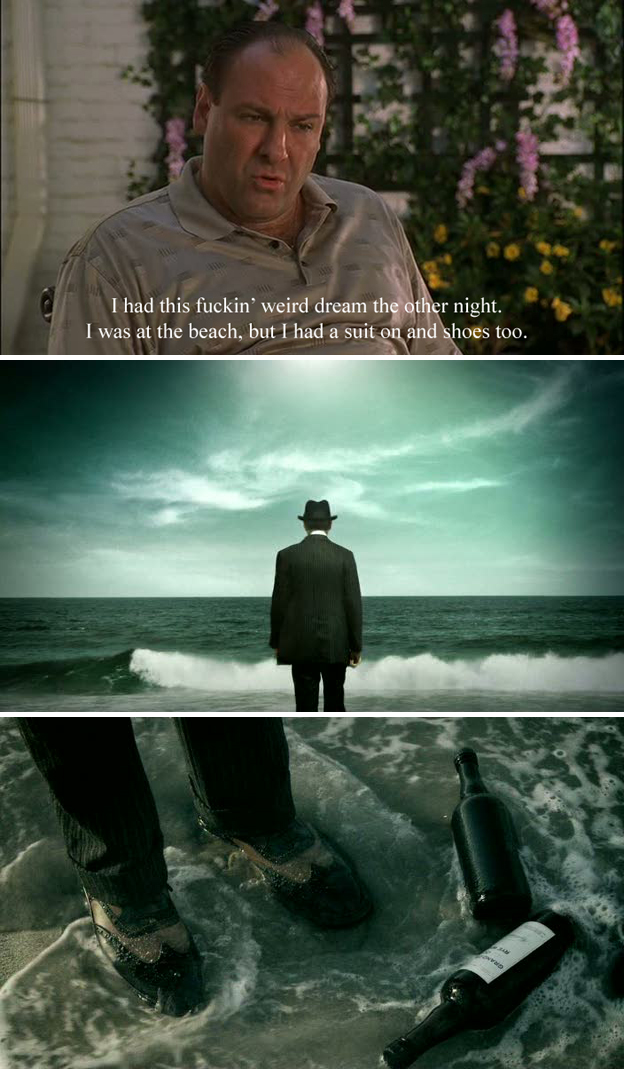
Don’t stop believing. (Via Bohemea.)
Comics Time: The End of the Fucking World Part One
December 9, 2011
The End of the Fucking World Part One
Chuck Forsman, writer/artist
self-published, December 2011
12 pages
$1
Buy it from Oily Boutique
How’s that for a title? And I’m pleased to say the contents are just as good. Forsman has become a must-read talent for me; each new minicomic shows growth. He’s a cartoonist of great restraint, in terms of both visuals (this is all slight, feathery lines and quiet, flat-affect “acting” from the characters) and pacing (this is all no-nonsense page-long vignettes, with dialogue and captions strategically deployed for a steady beat-beat-beat rhythm). His characters themselves feel considered and lived-in. The lead character here is a believably blasé creep recounting his childhood, marked by killing animals, mutilating himself, and discovering his inability to feel love or have a sense of humor. But thanks to a terrific hesher character design, his evident sociopathy come across not like some heavy-handed depiction of a budding Ted Bundy but like a satire of run-of-the-mill teenage-dirtbag-ism. He’s like Beavis Bateman.
These two potentially opposing views of our hero come together in the story’s centerpiece, the four pages dedicated to his going-through-the-motions relationship as a 16-year-old with his pretty, forward girlfriend Alyssa. It’s easy to see how his aloofness could come across as attractive, and the resulting, detailed depiction of skewed adolescent sexuality is as skeevy and funny and sexy and creepy as they come. He fantasizes about strangling her as she tells him “God, I want you” takes off her shirt; their tongues intertwine like snakes on a caduceus; he presses his face to the convex arc of her stomach as she presses his head down toward her underwear; they have the following amazing exchange as they snuggle on the couch watching TV:
“Have you ever eaten a pussy before?”
“Sure.”
“I want you to eat mine.”
“Right now?”
The awkwardness, the urgency, the sense of discovery, the sense of revulsion — it’s all true, even if you’ve never stuck your own hand in a garbage disposal on purpose or crushed a stray cat with a stone. Where those aspects of the story will take us is something I’m greatly looking forward to seeing in future issues, given where we’ve gone here.
More Breaking Bad thoughts
December 8, 2011I finished the third episode of Season Two today. SPOILER WARNING
* Three episodes into Breaking Bad Season Two and it already feels almost like a different show. A better show, for sure. Tighter, quieter, more serious.
* A whole lotta factors go into that. For starters, this story arc — call it “Travels with Tuco” — isn’t just technically the payoff for the work done in the seven-episode season one, it’s literally the intended culmination of that work. As I found out from my illustrious commenters after I wrote my post, Season One wasn’t that short by design, but due to the writers’ strike. So if I got to the end feeling a bit uncertain about what the show had said, there was a good reason for it: It hadn’t gotten the chance to finish talking. Here, it did.
* The funny thing about that metaphor, though, is that what it said, it said pretty quietly. Each episode began with a wordless interlude of pure sound and vision: a charred pink stuffed animal and its severed eyeball floating in the Whites’ black-and-white pool as approaching sirens wail; Jesse’s bullet-ridden lowrider mindlessly hopping up and down in the middle of nowhere; a worm’s eye view of Jesse and Walter burying a gun, then trudging through the sun-soaked wilderness. The first two openings warn of impending doom (we still haven’t seen how that first glimpse of the future comes to be); the second is two guys stranded with their thoughts and their consciences, just putting one foot in front of the other in hopes that they’ll get somewhere eventually. It all seems pretty apt.
* Each episode also had a goal-oriented plotline. Walter and Jesse needed to survive their meet-up with Tuco now that they’d seen him kill a man. Walter and Jesse needed to escape Tuco’s clutches now that he’d kidnapped them. Walter and Jesse needed to get home and get clear of the law now that they’d been traced to Tuco and potentially involved in the events leading to his death. This didn’t just keep me focused from moment to moment — it kept them focused, which in turn kept Walter from getting too absent-minded professor and Jesse from getting too juggalo. It was a leavening influence on their behavior that I appreciated, besides being a heck of an incentive for me to keep watching.
* There are many examples of this: The tense moments as they stand around with Tuco while his minion takes care of the body; Jesse and his prostitute friend’s interrogations by Hank and Gomez; Walt’s dealings with his doctors; Jesse’s attempt to get Tuco to snort the poisoned meth. But the best example of this? Tio Salamanca and his tell-tale bell. I’m always happy to see that cadaverous-looking assassin guy from Scarface, and this was a wonderfully awful use for him — a way to coax mounting dread out of Walter and Jesse, and mounting anger and frustration out of their captors, be it Tuco at first or Hank and Gomie later on. And again, it shows how good Breaking Bad is at using film’s aural dimension. (I forgot to mention this during my Boardwalk Empire piece yesterday, but I think a big reason why I was so fond of last week’s episode was that it did things with sound that favorably reminded me of BB.) Edge of your seat stuff, often triggered by just the slightest cues: a look in the old man’s eyes as Tuco wheels him to the dinnertable, a disembodied “ding!” and a knock on the interrogation room door from Hank.
* And hey, let’s talk about Hank, too. When he’s broad, he’s very very broad, even now — the jocular racism, the macabre trophy from his big kill. But in these episodes we saw dimensions of him that may not quite compensate for these lapses in character, but at the very least flesh him out so he’s not just some grinning macho buffoon. As we’d previously seen in the intervention scene last season, it’s clear that Hank really does love and care about Walt, and that’s really endearing. He’s not just trying to find him to placate Marie and Skyler, he obviously really likes the guy and wants him to be okay. Just the force of effort it must have taken him to gain Jesse’s mom’s trust rather than bluster her defenses down is proof of that.
* Moreover, this is a guy who’s actually pretty good at his job, and that brings out some of his best and most interesting qualities. He’s dogged, focused, and intuitive in tracking down Walt — he’s able to turn off his bluster in order to win Jesse’s mom’s trust, which surely took some effort, and he’s able to jerry-rig a way to track Jesse down simply from hearing what kind of car he has. When we see him reviewing the break-in at the chemical plant or attempting to piece together the connection between the burglary, the new pure varieties of meth going around, and the deaths of Crazy Eight and Tuco, you can see he’s thoughtful, curious, attentive to detail, able to see the forest for the trees. Whatever his other shortcomings, and whatever the wisdom or morality of the drug war generally, it’s appealing to see him behave in this intelligent, competent, likeable manner. (He’s friendliest with Gomie during these interludes, too. And hey, you figure Gomie puts up with him for some reason despite all his piggishness, which also helps humanize the guy.)
* Ultimately, my main takeaway from this opening arc is that I might have had the wrong idea of what the show is even about. Going in, I really knew only the bare bones, a la “mob boss goes to therapy” or “plane crashes on a mysterious island”: “dying science teacher sells crystal meth to make money.” I assumed that meant that after seeing his initial decision to do this, we’d spend some time with the “new normal”: He’d make meth and sell it and keep it all a secret from his family and friends, and this would be the status quo until the end of the season or so, when something would happen. That’s how these things typically work: the cops and dealers on The Wire, Tony and friends on The Sopranos, the men and women of Sterling Cooper on Mad Men — not to mention the mobsters in GoodFellas and Casino, from whence all these shows can be traced via Scorses’s influence on David Chase — did basically their normal thing for a while, until something sends them off the tracks. But Walter never got on them! From the moment he decides to cook meth, he’s simply careened from one catastrophe to the next. He kills a guy in the first episode! And it’s been a series of cascading disasters ever since. That’s a very, very different way to approach this subject than what I expected — and I feel like in these last few episodes, the enormity of Walter’s situation is stripping down the show’s occasional goofiness quite a bit. When stripping naked in a grocery store and being taken to the hospital for neurological and psychiatric evaluations is your protagonist’s best-case scenario, you really don’t have time to monkey around. The seriousness of purpose really suits the show. I hope it keeps it up.