
Archive for the ‘Uncategorized’ Category
NEGRON
March 14, 2012This gets its own post:

Negron
by Jonny Negron
Softcover
80 full color, high gloss pages
6″ x 8″
$19.95
PictureBox, September 2012
more here
Comics Time: Pope Hats #1-2
March 13, 2012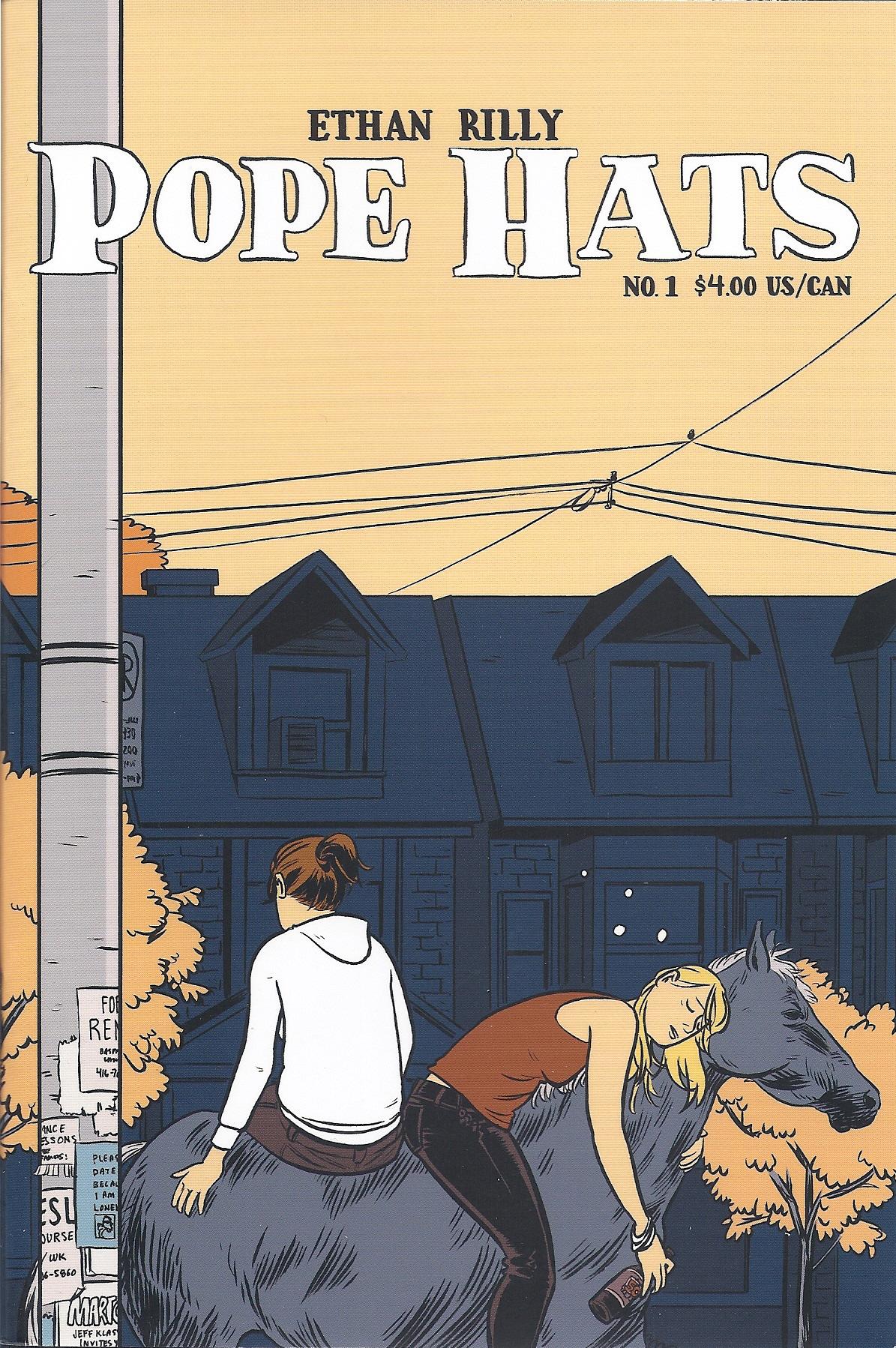
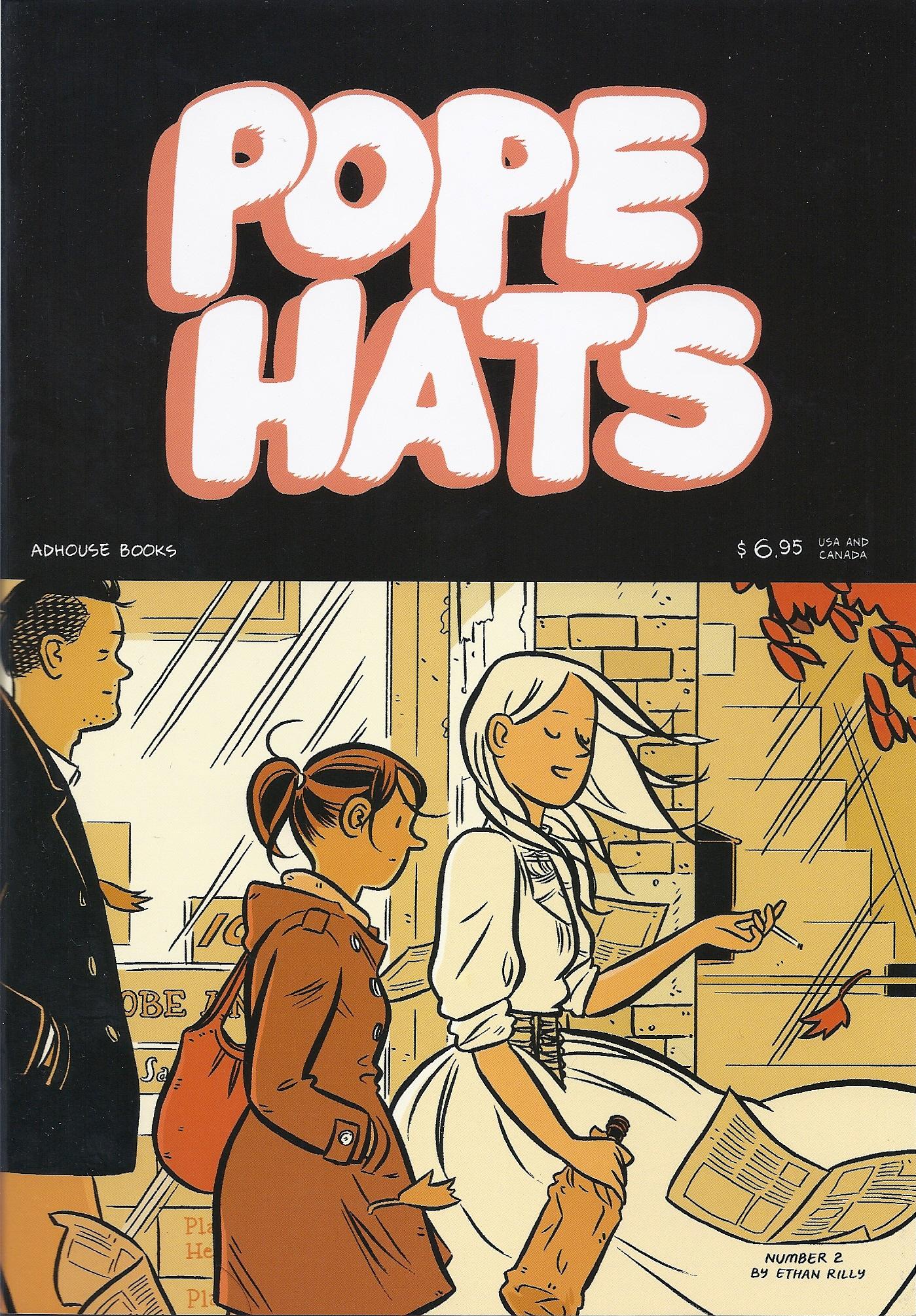
Pope Hats #1-2
Ethan Rilly, writer/artist
#1: self-published, 2009
32 pages
$4
Buy it from AdHouse
#2: AdHouse, 2011
40 pages
$6.95
Buy it and read a preview at AdHouse
You know, I was gonna be harder on these before I started flipping through them again in preparation for actually writing this review? I have no objection to slice-of-lifers, obviously, even stylized ones like these — the kind where everyone’s dialogue is constantly “on” (“Don’t you want to say goodbye to Peter?” “If by Peter you mean ‘my bed’ and by goodbye you mean ‘pass out in,’ then yes. Yes, I want to say goodbye to Peter immediately.”), and where the lead occasionally talks to a cartoon ghost, and has a boss who looks like the Kingpin, meditates in the lotus position in his office, dictates all his correspondence (including grocery lists) to three assistants in lieu of owning a computer, and lives in an adjoining hotel so he never has to go outside. What’s more, Rilly’s cartooning is absurdly proficient and elegant. I wish I could remember who I’m stealing this from because it’s the perfect way to describe it, but you really could sit Rilly down next to his fellow (mostly) Canadians in the core Drawn & Quarterly line-up — Seth, Adrian Tomine, Joe Matt, mid-period Chester Brown — or for that matter next to Los Angeles’ classy classicists Jordan Crane and Sammy Harkham, and he wouldn’t look the slightest bit out of place. But speaking of fellow Canadians (and of Los Angelenos, at this point), there’s a healthy dose of Bryan Lee O’Malley’s comparatively contemporary portraits of young urban semi-professionals in there along with the standard Gray/Segar roots, an influence the aforementioned snappy, showy speech and not-quite-magic realism only make clearer by the end of Pope Hats‘ second issue. The problem is that it’s all a bit too dazzling to actually get into, at least for me. Every word uttered, every gesture gestured by studious law-clerk lead character Frances and her drunken whirligig actress roommate Vickie is designed to drive home just how them they are at all times. If the story, such as it is at this point, is one of young people feeling locked into the personae and professions they’ve chosen themselves, then Rilly’s conveying this all too well — I never felt like the characters had been given the freedom to surprise him or me. (You could perhaps say the same for the whole package as comics, if you were feeling less than charitable. The random-ass title, the self-effacing tone of various bits of incidental copy here and there, supplementary short stories in which ironically verbose schmoes wax philosophical about the ineffable joy and dread of modern life — the only way it could be more of a ’90s altcomix solo-anthology throwback is if it had a letter column full of people asking permission to turn it into a student film.)
But that’s all just how I remembered the comics from my initial read; much of it vanished upon that aforementioned flipthrough, which ended up feeling like a tour of Pleasuretown. For all I may object to the flippant patter, Rilly has a terrific eye and ear for the intersection between a person and her job, and how what she does during work hours and off hours alternately aligns and contrasts in revealing ways. Vickie is a manic pixie dream girl for guys and something of an alcoholic trainwreck for her roommate Frances, but she’s also a compelling actress in local productions. Frances is dutiful at work and at home to the point of drudgery/neurosis, but she tells a pair of spooky true stories at the end of issue #1 — in medium-closeup direct-address Brian Bendis fashion, no less — that both showcase how well comics can do that sort of thing and demonstrate how her attention to detail can manifest itself as an engaging facet of her personality during her free time. Issue #2’s backup story “Gould Speaks” hits its “intellectual blowhard actually quietly emotionally wrecked by a breakup” note a little hard for my taste, but watching Rilly fill out the space of the bus on which the title character is taking a cross-country trip by almost constantly shifting angles from panel to panel is a multi-dimensional joy, and when the true meaning of the story’s title is revealed, I laughed out loud. And of course there’s the fact that Rilly is a fucking phenomenal drawer — of hair, of ceiling fans, of city streets, of bar interiors, of beds, of pretty much anything. See the cover of issue #2? The inside’s just as pretty. It’s that kind of comic. In other words it’s a good kind of comic — it could be better, yeah, but isn’t that what issue #3 is for?
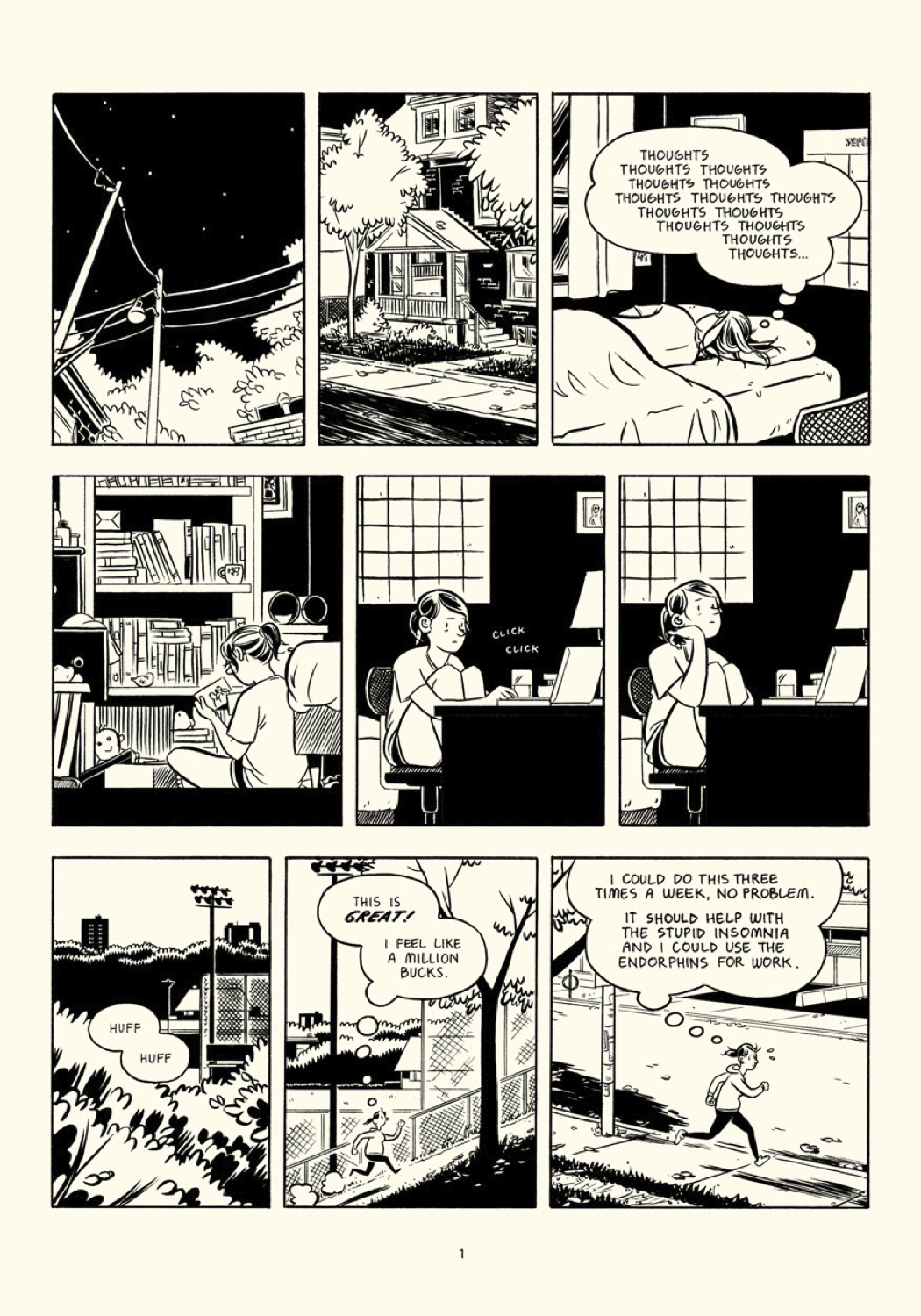
Kiss of Life/Roman Charity
March 12, 2012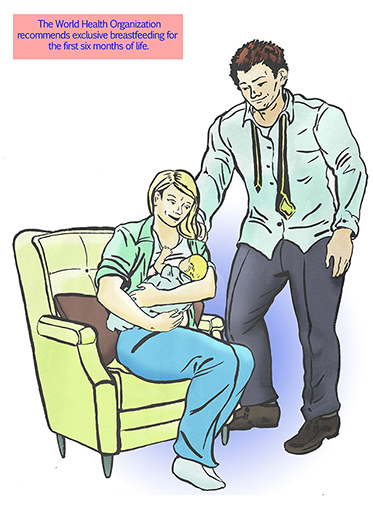
I’ve posted a new comic called “Kiss of Life/Roman Charity,” written by me and drawn by Isaac Moylan. I hope you like it.
You can find links to all my comics here.
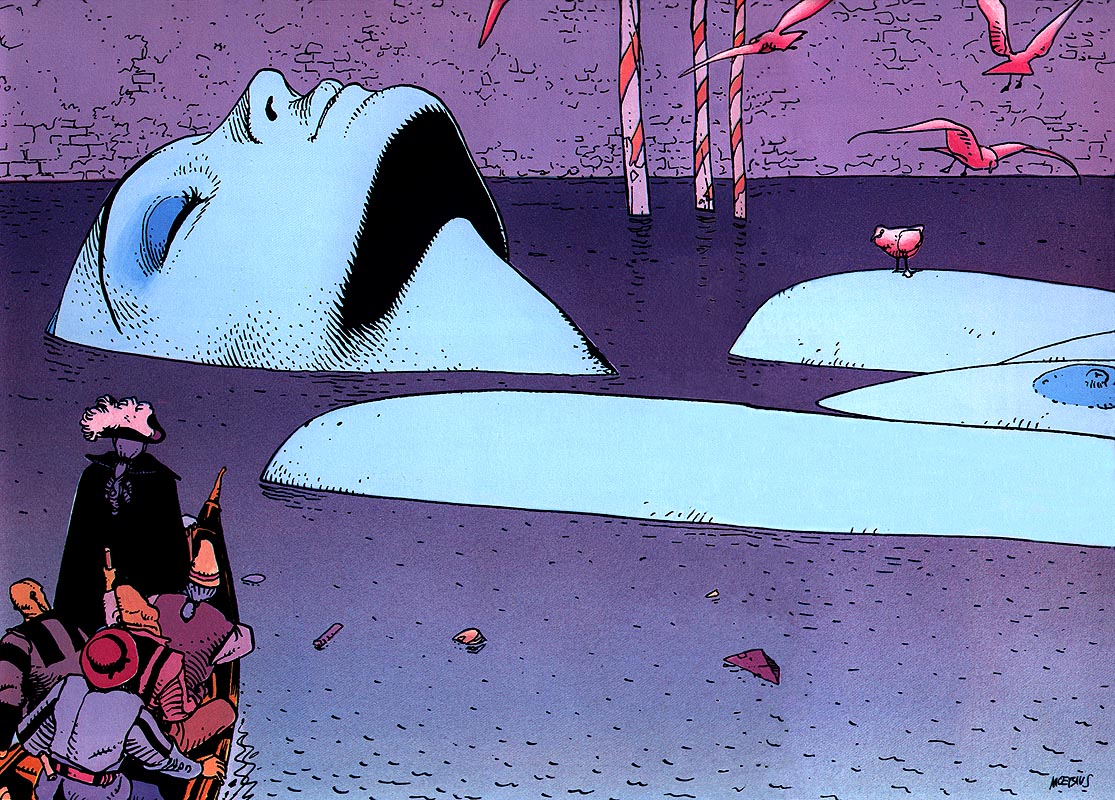
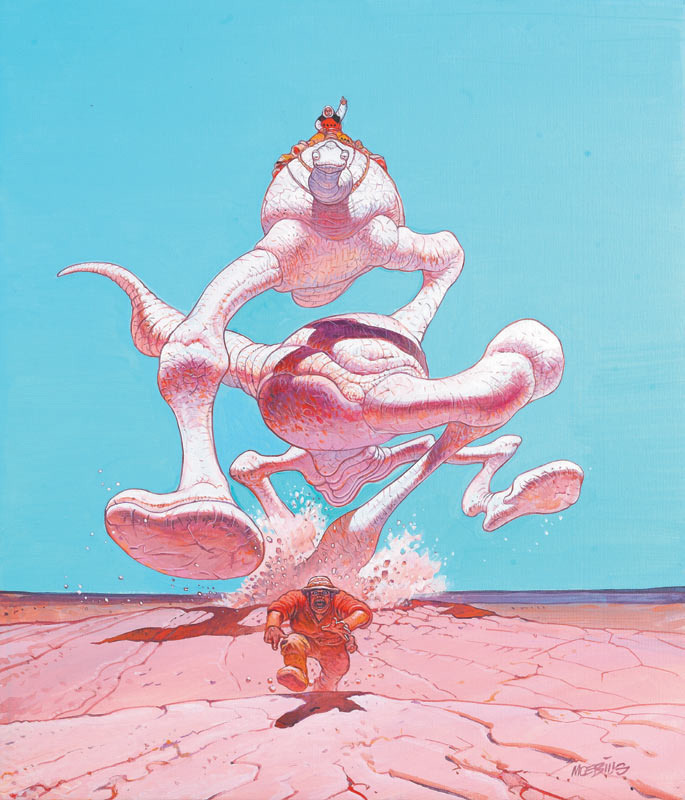
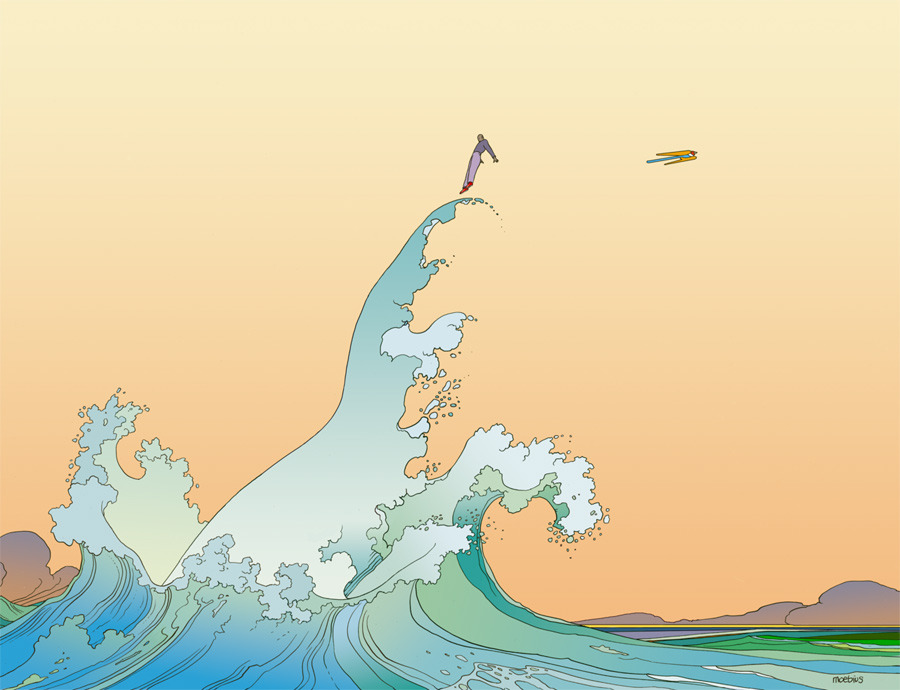
Moebius 1938-2012
March 10, 2012A foundational imagination.
Carnival of souls: Game of Thrones, Spurgeon/Ralph/Forgues, new Gabrielle Bell, new Prison Pit, more
March 8, 2012* When I saw that the Comics Journal had transcribed Tom Spurgeon’s panel interview with C.F. and Brian Ralph from Decembers BCGF, I quite literally stopped everything I was doing and read it from start to finish. Starting the panel with “Do you ever get tired of talking about Fort Thunder?” is perhaps the best first panel question I’ve ever seen.
* The Lands of Ice and Fire, an official box set of unprecedentedly detailed maps of Westeros and Essos based on the hand-drawn originals by George R.R. Martin and edited by Martin and the Westeros.org team? Oh, indeed.
* Speaking of Game of Thrones/A Song of Ice and Fire, for various reasons I’ll reveal sooner or later I’ve picked up the pace of blogging at my all-ASoIaF blog, All Leather Must Be Boiled, on everything from prophecy and free will to cruelty and empathy in art. (HEAVY SPOILERS at the links, as is always the case on Boiled Leather.)
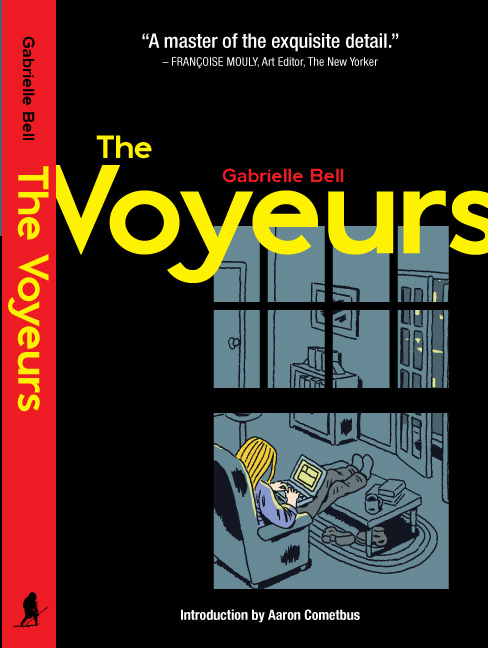
* Extremely good news: The Voyeurs, a new collection of Lucky strips and brand-new comics by Gabrielle Bell, who at this point is one of the best in the biz, from Tom Kaczynski’s Uncivilized Books — the imprint’s first book-format release, if I’m not mistaken.
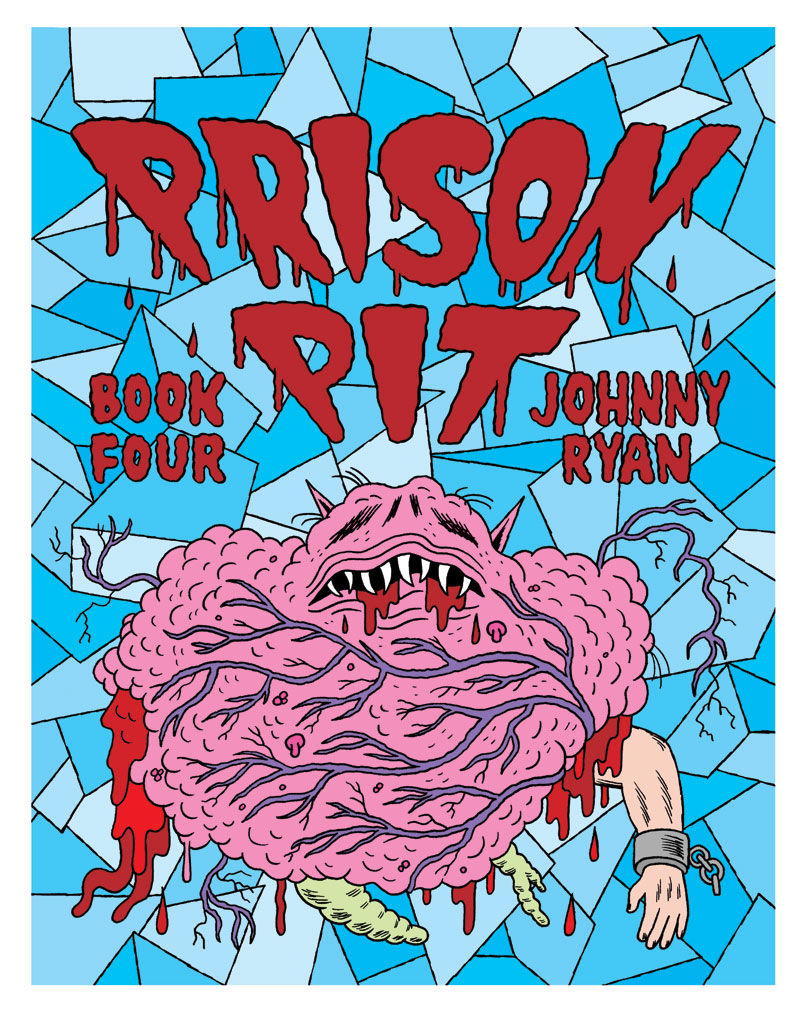
* Monster Brains unleashes the cover and a five-page preview of Johnny Ryan’s Prison Pit Book Four.
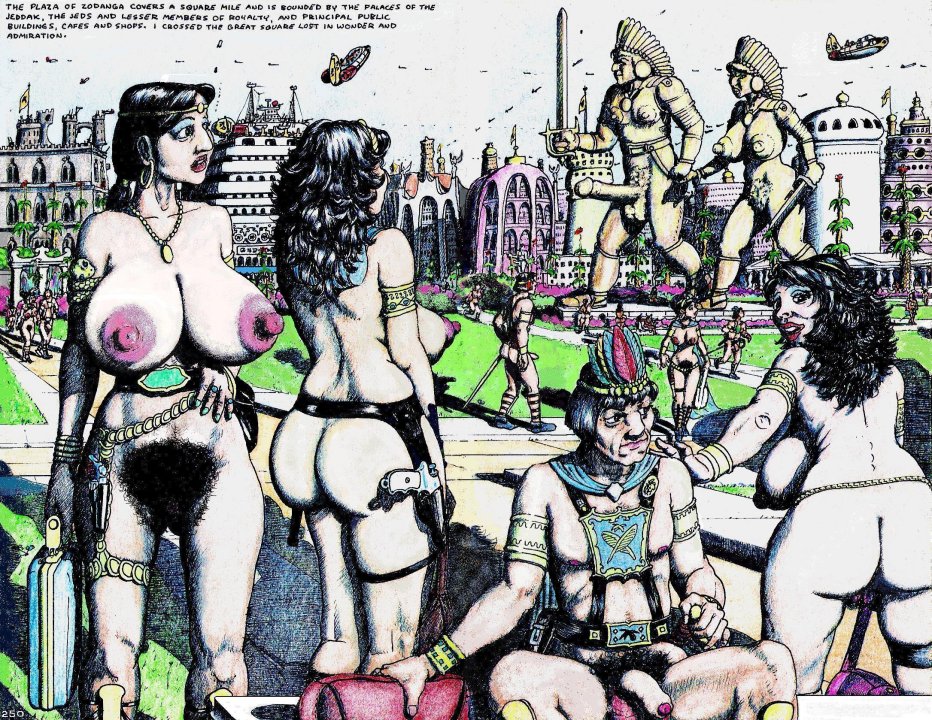
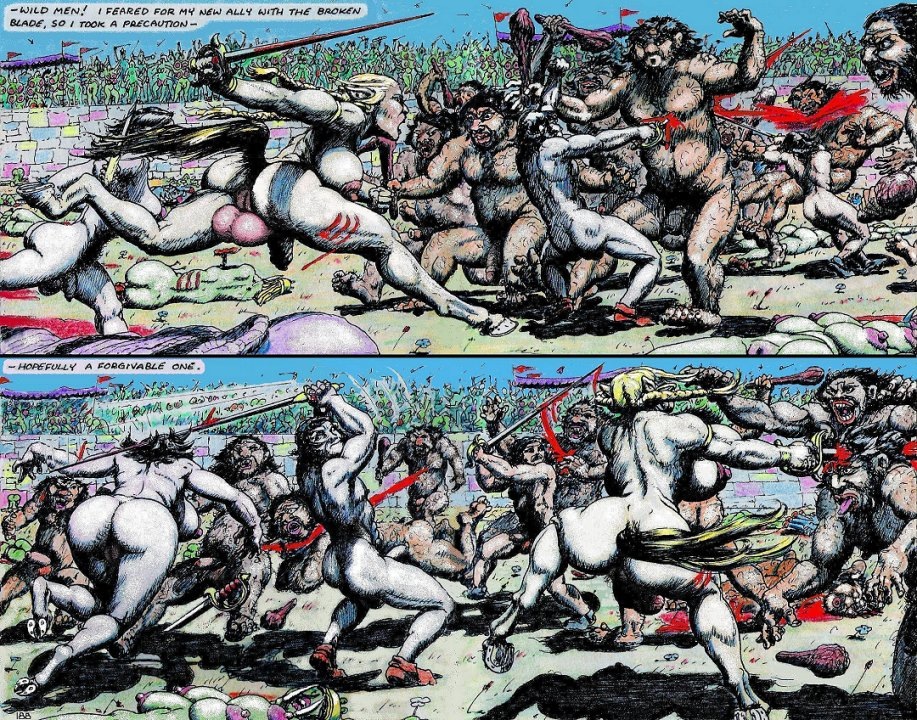
* Kudos to Heidi MacDonald for this wondrous discovery: James Killian Spratt’s extremely faithful, extremely NSFW adaptation of Edgar Rice Burroughs’s A Princess of Mars, the basis for this weekend’s much-anticipated/dreaded John Carter. If there were a way to print out an entire website and deliver it to Benjamin Marra by hand, that’s what I would do. Heidi provides context at the link — you’d be hard pressed not to see Fletcher Hanks and Basil Wolverton and Tim Vigil and any other weirdo Art Out of Time type you’d care to name in Spratt’s work, which is beautifully colored and features a nice rounded sense of line and character/creature/set design, however gonzo/outsidery it may otherwise be.
* Jordan Crane’s Keeping Two continues in its magnificently morbid vein.
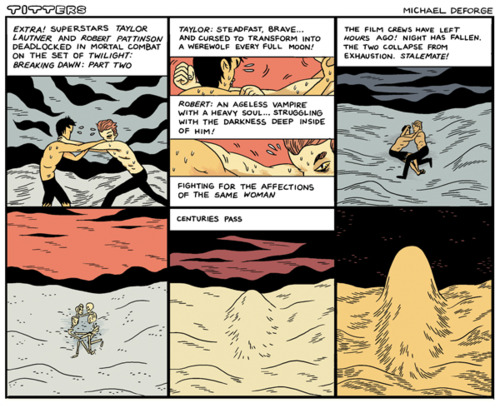
* Michael DeForge started hisself a tumblr.
* Links to every single Drawn and Quarterly cartoonist’s blog.
* The great critic Matt Zoller Seitz on the true appeal of Mad Men. He doesn’t mention them, but this is like a devastating rebuttal to those epically point-missing promos AMC’s running.
* Elsewhere, Seitz and Simon Abrams wonder why cinematic superheroes are such an artistic dud as a genre. I think Seitz sells the Iron Man movies short — no other superhero movies are based so completely on banter — but I think the point that the economics of these films mitigate against innovation or idiosyncracy is well-taken. The best superhero movie, in terms of success as art, remains Tim Burton’s Batman.
* Oh, this is just marvelous: At Press Play, Dave Bunting Jr. edited all the opening sequences from Breaking Bad Seasons One and Two together, then played them for film critic Sheila O’Malley, who’d never watched the show and was then asked to summarize what it was about based on only those introductions.
* Jonny Negron’s “Birthday Cake” > Rihanna & Chris Brown’s “Birthday Cake”
* Lauren Weinstein’s entire belief system = the Savage Dragon’s entire belief system
* New Renee French art is always a linkblogging gimme.
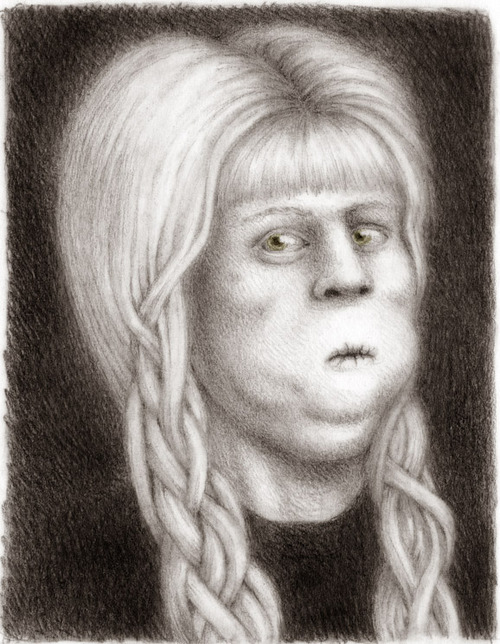
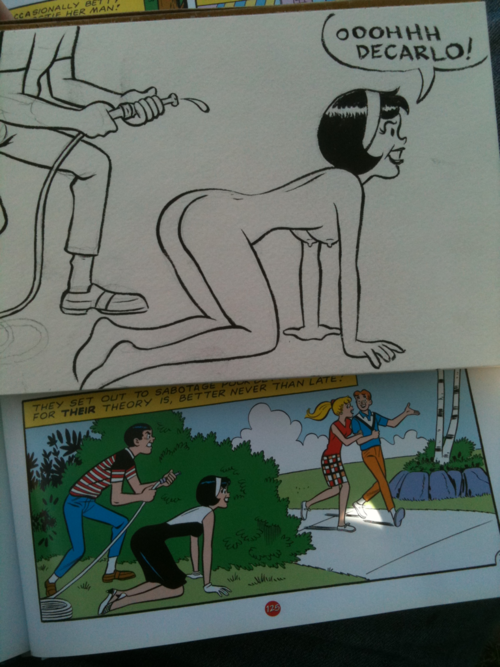
* Axe Cop is legitimately one of the most inventive and unpredictable and funny comics around, I don’t care if using a little kid to plot it is cheating.
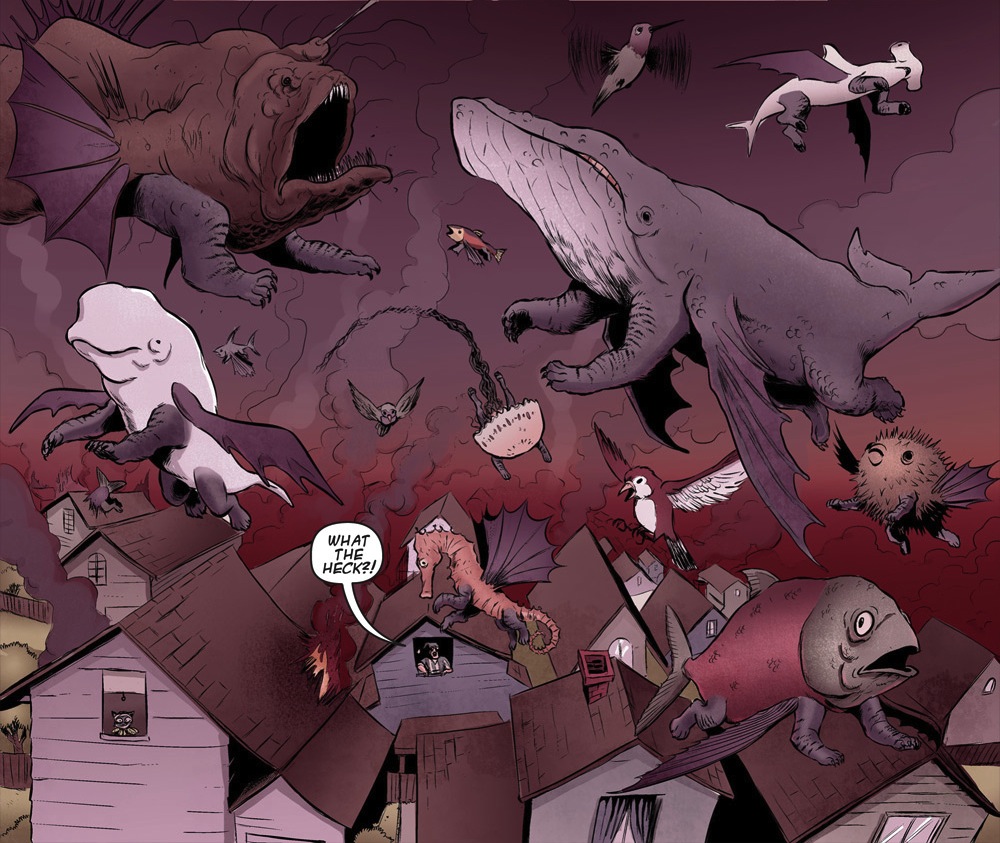
* Here’s a list of things that are sexier than L’Avventura-era Monica Vitti:

* Real Life Horror: Our constitutional-lawyer president and his attorney general have determined that “the President says so” is sufficient due process to have an American citizen executed without charge or trial. That’s a load off!
* Ralph McQuarrie, the artist who provided much of the visual imagination behind George Lucas’s Star Wars films, has died. Aeron Alfrey at Monster Brains remembers him the best way anyone can: with a gallery of his fascinating creature designs.
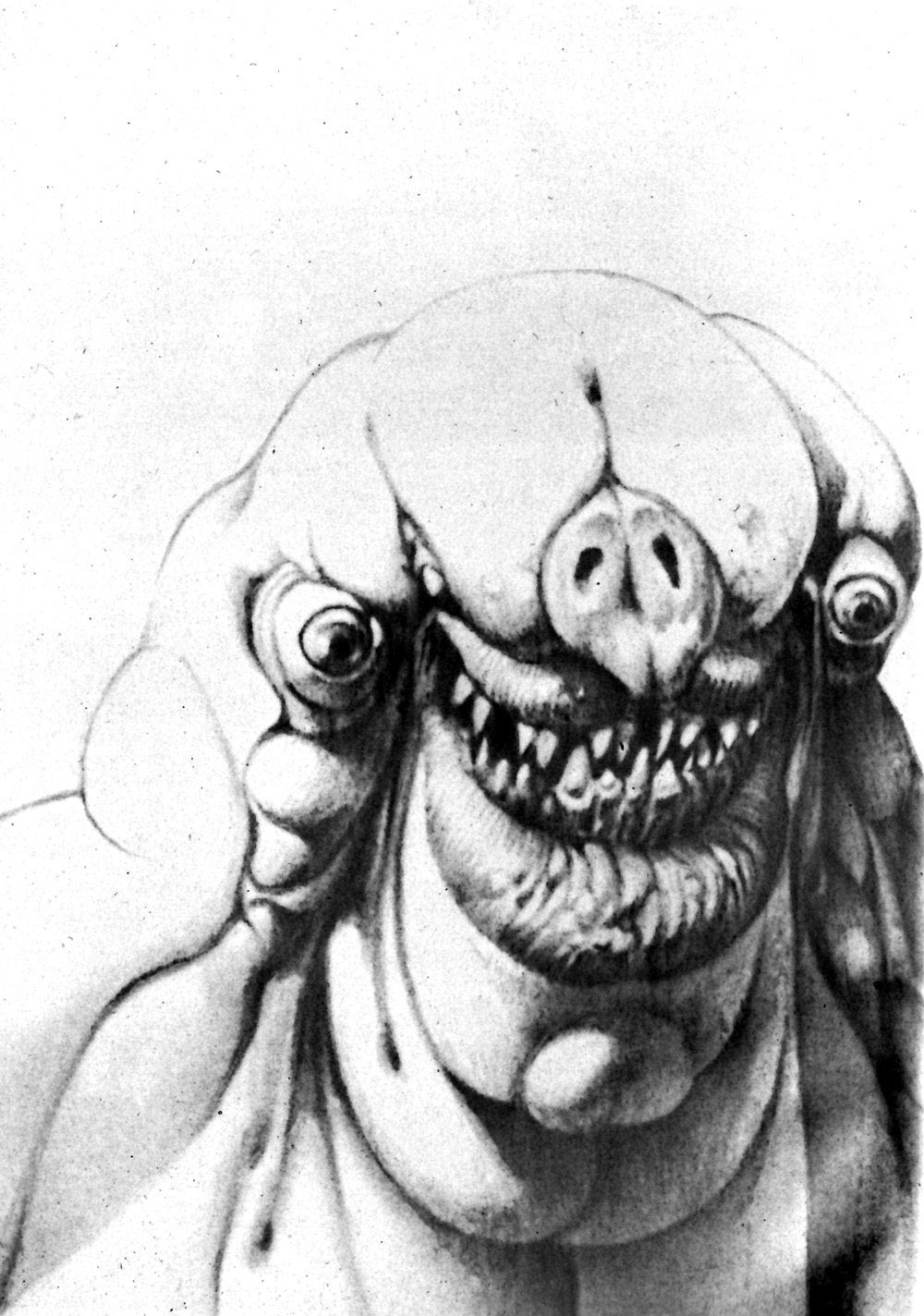
* Chills from this Game of Thrones Season Two trailer.
Carnival of souls: Perpetua on the music of 2003, Bordwell on film vs. digital, new Woodring/White/Smith/Cheng/Wiegle/Beto, more
March 2, 2012* Matthew Perpetua has posted his 2003 Survey Mix as part of his Fluxblog 10th Anniversary celebration, and this one’s an absolute beast. Hey Ya!, Maps, Heartbeats, Yeah, Seven Nation Army, Crazy in Love, Milkshake, Galang, I Believe in a Thing Called Love, Strict Machine, 99 Problems (Sean’s Imaginary Remix Wherein Jay-Z Doesn’t Structure the Chorus Around Referring to Beyoncé as a Bitch), Transatlanticism, We Will Become Silhouettes, Pass That Dutch, Never Leave You, Ignition (Remix), Toxic, In Da Club, Danger! High Voltage…What a goddamn year. Eight discs of fun.
* Here’s another big one, but for movie buffs rather than music buffs: David Bordwell’s masterfully enlightening and readable essay on the aesthetic, technical, and ineffable differences between film and digital projection. If you’ve ever really wanted to know what the difference is — resolution, artifacts, the process of projection, the impact on theaters, the reactions of audiences, the opinions of filmmakers, idiosyncratic observations on seeing a digital movie vs. a film one in any number of settings — this is quite simply the best piece on the topic I’ve ever seen. You’ll be smarter for having read it, but it’s a joy to read in the process.
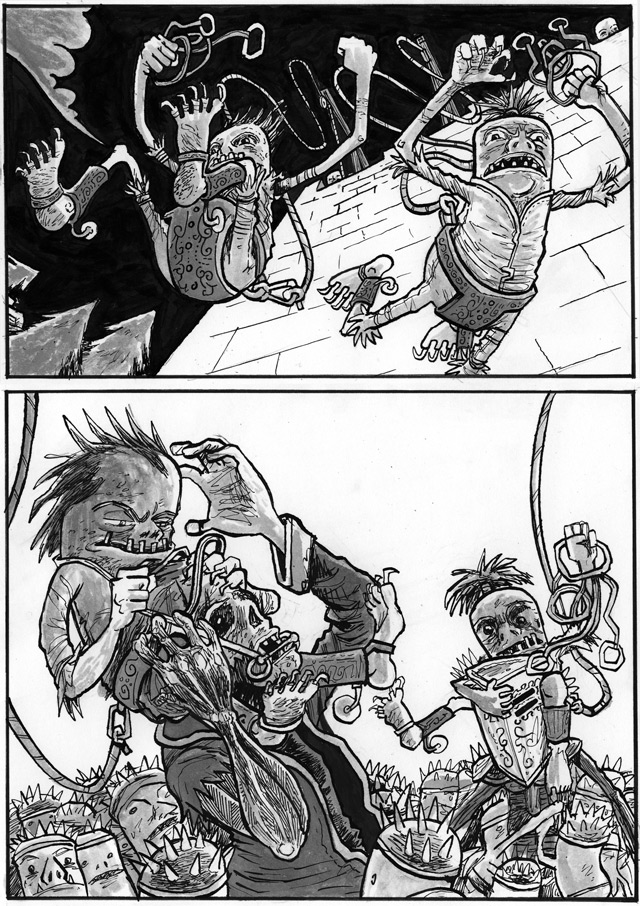
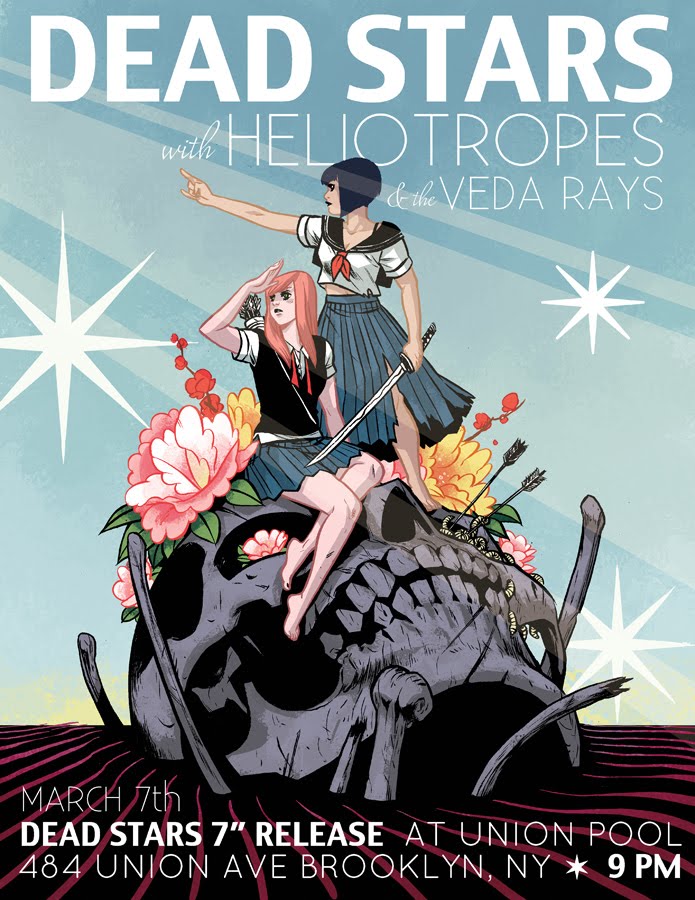
* Zak Smith and Shawn Cheng’s collaborative webcomic/fighting game Road of Knives is back, and they’ve brought my Destructor collaborator Matt Wiegle along for the ride!
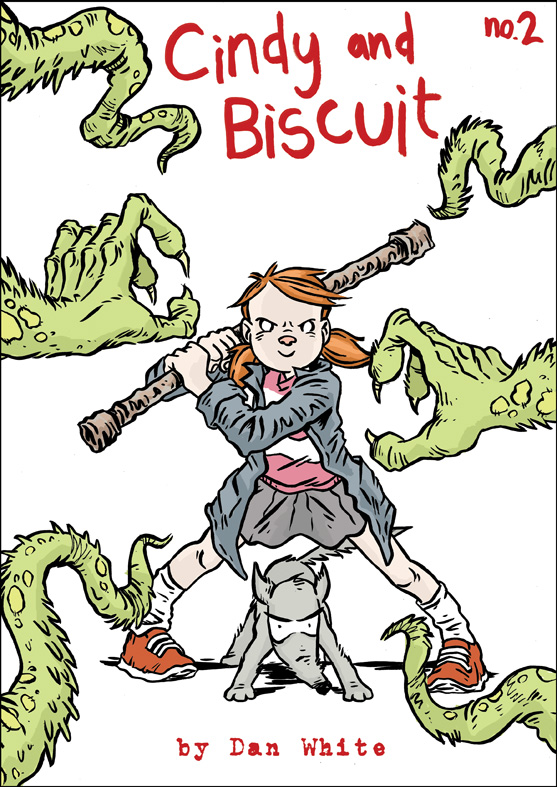
* Hooray, Cindy and Biscuit #2 from Dan White! That is a very good comic.
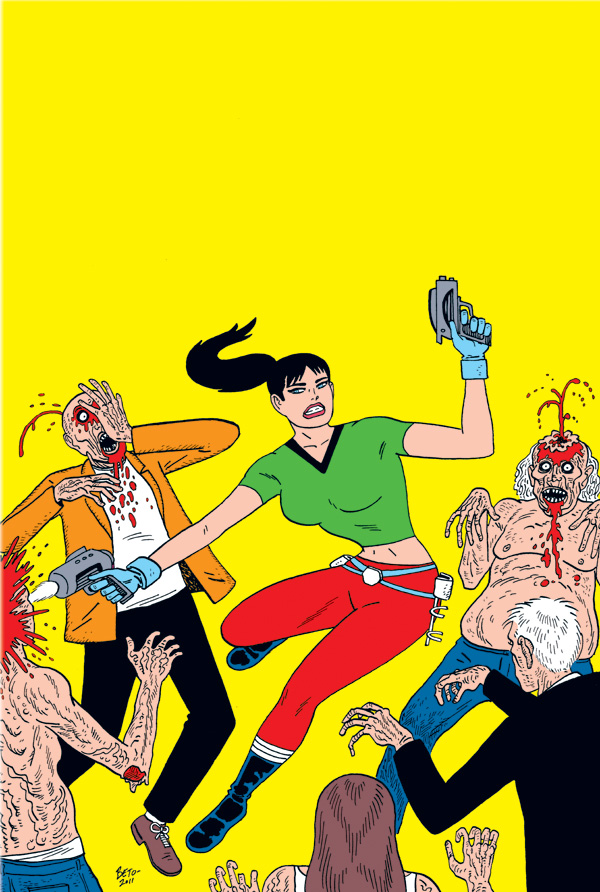
* Did I never mention that Gilbert Hernandez is doing a zombie comic called Fatima: The Blood Spinners for Dark Horse? Shame on me, then.
* A couple of frequent ADDXSTC commenters and friends of the blog have posted strong pieces on some of my favorite works of fiction. Here’s Bruce Baugh on Stephen King’s The Stand and Rev’D on David Chase’s The Sopranos, particularly the last few seasons.
* Andrew White’s taking Frank Santoro’s correspondence course! That oughta be interesting to see.
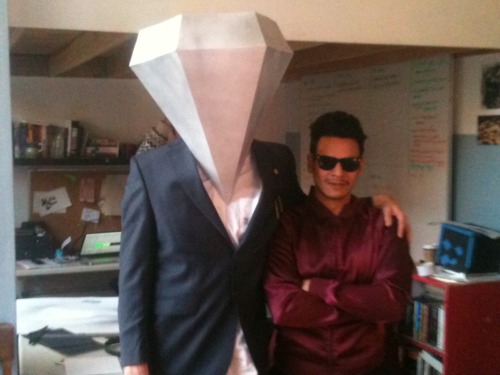
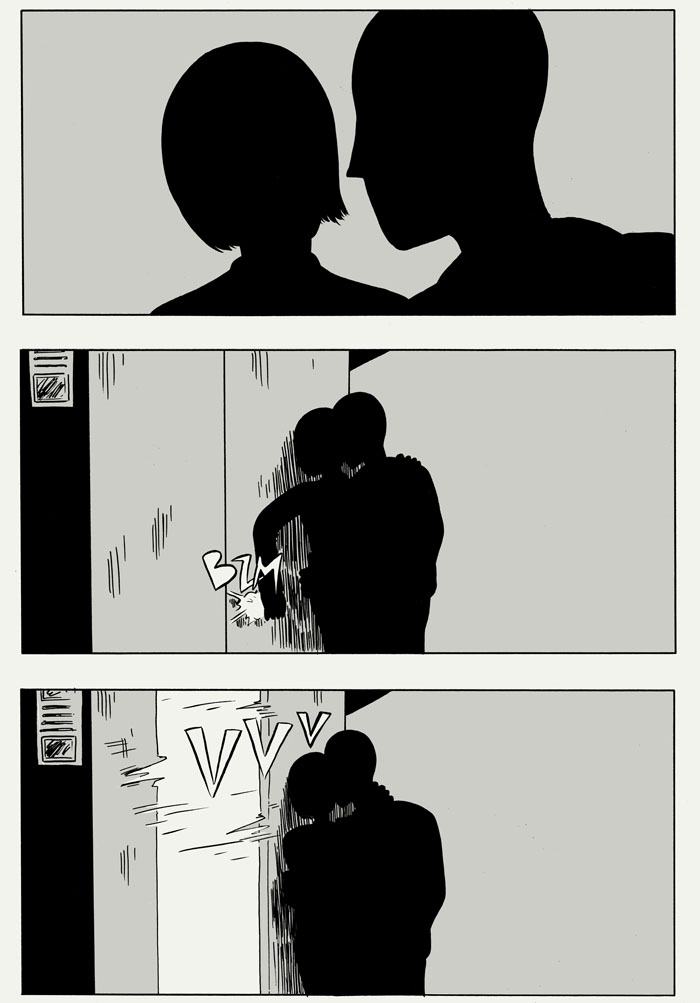
* Well, this photo of Jonny Negron and friend certainly looks promising.
* Brian Chippendale’s Puke Force is still great, if you were wondering.
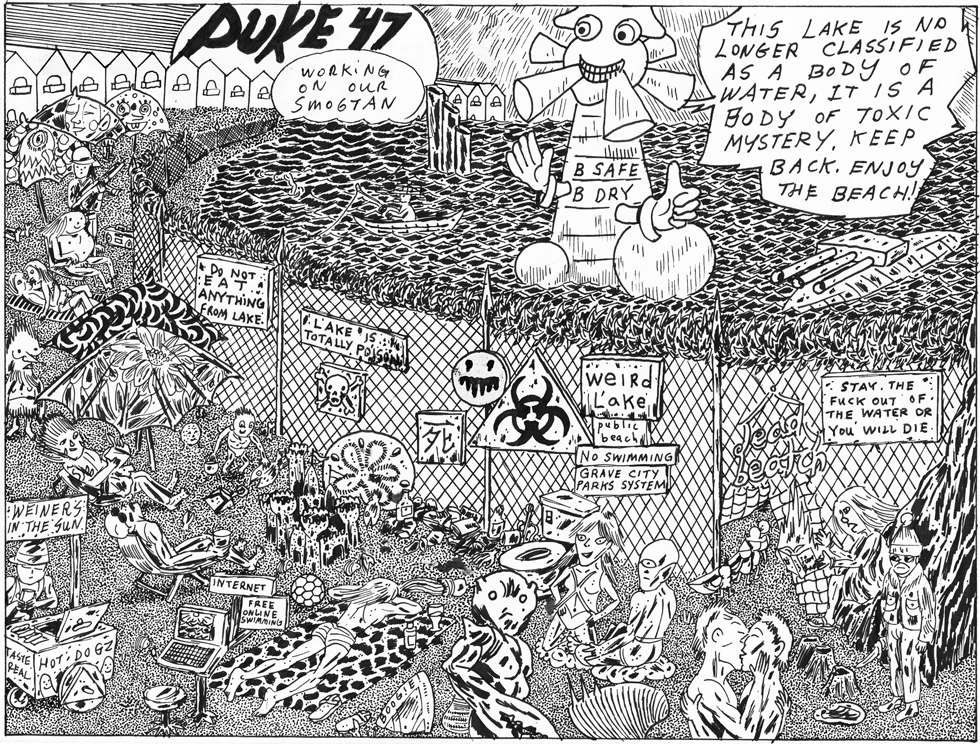
* Lovely Evan Hayden piece from Electric Ant #2.
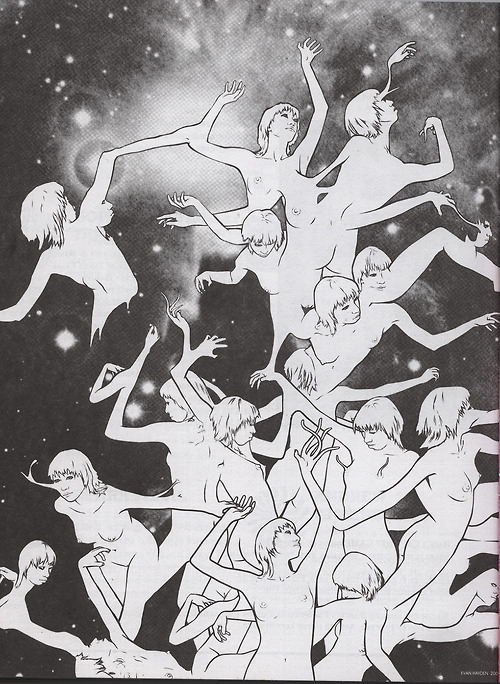
* The tumblr for the Happiness Comix anthology series has made the regrettable decision to shut down, but for now it’s still posting compelling work by Heather Benjamin and Tom Toye, drawn for still another anthology, Dimensions.

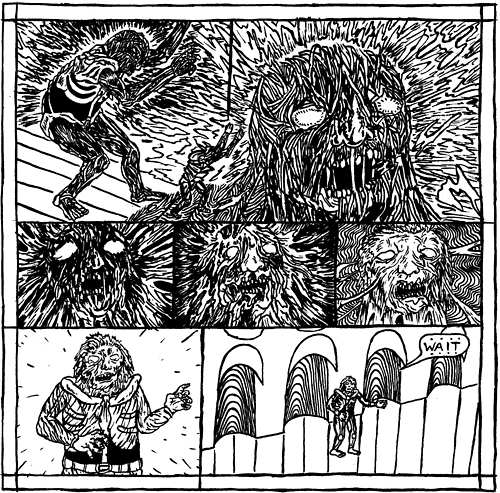
* This is quite a sketch of Jerry Robinson, Bill Finger, and Bob Kane’s Joker by Frank Quitely.

* I sure am glad Tom Neely’s now in the naked lady business. Lots more where that came from at his blog.

* Here’s a list of things that are sexier than the young Patti Smith:

* The write-up gets a little too “totes amazeballs” for my taste, but just the other day I was talking with friends about the haunting Sesame Street special in which Big Bird and the still-believed-imaginary Mr. Snuffleupagus spent the night in the Metropolitan Museum of Art and tried to help the ghost of a young Egyptian boy escape the underworld, and here’s an impassioned tribute to exactly that. (Hat tip: Simone Davalos.)
* Jeeeeeeeez, Ta-Nehisi Coates on the life and death of Andrew Breitbart.
* “The NYPD did not respond to our request for comment about allegations it has violated the law.”
* If President Obama loves Omar from The Wire so much, why doesn’t he marry him? Oh right, because he believes marriage is between a man and a woman. Also he’s the commander-in-chief of the drug war. Enjoy the show, Mr. President!
* Finally, can I point out that Christopher Young’s “Leviathan” theme music from Hellbound: Hellraiser 2 did the Inception Sound thing like two decades before the fact? And in Morse code for “God,” at that? In many ways my adult life is just a fruitless search for a way to replicate the high of that first hit of Hellbound.
Downton Abbey thoughts, Season Two
March 1, 2012* I’m quite proud of myself for remaining almost entirely unspoiled about the entirety of Downton Abbey to date. What little I did happen across told me less than nothing. A TV Guide cover asking whether Mary and Matthew would marry only asked the question obvious to any viewer from the pilot on. And hey, when was the last time a PBS show ended up on the cover of a supermarket checkout-aisle magazine anyway? I was more happy for the show than irked at the TMI. More troubling was the season-finale review headline I saw in the sidebar at XOJane: “A Happy Ending No One Wanted,” it read, so at least to an extent, I knew where things were headed. (Once I figured out it wasn’t part of this Julieanne Smolinski piece on handjobs, that is.) But it was more cryptic than revelatory: Was it referring to an ostensibly positive outcome the characters nevertheless didn’t really want? Or did it mean the show had served us something it expected us to like, but we didn’t? I wasn’t spoiled, I was intrigued. (Having seen the ending, which was the happy ending I wanted thankyouverymuch, I still can’t figure out what they must have meant.)
* Rather, what I’d heard about the second season, from a comment here, a tweet there, was that it wasn’t as good at the first, and that this dimunition in quality was tied to an increase in the soapiness of the storylines. And indeed, as reported, Series Two was some sudsy shit. The evil ex returns! An imposter! Rejected by Father after marrying across the tracks! Pregnant after a night’s indiscretion! The climactic all-hands-on-deck natural disaster that threatens them all! Random and unexplained yet somehow reassuring flashes of the paranormal! The doctors say he’ll never walk again, for god’s sake! Each and every one of these plots was featured on The Young and the Restless over the past year, folks. Each and every one!
* But to be blunt — who cares? The show is a soap. It’s about romance and family among a huge cast in a fixed geographic location. Why not embrace, and enhance the production value, of as many soap tropes as possible? At any rate nothing here was more outlandish than Lady Mary’s first sexual encounter ending with the death of her lover in flagrante, for pete’s sake. All of it was handled with the wit and skill and beauty I’d come to expect from the show. (God was it beautiful to look at at times — the misty Christmas morning, the red afternoon light in the library as the family watches the touring war-hero general play a game, the swirling camera when Anna first spotted the secretly returned Bates down in the village.) And frankly, no one who watches Breaking Bad has any right to complain about any show being over the top or hard to swallow.
* For me, the show this season was notable as a showcase for a handful of the performers/characters, and for World War One.
* Rob James-Collier’s Thomas was certainly a grower this season. For starters his is the most underrated of the show’s Great Speaking Voices — the stentorian tones of Carson, the silken waveform of Lady Mary, the bedroom rasp of Lady Sybil, the posh perfection of Lord Grantham. Thomas’s voice sounds like it’s only slipping out of his mouth partway, like it’s hiding something in there somewhere. It sounds like it’s squinting.
* Aside from that, though, I think we got a lot more evidence that he’s more than just some Evil Queer stereotype. His homosexuality is treated with enormous, actually rather heartbreaking sensitivity this time around. (Granted, I thought so the first time, too — there was something crushing in watching him flail to get past that sleazy aristo played by Charlie Cox to get at the burning love letters that were to be his ticket to the top, crushing both in Thomas’s desperation and his lover/victim/victimizer’s swagger in physically overpowering him.) You can’t help but sympathize deeply with a man you’ve watched break down and cry over the suicide of the one person to whom he’s even come close to confiding the truth about himself over the entire course of the series. That that person was a badly wounded, blind, depressed stranger shows, I think, what Thomas truly thinks of himself. He’s a bully because he’s been bullied, overtly at times I’m sure, but also in a thousand ways large and small by the strictures of the heteronormative society to which he has no choice but to conform. Internalized oppression.
* But even his bullying was humanized. He unilaterally disarmed from his grudge match with Bates, and advised O’Brien to do the same. He was shown to display real fear and, I think, regret and shame over the results of his actions — when his attempt to become a black marketeer ended in ruin, say, or when he realized his dognapping had gone tits up. Like O’Brien when she looked in the mirror and saw a person who’d just attempted to injure a pregnant woman, I get the impression he wasn’t nuts about what he’d seen in himself, even if, in the end, his final scheme was rewarded.
* What’s more, his decision late in the season to be more cheerful, friendly, helpful, and productive may have been just an attempt to ingratiate himself with Carson and the Crawleys now that his prospects had dried up, but the fact of the matter is that, well, he became more cheerful, friendly, helpful, and productive. In the same way that his platonic folie a deux with Evil O’Brien in the first season helped incentivize bad behavior, I like to think that the new status quo, the new reactions and rewards he’ll receive for being a decent person, can’t help but steer him in that direction. The fact of the matter is he has a great smile, and he can be very charming and win people over just as easily by actually being decent as by faking it. Being a dreary, nasty fuck has very strong headwinds, and perhaps his new course of action will help him see there’s another, less unpleasant course he could set.
* In a similar vein, I came to internally refer to O’Brien this season as (to borrow a term from comics fandom, as I am wont to do) Nu’Brien. No, she wasn’t quite able to shed her old self — egging Thomas on with his black marketeering and shady attempts to get in Lord Robert’s good graces, making mischief with Mrs. Bates. But for the most part, she used her powers for good, not evil, even when her conception of “good” was as narrowly defined (PRESERVE AND PROTECT THE HONOR AND HAPPINESS OF LADY GRANTHAM) as possible. Like Thomas she had her moments of genuine regret — the atom bomb that was her realization that she’d essentially aborted Cora’s baby for nothing had its fallout, as did her poorly thought-through decision to alert the genuinely awful Mrs. Bates to Mr. Bates’ return to Yorkshire. And moreso than did Thomas, she was able to express concern and sympathy for the other servants, from William to Anna to, eventually, Bates himself. There are few things I value more in fiction than when characters overcome their differences to be kind to each other, so I found Nu’Brien rather moving.
* But even more than that, I just found her interesting. When you find out that in real life she’s pretty much a dime piece, you start not just to appreciate but to marvel at actress Siobhan Finneran’s physical comportment on the show. Unlike…well, every other character, I think, O’Brien reveals nothing with her face or voice. She’s like an automaton compared even to Thomas, let alone comparable women characters — Mrs. Hughes, say, or Mrs. Patmore, or Anna or Jane or Ethel or even Shore. That kind of control of one’s face and voice and body is admirable in an actor. She’s kind of the inverse of my beloved Mickey Doyle in Boardwalk Empire, her buttoned-up weirdness a contrast with his showy weirdness, but both of them every bit as watchable and pleasurable.
* So Lord Robert’s midlife crisis was provoked by an actual crisis! That’s smart writing, especially given how out-of-left-field his unfaithfulness to Cora would have felt were it not rooted in his deep disappointment in himself and in the system over his helplessness during the War. Of course there was the subtle and simultaneous strain of dissatisfaction with, even dislike of, Cora herself — her inability to meet his emotional needs or even recognize that he had any during Downton’s wartime period, her pragmatism-cum-coldness over the various interpersonal crises that developed during that time, particularly regarding Mary and Matthew. And his impotence over the War was echoed by his loss of control over the fates of Mary and Sybill, and even over Downton itself. All told, you had a guy who’d been raised all his life to be the center of his world suddenly discovering that a) he wasn’t, and b) in a lot of ways it wasn’t much of a world to begin with. He asked Jane, his ersatz paramour, if she ever wondered what it was all for. Can’t get more direct than that.
* But even before that, he had an exchange with Cora I wrote down verbatim: “I don’t think you’re a fool, isn’t that enough?” she asks him. “No,” he replies. “Maybe it should be, but it isn’t.” It struck me then as an astute take on how frustrating, even confusing, it can be to us when we find ourselves unable to take succor from our significant others and life partners despite the abiding satisfaction we receive from them in every other respect. But now I see it as the roots of a crisis of confidence, in himself and in the institutions that shored him up. Thus he went from a character I didn’t even mention in my discussion of Season One, during which his stalwart reliability rendered him a prop more than a player, to one of my favorite characters on the show. Hugh Bonneville rendered him utterly likeable throughout.
* The main “She’s Leaving Home”-type story here was Sybil’s, of course, and her runaway romance with the Bono of the motorpool. But I was more profoundly moved by Edith’s story, how she quietly came into full personhood as she took on the responsibility of providing for the wounded officers in Downton’s care. As everyone always said, there was little doubt that her sisters would find their place in the world, even if they never defied convention as Sybil did. By contrast, Edith is a prime example of the true cost of the sex and class system, which walls off potentially productive members of society on both sides of the divide from finding their true calling and making the contributions they’re truly capable of making. Only the apocalyptic upheaval of the Great War enabled Edith to do something other than wooing lower-upper-class suitors. When you think of Oscar Wilde imprisoned or Alan Turing killing himself, when you think of centuries of potential giants of politics or literature or science toiling unthanked on Mississippi plantations, when you think of half the population of Saudi Arabia forbidden even to drive cars, think of what these people could have done for the classes that oppressed them, of whatever stripe. The loss of the oppressed is far more grave, but it’s not just the oppressed’s loss, is what I’m saying.
* Am I the only one who started singing “How do you solve a problem like Lavinia?” to himself the moment she looked a little ill at the dinnertable? The show (I know, it’s all written by one dude, but “the show” is a hard habit to break) wrote itself into a corner with this lovely, pleasant, selfless lady — certainly more pleasant and selfless than Lady Mary even at the best of times! — and solved it in a manner I found rather crass, whatever its realism. It’s not as though she’d been allowed to develop into anything but the remotest corner of the Matthew/Mary/Carlisle/her love quadrangle, so while her loss illustrated both the reach and the caprice of the Spanish Influenza epidemic, we really only felt that loss through the other characters, not through Lavinia herself. This was the second time I thought the show grabbed real-world catastrophes and clumsily wielded them as two-bit storytelling tools — the other, and more egregious, being the time that both the Great War and the Troubles were reduced to farce in Branson’s wacky assassination/protest-by-prank mix-up.
* These were all the more striking in light of how well the show dealt with the War itself most every other time. Downton Abbey was never going to be an explicitly antiwar show — it’s just not a political beast, and at any rate a show that values loyalty and honor and courage as much as this one does is going to be fairly helpless in the face of the choice to depict cowardice as either a moral failing or an act of sanity against the insanity of the war itself. (Which I suppose is a political program, disguised as apolitical by centuries of morals established by the masters of war.) But that doesn’t mean that the show couldn’t use its focus on the complexities of familial and romantic relationships in the context of the old class system to shine a spotlight on war’s costs where those concerns intersected.
* I think my favorite example here is a simple, physical aspect of one actor’s performance: The black, angry, piercing depression in the eyes of Dan Stevens as Matthew Crawley after he’s paralyzed. He displayed an intensity (and a handsomeness, not incidentally) he’d never been able to before, and the rupture in the presentation was sufficient to convey just how bad things really were for him, and by extension for everyone.
* But really I liked all the major war storylines: William’s slow death and its impact on Daisy, lingering even after he’d gone; the tale of two war widows with Robert’s beloved Jane and the shunned unmarried Ethel; Thomas’s million-dollar wound; Matthew and William’s painful goodbyes, and their bizarre it-was-all-but-a-dream returns from the front before inevitably heading back into the breach; even the craziness of the False Patrick, with his burns and bandages and Anthony Perkins voice.
* My one regret is that Molesley’s shirking never went anywhere. Between that, his doomed run at Anna (thwarted by Bates), his equally doomed run at becoming Lord Grantham’s valet (also thwarted by Bates), and his drinking at the Spanish Flu dinner, I thought he was headed for a full-fledged Character Arc, with said arc bending toward villainy, but the light comedic business with him getting drunk was the last we saw of him. He was the dog that didn’t bark.
* A few more observations:
* Good Lord did sleevelessness become Michelle Dockery. I found myself awfully glad Lady Mary was stuck with the one dress for the duration.
* What better time to cheat on your spouse or fiancée than when she’s laid up with a pandemic that’s killing millions worldwide?
* Just about the only thing that could make the Dowager Countess more entertaining was to have her start laughing at her own jokes, so thank goodness they did exactly that. “I do hope I’m interrupting something” and “I don’t expect you’ll see me again”/”Is that a promise?” are lines for the ages by the way. Also, any time I really look at Maggie Smith’s eyes, I think to myself that she’s got a truly great villain role in her somewhere, if the right part comes along. I mean a David Lynch-type villain, a villain who radiates menace. The Dowager Countess is a pussycat compared to what’s potentially in there.
* What a pleasure it is to watch a show during which the problem for the actors is that time moves fast rather than slow. I’ve been watching The Vampire Diaries (it’s fun! It’s like True Blood without the intentional camp factor, so it’s like this super-serious exploration of sexy young vampires and witches and werewolves taking their shirts off and literally ripping people’s hearts out on-camera), and at some point during its third and current season it hilariously revealed that not even a year had gone by since the pilot. Characters had gone from “la-di-da, cheerleaders, football players, popular girls, blah blah” to “my entire family and circle of friends has either been murdered by or turned into vampires” between the start of junior year and the Fourth of July. Lost is probably the best example of a show where each episode spanned a single day or so, at least for a while. Yet in comics like Love and Rockets, or in shows like Battlestar Galactica, we see just how rich for the storyteller and pleasurable for the audience taking advantage of the swift passage of time can be. I’m not 100% convinced that Downton Abbey has sufficiently aged its performers to account for, what, the passage of seven years of story time over the course of one year of real time, but it’s a challenge I find myself glad they’ve accepted.
* Most poignantly, I found myself pretty profoundly moved and disturbed by the scene in which the family and staff gather round the clock to honor the war’s end, because it reminded me of the now-quaint notion advanced by another of the Great Post-Millennial TV Dramas: “Wars end.” Ha, remember when that was true?
Downton Abbey thoughts index
March 1, 2012Here are links to all my Downton Abbey posts. Enjoy!
Season One
Season Two
Season Three Cheat Sheet
NOTE: All episode numbers are for the US version.
Season Three, Episode One
Season Three, Episode Two
Season Three, Episode Three
Season Three, Episode Four
Season Three, Episode Five
Season Three, Episode Six
Season Three, Episode Seven
The Best Dowager Countess Quotes from Season Three
Five Big Questions for Season Four
Season Four, Episode One
Season Four, Episode Two
Season Four, Episode Three
Eric Whitacre – “When David Heard”
February 29, 2012This is a tremendous performance of the saddest, most beautiful song I’ve ever heard, conducted by the composer, Eric Whitacre, and performed an ensemble assembled for the express purpose of singing his songs. It’s a little over 16 minutes long. Please, sit somewhere quiet and listen to the whole thing. It could not be more worth it.
“When David heard that Absalom was slain, he went up into his chamber over the gate and wept, and thus he said: ‘My son, my son, O Absalom my son, would God I had died for thee!'”
Carnival of souls: Tom Spurgeon’s modest proposal, early Kramers Ergot for sale, new Henry & Glenn, Ryan Cecil Smith, Frank Santoro, more
February 28, 2012* Last week Tom Spurgeon made a modest proposal: Any time you talk about one of the major corporate superheroes, mention their creators. I will be doing this from now on.
* Kramers Ergot #1-3 are busting out all over! Last week, a small number of copies of these early, extremely hard to find issues of Sammy Harkham’s no-way-to-describe-it-but-seminal art comics anthology (the less artcomixy ones) went on sale at Secret Headquarters in L.A.; I bought the bundle via the Secret Headquarters web store, where it looks like all three individual issues are still available, believe it or not. This week they’re also on sale on-site at the Beguiling in Toronto. About the only downside to all this is that awkward moment when you’re all excited to read and write about the first three Kramers Ergots and then Joe McCulloch does it first and renders anything you’d say redundant. Read that review, though, seriously — such a pleasure to read Joe combine his recent beat of off-the-beaten-path stuff with his old alternative-comics stomping grounds.
* How the hell did the announcement of the sequel to Henry & Glenn Forever escape my attention??? Well, no longer: Tom Neely has announced Henry & Glenn Forever & Ever, featuring him and the rest of the original Igloo Tornado gang, plus Benjamin Marra, Ed Luce, COOP, and more.
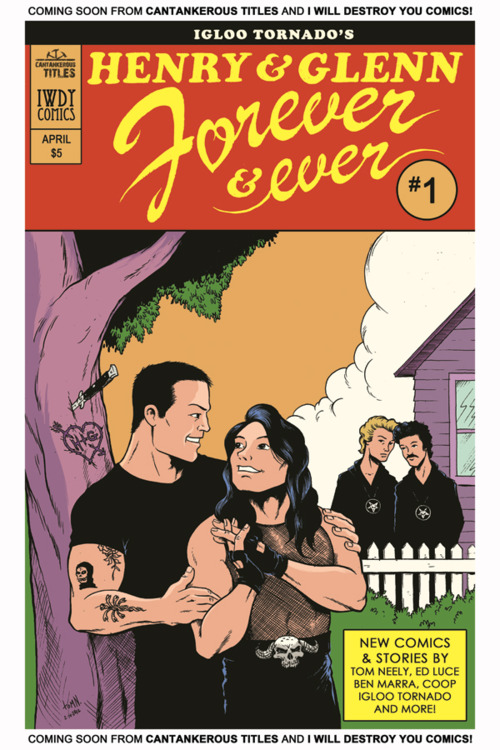
* Tom’s also drawing lovely nudes now and then, it seems.

* Local boy makes good! Closed Caption Comics’ Ryan Cecil Smith is now a part of Jordan Crane’s peerless What Things Do webcomics portal — they’re currently serializing his Kazuo Umezo/Blood Baptism horror-manga tribute minicomic Two Eyes of the Beautiful.
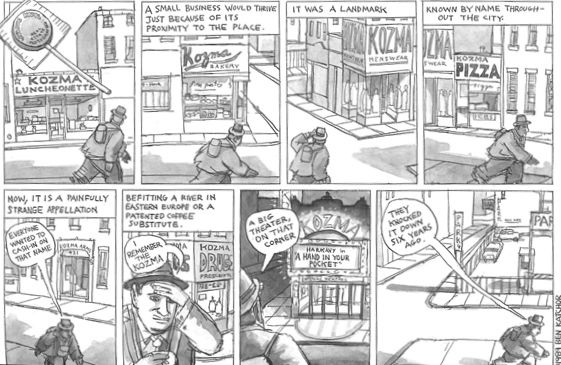
* The Comics Grid’s Kathleen Dunley on Ben Katchor, Julius Knipl, and the memory of cities. I think that if you were forced at gunpoint to make an argument on behalf of the irreducible necessity of the comics form, Katchor’s work would be one of the first things you would reach for.
* Last time we visited Bruce Baugh’s newly resurgent World of Warcraft blogging, he was investigating the possibility of playing the game without dying. Now he’s examining the potential of playing the game without killing. Amazing how these entirely self-imposed rules can totally alter one’s experience, even mindset.
* Eve Tushnet warns against “evil comes from people who have been hurt! Fear the weak, not the powerful!” horror movies. A fascinating framework I’d never before considered.
* I know there are any number of reasons why people do this, but I’m always baffled when the creators of television shows leave those television shows before the shows end. It’s your show! (Via Whitney Matheson.)
* Frank Santoro has discovered that people are wrong on the internet. I imagine him staying up four, five days at a stretch, reblogging and correcting every tumblr post that doesn’t properly credit an artist.
* Speaking of Frank, it’s amazing how clear his imprimatur is on the comics made by students in his comics-making class.
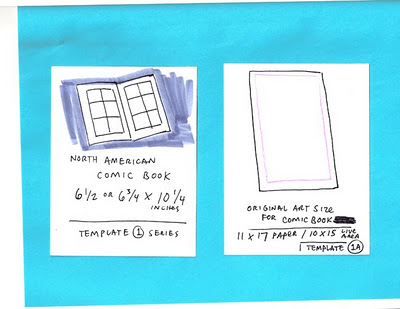
* And still speaking of Frank, I think this post may have been posted and deleted before, but here’s his valuable run-down of all the major formats and dimensions available to comics-makers today.
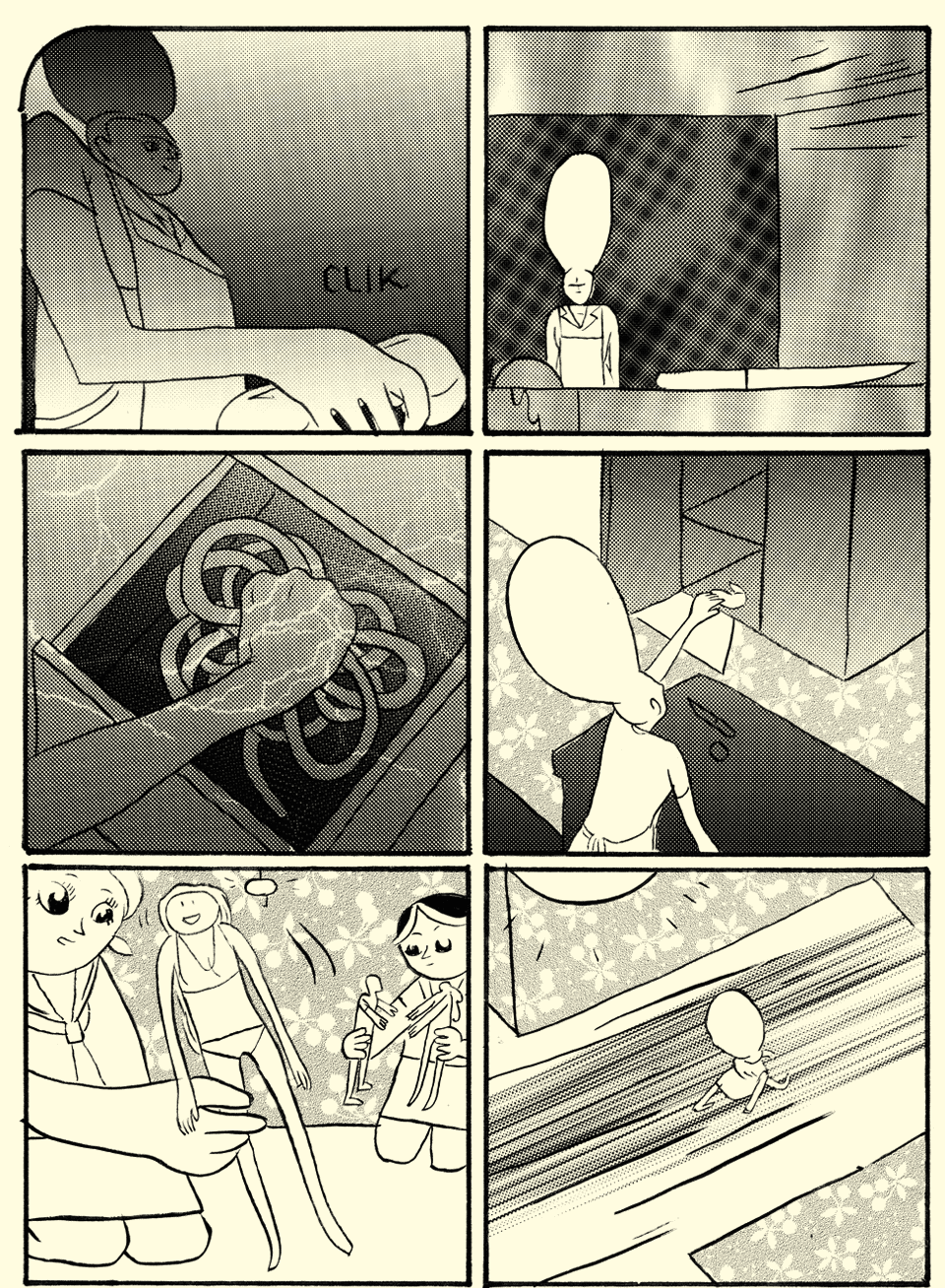
* I don’t believe I’d ever seen this lovely piece by Jonny Negron, who can and does work in a lot more styles than the one or two that made his name. (Via Lisa Hanawalt’s inspiration tumblr. Oh, right, Lisa Hanawalt has an inspiration tumblr.)
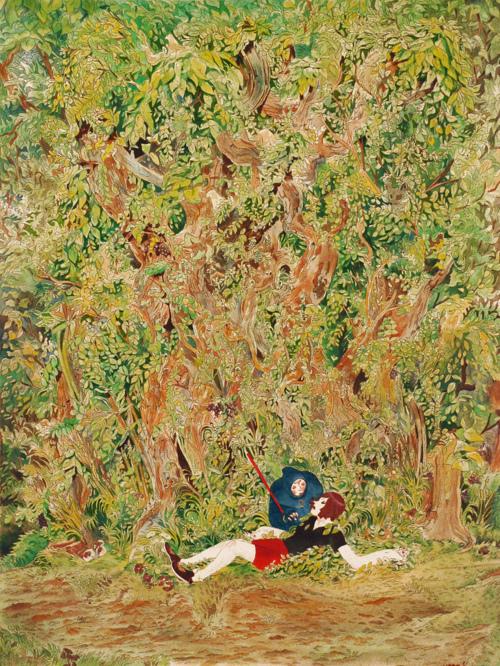
* This is a very pretty bit of Becky Cloonan art.
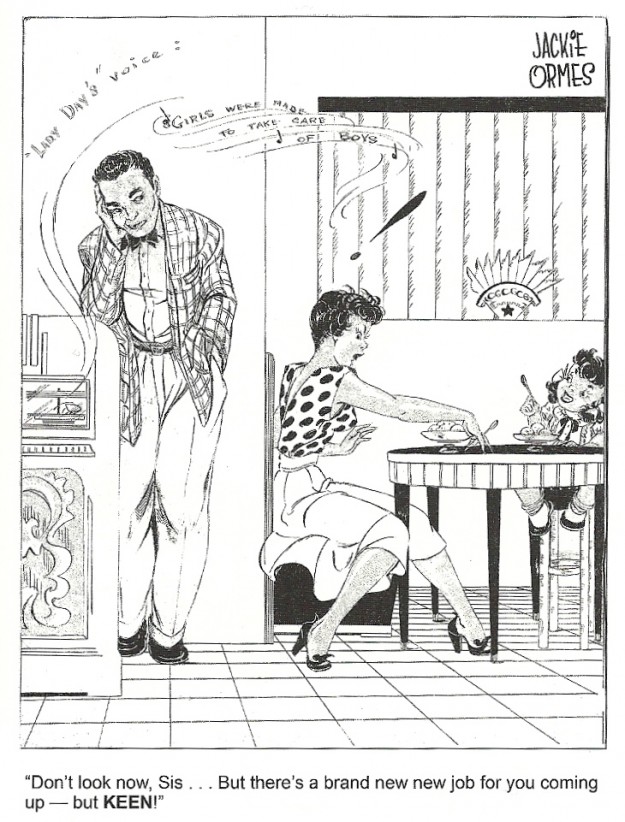
* Lovely and intriguing work from Jackie Ormes, a Golden Age cartoonist who was an African-American woman.
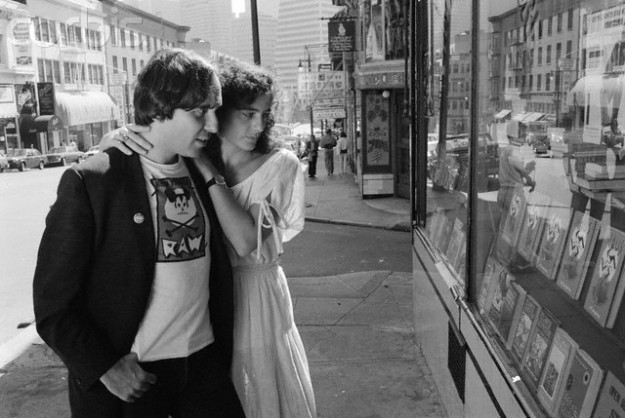
* Fabulous picture of a young Art Spiegelman and Françoise Mouly from Mouly’s new mostly-New Yorker-cover-themed tumblr. (Via Robot 6.)
* Real Life Horror: You know, when you think about the clearly illegal surveillance of virtually all aspects of Mulsim life in the tri-state area by Michael Bloomberg and Ray Kelly’s NYPD, it’s not as though history isn’t littered with instructive examples of what becomes of a society when its politicians and law-enforcement authorities start to routinely and relentlessly scapegoat and persecute a religious minority for no good reason, and when other politicians and the news media line up to support this, and when the public either doesn’t notice or says “Hey, good job.”
* Here’s the latest trailer for Game of Thrones. Surprise! It looks good. The location shoots in Iceland are added-value city, man.
* Finally:
Comics Time: Olympic Games
February 27, 2012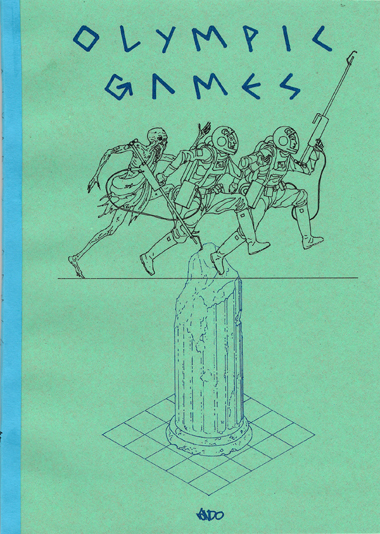
Olympic Games
Lando, writer/artist
Decadence Comics, 2012
44 pages
£10 including international shipping (cheaper in the UK)
Buy it from Decadence
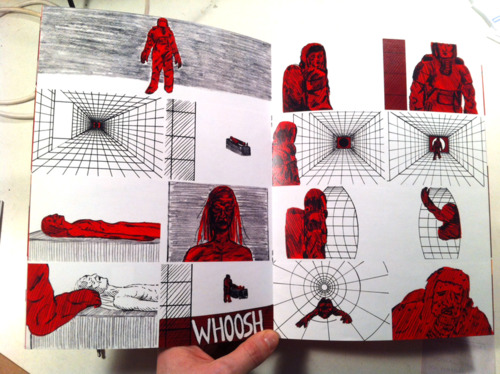
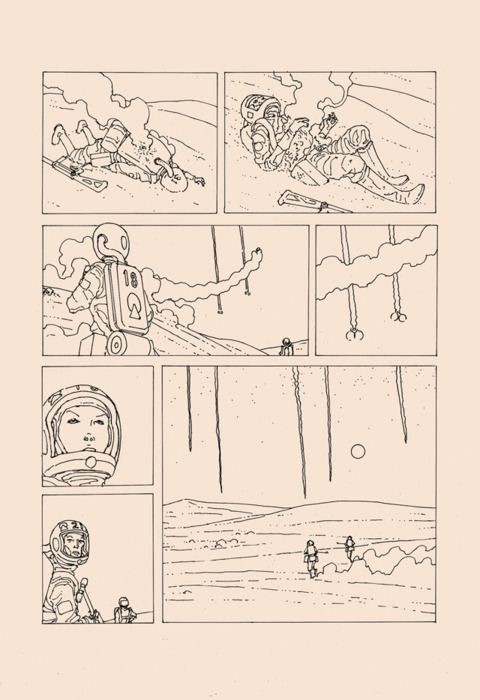
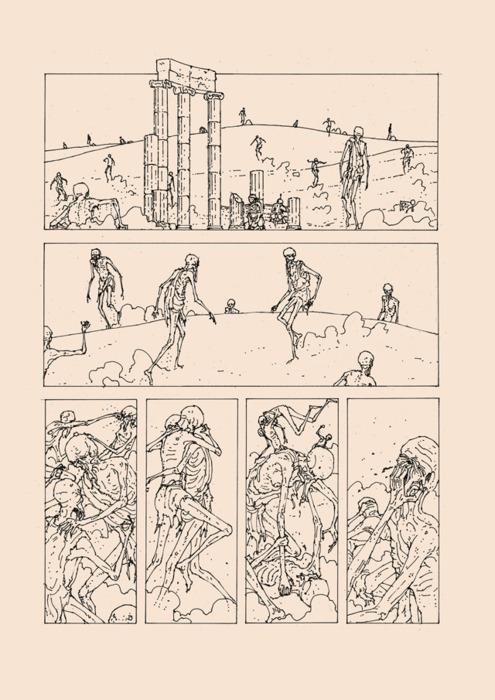
I went back and forth about opening this review with “Whoosh, is this thing good,” but the ayes have it: Whoosh, is this thing good. In fact it’s fair to say that I returned to semi-regular reviewing of comics in large part to have an excuse to read this remarkable-looking self-published small-print-run science-fiction adventure and write about it publicly. The unique, tactile packaging helped draw me in: It’s printed on that rough, cheap paper your third-grade handwriting practice workbooks came on, with a weary-looking blue cardstock/construction-paper cover to boot. But the content is just as fascinating, particularly writer/artist/publisher Lando’s ultrathin, ultraprecise line. It looks as though he took the finest-point rollerball pen available and went about painstakingly constructing each laser-toting astronaut, each toga-wearing revenant, and each weathered Greek column and angular laser beam and grain of sand in their eerie retrofuture wasteland by stopping every few millimeters or so, picking up the pen, putting it back down, and starting the line again, just to make sure he got it right. “Scratchy”‘s the word that keeps presenting itself to me, but it’s not the right one at all. There’s a meticulousness to this roughness that scratchy doesn’t cover, and it elevates the SF story, about a pair of visitors from space attacking their enemies — both living and dead — and defending one another as they make their way toward some maguffiny goal in the center of what looks very much like Greek ruins, but for the desert wasteland surrounding them. That particular irony of setting, and the titular reference to the coming spectacle of sport in the artist’s native country, indicate that this could very well be a scathing metaphorical commentary on kill-or-be-killed austerity economics and its beneficiaries. (Indeed, the artist makes that pretty clear on his website, though I’m loathe to lend too much credence to authorial intent.) Personally, I missed the Hunger Games/Running Man bread-and-circuses nature of the action on first read and instead read it as a savage, though savagely thrilling, war comic of sorts. Either way, Lando’s skill with pacing and action choreography is tough to match among people making these kinds of alt-SFF comics today; his perspectival cross-cutting between embattled areas, and his use of blankly linear lasers to traverse that space and shift our viewpoints, is especially exciting. All told it’s the kind of comic where the main shortcomings are best expressed as matters of personal preference — it’s wordless and soundless, while I tend to feel that silent comics make the most sense when the events depicted involve actual silence; it uses irregular panel layouts, while I believe the elegance of a fixed grid would have been quite complementary to the precision of the linework and character/set design. If this kind of thing sounds at all like your bag, and if you’re reading this blog chances are it does, fire up your currency converter and hope he’s got some copies left.
Carnival of souls: SPX Murderers’ Row, more
February 22, 2012* Gilbert Hernandez, Jaime Hernandez, Daniel Clowes, Chris Ware, SPX 2012. Holy shit. That’s…that’s probably the best possible cartoonist line-up of all possible cartoonist line-ups. Can someone get Gloeckner there so I can truly kill myself afterwards?
* After a link like that I feel like a shitheel for directing you toward some doom and gloom, but needs must: Tom Spurgeon’s five reasons to worry about comics, non-piracy edition. I think that a sixth reason that could serve as an umbrella for the other five is the “tough titties” attitude so many people who ostensibly derive enjoyment from comics throw in the direction of those individuals who fall victim to those five problems.
* Ross Campbell on sexiness in his comics. As always it bums me out to see Campbell distancing himself from his very good comics Water Baby and The Abandoned, and even early Wet Moon at this point.
* Kate Beaton dispenses career advice for cartoonists.
* Matt Zoller Seitz and Steven Santos make the argument for adding a new Best Collaborative Performance award to the Oscars to honor performances created by actors, mocap, digital animators, makeup, puppeteers and so on in tandem. As you’d suspect, they were inspired by Andy Seriks, and as far as I’m concerned any such eventual award can just be called the Andy. The resulting essay series has so far championed Jeff Goldblum as Seth Brundle/Brundlefly from David Cronenberg’s The Fly as a proto-example of what they’re seeking to honor. Bonus points to the initial video essay for reminding me that every time I see Gollum falling into the Cracks of Doom, I involuntarily burst into tears.
* BK Munn makes the long-overdue case for a long-overdue comics-creator union.
* That Hans Rickheit short story collection Folly is on its way!
* Bruce Baugh returns to World of Warcraft blogging! And there was much rejoicing. I’d need two hands to count the number of times I’ve thought “Gee, I wish Bruce Baugh was still blogging about World of Warcraft” over the past year or so.
* Bruce also penned a couple of lengthy posts on potential new approaches to zombie horror. I’m partial to the idea of zombies as symbolically resonant with economic attrition as opposed to total societal collapse, myself.
* Grim reading from Anders Nilsen.
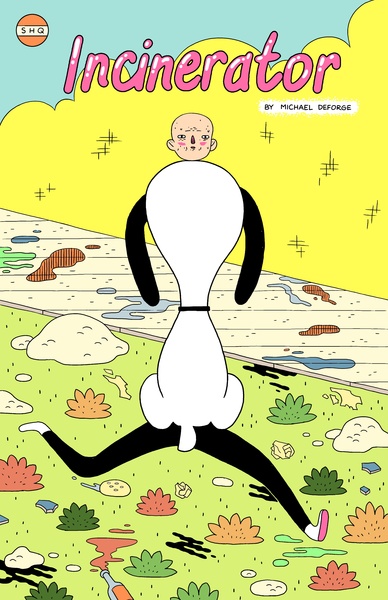
* Looks like Michael DeForge went and snuck out another comic book, Incinerator, because why not.
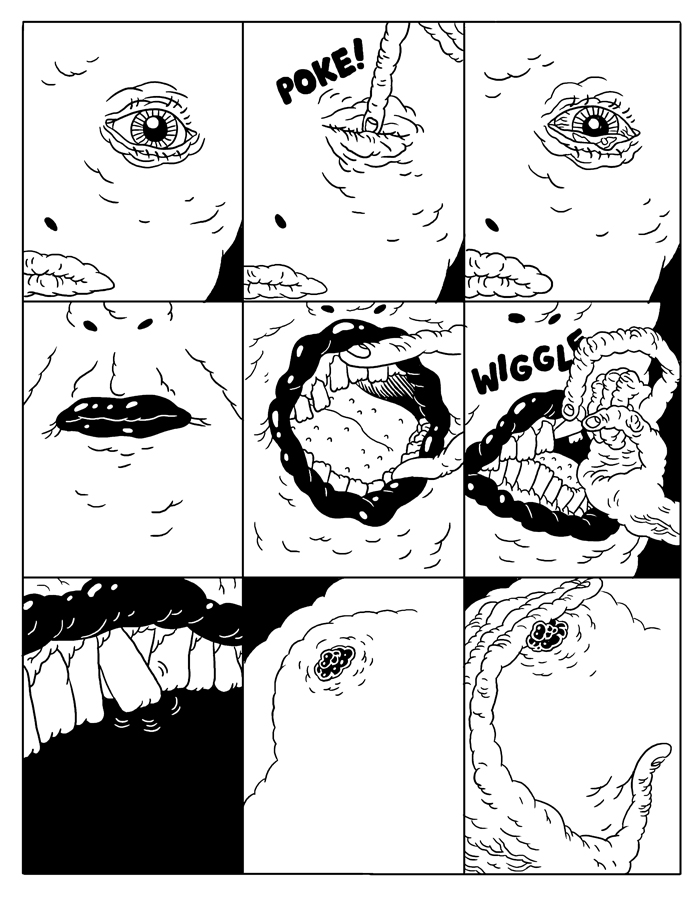
* And he posted a comic strip called “Exams” to Study Group while he was at it.
* Real Life Horror: The ever-more-lawless NYPD has been spying on law-abiding Muslim-American citizens not just in the five boroughs but in colleges and suburbs all around the Northeast, including where I went to school and towns near where I live.
* I don’t think you need to know anything about Robert Wyatt, or any of the music he’s talking about, to get a lot out of Ryan Dombal’s wonderful interview with Wyatt about his favorite music throughout his life at Pitchfork.
* This promo video for Game of Thrones season two is basically just a bunch of actors and crew members saying “It’s gonna be great,” but it also contains our best views so far of several key new characters.
* Did I not point out my guest appearance in Puke Force?
Comics Time: Demon God Goblin Heaven
February 22, 2012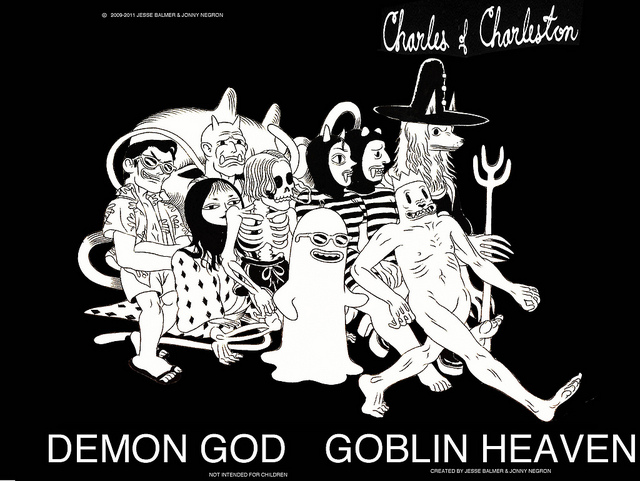
Demon God Goblin Heaven
Jesse Balmer, Jonny Negron, writers/artists
self-published, 2011
52 pages
$10
Read a preview at Jesse Balmer’s website
Watch a preview video on YouTube
Buy it from Secret Headquarters
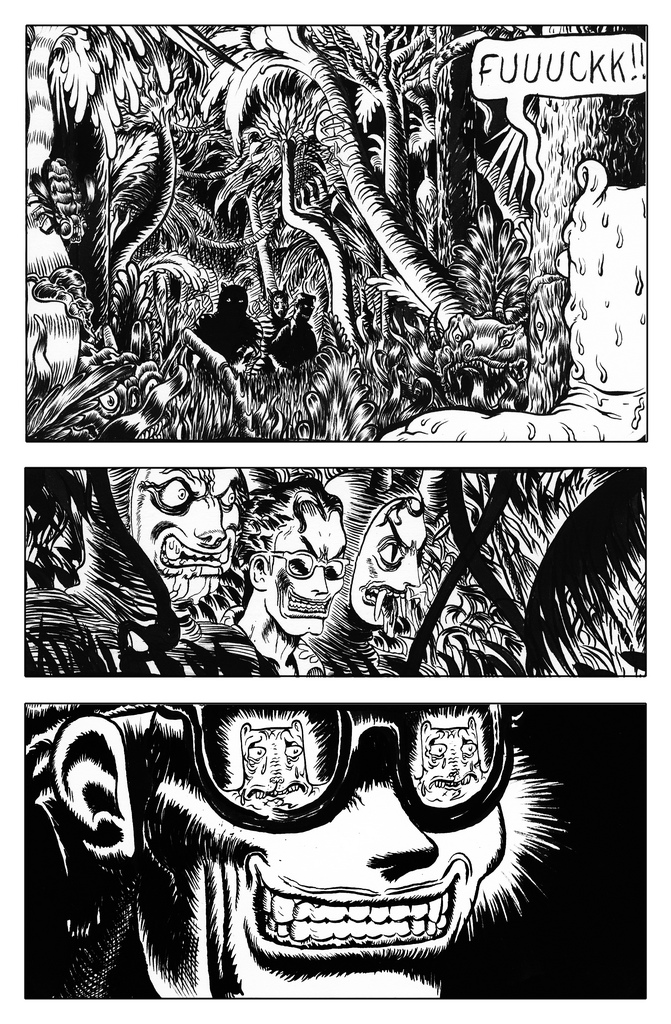
This seamless collaboration between ADDXSTC 2011 Top Tenner Jonny Negron and his Chameleon co-editor Jesse Balmer mines a whole lot of gold from one simple plot vein: the reversal. Every time you get a handle on who’s the biggest shitheel or badass in the book, someone comes along to flip that on its head. Protagonist Charles of Charleston (Balmer’s signature character) is Patient Zero for this technique. The four-page preview sequence linked above was my first exposure to the book, and in the events it depicts the dividing line between victim and victimizer seemed almost painfully clear: Balmer’s goggle-eyed, fleshy, flabby, furrowed, nude, cat-like Charles — a character that seemingly sprung fully formed from the head of one of those grotesque John Kricfalusi close-ups of a smiling or grimacing Stimpy — was undoubtedly at the mercy of Negron’s leering, Wayfarer-sporting, brylcreem-coiffed, switchblade-toting antagonist and his thugs. (Thugs wearing old-timey one-piece swimming costumes and Balinese masks, no less.) But reading the comic itself reveals that Charles was the victimizer up until this point, a rampaging id that consumed or assaulted nearly everyone or everything in his path, including himself, until fate intervened in the form of larger, tougher hombres. The reversal gives the story juice, and reveals a versatility in Charles’ character design to boot: What seems vulnerable and tender in one set of circumstances comes across as priapistic and grotesque in another. The shades-sporting creep, as it turns out, is merely avenging the Casper-like ghost surfer Charles assaulted after washing up on a nearby beach, and is in turn outgunned and outclassed by a dog dressed like Solomon Kane and powered like Doctor Strange. Balmer and Negron’s art styles don’t seem like a natural fit beyond their mutual penchant for the grotesque — Negron’s eroticized coldness has little in common with Balmer’s thick vibrating inks — but in this book, a series of memorable characters doing memorable things in a blackly psychedelic environment, they make a happy match, and that yo-yo pacing is key.
Downton Abbey thoughts, Season One
February 21, 2012More even than being good, Downton Abbey is endearing. That’s apparent by the end of the very first episode, when despite having been introduced to approximately forty thousand characters in the space of 90 minutes, I realized I could place names to faces to personalities in nearly every case. It’s apparent at the beginning of episode two, when I reacted to once again hearing John Lunn’s marvelous theme music — a heartrending swirl and swell of emotion of a sort that the show itself isn’t even aiming for — with pavlovian enthusiasm. It’s apparent every time I laugh at one of the Dowager Countess’s understated overstatements like I was watching Holy Grail for the first time. It’s apparent in my forgiving the show for using as its central sex scandal a plot device swiped from The Golden Girls; or for making its one gay character a conniving, gossiping, backstabbing, predatory, vindictive creep, albeit in such a way as to suggest that these traits predominate and would do whether he was gay or not; or for never delving deeper into the hideous and hidebound class system than presenting it as a sort of culture-wide Stockholm syndrome, mutually agreed to by the benevolent dictators of the ruling class and the loyal, stand-up guys and girls in the servants’ quarters, before time and tide and the inevitability of change softly sweep it away, no harm no foul. It’s a show that makes itself easy for you to watch, and to enjoy.
Given how I’ve spent the past few months, that’s good enough for me. The way everyone went on about Downton Abbey, I expected it to be a searing examination of the relationship between the aristocracy and their servants. I was almost (not quite, but almost) relieved that I wasn’t getting, I dunno, The Wire with tonier accents, or Mad Men with even nicer suits. Instead it’s a soap. Not that there’s anything wrong with that! I never miss an episode of The Bold and the Beautiful and The Young and the Restless, so soapiness doesn’t bother me even at its soapy soapiest.
And this wasn’t that, after all. It’s a magnificently shot show, for one thing, with a remarkably firm grip on itself — its fast-paced yet crystal-clear editing rhythm and deft steadicam shots were present from the first minute, no growing pains here. Downton’s richly appointed rooms are almost always shot in such a way as to establish both their presence and the presence of a human being or two within them, not just driving home the perceived indissolubility of that relationship, but suggesting the influence these lavish spaces must have on those who inhabit them day in and day out. And pretty much no matter where you are, indoors or out, you’re looking at something that’s been beautifully lit — the lovely, torchlit country fair scenes couldn’t have looked and felt more likely a nice summer evening with friends if that’s what they actually were, just for example.
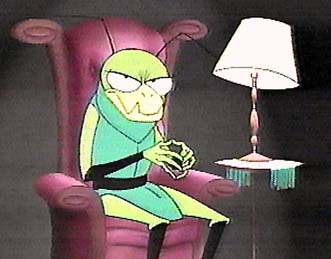
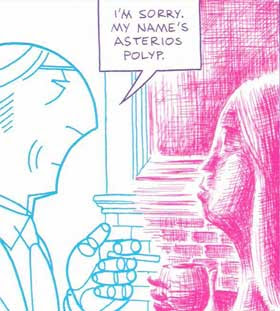
It’s a well-cast show, too. I don’t know why I tend to think of ensemble television shows first as a matter of casting rather than acting itself, but I do…I suppose it’s because so much of it comes down to the nature of the actor’s instrument, the way they look and sound, in addition to what’s done with it. Here you need look no further than Maggie Smith as the Dowager Countess. She looks like Large Marge post-wreck, or like some evil anthropomorphized insect; indeed her visual and aural resemblance to Lokar, Potentate of Thug Locusts is uncanny. But beyond the show’s Omar Little figure, you’ve got Carson’s Asterios Polyp profile, or Matthew Crawley’s astonishingly blue eyes, or Lady Sybill’s luscious lips and raspy voice, or Mrs. Padmore’s central-casting cookishness, or Mr. Bates’s stoic half-smile, or Lady Cora’s well-practiced beatific smile, or Lady Mary’s dark eyes that can sparkle with warmth or wit or cruelty depending on the needs of the moment, or the way Lady Edith smiles like someone who’s always vainly hoping to be something more than an also-ran, or Anna’s plain prettiness, and on and on and on.
All these details matter, I think. They’re a big part of what invests you in these lives, since nothing particularly earth-shaking is going on most of the time. They’re what make the behind-closed-doors meetings between Carson and Mrs. Hughes, a butler and a head housekeeper, feel less like middle managament and more like Commander Adama and President Roslin bonding on the Galactica. They made that pretty goofy sex scene between the handsome, horny Turk and mean-girl porcelain princess Lady Mary actually sexy, despite the silliness of it all. I’m pretty sure the hateful visages of Thomas and O’Brien — his smirk, her unsmilingness — are at least as responsible for our antipathy toward them as anything they actually did. (Thomas and O’Brien are the best character work on the whole show, by the way — a masterful depiction of how much worse two bad apples can be for the bunch than just one, how two malcontents or hatemongers can support one another and egg each other on until they become a nexus of poison at the heart of it all; I guarantee you you’ve seen this happen somewhere yourself.) They’re the reason that when Mary and Matthew finally kissed, I started clapping as I sat there watching it on the train. To reach a sum greater than the whole, you need the parts.
Comics Time: Onward Towards Our Noble Deaths
February 20, 2012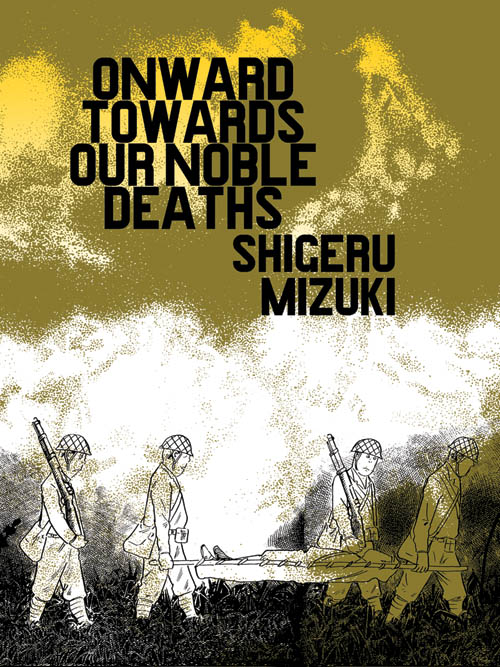
Onward Towards Our Noble Deaths
Shigeru Mizuki, writer/artist
Drawn and Quarterly, 2011
368 pages
$24.95
Buy it and read a preview from D&Q
Buy it from Amazon.com


Here’s a book with a hugely important message to which I am very sympathetic, which is never less than enjoyable to read or look at, which I nevertheless didn’t get a ton out of, in the end. A fictionalized memoir of Mizuki’s participation in the Japanese military’s ill-fated attempt to repel invading American forces from a South Pacific island, Onward Towards Our Noble Deaths alternates between expressively cartooned vignettes among the troops that show off Mizuki’s incongruously cute, oblong/oval-headed character designs — seriously, it’s like an army of Berts from Sesame Street — with powerful, passionately drawn photorealistic depictions of both the tropical island environment and the carnage it comes to house. Mizkuki’s disgust with the who-gives-a-fuck pointlessness of the men’s mission, and the callousness with which the commanding officers order the men into suicide runs when the mission inevitably fails, is palpable; interestingly, it comes through equally well in the black-comic cartoony material, which depict the forces’ slow attrition through disease, accidents, enemy forces, and even animal attacks, and in the astonishingly proficient hatching of the realistic scenes, wordless depictions of the island and the ocean and the spectral American G.I.s who bring death to them both. But the characters are more or less incidental to the book’s agenda — few of them are developed any more than is necessary to convey the idea that it was a waste to send this or that funny or annoying or brave or totally ordinary guy to his death for no reason — and thus the book can only get the emotional hooks required for that idea to connect into you in the abstract. If you already believe that war is hell, I’m not sure this book will enlighten you further, certainly not the way it did when it was initially released in Japan in the ’70s. But there’s one aspect that stuck out to me beyond the basics: The suicide-charge ethic of the Imperial Army comes across as a bizarre ideology simply grafted on top of an army full of regular guys, who complain and help each other out and badmouth the officers and make dirty jokes same as any other army, banzai or no. And in that sense, it makes you wonder what people half a world and half a century away from us will think of the ideologies that drove us to kill and die, too.
Comics Time: Optic Nerve #12
February 16, 2012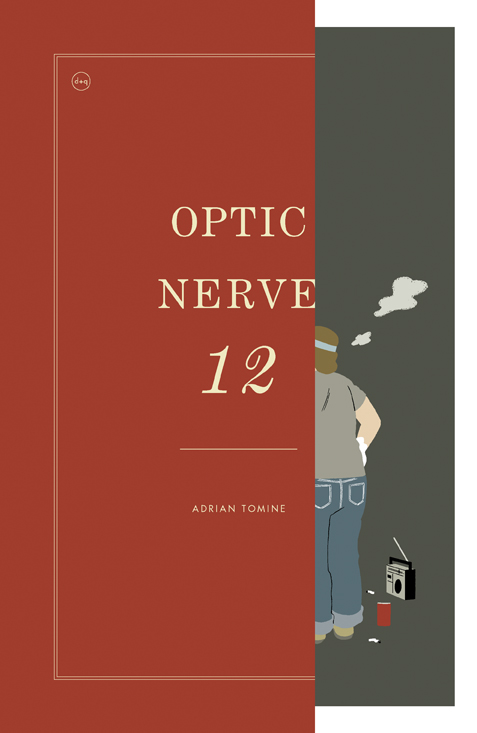
Optic Nerve #12
Adrian Tomine, writer/artist
Drawn and Quarterly, 2011
40 pages
$5.95
Buy it from D&Q
Read a preview at Boing Boing
Man, is this thing ever happy to be a comic book.
The format of a comic doesn’t matter to me a whole lot, unless the format in question is notably detrimental to the comic it houses. I like the idea of serial alternative comic book series mostly for the promise of seeing a lot of work from alternative cartoonists on a regular basis, but today that need is met by the web. (Which can’t meet all needs, to be sure — it doesn’t meet the need of retailers to have that kind of material showing up fresh every few months and consequently attracting a different clientele to the shops on Wednesdays, but that’s not my bailiwick.) But in Optic Nerve #12, Adrian Tomine reminded me what can make an alt-comic such an attractive and pleasurable way of packaging material, something not even the most well-stocked RSS reader can provide.
In addition to the usual letters page, its weirdly personal mix of praise and criticism as po-facedly selected as always, the issue consists of three comics. The first, “Hortisculpture,” feels like an homage to the apparently final two issues of the greatest of the alternative comic books, arguably the two best single alternative comic book issues by anyone: Dan Clowes’s Eightball #22 and #23. Like them, the story is constructed from individual self-contained strips, in this case a full “week”‘s worth: six black-and-white four-panel strips plus a full-color “Sunday” page, over and over till the end of the story. Said story recounts a family-man landscaper’s quixotic career detour into the world of contemporary art via his own unique blend of sculpture and horticlture, an unappreciated (arguably unappreciatable) hybrid his pursuit of which upends his life. As a crypto-autobiography it’s a corker — a keyed-up, hyperreal representation of the travails of Tomine’s chosen form of self-imposed artistic marginalization. It’s as engrossing to watch him work his way through as, say, Gabrielle Bell’s similar fictionalizations of her family life. (Plus it allows Tomine’s customary preoccupation with the intersection of race and romance a new, markedly less hostile environment in which to flower.) Things have gone a lot better for the cartoonist than the hortisculptor, to be sure — the former just received some of the best notices of his career for the wide release of the comics he made about his marriage to the mother of his kid, while our last glimpse of the latter is of he and his daughter gleefully smashing his work to smithereens — but the anxieties underlying the worst-case-scenario comic are obviously real, and really funny. And once again like Clowes, in Eightball #22 and later in Wilson, Tomine’s working with a much “cartoonier” style — a curvier line, bulbous noses, dot eyes, doughier physiques — that enjoyably invokes similar work from Sammy Harkham or Chuck Forsman. It feels right, somehow, to look at art like this on a staple-bound page.
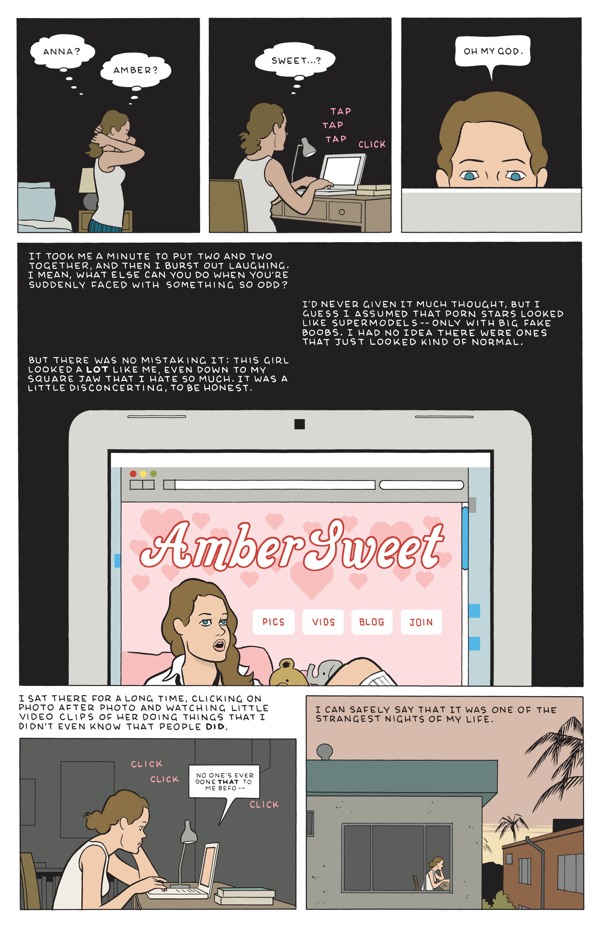
Next up is that staple of one-man anthology series, the reprint from some other anthology. In this case it’s Tomine’s “Amber Sweet” from the broadsheet-sized Kramers Ergot 7, attractively scaled down to the size of the floppy comic, its muted color scheme even more clearly centered around the nutmeg-colored hair of the young woman who discovers she’s the spitting image of the titular porn star. “Sweet” is fascinating to me in that it’s about how unsexy sex can be: our protagonist’s love life, and more besides, is basically destroyed by her resemblance to Amber, a resemblance the men in her life are either daunted by or way too into. Tomine’s perhaps uniquely suited to explore this plight: his cartooning is as sexy as it gets, I’ve always found — his line elegant, his compositions enticingly icy, his character designs very attractive, from Amber and her never-named doppelganger on down — but his work relentlessly cuts against that with the awkwardness and selfishness of his characters. Here we see a beautiful girl who looks like another beautiful girl who makes her living by taking her clothes off and having sex have sex herself as drawn by one of alternative comics’ great unsung sensualists, but the story denies us the pleasure on every possible level. It’s a blast to watch Tomine so successfully negotiate that obstacle course on the way to the story’s knockout ending, a beautiful and satisfying opening-up of the story’s emotional claustrophobia.
The third and final strip — two pages, 20-panel grids — is Tomine’s Lament, pretty much, a self-effacing mock-autobiographical strip about Tomine as “The Last Pamphleteer,” his adherence to the alt-comic format earning him the laughter of his peers and the indifference of his audience. And here, perhaps, he’s trying a little too hard. Throwing “tweet” into sneer quotes as if the term is an affectation instead of just, y’know, email or website; saying things like “I even liked it when the artist was obviously just trying to fill a few extra pages, and you’d get a pointless, dashed-off autobio strip or something!”, as if both he and we didn’t notice that he had to cram this thing onto the inside back cover to get it to fit; using D&Q publicist Peggy Burns as an antagonist, as if he weren’t still core Drawn and Quarterly artist Adrian Tomine; setting up Anders Nilsen and Kate Beaton as models for the new book-driven publishing model, as if they too weren’t primarily collecting work they published in smaller chunks elsewhere…He doth protest too much, and while the result is amusing, who needs it? He’s Adrian Tomine. He writes great and draws great and is as good at using his chosen format as anyone else is at using theirs. That’s all you need.
Carnival of souls: Brian Chippendale, Gary Gianni does A Song of Ice and Fire, more
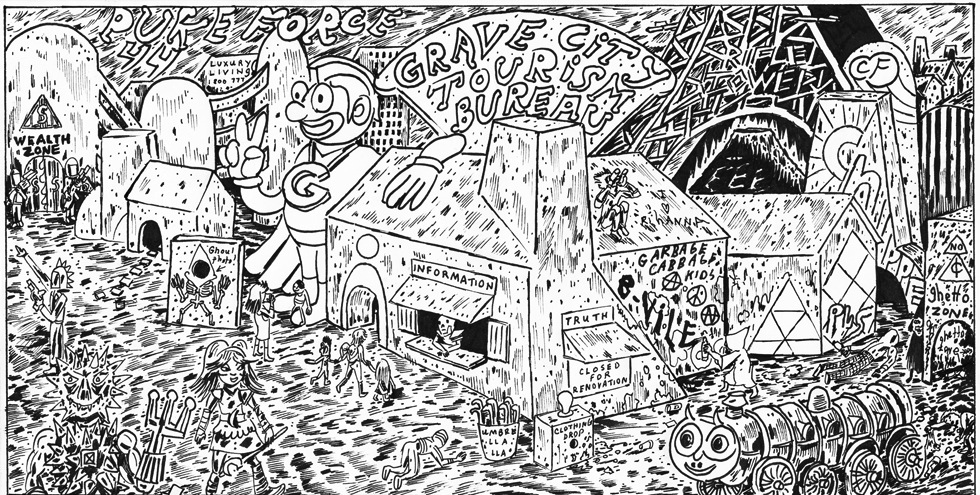
February 15, 2012* Brian Chippendale’s Puke Force returns!
* Wow: Gary Gianni will be doing next year’s A Song of Ice and Fire calendar. That will be very, very attractive fantasy art. Gianni’s the best illustrator of the similarly rough-hewn Robert E. Howard Conan material by a country mile.
* Wow #2: Kraftwerk will be playing each of their albums in their entirety, one album per night, during an eight-night residency at the Museum of Modern Art. I may have to hire a sitter for this.
* Lisa Hanawalt reviews The Vow for Vanity Fair (!).
* Kristy Valenti pens a short panegyric for Frank Miller’s Ronin.
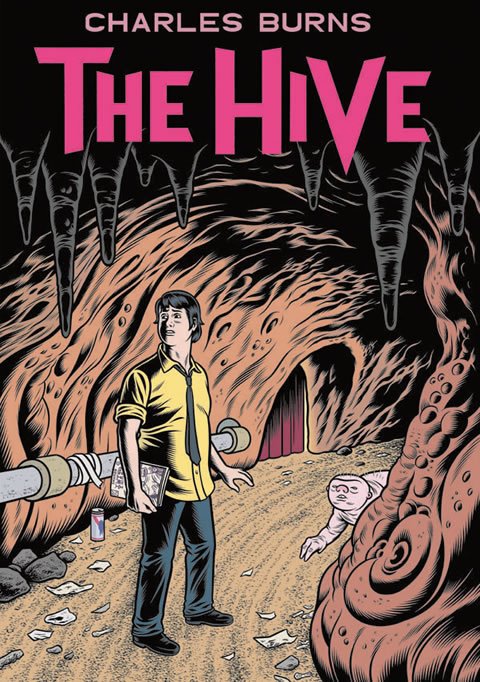
* I hadn’t seen the cover for Charles Burns’s forthcoming The Hive until the Italian about-comics publication Conversazioni Sul Fummeto posted it to their Facebook account. Lookin’ good.
* These four-panel comic strips by CF (!) are great.
* You should by all means go see the Matt Wiegle/Shawn Cheng/John Mejias art show at Franklin Art Works in Minneapolis this weekend.
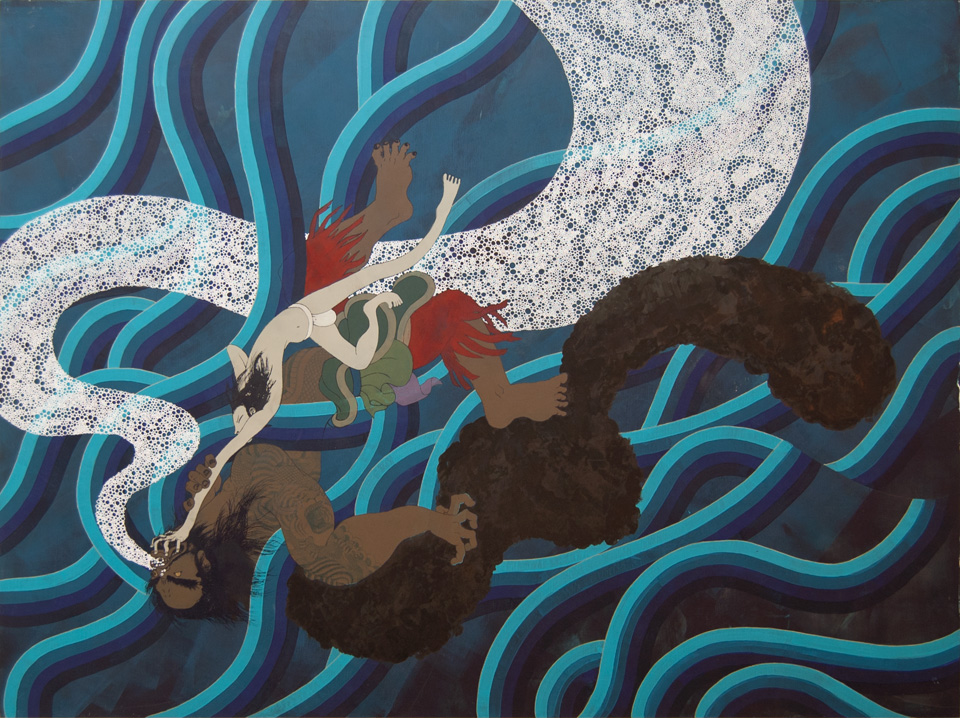
* This is the first Sam Bosma art I’ve seen that I’d describe as sexy. It’s a good look for him!
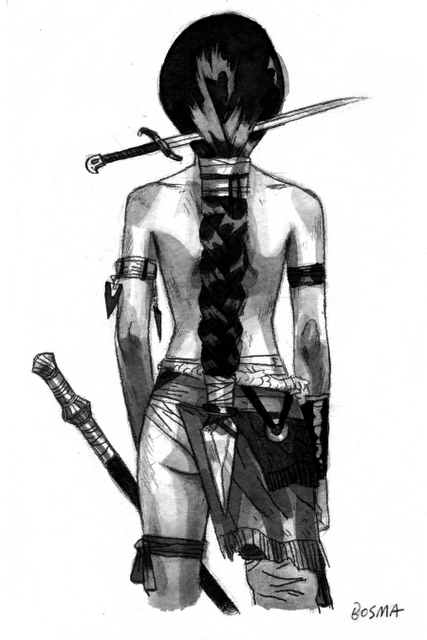
* Speaking of sexy, Bryan Lee O’Malley takes us on the express train to Bonertown with this pin-up of his Scott Pilgrim characters Wallace Wells, Kim Pine, Ramona Flowers, and Lisa Miller (whom I had to wiki).

“You will likely find death”
February 14, 2012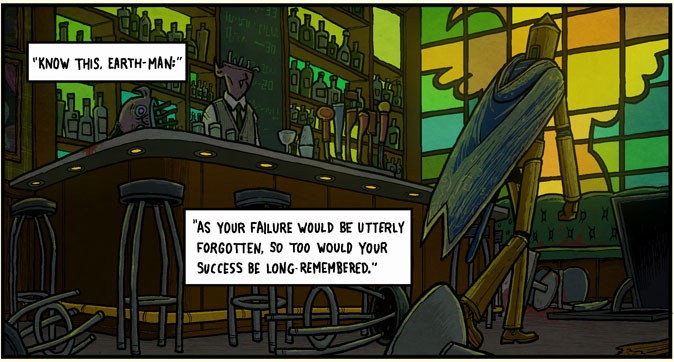
Page 4 of “Destructor Meets the Cats” has been posted.
You can read the whole story so far on one continuously scrolling page by clicking here.
Carnival of souls: Spurgeon, Kiersh, Campbell, Chippendale, Barker, more
February 13, 2012* Your must-read of Comics’ Grossest Fortnight is Tom Spurgeon on More Watchmen. That’s all I can really say — he says it all himself.
* Dave Kiersh fucking funded his Kickstarter book. Alright, man, alright.
* I quite enjoyed this account of the grotesque legal odyssey of Joe Simon and Jack Kirby and Jerry Siegel and Joe Shuster by Comic Book Comics‘ Fred Van Lente and Ryan Dunlavey.
* Andrew White has posted the truly fabulous concluding pages for Sexbuzz Chapter Six.
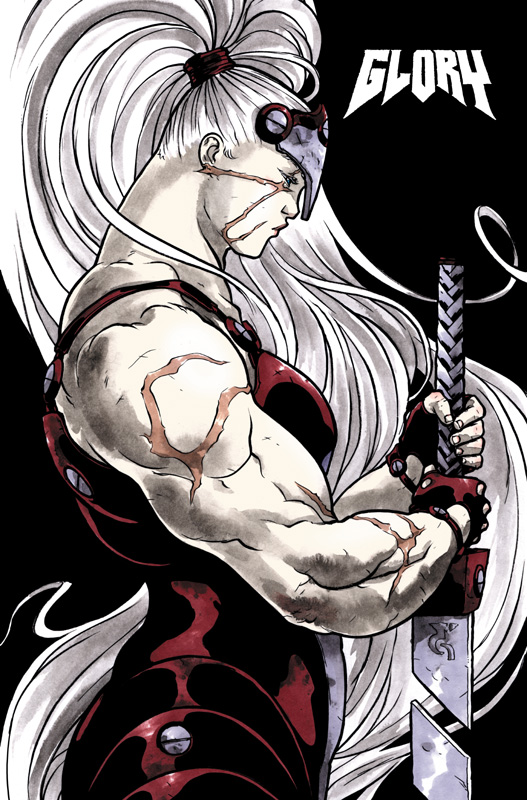
* I’ll be checking out the Ross Campbell-illustrated Rob Liefeld revival title Glory this week, for sure.
* Brian Chippendale’s Puke Force returns tomorrow! You are not prepared.
* Please go download Vito Delante and Rachel Friere’s genuinely delightful FCHS Vol. 1 for five bucks from Graphic.ly, if that’s the sort of thing you’re wont to do.
* Gabrielle Bell made a poster for Richard Linklater’s Slacker for Cinefamily. Then someone made a video out of it, set to a song by Oneohtrix Point Never, because why not. I’ll never forget how excited I was when I first saw that movie and the one guy said the words “psychic TV” in it.
austin, tx from Tony Groutsis on Vimeo.
* The great Tom Neely is doing a series of his weird one-panel non-gag cartoons for Zack Soto’s Study Group webcomics portal. This is great news, as these seem to be getting better and better as Tom goes.
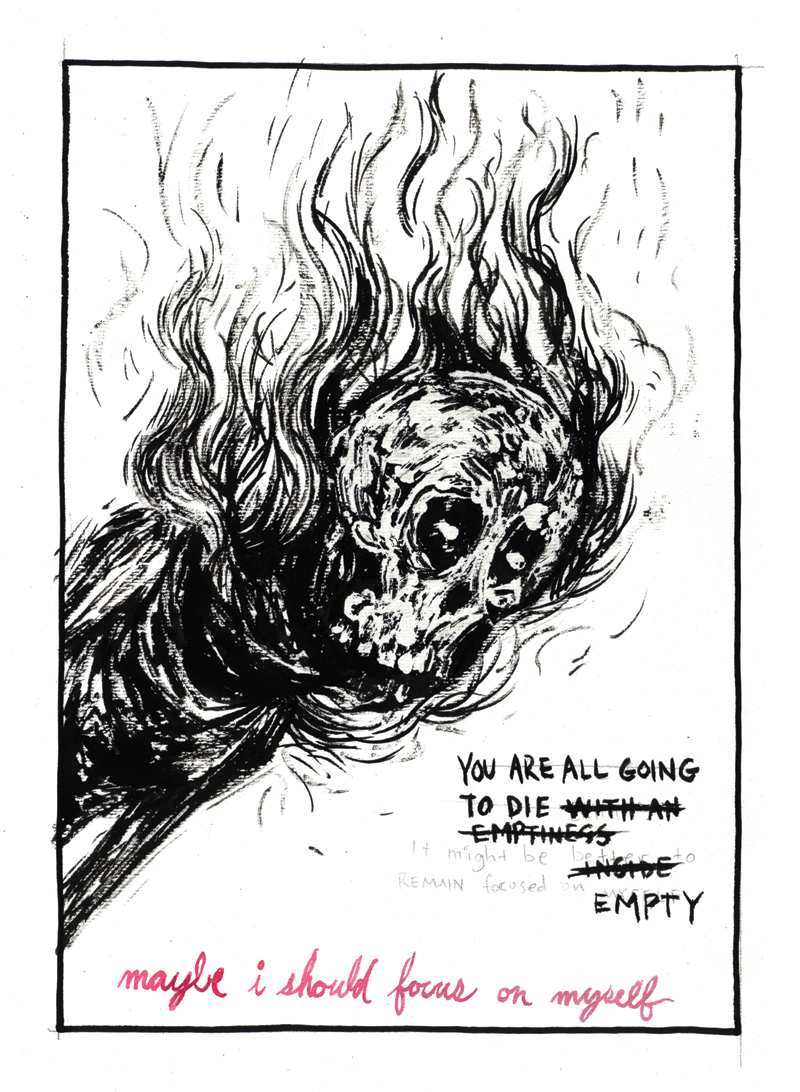
* I think most all of it has been bought by now, but if you hurry you can buy some original art pages from Brandon Graham and James Stokoe to benefit Ghost Rider creator Gary Friedrich in his legally mandated time of woe.
* It’s been a while, but it looks like Uno Moralez is resurfacing.
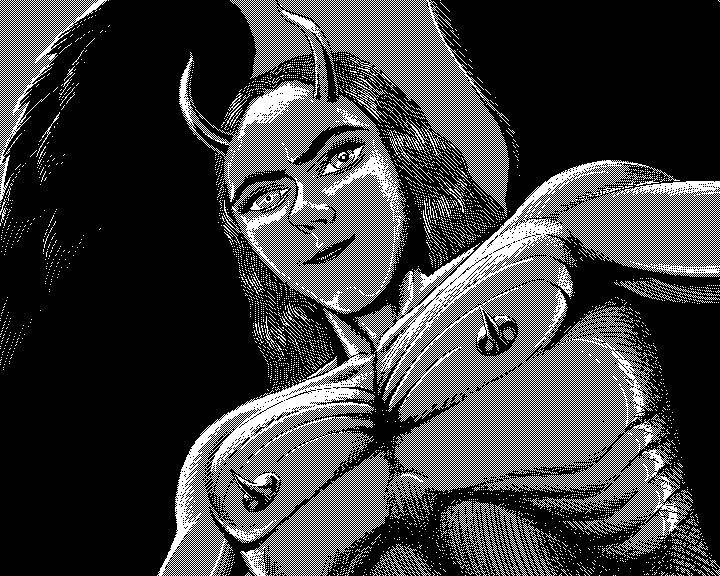
* As with Michael DeForge, at a certain point it feels cheap of me to keep posting illustrations from Renee French. Shouldn’t you be willing to click on a French link sight unseen? I think you should.
* Finally, I should note that Clive Barker slipped into a coma and almost died recently due to toxic shock syndrome brought on by a trip to the dentist. Fortunately, he’s on the mend now. Clive is one of my favorite human beings — one of the best human beings — I’ve ever known. Get better, Clive.
Breaking Bad thoughts index
February 13, 2012Here are links to all my Breaking Bad posts. I’ve added the special features I’ve written for Rolling Stone to the list chronologically, so that once you’ve read the preceding review post, it’s safe to read that feature as well. I hope you enjoy them!
* Season One
* Season Two, Episodes 1-3
* Season Two, Episodes 4-6
* Season Two, Episodes 7-12
* Season Two, Episode 13
* Season Three, Episodes 1-3
* Season Three, Episodes 4-7
* Season Three, Episodes 8-13
* Season Four, Episodes 1-6
* Season Four, Episodes 7-10
* Season Four, Episode 11
* Season Four, Episodes 12-13
* Season Five, Episode 1: “Live Free or Die”
* Season Five, Episode 2: “Madrigal”
* Season Five, Episode 3: “Hazard Pay”
* Q&A: Anna Gunn
* Season Five, Episode 4: “Fifty-One”
* Q&A: Laura Fraser
* Season Five, Episode 5: “Dead Freight”
* Q&A: Dean Norris
* Season Five, Episode 6: “Buyout”
* Q&A: Jesse Plemons
* Season Five, Episode 7: “Say My Name”
* Season Five, Episode 8: “Gliding Over All”
* Walter White’s 10 Lowest Lows
* Breaking Bad’s 10 Most Memorable Murders
* Season Five, Episode 9: “Blood Money”
* Q&A: Dean Norris
* Season Five, Episode 10: “Buried”
* Q&A: Betsy Brandt
* Season Five, Episode 11: “Confessions”
* Q&A: Bob Odenkirk
* Season Five, Episode 12: “Rabid Dog”
* Q&A: Steven Michael Quezada
* Season Five, Episode 13: “To’hajiilee”
* Q&A: Lavell Crawford
* Season Five, Episode 14: “Ozymandias”
* Q&A: R.J. Mitte
* Season Five, Episode 15: “Granite State”
* “Granite State” bonus thoughts
* Season Five, Episode 16: “Felina”
* “Felina” bonus: Bloggingheads.tv discussion with Alyssa Rosenberg