
Archive for the ‘Uncategorized’ Category
Breaking Bad thoughts: the end of Season Four
February 13, 2012* I finished Season Four and am all caught up with the show. LOTS AND LOTS OF SPOILERS BELOW.
* All I know is I’m glad I never googled “Gus gif” for any reason prior to finishing this season. (I just want to note that that final episode was called “Face Off.” Rimshot!)
* I’ll admit it: When that drug dog (hilariously!) popped out of Steve Gomez’s partner’s SUV at the laundry when they went to check it out in deference to Hank’s hunch, I was positive he had ’em. I didn’t count on Gus, Walt, and Jesse’s prideful fastidiousness, however. Then again, I also didn’t count on Hank’s after-the-fact deductive genius. Goddammit, the guy found probably the one tell-tale detail in all the photos Gomie took, the extra electricity running into the laundry. He had ’em dead to rights! One day he’ll get his reward, I hope…though I suspect that the final season will be Walt vs. Hank to the death. That seems like the only way it can go.
* I wish the brief scene between Skyler and Hank when she was checking to see if he’d spotted anything unusual in Gomie’s photos wasn’t brief. Have those two ever been one on one before in the whole history of the show?
* Jesse’s race to get the information about ricin to Andrea in time to save Brock’s life was the most “gasping/squirming/covering my gaping mouth with my hand on the train”-worthy moment the show’s served up in a long time, and as I seem to always be saying, that’s saying something. Heartpounding.
* The whole bomb sequence with Walt and Gus in the hospital parking lot — heartpounding as well. Not that I wanted Walt to blow Gus up, mind you! Gus’s conversation with Jesse in the hospital chapel — expressing ignorance as to how Brock could have been poisoned, backing down and giving Jesse a full week off to deal with his young friend’s medical crisis — made it pretty clear to me that Gus wasn’t involved in Brock’s poisoning after all, though at that point I hadn’t sussed out who was. It just didn’t square with the man’s respectful and trusting treatment of Jesse all throughout their Mexican odyssey, either. So no, I didn’t want Walt to blow him up. But nor did I want him to spot Walt on the roof across the way, which a single telltale gleam from his glasses or binoculars or (I thought the poetry would be fitting here) his bald head would have ensured. In the end, you just can’t root for the death of your protagonist. Or, y’know, so I thought.
* Anyway. I sure enjoyed my little private eureka moment when I realized that if you can ring a bell, you can press a button on a detonator, too.
* I enjoyed the cameo from Peggy Olsen’s mom as well.
* And I enjoyed our brief glimpses of the old, funnier, in-over-his-head Walt — the Walt who’d look like he was about to threaten or even attack Saul’s put-upon receptionist, only to pause and finally say “…I’ll be right back.”
* But then Jesse said “Lilly of the Valley—it’s some kind of flower,” and I wrote, in all caps, just like this:
OH
MY
GOD
WALT
POISONED
BROCK
I’ve done some googling since finishing the season, and discovered that the plot Walt related to Jesse in the second-to-last episode, the (bogus, as we come to find out) idea that Gus poisoned Brock knowing Jesse would blame Walt and kill him for it, was poorly received by many in the audience. They thought that required way too many coincidences, way too many instances of things going exactly the one way they had to go for it all to work, for a man like Gus to feel comfortable relying on. And of course, they were right. (This guy in particular, who figured out what was going on even before the finale made it clear, which is pretty amazing.) This wasn’t some master plan by Walt, it was a last-ditch plan by Walt. Like stripping naked in a supermarket, it was the only thing he could think of that could possibly save his hide. And it was so crazy it just might work. And it did! The horrible, horrible man won.
* I call him horrible despite my belief that however it was that he administered the poison to Brock, he did so in a way he knew would ultimately not kill him. It’s still horrible to inflict suffering on a child, and his family, whose suffering and fear is just as real as Walt and his family’s.
* But mostly, I call him horrible because I now realize why he spat Gus’s offer of clemency back in his face in the desert. Walt himself may not have even truly realized it. Perhaps not until he cracked in that crawlspace, letting forth an insane man’s peals of laughter, did Walt himself realize it. He has to protect his family, yes. But he has to win while doing it. Walter White has to be the smartest guy in the room at all times. Even more than wanting to remove the threat Gus posed to himself and his family (and Jesse — I do think he still would prefer Jesse not be killed, or he’d have killed him when they destroyed the lab) once and for all, I think it was wanting to beat Gus that drove Walt to do what he did. Not for Jesse, not for his family, but for him. That makes Walt worse than Gus. Gus’s hatred of the cartel and his desire to defeat them was born from the love he felt for his friend that they killed. Walt’s desire to kill Gus, to put himself and everyone he nominally cares about in harm’s way if that was the only way to do it, was born from Walt’s love for himself. That’s what makes him so easy to hate, now.
* More google treasure: Creator Vince Gilligan says part of the impetus behind doing Breaking Bad was doing a show where the protagonist slowly became the antagonist. Explains a lot. (That link comes via this Chuck Klosterman/Grantland piece, and you probably have feelings about that sort of thing, but note that Klosterman also sums up the ultimate limitation of The Wire (a show of politics rather than philosophy) as well as anyone I’ve ever read.)
* So what happens next season? Walt and Jesse have no real antagonist at the moment. Oh, I’m sure they can stumble their way into a new one in pretty short order — the whole history of the show, from the pilot onward, is the story of Walt and Jesse making life-or-death enemies at the drop of a hat. But the deaths of Gus, Tyrus, Hector Salamanca, and the entire leadership class of the cartel leave a massive, massive vacuum. I assume Gus’s mysterious past as some kind of untouchable big shot in Chile will play a role. I assume Mike will play a role. The great critic Matthew Zoller Seitz (whose reviews of shows like these I look forward to reading after I finish a series almost as much as I look forward to the actual act of finishing the series) points out that the mysterious German conglomerate that bankrolled the laundry and the air filtration system (I couldn’t help but notice some kind of HVAC was involved in the “guy who can disappear you and your family” service Saul tried to connect Walt with) will likely play a role, too. Seitz also notes that there’s a laptop full of surveillance footage sitting in Gus’s office at Los Pollos Hermanos, just waiting to be decrypted. We’re not done hearing about the death of Ted Beneke either, I’m sure. Saul and his goons could crack about that, or about their involvement in Walt’s poisoning of Brock. As I said, I think Hank will be the Final Boss. And in the end, there’s Walt vs. Jesse, which is just another way of saying Walt vs. Walt.
The Boiled Leather Audio Hour vs. The Winds of Winter
February 13, 2012My latest A Song of Ice and Fire podcast is up, focusing on the sample chapter from The Winds of Winter that George R.R. Martin posted to his website a few weeks ago. My co-host Stefan Sasse and I are once again joined by the illustrious Amin of A Podcast of Ice and Fire. Go have a listen!
Carnival of souls: Brienne, Melisandre, Stannis, DeForge, Bell, Goldfrapp, Friedrich, more
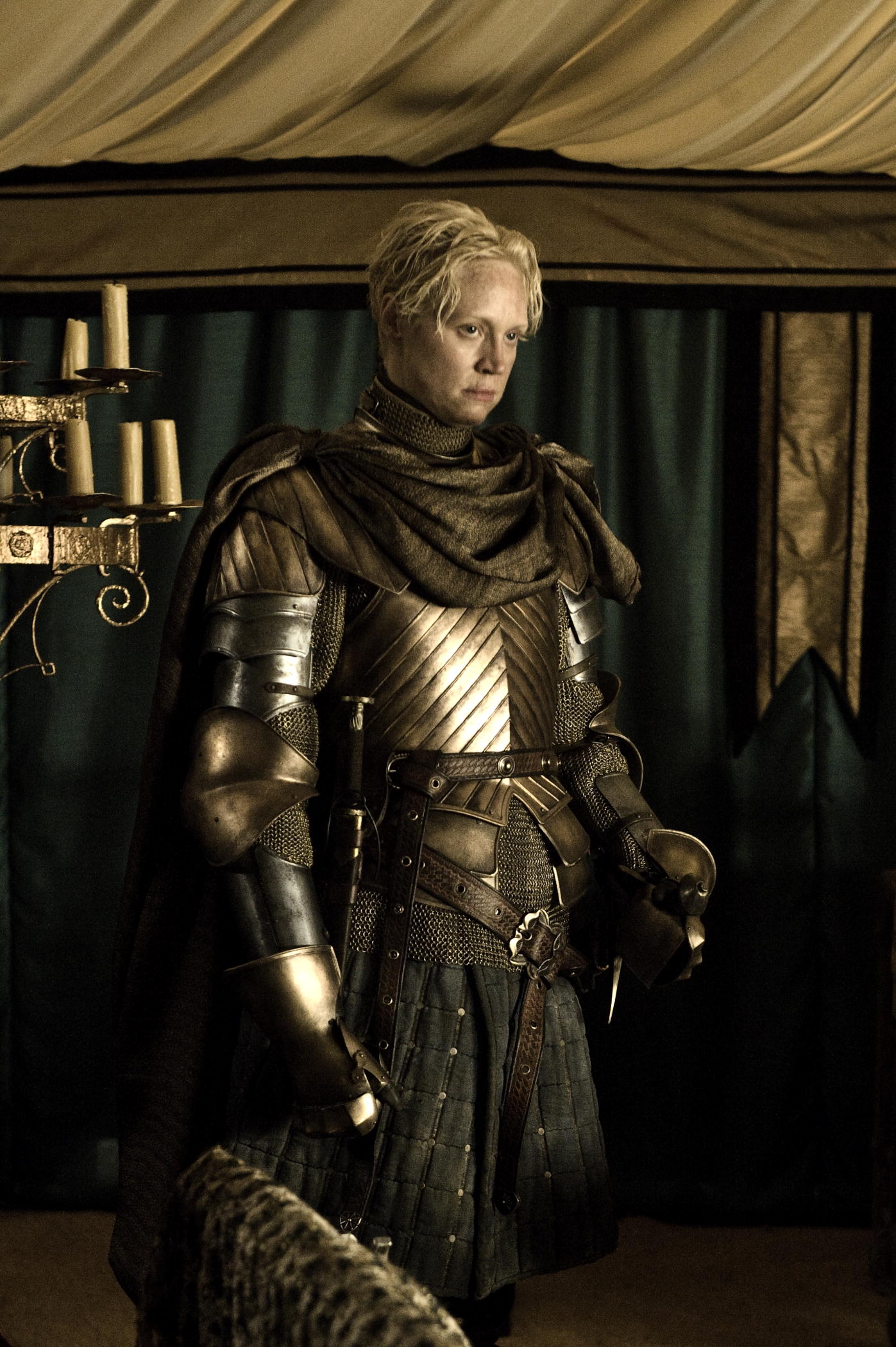
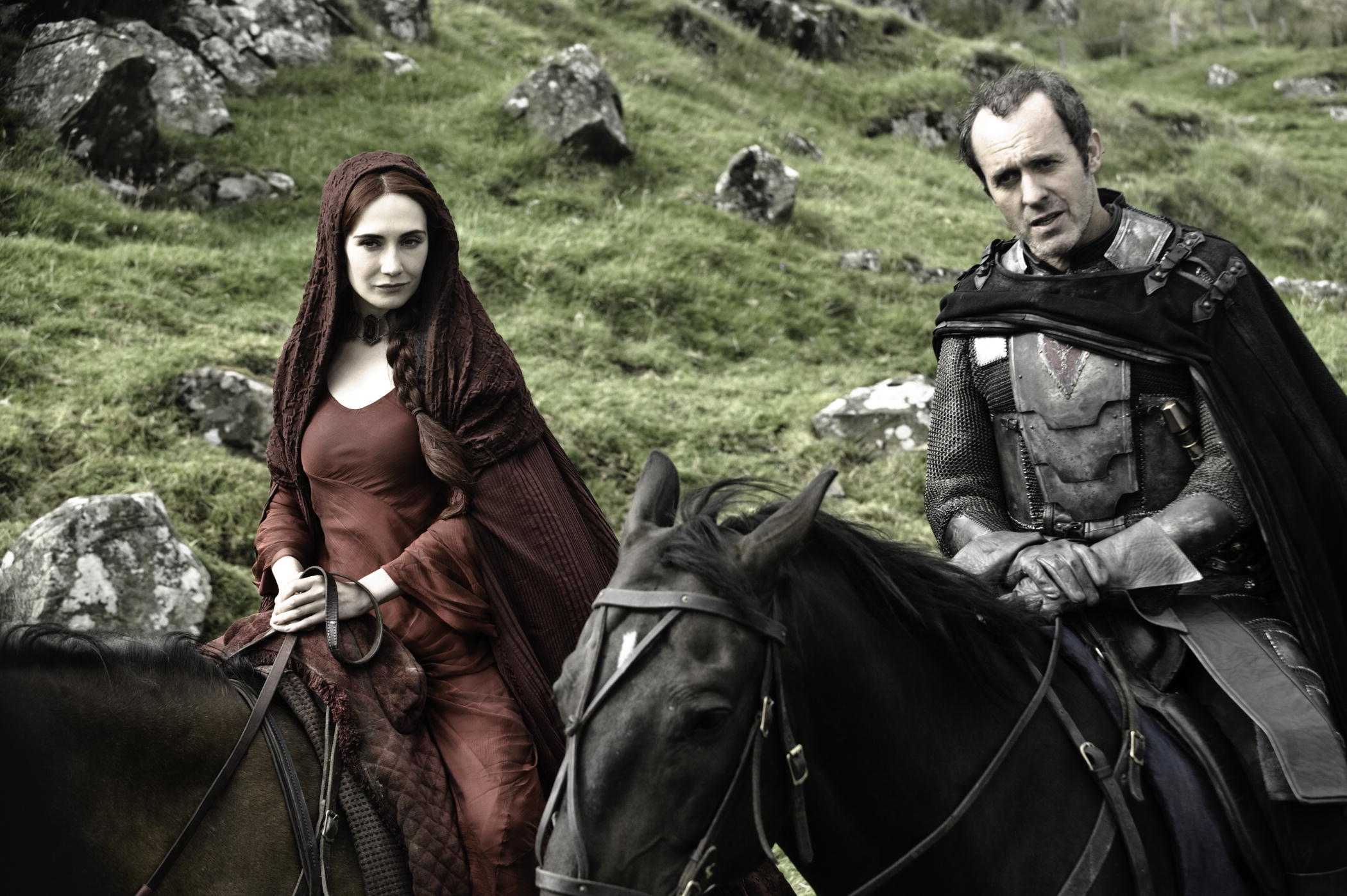
February 10, 2012* The new Game of Thrones characters look fucking great, if you’ll pardon my Tyroshi. I’m giving you the ones you really want to see below; many more publicity stills of faces new and old at the link.
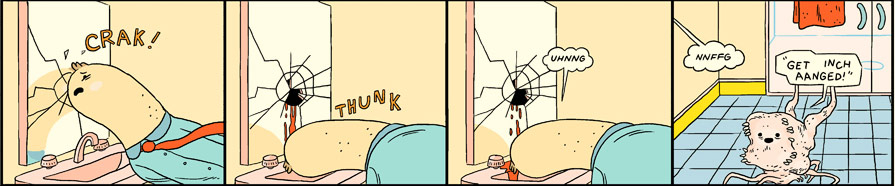
* Wow. Michael DeForge’s Rescue Pet is astonishingly troubling.
* “Cartoonist Chris Ware on why other cartoonists fear Clowes”
* Gabrielle Bell is serializing her Kramers Ergot 8 contribution “Cody” on her website. I’m not clipping anything from it — you need to read the whole thing as it unfolds.
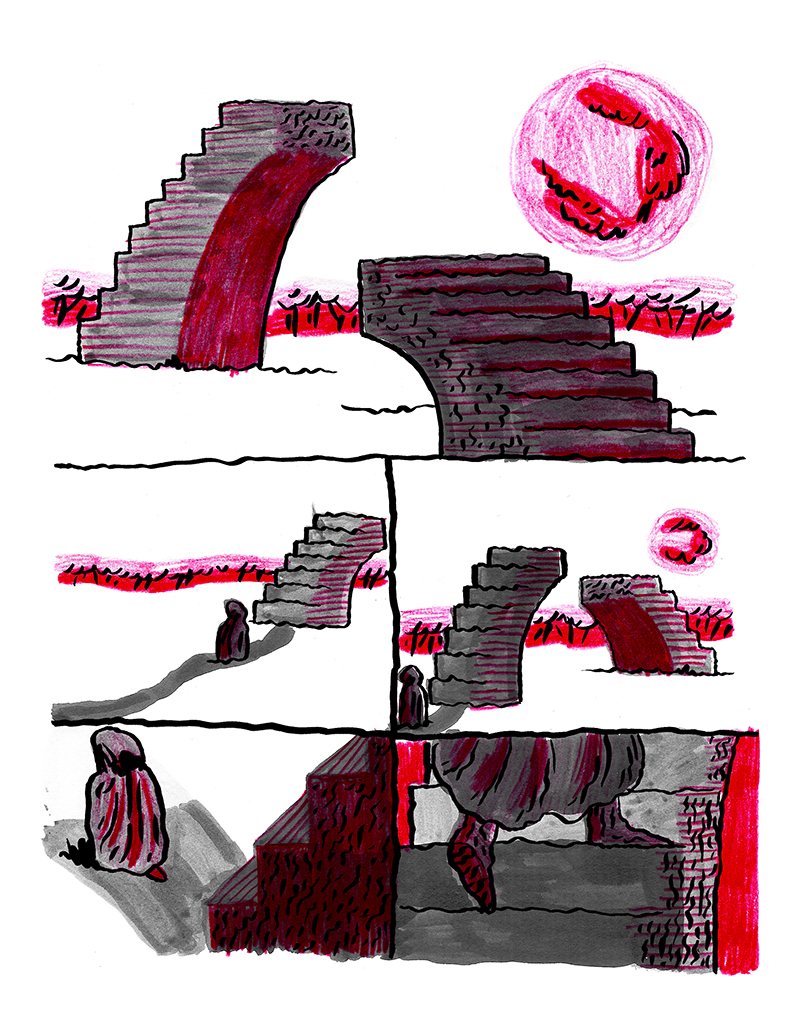
* Check out the comic Mark P. Hensel/William Cardini made for Frank Santoro’s comics correspondence course, Moon Queen. You can really see Frank’s fingerprints on this.
* Young altcomix journo of the moment Ao Meng interviews French altcomix maker of the moment Boulet.
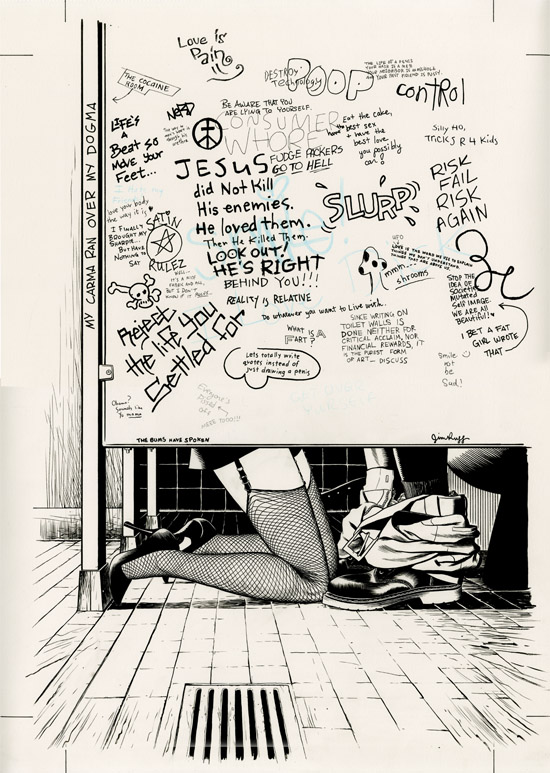
* I’m only running the black-and-white version of Jim Rugg’s Sleazy Slice #5 cover here, because the full-color version is a must-see and his site deserves your traffic for showing it to you.
* Nice art by Renee French, and by nice I mean not nice at all.

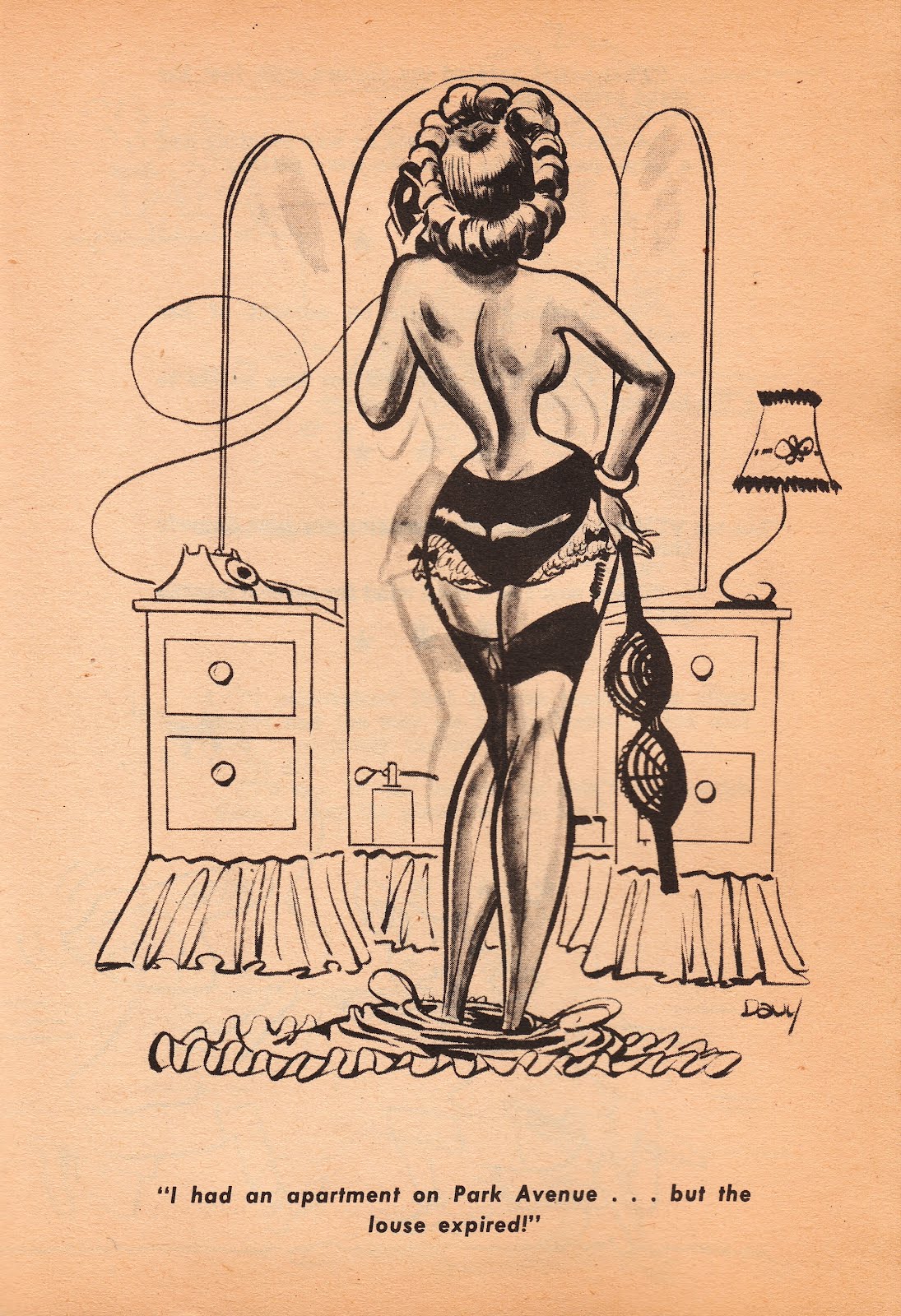
* I found these early Dave Berg pin-up gag comics pretty sexy. (Via Tom Spurgeon, from whom I got the Rick Trembles link I posted earlier, too.)
* Saving this for later: Rob Clough’s massive TCJ interview with 1-800-MICE cartoonist Matthew Thurber. I think I’ll read this and the Dan Nadel/Marc Bell monstrosity from a while back back-to-back.
* Matthew Perpetua makes the case for Goldfrapp, the most underrated band of the past decade.
* Real Life Horror: A majority of self-described liberals love President Obama’s army of flying killer robots. A majority of self-described liberals are assholes.
* I don’t pretend to understand George Lucas.
* Finally, one last way to feel a little better about your involvement in comics: Donate to Steve Niles’s fundraiser page for Ghost Rider creator Gary Friedrich to help defray the $17,000 judgment against him on Marvel’s behalf.
Two ways to feel better about your involvement in comics again
February 10, 2012We’re now reaching what I sincerely hope is the end of Comics’ Grossest Fortnight, two weeks full of disgraceful behavior by the industry’s major publishers Marvel and DC and dire news for creator rights and ownership. (See here, here, here, here, here, here, and here.) If you want to feel better about being a reader of or active participant in an industry that routinely abuses the writers and artists responsible for the existence of that industry in the first place, I think I can point you in the direction of two ways to do that.
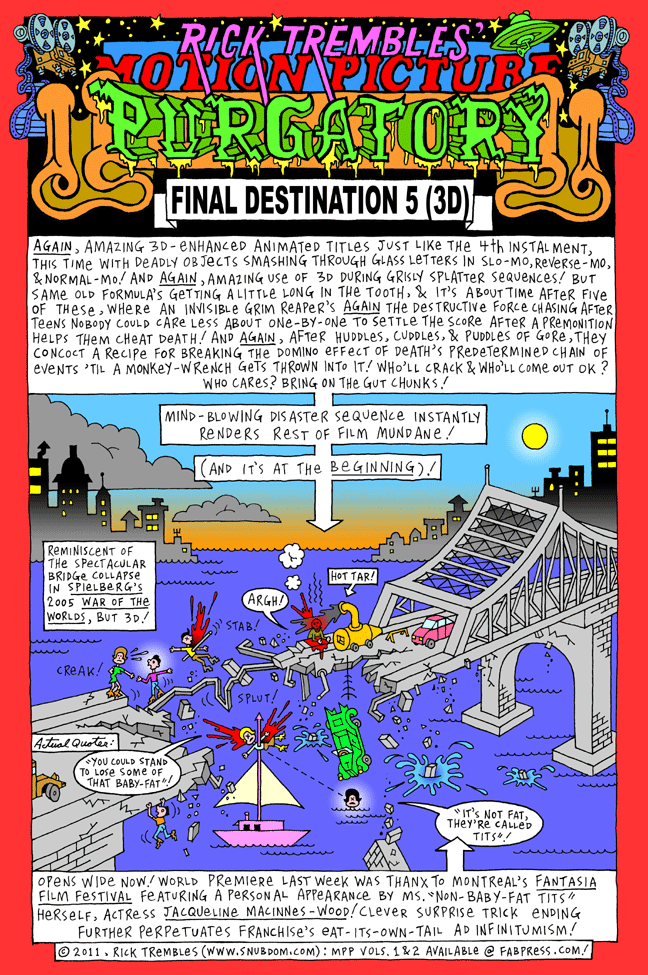
First, the great cartoonist Rick Trembles needs help. Trembles is the man behind Motion Picture Purgatory, unique movie rant/reviews that combine all-caps praise and/or damnation with weirdly detailed cartoon depictions of scenes from the movie (His take on Transformers 3 is a recent fave of mine.) Trembles was forced out of his long-time apartment by his landlord under suspicious circumstances, and the subsequent costs of moving and storing his stuff with next-to-no-notice have left him destitute and in need of work. If you’ve got freelance illustration work you can throw his way, or (according to him) more importantly if you’re a Montreal resident and can offer him full-time work, do it by contact him via the above link. (You can even donate directly to him via PayPal, though he says he prefers work, naturally.)
Second, with just three days to go, Dave Kiersh’s Kickstarter for his graphic novel Afterschool Special is in grave danger of going unfunded. Kiersh is one of my favorite cartoonists, and pound for pound and panel for panel, I think he’s the most underrated alternative comics creator in North America. If you’ve ever enjoyed a single note played by M83, for example, I think you’ll go nuts for his curvy cartooning of life in the ’80s/’90s teenage wasteland. A donation of $20 gets you the book when it comes out; a donation of $35 gets you the book and his previous collection as well. You can’t miss.
These are cartoonists who live and die by their own work, pursuing their own aesthetic and their own obsessions. Support them. They deserve it.
Breaking Bad thoughts: Season Four, Episode 11
February 9, 2012SPOILERS AHEAD.
* I had to write about this one right away. I had to.
* Yep, I’m still genuinely touched by Jesse’s newfound affection for Mike, and vice versa. I’m a sucker for people getting along, what can I say.
* And once again, Gus trusts Jesse enough to walk with him for six miles in the middle of nowhere while in a wounded state. That the show didn’t even bother showing us their long stroll together, the way they’ve done with Walt and Jesse in the past, tells us we can trust that trust.
* Tyrus has both the name and the sinister dandy look of an ’80s urban-apocalypse villain. “Does the laundry have to be dirty?” “…nope.” Nice to see a flash of personality from him, too.
* Sic semper Ted Beneke. It’s funny — I thought the little bit of business of Ted tripping over his rug on the way to answer the door earlier in the episode was accidental, that the actor then improvised and the moment was kept in by the filmmakers. Nope! Running away from a sloppy career-criminal abduction/assassination attempt and killing yourself in the process is Breaking Bad at its most Coen/Lynch, which is saying something.
* I’ve read enough Digby to know that tasers are less an law-enforcement alternative to lethal force and more a law-enforcement alternative to using no force, or more specifically to taking any guff. So I was quite pleased to see Tyrus’s use of a cattle prod on Walt — not a taser, but functionally indistinguishable from one in its narrative impact — not played for laughs in the slightest. That looked fucking awful. And he kept on using it even after Walt was down. This was about punishment.
* Christ, what a gorgeous shot composition, of Walt on his knees with a black bag over his head as Tyrus and company stand guard while Gus drives up. Watching the sun come in and out of clouds, their shadows on the desert…just lovely. Getting back into the mythic-weird territory of the plane crash.
* That desert scene was astounding in that just when you think you’ve plumbed the depths of your own disbelief and disgust where Walt is concerned, he takes you even further. He was out. He was free. Gus gave him a chance to leave the business with his life, and by doing so, he couldn’t help but show Walt that he couldn’t kill him. Walt figured this out, figured out that whatever their problems with one another, Jesse was still preventing Gus from killing him, and likely always would. He could have walked away. And what does he do? He proves himself incapable of not being a dick. He gets in Gus’s face, confronting the man with his own impotence. And thus he ensure that Gus will remain his enemy rather than washing his hands of him, that he’ll work on Jesse’s defenses until Jesse consents to Walt’s murder, that Walt’s family — his children; his baby — are now in the line of fire. He just couldn’t not be a terrible, angry person. And he paid for it.
* The final sequence of this episode…I mean…gosh. Frightening in how soul-curdling it was. Dave Porter’s score returns to pulsing, dissonant, Texas Chain Saw-indebted industrial, as Walt’s supine position in the cobweb-infested, dirty crawlspace, and his mad cackle, make that particular filmic comparison even harder for me to shake. When he first started laughing, I thought he’d figured something out, something that Skyler giving Ted their money enabled him to do that would help them out of their situation. But when I realized that he’d simply…lost it…god damn it. The look of mounting horror, real horror, on Skyler’s face as she looks down on what her husband has become, and realizes what it means? Her woozy walk down the hall as Marie reveals her life is in danger as well over the answering machine? The floating camera tracking upwards from Walt’s ruined face? My goodness. My goodness gracious.
Breaking Bad thoughts: dirty pool edition
February 9, 2012I’ve now seen Season Four episodes 7-10. Close to the end now. SPOILER WARNING
* Ha, remember back in Season Three when I said how much less intimate the show was, and how big the players had gotten? Little did I know! Straight-up Godfather/Scarface-level shit now, from “and Stephen Bauer” in the opening credits on down.
* Which is a development worthy of some study, I think, beyond just “wow, big things popping for the former Gang That Couldn’t Shoot Straight.” But to get there requires some preamble…
* Okay, so during these episodes — even in the first couple of them, when Gus was still largely at the margins, still the invisible man behind the cameras, and when Jesse’s position as Mike’s shadow still seemed much more like a combined act of charity and insurance policy — I realized that all of the major protagonists and antagonists on the show, i.e. the people whose actions truly drive the plot, were quite simply a lot of fun to watch at this point. I found myself really hating that these guys were at odds, that for any one of them to come out on top, one or more of the others would have to go down.
* Let’s start with, for lack of a better term, the good guys. Walt may have been largely coasting on sympathies earned over the past three and a half seasons, but I still didn’t want to see him get busted or killed. (I mean, even putting those sympathies aside, there’s a pleasure to “how’s he gonna get out of this one?”, you know? The Houdini act is fun to watch. Jesse only gets more sympathetic and more charismatic as the show progresses. And Hank is a cross between Sherlock Holmes and (to quote another actor on the show in another movie he was in) that guy from The Incredible Hulk — his detective work gets sharper and sharper, and his panache in presenting it to Gomie and Merket was an absolute joy, plus he’s very kind to both Marie and Walt now.
* Meanwhile, on the cold-blooded killer side of the ledger, Mike remains one of the most enjoyable characters on TV in terms of just watching the guy scowl and listening to him talk. And as I said, he’s deadly competent, and competence is compelling. This also applies to Gus, which the show makes crystal clear when they have him walk head-on into a hail of sniper bullets, and which reaches its apotheosis during that fateful pool party at Don Eladio’s. I mean, the second the Don took a drink and toasted all his men too, I started laughing out loud. “Hahahaha, he just poisoned all these assholes!”
* But in addition to making these guys scary badasses, the show’s also taking this time to humanize them, believe it or not. It’s become apparent by now that Mike’s growing trust in, even respect for, Jesse isn’t just an act. For one thing he saved his life at a time when it would have been quite easy to let him die without Walter really being able to blame him or Gus. But more than that, he seems happy for Jesse when Jesse proves his mettle. His smile down in that Mexican factory when Jesse told off the imperious chemist genuinely made me happy, goddammit!
* Even Gus gets his shades of grey now. We see signs of fear several times: He’s obviously rattled by his conference with Hank and friends; he’s flustered by the cartel’s refusal to actually negotiate; and most importantly, he was terrified during his initial meeting with Don Eladio in that majestically awful flashback sequence, and completely devastated — this was quite apparent even in a brief flashback dedicated to the death of a character we’d never met — by the murder of his friend and partner, the other Chicken Brother. I felt terrible for Gus. For Gus! Suddenly I felt like, okay, now I understand.
* And he too saves Jesse’s life when letting him die would have come at no cost, by sparing him from the poisoned liquor at Don Eladio’s house. His trust and respect for Jesse appears genuine as well. And I’d have to imagine that for both him and Mike, Jesse saving their lives (I think — haven’t seen the next episode yet) in Don Eladio’s driveway will only deepen their connection with him, and ours with them.
* But.
* Over in Walt-land, after Jesse beats him up, Walt Jr. comes over and finds his father wounded and doped up on painkillers. What followed would be under normal circumstances the kind of thing that would have me crying, sobs and tears and everything, on the train. A grown man weeping over his failures to his son, saying “I made a mistake, I had it coming, it’s all my fault, I’m sorry”? That stuff usually just murders me, murders me, man. But here? I spent the whole time thinking Walt was faking it.
* In short, I think it’s no coincidence that the show chose to beef up and round out the roles for its murderous antagonist characters at the exact same time that it reduced our sympathy for Walt to an all-time low ebb by making him almost completely unlikeable. Normally, to paraphrase Walt himself, in a contest between Walt and Gus, Walt would win every time. Now? With Skyler and the kids financially secure, with a legally lucrative future ahead of them, with Jesse in tight with the bigwigs and able to cook brilliantly on his own, with Walt bringing nothing but misery to everyone he touches and really not caring or even noticing that this is the case, we’re left to wonder if we’d honestly find it so terrible if he ended up in one of those barrels. He didn’t just damage or destroy his relationships with his family, Jesse, and his employers. He damaged his relationship with me.
* And as I said earlier, this bears some study. Competence is compelling, and with their daring in-the-lion’s-den decapitation of the cartel, Gus and Mike (and Jesse) have become, as best we can tell, arguably the most competent criminals in western North America. By contrast, Walt is a wash. Previously the show had offered us no alternative to his and Jesse’s gut-churning series of failures and disasters, narrowly averted or not. Now we have Michael Corleone or Tony Montana if we want them. And on the level of entertainment, we do want them, of course. I don’t want to see Gus and Mike get busted or killed now, not at all. And I want Jesse to keep his cool and stick with them. And after the finales of Season Two and Season Three, after we witnessed the moral consequences of behavior made possible by Gus and Mike, I’m not sure how I feel about how I feel. No, I’m not sure at all.
* Anyway. How good does Jere Burns look with a mustache, huh?
* Speaking of, Jesse’s brutally confrontational monologue in the support group was Aaron Paul’s finest hour. It mirrored Jesse’s primal scream at Walt for ruining his life while in the hospital after Hank beat him, but this time he was screaming at himself. The filmmakers hit us hard by conjuring imagery of crimes we find the hardest to forgive in fiction — killing children, killing animals. That’s how Jesse thinks of himself. No wonder I want Gus and Mike to grant him a new lease on life, poor kid.
* I was happy to see Steve Gomez return. Underutilized character, underutilized actor, I think.
* Man this is a clever, cheeky show. They cold-open an episode with blood in an unidentified manmade body of water, then make sure we hear, and hear about, but never actually see, Andrea’s “nice birdbath” at the new place Jesse’s helping to pay for for her and her son Brock. It’s the Season Two burnmarks-and-bodies swimming-pool fakeout in miniature, but no less effective for that.
* Saul’s good with kids. I like that.
* I’m sure I’ve said this before, but just like The Sopranos, this show gets funnier as it gets darker. Hank and Walt’s whole conversation in the Los Pollos Hermanos parking lot, as Walt is forced to feign surprise when Hank reveals his suspicion that Gus Fring is a drug dealer, and is then cajoled into bugging Gus’s car, while he and we alike watch Mike pull up a few spots away and watch them, was just about the funniest thing the show’s ever done. It was like Curb Your Enthusiasm: Crystal Edition.
* I liked the handsome young cartel representative. Thoughtful, unpredictable casting there. Too bad we won’t be seeing more of him!
* Let’s throw in a whole bunch of gorgeous time-lapse sunset/sunrise shots, because why not.
* As much as I enjoyed the Skyler/Ted Beneke side storyline and her cleavage-based attempt to resolve it, I couldn’t help but feel that maybe there are a few too many improvisatory geniuses in the White/Schrader family? Marie, Skyler, and Walt have all now proven to be able to spin bullshit into gold at the drop of a hat, and Hank’s no slouch in the storytelling department either, though he hasn’t deployed those talents in quite that way. For once I’d like to see one of these folks just blow it.
* I don’t see good things in Ted Beneke’s future, by the way. I suspect Skyler’s headed for her Walt/Jane, Jesse/Gale moment.
* I’ll leave you with a conspiracy theory. Now that we know Gus’s backstory, specifically the roles of the cartel and its representatives Juan and Old Man Salamanca in that backstory, doesn’t it seem possible that pretty much everything Gus has done — setting up the lab, hiring Walt, saving him from Juan and the angry Salamancas, siccing the brothers on Hank and then tipping Hank off about it, having Mike kill the surviving brother in the hospital, having the federales kill Juan, cutting off the cartel’s access to the States, using Walt to fill the vacuum with his own meth supply, drawing the cartel into a cold war with occasional flare-ups, backing off the plan to kill Walt and Jesse, keeping them both alive and cooking, building up Jesse’s confidence, presenting Jesse to the cartel as a peace offering, and then of course what we saw during the visit to Mexico — was all a plan for revenge? I mean, even agreeing to work with the man who caused the death of Tuco Salamanca to begin with, you know? Did the legendary businessman structure his entire business plan around something very, very personal? “This is where blood for blood gets us,” he tells Hector Salamanca in his nursing home, and at first you think it’s a reprimand. But what if it’s a master plan, hiding in plain sight?
Breaking Bad thoughts: The Season Four halfway mark
February 7, 2012I’m about halfway into Season Four — just finished episode six. SPOILERS, SPOILERS EVERYWHERE
* We start with silence. In the entire excruciating sequence in the season premiere during which we wait to learn the fate of Walter and Jesse from Gus — the entire episode, in other words — Jesse doesn’t say a single word to anyone until his (the writers’) cheeky Indiana Jones and the Last Crusade “What’s that?” “Ark of the Covenant.” “Are you sure?” “Pretty sure.” homage when Mike asks him if the acid they’re using will successfully dissolve Victor’s body: “Trust us.” Gus, of course, is silent as well, until he instructs the hapless pair to get back to work. Mike’s largely mute, too. This is a show that trusts its audience to know what to do with itself when no one’s talking, and there aren’t a lot of shows like that, same as, I dunno, Jaime and Gilbert Hernandez trust their audience to be able to follow comics in which locations and time frames can change dramatically in the space of a panel, with no obvious cues to hold your hand. I like that.
* Sad to say, Gale’s demise was spoiled for me by overenthusiastic mourners on Tumblr a few months back (although I didn’t know the specifics or the time frame for sure, so I thought there was every possibility Jesse let him off with a warning shot). And if you can believe it, Victor’s death was spoiled for me, too, by the goddamn Breaking Bad wiki page for a Season Three episode that I looked up a while back to help jog my memory as to what exactly happened in it — I caught some reference in the “trivia” section to “Gus’s new lead enforcer Tyrus,” and thought “Oh, terrific, so that means something happened to the ‘old’ lead enforcer then, great, just great.” And by the end of the interminable lab sequence I knew that Gus was gonna turn that box cutter on his right hand man. So kudos, I suppose, to the show for still making it awful to watch despite my foreknowledge: As he thrashed his head back and forth while being cradled in Gus’s arms, covered in blood as his mouth opened and closed in a vain attempt to draw another breath, he looked like my newborn daughter, fresh from an emergency c-section, trying and failing to breathe before the nurses and doctors put her on a ventilator. How’s that for some heavy shit?
* This chunk of episodes feel a bit like a waiting game to me, frankly — a certain amount of time needs to go by before the show can really cry havoc and let slip the dogs of Walt following his and Jesse’s audible on Gale. Maybe that’s why I mostly remember a succession of little touches and moments: Walt replacing his bloodied clothes with a Kenny Rogers t-shirt, because in the words of Jerry Seinfeld, “Well, he is the Gambler…” A cameo from Jim “Ellsworth” Beaver, sounding for all the world like a resident of Deadwood plopped into the present day as an underground gun salesman. Marie revealing her improvisatory genius with lines like “Between his pension and the income I bring in from hand modeling…” Fever Ray on the soundtrack. Jesse getting handsomer and handsomer. The painfully recognizable plight of Marie as she attempts to care for someone who’s completely emotionally unable to appreciate or return that care. Skyler’s weight gain, and Walt Junior’s weight loss. The urban and rural decay of Mike’s dead-drop locations. The flourescent-lit hell of Bogdan’s car wash. The guy in a dress shirt, tie, and tighty whiteys crashing on Jesse’s floor. Wonderful details one and all.
* So it turns out I have a competence-fantasy soft spot after all, and Mike lives right in the middle of it. What a wonderfully world-weary ruthlessly efficient killing machine he is, and how bummed I was to see him all out of sorts following Victor’s murder (the way he turned his gun instinctively in Gus and Victor’s direction as it went down was a beautiful touch on the actor’s part — it wasn’t in any way clear whether it was meant to be trained on Gus or Victor, because I think Mike wasn’t sure either). I was glad to see he got his mojo back during the attempt to hijack his truck, and I was even gladder to see him and Gus conspire to heal Jesse’s heart. Awww. I love the lovable old murderer, and the discomfort I feel when he’s uncomfortable makes me a lot more sympathetic to everyone who just wants Don Draper or Wolverine or Tony Soprano to stay on top of the world at all times.
* Hank is impossible to like for much of the proceedings here, but his fellow cops are still coming to him for advice. He really is a good cop, and as the show progresses he’s stealthily being built into the cops from The Wire — the rival protagonist to the charismatic lawbreakers. You’re never quite sure who you’re rooting for.
* Hell, even Walt seems unsure. His drunken assertion that Heisenberg’s still out there is a leeeeeetle close to an idiot plot, yet it’s also an unconsciously altruistic act on Hank’s behalf. The guy needs his white whale, and for whatever reason — ego, stupidity, a desire to get caught — Walt gave that back to him.
* “Since when do vegans eat fried chicken?” Good question, Hank!
* I’m always pleased to see characters catch on to schemes you’d expect to drive the plot for some time. Jesse wised up real quick to the fact that he’s now Mike’s right-hand man because Gus wants him babysat. And Walt got even wiser nearly as fast, correctly deducing that the attempted stick-up was a way to let Jesse play the hero. Of course, being Walt, he put this in precisely the worst possible way, and Jesse reacted with scorn. Mister “I AM THE DANGER, I AM THE ONE WHO KNOCKS” needs to revisit his Dale Carnegie.
Carnival of souls: special extra-large edition
February 6, 2012* They’re gettin’ the band back together, man! Tom Spurgeon breaks the news that company co-founder Mike Catron and former art director Preston White are going back to work at Fantagraphics. Spurge also interviews Catron about his return to the fold.
* I love everything about this powerful post by Jessica Abel, in which she takes a look back at the last fifteen years of her life upon her and her husband Matt Madden’s recent decision to leave Brooklyn for France. And under “everything” I most definitely include their bookshelves.

* Marc Arsenault presents a visual tribute to artist Mike Kelley, who sadly took his own life last week. Kelley’s friend and publisher Dan Nadel shared some thoughts as well.

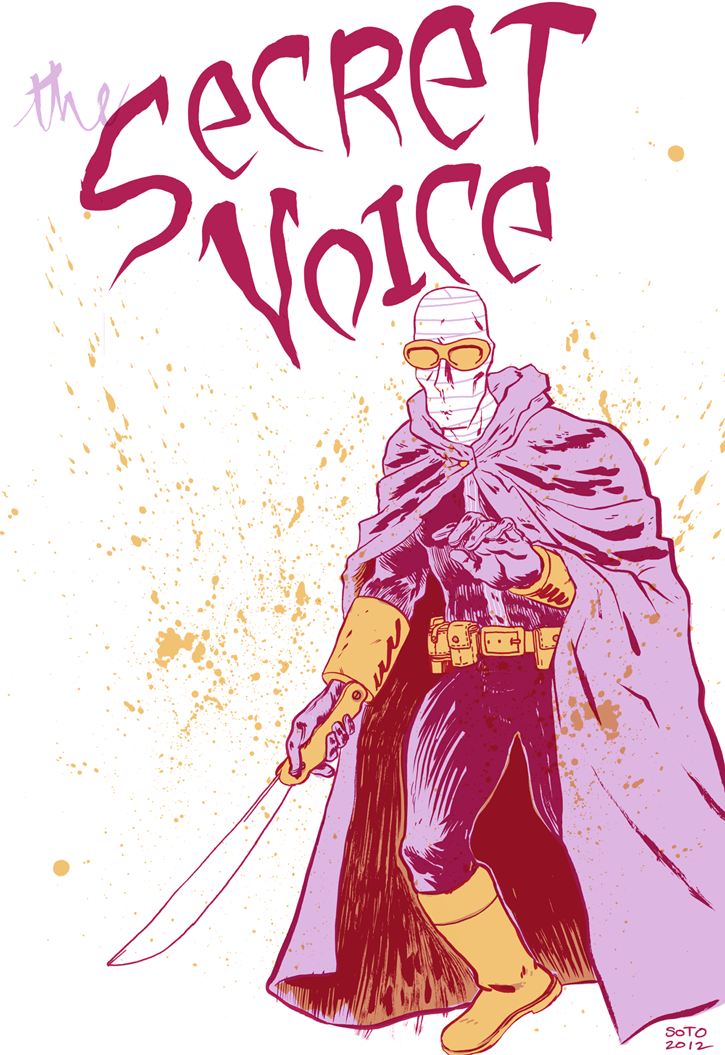
* It’s the triumphant return of Zack Soto’s The Secret Voice!
* New Sexbuzz pages by Andrew White.
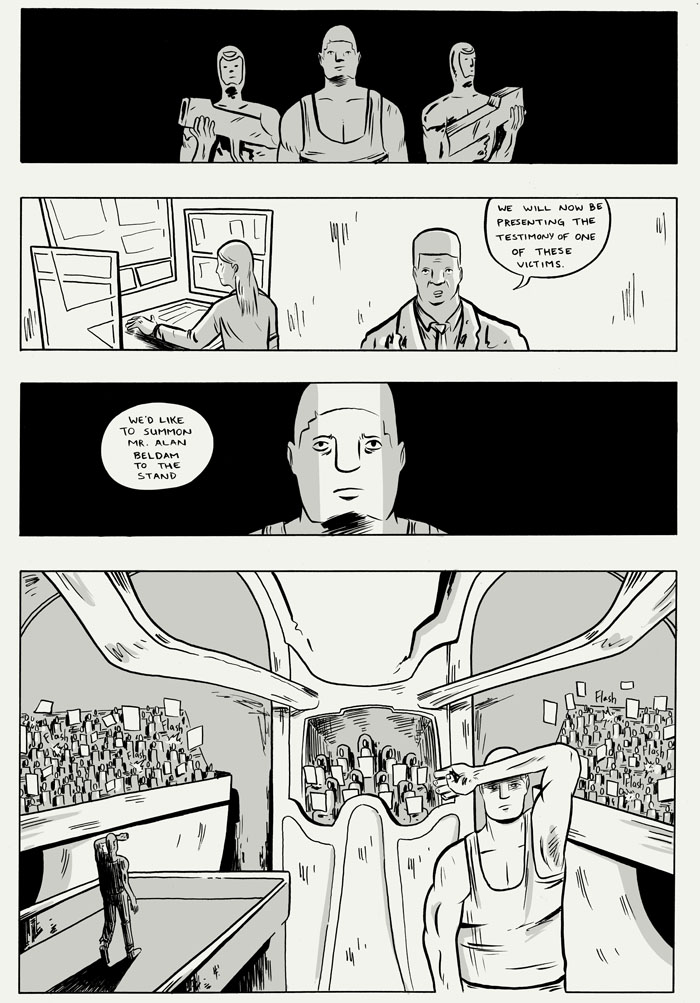
* Allow me to be the last to direct you to Darkness by Boulet, a very cute and crazily gorgeously drawn 24-hour comic. Man, the way this guy draws women.
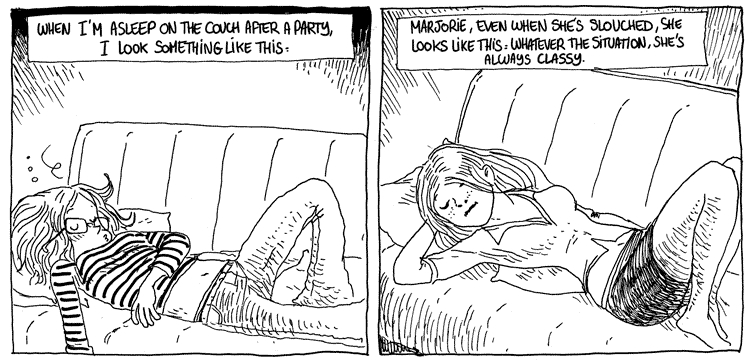
* Speaking of crazily gorgeously drawn, Frank Miller’s Holy Terror is apparently even prettier than I thought it would be. No, I still haven’t read it, because no, I still can’t bring myself to pay for it, and no, I haven’t had any more luck finding a publicity contact for Legendary’s publishing imprint than you have. (Have you?)

* Jonny Negron celebrates the return to print of his anthology Chameleon #2 the only way he knows how.
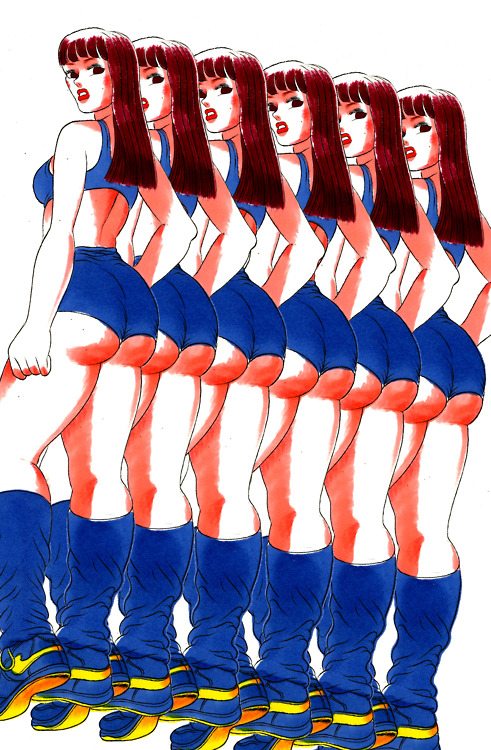
* Zach Hazard Vaupen is still making the strangest humor comics around.
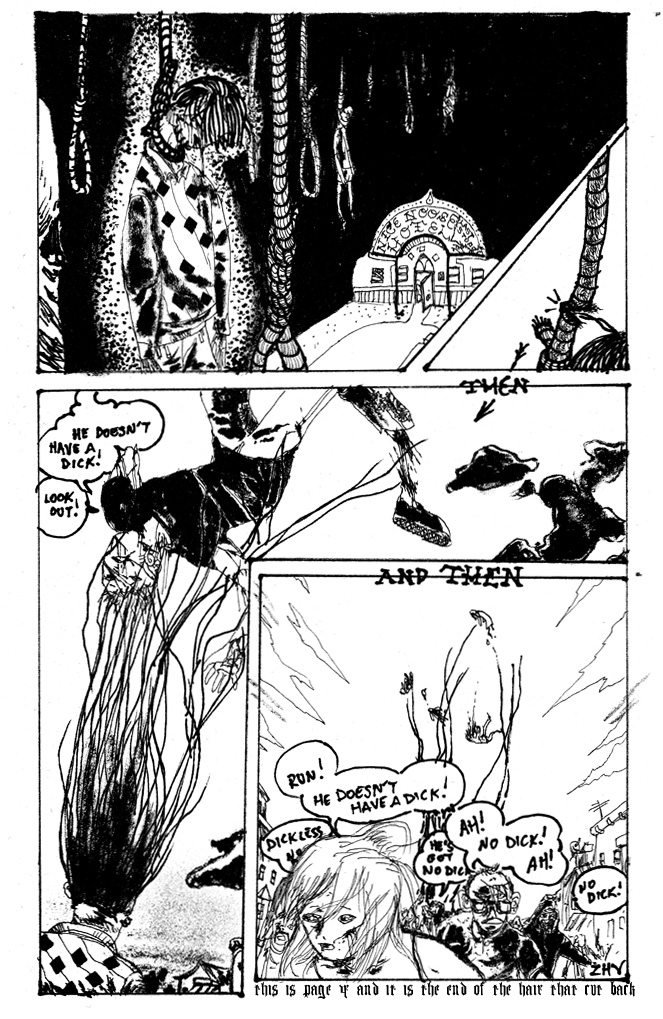
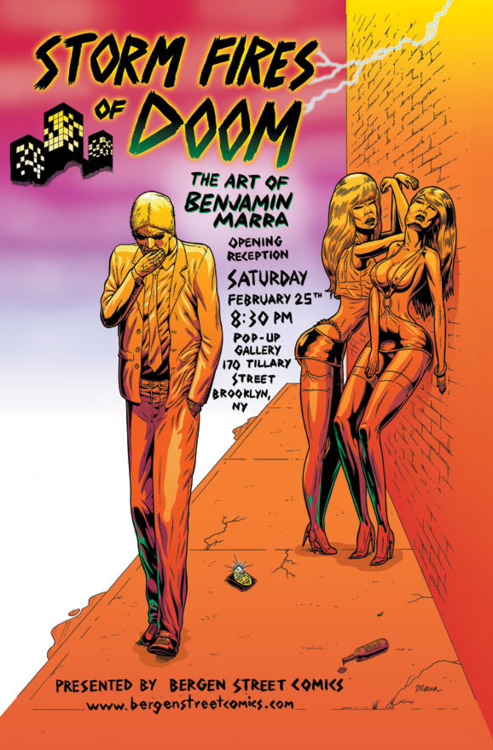
* The great Benjamin Marra has an art show opening up later this month in Brooklyn.
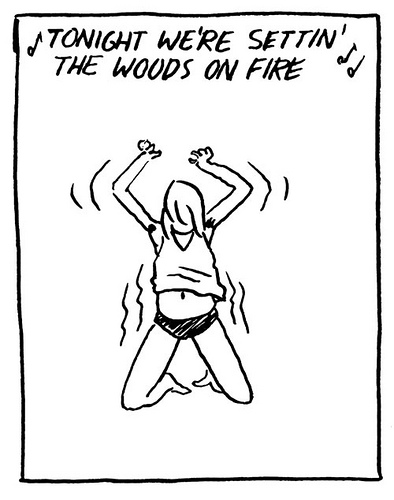
* Chuck Forsman is about to release The End of the Fucking World #4. This is a good series.
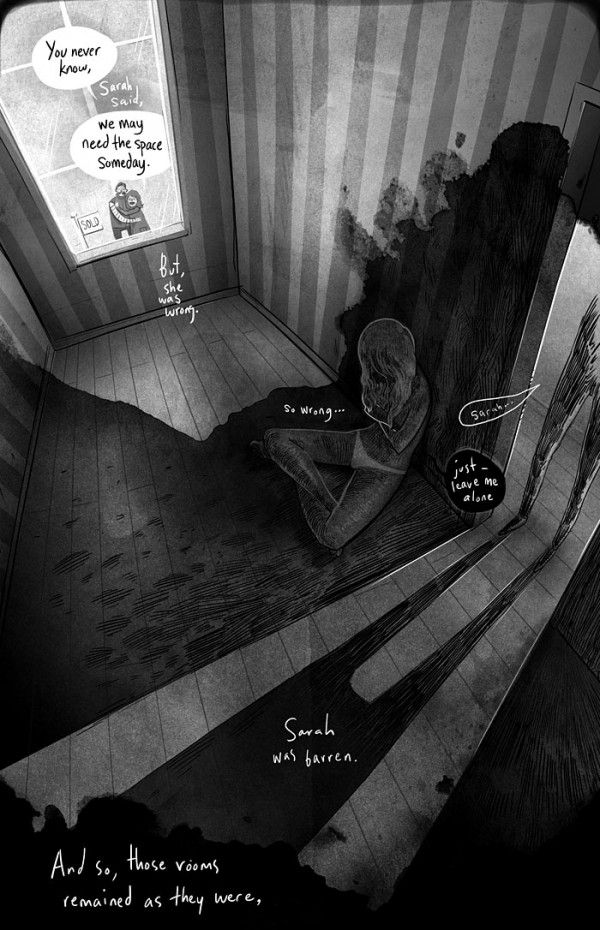
* If you were wondering when Emily Carroll‘s influence would start to be felt on other webcomics, the answer is right about…now. (Via Tom Spurgeon.)
* Sarah Esteje drew this picture of David Bowie’s Aladdin Sane album cover using only ballpoint pens. So, you know, jeez. (Via Andrew Sullivan, of all people.)

* I am going to link you to this Michael DeForge comic about facial growths and lesions and then never look at or think about it again.
* Tucker Stone’s excellent review of Mike Mignola, John Arcudi, and Tyler Crook’s very good B.P.R.D. Hell on Earth: Russia (he’s dead-on about Crook and company proving themselves and resuscitating the series after a stumble or two) has the bonus feature of functioning as a sort of “state of the Mignolaverse” report.
* The Mindless Ones’ David Allison/Illogical Volume writes about Batman Incorporated and a great many other things besides. The broad theme is how the sadness at the heart of Batman’s story taints his grand utopian projects in much the same way that the malfeasance of his real-world corporate promulgators taints his real-world utility as an icon of positivity. I go back and forth on whether that’s a reasonable thing to expect from art anyway — Grant Morrison’s brand of positivity has long struck me as a bit head-in-the-sand-ish, even before his unfortunate comments on Siegel & Shuster — but I’ve certainly felt the sting I.V.’s describing. Then again, I believe the pleasure we derive from art is quite independent of whether pleasurable things are happening in that art — Battlestar Galactica and Breaking Bad have at varying times and for varying reasons provided me with more emotional uplift than just about anything I can think of, and Christ, think about those shows for a moment. But I.V.’s not just talking about the content, he’s talking about the circumstances of their creation, which is quite another matter. It’s a meaty post.
* I absolutely loved the elegant simplicity (not a phrase you’d ever associate with the guy under normal circumstances) of Zak Smith/Sabbath’s post on how to advance the narrative in RPGs without railroading your players:
I call it Hunter/Hunted.
-The idea is simple and comes from about a million horror and cop stories: sometimes a scene happens because Sam Spade has found out about a baddie and sometimes a scene happens because the baddie has found out about Sam Spade. And, there, aside from a few stops for bourbon and kissing, is the plot of everything from Lost Boys to Blade Runner.
-Most investigative scenarios advise breaking things up into “scenes”–the idea is you have a scene, find clues in it, these clues lead to the next scene. They then usually cover their ass by saying either “if the PCs don’t do this or find this clue or go to the wrong place give them a bunch of hints or a prophetic dream or otherwise nurse, nudge, or nullify them until they go to the next scene” or just give some vague advice like “hey Venice is interesting, think of something”
-Not so here. Or not exactly: Basically we keep the “scene chain” structure. If the PCs go from clue to clue in a timely fashion like good investigators they follow the scene chain. However, we also give each scene a twin situation, this twin is what happens if the PCs don’t follow a given clue, follow it up the wrong path, or otherwise take too long (in-world game time) to follow the clues. In this twin situation, typically, the PCs have taken long enough to figure out what’s going on that the enemy has noticed their efforts and started hunting them.
* Real Life Horror: America’s flying killer robots target rescuers and mourners of flying killer robot victims. Warning: not liking this state of affairs may make you an al-Qaeda supporter.
* Related, in Professor T.’s “applicability” sense: Bruce Baugh flags two beautiful passages on the horrors of war from The Lord of the Rings.
* Celebrate 10 years of Fluxblog with this interview with its creator, Matthew Perpetua, my favorite music writer and a swell guy.
* Farewell to the first modern zombie, Bill Hinzman. You changed everything, sir.
The Boiled Leather Audio Hour returns!
February 6, 2012Stefan Sasse and I are back with an all-new episode of our A Song of Ice and Fire podcast, The Boiled Leather Audio Hour. This time out we’ve brought along a very special guest, Amin from A Podcast of Ice and Fire, the grandaddy of ’em all. We’re discussing “Southron Ambitions,” Stefan’s provocative essay for The Tower of the Hand on a certain conspiracy theory advanced by one of the characters in A Dance with Dragons. Read up, then listen up.
Breaking Bad thoughts: Season Three wrap-up
February 2, 2012Finished Season Three. SPOILERS AHEAD.
* This is going to sound like an insult, but in a weird way it’s a compliment: This show is so much less intimate now. Bigger players, higher stakes, wider scope. Walt’s no longer a lone man trying to keep his head above water — an entire infrastructure is in place for him to keep going. Largely estranged from his family, the intensely personal domestic drama has largely been abandoned in favor of…I almost want to say a mythic story of a man entering the dark forest, likely never to return. The show’s doing this very, very well.
* And like The Sopranos, the darker it gets, the funnier it gets, too. This stretch of episodes contained two of the show’s lulziest moments. I laughed hard when Walt was forced to sit there and make small talk with “Mr. Fring” when he showed up to the hospital with free wings for everyone, ingratiating himself with Walt and Hank’s family, and of course sending Walt “Now you know that I know that you know that I know that you know that I know” vibes like a motherfucker. And I cracked the hell up when Skyler was relating her bubbemeise about Walt’s high-stakes gambling to Marie and got to the moment in the tale when things got super-illegal: Skyler leaned forward to whisper the secret, Marie leaned forward to hear what it was…and so did Walt, on the edge of his seat to find out where the story, his story, was headed. It was a scream. I mean, heck, the show’s not above bringing Jane back for an “I just threw up in my mouth a little bit” joke. Right on, Breaking Bad, right on.
* This back half of the season also saw the show solving the problem of its own planned obsolescence. When I first described the idea of the show to my wife, she was like, “Wait a second—how is it still on, then?” “Well, I guess he gets better” was my response (this is back before I’d watched any of it), but when you think about it, that only solves half the problem. If he beats the cancer, that explains why he’s still alive for four seasons, but not why he’s still making crystal meth. Skyler holding Hank over his head, insisting he pay to heal the injuries Hank never would have suffered but for Walt, is an shrewdly organic way of continuing the storyline.
* Though it’s not quite as striking in this regard as its sister show Mad Men can be, Breaking Bad is absolutely smarter than me at times, which is so much fun. For example, Walt twice figures out Gus’s machinations and devises solutions to them way before I did: First when he deduces not only that Gus sicced the Salamancas on Hank to keep them away from Walt and that he then tipped Hank off in hopes that he’d take them down, but also that there was a financial motive for all this: Using the ensuing increased law-enforcement attention to weaken the cartel and cut off its access to America, leaving Gus the sole provider of meth for the entire region. Later, he not only senses Gale’s positioning as his replacement almost immediately, he also senses his own indispensability to Gus if Gale were out of the picture, and keeps that plan in motion even with guns to his head. I love feeling like the characters I’m watching are streets ahead of me. I mean, I was simply excited to figure out that Walt won’t get sold out by Gus after his three months are up since no one’s around to sell him out to.
* Bonus from this section: Walt tells Gus “I respect the strategy,” echoing his earlier mantra: “The chemistry must be respected.” The spice must flow, folks.
* “What world do you live in?” “One where the dudes who are actually doing all the work ain’t gettin’ fisted.” I wish that were so, Jesse!
* Even though I enjoy virtually all of the performances on the show, it’s not one that I’d consider particularly well cast, if that makes sense. Like, if you consider the gestalt of a performance — how the actor looks and sounds as a person, plus what they do with the character as a performer — I tend to think that Mad Men, for example, is minor miracles from top to bottom. If it were a comic, you’d praise the quality of line. You know what I mean? By contrast, Breaking Bad‘s cast takes more getting used to, I would say. It took me quite a while to warm up to Hank, for example; Marie I’m still not quite sold on, though she was beautiful and mischievous in the scene where she gave Hank a handjob in his hospital bed, and that helped a lot. That’s why when those moments of “wow, that’s good casting!” come along, they really stand out: Michael Shamus Wiles as tall, stern, twinkle-eyed, mustachioed ASAC Merkert looms like some J. Michael Straczynski law-enforcement-totem of the Cop God, while Jere Burns’s earth-toned, owlish, kind, sad counselor seems like he wandered in from a show he’s holding down all on his own.
* And then we come to the bottle episode. After the intriguing opening sequence, which was just extreme close-ups of a fly soundtracked by Skyler singing “Hush Little Baby” and which made me think “Wow, they’re not even trying to give these weird quasi-abstract cold opens a story purpose anymore, now it’s all texture,” I must admit I was disappointed when I realized, oh, sigh, it’s a bottle episode, especially given that Walt’s sudden fly obsession felt like a really flimsy rationale for one in addition to being a kind of phony character development. But even in these diminished circumstances the show can impress: with the cringe-inducing suspense of Walt and Jesse riskily climbing to the rafters to catch the fly; with the unique and compelling use of sleep deprivation and sleeping pills to put Walt in a physical and mental place his character’s never been before; with dancing him up to the edge of confessing to his involvement in Jane’s death, but pulling back because he now has developed the self-control even under the influence that he lacked in the inadvertent hospital-anesthesia-cellphone confession he references in this very scene; and most importantly for my purposes — those of weirdness — by creating the image of Walter White, Lord of the Flies. Izzy Ruebens, call your lawyer.
* Speaking of the weirdness, I love the show’s reliance on coincidences. Love it. Jesse stumbling bass-ackwards into the story behind Combo’s murder is a textbook case: On a subtextual level it reinforces the perception that what he and Walt are doing is a violation, because the way life normally works is kind of violated in return by these portentous coincidences. But lives really are driven by out-of-nowhere flukes and coincidences, oftentimes. Mine certainly was: My wife and I met when I was 15 years old at a wedding reception for one of my cousins, three hours from where I live, because used to live next door to them and because at the reception itself we were the only people who knew how to do the Time Warp. I only became a writer — got my first professional writing gig — because I bumped into an old friend I hadn’t seen in years while wandering around the Lower East Side looking for a party that was in fact in Brooklyn, and the friend offered me a job. I absolutely believe that Walt could sit next to Jane’s dad at a bar, or that Jesse could seduce the sister of the little boy who murdered his friend.
* Badger and Skinny Pete, the world’s most adorable junkie gangster wannabes. I love the bluntness with which Badger described the idea of selling meth to people in a recovery program: “It’s like shooting a baby in the face.” I don’t think it’s any coincidence that the show chose to articulate this idea in this way given Walt’s attachment to Holly and Jesse’s seemingly quite sincere, profound, and unshakeable concern for children, either.
* Saul Goodman, top of his class at the University of American Samoa. Another LOL moment. (I guess he’d changed his name by then?)
* So now we have some more clues as to “What’s in it for Gus?” A very nice modest rich person house, for one thing, and a much nicer casual wardrobe than his fast-food-manager tie and dress shirts would lead you to believe. I’m still not quite sure how these aren’t things he couldn’t get without becoming a druglord, though, or how his apparent family factors in. Perhaps his smile on he phone as he listens to his former cartel partner get killed indicates that the object of power is power, as the fella says.
* I’m really enjoying the music at this point, both the found music and the score. Wendy the meth-head prostitute was the beneficiary of two of the show’s finest moments on either side of that divide: the gloriously black montage of a day in her life set to “Windy” by the Association, and the increasingly ominous and effective industrial score by Dave Porter during the conversation in which Jesse instructs her to execute her dealers on behalf of the children they’ve wronged. (Loved the dancehall “Shimmy Shimmy Ya” a few episodes back, too.)
* Speaking of Jesse, though I think the show ties things together well enough by the end of the season finale, his post-Hank storyline this season felt a little left-field, a little ad hoc. I mean, it was clear in the end that it was all done to move him into opposition with those other dealers and set up the kill-or-be-killed finale, but to get there…stealing from the lab, selling in small quantities with dudes who’d quit or been pinched in the past, selling at NA meetings, a relationship with his fellow addict that couldn’t help but feel tepid compared to his well-developed, doomed amour fou with Jane last season, the Tomas revelation, the showdown with the dealers, Walt’s intervention, their apparent total rapprochement, becoming an unwilling assassin…it was a lot to swallow for what felt like a series of random developments.
* Here’s a way that this whole storyline was useful to us, though: It established Jesse’s bright line. Jesse has a bright line — he cares about children — and he won’t cross it. Similarly, Hank has a bright line — he’s appalled by his own brutality — and once he does cross it, he refuses to put himself in a position where he might do so again. By contrast…Where is Walt’s bright line? You’re tempted to say “his family,” but he’s shown no compunction about bullying Skyler and deceiving his son into being his back-up. He doesn’t want them to die, or to go broke, but it’s very, very, character-revealingly important to him that he be the one to prevent these things. By the end of the season it seems like maybe “Jesse” is his bright line, but he’s broken that in the past and may well do so again, as happy as it made me to see the two of them so concerned for one another. (Jesse telling Walt to go to the police, knowing what it would mean for them both but still so scared for his friend? mentor? that he wanted him to do it anyway, was truly touching.) I wonder if Walt even has a bright line.
* “The moral of the story is that I took a half-measure instead of going all the way. [pause] I’ll never make that mistake again.” Oh, did I not mention that Jonathan Banks as Mr. Fix-It, whose name turns out to be Mike, when I was listing the casting coups? Because holy. Shit. As much as I like his menacing moments, or his casual awfulness, I think my favorite part of this chunk of episodes — during which he really came into his own as a main character — came from the same scene from which I took the line above, his monologue about the wife-beater he kept collaring back when he was a beat cop. (Which, yikes, but regardless.) It’s in his description of that half-measure he took, when he decided simply to warn the wife-beater instead of just killing him: “‘If you ever lay a hand on her again, then so help me, I’ll blah…blah…blah.'” The resigned, cynical, self-loathing way he dribbles those “blahs” out of his mouth, the indictment that carries for his empty threats, the knowledge that contains of what was no doubt to come…brutal and crushingly nihilistic. (And what a voice on that guy, jesus.)
* Nothing really much to say about these points: just wanted to say that the way they blurred Jesse’s head when it snapped back after he snorts meth for the first time in preparation for attacking the drug dealers was beautiful, that I loved the flattened perspective and silence as Walt waited for and then walked toward Mike, Gus, and Victor’s car, that I was thrilled by the return of the Heisenberg Hat, and that I wonder how wise Gale was to what Gus was up to with him (wiser than I suspected at first, I think).
* And now, at long last, we get to the big moment of the season for me: When Walter got out of the car he’d used to run over the dealers, picked up the gun, and shot the surviving, crippled dealer in the head, I started to cry. I didn’t cry, I just started to, I just got that sensation that part of your brain behind your face has been poked, and my eyes welled up and my mouth contorted and my brows lifted and my mouth opened. It was in that moment I realized how very, very bad I felt for Walter White. He had in many ways revealed himself to be a bully, a creep, an opportunist, and a narcissist, but here I watched him volunteer to do something truly heinous because he had gotten himself into a position where he had no choice but to do it himself or let someone else who deserved better do it. I felt like I was watching someone die. And not the guy who actually did die, either. It was an awful, awful feeling. It was watching a suicide.
Please don’t mess with the classics
February 2, 2012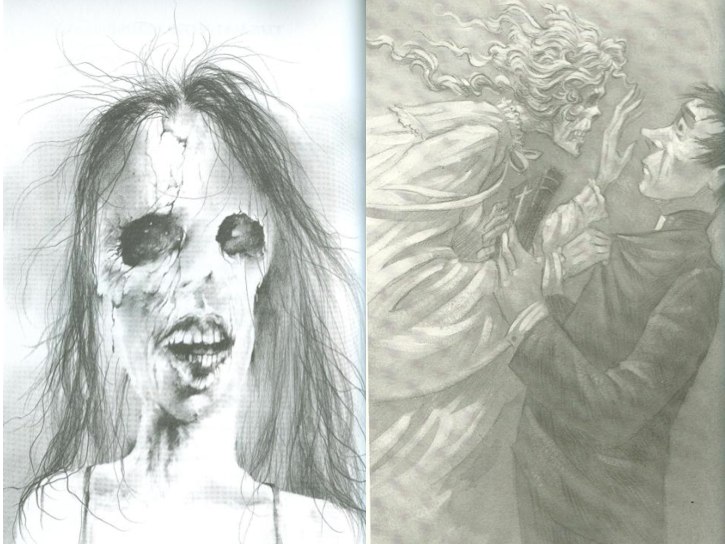
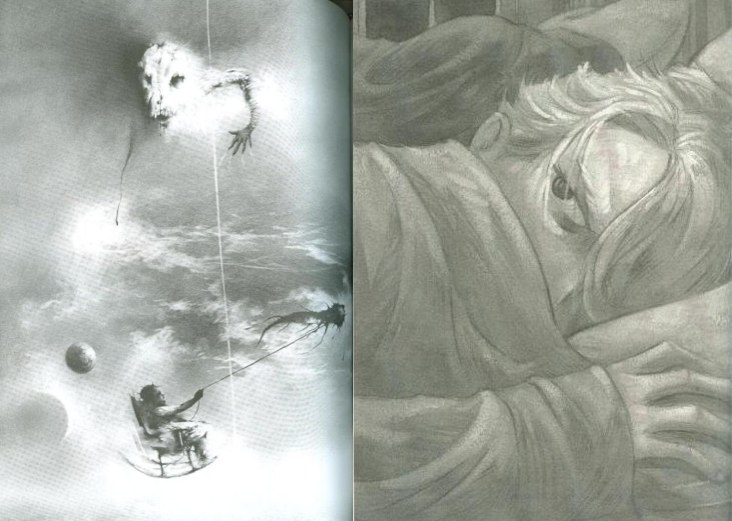
Mark Pellegrini of Adventures in Poor Taste reveals that publisher HarperCollins has replaced Stephen Gammell’s quite literally unforgettable illustrations from Alvin Schwartz’s Scary Stories to Tell in the Dark series. (Via Rob Sheridan and io9.) The reason this is a terrible idea is quite easy to grasp: These are the best chlidren’s book illustrations I’ve ever seen. My wife and I are in our mid-30s and came across these books well over two decades ago, yet Gammell’s art (and Schwartz’s strong prose, too, but mostly the art) are so effective that she and I were still discussing them in reverent, slightly panicky tones just a few days ago, well before I’d heard about this ill-advised bowdlerization. When I pulled my Scary Stories Treasury off the bookshelf to show her a particular illustration, she literally made me put it away. That’s how freaked out a grown woman was by Gammell’s art. Which, I suppose, is why HarperCollins is getting rid of it — but it’s also why the books are rightfully considered classics, why they’re worth re-publishing 30 years after their initial release to begin with. I hate to think of generations of children robbed of one of the most intensely pleasurable frightening experiences they’re likely to ever have, in favor of pleasant but toothless “spooky” stuff.
I reviewed the Scary Stories Treasury a couple years ago, and discovered that it had lost none of its power. I advise you to get your hands on the original versions by any means necessary lest you lose the ability to make that same discovery.
Carnival of souls: Fluxblog turns 10, Ron Regé Jr. to Fantagraphics, more
February 1, 2012* My friend Matthew Perpetua invented the mp3 blog when he launched the mighty Fluxblog ten years ago. He’s celebrating the anniversary with a series of his trademark, massive “survey” mixes, each one a multi-disc affair spotlighting the best music for each year Fluxblog’s been around. Here’s the 8-disc Fluxblog 2002 survey mix. I’m particularly gratified to see the big response in the comments for the Azure Ray and Doves songs — two of my all-time favorites.
* Fantagraphics will be publishing Ron Regé Jr.’s The Cartoon Utopia! That’s a big vote of support for a risky artist. Good for everyone involved.
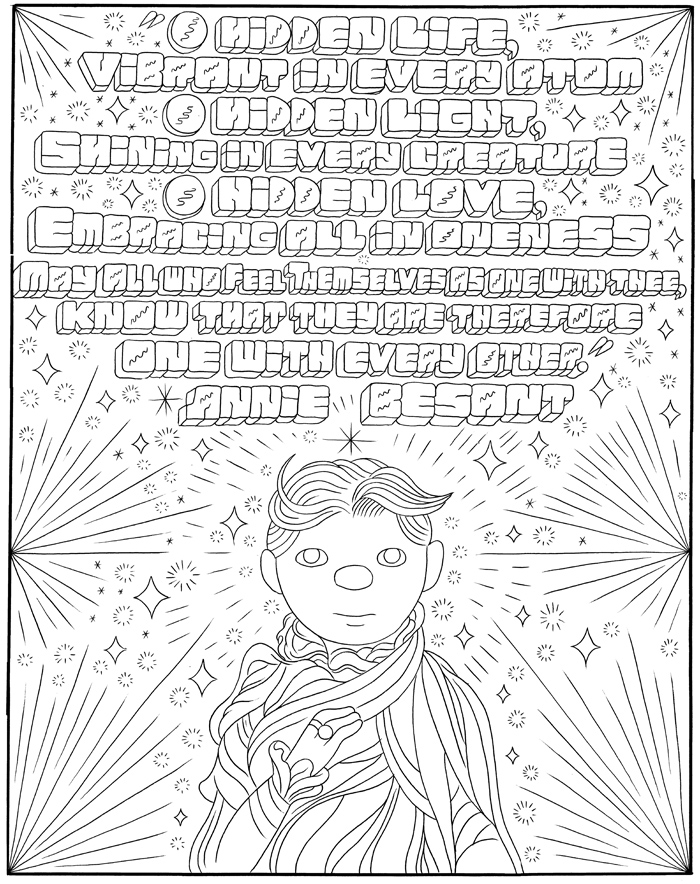
* Ross Campbell is sorta semi-serializing Wet Moon Vol. 6 on his website, along with a bunch of bonus materials. I know he was bummed that Oni couldn’t fit the book into their publishing schedule until next Fall, so I’m glad they worked this out in order to get the work out there sooner.
* This interview with the Dandy Warhols’ Courtney Taylor-Taylor about his and Jim Rugg’s soon-to-be-re-released graphic novel about a leftist art-rock band One Model Nation reminds me that Taylor-Taylor is one of the great rock and roll talkers. Of all the interviews I’ve ever done, I probably think about stuff he said the most frequently. You’d be amazed how applicable a passionate endorsement of seeing Cinderella perform live is to any number of situations in everyday life.
* Tucker Stone reviews a couple dozen comics for The Savage Critics, i.e. more comics than I’ve reviewed in the last four or five months. Lots of gems in there, with two caveats: 1) He’s dead wrong about Garden being worse than Travel; 2) The impetus for the post is that these are comics he “couldn’t find the time (or space) to write about in a more ‘professional’ capacity,” which means that no website or publication out there is making it worth Tucker’s while to write about Acme Novelty Library or Kramers Ergot 3 and so on, which is a crime.
* Terrific review of Habibi and Paying For It by comiXology’s Kristy Valenti, who refers to them cheekily as “Dick Lit.” It’s hardly as dismissive a piece as that would make it out to be, though, and it’s stuffed with why-didn’t-I-think-of-that observations: Seth and Joe Matt as the Charlotte and Miranda to Chester Brown’s Carrie Bradshaw; the highlighted, isolated, orderly beds upon which Chester and the prostitutes he hires have sex as an operating theater. And by focusing on sex and love as the driving force behind Habibi she points the way to just how interesting it ought to be to see Craig Thompson do an out-and-out porn comic, as he apparently plans to do.
* Kate Beaton is signing off of Hark, a Vagarant! for a while, which is a bummer but an understandable one given the whole world throwing itself at her feet and all. I just hope she keeps getting to draw people’s hair, eyes, and hands.
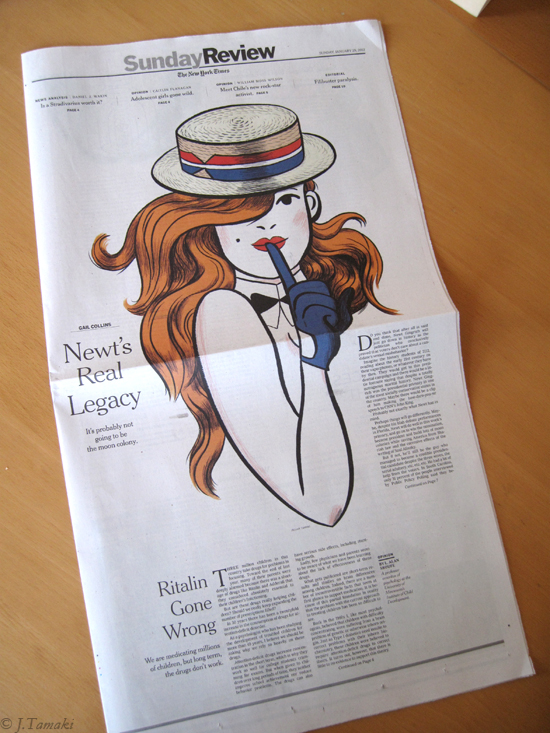
* That’s a gorgeous Jillian Tamaki illustration is what that is.
* And Kali Ciesemier ain’t no slouch either.

* Yeesh, this is quite a page from Geoff Grogan’s Nice Work, which he’s begun serializing on his website.
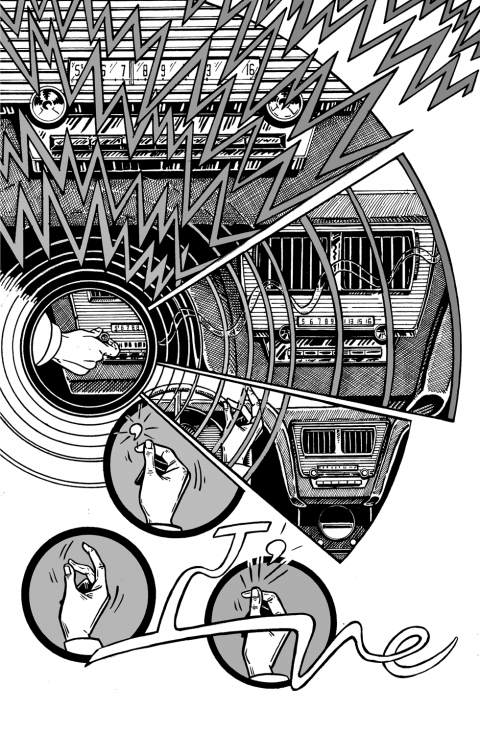
* Mark P. Hensel interviews Ryan Cecil Smith. And Ao Meng also interviews Ryan Cecil Smith. Saving these for when I can read them back to back.
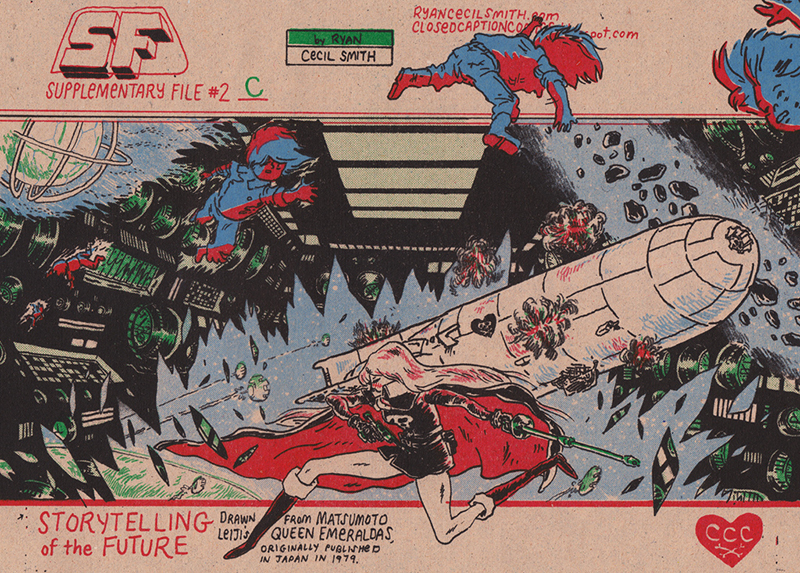
* Saving this for later, too: Amypoodle’s Batman Incorporated: Leviathan Strikes! annotations, part two. Any post on Batman comics that kicks off with a Oneohtrix Point Never video is okay in my book.
* At the always excellent Comics Grid, Peter Wilkins writes about the wonderful heartachey North No. 2 piano-playing interlude in Naoki Urasawa’s Pluto.
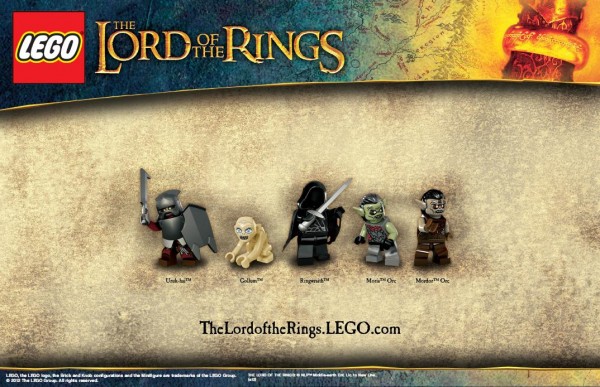
* I look at the villain mini-figures for Lego’s Lord of the Rings line and can see nothing but the hours and hours I will spend smashing them to bits in some future Lego LotR video game.
* Allow me to be the last to direct you to the latest Game of Thrones Season Two trailer.
* Finally, D’Angelo presents the feel-good clip of the year, if you’re a D’Angelo fan. Try not to grin like an idiot during this. (Via Pitchfork.)
Carnival of souls: Crane, O’Malley, Quitely, Bosma, Matsumoto, Rackham, Ochagavia, Rota, more
January 27, 2012* Links to new pages of comics on What Things Do don’t really work, but I assure you that Jordan Crane’s morbid, masterful Keeping Two updated this week.
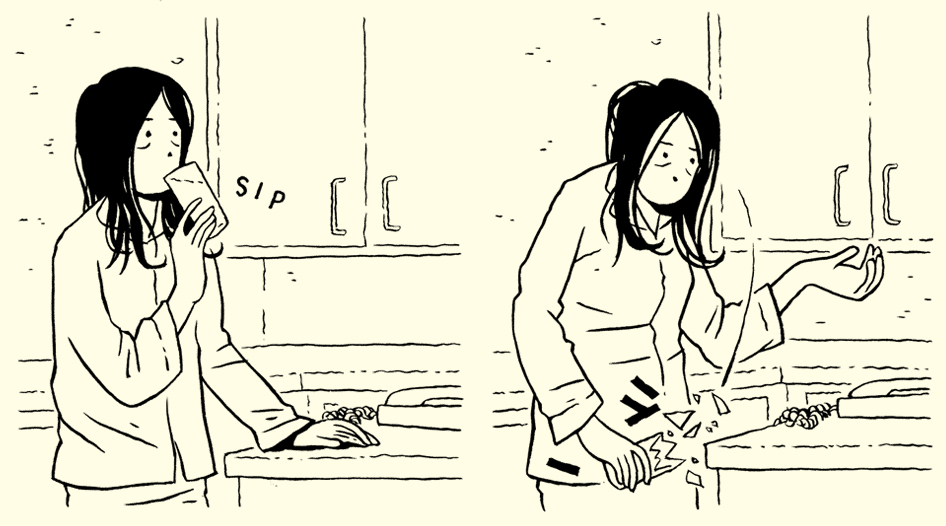
* Bryan Lee O’Malley is posting some very rough roughs from his upcoming project Seconds.
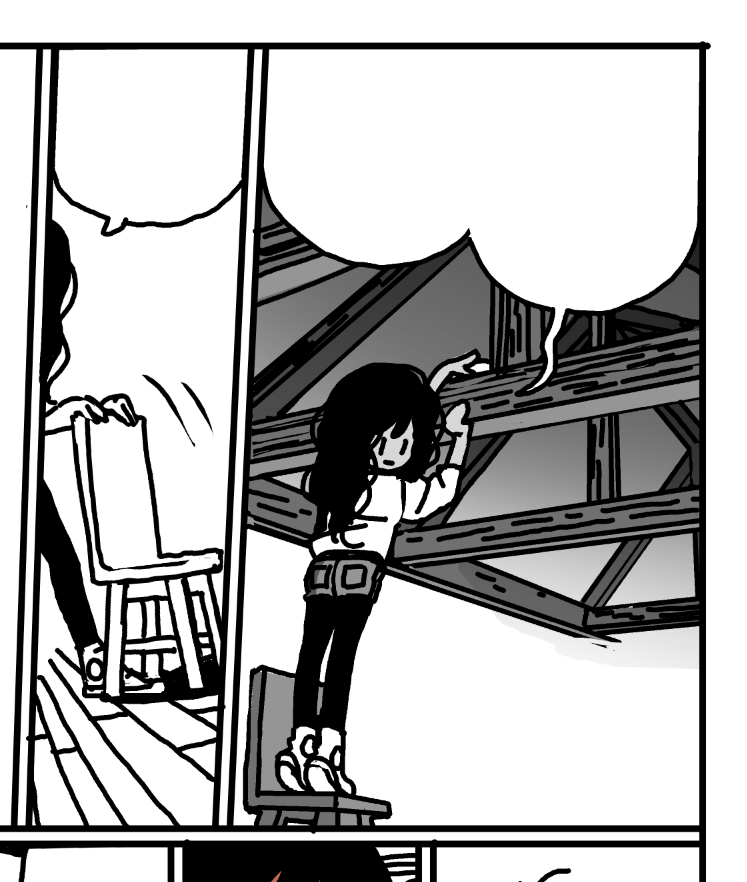
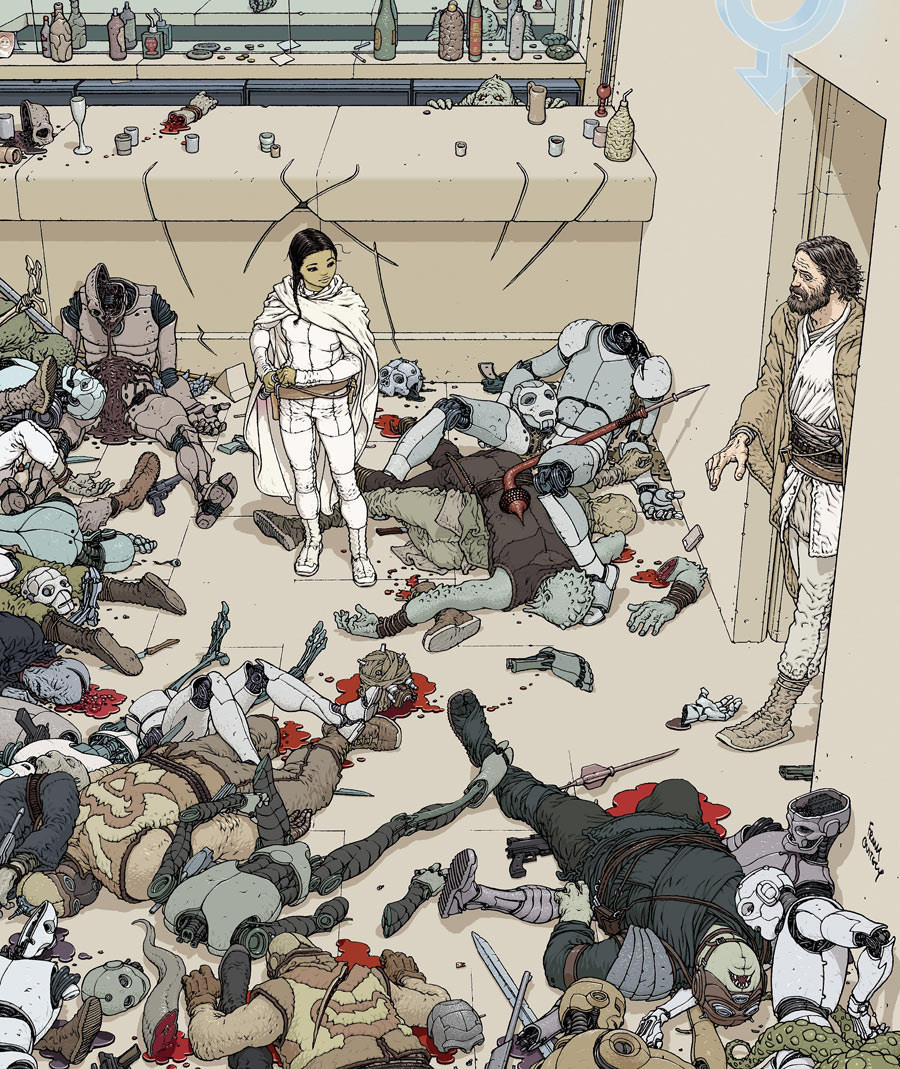
* Frank Quitely does Star Wars.
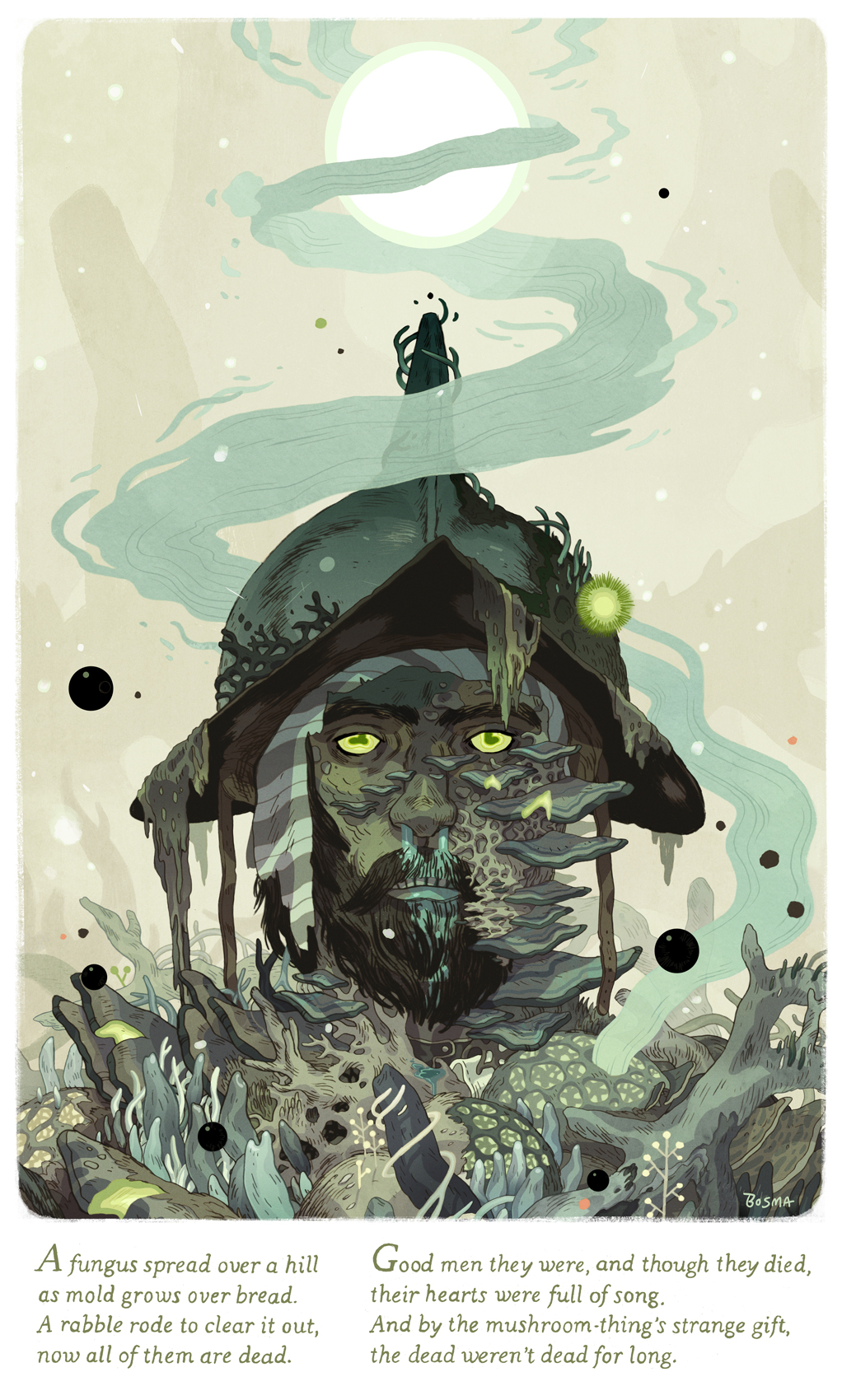
* Gorgeous short weird fiction from Sam Bosma.
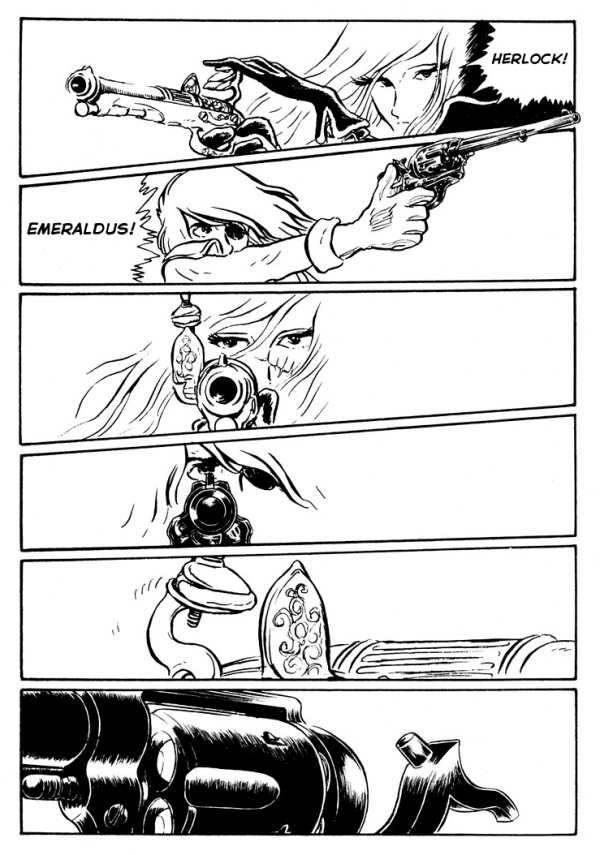
* Woof–this page by Leiji Matsumoto explains why Ryan Cecil Smith was moved to do an Emeraldas tribute comic.
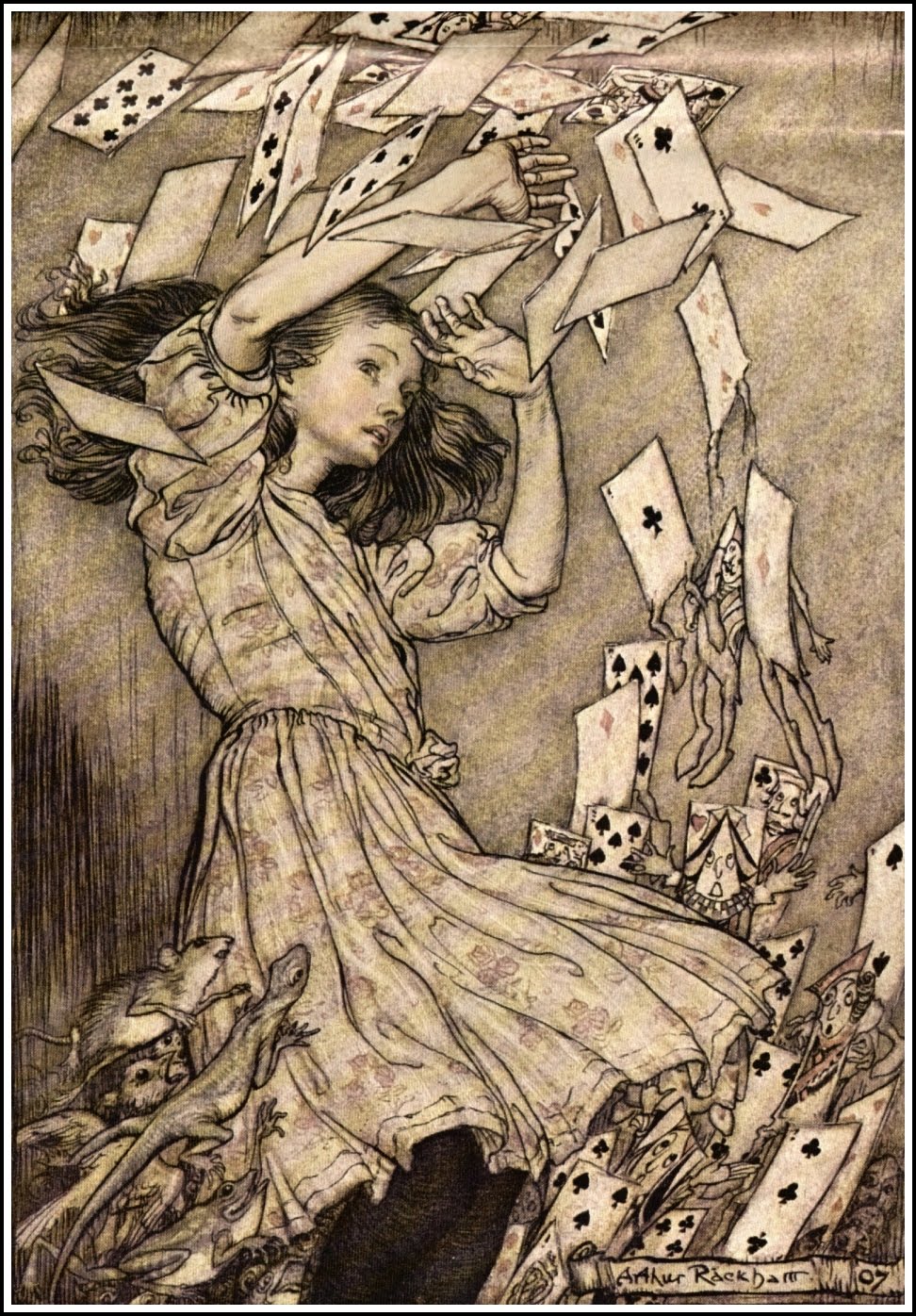
* Golly, these Arthur Rachkam Alice illustrations are stunning. James Jean city. (Via Tom Spurgeon.)
* Tom Spurgeon lobbies for his Eisner Hall of Fame picks this year: Bill Blackbeard, Jesse Marsh, Mort Meskin and Gilbert Shelton.
* Ta-Nehisi Coates continues his crowdsourced debunking of claims that the Civil War could have been avoided, this time focusing on other anti-slavery wars.
* America: We’re #47! (Scroll down.) This post also contains this quote, which should be tattooed on my forehead: “Convincing well-intentioned people to support a war in order to depose a wretched tyrant is an easy thing to do — alas, it’s probably too easy to do, since it’s usually what leads to great mischief, human suffering, and even more tyranny under a new name.”
* I assure you, Nitsuh Abebe, there are those of us who have not forgotten Hooverphonic. The North Remembers.
* Sometimes I like to picture an alternate timeline in which Pearl Jam made a video for “Black.”
* Hail Eris! All Hail Discordia!

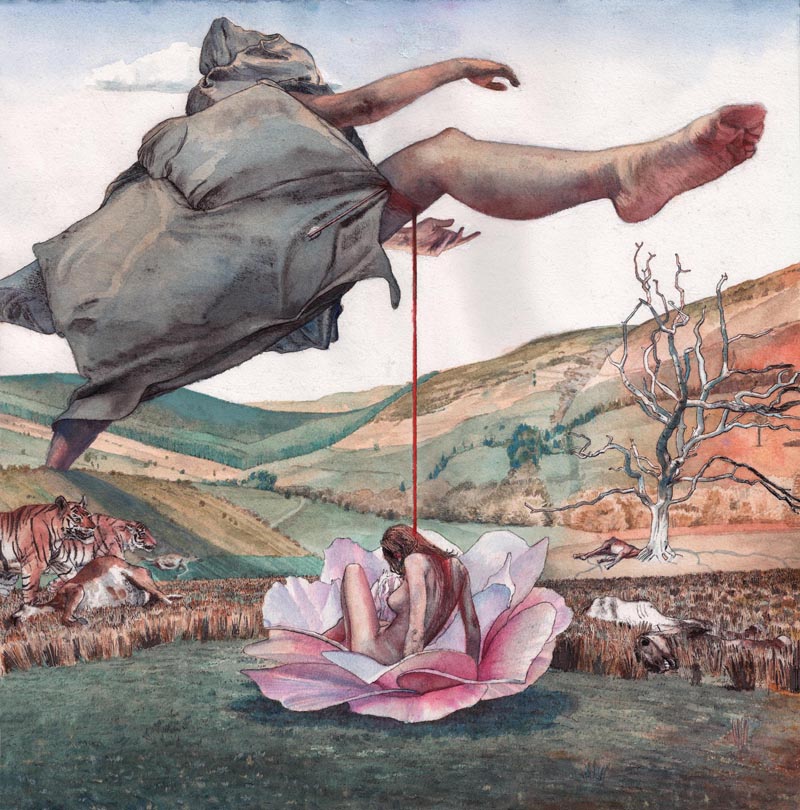
* Finally, my friend and collaborator Matt Rota has a show coming up: It will contain art that looks like this.
The Winds of Winter: a breeze
January 26, 2012Over on my A Song of Ice and Fire blog All Leather Must Be Boiled, I posted some SPOILERY thoughts on the sample chapter from The Winds of Winter that George R.R. Martin posted last month.
Breaking Bad thoughts: No Parking edition
January 26, 2012I’ve now seen up through Season Three, Episode Seven. SPOILERS SPOILERS SPOILERS SPOILERS
* Normally I like to proceed in chronological order with these thoughts posts. This time around this plan was shot to hell by the accidental deletion of my notes, which, arrrgh. But I was already going to abandon that plan anyway, because
* JESUS CHRIST, THAT PARKING-LOT SHOOTOUT.
* By a comfortable margin, that was the tensest, most exciting five minutes of television I’ve seen since…well, let’s just call it “that fight from Deadwood” and leave it at that. People, you should have seen me watching this thing. As you know I do most of my Netflixing on the train to and from work, which gives my more vocal or physical responses to what I’m watching the added kick of coming at the expense of tacitly agreed-upon norms of demonstrative behavior on a commuter rail car. This time around I’m pretty sure I looked like I was being administered low-voltage electric shocks. I had my hands on my head and face and mouth when they weren’t simply flailing around; I was squirming and rocking in my seat; I was gasping and taking the Lord’s name in vain. I was totally beside myself. It was amazing.
* There are a couple of reasons why my outsized reaction was a bit ironic. For one thing, as I watched Hank leave the DEA office — waiting for the elevator, crying on Marie’s shoulder once inside, pulling it together in time for them to leave the building, and later walking through the parking lot with flowers in hand assuring Marie over the phone that everything was going to be alright — I pretty much knew Los Bros Salamanca would be waiting for him at some point or other. And I wondered why the show had chosen to go that route, to telegraph Hank’s appointment in Juarez Samarra instead of allowing it to emerge from nowhere and truly shock the shit out of us. As it turned out the answer was clear: to get a head start at building the suspense and tension it would ratchet up to literally physically unbearable levels during the shootout itself. If they’d sprung things on us by not opening with the Brothers’ origin story, or by not giving us all these long portentous but otherwise dramatically inconsequential shots of Hank obliviously going about his day, or even if they’d skipped the warning phonecall by whoever-it-was who placed it, we’d have been surprised, sure, and the scene would still have been effective, sure. But by priming the pump, by tuning us in to the at-any-moment arrival of death, the filmmakers made the sequence that much more effective. It played notes we were already practicing.
* The other reason is that just last night, I was chatting with a friend about spoilers, specifically in the context of this show (I knew where Jane was headed; I’m pretty sure I know where at least one other supporting character is headed too, unfortunately — thanks a lot, social media). He cited that study that went around to the effect that spoilers make fiction more enjoyable for most people, not less. While we both agreed that there are any number of cases where we still enjoyed spoiled work a great deal — Game of Thrones was a case in point for both of us — we both remained adamant that going into a story with little to no idea of where it’s headed is our preference, because those moments of surprise are basically a grown-up’s Christmas morning, one of the great pleasures of partaking in fiction in the first place. With the parking-lot shootout, though the show telegraphed its intention to stage it, I in no way knew how it would turn out. Still don’t! For all I know Hank will die on the way to the hospital. Or he’ll make a full recovery, his suspension will be lifted, and he’ll be named chief of the bureau for his bravery, with all its resources now committed to what is clearly a very important case he’d been working on. The point is that if I’d known either way, or if I’d known whether he lived or died in the shootout itself, or if the Brother who told Hank “too easy” when he had him dead to rights was going to go get an axe to kill him messier rather than simply walking away and coming back for him another day like I initially thought he was doing — if I’d known any of that for sure, it would simply have been a less effective viewing experience for me. And that’s why I hate spoilers so much. I don’t want to miss moments like these.
* Now that I’ve gushed about the damn thing for so long, I suppose I ought to mention a few of the things that made it so effective in the moment. The phone call, for one thing — the eeriness of it, the genre-ness of it (“Pop quiz, hotshot!”), the way it dovetailed so perfectly with Hank’s ever-growing panic and paranoia (including its quite justifiable phone-based manifestation, following Saul Goodman’s extravagantly shitty hoax/diversion). I might add that this is another example of the show’s admirable and intelligent use of television’s aural dimension.
* The sense of space and environment, for another thing. At all times, you knew where Hank and the two brothers were in relation to one another — unless they happened not to be aware at that moment, in which case you often weren’t allowed to be either. At all times, each physical beat of the shootout had an immediate consequence you could understand — when a bullet was fired, you saw where it went and what it did when it got there; when a car was moved, you saw where it started and where it ended up and what happened to the things it hit. And the specifics of the staging — the use of rear- and side-view mirrors, front and rear windshields, the rows of parked cars, trees and obstructions on the islands between rows, the presence of passers-by and bystanders, the use of wheels and bumpers and trunks — were all unique to that setting and that setting only. I harp on this sort of thing when I talk about action and violence in film and television because I am a comics person, and the amount of sloppy, lazy, generic fight scenes I’ve read even or especially in genres centered on fight scenes could turn you white. I can’t tell you how much it means for a writer or an artist or a director to think about these things, and use them thoughtfully.
* And though without watching the scene over again (which I can’t do because the disc is on its way to Netflix HQ) this is a bit harder to recall, especially since I was so transported in the moment, but I remember it being a beautifully shot, beautifully edited, beautifully paced sequence as well. In particular, when the surviving brother was approaching Hank, both at first with his gun and then again with his axe, I recall that being just marvelously well put together, alternating our points of view between Hank, the Brother, and the eye-view of their weapons. It was kinetic but not chaotic. Just thrilling.
* Phew, I’m exhausted all over again!
* The asskicker about all this was that it’s another demonstration, as if we needed one at this point, of just how good Hank is at his job. That’s his comedy and tragedy all rolled into one: For all his bluster, his casual jocular racism, his obliviousness to some of the Drug War’s excesses, his macho silliness, and, eventually, his growing terror, Hank is a great cop. Sure, he’s using the Heisenberg/Blue Meth/RV case as a retreat from a return to El Paso. But his instincts and his deductions are almost always correct both in the general sense — that this case is the tip of a truly massive iceberg, no pun intended — and in the particular — that the “Heisenberg” that the ABQPD arrested was a ringer, that the real Heisenberg realized he was for shit at running his own operation and hooked up with an out-of-state bigwig, that Heisenberg would start cooking again, that the “M” name provided by the meth-head they collared would pan out, that the ATM security camera would pan out, that the RV lead would pan out, that the way the RV rode high on its axles meant it had a meth lab inside rather than the usual fixtures, that sitting on Jesse long enough would pan out, that there’s a significance to the fact that his personal phone number and wife’s name were used to lure him away…He had the whole thing nailed. And despite the emotional toll that his brushes with death are taking on him, he’s acquitting himself breathtakingly in each of them, holding his own against professional killers and keeping himself and, to the extent he can, others alive. Finally and most importantly, he truly was devastated by what he did to Jesse, disappointed in and disgusted with himself for doing it. “I’m supposed to be better than that,” he tells Marie, apparently quite sincerely and brooking no consoling “you’re a good man and he’s a lowlife so don’t be so hard on yourself” bromides from her or his fellow agents. More than anything else that seems to be what led him to the conclusion that he’s not cut out to be a cop anymore — and that’s what shows you he was a good cop. I truly felt awful for him well before the bullets started flying.
* A bonus feature of this episode: Showing us at long last what’s in it for Hank and Marie as a couple. I don’t think I’ve ever really bought them, until now, until those honest and caring interactions in the elevator, in the bedroom on the morning of Hank’s hearing with the investigators, and on the phone in the parking lot. I blame the writers, frankly, for up till this point still failing to flesh Marie out. But putting aside my complaints about the shallowness of her character and basing things simply on a non-judgmental assessment of her and Hank’s personalities and goals in life, I had a real hard time seeing what the emotional, romantic, physical, or familial bond between them really was. Now I at least have an entry point.
* But with that mystery on its way to being solved, another remains: What’s in it for Gus? That is, why bother becoming a kingpin if you can’t live like a kingpin? I understand the need for a secret identity, and I understand the value of running a criminal enterprise in a low-key, businesslike fashion. But the dude doesn’t just front like the owner of a regional fast-food chain — he works the goddamn counter! He shows managers how to operate new machinery and asks customers if they’d like fries with that! If that’s how he has to live to maintain the business that brought him millions, what good are those millions? Can he use them at all? To do so would be to violate the secret identity, right? I assume we’ll learn a lot more about him just as we’ve learned more about the Salamancas and perhaps this mystery will be solved, but for now it’s hard for me to swallow.
* But now that I think of it, it’s possible he’s just in it for the power, and that the money is incidental. I’m suddenly reminded of the BTK killer, who obviously couldn’t drop his workaday façade any more than Gus could but had the added handicap of not making any money from his crimes. He was just a mild-mannered middle-aged guy with glasses who happened to occasionally murder people. Perhaps that’s the frame through which to view Gus as well. (I don’t even think his claim to Mr. Fix-It that he doesn’t believe fear to be “an effective motivator” is dispositive in this regard. “It is not enough to obey him. You must love him.”)
* One last thing about the shootout: I don’t know whether to blame the Postal Service or Netflix, but it used to be that I popped a disc in the mail on Monday and had a new one by Wednesday. This week, I mailed it in on Monday and have been informed this morning that I won’t get it till tomorrow, meaning I won’t be able to watch it till next Monday. In other words, I’ve got a genuine cliffhanger on my hands. So allow me to do some post-cliffhanger theorizing: My guess is that Gus tipped Hank off to the impending hit, most likely via his and Saul’s mutual Mr. Fix-It. Gus is the only person I can think of who’d have a bead on both the Brothers and Hank simultaneously, and who’d know what each of them was up to. It was a win-win situation for Gus, pretty much: If the Brothers were successful, it’s not like the hit could be traced back to him, since they weren’t a part of his organization, but still, that kind of heat can’t be good for business. Meanwhile, the Brothers had proven themselves to be loose cannons who didn’t respect Gus’s authority (and by accepting his permission to kill a DEA agent, they showed they didn’t respect their own boss’s authority either); if they failed and Hank got the better of them, Gus’s problem with them is solved, and again in a way that can’t be traced back to him, since there’s no way they told their boss that Gus gave them the go-ahead to kill a DEA agent. I know it was Gus who sicced the Brothers on Hank in the first place, but pointing them in the direction of a trained law enforcement professional rather than a chemistry teacher recovering from cancer protected Gus’s investment in Walt and bought him a fighting chance to see the Brothers go down in the attempt as well. Better to tip Hank off to his approaching date with destiny and let the chips fall where they may than to do nothing.
* So let’s rewind to episode four, the earliest in this stretch of eps I watched, and the big question it raises: Did the plane crash drive Walt insane? Okay, so it doesn’t raise this in so many words, and at every turn it offers alternate explanations for Walt’s dive off the deep end — Skyler leaving him, Skyler’s affair with Ted, losing touch with his kids, the brush with death in the form of cancer. Certainly that last bit is what motivates Skyler to contemplate letting Walt back in her and the kids’ lives once Marie mentions Hank’s analogous circumstances. But it’s important, I think, that the final scene of the episode, when Gus’s right-hand man tosses Walt his “half” of Jesse’s payment, begins with Walt frantically changing the channel on his car radio when he hears that Jane’s dad shot himself — just as it’s important that the second season ended not with Skyler’s departure, but with the plane crash itself. A lot of terrible things happened to Walt in close enough proximity to one another that it’s difficult if not impossible to pinpoint any one of them as the cause of what seems an awful lot, in this episode at least, like a mental breakdown (zoning out in class, blithely hitting on Carmen, trying to attack Ted, his overall bizarro demeanor around Skyler). But I think his guilt over Jane, her father, and the plane crash is ultimately what pushed him over the edge — more than the cancer, more than his previous killings, more even than the loss of his family.
* Once again the show leapfrogged over an expected moment in a refreshing way: We never see Walt and Skyler hash it out over Ted, we never even see Walt’s internal debate over whether or not to do so, we just hear it after the fact over Saul’s bug. I like being kept on my toes like that.
* Gale the lab assistant rang a little false to me, gotta be honest with you. Not because he’s over the top in his genial, perfect nerdiness, necessarily — this is a show with near-mute near-twin brother assassins, after all, so who am I to complain about being over the top — but just because, I dunno, the writing and performance felt a bit broad. I’m familiar with the actor really only through, like, Verizon commercials, and there were notes and beats in his performance that felt stagey to me. That said, I still felt awful for him when it became clear that Walt was looking for a pretext to hang him out to dry and bring Jesse aboard in order to get him off Hank’s back. I hate unfairness.
* Jesse was magnificent in telling Walt off at last. How many times had you thought to yourself “Jeez, bumping into Walt during that bust was the absolute worst thing that could possibly have happened to Jesse?” He was blackmailed into the partnership to begin, and it was all downhill from there: He lost his family, his house, his previous partner (probably not a bad thing given that the guy was a snitch, but still), the life of one of his best friends, the life of the woman he loved, his sobriety, another house, and, via all the kill or be killed situations he was placed in, his innocence. Aaron Paul had to convey all of that horror and anguish through a face full of makeup and succeeded well enough to make me recoil from the computer. I was horrified that he eventually gave in and re-joined Walt, because Christ, was he ever right about the guy.
* Heh, I like how the shootout knocked me so flat on my ass that I’d all but forgotten about the previous episode’s dilemma, with Walt and Jesse locked inside their mobile meth lab with Hank sitting outside and literally talking to Jesse through the door. Sometime’s this show’s a Houdini act: okay, how are they gonna get out of this one? And again, remaining spoiler-free helps make that work. Fingers crossed that what I think I know about what’s to come won’t take that away.
Say Hello, Julia Gfrörer!
January 25, 2012
The latest installment of my interview column for The Comics Journal features Julia Gfrörer, author of Too Dark to See, one of the ten best comics of 2011.
Carnival of souls: Katie Skelly to Sparkplug, Lisa Hanawalt, Shawn Cheng, more
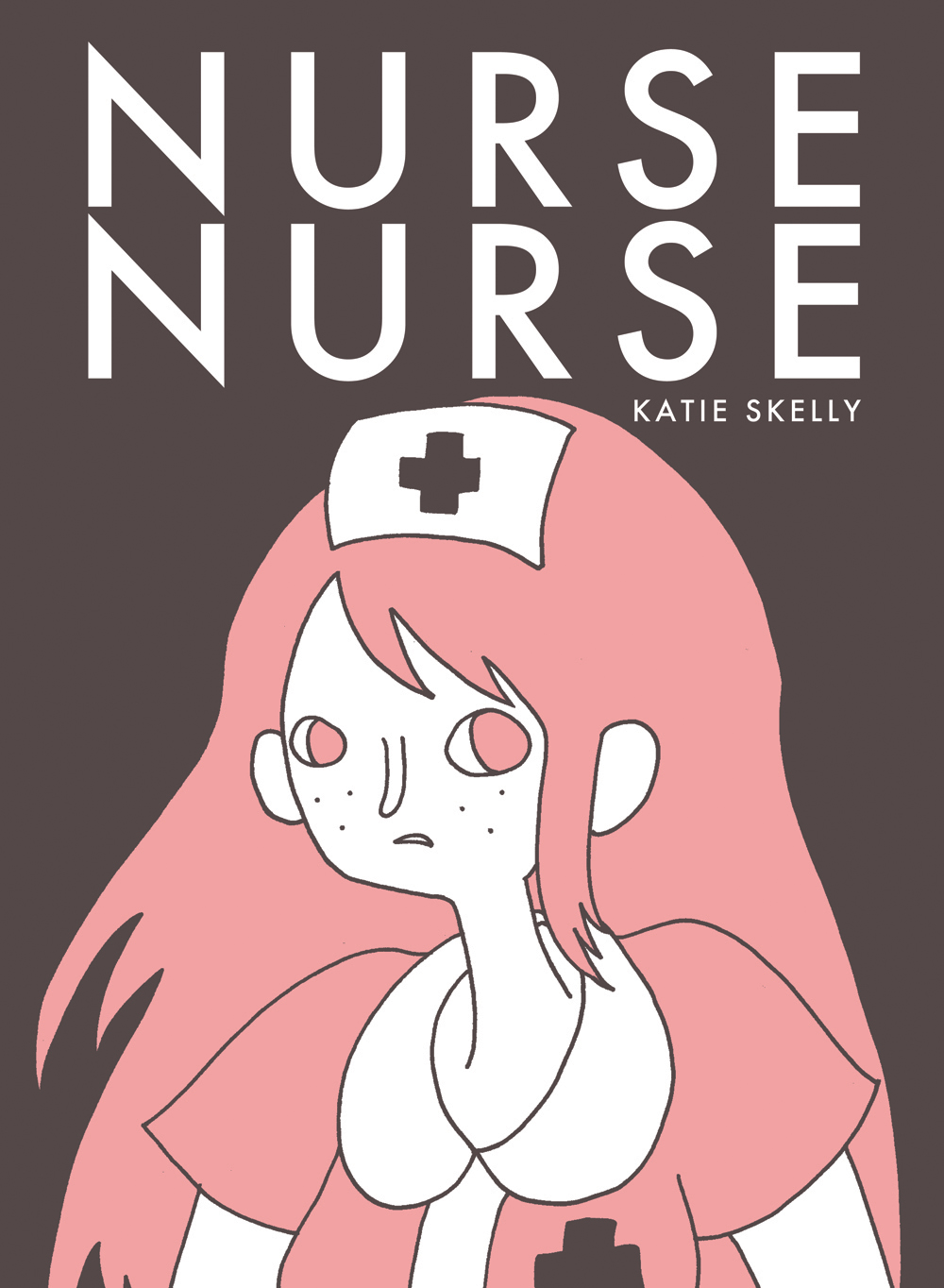
January 24, 2012* Sparkplug has announced that Katie Skelly’s Nurse Nurse is to be their first new comic. Best of luck to both halves of this arrangement.
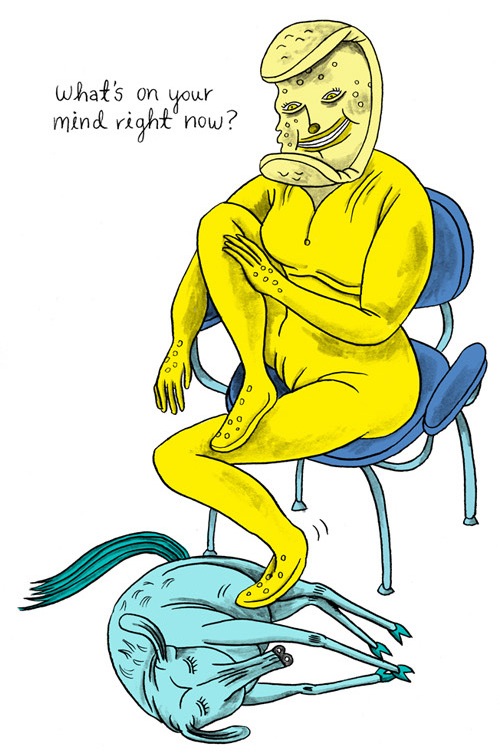
* Oh look, Lisa Hanawalt may have just done her best weirdo strip ever and best gag strip ever, back to back.
* It took me a while to find it, but Zack Soto and Milo George’s relaunched Study Group website has a blog component with its own RSS feed that you should certainly consider subscribing too. Highlights thus far include a Noah Butkus spotlight (Jesus Christ, “Forces”!) and an interview with cartoonist Maré Odomo, who cites writer and ADDXSTC fave Kevin Fanning as an influence, which was unexpected and exciting to see. Odomo also cites the influence of Blaise Larmee and Aidan Koch, but in terms of the beauty of their pencil art rather than any of Larmee’s theory trolling, which until relatively recently was rarely made manifest in his comics themselves.
* John Mejias draws our attention to an upcoming Shawn Cheng art show. He’s a printmaking master, and he’s doing stuff you don’t see any other cartoonist/printmakers doing, I don’t think.
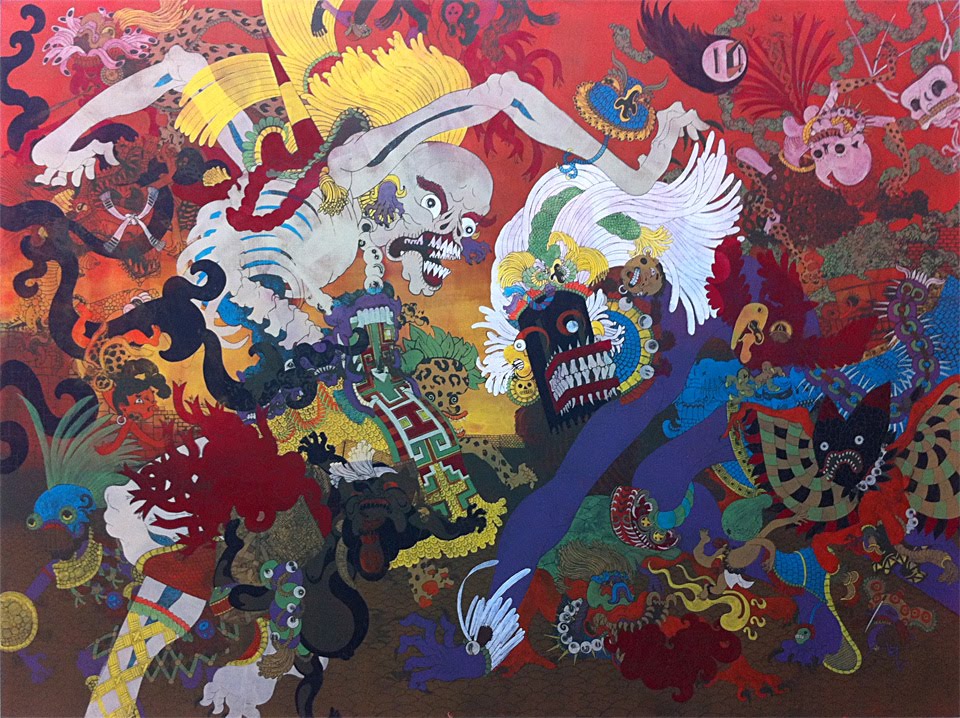
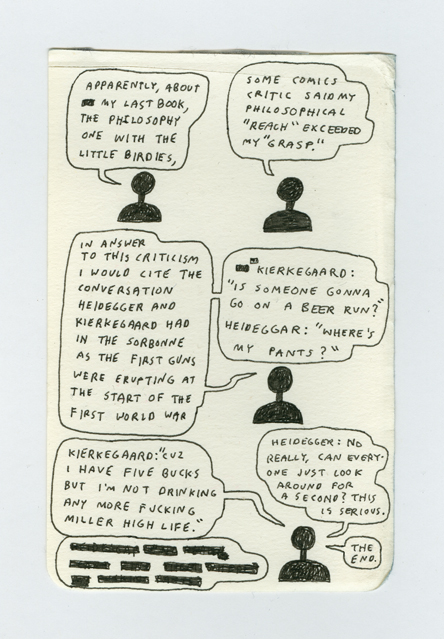
* Anders Nilsen responds to his critics.
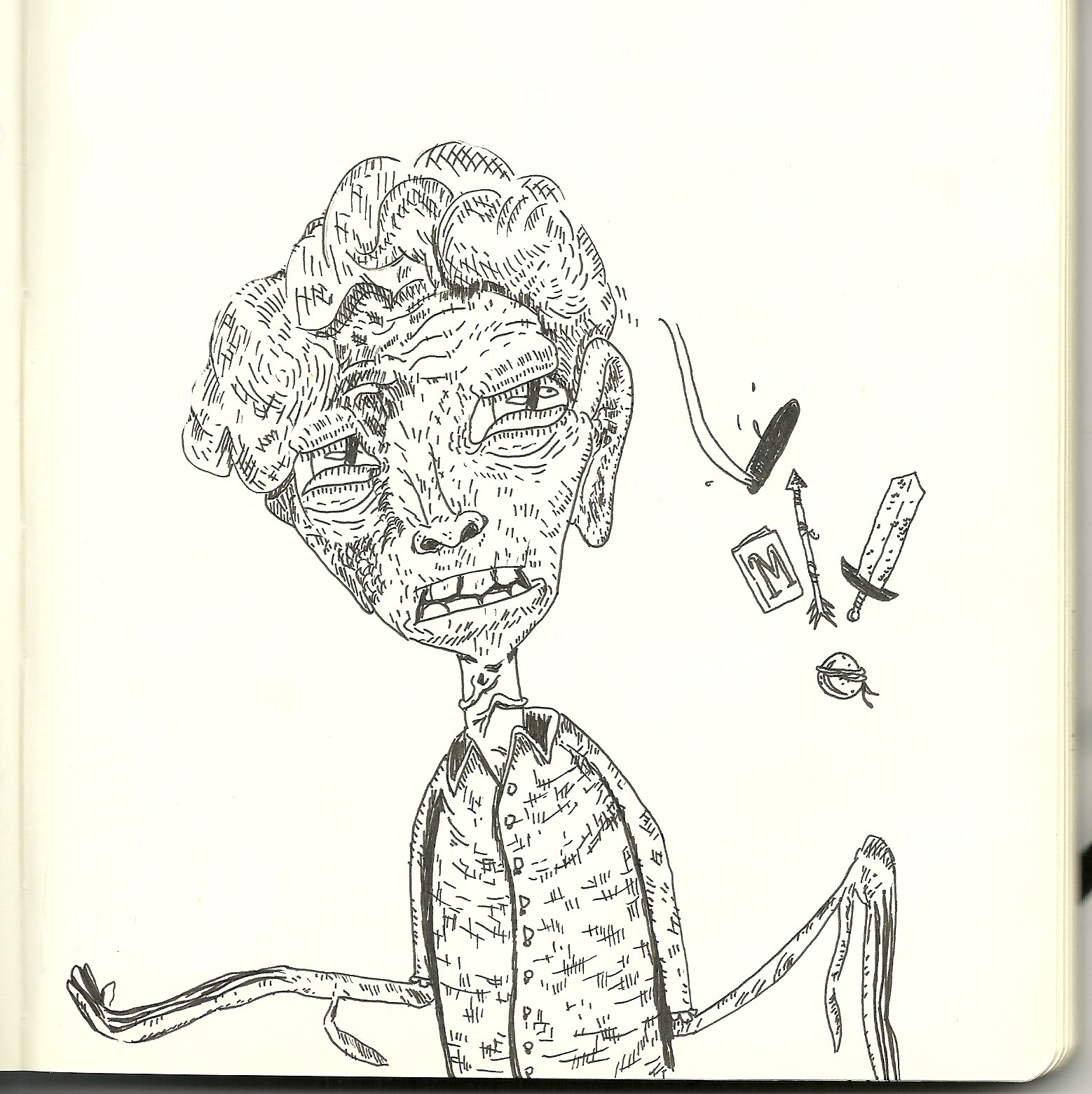
* At a certain point pulling art from Michael DeForge’s Ant Comic in order to show you how horrible and beautiful it is becomes a waste of time: Surely you already know how horrible and beautiful it is. At any rate, here’s the latest Ant Comic.
* Rickey Purdin has been posting nightmarish little sketches unlike any art I’ve seen from him before. This one’s called “All the Weapons You Needed Were Over Here.”
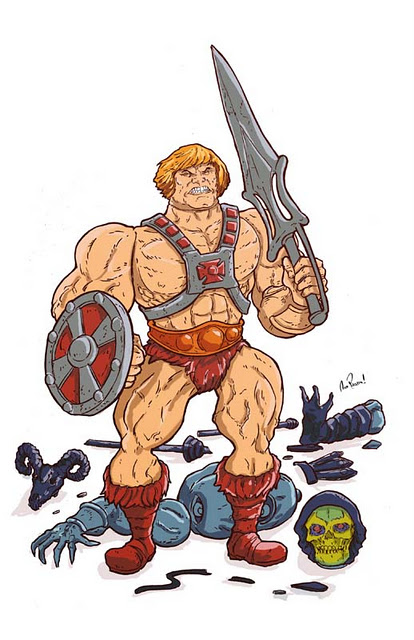
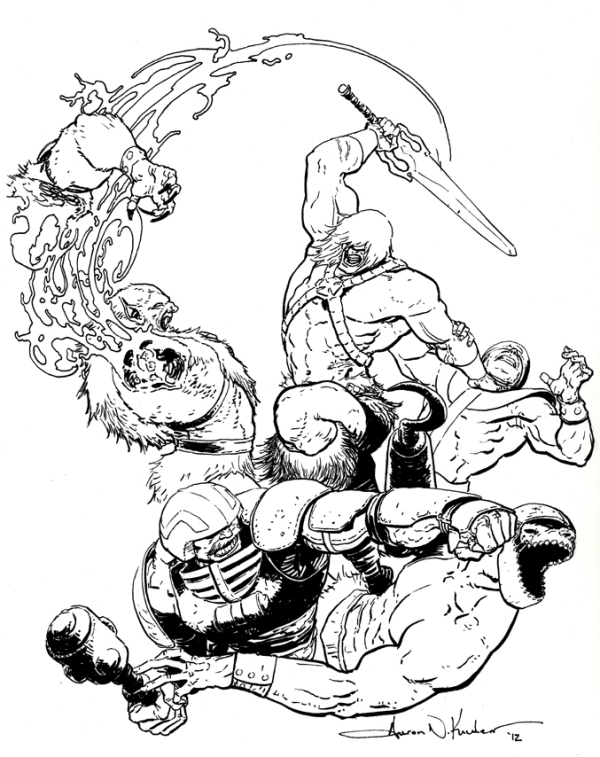
* The Ashcan All-Stars group art blog, staffed mostly by interesting mainstream/genre artists, is doing a He-Man and the Masters of the Universe week, and it’s been pretty glorious. Below are contributions from Nick Pitarra and Aaron Kuder.
* The Mindless Ones’ Amypoodle has begun annotating Batman Incorporated: Leviathan Strikes.
* Jeez, this Jason Karns fellow is a goddamn gold mine.
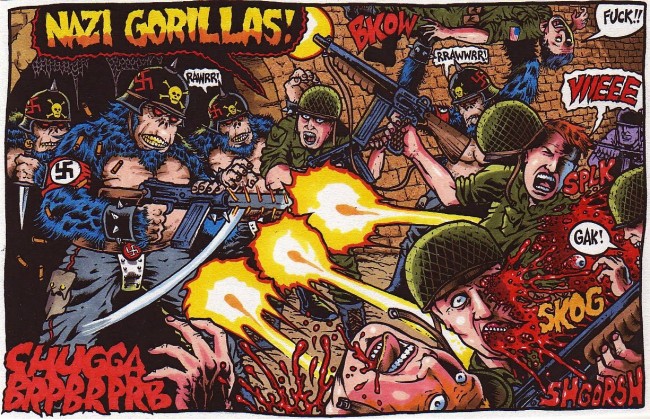
* It’s The Best of Zak Smith/Sabbath’s Playing D&D with Porn Stars! I can barely conceive of what a timesuck following all those links would be.
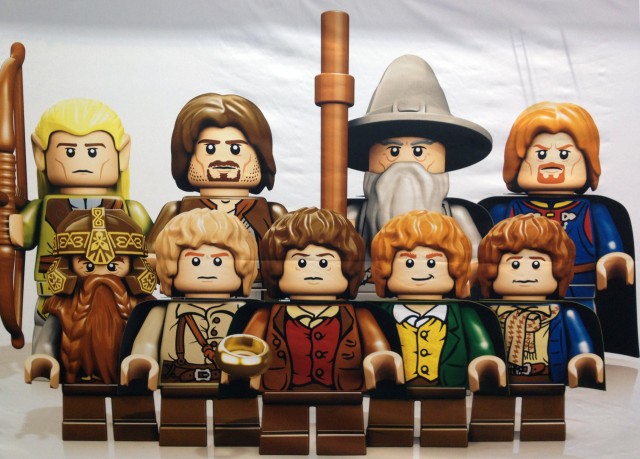
* I’m just waiting very patiently for the Lord of the Rings/Hobbit Lego videogames.

Real Life Horror Re-Education Camp
January 24, 2012* Real Life Horror galore today, and I didn’t even watch the Republican presidential debates! (I understand the Golden Rule was booed.) This represents a couple weeks’ worth of pertinent political links and thoughts, and once again I’m segregating them from the rest of my posts so that people who remember that I am a proven fool about such matters may better ignore it all.
* Despite pushback I saw in various quarters, some politically motivated and some not, the New York Times’ Public Editor really was unsure whether it’s appropriate for reporters to shoot down incorrect “facts” asserted by the people it covers rather than simply providing a platform for them — the sneer-quoted term “truth vigilantes” made this clear, and the Times’ own Executive Editor had no problem deducing so in her rebuttal to the piece — and this really was as depressing and disconcerting as it seemed at first glance.
* I don’t really have a pithy summary of this Glenn Greenwald piece on how outwardly directed violence via war and human rights violations has a disproportionate impact on minorities, the poor, and the otherwise disenfranchised here at home, so you should certainly read the whole thing. I think Greenwald remains too sanguine about Ron Paul, not only in terms of his hideous newsletter but how the policies he endorses to this day about pretty much everything but war, drug policy, and civil liberties would be devastating to the social contract and, yes, civil liberties, just in different ways and for different groups than those targeted by our current policies. That said, he quotes extensively from Martin Luther King Jr. about the necessity of opposition to war as a prerequisite for social justice, which is always welcome. And he notes that the range of views considered disqualifying for higher office should probably be broadened to include many of the policies more or less shamefacedly but still robustly embraced by the current President and his party, to say nothing of the atavistic brutality with which they’ve been embraced by his potential opponents and their party. It’s more or less impossible to vote for someone who isn’t totally disgraceful.
* Greenwald also links to Jonathan Turley’s excellent, Facebook-it-so-your-parents-can-read-it list of 10 reasons the United States isn’t really a free country anymore; freedom is a privilege afforded you by virtue of being non-Muslim and by grace of the Commander-in-Chief.
* Still on the Greenwald beat, this piece and this piece combined make for a particularly nauseating case study of sham American justice and jurisprudence, immunizing the powerful for their crimes and reducing victims and accused criminals to legal nonpersons. I find the insistence that those targeted for death must personally challenge the government’s right to do this, at which point they can then be more easily targeted and killed, particularly deliciously nauseating.
* And back on the Ron Paul beat, Ta-Nehisi Coates is slowly but surely crunching numbers and citing primary sources to debunk the easy claims made by Paul, Howard Zinn, and others on both the left and the right (though let’s be honest, mostly on the right) that the American Civil War need not have been fought because a non-violent solution, perhaps one aided by buyouts of slave owners for their human property, could have been reached. The answer is basically “you’ve got to be kidding me.” Part one; part two; part three; more to come. You’d do well to read them all from start to finish, I think. For one thing, I don’t need to tell you how pernicious the myths about the Civil War and its causes have become for America, how pernicious they’ve been for a century and a half in fact. For another, I welcome the challenge to my newfound, might as well say it, pacifism. It won’t do to wave things away with platitudes and bullshit. The rubber must needs meet the road.
* The oral history of the Guantanamo Bay detention facility, the cancerous tumor that made America break bad.
“He would kill you on sight.”
January 23, 2012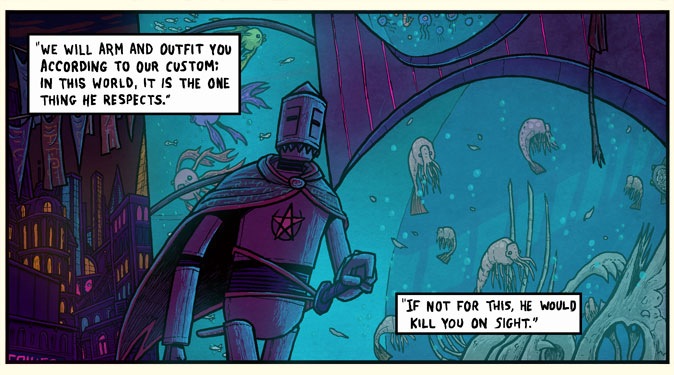

Breaking Bad thoughts: start of Season Three
January 22, 2012I’m three episodes into the third season. SPOILERS HO!
* Almost more than I like how the show is getting heavier as it goes on, I like how it’s getting weirder as it goes on. Weirdness, by which I mean pretty much anything that’s a little bit stranger and more sinister than is strictly called for by the demands of conveying a narrative and realistically depicting the world in which it operates, is very important to me. Even if you were to ignore the fifth season of The Wire which I absolutely hated, it’s why I feel less warmly disposed and super-excited when I think back on that show (with the possible exception of Omar) than I do about most any of the other shows I’ve gotten really into over the years. With Breaking Bad, we’re now at the point where the show can start a season with a bunch of people crawling on their bellies toward a death shrine with music that fairly explicitly references the industrial score of The Texas Chain Saw Massacre, or have an even more infernal scene involving two mute brother assassins communicating via Ouija board with a demonic old man and his accursed tell-tale bell, and yet it still feels like the show you were watching from the start. That’s a good place for a show to be, for me. I don’t want all the pieces of the puzzle to fit. I want some of the pieces to feel like they’re from some game that hasn’t been revealed yet, a game being played a few layers away from the one at hand.
* I was also really pleased to see that the emotional intensity of the Season Two climax was, perhaps even improbably given what happened during that climax, maintained in these first few episodes, particular the premiere. I felt close to tears the entire time. When you think back on the early episodes and how broad and loud it all was, the amount of silence in the S3 premiere, the amount of time spent with Walt, and also Jesse, just sitting or standing someplace and not speaking…well, it speaks volumes about the growing sophistication of the show and its willingness to leave you alone with your thoughts about it.
* On that note, and this is becoming a laundry list of things I really liked but what the hey: I really liked NuJesse. This has come up a few times both in these posts and in the comments, but both Jesse and actor Aaron Paul always seemed to come alive when something triggered him to momentarily drop the Slim Shady routine and interact with the world in a more direct and intense and less posed way. That appears to be his only interaction with the world anymore. He probably hasn’t said more than a dozen sentences yet, but what he has said have been among the best Jesse moments the show’s seen, from “I’m the bad guy” on down.
* Great eyes, he has, too. Never really saw it before, but now that he’s gone all crystalline and cauterized inside they’re quite piercing and haunting.
* I think a sign that a show is developing a real head of steam is when they inject Story Growth Hormone into the plot and get to something we didn’t think was coming for another half a season or so almost right away. In this case, we had Skyler confronting Walter about being a drug dealer, and Walter in turn revealing his drug of choice, within the first episode of the season. Given that this didn’t happen when she left him, I figured we’d spend most of this season watching her put it all together. Instead the moment we’d been waiting for since the very beginning was dropped on us in the middle of the first episode of a season. Obviously this will free up some real estate they can now spend on other things instead of building up once again to an inevitable moment of discovery, which they’ve already done several times now (the cancer, the money, etc.), but beyond that it shows that the filmmakers are confident enough in their abilities to toss a readymade multi-episode arc out the window.
* Glad to see the show take “contempt of cop” violations seriously rather than have Walt be humorously tasered or something like that. The whole sequence of events of him getting pissed off at the cop, the cop threatening to essentially assault Walt for being rude, and that final jump cut to Walt’s inflamed, tear- and snot-strewn face as he howls in misery when he’s thrown into the cop car was probably the show’s best evocation of police power, perhaps because that wasn’t really the point the way it was with, say, the kindly janitor whose life is destroyed when he takes the fall for Walt’s stolen chemistry equipment. It was less didactic and more effective.
* I was trying to put my finger on why Walt’s bullying of his way back into Skyler’s house and life felt so ugly, ugly, ugly. Some of it’s obvious: For the first time he couldn’t use “I’m doing this for Skyler’s own good” as a justification, since she’d made quite clear what her own good would be. Beyond that, though, this was the first time we saw his cutthroat, bullying nature used against Skyler the way he’d previously used it against, say, Tuco when he threatened to suicide-bomb his HQ, or the dudes at the Home Depot he confronts about infringing on his territory when he catches them ineptly buying cooking equipment, or god help us Jane when he leaves her to die. He has Skyler over a barrel and knows it, and exploits it shamelessly and ruthlessly despite all his aw-shucks posing. Every time he said “Now son, don’t make your mother the bad guy” was more unbearable than the last, since he’d quite deliberately made it impossible for Walt Jr. to see her as anything but. What a creep.
* But the final element of Walt’s ugliness in these episodes was that more so than ever before, he wasn’t our focal point. In several key instances, we are walked into a crucial Walt scene not by following Walt, but by following someone else watching Walt. Saul and Gus’s anonymous Mr. Fix-It watches him break into his own house — then watches the Salamanca Brothers show up to kill him. During the moments when Walt comes closer to death than ever before, he doesn’t even know it — only the Brothers, the characters whose POV we’ve been sharing as they make their way through his house, know what’s about to happen. Once Walt does finally ensconce himself in the house, we pull up with Skyler and share in her shock as she finds him there. When she tries to have him thrown out, we stay with her during her interview with the police, and like her we only overhear Walt’s interrogation. Later we come home from work with her to discover, and be disgusted by, his crass emotional manipulations as he fixes an elaborate dinner for Walt Jr. and one of his friends in order to prevent her from making any kind of scene. Walt has essentially been made a guest star, or better yet an antagonist, seen through the eyes of others, his own thoughts and emotions opaque. I think that’s a big part of why I found him so repulsive in these episodes: In a very real way he’s an alien presence.
* In addition to making my way through The Great Post-Millennial Television Dramas, I also watch the CBS soaps every day. Though the degree of subtlety and skill involved varies considerably, most soap storytelling involves one person or group of people with knowledge that another person or group of people (which may include the audience) wants or needs or ought to know but doesn’t. The moments of catharsis come when the people who’d been in the dark finally find out; depending on the nature of the storyline this could be because they’ve found it out themselves, or some pivotal go-between has revealed it, or, if it’s information that can be used to hurt the person who didn’t know it, because one of their enemies has finally thrown it in their face. So perhaps this explains why I fucking cheered when Skyler came home to Walt’s horrific family-man parody and said “I fucked Ted.” Eat it, you emotionally abusive creep! I’m very curious to see if Skyler continues to respond to the enormous shit sandwich Walt’s forcing her to eat by serving him some of her own, knowing he has as little choice to dig in as she does.