
Posts Tagged ‘reviews’
Comics Time: The Diary of a Teenage Girl
March 30, 2010 The Diary of a Teenage Girl
Phoebe Gloeckner, writer/artist
Frog, Ltd., 2002
312 pages
$22.95
Buy it from Random House
Buy it from Amazon.com

Originally posted at The Savage Critics on April 27, 2009.
Heartbreak and rage: that’s what I feel when I read this book. It’s the story of one Minnie Goetze, a 15-year-old girl growing up in ’70s San Francisco, doing so in large part by having sex with her alcoholic mother’s adult boyfriend and, as time goes by, through various other increasingly drug-fueled sexual encounters. There are a couple of tricks to the book.
The first is that “Minnie Goetze” is Phoebe Gloeckner. Gloeckner doesn’t so much deny that the book is autobiographical as question the validity of the very notion of autobiography, but I mean, that’s a photo of teenage Phoebe Gloeckner on the cover, what can I say. Does it matter, more than in just a lurid/tabloid way? I think it does a bit, in that you can then see the book not just as a novelistic chronicle of a precocious teenager’s troubled adolescence but as a product of that adolescence, and of the subsequent lived experience of its author. It also goes a long way toward explaining how perfectly Gloeckner is so able to capture teenagedom’s unique combination of acute self-awareness and total cluelessness, its passion for physical pleasure and mental/emotional inability to process that pleasure’s ramifications: Presumably, a lot of this is lifted from an actual diary of an actual teenage girl.
The second trick is that the book is a hybrid, “An Account in Words and Pictures” as the subtitle puts it. The bulk of the book is prose, a series of entries from the titular diary. That material is the voice of 15-year-old Minnie, pure and simple. Though she frequently addresses an imaginary audience in those entries, they really have an audience of one, Minnie herself, and they’re where you get her unfiltered in-the-moment understanding of what is going on in her life. Then there are doodles and full-fledged, underground-style comics created by 15-year-old Minnie (actually 15-year-old Phoebe) interspersed throughout, revealing how Minnie is processing her experiences into art, just like any artist would. (At 15 she could already draw the pants off a lot of underground cartoonists, by the way).
Next there are illustrations by the grown-up Gloeckner (we never have a sense of the presence of a grown-up “Minnie”), sometimes presented as spot illos, other times receiving a full Victorian-style page with a caption beneath it. Here is where the current, adult author inserts herself, crafting psychologically subjective images of whatever is going in the narrative. Sometimes they’re just impeccably drawn portraits of the characters (“Ricky Ricky Ricky Wasserman, that exquisitely handsome boy”) or doodles of the minutiae and marginalia of Minnie’s life and mental environment (“the image of the dinosaur that is travelling through space right now”). Other times they’re stylized for effect, highlighting the venality and ridiculousness of Minnie’s situation with satirical savagery. A favorite weapon in Gloeckner’s artistic arsenal is to exaggerate the size of Minnie and her teenage friends’ heads in proportion to their body, or exaggerating the size and fleshiness of Monroe, Minnie’s adult lover, in proportion to Minnie–emphasizing the fact that for all her intelligence and sexual experience, Minnie is a child, often with a child’s way of relating to the world. (It’s easy to understand the implication of her near-constant crying before and after liaisons with Monroe, or while there’s just as much of a thematic connection between her sexual and pharmacological voraciousness with her sweet-tooth as there is with the alcoholism and drug use of her mother and Monroe himself.)
Finally there are the comics, which is why I’m talking about this book on this site to begin with. This, again, is adult Gloeckner expressing herself, but this time with the dispassionate yet brutally condemnatory eye of reportage–a Joe Sacco of Polk Street, right down to the formidable chops. (Gloeckner worked as a medical illustrator, which helps explain images like these–“exceptionally unsafe for work,” as the site warns.) Using a couple of simple grid templates and relying on few illustrative tricks except exceptional craft, the comic sequences generally focus not on the truly disturbing moments in her life, the statutory rape and the heroin–for that, see Gloeckner’s first book, the collection A Child’s Life–nor on the girly teenage fun stuff that pops up in the illustrations and prose with just as much frequency as the sordid material. Rather they depict the run-of-the-mill not-right-ness of her everyday life. A mother who parties with a lawyer they’ve nicknamed “Michael Cocaine” in front of Minnie and her sister, though he’d never do so in front of his own kids. A married man Minnie’s friend Kimmie babysits for, getting them high and driving to a hotel to have sex with them. Various men, from family friends to upperclassmen, making comments about Minnie that are just this side of uncomfortable and inappropriate. Minnie’s mischievous antics around Monroe, Monroe’s dismissiveness and emotional unavailability and predation toward Minnie. There’s a bravura, wordless sequence where Monroe takes Minnie and Kimmie to the beach, and as we and Minnie watch, Monroe seduces her friend. Another knockout where Minnie and the girl she falls in love with, Tabatha, smoke a joint that Tabatha then tells Minnie was laced with angel dust, the neat grid of the comic giving way with a page-turn to a midnight-black splash page peppered with psychedelic non sequitur images (the dinosaur travelling through space makes a return appearance), evoking the mystery and terror of chemically blowing a mind that isn’t nearly finished growing on its own.
It’s not easy material, that’s for sure. But it’s warm and detail-driven and just so, so smart, even at its most potentially sensationalistic. And it’s rich, extraordinarily so. The main storyline is devastating, no doubt–this time around reading the book, I found myself getting physically nauseated when Minnie’s diary falls into the wrong hands, the same way I felt when I had a similar experience as a teenager; meanwhile my anger and disgust for Monroe and Minnie’s neglectful (or outwardly abusive, depending on how charitable you feel like being) mother were almost physical as well, as was my delight in reaching the book’s final illustration/caption combo (you’ll enjoy it when you get there, too). But you can just as easily spend a read-through focusing on, say, the contrasting qualities of the illustrated material like I did above. Or the development of Chuck and Pascal, the two characters who genuinely appear to have Minnie’s best interests at heart, and their fates as we learn whether or not that is in fact the case. Or the ’70s countercultural touchstones: David Bowie, Donna Summer, Pink Floyd, EST, Rocky Horror, R. Crumb and His Cheap Suit Serenaders. Or how fearlessly Gloeckner addresses teenage sexuality and sex in general. The raw pleasure, the hunger for it…
Oh God, you know, you can really feel it when they come inside of you.
I know Monroe would miss me if I wasn’t around. I know he’d think about me then because he doens’t know anyone else like me. I think of him all the time.
And that hot breath…dreamy.
And when they’re just as hard as rocks and they’re stabbing you and you could just scream you can hardly breathe it is so 78vghjftgj46z35uzsfyubyuib78cx5742q24xr68v680b790[79[v689pc568ozx3463455yw46uc46759v689pvyuiuilv679
…and the barely suppressed disgust at the physicality of it…
The sexual nature of Kimmie Minter is a viscous cervical mucus that always welcomes mating. She was slimy and wet even though she always says she doesn’t like Monroe and she says Marcus’ dick is much bigger and it’s too bad I didn’t see it.
…and the emotional trauma it can cause when people who should know better have made it so that’s all you see yourself as good for…
I hate men. I hate their sexuality unless they are gay or asexual or somehow different from the men I’ve known. I hate men but I fuck them hard hard hard and thoughtlessly because I hate them so much. At least when they’re fucking me, they’re not looking at me. At least I can close my eyes and just hate them. It’s so difficult to explain.The Diary of a Teenage Girl is, in that sense, the diary of a lot more than one teenage girl. It’s the intimate mind-life of a segment of society populated by men, so very very very many men throughout the book, who sense pain and hunger like that radiating off a 15-year-old and swoop in like moths around a flame, like vultures around a carcass. And for every extraordinarily strong and brilliant and talented Minnie who manages to emerge from the swarm intact enough to recount her experiences decades later, how many don’t? It’s a comic from the edge of the abyss, and I love it.
PS: In case you missed the link, here’s a lengthy interview I conducted with Gloeckner back in 2003. It’s one of my favorite interviews I’ve ever done.
Comics Time: The Last Lonely Saturday
March 24, 2010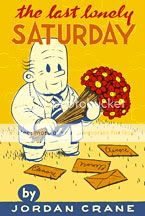
The Last Lonely Saturday
Jordan Crane, writer/artist
Red Ink, 2000
80 pages, hardcover
$8
Buy it from Fantagraphics

Originally published at The Savage Critics on March 16, 2009.
I find it both impossible and undesirable to separate The Last Lonely Saturday from the pivotal role it played in my life as a comics reader, and thus in my life in general. During the year 2001 I took a job as an editor at the A&F Quarterly, Abercrombie & Fitch’s big giant magazine/catalog/softcore porn hybrid publication. My boss there, Savas Abadsidis, was and is a big fanboy, and a chance encounter with a Wizard magazine on his desk, which contained an article teasing an upcoming revamp of the X-Men by Grant Morrison (whom I remembered favorably from my days as a comics reader in high school for Arkham Asylum) and Frank Quitely, led me into Jim Hanley’s Universe on 33rd Street to track down the series. This was the first time I’d entered a comic shop to purchase anything that wasn’t either an isolated Acme Novelty Library, Savage Dragon, or Frank Miller comic in years–the birth of my modern comics readership.
Intrigued by the offerings on hand, and empowered by a complete lack of editorial oversight that enabled us to write about anything we wanted in the Quarterly–not to mention Abercrombie’s expense account–I made a solemn vow to buy something completely unfamiliar to me every week. Jordan Crane’s The Last Lonely Saturday was one of my first such purchases. From there it was a short journey to Crane’s anthology NON, his distributor Highwater Books, the Fort Thunder aesthetic in general, and thence all of alternative comics.
None of that was likely to happen if I didn’t just love The Last Lonely Saturday to pieces. And that itself might seem unlikely. It’s a slight book–many of its 80 pages are endpapers, and the rest contain all of two panels apiece. Dialogue is minimal; the majority of it of it comes from a little boy’s triplet proclamations: “It’s a man,” “Look man run,” “Ha ha! Windy!” It has a simple red, white, and orange color scheme. Although a ghost is involved and a character dies, we’re pretty far from the violent morality plays that make up much of Crane’s recent work.
What The Last Lonely Saturday is is a love story, a romantic fable. To some eyes, it might be a creepy one at that. In the tradition of the Police’s “Every Breath You Take,” albeit in something of a gender reversal from that song, Saturday could be looked at as a depiction of the role fixation and selfishness, even emotional violence, frequently play in love. But just as the sweeping, insistent, intimate, evocative sound of “Every Breath You Take” make it one of the great love songs regardless of the obsessive lyrics, so too the particulars of The Last Lonely Saturday make it pretty much the best love story in comics form I’ve ever come across. Crane’s character designs are at their most adorable here. His jolly little potato-shaped protagonist, with his rumpled suit and charmingly crinkled brow, looks like the grandpa of our collective unconscious made real. His beloved Elenore’s jaunty hairdo, long eyelashes, and high-wattage smile evoke beauty and charm that transcends her cartoony form, while her two lines of flashback dialogue upon receiving flowers from her beau (“Oh sweet heart! They’re just lovely!”) nail me to the floor with sweetness every time. Everything seems airy–leaves and papers float and twirl in the breeze, the little old man’s car jauntily jumps along the road, puffy white clouds are a constant presence in the background–until, at the story’s moment of truth, Crane weighs down his line and crumples his art toward the center of the panel. I’m a huge, huge sucker for emotionally devastated old men, so imagine my utter joy when our hero is granted a reunion with his dear Elenore! (Think the video for Blur’s “Coffee & TV” and you’ve pretty much got it.) At that point, it doesn’t matter to me how it happened–that it did happen is what’s important, and that Elenore understands this is what makes The Last Lonely Saturday a great love story, in that it appreciates that what can seem unpleasant to outsiders is, within that world of two, an act of grace. It’s an intelligent, moving, beautiful, terrific little comic.
Comics Time: Black Hole
March 22, 2010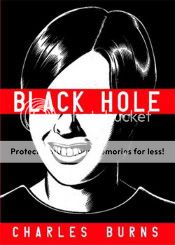
Black Hole
Charles Burns, writer/artist
Pantheon, 2005
368 pages
$18.95, softcover

Originally published at The Savage Critics on February 23, 2009.
You lose a lot of extremely impressive supplemental material if you purchase or read only the collected edition of Black Hole rather than the individual issues from Fantagraphics (and, earlier, Kitchen Sink). The full-color front and back covers for each issue are probably what stand out in most people’s minds, followed perhaps by the almost masochistically detailed endpage spreads, and last but not least those terrific ripped-from-the-hotbox dialogue snippets that accompany Burns’s yearbook-portrait openers. I think everyone is probably partial to the one where a guy asks to be cremated if he dies so that his friends can smoke his ashes, but the one from the first issue isn’t some nugget of stoner wisdom, it’s the premise of the entire book:
It was like a horrible game of tag…It took a while, but they finally figured out it was some kind of new disease that only affected teenagers. They called it the “teen plague” or “the bug” and there were all kinds of unpredictable symptoms…For some it wasn’t too bad – a few bumps, maybe an ugly rash…Others turned into monsters or grew new body parts…But the symptoms didn’t matter…Once you were tagged, you were “it” forever.
That quote made it into the collected edition as the back-cover blurb. This one, from the twelfth and final issue, didn’t:
It’s like tryin’ to explain sex to a nun – there’s no way you’d ever understand it unless you lived it. I was there, okay? Half my fuckin’ friends died out there, man. I never dreamed I’d get out of that shit-hole…but one day I notice the stuff on my face is starting to heal and a couple of months later, I’m totally fuckin’ clean…out walking around with all the normal assholes.
This directly contradicts the quote from the first issue and upends the premise it establishes. Turns out the horror of the teen plague is finite. Turns out everything that happened in the book didn’t need to happen, not the way it did, not based on the assumption that nothing was going to change and they’d never get better. Turns out, in other words, that the teen plague was ultimately like being a teenager itself: It sucks, but you grow out of it.
Rereading Black Hole for the fourth time or so, it’s easy to see the set-up for this punchline. Keith in the woods during the kegger where he finds out Chris has the bug, peeing on a tree and grumbling to himself, “This is it…this is all it’s ever gonna be. It’ll never get better…I’ll always be like this…” Chris’s similarly themed rebuke of her parents: “You don’t understand! You’ll never understand! Never!” The constant hyperbole the kids use to describe virtually everything even potentially enjoyable: “It was going to be the best day of my life”; “Rob had brought along all kinds of incredible things to eat…black olives, an avocado, french bred, salami, cheese…”; “All right! That’s gonna blow your fuckin’ mind!“; “It’s called Monument Valley–you won’t believe how amazing it is!”; and my favorite, “I want to show you how to make the best sandwich in the world.” Chris telling Rob “I’ll love you forever, no matter what,” and Keith and Eliza telling each other the same thing. Chris’s repeated refrain “I’d stay here forever if I could”–in Rob’s arms, in the icy water looking up at the night sky. Everything is either the best it can possibly be or the worst it can possibly be, and it will never change.
Needless to say that’s just about the most accurate depiction of the emotional life of teenagers I’ve ever seen. It’s how I remember high school. It’s not terribly far removed from how I remember college. (And to be perfectly honest, when I think of how I look at the world even now, it’s within spitting distance of how I live today, which is probably a big part of why this is one of my favorite comics.) But of course, things do change. Bad things usually get better, which is why it’s such a goddamn tragedy any time a teenager commits suicide because of a bad grade or a breakup–or when a group of sick kids feels it necessary to drop out of school, run away from home, and in the case of some characters literally throw their lives away. And unfortunately, good things often get worse; parents do understand, at least some of the time, and it’s damn hard to tell someone “I’ll love you forever, no matter what” and mean it, and two stoners driving across country probably won’t be able to find a cozy apartment where he can make an honest living and she can work on her art and they both live happily ever after. That’s a tragedy too.
So why remove the quote that points this out, the quote that completes the metaphor? Maybe–and I’m just guessing here; I’ve interviewed Charles Burns about this book a couple of times but I don’t recall asking him about this–he didn’t want to give us that escape valve. Maybe he doesn’t want us to read this and think, “Silly kids, if only they knew.” Maybe he wants to eliminate anything that lessens the number-one effect of the story and the art here: claustrophobia.
Honestly, the claustrophobia of Black Hole is what struck me the most in this reread. Take the panel gutters, for example. Burns employs a traditional method of delineating between real-time action and dreams or flashbacks–straight gutters for the real stuff, wavy gutters for the reveries. But those wavy gutters still create as uniform a grid as ones drawn with a ruler would. Instead of dreaminess, they evoke haziness, like heat waves radiating up from a road or the room spinning when you’re cataclysmically wasted. Indeed, the few times the grids do deviate from the norm is when the characters are completely blotto, or completely panicked–even there, panels remain locked in tiers, and the effect is like careening from one side to another when you’re too drunk to stand up straight and really, really wish you were suddenly sober again but you’re stuck drunk. There’s no way out.
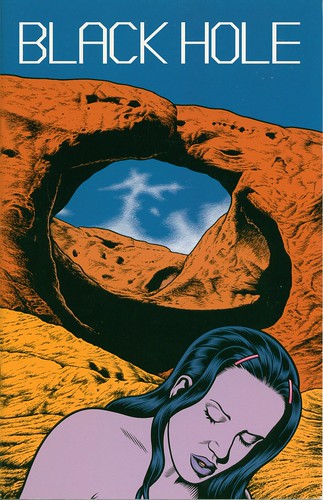
Then there’s the look of the art itself. Elsewhere I’ve described it as like immersing yourself in a blacklight poster, which is apt not just because of the subject matter (look and you’ll see a few such posters on a few walls, in fact) but because looking at this book can practically give you a contact high. While I read the book this time around, I thought it might be neat to listen to a couple of playlists I recently made of the kind of electronic music I listened to in college, a time when presence of the kind of emotions you find in Black Hole still feels fresh to me, a time when I got stoned pretty frequently listening to that very music. Even though I did this on the commuter train out of New York, I’ll be damned if I didn’t feel the pressure on my eyeballs, the weight in my limbs, a slight throbbing of the vision when staring at Burns’s flawless blacks and the trademark shine effect of his characters’ hair. For the first time in his career, I think, style and substance lined up perfectly. It’s not for nothing, though, that the use of drugs and alcohol in the book almost always reduces the options available to the characters–most of the time they prevent people from doing what needs to be done or saying what needs to be said, and even during the story’s few positive depictions of inebriation, intoxicants are used to push things toward a preordained conclusion rather than open up other possibilities. No minds are expanded.
Maybe the most powerful aspect of the book’s claustrophobic effect is its eroticism. True to adolescent love and lust, the desire these characters have to fuck one another is irresistible and all-consuming–it has to be, or else the story couldn’t have happened, and virtually every major plot development wouldn’t have taken place either. Frequently the very environments where the sex takes place contribute to this feeling. Rob and Chris’s fateful liaison takes place in a graveyard. Keith first sees Eliza, nude from the waist down, under the harsh and unforgiving glare of florescent kitchen lights
. He first becomes aroused by her when her tail struggles against the restraint of her towel. Their romance is kindled in her bedroom, surrounded by hundreds of her bizarre (and very blacklight) drawings. They first have sex while stoned as fuck, a red scarf draped over the lamp and bathing everything in crimson. The atmosphere is oppressive, but so can be the feeling of being very, very turned on. “That’s all it took to get me totally sexed up and crazy,” says Keith of his first kiss with Eliza. “I could hardly catch my breath.” (Is it worth noting I knew a girl who looked a bit like Eliza back in college? Probably.)
One final motif comes to mind when I think of how Black Hole works to confine and oppress: repetition. I’ve already mentioned some of the repeated dialogue, and there are any number of repeated visual cues–shattered glass, snakes, holes–and even repeated scenes–Chris floating in the water, those dream sequences. But there are two instances of repetition that stand out to me the most. The first is when Keith angrily leaves his parents’ house to avoid watching some lame TV movie with them, only to end up tripping on acid and watching the very same movie at his friend’s girlfriend’s place. The second, and the most chilling, is Eliza’s sexual assault, which is an implied echo of never-directly-described abuse she suffered at the hands of her stepfather–and, as her nightmare at the end of the book indicates, will likely continue to haunt her dreaming and waking life. Even her and Keith’s blissful roadtrip escape is just a tour of places she’s already been, trying to recapture the happiness she knew long ago. And maybe this more than anything else is why cutting that final reveal that the bug was temporary was the right move: Bad things usually get better, but that doesn’t mean they never come back–different, perhaps, but the same in all the ways that count. Sometimes you can break free of something only to spin right back around to it, spiraling inward into that gravitational maw until that bad thing might as well be constant, for all you can truly escape from it.
I mean, the book is called Black Hole.
For further discussion of Black Hole by myself and Dick Hyacinth, visit The Savage Critics.
Comics Time: Weird Schmeird #2
March 17, 2010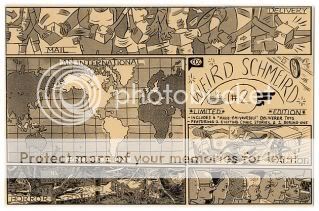
Weird Schmeird #2
Ryan Cecil Smith, writer/artist
self-published, 2010
32 pages plus six lasercut cardboard toys, plastic sleeve
$8
Ambitiously constructed and beautifully packaged, this is another workout in varying styles by CCC member Ryan Cecil Smith. The cover, and the opening vista of suburbia for the minicomic’s first story “Koshien: Impossible,” scan like Kevin Huizenga. The rest of that first story is all dense, explosive, propulsive ninjas-on-bicycles action, with massive rivers of speedlines that cohere like a Brian Ralph environment. There’s a sketchbook section in the grand “cartoonist’s travelogue” tradition. There’s a story set in the world of Two Eyes of the Beautiful, using that same Umezu-derived style to tell a “they had no idea how close they came to death”-type story about two oblivious, bicurious teenage girls who nearly fall into the clutches of the increasingly demented disfigured woman, who’s already transplanted the brain of one girl’s boyfriend into a dog. There’s a one-page cameo from Noel Friebert, with his trademark graphic treatment of text and almost textual treatment of graphics. There’s a little one-page Anders Nilsen monlogue-type thing. There’s a couple more sketchbook pages, making strong use of tones (as does the whole book). And there’s a third story that starts out with a Dan Zettwoch-style diagrammatic depiction of the university mailroom Smith worked in one summer, before telling the very very average tale of his life at that job in the Porcellino/Huizenga tradition. Finally, there are little die-cut cardboard mock-ups of DHL, UPS, FedEx, and Postal Service vehicles, and even a little mailman. Story #1’s the real highlight here–that thing’s a visual knockout, and I for one am dying to see Smith give that style a longer workout on something other than Xerox paper–but frankly it seems he could have stuck with any one part of this hodgepodge and made a strong minicomic out of it. As it stands, he went with all of them and made a strong minicomic out of that, and he could go down a number of rewarding roads from here.
Comics Time: Various (mostly) superhero comics worth your time
March 15, 2010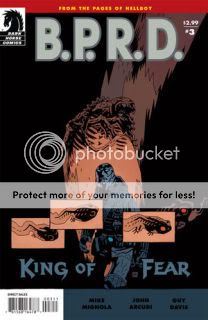
Last week was a strong week for monthly comics from the front-of-Previews publishers. Here are the ones I read and enjoyed.
Action Comics #887 (Greg Rucka, Eric Trautmann, writers; Pere Perez, Cafu, artists; DC): Not only do I like the idea and image of a giant, mad Kryptonian god-clone slowly walking from Iraq to Pakistan and fucking up everything in his path, I also like the “story” filed by Lois Lane about the rampage that serves as the issue’s narration. A lot of times these things sound so phony, but Lois’s piece on this crazy thing, and how Kryptonian heroes Nightwing and Flamebird have been framed by her dear old Dad, has the the breathless feel of a celebrity Huffington Post column, which is probably the sort of thing Lois would be doing in the real world. Solid stuff. Also, Cafu (cover artist and artist on the Captain Atom back-up) is a phenomenon in the making.
Batman & Robin #10 (Grant Morrison, writer; Andy Clarke, artist; DC): I thought Andy Clarke had a couple of storytelling hiccups here, nothing major, but upon a re-read paying closer attention, they mostly evaporated. In this issue he and Morrison turn Wayne Manor into, as Dick Grayson himself puts it, a sort of game of Clue–a three-dimensional puzzle with secret passages, hidden messages, and portraits of long-dead ancestors that contain clues to a centuries-old secret. It’s like that part in Indiana Jones and the Last Crusade where Indy and Elsa roam around that library looking for the entrance to the catacombs–only this has Batman & Robin! Brainwashed, programmed-to-kill Robin at that! Morrison seems to be leaning too hard on the “Oberon Sexton is Bruce Wayne” thing for it to ultimately pan out, but who knows. This thing is inner-eight-year-old gold.
B.P.R.D.: King of Fear #3 (Mike Mignola, John Arcudi, writers; Guy Davis, artist; Dark Horse): My God, this book just keeps getting better and better. I don’t want to spoil what happens in this issue even obliquely, except to say that I’m very very happy that what happened happened, that there’s a character design in this that is among my very favorite character designs of all time (particularly for how it utilizes Guy Davis and Dave Stewart’s blacks), that every page pays off some years-old strand of story, and that the slow downfall of the Bureau–unfurled with laconic dialogue punctuated by bouts of intense violence–is my favorite ongoing storyline of the last decade.
Criminal: The Sinners #5 (Ed Brubaker, writer; Sean Phillips, artist; Marvel/Icon): Sweet revenge! And wow, Val Staples does yeoman’s work on this book, huh? Again, I don’t wanna be a heel and give away the ending, but it ends on a high note for the arc, and I admire the grin-provoking way in which the final pieces click into place.
Powers #3 (Brian Michael Bendis, writer; Michael Avon Oeming, artist; Marvel/Icon): The obnoxious teenage girl Walker and Sunrise are chaperoning in this issue spouts Brian Bendis’s funniest dialogue in recent memory, while it’s fascinating to watch Michael Oeming’s once-slick Timm-isms give way to this rough-hewn, almost abstracted tumult of shouting faces, blasting energy, spurting blood, and flying, tumbling bodies. This whole issue is visceral in a way that only those grand-guignol killings used to be. Very interesting.
Superman: Last Stand of New Krypton #1 (James Robinson, Sterling Gates, writers; Pete Woods, artist; DC): I sort of wish this issue’s “This is a job for Superman!” moment had been the climax of the final issue of World of New Krypton–I think it would have punched up an ending that sort of felt anticlimactic, what with its murder mystery involving characters we barely know and a series of confrontations with rather marginal space-faring DCU denizens. But that aside, I think this is a rollicking payoff to one of the more underrated superhero runs in recent memory. Brainiac and Lex Luthor vs. Superman vs. Zod is a terrific roundelay, Zod’s behavior here re-villains him after he got a little too cuddly during WoNK, it’s fun seeing the rest of the Superman Family (Superboy, Supergirl, Mon-El, the Legion) show up and slug it out with Brainiac bots for the life of New Krypton, Pete Woods draws some good flying and punching…In a weird way I’m almost glad that J. Michael Straczynski will likely make a clean break from this material, because that means at some point in the relatively near future I’ll be able to own a complete set of trade paperbacks of this whole era of interconnected Superman titles, and on some rainy afternoon I can watch the whole conspiracy and war unfold. Should be a pip.
Ultimate Comics Spider-Man #8 (Brian Michael Bendis, writer; Takeshi Miyazawa, artist; Marvel): It’s a shame the Ultimate line seems to be in the same boat as the Superman line, because Ultimate Spidey has rarely been better. In all fairness, it’s almost always been very good, of course. But the whole “Aunt May’s Crazy House of Teenage Superheroes” idea is a deeply satisfying status quo for the book. For starters, it’s a cool way to keep the universe feeling broad without needing to read too many of its other titles (thank goodness–they’re murdering babies out there!). For another, I’ve always thought Bendis writes these teen characters really well, the dramatic ups and downs of their friendships, and David Lafuente’s drawings of them are simply gorgeous. (His Gwen Stacy is out-and-out crushworthy.) Takeshi Miyazawa fills in here, and pretty strongly if not spectacularly, although the way he does Iceman’s head-icicles grosses me out. (I have a personal phobia about that sort of thing.) I got some laughs out of the names suggested for superpowered teen Ultimate Rick Jones, and I got a reminder that I’ve been enjoying this series for, what, 130 issues now, or something? I suppose I’m mostly curious seeing who becomes the real archvillains in a post-Kingpin, post-Green Goblin Ultimate Spidey world, but I don’t mind taking our time getting there.
Comics Time: Two Eyes of the Beautiful
March 12, 2010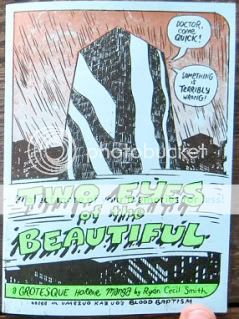
Two Eyes of the Beautiful
Ryan Cecil Smith
self-published, 2010
26 story pages
$5
Based on Kazuo Umezu’s Blood Baptism, this minicomic from Closed Caption Comics stalwart Ryan Cecil Smith–labeled “a grotesque horror manga” on its cover–is funny and queasily suspenseful in equal measure. One one level it’s an experiment in wedding Smith’s thin-lined, loose altcomix style to the doe-eyed, slackjawed strangeness of Umezu’s character designs, and to the spectacle of his horrific “punchline” panels and pages. The wedding’s a happy one, milked mainly for the blackly comedic effect of the contrast. This ironic tinge helps to capture the over-the-top emotional absurdity of this kind of material–in this story, a famous actress literally walks away from her own life and goes into hiding with her daughter on the promise of some sketchy doctor to heal her facial disfigurement if and only if she were to completely disappear from society. (Jeez, I consult the Internet for a second opinion over cough medicine.) Once we learn that the actress has been instructed by the doctor to procure one pure, beautiful young girl for his presumably nefarious purposes, Smith has a lot of fun ratcheting up the tension in horror-comedy style, first via a long, overly specific interrogation of the little girl by the actress, trying to make sure she hadn’t told anyone she was coming over as she slowly locks all the windows and doors to prevent her escape; and second via a pictureless depiction of the actress’s struggle to tie up the little girl, a series of blacked-out panels where the action is conveyed solely through sound effects (“MMMMMPHHHH, KICK, EEE, MMMPHH, PANT, TIE, STRUGGLE, PANT”).
Yet at the same time, given the kinds of cruelty to children we know these comics are capable of, the material is actually quite dreadful amid its goofiness. You hate to think what this vein, horrible woman will do to this poor innocent orphan (you BET she’s an orphan), and then you hate how easy it is for the woman to shift the blame to the little girl when she escapes and seeks aid. I was quite prepared to be sickened by whatever would happen to this poor kid; I dodged a bullet, but I know it was only through the restraint of the cartoonist that this occurred. For a formal exercise, it’s striking stuff.
Comics Time: All-Star Superman
March 11, 2010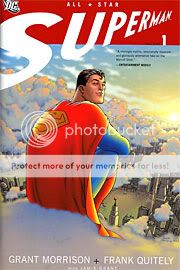
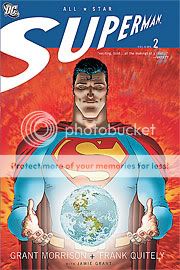
All-Star Superman Vols. 1 & 2
Grant Morrison, writer
Frank Quitely, artist
DC, 2008-2010, believe it or not
160 pages each
$12.99 each


For today’s Comics Time review, please visit The Savage Critics.
Comics Time: Savage Difficulties
March 10, 2010Today’s Comics Time review, which was to be hosted at the all-new all-different Savage Critics, has been gobbled up by a host switchover. I will be able to reconstruct it and post it tomorrow.
In the meantime, may I suggest you add the new Savage Critics RSS feed to your RSS readers. The switchover isn’t automatic, so if you previously subscribed, you’ll want to update it.
Thank you for your interest.
Comics Time: Naoki Urasawa’s Monster Vols. 6-18
March 8, 2010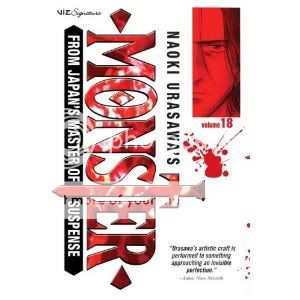
Naoki Urasawa’s Monster Vols. 6-18
Naoki Urasawa, writer-artist
Viz, 2006-2008
200+ pages each
$9.99 each

It’s not quite accurate to say that Monster got away from Naoki Urasawa in the end. Never–not as volume after volume of increasingly baroque hidden connections, repressed memories, and buried Communist conspiracies multiplied and refracted like a screensaver, not even as he added still more characters to a cast that already made The Lord of the Rings look like No Exit in Volume frickin’ 18–did Urasawa come across as anything but totally in control. Each time a new concept was introduced, I knew it would tie into someone or something we’d already met in a way that would nonetheless surprise and delight me. Each time a new character came along, I knew I’d be made to care about this new sad-sack with either a tormented past or an overdeveloped sense of right and wrong. Every twist made it clear I was in the hands of a master.
Yet for all that I knew Urasawa was making conscious decisions at every turn rather than running around frantically to keep all the plates spinning, I can’t help but feel that by the end, he’d made some bad decisions, spun some broken plates. First and foremost, remember when Dr. Tenma was the main character? Nominally I suppose that’s still true, as the final showdown with the titular character is with him. But by then you’re just as likely to be spending screentime with Grimmer, or Nina, or Eva, or Reichwein, or Lunge, or Gillen, or Verdeman, or even random characters who are in and out in the space of one volume like Martin or Milan or the people of Ruhenheim. (That I remember the vast majority of those names off the top of my head speaks well of the material, but still.) Without the singular, driving focus of the original concept– A doctor saves a little boy who grows up to be a serial killer and now must hunt him down–the story’s sprawl starts to pull it apart a bit, and the climactic confrontation is robbed of some of its weight.
Then there’s that confrontation itself. It’s distinguished by the strongest image in the series, a searing two-page spread that screams “instant classic.” And it undoubtedly brings to bear the full weight of the preceding 17 1/2 volumes of cat-and-mouse, before knowingly (if a wee bit over-familiarly) pulling the rug out from under the moment. The problem is that for, oh, four or five volumes leading up to that moment, it’s felt like one climax after another. I know this could be an artifact of the translation and adaptation process, but the dialogue really starts to feel artificially stretched out in the home stretch, with short sentences split between five panels across a full page in some cases just for dramatic impact. Of course, do that too often and the impact is dulled; do it for a quarter of your series and it starts to feel like a neurotic tic. Particularly given how many times this is done to depict a character reaching into the recesses of his or her memory and pulling out something dark and terrible but stopping just short of dragging it into the light for good, the repetition begins to grate, and to make it difficult to distinguish final revelations from teases.
That said, this stuff is as thick and engrossing as quicksand. The steady rhythm and rock-solid character designs are pretty much tailor-made for getting lodged in your head and replayed as you drift off to sleep at night–I for one had a pretty messed-up dream last night about my wife and I fleeing through a hospital from a monstrous child-thing. Several sequences are genuinely chilling: The standouts for me are the cruelty of a child who briefly fell under the tutelage of the title character, the dark storybooks of Klaus Poppe (beautifully drawn in a vastly different style; remember that storybook about the train in the Dark Tower series?), and the ending itself. I’m not sure how sold I am on the book’s constant waxing philosophical about good, evil, and the value of human life, particularly the hard line it makes Tenma take against killing even in immediate self-defense or the defense of others, given the track records of the characters he tends to be pointing his gun at in these situations. But at the same time, the material concerning the abuse of children, the mad ambitions of people with lots of power and little oversight, and the notion that secret, forgotten deeds committed in the name of defunct ideologies can reverberate indefinitely with disastrous consequences is all very effective. That last bit, it strikes me now, is symbolized by the sign of the long-gone Three Frogs pub that becomes so pivotal: An artifact that has outlived its artisans, a symbol that has outlived what it symbolized, yet which still has a potent ability to harm. From the high concept on down, Monster is a story of unforeseen consequences, which are often more awful than the awful things we meant to happen.
Comics Time: Naoki Urasawa’s Monster Vols. 4-5
March 1, 2010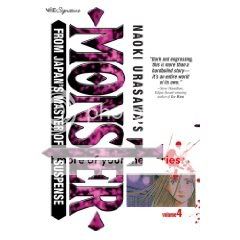
Naoki Urasawa’s Monster Vols. 4-5
Naoki Urasawa, writer/artist
Viz, 2006
200+ pages each
$9.99 each
By now it’s clear that that sore-thumb final chapter of Volume Two, where Tenma briefly brings sunshine into the life of a mercenary and his heretofore damaged adopted daughter, isn’t the exception, but the rule. Monster, it seems, will be not just about Tenma’s game of cat and mouse with Johan, the serial killer whose life he saved, nor even just about that plus the parallel chases of Inspector Lunge as he hunts for Tenma and Johan’s sister Nina as she too hunts for Johan. Instead it’ll be like, I don’t know, The A-Team, where Johan, Lunge, and Nina’s quests will intersect with a variety of conflicted medical professionals, memorably evil criminals, memorably humane ex-criminals, shadowy governmental agents, and so forth in each “episode.” We’ll bounce them off our leading players, an incremental revelation will be proffered to the heroes, an epiphany will be reached by the guest stars, someone will be murdered by Johan or his minions, and the cycle begins anew. A lot of this is Velveeta, but I’m never not racing through it to find out how this ties into the increasingly byzantine and red-herring-laden backstory of Johan, or who’ll get capped and how and why. It helps that Urasawa bothered to situate the story not just in some generic “present day, local location” setting, but in post-Cold War Germany and its medical community; like the realistic backgrounds provided by his studio, the details of reunification, the far-right underground, the role and status of immigrants, the expertise and moral dilemmas of its doctor characters–they all give the story weight, depth, and shading even at its broadest and most black-and-white. It’s getting a little hard to keep track of all the square-headed middle-aged men with pointy noses, however, which is what makes the few character designs that deviate from that norm–the balding, hulking, doughy serial killer Jungers, for example, his eyes whited out by the reflection off his glasses–such a pleasure to encounter. In that same spirit, Monster seems a saga of simplistic structuring shored up by entertainingly complicating wrinkles.
Comics Time: Naoki Urasawa’s Monster Vols. 1-3
February 26, 2010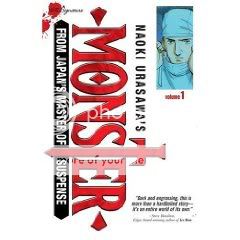
Naoki Urasawa’s Monster Vols. 1-3
Naoki Urasawa, writer/artist
Viz, 2006
208-224 pages each
$9.99 each
[First, a programming note. Because I read so many comics and write so many reviews, I end up reading and reviewing mostly self-contained works rather than long runs. The problem is I’ve been at this for long enough that a majority of the books on my “unread” shelves (plural) are part of big ol’ multi-volume series. Which is exciting! I love plunging into a world for as long as it’ll have me, that’s one of the great pleasures art can provide. But it presents a conundrum for a critic who posts three reviews a week, because on the one hand I’m accustomed to reviewing a complete work, so a big part of me would prefer to complete a series before reviewing it. Moreover, I don’t wanna bury the site in piecemeal reviews of a couple-three volumes at a time, just so no one, me or you, gets bored. On the other hand, I really like holding myself to this schedule, it’s fun and it’s been good for me as a writer and just as a reader too. And there’s probably something to be said for posting more than one review for a given series, tackling earlier and later material from it separately, seeing how both the material and my take on it change over the duration of its run. So for now that’s the direction I’m headed with this particular series, though in the future I may go ahead and stop posting reviews until I get a whole run read. Who knows? Life is a mystery. And so is…]
Naoki Urasawa’s Monster, the series that as best I can tell broke him in America, is a strange beast. You’ve got four distinct, and perhaps competitive, forces at play in these early volumes. Number one is the elevator-pitch concept: Brilliant doctor risks his career to save the life of an orphan, only for the orphan to grow up into a serial killer. Number two is the way that high concept broadens and complicates into a globetrotting (well, Germany-trotting, so far) political-thriller pageturner/potboiler. Number three is the frothy pulpy soapy melodrama of it all, with characters yelling about the sanctity of human life and children in peril and a villain who is repeatedly labeled “pure evil” Michael Meyers-style and geniuses in their fields who throw it all away for the sake of the job and on and on. Number four, maybe the most interesting force at work, is this undercurrent of meaty and specific social issues that weave in and out of the genre business: German reunification and its discontents, being an Asian immigrant in Europe, medical ethics and hospital politics, child abuse (depicted in a shockingly frank fashion at times).
And as I’ve pointed out in the past, Urasawa’s art plays it all totally straight. It’s just pure craft, existing for the sole purpose of getting the story across and over. The people look cartoony, yes–they remind me of Disney house-style people, not in terms of their specific look but in the way they function as vehicles for immediately intelligible ideas and emotions. The clarity they comprise is so…overpowering, I guess is the word, so able to lodge in your brain, that this morning as I was thinking over Footnotes in Gaza again, the people of Rafah appeared to me in Urasawa style, not Joe Sacco style. My point, though, is that apart from their cartooniness and penchant for yelling, which could point toward the pulp melodrama as the dominant thread for the series, the character designs and the art in general really don’t tip their hand as to what you “should” be making of all this. Is it “just” addictive thriller storytelling? Are we meant to take the various waxings philosophical seriously, is the thriller stuff and the in-your-face villainy and the way we’ve met four or five people so good at their jobs that it’s broken up their marriages intended as a palatable container for it? Or is it vice versa? This is what American serialized genre-entertainment fans might call the Lost question (a comparison I’ve made with Urasawa’s stuff before). Frankly, I think that in Monster‘s case the pulpy stuff wins the day hands down–the issue-y stuff is reeeeeeeally broad. But I suppose the point here, in the end, is that if you can read the first volume and not want to read the next 17, you are made of sterner stuff than I.
Comics Time: Batman & Robin #9
February 24, 2010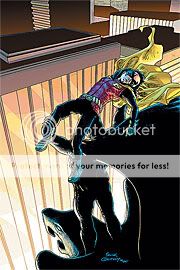
Batman & Robin #9
Grant Morrison, writer
Cameron Stewart, artist
DC, February 2010
24 story pages
$2.99
I’ve been a bit of a broken record on this score lately, but here is another comic I want to physically force the writers and artists of other action-dependent superhero comics to read, eyeballs propped open A Clockwork Orange-style. Consider if you will the care and attention paid to the page on which Batman and Batwoman pound the stuffing out of Zombie Batman. (Okay, first consider that this comic contains a page on which Batman and Batwoman pound the stuffing out of Zombie Batman. Then move on.) Look at the way the fight choreography flows from one panel to the next. It’s not just a series of random cutaways: The pivot you see Batwoman executing in the background as Batman punches Zombie Batman in the jaw of one panel leads into the kick you see her deliver in the foreground as Batman cocks his other fist in the next panel, which leads into the left hook you see him land in the panel after that. Or return to earlier in the issue, where a still-wounded Robin and out-of-his-league Alfred battle the Zombie Batman using the objects (a wireless computer mouse, a wheelchair) and environments (an elevator) available to them, each beat portrayed with crystal-clear visual logic and visceral impact. I could seriously reread that sequence where Zombie Batman gets choked with his own cape as Alfred snags it into the elevator and hits the Up button, until Zombie Batman cuts himself loose with a batarang, over and over again. God how it cleanses the palate of the umpteenth two-page melee spread.
What’s still more delightful about this issue is that Stewart brings these same chops to pretty much everything he draws. Look at the knowing Mona Lisa smile on Batwoman’s face as she tells the romantically interested Dick Grayson not to get his hopes up, sharing an inside joke with those of us beyond the fourth wall. Look at how Batwoman’s father looks like he wandered in from another comic as he pops up in street clothes among a gaggle of costumed crimefighters, emphasizing what a gonzo concept it is to have your dad be your sidekick more clearly than anything I’ve seen in Batwoman’s solo adventures to date. Look at Zombie Batman himself, as much a gift to the toy folks as the Batman of Zur-En-Arrh was and the Batmen of the Timestream are about to be. And I could definitely stand to see the double-punch panel become as much of a trademark element of Batman and friends as using “Bat” as a prefix.
Oh yeah Grant Morrison’s involved too. What I liked best about his work here is usually what I like least about Batman comics: His army of increasingly interchangeable crimefighting tagalongs. The real Batman isn’t even in the comic anymore, of course, so this book features no fewer than nine such characters, if you count Zombie Batman; four of them are direct riffs on Batman himself. But from Papa Batwoman’s military jargon (via a pretty effortless and kind of funny Greg Rucka impression on Morrison’s part) to Knight and Squire’s jocular “keep calm and carry on” comportment to Dick and Batwoman’s born-of-necessity ability to think and act on their feet and in tandem, each one seems not just like a different person, but a whole person, not just a one-dimensional reflection of some aspect of the real Batman that the writer wants to have walk around on its own for a while as these things frequently are.
I hate when people set themselves up against some largely imagined consensus, but I am going to go ahead and say that I do miss the sense of mounting mystery and menace of the Morrison material that culminated R.I.P, which I’m guessing is a minority position among the sorts of folks whose blogs you’re likely to read if you read this one. But Batman & Robin, and this issue perhaps more than all the others so far save #3, is a fine, fun superhero comic, set in the milieu of the only superhero I really love in and of himself. Who couldn’t use one of these now and then?
Comics Time: Doomwar #1
February 22, 2010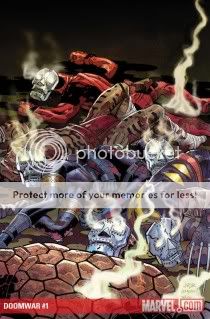
Doomwar #1
Jonathan Maberry, writer
Scot Eaton, artist
Marvel, February 2010
34 story pages
$3.99
This isn’t a review so much as a couple paragraphs about how rad I think Doctor Doom is:
Doctor Doom should be King Shit of Marvel’s Turd Mountain. Seriously, he should be the one bad guy that makes even all the other bad guys go, “Whoa.” He rules his own country, he rivals Doctor Strange on sorcery and Mister Fantastic on science (and ranks with both of ’em on the awesome-name score), he’s up there with Iron Man on the super-armor scale, he’s got a great look, and he’s like crazy arrogant and angry all the time. He’s the ur-villain. What I’ve liked about his recent cameos in books like Captain America: Reborn and Siege: The Cabal is that the other big-deal villains like the Red Skull and Norman Osborn seem to realize all this but still attempt to use Doom for their own ends, because his skills make him too useful and their own megalomania blinds them to the downside of crossing him. That’s about right.
However, it always feels to me like he’s overused in terms of his interactions with heroes. I don’t mind him constantly in sotto voce contact with the other big schemers, that seems like something Marvel’s megalomaniacal mastermind-type villains would always be doing. But when he jumps ugly with the good guys, that to me is the kind of thing you save for an every-few-years jolt, not a constant string of tussles. He’s just too formidable a threat to frequently use without devaluing the brand. Every appearance should be for the ages, and his every interaction with a hero or team should alter their status quo for the long term. (I actually think that’s true of every A-list villain, but I understand the difficulties involved; Doom seems like the kind of character you ought to try really hard to do right regardless.)
Is Doomwar the kind of Doom-based throwdown I’m looking for? It’s too soon to say. Doom himself is just a puppetmaster in this early installment, though his master plan as it’s been described to us by Black Panther siblings T’Challa and Shuri, whom he has dethroned, is suitably pseudoscientifically apocalyptic. Seizing 10,000 tons of Vibranium from Wakanda and using it to unlock god knows what mystical mumbo-jumbo is the kind of thing you’d figure Doom would spend his afternoons planning. Being an ice-cold murderer in support of it, shooting a civilian every few minutes until Storm, the current Queen of Wakanda, acquiesces to his demands–yeah, that’s also something Doom would do in my book. What does he care? He’s a tyrant, let him be tyrannical. I understand that that’s the sort of thing lots of people will just read as “icky,” but villains have been killing people in genre material young people have read for decade upon decade. Saruman’s goons wased a bunch of hobbits for pete’s sake. I’ll live.
What’s interesting about Doomwar is that I didn’t expect it to be so…Brubakerian, I guess is the word for it. It’s “superheroes as black ops” in the Mighty Marvel Manner. Scot Eaton is drawing in that scratchy Marvel house style of the past several years; it’s much more of a piece with Steve Epting and Mike Perkins and Butch Guice than with the jazzy John Romita Jr. covers the book sports, although he shares with JRJR a real knack for drawing bruisers. Colossus, T’Challa, and Doom all look like dudes you wouldn’t want to mess with at all. Meanwhile, the concept could have come straight from one of Ed Brubaker’s Captain America storylines, too, and insofar as it’s about a sinister group that uses an appeal to patriotism to wrest control of a democracy over to a sinister outside force–the plot of Brubaker’s “The Man Who Bought America” arc, with Wakanda instead of America and Doom instead of the Red Skull–that’s basically what it did. It even shares with Brubaker Cap a knack for resonating with current events without referencing them outright: I can’t be the only person who thought of Uganda’s anti-homosexuality legislation when reading the coup leader’s diatribe against mutants and witchcraft and suchlike. In turn, the Black Panthers are presented less as superheroes than as exiled leaders plotting the violent overthrow of the regime that violently overthrew them first. Cyclops and Emma Frost quietly funneling various X-Men to them in hopes of freeing Storm reads like a mutantified version of Charlie Wilson’s War.
I suppose this could all come across as rather dreary and by-the-numbers. And it might be, if not for a few factors. One is the presence of Doom, so far latent rather than actualized, and my lingering hope that he’ll do something totally awesome. Two is Eaton’s literally muscular art–I find I just like looking at it a lot. Three, and most promisingly, is an out-of-left-field ending that short-circuited my every expectation of what the primary business of this series was going to be for the rest of its issues. The way it goes down actually gives me more faith in the future fortunes of the aforementioned Factors One and Two, in fact. Fingers crossed.
Comics Time: Footnotes in Gaza
February 19, 2010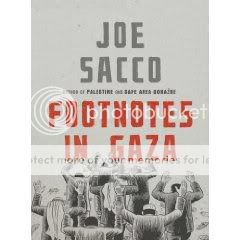
Footnotes in Gaza
Joe Sacco, writer/artist
Metropolitan, December 2009
416 pages
$29.95, hardcover

Journalist Joe Sacco’s latest book is about two massacres of Palestinian civilians by Israeli soldiers in two Gaza Strip camps/towns during the Suez Crisis in 1956. I think there are several things you can point to in it and say “Joe Sacco does that very well.”
The first is what you might refer to optimistically as scale or pessimistically as sprawl. There’s a memorable three-page sequence in the early going tht compares what the Palestinian refugee camps looked like in the mid-’50s, the time of the events the book spends most of its time chronicling, to what they looked like in the mid-’00s, which was when Sacco did the chronicling. On the first splash page, rows of little brick houses with sloping roofs and walled-in yard-like compounds trail off into the distance; a little street crosses the page in the foreground while the rows stop short of the horizon, which is buffered by a strip of wildnerness and then another, barely visible town just at the limit of sight. On the second page, giant apartment buildings jut upward against tiny shacks whose metal roofs are pinned down by bricks, tires, and debris; the roofs and clotheslines and water towers and telephone wires begin right at the bottom of the two-page spread and keep going until the taller buildings literally blot out the vast majority of the horizon, and even chunks of the sky. The message seems clear: Things may have been pretty bad for the impoverished, angry people of Gaza back then; everything is worse now. This is driven home later in the book by a second spread that mimics the set-up of the one that established the look of the camps today: This one show a barbed-wire fence and the ruins of bulldozed homes as far as the eye can see. Sacco is fond of that temporal-juxtaposition device, never more brutally used than when we see a contemporary row of cars parked against a wall on the right-hand side of a spread where dozens of dead bodies had been shown to us against that same wall some fifty years before on the left-hand side. Sometimes Sacco uses his skill with scale not for a landscape or panorama, but for single structures: The IDF towers that oversee the town of Rafah or a nearby checkpoint on the road to Gaza City rear up to the sky like menacing robots, while bulldozed multi-story building where many people once lived dwarfs us with the absence of it that we project against the sky. Other times it’s explosions and chaos that overwhelm us, swirls of stippled smoke and fire obliterating buildings and bodies alike.
The second thing Sacco does well is visual repetition. You see this in that initial page of the mid-century refugee camp and its little block houses, of course. But later, you see it with bodies. Men forced to run pell-mell through the streets of their camp by angry soldiers firing in the air, and sometimes not in the air at all. Often they are all made to strike the same pose, arms in the air to show they are unarmed; the unnatural positioning leads to a criss-cross effect as the men scramble around and past and behind and in front of one another. Sacco will shift to a bird’s eye view here, make skillful use of alternating gray and white clothing there, freeze the men with their backs to us like they’ve been paused in the middle of a Michael Jackson video dance routine here, throw them into a morass of beatings by the Israeli soldiers like a nightmare version of that third, battle-heavy Where’s Waldo? book there. Repetition leads to perhaps the book’s single most striking visual: The men of the town of Rafah, rounded up en masse in a schoolyard, forced to sit on the ground with their hands on their heads for hours at a time. Sacco shows this vista from slightly above and in front, from a three-quarter angle, from behind; the men become a featureless mass of little ovals of fear and discomfort, bleeding and pissing on one another, slightly cracked eggs in a massive carton.
The third thing Sacco does well is conveying a sense of action, or intense activity if you distrust that word’s genre connotations. Sacco’s careening caption boxes alone can get across the sweep of a magnificent view, the interruptions of constant cellphone calls, the chaos of constant violence, the chatter of a party, the march of history, the swell of a crowd, and the dance moves of beautiful women all by themselves–and in the book’s first seven pages, they do all that and more. Elsewhere he uses perspective tricks, like a swoop of flame that makes it look like a burning soldier has literally been propelled toward us. In the chaos of a sudden attack by an Israeli patrol he cross-cuts two different sentences like a giant X across an almost collage-effect collection of panels showing him and his companions as they flee in all directions; you have to read one of them backwards, manga-style. And it’s all but impossible to forget the montage based on the two stick-swinging soldiers seared into the memory of every man in the town as they tee off on hundreds of terrified captives being herded through a narrow gate, or the jump-cut chaos of a black-bordered POV sequence that makes as bold a use of the cut-to-black as anything since a certain HBO TV show.
The fourth thing Sacco does well is portraiture. This book is just as much a Beard Parade (and Mustache Parade, and Grumpy Little Kid Parade, and Wrinkled Old Lady Parade) as R. Crumb’s Book of Genesis Illustrated, and there’s just as much care and attention put into differentiating each from the other. (The exception are the Israeli soldiers in the flashback sequences; they have a uniform build, the shadow of their pith helmets rendering them eyeless and inscrutable. Only the notably monstrous or humane gain individualization.) But even still there are standouts. Take Sacco’s frequent interview subject and companion Khaled: A Palestinian guerrilla marked for death by the IDF and constantly moving from place to place, he nonetheless has a Cheshire Cat serenity in his heavy-lidded face. We frequently see him in repose, including one sequence where he lies immobile in bed, staring directly at the reader as he speaks of his utter exhaustion with his life on the run. The lines with which Sacco crafts his massive forehead, riven with wrinkles like the rungs of a ladder, and his jutting ears, and those preternaturally taciturn eyes, are all about the smoothest you’ll see in the entire book; they make him look like a Dick Tracy villain.
The regional leaders Sacco shows us also have a comic-book or James-Bond heavy vibe to them. Nasser is almost always shown pensively stroking his chin or smoking a cigarette, constantly scheming and planning for the greater glory of the Arab World, by which he means Egypt, by which he means Nasser. Ben-Gurion, with his wild ring of white hair, and Dayan, with his can’t-make-it-up Hollywood pirate eyepatch, point to maps and whisper in ears, goading like composite human versions of the angels and devils who appear on cartoon characters’ shoulders. At one point, the Egyptian and Israeli leaders are shown in the exact same poses as their forces clash; the implication of this mirroring for the Palestinians used as pawns in their schemes to provoke one another into a ruinous war is perfectly clear.
Individual militants can look like bad guys, too. An aged fedayeen telling of his career of raids on Israel-held lands at the behest of the Egyptian military looks for all the world like the standard stereotypical supervillain image of the Ayatollah, while his evident horror at having been made to fight side by side with out-and-out murderers whose “talents” the cynical Egyptians wanted to make use of but then hopefully have put out of commission by Israeli bullets is reflected in the mad eyes and bestial unibrow of one such killer who stares right at the reader with psychotic intensity.
I’m making Sacco’s portraiture seem un-subtle, I know. And in those cases, I suppose it is, to an extent anyway; his level of craft always elevates his Eisnerian-pantomime body language and facial expressions above caricature. But when he really sharpens the knife in this regard, when he puts together a sequence or assembles a moment that plays across a human face like a miniature film, that’s when he’s at his most dangerous and devastating. Right now I have the book open to a page where a three-panel tier at the top shows an old man, again staring straight at us, recalling how little time he had to bury his slain relatives in the first two panels, and then bam, in panel three, his eyes are closed and he’s silently weeping. Below that we see the first-grader self of a woman who’s old now, a look of utter confusion and dismay on her face as she watches the women of her neighborhood writhing on the ground and screaming in grief. Somehow even more frightening to me is a woman whose house is the last one standing on a block constantly being bulldozed by the Israelis as part of their policy of leveling any structure from which any kind of threat has emerged. (Sacco never says it outright, but it appears that saying that this justification is gilding the lily would be the understatement of the decade.) As the woman tells Sacco of her plight–how they’d leave their house since it’s clear the Israelis want no one in this area, but they have no money to move anyplace else; how her daughter has started pissing on herself and just crawling around in terror when the ‘dozers strike–she looks this way and that depending on where she’s standing, but the expression of wide-eyed, slackjawed horror on her face never changes at all.
But there are a pair of sequences even stronger, to me, than those moments. They’re stronger even than the rare times when Sacco makes his feelings on these subjects clear–his disgust at the grotesque, casually genocidal racism of an archival Israeli document about the displaced Palestinians; his disgust at the hypocrisy of Palestinian militants who decry the civilian casualties inflicted by Israeli soldiers even though their weapons allow for deadly precision, but disregard the fact that human explosives who enter a pizzeria or board a bus are the most precisely guided weapons of all; his digust at himself for forcing old, bereaved, desperately poor people to relive the worst day of their lives, then getting mad at them for digressing or getting their facts mixed up. These two strongest segments are sequences in which the immediately identifiable, loving connection of family to family and the unimaginable reality of violence are smashed together with astonishing power. The first is in a flashback from an old woman, picturing herself as the little girl she once was when soldiers entered her home and shot her father to death as she sat next to him. He slumps against the wall in a jacket and striped pajamas and traditional headgear, his head pointing sightlessly downward as if staring at the dark mass of blood staining his stomach; next to him the chubby, curly-haired, barefoot little girl, looking like one of those Campbell’s soup cherubs, looks up at her dead father, her tiny face seeming to crumple into a black hole of utter sadness. The second is another reminiscence by an old woman, recalling how she found her husband in the chaos after the book’s central round-up took place. Two panels show him fleeing for his very life, panicked and paranoid, mouth agape, eyes darting to and fro, a look of raw animal terror on his face–until in the third panel his wife literally catches him as he runs, looking up at him plaintively as he turns toward her mid-stride, the fact that he’s been grabbed by the woman he loves and not by…someone else clearly still not having registered. In that moment I tried to imagine what it would be like for my wife to see that look on my face, the look of all other thought and emotion and sentience out of my eyes, the look of a lifeform’s basic, primordial desire just to survive the next moment.
The fifth thing Sacco does well is convince you–or me at least–that there are no good guys in this world, only bad guys and victims, and that you’re lucky beyond imagining that you’ve never been forced you to find out which of the two you really are.
Comics Time: Green Lantern #43-51
February 17, 2010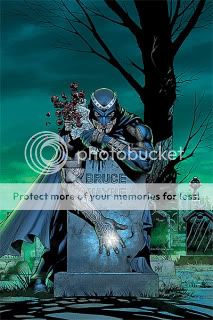
Green Lantern #43-51
Geoff Johns, writer
Doug Mahnke, artist
Ed Benes, artist on issue #47
DC, 2009-2010
22 story pages each except #50 which was longer
$2.99 each
Off the top of my head, here’s the stuff you’ll find in these Blackest Night tie-in issues of the ongoing Green Lantern series: Black Hand, Black Hand becomes the embodiment of the Black Lantern Corps, Martian Manhunter, Abin Sur, Abin Sur’s sister and Sinestro’s girlfriend Arin Sur, Barry Allen, John Stewart and that planet he blew up, John Stewart was part of Black Hawk Down, the Star Sapphires vs. the Sinestro Corps, Sinestro vs. Mongul for control of the Yellow Lanterns, the new Rainbow Lantern team featuring the Flash and Wonder Woman and Lex Luthor and so on, the Spectre, Parallax, Hal Jordan deliberately becoming Parallax again, Parallax getting kidnapped by some force only Hector Hammond is aware of, the Predator escapes from Zamaron, Blue Lanterns vs. Orange Lanterns, Red Lanterns vs. Green Lanterns, all the leaders of the different Corps teaming up, Orange Lantern Lex Luthor figures out that the Black Lantern Corps works the same way that the Orange Lantern “Corps” does, Ganthet becomes a Green Lantern, it looks like the Spectre might be to the Red Lanterns what Parallax is to Yellow and Ion is to Green and Predator is to Violet and Black Hand is to Black but he’s not but there’s a Red entity out there someplace…It’s crazy. The Yellow Lantern Scarecrow gets crucified at one point–in Siege, the weight of that one beat would anchor an entire issue, but in this storyline it’s like half a page.
What you have here, in other words, is supercompressed storytelling as filtered through the sensibilities of someone who really isn’t interested in formal play (unlike Grant Morrison and…uh, um, those other writers who do supercompressed superhero comics besides Grant Morrison, you know the ones) so much as just taking every aspect of the greater Green Lantern mythos and exploring every possible permutation of it in as rapid succession as possible. Having had no brief with Green Lantern before Geoff Johns started writing him, I’m surprised to find myself enjoying this stuff this much, and on this geeky a level. I mean, when I read today’s issue and realized that the Spectre might be the Red Entity, I actually gasped out loud. And I couldn’t care about the Spectre less! It’s just that kind of comic. If you enjoy the world Johns has built from the pieces of Green Lantern he found lying around and started connecting, watching the increasingly elaborate edifice he’s constructing here is a true treat.
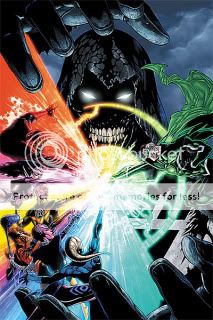 And when you sit and read it all at once, it’s not even incoherent–it’s just like a constant stream of rad shit hitting your eyeballs, and provided you have the kind of brain equipped to file away genre arcana and recall it as necessary, it flows from one thing into the next with the clarity and purpose of a freight train. Artist Doug Mahnke is an indispensable part of why this works. Mahnke rapidly ascended into my half-dozen or so favorite contemporary superhero artists over the course of his past three major projects; his segue from Final Crisis/Superman Beyond to these key Blackest Night tie-ins is arguably the first smooth transition from one project to another that any of DC’s event-comics artists have pulled off. (Seriously, Rags Morales, Phil Jimenez, J.G. Jones, and Carlos Pacheco all disappeared from DC after their star turns.) What makes him such a good fit here is both his proficiency with horror and monster-movie imagery (standout moments include Black Lantern Abin Sur using his ring to create a ravenous horde of giant floating disembodied black skulls, like he’s Stardust the Super-Wizard or something, and the way he paced Parallax’s fight with the Godzilla-sized Black Lantern Spectre to interrupt Orange Lantern Luthor’s tussle with Orange Lantern Larfleeze with the fall of one mighty foot) and the way his thick line, emboldened by inker Christian Alamy, holds the bright colors that the material demands. The funny thing is that the “dudes zapping dudes in all different directions” fight un-choreography I always complain about when I see it in ’90s X-Men books or contemporary Avengers titles is inherent to how these characters operate, but Mahnke’s visual imagination and ability to harness those effects and make them feel consequential rather than full of sound and fury but signifying nothing gets them over as involving battles anyway. This storyline–especially when read divorced from the larger plot points of Blackest Night with which it intertwines–is one of the great gonzo thrills provided by genre comics right now.
Comics Time: GoGo Monster
February 15, 2010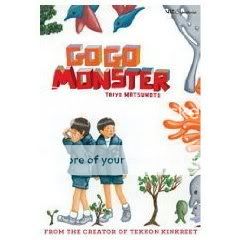
GoGo Monster
Taiyo Matsumoto, writer/artist
Viz, December 2009
464 pages, hardcover/slipcase
$27.99

It may only be the fact that Brian Chippendale just wrote about Taiyo Matsumoto yesterday, but I’d say GoGo Monster is every bit the exercise in creating a believable, cohesive, living environment that is Ninja or Multiforce or The Squirrel Machine. In fact I’d say that despite appearances to the contrary, this is truer of GoGo Monster than of Matsumoto’s Tekkon Kinkreet. TK‘s Treasure Town gives Matsumoto a far more obvious world-building workout, but ultimately its semi-dystopian near-future science-fiction metropolis can coast on our foreknowledge of such fictional environments and the narrative function they fulfill. GoGo Monster‘s run-of-the-mill elementary school can tap into our actual real-world memories of such places, certainly, but its place in a fictional narrative is comparatively undefined. Nor can it rely on the riot-of-detail school of art to accrue physical presence through a prolificacy of constituent visual parts as can those books–it’s not some fantastical land, it’s a grade school, and moreover that’s not the style Matsumoto is employing here. So to convey the kind of place Asahi Elementary School is–or at least the kind of place it is for our main characters–Matsumoto works overtime.
And he starts right away: Before we even get past the endpapers, deep-focus drawings reveal cavernous institutional hallways and vertiginous stairways, while POV close-ups of other characters reveal preoccupied teachers (that recurring pull-back-the-hair gesture!) and hostile, slightly distorted children, their speech not tied to them in the traditional word-balloon fashion, so as to suggest their fundamental disconnect from our hero. They’re not actors so much as elements, and their primary influence throughout the rest of the book is as a generator of sound effects just like wind or rain, as their near-constant disembodied chatter unfeelingly surrounds and buffets the protagonists.
Our real introduction to the school setting comes in the form of a hand-drawn map created by our main character, Yuki. It’s diagrammed out like a superhero’s headquarters, with all the funneling of wild imagination into cold orderly lines that that suggests. At the edges, menace creeps in, in the form of monstrous doodles that blackly snap at the border and proliferate in the school’s abandoned fourth floor. That level of the building takes on a central metaphorical role, demonstrating that this school exists independent from and indifferent to the hopes and fears of the child now inhabiting it.
Similar signifiers abound. Planes fly low overhead, their departure and destination unknown. A rabbit run is the only world its furry inhabitants ever know, and one of them disappears without any of its fellows or minders able to say how or to where. I have no idea if “perspective” has the dual meaning in Japanese that it does in English, but Matsumoto frequently skews and warps it so that the school leans in on its inhabitants. One pivotal character literally sees the world from inside a cardboard box. Most importantly, except for one key sequence I won’t spoil here, our heroes never leave the school grounds, and on the one occasion that parents visit, they are viewed only from a distance.
In short (haha, yeah), Asahi Elementary is the world for Yuki, who is either psychically sensitive or psychologically impaired, and Makoto, the new kid at school who befriends Yuki out of what seems more like a fascinated respect for his indifference to his peers than any kind of Heavenly Creatures-style shared psychosis, and for IQ, the eccentric-genius older kid who says he’s no more capable of taking a test without wearing his customary cardboard box than a normal person would be if forced to wear one. Their problems are solely their own and completely inescapable. If they don’t solve them, they won’t be solved.
Which makes GoGo Monster a harrowing read, in spite of the great beauty of the art. Indeed, the beauty makes the book feel like a tragedy in the making at every step. Whether they’re the product of a genuine gift or profound mental illness, Yuki’s increasingly troubling visions of a world beyond this one and the sinister Others who inhabit it can only bode poorly for him; either way, they will consume him, because in this insular world, there is no authority to which he has recourse to protect him. Yet at the same time he clings to these visions precisely because of the insularity of this world, and what it has shown him about the gray soullessness of grown-ups and their inability to connect with kids like him in any meaningful way. Only Ganz the groundskeeper and gardener understand Yuki’s plight from the adult world, but that understanding comes hand in hand with the conviction that it is in fact Yuki’s plight; Ganz tends him like a flower, but (hey, the metaphor is Matsumoto’s not mine) Yuki must blossom or wilt on his own.
In turn, Makoto and IQ are stand-ins for our own reaction to Yuki. Makoto is agnostic as to the veracity of Yuki’s visions; all he knows is that he’d prefer Yuki not have them, or at least not talk about them, because they’re frightening and they obscure the confident, funny, fascinating Yuki he otherwise knows. IQ is an atheist about them–he knows they’re all in Yuki’s head, the manifestation of various psychological complexes. But he offers this diagnosis while wearing a cardboard box on his head with an eyehole cut out, and eventually we learn this is the least of his own problems. Knowing what’s real is no help when what’s real appears to come crashing down.
In the book’s climax, that’s precisely what happens. We’re really no closer to understanding what’s really happening, though the nods in the direction of magic realism are as pronounced as, say, the end of Being There or Barton Fink. And we can only partially puzzle out the fate of a third of our trio, though sitting here after the fact I have my strong suspicion. No, Matsumoto is content to plunge characters and reader alike into a prolonged sequence of abstracted imagery, page after page that eventually becomes almost entirely obscured by darkness (which is itself depicted in just about the most fascinating way I’ve ever seen a comic do). What, if anything, emerges from the other side? Again, I’m not spoiling it here. But the journey through is a fine, emotionally accurate, uncompromising vision of the terrors of childhood. See, whether we are experiencing mental illness or actual spiritual evil here is a matter of debate–it works either way–but it definitely works as the realization that whatever meaning, safety, sanity, and comfort you can carve out of the unfeeling world, you have to carve it out yourself.
Comics Time: The Death of Superman
February 12, 2010
The Death of Superman
Dan Jurgens, Jerry Ordway, Louise Simonson, Roger Stern, writers
John Bogdanove, Tom Grummett, Jackson Guice, Dan Jurgens, Brett Breeding, Rick Burchett, Doug Hazlewood, Dennis Janke, Denis Rodier, artists
DC, 1993
168 pages
$9.99

Nostalgia is an occupational hazard for comics readers. Even as I write this, there’s a part of me that wonders how much of what I’m about to say is colored by the mere fact that I first read this material not as a 31-year-old, but as a 14-year-old, with a 14-year-old’s understanding of the industry and artform of comics. But honestly? I’m thinking “not much,” because the 31-year-old likes this comic a lot more than the 14-year-old did.
For example, back then I was deeply unimpressed by the motley crew of losers who made up the Justice League at the time, and who were really the stars of the show in the initial issues of this storyline. They’re a parade of weak designs and goofy powers, from Guy Gardner’s bowl haircut and leather jacket to Blue Beetle’s beetle-shaped spaceship Booster Gold’s superpowered spandex outfit to a character named Fire who is inexplicably green, not, you know, fire-colored. At least Ice looks icy. There’s some B-plot mystery involving a ’90s-tastic goofball named Bloodwynd (look at that ‘y’!) whose word balloons drip blood, there’s a woman warrior named Maxima who is to other, better superheroines like Wonder Woman and Phoenix what one of those cheapo greatest-hits collections you can get in a five-dollar bin at the grocery store is to the overall recording career of Johnny Cash…Man, do these guys suck.
Superman himself fared little better with me. I mean, he’s Superman, he has that going for him, which is nice. But what a square, boring world he inhabited at the time! The first issue collected here sees him face off against a bunch of underground monsters who talk like Cookie Monster and present just about as much of a convincing threat. There’s the usual horrible street-dialect comics writers of yore subjected any blue-collar character to–you know, “ta” instead of “to” and a lot of “in'”s instead of “ings.” Gross. Finally, Superman’s big character moment before the action starts is a TV interview in which they reveal a hidden power of his: The ability to avoid saying anything remotely interesting. He offers a politician’s focus-group-tested, studiously bland and inoffensive answers to questions about his role as the obviously most awesome guy in the Justice League, his recent fight with asshole Guy Gardner, the fact that Maxima looks and dresses like a swimsuit model, and so on. If the writers had set out to make him unappealing to teenagers, they couldn’t have done a better job.
And ultimately, 14-year-old me ended up sharing much of the conventional fan wisdom about Superman’s beating death at the hands of the monstrous new enemy Doomsday. Doomsday wasn’t a character, he was a plot device, created for the sole purpose of killing a character who basically couldn’t be killed. (DC would repeat this trick later with Bane and Batman, introducing a huge dude to beat the unbeatable hero.) Lex Luthor got gypped. It wasn’t a story, it was a mere slugfest, not the Shakesperean tragedy that would befit such a momentous occasion. Though I hadn’t read any of them other than The Dark Knight Returns, I was aware of the medium’s artistic masterpieces, such as Watchmen, Crisis on Infinite Earths, and Camelot 3000–did not Superman deserve a send-off of their caliber? Finally, by the time the hype died down, Superman came back to life with long hair (remember, no one used the m-word back then), and it became apparent that my multiple unopened polybagged copies of the actual death issue weren’t going to be putting me through college, I just plain felt ripped off. Instead of six copies of the Death of Superman comic, I wished I bought just one of that awesome Death of Superman t-shirt.
That last part I still agree with. The rest? Oh, to be that young and naive again! Because I’ll tell you what–I wish we could get an event comic as rollickingly entertaining as The Death of Superman today.
Viewed with some distance, read in the comfort of my marital bed rather than my parents’ basement, stacked up against the many many many many comics I’ve read since then, I find that most of my teenage complaints are flipped on their head. Okay, so the dialogue stinks, there’s really no bones to be made about that. (Seriously, people give Bendis a hard time over his tics, I know, but superhero comics have truly seen a quantum leap in the craft of creating believable, entertaining human speech.) But take that crappy Justice League (please!): It’s their very crappiness that makes the book so entertaining in its early going, when the action consists of nothing more or less than Doomsday pounding them into unconsciousness over and over again. If I recall correctly, Doomsday’s rampage effectively ended this era of the team, a consummation devoutly to be wished. It’s a perfect blending of an in-story plot with a meta need, i.e. to lose these losers. I could read page after page of Blue Beetle lying prone on a pile of rubble begging for help or Maxima getting tossed around like a sack of potatoes and never ever get tired of it.
And page after page of people getting the stuffing knocked out of them is exactly what you get, which leads to my next point: An action-comics event consisting almost entirely of action is a great idea, but as we’ve recently learned, it can be difficult to convincingly pull off if all you do is have big spreads with dudes shooting lasers in all directions in the middle of nowhere, punctuated by approximately one memorable action beat per issue. In The Death of Superman, laser blasts are kept to a minimum, and when they’re fired, they’re all pointed in one direction at one guy: Doomsday, who just stands there and takes it. Most of the rest of the action is fisticuffs, a pure slobberknocker. Doomsday has a simple goal: Keep moving and keep destroying. Superman and friends have a goal that’s just as simple: Stop him. In that basic set-up we have a sense of directionality, a readily understandable concept of what victory or defeat for either side looks like, and a simple way to root the combat in the immediate physical presence of the combatants.
I’m also now struck by how smartly staged the action can get. Doomsday’s less a villain than your basic rampaging monster, and thus the creative team sets him loose in time-tested rampaging-monster fashion, having him smash his way through everyday environments like a highway, a Wal-Mart, a suburban neighborhood. You picture something like this happening near where you live and quickly get a sense of how friggin’ cool it would look. In addition, Doomsday’s always moving, which gives the fight a propulsive momentum, but when he does get bogged down for a time by Superman or the Justice Losers, the creators make skillful use of that particular place–in the suburbs, a single mother bickers with her teenage son until Doomsday lobs a knocked-out superheroine through their kitchen window and eventually lights the whole house on fire; near the headquarters of the Jack Kirby-created Cadmus Labs, Superman and Doomsday fight in a giant technoorganic Ewok village whose treelike structures they bring clattering down like Lincoln logs; the final stage of the fight is just a bareknuckle brawl in the middle of the street outside the Daily Planet, which location they quickly reduce to a slag heap. In each case, you get a sense of where you are and what’s happening to it. Action has consequences.
Doomsday himself, moreover, is a great design. In the comic, he starts out in an all-over green jumpsuit and mask, festooned with looping binders, that obscures his bony spikes and monstrous face. He looks like a square-bodied Kirby creation run amok. But as the fight progresses, his outfit is torn away, revealing the very ’90s everything-more-awesome-than-everything-else spikes and claws and so on we’ve come to know. One of those allegorical Kurt Busiek/Alex Ross/Brent Anderson Astro City character designs couldn’t have done it better. Superman’s thoughts throughout the fight are a stand-in for our own: a dawning realization that yeah, this guy could succeed where everyone else failed.
In the end, that success (albeit pyrrhic–Doomsday “dies” too) comes suddenly. The final four issues of the story famously “counted down” from four panels per page to three to two, until in the climactic issue the story is told entirely through splash pages. What’s exciting about this to me now is that it’s hard to imagine a comic doing that today, simply because splash pages aren’t storytelling devices, they’re pin-ups and future original art sales revenue. But the Jurgens/Breeding team actually does things with those one-panel-per-page images other than “here, look at this awesome pose!” They awkwardly shift Superman’s body around: For every shot in which he’s flying menacingly at the viewer, there are several more where he’s being hurled into a helicopter, or where he slams into his opponent upside-down, or where he’s driven by his feet headfirst into the concrete. The angle shifts dramatically as well, and the bold transitions–from a worm’s-eye-view behind Doomsday’s legs to a medium shot of Doomsday from the front getting punched in the back to a ten-feet-overhead view looking straight down at Superman as he heat-visions Doomsday into the side of a building, for example–create an unpredictable, gripping flow. On the page in which the two fighters ready what will be their final blows, there are no grand gestures or profound interior monologues; the last thing Superman thinks before receiving a mortal injury is just “I’ve got to put this guy away while I still can!” (“This guy”!) Yeah, it’s a little awkward that the tableaux of grief with which we are presented are Ma and Pa Kent, Lois Lane and Jimmy Olsen, and…Bloodwynd and Ice, but the melodrama of that final image–Lois crying to the heavens with her hands twisted into tense claws, Superman lying stretched-out and slack-jawed in the rubble, his tattered cape fluttering off of some nearby rebar like a flag, Jimmy snapping one last photo (from the rear, but I assume he got the angle right eventually)–is a miniature model of body language, jagged edges, and superhero spectacle. And hey, lookit that–that’s not a bad way to describe the whole book.
Comics Time: Monkey & Spoon
February 10, 2010
Monkey & Spoon
Simone Lia, writer/artist
AdHouse, 2004
pages
$9.95

What a pleasant book this is! I’ve loved it for a long time. It’s nothing more or less than a little scene about a husband-and-wife sock monkey and a doll made from a spoon who fight and then make up, but the specifics are just nailed. The book begins with a long wordless stretch as the couple fix a meal, with pointed silences and angry glances galore. When they finally start talking, each word is freighted with a day’s worth of frustrations and perceived slights, and every choice of phrase is belabored until it loses all meaning other than “WE’RE FIGHTING”: “This is pathetic ” “Pathetic? Is that what you think when I say something? It’s pathetic?” “I didn’t say that. You’re twisting my words.” Lia really gets the timing of how people talk when they’re arguing, too–I particularly loved how the monkey jumped on the spoon’s first soft-spoken statement with an all-caps “PARDON?” But soon enough a crisis intervenes, and the two instantly drop their hostile facades to attend to one another’s more pressing needs; once those have passed, they both remain in a safe enough emotional space to apologize for their bad acts and reach out to one another again. In my experience that’s how fights with the person you love work: Things can get as nasty as you’d expect when you’ve got a whole life together from which to draw your ammo, but it’s ultimately that life together that matters, and usually some part of you is just waiting an excuse to deactivate your offensive weapons and reconnect. Lia’s twee-crude line and character designs prove surprisingly resilient and effective in communicating such finely observed points, and providing big grin-provoking physical beats in the process. This book has a goal and meets it with precision and panache. Here’s your Valentine’s Day gift, Amazon Prime members.
Comics Time: The Book of Genesis Illustrated
February 8, 2010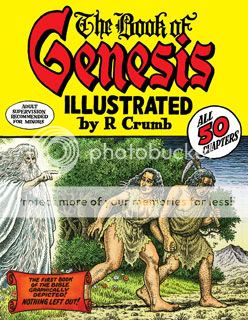
The Book of Genesis Illustrated
R. Crumb, writer-artist
Adapted from Genesis: Translation and Commentary and The Five Books of Moses by Robert Alter
W.W. Norton, 2009
224 pages, hardcover
$24.95

Captivating, illuminating, at times laugh-out-loud funny, and almost belief-beggaringly gorgeous, R. Crumb’s ambitious adaptation of the Bible’s first and foundational book hit pretty much every note I wanted to hear from such a project.
For starters, as a showcase of Crumb’s drawing chops–masterful even in his old(er) age–it’s tough to top. I’m aware of the criticism that it could have been subtitled Beards on Parade, and I reject that criticism, or rather I invert it: the beard parades were among the best parts! And they’re perhaps the most emblematic sections of the entire book, in that they boil Crumb’s project down to its essence. Genesis’ long multigenerational tale of the patriarchs of the Israelites and their large extended families necessarily includes a lot of hirsute dudes in Cecil B. DeMillian garb, and at times even substitutes litanies of their names for any actual story or plot. So what you get during the long lists of sons or what the back cover jocularly refers to as “The ‘Begots'” is a bit like folding one of Crumb’s sketchbooks into a comic. As the generations rattle by, Crumb draws scene after one-panel scene depicting some family activity at random: A mother nurses and laughs as her other son runs past playing; another mother breaks up a fight between two kids; people dance and drink at a party. At other times he’ll simply insert postage-stamp panel portraits of each person, inventing them out of whole cloth, and the act of reading becomes a master class in how many variations of the human face can be captured by one artist. In each case, through Crumb’s attention to detail, mastery of crosshatching and stippling, and rock-solid carved-from-clay character construction, an entire life, and the world that surronds it, is suggested in the space of a panel.
And that’s pretty much what made the whole book so very appealing to me–another litany, that of the keenly observed and impeccably depicted moments that take the musty, revised, translated, censored, edited, politically motivated, at times inspired, frequently batshit bizarre text of the world’s most important religious document and make it something fun to read. Gimli-like Abraham, never looking his (not-firstborn, not only!) son Isaac in the eye as he leads the lad to the slaughter. The denizens of Sodom, portrayed not as a bunch of mincing homos, but rather as a predatory pack of grinning good-time assholes. The destruction of Sodom and Gomorrah, portrayed in a stand-out layout of three widescreen panels that arrange contorted bodies and black and white spaces in a manner suggestive of an un-abstract David B. The close-up on Lot’s face as he begs God to let him hide out in a nearby town rather than force him to take a dangerous journey even further away from the soon-to-be-destroyed cities, his wild eyes matching the desperation in his repeated assertion that “it’s such a little place!” The moving, teary-eyed embraces during the rapprochements of sundered brothers Jacob & Esau (a development I’d entirely forgotten about) and, later, Joseph & his eleven brothers. Esau dancing up a storm. The random brutality with which Crumb depicts “the wickedness of the human creature” that inspired God to flood the Earth. Shem, Ham, and Japheth drawn as Shemp, Larry, and Moe. The hoary cliche of God as a white-robed, white-bearded, white-haired old man put to graphic use as his flowing locks and whiskers become an elemental thing, echoing the radiance of the sun or the force of the rain and wind. The easy physical intimacy of Adam & Eve and Isaac & Rebekah romping, or Isaac & Rebekah cuddling on their wedding night. The sexiness of Tamar dressing up as a temple harlot, or Rachel presenting her handmaid Bilhah to Jacob, or “that scene” with Onan and Tamar. Reinforcing Joseph’s ruse that he doesn’t recognize his brothers by presenting his speech to them in hieroglyphics and then using a translator to relate them. The “do what now?” looks in the eyes of everyone who must get circumsized. The shocked sideways glance Eve shoots Adam as he throws her under the bus. The serpent as an anthropomorphized He-Man villain, until God curses him to crawl on his belly.
I am not a believer, and thus I appreciated the rough edges of the original text that a project like this brings out–the repeated pimping out of people’s wives to save their own skin; the polygamy and incest (Where’s your traditional marriage now, Moses?); God’s nutso caprice throughout the entire enterprise; the frequent brutality and deception employed by God’s chosen ones; the complete absence of monotheism as a concept, complete with gods mating with human and producing superhero hybrids; and so on. So if you’re the kind of person who insists that a comic of this nature must reveal the pure-dee lunacy of using these stories as the basis for the self-developed narrative of mainstream Western religious tradition, let alone as a basis for a moral code, let alone as the literal history of the world that way way way too people mentally carry with them when they enter the voting booth, you’ll make out fine.
But at the same time, the material is treated dead-on and respectfully, like “a straight illustration job” as Crumb puts it in his introduction. No cheap shots, no ironic image/text juxtapositions, no playing up the ugliness or contradictions. Rather you have a sympathetic treatment of these characters as people. Reading it, I got a taste of the solace evangelicals draw from these stories, and the entire cottage industry of “see, the people of the Bible are just like you!” sermons and books and so on that draw on them, if only to fit everything into a “so just believe in the God of the Trinity Broadcasting Network and everything’s fine” mold after the fact. That part’s absent, and instead you have a lively, living look at ancient stories that still retain their power to surprise, delight, enrage, and entertain. It’s a hugely successful comic.
Comics Time: Mercury
February 5, 2010
Mercury
Hope Larson, writer/artist
Atheneum, 2010
240 pages
$9.99

Hmm.
Okay, first of all, can we talk about what a lovely package you’re getting for $9.99? That cover is a killer, and Larson’s luminous line does nothing if not radiate “look at how beautiful this comic you’re reading is!” with every glance. Her blacks shimmer and shine, and her characters’ eyes glow like Influence in an old Chester Gould Dick Tracy. Seeing her art employed in a tale of familial and romantic teen angst up North gives the impression of a Craig Thompson with control instead of ecstasy as the key ingredient. For a measly $9.99, a price point even many tankubon volumes appear to have abandoned by now, the tween and teen girls who are Mercury‘s target will be getting a lot of art-object bang for the buck.
As for the story, I’ll be honest: Going into this thing, I was ready to be at a loss coming out of it. I have zero experience with YA fiction for girls, and very little with YA fiction for boys, even when I was a YA myself; there’s a degree of critic-proofing that that genre and that demographic lacquers on to any project. I was prepared to come away saying “Well, I see what’s going on here, and I’m guess it will/won’t work for its audience, but ultimately it’s not for me.” The critical white flag in other words.
And sure enough, there’s some YA stuff that fell a little flat for this less-than-YA. The period setting and attendant slightly stiffened dialogue, for example, are an obstacle that the earlier of the book’s two parallel plotlines have to work hard to overcome. I’m just not a bonnet-book guy, and unless you’re in a village that could potentially get raided by orcs, I don’t want to hear about how you have to finish your chores before Father returns from the market. To be less fatuous about it, I often find myself wishing that period fiction could just lose the dated dialect and have the characters speak like people today would, eschewing anachronisms but otherwise talking normally. I suppose you could always be a David Milch-level genius and devise, y’know, the best period speech ever, but barring that I feel like more is lost than gained with the distancing effect of the more formal speech–though to be fair, that’s often part and parcel of the stricter social codes that end up playing a huge part in the story, so perhaps that’s unfair. Meanwhile, the high-school setting of the contemporary half of the book is strangely sexless for a relationship-focused narrative; it’s funny to think of these characters as being in the same age group as the gang from Black Hole. A librarian who’d run screaming from The Diary of a Teenage Girl is going to have no trouble putting Mercury on the shelf, and that’s a sensible decision–and one for which Larson compensates with lots of finely observed detail regarding how teenage emotion can imbue everything from sleepover movie-watching to a pizza lunch with strange melancholy power. But it’s also not really the high school experience I remember. In books that deal in emotional truths, that’s a shortcoming, no matter how justified the sanitization might be.
But! No white flag here, no shrug of the shoulders and mumbling of “Eh, not my thing, but I bet your niece will like it, maybe.” Taken on the same terms as any other comic, Mercury is still an idiosyncratic, ultimately gutsy read. The kicker is the period story, about an itinerant prospector who finds gold on a farmer’s property and makes time with his teenaged daughter Josey while he helps the dad mine it. After a long rollout that has you suspecting the potential for heartbreak but not necessarily expecting it, takes a sudden and viciously sharp turn for the tragic, even the horrific. Thinking about its denouement now, I’m suddenly reminded of a sequence in, of all things, Louis Riel, that’s how severe Larson is willing to get here. But what ruins the lives of the characters in the past sets up a much better life for the characters in the present, specifically Josey’s teenaged descendent Tara, left with her aunt and uncle and trying to find her way among the public-school kids her single mother took her away from for homeschooling when a nasty divorce screwed her up. I won’t get into exactly how, but Tara’s happy ending, thoughtfully only teased rather than spelled out, is a direct result of the terrible misfortune that befalls Josey. I suppose you could read some sort of pat “circle of life, sunrise sunset, strikes and gutters, ups and downs” kind of message into that, but I saw it as a tougher, more bracing idea: that actions have consequences that reverberate down the line for decades, even centuries, enough to change entire lives. For an age group that tends to see everything, except perhaps the SATs, as somehow both all-encompassing and utterly in-the-moment, confronting the idea of legacies, unexpected ones at that, is stinging stuff.
But riding shotgun is the notion that in a world that works like that, you should take your happiness where you can get it. That’s what Tara does over and over: she forces herself to overcome her jitters and befriend the cute boy she meets, she hunts for the things that will improve her life, and–she has no way of knowing this, but of course Larson definitely does–she doesn’t allow the tragic legacy of her forebears to prevent her happy ending. None of this is handed to you with neat parallels or telegraphed transitions, by the way: I’m still teasing it out, and I’m glad that’s what I have to do.