“It became clear to me after our second introduction that Robert Mallory was like a virus, a new kind of insidious, invading agent who was here to destroy the very cellular structure of my friends, my school, and me. He was up to something, and it was up to me to find out exactly what it was.” Herein, I believe, lies the secret of exactly how seriously you’re meant to take FX‘s The Shards. Feel how you will about Ryan Murphy and Bret Easton Ellis, the provocateurs who adapted the series from Ellis’s novel of the same name — itself a work of autofiction, juxtaposing details from Ellis’s real childhood with pure invention — but they understand how this sounds.
These are the words of a teenager, Bret Easton Ellis’s fictional avatar in fact, declaring that another teenager is a virus out to destroy everything, And Only I Can Stop Him. It’s superhero dialogue, coming from the mouth of a kid who looks like Peter Parker, but enjoys luxury living like Jordan Belfort…or Patrick Bateman. And why has he decided that this newcomer to his clique is pure evil? Because the guy fibbed about, or just plain forgot, seeing Bret for five seconds at an opening-day screening of The Shining half a year earlier. The monster!
It’s funny on purpose, is what I’m saying. If you want to appreciate The Shards, you’ll have to get on that level.
Airing back to back with “Part 3,” this episode rounds out the Vegas storyline somewhat, showing us exactly who Dougie is and what the hell Cooper is going to do in his shoes. What it really does is establish that apparently nobody is going to much notice that the Dougie Jones they know has been replaced with a doddering simpleton who can only repeat snippets of things people say to him and has forgotten how to do all basic tasks, from getting out of a car to urinating.
Maybe that will change, and more people like Bill Shaker’s wife will come along. Maybe Lynch and Frost are making a point about how for certain guys, things kind of just always align in their favor. Maybe it’s just funnier that way.
Regardless, it’s one of the most audacious things this show has ever done — as big a departure from the original in its way as purple oceans and cannibalistic entities mutilating nude people. If you don’t want Twin Peaks at its Dougie Jones, you don’t deserve it at its Dale Cooper or its doppelganger. To paraphrase another great TV show, they’re building something here, and all the pieces matter.
Before I start an episode of Apple TV‘s Cape Fear, I crank up the volume on my soundbar. I want that Bernard Herrmann/Elmer Bernstein/Jeff Russo score to hit like the fist of an angry god. I turn off every light, because I want the ruddy flesh tones and blue-green eyes of these sweat-soaked lunatics to pop off the screen. I turn off the air conditioning, partially because I don’t want to the show to compete with the white noise but partially because if it gets hot while I watch it, well, that feels appropriate. To properly enjoy Cape Fear, you have to give yourself over to it completely.
Boy, does that approach pay dividends here. Titled “The Executioners” after the John D. MacDonald novel that started it all, this season finale plays more like the finale of a fireworks show, with one spectacular scene and set piece after another until the ominously understated conclusion. It’s a sensory experience, a parade of lurid sights and bombastic sounds best represented by a single shot: Max Cady, standing on the roof of the Bowdens’ house in the middle of a hurricane, as the theme song blares. I was grinning from ear to ear. A moment like that is why you make this show — a masterpiece of modern TV horror.
This journey beyond the infinite deserves, frankly, a round of applause. Coop’s journey is not without precedent: Without straying far from mainstream nerd culture, it’s reminiscent of David Bowman’s travels past Jupiter in 2001, the concept of the Source Wall from Jack Kirby’s Fourth World comics, or the ritual of Chüd in Stephen King’s novel It. Even so, it looks and feels wholly unique. Mark Frost and David Lynch are combining horror, fantasy, science fiction, surrealism, and experimental filmmaking with gobsmacking results — the kind of episode that leaves you either knocked back on your couch or excitedly pacing around the room, recalling favorite moments and spinning elaborate theories. My notes read “THERE’S SIMPLY NEVER BEEN ANYTHING LIKE THIS ON TELEVISION.”
Suddenly I wonder if the tables will be turned in the finale. In previous iterations of the story, Max Cady assaults the Bowden family at Cape Fear. But Tom is in prison, Natalie is with Noa, and Zack is who knows where, possibly in Max’s trunk but most likely not given the timing. That leaves Anna alone with Max, Crystal, Robert, Luke, and mama Hester (Jill Larson). (Granted, she’s busy breastfeeding dolls she believes to be Crystal, but she’s still out there.) Will the finale, which I fully expect to be batshit insane, feature Anna as a one-woman army, an unstoppable force destroying the Cady family before it destroys hers?
Rolin Jones’s Interview with the Vampire was always good, but during Season 2 something extraordinary happened. It just got better and better from episode to episode until the finale, which was the best episode the show had ever aired. And they say lightning doesn’t strike twice! Moving, disturbing, disgusting, hilarious, and harrowing, this final episode of The Vampire Lestat’s first season is the best episode in the whole show’s history.
This is true even though it succumbs to that otherwise woeful trend of shows building and building to an explosively violent climax that never arrives. Shōgun Season 1, House of the Dragon Season 2, and Fallout Season 2 were all good-to-great, yet they all dry-dicked us when it came to bloodshed, if you’ll pardon the Daniel Molloy–level vulgarity.
This episode overcomes that deficit through its sheer richness. “Silver threads,” Lestat says dreamily as he (apparently) looks directly into Heaven at one point. “Silver threads stretched out over other threads.” That’s how the writing on this show feels. Hannah Moscovitch’s script is a tapestry of different tones, styles, genres, emotions, sensations, all of it so wittily worded, so diamond sharp that Oscar Wilde could use it to file his nails. Director Alan Taylor, the major Sopranos and Game of Thrones director, returns to the chair for the first time since IWTV’s phenomenal series premiere, and lays out a real feast for the eyes as well as the ears.
I reviewed the season finale of The Vampire Lestat for Pop Heist. I just wanna be clear that as a horror person, a glam rock person, a musical theater person, a goth, and a TV critic, this show had a very high bar to clear with me, and it soared over that thing straight into the
I’ll say right here that Kyle MacLachlan is simply magnificent in this role, terrifying and wholly unique in his malevolence. The doppelganger looks as if all the light inside a normal human has been completely emptied out and replaced with tar. He sounds unbearable when he’s pretending to be happy and uncanny when he actually is. He’s pure darkness. I’m a big fan of Jamey Sheridan’s work in Mick Garris’s 1994 adaptation of The Stand, but if you said that MacLachlan’s Nega-Cooper is the best portrayal of Stephen King’s infernal archvillain Randall Flagg, I wouldn’t argue with you. He is the Dark Man, the Walkin Dude, the Hardcase, the Man with No Face.
I can picture it now. A mausoleum somewhere in Savannah, holding four corpses. HERE LIE THE BOWDENS, reads the legend above the entrance to their crypt, below which is printed a single explanatory sentence for their collective demise: “IT SEEMED LIKE A GOOD IDEA AT THE TIME.” Over and over, Anna, Tom, and Natalie — Zack is in a mental institution recovering from his brainwashing — do what feels right in the moment, only for it to come back to haunt them in the most horrifying way possible.
But more importantly, we learn exactly how Claudia feels about “Daddy Lou”: She hates his goddamn guts. Sometimes inhabiting Merrick, sometimes appearing directly before them, Claudia says she hates Louis more than anyone she’s ever known.
Photo: AMC
She mocks his self-pity, saying she only chose him over Lestat because he’s a natural-born “slave” who’d be easier to manipulate and then discard. Even worse, she reveals she’s had no rest in the afterlife, searching the void for her beloved Madeleine, who is nowhere to be found. “STOP SAYING MY NAME!” she screams, and departs. At last, Claudia has been given a voice of her own, and actor Delainey Hayles uses it for all it’s worth.
Or is it Claudia’s voice? Again, everything we’re hearing and seeing this season is being mediated through Lestat, just as Interview with the Vampire was through Louis. It’s possible that the needier, more damaged Louis, the creepier Armand, the more vindictive Daniel, and the Claudia who hates Louis more than her maker and kinda sorta murderer Lestat are closer to reality than the ones we saw through Louis’s eyes. It’s possible we got Spirit Claudia as-is, with no editorializing by Lestat. It’s just as possible that we didn’t.
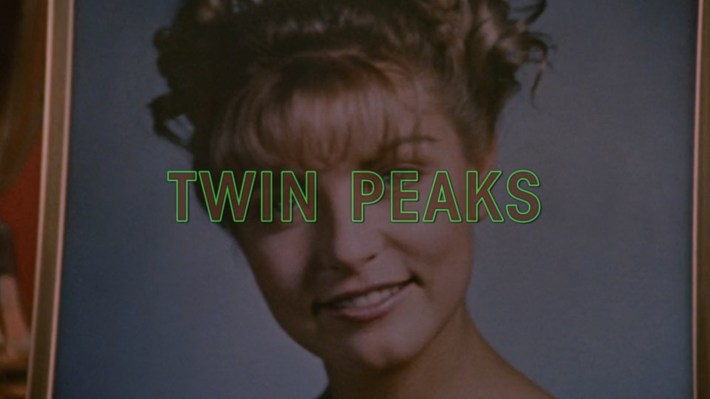
The differences are established right away. The opening title sequence, with its familiar sight of a chirping bird and whirring saws, is gone. After woozy shots of the black-and-white floor and the red curtains, there’s a cold-open flashback set in the Black Lodge, with Laura Palmer telling Dale Cooper she’d see him again in 25 years. We fade to mist over the pines, then to the walls of Twin Peak High School, where the screaming girl runs through the courtyard as she did in the pilot, in slow motion. The camera pushes in to the trophy case, zeroing in on Laura’s homecoming photo. When the title of the show appears and Angelo Badalamenti’s theme finally hits, it’s over Laura’s face.
This opening alone establishes three things. First, the Black Lodge is no longer a side dish, it’s the main attraction, with the Red Room’s zig-zag flooring and billowing crimson drapery the first things you see. Second, we will be diving deep into memory here, into what happened 25 years ago and what happened in between. Third, Laura Palmer is at the center of it all.
A couple years ago I wrote an essay about a TV style or subgenre I called “the New Lurid”: Dead Ringers, The Fall of the House of Usher, The Idol, Copenhagen Cowboy, and other hyper-lush depictions of the incestuous degeneracy of the ultra-rich — Saltburn-core, basically. Since then, recent seasons of shows such as The White Lotus, Industry, Euphoria, and Interview with the Vampire as retitled The Vampire Lestat have carried the New Lurid torch. Cape Fear, a raw psychosexual thriller about a one-percenter family in which everyone is related, as they fight and fuck under trees whose branches appear ready to snap from the weight of their greenness, does so too.
“Like a televisual vanitas,” I wrote, these shows are “sensual but death-haunted, lush to the point of rottenness, like a once-magnificent family finally, terminally, gone to seed.” If that doesn’t describe Cape Fear, I don’t know what does.
The Vampire Lestat is now at the point that Interview with the Vampire reached in its second season. It is escalating in quality at a rate that is frankly psychotic. Each episode is better than the last; in IWTV’s case, this culminated in the Season 2 finale, which was the best episode in the history of the show. There are two episodes left in this season. Pump them directly into my veins.
It’s happening again. It’s happening again. It’s happening again. — Sarah Palmer, Twin Peaks: The Missing Pieces
The emergence of The Missing Pieces was our first real sign that it might, indeed, be happening again. It was the first new Twin Peaks material anyone had seen since 1992, when Fire Walk With Me came out. Though it comprises deleted and extended scenes, sometimes with alternate takes, from FWWM, The Missing Pieces is considered canonical. The things that are happening in those missing pieces are really happening.
That’s not to say you’d be able to understand a moment of it if you hadn’t watched Fire Walk With Me first. The Missing Pieces has been edited into a continuous feature-length film, but even in the opening titles themselves, which bill what you’re about to watch as an outtakes collection more or less, no one’s making any pretense that it’s intended to stand on its own.
That’s reflected in how its story is told. There are no character introductions, no settings established, and much of the plot has been excised, happening in between the scenes we’re watching. Moreover, the scenes are arranged in the order they might have appeared in the original movie, not chronologically — scenes of Leland Palmer’s relationship with Teresa Banks, for example, are shown around the point of the film where he himself thought about them, even though they take place prior to anything else. You’re just dumped into it, with FBI Special Agent Chester Desmond already investigating Teresa’s murder. It’s expected you’ve watched Fire Walk With Me if you want to know who either of those people are or why they matter.
The Missing Pieces is designed to expand on and enhance our understanding of Fire Walk With Me — clearing up certain elements that came out confusing in the finished movie, beefing up the roles of the eccentric FBI agents from its opening sections, reintroducing a number of characters and actors from the original series whose material was filmed but didn’t make the final cut.
Most importantly, it provides a much larger, clearer window into both the lives of the Palmer family and the workings of the Black Lodge, allowing us to know the people this happened to and the things that made it happen more accurately and intimately. As such, it contains some of the most frightening images and moving moments in the entire Twin Peaks oeuvre. They can’t stand alone, exactly, but they do stand apart.
We live in a time of unsubtle metaphors. The White House lies in ruins so the billionaire president can build a combination ballroom and bunker for himself and his rich pedophile pals, the Reflecting Pool is full of pond scum and guarded by soldiers and cops who arrest people for touching a monument that belongs to them. So by all means, stick psychotic omnisexuals in the walls, have a misogynistic freak buy the house across the street, leave literal trails of blood everywhere you go. You could not possibly be less subtle with the subtext than reality itself.
The point being made by Neveah’s existence within the very walls of the Bowdens’ happy home is that nothing is sacred, nothing is safe, home and family provide neither security nor succor. This is borne out by the plot time and again. Not a single member of the Bowden family trusts any of the others.
This is sort of the platonic ideal of a Vampire Lestat episode. The entire core cast — Sam Reid, Jacob Anderson, Delainey Hayles, Eric Bogosian, Jennifer Ehle — are given meaty material and make meals out of it. The vampire action, however you want to define action, is both bloody and sexy as hell. Lestat has never been more unhinged onstage than he is during his cheerleader-chant diss track against Armand. Gabriella has never been sexier than she is covered in the blood of a man still inside her, beckoning to her own son. (The show’s never been more perverted than that, either; hell yeah, brother.) Louis and Daniel’s hearts are tested, and one of them, at least, has already failed. Richer and more decadent than eating a shipful of sailors, The Vampire Lestat is better than I could have imagined.
Here’s where we address the white horse in the room: the performance of top-billed stars Sheryl Lee and Ray Wise as Laura and Leland. They are, without qualification, the two best film performances I’ve ever seen in my life. Even in a series stuffed with gifted actors tasked with doing difficult work and succeeding, there’s nothing like these two. There’s nothing like them anywhere. They touch the sun.
What Max is doing is playing the most long-term, high-stakes game of “not touching you! not touching you! not touching you!” of all time. Over the course of years he built his plans for revenge, turning various people (mostly women and girls) to his cause. (Tabitha, the vapid journalist, seems on the verge of becoming one of his disciples herself.)
There’s no law against bumping into people, or having a daughter, or buying a house. He’s not doing anything, not that they can successfully pin on him anyway. Since every word Max speaks to the Bowdens is friendly, at least on the surface, there’s little grounds for any kind of legal protection. They just have to sit there and take it as he tricks them into being their own undoing. Judging from the number of unforced errors they make this episode, that won’t be too hard. Cape Fear is a journey into brains as overheated and unhealthily vibrant as the colors of the show itself.
This is challenging, layered material, written like profane poetry and glittering like Lestat’s eyeshadow. A show like that doesn’t come around often, not even during this very strong year for TV. There’s something special in this combination of glitter and gore.
Cape Fear is overripe. Its colors are too rich — and rewardingly so. The skin tones glowing pink to the point of redness, the foliage so green it looks like something might descend from the canopy to eat you, the air itself seemingly tinted aquamarine, as though you could as soon swim in it as walk through it, like the humid air of a late summer afternoon before an evening storm. When Max prays in front of his Santería altar at home, his face is so red he looks like he’s inside one of the candles.
A lurid show in terms of its color palette, Cape Fear follows suit with its subject matter. Putting the plot aside for a moment: As a practical matter, this show is about — let’s not kid ourselves here, we’re all adults — the tremendous sexual charisma of Javier Bardem, despite (or maybe because of) the fact that he’s playing a cackling psychopath. When his dapper Max Cady plants a surprise kiss on Anna Bowden in the middle of a park, you can tell she’s feeling a lot of ways about it; “Ewww” is not one of them. Nor does it appear to be the first time their lips have met, either. Amy Adams makes Anna look like she’s ready to vibrate out of her skin as she walks away; I half expected her to rub one out in the parking lot before she drove home.
“The tradition of all dead generations weighs like a nightmare on the brains of the living.” In Widow’s Bay as in the real world, Karl Marx was right. In a sense, Widow’s Bay is a complex metaphor for trying to survive and stay sane in that nightmare world. Life is a horror show, driven by the failures of our dead forefathers, and the cost of putting an end to it may not be one we are willing or able to pay. By fighting it, we are forced — or we choose — to become monsters ourselves.
That’s the fancy-pants, mainland way of looking at this episode. The other way, the island way, is Holy shit, they did human sacrifices depending on the number of times the cursed church bell tolls, and now Loftis is trapped on the island forever because his son Evan is the final descendant of Richard Warren, and as long as he’s alive the sacrifices must continue???
All that and it’s funny, too? To borrow a term from Stephen King: Dear Reader, that’s good TV.