Posts Tagged ‘comics’
Carnival of souls: Fluxb10g, Comic-Con wrap-up, Grant Morrison leaves superheroes, House of Style, more
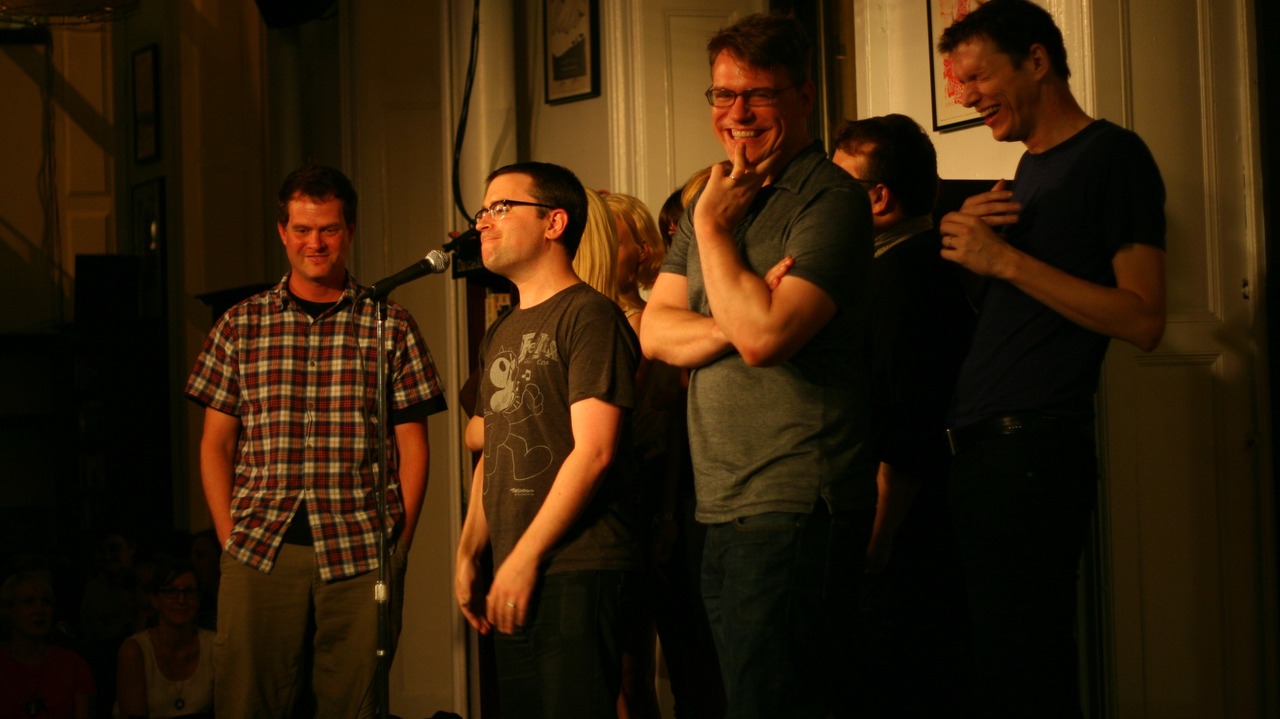
July 24, 2012* Double congratulations to Matthew Perpetua, my favorite music critic, for his new gig as music editor at Buzzfeed and for his wonderfully well done Fluxblog anniversary show last night. I had a marvelous time, photo evidence of which is available below. Click here to download a playlist consisting of all the songs that Matthew and the guests (Emily Gould, Heather, D’Angelo, Mark Richardson, Amy Rose Spiegel, me, Amanda Petrusich, Dick Valentine, and Rob Sheffield) talked about; mine was “Leaving Hope” by Nine Inch Nails.
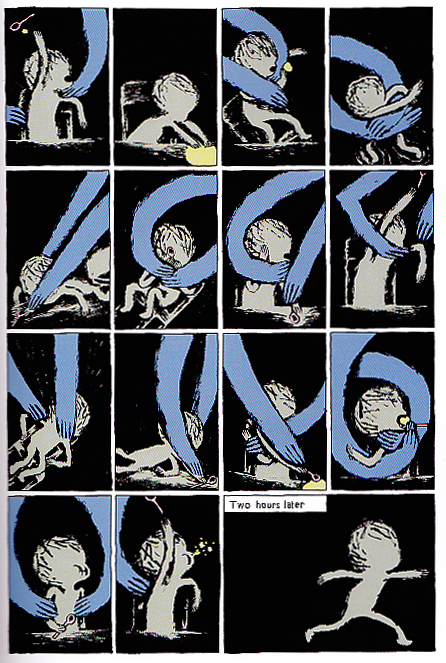
* Please read my friend Tom Spurgeon’s extraordinary essay about nearly dying, then losing over 200 pounds. Please read my friend Bill Magee’s extraordinary essay about getting mugged for the fourth time, then remaining a kind person. I hate that they both went through what they went through, but look what they did with it. Also, Tom will be serializing a book-length version of his epochal “Comics Made Me Fat” essay on his website, which is wonderful news if you like personal writing from the best comics critic alive.
* Grant Morrison says that he’s down to his final four superhero comics projects before leaving the genre for the foreseeable future: Action Comics, which he’ll stay on through issue #16; Batman Incorporated, which he’ll wrap up with issue #12; Multiversity, the forthcoming eight-issue miniseries; and an unknown Wonder Woman project. In this interview with my pal Kiel Phegley (part one of three) he also talks about Happy!, his four-issue miniseries with Darick Robertson at Image, and about Image Comics’ position in the industry as a sort of standard-bearer for a certain kind of creator-owned comic.
* Related: DC is postponing the release of Batman Incorporated #3 due to violent imagery it feels would resonate inappropriately with the Aurora shootings.
* Back to Tom Spurgeon: His San Diego Comic-Con reporting was second to none, especially but by no means exclusively in terms of covering the actual comics portion of the con in addition to the Comic-Con Experience. Here’s his final overview; here’s his roundup of the big news. It does a body good to hear that the crowd popped for Los Bros Hernandez, giants among men that they are.
* Digital Tales Designed to Thrizzle by Michael Kupperman! Great choice for their digital-comics launch by Fantagraphics — that books is very accessible to altcomedy audiences.
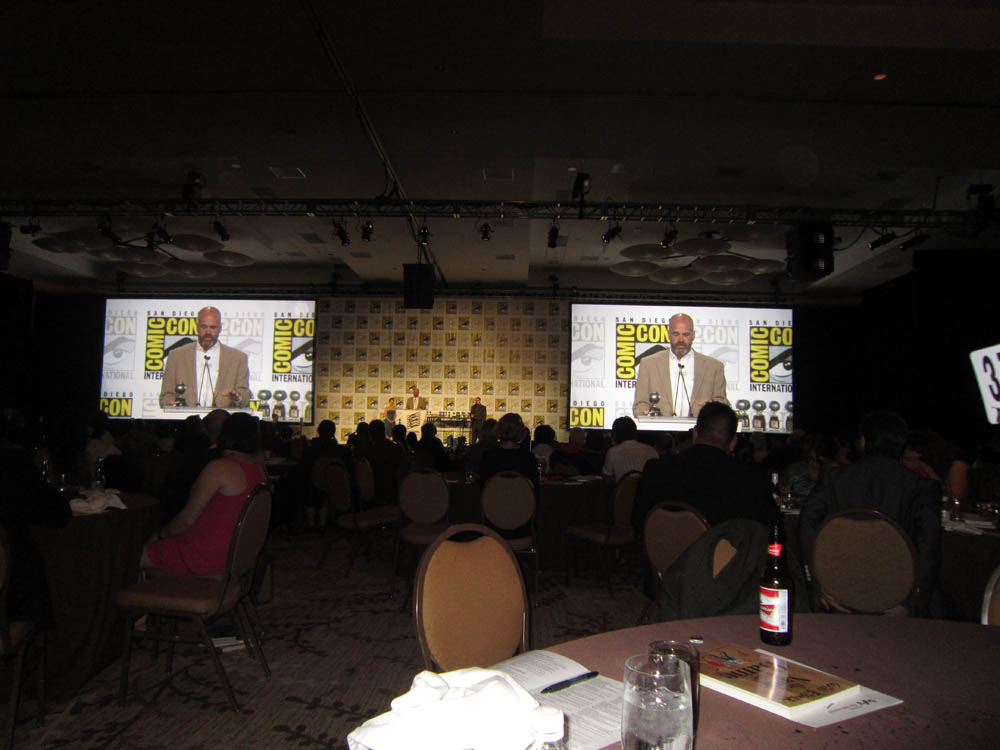
* I’m really going to miss Jessica Campbell, the newly departed PR honcho for Drawn and Quarterly. Easy to work with and easy to talk to at cons. But based on her exit interview with Tom Spurgeon it sounds like she’s got good plans, so it’s hard to begrudge her from escaping comics’ gravitational well. Also, her farewell San Diego photo parade is one of the best I’ve seen; here’s her pic of Spurge emceeing the Two Minutes Hate portion of the Eisner Awards program.
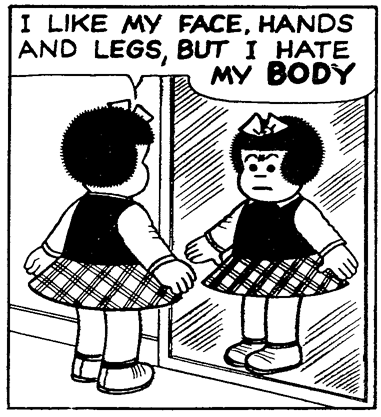
* Frank Santoro presents Comics Workbook, a new group blog featuring Frank, L. Nichols, Brandon Soderberg, Mickey Zacchilli, Chuck Forsman, Andrew White, Sophie Yanow and various other notables. An early highlight: this post by Dorothy Berry about connecting with Ernie Bushmiller’s Nancy as a twentysomething the same way she connected with Enid Coleslaw from Daniel Clowes’s Ghost World in her teens:
The emotional transition from relating to the detailed inner life of Enid to the monochromatic punnery of Nancy is analogous to the transition from listening to an entire Bright Eyes album to just needing to hear the Beach Boys sing “Sometimes I feel very sad.”
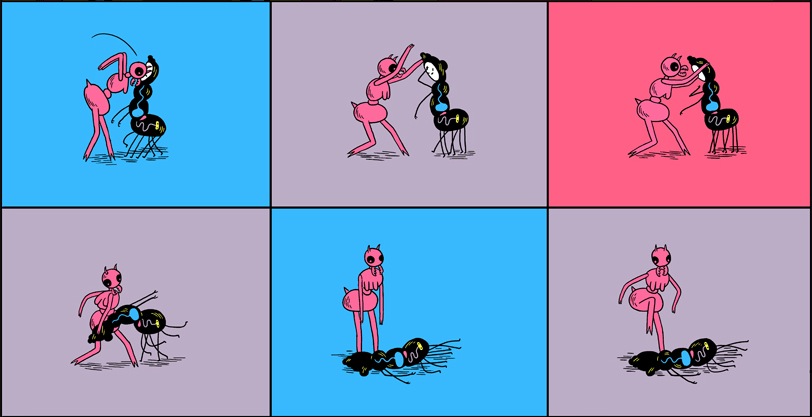
* This week in astonishing Michael DeForge Ant Comic pages I’ve decided are homages to specific works I enjoy even though they probably aren’t: that grid fight from Hard Boiled by Frank Miller and Geof Darrow? Related: Lose #4 in September!
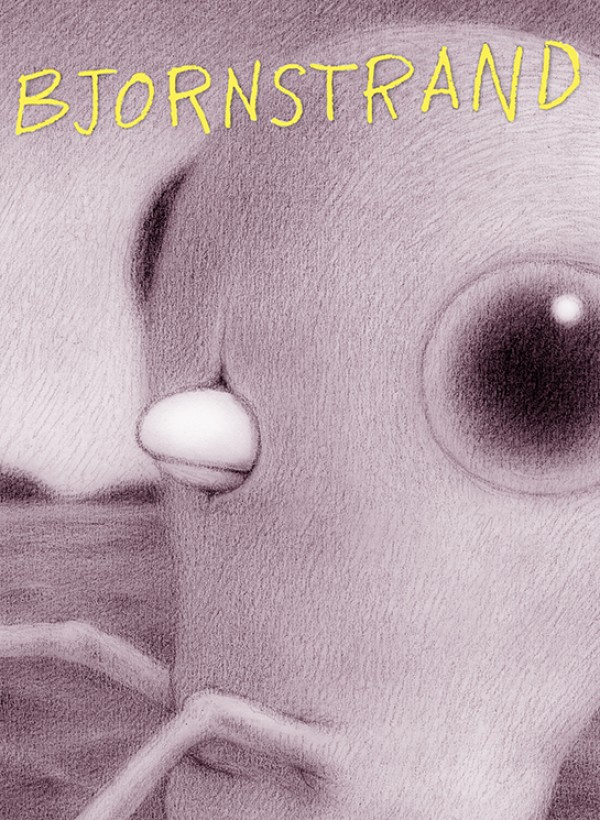
* Oh look, it’s the cover for Renee French’s Bjornstrand.
* And here’s the cover for its fellow PictureBox limited-release artcomic, Frank Santoro’s Pompeii. There’s something almost D’Aulaires about it.

* Eleanor Davis’s comics have been bracingly bleak lately. Hell, they’ve been lately, which is exciting right there.

* Have I mentioned that Gabrielle Bell is doing her July Diary again?
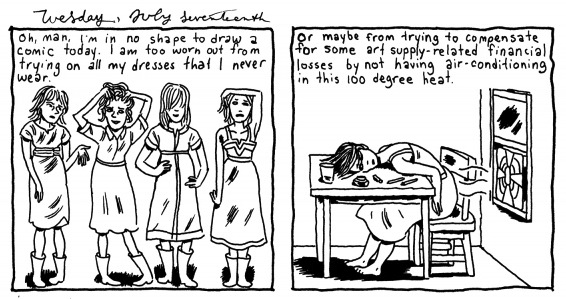
* Have I mentioned that Strangeways: The Thirsty by Matt Maxwell, Gervasio, and Jok is very pretty?
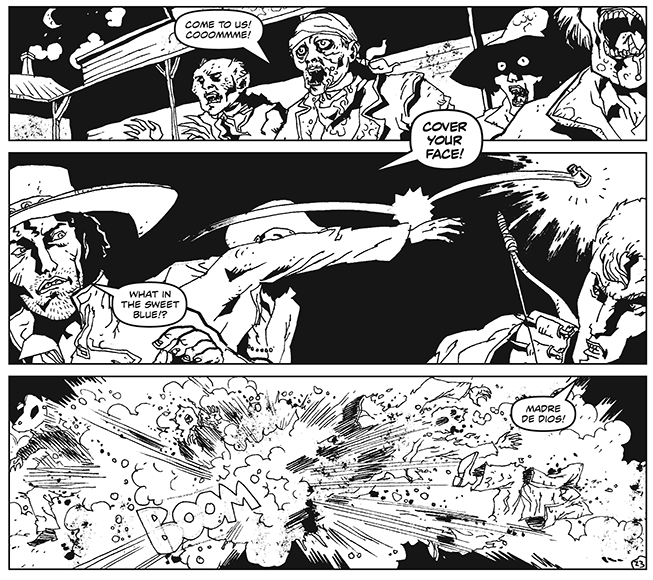
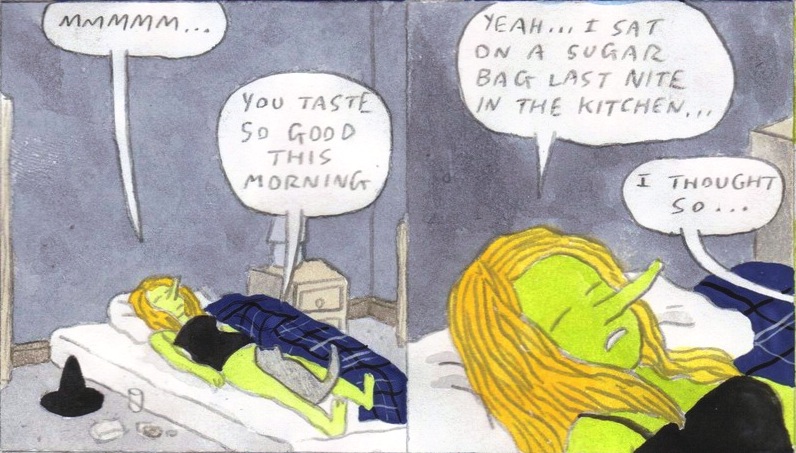
* Whoa, Simon Hanselmann’s working really blue in this Megg and Mogg strip. Blue enough to make me say “whoa.” Less so in this one. Much less so in this one. They are all so lushly colored. Where’d this guy come from?

* Kali Ciesemier’s illustration for an article about the increasing “sexiness” of women athletes’ uniforms is itself increasingly sexy. Unpack that, why don’t you.

* Jonny Negron, Jonny Negron, Jonny Negron. I often don’t even comment on Jonny’s stuff, I just post it and let it speak for itself, but I feel like his color work is radically underappreciated, including by me. Look at that green water.
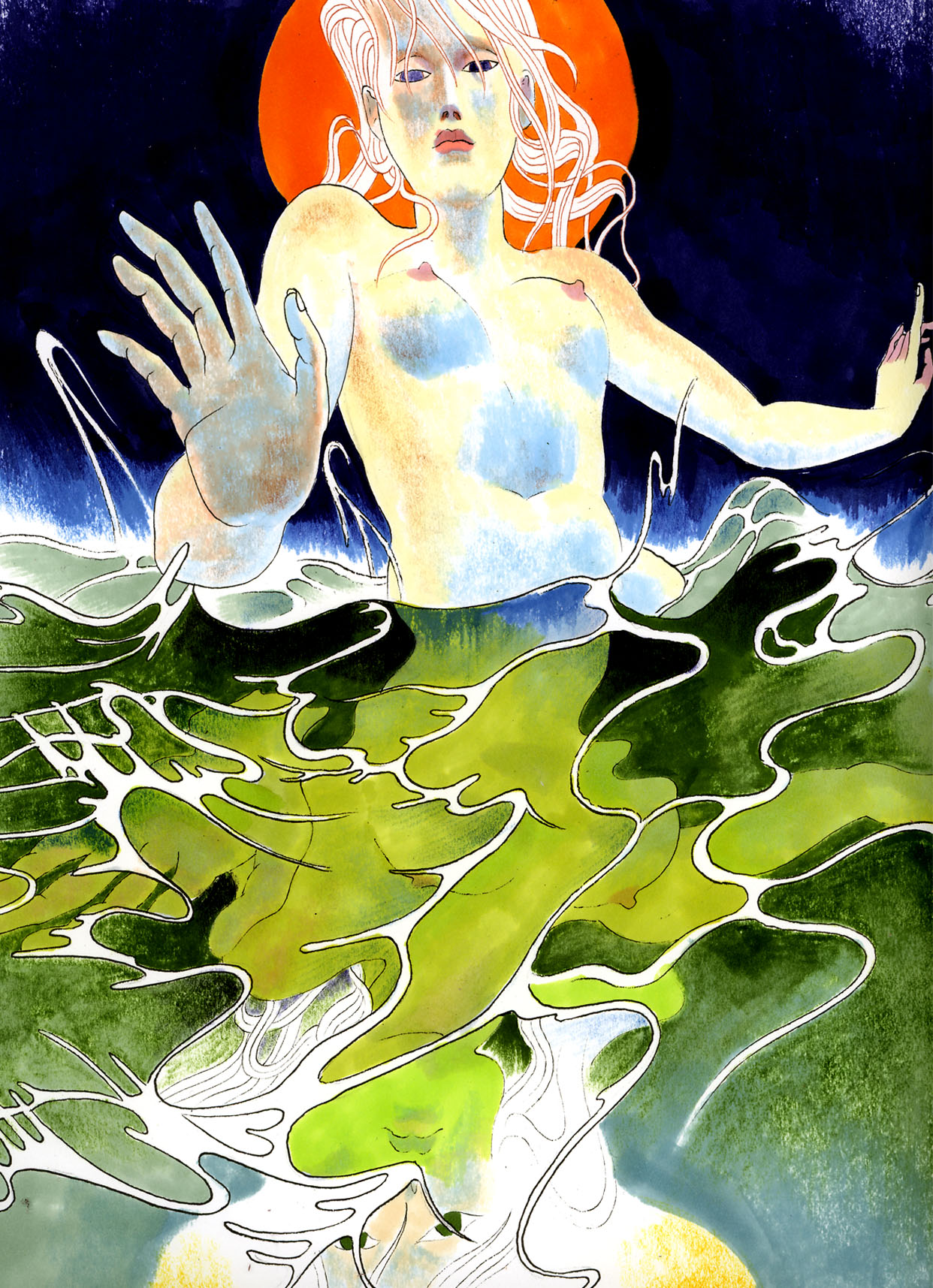


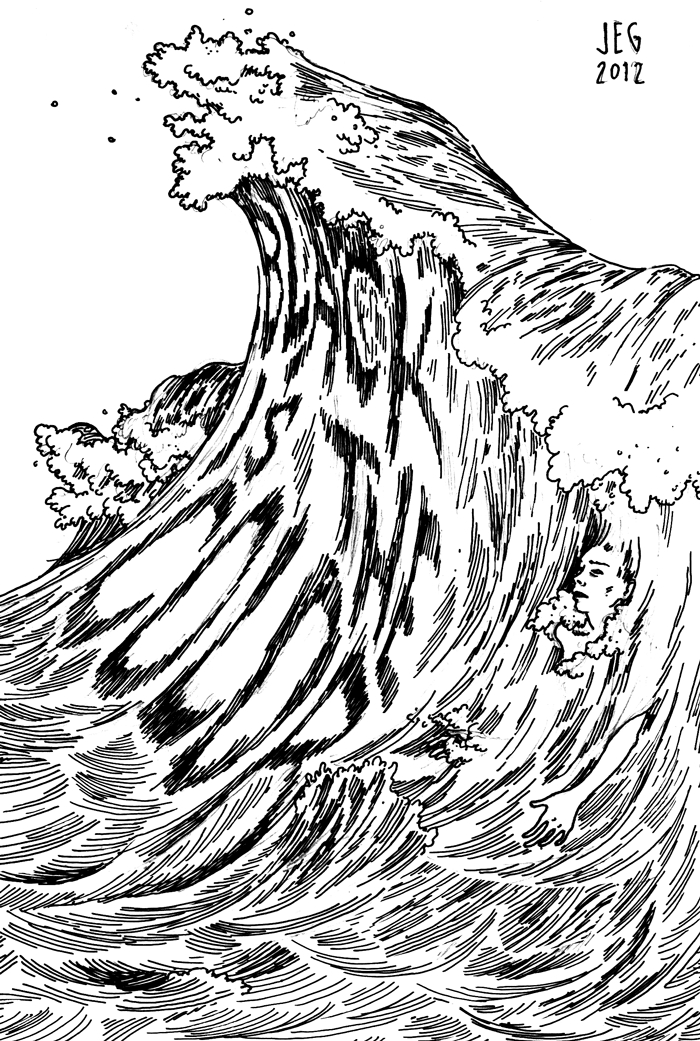
* Speaking of water, Julia Gfrörer’s new Black Is the Color cover is the most solid-looking thing she’s ever drawn.
* Robert Boyd on the music of Love and Rockets. (The comic, not the Bauhaus side project.) (Via Tom Spurgeon.)
* I feel deeply, personally vindicated that Dan Bejar from Destroyer shares my love for Avalon by Roxy Music.
* Despite the usual undercooked lyrics, this Kreayshawn video is endearing and fascinating for three main reasons: 1) the sound of the song is like “What if we took one of those obnoxious sing-songy Avril Lavigne/Ashlee Simpson brat-pop songs we used to do and gave it to someone who was actually gleefully obnoxious?”; 2) Holy cow, she’s lovely; 3) I suspect the vividly colored, ersatz 3D visuals, in which typically inanimate elements are animated, were designed to simulate Ambien hallucinations.
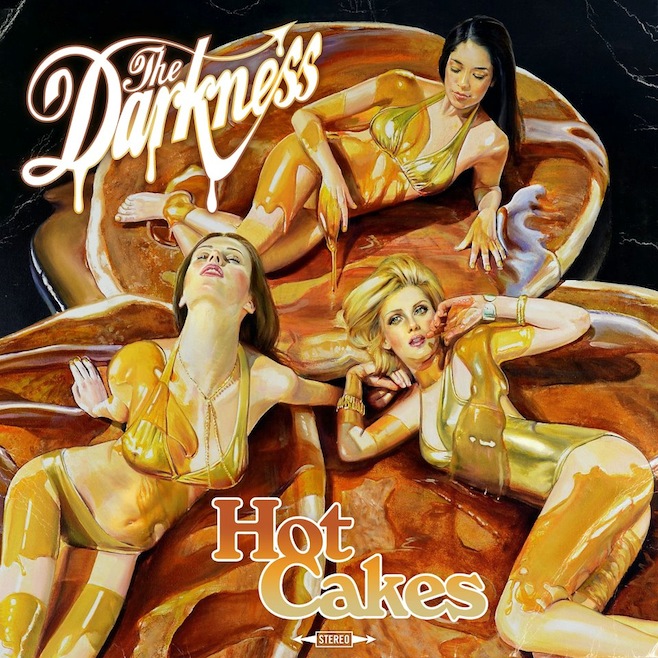
* Three cheers for the Darkness’s new album cover. Very glad they/he are getting it going again; their second album is hugely underrated as songwriting — it starts super strong. Oh yeah, that link has the studio version of them covering “Street Spirit” by Radiohead.
* MY BODY IS READY, NEW BAT FOR LASHES ALBUM

* Oh look, it’s page after page after page of videos, photos, and miniature essays about Cindy Crawford-era MTV House of Style. It’s not even nostalgia, it’s as close as we’ll get to physically rupturing the timestream and encountering the vividly remembered past. Cindy Forever.

Comics Time: Batman: Earth One
July 19, 2012Batman: Earth One
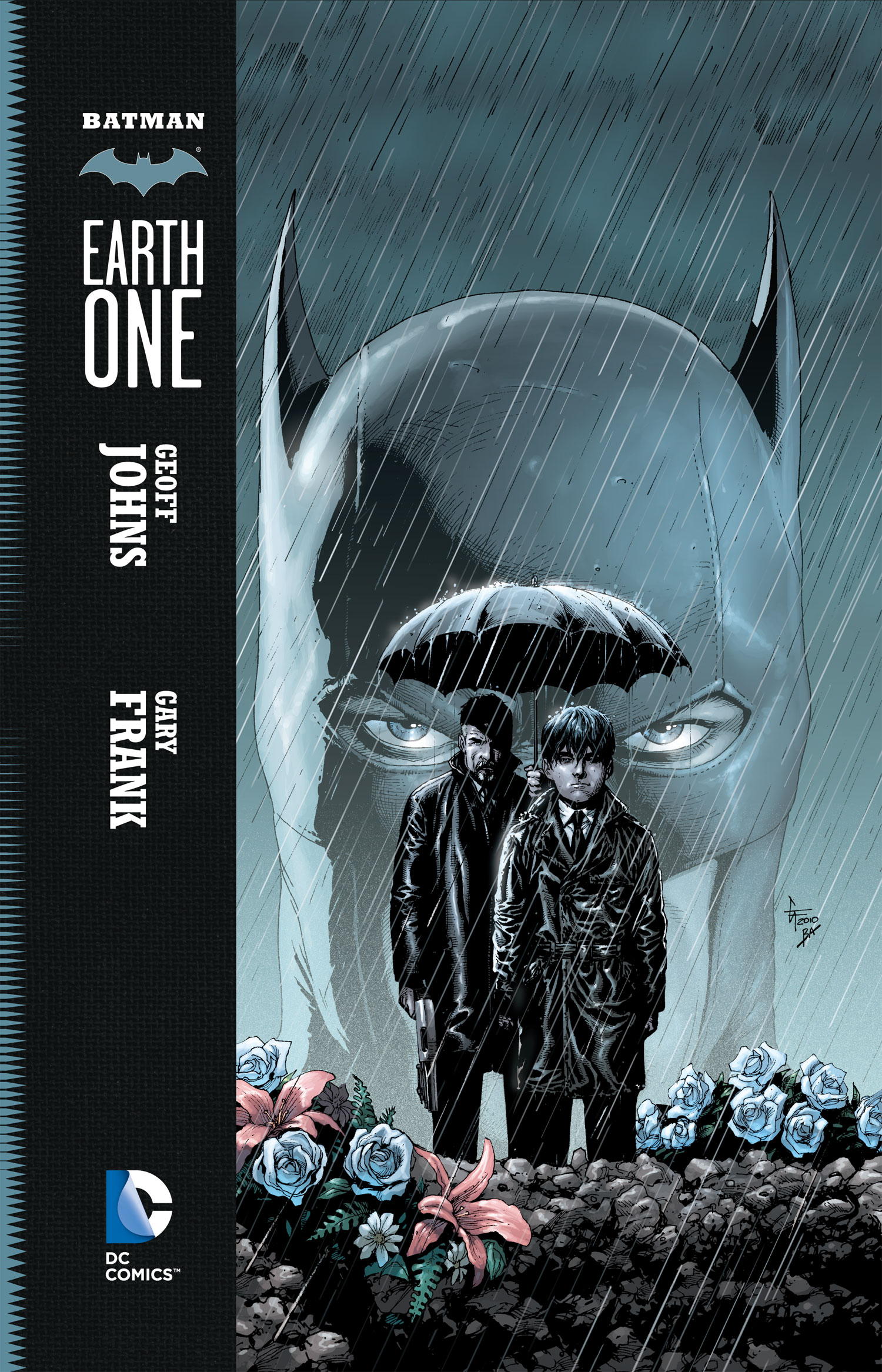
Geoff Johns, writer
Gary Frank, artist
DC, July 2012
144 pages, hardcover
$22.99
Buy it from Amazon.com

For today’s Comics Time review, please visit The Comics Journal.
Carnival of souls: Special “San Diego Days 4&5” edition
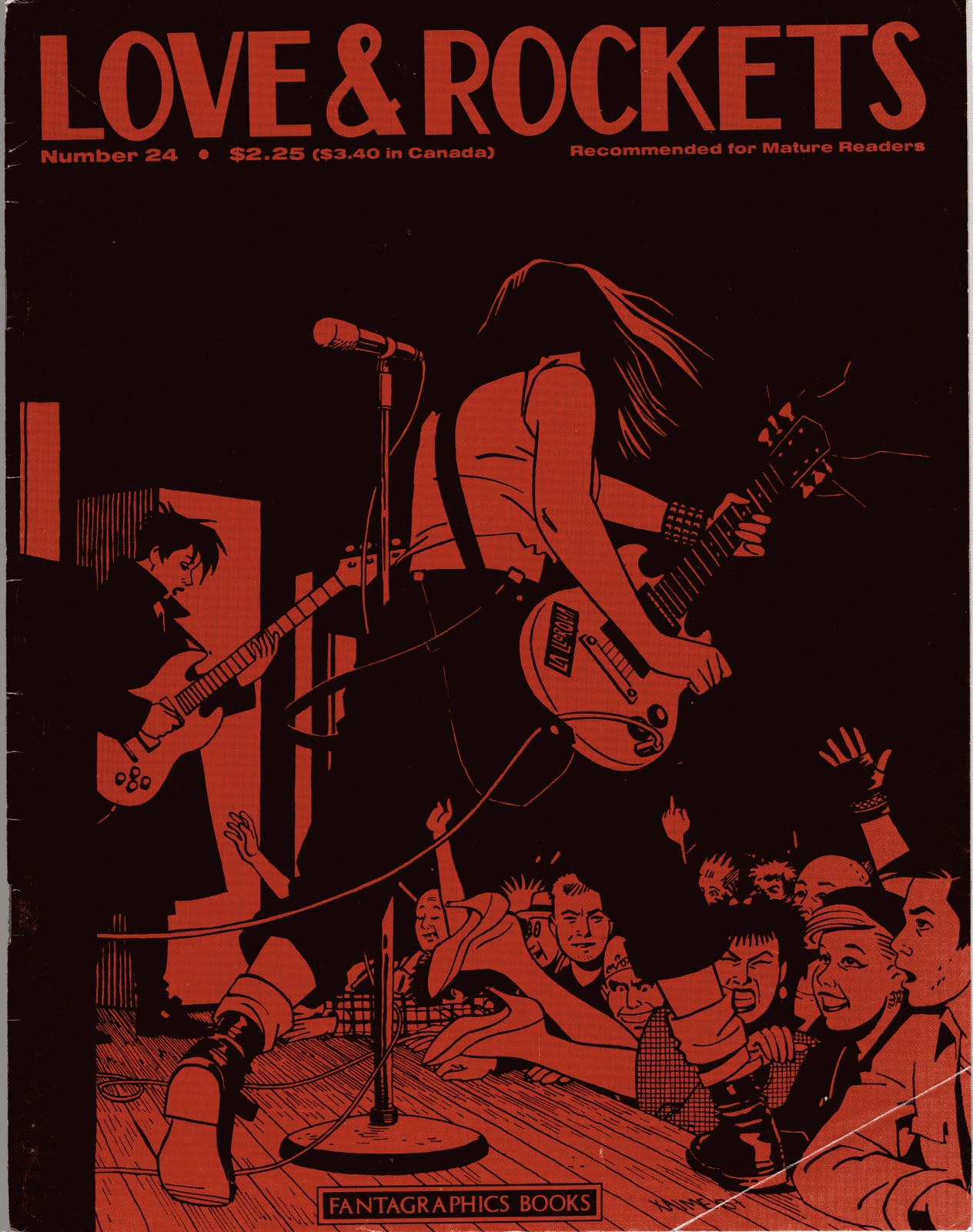
July 16, 2012* Here’s a link to all of my #losbros30 posts in honor of Love and Rockets‘ 30th Anniversary. I had a lot of fun with these, and I think I got at elements of the series I hadn’t suitably tackled in the past; I could probably do a full month’s worth of them.
* Related: Chris Mautner on six of his favorite moments from Love and Rockets. I’m a huge fan of those first four. The demon dog is a real sleeper, and the Ofelia sequence…that’s a towering achievement, that one.
* Actual Love and Rockets news: Love and Rockets: New Stories is the inaugural title in Fantagraphics’ digital distribution deal with monopoly digital comics whatchamacallit comiXology. I had a conversation with a friend over lunch about how much he wanted digital Love and Rockets literally hours before this announcement was made, and I don’t guess he’s at all alone.
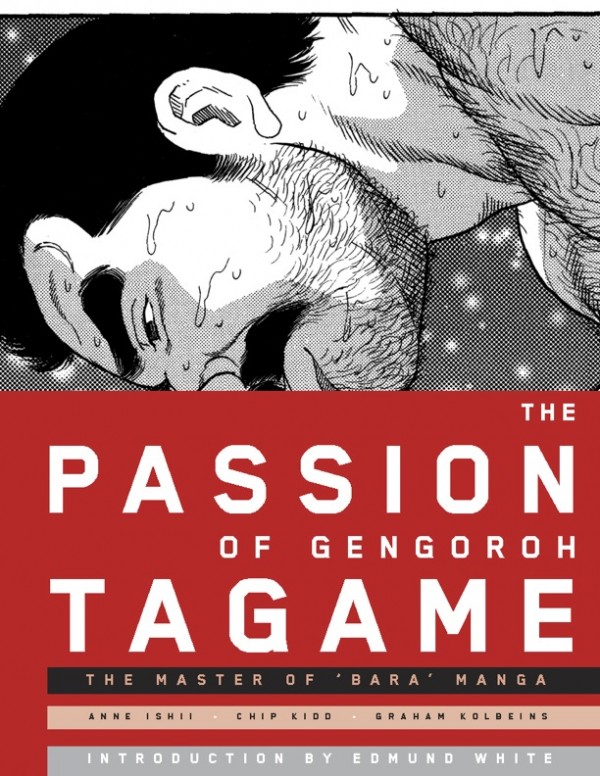
* That announcement was made by Tom Spurgeon, who just kept breaking major alternative comics publishing news left and right all show long. He rounded things out with a pair of PictureBox projects: So Long, Silver Screen by Blutch, the acclaimed and influential French cartoonist’s North American debut, designed by David Mazzucchelli; and The Passion of Gengoroh Tagame, the first English-language collection by Japanese gay bondage erotica cartoonist Gengoroh Tagame (whom you may remember as one of my co-contributors in Thickness #3; you definitely remember him if you’ve read the book), created with the help of an array of big names — designed by Tagame megafan Chip Kidd, produced and translated by Anne Ishii, with an introduction by Edmund White. For a publisher who wasn’t even at San Diego, PictureBox sure dominated the news.

* Be sure not to miss Spurge’s Friday, Saturday, and Sunday floor reports, too. He paints an interesting if unfinished picture of how the need to secure your trip to Comic-Con months in advance may have done away with a kind of attendee-customer who’s bigger on generalized enthusiasm for the art form and cash to spend on it than she is on the kind of specific fannish zeal of which the show is now the exclusive province.
* All of these people were better at comics than Jaime Hernandez last year, apparently. Seriously though, congratulations to my friend Tom for his well-deserved Eisner Award win, and to comics as a whole for voting hugely important archivist, editor, and historian Bill Blackbeard into the Hall of Fame.
* Robert Kirkman and Charlie Adlard’s The Walking Dead #100 is the bestselling comic in seventeen years, apparently. By that one means that it’s the best-initially-ordered-by-retailers comic in seventeen years. Caveats galore for interpreting this as a victory for original work owned by its creators — there was a massive variant-cover gimmick, there’s the TV bump, Kirkman’s facing a lawsuit from the book’s original artist Tony Moore, Kirkman now runs a work-for-hire shop of his own, etc etc — but it’s not not a victory for such things, I don’t think. It’s certainly a victory for Kim Thompson’s “More Crap Is What We Need” theory, and I’m not saying that pejoratively.
* Peter Jackson is making it sound like he may make a third film out of the Hobbit-adjacent material from the Lord of the Rings appendices, with which he already fleshed The Hobbit out from one movie to two. I totally understand and enjoy the initial doubling of the project, since it’s mostly just going to show us the stuff that one of the main characters of the story, Gandalf, is off doing when he’s not with the other main characters. But to come up with a whole third film independent of The Hobbit proper’s narrative framework…I don’t know, at that point you’re writing fanfic, basically, even if it’s fanfic based on canonical sources.
* In other news…
* I missed this for some reason, and shame on me: The End of the Fucking World cartoonist Chuck Forsman has launched a subscription service for his Oily Comics imprint, whereby a $30 or $50 subscription will get you either three or six months’ work of minicomics from a lineup including Forsman, Melissa Mendes, Max De Radigués, Jessica Campbell, Dane E. Martin, Andy Burkholder, Aaron Cockle, and probably more by the sound of it — on the order of a comic or more per week. That’s a terrific deal if you really like these artists and can take a flyer on sight-unseen minis. Forsman talks a bit about the initial line-up over at The Comics Journal — it’s cool to see Drawn and Quarterly PR stalwart Jessica Campbell releasing comics of her own, for example, and Andy Burkholder is a real talent.
* Wow, this is the platonic ideal of a cover for Ron Régé Jr.’s The Cartoon Utopia from Fantagraphics.

* An extra-long, extra-NSFW Uno Moralez image/gif gallery. This is a very good one.

* Taste the rainbow with Jonny Negron.

* Michael DeForge’s Ant Comic — do I have to get used to calling it Ant Colony now? — is terrific.
* Here’s a tight, thoughtful piece by the Comics Grid’s Jonathan Evans on how translation is depicted in Guy Delisle’s travelogue Shenzhen.
Your Love and Rockets 30th Anniversary thought of the day
July 15, 2012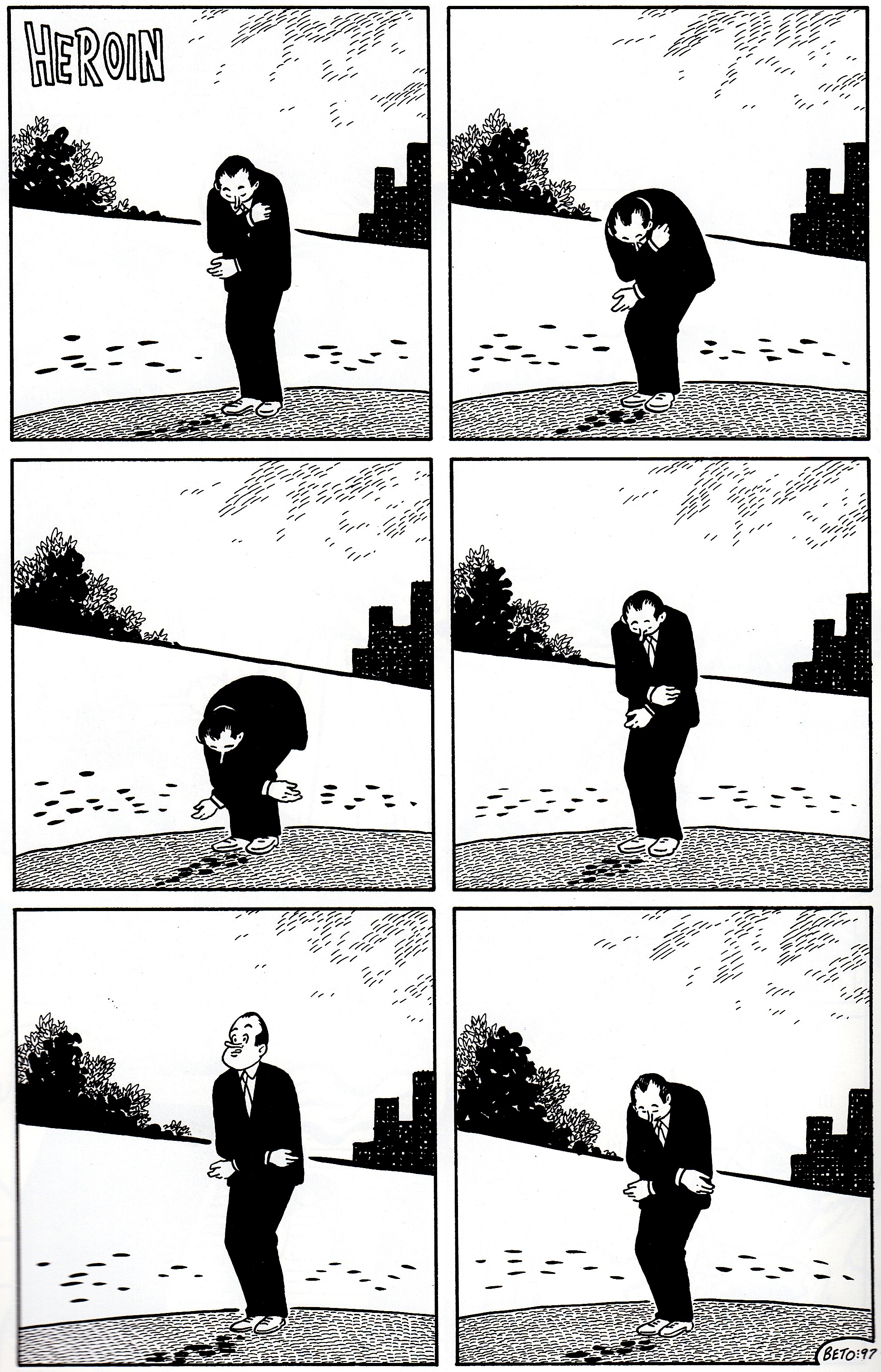
Gilbert and Jaime are both masters of the form of comics. That’s in addition to their character work, their sheer illustrative chops, and so on; indeed it may be the most exciting thing about them. In the case of both brothers I’ve spent a long time chewing over just a few handfuls of panels, unpacking what went into them. Here’s Gilbert’s silent, six-panel comic “Heroin,” one of three one-page shorts he made with that title. It’s just a man against one of Beto’s soon-to-be-trademark dismal nowherescapes, clutching his arm, doubling over, standing back up, hunching over again. We don’t know who he is or where he is or what he’s doing or what its connection is, specifically, to the titular substance — he could be a junkie on the nod, sure, but then why is he also Richard Nixon (or maybe it’s Bob Hope)? Whether it’s about the drug specifically or addictive, destructive influences generally (as are the other two “Heroin” strips) doesn’t really matter, since the effect stems almost entirely from the building blocks of the comic itself: the man, the background, the grid layout, the lack of any text save the title, the rhythm that builds up as we watch his body contort, the three big blocks of black in each panel (trees, man, buildings), the hands pointing in opposite directions, the diagonal hill line bisecting each panel. Every element combines to convey discomfort and unease, the sense of being at the mercy of something that lets you straighten out just long enough for it to be crushing when it knocks you back down. Long before I’d actually read any comics by Los Bros I saw this page reproduced in an issue of The Comics Journal and it has worked its way into the fabric of my comics brain ever since. It occurred to me just the other day that I’ve even done a homage to it without realizing it. I think it’s a perfect comic.
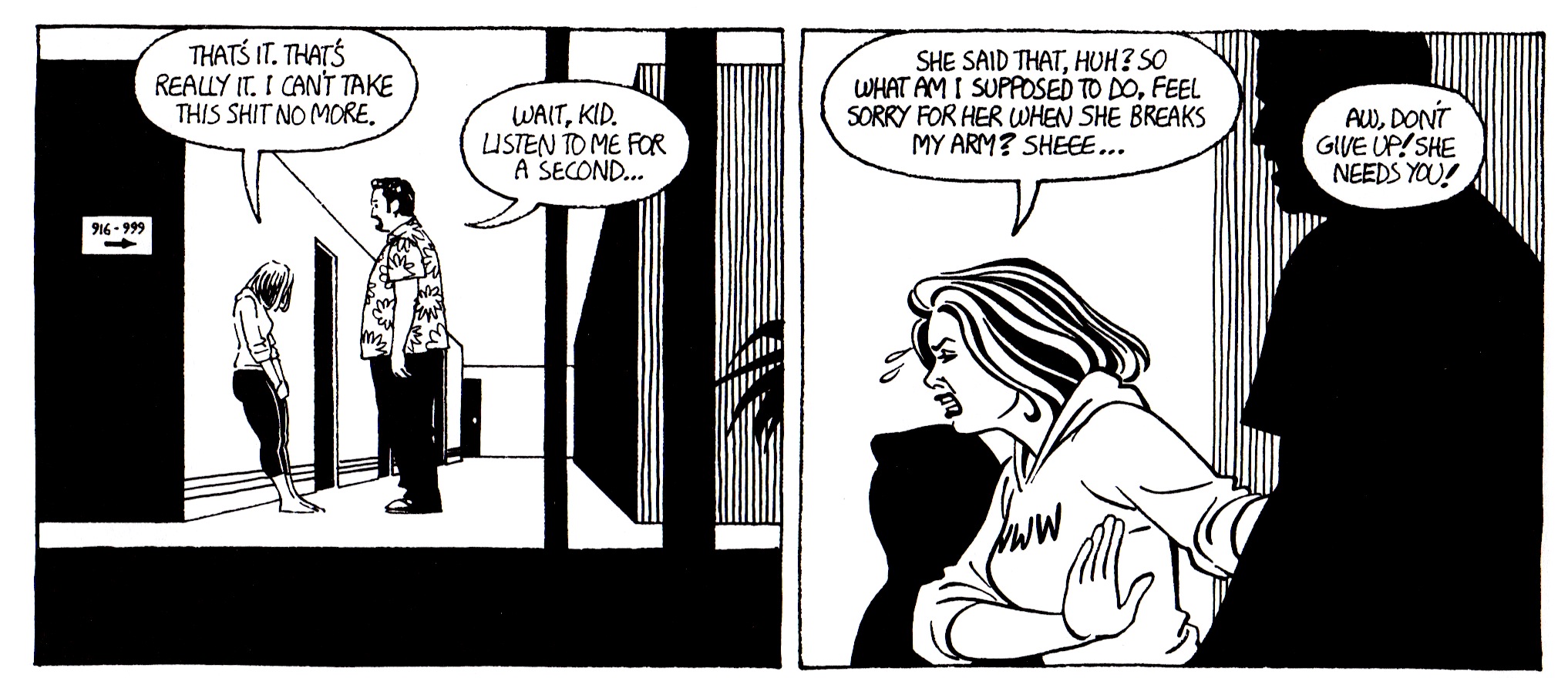
And here’s two panels from “In the Valley of the Polar Bears” by Jaime. Maggie’s been working as the kayfabe “accountant” for her wrestling-champ aunt Vicki, something of a terror in and out of the ring, but the two are barely speaking. Vicki has just confided in her wrestler boyfriend Cash that the reason she’s been treating Maggie so badly is because she cares about her a lot and is hurt by Maggie’s seeming indifference in return. So here, Cash approaches Maggie to tell her about her aunt’s secret soft spot — and then blam, next panel, it’s already been told. Jaime doesn’t show us the conversation. He doesn’t slap a big “Five minutes later…” caption up there. He doesn’t alter the size of the panels or the gutters to imply the passage of time. He doesn’t cut to another scene in between. He doesn’t show Maggie and Cash in another location so that we’d know time must have passed for them to get from place to place. He zooms in a bit but other than that they’re even in the same basic spatial configuration. He pretty much breaks every rule of how jumps in time are conveyed in comics, and yet it’s still crystal clear what happened. Talk about no-fat storytelling. Why belabor the re-presentation of information we readers already have? And why monkey with shit to explain what you’re not showing us when you can simply not show it to us and assume we’re smart enough to follow? These two panels are so bold, so full of lessons in how to tell a story with comics. I think about them all the time.
Love and Rockets, the great serial comic by Gilbert, Jaime, and sometimes Mario Hernandez, is celebrating its 30th anniversary at the San Diego Comic-Con International this week. Inspired by Tom Spurgeon, this week-long, daily series of posts will highlight some of my favorite things about Los Bros Hernandez and their comics. For more information, click here.
Your Love and Rockets 30th Anniversary thought of the day
July 14, 2012
Gilbert and Jaime Hernandez have each been telling the stories of the same group of characters, continuously, for three decades. They’ve done lots of other stuff, Gilbert especially, but that’s the bulk of what they’ve done. No one else in comics has done it. No one’s even come close. Could someone else do it? Could someone else tell the life story of their characters, over an actual life span, and have a lot of people care passionately about where those lives end up? I won’t say it’s unimaginable, the idea of someone else doing it, because there are enough similar cases out there for you to imagine those other people doing it, and it’s only then that the gulf between Los Bros and everyone else becomes so clear. What if Bryan Lee O’Malley just kept going with Scott Pilgrim until he hit Vol. 30? What if Dave Sim had never lost his mind? What if all the B.P.R.D. spinoffs were written and drawn by Mike Mignola? What if Achewood were a comic book and Chris Onstad never burned out on it? What if Erik Larsen’s main touchstone for Savage Dragon were Márquez rather than Kirby? What if The Walking Dead were filled with Rick-level characters, instead of Rick and a bunch of other people for Rick to react to? What if Alison Bechdel made a series of Dykes to Watch Out For graphic novels instead of memoirs? What if Harvey Pekar had made stories up instead of writing them down? What if all of these things lasted for thirty years? And oh yeah, what if all of these people had siblings doing the exact same thing at the same time under the same title? It’s only when you see all the hoops one would have to jump through even to come close to what Beto and Xaime have accomplished that you really appreciate that hey, they’re the ones who built the hoops.

Love and Rockets, the great serial comic by Gilbert, Jaime, and sometimes Mario Hernandez, is celebrating its 30th anniversary at the San Diego Comic-Con International this week. Inspired by Tom Spurgeon, this week-long, daily series of posts will highlight some of my favorite things about Los Bros Hernandez and their comics. For more information, click here.

Carnival of souls: Special “San Diego Day 2&3” edition
July 13, 2012* Today in and around the San Diego Comic-Con International:
* Your absolute A-#1 top story of the day, the show, the year: It’s a picture of George R.R. Martin and Los Bros Hernandez. Their beards are full of MAGIC. I love these wonderful men. (Via Fantagraphics, who clearly took this picture just for me.)

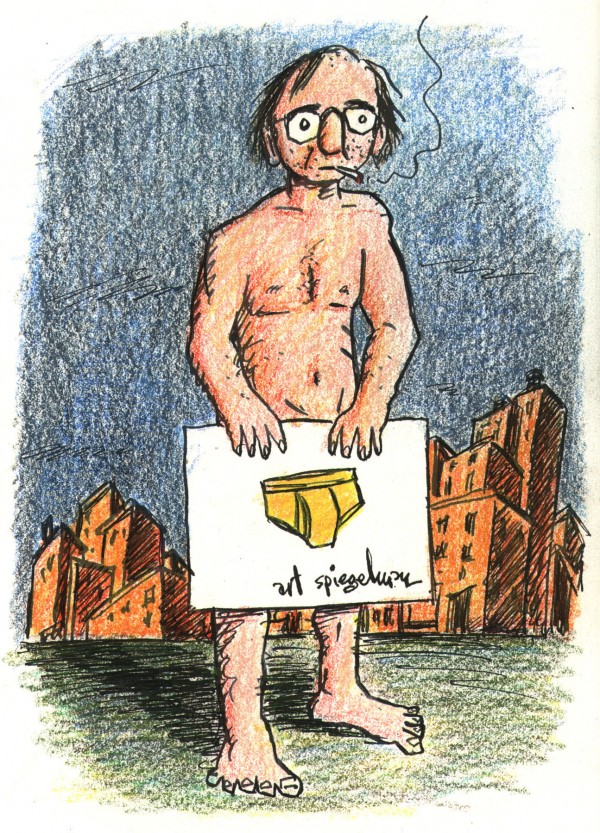
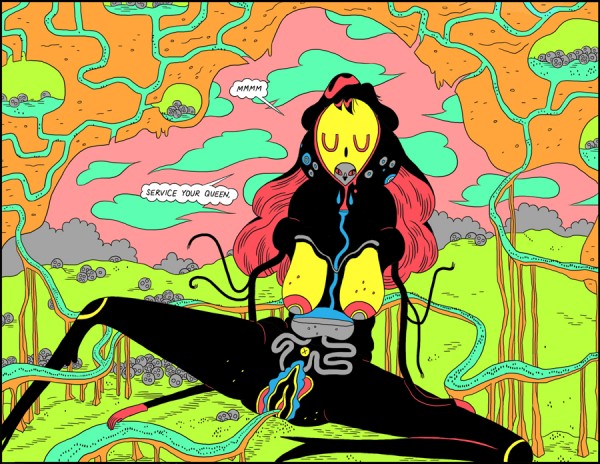
* Tom Spurgeon breaks two major announcements from Drawn and Quarterly: They’ll be publishing Art Spiegelman’s latest odds’n’sods collection Co-Mix, and collecting Michael DeForge’s webcomic Ant Comic as Ant Colony. Spiegelman is justifiably legendary and insight into his process is always welcome; DeForge is the best cartoonist of his generation and Ant Comic is one of the two or three best things he’s ever done.
* Neil Gaiman and J.H. Williams III are doing a prequel to Gaiman’s beloved series The Sandman for DC/Vertigo. I’m reporting this as news rather than as “hey I’m looking forward to this” since Sandman’s not really my thing. It’s newsworthy for a couple of reasons, I think: 1) This is going to be an absolutely colossal bestseller, I’m guessing the bestselling comic in a decade or more; 2) I’m surprised Gaiman’s doing it in light of the Before Watchmen situation, since he’s been an outspoken creators’ rights advocate for years and has (I think) a relationship with Alan Moore. That makes him returning to the company in such a big way seem much more like a tacit endorsement than does the work of most DC employees and freelancers who aren’t directly involved in the project, I think (myself included).
* Tom Spurgeon’s daily floor reports are thus far as thorough on a day-to-day basis as many are for the entire show, a mix of anecdote, opinion, temperature-of-the-room stuff, and actual news and reporting. Here’s Preview Night; here’s Thursday. Of greatest interest to me: Josh Cotter isn’t doing comics for now; Douglas Wolk isn’t writing for ComicsAlliance for now; Gary Groth liked Joe Lambert’s excellent Annie Sullivan and the Trials of Helen Keller.
* Derf Backderf’s My Friend Dahmer is headed for the big screen. Still haven’t read it. Shameful.
* Frank Santoro has a limited edition book on the way from PictureBox called Pompeii, a “straightforward comic book narrative, chornicling the lfie of two artists in the doomed city.” I like the sound of that.
* I defy you to find a more loathsome way to talk about making comic books or any kind of art whatsoever. This one’s a news story as well, in that Image Comics publisher Eric Stephenson has been so outspoken in his criticism of Before Watchmen while his new partner J. Michael Straczynski has been so outspoken in his defense of it.
* Finally, meet your new Game of Thrones castmembers, including Diana Rigg, aka Emma Peel, aka costar of The League of Extraordinary Gentlemen Vol. III: Century #3: 2009, as the Queen of Thorns.
* In other news…
* Jeeeeeeez, look at Chris Ware’s Building Stories. That’s no moon. That’s a space station.

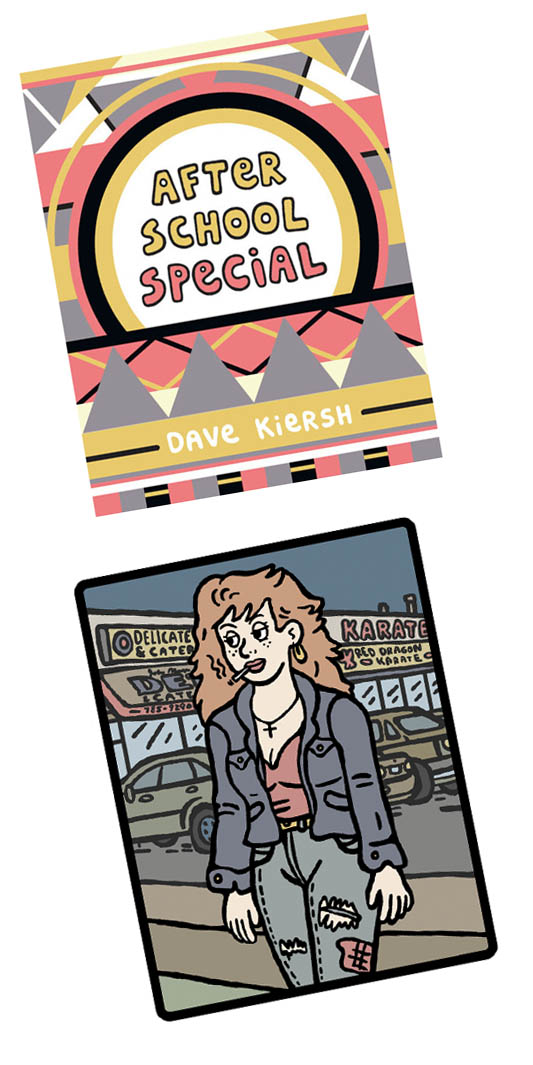
* Dave Kiersh’s new book After School Special is out and available through Giant Robot! I’ll say it until everyone listens: Read Dave K. If we could get his work into the hands of the millenials there’s no telling what might happen.
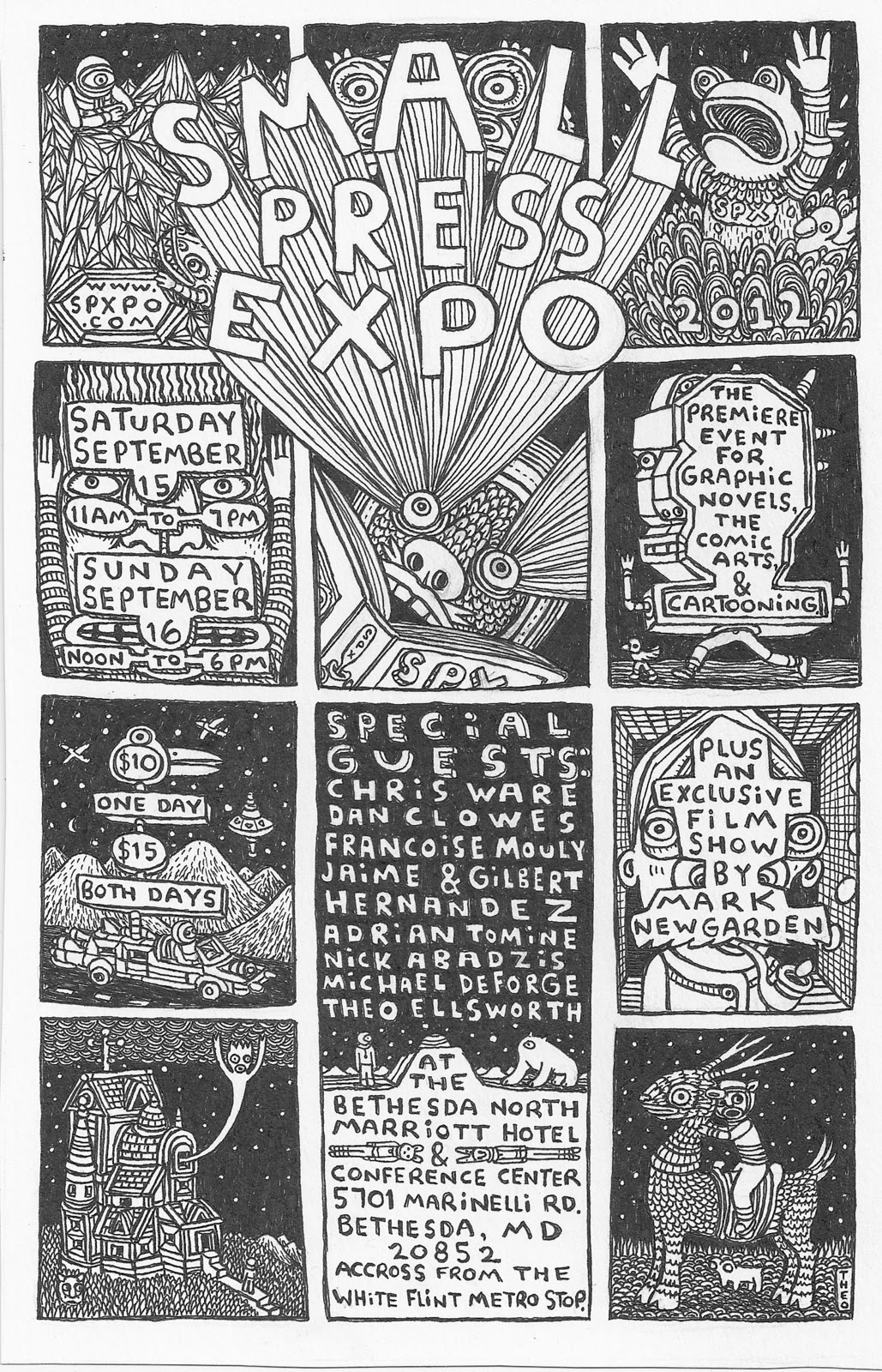
* Theo Ellsworth is debuting his new book The Understanding Monster Book One at SPX. Also, it wasn’t until I saw this poster he designed for the show that I realized what a power-packed lineup that show has this year: Ware, Clowes, Mouly, Jaime, Beto, Tomine. And something new from me and a special collaborator, maybe?
* There’s something quietly unnerving about the way Breaking Bad actor-director Bryan Cranston refers to “Walt” and “Bryan” as separate entities in his excellent, insightful two-part interview with Alan Sepinwall. I say that not to diss him as some third-person phony but as a testament to the power of Walt. Of particular note in the interview are the sections where Cranston describes moments where his conception of the character and showrunner Vince Gilligan’s diverged, and what he’d learn from them.
* The A.V. Club’s Noel Murray gets a great interview out of Kevin Huizenga, perhaps the prickliest interview subject in altcomix. I’ll never not get a charge out of it when Huizenga describes his comic “The Sunset,” for my money the best short comic of all time, in precisely the terms I’d use to describe it myself.
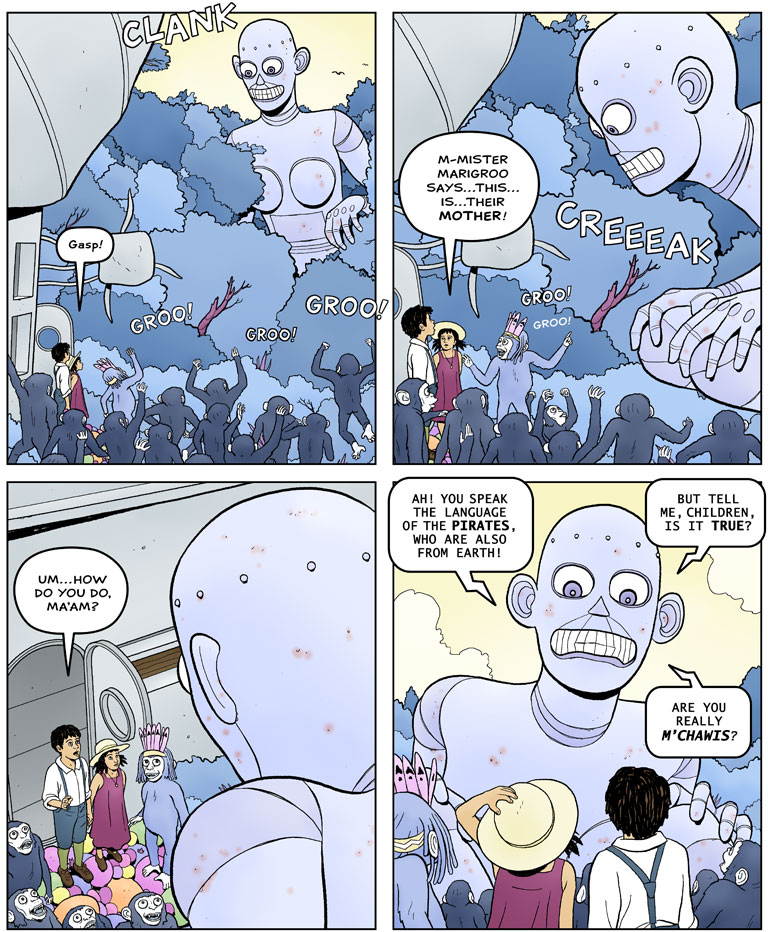
* I haven’t been following Fantastic Life cartoonist Kevin Mutch’s webcomic Moon Prince except to admire it visually from time to time, but that’s because I suck at following webcomics, not because it doesn’t look crazy and beautiful, because it does:
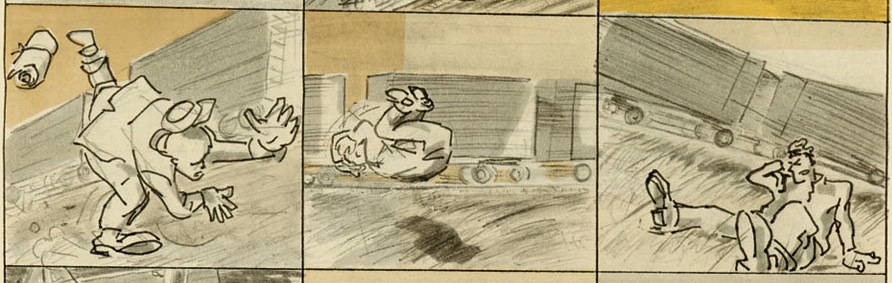
* Beautiful work by Jordan Crane. His finished pages are so uncannily devoid of human error that it’s unusually interesting to see the artifacts of their construction. Michael DeForge and Ryan Sands should try to get a contribution out of him for the Thickness collection, by the way.
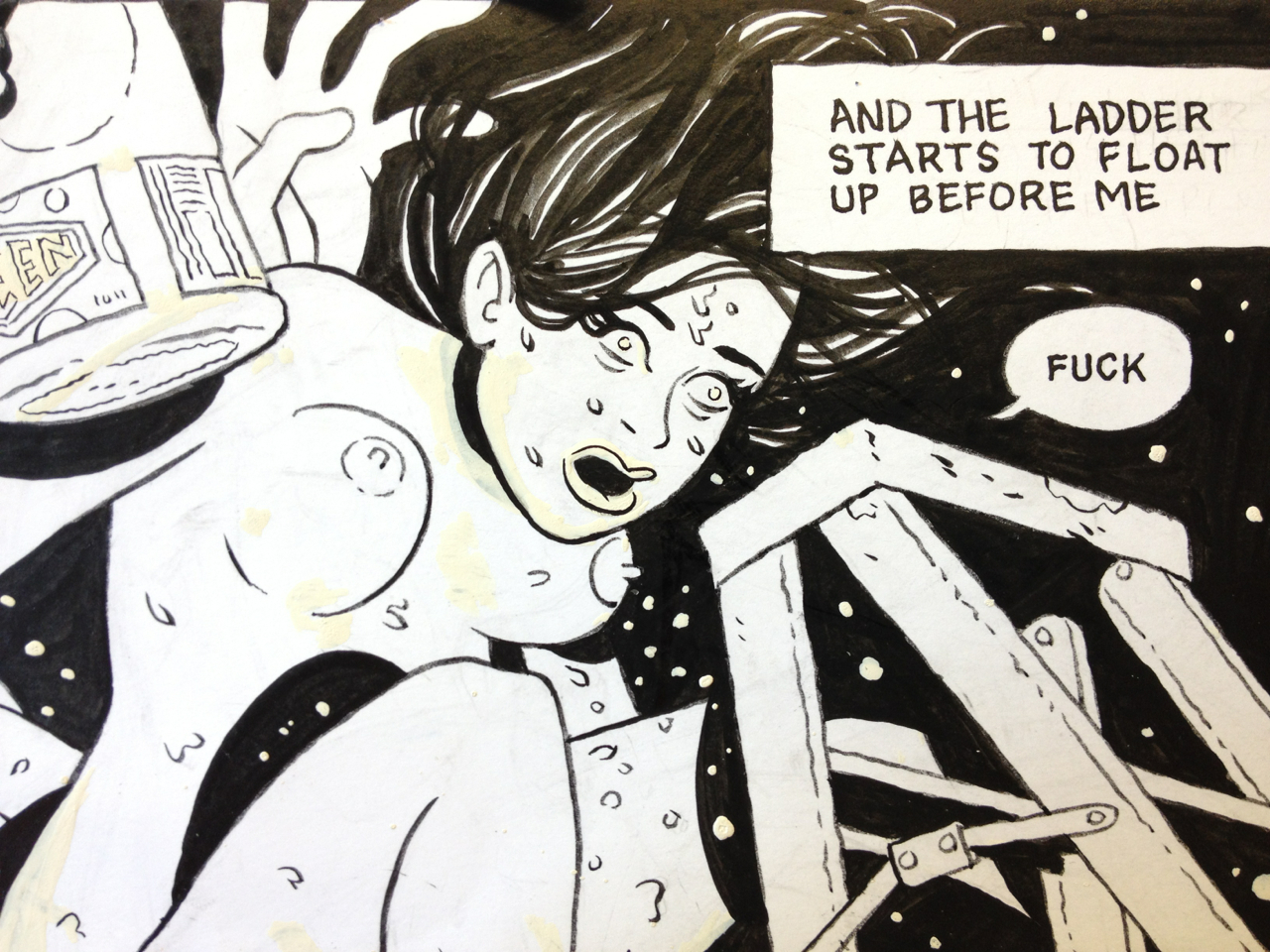
* Read an excerpt from Frank Santoro’s excellent graphic novel Storeyville and Crane’s webcomics portal What Things Do.
* At last: Jonny Negron turns his attention to MILFs.

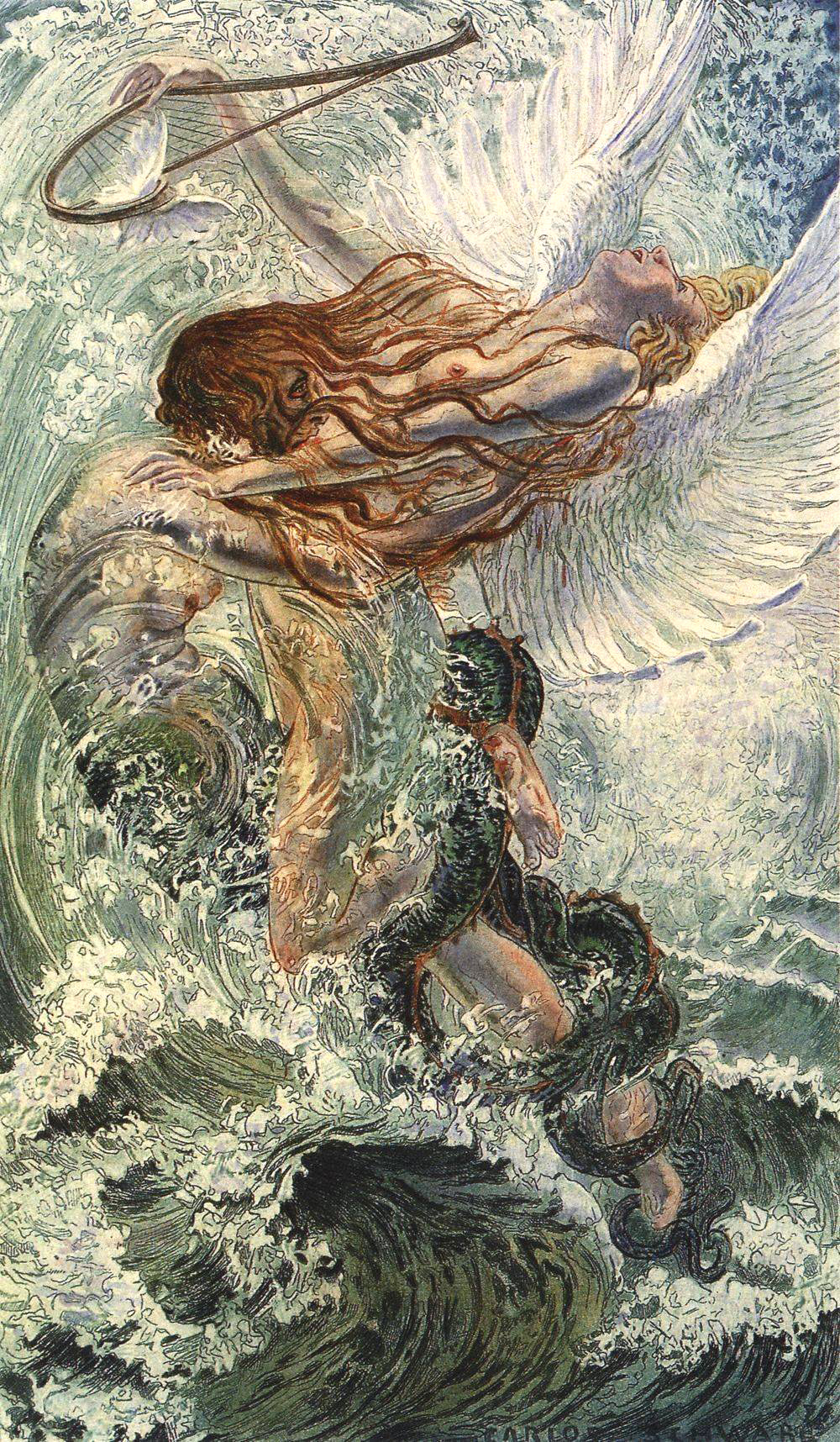
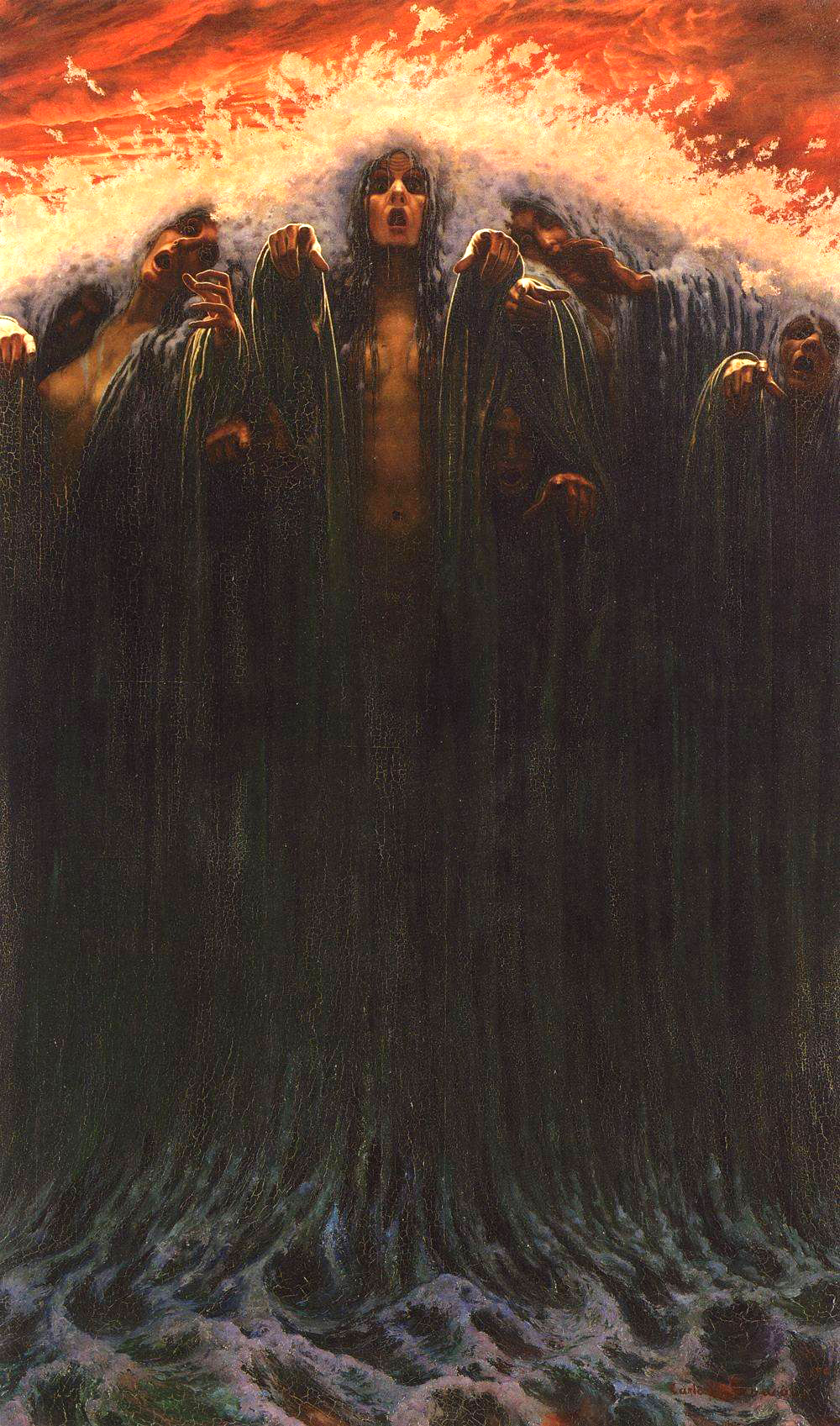
* It’s been a while since I linked to Monster Brains, and this sensuously sinister gallery of Carlos Schwabe art seemed like as good an excuse as any. Look at the eyes.
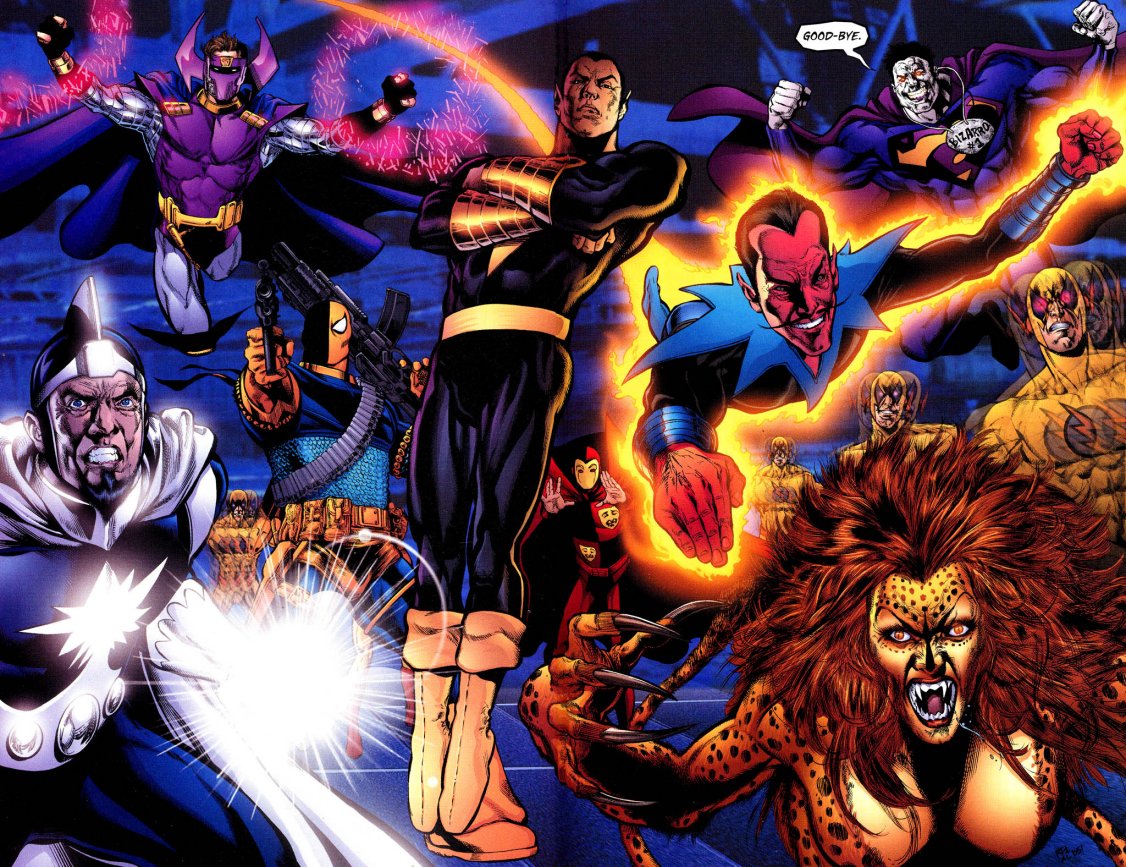
* I’m happy to use the occasion of Phil Jimenez’s birthday as an excuse to post this spread from Infinite Crisis again. One of my favorite pieces of superhero-comic art by anyone ever.
Your Love and Rockets 30th Anniversary thought of the day
July 13, 2012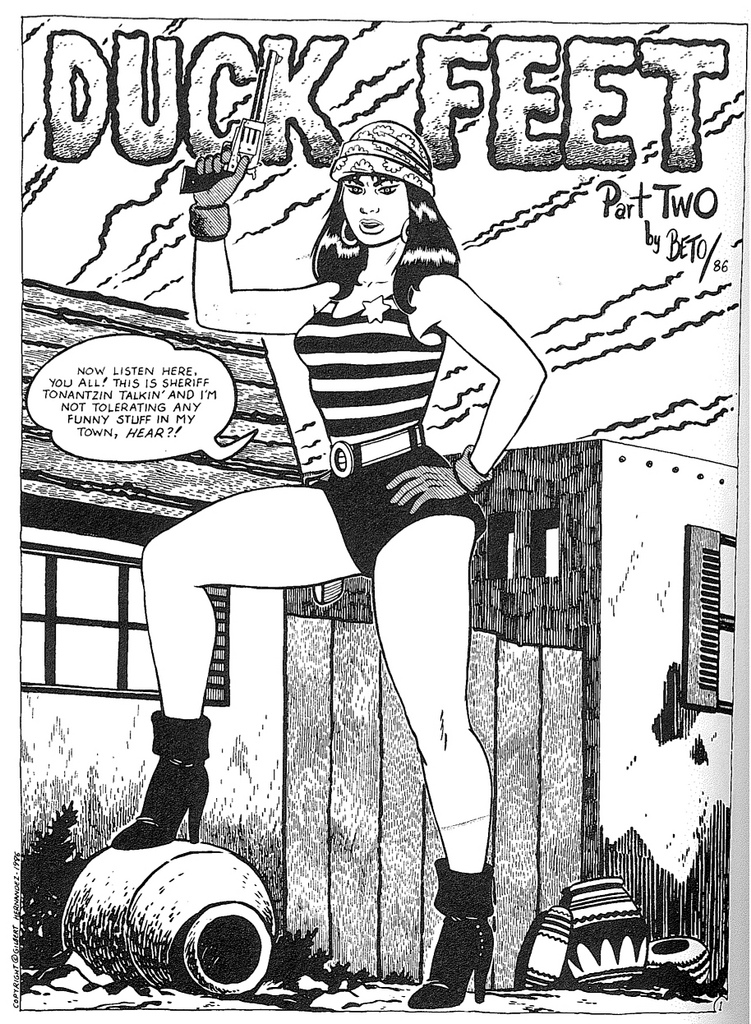
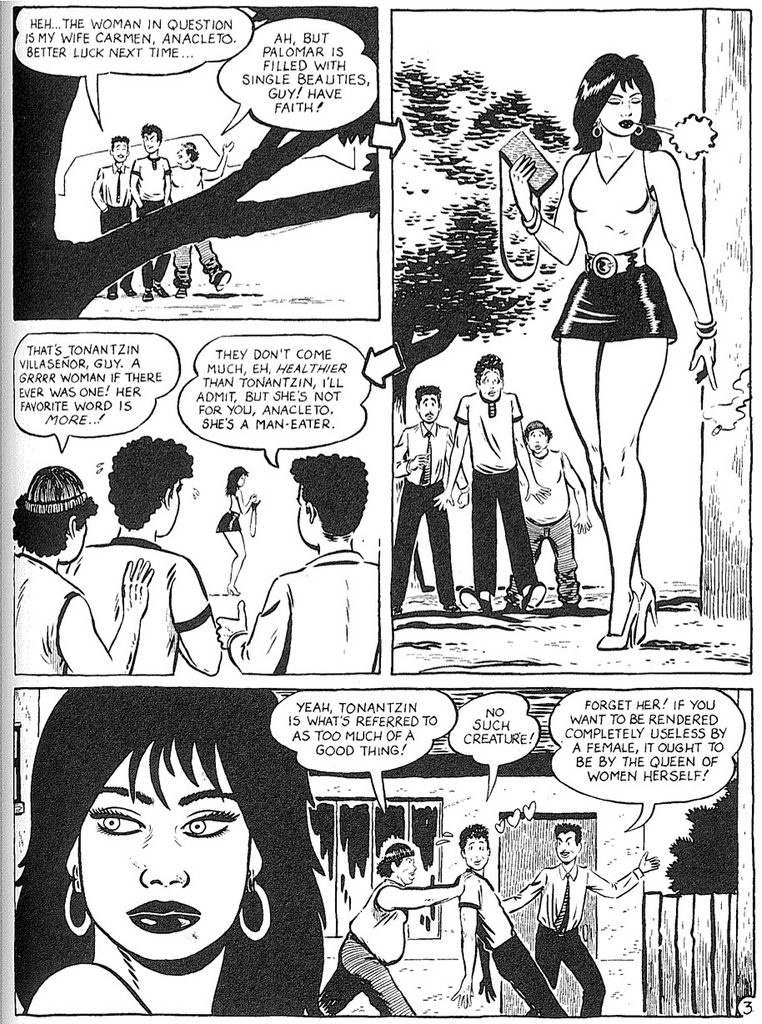
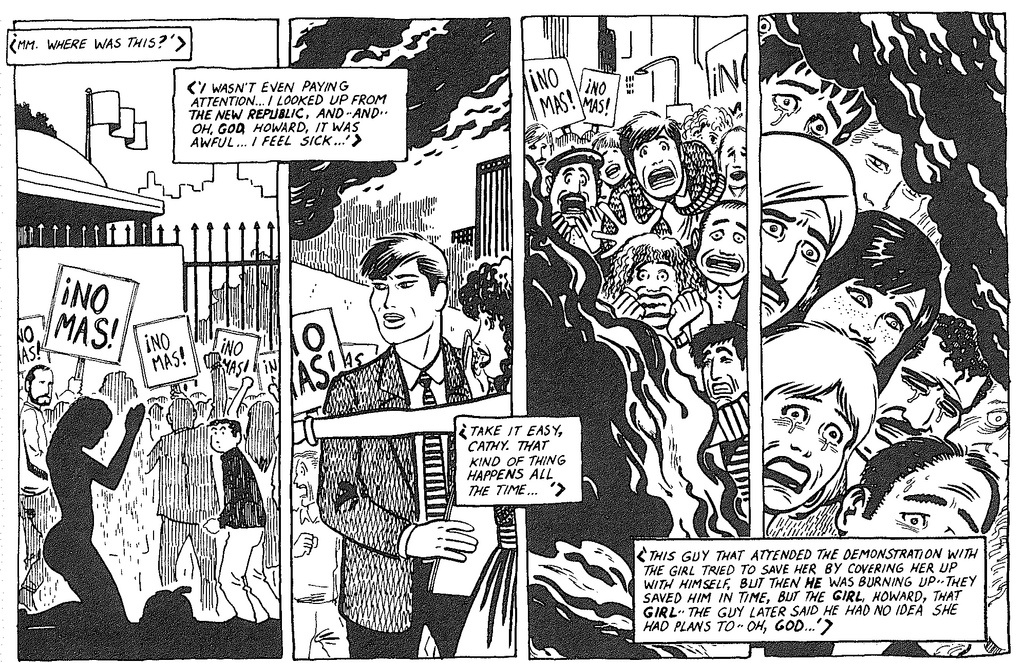
Any character in Love and Rockets stands a decent chance of being my favorite on any given day, because they are designed to be contemplated, and I’m the contemplative type. Today I’m thinking a lot about Tonantzin, one of the stars from Gilbert’s Palomar stories. She’s a stunningly hot small-town girl, so her rebelliousness first manifests itself by dressing provocatively and using sex to self-actualize. But her mind, heart, and psyche are all as dangerously overdeveloped as her body and sensuality, she gets swept up in a series of increasingly destructive obsessions, first with America and Hollywood, then with native culture and political protest, then with the danger of militarism and the possibility of nuclear annihilation. We can see that they all provide her with an emotional and intellectual way out of the confines of Palomar and her own body — indeed things start getting really bad when she’s taught to read — but because he never really describes it as such, we never realize how far she’s willing to go until it’s too late. Ultimately she comes to believe the only truly free intellectual and political act is to destroy the body she came in. It’s an unforgettable and utterly unique portrait of how good ideas and good people can nevertheless combine into something very bad. It’s a lesson that life entails losing vibrant, lovely people you neither want nor expect to lose. It’s a tragedy for a young woman and the people who love her. It’s a commentary on the hopelessness of the political climate of the day. Today I find myself wondering whether if she’d grown up in Hoppers instead of Palomar, and had punk and the Locas as a release valve instead of abnegative protest, would she still be alive today? On the flip side, would Speedy Ortiz still be alive if he’d grown up in Palomar instead of Hoppers, in a place where it was easier to form romantic relationships and harder to form ones based on a shared propensity for collective macho violence? This is the kind of thing you could do all day long with character after character after character from both Gilbert and Jaime. They’re drawn to be viewed from all angles.
Love and Rockets, the great serial comic by Gilbert, Jaime, and sometimes Mario Hernandez, is celebrating its 30th anniversary at the San Diego Comic-Con International this week. Inspired by Tom Spurgeon, this week-long, daily series of posts will highlight some of my favorite things about Los Bros Hernandez and their comics. For more information, click here.
Comics Time: The Walking Dead #100
July 13, 2012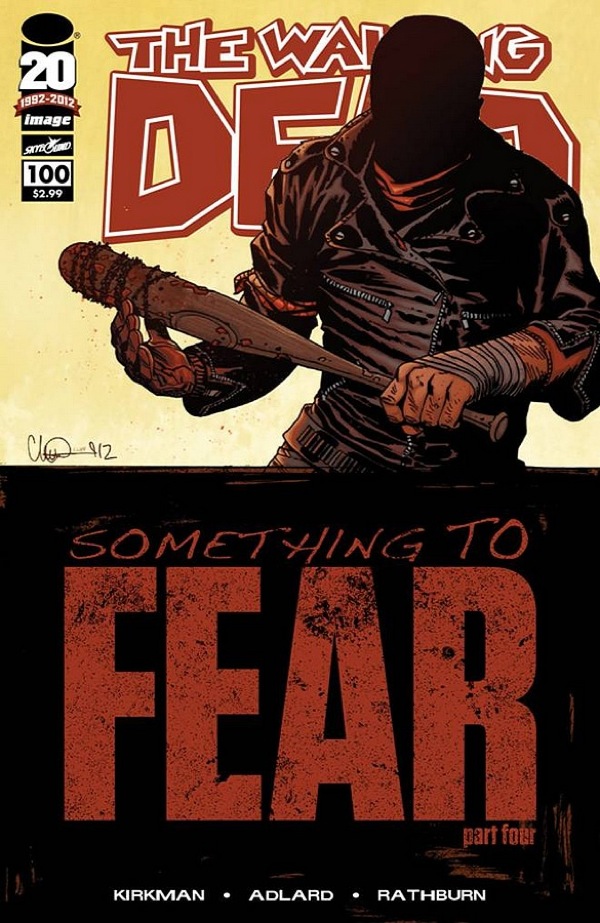
The Walking Dead #100
Robert Kirkman, writer
Charlie Adlard, artist
Image, July 2012
30 pages
$3.99
Buy it via Skybound
For today’s Comics Time review, please visit The Comics Journal.
Your Love and Rockets 30th Anniversary thought of the day
July 12, 2012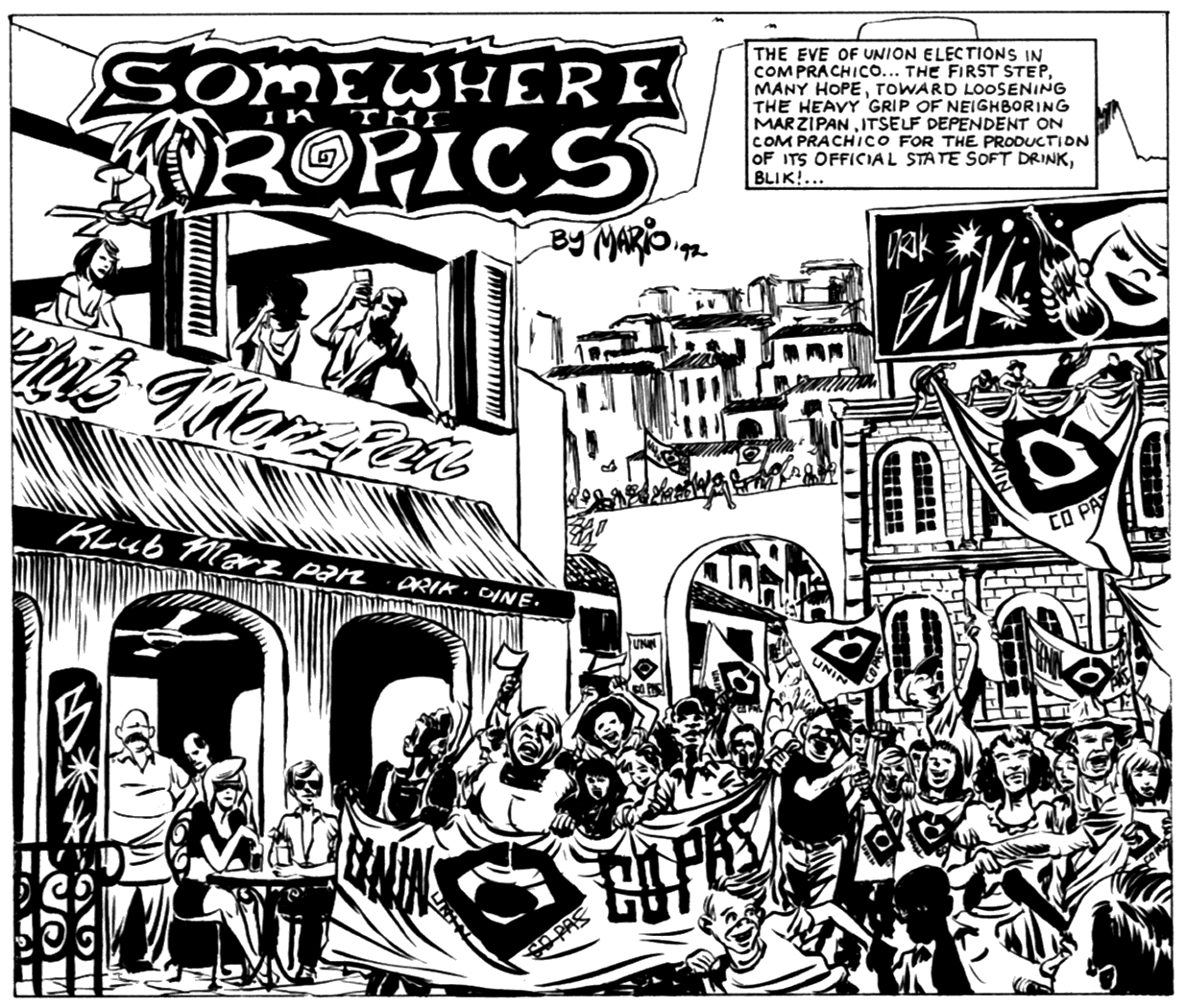
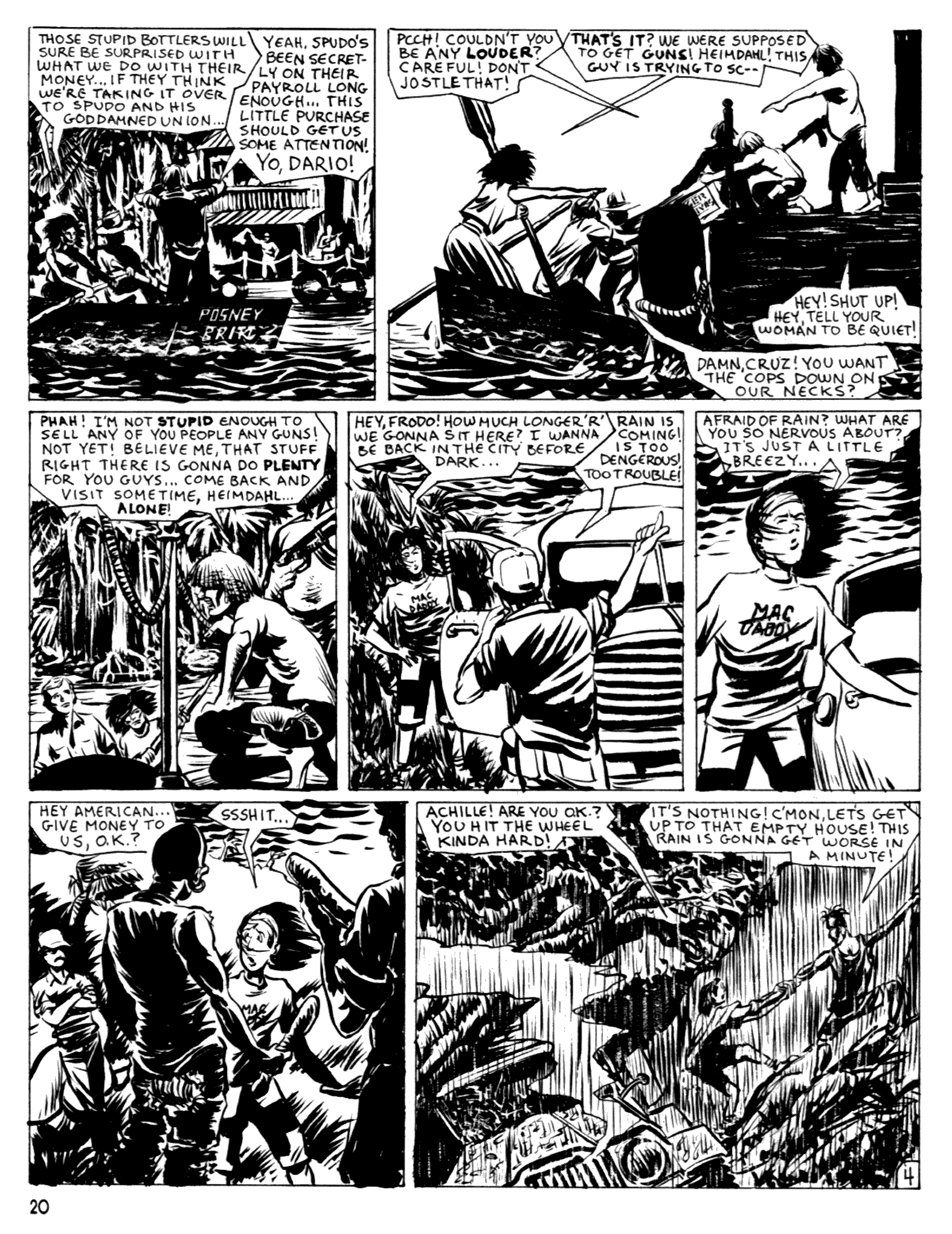
Mario Hernandez is the great lost alternative cartoonist, the Lost Bro Hernandez. His interest in cosmopolitanism, leftist politics, the conflation of activism and terrorism by the authorities, the pas de deux between terrorism and authoritarianism, the revolutionary and counterrevolutionary power of art and pop culture, the Third World as a petri dish for first-world government’s reimportation of radicalism, all within the framework of vaguely science-fictional thrillers — he is in many ways the perfect comics-maker for our present moment. With its heavy use of blacks his style sits comfortably alongside those of his brothers, but its density and its bold slashing brushstrokes set it completely apart. If he’d had the time or inclination to produce the same volume of work, published with the same regularity, as his brothers, we’d likely have a third pantheon-level creator from the same generation of the same family, an astonishing thing to contemplate. As it stands we have a hidden treasure, a single gem in a stack of gems, and that’s not so bad either.
Love and Rockets, the great serial comic by Gilbert, Jaime, and sometimes Mario Hernandez, is celebrating its 30th anniversary at the San Diego Comic-Con International this week. Inspired by Tom Spurgeon, this week-long, daily series of posts will highlight some of my favorite things about Los Bros Hernandez and their comics. For more information, click here.
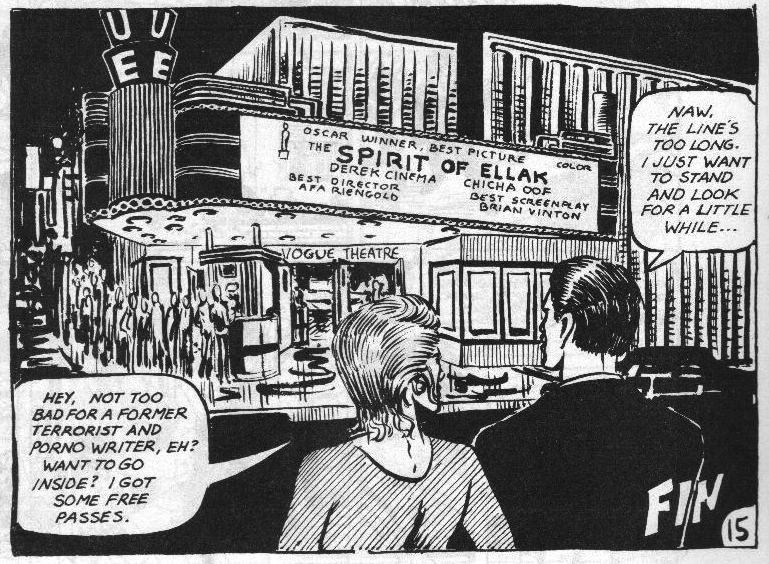
Carnival of souls: Special “San Diego Day One” edition
July 11, 2012* Tom Spurgeon hadn’t even arrived in San Diego yet before he started rolling out killer coverage of the comics side of Comic-Con:
** Here’s his list of five stories to watch at the show this year. If it really is more of a festival now, the CCI organization should go full Angouleme and allow a guest of honor to create a special programming slate. Kick the selection of the guest of honor to a vote by the previous year’s Eisner Award winners or something.
** Here’s the first in a series of posts on comics to buy at Comic-Con. I can get behind two of the three.
** Tom also lined up a couple of announcements. First, AdHouse is releasing an extremely limited edition collection of Jim Rugg’s painstaking notebook drawings called Notebook, available now. Rugg describes the project as “vacillat[ing] between celebration and satire,” which if you recall is the same sweet spot that made his and Brian Maruca’s Afrodisiac such a success.
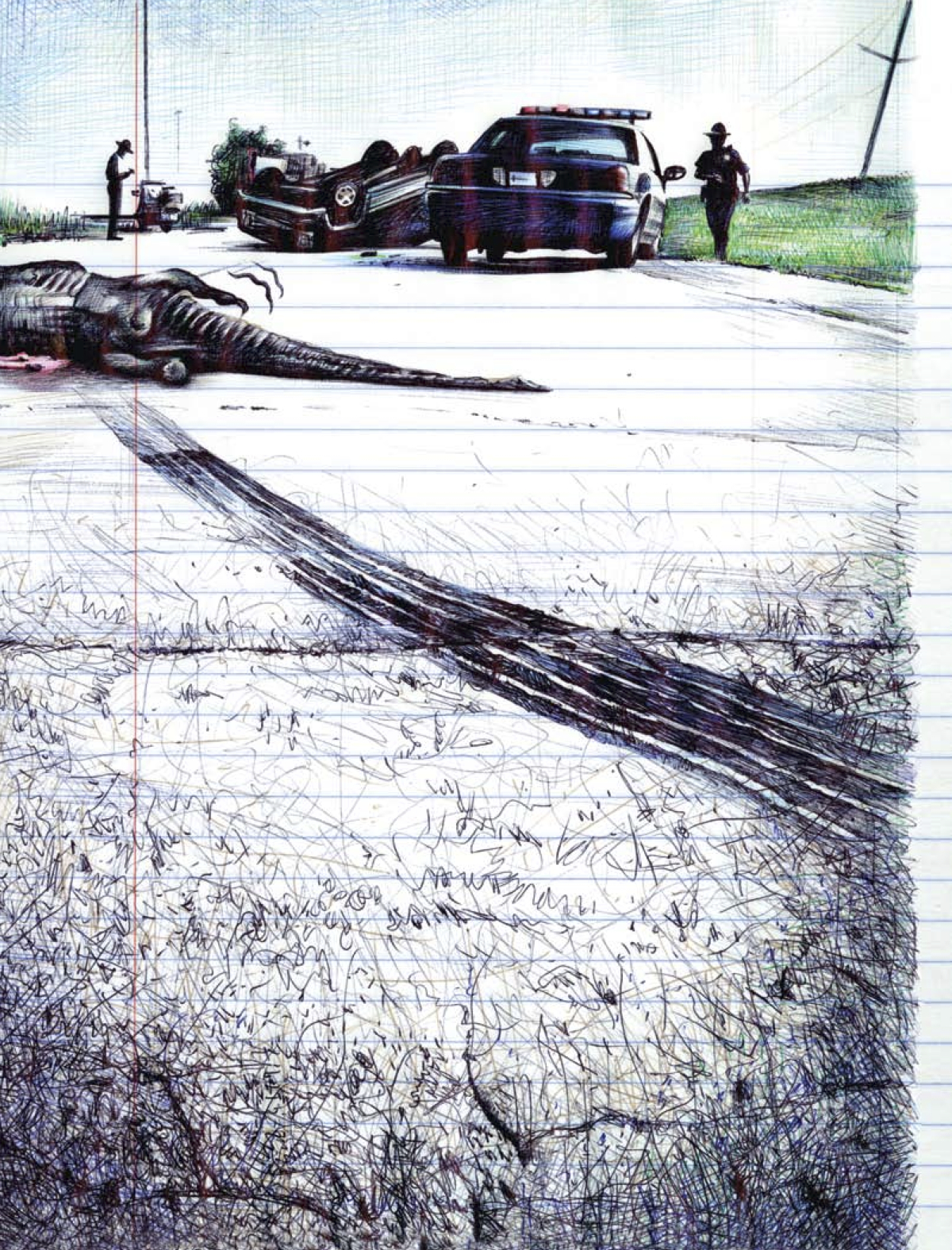
** Second, PictureBox is releasing an extremely limited edition book by Renee French called Bjornstrand, available at SPX in September. Like the Rugg project, it’s limited to 300 copies.
* Drawn and Quarterly previews the new Brecht Evens graphic novel they’re unveiling at San Diego, The Making Of. Would you believe it looks pretty?
* Graeme McMillan on the 30th Anniversary of Love and Rockets. For what it’s worth, Beto’s recent work is far less frivolous and indulgent than Graeme believes. It’s actually nothing less than an ongoing interrogation of, even condemnation of, his fetishes. It’s as strong an exploration of the consequences of child sexual abuse as comics has ever produced this side of Debbie Dreschler, too. Not an easy read, to be sure, but also not a stupid read.
* In other news…
* Tucker Stone runs down some of the year’s most anticipated remaining releases for Flavorpill, including works by Chris Ware, Hope Larson, Jacques Tardi, Johnny Ryan, David Lasky, Noah Van Sciver, and Los Bros Hernandez. Always a pleasure to read Tucker’s dead-on, succinct summaries of the appeal of folks like these.
* LOL, James Robinson is off that not-appealing-to-people-who-like-He-Man He-Man comic after one issue, replaced by DC’s designated dogsbody Keith Giffen.
* MoCCA intends to relocate its museum, which seems like the kind of thing they might have included in their announcement that they were closing the old one.
* Hooray, new Cindy and Biscuit from Dan White!
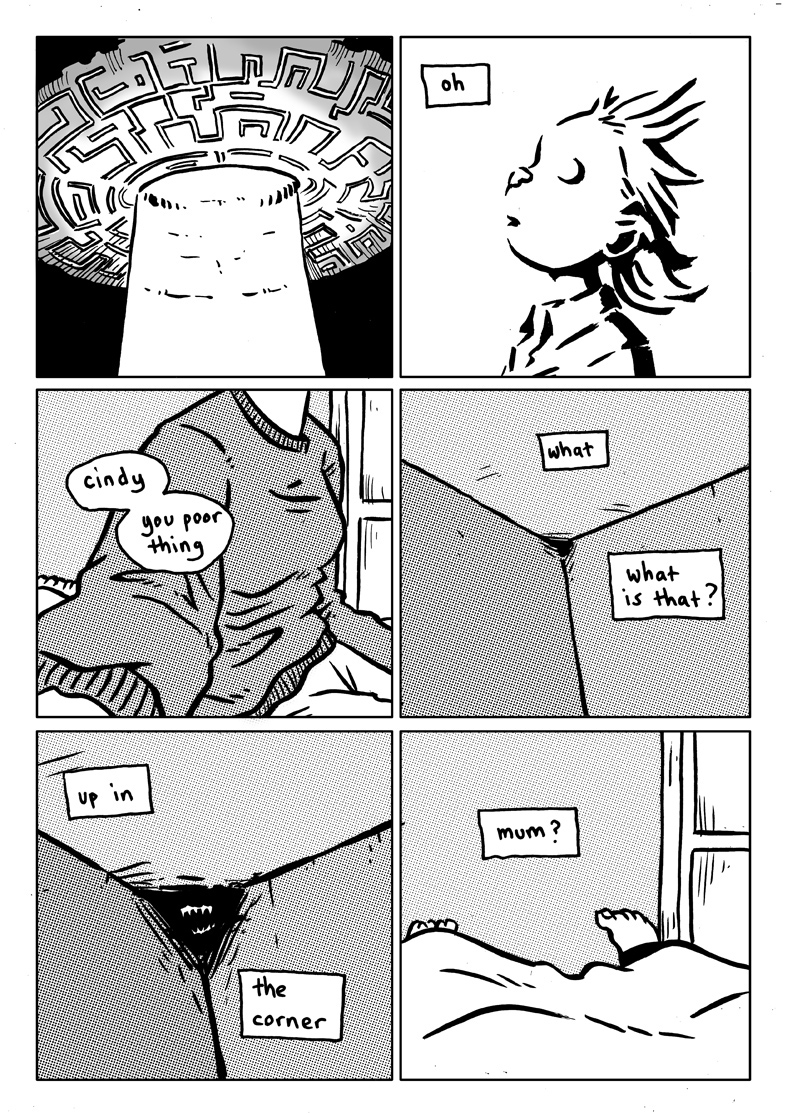
* I enjoyed Steven Hyden’s piece on Nine Inch Nails’ masterpiece The Fragile for the Onion AV Club. Music writing about work I really, really, really, really love, even when we’re basically on the same wavelength, almost always contains one or two ideas that make me want to turn a cereal bowl upside down and smash it to pieces with the fleshy underside of my fist—this is why I’ve read a grand total of, I think, half an entry on that Bowie Songs blog—and there’s no album that means more to me than The Fragile, I don’t think, so I expected to be driven nuts, but no. I’ll take “alt rock’s Raging Bull,” sure.
Your Love and Rockets 30th Anniversary thought of the day
July 11, 2012
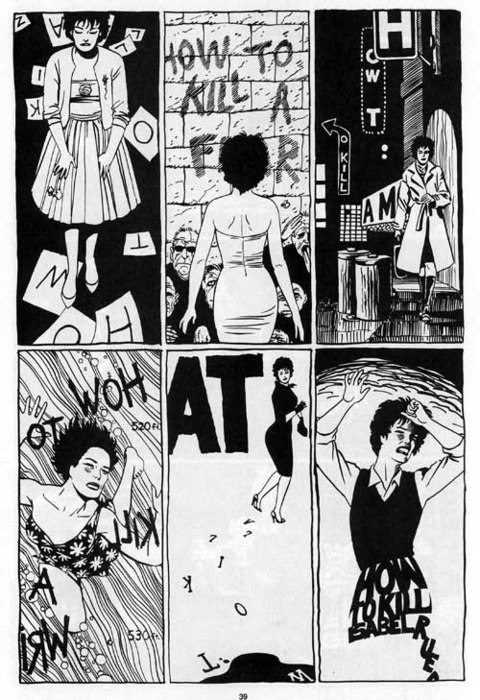
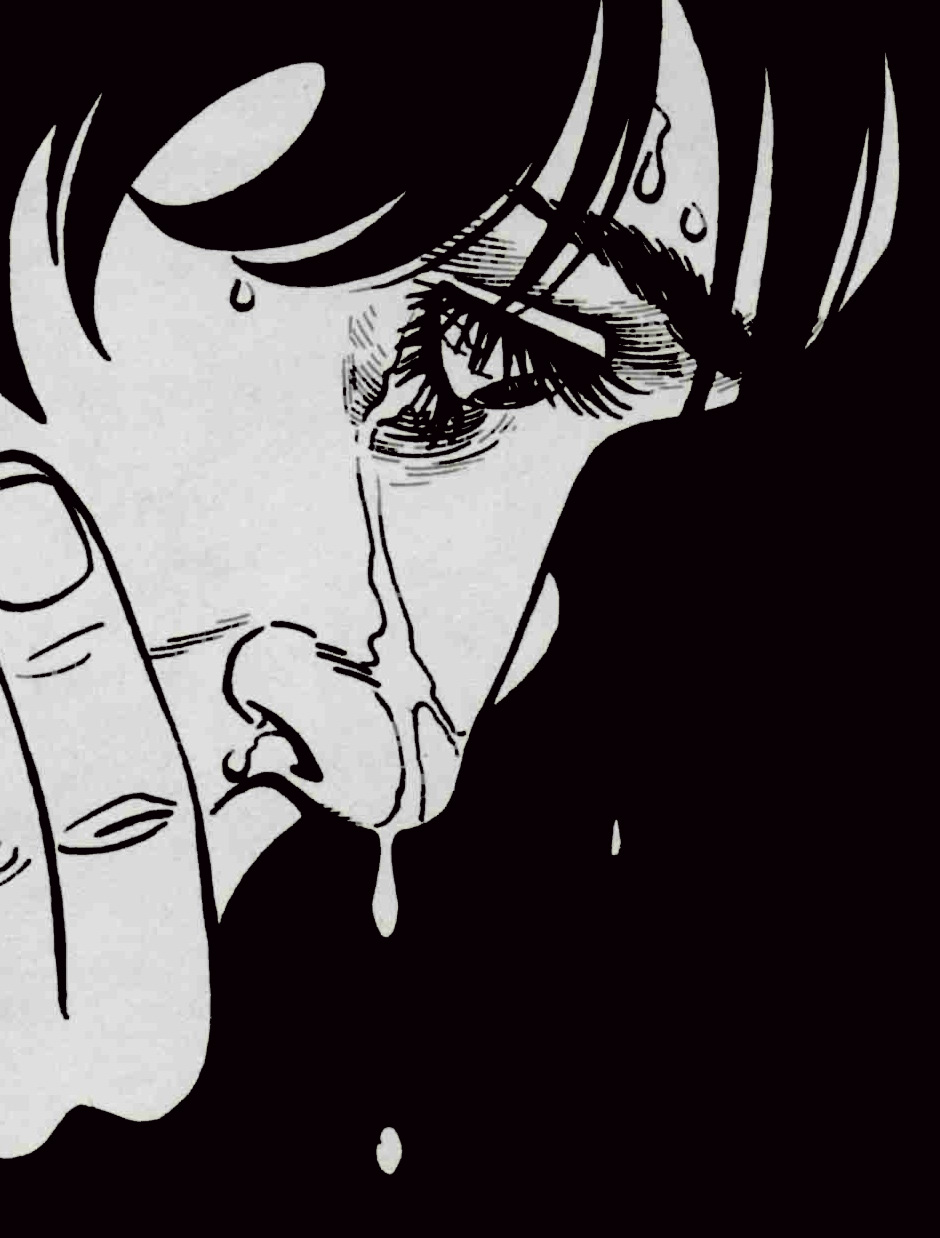
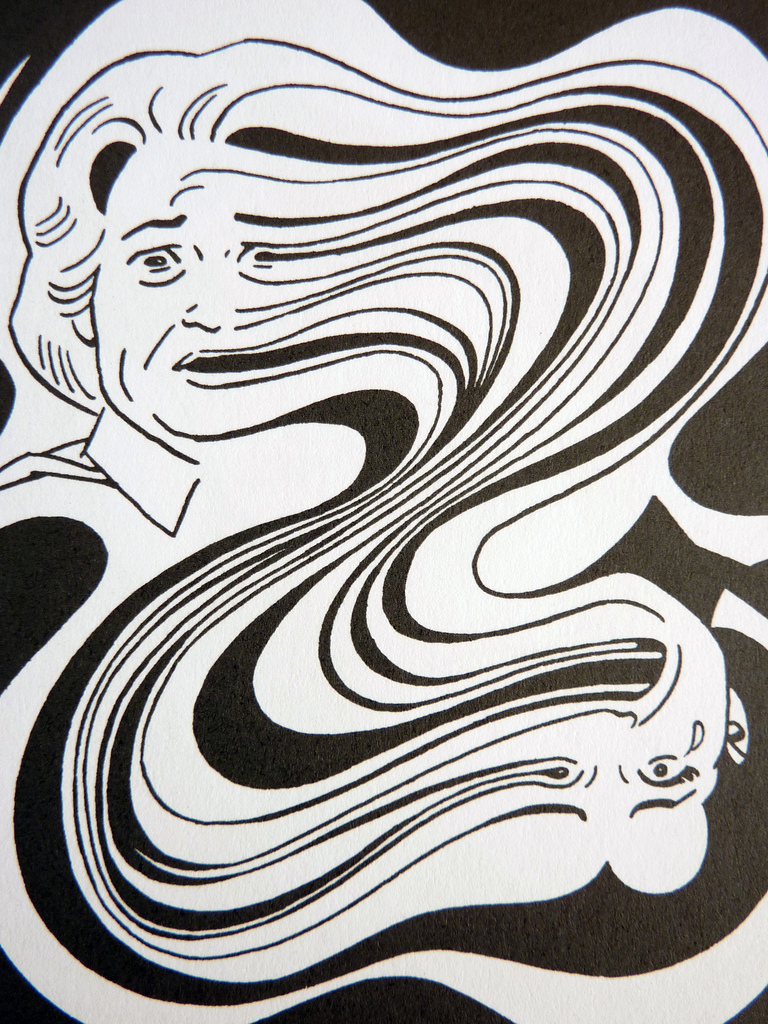
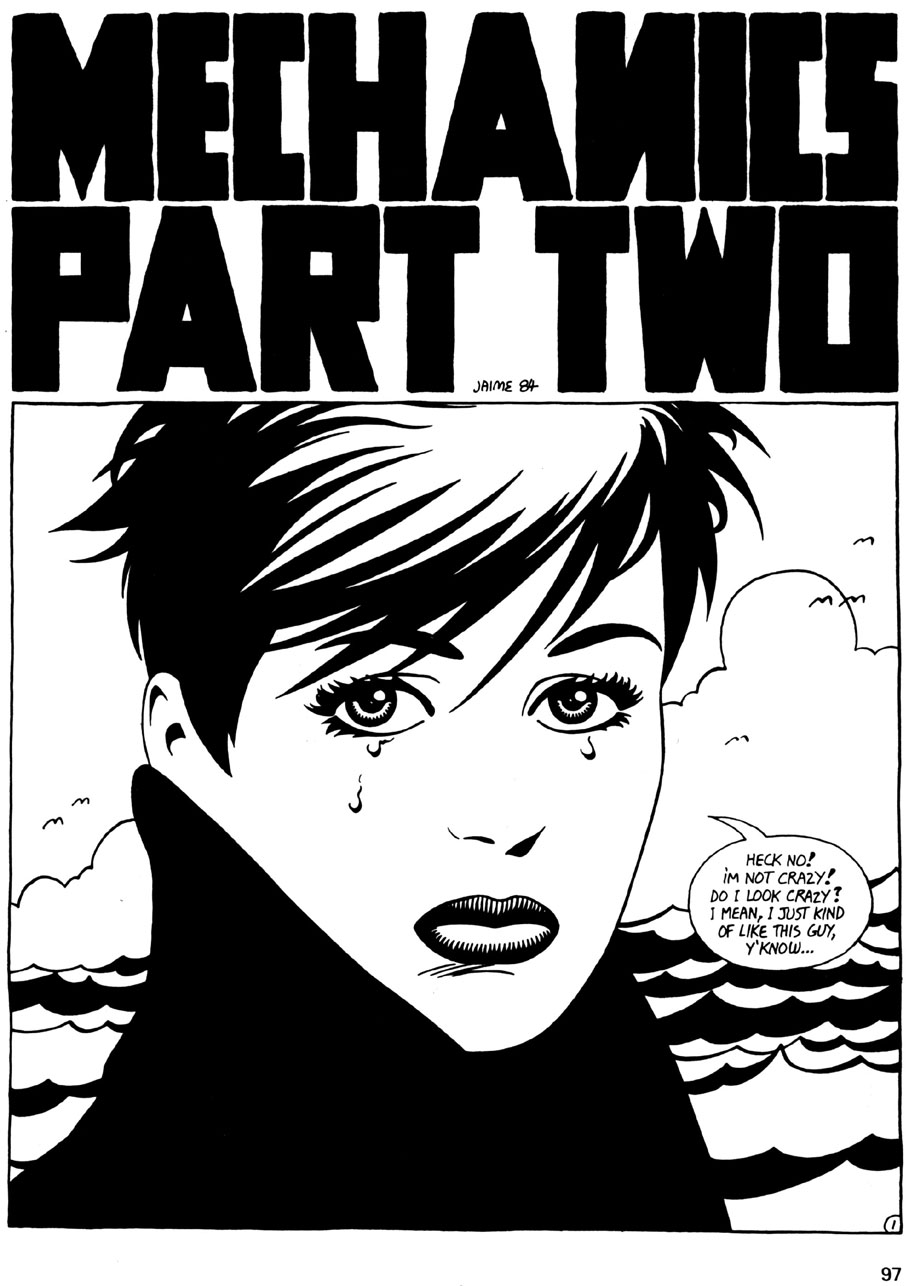
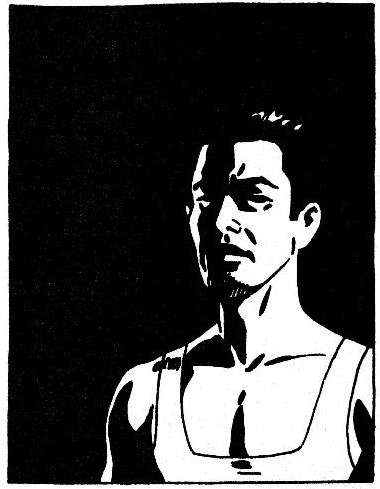
Jaime Hernandez is comics’ greatest maker of standalone images. His blacks, his typography, his sense of style, the drama of his line, the sense of balance and momentum even within a single image, his use of powerful moments to convey character, the whole nine. Out of all his peers in the ’80s and ’90s alternative comics movement — the stuff I think of as High Alt, the solo anthology series cartoonists who eventually coalesced around Fantagraphics and Drawn & Quarterly, Xaime and Beto and Ware and Burns and Clowes and Brown and Doucet and Bagge and Tomine and Sacco and Woodring and French — his makes him uniquely suited for the Tumblr era, when the rebloggable, context-free image is king. As such he stands the best chance of elbowing his way into the new canon currently being established as a reaction against High Alt and its forebears, consisting mainly of high-impact, visually dazzling genre comics whose work thrives in a one-at-a-time context — Kirby and Moebius and Otomo and Miller and Chaykin and Manara and pre-alt Mazzucchelli and McCarthy and Graham. But his best images often come within the flow of a story in addition to pin-ups, posters, covers, and title pages, and his interests broaden the canon-of-spectacle beyond solving problems through violence and/or sexy stylishness. They work equally well as vehicles for devastating emotional reveals, or as t-shirts.
Love and Rockets, the great serial comic by Gilbert, Jaime, and sometimes Mario Hernandez, is celebrating its 30th anniversary at the San Diego Comic-Con International this week. Inspired by Tom Spurgeon, this week-long, daily series of posts will highlight some of my favorite things about Los Bros Hernandez and their comics. For more information, click here.

Comics Time: Fatima: The Blood Spinners #1
July 11, 2012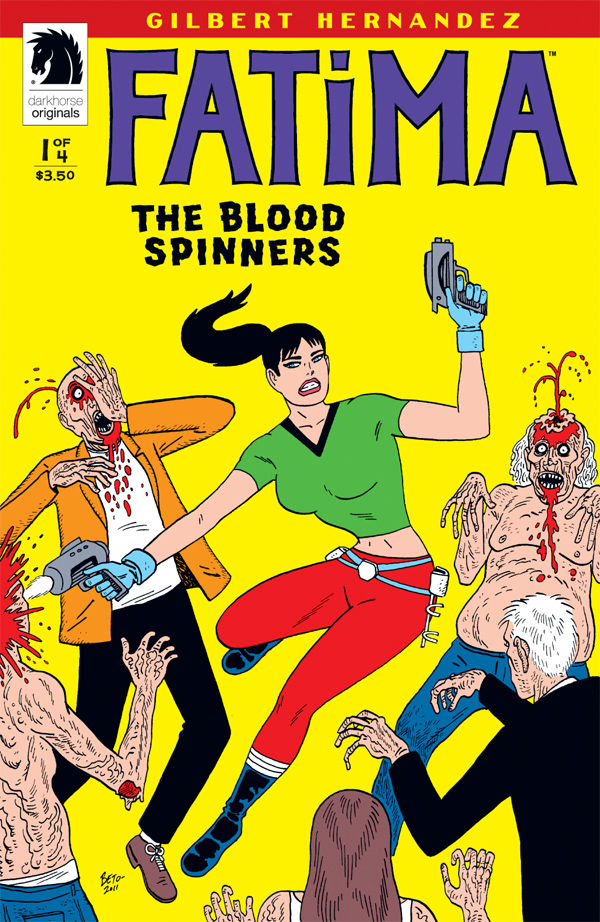
Fatima: The Blood Spinners #1
Gilbert Hernandez, writer/artist
Dark Horse, June 2012
24 pages
$3.99
Buy it from Dark Horse
For today’s Comics Time review, please visit The Comics Journal.
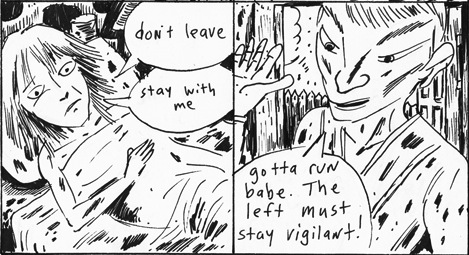
Carnival of souls: Special “San Diego pre-game” edition
July 10, 2012* The San Diego Comic-Con International starts tomorrow evening, but for all intents and purposes it’s already underway, if by “all” you mean “PR.”
* The main announcement to break through the fog for me so far is that Fantagraphics will be debuting not only Love and Rockets: New Stories #5, which I think it’s safe to say is eagerly anticipated following last year’s installment, but also a new line of L&R t-shirts OMGGGGGGGGG!!!! There’s no more t-shirt-ready artist in all of comics than Jaime, and Gilbert’s no slouch either. UPDATE: THEY’RE ONLY AVAILABLE AT THE CON, BOOOOOO TO THAT, BOOO BOO BOOOOOOOO, SERIOUSLY FUCK THAT

* If you didn’t read Tom Spurgeon’s essay about the 30th anniversary of Love and Rockets, Los Bros Hernandez, and the San Diego Comic-Con, you really should. Aside from making a terrific capsule-format case for the greatness of all three cartooning Hernandez brothers and their series as a whole, Tom reminds us that Comic-Con is what we make of it, and that a better way to keep the Comic in Comic-Con than joking about movie studio people is to find and engage with the comics portions of it. A milestone anniversary of one of the greatest comics of all time is a pretty easy way to do that.
* The death of a Twilight fan struck by a car outside the convention center is an awful way to start the show. (Via Jill Pantozzi.)
* In other news…
* The Mindless Ones wrap up their commentary on the latest League of Extraordinary Gentlemen. Adam’s right that something about the Harry Potter battle felt inconsequential, but I ultimately decided that was the point.
* MoCCA’s physical museum closed abruptly. They charged an awful lot of money for table space and admission at their festivals and it’s a shame to see it wasn’t spent in such a way as to prevent this.
* David Bordwell provides an overview of the latest edition of his and Kristin Thompson’s Film Art, which doubles as an essay on filmmaking as a series of choices. Killer new cover for the book, too. No pun intended.
* Hey, wanna see a 3-D Craig Thompson/Theo Ellsworth jam comic?
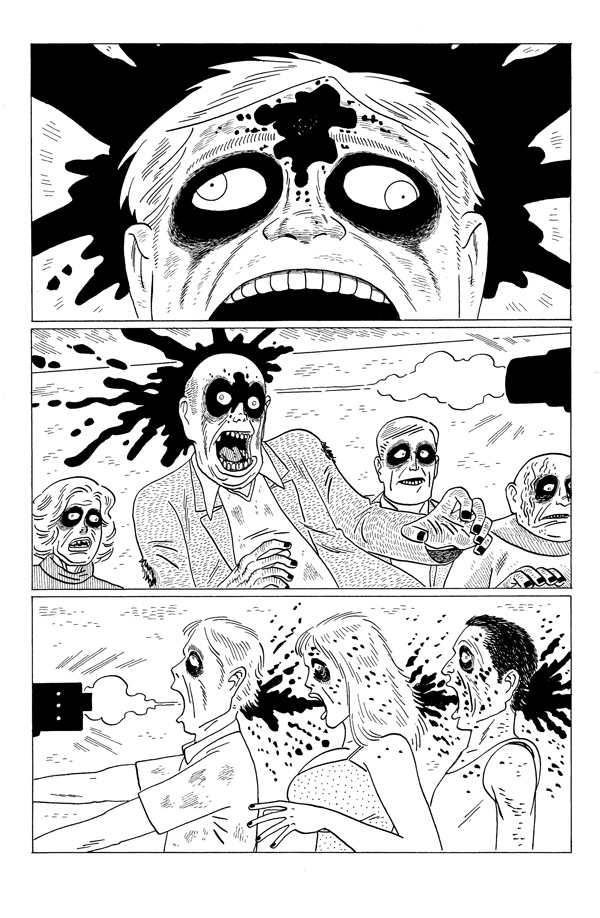
* I LOLd for this installment of Puke Force by Brian Chippendale.
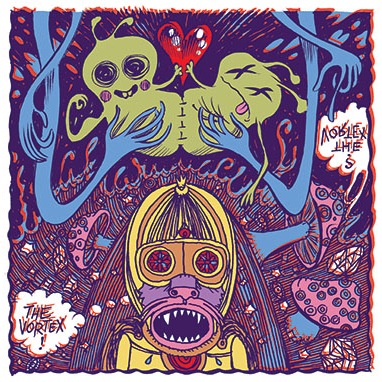
* Matt Furie does Simon Hanselmann’s Megg & Mogg. From the upcoming guest-star-studded “acid episode”!

* We’ve all been there, Scott Pilgrim. (Via Kiel Phegley.)

* A lady by my collaborator Isaac Moylan.
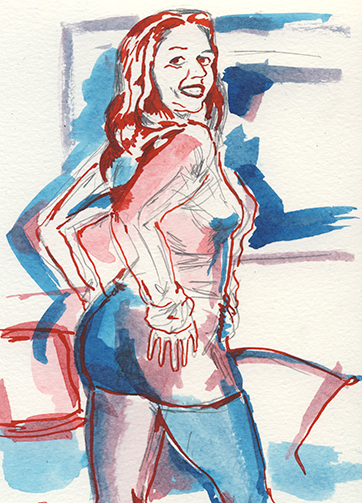
* A lady by my collaborator Jonny Negron.

* Chris Ware is an articulate and empathetic interview subject, even a moving one as the end of this interview makes very clear, but he is also just a machine for churning out hilariously embarrassed reactions to his own work. I wish I had the cock-of-the-walk attitude of all the people I’ve seen making fun of Ware for his genuine self-effacement. Must be nice to breeze through life like that! (Via Drawn and Quarterly.)
Your Love and Rockets 30th Anniversary thought of the day
July 10, 2012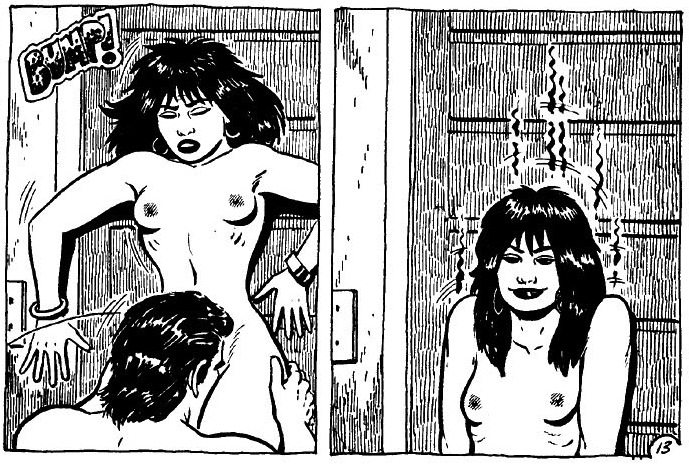
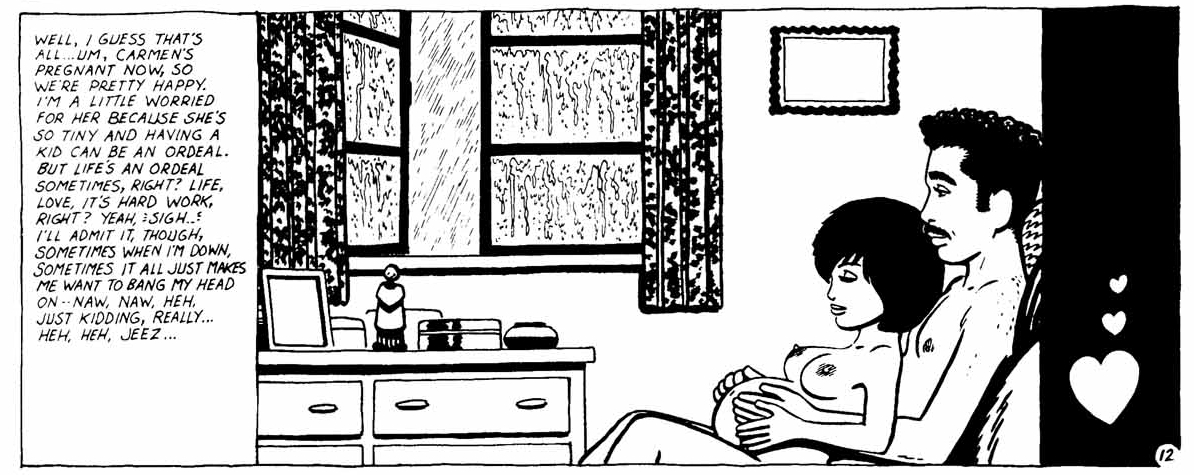
Outside of erotica and autobiography, no cartoonist has ever woven sex so indissolubly into the fabric of his comics as Gilbert Hernandez, in a fashion reflective of lived experience. In all of fiction comics, only writer Alan Moore comes close. This goes beyond simply drawing hot people, although before unfortunate circumstances intervene, Tonantzin and Khamo are probably the hottest woman and man in all of comics. Gilbert’s ability to describe and depict physical attraction between his couples frequently makes for the sweetest and most romantic aspects of those relationships—whether male or female, characters’ appreciation for their partners’ hips, tits, dicks, thighs, stomachs, faces and what-have-you, and for the pleasure those parts bring them, is often just plain adorable, however freaky or kinky or dirty things might get. But Beto’s larger argument appears to be that we can no more separate our physical desires from our lives than we can detach from our physical bodies in the course of living them. This of course has a dark side: Life is frequently terrible, and thus so is sex in Gilbert’s comics. And so his greatest creation, Fritz, is the em-body-ment of all these aspects of Beto’s work: She is the sweetest, sexiest, kinkiest, dirtiest, most tragic character of them all. There are no sex scenes in Beto’s comics—life is a sex scene, for better and for worse.
Love and Rockets, the great serial comic by Gilbert, Jaime, and sometimes Mario Hernandez, is celebrating its 30th anniversary at the San Diego Comic-Con International this week. Inspired by Tom Spurgeon, this week-long, daily series of posts will highlight some of my favorite things about Los Bros Hernandez and their comics. For more information, click here.
Your Love and Rockets 30th Anniversary thought of the day
July 9, 2012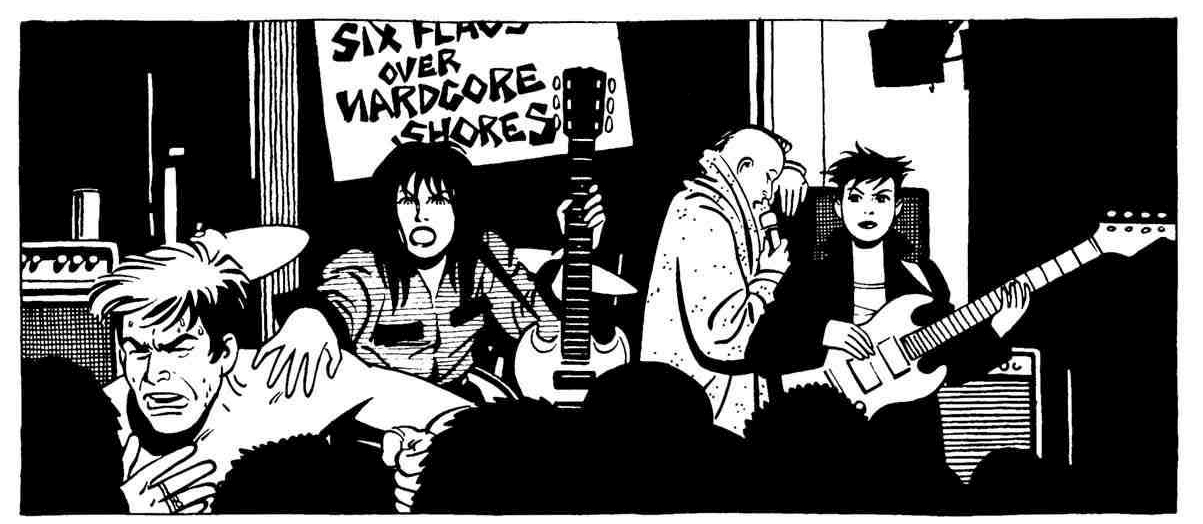
No cartoonist has ever captured the spirit of rock and roll — listening to it, watching it, performing it, defining your life with it — like Jaime Hernandez. Vanishingly few have even come close; most attempts are cringeworthy. Jaime not only nailed the style, and the intensity, and the specific idiom of his punk milieu (the graffito “NO CLASH, SEX PISTOLS OR THE RAMONES IN 1987!” in the panels below is worth more than entire critics’ bodies of work), and the nuts-and-bolts stuff like the body language of people playing music on stage, he also chronicled the lives of the characters involved long enough to be basically the only cartoonist ever to explicitly examine what it’s like when you grow up and grow older and discover that you no longer look and act and think like someone in the pit at your favorite band’s show.

Love and Rockets, the great serial comic by Gilbert, Jaime, and sometimes Mario Hernandez, is celebrating its 30th anniversary at the San Diego Comic-Con International this week. Inspired by Tom Spurgeon, this week-long, daily series of posts will highlight some of my favorite things about Los Bros Hernandez and their comics. For more information, click here.
Carnival of souls: The Last Xeric winners announced, Marchman vs. Watchmen 2, Fluxblog 2007, new CF/O’Malley/Bell, more
July 5, 2012* The winners of the final round of Xeric Grants for comics self-publishers have been announced. Aidan Koch is the only name I recognize; given how many known quantities applied in use-it-or-lose-it fashion, that’s quite a compliment to all the other winners. While the Xeric Foundation is correct when they assert that cartoonists have far more options for self publishing now than they did when the Xeric was conceived, from crowdfunding to publishing direct to the web, the Xeric was much more than a means to an end — it provided opportunities for cartoonists who lack the fanbase or the social-networking aptitude to make crowdfunding viable, and it was as much an honorific as a practical grant. I wish they hadn’t stopped it, and I’m glad to see Tom Hart and Leela Corman’s SAW school pick up the tradition, albeit with far fewer zeros on the checks, with their new SAW micro-grant initiative.
* I’m enjoying the emergence of Tim Marchman as the guy who smacks around comics’ unethical practices for mainstream media publications. Today he holds the feet of Len Wein and DC to the fire over Before Watchmen for the Daily Beast. Wein is an interesting test case for this sort of thing, of all people doing Before Watchmen. He edited the original and thus could reasonably be expected to have a keener sense of the integrity of the thing, which I assume is why Marchman chose to interview him about scabbing for the prequel. And he himself has been screwed way harder in a similar fashion than anyone else involved, never seeing a multimedia dime for his hand in co-creating Wolverine, though that could cut both ways in a situation like this. Finally, his house burned down in the last few years, bringing to the fore the economic issues that might entice someone to take on a project like this, which has been hinted at but infrequently discussed. Marchman doesn’t bring up any of that, unfortunately, but other than that it’s a barnburner of a piece, especially in terms of addressing and outright mocking the ethical justifications offered for the treatment of Alan Moore. (It certainly beats this much-linked A.O. Scott/Manohla Dargis thing on superhero movies for the Times, which passes off rhetorical packing peanuts like “Every age has the superhero it wants, needs or deserves” as insight, though I do agree with the broad thrust of their argument against the genre.)
* Matthew Perpetua’s mighty Fluxblog has just released its 2007 survey mix, the latest in his series of sprawling eight-disc best-of compilations for each year of Fluxblog’s decade of existence. This one is a real doozy.
* AdHouse is shutting down its distribution wing, noting that many of the boutique- and self-publishers AdDistro handled are more widely available now than they used to be. Good on Chris Pitzer for doing yeoman’s work on this.
* Marvel is relaunching many of its series with reshuffled creative teams this autumn in an initiative called Marvel NOW! As a reader, I see this primarily through the lens of having a beginning, middle, and end to long, high-quality runs on various books I’ve enjoyed over the past few years, which I’m looking forward to.
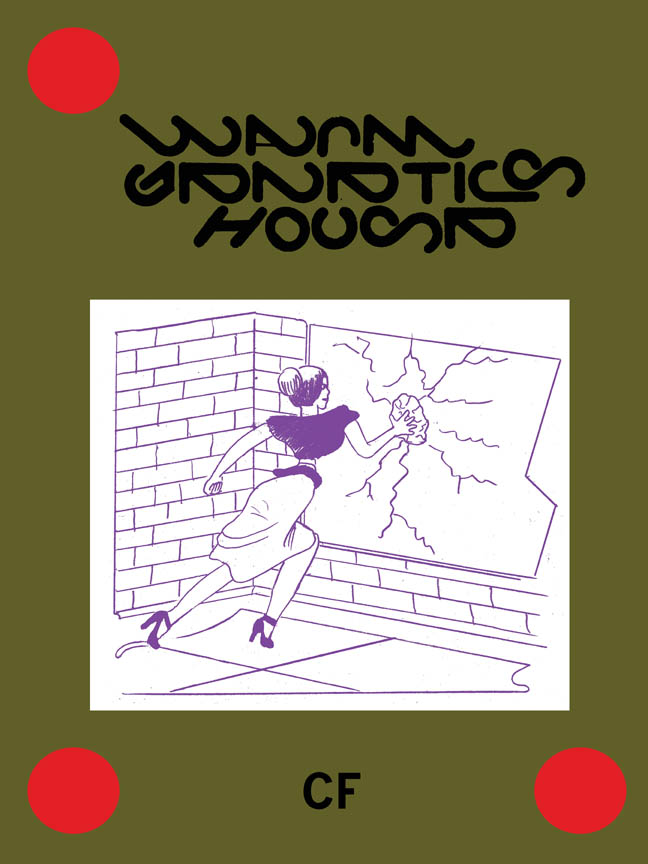
* PictureBox announces delays to CF’s Powr Mastrs 4 and Brian Chippendales (still ongoing-as-a-webcomic) Puke Force, but a reveals a new CF book, Warm Genetics House, to make up for it. I’ll take it!
* This CAKE recap makes it official: Closed Caption Comics is running neck and neck with Secret Acres for “best con reports.” As a bonus, this includes Noel Freibert’s review of Thickness #3, the first and afaik only such review to date. I’m grateful that in reviewing my contribution with William Cardini, Noel didn’t seek payback for the “cat in the microwave” incident. See, Noel — I told you there was a nicer way to explore splattery textures!
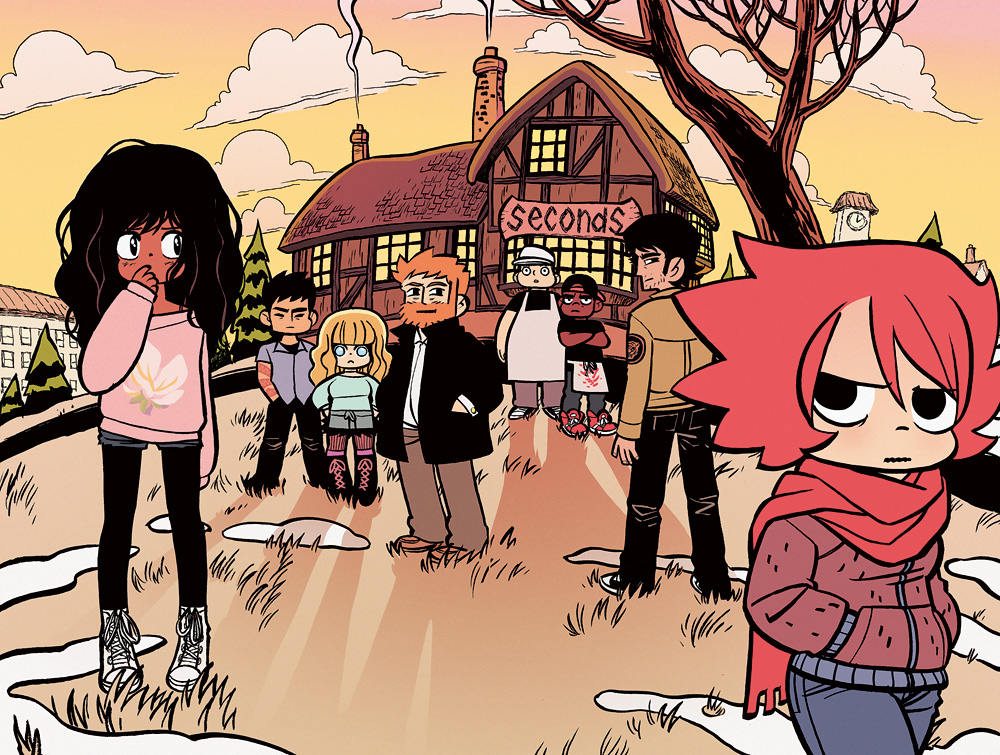
* As far as I know, this is our best glimpse yet of the cast for Bryan Lee O’Malley’s next comic, Seconds.
* My pal TJ Dietsch interviews Brandon Graham about Prophet, his marvelously modular sci-fi adventure series for Rob Liefeld’s Extreme line. Prophet is an object lesson in making individual installments count, and in the value of thinking biiiiiiiiiiiiiiiig in SFF yet never getting lost in the caverns of your own ideas.
* Chris Butcher on the problems with professional publishers using Kickstarter to fund the books they publish. It always seemed to me that publishers take your book, print it, distribute it, and market it, on their own dime. That’s what a publisher is. Chris’s point is basically “Well, that’s what a publisher was.” He’s not outraged, he’s simply pointing out that this is changing — has changed — and wondering how to proceed.
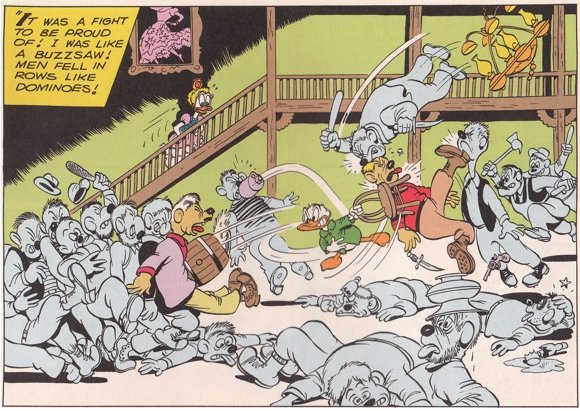
* Today in the “saving it for when I’ve read the books” column: Tom Spurgeon on the Joe Sacco collection Journalism and Tucker Stone on Carl Barks’s Disney ducks comics. The last panel he uses to illustrate the post should be issued to superhero artists with their 1099s.
* Speaking of which: Tom Spurgeon on Jaime Hernandez’s superhero slobberknocker, God and Science: Return of the Ti-Girls. No greater pleasure in writing-about-comics than reading my favorite critic write about his favorite cartoonist.
* The Mindless Ones annotate/critique Alan Moore & Kevin O’Neill’s The League of Extraordinary Gentlemen Vol. III: Century #3: 2009: Part one, part two, part three tk. Some pretty robust debate in these.
* One last “good critics on good comics” entry: Chris Mautner guides you through the work of Jacques Tardi, who probably goes hand in hand with Jason as the European cartoonist who’s most benefited from Fantagraphics’ thoughtful, consistent approach to collecting his work.
* Gabrielle Bell is doing another round of July Diary daily comics! This one’s my favorite so far. So subtly funny.
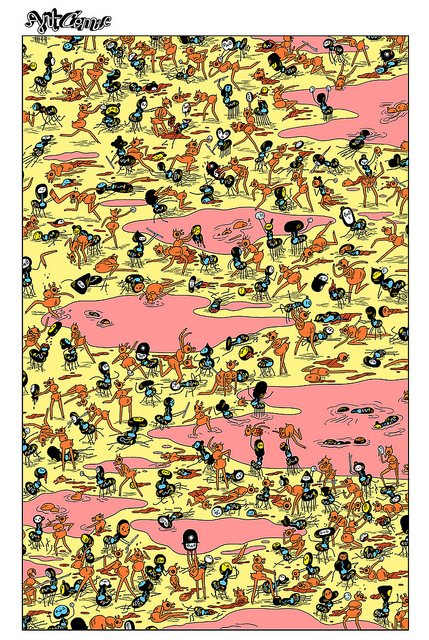
* I was so convinced that this remarkable installment of Ant Comic by Michael DeForge was an homage to the third Where’s Waldo? book with all the battles in it, but I asked and it’s not. It’s still remarkable, however.
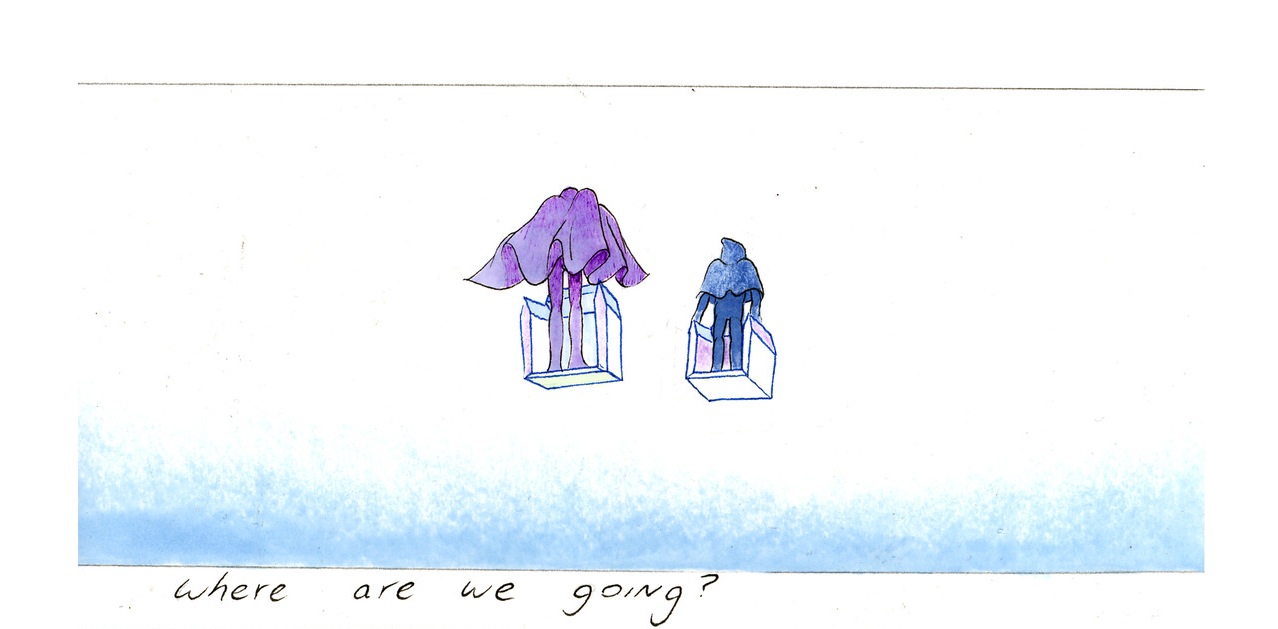
* Jonny Negron does a dream comic. Sure, I’ll eat it.
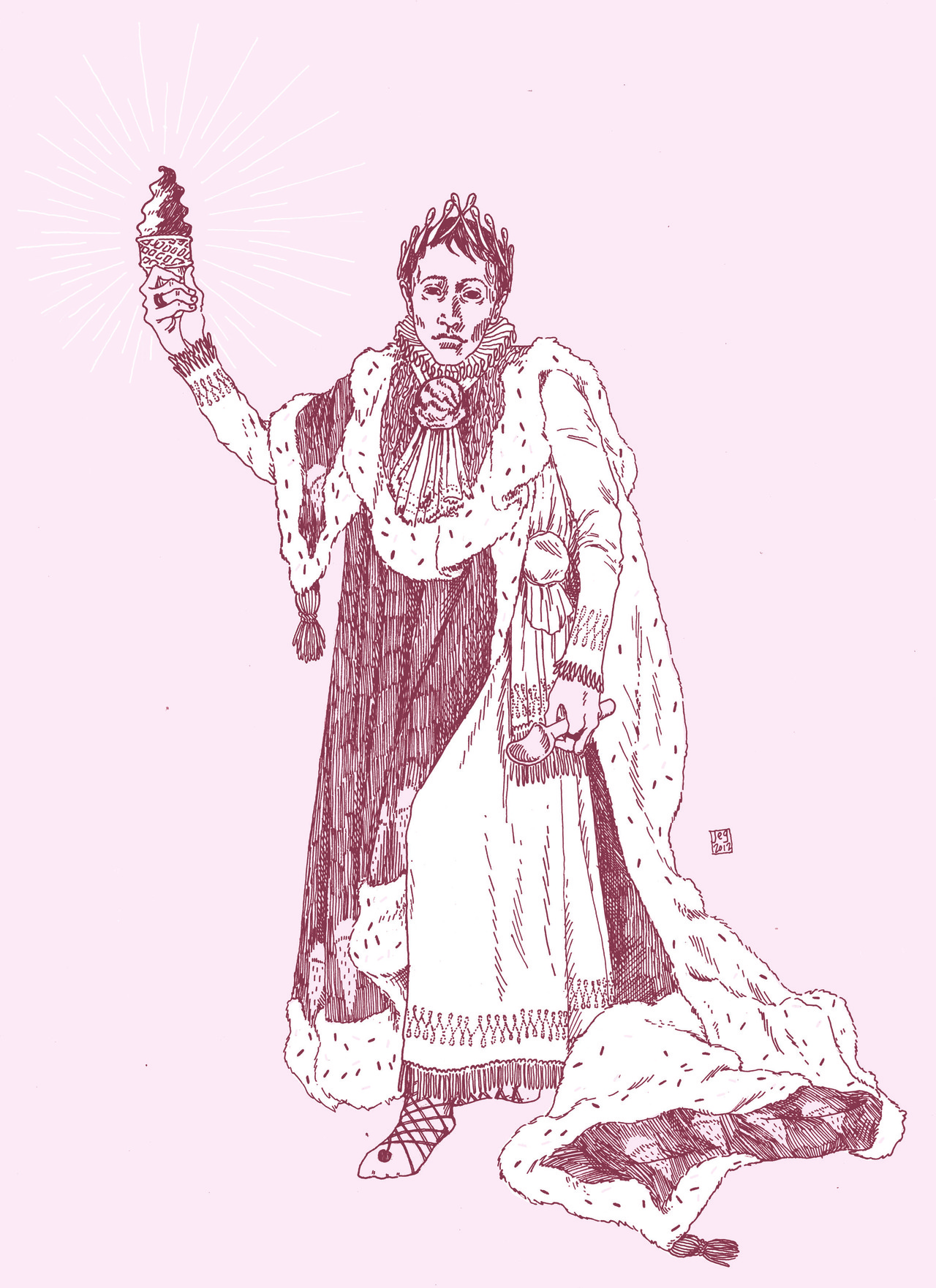
* Looks like my friend and collaborator Isaac Moylan will be drawing a lot this summer.

* Julia Gfrörer does fanart for Wallace Stevens’s “The Emperor of Ice Cream.” What a country!
* A child’s guide to Dogs and Water, by Anders Nilsen.
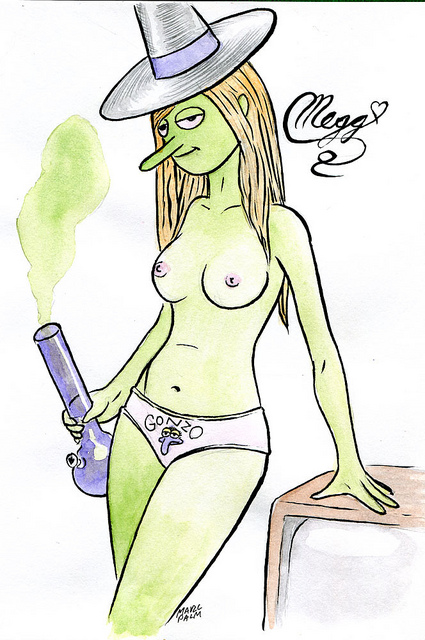
* This pinup of Megg from Simon Hanselmann’s webcomics by Marc J. Palm represents the shortest amount of time between “discovering a webcomic” and “discovering sessy fanart for that webcomic” I’ve ever experienced. Hooray!
* Happy Fourth of July from Jillian Tamaki and Frances! (And a not-so-happy one from SuperMutant Magic Academy guest artist Frank Stockton. My god.)

* The new Charli XCX song sounds exactly like a collaboration between Katy Perry and Leviathan from Hellbound: Hellraiser II.
* One of the nice things about the Internet is I can operate a dedicated site where posting pictures of Kristen Stewart in shorts and a Led Zeppelin t-shirt is part of the remit.

Comics Time: The League of Extraordinary Gentlemen Vol. III: Century #3: 2009
July 2, 2012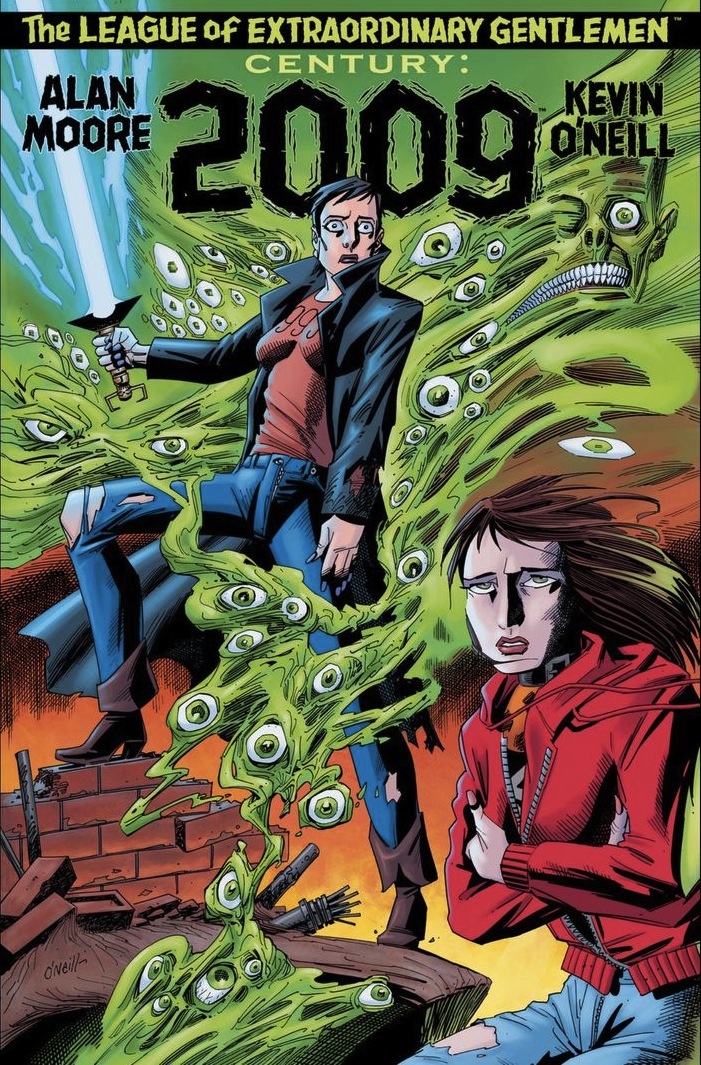
The League of Extraordinary Gentlemen Vol. III: Century #3: 2009
Alan Moore, writer
Kevin O’Neill, artist
Top Shelf/Knockabout, June 2012
80 pages
$9.95
Buy it from Top Shelf
Buy it from Amazon.com

For today’s Comics Time review, please visit The Comics Journal.
Comics Time: Interiorae
June 28, 2012
Interiorae
Gabriella Giandelli, writer/artist
Fantagraphics, 2012
144 pages
$19.99
Buy it from Fantagraphics
Buy it from Amazon.com

For today’s Comics Time review, please visit The Comics Journal.

Carnival of souls: Bordwell on Sarris vs. Kael, Spurgeon & Brubaker, Simon Hanselmann, The Master, Jobriath, Jack Kirby, more
June 26, 2012* “I had a lot of fun with it – it gets extremely gross and gooey!”—William Cardini on our collaboration “The Cockroach” from Thickness #3. Order your copy today!
* According to Midtown Comics, new comics from Joe Sacco, Alan Moore, Carl Barks, Kevin Huizenga, David B., Gilbert Hernandez, and Josh Simmons come out tomorrow. And for fans of more traditional genre serials, there’s also new Grant Morrison/Chris Burnham, Ed Brubaker/Sean Phillips, Mike Mignola/Cameron Stewart, and Brandon Graham. That’s a fantastic new comics day right there.
* American film critic and auteur-theory pioneer/popularizer Andrew Sarris died last week, as you no doubt heard. It’s tough to think of another critic who had as much of an impact on popular understanding of their chosen field of coverage. Run, don’t walk, to David Bordwell’s lengthy and thoughtful post comparing Sarris to his arch-rival Pauline Kael. On the more personal end of things, I enjoyed Roy Edroso’s tribute.
* Tom Spurgeon interviews Ed Brubaker. This is one of the best superhero-creator interviews I’ve read in a very, very long time, both in terms of breaking news — Brubaker is leaving Captain America after nearly eight years writing it, during which time it was never less than a great time and frequently just great — and opinion — Spurge and Brubaker directly address creators’-rights flashpoints like Jack Kirby and Before Watchmen. Good on Tom for asking those questions, but better on Brubaker for answering them — you’d better believe that’s why they don’t get asked more often; there’s often just no point.
*
I haven’t even looked at these comics since the day I bought my last of them, and if you had asked me at the time I would have thought I’d have read them a half-dozen additional times by now. A lot of comics are like that, instant friends of the dormitory hallway variety and then suddenly you’re both decades older and you haven’t spoken in years and years.
—Spurge on Alan Moore & company’s Marvelman/Miracleman.
* George R.R. Martin updates us on various projects, including three that pertain to A Song of Ice and Fire.
* I’ve seen way too many people talk about Geoff Johns inserting a He-Man character he made up when he was eight years old into a He-Man comic he’s writing today like that’s a bad thing. Ahem.
* Submitted for your approval: Freak Scene, a new-underground art show opening at L.A.’s Synchronicity Space on July 6th featuring Benjamin Marra, Tom Neely, Johnny Ryan, Zach Hazard Vaupen, Jim Rugg, Bald Eagles, and many other leading lights of nasty alternative comics.
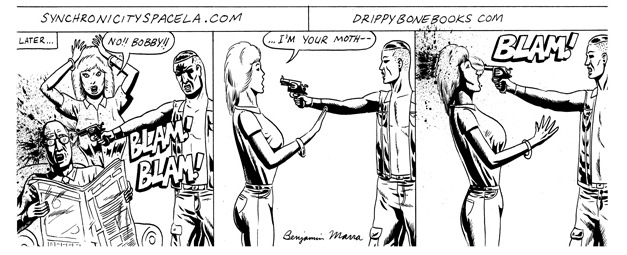
* Yeesh, this comic by Eleanor Davis is a doozy.

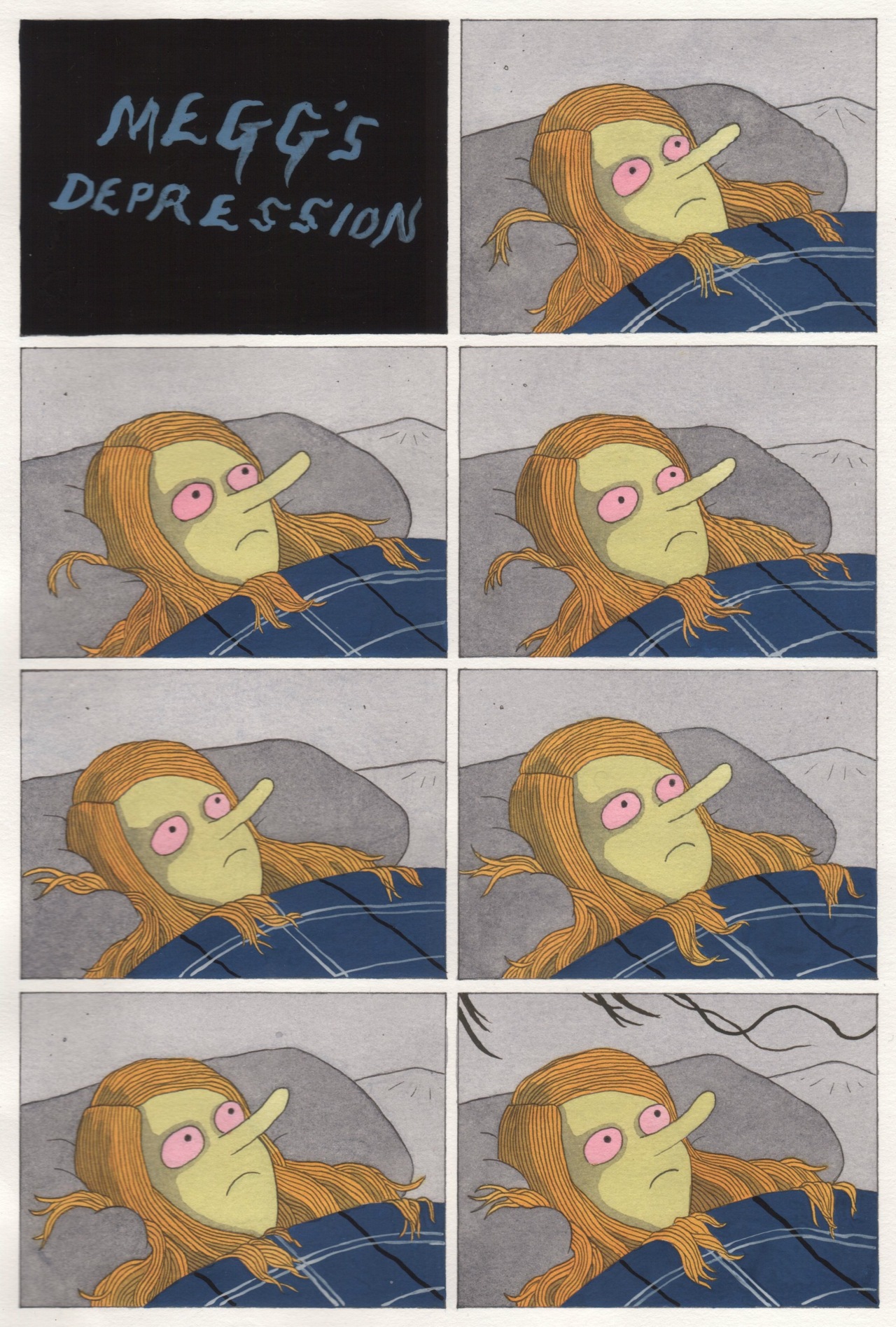
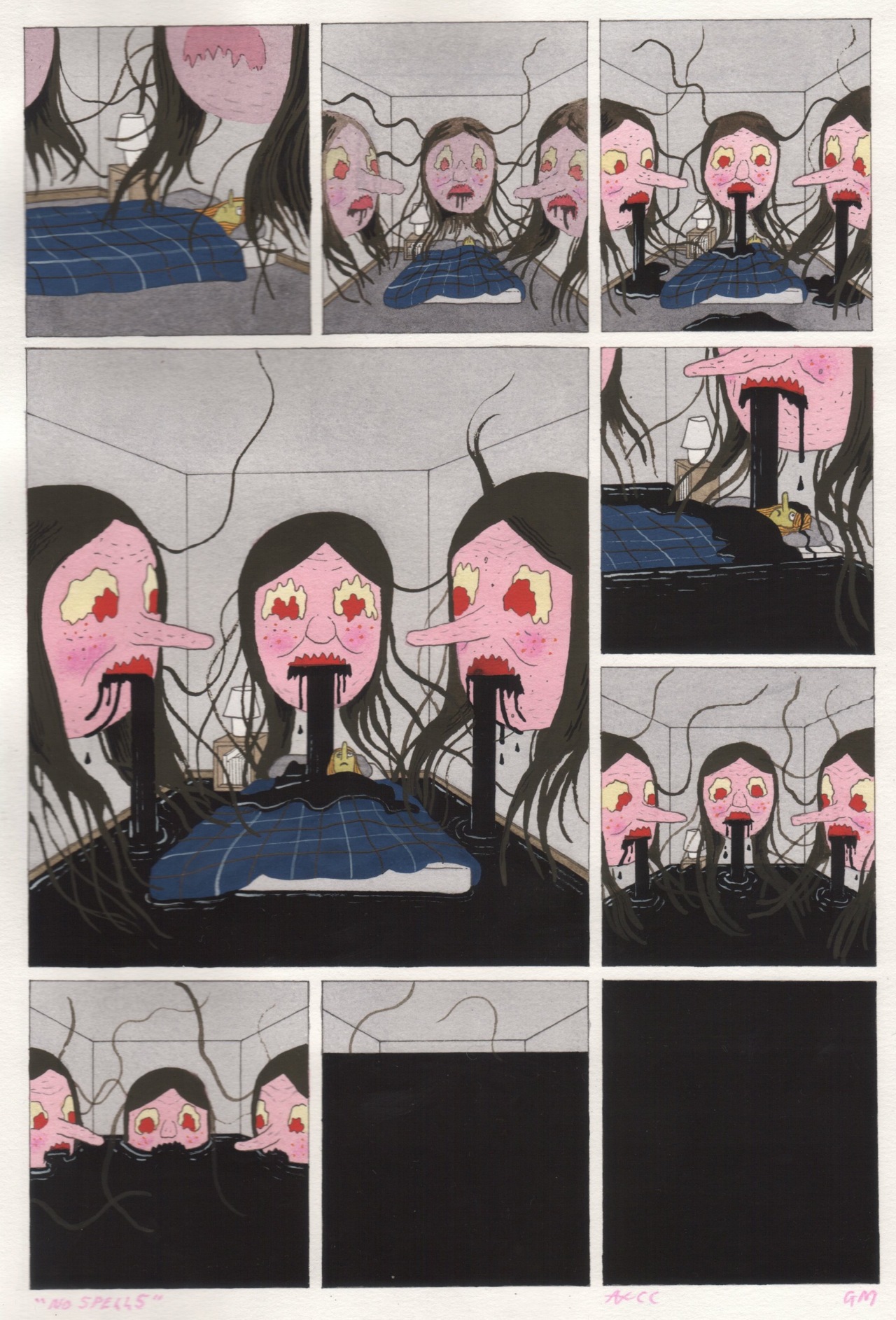
* I’d never seen Simon Hanselmann’s Megg and Mogg before, but my goodness. The character designs and humor are, heh, a bit indebted to Ben Jones, but the linework (that hair!) and sumptuous, understated coloring are things unto themselves. Terrific large-scale presentation on Hanselmann’s tumblr, too. (Via Frank Santoro.)
* Kate Beaton’s chops are ridiculous, which when coupled with the rigorous idiosyncracy of her sense of humor — her sense of where jokes are to be found — is what helps elevate her above her now-legion imitators.
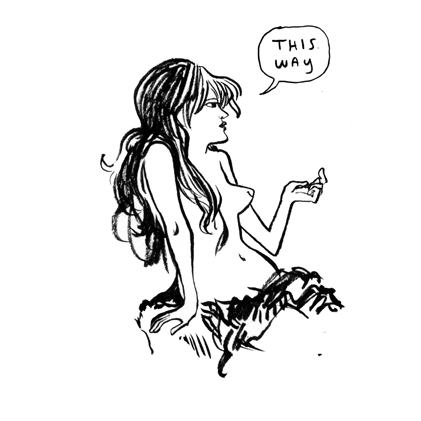
* I’m sure I say this nearly every week, but this is my favorite sexy Jonny Negron drawing in a long time.

* You’d think it’d be tough for Sam Humphries and Pete Toms’s new comic for Study Group, “Virginia,” to live up to the promise of this cover image, but they pull it off. It’s worth noting that Humphries is doing this at the same time he’s self-publishing more traditionally “indy” comics and doing work for hire for Marvel. It’s gratifying to see someone who could choose to do something else still do bonafide alternative comics.

* Your Uno Moralez gif/image gallery of the week.

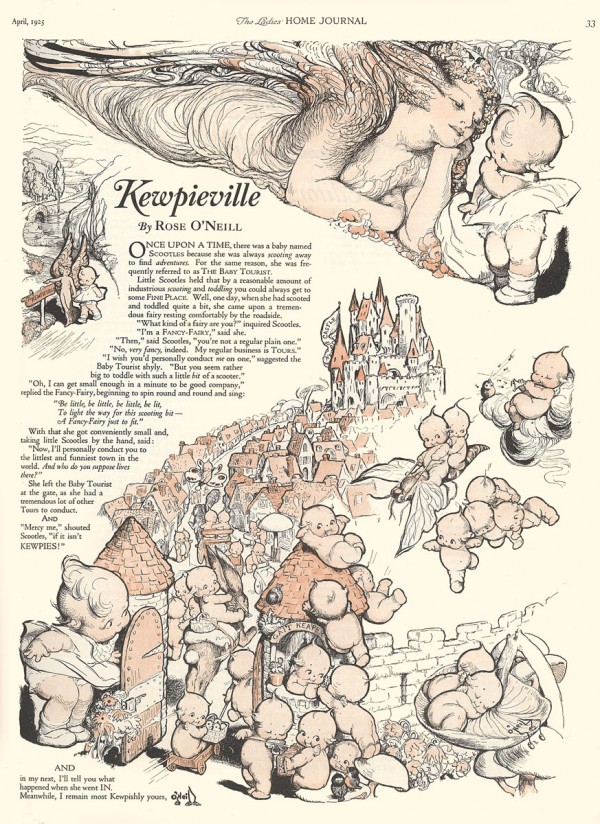
* Why was I not told about Rose O’Neill’s kewpie comics before?
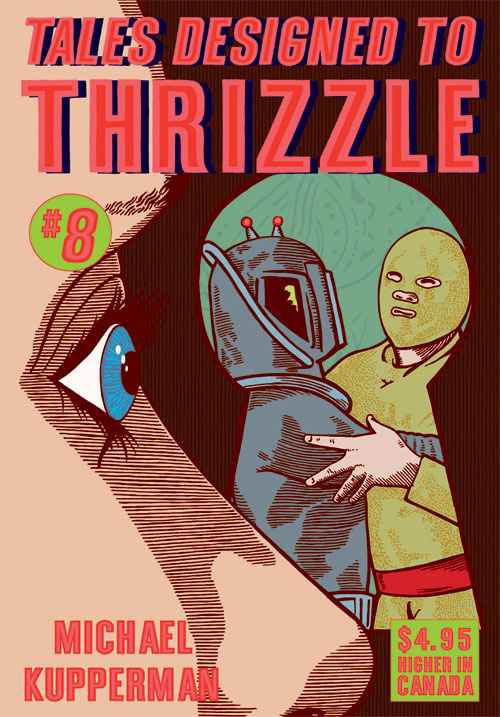
* Michael Kupperman’s Tales Designed to Thrizzle #8, in stores in July!
* If you’ve got a hundred bones you can buy yourself a first printing of Kramers Ergot 4, the most important art comic of the ’00s. (Via Frank Santoro.)
* Paul Thomas Anderson’s The Master, which is to L. Ron Hubbard what Velvet Goldmine is to David Bowie, has thus far had two of the most compellingly off trailers since, well, Paul Thomas Anderson’s There Will Be Blood. I continue to maintain that if Anderson ever makes an outright horror movie he’ll have a bead on scariest of all time. Based on these trailers, it’s getting tough to think of a better current director/composer pair than Anderson and Jonny Greenwood, too.
* The young Patti Smith was many things, and one of them was “extremely attractive,” which I find interesting both for obvious reasons and because that doesn’t seem to be part of her rock-star legend at all.

* Ann Magnuson is crowdfunding a Jobriath musical; Henry Rollins is narrating a Jobriath documentary. I didn’t see this coming.
* It has probably been thirteen years since I last heard the phrase “boot and rally.”
* I wrote about one of my favorite funk songs/guitar solos, “Very Yes” by Bootsy’s Rubber Band (featuring, obviously, Bootsy Collins and his brother Catfish) for Cool Practice.
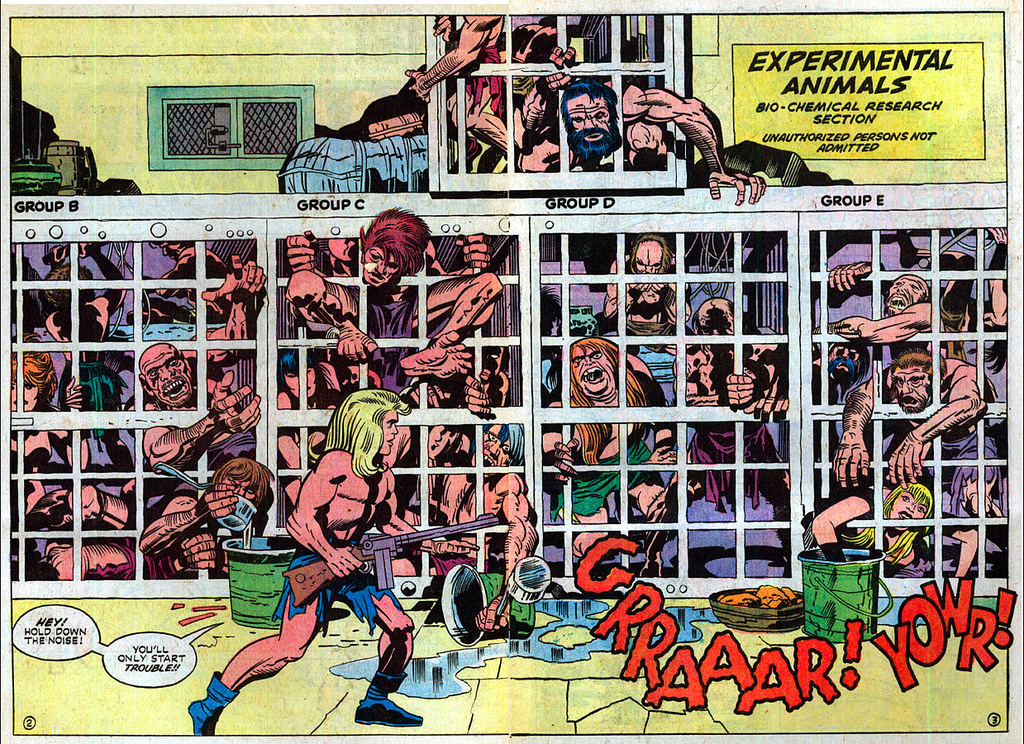
* Finally, feast your eyes on this gallery of double-page spreads by Jack Kirby — proof that the King of Comics was one of the greatest artists, of any kind, of the 20th century. (Via Joe Keatinge.)
Comics Time: Annie Sullivan and the Trials of Helen Keller
June 22, 2012
Annie Sullivan and the Trials of Helen Keller
Joseph Lambert, writer/artist
The Center for Cartoon Studies/Disney/Hyperion, March 2012
pages, hardcover
$17.99
Buy it from CCS neighbor the Norwich Bookstore
Buy it from Amazon.com


A dual biography of deaf-blind Helen Keller and her teacher, mentor, guardian, and lifelong companion Annie Sullivan — whose own coming-of-age tale of overcoming near-blindness, abject poverty, orphanhood, loss, lack of education, and a generally piss-poor attitude is depicted in parallel with Annie’s better-known story — Annie Sullivan and the Trials of Helen Keller is the best comics biography since Chester Brown’s Louis Riel. Like Riel, it succeeds, it innovates, as comics as much as it does as biography. It does so with none of the repetitive tics that marred cartoonist Joseph Lambert’s earlier work, here supplanted by the intensity of the story’s central challenge and Lambert’s own clarity of purpose in meeting it. And more than Riel, it’s a work of immense and intimate emotional power, deeply touching and profoundly moving without ever growing maudlin or manipulative.
The key visual conceit is Annie’s world: black, comprising her sketchy self-image, objects she encounters rendered in a dull brown, things with which she has any kind of emotionally charged interaction (from her family to food) colored in sidewalk-chalk primaries. Spend more than two seconds thinking about experiencing life like this and it’s harrowing, even horrifying, but Lambert holds back on depicting it as some existential hell, since after all, this is the only life Helen really knows. (She went blind at 19 months of age, and neither she nor her caretakers are sure what, if anything, her brain remembers from its sighted experiences.) Annie’s quest is to get Helen to understand that the hand gestures she forces her to perform when touching new objects or requesting familiar ones aren’t just a game to play, but a way to label these objects, and thus to understand them and their relationships to one another.
Though Lambert’s access via cartooning to Helen’s inner world is unique among depictions of this well-worn story, it’s only through juxtaposition with the more traditionally told tale — the literal wrestling matches bas Annie tries to physically force Helen to learn — that the magnitude of Helen’s struggle becomes clear. Without seeing Helen in all her painfully adorable and vulnerable and angry tousle-haired glory, throwing plates and running into walls and knocking Annie’s teeth out and leaving both teacher and student in (magnificently well-drawn) prostrate exhaustion amid debris-strewn rooms, her famous eureka moment at the well, which we see alternating back and forth between Annie and Helen’s perspectives, would not have the power it does. When big block-lettered NAMES finally emerge into Helen’s mental void, it’s not just WATER or HANDLE or PITCHER or even TEACHER that get their names, it’s the inchoate fury that’s plagued her like an infection all her young life. In this case the diagnosis is the cure. Lambert’s depiction of her almost unbearable excitement at finally getting it, frantically touching and signing out the names of everything at the pump until she reaches “TEACHER” and collapses into an embrace of the woman who effectively gave her a voice and saved her from insanity, is easily the most emotionally moving sequence of comics I’ve read all year. I’m crying just writing about it.
The visual language Lambert develops for Helen’s own developing language isn’t the sum total of his artistic strengths here. Now, for the life of me I’ll never understand how dully acidic, Exorcist-vomit green became the default background color for comics imprints with mainstream aspirations, from Vertigo to First Second, and in this Disney-Hyperion release Lambert overuses that lamentable hue. But it’s more than offset by the stunning Mentos-variety-pack skyscapes and lush green fields and trees of the Keller homestead; the subtle and astute interplay of trademark colors for the two women in Helen’s life, blue Annie and pink Mother; the use of various muted grays, blues, pinks, and yellows to differentiate spacial and temporal settings within Lambert’s not-an-inch-wasted sixteen-panel grids; brief but memorable uses of bright red or high-contrast black and white; and of course the very direct but still very effective depiction of the pre-speech Helen’s world as a black and gray-brown void into which new sensations intrude in synesthetic terror and splendor.
The book culminates in scandal — a minor one in the context of the Sullivan/Keller legend lo these many decades later, but a catastrophic upheaval in the lives of Annie, Helen, and their benefactors at the Perkins Institution for the Blind at the time. The climactic interrogation sequence, in which the school’s instructors grill Helen for hours about a potentially dubious achievement she’s alleged to have made, stands firmly in the grand (inquisitor) tradition ranging from O’Brien and Smith in Ninteen Eighty-Four to the real-life questioning of the West Memphis Three in Paradise Lost. It’s a hugely upsetting and dispiriting scene, one which literally reduces Helen to the sketchy, spectral brown shape running around in the darkness that she was before Annie illuminated her world.
The real trap of it is that it’s precisely that act of illumination that damns Helen in her interrogator’s eyes, and partially in her own. When her life is one great string of discoveries, her joy is unstoppable; when she’s forced to confront how those discoveries were all filtered through one other person, she can no longer trust her own ability to determine where she ends and Teacher begins. Is she the water, or just the pitcher into which someone else’s water was poured? Moreover, the trap is twofold: . Lambert’s third-hand revelation of Annie’s potential deceit is deftly done, and breathtaking in the way it takes what we’d come to see as virtues in “Miss Spitfire” and unveils them as potential faults. Based on everything we’ve seen of her — her desire to get the full credit she deserves, no less but also no more — it’s highly unlikely that she consciously committed the crime of which she stands accused. But also based on everything we’ve seen of her — her defiance, her refusal to be cowed, her sneakiness, her confidence that she’s the smartest person in any given room — her role in the cover-up is all too believable. For Lambert to prove himself capable of character work this subtle and rigorous, character work that complicates and enriches the character rather than reducing them to mere angels or martyrs, in a book that moves from strength to strength visually as well, is almost unfair.
Every year there’s a comic that makes me end my review with the sigh of awestruck resignation: the exclamation “What a comic.” This is my “What a comic” comic of the year to date. It’s stunning. Don’t miss it.