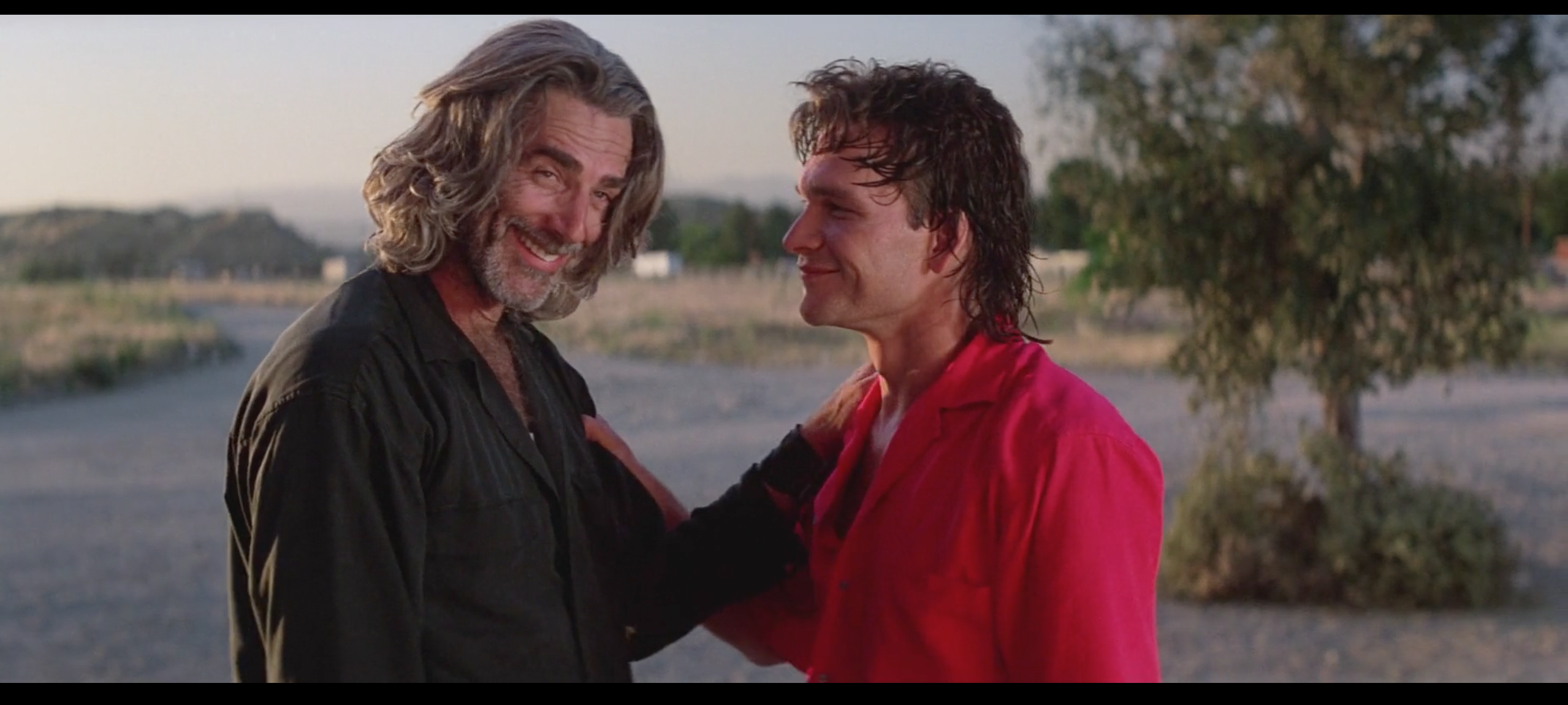
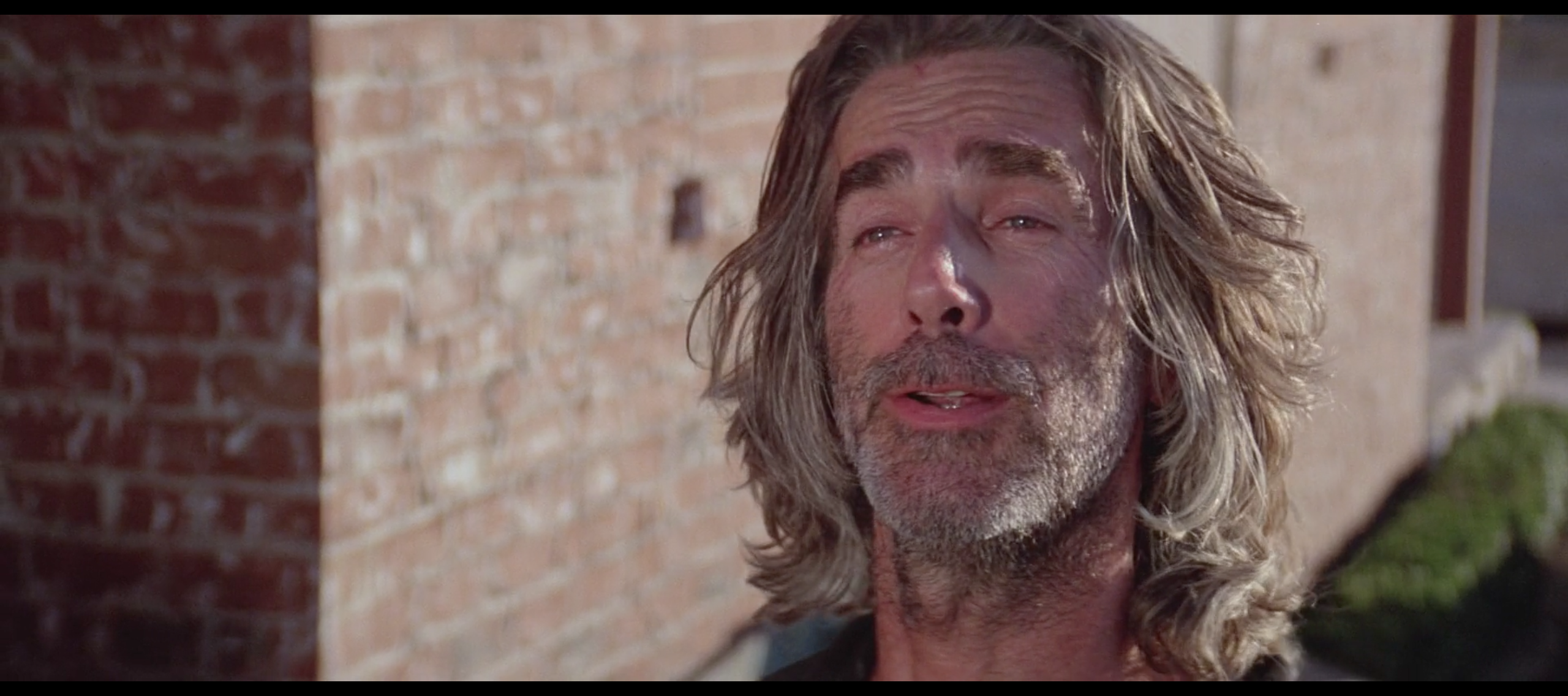
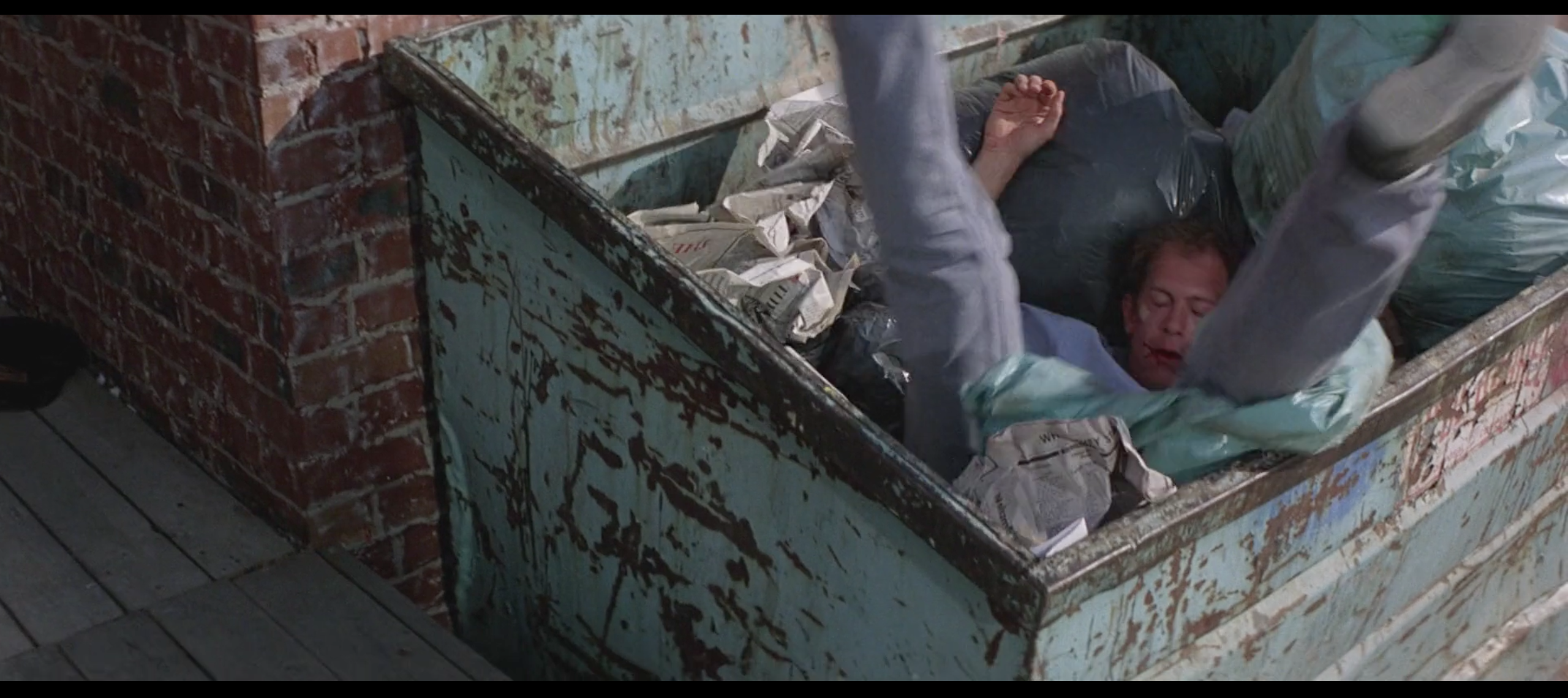
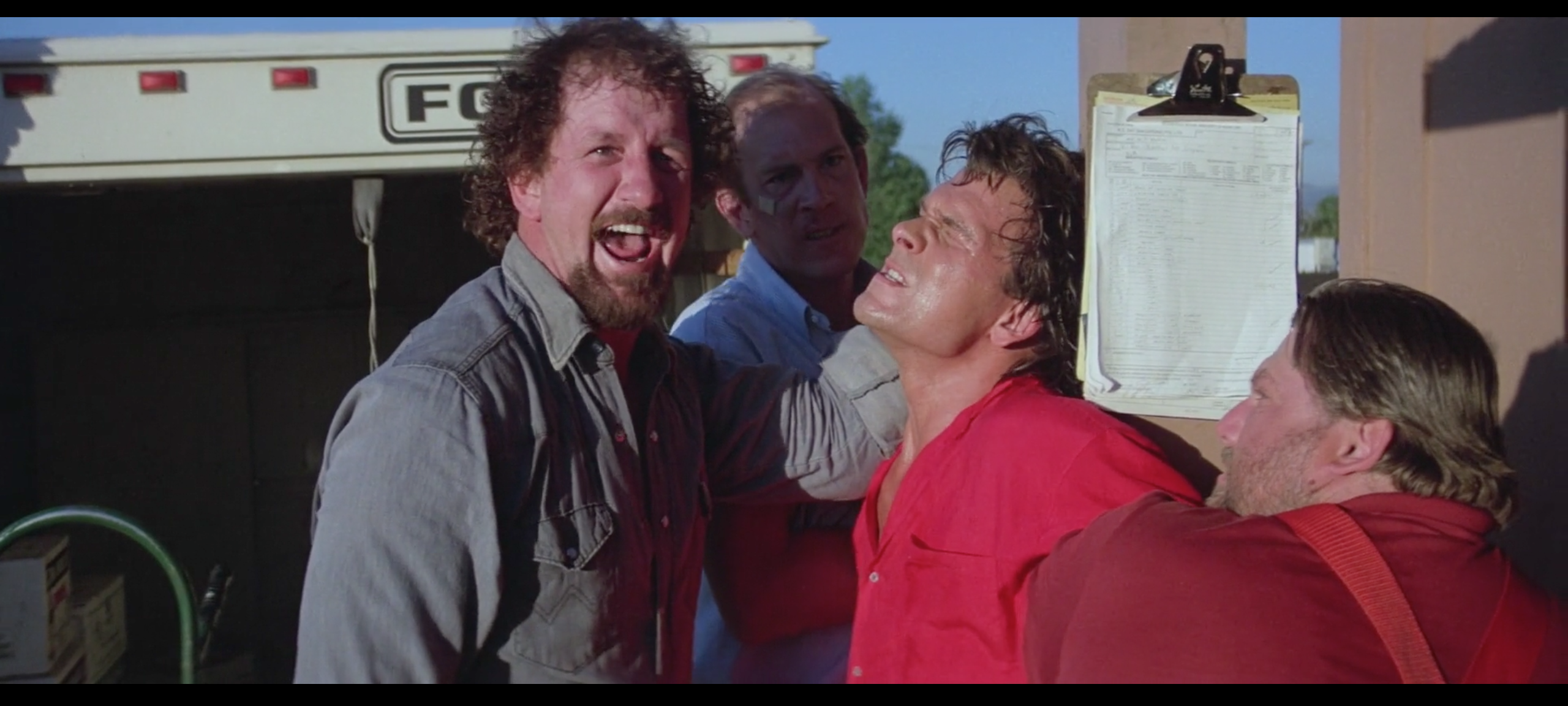
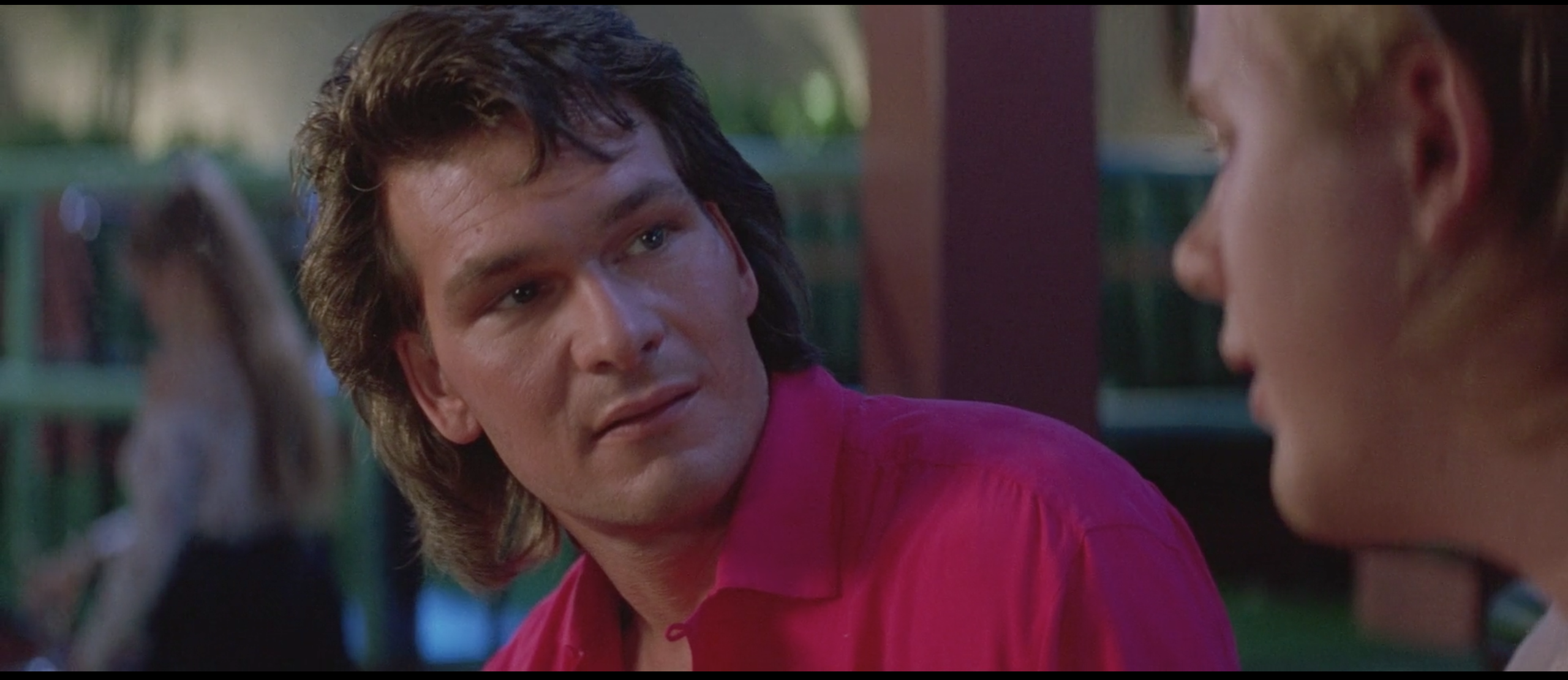
126. Thug casual

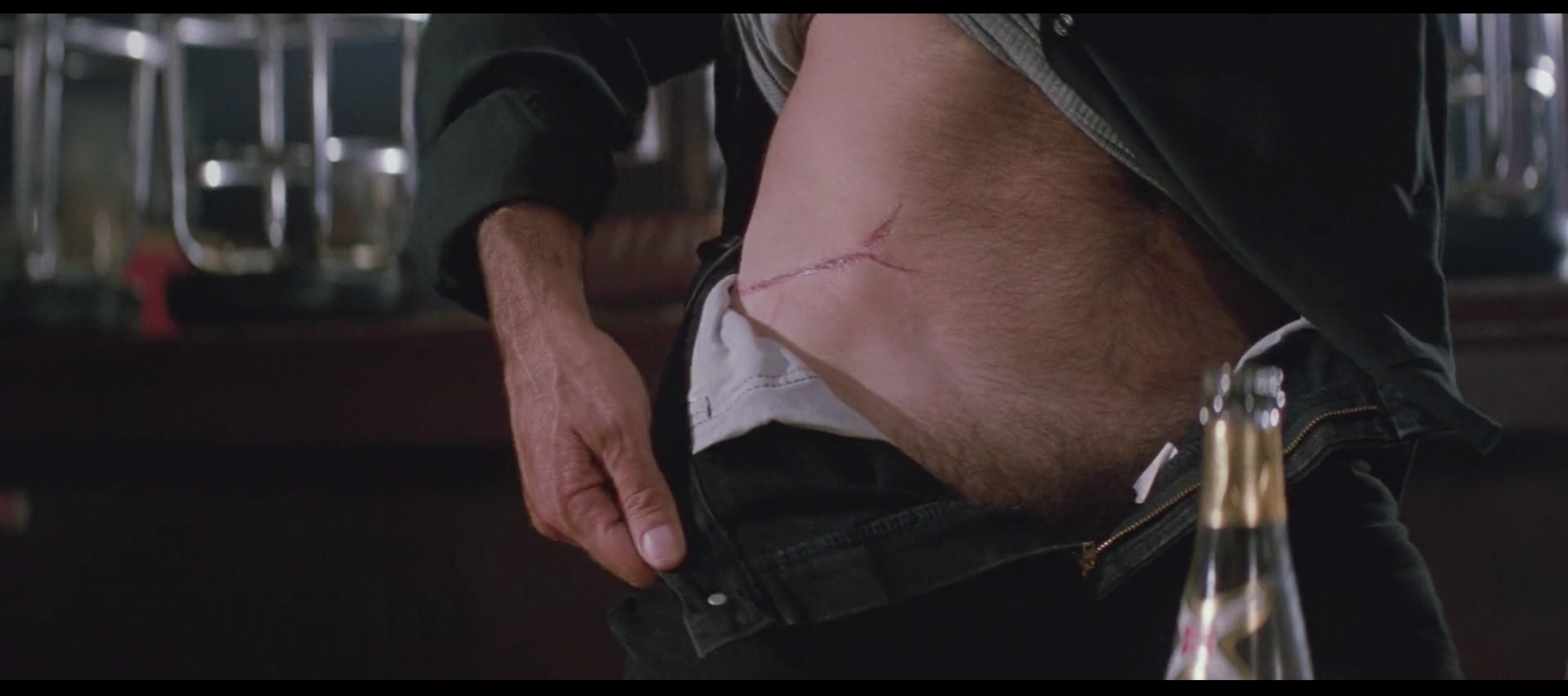
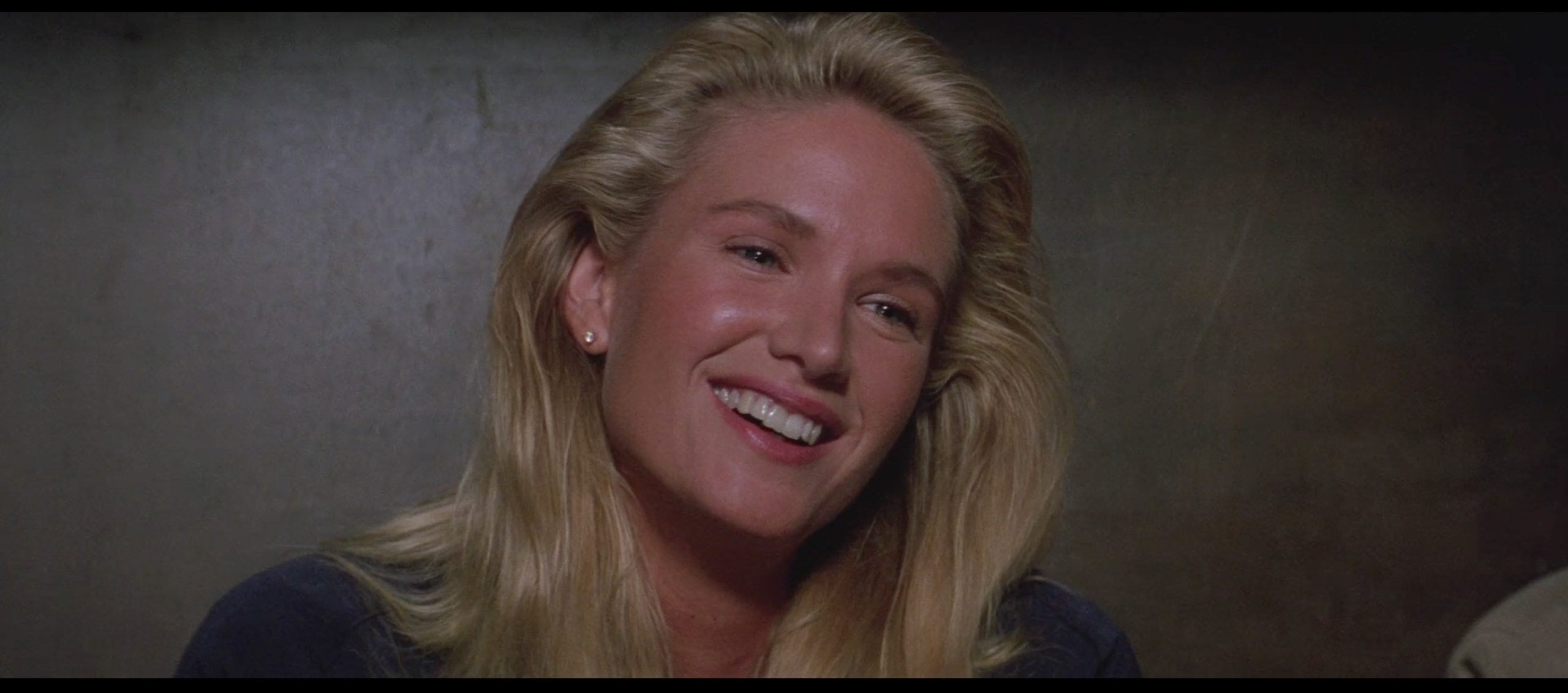
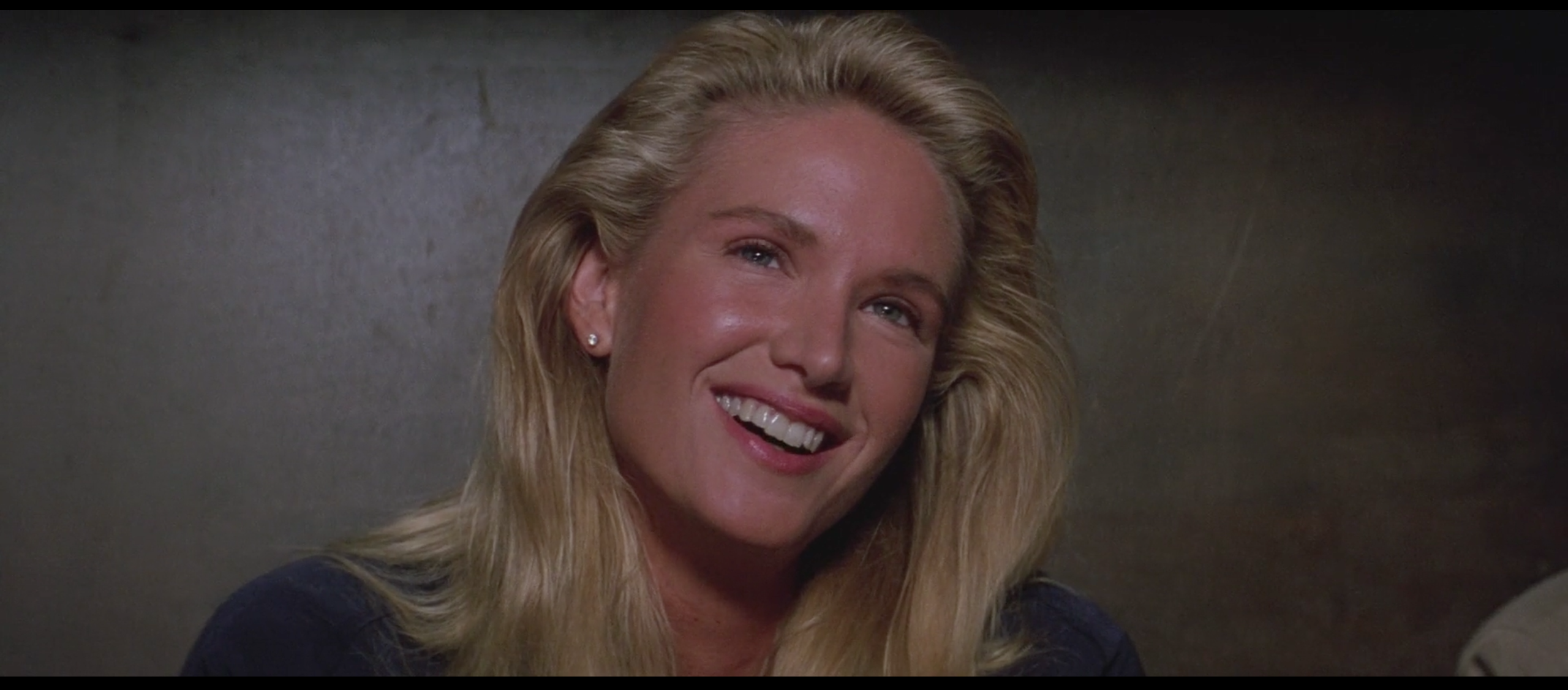
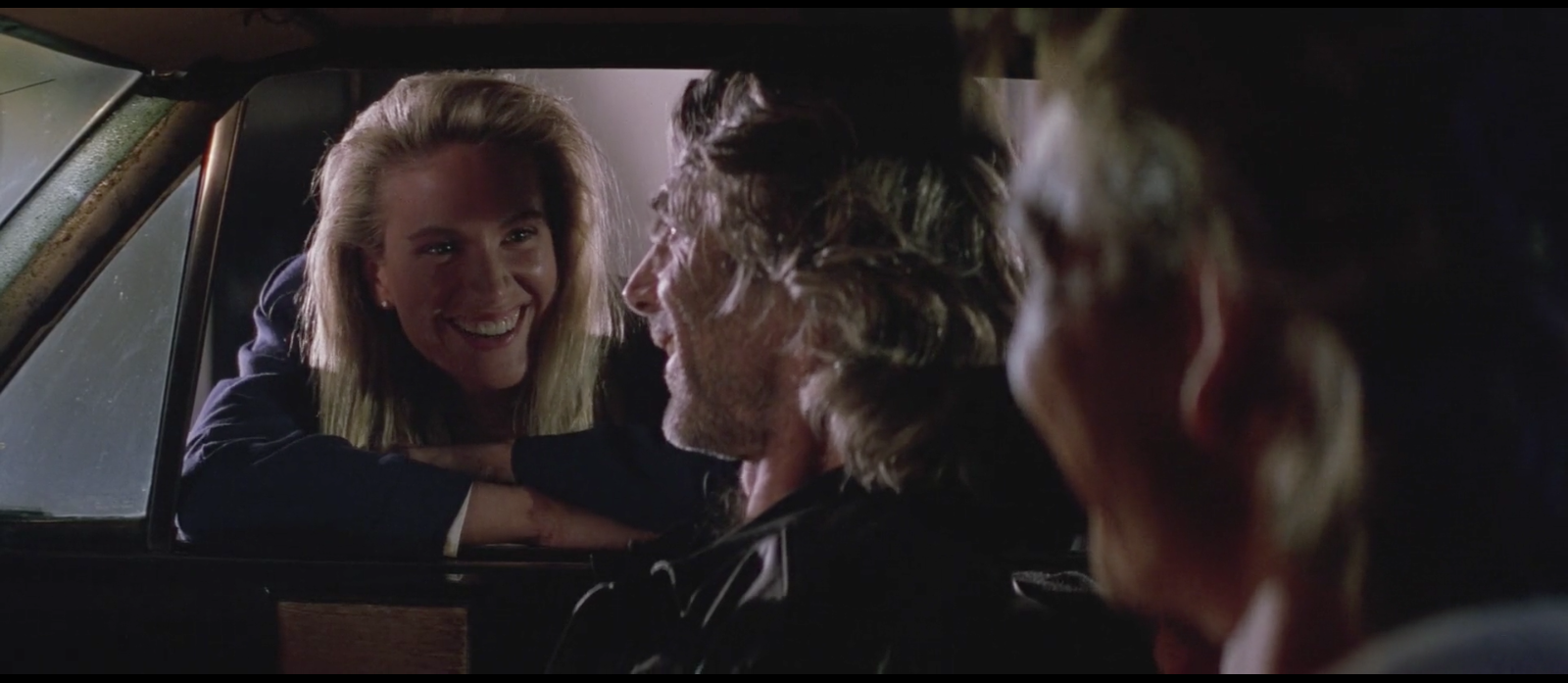
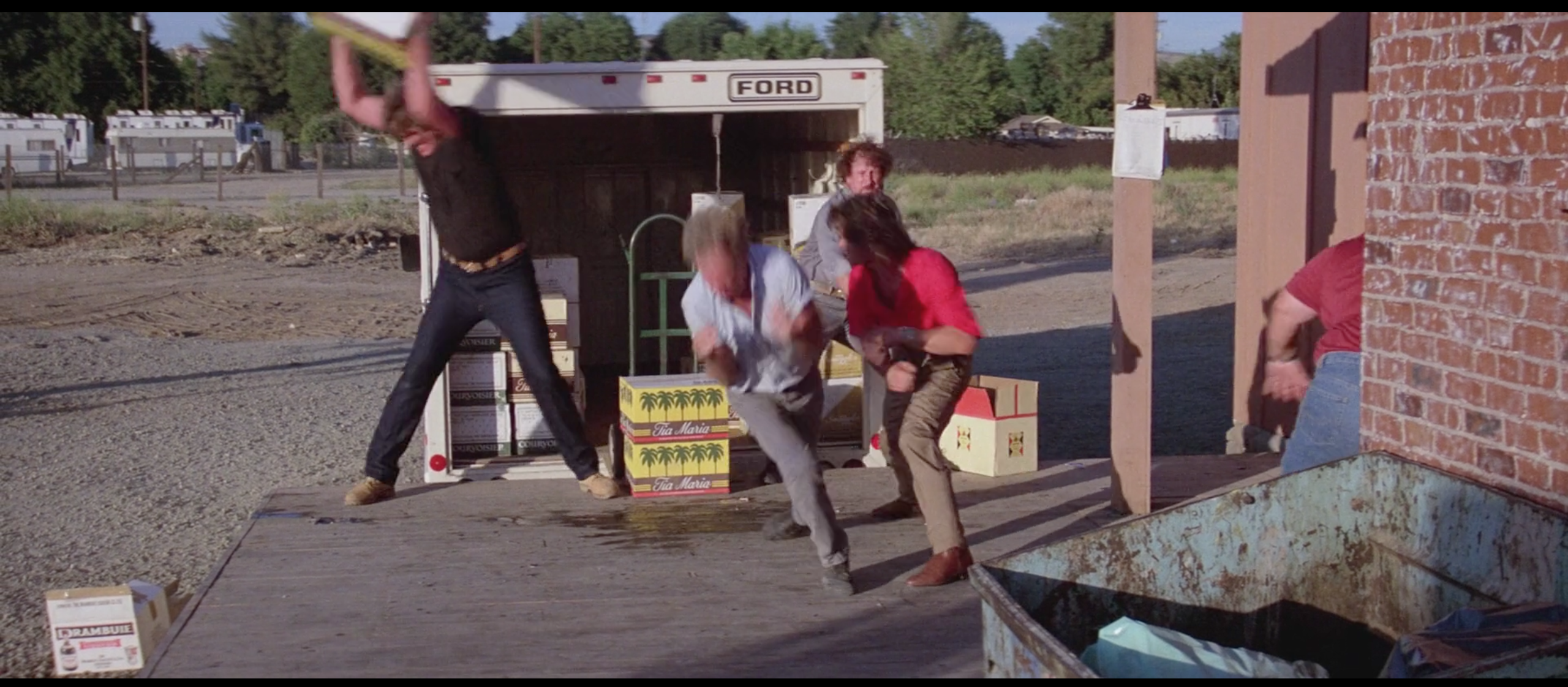
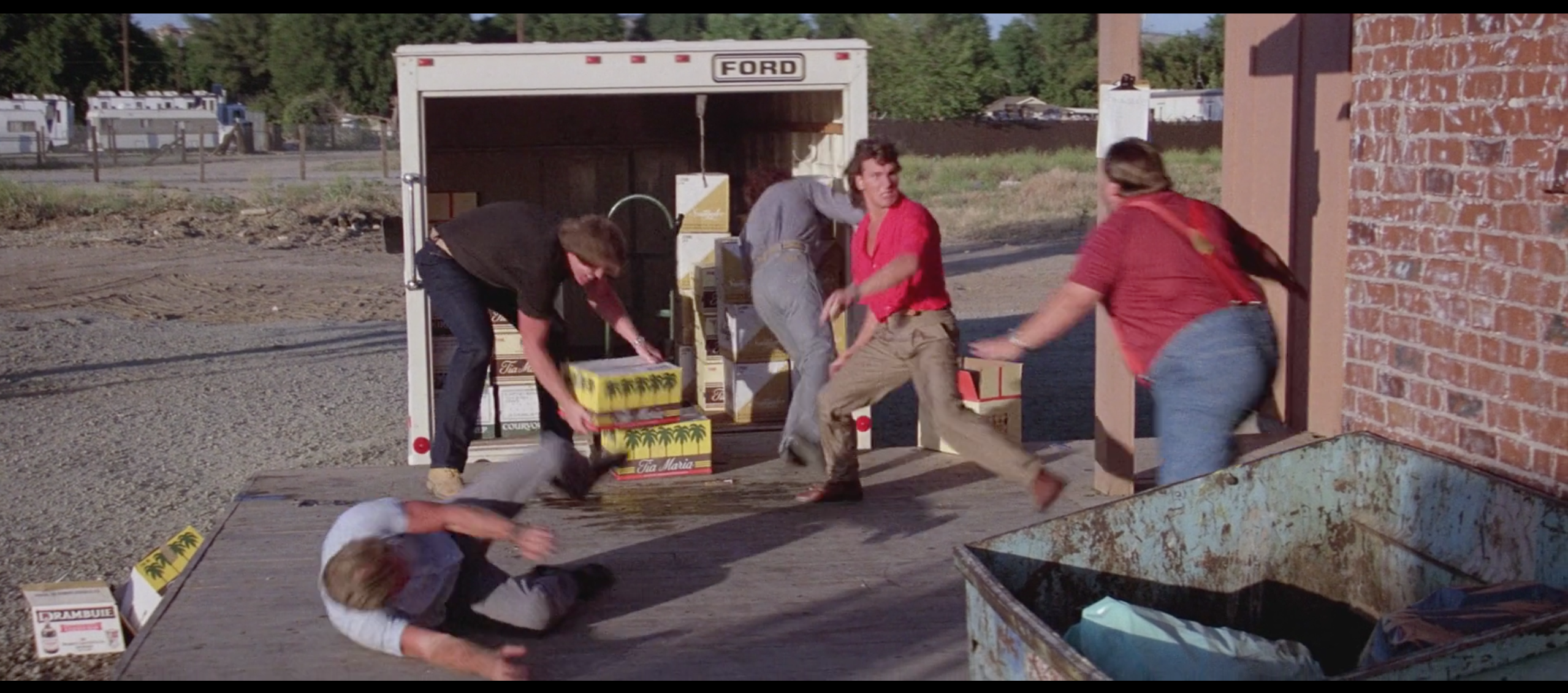
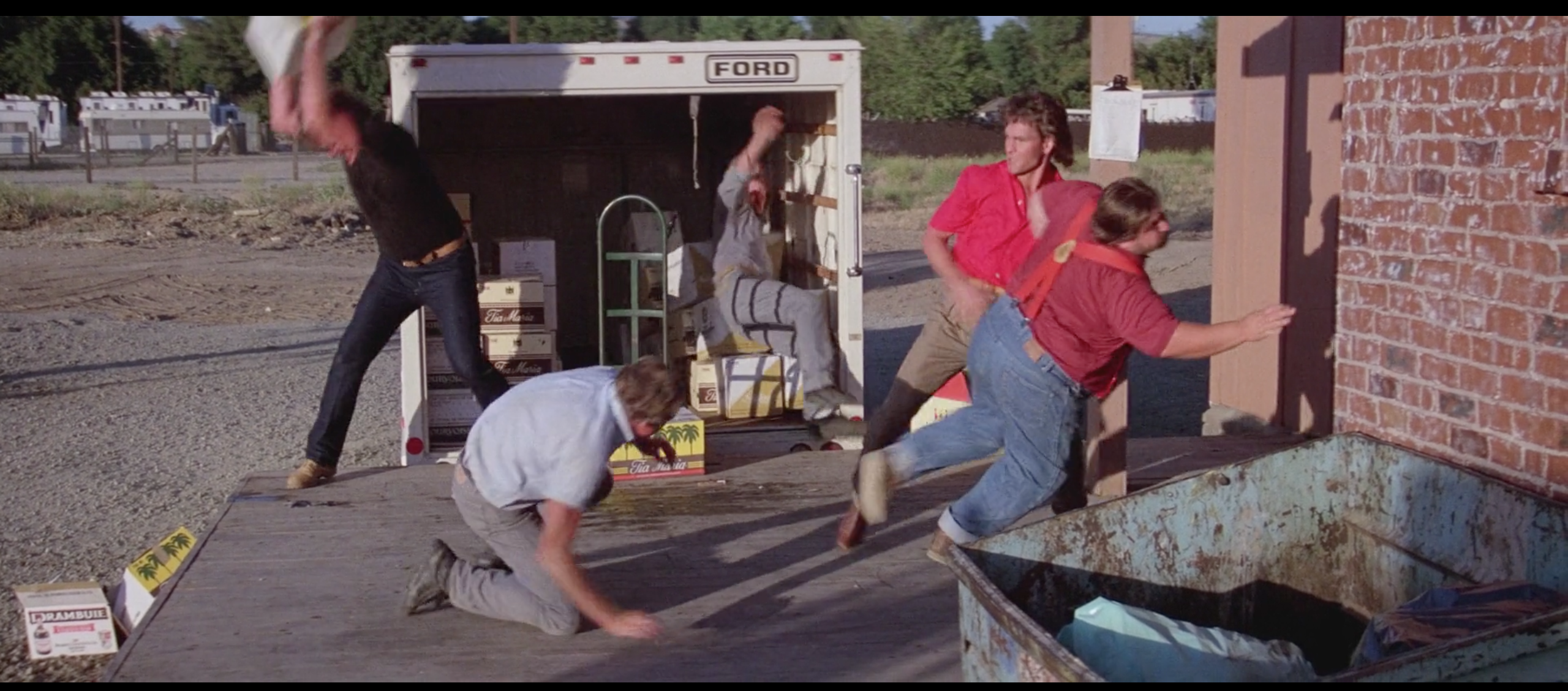
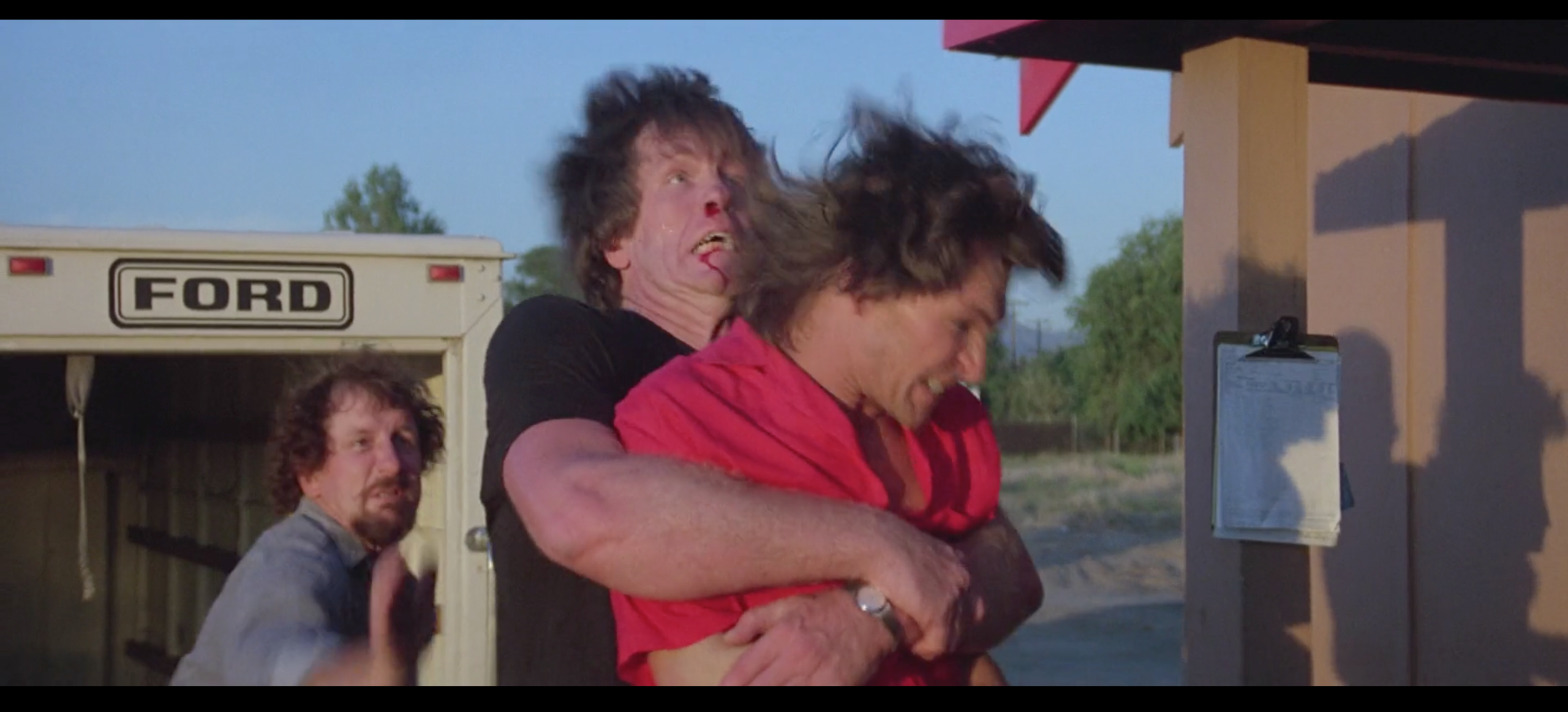
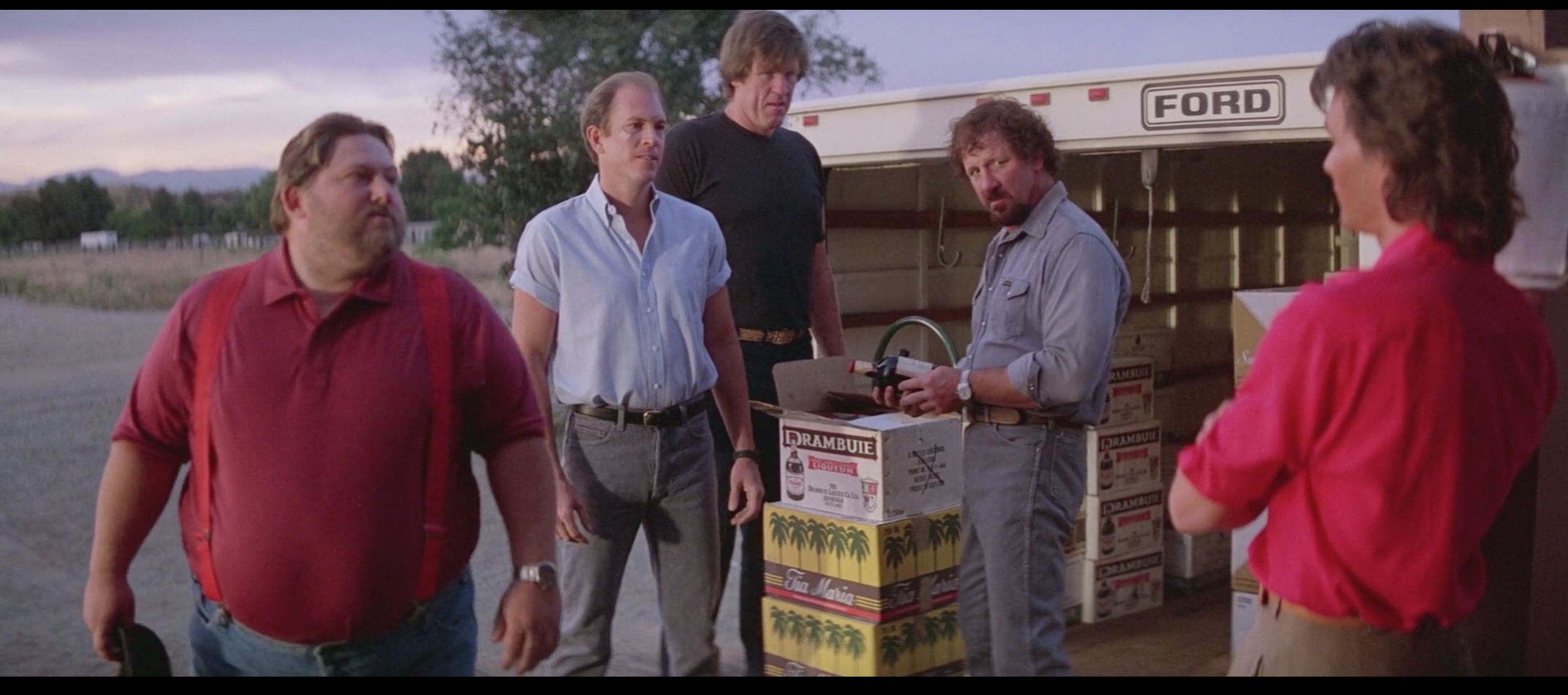
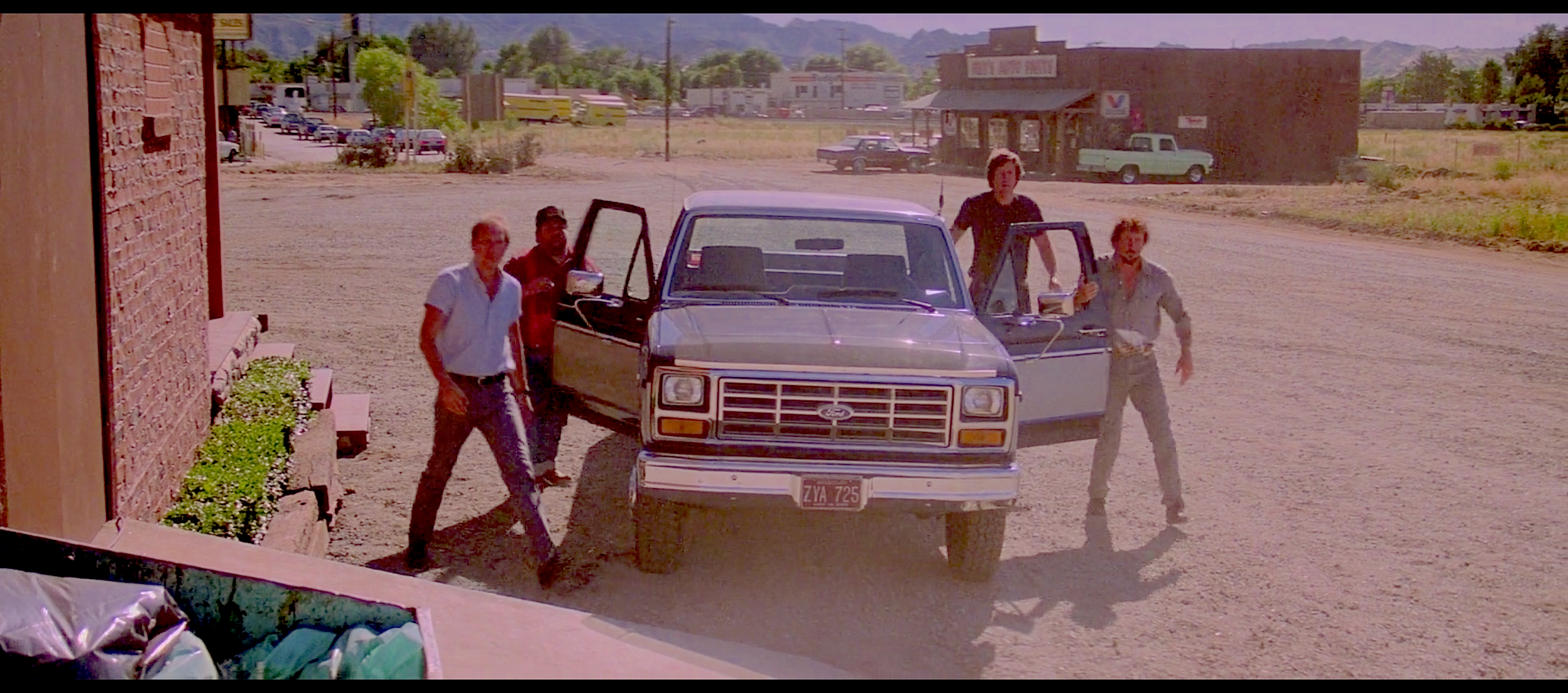
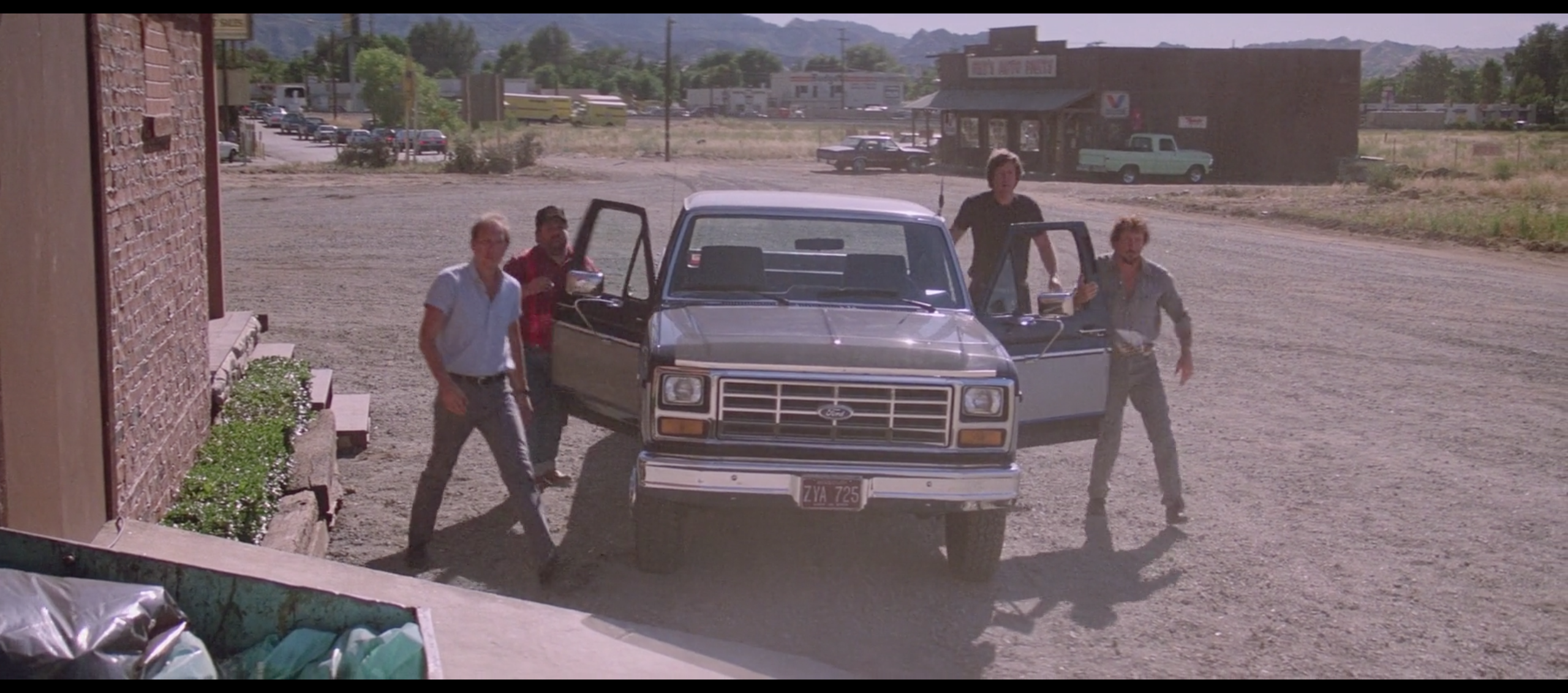
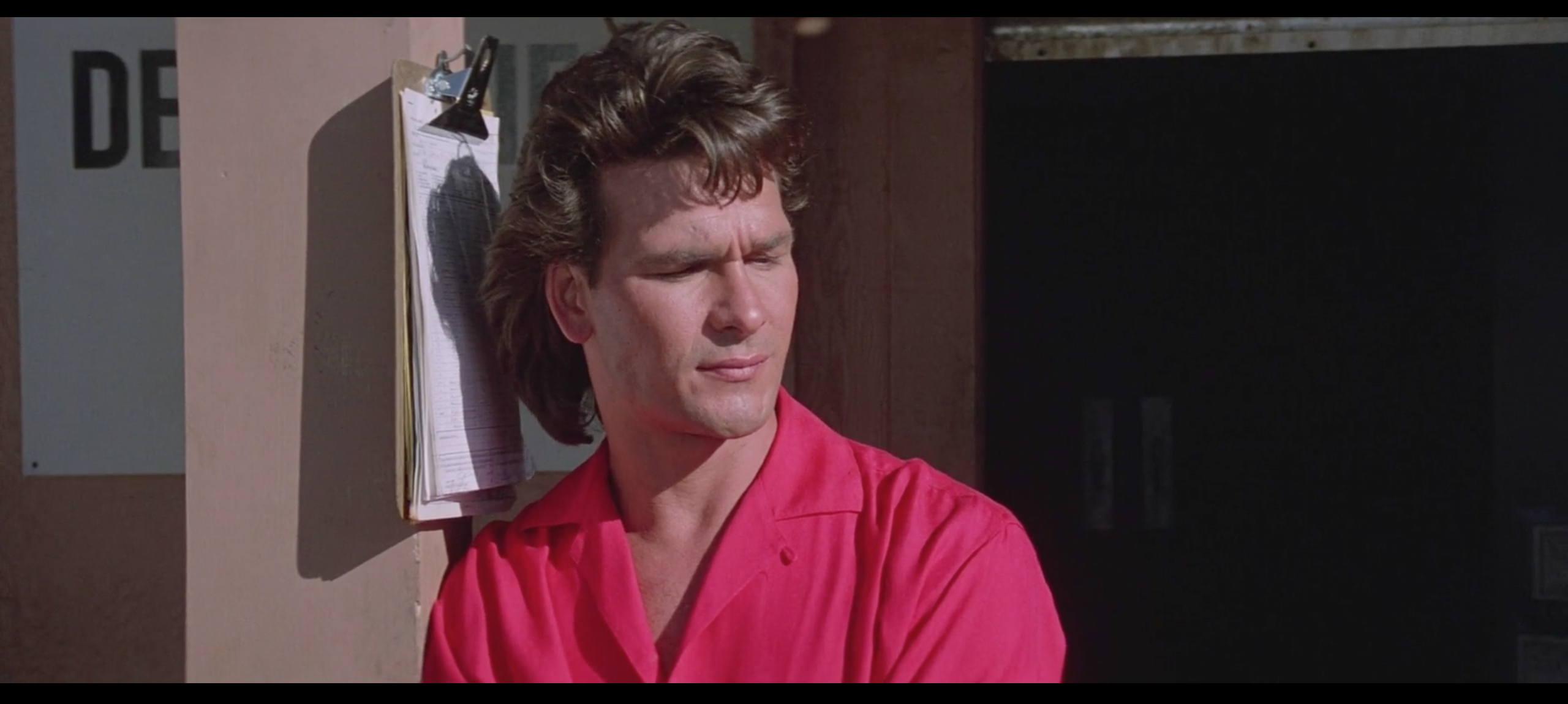
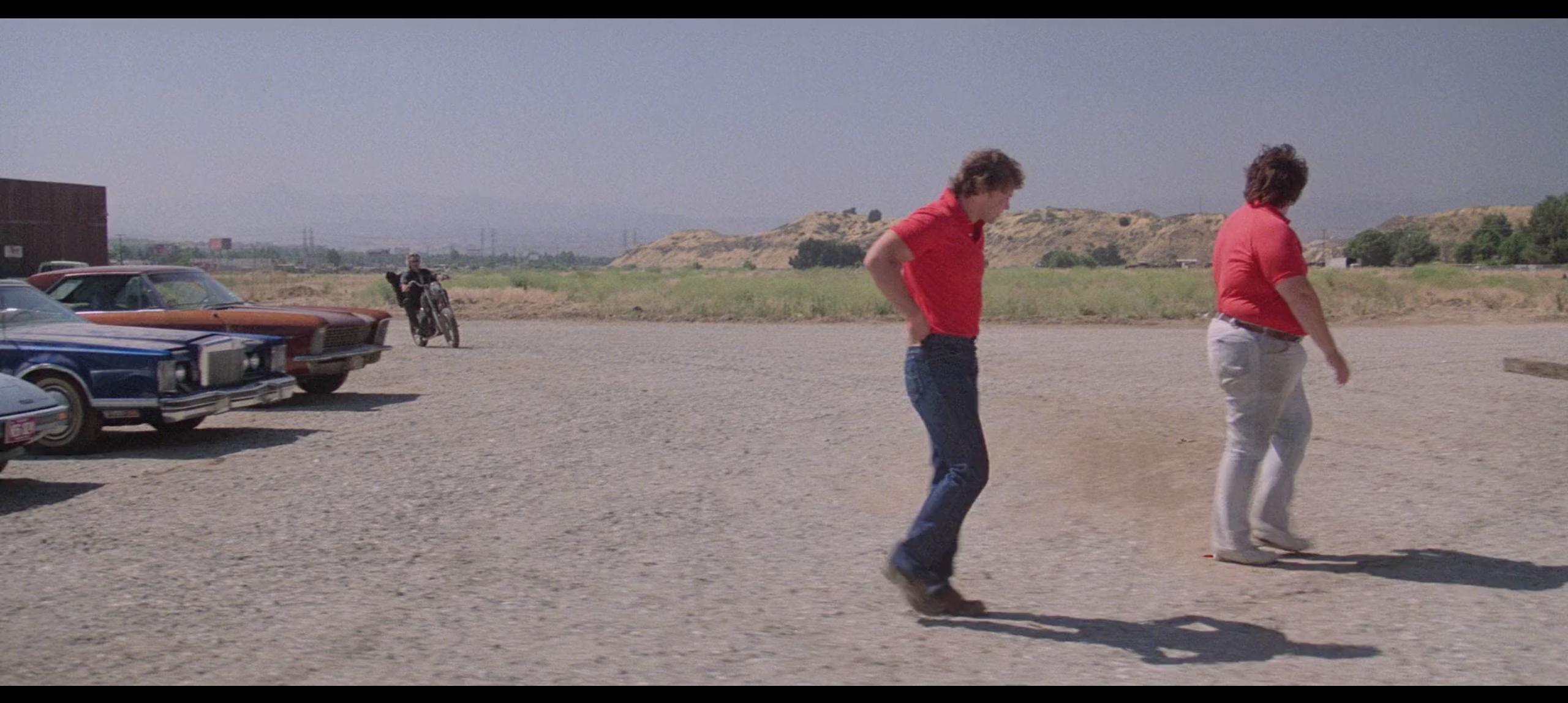
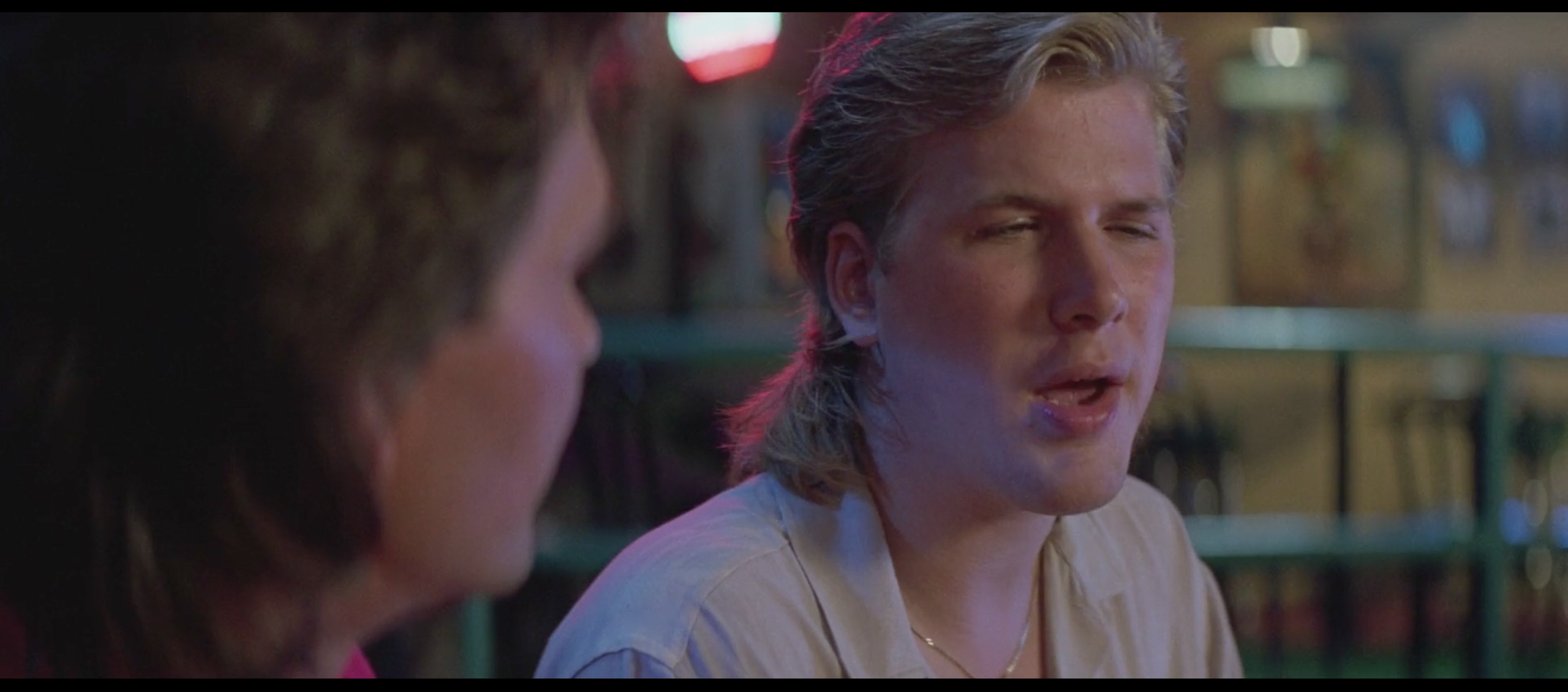
Look at this sorry state of affairs. Look at what the goon industry in Jasper has become. This fearsome foursome have stepped right out of a Promise Keepers meeting and into the parking lot of the Double Deuce in an attempt to assassinate Dalton by kicking him in the head with a knife. The denim bandit taking point is Ketchum, obviously, as you’ll recall from previous posts about Road House‘s most anonymous and yet also for some reason ultimately most prominent goon. The other three guys…well, they’re stuntmen, that’s the easiest way to put it, stuntmen who have no lines and appear in no other scenes and are only there to have a dust-up with Dalton and his bouncers that will leave their acid-washed asses in the dirt.

Tinker and O’Connor have better luck than these clowns do in taking Dalton on, as a matter of fact. Yes, in the previous fight Pat McGurn gets his nose broke and his ass kicked through a plate-glass window before he so much as lands a blow, though for attempting to carve Dalton like a Christmas ham with a knife the size of his forearm he should at least get an E for Effort. But Tinker comes close to killing Dalton, and he and O’Connor work both Dalton and Tilghman over pretty good before Dalton regains the upper hand against the Bleeder and the other bouncers team up on the big man.

Ketchum and company? Dalton and Jack spot them coming from a mile away. They post up with Hank and Younger just inside the vestibule and block these dopes from getting in. Dalton catches Ketchum’s would-be deathblow, violently twists the guy’s ankle, then literally drags his ass out into the parking lot. There’s some back and forth out there I suppose but there’s no reversal to speak of, where the bad guys are winning but then Dalton stages a comeback. Nope, they just go at it until the bouncers defeat the goons one by one. Ketchum is reduced to shouting “You son of a bitch!” as he’s dragged away with just one boot on, since Dalton lobbed the other one up on the bar’s roof, like Walter White with the pizza that one time. Just a disgraceful performance from top to bottom.

Ketchum, as we’ll see, returns with a vengeance, but these other guys are never seen again. After their work tonight, it’s entirely possible Brad Wesley beat them all to death in his driveway while smiling wryly as his other minions looked on and chuckled. Or perhaps after that they drifted East to perform other tasks in Wesley’s service but were never heard from again by the main characters, kind of like the Blue Wizards from Tolkien before Christopher revealed he’d revised their origin and made them part of anti-Sauron activity in the Second Age instead of the Third. (Seriously, apparently Professor T wound up deciding they came over from Valinor with Glorfindel now rather than Saruman, Gandalf, and Radagast. Blew my mind too.) My best guess, though, is that they simply went back to their day jobs at the Bass Pro Shop in the new mall. Take another look at those faces and tell me you wouldn’t be able to get a hell of a fly-fishing lure recommendation out of every man jack of them. They couldn’t possibly fuck it up worse than they fucked up being goons, I can tell you that much.

“Game of Thrones” thoughts, Season Eight, Episode Four: “The Last of the Starks”

“We may have defeated them, but we still have us to contend with.”

So says Tyrion Lannister regarding the plight that faces the people of Westeros — and the show that chronicles them. Yes, the dead are no more. But will the living choose to exist together as one? Or will they return to killing each other as they always have?

These questions haunt this week’s episode, titled “The Last of the Starks.” Written by co-creators David Benioff and Dan Weiss and directed by series mainstay David Nutter, it starts of in a celebratory mood, as the survivors of the Battle of Winterfell bid farewell to their fallen comrades and then drink and screw themselves into a stupor. But it ends with the gloomy, gut-wrenching prospect of even worse horrors to come — because this time, the killers will be humans.

I reviewed this week’s episode of Game of Thrones for Rolling Stone.

“Billions” thoughts, Season Four, Episode Eight: “Fight Night”

This week, “Billions” staged a charity boxing match between its fake-tough traders. I’m surprised that it took this long for the show to get in the ring.

The mano a mano match between Dollar Bill and Mafee on behalf of their overlords, Bobby Axelrod and Taylor Mason, provides the show with a perfect symbol. On the surface the fight is an act of philanthropy, a way to turn competition between rival firms into something productive. And surface is all it is.

The perfunctory noblesse oblige of the match’s charitable component disguises the venal truth. Two rich men who can barely muster the strength to swing at each other enact an absurd grudge match while their colleagues gamble obscene amounts of money. The winning bet, it turns out, is on both competitors losing. On “Billions,” there’s always a way to make money off someone else’s misfortune.

I reviewed this week’s episode of Billions for the New York Times.

125. “I didn’t know she could sing!”

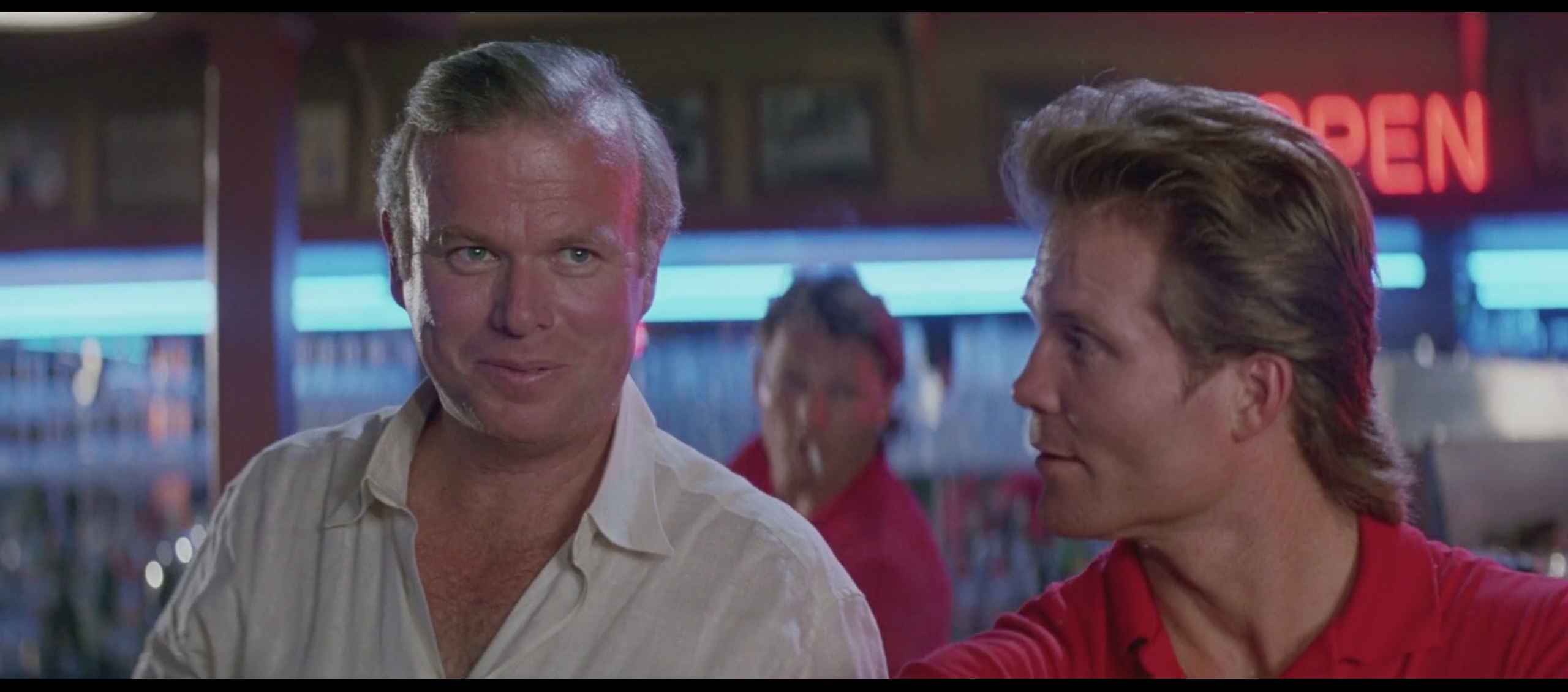
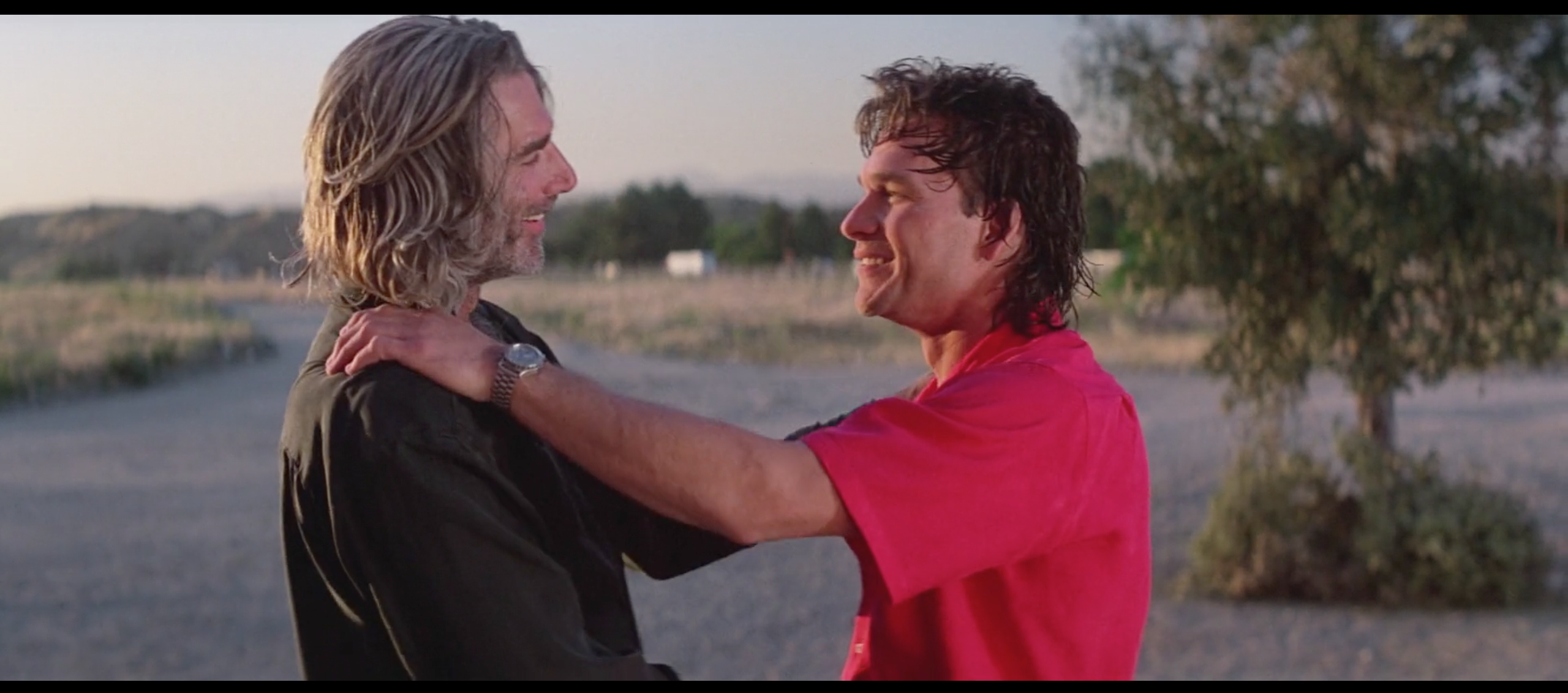
If this configuration of Dalton and his padawan-learner Jack looks familiar, it’s because we’ve been here before. The exchange and fight scene that are about to occur are perhaps the purest distillation of the Dalton Path in the entire film, following the Three Simple Rules and their various chapters and verses to the letter. As a bonus they show the primacy and utility of Jack among the Double Deuce’s other bouncers. It is Jack, after all, to whom Dalton relays the Riddle of the Right Boot, counting on the younger man to solve it. When they move on the intruders who’ve come to the bar to murder a man by kicking him in the head with a boot-mounted knife on account of the fact that he fired a rich guy’s nephew, they move as one.

But how did they arrive at this point? By what strange magic were Dalton and Jack united at this moment? The magic…of rock.

Specifically Carrie Ann’s variant thereof. The big-grinned barmaid with the bangs has traditionally occupied a privileged position in Dalton’s orbit. It is she to whom he first entrusts the secret of his name. It is she who preaches his name to the other barfolk. It is she who is granted a glimpse of the ass.

Now that the Double Deuce has been cleaned up, it is she who takes the stage to demonstrate this fact to the viewer. Would any woman have been caught dead on the stage of the old Double Deuce, where the only thing separating you from the ravening hordes, whose attention is drawn to and focused on that stage in a way no other staffer or patron can claim, was a thin chickenwire line? To be honest, dead might be the only way a woman would get caught on that thing. Putting a blind guy up there strikes me as some kind of ADA violation as it is.

But now things are different. How different? Different enough that a server is up there singing her gorgeous, joyful heart out. (Kathleen Wilhoite is truly one of this movie’s MVPs; I have no doubt from the way she shakes and grooves and grins and at one point even puts her hand to her face like “holy shit I can’t believe this!” is a sign of completely sincere pleasure on the part of the actor herself.) A few weeks earlier she had to save all her vocal power for yelling “BASTARD!” at people she’d just brained with a beer bottle in a barfight. Now she’s singing Eddie Floyd with the Jeff Healey Band.

That’s why Jack drifts over to Dalton that night: Just to smile with delight and say “I didn’t know she could sing!” He’s so happy in that moment, so happy to see someone he thought he knew reveal a new and exciting side of herself, so happy to know that as a bouncer on the Dalton Path he helped make that happen. It’s his desire to share that happiness that puts him by Dalton’s side when Ketchum strides in, anonymous minions by his side, to try to kickstab Dalton in the skull. The right place at the right time, that time being “time to not be nice.”

Call it a coincidence if you want, or even synchronicity. I call it the ne plus ultra illustration of the Third Rule, and of how the obervance of that rule yields dividends none could predict. Be Nice, commands Dalton. So mote it be.

124. Say Goodnight Denise

We’re near the midpoint of the movie now and things have turned around for the Double Deuce. The thugs, thieves, dope dealers, and dudes who fuck high-schoolers have been purged—and that’s just from the staff. The bad element in the crowd has had its proverbial face smashed through the metaphorical table. The first attempt by the Brad Wesley organization to re-exert control by forcing the rehiring of sister-son Pat McGurn ended in a defeat so humiliating that Wesley beat up one of the already beaten men himself upon hearing about it. Carrie Ann has gone from getting groped and forced into fistfights to getting on stage and banging out blue-eyed soul versions of “Knock on Wood” with the Jeff Healey Band. There’s a neon sign now. The floor and walls are clean of dirt and graffiti. The dance floor is jumping. The damned chickenwire is down. It’s a new day.

Denise must agree. Not that we know her name is Denise at this point. She’s just the vivacious blonde with a sense of style who rebuffed a dude who asked her to get “nipple to nipple” a while back, and who looks at Dalton like J. Wellington Wimpy looks at hamburgers. Today is the day she makes her move.

No bizarre “nipple to nipple” euphemisms that are actually filthier than the real thing for Denise, oh no. Gliding over to Dalton’s usual post-up spot near the bar, she gets, well, nipple to nipple with him, rubs his shoulder, asks him why he avoids eye contact with her (“I’m shy”), and says “Would you be shocked if I said ‘Let’s go to my place and fuck’? Ain’t gonna kill you. You know, you might even like it.” Show me the lie, you know?

Dalton, who has an inscrutable but distinct sense of decorum that I’m still puzzling out 124 days into writing about him, seems unimpressed (or blind) and unlikely to accept the offer. But the matter is taken out of his hands. Appearing from out of nowhere, Brad Wesley’s chief goon Jimmy violently grabs Denise by the arm. Whipping her behind him and thrusting himself into Dalton’s face, he growls “Say goodnight, Denise,” and they leave.

But he doesn’t say “Say goodnight, Denise” while looking at Denise. He says “Say goodnight, Denise” while looking at Dalton, and I mean looking at him, staring right into his eyes like he’s trying to psychically bore two holes through his skull. He says “Say goodnight, Denise” as if he’s telling Dalton “Say ‘Goodnight, Denise.'”

Given Dalton’s penchant for cheap sarcasm when the opportunity presents itself, and given Road House‘s penchant for dumb jokes whether the opportunity presents itself or not, it’s hard to believe, but no, Dalton does not stare right back into Jimmy’s face and say “Goodnight, Denise.” But their loss is your gain. You can be Dalton’s voice in this moment. You can say “Goodnight, Denise.” Your quick wit will delight all who have the pleasure of your company. Goodnight, Denise.

123. Chicken wireless

Dalton purged the staff of the Double Deuce of its criminal element.

Dalton purged the crowd of the Double Deuce of its criminal element.

Dalton defeated the minions of Wesley in open combat.

Dalton liberated the small businessmen of Jasper, Missouri from the Jasper Improvement Society.

Dalton saved the life of yeoman rancher Emmett.

Dalton put the minions of Brad Wesley down like dogs, one by one.

Dalton lulled Brad Wesley into a false sense of victory that enabled the small businessmen of Jasper, Missouri to gun him down.

Dalton taught the bouncers of the Double Deuce to walk the Dalton Path.

Dalton taught Dr. Elizabeth Clay how to love again.

Dalton freed Jasper, Missouri from tyranny.

For these deeds we honor him.

For these deeds we celebrate him.

But through his efforts, Dalton also freed the Jeff Healey Band from the loose-hanging confines of their chicken-wire prison.

And it is for this deed that we dedicate our lives to his service.

So was it nice. So is it nice. So ever will be it nice.

In the name of the Dalton, the Jack, and the Holy Wade.

Amen. Amen. Amen.

from the Most Meet and Worthy Charter of the Holy Jasper Empire, Forty-Fifth Post-Tilghman Schismatic Revision; So Decreed by the Ass-Mother of the Sisters of Carrie Ann and the Eternal High Priestess of the Elizabethan Order; So Ratified by the Intranuclear Auto Sales Consortium, the Swords of Tinker, the Swords of Denise, the Cody Navigators, and the Guild of the Valet Visible; Sworn by the Blood of the Bleeder, Jasper IX, AD 7201 

When Game of Thrones Plays Sad Piano Music, It’s Time to Freak Out

For the final stretch of the episode, the ambient sound is muted and a piano melody kicks in. It immediately felt like a callback to “Light of the Seven,” one of your best-known pieces—so, you know, I got worried.

That was 100 percent intentional. When I talked to Miguel [Sapochnik], the director, and when David and Dan came to my studio and we started working on this episode, we all agreed that it had to be a piano piece again, just like “Light of the Seven.”

That was the first time we’d used piano in the show; it really meant something different. You realize Cersei’s up to something and it all blows up. By using it again, we wanted to have the reverse effect. The piano comes in and people go, “Uh-oh, here comes the piano again. Something’s unraveling!” There was little hope throughout the episode. They’ve fought and fought, but the Night King is just unstoppable. Then he comes walking in, and the piano itself represents, like, “This is really it! It’s over!” Then there’s that big twist in the end. It definitely misled the audience because of what they knew from “Light of the Seven,” back in season six. We always treated the music as another character in the show.

I interviewed Game of Thrones composer Ramin Djawadi about his work on “The Long Night” and elsewhere for Vulture.

122. A look of concern

This is Emmett. Emmett has just made two discoveries that, from the looks of it, have shaken him to his core. That Brad Wesley plans to send men to the Double Deuce to physically intimidate his tenant Dalton and his friend (?) Frank Tilghman? No. That Brad Wesley plans to send men to his own cabin to plant explosives that will blow it up while he’s asleep one night? No. That sales at the new JC Penney (Opening Fall 1989!) will require a loyalty oath to Brad Wesley for eligibility? No. He has discovered that Dalton drives a Mercedes-Benz, and that Dalton is doing tai chi with his shirt off.

I’ve thought a lot about this look of utter, almost abject confusion and dismay since I first saw the movie, during which screening a friend MST3K’d the bit where Emmett lifts up a tarp in the barn and discovers Dalton’s Benz by hollering in Emmett’s hee-haw voice “THIS BOY’S FROM THE FUTURE!” Time travel is indeed one of the few exigencies I’d deem capable of occasioning that kind of blind pigfuck panic in a man of Emmett’s age, experience, and Show Me State sangfroid. (Seriously, when Dalton asks him if he’s okay after rescuing him from his recently detonated, still burning shack, Emmett replies “I’d be fine if you get off of me.” Always with the wisecracks, this one!)

Is he upset because Dalton is rich? Like, are we to believe that his whole schtick about only charging a hundred bucks a month in rent isn’t because he doesn’t care about money, but that this was just his polite way of letting a man he didn’t think could afford anything more off the hook? Does he feel bamboozled because Dalton drove up looking for a place to rent in the beater he bought at Big “T”‘ Auto Sales instead of this luxury piece of German engineering? (Does Emmett know Big “T,” while we’re on the subject? Is Big “T” part of the Jasper Improvement Society? Is Big “T” related to Pete Strodenmire, his fellow walrus-faced car salesman? Down this road lies madness, so we head back.)

Is he upset because he believes Dalton may practice “alternative lifestyles”? He’s city folk, that much Emmett could tell from the car’s New York plates. He’s pretty, and he’s got that hair. He’s writing around with no shirt, unless you count a fine sheen of oil and sweat as a shirt, which in the case of Dalton perhaps you should. His pants are mighty snug. And he’s performing some kind of Eastern dance ritual. Is the idea that Emmett’s iconoclasm regarding the local Presbyterians is a front and he actually is more on board with down-home American values than he lets on? Or is he a New Atheist?

The simplest answer, I think, is the question we’ve been asking on and off for three months now. What kind of man works as a bouncer and lives in a barn but also drives a Mercedes and practices martial-arts meditation? Shirtless, at that?

The other answer I’ve come up with is that he’s mistaken tai chi for karate and, between that and the Benz, believes Dalton to be an agent of the Axis. I mean, you’d look worried too.

121. Life’s Been Good

I have a mansion I visit sometimes
Brad Wesley lives there, he makes me do crimes
I live in Jasper, near the new mall
We made some old guys pay for it all

They say I’m crazy but I have a nice smile
They put most of my part in the cylindrical file
Life’s been good to me so far

Brad Wesley’s Mustang does one-eighty-five
I’ll stare at Dalton, Jimmy can drive
My necktie’s loose so I never choke
I dress like Albert Hammond the Stroke
I crashed Red Webster’s and trashed the whole place
I watched O’Connor get punched in the face
Though I’m listed as Karpis in credits as they crawl
I’m barely in this movie at all

Lucky I’m sane when my three scenes are through
(In the background at Brad’s pool)
(Brad’s pool)
Don’t say my name, but for Tinker they do
Life’s been good to me so far

I’m just a soldier in Brad Wesley’s war
After this scene you won’t see me no more
Red Webster cleans up my mess with a mop
In A Nightmare on Elm Street, I play a cop

I am in Road House but for not that much time
(Everybody say Karpis)
(Karpis)
Vanish completely after 0:45
Life’s been good to me so far

“The Act” thoughts, Season One, Episode Eight: “Free”

The final episode of The Act is titled “Free,” and the irony is hard to miss. This is, after all, the episode where Gypsy and Nick are imprisoned for the murder of Dee Dee Blanchard — Gypsy for ten years and Nick for life. But despite the foregone-conclusion resolution of this true-crime drama, there are two scenes of actual freedom here, by my count, and each serves to drive that terrible irony deeper into your brain.

The first is the flashback to 1997 that opens the episode. This is the night when the Blanchards’ bedtime routine begins: Dee Dee comforting Gypsy, who’s spooked by the Spanish moss swaying from the branches above them as they lie in the grass, telling her that the stars are angels who will protect them, just as they will protect each other. They’re sleeping under the open sky, in the great outdoors, yet Dee Dee is forging a crucial link in the chains that will stay wrapped around her daughter until the night she herself is killed.

The second takes place on that fateful night, which we see in flashback near the end of the episode. After the murder, as Nick and Gypsy prepare for their farcical flight to freedom in Wisconsin, Gypsy grabs her two pet guinea pigs and sets them free on the lawn outside the pink Blanchard house. These two small domesticated rodents stand about as much chance of surviving out there on their own as the other two life forms who emerge from that house on that night. By freeing them, Gypsy has unwittingly sentenced them to death.

A literal sentencing awaits, but that’s not even the half of it. Gypsy’s imprisonment, her ongoing sense of being trapped no matter what she does and no matter where she is, is the guiding principle of the episode.

I reviewed the season finale of The Act for Vulture. What a show.

The Act’s Calum Worthy on His Method for Making a Murderer

The way you played him, it seemed like every moment he wasn’t actually saying or doing something, he’d be running through a script in his own head: “Okay, here’s what I’m supposed to do next.” You mentioned the actual notes he wrote for himself to that effect, like the one that lists how you’re supposed to treat a girlfriend. It seemed sweet, somehow, despite everything we know.

It’s interesting you say the word “sweet,” because that’s the exact word that the police officer who interrogated him used at his trial. When she was on the stand, they asked, “What were your first thoughts after you finished the interrogation?” She said, “I thought he was a very sweet, kind man.” That was a key piece of information for me: Oh, okay. She thought that in that moment, knowing what he had done? Then the audience has to feel that way, too.

It’s also interesting you used the word “script.” One of the notes I had from my research was that Nick felt like he was in a play, and everyone in the world had been given the script ahead of time except for him. He didn’t know where to stand or what his lines were or when to say them. That was the basis for how I dictated scenes for that character.

I interviewed actor Calum Worthy about his extraordinary work as Nicholas Godejohn in The Act for Vulture.

Game of Thrones Star Carice van Houten Has a Lot of Melisandre Questions, Too

The whole show tapped into my personal fear of death. That has always been a big theme in this show. Everyone’s trying to run from it, and as the Hound actually says, nobody can. That primal fear, I have nightmares like that. It felt like I was watching one of my nightmares. Whoever you are, whether you’re a fucking prince or a king or a peasant or whatever, no one can escape. That makes us all the same. It connects us all. Sorry if this sounds a bit sentimental, but that’s really how I experienced this episode. To see someone who tried to save us all from that finally have a rest from that journey, it’s emotional.

That’s why you can’t put this show away as some sort of fantasy. There’s nothing wrong with the word fantasy, don’t get me wrong, but it’s a much more fundamental thing. It’s a message: We can fucking fight our own little fights, but when it comes down to it in the end, we fucking need each other, you know?

I interviewed Carice Van Houten about Melisandre and Game of Thrones for Vulture.

120. Life Is Good, or The Apotheosis of Karpis

For the past week I’ve chronicled sixty seconds in the lives of Mr. Wade Garret and Dr. James Dalton. (For the purposes of this conversation I’m assuming his degree in philosophy from NYU was a Ph.D.) During this pivotal minute, Dalton calls his old friend and mentor Wade to ask if he’s heard anything about a guy by the name of Brad Wesley. At this point, friends, you and I have talked about Dalton’s initial encounters with the richest man in Jasper: watching him buzz Emmett’s horse corral with his helicopter, swerving out of the way as he sings doo-wop while driving into oncoming traffic, shaking hands and having a brief conversation at Red Webster’s auto parts store, beating the shit out of several of his minions after they try to stab him to death in an attempt to make the Double Deuce re-hire a bartender. I’d say he’s handled all this rather well. What, you might be wondering, occasioned his call for counsel?

These happy assholes.

Dalton catches two of Brad Wesley’s premier goons, Jimmy and Karpis, just as they pull out of Red’s parking lot. Karpis, whom we see exiting the store, has just busted the place up, spilling various motor oils and antifreezes and whatnot all over the place as punishment for Red’s recalcitrance in paying his full “contribution” to the Jasper Improvement Society, the legal name of Wesley’s protection racket.

“Work ain’t work when you’re havin’ fun,” Jimmy says from behind the wheel of the getaway car as Karpis hops in after doing the deed.

“Life is good,” Karpis confirms.

And like that—poof—he’s gone.

One last, lingering, smoldering staredown at Dalton later, Karpis is driven away from the store and right out of the movie, forever. It’s the last we see of him, much to my chagrin, handsome devil that he is.

But oh, his legacy! What Karpis does this day puts Dalton and Wade on a collision course with Jimmy and Wesley, their opposite numbers. The explosion that results, which includes multiple literal explosions, will leave three of those four men dead, and change the face of Jasper forever. And Karpis’s mesmerizing face that sets it all in motion. In that Cheshire Cat grin, I see the future: Life is good, but all men must die.

“Billions” thoughts, Season Four, Episode Seven: “Infinite Game”

Wendy Rhoades really cares about her husband. In spite of his grasping ambition and her position in the crossfire during his now-ended war with her boss, and in spite of how Chuck outed them both as sadomasochists, she wants him to be happy. She hates that he has been made to suffer.

But Wendy is suffering, too, which is one reason she wants to sell their home. When Chuck responded by divulging a story of emotional abuse from his childhood — in which the lesson from his mercurial father was that all women crave domination — Wendy was horrified, of course. She isn’t out to compound Chuck’s anguish by destabilizing his home. She is selling the house not to punish him, but to move beyond her own painful memories. And she’s probably doing it for his sake, as well.

But Wendy’s thoughtfulness does not extend to everyone. Indeed, her mind can be a pretty dark place.

I reviewed this week’s episode of Billions for the New York Times.

119. Reach out and touch someone

We joke here at Pain Don’t Hurt. We do. And we laugh, don’t we? We laugh, and we kid. We kid the movie. But I have not decided to spend three hundred sixty-five days of my life—a significant fraction of my life no matter how long I live, a fraction my kids can mention at my funeral for some chuckles—to write about a film I find funny on account of it’s impossible to recognize myself in it. On the contrary. As I’ve said in the past, Road House endears itself to me. Dalton endears itself to me. Patrick Swayze endears himself to me. I like these people, and I like the way they enact…I dunno, the things that people care about. They like to drink and dance and sing and fuck. They have to navigate moving to a new town, meeting new people, taking a new job. They keep in touch with friends. They try to fight against assholes who are ruining it for everyone. Does it matter that they get paid six-figure salaries to toss professional wrestlers out of a bar with a dirt parking lot? Only insofar as that makes it funny. There has to be something underneath to be made funny if the thing’s worth writing about it all.

This is my seventh consecutive day writing about a phone call between Dalton and Wade Garrett that lasts for one minute, to the second depending on what you count as the start or finish. It’s a funny conversation because Sam Elliott pronounces things in an unusual way, because there’s a continuity error I can spin into a CLUE, because at times it seems to undermine the system of bar-fame upon which the rest of the movie depends, because Wade calls Dalton mijo and thus invites an entire range of gutter-minded speculation.

But as Wade’s mile-wide grin when he hears who’s on the phone shows us, these men are friends, and their friendship is, I think, why I’ve gotten stuck on this single minute of film for an entire week. The friendship is what makes it a rich text, not just something you can say a lot of silly shit about. It’s the reason I like it, because it makes me like the men involved.

Wade, for instance. Wade characterizes his current place of work as such a haven for drooling cretins that “This place has a sign over the urinal that says ‘Don’t Eat the Big White Mint.'” Yet earlier—less than a minute earlier, since the whole conversation is over and done in sixty seconds—he tells Dalton that he’s in hog heaven, that “If I was doin’ any better I couldn’t live with myself.” His smile hear shows that he means it: He is thrilled to be working in a place this skeevy and dumb, where the troops charge the stage with water guns and the topless dancers flash him looks of gratitude and attraction along with everything else they flash. He doesn’t need to explain away the apparent contradiction to Dalton, his pal and confidant. He knows the kid’ll understand.

Dalton, then. Dalton seems more at home during his conversation with Wade than at any other point in the film so far other than his chat with Cody, and for the same reason: He’s not trying to impress or intimidate Wade, because Wade is his friend. Moreover, he’s not exhausted, or wounded, or trying to kick someone’s ass. His affect is genial, maybe ever so slightly deferential, the way you sound when you’re talking to a friend you haven’t seen in a while, and you’re just grateful to bask in their presence, so grateful you feel you owe them just the tiniest amount of subordination to whatever would make them happy in the moment. When Wade asks if he’s in any kind of trouble, Dalton tells him it’s nothing he’s not used to; as he does so he kind of tosses his hand up and then down in a hurry, a nervous “aw it’s nothin'” gesture that’s extraordinarily adorable. So is the uncontrollable tinge of chuckle that bubbles up as he says “But it’s amazing what you can used to, isn’t it?” He’s tickled by this, and tickled by his ability to express that feeling, and—again—confident that his friend won’t need this explained, that he’ll just get it. Indeed this occasions the “don’t eat the big white mint” gag, at which Dalton laughs gladly. Just a few seconds earlier he was nervously bringing up the Brad Wesley situation; he’s now able to very sincerely laugh at a very dumb joke simply because Wade’s the one who told it to him.

That Sam Elliott is good in this scene is obvious. He’s playing a sexy funny rough-and-tumble super-bouncer, he sounds like Sam Elliott, he nails it. That Patrick Swayze is good in this scene is crucial. It’s one I’d point people to in order to explain why he and Dalton are so appealing in this picture. There’s an ease to what he does here, a feeling like somewhere out in the multiverse there exists a Patrick Swayze who looks and acts and behaves in this exact way, and they simply traded places for a bit so they could make this movie. “What does this action hero sound like when he calls up one of his buddies” is not a question that gets asked very often, much less answered, much less answered with such charm, and since it’s Patrick Swayze we’re looking at, such beauty.

You leave this phonecall thinking Wade Garrett’s someone you wanna hear some stories from. You leave thinking Dalton’s a guy it’d be fun to grab a beer and shoot the shit with, maybe get a little philosophical in (“It’s amazing what you can get used to”) in the process. You leave thinking these guys are friends. They’re my friends too.

“Game of Thrones” thoughts, Season Eight, Episode Three: “The Long Night”

What do we say to the god of death? Eat this.

It wasn’t the once and future king Jon Snow who took down the Night King and ended the years-in-the-making assault of the dead against the living. It wasn’t the Queen of Dragons Daenerys Targaryen or the Three-Eyed Raven Bran Stark or “the Imp” Tyrion Lannister. With a last-ditch jump and a dagger to the gut, Arya Stark reached the moment she’s been training for practically her whole young life and did exactly what needed to be done, instantly destroying the show’s otherworldly big bad and his army. A woman who spent her girlhood becoming a perfect killing machine saved every human being alive. For a shocking number of our heroes and anti-heroes, tonight’s — “The Long Night” — had a happy ending.

Is that something to be celebrated, or mourned?

I reviewed this week’s epic episode of Game of Thrones for Rolling Stone.

118. Aw Shit Hell Kid

I hate to do this to Terry Funk of all people—it’s still real to me, dammit!—but Sam Elliott is here to take the Mispronunciation Title right out of his hands. Watching and hearing Wade Garrett talk to Dalton is fascinating for at least six posts’ worth of reasons, but the adventure of listening to him go to work on the English language is right there at the top. When Dalton asks him how he’s doing, he replies “Aw Shit Hell Kid I’m in Hog Heaven,” and it sounds like it reads there—like he’s reciting a song title he’s never come across before but thinks is pretty funny now that he’s seeing it for the first time. He closes out the call by telling Dalton “I’ll see ya later,” but not as one sentence, no, that would be the easy way out, and Wade Garrett is made of sterner stuff. “I’ll see ya,” he says, then pauses, then adds, “Later.” I’ve told people “See ya,” and I’ve told people “Later,” but never have I done so back to back. No one has done so back to back, until now. Sam Elliott decided he was gonna have some fun with the line “I’ll see ya later” and Rowdy Herrington had the good sense to let him, just as he did when Terry Funk got creative with “You’re a dead man.” People talk about Scorsese and De Niro and “You talkin’ to me?” or the tears in rain speech from Blade Runner, but real heads know.

117. Smile

They say a picture is worth a thousand words, a principle I attempt to disprove on a daily basis. But they’ve got me here, man. Wade Garrett may be getting old, this we know, but Wade Garrett’s the best. Indeed, based on our observations thus far, Wade Garrett is a supreme hardcase. In the past minute we’ve seen him a) observe the strip club from his perch at the periphery, like Batman surveying Gotham from the top of the cathedral at the start of a night’s work; c) wrangle a horned-up jarhead in the process of charging the stage to squirt women’s breasts with a battery-operated water gun at point blank range; d) do so so convincingly that the randyman’s brother Marines all squirt him with their water guns instead of teaming up to pound the shit out of a wiry old man who just stepped to them in front of attractive women they’re there to impress; e) earn a wink-and-a-promise from the lovely young woman whose performance he saved f) return that wink with a smile for which the phrase “panty-dropping” was invented g) do all this with a pronounced limp that makes him look like he just got off his horse after riding here all the way from Cheyenne with the law on his trail. Then he hears Dalton’s on the phone for him, and this goofy-ass grin is the result. I want you to keep this smile in mind as the rest of the film unfolds. Carry it with you during the trials and travails, triumphs and tragedies, strange pronunciations and displays of pubic hair that Wade and Dalton experience together in the days to come. Dalton lights up Wade Garrett’s life. And that’s all you need to know, son.

116. Bad Barfolk

All barfolk are not created equal. Take this fellow, who tends bar at the strip joint where Wade Garrett is working when first we see him. We know Wade Garrett is the best, because Dalton has said so. We know he’s getting old, because Frank Tilghman has said so. We know this doesn’t matter, because he just charmed about a dozen Marines out of either storming the stage to sexually harass the dancers or beating the shit out of him for telling them not to. Why the best cooler alive is working a topless bar roughly the size of your uncle’s basement is beyond me, but then there’s a lot I don’t understand about cooler economics in this film. Did the titty bar impresario pay Wade five hundred large a year to clean up a place with a seating capacity of about forty semi-erect men? Your guess is as good as mine.

Here’s one thing I know, though—or thought I knew: Barfolk know who Wade Garrett is. Barfolk know who Dalton is. On the very first day of this project we established that Dalton has a famous name among barfolk but is not necessarily visually recognizable, whereas people know who Wade is on sight. But that shouldn’t make a difference in this scene, in which Dalton calls Wade’s place of employment to ask his advice on the matter of Brad Wesley. When Dalton says “Wade Garrett please. The name’s Dalton” or whatever his phone greeting is, that should be sufficient to alert anyone on the other end of the line that they’re standing witness to history: the two best coolers in the business have something to say to each other.

This doofus above, though? When he tells Wade he’s got a phone call, he describes the caller as “Some guy name a’ Dalton.”

What kind of barman are you, sir?

Have standards at your establishment dropped so precipitously that the name of Dalton does not echo across its pool tables and down its elevated stage? Why would Wade Garrett be caught dead in such a place? If you don’t know Dalton, you’re not worth knowing, or at the very least not worth buying a drink from.

Perhaps you’re saying “Well Sean, if you stop and think about it for a second, they can hardly have this guy say ‘Garrett! It’s Dalton!’ because that would read as if Dalton is his friend as well as Wade’s. ‘Some guy name a’ Dalton’ is just screenwriter shorthand for ‘You have a phonecall from someone with whom I am not personally acquainted, and I’m relaying this information to you in a slightly rough-hewn manner. You’re rushing to judgment here.” To this I can only say bull shit, if anything I’m not rushing judgment enough. You either stick with the rules you yourselves established as the writers every time you showed any bar employee discover they were interacting with Dalton or I am forced to conclude you are casting aspersions on those who do not follow those rules. Sorry, topless bar bartender, if that is your real name, but you failed. I think it’s time for you gentleman to leave.

How Game of Thrones Made ‘A Knight of the Seven Kingdoms’ So Emotional

Since you brought up Sansa, let’s start with the scene where she and Theon reunite and embrace.

You should have seen me on set that day. I was a bloody mess. [Laughs.] It was a very important moment for me, for obvious reasons. I wrote the “wedding night” episode in season five, which was a huge turning point for Sansa and for Theon. They are the only two people in this world that know know what the other endured, because they both were the victims of this abuser — sexual victims, psychological victims, pretty much every way you can be victimized, he inflicted upon them. They both survived it. They’ve both come through it. They both have a very long way to go, but they know that they have each other.

I actually worked for a while on a dialogue scene between them where they talk all about it. I never even turned it in — it didn’t even make my first draft — and no one ever has read it but me. It felt like recapping something everyone had already seen. The audience knows what they endured. Those characters know what they endured. Having them talk about it felt forced, it felt contrived, it felt like I was writing a scene to answer my critics, which is not the reason you should write a scene.

And when you have actors like Sophie [Turner] and Alfie [Allen] and a director like David [Nutter], you don’t need that stuff. So a scene that I never got right became distilled to what’s there: “I’ve come to fight for Winterfell if you’ll have me,” and then that shot in the middle of the song where they’re sharing a meal together. They’re drawing strength from each other even now. Having them share that meal on what could be their last night in the world spoke volumes.

I interviewed Game of Thrones writer Bryan Cogman about his work on “A Knight of the Seven Kingdoms” for Vulture.