
Posts Tagged ‘TV’
STC vs. TWD vs. RS
September 25, 2012I’m told I have a short article on Michonne, a new character on The Walking Dead, in the current issue of Rolling Stone, with Bob Dylan on the cover. How about that?
“Boardwalk Empire” thoughts, Season Two, Episode Two: “Spaghetti and Coffee”
September 24, 2012* If you asked me “What does Boardwalk Empire do well?” I’d point to this episode, I think. Nothing groundbreaking or earthshaking, just a succession of moments, images, and performances, recorded in an emotionally fraught fashion.
* The opening minutes in particular were marvelous — restrained, dreamlike, unmoored from narrative binding. We go straight from a context-free sequence of hole-drilling and goldfish-dumping to a gaunt Eli Thompson, looking like he stepped out of one of those really severe Renaissance portraits, opening a prison door on the great gray world, and cut from his pas de deux with the great Paul Sparks’ Mickey Doyle (“How are you still alive?”) to a similarly Beckettian exchange between Rosetti, who’s growing on me, and the poor dude who works at the gas station outside his hotel. I loved that non-flow flow, and the absence of background music — no context clues to go by here, you’re on your own. “It occurred to me the basis of fiction is that people have some sort of connection with each other. But they don’t.”
* And this established the template for most of the episode: little one-on-one scenes in which interesting performances bounce off one another. Nucky and his grinning, nubile songbird. Chalky and his buttoned-up future son-in-law, with the reptilian Dunn Purnsley looking on. Margaret and the rude, pipe-smoking doctor. Eli and the genially sociopathic Owen Sleater. Nucky and motherfucking Stephen Root absolutely killing it as a Southern grotesque, transplanted into high-gangster New York as a presence so alien and malevolent and baffling he may has well have been a Great Old One. All these conversations made you feel the futility of conversing in the first place.
* At any stop along the way you could sit back and marvel at the production values, particularly the use of color — the way they captured the gray of the day at the gas station, or the burnt siena walls of the Root character’s empty meeting room, or the joyless white of the recovery room in the hospital when Margaret visits the woman who miscarried.
* Even the violence was effective because it was, at first at least, much lower-key than we’re used to here, and from a different quarter.
* This ep was also a great example of what people talk about when they say Boardwalk Empire sort of misses where its own best stories might lie. How great would a show about Chalky and his family be? Think of how much you could mine from that: city vs. country, wealth vs. self-made men, class and color within the African-American community of the time, the rise of the Prohibition-enabled criminal class and the position of guys like Chalky in that world, the family dynamic, and on and on and on. Or hell, imagine if the season used Eli as its protagonist, and followed his return to this world and his attempt to find a new, much lower place in it. I’d probably prefer that to whatever’s going to go on with Nucky and Margaret at the center, you know? But I’m happy for the tantalizing glimpses, too.
“Homeland” is the new “The Wire”
September 24, 2012The very very good tv critic Alyssa Rosenberg celebrates Homeland‘s Emmy rampage last night in light of the show’s real-world, current-events relevance, something the other shows lack. That’s true as far as it gets you, which isn’t very. I’ve been saying for tedious years now that the reason The Wire has come to be regarded as the best show of the New Golden Age over, say, The Sopranos is because everything The Wire has to say, it actually says. On both a thematic and a narrative level, The Wire is about the failure of American government and law enforcement. Since many or even most critics writing for mainstream publications use allegory as the great legitimizer for genre art, this is catnip. You don’t even need to do the high-school English-essay amount of interpretation necessary to figure out whether the zombies represent consumerism or the amphibious monster represents American intervention on the Korean peninsula or whatever — all you need to know is how you feel about the War on Drugs, compare it to how David Simon feels about the War on Drugs, and call it a day. I realize I’m being reductive and unfair, there’s more to The Wire than an editorial cartoon, there’s breathtaking breadth and (the final season aside) depth to what he and Ed Burns did there, but yeah, pretty much that’s what’s going on.
Homeland, to its credit, is a much weirder show than The Wire — things happen that don’t need to happen, that communicate on a level deeper and more inscrutable than the immediate needs of the plot or the politics — and weirdness is where greatness lies. I don’t think greatness lies in condemning our army of flying killer robots or the ubiquitous surveillance state, necessarily. I think bravery lies there, for sure, even just in terms of the personal standing of the cast and crew; think of how many people in the Emmy room last night have done volunteer stuff for the Obama campaign, and then think of well-deserved teeth-grinding contempt in which Homeland holds the Obama drone-strike campaign, for example. But I think we get into trouble if we applaud art for echoing our current-day politics because it lets us off the hook.
To me, as ameliorative and bracing as Homeland‘s critique of Terror War is (it is after all a point of view I fully share, urgently share even, given my Damascene conversion years back), it comes much more alive when connecting the workaday lies we tell our loved ones every day, the secrets we keep from them, and the lies and secrets that end up getting people killed. It’s about cultivating deception as a habit of thought, and the short distance between cutting people out of your personal reality and a willingness to create a reality without them in it at all. Watching Carrie and Brody conduct their self-destructive secret lives while putting up a front to those who care for them is the meat of the show, for me, not the op-ed stuff.
So that’s why I’m not happy that Homeland beat Mad Men or Breaking Bad, or maybe even Game of Thrones — on an apples-to-apples basis those shows have more meat (to mix my food metaphors) even if no scenes take place in CIA headquarters. They also didn’t take a nosedive in the final third of the season and reveal an inherent structural limitation that would’ve left them better off as miniseries than as ongoing serials, and making the Vice President an asshole can’t get you past that either.
“Homeland” thoughts index
September 21, 2012Below are links to all my posts on Homeland, to be updated as the series progresses. I hope you enjoy them.
* Season One, Episode One
* Season One, Episodes 2-5
* Season One, Episodes 6-9
* Season One, Episodes 10-12
* Homeland is the new The Wire: thoughts on allegory and topicality in fiction
* Homeland Season Two Cheat Sheet
* Season Two, Episode One: “The Smile”
* Season Two, Episode Two: “Beirut Is Back”
* Season Two, Episode Three: “State of Independence”
* Season Two, Episode Four: “New Car Smell”
* Season Two, Episode Five: “Q&A”
* Season Two, Episode Six: “A Gettysburg Address”
* Season Two, Episode Seven: “The Clearing”
* Season Two, Episode Eight: “I’ll Fly Away”
* Season Two, Episode Nine: “Two Hats”
* Season Two, Episode Ten: “Broken Hearts”
* Season Two, Episode Eleven: “The Motherfucker in the Turban” / “In Memoriam”
* Season Two, Episode Twelve: “The Choice”
* The 12 Best Moments from Homeland‘s Bad Season 2
* Season Three, Episode One: “Tin Man Is Down”
* Season Three, Episode Two: “Uh… Oo… Aw…”
* Season Three, Episode Three: “Tower of David”
* Seven Ways to Save Homeland
* Season Three, Episode Four: “Game On”
* Season Three, Episode Five: “The Yoga Play”
* Season Three, Episode Six: “Still Positive”
* Season Three, Episode Seven: “Gerontion”
* Season Three, Episode Eight: “a red wheelbarrow”
* Season Three, Episode Nine: “One Last Time”
* Season Three, Episode Ten: “Good Night”
* Season Three, Episode Eleven: “Big Man in Tehran”
* Season Three, Episode Twelve: “The Star”
“Homeland” thoughts: the last three episodes of Season One
September 21, 2012SPOILER ALERT
* You might have noticed I didn’t put the episode titles in the header for this post, as has become my custom. That’s because the title of Ep 10 is “Representative Brody” — yup, that’s a spoiler right there in the name of the episode. (The others were called “The Vest” and “Marine One,” just for the record.) I found myself struggling with this kind of shit throughout this final run, and often due to people who should know better, like the people who named the episodes, or the network, which thought it would be a good idea to put a spoiler-filled ad for the Homeland Season One DVD/Blu-Ray box set as the first thing you see when you fire up an episode of the show on Showtime On Demand. I fucking saw his hand on the bomb detonator before I watched the, like, third episode! And of course I knew he ultimately lived to co-star in Season Two. And thanks to smart alecks who think it’s a good idea to drop lines like “In Homeland‘s literally shocking season finale” amid articles that aren’t in-depth discussions of Homeland that I’d therefore know to stay away from, I had a pretty clear idea of where Carrie was headed, too. Irritating. I know that many pro TV critics have developed callouses where their sensitivity to spoilers ought to be, but for those of us who aren’t inundated with screeners for every show, who don’t watch every show, it’s hella annoying — more so, Showtime, when it’s you doing it!
* Anyway, perhaps you can tell from my tone, but I found this final stretch of show deeply frustrating. Not just due to the spoilers, mind you — I am capable of getting past that kind of thing, thank you very much, as anyone who’s ever heard me talk about Twin Peaks, A Game of Thrones, or the first three or four seasons of The Sopranos can tell you. Ultimately it’s the execution that keeps you coming back (though contra my “who cares about spoilers” critical brethren, I firmly believe that what a show chooses to withhold, and when it chooses to reveal it, and the experience of encountering that reveal in that moment, is a part of the execution, not a stunt), and, you know, Homeland remained a well-acted and tense and thoughtful show. But it was a well-acted and tense and thoughtful show that was hamstrung by it structure in several ways.
* First, in order to keep the focus on Brody and Nasir’s unknown endgame, it had to downplay the severity of everything else. America’s first-ever modern-day suicide bomber blows up a plaza in downtown DC, killing a Saudi diplomat among four other people, injuring dozens including several spooks, in the middle of an operation that brought said diplomat to that location with the knowledge of 16 government agencies on the intelligence side alone, and the very next day a smiling Sgt. Brody announces his candidacy to the fawning press? I didn’t buy it any more than I bought that the entire country wouldn’t have flipped the fuck out. Same with the sniper attack, which wasn’t even an hour old before the Vice President, who was covered in the blood of one of his oldest friends and biggest supporters, was crackin’ wise and characterizing the day’s events with “What a fuckin’ day.” That it was, sir! Finally, no one seemed to give another thought to the fact, the fact, that the world’s most wanted terrorist has a mole inside the homeland security apparatus. It all rang false emotionally as well as politically.
* Second and more fundamental is the issue of anticlimax. Everything builds to a bomb that doesn’t go off, carried by a criminal that doesn’t get caught. That level of narrative blueballs is going to be very difficult, if not impossible, to endure over the course of multiple seasons — it was hard enough to watch the half hour or so left of the finale as it was. You start to wonder if this isn’t one of those shows whose concept can’t really sustain year after year of material.
* That’s to say nothing of the fact that given what we know about the Vice President and his cronies, if this were a slightly less civilized show like Deadwood or Game of Thrones, we’d be cheering for whoever blew him up.
* Speaking of which, more or less: I’m glad Carrie noticed that a surgical sniper attack on the President or Vice President isn’t the usual terrorist style; as I said before, it’s practically honorable, having a highly trained soldier kill one military leader instead of inducing some teenager to blow up a marketplace or whatever. But also as I’ve said before, Abu Nasir displays an almost supervillainous ability to further his master plan. He turns not one but two highly trained Marine snipers? Partners, no less? He sustains them with a multi-person network located within the United States, consisting of diplomats, moneymen, hitmen, willing American accomplices, bombmakers, goons, and on and on and on? If he can get all those people into place you start to wonder why he hasn’t already acted. Even if all he wanted was vengeance, at this point he probably could have had it and then some.
* And that Twilight Zone ending! The moment Saul mentioned the death of Nazir’s son to Carrie, I literally stopped and wrote down exactly what was going to happen: “The son’s name is Isa, and she’ll remember Brody shouting it in his sleep, and then zzzap.” When the nurse told the sister “It’s the anesthetic, everyone does it” I made a wah-wah-wah sad trombone noise, it was so corny.
* I mean, nothing but love for Claire Danes’s performance of Carrie’s mania. This was a side of that character that had to stay pretty much hidden for the entire season, and then suddenly Danes had to dig down and fish this whole new personality out at the drop of a hat. She was riveting, and the sequence in which Saul works with her color coding and produces the clue that could crack the case because that’s how much he loves and respects her even when she’s crazy was breathtaking. Patinkin was strong throughout these final episodes too, with his quiet anger at Estes and his palpable discomfort with discovering how helpless and in need Carrie really is. It was smart of the show to save the Carrie-Dana get-together for the climax, since it’s always fun to force two characters who’ve never interacted together at a big moment. The time-lapse image of Brody just standing there looking at Little Round Top in Gettysburg was good and creepy. There was a beautiful shot of Walker in the apartment he broke into, setting up his sniper rifle against the nighttime skyline of DC while the woman looked on, tied to the chair. “There’s no time, Saul…It’s high purple…” is a great line, Carrie’s “I am the one who knocks” or “It will shock you how much it didn’t happen.” I did a lot of fun guessing as to the identity of the mole. It’s great that the real villain is “drone strikes.” But ultimately I felt like they slapped a “to be continued” where god and science demanded a “the end.”
“Homeland” thoughts, Season One, Episodes 6-9: “The Good Soldier,” “The Weekend,” “Achilles Heel,” “Crossfire”
September 18, 2012* I guess you know you’ve hit a good stretch of episodes of a TV show when, depending on the point at which you stop writing and start writing, the show you’re writing about could be about something entirely different.
* Anyway, before we get into it, a few stray observations from earlier in the season:
* I’m not sold on the opening credits, partially because I think formless jazz squawking as your theme music is a dropped ball when I could hum you the theme songs of all the other great dramas on TV right now, and partially because I think it implies a ubiquity of Terrorism as a society-shaping force that didn’t exist prior to 9/11. I’m a year older than Claire Danes and when I think back to childhood memories of terrorism and terrorists, they weren’t frightening at all, they were the bad guys in Back to the Future and The Naked Gun.
* I realized I wasn’t as ready as Carrie was to make the leap from suspecting Prince Fareed of direct involvement with Abu Nasir’s terrorist group to suspecting someone else in his entourage because while she bases this decision on how convincingly upset he seemed by the murder of his escort-girlfriend, we in the audience are at this point used to people lying convincingly on any number of levels, not the least of which is the fact that we’re watching actors pretend to be characters who are pretending to be things that they’re not. I don’t know why you’d buy Fareed’s grief on those grounds. (It didn’t help that it wasn’t a particularly convincing performance of grief on a meta level.)
* Brody don’t flail. This isn’t Walter White, careening from calamity to calamity; it isn’t even Don Draper, whose surface cool often feels about an inch deep when he’s provoked. Brody isn’t desperate. He isn’t stumbling and scrambling in terms of his secret mission — he’s gliding, with only garden-variety PTSD and jealousy tripping him up.
* Okay, now on to the events at hand:
* The Rachel Corrie/John Walker Lindh mashup terrorist woman is in a relationship with the other guy — she’s not just his minder! This show’s choice to humanize the enemy at every turn, the same way that our own warriors go home and kiss their wives and hug their kids and mean it, is admirable, but it also makes for some unexpected plot twists.
* “Tell that to the guys in Guantanamo.” They can’t turn themselves in because they know they could easily be tossed into a hole for life with no legal recourse. Fucking Gitmo.
* Aileen is basically Dark Carrie: A pretty-in-a-patrician-way intense motivated blonde making up for the sins of her father.
* Smart writing to have her repeatedly refer to her boyfriend as a “brown boy,” meant to indicate her father’s bigotry but also tipping us off to her own fetishization of that status.
* I think it’s funny that Mexico has its own lighting scheme that repeats across shows — blown out and brown. Is this legally mandated?
* SAUL IS THE FUCKING MOLE?!?! Okay, probably not, but I sure jumped when I saw the polygraph needle go haywire when he was asked about the razor. Clever, clever work on the show’s part, to introduce an entirely new element of uncertainty at the exact moment it appears to be exonerating Brody, and thus challenging us to wonder whether we’ve been watching a different show all along. They got pretty playful about this, actually, the best example being having him shadily insist on personally escorting Aileen back from Mexico, and then revealing that he truly was just the best person to crack her open.
* Saul had great material throughout this stretch. His sad attempts to be happy and enticing in the face of his wife’s determination not to be his wife anymore made me whistle with impressed empathy a few times. My favorite: When Mira describes them as “good friends sharing a house,” listing the separate activities they indulge in, and he responds with a rueful, honest “Sounds perfect.”
* Carrie and Brody: hooooooo boy. Pretty hot sex scenes, though, I’ll be honest with you, particularly that first one in the car in the parking lot. Carrie’s look of “HOLY SHIT” the whole time is a look you like to see! Maybe not for those exact reasons, but yeah, basically on target. And her kissing his scars? Suspecting what she suspects about their end result, yet still being so into him as a person and him as a physical body capable of receiving and delivering pleasure that she attempts to pleasure him through them? If you believe as I do that the key to a genuinely sexy sex scene on TV is people acting on a clear, mutual desire to give and take pleasure from each other, that’s tough to fuckin’ top.
* It was also a terrible idea. Which almost goes without saying, but you think maybe there’s a plan. There’s no plan.
The question was, does HE have a plan? It doesn’t seem like it there, either.
* Very nice drunken camerawork as night falls at the cabin. Shifting around unpredictably. Never seen it done quite that way before.
* How much of Brody’s explanation that his big secret is simply that he’s a Muslim convert who’s ashamed of his Stockholm syndrome was actually convincing to me — because it WAS — and how much of it was simply that I wanted to be convinced? — because I DID!
* Something that struck me in the scene where daughter Dana tells “Uncle” Mike what’s what reminded me of how I reacted to the surveillance-footage scenes earlier in the season: When you see people in these everyday domestic environments, during which they’re meant to be totally at ease and not performing for anyone but each other, and their conversations are studded with meaningful pauses–I don’t have meaningful pauses. I endeavor to fill all gaps in conversation with a response. When I don’t it’s because I’m truly at a loss for words, not because i’m thinking real hard. Just a tic of the writing that doesn’t ring true to me is all, brought to the fore by that surveillance-camera format.
* I’m not sure what’s less plausible in a lightning-strikes-twice sense: That Marine sniper partners both get turned by al-Qaeda, or that they both did so well in the wife department.
* In all seriousness, the introduction of Walker strains credulity as much as anything since the “whoops, no camera in the one room wher he’s unequivocally doing something suspicious” gambit. Instead of getting him declared dead and sneaking him back into the country to shoo the president with a sniper rifle, why not just return him home through escape or re-capture and have him kill the President on TV when they inevitably meet-and-greet? Given the tremendous size and exposure risk of Walker and Brody’s support network — diplomats, major domos, royalty, hitmen, roving crowbar-wielding thugs, people with machine guns conducting hits in midwestern hotels, etc. — you’d think they’d want to trim as much of the fat as possible.
* Uhhh…As far as terrorist plots go, assassinating the president with sniper fire is kind of the honorable way to go about it, isn’t it?
* “After eight years, what’s two more days?”
“What’s that supposed to mean, you don’t even care? Because I do.” Great response to that kind of sarcasm from his wife by Brody. Weathering the demands of trauma on this scale has to be a constant process for both of them, his secret agenda notwithstanding, and I bet you the temptation to just shut it down and do the bare minimum effort is as powerful as the ability to shut that down with a well-selected response is rare.
* The Veep political consultant lady’s ludicrous accent disappeared, thank Christ.
* Disgraced congressman “Dick Johnson” – LOL, good one Homeland
* Man did I want Brody NOT to be a terrorist.
* “You’re really fucking something, Carrie, I gotta hand it to you.” I laughed out loud at that line from David Estes, both because of the blunt, disbelieving delivery and because it’s funny to think of the kind of pass you have to arrive at with a coworker to come right out and say shit like that.
* “If there’s another terrorist attack, this country is primed to turn on itself. You and i both know we’re halfway there already.” Indeed we do, Carrie.
* The Isa stuff made me very very sad. Like, it was the trigger mechanism for a sobbing, bawling breakdown I had a couple hours later. That bad. I don’t even care if they stacked the deck by having his last act as a living little boy be singing “Take Me Out to the Ballgame.” We’re killing children with flying killer robots. You can’t be manipulative with facts like that. They are what they are, and you show what you show.
* Okay, so maybe “And they call us terrorists” was a little much, though. And I say that as a fan of “And they call us savages” from Mad Men!
* “Make no mistake.” Ha, what a hateful Bushian phrase to hear in the Veep’s speech following the attack that killed Isa. Also, in what world does the VP give those addresses?
* LOL at Saul and Carrie coming within seconds of seeing Brody at the diplomat’s house. I dunno, Homeland. That kind of credulity-stretching anticoincidence one place where they really shouldn’t stack the deck.
“Boardwalk Empire” thoughts index
September 18, 2012Below are links to all my posts on Boardwalk Empire, to be updated as the series progresses. I hope you enjoy them.
* Season One
* Season Two, Episode One: “21”
* Season Two, Episodes 2-5
* Season Two, Episode 11: “Under God’s Power She Flourishes”
* Season Two, Episode 12: “To the Lost”
* Season Three, Episode One: “Resolution”
* Season Three, Episode Two: “Spaghetti and Coffee”
* Season Three, Episode Three: “Bone for Tuna”
* Season Three, Episode Four: “Blue Bell Boy”
* Season Three, Episode Five: “You’d Be Surprised”
* Season Three, Episode Six: “Ging Gang Goolie”
* Season Three, Episode Seven: “Sunday Best”
* Season Three, Episode Eight: “The Pony”
* Season Three, Episode Nine: “The Milkmaid’s Lot”
* Season Three, Episode Ten: “A Man, a Plan…”
* Season Three, Episode Eleven: “Two Imposters”
* Season Three, Episode Twelve: “Margate Sands”
* Season Four, Episode One: “New York Sour”
* Season Four, Episode Two: “Resignation”
* Season Four, Episode Three: “Acres of Diamonds”
* Season Four, Episode Four: “All In”
* Season Four, Episode Five: “Erlkönig”
* Season Four, Episode Six: “The North Star”
* Season Four, Episode Seven: “William Wilson”
* Season Four, Episode Eight: “The Old Ship of Zion”
* Season Four, Episode Nine: “Marriage and Hunting”
* Season Four, Episode Ten: “White Horse Pike”
* Season Four, Episode Eleven: “Havre de Grace”
* Season Four, Episode Twelve: “Farewell Daddy Blues”
“Boardwalk Empire” thoughts, Season Three, Episode One: “Resolution”
September 17, 2012* As I sat down to write this I thought it would be worthwhile to do a quick re-read of the reviews I wrote last season. There weren’t many; this isn’t a show I felt compelled to examine week after week, even though I invariably enjoyed myself. That changed with the final two episodes, which were haunting, nihilistic, exceedingly well-made even by Boardwalk Empire‘s big-budget standards, and deeply, batshit weird. The penultimate episode in particular developed its own syntax of dialogue and editing the way a great film does, while the finale was the equivalent of chopping your arm off, fully expecting a new arm with superpowers and three-foot claws to grow in its place. The skill, audacity, and brutality had my expectations high for this season premiere.
* Imagine my disappointment when we open with Terence Winter’s fanfic version of the coin toss scene in No Country for Old Men: “If I wrote it, he’d’a BEAT the guy to death with those sunflower seeds!” It turns out that if you rupture the tension by allowing it to vent through violence, you turn the scene into sort of a turd! The rote retread of another, better scene, coupled with the depressing addition of a cute little dog barking in anger and confusion as someone kills her daddy, was a “Man, have I been wasting my time with this shit all along?” moment — a moment many other critics have had, by the look of their tweets and headlines last week. (It didn’t help that we got another warmed-over, dumbed-down cover version of a famous scene from a crime-cinema landmark later on, when Agent Van Alden served as Enzo the baker to the Irish gangster-florist’s Michael Corleone as he bluffed Al Capone out of attacking.) If, as it seems from his position in the credits and the promotional materials, Bobby Canavale’s dyspeptic Chip Rosetti is going to be this year’s Jimmy, I felt like we could be in for a long season indeed.
* But as I went through those reviews I was struck by this passage, which I remembered in terms of the general sentiment since it’s something I think and talk about often regarding genre art but which I’d completely forgotten writing in the context of this show:
I think that when genre material gets sufficiently dark or weird, when its tropes become a form of sinister spectacle rather than just hitting the marks required by convention, that’s a depth all its own — a way to communicate the emotional and philosophical themes more commonly articulated by plot and dialogue, if at all. Boardwalk Empire the balls-to-the-wall engine of gorgeously shot death that perverts and slaughters its characters in periodic fits of nihilism is saying at least as much as some theoretical Boardwalk Empire the meticulously drawn character study, or Boardwalk Empire the rigorously developed allegory for contemporary political issues.
“Balls-to-the-wall engine of gorgeously shot death that perverts and slaughters its characters in periodic fits of nihilism” is as good a way as any to describe Boardwalk Empire when it works. The “periodic fits” thing is key, because this is a far less rigorous show than any of the truly great TV dramas. Its bursts of brilliance are just that, bubbling up from a cauldron of gorgeous clothing and thoughtful lighting and sumptuous sets and giallo violence and a suite of the strangest gangster performances of the post-Godfather era.
* This means you have to put up with some imbalances as the contents shift during takeoff: building up Manny Horvitz as a macher (up to and including a giving him a hand in Jimmy’s death) only to ice him in the season premiere; inexplicably delaying Richard Harrow’s vengeance against the guy for a year and a half even though Richard as we know him would have murdered literally everyone involved in Jimmy and Angela’s deaths before the following weekend; weathering whatever dull do-gooding conscience salve they’re making Margaret apply to herself this season (temperance! Catholicism! prenatal care!); airing a premiere with no Eli or Chalky or Junior Soprano Van Buren; etc.
* But it also means this show has an easier time stumbling into weird little treasures, like Jack Huston’s Richard Harrow or Erik LaRay Harvey’s Dunn Purnsley or Paul Sparks’s Mickey Doyle, that normal shows have to strive for, if they ever even get close. (Paz De La Huerta was just a little too close to the sun.) That’s what you watch for.
* Anyway, the only thing I can really think of to say that doesn’t pertain directly to that Grand Unified Theory of Boardwalk Empire for Better and for Worse is that I’m glad Nucky and Margaret are going full Lockhorns. Nucky’s cool-customer asshole persona, the one that coldly orders a man’s execution while walking out of a room, doesn’t do much for me; we’ve seen that a million times, and it’s Steve Buscemi’s least convincing look. (Although you can make the argument that that’s as it should be, since it’s probably Nucky’s least convincing look, too.) Angry asshole Nucky, on the other hand, is really something — vibrant and frightening and unpredictable. His contretemps with Margaret have historically been where that side comes out most reliably, and I’ll be glad to see it more often, especially in contrast with his new iceman approach to gangstering.
* Oh yeah, one other thing: Nice fakeout, making it look like Van Alden was going undercover to investigate a bathtub gin maker as a kind of vigilante, but then revealing that nope, he really is a door-to-door salesman now.
* Anyway welcome back Boardwalk Empire, the most decadent show on television.
“Homeland” thoughts, Season One, Episodes 2-5: “Grace,” “Clean Skin,” “Semper I,” “Blind Spot”
September 12, 2012SPOILER WARNING
* Can I level with y’all? I’m not sure five minutes of this entire show have gone by since Brody knelt in prayer that I didn’t think “Aw gee, it sure is a shame they didn’t wire that garage! Too bad the one thing that’d end the story instantaneously happens in the one place the other characters can’t see it happen!” It was a real tactical blunder on the show’s part to call attention to its own plot’s blind spot like that. Either don’t have Brody pray at all (I’m sure he can get the equivalent of a papal dispensation from the relevant al-Qaeda affiliated clerics), or have him pray someplace where it’s safe to do so for reasons other than “whoops,” but whatever you do, don’t have your antagonist do something that would lead to his defeat by your protagonist if he did it in any other room in the house but the one you end up writing a gaping loophole for him to do it in.
* This is in no way the only fairly inelegant bit of plot-necessitated writing in those first few episodes. Saul’s meeting with the judge he blackmails into issuing a FISA warrant for Carrie’s cameras felt like a show within a show called Infodumpin’ with Mandy and Michael. It came complete with a spinoff series: the later exchange between Carrie and her sister, which went something like “I can’t tell anyone about those antipsychotic pills I’m taking or–” “–or they’ll revoke your security clearance, yeah, I know, you’ve told me this many times over the years I, a licensed psychiatrist, have been providing you with these pills, but I’ll repeat it myself for emphasis this time.”
* And occasionally the heavyhandedness came gratis, with no plothammers attached. The scene in which Carrie’s boss David and that unctuous general bigfoot Mike into encouraging Brody to play the hero and thus help them continue the war, or else they’ll reveal Mike’s affair with his wife, felt like action-movie-bureaucrat-villain territory; the vice-presidential advisor with the ludicrous Southern accent was even worse. Shooting a dear to death for trampling tulips in the middle of a dinner party and in front of your own son was maybe a little much too, though it probably wasn’t as bad as punching a reporter in the throat mere seconds after being asked by said son what it’s like to kill someone. And frankly, after Carrie’s harem-girl asset gaver her “I’m just a girl from Sandusky, Ohio” speech, I was almost glad to see her go before we had to hear any more “Jack & Diane”-level backstory for her.
* But there you go, I think I just listed all the weak moments, in total. It’s tough to even classify what happened here as growing pains, since these same episodes contained remarkably nuanced and complex writing about the issues at stake here. Here’s the best way to characterize many of my positive responses: “Man, how interesting!”
* To wit:
* I like how we hear “Is it true you’re going to reenlist?” from the camped-out reporters before either Brody or we had had so much as a single thought about this. Those politicians sure work those phones fast.
* I like how palpable Brody’s disgust with bromides like “Thank you for your service” is, and that it seems to have little to do with the fact that he’s now secretly working to kill people who say shit like that. He genuinely can’t stand the idea that what happened to him, either before or during captivity, is anything to be thanked for.
* I like that the main character’s main action for a third of a season is to sit and intently watch a TV.
* I like how Brody’s rant to Mike about not taking orders from the brass to sell their “bullshit war” is, when you think about it, his last act of patriotism. He of course needs to step up and sell the bullshit war in order to pull off his new mission — he needs to play the good guy to be the bad guy — so a refusal to say “I’m proud of what we’re doing over there” on TV is also a refusal to be a terrorist.
* In other words, Carrie has the right of it: The show’s main innovation with regards to Brody is to examine the idea of terrorism being a difficult choice even for a convert to the cause. Damian Lewis is being asked to portray a lot of complex emotions and ideas, bringing each facet of them to the fore (i.e. his face) at rotating moments depending on Brody’s needs or lack thereof in those moments. There’s really no other character on TV quite like him.
* It was really, really sad watching him crawl into the corner and stay there for hours, no matter what he’s going to end up doing. This was someone’s little baby once, you know? And some other people, who were also someone’s little babies once, hurt him so badly that he has to sit in the corner of his bedroom for hours and hours to feel safe. Nothing better illustrates the nature of our beshitted world, a world that does this to some mother’s son, than torture and its after-effects.
* The Muslim dawn prayer as the definitive sign of monstrousness. Just putting that one out there.
* The well-meaning but ultimately ineffectual and mildly corrupt head of Carrie’s department is a black man about Barack Obama’s age. Just putting that one out there as well.
* Carrie’s closest personal relationships are (or in David’s case, were) with David, Virgil, and Saul — men 15, 20, 30 years her senior. Meanwhile her father has the same mental illness she does. Just putting that one out there next to the other ones.
* Homeland takes place in an alternate universe in which Lawrence O’Donnell bestrides the TV news landscape like a colossus.
* How sure are we that Morena Baccarin is human? How do we know she’s not a High Elf, or a Kryptonian, or an Amazon, or an alien from the planet of people with perfect and I mean perfect faces and bodies? Has this been investigated? Fuck Carrie and Virgil and Saul, let’s get Mulder and Scully on this case.
* Which reminds me: Doesn’t everyone on this show have worse problems on their hands than Sgt. Brody, given that the Vice President of the United States is motherloving Randall Flagg?

* Carrie crying after her asset was murdered was tough to watch — but, I think, vital to the appeal and dare-I-say-it-yes-I-dare importance of this show; her tearful arrival at her sister’s house following her quasi-quitting at Saul’s house even more so. After watching show after show in which deeply flawed men fuck up and/or commit horrible moral or actual crimes over and over again, crying maybe once every two or three seasons when shit gets totally out of control, it’s refreshing and realistic to watch a show in which the protagonist regularly cries when terrible things happen. I do; don’t you? And don’t you think this fact of human behavior should be reflected on TV?
* This isn’t quite on the level of the storytelling sins I listed earlier, but they have a Saudi prince who’s in America all the time on tape talking to the world’s most wanted man, whom no one has seen the better part of a decade. I guess I understand why they can’t make this public, or arrest the prince, but it feels like they should be doing something with this blockbuster piece of evidence. Instead it just kind of sits there.
* There was a great little piece of camerawork in the briefing where Carrie traces the escort’s necklace to a laundromat/Islamic financial institution and everyone is ordered to track its customers: The face of the real terrorist (or whatever he is) pops up just as the camera moves past it and the right side of the frame erases it, for the moment. Carrie and her colleagues live and die on details, and the show gets that, which is why they insert little details like that. Now we know how it feels.
* When Brody took his daughter out to the chainlink fence to see the padlock he and her mom put there years ago, I really thought he was shutting down her obvious attempts to tell him something unpleasant about his wife because he’d figured out what was up, but had forgiven her and wanted the daughter to do the same. But then he spent the next few episodes driving Jessica to the brink by passive-aggressively hinting around about her relationship with Mike over and over again. The jump was jarring.
* Another surprise, though in the opposite direction: We watch Brody’s face nearly the entire time as Carrie bumps into him at his Veterans Anonymous group and then attempts to leave, so if he’s sounding her out to see if she’s on to him, he does a much better job of hiding his true intentions than Carrie herself did. But from what I can see (at least until his cryptic grimace in the final shot of the episode), he was genuinely surprised to see her, and genuinely wanted to talk to her, and maybe even was genuinely concerned for her health. He seemed actually concerned.
* Carrie had a star-crossed relationship with her boss back in the day? Sheesh, lady, don’t shit where you eat.
* Who is this whitebread American woman living with the terrorist professor outside the airport, encouraging him to calm down and lie low? Who was the unaccented American man who tipped them off that Carrie and Virgil were tailing him? It wasn’t brother Max, was it? Dun dun DUNNNNN!
* I really enjoy the post-Cliff Martinez/Traffic score — all those electronic tones ‘n’ drones — though I know that shit’ll date terribly one day. Till then, keep the ominous swells of synthesized sound coming!
* Mandy Patinkin’s finest moment on the show was in his restraint, the way he spit out “I think you should leave now” and then swallowed his words as Carrie stormed out following their big blowup at his house. It works not just because of the contrast with his usual avuncular plainspokenness, but because Carrie has just informed us how dangerous he really is, or used to be.
* “Will he be tortured?” “We don’t do that here.” LOL
On becoming an “expert”
September 6, 2012A while back I answered a question about the intensity of my A Song of Ice and Fire/Game of Thrones fandom that wondered whether I’d ever felt this strongly or invested this much time and energy into another author’s work. The answer was yes and no: felt this strongly, sure; invested this much of my life, no. (Not unless you count “comics” as a whole; writing and thinking about comics has basically been my life’s work.) Even today I think I could just as easily be operating a tumblr and opining professionally about Los Bros Hernandez, or Clive Barker, or the band Underworld, or David Bowie (hey, wait), or ’70s glam rock, or Chris Ware, orThe Sopranos/Twin Peaks/Breaking Bad/Mad Men/Battlestar Galactica/Deadwood, or or or. But A Song of Ice and Fire and Game of Thrones it is. And it’s really remarkable how quickly my little “career” as an ASoIaF pundit took off, given how vanishingly little effort I put into getting it started!
I started my ASoIaF blog All Leather Must Be Boiled in March of 2011. My daughter had just been born two months prematurely via emergency caesarean section following another two and a half months of pregnancy complications that required my wife’s repeated hospitalization and lengthy bedrest stays, during which time one of our cats was diagnosed with cancer and was also both hospitalized for surgery and confined to a bedroom for recovery. I’d spent a quarter of a year running from work to hospitals to home, caring for the beings I loved as they suffered. A work as grim as ASoIaF was an odd choice for “escapism” to be sure, but it seemed to do the trick, because it confronts serious issues — issues that truly haunt and hound me day to day — in a way that also helps blow off steam about those issues.
So one day I got back from visiting my daughter in the neonatal intensive care unit during my lunchbreak, sat down at my desk, and decided to fire up the old tumblr dashboard and launch a new ASoIaF-only blog. This way, the things I wanted to say about the series would neither spoil it for readers of my other outlets who were interested in catching up, nor drown out everything else I write about for readers who weren’t. Simply choosing to use Tumblr instead of, say, WordPress indicated, to me at least, how casual the thing was going to be. Most of my initial posts were written for an audience of one: me — stray thoughts, things I caught myself, passages I loved, a play-by-play of my journey of discovery through Westeros.org’s archives and forum, fanart drawn by cartoonist friends and acquaintances, anticipatory effusion about the then-upcoming HBO show. It was truly the tumblr of a fan, not a scholar, barely even a critic.
The point is, I learned as I went, simply through going. The more I wrote, the more I found myself able to articulate what was important to me about the books, to formulate coherent questions about the things I didn’t understand, to provide answers about the things I thought I did understand, to find answers on my own and put them in front of other people. Very quickly, “other people” expanded to include people who really were experts. Elio Garcia and Linda Antonsson from Westeros.org said nice things, popped up in the comments, and eventually got me hired to work on the official annotations of A Game of Thrones alongside Elio and the books’ freaking editor, Anne Groell. That happened within six months of me starting this tumblr. Stefan Sasse from Tower of the Hand liked what I was doing enough to suggest we start a podcast together, and voila, The Boiled Leather Audio Hour was born. The writing I was doing about the show (and other shows) was apparently solid enough that when I mentioned how much I’d love to get paid to do what I’d been doing for free to my friend Matthew Perpetua, who was an editor at Rolling Stone, he passed my name to his fellow editor Evie Nagy, who hired me to recap Game of Thrones within days of me just idly “wouldn’t it be nice”-ing this during a google chat. Because of the way I write, and the things I write about, and the place I write about it, I find myself in the central overlap of a Venn diagram that includes traditional, Westeros-style fandom, professional pop-culture critics, and the tumblr ASoIaF/GoT community. Best of all, this doesn’t only work in one direction: One day I clicked on a tumblr that had just followed this one, discovered an incredible, fully-formed music critic at the tender age of 18, and passed his name along to the right people, so that I think he was offered his first pro music crit gig within literally hours. (What up, Jaimeson?) To call All Leather Must Be Boiled the most rapidly rewarding writing I’ve ever done would be to understate the case considerably.
And the rewards, in the form of knowledge and enjoyment of that knowledge at least, never stop. As I said earlier, one of the best things about this blog is the chance it gives me to be wrong about things in public. That way, the people who know more than I do can provide me with the right information, and I can grow and learn and get more right in the future. What a wonderful opportunity! It’s a joy to be corrected by Elio, or enlightened by Stefan, or challenged or outright debunked by another tumblr. I want to get better, and that’s how you get better. I think that because I started this tumblr with no pretensions to expertise, simply the desire to talk about these fun books I read, I was responded to in kind. The vituperative, “SOMEONE IS WRONG ON THE INTERNET” responses I’ve gotten to anything I’ve ever said there can be counted on one hand; even then I try my best to put the tone aside and focus on what they’re telling me that I wasn’t seeing or hearing myself. Sometimes they’re just wrong, of course — hey, I’m a critic, I’m going to think other people are wrong, that’s what they pay me for — but most of the time they’re shining a light on something I could’ve used a clearer look at. You can bet your bottom dollar that I take that experience to heart and try my best to apply it to everything I do, online and IRL. There’s no better way to become an “expert” than to do, and do, and do, and sit back and see what comes of the doing.
“Homeland” thoughts, Season One, Episode One: “Pilot”
September 5, 2012* Now’s as good at time as any to say I’ll be covering Homeland Season Two for Rolling Stone, I guess. That also makes it a pretty good time to watch Season One, for the very first time.
* Homeland is, in its way, part of a genre that’s very near to my heart: haunted suburbia. Alyssa Rosenberg once made this exact point about the show, in fact. The pilot episode’s winter-gray palette of cloudy skies, streets lined by leafless trees, dingy snow on asphalt driveways, people looking out windows into backyards and so on was all awfully familiar to me, and I’m the sort of person who…I don’t know, feels there’s probably something awful beneath the familiar. In the Washington suburbs that’s literally true, of course, since decisions to kill people are made in homes and offices like these all the time. I’m happy to see a place like that played as a source of dread.
* What a terrific germinative moment for this series: A condemned man who’s killed hundreds of people whispering a pivotal, lifechanging, potentially catastrophic phrase into the ear of his wild-eyed nemesis as she’s forcibly whisked away. We don’t hear what he said. We can only take her word for it. It turns out that she was right, but by hiding the actual sound of his voice from us the show lets us know that she will always be second-guessing herself, always have that wide-eyed look of “Did I just hear what I think I heard?”
* Another great nightmare moment: Carrie in the briefing room, fear creeping across her face while everyone celebrates. To be Cassandra, to be Kevin McCarthy in in Invasion of the Body Snatchers, that’s bad juju.
* The final moment that sold me: Sergeant Brody crying after he finishes beating his partner to death. The worst thing about torture is the breaking of people, and even if Brody’s al-Qaeda brainwashers were able to put him back together in a new and terrible shape, he’s still broken. I like that the show allowed for that moment, showing he’s not the smirking villain he appears prepared to become as he stares at the Capitol dome in the distance — he’s a man who just did the worst possible thing the old version of him could ever imagine doing, and there’s enough of the old version of him left for the new version to be sick about it. (Which is still the case as he throws up while his plane prepares to land in the States, come to think of it.) Actor Damian Lewis has the look of a character in a just-okay network cop show, and I’ll fully cop to responding to actors on a purely surface level first and foremost, so he had the most work to do of anyone on the show to get me invested. He certainly did in that scene.
* The funny thing is that even aside from my own aesthetic biases, it seemed like he’d have the toughest role of anyone in the cast regardless. Since it appeared as though the show would be about figuring out whether or not he’s a double agent, I figured that I’d spend an entire season poring over this guy’s every facial expression, every movement, every blink. Instead the show does the big reveal almost immediately. That really surprised me, but maybe it shouldn’t have. Resting the show on an out-and-out mystery puts too much pressure on that mystery to deliver its resolution and then go no further. They’ve got a lot more flexibility with Brody’s true nature out in the open (for us at least). And this is not to say that Brody might not harbor some doubts about his mission, which will help the character maintain some air of uncertainty.
* This is going to sound weird, but was I the only one who caught a Stephen King vibe from this? In Brody I saw echoes of that manchurian-candidate Dead Zone character; in the treatment of the ‘burbs I saw Derry and Jerusalem’s Lot and any other place pervaded by evil and reluctantly, frantically protected by the one person who can see the forest for the trees.
* Very, very excited to be watching a Great TV Drama with a female antihero protagonist. Excited it’s Claire Danes, too, whose face seems like it was carved out of marble to play exactly this kind of high-stakes, high-strung operative at the end of her rope.
* I’m also excited to be watching a war-on-terror show that, despite being more explicitly about the war on terror than any other, seems at least somewhat determined to play that conflict as a nebulous and shadowy one, in which secret societies meet in secret rooms to determine the fate of millions, on either side. Everyone’s so busy refining genre art down into mere allegory that they forget you can also inflate allegory into genre art.
“Breaking Bad” thoughts, Season Five, Episode Eight: “Gliding Over All”
September 3, 2012More of Walter White’s Lowest Lows
September 2, 2012Over at Rolling Stone, I updated my list of Walter White’s worst moments — now including Season Five — in anticipation of tonight’s Breaking Bad half-season finale.
“Breaking Bad” thoughts, Season Five, Episode Seven: “Say My Name”
August 27, 2012For my review of last night’s Breaking Bad, please visit Rolling Stone. I was, like, oddly unfazed by this one?
Q&A: “Breaking Bad” star Jesse Plemons
August 20, 2012I interviewed Jesse Plemons, who currently plays Todd on Breaking Bad and previously played Landry on Friday Night Lights, for Rolling Stone. I thought this was an eye-opening one — Plemons said at least two things about Todd that I hadn’t considered before but which made the character click for me in a new way, while his observation that there seems to be a big new wave of people watching Friday Night Lights for the first time right now (which would include me, if I ever get around to watching the two discs I’ve had out from Netflix since god knows when) confirmed something I’d been noticing, too. I think what has happened is that people have now had the time watch their way through the big HBO and AMC dramas and are looking for what to watch next, and FNL is right at the top of that “what to watch next” list.
“Breaking Bad” thoughts, Season Five, Episode Six: “Buyout”
August 19, 2012Carnival of souls: Ignatz Awards, Roxy Music, more
August 15, 2012* The 2012 Ignatz Award nominees have been announced. Insofar as Jaime Hernandez’s work in Love and Rockets: New Stories #4 is recognized adequately, or even at all, this cements the Ignatz as the United States’ best comics awards slate. Psyched to see SuperMutant Magic Academy by Jillian Tamaki get a nod, too.
* Major comics creators’-rights lawsuit news: Tony Moore is seeking co-authorship of The Walking Dead in federal court, referring to his former collaborator Robert Kirkman as “a proud liar and fraudster who freely admits that he has no qualms about misrepresenting material facts in order to consummate business transactions”; and the federal judge providing over the Shuster/DC Superman lawsuit has canceled a coming hearing in order to proceed directly to ruling on the case without first hearing oral arguments.
* Portland-area residents in particular may wish to contribute to the Kickstarter for The Projects, a new model for a comic con based around actually making and displaying work at the show rather than just selling it.
* Obviously I’ve been waist deep in Breaking Bad for weeks now; the better pieces I’ve seen on it include Alyssa Rosenberg’s review of this past week’s episode and essay on the issue of Skyler White, emotional abuse, and culpability, and Maureen Ryan’s hour-long podcast interview with Vince Gilligan, who as always seems like just about the nicest, most unassuming, most candid a showrunner can get.
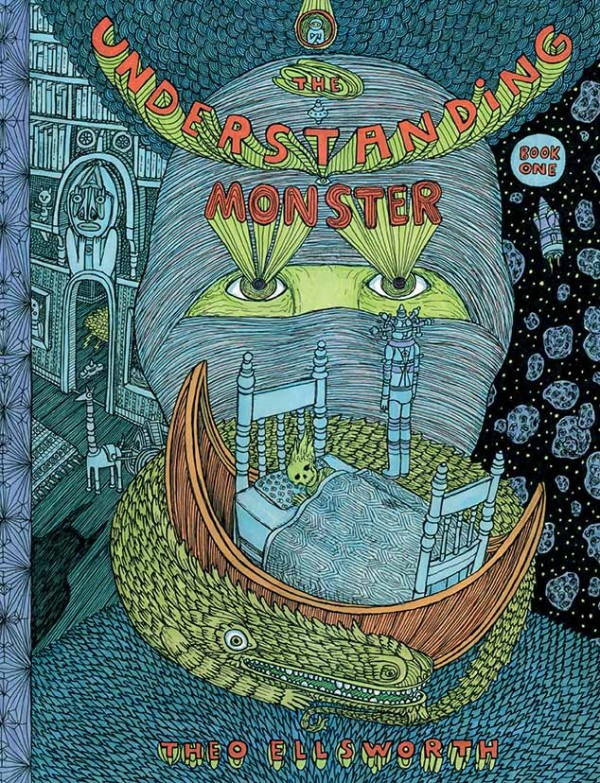
* This news has been out and about for a while in various forms, but it’s official: Secret Acres will be debuting The Understanding Monster Book One by Theo Ellsworth at this year’s must-attend SPX.
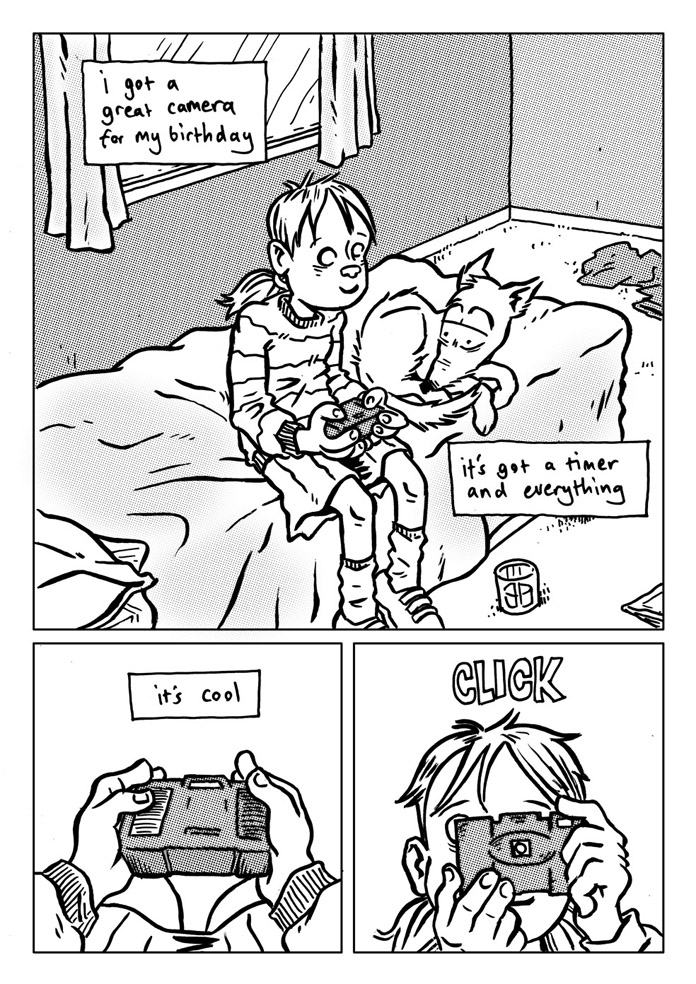
* But did we know that Aidan Koch’s The Blonde Woman would be collected and released in September 2012, or is that new news?
* Alright, a new Cindy & Biscuit strip by my collaborator Dan White!
* One of my favorite music writers on one of my favorite bands: Tom Ewing reviews the Roxy Music Complete Studio Recordings box set. I think it’s just about dead on in every particular: the choice to emphasize and celebrate Ferry right up front, holding up Avalon as at least the equal of even the best of the first five records, rightly locating Manifesto and especially Flesh + Blood as first drafts for the subsequent masterpiece, and especially calling attention to the tracks where the full band “reach full steam.” Seriously, Roxy could really tear the shit out of a song when that was what they were going for — for pure power, on tracks like “Editions of You” or “Mother of Pearl” or “Out of the Blue” or the almighty “Virginia Plain” they could go toe to toe with just about anyone.
* Then, because it’s my birthday or something, Ewing runs down his four favorite tracks (aka the “Mount Rushmore” meme) for Roxy Music, T. Rex, Led Zeppelin, and the Beatles.
* Sheesh — this Mark Richardson piece on being terrified out of his wits as a kid by The Elephant Man proves, if there was any doubt, that Mark Richardson is really good at writing about David Lynch. He should seriously consider going full monomania about it.
* Zach Baron’s Grantland piece on Matt Damon’s Bourne trilogy and its Jeremy Renner-starring follow-up The Bourne Legacy is thoroughly fine; this passage is particularly fine.
In The Bourne Identity, director Doug Liman drew on his dad’s experience prosecuting Oliver North in the wake of Iran-Contra to make a film, only one year after 9/11, that is still one of the best and most thoughtful visions of Americans abroad in this century — Damon’s Bourne was a man in a foreign country with a gun in his hand and no idea how it got there. The Robert Ludlum source novels, Gilroy once said, “were about running to airports.” But Liman, with Gilroy’s help, made a movie about lost identity: an action film in which killing is the symptom of the problem, rather than the solution to it.
It’s also worth noting his take on Renner’s performances in Dahmer, The Hurt Locker, and The Avengers, even if you disagree with it. (For what it’s worth, my review of the Matt Damon Bourne movies and the Daniel Craig Bond movies is one of my favorite bits of film writing I ever did.)
* Tom Spurgeon had a big 50th birthday blowout for Stan Lee & Steve Ditko’s Spider-Man the other day; highlights include Spurgeon’s 16-point meditation on Amazing Spider-Man #1-150 and Kiel Phegley on Spider-Man’s cultural ubiquity.
* Captain America by Rick Remender, John Romita Jr., Klaus Janson, and Dean White: a character I like written by a writer I like, pencilled by a penciller I like, inked by an inker I like, and colored by a colorist I like, but man is the plot a departure from the Ed Brubaker material that made the Joe Simon/Jack Kirby character work as well as, if not better than, he’s ever worked before.
* Domitille Collardey’s Wreckhall Abbey is off to a very strong start.
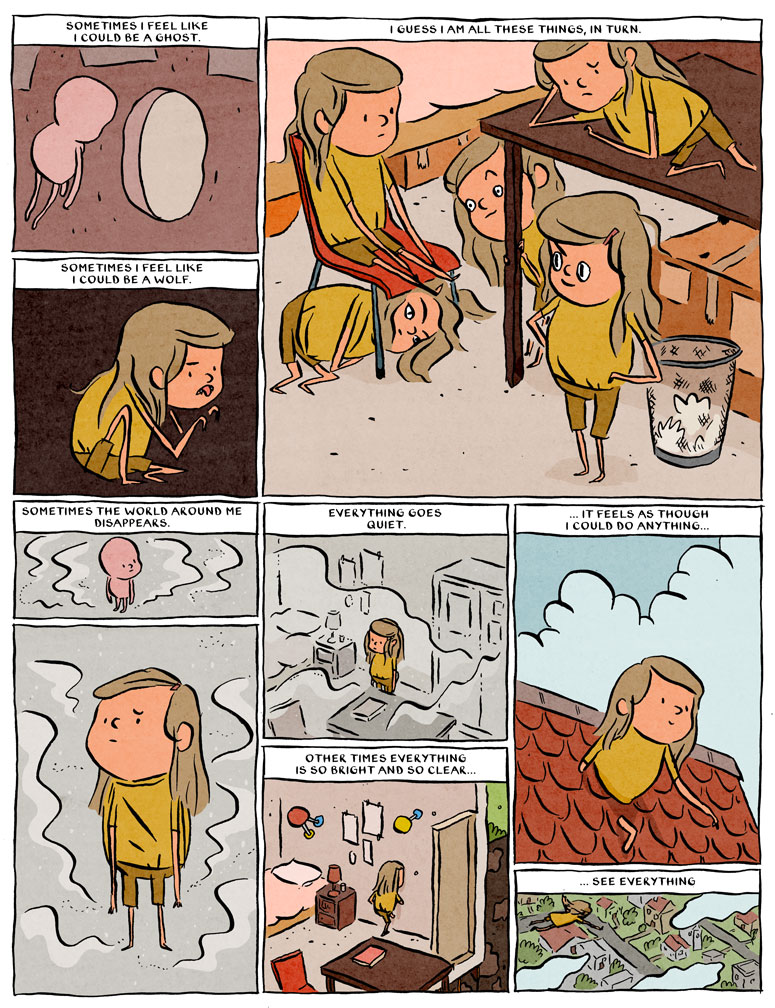
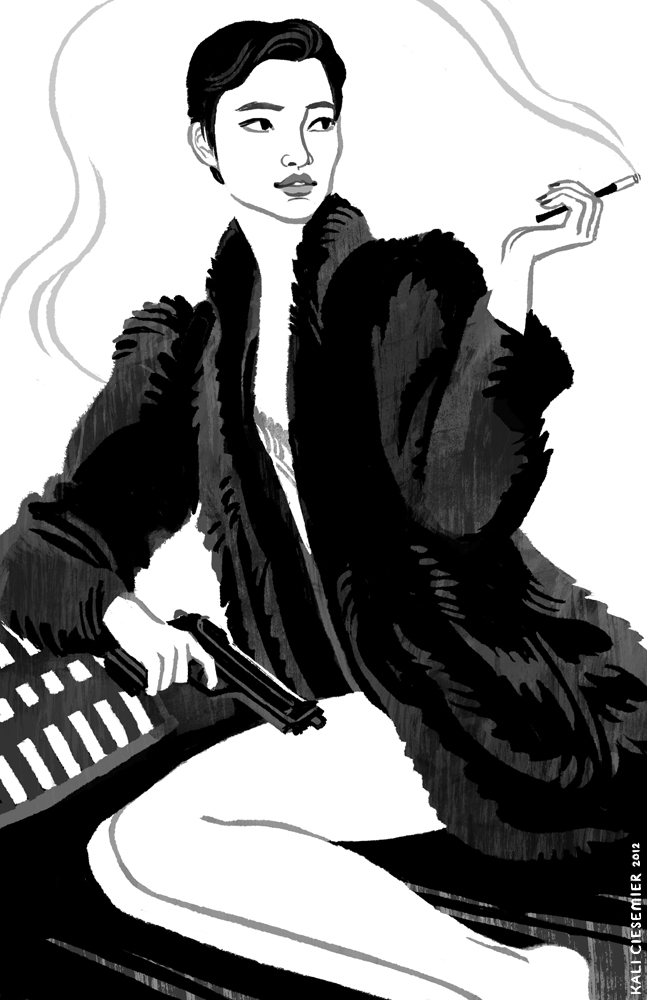
* Kali Ciesemier’s take on Josie Packard for the Damn Fine Coffee Twin Peaks zine is reliably beautiful.
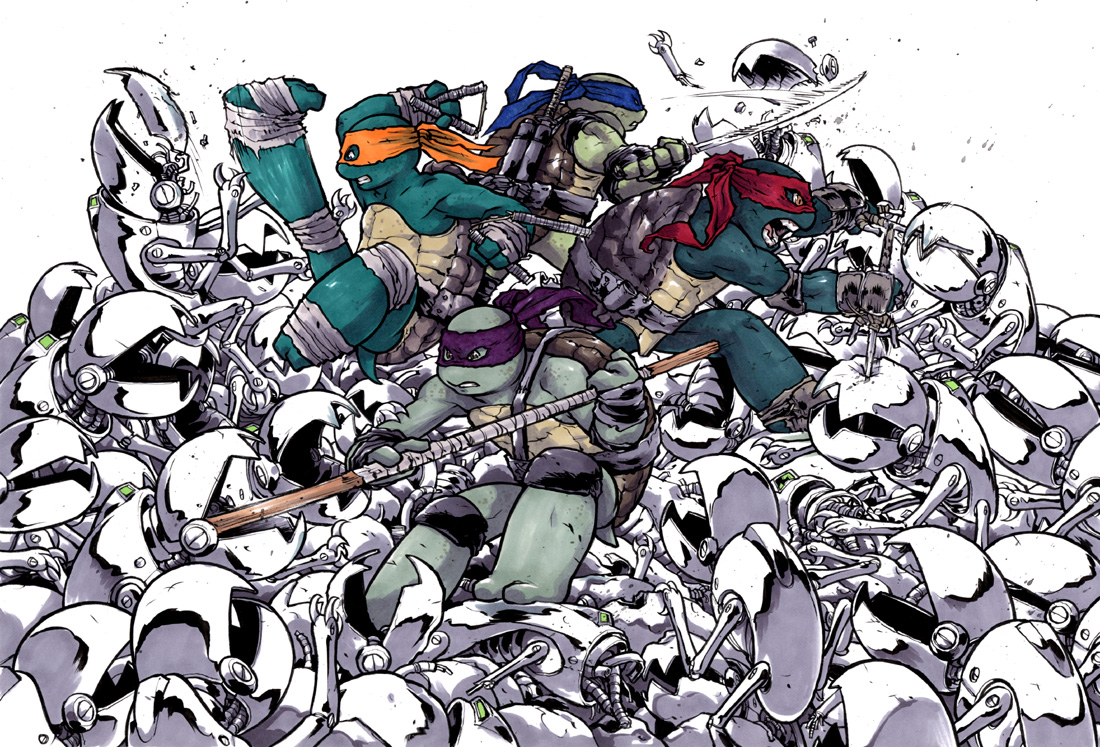
* Why not take a look at a Ross Campbell drawing of the Teenage Mutant Ninja Turtles fighting some Mousers?
* Lingerie Witches: some dumb fun smut from Simon Hanselmann.

* I’m glad the video for A$AP Rocky’s “Purple Kisses” came out on the same day I put up that picture of Jonny Negron’s new book.
* Jason Adams reviews David Cronenberg’s Cosmopolis and sums up Alfred Hitchcock in one gif.
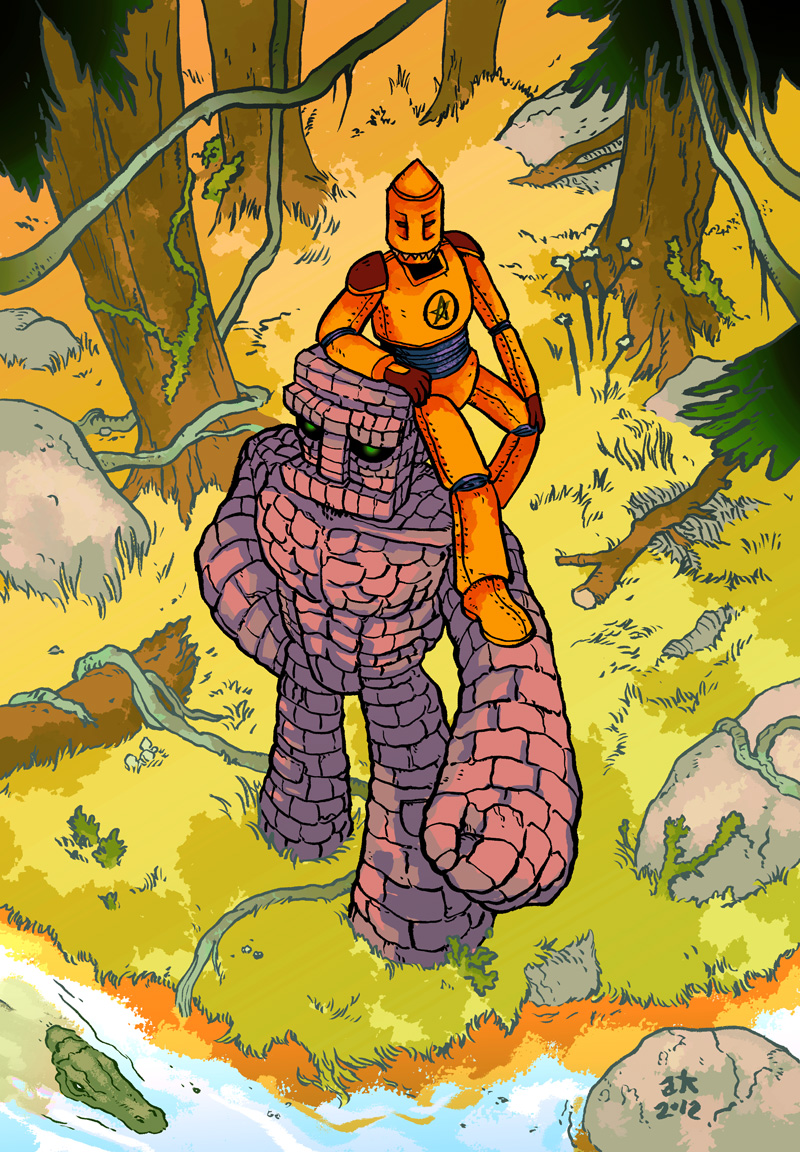
* Finally, we’ve gotten some terrific Destructor fanart from Aviv Iscovitz and Jordan Shiveley. We’re always up for more.
Q&A: “Breaking Bad” stars Dean Norris and Laura Fraser
August 13, 2012This week I interviewed Breaking Bad‘s Dean Norris for Rolling Stone. He plays Hank, a character I really love.
When we first met Hank, he came across as an obnoxious blowhard. In this episode, he’s moving into the boss’s office. It took me a while to see it, but Hank’s a good cop.
Yeah, he is. One of the tensions in the show has always been that I think he’s a good cop, Vince [Gilligan] thinks he’s a good cop, yet he obviously hasn’t caught on yet. There’s always this question: “Why doesn’t he know?” I think it’s because it would be ridiculous for him to ever suspect that any of these things led to [starts laughing] Walter White. That would be bad writing. But he’s found everything else out. He found Tuco, and he obviously was right about Gus Fring, which everyone else was wrong about. He’s getting there.
And last week I interviewed Laura Fraser, who plays the new character Lydia Rodarte-Quayle. She’s a pretty big new ingredient for the show to be adding this late in the cook, as it were, and I’m impressed by how well it’s working.
The audience had to hit the ground running with Lydia, too. We really had no chance to get to know her under normal circumstances, since right away she’s in such dire straits. That has to create a lot of pressure on you to win the audience over.
One relief was that I didn’t have to worry about making her likeable. She’s so clever and bright, and yet so odd. I liked her, but sometimes she can be such an asshole that she just makes me laugh to play her, even when I’m about to die. It’s a trip.
“Breaking Bad” thoughts, Season Five, Episode Five: “Dead Freight”
August 12, 2012For my review of tonight’s episode of Breaking Bad, please visit Rolling Stone.
I can’t remember the last time I was this badly upset by a television show.