Posts Tagged ‘TV’
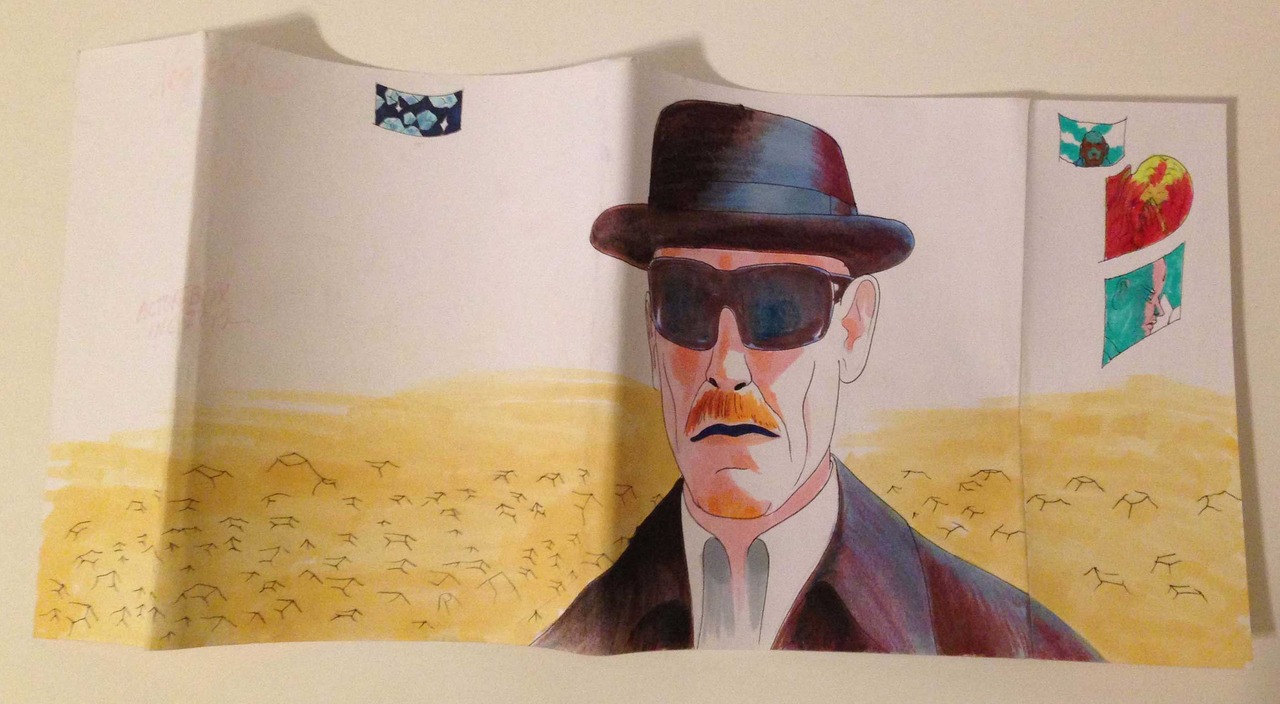
Breaking Bad thoughts
December 5, 2011I watched all of Season One. SPOILER WARNING
* Breaking Bad started off a lot broader than I expected. And I’ll be honest, it was hard not to hold that against the show, no matter how many times I reminded myself that The Sopranos spent two seasons as a black comedy about men trying to kill each other over cunnilingus and things like that.
* Mind you, the core family was fine the whole time. Bryan Cranston exudes the air of an actor who knows he has the role of a lifetime every moment he’s on screen. R.J. Mitte portrays Walt Jr.’s disability exactly the way he should, like an otherwise normal teenage kid dealing with one extra layer of crappiness. And though Anna Gunn’s Skyler is written a wee bit too pointedly oblivious to what’s really going on with Walter now and then, she’s certainly believable as a basically happy person suddenly being made to struggle with issues that threaten that happiness, financial and physical alike.
* But everyone else? The bulldog back-slapping brother-in-law, with his off-color remarks and gung-ho DEA attitude? The unbearable sister, meddling and judgmental and prone to referring to people as being “on marijuana”? Jesse Pinkman, a Slim Shady caricature who says “what up, biatch?” on his outgoing answering machine message? Various ésé-spouting Mexican-American gangsters blaring generic hip hop out of their cars and stereo systems? Nuance is hard to come by here.
* Then I started struggling with Walter’s actions, too. There was something too pat about the way he approached, say, disposing of a body like grading a quiz at work. I know that that’s what movies tell us that mild-mannered people suddenly drawn into life-or-death criminal enterprises would do, but a nervous breakdown seems like a far more likely result. The fact that that storyline devolved into splatstick with the bathtub full of dissolved body parts crashing through the floor didn’t help matters.
* I did buy the way he went about figuring out to do with the imprisoned Crazy Eight — basically coming right out and saying that he was bonding with him in an attempt to prevent himself from being able to kill the guy. And I bought the little touches in that storyline, too, from giving him hand sanitizer to use after he relieves himself in the bucket, to the way he wished aloud that Crazy Eight hadn’t hidden a shard of the broken plate to use as a weapon when he first discovered that it was missing. But after the deed was done, it seemed to weigh no more heavily on his mind than the secret of his cancer diagnosis, or whether or not to go back into cooking meth, or whether to accept money from his old lab partner, or whether or not to forgive Skyler for tipping the guy off about the situation in the first place, or whether or not to get treatment…I just had a really hard time swallowing that killing two people, including one time by hand, wouldn’t totally eat him alive.
* But a couple of moments toward the end of this short first season sold me on it enough to keep going. Well, that’s not quite fair — I’d probably have kept going regardless, it’s a perfectly entertaining show. But these moments made me think that maybe it could go from perfectly entertaining to hanging with the big boys.
* The first was the intervention scene, when Walter’s family tries to convince him to get treatment for his cancer. In particular, you could feel the actors playing the in-laws reacting to this material, much better than what they’d been given so far, like drowning animals getting their first big gasp of saving air. The sister was suddenly allowed to show both genuine compassion and express a viewpoint that didn’t conform precisely to our received wisdom about What Assholes Think and Do. Skyler’s benevolence, her facade of creating this safe space where everyone could speak their minds freely, was complicated refreshingly by her simple desperation to keep her husband alive. (Understandable! But not saintly, and that’s the point.) Walter was finally given the chance to truly hash out and articulate how crushingly unfair he felt the cancer to be in a life already proscribed and fenced in by things he never quite felt within his control. Even the buffoonish cop brother had a chance to visibly struggle with his own inability to express complicated, serious ideas in a fashion commensurate with their complexity and seriousness; by the end of the scene, he was quietly crying, though neither the filmmakers nor the actor made a big deal out of it, to their great credit. It was a beautifully done scene, one that convinced me that these were people who contained more than was visible on their surfaces, and/or that the filmmakers were up to the task of showing that to be the case. (There was a parallel track in that episode that, while not quite up to the intervention’s standards, helped flesh Jesse out in a similar fashion: His ability to convincingly clean up for a job interview, his crushed hopes when he realized what he’d be relegated to doing if he were to get the job, his lack of comfort with falling right back into his old ways given what he’d been through, his disappointment in himself for not being able to live up to the standard he and Mister White had set.)
* The second came a couple of episodes later, after Tuco beat Jesse up and stole his meth and money, when Walter goes to Tuco’s place to steal it back. When he gets back to his car after blowing up the room and working out the deal with the stunned but impressed Tuco, he lets out a primal growl of exhilaration, pumping his fists and pounding on the steering wheel. And suddenly I could understand why the murders didn’t destroy him like I thought they would — like I thought they ought to, frankly; suddenly his fun but kind of cheap outbursts of vigilante justice — roughing up the bullies in the clothing store when they made fun of Walt Junior, blowing up the loudmouth Bluetooth guy’s sportscar at the gas station — seemed less like “hey, wouldn’t it be funny if we ended the episode like this?” and more like signposts on a road to a destination. The destination being “Walter White is actually dangerous inside.” For whatever reason, some innate tendency toward risk-taking, thrillseeking, intimidation, and violence that had never had a chance to express itself until now was out, and the mild-mannered science teacher was now a bald-headed suicide bomber growling out his triumph with a lap full of hundred dollar bills. When they called the show Breaking Bad, they didn’t just mean going bad in terms of breaking the law — they meant that some rough beast was slouching toward Albuquerque to be born.
* And that’s the fundamental difference between Breaking Bad and all of the other shows I’ve watched that I’d consider to be the Great TV Dramas. The Sopranos, Deadwood, The Wire, Mad Men, Battlestar Galactica, Twin Peaks, even the less self-consciously Great Lost or the flawed Boardwalk Empire or the very young Game of Thrones were basically stories about men and women dealing with the consequences of moral codes they’d formed long ago and adhered to for years. Even in cases where circumstances recently changed for them in such a way as to force them to confront those consequences much more urgently or directly — a new sheriff in town, a new Hand of the King, a plane crash on a mysterious island, interplanetary robot genocide — the value systems we saw them working with were already in place before the cameras started rolling. On Breaking Bad, however, Walter White is becoming a changed man before our eyes. At times it’s just as baffling to us as it is to poor Jesse. In the end, I suppose it’s no surprise that I finally cottoned to the show when I felt like I’d gotten the lay of the land for what he’d changed into, and how he’d behave from now on. Suddenly the show had become the kind of show I’m familiar with as being prone to greatness.
* The show really lucked out in this respect: What a fucking transformation from Bryan Cranston simply by shaving his head! From “Dad who enjoys his daughter’s soccer games” to “police still have yet to identify several of the bodies found in the crawlspace” with the glide of a hair clipper. Years of closely reading comic books and learning to take every aesthetic quality as an intentional vector of story or tonal information has left me really fascinated by the impact a character’s mere physical appearance can have on the story he’s in, and this is as good an example of that as Jon Hamm’s prodigious handsomeness making Don Draper bearable.
* It also paid more attention to the aural dimension of filmmaking than probably any of the shows I listed above save, I dunno, Twin Peaks? The drones and buzzes in Walter’s head when things are going really badly for him are a totally effective tool in their arsenal. I don’t know why more shows wouldn’t go for that kind of thing.
* And let’s be honest, I’m predisposed to appreciate any show that uses its lead character’s relative willingness and ability to slip it to Anna Gunn as a barometer for his state of mind. (Although is it really a barometer of anything but whether or not he is a living heterosexual male with a functioning penis?)
* Anyway, I thought the very last episode was a bit anticlimactic. I like that Walt’s thinking big with the meth operation, and again, I’m deeply okay with rogering Anna Gunn. But the main takeaways from this episode — that Walt can go toe to toe with a druglord and that said druglord is an enormously unpredictable and violent meth-addled lunatic — were already established with much higher stakes in the previous episode — instead of hosting tense junkyard meetings, Walt blew up Tuco’s office; instead of proving Tuco’s propensity for violence by beating up some unnamed underling, the show proved it by beating up Jesse. But even still, I’m excited to see if my armchair psychoanalysis of Walter holds water in the following seasons. What up, biatch.
Carnival of souls: Mautner on Morrison, BCGF debuts, more
November 29, 2011* Chris Mautner’s “Comics College” column on the work of Grant Morrison was worth the wait. It’s a terrific capsule guide to the most important superhero writer of the post-Moore/Miller era. The “Avoid” section in particular nails it, although I think it’s way too early to call it a day on Action Comics — Morrison’s the first to tell you his new series tend to start off shaky. (And I actually like Action so far anyway.)
* I don’t think I linked to this yet, and I know I haven’t read it yet, but I’m looking forward to diving into Hayley Campbell’s interview with Anders Nilsen. It’s great to see all the Big Questions covers in one place like that, too.
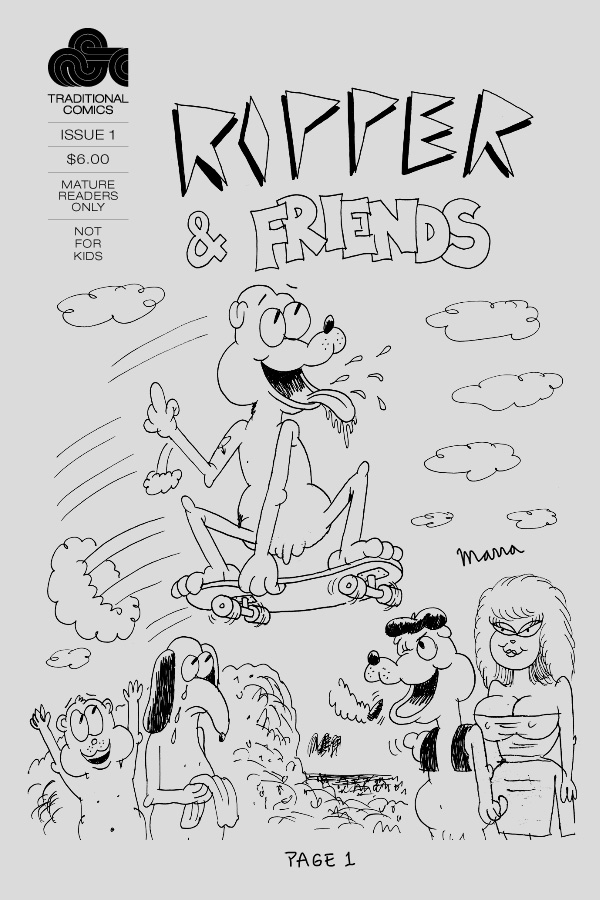
* Michael DeForge showcases the four comics he’ll be debuting at this weekend’s BCGF, including a collaborative effort with Benjamin Marra! And lest you think he’s getting lazy in his old age, he’s got the latest Ant Comic up as well.
* And Ryan Cecil Smith is rolling out a three-part SF Supplemental File #2, with part one debuting at BCGF as well. Damn, look at this printing job!
* Matthew Perpetua talks to Tony Millionaire about his new book of illustrations, 500 Portraits, with a strong selection of said portraits accompanying. This is probably the best drawing of Art Garfunkel ever.
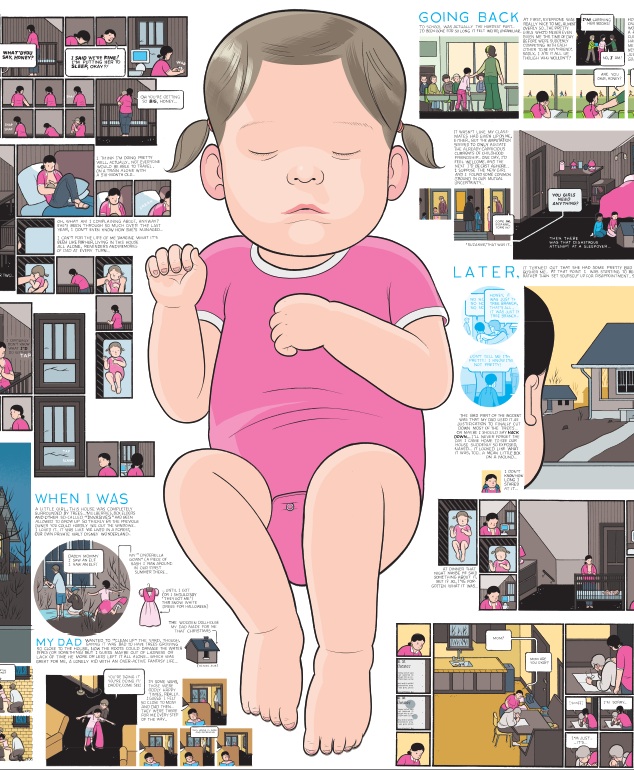
* Well lookee here, it’s a page from the best single comic I’ve ever seen, Kevin Huizenga’s “The Sunset.”
* Looks like Renee French is posting her art at her Posterous site nowadays, so update your bookmarks.
* Outsider graphic novels (by “outsider” I mean people operating totally independently from the comics-making industry as we know it) are a fascinating arena of discovery. Comics is such an oddball medium that when people arrive at expressing themselves using that medium on their own, it takes on an almost miraculous quality. For example, check out Brad Mackay’s piece for the Comics Journal on Bus Griffiths’ 1978 paean to his career as a lumberjack, Now You’re Logging.
* Gorgeous post-it note art by Theo Ellsworth. Longtime readers of the blog will understand why the one below is my favorite.
* Johnny Ryan is a national treasure.
* Sam Bosma draws Solomon Grundy.
* It’s tough to beat Uno Moralez.
* A whole bunch of Hieronymous Bosch-channeling drawings by Salvador Dali called Dreams of Pantagruel? Sure, I’ll eat it.
* I really like this painting of Jack Kirby’s Darkseid by Daniel James Cox. As you scroll down to see it, at first it appears like it’s some giant monument with fires burning in the eyes as the evening sun shines through the retreating clouds of a summer thunderstorm.
* I thought Dan Harmon’s obsessive-compulsive sitcom Community got off to a really rough start this season — way too much Chang, way too much emphasis on the unpleasant aspects of the characters’ friendship given that that was the focus of the end of the previous season too, and frankly not enough actually funny jokes. But I caught up on the season this past weekend, and the two most recent episodes were both hilarious, with the character stuff tipped back toward “these people bounce off each other in unpredictable and occasionally destructive but ultimately funny and rewarding ways” from “ugh, stay the fuck away from each other already,” and the more outlandish bits actually connecting (the entire karaoke/hallucination/drifter serenade sequence was a scream). So I’m now joining the rest of the Internet in being bummed out that the show’s in limbo after midseason, and in celebrating gratuitously insular stuff like a Beetlejuice gag that took three seasons to complete.
* Finally, here is a picture of Kristen Stewart, who is attractive.
Carnival of souls: Matthew Weiner interviewed, Vince Clarke and Martin Gore reunited, more
November 22, 2011* I feel like every moment of my marathon run through all four seasons of Mad Men was leading me to this: A five-hour interview with series creator Matthew Weiner. This is heaven, absolute heaven. Everyone who created a work of art I enjoyed as much as Mad Men should be interviewed about the entirety of their life and career for five hours. And Sopranos fans will absolutely want to watch this as well, as he talks about his involvement in that show at length, and makes an argument for its greatness. (And reveals that he is the Peggy to David Chase’s Don.) My favorite thing about it is Weiner’s good humor and streak of genuine humility/self-deprecation. He’s not needlessly hard on himself — obviously he’s quite good at his job, it’d be stupid to deny that — and nor is he an egomaniac. If you know any talented successful creative people that you personally are friendly with, he sounds like those people. What a treat!
* Great googly moogly: Vince Clarke and Martin Gore are reuniting! This makes me happy in my heart. When I watched that BBC documentary Synth Britannia a while back, I was struck by how a dude like Clarke who made such warm music ankled the rest of Depeche Mode in such a cold way. These were his friends from school, and he ditched them because advances in technology had allowed him to do everything he needed to do (except sing) by himself, so his friends were now superfluous. So glad to see two of my favorite synthpop songwriters working together again, even if it’s for a minimal techno album.
* Five new B.P.R.D. miniseries next year! Way to take advantage of the apocalyptic 2012 zeitgeist.
* I’m bummed to see the very good Panelists group blog shutting down. I’d actually been wondering about this, seeing as how co-founders Craig Fischer and Charles Hatfield have columns going at The Comics Journal. But hey, there’s your silver lining, innit?
* Interesting: The Last Vispo Anthology: Visual Poetry 1998-2008. Curious to see what this looks like.
* Fantagraphics: minicomics publisher!
* “With Great Power Comes No Responsibility.” Tattoo it on your forehead, America!
* Wizard’s Gareb Shamus is blogging and tweeting and quietly shutting down his digital magazine.
* Amazingly, Jason Adams of My New Plaid Pants interviews Michael Fassbender and never once asks to see his penis! He doesn’t even hint around at it! Jason, I’d like you to know that whenever I think of him now, I mentally refer to him as Fassy, without fail.
* Happy 71st birthday to Cardinal Fang Terry Gilliam, one of the very best people.
* And congratulations to Anders Nilsen for his book Big Questions‘ deserving presence on the New York Times Book Review Notable Books of the Year list. As you can see from the review-link sidebar on my blog, I’m its biggest fan, although I have yet read the collected edition. But then I have yet to read a ton of promising comics that have come out this year. I’m hoping to reorganize my life to make that possible again. It’s so important to me to have my hands in these things. It makes me feel better as a person and happier in life. Do you know what I mean?
Carnival of souls: BCGF, Drake, OWS, more
November 18, 2011* Recently on Robot 6:
* The Brooklyn Comics and Graphics Festival has announced its programming slate. Phoebe Gloeckner’s spotlight panel and a Tom Spurgeon/CF/Brian Ralph three-for-all are the highlights for me. I’m not sure if I’ve ever heard Tom talk about CF at length, now that I think about it…
* Related: AdHouse is gonna have a hell of a show, by the sound of it.
* And here’s a BCGF debut: Zack Soto and Milo George are (re)launching Study Group Magazine, with a killer initial line-up of comics and journalism that includes work by ADDXSTC faves Chris Cilla, Michael DeForge, Jonny Negron, as well as interviews with Eleanor Davis and Craig Thompson.
* Does Koyama Press have the coolest publisher backstory ever?
* Inspired by a quote from Chris Mautner’s excellent interview with Art Spiegelman about MetaMaus in which Spiegelman explains the pain of having such horrifying and personal subject matter at the heart of his career for so long, I defend Art Spiegelman against his “what have you done for me lately?” detractors.
* And inspired by Nadim Damluji’s excellent interview with Craig Thompson about Orientalism in Habibi (although I must warn you not to enter the ensuing comment thread unless forced at gunpoint, and even then you might want to consider taking your chances at disarming the guy), I defend Craig Thompson against criticism to the effect that he doesn’t really know what’s going on in his own work.
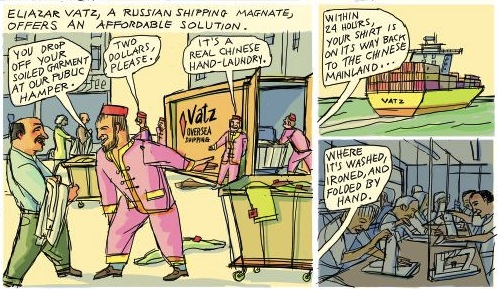
* I’m really enjoying Ben Katchor’s increasingly explicit anticorporatism.
* Top Shelf is going digital in a big way, with a couple of comics apps. And damn, the price is right on the books they’re launching with. Clumsy for two bucks?
* At last! Image is releasing a collected edition of Brandon Graham’s much-lauded King City in February.
* John Porcellino has a new King-Cat coming coming out on Wednesday!
* So this is the cover for Jonny Negron’s Chameleon #2. That make sense.
* The Matthias Wivel-edited Nordic comics anthology Kolor Klimax sure looks good.
* Here’s a long and excellent piece by Zom on the horror of Uno Moralez. It’s a rare feat to analyze what makes something mysterious and horrifying with this kind of accuracy but with no intention of deflating the mystery and horror.
* Fear Itself ate itself, basically. This certainly isn’t the first time a major event comic involved elements of planned rapid obsolescence — it was the knowledge that they’d be wiping out Spider-Man’s marriage and with it whatever other aspects of his history they wanted to fudge that enabled Marvel to unmask Peter Parker for a mainstream-media bounce during Civil War — but it’s really quite unusual for three epilogue one-shots branded with the event’s name to undo the three biggest status-quo changes of the event, within three weeks of that event’s official conclusion. Still more unusual is that in all three cases Marvel’s clearly better off having undone them.
* Tucker Stone’s interview with Mark Waid about Daredevil is really entertaining on both sides of the tape recorder.
* Wow, they are dropping a lot of characters from A Clash of Kings in Game of Thrones Season Two. In some cases I understand both why they’re doing it and how it’ll work. In a few cases I’m kind of unsure how you do certain things you need to do at all without them. But when you think about it, the challenge faced by GoT the show is unprecedented. It’s one thing for The Sopranos to take bit parts and grow them into main characters at some point down the line — you’ve simply taken a presumably grateful character actor and given him the material of a lifetime. It’s still another to know up front that you’re casting a role who’ll get maybe five minutes of screentime this season but will turn into an opening-credits role in three, four years. What do you do, tell the Shakespearean actor you cast this past summer to clear his calendar for 2014? The answer will likely be not to cast such characters until the big stuff is happening, which of course will mean doing things differently than they were done in the books.
* Can you imagine having a sex ed class in which physical and emotional pleasure were valued and discussed? The clitoris, orgasms, the importance of making your partner feel comfortable emotionally, and being made to feel comfortable emotionally yourself? I can’t remember when that particular lightbulb was switched on in my head, but once the idea of such a sex ed curriculum was introduced to me, it became something that made me just shake my head in disgust that that’s not how things are. That’s absolutely how things should be. And in this New York Times piece about such a class in a school in a Friends’ school in Philadelphia shows you how it works.
* Speaking of the Times, unfortunately: Everyone I know thought Occupy Wall Street intended to shut down the New York City subway system yesterday, because they heard it on the news. I heard it on the news and so it’s what I believed. My in-laws, who are visiting us from Colorado, canceled their usual day in the city yesterday because they heard service would be disrupted on the news and so it’s what they believed. After the shutdown never materialized, today my co-workers said that OWS had simply failed to pull it off, because they’d heard of the plans on the news and so that’s what they believed. It turns out it was total bullshit, invented by Fox and the New York Times. But I heard it on several other outlets besides those, up to two or three days in advance, complete with responses to the supposed planned shutdown by NYC authorities. And it was all horseshit. As I’ve been saying on Twitter, it’s really rather amazing to watch all the organs of a body politic afflicted with terminal-stage capitalism work to expel OWS from the system. And this memetic inoculation against it — “protest Wall Street if you want, but once you start making it impossible for regular working people to get where they need to go…” — will likely never go away.
* Another case in point: The truly routine violation of protesters’ rights by the Bloomberg administration and the NYPD. The impunity with which they assault people, illegally arrest and detain them, illegally spy on them for their political beliefs, and so on is breathtaking. But as Ta-Nehisi Coates (via whom the aforelinked article) always says, we’ve got the police force we want, basically. If we didn’t want it, there are many ways in which we could make sure we didn’t have it.
* To end on a happier note, here are a few music links I enjoyed:
* Mark Richardson on freaking the fuck out over My Bloody Valentine’s Loveless. Man, we’ve all been there. I think my favorite part of listening to the album is when you get to that end section of “What You Want,” right before the final song “Soon” kicks in, and it’s so lovely you almost can’t bear it.
* Jaimeson Cox has been writing about Drake’s new album Take Care all week, and it’s been great. Actually, that album has coaxed great writing out of a lot of music writers. Off the top of my head: Brandon Soderberg, Zach Baron (the bit about the title track’s a must read), Ryan Dombal, Hua Hsu (terrific point about how disconcerting delivering similar sentiments via both singing and rapping can be). It’s early yet, but I think this may be my second-favorite album of the year after Kaputt by Destroyer? There’s just so much to talk about in the music especially, which is why I may inflict a post about hip-hop on you all in the near future. You’ve been warned.
Mad Men thoughts index
November 9, 2011Here are links to all my Mad Men posts. I hope you enjoyed them!
* Season One, episodes 1-4
* Season One, episode 5 through Season Two, episode 3
* Season Two, episodes 4-7
* Season Two, episodes 8-11
* Season Two, episode 12 through Season Three, episode 2
* Season Three, episodes 3-6
* Season Three, episodes 7-13
* Season Four, episode 1
* Season Four, episodes 2-6
* Season Four, episodes 7-13
* Season Five, episode 1-2: “A Little Kiss”
* Season Five, episode 3: “Tea Leaves”
* Season Five, episode 4: “Mystery Date”
* Season Five, episode 5: “Signal 30”
* Season Five, episode 6: “Far Away Places”
* Season Five, episode 7: “At the Codfish Ball”
* Season Five, episode 8: “Lady Lazarus”
* Season Five, episode 9: “Dark Shadows”
* Season Five, episode 10: “Christmas Waltz”
* Season Five, episode 11: “The Other Woman”
* Season Five, episode 12: “Commissions and Fees”
* Season Five, episode 13: “The Phantom”
* Bonus: Season Five, episode 13: “The Phantom” with The Mindless Ones
* Season Six, episode 1-2: “The Doorway”
* Season Six, episode 1-2: “Seeing Mad Men Through Its Ads” column for Wired
* Season Six, episode 3: “Collaborators”
* Season Six, episode 3 column for Wired
* Season Six, episode 4: “To Have and to Hold”
* Season Six, episode 4 column for Wired
* Season Six, episode 5: “The Flood”
* Season Six, episode 5 column for Wired
* Season Six, episode 6: “For Immediate Release”
* Season Six, episode 6 column for Wired
* Season Six, episode 7: “Man with a Plan”
* Season Six, episode 7 column for Wired
* Season Six, episode 8: “The Crash”
* Season Six, episode 8 column for Wired
* Season Six, episode 9: “The Better Half”
* Season Six, episode 9 column for Wired
* Season Six, episode 10: “A Tale of Two Cities”
* Season Six, episode 10 column for Wired
* Taking stock of Season Six: Bloggingheads.tv chat with Alyssa Rosenberg
* Season Six, episode 11: “Favors”
* Season Six, episode 11 column for Wired
* Season Six, episode 12: “The Quality of Mercy”
* Season Six, episode 12 column for Wired
* Season Six, episode 13: “In Care Of”
* Season Six, episode 13 column for Wired
* The Self-Destruction of Mad Men (an essay on style for Esquire)
* The Great Don Debate (debating the role of Don Draper with Hazel Cills for Netflix)
* Season Seven, Episode One: “In Care Of” (for Wired)
* Season Seven, Episode Two: “A Day’s Work”
* Season Seven, Episode Three: “Field Trip”
* Season Seven, Episode Four: “The Monolith”
* Season Seven, Episode Five: “The Runaways”
* Season Seven, Episode Six: “The Strategy”
* Season Seven, Episode Seven: “Waterloo”
Mad Men thoughts: The Final Chapter
November 9, 2011I’ve now finished all four seasons! SPOILERS AHOY
* The back half of Season Four began with two of the series’ very best episodes. First there was the surprisingly innovative decision just to take the series’ two lead characters and have them talk to each other for an episode. Duck’s arrival added some emotional and physical pyrotechnics to the proceedings, but for the most part it was simply a pleasure to watch Don and Peggy hash out the depth of their relationship to one another, first angrily, then drunkenly, then with the genuine hand-holding tenderness that reduces me to a misty-eyed marshmallow anytime the show goes there. This episode was, in its way, the payoff for Peggy’s newfound openness with Don at the beginning of the season. And as much as a part of her resents it — not because she wants it any different, but because, well, would the possibility really have been that difficult to entertain — it’s also nice for Peggy to offer proof that Don can have a platonic, loving friendship with a woman other than the one whose husband’s life he stole. Seeing that glimmer of a good man when Peggy’s around is sort of like the audience reaping a reward Peggy earned through years of hard emotional, creative, and intellectual work. It connects us to her.
* Next up was an episode with the evocative title of “The Summer Man,” which wasn’t just one of the series’ best episodes but also one of its most…experimental? Tactile? Sensuous? I’m not sure I could sit here and tell you what really happened in it, necessarily; the more important thing was the parade of sensations it presented us with. Don’s new hobby of swimming, the sound and vision of his body swimming through the cool and pristine water of the pool, was contrasted with the slow-motion muted-sound shots of booze being poured into an endless succession of glasses as Don realizes he needs to dry out, at least in part. Don began keeping a journal, so you had his mellifluous baritone actually narrating the episode — a first — providing not just a rich and pleasant sound, but a series of ruthless insights into his life and the lives of those around him. “I bet she was thinking of that line all night,” he writes of his date’s farewell after she blows him in the back of a taxicab. Brutal. But hey, let’s talk about that blowjob, too, another example of the show understanding how crucial and sexy the initial stages of a hook-up are: Bethany smiling at Don as she unzips him, him smiling back as he realizes what’s up. Let’s talk about the summeriness of it all, too, particularly the shot of Don exiting the athletic club and watching young women and couples (to coin a phrase) go by dressed in their summer clothes. And let’s talk about the show soundtracking Don in all his glory with the Rolling Stones’ “Satisfaction,” which made me think of nothing so much as the writers having a eureka moment: “Holy shit—we can show Don walking around to ‘Satisfaction’!!!” Indeed they can! What an episode. I’m almost afraid to google for reviews.
* Just before we got to that episode and discovered what I like to call Conscious Don, I got to thinking about the challenge it must have presented to Jon Hamm and John Slattery in particular to play characters who are in a state of perpetual inebriation. After a while you no longer notice it, but when they go into someone’s office, and I mean pretty much every time they go into someone’s office, they drink. When they get home they drink. When a meeting ends they drink. Certainly when they go out to dinner they drink. Might the actors forget about this too, or do Hamm and Slattery always remember to play Don and Roger as self-possessed guys covering up a slight buzz?
* If I recall correctly there was another strong pair of episodes in there, basically a girl episode and a guy episode back to back. In the first, Peggy’s would-be boyfriend gives her guff about her gig, Joan has sex with Roger after they get mugged, Sally runs away from home and Betty comes to claim her, Faye whiffs on trying to soothe Sally, and Miss Blankenship dies. In the second, Don is nearly found out by the Defense Department, Pete has to take the bullet for Don by canceling the agency’s aviation gig, Lane confronts his father, and Roger learns both that Joan is pregnant and that Lucky Strike is leaving. I’m not sure that either of them stands out as cohesive units, but as a demonstration of how many balls the show can keep in the air within a short stretch of time, they’re tough to top.
* While the sequence with Lane’s stiff-upper-lip father and his Playboy Bunny girlfriend rang as false — okay, not false, but at the very least broad — as anything on the show since Peggy and Rizzo’s nude brainstorming session, the portrait it painted of Lane as an overgrown boy was one I really appreciated. I had already found myself returning repeatedly to the way he chose to explain to his wife what he liked about living in New York: “I’ve been here eight months and no one has asked me what school I went to.” That line’s obviously loaded with centuries of English class bias, but it also speaks to how fundamental his time as a schoolboy is to Lane’s conception of himself. And from the dutiful employee of PPO who resigned himself to transferring to Bombay in under 90 seconds, to the rebellious son who couldn’t wait for his father to disapprove of his new relationship, you see it repeatedly.
* “It’s like drinking a hundred bottles of whiskey while someone licks your tits.” Man, Midge sure makes heroin sound more appealing than Lou Reed did, and I don’t even have tits! Ah well. It was nice to see the first of Don Draper’s Great Brunettes of the 1960s reappear, if only for a sordid attempt to extract cash that was skeevy enough to make my arms itch. As I write this paragraph I realize that it was actually a rather well-played scene given how shopworn the fallen-idealist junkie thing could be. The contrast between her and her husband’s jocularity and their obvious desperation was an engaging detail from writers and actors alike.
* Speaking of pale brunettes, big Megan fan here, obviously. But that aside, I appreciate how the show slowly seeded her in, first with a standout role in Faye’s focus group about Pond’s cold cream, then by making her a tourist attraction for Peggy’s bohemian friends at the front desk, they by having her step in for the late Miss Blankenship, then by making her the control group for Faye’s failure to connect with Sally, then with a seemingly random shot of Don staring at her at the end of the day as she touches up her makeup to go out. You can certainly detect Matthew Weiner’s background with The Sopranos there — the best show ever at organically building up bit parts into major players. (Cf. Jaime Hernandez in Love and Rockets too.) And yeah, my initial reaction to their initial hookup was “Oh no!!!!”, a reaction that received some confirmation when Faye shows up at Don’s apartment later that night revealing that no, she had not in fact dumped him after all. But that wasn’t on Megan, who really legitimately seemed to be okay with things never going any further than that, even if it would be nice if they did. And I really really loved that they had her directly address her big teeth. She’s endearing and attractive and intriguing, with enough of a hint of potential “sees an opportunity and takes it” no-bullshit-ness that if she sticks around at the agency next season, she could make for a multidimensional foil for both Don and Peggy. And Joan! And Jane! So yes, thumbs up for Megan.
* I’ve said it before and I’ll say it again: Nothing warms the cockles of my heart like grown men cooperating and treating each other with kindness, especially when they have all sorts of incentives not to but do it anyway. So when Pete went out of his way to take the blame for North American Aviation dropping out, and when Don secretly paid for Pete’s share of the agency’s collateral with the bank, I all but audibly said “Awww.” When Don told Pete he could run the agency if Don had to skip out? My heart’s swelling even now. I think it’s not just that I value cooperation and kindness so much — it’s that the two of them started on such bad terms. They hated each other! So to see Don trust Pete like that, and Pete sacrifice for Don like that…I don’t know, it’s almost like it gives me hope for the world. People can change. And that’s a place where Mad Men differs from The Sopranos in a big way.
* The season’s final arc took the Season Three finale’s pulse-pounding heist storyline and stretched it out into a slow-motion trainwreck. Instead of a race against time, it was an attempt to arrest the agency’s downward momentum before they crashed into the bottom. It was a series of “oh-no”s. Oh no, the Defense Department! Oh no, Don’s sleeping with another co-worker! Oh no, Faye didn’t dump him after all! Oh no, the Lucky Strike asshole is about to tell Roger they’re leaving! Oh no, they’re going to lose two huge accounts at once! Oh no, Glo-coat’s dumping them too! Oh no, Betty’s gonna catch Sally with Glenn! Oh no, Betty’s gonna catch Sally with Glenn again! How many times can the bottom drop out of your stomach, you start to wonder. This has the effect of creating a genuine sense of dread where perhaps none need exist, too. I spent several episodes convinced that at any moment, Betty would truly beat Sally, or that one of the kids was gonna drown in that pool out in California, or that Faye was going to out Don in retaliation, or that Lee Garner Jr. was going to coerce sexual favors out of Roger, or or or or…It was grueling. Fitting, then, that rather than the spectacular saves that capped off the first three seasons, this ordeal was ended with Peggy and Ken securing a small account — a relatively minor turnaround for a comparatively spectacular downward spiral.
* If you take the two previous items and combine them, you have some sense of why I’m also so happy that Don and Betty’s final scene of the season worked out the way it did. I wasn’t sure what I was more afraid of, that Betty would snap in some profound and even dangerous way, or that Don would try to sleep with her again. Instead they shared a drink after Don procured both a bottle and a genuine laugh from Betty, and Betty reacted to the news of Don’s engagement with a congratulations that, while not happy, at least didn’t sound like she was lying through her teeth. This season Betty emerged as one of the show’s most fascinating characters, taking her shady Season One shrink’s diagnosis that she has the emotional life of a child and running as hard and as fast with it as she could. Consumed with the same kind of rage that troubles her daughter, insisting on seeing a child psychiatrist, driven into paroxysms of life-altering jealousy when Sally befriends the kid she herself once inappropriately confided in, and overall refusing to take yes for an answer from anyone. Not to repeat myself again, but January Jones is absolutely perfect in this role, a Hitchcock blonde playing Jimmy Stewart’s Vertigo role. My hope for Betty is that now that Don’s moved on, she can find a way to do so too.
* So there you have it: Mad Men! I’ll take your recommendations for things to read/watch/listen to about it in the comments, if you’d be so kind…
Mad Men thoughts again
November 1, 2011Today I finished Season Four, Disc Two. SPOILERS AHEAD.
* Heh, every time I start one of these posts there’s a moment of trepidation. There’s always so much to talk about!
* So, the supporting-cast bloodbath I worried about last time around wasn’t quite as bad as I feared. Ken Cosgrove appears to be returning, which actually solves a bit of a mystery for me — though I don’t know who played who, I did figure out that three of the names in the opening credits track to Ken, Paul, and Harry, and for those first few episodes I couldn’t figure out why two of those three actors were still listed even though Harry was the only character at the agency. I must say that he appears to have weathered his abandonment by Roger, Bert, Lane, Don, Peggy, Joan, and Pete a lot better than I would have. This goes double since he had recently been promoted over Pete when the exodus went down, so he had to have taken his exclusion as a commentary on his character or loyalty rather than a matter of dollars and cents. I’ll be interested to see if his ability to take a bite out of the shit sandwich Pete made a point of serving him upon his return to the fold means he can actually swallow the whole thing.
* Also returning, if only for a while: Allison the secretary. Her ill-fated dalliance with Don was an instructive storyline for two reasons. First, holy moses was it sexy. Their breathy, clothes-on quickie was all about desire and arousal in the moment, the simple physical acts necessary for the act of fucking, and the smiling newfound intimacy of two acquaintances after the fact, that sense of a shared knowledge, of pleasure experienced together. I’m really having a hard time thinking of a show that’s been this thoughtful and thorough in exploring what makes sex sexy.
* Second, it was our clearest demonstration to date of the negative potential of Draper Unbound. It’s not that Don’s cruel, per se. I mean, he can be — the way he mocked poor alcoholic Duck Phillips and that simultaneously hapless and overbearing cousin who interviewed for the copywriting gig in the award-show episode is proof enough of that. But he’s not a sociopath. When his bad behavior is brought to his attention, his remorse is real. The point is that it has to be brought to his attention. He’s clueless on his own! So in a moment of drunken lust he has sex with his secretary. Then, because he is aware on a conceptual level that that is a thing that can cause problems and is probably a Bad Idea, he cuts off any kind of collegial relationship with her whatsoever. But he never makes an effort to think ahead of the problem, to try to ease her out of the idea of a potential ongoing relationship with him, to make her feel comfortable working for him again (let alone to not have sex with her in the first place). Even when her misery becomes too obvious to ignore, he still whiffs on obvious partial solutions like personally writing her a very nice letter of recommendation. Problems pretty much literally need to be thrown in his face for him to really understand that they’re problems at all, and that he’s responsible for them.
* So he’s stumbling from one crisis to the next now: He makes dates for when it’s his turn to have the kids, and thus Sally is left alone by the babysitter for enough time to chop off her own hair. He gets drunk off booze and his own reputation, and thus unwittingly plagiarizes some doofus’s crap copy while showing off for a client. He gets deep enough into his own drinking habit to have a full-fledged lost weekend, miss out on a scheduled visit with the kids, infuriate his increasingly unhinged ex, presumably embarrass himself in front of the award-winning advertising person he slept with earlier in the weekend, and unwittingly reveal his real name to some random waitress he took home. Draper Unbound is more like Draper Unmoored.
* Related: It takes a village to raise Don Draper. In the season premiere, I was struck by the directness with which Peggy Olson told Don that everyone at the agency just wants to please him. Besides being the outright articulation of three seasons’ worth of subtext, it also served a plot purpose in that it spoke to the more intimate, casual, and free-wheeling nature of the new agency, an agency where Don’s improvisatory genius is built right into the DNA, both in its name and partnership structure and in the fact that it was his fast thinking that made its creation possible in the first place.
But this admirable openness about the staff’s desire to live up to Don’s reputation and expectations cuts both ways. Peggy, Pete, Allison, and Joan especially are willing to work extra hard to protect Don from himself, but this can have the effect of enabling him. With their safety net in place, he has yet to learn how badly a hard fall can hurt. I’ve got a feeling we’re headed in that direction, though. Allison’s defenestration was the first taste of that, and the Clio Award weekend the second. The last thing I saw at the end of Disc Two was Roger staring resentfully at Don as he traipsed down the hall, award in hand, then flashing back to the day Don first showed up for work after Roger (maaayyyybeeee) hired him during a liquid breakfast paid for by Don himself. If that’s any indication of what’s to come, those two brushes with disaster won’t be the last. Compare and contrast with Season One, where as I’ve noted before, Don’s work life was pretty much peachy. You’ve come a long way, baby.
* The show is going about the business of showing us Don’s vulnerable underbelly in some fairly non-obvious ways. Frankly I don’t even know if this is intentional, but I never find Don more pathetic than when he flashes that heavy-lidded half-smile at some woman when he’s on the make. In those moments, where he really opens up the charm firehose and drunkenly leans in to try and plant one on the girl Roger and Jane set him up with, or Anna’s collegiate niece, or Allison, or whoever he’s targeting, he’s revealed to be not some godlike avatar of success and confidence, but just some horny dude trying to seal the deal. It’s like seeing his hair messed up, only far more intimate.
* The show also makes its point about Don’s tumultuous life by juxtaposing his competence and incompetence in its most direct fashion yet. The buildup to the Clio Award doesn’t just feature all of the major characters explicitly expressing their anxiety and excitement, it includes the series’ single most endearing and adorable image yet: Don, Joan, and Roger sitting at the show, secretly holding hands under the table. You love these characters in that moment, because they love each other — they worked really hard on something, they want other people to like it, and they’re afraid that people won’t, and they’re clinging to each other in the face of all this. And then they win! Woo! Don is now the acknowledged master of his domain! …and then he breezes into this meeting with the Life cereal people, looking disheveled and stifling belches, comes within inches of destroying the whole relationship, embarrasses his coworkers, and only pulls the rabbit out of the hat with the help of unconscious plagiarism. From elation to “eeeeesh” in the space of two scenes. Brilliantly done.
* While we’re on the subject of excruciatingly awkward meetings, how ’bout a hand for Roger Sterling and his anticipatory reenactment of the “Germans” episode of Fawlty Towers with the Honda reps? When he walked into that conference room and said he hadn’t been told about the meeting, “but then again I know how some people like surprises,” I nearly lost my shit. But beneath the black comedy, may I suggest that the show is suggesting that war can deeply screw up even a happy wanderer like Bonnie Prince Sterling?
* Let us return for a moment to the Mad Men Sexiness Highlight Reel: If it’s possible to have a full-on Tex Avery bugout over a line of dialogue, then that’s what happened to me in the flashback where Roger gives Joan a mink stole at the beginning of their hotel-room date, and she responds by telling him that every time she wears it, “I’ll think of everything that happened the night I got it.” AROOOOGAH! AROOOOGAH! There’s more delight packed into that one-line promise than in a lifetime of Christmas mornings.
* Also super-duper sexy, but problematic for that very reason? Peggy Olson’s nude-off with the obnoxious new art director. Now, I’ll admit that that kind of casual yet still very highly charged nudity is where my bread is buttered. (Boola, boola!) So it’s entirely possible that there exist dudes who would be more discomfited than aroused by that kind of situation — or if Rizzo’s eventual surrender and retreat behind the closed door of the hotel bathroom with the shower running is any indication, both discomfited and aroused, at any rate. But something about the scene didn’t ring true to me even when correcting for my own fetishes, because…well, let me put it this way. When a woman resolves to triumph in a particular battle of the sexes by taking her clothes off, that’s what we in the penis-having industry call a win-win situation. I get that Peggy’s spontaneous, confrontational nudism was a way to shut this asshole up, to make him realize that he’s not the free-thinker he imagines himself to be, and thus to gain the upper hand in their work relationship. And perhaps back then a woman taking charge of her sexuality outside the framework established by men — a woman who can “stare back,” to use Peggy’s phrase about the Playboy models Rizzo spent the evening ogling — really was the shock to the system Rizzo took it as. Certainly that’s implicit from the contrast with Hef’s fantasy factory. But for the modern viewer, and presumably for the modern writers and filmmakers too, it’s Peggy Olson-slash-Elisabeth Moss taking her clothes off on camera, and having a jolly good time doing it, too (which is admittedly very important). And as a guy, the last thing that made me was uncomfortable.
* That said, it’s been fun watching the writers and directors make the most of Peggy’s ever-growing comfort in being demonstratively herself, even if it happens where no one else can see. Between her headdesk moment when she finds out that Trudy Campbell is pregnant, and her Glenn Quagmire creeper routine when she peers over the divider to spy on Don after Allison’s blow-up, she’s an animated-gif machine. Switch on the subtitles and you can add her bit about how her boyfriend may not own her vagina, but he is renting it. And of course there’s her ability to speak truth to Draper, both positive (everyone’s there to please him) and negative (he’s got to fix his own mistake with the Life cereal situation). She’s a hoot.
* But perhaps the most revelatory character work so far this season — ironically, given her relative lack of screentime — is with Betty Draper. The big discovery here is that her problems don’t all stem from a combination of her victimization by Don and the limits placed on women by her time and place, or by her time and place as personified by her parents, i.e. a general culture-created patheticness. No, many of Betty’s problems stem from Betty herself. This person has an entitlement streak as wide as it is mean. What’s happening now is that she’s gotten everything she wanted. Now that she’s divorced, she can no longer fall back on blaming society for not allowing her to pursue what she wants in defiance of tradition. Now that she’s free from Don, she can no longer pin her problems on his philandering, secret-keeping, and emotional unavailability. Now she has the house, the money, and a doting husband — who genuinely seems like a decent dude, even! Henry repeatedly makes statements against his own interest, telling Betty that as much as she and he might hate him, Don is often right about things like the house and the kids. He talks her down off various ledges rather than reacting with Don-style rage that she’s unhappy to begin with. He seems to keep a protective eye out for the kids, especially Sally, recognizing the danger the mother-daughter relationship is in. And he seems crazy about Betty, both emotionally and physically. And guess what? The tiniest crack in the surface of this world still sends Betty into paroxysms of rage. That’s not on Don, or her dad, or her mom, or her brother, or Sally, or Henry, or society — it’s on her. And hey, good for the show for handling it this way. Making all of Betty’s problems the fault of men, or of Men, would infantilize her just as surely as those men/Men have done. (And they have, to be sure. But yeah, there’s more to it than that.)
* Finally, I just have one thing to say about Sally’s storyline: WHOA. Uh, I did not expect to see a ten-year-old girl masturbating as a major plot point on an American TV drama! Of course it was handled with the show’s charateristic intelligence, the balance between restraint and directness, the multifaceted commentary on individual characters and the characters who shaped them and the society that shaped all of them. But probably more importantly, and maybe more impressively, was that it was handled at all.
Carnival of souls: Habibi, Closed Caption Comics, Netflix, Ben Affleck, more
October 27, 2011* Your must-read of the day: The Comics Journal’s excellent Habibi roundtable, featuring Charles Hatfield, Hayley Campbell, Chris Mautner, Tom Hart, Katie Haegele, and Joe McCulloch. Savor it.
* Tom Spurgeon sounds off on people who approach acclaimed comics angry about their acclaim. Comics has a near-terminal case of “You think you’re better than me???”-itis sometimes. I’ve been there!
* I pulled out the superhero-related quotes because they were the pithiest, but Alex Dueben’s interview with Jessica Abel and Matt Madden about the Best American Comics series was a top-to-bottom fascinating look at their process, particularly the thinking behind the “Notables” section at the back of the book. Abel and Madden are two of contemporary comics’ most stealthily influential figures.
* Legendary will be publishing a new edition of Paul Pope’s The One-Trick Ripoff that will also serve as an omnibus of his non-THB work from the bulk of the ’90s, including his lost manga for Kodansha.
* Ganges #4 is out! This is a great comic book.
* Closed Caption Comics news: Did you know that Ryan Cecil Smith has a blog (via Shit Comix), or that Conor Stechschulte came out with a new comic called Fountain at BCGF last year? Because I sure didn’t! CCC folks: You realize I’m your target audience, right???
* Frank Quitely talks shop. I feel like that’s a rare occurrence?
* Chris Mautner didn’t think much of DC’s New 52.
* Rub the Blood is a noisy-alt tribute to the Image Comics of the early ’90s. Could be a pip, could be a pip. I mean, surely you want to see Victor Cayro take on Shadowhawk or whatever the case may be.
* Joe McCulloch on Yuichi Yokoyam’s Color Engineering. I’ll admit that Yokoyama’s painted style leaves me cold compared to his line art, but he also rarely disappoints, so I’ll certainly be reading this.
* Hooray hooray, Tom Kaczynski’s drawing pretty girls again.
* It’s always good to see new work from Tom Neely.
* Meanwhile I think we should take all available opportunities to look at the art of David B.
* Ben Affleck is maybe directing a feature film adaptation of Stephen King’s The Stand, and is definitely directing Matt Damon in a Whitey Bulger biopic written by Boardwalk Empire‘s Terrence Winter. And that is two more interesting Ben Affleck stories than I expected to read this week.
* I sure hope this means Kevin Huizenga will be drawing characters from every book in his unsorted pile.
* I’ve gotten an awful lot of enjoyment out of Nine Inch Nails’ cover of U2’s “Zoo Station.” It’s interesting to see how those two bands’ post-’90s activities have affected conventional wisdom about their (mutually excellent) ’90s activities.
* Speaking of: I’ve listened to the freshly reunited Orbital’s new song “Never” probably thirty times today. I haven’t been this delighted by the comeback of a band from my youth since I heard Portishead’s “Machine Gun.”
* So it was the side effects of the cocaine! (Hat tip: Matt Maxwell.)
* I remain completely amazed by how bad Netflix is at being Netflix. I really have never seen anything like it, this string of necessary changes handled as badly as possible coupled with unforced errors of spectacular proportion. Read the letter to shareholders excerpted at the end of the article at the link and marvel at the tone-deafness and inattention to detail (typos???).
* Real Life Horror: Heads on sticks. Greenwald is right: That line in Obama’s speech about killing Bin Laden that said it’s proof that America can do whatever we set our minds to weirded me out as deeply as anything in politics since the introduction of the previously unheard-of term “Homeland” as a descriptor of American territory. There was something very bad about each of these ideas, and I recognized the latter even in the depths of my unpleasantness.
* When it comes to the reason why you can never do a google image search for any of the Simpsons with the safe search filter turned off, you’re either part of the problem or part of the solution. Michael DeForge is now part of the problem.
Mad Men thoughts: Season Three extra/Season Four premiere
October 26, 2011I wanted to bring up a few things I forgot to mention in my Season Three wrap-up, and to talk about the first episode of Season Four. SPOILER WARNING
* Lane: When I first started writing about Season Three, I quickly noticed how many people seemed so excited by my mentions of Lane Pryce that it was like he was an old friend who came back to town. Though he seemed like a nice guy as a character, a decent man forced into a semi-indecent job and punished with abuse for his reliability, I wasn’t quite sure what the fuss was about. Until the Season Three finale. A “Well, gentlemen, I suppose you’re fired” here, a “Very good, Happy Christmas!” there, and suddenly his decency was complemented by that most delicious of traits: vengeance! The good guy won that one, and I’d imagine won many viewers hearts as well.
* I also suspect that the show modeled that behavior by welcoming Lane into the Bert/Roger/Don fold in that episode. If they can put his name on the wall, so can we, right?
* Sal: Well, I guess we’ve learned the limits of Don’s tolerance. With a simple “you people” directed at poor blameless Sal, he revealed that while he would in no way ruin a guy for behavior that didn’t impact on him, he’d cut the guy loose in a heartbeat the moment he did. Outing or ostracizing Sal would be an unforgivable breach of decorum for Don, but in his view, so too is Sal allowing (“allowing”) what he is to affect Don in any way. Don’s tolerant of anyone, to a point. After that, he’s pitiless.
* Sal’s departure from the show was one of the very few spoilers I’d stumbled across going into the series, couched in glimpsed headlines about Bryan Batt’s unhappiness with this, I believe. Seeing him in a cruising spot payphone telling his wife he loves her as our last glimpse of him was an appropriately heartbreaking goodbye for a character who was just a blast every time he was on screen. (Please don’t tell me if he comes back or not.)
* Speaking of departures, uhhhh, is Season Four the wholesale cast-change bloodbath it seems to be? Ken, Paul, Mr. Hooker, Kurt, Smitty, Allison, Lois the Lawnmower Woman, and all the other bit players at Sterling Cooper have been wished into the cornfield now? That’s harsh, man, and knowing what I know about AMC I have to wonder (and I mean have to wonder — I ain’t googling shit until the credits role on the Season Four finale) if costcutting was involved.
* My squeamishness about that aside, this was a fine start to things. The hilariously over-the-top swingin’ music cue when we first entered the new Sterling Cooper Draper Pryce office was just the first sign that this is a faster, looser, more informal operation; see also the fishbowl conference rooms and offices, the lack of a table, Peggy and the new artist’s non-stop in-joking, the presence of guys like Pete and Harry among the bigwigs, and on and on.
* Another break from the past: The show’s most explicit sex scene yet, with a dollop of sadomasochism on top. Based on everything we know about powerful men’s predilections, this fetish makes a lot of sense for Don, but it’s still a place I didn’t think the show would ever go.
* In this episode we had yet another case of the show teaching both us and the characters what’s wrong and how to fix it all at the same time. After a taciturn Don gives an interview to the Ad Age guy that’s quickly used against him, it’s easy to interpret his blow-up at the bathing-suit company reps who don’t want a sexy ad as typical Don Draper petulance. That’s clearly how Pete and Roger see it, it’s how Peggy would see it based on her earlier confrontations with Don over the ham-fight PR stunt, it’s how we’ve been primed to see it, and it may even be how Don sees it…at first. But when he turns around, goes back into the conference room he just stormed out of, and orders them to leave, there’s suddenly a method to the madness. If business is hurting because Don is too aloof, because the gap between his outsized success and his cipher of a personality is too huge, then by god he’s going to narrow it by becoming the swaggering champion everyone already expects him to be. And click! Like that, a series of character and narrative developments stretching back to his early, tense relationships with Pete and Peggy, his unease around Roger, his failure with Conrad Hilton, the formation of the new agency, and the Ad Age debacle all snap into place, leading to this moment: Draper Unbound.
* Now, I can’t imagine this ending well for anyone, of course…or at least I couldn’t if Don’s work situation ever ended badly for him. But so far it hasn’t. At the end of Season One, he unexpectedly triumphed over Pete by calling his bluff. At the end of Season Two, he unexpectedly triumphed over Duck by calling his bluff. At the end of Season Three, he unexpectedly triumphed over PPL by calling their bluff. Maybe Superdon will crash and burn, but if the show really gets serious about it, if it has him truly damage or ruin his career, I’d actually be quite surprised. That’s just not a place they’ve been interested in going so far. (Again, please, no hints, no “keep watching”s!)
* One last carryover from Season Three: Pete and Peggy are getting along great, apparently, answering my question about how the revelation of their child together would affect things. Seems like they’re both perfectly happy to act like it never happened. Which, you know, is really fine. I’m sure the kid is much better off with Peggy’s sister than he’d be in a shotgun-wedding family consisting of Mr. and Mrs. Pete and Peggy Campbell, or with a resentful Peggy on her own. They managed to be civilized about it.
Carnival of Sean
October 26, 2011* So as you might have heard, I wrote a Spider-Man comic and annotated A Game of Thrones.
* On the latter score, Elio Garcia of Westeros.org has posted his own announcement of the project. Elio calculates that he and I and Anne Groell wrote over 1,000 notes on the book between us, which both surprises me and doesn’t surprise me at all given how into it we all got. I’m telling you, it’s a really rich vein to tap. Elio also notes that Subtext is working on a web version, so you non-iPad users out there, take heart.
* And this was a daymaker: An effusive write-up from big-deal SFF site Tor.com, and one that quotes extensively from me at that. I mean, get a load of this praise:
“this definite guide is interactive, comprehensive, ever-expanding, and most of all, made with the fans in mind….The annotations aren’t idle theories, rather, these are insights from those who know this world better than anyone else in the world, save George R. R. Martin himself.
Who am I to argue?
* My chum Rob Bricken of Topless Robot notes how useful the annotations will be for those readers who can’t tell the players without a scorecard. He also touts our bonafides as experts, which apparently I will never get used to.
* And a special tip of the hat to the Chief, Dan Nadel, who very kindly congratulated me for the project on the blog of the estimable Comics Journal itself.
* As for Spidey, I’d like to thank three of my favorite comicsbloggers, JK Parkin, Tom Spurgeon, and Joe “Jog” McCulloch, for pointing their readers in my comic’s direction. Same for everyone on Twitter and Facebook who’s done so. Thank you all!
* And as noted, I spoke with my co-writer J.M. DeMatteis about all things Spider-Man for CBR.
* Meanwhile, I’m still making my way through Mad Men. Latest post on the end of Season Three here, archive of every MM post so far here.
* As I mentioned earlier, I reviewed Benjamin Marra’s Gangsta Rap Posse #2 for TCJ.com.
* Over at Robot 6, Eddie Campbell, Leela Corman, and I defend Craig Thompson’s Habibi against accusations of Orientalism.
Mad Men thoughts, post-Season Three edition
October 25, 2011Just finished Season Three. SPOILERS, SPOILERS, SPOILERS
* The Season Three finale was Mad Men‘s ultimate competence-fantasy moment, and kudos to T.J. Dietsch to tipping me off as to how and why: It’s a heist movie. Heist movies are always a competence fantasy, a narrative centered on pulling off a difficult job with efficiency and style, against authority, with a huge payoff. But in this episode, Mad Men goes even further. The usual beats are there: the “one last heist” set-up for guys like Bert and Roger; assembling the right team based on their specialties; watching the plan click into place as obstacles are overcome by equal parts hard work, moments inspiration (“Fire us”), and physical force; the efforts to conceal the planning, juxtaposed with the flamboyance of the successful execution’s aftermath. But the stuff that gets stolen by the men and women of Sterling Cooper Draper Pryce is incidental, of course. This heist’s target is talent. The best creative director, the best account men, the best copy writer, the best administrator, the best office manager. They use all their skills in order to be able to use all their skills. It’s a competence fantasy in which the item being stolen through their competence is their competence. It’s brilliant.
* But there’s another reason why it successfully hits my buttons. I’ve said before that my favorite thing to see depicted in fiction is competence, cooperation, and decency — in tandem. And that’s what this is. In order to pull this off, Don and Roger had to forgive one another and recognize one another’s indispensable talents. Don and Betty had to cease their incipient warfare. Don had to apologize to Peggy for mistreating her. Peggy had to come to terms with her gratitude to Don. Roger had to give Joan the respect she always wanted. Don and Roger had to assure Pete that he was valued as a worker and a person. Pete and Trudy had to come together on behalf of their shared future. (And based on the return of the Clearasil account, it sounds like they had to make amends with Trudy’s dad, too.) Bert had to acknowledge Harry’s vision and encourage him not to let it go to waste. Harry had to act like a man of vision in turn. Lane had to free himself from the abusive culture of PPL that had hamstrung him and his family for years. Don, Roger, and Bert had to acknowledge Lane’s talent, and his basic decency despite having been hired to be an overseer and hatchet man. Lane had to admit how much he admired the partners and enjoyed working with them despite their conflicts. In short, everyone had to be genuinely kind to and appreciative of everyone else. If you can think of a better feel-good moment in recent television memory than Don coming out of the bedroom in the new agency’s makeshift “office” to discover Bert, Roger, Lane, Peggy, Pete, Trudy, Joan, and Harry happily working, eating, and talking, I want you to program my DVR.
* But every rose has its thorn, and you don’t get much more direct than having Don dissolve his family in one room, then walk through the door to join his new work family in another room.
* If the first half of Season Three was Mad Men at its most Sopranos, the back half was Mad Men at its most Sirk. From Betty and Henry Francis’s fraught, unconsummated affair, to the newly suburban setting and “back to nature” purity (dancing around the maypole as Don’s fingers brush the grass; gathering outside to look at the eclipse) of Don and Suzanne Farrell’s affair, to lighting so lush and dramatic as to rise to the level of expressionism, Douglas Sirk’s melodramatic fingerprints were all over this. It gave these last half-dozen episodes a strong visual identity and cohesion.
* Indeed, this stretch contained a few episodes that are among the show’s tightest and most striking on an individual basis. Even in the moment — during the opening flashforward sequence in fact — I was floored by the structure and triple focus of the episode that starts with Don wounded, Peggy in bed with an unidentified man, and Betty glamorous and languid, then slowly reveals how they all got there.
** In Don’s case, I’m always a sucker for dramatically portentous strangers (cf. this past week’s episode of Boardwalk Empire), and thus loved the draft-dodging pot-smoking pill-popping couple he unwisely hooks up with.
** In Betty’s, I’m endlessly moved and fascinated by how her tightly wound way of life forces her to act out only in childlike, petulant ways, like buying a couch her decorator can’t stand.
** In Peggy’s, I’m still scratching my head over the erotic appeal of Duck Phillips, and wondering if he wasn’t simply a way to work out her issues with Don just as Pete warned her he was. Surely it was no coincidence that Don was forced by Bert to sign a contract in the same episode that featured the return of the guy over whom Don triumphed precisely because he didn’t have a contract.
*** Alas for Duck, Peggy’s sojourn as a Duckfucker appears to be coming to an end as she joins Sterling Cooper Draper Prce — you can sort of see it in her teary eyes when Don makes his last-ditch attempt to woo her in her apartment. I doubt Duck will take kindly to being duckolded like that.
** Plus, Bert showed the sharp teeth lurking beneath the Cheshire Cat grin by blackmailing Don with the unspoken specter of “Dick Whitman.” Surely this was the Emmy submission for something or other.
* Re: Suzanne—On a personal level, I must say that after the dyed distraction of Bobbi Barrett in Season Two, it’s nice to see Don picking up where he left off with Midge and Rachel in Season One and resuming his tour of the Great Brunettes of the Early ’60s. I got it bad, got it bad, got it bad, I’m hot for teacher.
* George Hearst in Deadwood, the Commodore in Boardwalk Empire, Conrad Hilton in Mad Men…Should I ever become a man of godlike wealth, influence, and power, please remind me that I need to go gray, lose my hair, and grow a mustache. Gotta watch out for those menacing mustache men! (Note to Weird Al: Please make “Pictures of Mustache Men” happen.)
* Actually it’s a bit tough to know what to think of Connie from where I’m sitting. Perhaps the best way to think of him is as a Grant Morrison-style doppelganger/double/reflection of the hero. As his presumption to father-son dynamics would indicate, Connie is Don writ large. From similar diminished circumstances, he rose even higher than Don. From similar personal alienation, he has developed an even more impressive bulldozing business style, coupled with an even more charming personal style. And in a similar guise of being a straight shooter, he’s able to be even more capricious, self-indulgent, and cruel than Don at his moodiest and most mercurial. When Hilton calls Don on the carpet for not putting together an add campaign for the Hilton chain’s entirely imaginary hotel on the moon, that’s the moment when the by-golly gives way to something approaching terror that this madman has the kind of power he has. There but for the grace of God.
* However, we did learn in the finale that Hilton served one other purpose: teaching Don that he needs Roger. Gladhandler and heel though he might be, sometimes gladhandlers and heels are required! But more than that, presumably Roger would have seen Hilton’s capriciousness coming and put the brakes on. That’s required too.
* What I like best about that particular revelation, though, was that it was revealed to us at the same time Don articulated it to both himself and to Roger. The wheels click into place, and suddenly, “A-ha! So that’s what the writers were up to!” exists in a spot where there used to be only uncertainty.
* The show did it again several minutes later, when Don makes his pitch to Pete: He needs Pete not for his portfolio or his skills as an account man, but because he is, of all things, a forward thinker. Teenagers, aeronautics, “the Negro market” — beneath his bluster and petulance, Pete has basically seen the entire ’60s coming. But I never saw that he saw it, and I don’t think most of the people at Sterling Cooper saw it, and I’m not sure Pete himself saw it either, not until Don articulates it this way at this moment. It was another “A-ha!” Really, really smart writing.
* So how did we feel about Betty’s discovery of Don’s secret past and their marriage’s subsequent dissolution? I wonder if I’m focusing so much on the work stuff because, as was the case with the earlier episodes in the season, Don’s romantic and family life felt less essential to the story this season. Ironically, perhaps, given that he and Betty had a baby and then broke up, but there you have it. It also proceeded in pretty much the way I expected, lacking only a really thoroughgoing breakdown on Betty’s part upon the initial discovery: finding a key, finding the box, debating whether or not to tell, confronting Don, Don’s emotional collapse, an attempt to be honest and bridge the gap, a subsequent rejection, angry words leading to the unspoken threat of violence, the split, a slight rapprochement. Other than the gasp exhaled at the moment Betty opens the drawer, none of this came as a surprise.
* But it was impeccably executed, mind you. Jon Hamm’s an extraordinary physical actor, and made it so that watching him fumble and drop his cigarettes was somehow as bad as him pissing his pants. Later, his drunken, rageful confrontation with Betty over Henry Francis was a concise blast of all his money, class, sex, mother, and father issues right in her face. When he tells her she’s a whore, it’s an indictment of anyone and everyone he thinks just laid around collecting other people’s money rather than going out and making it themselves — Betty, Roger, Henry Francis, his dead mother.
* January Jones…you know, okay, I see what people’s problem with her is. She’s stiff. But whether or not that’s by choice, isn’t it perfect for Betty Draper? Even a Betty Draper in extremis? Whether we can thank the casting director or Jones herself, playing that role that way makes Betty a character unto herself rather than a type.
* I worry about Sally Draper. The loss of her grandfather, the assassination of JFK and his alleged killer, and her parents’ divorce, all at once. Authority’s crumbling all around her, and the instruction she does receive from it — Gene slagging her mom, her mom’s pretty messed up ideas about romance — aren’t going to help. Again, Kiernan Shipka’s a fine young actress, so I hope they go somewhere with all this.
* JFK. That was handled about as well as I can imagine anything handling it. The initial broadcasts, the cacophony of ringing telephones suddenly silenced, the huddled groups of whispering and crying people, the days spent staring in disbelief at the television, the narcissistic but totally understandable resentment of how one’s own plans have suddenly been upended…it was horrifying, heartbreaking, scary, and all too familiar.
* Two lines from that episode stand out: Don’s genuinely stunned and baffled “What?” when Betty tells him that Oswald has been shot, and a confused Bobby naively asking Don whether they’d be going to the President’s funeral. I teared up at that last one, because I know the truth about Don’s reassurance that everything’s going to be okay. It never was. It never is.
Brief Boardwalk Empire thoughts
October 23, 2011SPOILERS AHEAD
I’m really admiring Boardwalk Empire‘s narrative audacity this season, from a structural perspective. Last season’s cliffhanger was that Jimmy, Eli, and the Commodore were conspiring to take Nucky down. My assumption, and everyone else’s I assume, was that we’d spend much of Season Two watching this happen. It’d be a slow race toward the final coup attempt: the conspirators working to keep their plans secret before the trap is sprung, Nucky working to stay on top and get to the bottom of the setbacks that would surely start to befall him.
Instead, the coup happened in the season premiere. It turns out Nucky’s too big to take down in one fell swoop, but that aside, he learned that his brother, mentor, and protege had all betrayed him; that the city bigwigs were backing his enemies; that he was all alone, with his money and clout in serious danger. Instead of whether the coup would take place, the season is about what happens afterward. Smart stuff.
So too is the arrangement of the warring parties. In a battle between Nucky and Jimmy, there’s no default for the audience’s sympathies. Nucky’s the guy in the credit sequence, but the story we were really sold from the beginning is the story we’ve seen many times before — the hungry young man on the make. In other words, there are two protagonists, and after watching them work together for a full season (albeit with some hiccups), we’re now watching them become one another’s antagonist. Who do you root for? What’s more, their primary allies on the criminal end of things are the show’s two most compelling such characters, Chalky and Richard. We’re obviously to root against the conniving, child-raping Commodore, and the politicians on both sides aren’t worth spit, but there really is no easy way to take sides between the primary players. Obviously there are plenty of big prestige cable dramas who at least attempted to split audience sympathy between rival factions, but for the most part there were still clear good guy/bad guy lines established initially, regardless of where things went from there — sheriff versus crime boss, cops versus druglords, stern but kind Northerners versus arrogant, hedonistic Southerners. Boardwalk Empire has really split things down the middle, and I’ve got no idea what side I’m gonna come down on. Mostly I hope for a rapprochement. Don’t you?
Carnival of souls: Marvelcution ’11, more Sexbuzz, Jonny Negron does Drive, more
October 21, 2011* Alejandro Arbona and Jody LeHeup, two of Marvel’s best editors and the men responsible for Invincible Iron Man & Immortal Weapons and Uncanny X-Force & Strange Tales respectively, were laid off by Marvel yesterday, among many other employees of long standing. I’ve been pretty upset about this. Comic Book Resources provides the facts; Tom Spurgeon and Heidi MacDonald provide much-needed and highly infuriating context.
* “Dylan [Williams] said something once that really stuck with me. ‘Art isn’t bullshit and love isn’t bullshit.’”—Austin English
* Wow, speak of the devil: Andrew White has posted the complete Chapter Five of Sexbuzz.
* Vasilis Lolos is prepping a webcomic called Supersword, the goal of which, he says, is “Lord of the Rings for the Nintendo generation.” Sure, I’ll eat it.

* Well, it happened: Jonny Negron saw Drive. AND THE REST IS HISTORY.
* Tom Gauld’s doing a book for Drawn & Quarterly? Tom Gauld’s doing a book for Drawn & Quarterly!
* Dustin Harbin drew some dinosaurs, Sam Bosma and Kali Ciesemier colored them, and it was good.
* Whoa: Matt Zoller Seitz says the new Kelsey Grammer drama Boss is a great show.
* The great cartoonist Jason lists his five favorite giallo actresses and posts a picture of Edwige Fenech for emphasis. Paging Dr. Purcell, Dr. Curt Purcell!
* Happy birthday to Mike Baehr of Fantagraphics. Like so many Fanta employees, he’s one of the good ones.
* Real Life Horror: I guess we’re sending flying killer robots to execute American teenagers from the sky at will now, which is super-fucking-exciting, isn’t it.
* Wow, Uno Moralez has really outdone himself with this image gallery. It’s called “Horny Goblyns,” and it makes the abbreviation NSFW a comical understatement.
* Sex, synths, teen angst/lust, eldritch horrors: Is there anything about Jérémie Périn’s video for “Fantasy” by DyE that isn’t one of my favorite things? (Hat tip: Steven Wintle.)
Mad Men thoughts: Special “…and the John Deere you rode in on” edition
October 19, 2011* Just finished Season Three, Disc Two. SPOILERS AHEAD.
* I’ll admit it: I’m looking forward to being able to type “Mad Men” into Google and go berserk the moment I finish the series so far almost as much as I’m looking forward to the act of finishing the series itself. For years now I’ve been very studious in avoiding talk about the series (I lead a life lived in terror of spoilers, basically.) But even so, some things slip through the cracks — and sad to say, Roger Sterling in blackface was one of those things. Because I’m usually so careful I have no idea how I came across the image, but sure enough, a couple of weeks ago a Google image search revealed Roger doing his best Al Jolson. I winced for many reasons, but “Aw, shit — that would have come as a complete shock otherwise” was not least among them.
* Fortunately (if that’s the right word), enough time had passed that I sort of forgot the moment was coming, and when it did come it was more than shocking enough on its own terms. Literally jaw-droppingly shocking in fact. I sat there on the train staring at my laptop catching flies as dapper, jolly, funny, skeevy, charming Roger Sterling serenaded his bonnie bride with centuries of unthinking racial animus and privilege smeared all over his face. I think my main thought was “blarrrrrrgggghhh.”
* I think that was Don’s main thought, too. The big question, I suppose, was what made Don more uncomfortable: Roger’s heedless racism, or his heedless foolishness? It’s the foolishness that Don smacks Roger around for at the end of the episode, but his conversation with the incognito Conrad Hilton at the club’s abandoned bar indicates a lingering sense of solidarity with the help, no matter who they are. As was perhaps the case when he ignored Sal’s hotel-room indiscretion, I get the sense that the only thing that makes Don judge a person is incompetence. Insofar as bigotry blinds one to the feelings of a class of other people who could otherwise be engaged and thereby communicated to as an audience, bigotry is a form of incompetence, and that’s what matters.
* I did permit myself a bit of googling after the episode was over, and a quick search for “Roger Sterling blackface” revealed some pretty shallow and facile thinking about Mad Men‘s approach to race prior to the episode. I’m both amazed and not at all surprised that people who get paid to write about these things mistook the way the show reduced African Americans to speak-only-when-spoken-to servants, or to saintly nannies turned to in times of crisis, or to evidence of one’s beatnik bonafides, as evidence of the show’s racism rather than as an indictment of the characters’. Apparently episodes in which the characters gathered ’round the TV and talked about Birmingham would have been “better” than showing how they’d created a world for themselves where black people were permitted to exist at the margins but no further. I dunno, man. If that’s not an intentional absence, I don’t know what is. And watching it slowly leak into their lives as a presence — Betty’s drug-induced vision of the sad, slain Medgar Evars; Pete Campbell’s incredulity that anything as irrational as not wanting to be seen as the Negro TV company could ever trump the making of money; Paul’s failure to maintain a romantic relationship that needs must exist as more than symbolism and platitudes — has been bracing.
* Elisabeth Moss is a terrific actress because the role she’s playing is so challenging for a person of this day and age to play. She has to play Peggy as a strange and alien creature called a “woman,” learning and fighting to become a “human,” a transformation basically without social precedent.
I’ve been thinking a lot about sexism lately — I’m watching Mad Men, reading about superhero comics, and raising a baby daughter, so how could I not? And I’ve realized that I believe women are different from me as a man in three very specific ways and those three very specific ways only:
1) They have slightly different biology.
2) They identify as “women.”
3) I find some of them sexually attractive.
As best I can tell, that’s it. Aside from those three things I’ve never encountered a difference between myself and a woman that couldn’t be explained as a facet of that particular woman as an individual person rather than as a facet of her woman-ness. I remember discovering my senior year in college that one of my roommates had deliberately never taken a course taught by a woman professor unless required to, and this totally blew my mind — it quite literally never occurred to me that women as a class would be less good than men as a class at anything other than, like, bench pressing. I’m not saying this to pat myself on the back because I in now way feel like I deserve any “credit” for this viewpoint, any more than I deserve credit for having blue eyes. I did no work to get here. It’s just the way I see things, even if I’m only now articulating it in precisely this way, and mentally I never had the option of seeing it some other way, I don’t think.
The point is that problems arise when men think of women as a separate species. When Peggy looks at Don and sees who she wants to be, not who she wants to be with, for most men in the office that’s akin to a chimpanzee putting on pants.
* One variable I’d forgotten when trying to pinpoint the origin of Pete and Trudy Campbell’s newfound team spirit was Pete’s discovery that he’d fathered a child with Peggy. I’ve done a shit job of keeping track of Pete and Peggy’s relationship in light of this revelation this season — I barely recall if they’ve been palling around like the rest of the officemates or just cordial or barely speaking to one another — but all the evidence you need for the Campbells’ current relationship can be found in their hotstepping at Roger’s party. It made me happy for both of them to see them be stars together, however briefly.
* The bit at Roger’s party where that dude asks to put his hand on Betty’s stomach? Yeesh, this really is a sexy show. The performance of desire and arousal, and the invitation to intimacy. That’s where it’s at.
* I think my idiosyncratic Mad Men crush is on Sal’s poor wife Kitty. Meow!
* On a more serious note, what do you think she knows? Even though Sal would set off a five-alarm gaydar alert for most of us today, his coworkers seem completely oblivious, so it’s reasonable to assume Kitty is or was, too. I mean, she married the guy, and apparently after nurturing a boy-next-door crush on him for years beforehand. But she obviously senses that something is off. She feels left out when Ken comes for dinner, and she tells Sal he’s been distracted or distant for months. I really find myself puzzling out her teary eyes when Sal performs the Ann-Margaret routine he’s directing in the diet soda commercial for her. At first it seems she’s emotional because he’s letting her into his world. Then it seems like she’s upset because he seems so much more passionate about this Patio ad than he is about her. Then perhaps she’s jealous of the attention this presumably young and beautiful actress is receiving from him. But…is there also a sense that in this flirty, theatrical playacting, he’s somehow more himself than he’s ever been?
* I love moments when Matthew Weiner’s Sopranos starts showing. Previously the standout was the bit with the neighbor’s pigeons, the Drapers’ dog, and Betty’s gun — the lyrical way in which that stuff was shot, the use of animals, the weird outburst of violence. This season I think there’s been more than usual. We’ve had the episode that focused on a character who was about to die as he made some portentous final memories with another character (Gene and Sally). Betty had her dream sequence during childbirth. The agency preying on the dipshit jai-alai trust-fund kid was the Scautino bustout all over again.
* And, of course, the lawnmower. That was a majestic moment, man. Hilarious and awful and unforgettable, like any number of great Sopranos moments. I know without looking that there are a million animated gifs out there of that, aren’t there? Since violence on the show is so rare, a flash of grand guignol like that probably had a similar effect on large segments of the audience to the one it had on the people there in the office. (Wait, there was a Peggy/Pete moment I remember — he caught her when she fell. Dun dun dunnnnn!) It also gave rise to some of the show’s funniest and most mordant black humor: The “He might lose the foot.” “Just when he’d gotten it in the door!” exchange was topped only by St.-John-whatsisnames grave pronouncement that “The doctors say he’ll never golf again.”
* What’s more, it gave us sympathy for Lane, for perhaps the first time. He’s seemed like a decent guy rather than a tyrant throughout, but it wasn’t until he was rewarded for his achievements at Sterling Cooper by being packed off to Bombay effective immediately, a fate he resigned himself to in the space of about 90 awkward seconds, that we realized how much his stiff upper lip, company-man persona could cost him. The owners can rely on him and thus abuse him, and making himself amenable to the abuse is the only way he can make himself indispensable. When he tells Don that he feels like Tom Sawyer at his own funeral and didn’t like the eulogy, I really felt how awful that must be: to be great at your job and respected less because of it, not more. He’s the anti-Don.
* Writing that very last sentence made me realize that I’m barely talking about Don himself! He’s receded a bit this season — perhaps because he’s not sleeping around and thus there’s less relationship drama for him to star in, while at home he takes a back seat to Betty and the baby, plus after he threw his weight around in the final confrontation with Duck over the sale, we know he’s probably got more job security than anyone else at the company?
* Still, I think we got a “shape of things to come” moment when he talks to Sally’s hot, slightly drunk teacher over the phone as she divulges her personal history, then still thinks to tell Betty that it was “no one” even as they leave for the hospital for her to give birth to their baby. The ease with which he lies is alarming.
* But so too can be the ease with which he tells the truth. I have two married siblings, as does my wife, so I’ve seen just about every possible relationship between a person and their parents-in-law, from “great” to “my God make it stop.” Even so, I was still stunned when Don told Betty “He hated me and I hated him — that’s the memory.” To put it so bluntly, to remove any wiggle room for politeness and decorum…even after Gene’s death, that’s still a huge shock to the system. Good for Sally for coming in at just the right moment and defusing the situation by apologizing for bothering the baby.
* And man, Sally’s an MVP, isn’t she? That kid’s a terrific actor, and the show really uses her without overusing her. (Lately I’ve thought about the problems faced by Game of Thrones in having so much of the story driven by children acting basically on their own. The show had to age all of its characters up for a variety of both content-based and logistical reasons, but one of them was that if they’d kept (say) Arya and Bran at their ages in the book, you’d basically be relying on children the age of Sally and Bobby Draper circa Mad Men Season Two to anchor a quarter of the show.)
* Back to the lawnmower incident: Here we had another tour de force writing performance. An entire episode is spent setting up the possibility of a new status quo, ramming it into place, and forcing both us and the characters to contemplate it…then completely undoing it with one drunken mishap. I love not being able to expect where things are going even when the show comes out and says “This is where things are going.”
* Name nerdery: One of my favorite little comics factoids involves the naming conventions at the two big superhero publishers. DC characters tend to have a first name for their last name: Clark Kent, Bruce Wayne, Hal Jordan, Barry Allen, Guy Gardner, Tim Drake, Jason Todd, Ronnie Raymond, Barry Allen. Marvel characters have alliterative names: Peter Parker, Reed Richards, Sue Storm, Stephen Strange, Matt Murdock, Bruce Banner, Scott Summers, Warren Worthington, Victor Von Doom. (Also fun: finding the exceptions. Marvel’s got Donald Blake, Bobby Drake, and Clint Barton; DC has Wally West, Guy Gardner (again) and Superman’s entire supporting cast.) I’ve noticed something similar about Mad Men. The male characters’ names are nearly always a one-syllable first name and a two-syllable surname with the emphasis on the first syllable, i.e. “First LASTname” — Don Draper, Dick Whitman, Pete Campbell, Ken Cosgrove, Bert Cooper, Paul Kinsey, Duck Phillips, Gene Hofstadt, Bill Hofstadt, The female characters’ names are nearly always a two-syllable first name and a two-syllable surname, with secondary emphasis on the first syllable of the first name and primary emphasis on the first syllable of the surname, i.e. “Firstname LASTname” — Betty Draper, Peggy Olsen, Trudy Campbell, Rachel Mencken, Mona Sterling, Sally Draper, Bobbi Barrett, Judy Hofstadt. As the alpha male and female, Roger Sterling and Joan Holloway/Harris are the exceptions that prove the rule.
Quick Walking Dead poll
October 16, 2011Is anyone planning to watch the Season Two premiere of The Walking Dead? I’m not, on “life’s too short” grounds. That first season was pretty bad, and there are many, many better and/or more enjoyable shows I can be watching. I’m just curious what y’all have decided. Let me know in the comments if you like.
Long Mad Men thoughts
October 13, 2011I believe I am two episodes into Season Three. SPOILER WARNING.
* The key to Don Draper is war. I’ve thought this ever since the pilot episode, before I knew…anything about him, really. There’s a moment in that first hour where he takes a nap in his office, and slowly the sounds of explosions begin echoing in his head. I believe at some point before that we caught a glimpse of his Purple Heart, but that sound cue (effectively cribbed a few years later by Game of Thrones) was the moment when I realized that something happened to him out there, wherever there was. Everything we’ve seen since lends further credence to this notion. Dick Whitman became Don Draper in an explosion in Korea. The prospect of “total annihilation” sends him running from an aerospace conference directly into a lost fortnight of the soul. And I think it’s his candor about the Cuban Missile Crisis making him “sick” in his letter of apology to Betty that precipitates their subsequent reunion as much as anything else. I don’t think I’ve wrestled with this enough to boil down what Don’s experiences in Korea did to him and mean to him to a single sentence, but I promise you it’s not for lack of trying. But I do believe that the hole in Don, the part of Don that’s so hard to define — that hole was created by being blown open.
* My recent experiences with miscarriages, pregnancy complications, premature childbirth, and fatherhood have humbled me by showing me just how beholden to biography criticism really is. Man oh man, am I ever a mark for neglected-baby shit now. Every glass of booze or Lucky Strike that goes into the mouth of one of the pregnant characters is like nails on my mental chalkboard, and when Peggy rejected her baby that first night, or when Betty left the gynecologist’s office without a checkup and then proceeded to do various things he’d instructed her not to do anymore, I had a tough time getting around that with them. The funny thing is that, like my wife, I’m more pro-choice after our ordeal than I ever was before it. I think it’s the noncommittal quality of Peggy and Betty’s ways of dealing with their unwanted pregnancies that bothered me. If Betty had gone to that “doctor in Albany” that Francine told her about rather than simply going horseback riding again like it ain’t no thing, I’d have been much more okay with it and with her. Make a decision, is what I’m saying. I dunno, this shit’s complicated.
* Duck Phillips’s self-immolation was the show at its meanest. The guy’s only crime, it seems, was just not quite playing the game right. Everybody else gets to be a drunk — he has to be an alcoholic. Everyone else cheats — he gets a divorce, and doesn’t even have a 20-year-old secretary to show for it. Everyone else thinks big and takes risks — his big thoughts and risks never seem to pan out. When he finally shoots for the moon, he’s not Neil Armstrong, he’s Gordo the ill-fated space monkey. Sure, I was rooting for Don, and was invested enough in Duck’s defeat to literally shout “He doesn’t have a contract, you dope!” at my laptop screen out loud on the train, alarming the woman in the seat next to me. But even so, watching his seemingly successful office coup and business masterstroke end with his former boss dismissing him by saying “He could never hold his liquor” was a gutpunch. And like that, poof, he’s gone.
* That whole storyline was another terrific case of misdirection by the writers, of course. The entire time Don was wandering around California incommunicado, I anticipated a total meltdown or freakout when he returned to find Sterling Cooper sold out from under him and Duck Phillips calling the shots. Instead he collected his half million dollars, blithely offered to quit, and destroyed Duck’s career with seven syllables: “I don’t have a contract.” It was like one of his “magic pitches” (I wish I remember who introduced that phrase to me), where he has just the right idea at just the right time. He didn’t even break a sweat. He’s a miracle man.
* Betty’s post-adultery rapprochement with Don was one of the show’s few too-predictable moments. They’d been building up to it for so long that I had no doubt Betty would cheat one time only, “getting it out of her system,” in order to welcome Don back to the family. In general I find the supposed epiphanic value of sex to unhappy suburban women overvalued in fiction, as if there’s a whole nation of Joan Allen in Pleasantville out there just one bathtub frig away from Freedom. Still, it could be worse: They could have made like the odious American Beauty and made the housewife’s sexual satisfaction an object of ridicule and contempt. Personally, if you’re gonna go the whole When Hausfraus Fuck route, I prefer the Hellraiser option.
* Less predictable, and much more troubling for that, was the fallout for Joan’s rape by her fiancé. Specifically, there wasn’t any. I expected the Holloway facade to finally crack, but this was no life-altering trauma for her, because this is par for the course. If marital rape (I know they weren’t married yet, but I don’t know an adjectival form for fiancé) still occasionally has a hard time mustering outrage today, imagine what it would have been like then. Like smoking while pregnant or after a pair of heart attacks, perhaps for some people it’s something you don’t even know is bad. It was the show’s most depressing depiction of the era’s misogyny this side of all those avuncular or leering male doctors dispensing unsolicited life advice with each exam. Their lives are not their own.
* People told me Alison Brie’s Trudy Campbell would improve, and lo and behold. She and Pete are so different together, so much more understanding of and genuinely interested in one another’s feelings and opinions, in that first episode of Season Three that it almost feels like a continuity error. But I guess that if you peg it to Pete’s falling out with Trudy’s father and his own mother, you’ve got the precipitating incidents you need.
* Speaking of potentially jarring character transitions, I was a bit surprised to see Don back up to his old poon-hound tricks again with that stewardess in Baltimore before the Season Three premiere was even over. I figured we’d at least see him make an effort to stay faithful to Betty before failing. And yet this felt much less like plothammering to me than…well, I can’t say, but another acclaimed drama of recent years featured a womanizing, hard-drinking leading man who briefly reformed only to lapse back into bastardry when the demands of the writers required it. There — perhaps because the original development felt so well-earned — the reversal felt cheap and trollish. Here it’s another clue in the mystery of Don Draper.
* What makes it all the more puzzling is that both Don’s apology and his subsequent lapse were juxtaposed against two of the clearest indicators that he could well pass the Good Guy test. Don came home to Betty after we learn that he’s friends, close friends, platonic friends, with the woman whose dead husband’s identity he stole. For that kind of genuine, easy affection to develop under that kind of hideous circumstance, Dick Whitman must be some hell of a guy, right? And after he cheats, he discovers that Sal is gay, but subtly makes it clear to him that he has no intention of either outing nor ostracizing him for it. It’s not just that Don’s displaying admirable tolerance for a man of his era, although that’s awesome. It’s that he’s not a hypocrite. He knows how important keeping a secret and playing a part can be, so he doesn’t hold it against Sal. That’s admirable, in its way. (He’s been hard on Betty for being too sexy for others’ enjoyment from time to time — flirting with Roger at dinner, wearing a bikini to the pool — but while I can’t imagine him reacting well to her actual cheating, I feel like these bother him as breaches of decorum rather than as acts of mote/beam optometry.)
* Don to Peggy: “You’re not an artist, you solve problems.” Copywriters, this is our gift. This is our curse.
* Peggy Olson’s A Series of Unfortunate Hairstyles
* No, semi-seriously: Elisabeth Moss is an attractive lady, but in Peggy it’s tough to see. I had a real holy-shit moment recently when I realized that the girl in that uncomfortably intimate Excedrin Migraine commercial that had driven my wife and I crazy for years during Judge Judy was none other than Sterling Cooper’s newest copywriter because the voice and the eyes were virtually the only thing recognizable about her. That commercial is predicated, more or less, on the appeal of being close enough to this dewy-eyed, breathy-voiced young lady to make out with her, whereas Peggy, to me, has been defined by the awkward middle part of her bangs. Even her makeover at the hands of Bob Dylan enthusiast and noted pervert Curt Smith didn’t fix it. Only when she took a swing at reenacting Ann-Margaret’s Bye Bye Birdie performance in the mirror at home was I reminded that hey, my goodness.
* Sterling silver-tongued.
* Another gasp-out-loud-on-the-train moment: The save-the-date for Roger’s daughter’s wedding. The missile crisis material was so effective — it was the first time the show really affected my personality throughout the day, making me nervous and paranoid — that I was looking forward to seeing how they’d deal with Kennedy’s assassination despite its potentially hackneyed nature. Turns out they’re gonna run right into it full speed. This should be interesting.
* Don got to where he is — at the top of his profession, basically untouchable even by the new owners — because everyone respects his creative talent. Creative talent could make you in that world. I don’t give a fuck about fedoras and suits, but that’s something worth getting nostalgic over.
* Is it time to start shipping Don and Peggy? Deggy?
Carnival of souls: Sparkplug, Netflix, Partyka at the Whitney, more
October 12, 2011* Sparkplug Comic Books will continue, under the watch of Dylan Williams’s wife Emily Nilsson, his friend Tom Neely, and his colleague Virginia Paine. They haven’t decided whether or when they’ll be able to start publishing new work, though they’d like to, but they’re continuing to sell and promote the company’s existing, excellent line-up.
* Amazingly, Netflix has backed down off its previously announced plan to divert its DVD subscribers into a separate service with the absurd name Qwikster. I look forward to reading retractions from the folks who wrote that that was secretly a brilliant maneuver. As I said at the time, regardless of the underlying thought process, repeatedly and publicly antagonizing your customers with sweeping business-model changes that make your services more inconvenient and more expensive, delivered first with no real explanation and then with an “apology” that amounted to “sorry for doing that horrible thing, now here’s something even worse, something so bad that I, the CEO of the company doing it, seem on the verge of tears about it” is — surprise! — a bad business move. It was the strangest thing I’d ever seen a popular consumer company do, and now it’s doubly so.
* My chums in the Partyka collective will be part of the Desert Island Comic Zine Party for kids at the Whitney Museum this Saturday afternoon. Sounds like a good time for the little ones.
* Recently on Robot 6:
* Interesting insights into Ghost World and Shortcomings may be found in this Daniel Clowes/Adrian Tomine panel report.
* Bob Temuka’s post on the Jaime Hernandez/Locas material in Love and Rockets: New Stories #4 is appropriately emotional and dead-on. I talk a bit about it here.
* The revived Wow Cool publishing/mail-order outfit is impressive.
* Here’s a very pretty picture of Batman by Rafael Grampá.
* Via everyone: Liquid Television is now online in its entirety, along with related weird animated programs and station IDs from the MTV vaults. That was a real atom bomb of alt-culture for people of a certain age, one that if I’m not mistaken slightly predated Nirvana’s opening of the floodgates for that sort of material and was therefore even more of a cultural category error when in arrived on our teevees between Janet Jackson videos.
* Tom Spurgeon’s nine thoughts on the DC relaunch’s success. Of the batch, I was struck by point six — DC’s newfound insistence on regular shipping will require fill-in slots that should provide better opportunities for new or new-to-the-company creators than the usual miniseries and tryout books — and point nine — the unpleasant-to-much-of-the-online-fan-press tone of many of these successful books will force a generation of journalists weaned on the we’re-all-in-this-together spirit of comics return to cultural prominence in the ’00s to reexamine those assumptions.
* It’s spoilery so I’m staying away (even though it says it’s not spoilery, the first thing they talk about was spoilery as fuck), but Clive Barker talks to his official site Revelations about the recently released Abarat: Absolute Midnight, the third book in his lushly illustrated YA fantasy series. I recommend you read the intro, however, as it details what seems like a hellish last few years for Barker in his personal life — surgery, divorce, death. He’s one of the friendliest people I’ve ever met in this business, hugely generous in spirit, so every time I hear about these things I feel just awful for him. Still, you have to figure that if anyone’s capable of channeling real life awfulness into his art, it’s Clive Barker.
* Box Brown’s Retrofit Comics is up to its second old-school alternative-comic-book-format release, Colleen Frakes and Betsy Swardlick’s Drag Bandits. To paraphrase Barton Fink, I got a feeling we’ll be hearing from that Colleen Frakes, and I don’t mean a postcard.
* What’s Closed Caption Comics member Mollie Goldstrom been up to?
* It bears repeating that Tales Designed to Thrizzle #7 is on the way.
* It also bears repeating that Jim Woodring is posting things like this five, six days a week lately.
* Hellen Jo draws girls masturbating for Vice. These are illustrations for an article on the topic that is the Vice-iest Vice article ever to Vice, so be warned, but still, it’s Hellen Jo drawing girls masturbating. (Via Same Hat!)
* I have no brief whatsoever with “the Milkyway films of Johnnie To Kei-fung,” but this David Bordwell piece on To’s work begins with an explanation of his elliptical storytelling method that should be of great interest to Jaime Hernandez fans.
* Would you like to watch Synth Britannia, the synthpop-focused edition of BBC4’s wonderful series of rock docs, on YouTube in its entirety? Of course you would. (Via Matt Maxwell.)
Two brief Mad Men thoughts
October 11, 2011IT OCCURS TO ME I SHOULD BE SPOILER TAGGING THESE
* I just finished the Matthew Weiner-scripted episode toward the back end of Season Two in which Don Draper has his Los Angeles idyl with the idle rich Eurotrash and their aptly/portentously/heavyhandedly-named scion Joy. While Don’s out there fiddling and relearning not to say no to things he wants (Joy, you are setting a bad example), Rome’s burning in the form of Duck Phillips’s attempt to cement his position, and take over Creative, by having his old British company buy out Sterling Cooper. What I love about this development is probably just long-form fiction writing 101, but here it is:
At the end of Season One, Don was faced with a choice. He could hire an outside applicant to take over his old position as he moved up to partner, with Duck the leading candidate, or he could promote Pete Campbell. Neither Don nor we in the audience wanted him to do the latter, for a number of reasons: 1) Pete was too big for his britches and didn’t seem to deserve the promotion on a professional level; 2) Pete was generally an obnoxious creep even by Sterling Coo standards and rewarding that behavior would have been unpleasant to watch; 3) Most directly, Pete attempted to secure the position through blackmail, and both on a “Crime Does Not Pay” level and in the sense that Don is a more likeable character than Pete, we wanted to see that fail. So Don hires Duck, then ends Pete’s game of chicken by deliberately crashing into him, and finally emerges victorious and more secure than ever. Hooray! In the moment, it looked like he made the right move.
And in the moment, he probably did make the right move! Promoting Pete under those circumstances would have been disastrous for Don, and probably not so hot for the company either. (Or for Pete, I suspect.) But this outcome — which Don selected and fought for, taking a risk and reaping the reward — had the unintended consequence of completely undermining his own happiness and power at the job. (At least I think it will — I haven’t seen how the deal with the Brits turns out yet, as I’m no further than the episode where it was first brought up.) What a great technique for the writers to use: They gave their character what he wanted, but instead of either a happy ending or a pat “be careful what you wish for” as a result, they use it as the seed from which something he absolutely doesn’t want will eventually grow. The Don vs. Duck line emerges not as a direct continuation of the Don vs. Pete line, but off on a tangent we couldn’t have predicted, and one we couldn’t have followed if Don and Pete hadn’t been made to collide in the first place. It’s Curt Purcell’s idea of narrative shrapnel (warning: A Song of Ice and Fire spoilers at the link) writ large. And it’s a great way for writers of serialized fiction to keep their stories going when seeming endpoints are reached.
* As if a film studies major couldn’t have enough fun making hay out of the name “Don Draper,” they went and made his real name “Dick Whitman.” Drop a “D” from the former and add an “e” to the latter and you’ve got an A in the class.
Mad Men thoughts: Special “sex and violence” edition
October 6, 2011* I’m currently seven episodes into Season Two, I believe.
* Sex: Has there ever been a show this effectively and uniformly sexy in its sex scenes? I am no more the kind of person who says “The sexiest thing is what you don’t see” than I am the kind of person who says “The scariest thing is what you don’t see” when discussing horror movies. I mean, grow up. But nearly every sex scene on this show compares so favorably to the pneumatic breast-bearing cheek-clenching sweat-drenched thrustfests on comparable pay-cable programs that I’m starting to wonder if I should reconsider that position. Look, I like seeing attractive naked people, especially attractive naked women, I’m certainly not going to lie about that. And if we lived in an alternate universe where HBO had picked the show up after all, I’d reblog an animated gif of a nude scene involving virtually any of Mad Men‘s female cast members and cameo players so fast your head would spin, I don’t care how confused the readers of Superheroes Lose would get. But it seems as though the show’s necessitated focus on buildup and afterglow, anticipation and satisfaction, forced them to become peerless portrayers of desire and arousal. These, of course, are the hottest things about sex. You can see naked people in all sorts of contexts, but you can really only see truly turned-on people tear into one another in just the one. It’s in that glimpse of the performance of desire, and the subsequent glimpse of its fulfillment, that the erotic really lives. Bobbi Barrett isn’t even my type, but the scene in which she’s lying in bed face-down with Don face-down in turn on top of her, both of them panting and sweating after a job well done, as she talks about the air-conditioned sensation of being both hot and cold and then asks Don, basically, not to take his dick out of her yet…shit, man, that’s one of the sexiest things I’ve ever seen on TV.
* Violence: Would you believe that for the longest time, as I promised myself I’d watch this show but never got around to it, I worried that I’d somehow find it less compelling because the main characters are advertising executives rather than mafiosi, medieval knights, cops and drug dealers, cowboys, outer-space soldiers and killer robots, gun-toting crazy people stranded on an island someplace, and thus the chances that someone might get killed during any given episode were much, much slimmer? To be clear here, what worried me was what that would say about me, not about the show. I am so used to drama in which the ability of characters to kill other characters provides an instant high-stakes atmosphere, an array of dramatic story possibilities and emotional consequences, that I wasn’t sure how I was going to handle one in which the worst that could happen was, I dunno, someone gets fired or his wife leaves him or whatever. Now, if you look at my comics-reading habits, I have no preference for violent fiction; if anything it’s the contrary, as the sort of reading habits that privilege action-based genre work of whatever sort to the sneering exclusion of so-called New Yorker navel-gazers are perhaps my biggest pundit pet peeve. My prose reading list works in much the same way, though I do less prose reading and thus it can get a bit more lopsided toward violent genre work depending on what I made a point of plowing through recently. But for some reason, I’d be hard pressed to tell you the last movie I saw in a theater or on DVD in which someone wasn’t violently assaulted or killed. With TV it’s an even stronger bias, because one of my favorite aspects of all my favorite millennial shows is my uncertainty that any given character will live to see the end of any given episode. With Mad Men, by contrast, I’m reasonably sure no one will shoot Joan Holloway in the head at any point. Of course, it turns out that that certainty doesn’t hurt my enjoyment of the show in the slightest, and I’m just as capable of loving the narrative and execution here as I am in a Chris Ware comic. And the absence of violence as an ingredient in the everyday lives of these characters as opposed to the characters on Lost, Battlestar Galactica, The Sopranos, The Wire, Deadwood, or even Twin Peaks means that when the threat of physical harm does arise, be it intentional (the possibility that Don might kill his half-brother to shut him up, Don’s brief shoving match with Betty during their disagreement over corporal punishment, Don’s really unpleasant quasi-sexual-assault on Bobbi when he threatens to ruin Jimmy if he doesn’t apologize to the Utz owners for insulting them) or accidental (Don and Bobbi’s car crash, Bobby Draper burning his face on the stove), the bottom of my stomach really drops out.
* Just noticed this as I wrote that last sentence: Bobbi and Bobby.
* Speaking of Bobby: God, the Draper kids are just crushingly cute, somehow without being cutesy. Another absurd casting coup. When Bobby said to Don “We’ve got to get you a new Daddy”? Oh man, I’m getting choked up just writing it out.
* And speaking of that line: It’s possible I just wasn’t paying the proper amount of attention, but it seems to me like Season Two emphasizes the killer quotables more than Season One. I’m thinking of “We’ve got to get you a new Daddy”; “You’re garbage. And you know it” ; Don encouraging Peggy to power through her psych hospitalization by saying “It didn’t happen. It will shock you how much it didn’t happen”; Trudy asking Pete that if they don’t have a baby, “What’s all this for?”, and Pete replying “I don’t know.” I certainly don’t mind.
* And speaking of Trudy: I hate to say it, but Alison Brie is maybe…miscast? I love her on Community, and obviously she’s one of the prettiest people on television, but her broad brittleness works for comedy — particularly for a caricature like Adderall Annie — in a way it just doesn’t for drama. Certainly not for maybe the broadest and brittlest role on the show to begin with. There might be a way to bring some extra shading to that status- and baby-obsessed nag (not that the two obsessions are at all separate, mind you!), but Brie has yet to find it at this stage.
* Close your eyes and Vincent Kartheiser sounds almost exactly like Steve Buscemi.
* Every once in a while — and I mean every once in a while, not all the time — I’m able to see past the suits and dresses and smart hairstyles like they’re some kind of Magic Eye poster and see the twentysomething kids underneath the Sterling-Coo staff and their significant others. I spent my twenties feeling like I was playacting being an adult, and I damn sure didn’t wear a suit unless someone was dead or getting married, so that’s the experience I’m bringing to the table when evaluating Pete’s ambition or Ken’s good-time sexism or even Betty’s Donna Reed routine. The contrast may not be quite as striking as it is with the medieval-realistic ages of the characters in A Game of Thrones (the book, not the show) but it’s still pretty damn striking. I’m glad I’ve never been didn’t forced to perform adulthood the way they needed to/wanted to.
* Like Ray Wise, Grace Zabriskie, and (er) Robert Blake before him, Patrick Fischler, aka the Winkie’s dream guy from Mulholland Drive, will forever emit a dark luminosity that is the price of proximity to something terrifying that David Lynch directed. Every time I see his crass and unfunny dinner-jacket insult comic character Jimmy Barrett, I half expect some horrible person from another place to emerge and drive everyone insane. The funny thing, though, is that I first started thinking of him in these terms before his sudden snap into the rawest fury we’ve ever seen from anyone on the show, when he confronts Don about having an affair with his wife. With the flip of a switch he goes from jocular overbearing ballbuster to a curdle-faced desire to utterly annihilate another human being with words: “You’re garbage. And you know it.” The furrow-browed incomprehension on Don’s face was astounding. This is a man far more accustomed to the fawning treatment he received earlier in the episode from the unctuous English Cadillac salesman than he is to somebody telling him “You know what? Your constant terrible behavior does in fact make you a terrible person!” That the messenger was as big a creep as Jimmy Barrett — that Don’s conduct is so loathsome that it has the power to genuinely hurt and disgust even a guy like that — only made it worse. It was a knockout moment.
* The big question for me right now is a related one: What turned Don into Don? I get why he ran away from his past, why he adopted his new identity, but why play it this way, with the heaping helping of amorality? Especially because he doesn’t seem like a bad guy inside? I mean, it’s not just that he obviously cares about his wife and kids — so did Tony Soprano — it’s that the knowledge that what he’s doing would hurt them if they knew about it seems to genuinely be weighing on him. He’s not just thinking of their feelings as pesky inconveniences. Even when he offers to run away with Rachel after Pete finds him out, it’s clear he’s motivated by terror so profound it’s overwhelming his feelings about his family, not that those feelings are ephemeral. (I think that in many ways he hates the life he’s formed with and around his family, but he doesn’t hate Betty, Sally, or Bobby.) So what gives? Is it really as simple as Bobbi’s claim that you find a job and then become the person that does the job, and the person who does Don’s job must needs be a dick?
Carnival of souls: Gangsta Rap Posse #2, Emily Carroll, more
October 3, 2011* Good new comics news #1: Benjamin Marra has released Gangsta Rap Posse #2! It looks like this:
* Good new comics news #2: Emily Carroll has started a new webcomic called “Margot’s Room.” The way it works is that you click the objects listed in the text at the top of the landing page to read it.
* Good not really new comics news: Frank Santoro’s interview with Forming author Jesse Moynihan for the Comics Journal contains, in its entirety, the Lost-inspired comic “Spiritual Dad” that Moynihan and Dash Shaw did for The Believer a while back. Just scroll down.
* Did you know Brian Chippendale has a prose science-fiction short story blog?
* Here’s a sentence I’m excited to write: Matt Zoller Seitz interviews Community creator Dan Harmon.
* David Allison (aka Illogical Volume) connects Darkseid to the inescapable gravitational maw of contemporary capitalism as part of The Mindless Ones’ month-long series of essays on bad guys. What I like about this essay is that it makes Darkseid a lot more dangerous an idea than if we regard him as simply a celestial fascist, one of “those guys,” the obviously evil goosesteppers no self-examination is required to oppose. As much as I enjoy Final Crisis, no one was ever likely to come down on the “oppression” side of “freedom vs. oppression.” The original Jack Kirby conception of Darkseid and Anti-Life as war itself, whereby any violent opposition to Darkseid is itself Anti-Life, is a much stickier proposition, as is Illogical Volume’s suggestion of a humanity-devaluing socioeconomic program so pervasive that opposition is all but literally unimaginable. That’s the hallmark of a good dystopia, after all: No chains required.
* The CBLDF puts the Comics Code’s head on a stick and mounts it on the city wall.
* Craig Thompson, Habibi, Arabian Nights, Orientalism.
* The end of the first paragraph in Graeme McMillan’s brutal drubbing of Frank Miller’s Holy Terror may be the most devastating line I’ve ever read in a comics review.
* Another wonderfully weird image/gif gallery from Uno Moralez.

* This is a sculpture of a creature from Stephen Gammell’s Scary Stories to Tell in the Dark illustrations, by Kezeff. It is marvelous.
* Real Life Horror: The President can have Americans killed without charge, trial, or conviction at any point around the globe now, apparently, so that’s pretty fucking exciting.
* Finally, start your October off right with TERROR STAIN, the latest in Chris Ward’s annual series of Halloween mixes.