
Posts Tagged ‘reviews’
“Mad Men” thoughts, Season Six, Episode One: “The Doorway”
April 8, 2013* Opening on a scream and someone performing CPR on someone else with a big exploding orange sun-like light above his head, then cut to Megan Draper’s bare midriff while Don read The Inferno? Sold. Gone, gone is the critic who once used the phrase “on the nose” (gag, choke) to describe symbols, dialogue, and scenes in this show — to show that I not only got it, but, I suppose, to condescend to Matthew Weiner a bit for having made it so easy. When you look at the rest of the show, I’m not sure how you conclude that Weiner’s not an intelligent, thoughtful artist in full control of what he’s doing and with full awareness of how it reads. Remember when Eyes Wide Shut came out and people condescended to Stanley fucking Kubrick? “The line readings are stiff!” “That’s not what New York City looks like!””Rich-people orgies are totally different, believe me, you don’t wanna know, nudge nudge wink wink.”
* Like Eyes Wide Shut, Mad Men is working on a hyperreal level where…I don’t want to say the subtext becomes text, but the text is like a thin translucent film overlaid on a subtext that’s pawing and snuffling at the surface to be let out, like the Zuul dog behind Dana Barrett’s door in Ghostbusters. You have to come to it and let it operate on its chosen level, otherwise what’s the point? If all you want to do while watching two hours of Mad Men is chortle over how Don looks like he’s in a coffin while sleeping, that’s your journey, man. It’s not the show’s, and it’s not mine.
* (To be fair, I didn’t see a ton of this on twitter last night, not that I was on Twitter for very long, having gotten a very late start on watching the show. But I saw a little, enough to sense it was the tip of the iceberg, or at least so I thought. If I’m smacking a straw man around here, please let me know.)
* So.
* Sunburns, flowers, fires. I’m glad to see the telltale orange has stuck around in this season’s color palette. I’m even happier to see purple added to the equation. Why does this make me happy? No idea. I’m rolling with it.
* Actual verbatim notes taken during shots of Jessica Paré as Megan Draper in the opening minutes:
Megan stoned in a bra, jesus christ
Oh for the love of god with Megan already
I don’t know where Matthew Weiner found the Being John Malkovich doorway into my id, but I’m propping that shit open permanently if this is the result.
* And you know, it has an obvious narrative purpose as well, making Megan such a first-round knockout in this episode. Don moved on anyway.
* “You some kinda astronaut?” “I’m in advertising.” It’s a lulzy exchange, but it too has a much later echo: Don’s pal Dr. Rosen, whom he’s cuckolding but for whom he has super-obvious and genuine admiration bordering on an especially collegial version of awe, referring to himself and Don as “guys like us” because of how their work brings them in contact with life and death, him literally, Don mentally. He’s an astronaut of the mind, Barton Fink in Buzz Aldrin drag. (There’s obvious guilt here, too: Don’s actual brush with life and death sent him fleeing by any means necessary, and it involved a fellow G.I., etc.)
* “The man who can’t sleep and talks to strangers” would have been Don’s George Hearst-style Native American sobriquet, I suppose.
* Was it Cindy or Sandy, the violin player? Either way I’m sorry to see her go so quickly. So much to unpack there:
** “I can’t imagine it getting any darker than this.” “My mom’s dead.” Laughter. Anyone who can shut down Mrs. Francis that totally is alright by me.
** That violin recital in a pink dress was straight-up Alicia Witt playing the piano for the Haywards and Palmers in Twin Peaks.
** Fascinating, too, to make her the object of erotic fascination for not just Bobby, but also allegedly Henry, and quite clearly Betty as well. They cast a normal-looking teenage girl to play this normal teenage girl, after all, but the combination of youth and talent and girl-ness was enough to drive everyone up the wall anyway. That makes for a more challenging examination of this phenomenon than, say, Pete’s driver’s-ed dream girl getting fingerbanged in class.
** “It just makes me feel so much.” Anyone who can coax this kind of poetry out of Betty is also alright by me.
** Also anyone who can coax a holy shit elaborate rape-of-a-minor fantasy out of Betty. Whoaaaaaa. Betty Raper. (As I’ve said before, “Don Draper” is an awfully…evocative name, though still second place compared to his real name, which is basically Penis White Guy.)
** Betty’s right about things having changed since she was a girl in the city, too, but not (or not only) in the way she thinks. The counterculture provided a whole new established pathway for someone like our violin player. That trail had been blazed, and now your life had a new option.
* The fascinating thing about this season of Mad Men is that we’ll mostly be examining the impact of the counterculture on squares. Weiner famously throws pretty much everything he’s got in the tank into each new season of the show, so this doesn’t quite hold up to scrutiny, but you have to figure there was a degree of planned obsolescence to the show’s aesthetic from the start. So much of its appeal in popular culture was in its sharp suits, drinks at the office, cigarettes, girls were girls and men were men Rat Pack aesthetic, which reads as stylish today — yet he had to know where things would be headed, and that he might alienate his audience by going there. Flash forward eight years from the start of the show and there are elements of the counterculture that read stylish today as well, no matter how much people still like making fun of hippies, but we won’t really be looking at the counterculture head on, will we? No, we’ll be examining the counterculture through its impact on square culture. Those clothes are mostly ugly, that version of hedonism is mostly ugly. Stoners in the office, big beards and goofy mustaches, Pete’s sideburns, loud jackets. It’s going to be interesting.
* Hey, the doorman is Little Carmine from The Sopranos! Still at the precipice of a crossroads, I see.
* Roger in therapy is fucking phenomenal — he really is Watchmen‘s Comedian. I mean, almost verbatim, if you ask his therapist: “What exactly are you joking about?” He’s so funny in this episode, as in all episodes — “Either it’s funny or it’s not; I don’t know how you can control yourself”; “A stroke. In the bathroom.” “…Well, I asked, didn’t I.”; “Takin’ pictures?” “Yeah, we’ll be done in a second.”; “This is my funeral.”; “He was just saying what we were all thinking.”; rubbing his secretary’s back with a drink in each hand — yet his outlook is so relentlessly hopeless and bleak. Marvelous.
* Human ear necklaces! Just a nice long multi-minute scene featuring people poorly recounting something they saw on TV, the purpose of which is to keep us thinking about human ear necklaces for a while in the middle of the show. Sure, go for it.
* Don: “I had an experience.” Sea breezes and the sound of the ocean in his head, instead of explosions. He wants to be blank.
* I loved, loved, loved Peggy as Don in drag. And I say that as…well, not an insult, if not a compliment. You can hear his speech patterns in her voice, for pete’s sake, so I don’t think it’s an inaccurate description; compare her to her appearance and demeanor in the pilot episode and it’s a total transformation that took place under Don’s tutelage, so it’s fair. And she’s not quite got it down just yet — note the repetition of the phrase “a great ad” as she tries to sell the headphone people on not just going with the first idea they come up with. But there’s a kindness in her that Don usually lacks, and I think her underlings and clients — and boss, who gave her quite a look there at the end — respond to that even when she’s not showing it and they’re not aware of it. That’s her trade-off for Don’s white-hot melancholy and sociopathy. I’ll take it.
* “Why are we contributing to the trivialization of the word?” Don Draper, white-knight for love. Between this and “the jumping off point,” I really love out not in control he is of his own subtext becoming text. That’s usually the makings of great art, but great advertising? I’m not so sure.
* “In life we often have to do things that are just not our bag.”/”I want you to be yourself.” Can we get Roger’s therapist in here to break up this superego/id fight?
* Don begging Little Carmine to tell him what’s on the other side is one of my favorite things I’ve ever seen on a television.
* Not insightful, but at least honest: I just enjoyed the contrast between the old spaces — the ornate home where the wake took place, the Francis mansion — and the new space — never-better-looking SDCP. Like cutting from Cleopatra to 2001.
* What to make of Roger’s collegial relationships with the women in his life? What to make of Joan’s mostly-absence from that group, other than receptively overhearing his compliment while she posed on the stairs?
* Until I read it online it never even registered that Peggy and Rizzo don’t even work together anymore. Like, literally, when Ted Chaough told her to send her people home because they’re afraid to leave without her express permission, and Rizzo came back on the phone and said he heard the whole thing, I thought “Man, he’s in good spirits considering she’s keeping him at work late.” So I’m now cribbing this from whoever first pointed out, but how nice is it to see Peggy and Stan have this late-night phone-call work-wife relationship now that they’re not even working together anymore.
* Bob from accounts = classic late-season Sopranos means-to-an-end supporting player. Which means we’ll probably be seeing more of him than that.
* Ken taking him down was Ken at the meanest we’ve seen him since his gross womanizing days earlier in the show. But I don’t even think he’s in the wrong.
* By the end of the show my notes really just dried up. “The jumping off point.” “Giorgio died.” “Vacation slides. The Carousel.” “The skiing doctor, amazing.” Weiner found the route to the real and he’s just going back there over and over and over again. (With director Scott Hornbacher’s considerable help in this episode. Man oh man.)
* A little bit devastated by that final reveal, frankly. Où est le Diamond Head d’antan?
“Game of Thrones” thoughts, Season Three, Episode Two: “Dark Wings, Dark Words”
April 7, 2013My review of tonight’s episode of Game of Thrones is up at Rolling Stone. I talk a little bit about how one might endeavor to pick up Wayne LaPierre, were one so inclined.
Comics Time: Mark of the Bat by Josh Simmons
April 3, 2013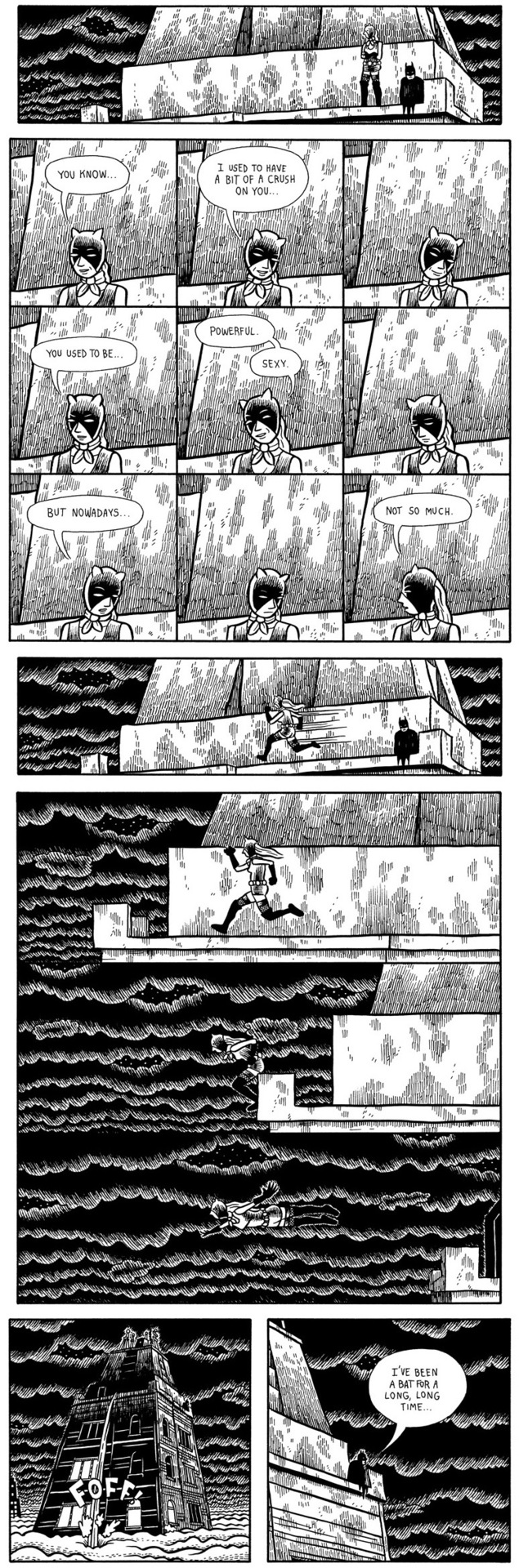
“Game of Thrones” thoughts, Season Three, Episode One: “Valar Dohaeris”
March 31, 2013My review of tonight’s premiere is up at Rolling Stone. I compare Joffrey to a Bichon Frisé on its way to the veterinarian to get its anal glands expressed, so there’s that.
Comics Time: Cold Heat
March 29, 2013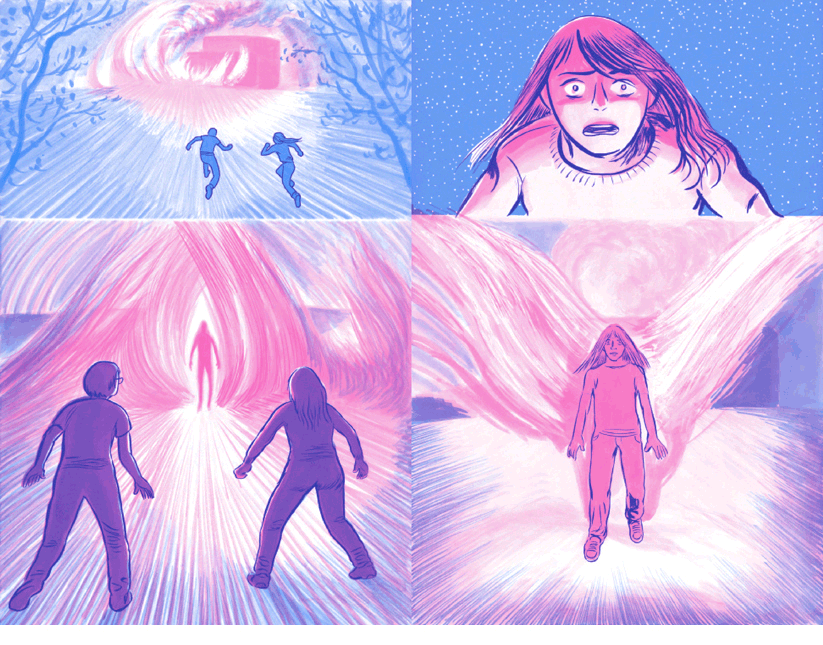
I wrote about Ben Jones & Frank Santoro’s unfinished neopsychedelic masterpiece Cold Heat for Vorpalizer. To be played at maximum volume.
Comics Time: Ant Comic
March 25, 2013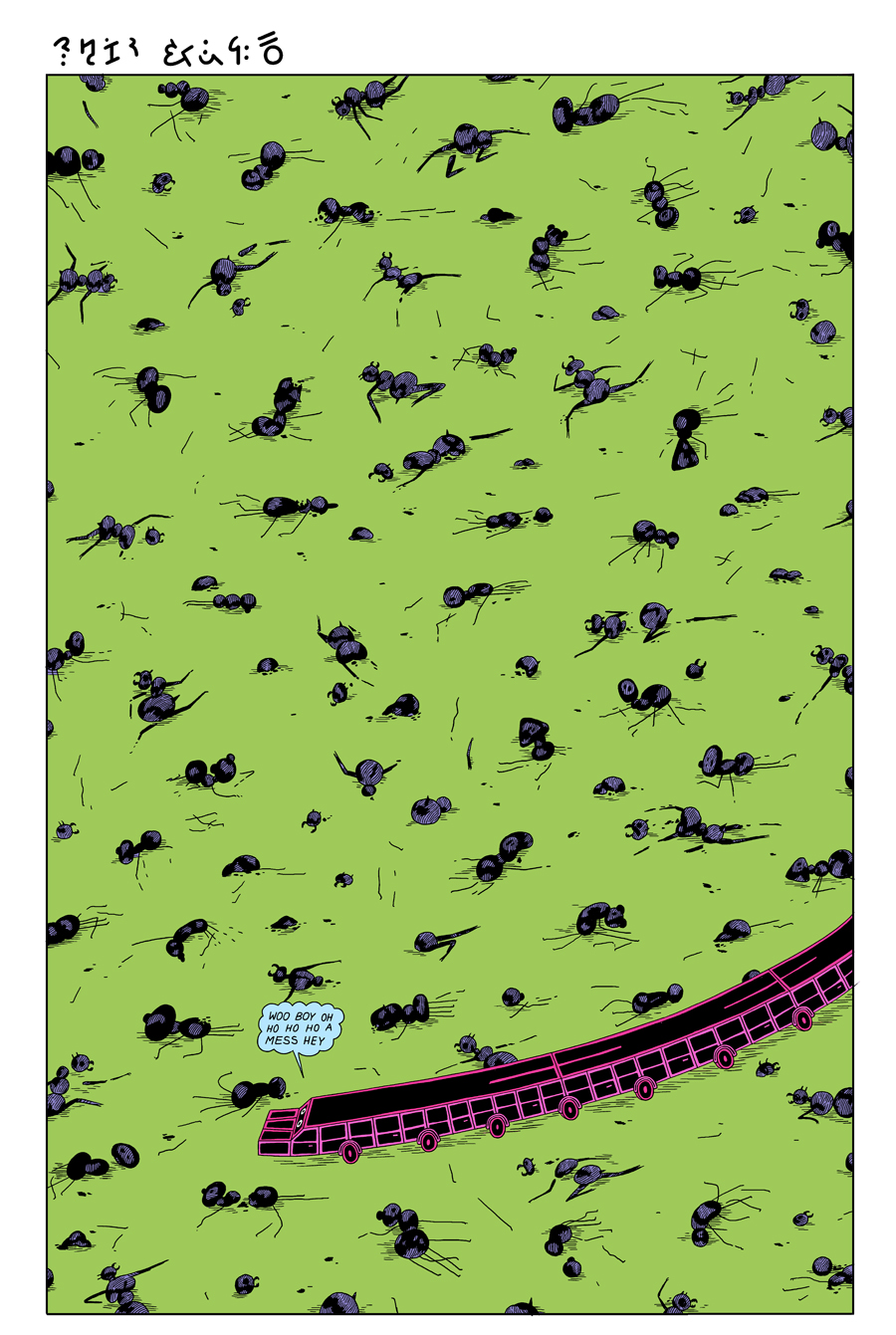
I reviewed Michael DeForge’s masterful webcomic Ant Comic for The Comics Journal.
Please read the comic; it’s gorgeous, funny, troubling, and powerful, and you can read it all on a lovely single scrolling page.
Comics Time: Black Is the Color
March 21, 2013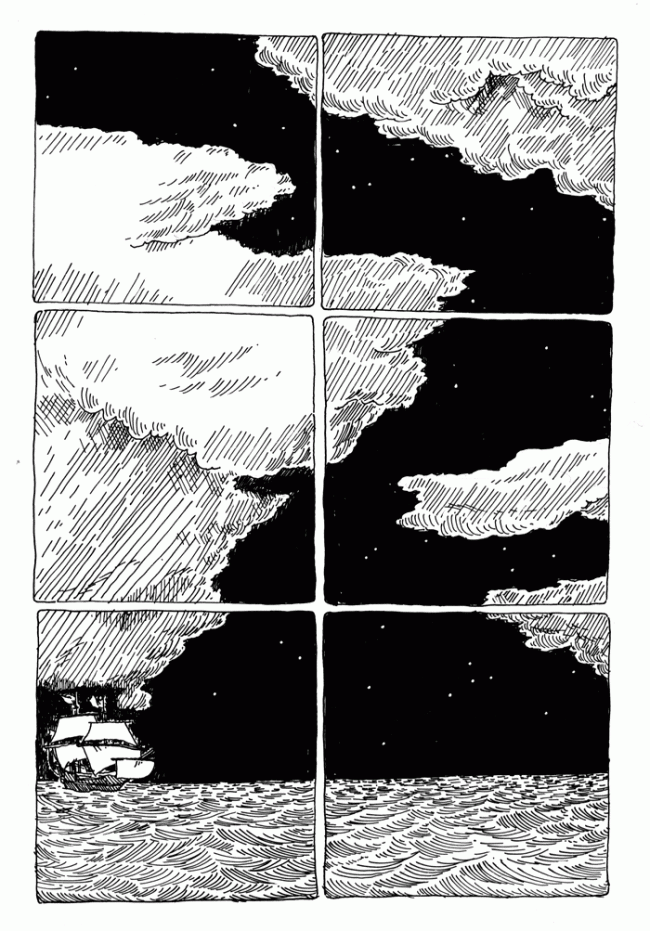
Far, far away
March 15, 2013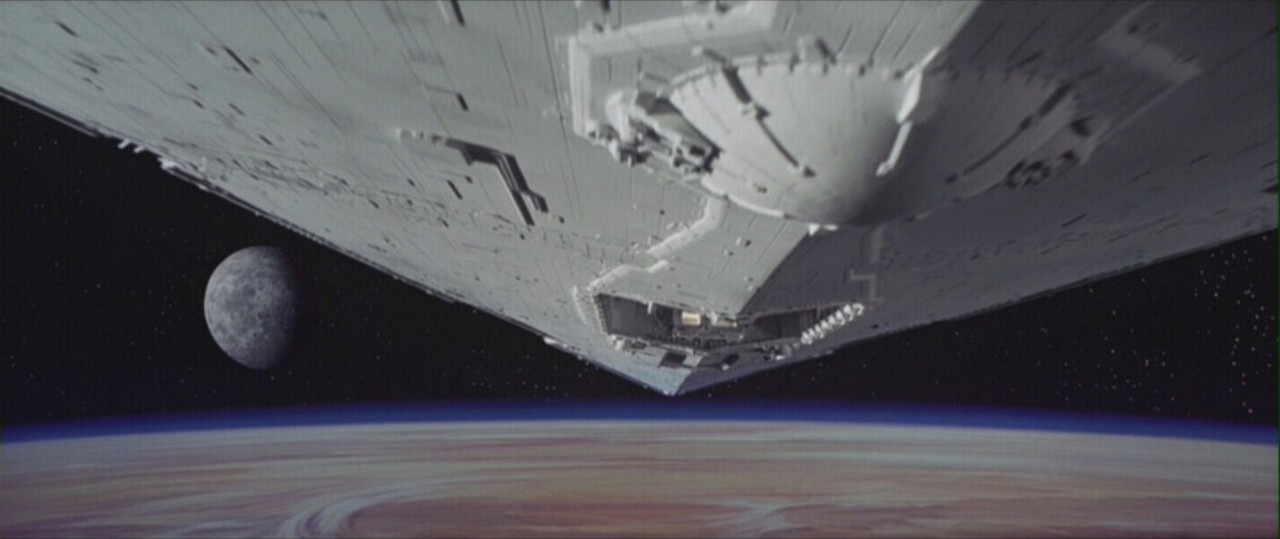
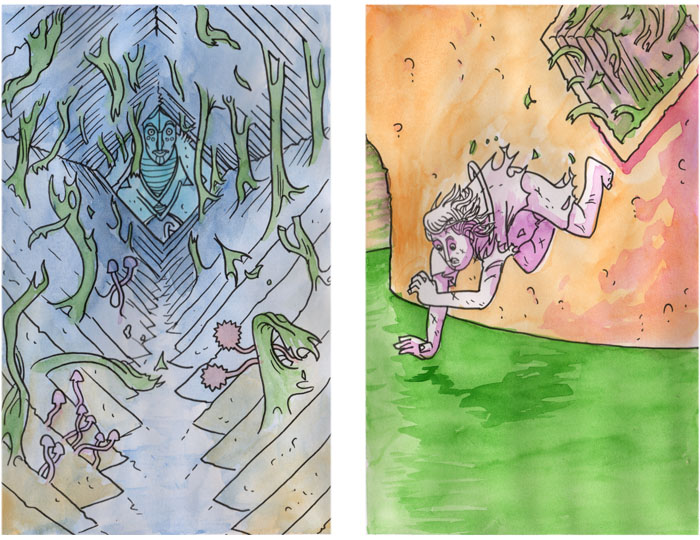
This week on Vorpalizer I wrote about Sam Alden’s webcomic Haunter and George Lucas’s movie series The Star Wars Trilogy. Spectacle and scale are the main concerns.
Music Time: David Bowie – The Next Day
March 12, 2013David Bowie’s been looking back at himself in his music for at least 16 years, but this is the first time he’s doing it as an artist who’s actually, legitimately, honest-to-god old. At a dashing-looking 66, he’s hardly ready for the record books as World’s Most Decrepit Rocker, but in the past you’d get the impression that to Bowie, being “old” simply meant wrestling with the reality of no longer being the sexual provocateur he was in the early ’70s, the art-rock innovator he was in the late ’70s, or the world-bestriding megastar he became in the early ’80s with Let’s Dance. Now, on his new album, The Next Day, it sounds like “old” means “Jesus, I could have died on an operating table.”
“Call my name.”
March 8, 2013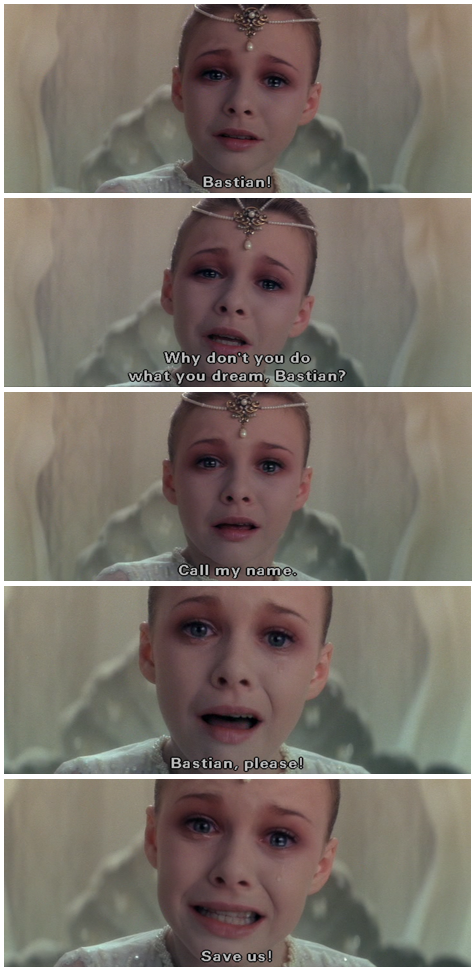
Elsewhere
February 21, 2013I’ve been keeping pretty busy these days.
At Cool Practice, I wrote about “Missing You” by John Waite and the kinkiness of crystalline-sheen ’80s pop rock. This is the sound of my soul.
At Vorpalizer, I continued my series of posts on alt-genre webcomics with entries on SuperMutant Magic Academy by Jillian Tamaki and Forming by Jesse Moynihan. I also posted the second in a series on formative fantastic fiction, focusing on Taran Wanderer and the Prydain Chronicles by Lloyd Alexander.
And at Rolling Stone, I updated my list of the Dowager Countess’s best quotes from Downton Abbey Season Three with a few from the season finale.
“Downton Abbey” thoughts, Season Three, Episode Seven
February 17, 2013…
……
…………
……………………
Yep.
I wrote about the season finale of Downton Abbey for Rolling Stone.
Can’t think of very many things I’ve had more fun writing about than this season of this show. Thanks for reading.
“Girls” thoughts, Season Two, Episode Five: “Another Man’s Trash”
February 12, 2013Broken record time: I find comedy series confounding to write about, because for me writing about TV is calculating how details of setting and shooting and performance add up to something, but with comedy you can’t solve the equation because the need for jokes is an undefinable variable. The joke needs must be king and it trumps all the usual concerns, even on series with heavy narrative serialization and a lot of dramatic moments the inclusion of which used to create “very special episodes” but which are now pretty common across the board. (Scrubs, an overlooked single-camera comedy trailblazer, did this in literally every episode.) Girls is basically a dramedy that has more in common with Mad Men than with Arrested Development, but it still throws those confounding curveballs, exaggerating specific aspects of the characters and milieu for comedic effect. (“Specific” is key here, of course — it’s not flat-out ridiculous — but still.) But just because I don’t write about it very often doesn’t mean I don’t like it an awful lot.
Judging from twitter and Google Reader posts I tried not to read for fear of spoilers, this past week’s episode, “Another Man’s Trash,” was something of a breakout for the show, and having seen it it’s easy to see why. For starters, TV nerds no doubt have to appreciate the humor in borrowing a bottle-episode structure but having half the cast stuck in the bottle be Patrick Wilson.
But its real brilliance is in creating suspense based solely on the show’s established story structure. We’ve all seen Girls before, and we know that anytime something’s going well for Hannah, someone says something that destroys the magic and brings it all crashing down — she’s getting along great with a job interviewer until she makes a date-rape joke about him; she’s having the coked-up time of her life with her gay ex until he tells her he fucked her female best friend, etc. So you spend her entire lost-weekend idyll waiting for the other shoe to drop…
…and it legit seems like it won’t! Hannah and her handsome doctor Joshua keep having sex — lots of it, all over his splendid house, driven by frank and honest statements of arousal and desire that took her months to get to with her ex-boyfriend Adam, if she ever really got to them at all. They lounge, they joke around, they sit quietly reading and eating, they tease each other, they go to sleep and wake up and do it all again. For once she seems able to accept that she and a romantic interest (substitute “friend” or “professional peer” and it’d be the same deal, for her) are on a level playing field.
Why? At one point Joshua tells her she’s beautiful, and when he asks her doesn’t she think so?, she replies something like yes, but that’s not the feedback she’s used to getting. That’s the key here: Joshua’s very existence is the new feedback. Physically stunning, smart, successful, kind, wealthy — Hannah’s holding her own with someone who’s all these things. One of the reasons I love Downton Abbey and Mad Men so much is their emphasis on how the emotional feedback people receive from their friends and colleagues shapes who they are able to be and become; this is the best feedback loop Hannah’s had in ages. If you’ve ever had one of these whirlwind weekends (or whenever) where your every waking and sleeping moment is consumed by someone wonderful you’re in the process of discovering and being discovered by, you know exactly how powerful, arousing, fulfilling, transforming that feedback loop can be. And don’t mistake me—it’s not at all a situation where “oh, someone good likes me, now I feel validated as a person.” It’s more like she’s thrown herself into the deep end and realized she could swim like a motherfucker all along.
That’s her undoing, of course. She believes herself to be totally safe, so after her inhibitions are worn down by getting all light-headed and passing out in the shower, she lets loose with a torrent of pure Hannah solipsism for which Joshua is completely unprepared. It’s heartbreaking to see how Hannah’s emotional awareness works — how she’s initially totally clueless that she’s coming on too strong, that she’s treating Joshua like a journal rather than a person with his own emotions and agency, that she’s being enormously condescending and dismissive to his life; but how the very moment she senses the possibility of rejection, she picks up on those cues and attacks them like a shark that smells blood in the water. She’s clueless unless and until she picks up on someone reacting negatively to that cluelessness, at which point she becomes an emotional Sherlock Holmes.
It was very funny, very sexy, very specific, and very sad. We’re lucky to have the show that gave it to us.
“Downton Abbey” thoughts, Season Three, Episode Six
February 11, 2013I sure love writing about this show, and tonight there was twice as much to write about it. Click for my review at Rolling Stone.
Comics Time: Prison Pit Book Four
February 7, 2013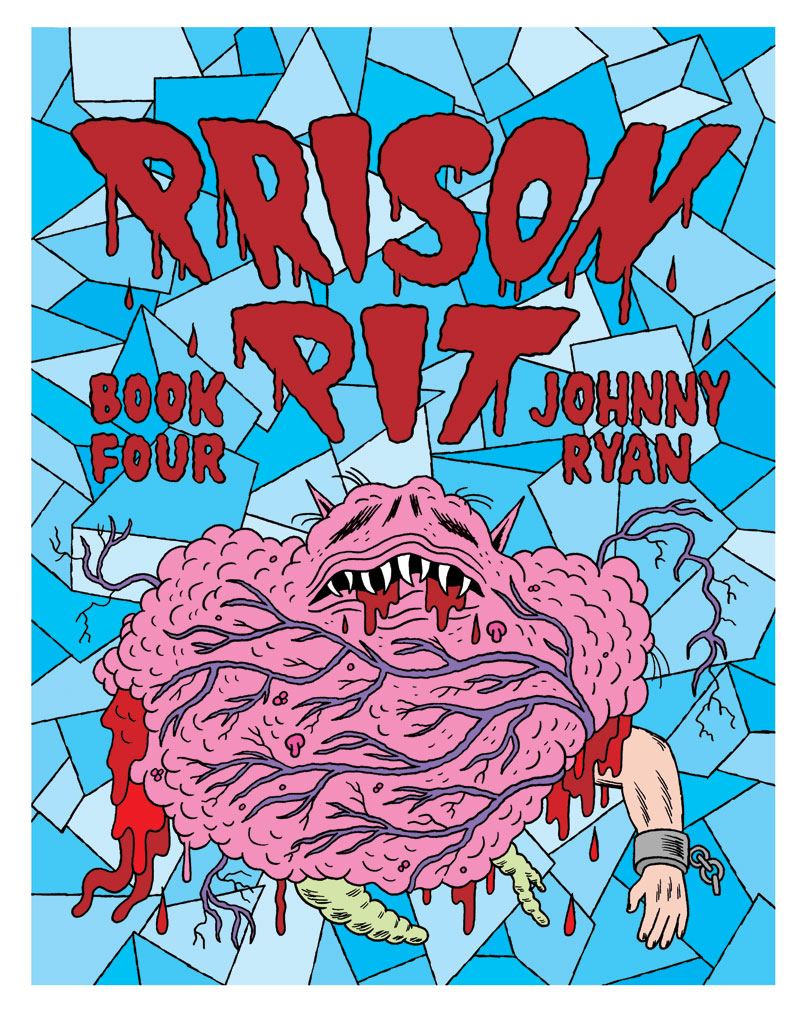
Prison Pit Book Four
Johnny Ryan, writer/artist
Fantagraphics, 2012
116 pages
$12.99
Buy it from Fantagraphics
Buy it from Amazon.com

For today’s Comics Time review, please visit The Comics Journal.
Vorpalizer
February 6, 2013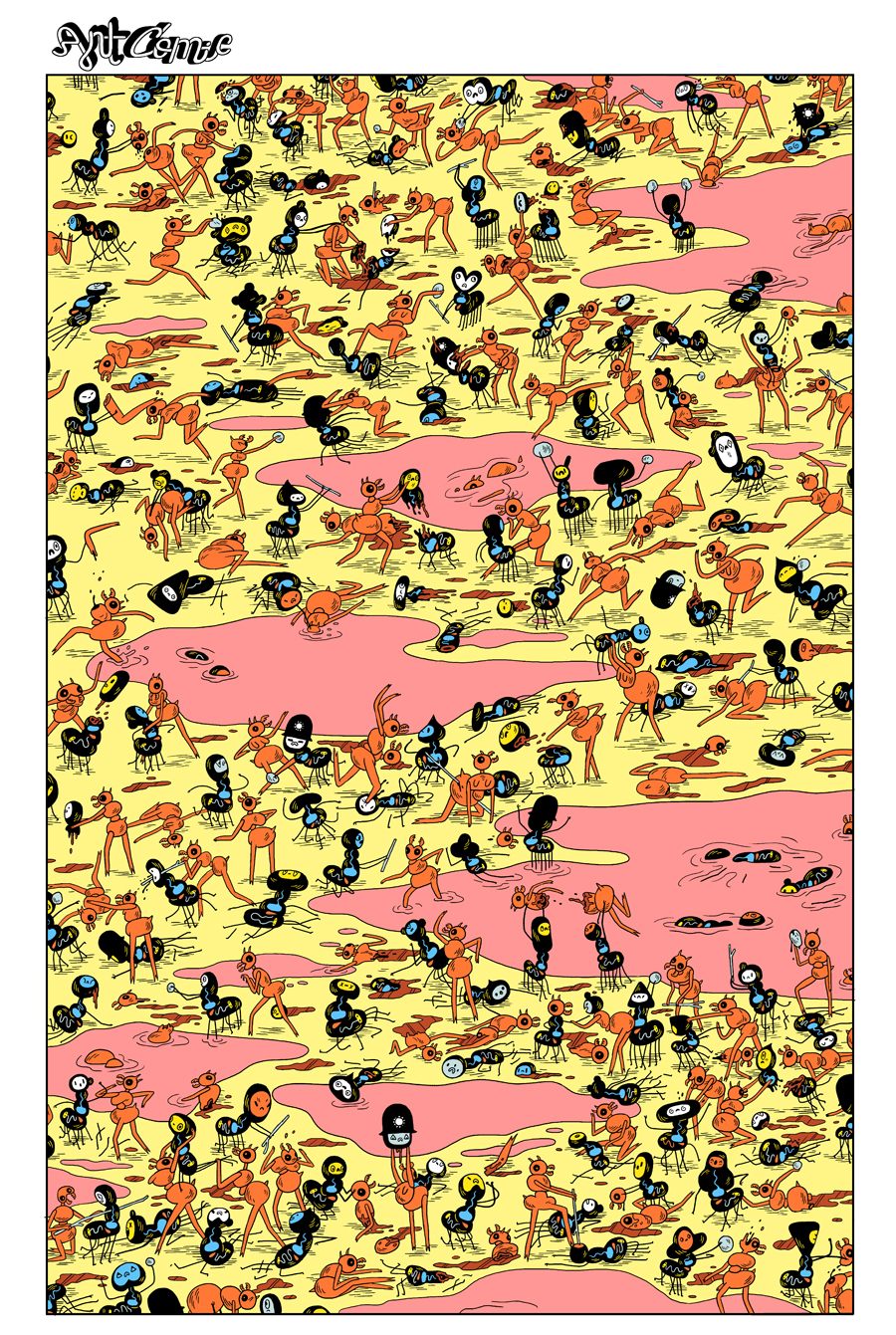
I’m going to be writing about science fiction, fantasy, horror etc. with some dayjob coworkers at our new group blog Vorpalizer.com. I got started with posts on Michael DeForge’s Ant Comic and Susan Cooper’s The Dark Is Rising. Come check it out.
“The Americans” thoughts, Season One, Episode One: “Pilot”
February 6, 2013It’s hard to review the series premieres of New Golden Age prestige cable dramas because, like most series premieres, they play to the cheap seats. It’s all about hooks and making an impact and keeping butts in seats for subsequent episodes, right? So you begin your series about undercover superspies with Felicity sucking some dude’s dick. You use central-casting KGB and CIA heavies spouting patriotic Cold War boilerplate that hindsight gives us the ability to see right through. You do a lot of stuff where the cute all-American kids eat breakfast and like ten feet away there’s a defector tied up in the trunk with a gimp gag in his mouth. You play it broad, and you hope two things when you do so: 1) That “broad” will get the audiences you want to come back, and 2) That the critics you also want on your side will remember that series no less august than The Sopranos and Breaking Bad and Mad Men (and more recently Girls) started with their broadest episodes, too. Enough landmark series started this way that you almost forget it could be done differently.
But it can, and that’s The Americans‘ problem. The most obvious example is Homeland, which will one day be remembered as the punchline in some inside-baseball “You know what beat the Mad Men season with the Mystery Date/Signal 30/Far Away Places/At the Codfish Ball/Lady Lazarus run of back-to-back-to-back-to-back-to-back masterpieces for Best Drama?” TV-critic joke, started with a drum-taut yet intriguingly elliptical episode dealing with many of the same subjects but completely devoid of “You’d betray the Motherland?!”-style evil-Soviet dialogue. Oh it got there eventually alright, but it took a season and a half. Twin Peaks‘ pilot was probably the weirdest thing ever to air on network television up till that point but its weirdness, like all of David Lynch’s best stuff and unlike any of his imitators, was rigorously observed, and rooted in empathy for human suffering and a desire to probe what drives us to cause it. (The empty desk in the classroom is the structuring absence of the whole series, really.) Lost‘s opening 10 minutes were among the most thrilling opening-10-minutes of anything committed to film by anyone that decade, but they drew much of their strength from the un-thrilling emotion of panic. Even in the violent black comedies that were the pilots for The Sopranos and Breaking Bad, there were character moments (Tony staring at the painting, Walter talking into the camera) and images (the ducks and the pants, both flying away) that iced anything The Americans did in its premiere despite having, quite unnecessarily, twice as long to do it in.
So I’m left wondering what it is I’m going to get. Will it tighten up and calm down, or is this as good as it gets?
A few things make me worry it’s the latter, and make me worry a lot more than even the broadness does. Top of the list: It’s just way too early to have our undercover anti-heroes Phillip and Elizabeth dance right up to the edge of defecting. Way, way too early. By sticking that right in the premiere — by having Phillip actually start doing it, only to change his mind in order to white-knight for his wife when he finds out the captured defector he’d planned to exchange for a life in witness protection had once raped her — you’ve shown us that at any moment, the characters are capable of solving their story’s equation. This sleeper-agent life is untenable if they want to preserve their lives and their children’s happiness in the face of an increasingly implacable Reaganite enemy? Simple: Turn yourselves in, collect literally millions of dollars, move on and live the life you’re more or less happy living already.
So it falls on Elizabeth to erect an artificial obstacle to the obvious, story-ending solution. Writer-creator Joe Weisberg assigns Keri Russell the thankless task of preventing Phillips eminently reasonable and moral decision to defect by swearing her fealty to Mother Russia and, in the immortal words of Alvy Singer, “screaming about Socialism.” Just as it was unfair of Homeland to make poor Dana Brody a mouthpiece for skepticism regarding the danger of her father’s situation, danger we in the audience knew to be very real, so too is it too much for The Americans to ask of Elizabeth to justify the entire show’s existence with jingoistic horseshit on behalf of a system we know is just years away from collapse anyway
Unfortunately, unlike her fellow ’90s-network-TV refugees cum Great Drama leads Bryan Cranston and Claire Danes, it’s not immediately clear that Russell’s bringing much to the table beyond simply having been cast against type. She’s a stunning human being — that hair, unf; feel guilty she has to straighten it but not that guilty — and the show uses that physicality to make her both convincingly sexy and convincingly powerful and dangerous as a physical combatant, but her shaky Russian accent and emotionally depthless delivery of Russian-villain speeches make the performance and the character feel as hollow as a chocolate Easter bunny. I believe that this Elizabeth could do what she does for as long as she’s done it, but I’m left guessing as to why — particularly when you see what the Soviet system did to her in such astonishingly graphic terms.
About that: Having skimmed some reviews of the show my main takeaway was that it was some sexy-smart spygame stuff, largely on the strength of Russell’s take-charge sexuality. Again, she’s a radiant presence on screen, and her forthright expression of her sexual desires and expertise on that tape recording her husband plays back in particular is totally hot stuff. But is that even really her? Doesn’t Phillip smile despite it all because he’s impressed by how she put on a big show and played the guy? And does it cancel out the rote, seen-it-a-million-times eros’n’thanatos vaudeville routine of Elizabeth and Phillip fucking in their car after disposing of a body? And most importantly, does it square with her sudden and brutal on-screen rape by a higher-up in her KGB training program? Obviously people who have been raped can and do subsequently lead full and enthusiastic and zesty sex lives all the time. But I can’t say that watching these two hours, my takeaway was “Wow, hubba hubba!”
No, if I’m to return to The Americans it’ll be for other things. For starters, it has a sense of humor about itself, a trait almost totally absent from Homeland from day one; this episode is like if Homeland had started out with that marvelously mordant sequence in the woods from Season Two instead of it being a one-off flash of Sopranosism. And unlike that other show, this one appears willing and able to recognize that undetectable superspies with limitless penetration into American life require a suspension of disbelief; that this is totally fine; that you can in fact play with that suspension and wring terrific thriller sequences out of it but only if you acknowledge it exists, otherwise we’ll just go “c’mon, you’ve gotta be kidding me.” I could use a show that treats War on Terror-style paranoia as something of an absurdist farce instead of pretending its manipulations are on the up and up at all times.
I’m also impressed with the quiet work of Matthew Rhys as Phillip. I enjoy the easy confidence with which he slips into other identities — the jocular neighbor, the kind but concerned intelligence officer duping the secretary into giving up secrets, the rough-and-tumble contractor who beats a pedophile up after one of those “secret agent and pedophile” department-store meet-cutes that I’m sure happened to Aldrich Ames all the time — because it’s always clear the confidence is entirely outwardly directed, but inside he’s not quite sure why he’s doing what he’s doing. (Elizabeth is sure, and that’s the problem, because she’s sure about stuff that’s not worth being sure about.) He looks and carries himself like he could be the tougher older brother of a Zach Braff character; his FBI-agent neighbor’s “nice guy, but slightly off” assessment is dead-on.
I’m fond of that neighbor, played by ubiquitous supporting actor Noah Emmerich, as well. Maybe more fond than I have any right to be given how well trod this “well-meaning law-enforcement agent who’s almost got it but not quite” territory is at this point. Coasting on the goodwill generated by everyone from Hank Schrader to Carrie Mathison to Dale Cooper is only going to get Stan Beeman so far, but particularly in those moments where he’s forced to recall an obviously trying stint undercover with a white-power group, he balances expertise and weakness in a way that took all three of those characters some time to arrive at. Again, I think it’s probably too soon to have moved his suspicion of Phillip as far along as the show did, and I’m not sure how they’ll be able to play this thread out for another season, but I’m willing to watch them try. That thread’s what’ll pull me to the next ep. Who needs all those hooks?
“Downton Abbey” thoughts, Season Three, Episode Five
February 3, 2013“Downton Abbey” thoughts, Season Three, Episode Four
January 27, 2013The thing about comfort food is that when someone serves you a piping hot plate of it week after week, you never suspect that one day they’re going to grab it and smash it into your face.
My review of tonight’s episode of Downton Abbey is up at Rolling Stone.