“All is quiet on New Year’s Day.” Fat chance, Bono.
U2’s wintry hit “New Year’s Day” may kick off the “Billions” episode it shares a title with, but Bono’s opening line certainly doesn’t describe it. Directed with verve and humor by Adam Bernstein and written by the series creators Brian Koppelman and David Levien — always a sign that the game is well and truly afoot — “New Year’s Day” has the feel of a turning point for the season. Nothing shocking or momentous takes place, but the air is electric.
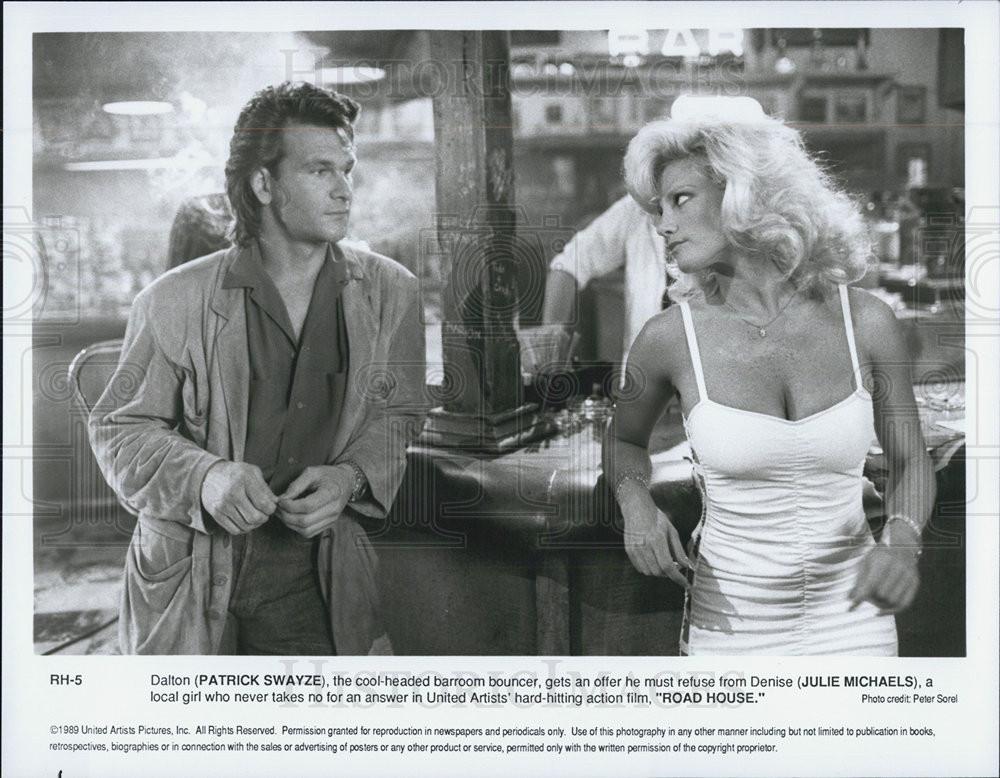
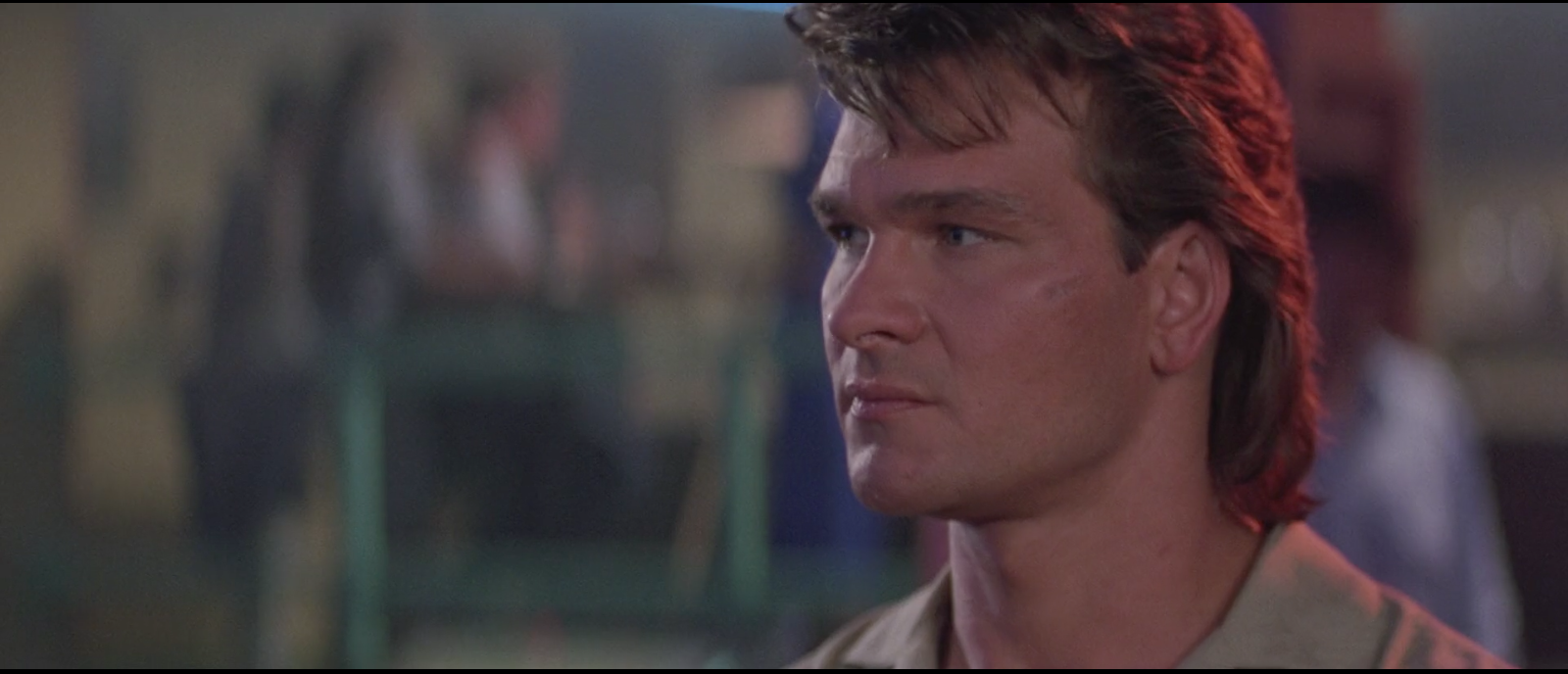
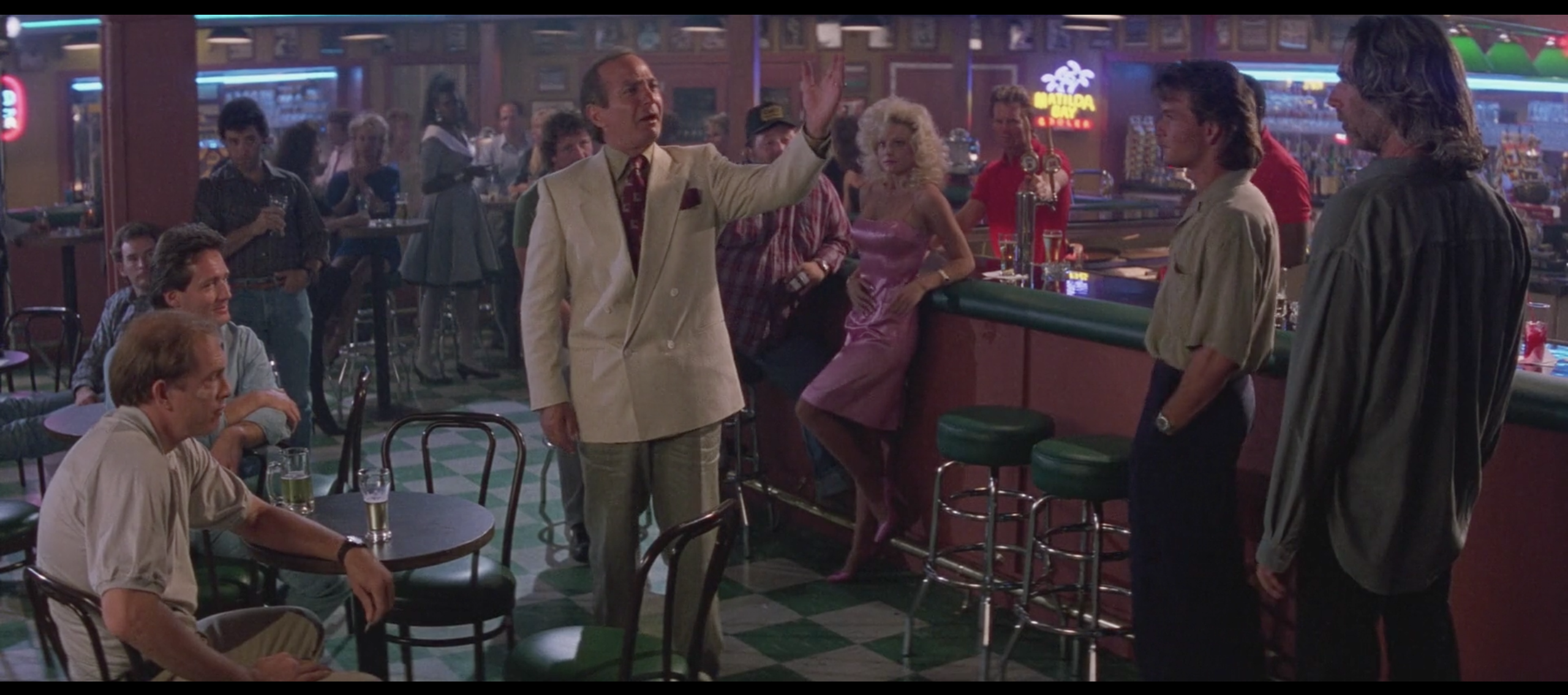
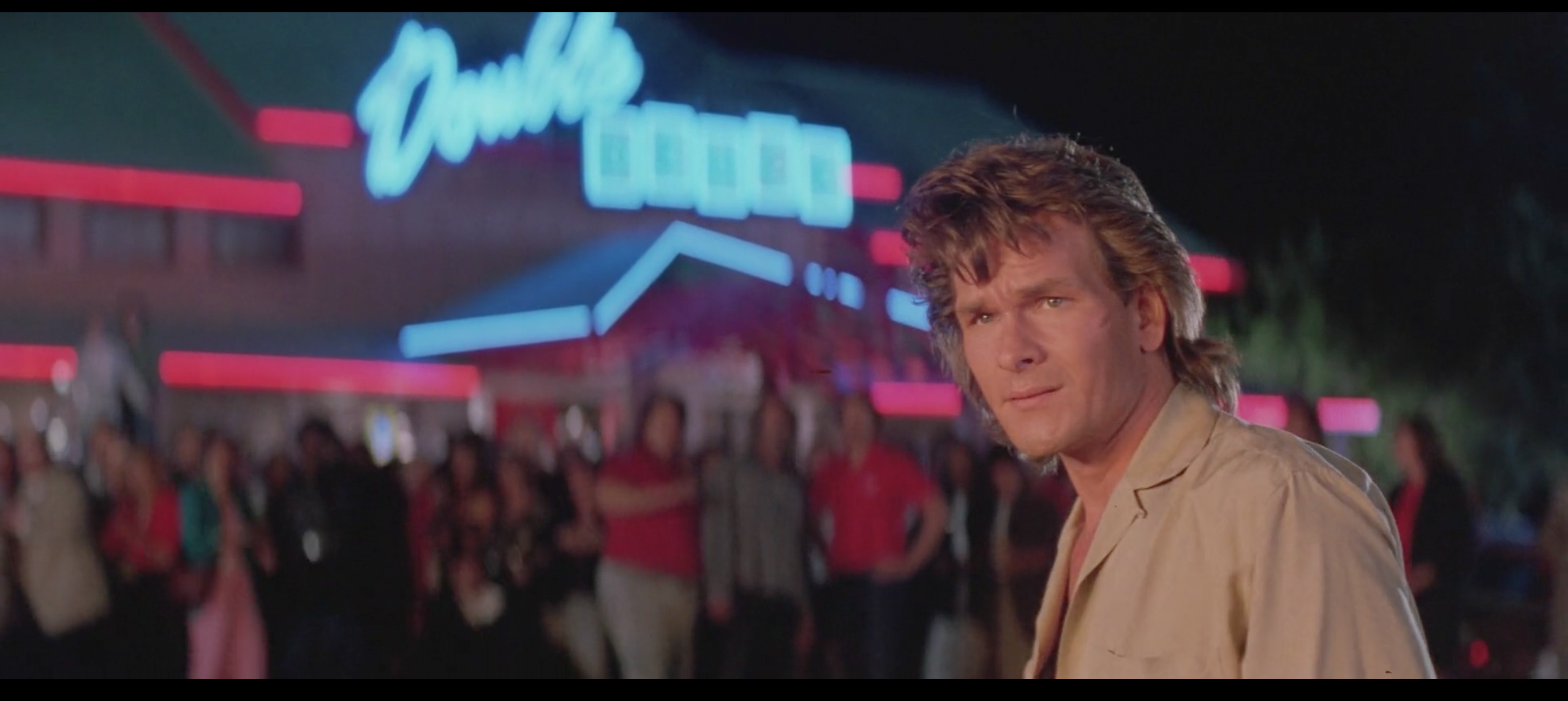
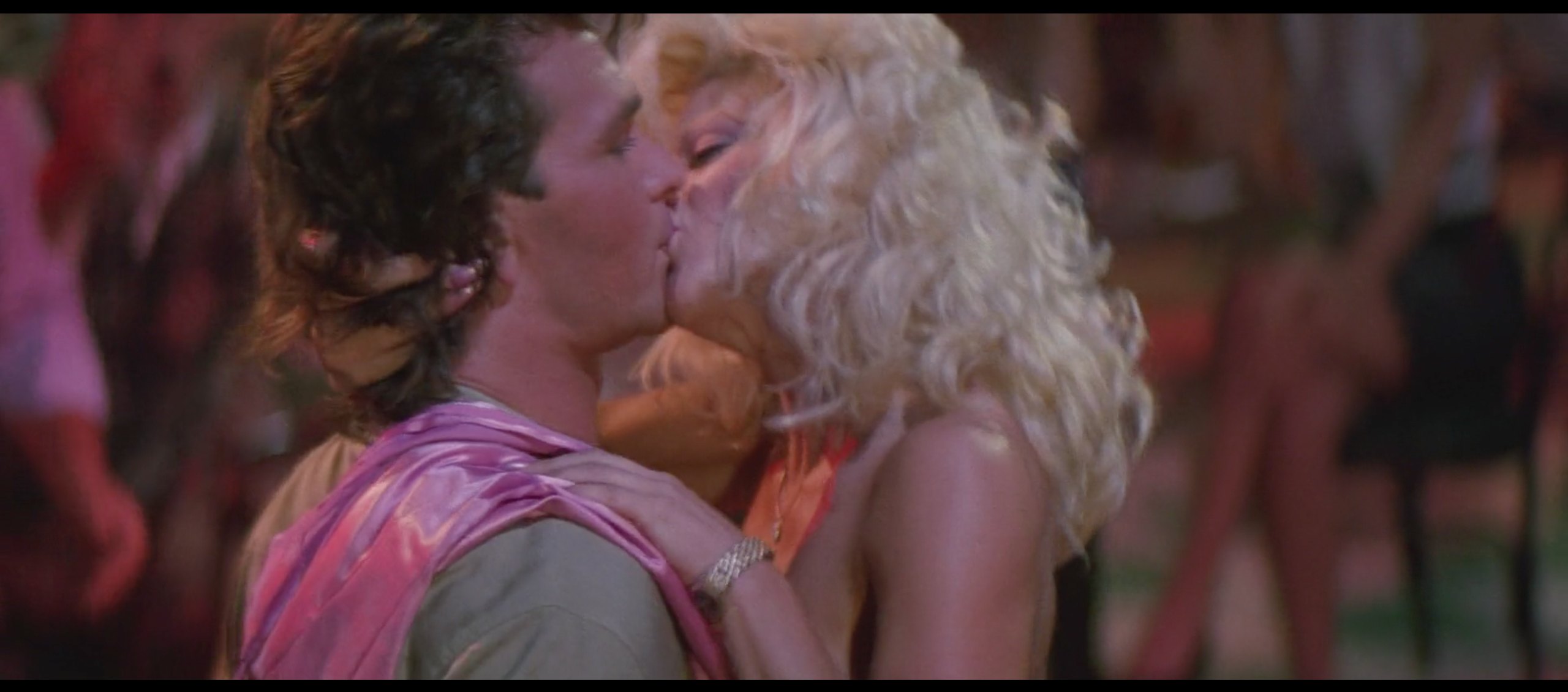
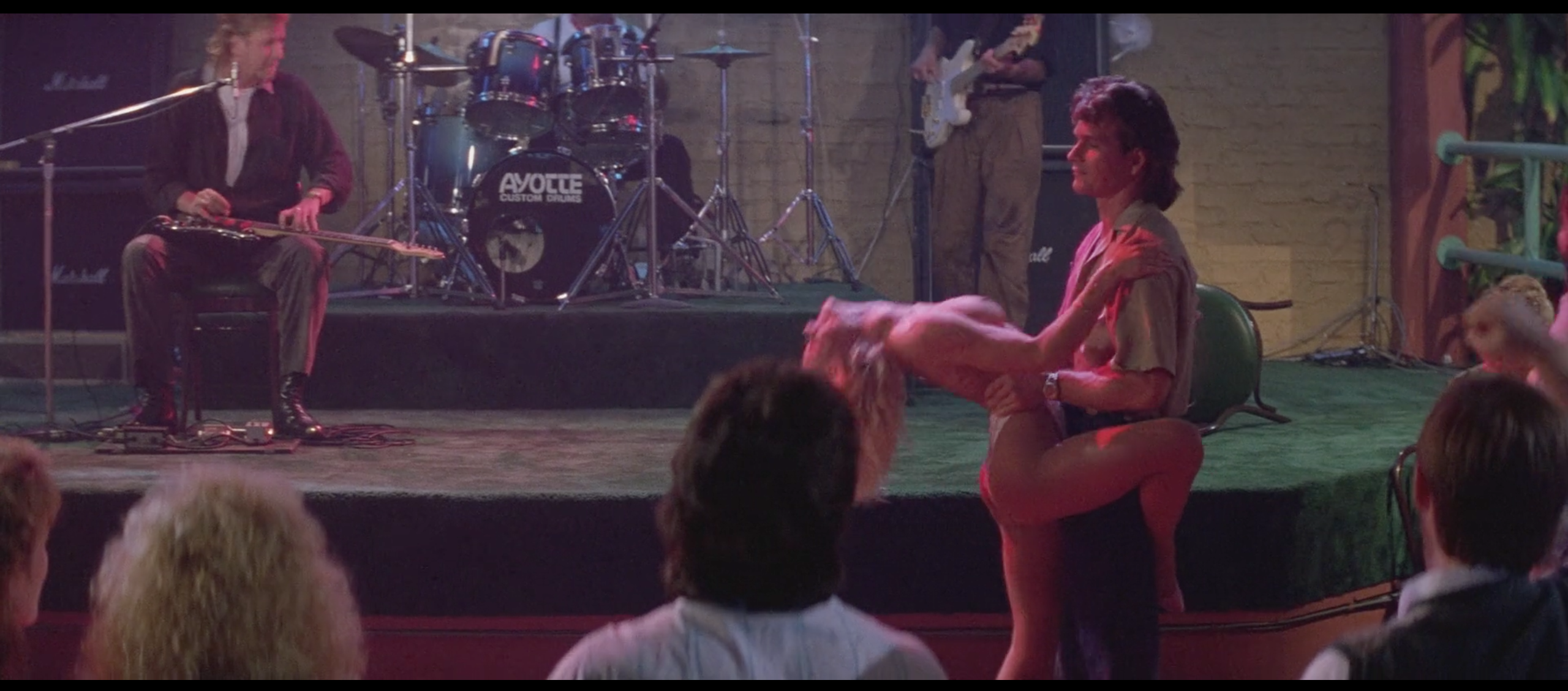
You’ve just read the conversation Dalton has with Elizabeth when he spots her and her dress outside the Double Deuce. She’s leaning back against a post, a pose she’ll have occasion to revisit later in the course of their relationship. He’s just finished whipping someone’s ass, which, same. They have an easy and unmistakably sexual intimacy here that the film spends the following scene, depicting their coffee date at a local greasy spoon, blows to smithereens. Yet it’s really only upon repeated viewings that the Doc’s repeated and rather open and vicious skepticism regarding Dalton’s career and character alike becomes apparent. Rather it reads like a tiger and tigress sizing each other up, deciding whether when and where to fuck, knowing they have within them the power to annihilate each other but choosing to do something else to each other instead, something hot to the touch and sweet to the skin. I credit Kelly Lynch and Patrick Swayze with much of that, since there’s hardly a person either character meets at any point in the movie you can’t imagine jumping right into the sack with them with the slightest provocation, and that’s no less true here. But mostly I credit the band Alabama and their song “(There’s A) Fire in the Night.”
Despite spending the better part of my adult life among music critics and music nerds and being both myself, I’ve never heard Alabama so much as mentioned outside country circles. Whatever it is that’s allowed my cohort to deify Johnny Cash and Dolly Parton and Willie Nelson, make a crossover star out of Kacey Musgraves, turn Garth Brooks’s “Friends in Low Places” into an NYC karaoke staple, place the country affectations of Tom Petty and Stevie Nicks front and center in their respective late-period critical celebrations, and allow Lil Nas X & Billy Ray Cyrus’s “Old Town Road” to happen has never touched the biggest band in the history of the genre.
Listening to this song it is very, very difficult to understand why. Occupying the overlap position in the Bob Seger’s “Night Moves” / Bruce Springsteen’s “I’m on Fire” / The Smiths’ “There Is a Light That Never Goes Out” Venn diagram you didn’t know existed, its minimal, dry guitars and water-on-the-snare-drums ’80s beat tell help singer Randy Owen tell his tale of one great night with one helluva woman. It’s not breaking any kind of ground (except perhaps the tight and expansive-sounding vocal harmonies during the chorus) and that’s the point. It’s guiding you, expertly, through familiar territory—bedrooms you’ve slept in and the people you’ve slept next to in them and your memories of both. Who wouldn’t want to warm their hands by that fire again?
The quick cut that follows Elizabeth’s explanatory “Me” leads us directly to a night sky, blank of stars moon and cloud. The camera descends onto a red orb emblazoned with a roaring fire. It descends further still, revealing the light-up signage of a diner. It’s an echo of the opening shot, which tells you right there that what follows is, in some as yet undefined way, momentous.
But it’s that rhythmic, percussive, low guitar line that sells the mood. When you hear that, and you see the night sky, and you take in the comfortingly ersatz glow of the lights, and you identify the kind of establishment we’re visiting, your mind quite naturally imagines a couple in the moments between when they realize they’re going home together and when they get up to do so. That tension and reserve is all in Jeff Cook’s insistent, somehow twitchy guitar. You pick up on instantly, you contextualize it effortlessly, you know what it’s about before Randy Owen’s singing comes in and proves you right.
Things don’t go great on the date itself, as we’ll see, though again not as bad as they appear at first glance, as we’ll also see. So for me, the music is the message here, and the message speaks true. Not for nothing is our first glimpse of this scene a fire in the night. One is being kindled whether the kindling and the tinder know it yet or not.
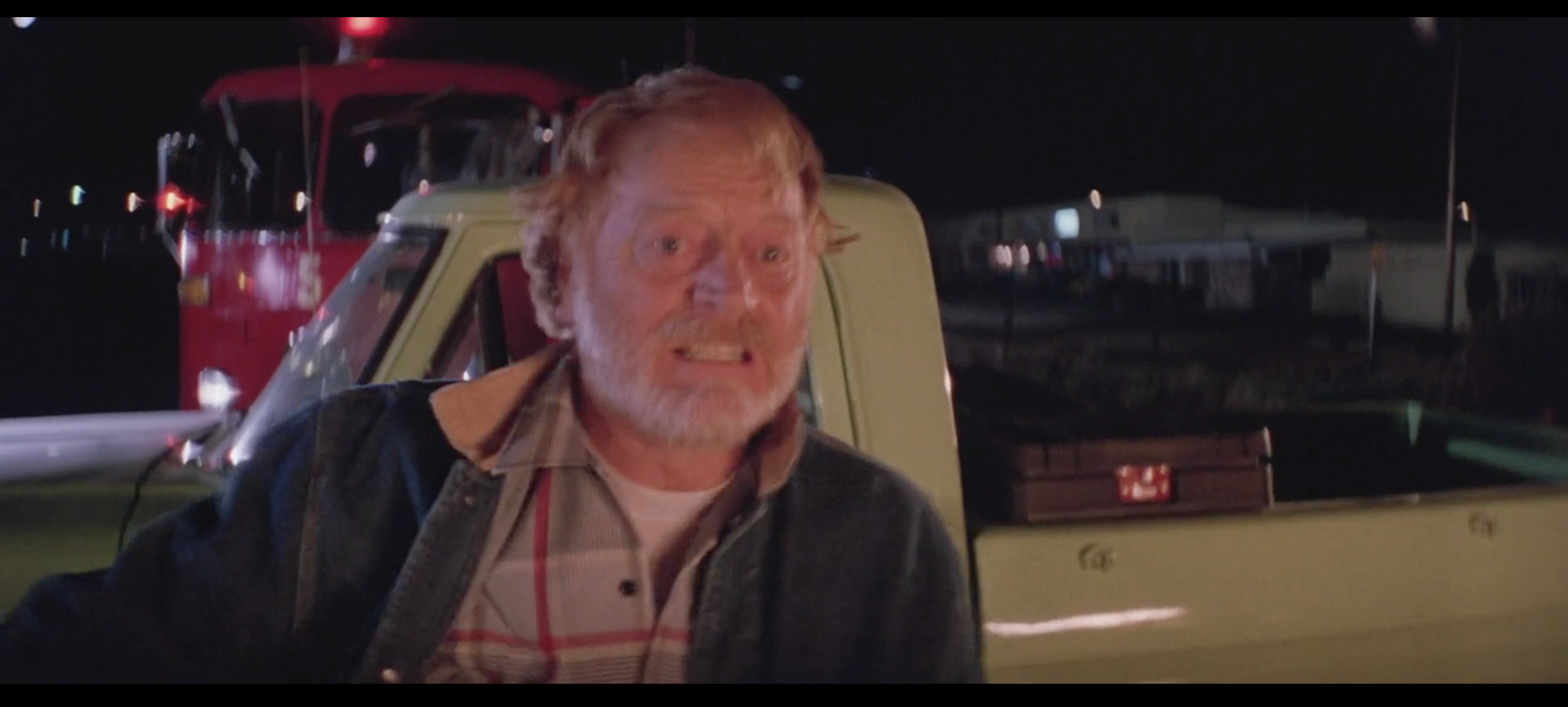
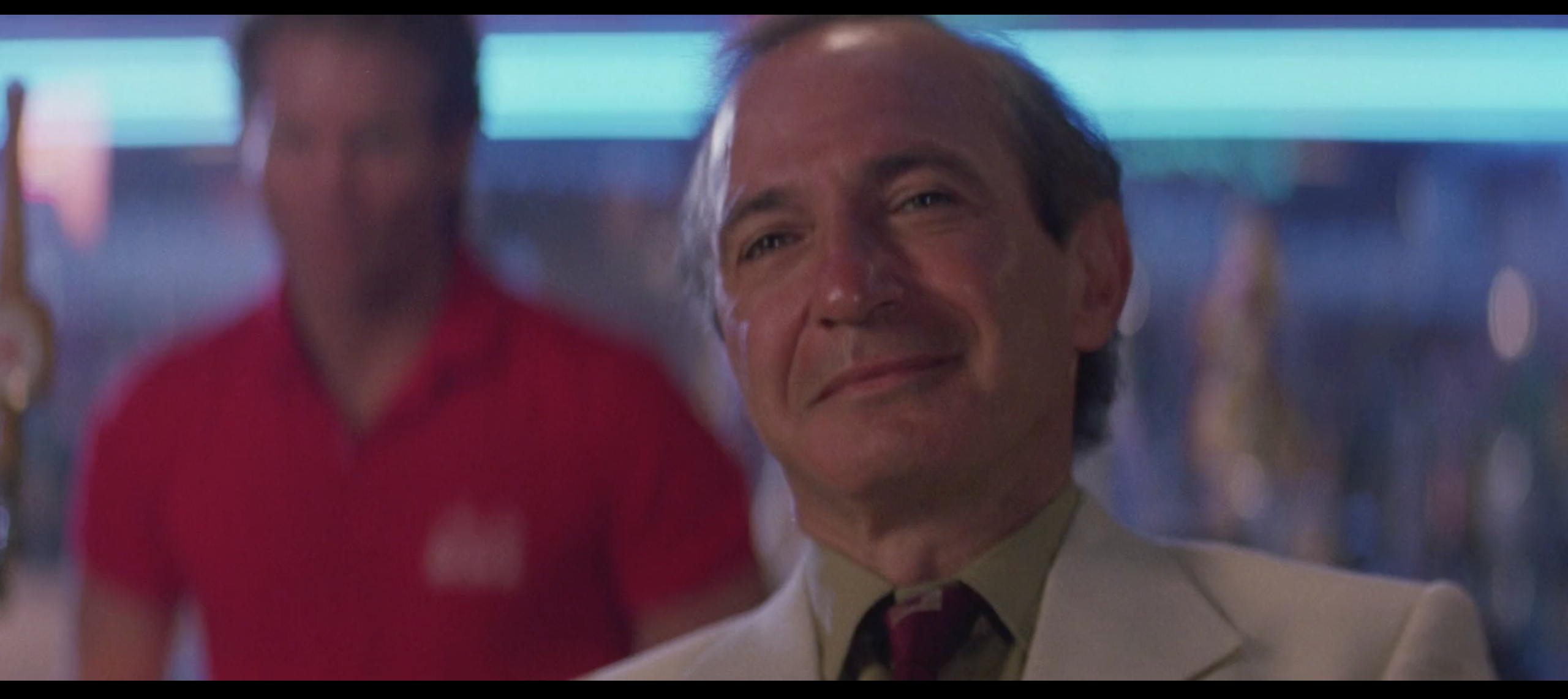
“Oh, that there? That there’s my niece. Helluva gal. Doctor, you know. Put her through medical school. I ever mention that? If I were a bettin’ man, and I ain’t sayin’ I ain’t, I’d put my money on ‘Yes, Red, you’ve mentioned that.’ What can I say? Ain’t every uncle knows people are out there livin’ and breathin’ on account of what your money helped teach your brother’s daughter to do. You do that, you shout it to the world. Not for them you understand, but for you! It’s healthy to give yourself three cheers now and then. Nobody else gonna do it for you. Ah well. Them’s the breaks. Now you strike me as the strong silent type. Not much for talkin’ yourself up. Man o’ your reputation doesn’t need to do his own advertising. Tried my hand in the ad game myself one time. I know, I know, it sure don’t look that way when you look around this ol’ place, but that’s just because I doubt ol’ Emmett gets the Pennysaver delivered out his way. If’n he did you’d take a look at it on that porch o’ his one mornin’ and say ‘Now that Red Webster, he’s one old geezer can make his copy *sing.*’ Yep, do it all m’self: writin’, layout, photography, the works. Price the damn sales too, naturally, and not with one o’ them fancy calculators they’re makin’ over in Tokyo or that Silicone Valley, or even down in Texas with them instruments. World’s smallest violin, that’s the only instrument a Texan’s ever played for me. Hell, I deserved it. Long story. Water under the bridge. Used the same camera to take that pic of Elizabeth as I do for all the ads, too. Now don’t get me wrong, I like the shop, I really do. Otherwise I’d just sell to Brad Wesley in toto and get the hell outta Doge. In a Dodge. Fancy that. Funny thing about Wesley is I took that picture of her the day she heard back from the county clerk that they’d finalized h—well. Not my place to say really. You ever get the chance to talk to her about that picture, why she looked so damn beautiful and serious and strong, best just sit back and let her do the talkin’. That was a day alright. Camera’s seen me through a lot, y’know. Lotta memories I mighta forgot otherwise. Nothin’ fancy, that camera. Coulda upgraded over the years I suppose, back before Wesley got his hooks in the place. I just never saw the upside to payin’ more money for a fancier version of what already worked perfectly fine. Don’t know why people ever do it any different. Thing about technology—it’s a glitterin’ lure. But once in a blue moon you can really hit folks where they live if you show ’em somethin’ they’re already fond o’ seein’. Worked at a furrier once. First job. In-house. Boss was this old-pro copywriter. Teddy, his name was. Greek. Don’t that beat all. This Teddy, he says to me ‘Red, the word you need first in your vernacular is
“new.” You give ’em the itch for new and it ain’t a matter of if they’re gonna scratch it but when. The new thing’s calamine lotion, plain and simple. But you really wanna glue the people and the product together, there’s another word you’d better learn: Nostalgia.’ Delicate thing. Potent. Pain from an old wound. That’s what it means in Greek, Teddy tells me anyway. Twinge in your heart. Leaves plain ol’ memory in the dust. That camera, it’s my time machine. Forwards, backwards, don’t matter. Anytime I got the ache to go someplace I wish I never left but can’t get back to, place makes me feel like a child, place that feels like home, I head to the darkroom. If there’s any place in God’s creation I know I’m loved…well, you’re lookin’ at it right there. Behind my niece, I mean. That’ll be $17.48 with tax, Mr. Weiner.”
I’ll give The Rain‘s second season this: I don’t know if I’ve ever been more flummoxed by a season finale in my life. Thematically, that’s on point.
Overseen by co-creator Jannik Tai Mosholt, Season 2 shifted the series from being a survival story about searching for family into a story of surviving the search for a cure. In that respect it mimics the rapidly mutating macguffin of a virus that wiped out the world, or at least the section of the world with Denmark in it, in minutes—but which over the course of the intervening years has started transforming plants into deathtraps and people into supervillains with magic virus powers.
“Surival of the Fittest” is, in its way, the most perplexing mutation yet. Not because it’s outright bad, like the first half of this strange season, but because despite containing and even doubling down on so much that made this season bad, it’s…actually good? I dunno, man, I just work here. If I sound confused, it’s because I am.
I’ll give The Rain‘s second season this: I don’t know if I’ve ever been more flummoxed by a season finale in my life. Thematically, that’s on point.
Overseen by co-creator Jannik Tai Mosholt, Season 2 shifted the series from being a survival story about searching for family into a story of surviving the search for a cure. In that respect it mimics the rapidly mutating macguffin of a virus that wiped out the world, or at least the section of the world with Denmark in it, in minutes—but which over the course of the intervening years has started transforming plants into deathtraps and people into supervillains with magic virus powers.
“Survival of the Fittest” is, in its way, the most perplexing mutation yet. Not because it’s outright bad, like the first half of this strange season, but because despite containing and even doubling down on so much that made this season bad, it’s…actually good? I dunno, man, I just work here. If I sound confused, it’s because I am.
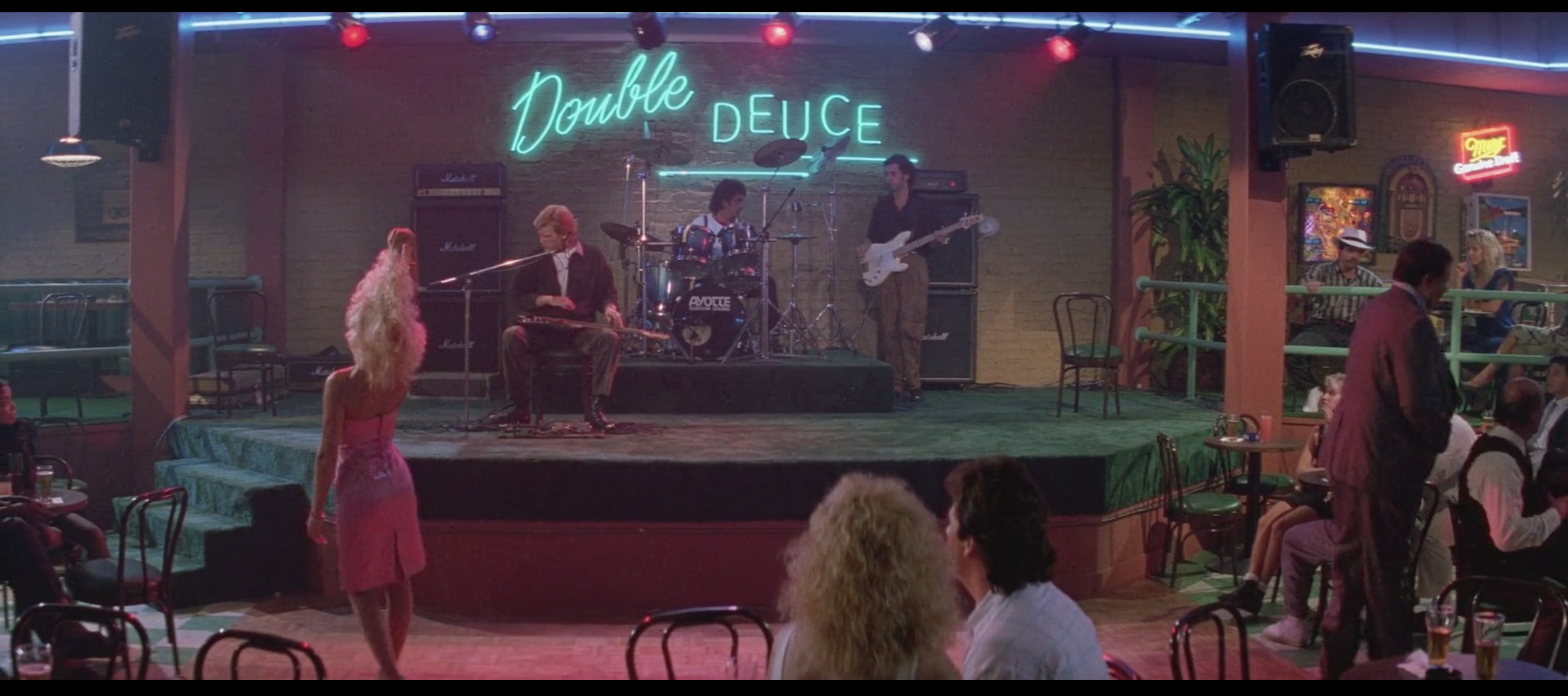
Here’s Ketchum, the clear second to Jimmy in the hierarchy of Brad Wesley’s goons and his successor upon his death in much the same way that the unspecified entity Gothmog assumed control of the assault on Minas Tirith following the death of the Witch-king of Angmar, getting dragged out of the Double Deuce on his ass into the dirt parking lot outside. Bumpty bumpty bump, right down the front steps, squealing and mewling over his injured ankle all the way. In a matter of seconds, Dalton thwarted his assassination attempt, caught his leg in midair, ruthlessly twisted it, yelled “You’re too stupid to have a good time!” right in his face, toppled him to the ground, and dragged his ass, literally, into the dirt, also literally. Such is the indignity of this forced exit that, get this, his extended free leg is actually what opens the right-hand door (facing the building) while Dalton shoulders open the left. He is forced to facilitate his own humiliating defeat.
Now in addition to being the most anonymous of Wesley’s core goons, Ketchum is also the least sympathetic. My guess is that the two phenomena are interrelated. Can’t feel sympathy for a guy you can’t remember!
But recall that in the world of the story, Ketchum is a thought leader, a ring general , a man to whom the Tinkers and Bleeders and sister-sons of the world are supposed to look for guidance. Both Tinker and O’Connor—Tinker! and O’Connor!—fare better in their fight against Dalton than Ketchum does in his. Dalton beats Ketchum like a mule. To keep up the ring-general jargon, bahgawd ref, stop the damn match.
Later in the film, Ketchum murders Wade Garrett.
“They’re not my brothers,” Jon snapped. “They hate me because I’m better than they are.”
“No. They hate you because you act like you’re better than they are. They look at you and see a castle-bred bastard who thinks he’s a lordling.” The armorer leaned close. “You’re no lordling. Remember that. You’re a Snow, not a Stark. You’re a bastard and a bully.”
“A bully?” Jon almost choked on the word. The accusation was so unjust it took his breath away. “They were the ones who came after me. Four of them.”
“Four that you’ve humiliated in the yard. Four who are probably afraid of you. I’ve watched you fight. It’s not training with you. Put a good edge on your sword, and they’d be dead meat; you know it, I know it, they know it. You leave them nothing. You shame them. Does that make you proud?”
Jon hesitated. He did feel proud when he won. Why shouldn’t he? But the armorer was taking that away too, making it sound as if he were doing something wrong. “They’re all older than me,” he said defensively.
“Older and bigger and stronger, that’s the truth. I’ll wager your master-at-arms taught you how to fight bigger men at Winterfell, though. Who was he, some old knight?”
“Ser Rodrik Cassel,” Jon said warily. There was a trap here. He felt it closing around him.
Donal Noye leaned forward, into Jon’s face. “Now think on this, boy. None of these others have ever had a master-at-arms until Ser Alliser. Their fathers were farmers and wagonmen and poachers, smiths and miners and oars on a trading galley. What they know of fighting they learned between decks, in the alleys of Oldtown and Lannisport, in wayside brothels and taverns on the kingsroad. They may have clacked a few sticks together before they came here, but I promise you, not one in twenty was ever rich enough to own a real sword.” His look was grim. “So how do you like the taste of your victories now, Lord Snow?”
“Don’t call me that!” Jon said sharply, but the force had gone out of his anger. Suddenly he felt ashamed and guilty.“I never…I didn’t think…”
“Best you start thinking,” Noye warned him. “That, or sleep with a dagger by your bed. Now go.”
Titled “Keep It Together,” Episode 5 of this wobbly season appears to have taken its own titular advice. This is everything I want out of a Rain episode: tender, tense, romantic, emotional, rapidly escalating, and utilizing its sci-fi horror in its smartest and most horrifying way since the season began.
So there was this show, Game of Thrones; maybe you’ve heard about it? Early in the run of this little-known cult favorite it became apparent that despite taking place in a vaguely medieval, vaguely northern European setting, few characters were wearing—hang on, I need a moment to come to terms with the fact that I’m about to talk about something this dorky—the appropriate headgear.
The armored knights rarely wore full helmets and visors. The folks who lived in wintry areas almost never wore plain-old hats. In both cases, were we being strictly realistic about the science of combat and climate, this would increase the mortality rates of the characters by a preposterous amount. In neither case did I care.
Why not? Because it’s silly to care about that kind of thing. For the most part, anyway. You’re dealing with fantastic fiction here, the umbrella term for science fiction, fantasy, magic realism, horror, superheroes, fairy tales, basically anything where stuff happens that can’t happen in real life. You have to suspend disbelief, and you have to determine where your boundary for that suspended disbelief lies. Human emotion, human behavior, that kind of stuff you want to keep realistic, or at least related as directly as possible to our own, so that the story can communicate. Hats? You’re watching a show with ice zombies. You can let the hats go.
(If you’re doing straight-up historical fiction, maybe that’s another story, but you still need to able to tell the goddamn actors apart. There’s a reason all the mask and helmet and cowl-wearing superheroes wear such colorful and distinctive costumes, and it’s not because they’re all fashion plates.)
I say that to say this: In “Save Yourself,” the fourth episode of The Rain‘s shaky second season, the lead security goon for the Apollon corporation—not Kira, a semi-main character at this point, but some other guy who looks a bit like Euron Greyjoy from that other show I mentioned and who’s popped up in a supporting role before—breaks into the compound where our heroes have been hiding out with heavily armed team, and he’s the only one not wearing protective headgear. Considering the fact that they’re attempting to capture Rasmus Andersen, who’s a human virus bomb, this would increase his chances of dying considerably. What I thought about it this time was this:
Titled “Keep It Together,” Episode 5 of this wobbly season appears to have taken its own titular advice. This is everything I want out of a Rain episode: tender, tense, romantic, emotional, rapidly escalating, and utilizing its sci-fi horror in its smartest and most horrifying way since the season began.
So there was this show, Game of Thrones; maybe you’ve heard about it? Early in the run of this little-known cult favorite it became apparent that despite taking place in a vaguely medieval, vaguely northern European setting, few characters were wearing—hang on, I need a moment to come to terms with the fact that I’m about to talk about something this dorky—the appropriate headgear.
The armored knights rarely wore full helmets and visors. The folks who lived in wintry areas almost never wore plain-old hats. In both cases, were we being strictly realistic about the science of combat and climate, this would increase the mortality rates of the characters by a preposterous amount. In neither case did I care.
Why not? Because it’s silly to care about that kind of thing. For the most part, anyway. You’re dealing with fantastic fiction here, the umbrella term for science fiction, fantasy, magic realism, horror, superheroes, fairy tales, basically anything where stuff happens that can’t happen in real life. You have to suspend disbelief, and you have to determine where your boundary for that suspended disbelief lies. Human emotion, human behavior, that kind of stuff you want to keep realistic, or at least related as directly as possible to our own, so that the story can communicate. Hats? You’re watching a show with ice zombies. You can let the hats go.
(If you’re doing straight-up historical fiction, maybe that’s another story, but you still need to able to tell the goddamn actors apart. There’s a reason all the mask and helmet and cowl-wearing superheroes wear such colorful and distinctive costumes, and it’s not because they’re all fashion plates.)
I say that to say this: In “Save Yourself,” the fourth episode of The Rain‘s shaky second season, the lead security goon for the Apollon corporation—not Kira, a semi-main character at this point, but some other guy who looks a bit like Euron Greyjoy from that other show I mentioned and who’s popped up in a supporting role before—breaks into the compound where our heroes have been hiding out with heavily armed team, and he’s the only one not wearing protective headgear. Considering the fact that they’re attempting to capture Rasmus Andersen, who’s a human virus bomb, this would increase his chances of dying considerably. What I thought about it this time was this:
He’s not wearing the headgear? Ridiculous!
Why the change? Because while all fantastic fiction requires suspension of disbelief, and while “Don’t sweat the small stuff” is a solid rule of thumb to follow when reading or watching it, you need to be kept in a mentally non-sweaty mood. The weaker the work, the less you’re getting by way of compensatory value in terms of ideas, images, writing, acting, all the things that make shows or movies or whatever of any genre worthwhile, the more likely you are to start noticing people’s hats. In that light,The Rain Season 2 might as well be a ad for a haberdashery.
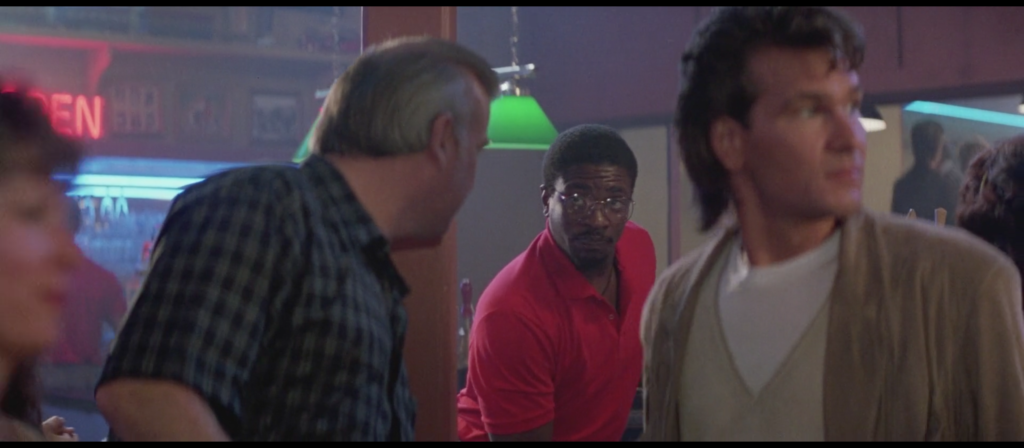
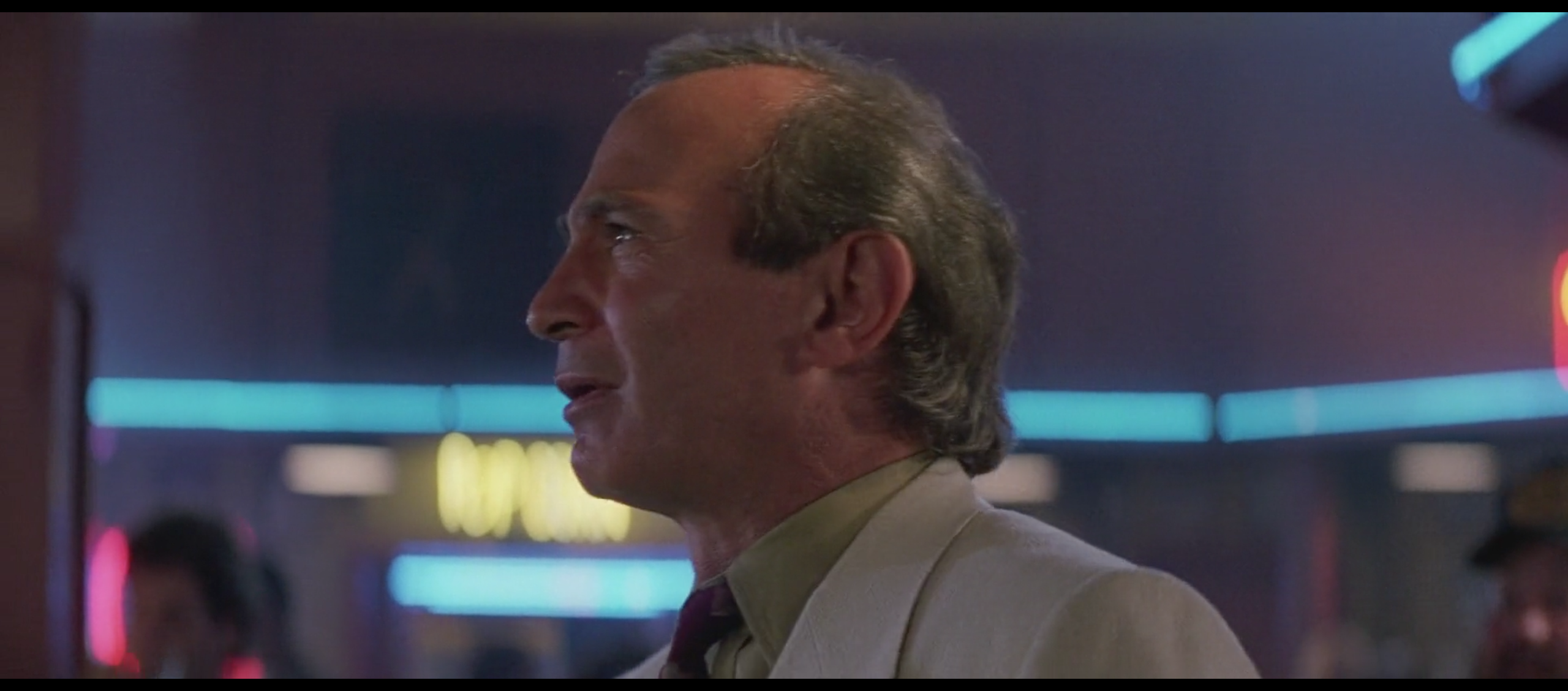
Now, I’m not saying that Dr. Elizabeth Clay is the white-magic call to the shadow-self Dweller on the Threshold response, arriving at a raucous but fraught gathering to force a handsome man who favors loose beige jackets to face his innermost desires because he is afraid to do so himself while he charts a course for confrontation with a wealthy psychotic businessman in charge of a barely disguised criminal enterprise (played by an actor of Italian extraction born in New York City in 1930), but I’m not not saying it either.
After a beautifully understated first season, Netflix’s once-promising post-apocalyptic thriller hits the halfway point of its second go round with a thud. Ironically titled “Stay in Control,” this episode appears to show a series that’s almost completely lost track of what made it compelling viewing in the first place. The grim but humane magic of its initial run is slipping right though its fingers.
“horny” has killed more people than all the volcanos on earth combined —@dril
“I just think I’m looking at a dead man, though.” —Carrie Ann
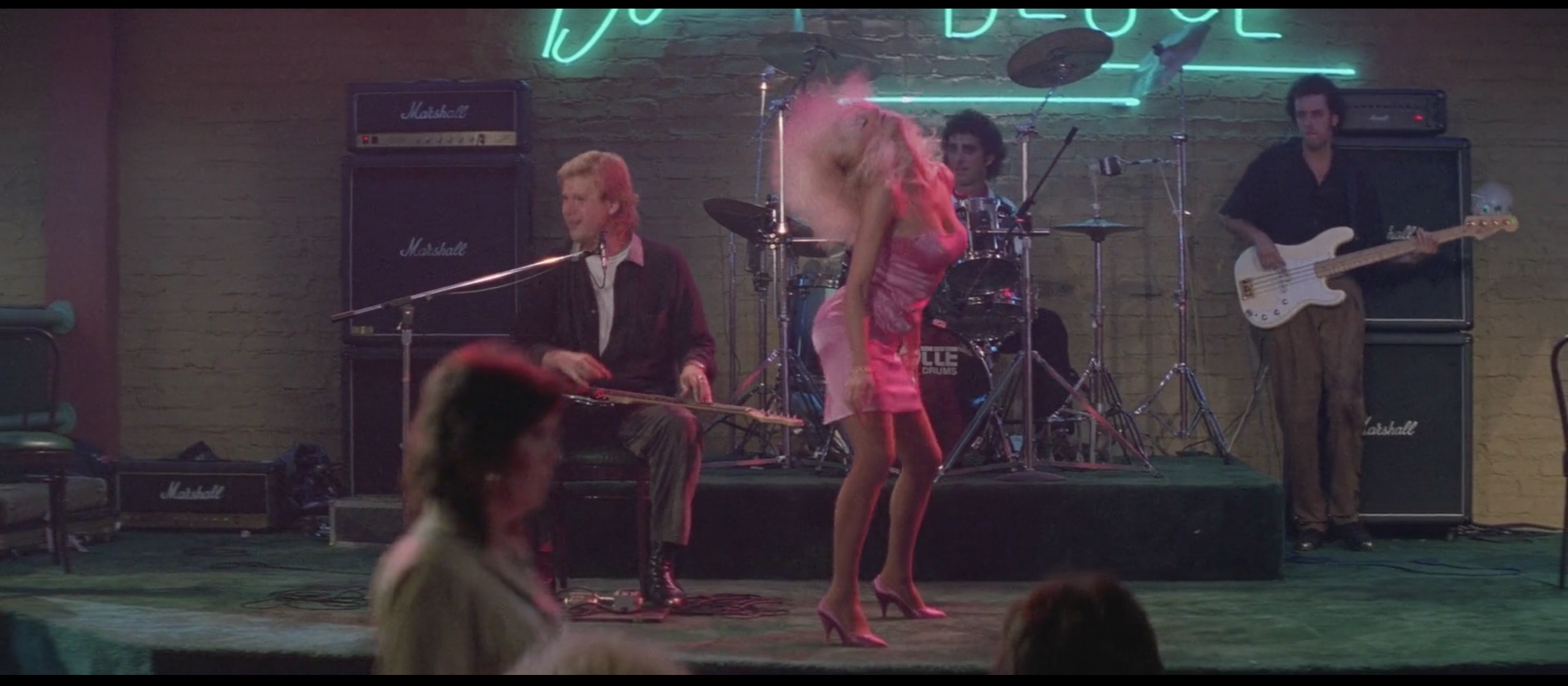
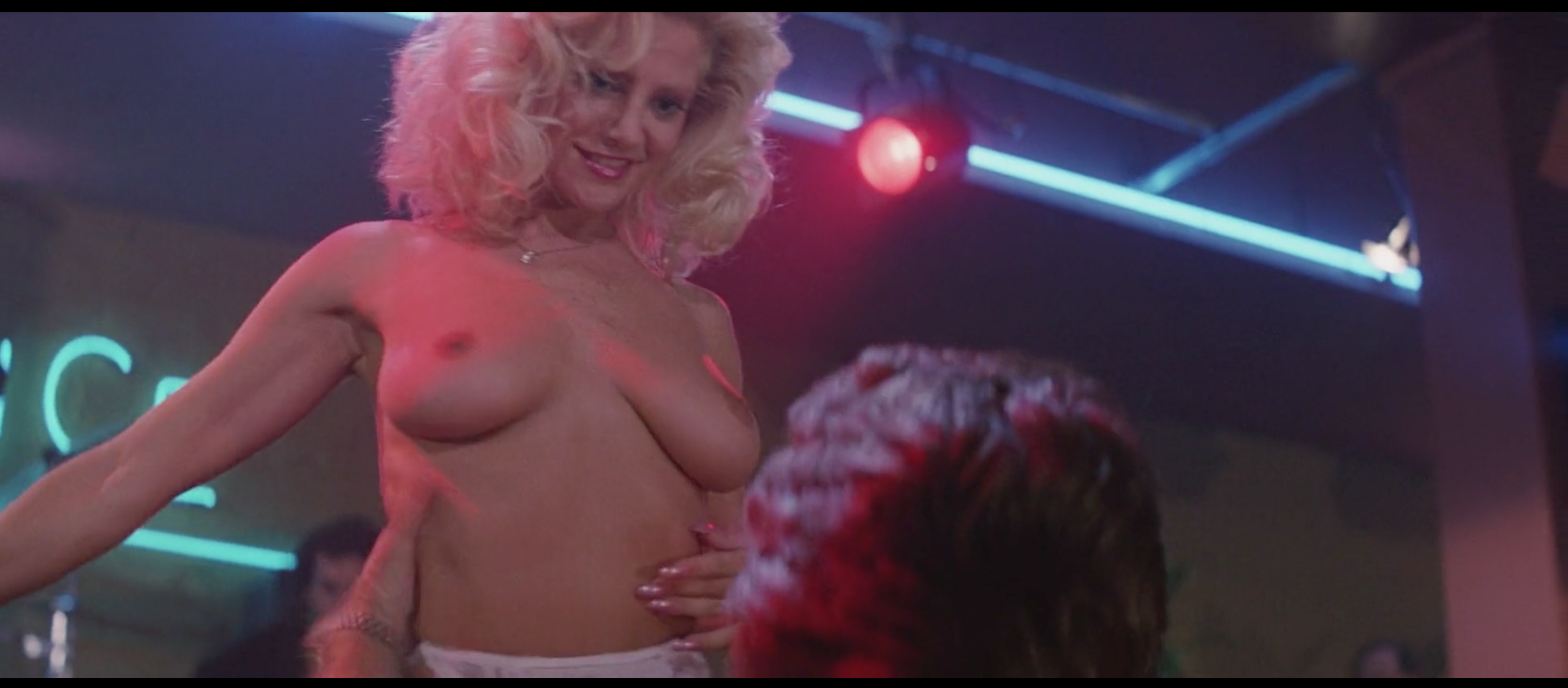
By the standards established by these eminent students of the human condition, I would like to report at least three murders committed by Dr. Elizabeth Clay in the very first moment we see her on this fateful night. There’s the galoot in the wifebeater, Bobby Axelrod, and another guy right behind her who’s about to pay the iron price for having the best seat in the house. Worth it!
Despite being terminally horny, I don’t often write about it anymore because it seems…I dunno, both distasteful, coming from a person in my privileged position, and superfluous, since now every single human being above the age of about 16 with an Internet connection is writing things like “I want Timothee Chalamet to rip out my esophagus and toss me into a nearby body of water to float downstream face-down” every two seconds. I made an exception for Carrie Ann in what is and remains the hottest goddamned moment in any move I’ve ever seen, of course. In a more abstract way I talk about how attractive Denise and Dalton are, although Denise doesn’t hit me where I live so to speak, and I’m too tediously straight to feel legit randy towards even Patrick Swayze in his prime.
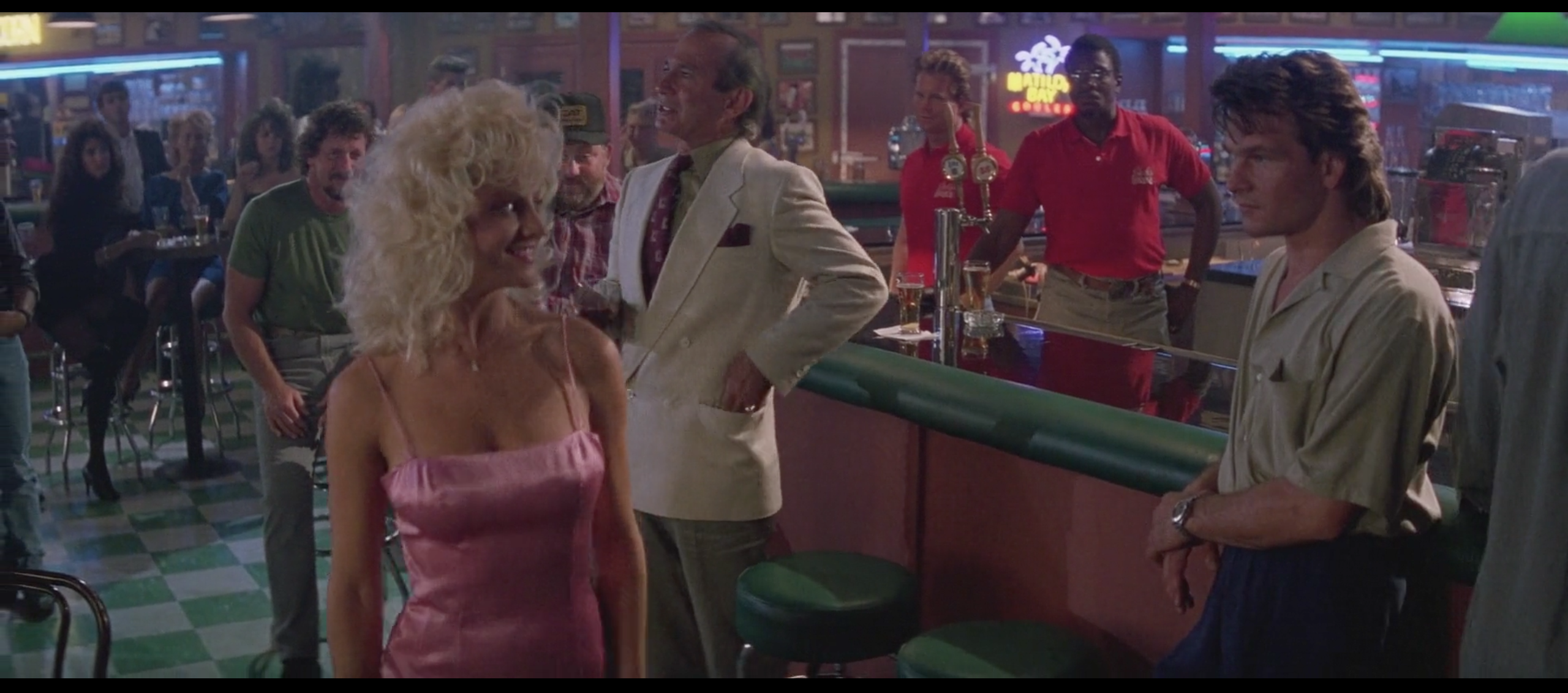
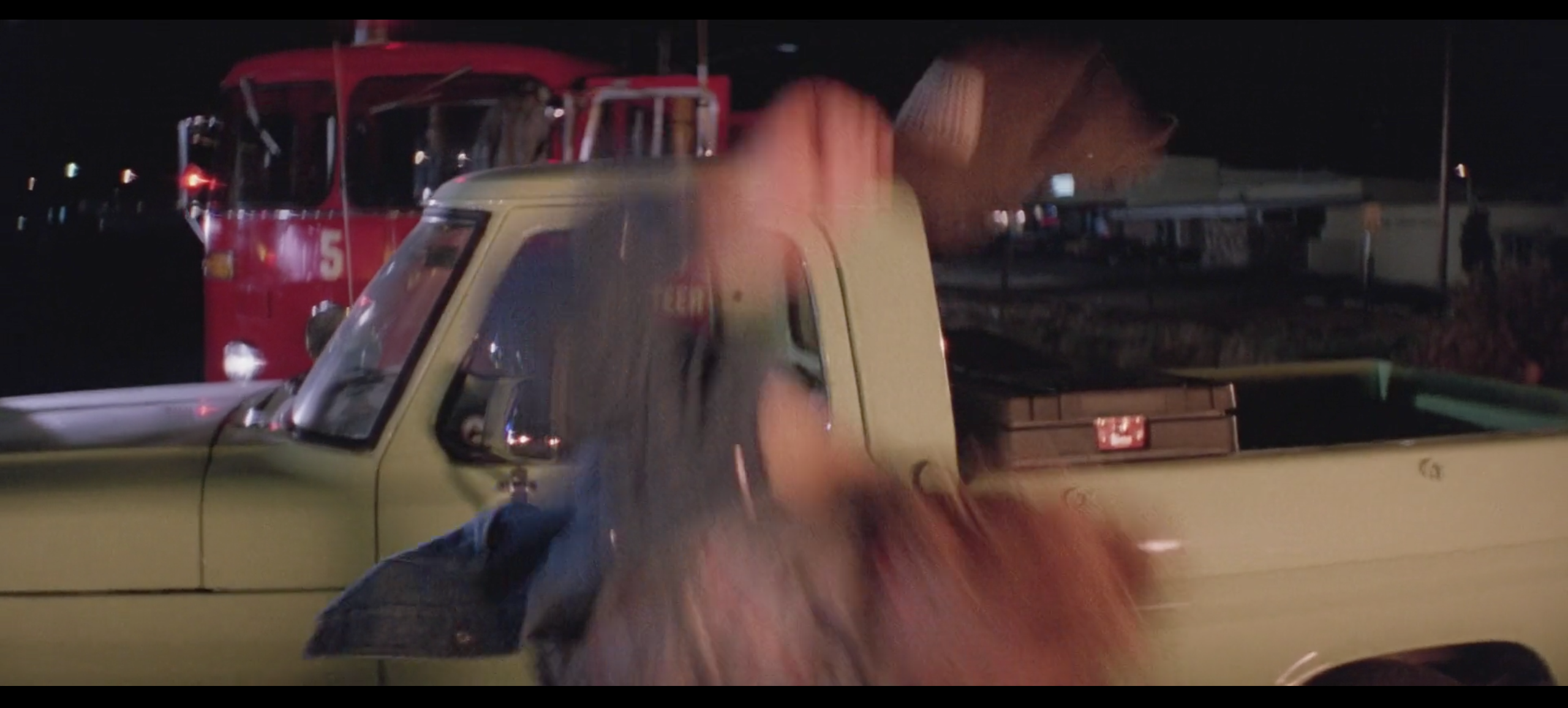
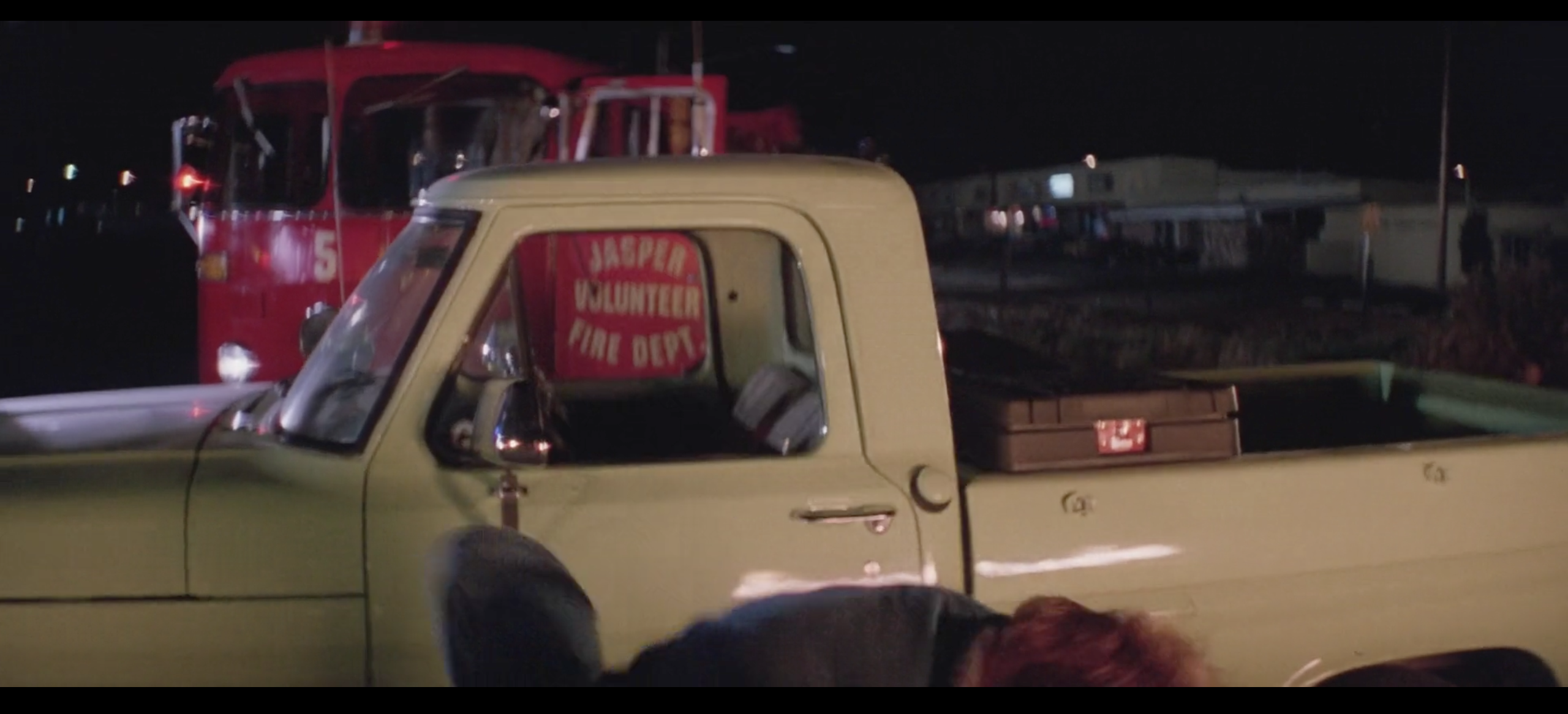
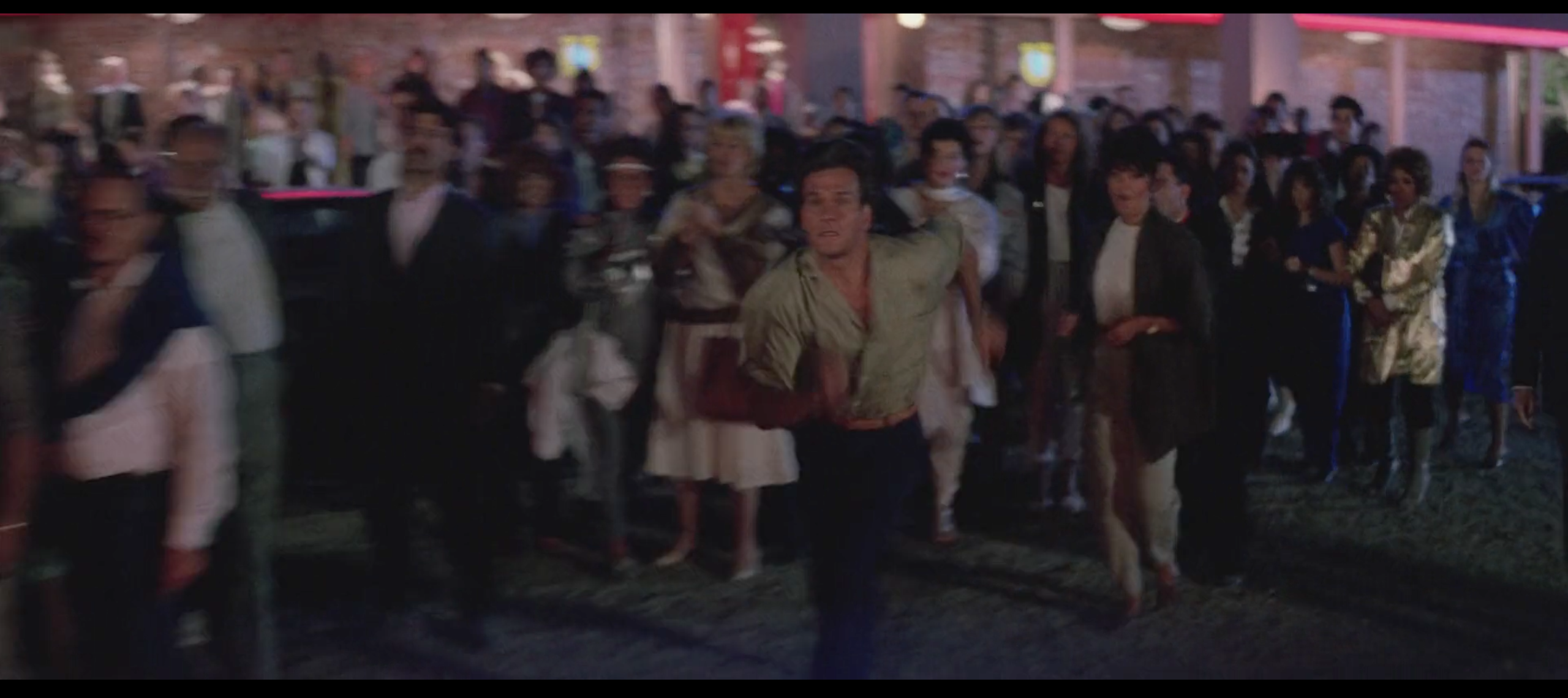
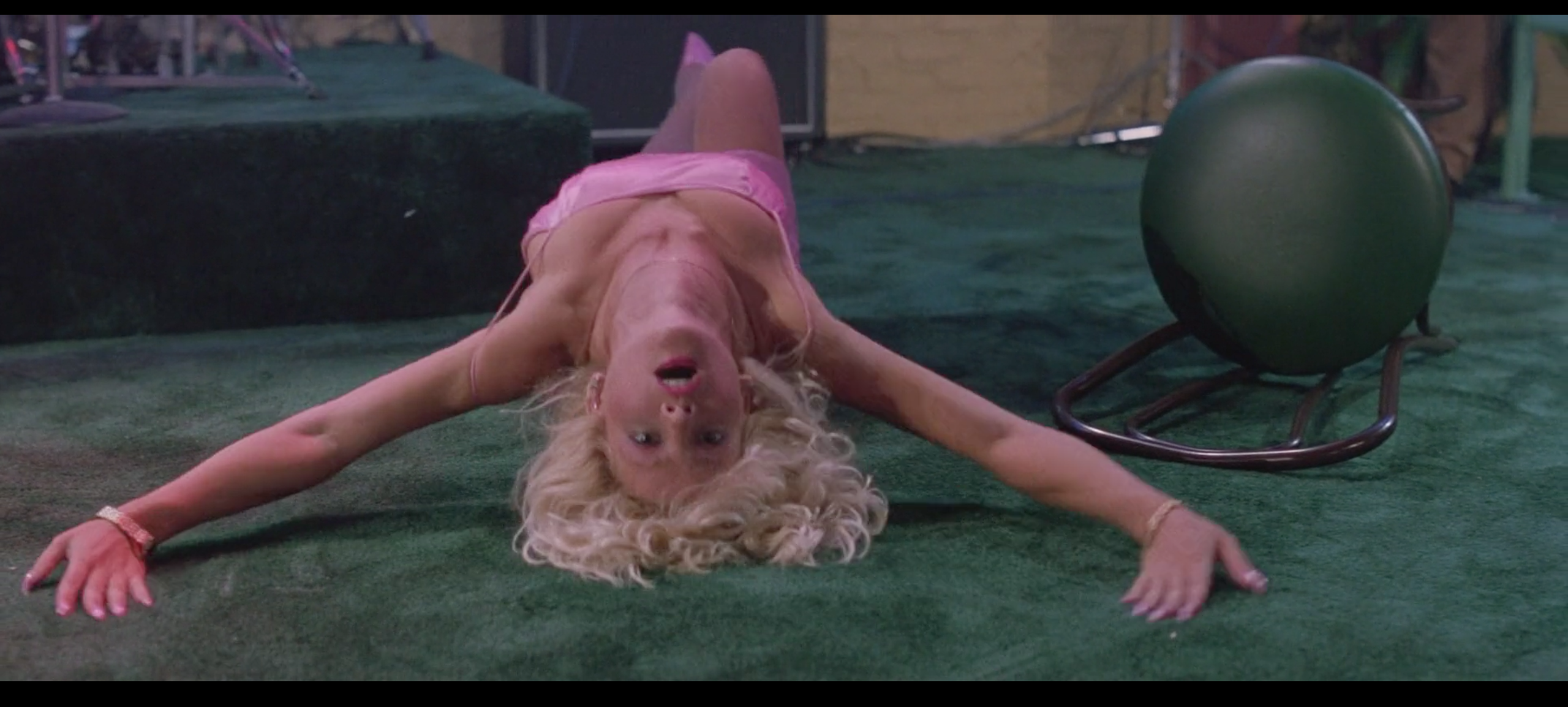
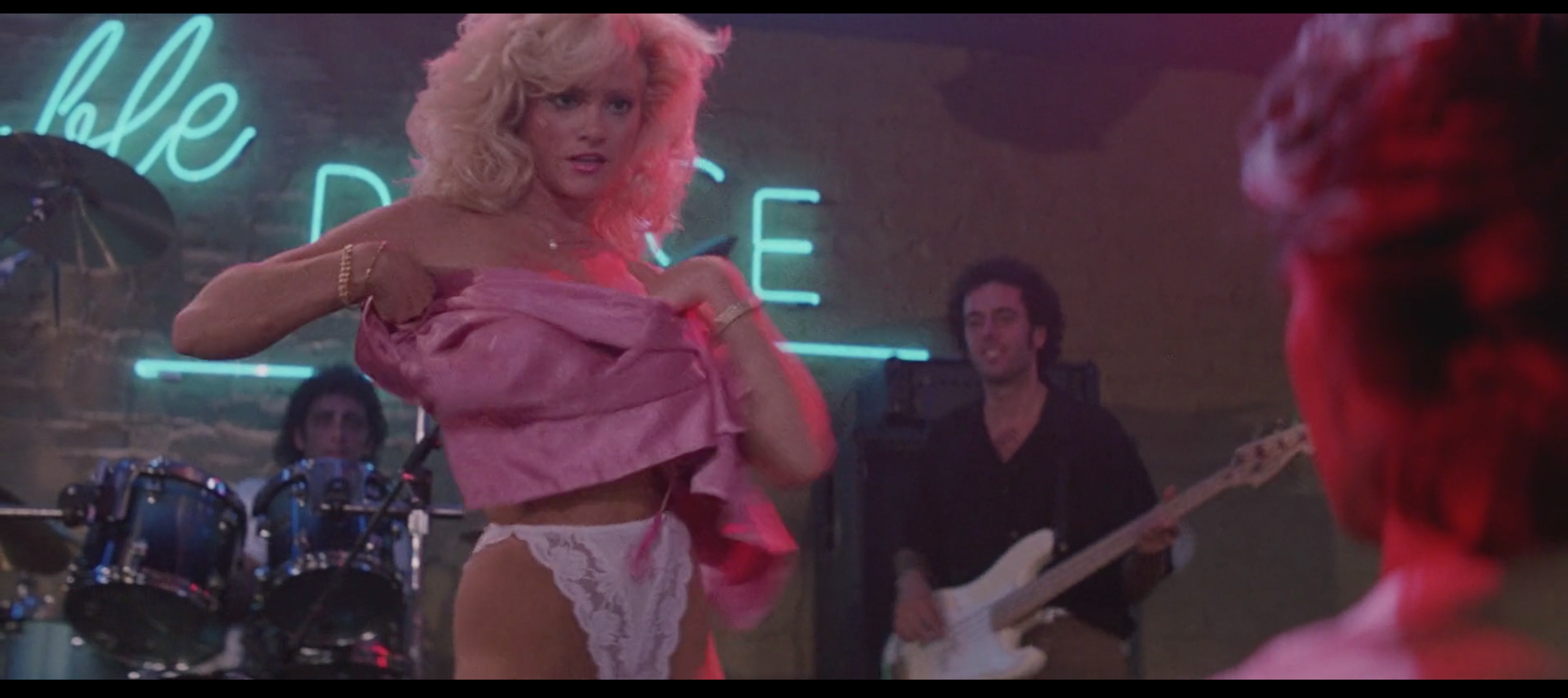
But I am unashamed to say that my first thought every time I see the Doc make her grand entrance in the middle of Dalton’s parking-lot brawl against Boot-Knife Ketchum and the Goon Guys Present The Sounds of Barbershop is a spit-take, a low whistle, that springy series of noises when a machine malfunctions in a Looney Tunes short, va-va-fucking-va-voom.
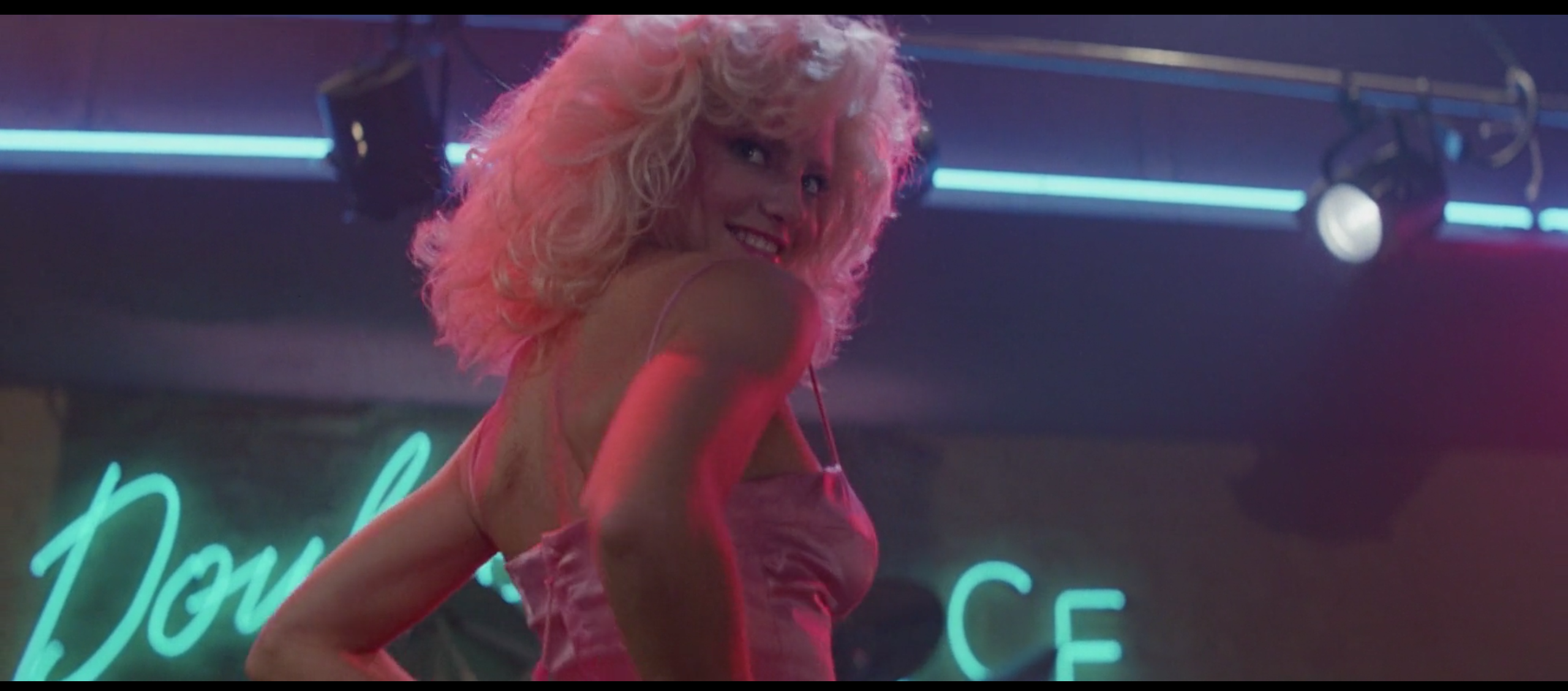
My second thought: Why is she wearing a picnic blanket, and why does her hair look like what happens when you lose the ponytail accessories for an old Barbie doll? Because man alive, that is an odd dress, and that blonde lizard frill sticks out like it broke free of her earlier French braid on its own steam. It’s wild.
It’s to the Doc’s testament that she can make it work. Her body is nearly as nuts as Dalton’s is, that much we can gather, and we’ll get a better look at it later still. Both she and Kelly Lynch, the actor who plays her, are both very pretty women, with a face that seems severe until she smiles, at which point it’s open and warm and kind of adorable. There’s a bit later in the film where Dalton razzes her and she kind of open-palm smushes his face, and that goofy sweet horseplay makes sense the moment she grins.
But the dress commands the eye in the end, and it’s what makes her entrance so striking. Even among the hooting and hollering heteros with whom I first watched the movie, the drunken “Hel-looooo nurse!“s were quickly followed by “What the hell is up with that dress?”, but you’ll notice the order of the two exclamations. When you see this extremely accomplished person—her accomplishments are all we know about her at this point—arrive in clothes that make this loud a statement, you wind up not caring much that the statement is borderline incomprehensible. You just think “How can I meet and entertain and hopefully impress this person without fucking up? She’s a surgeon in a gingham mini for chrissakes!”
Considering how badly Dalton bobbles the first date (though as it turns out he doesn’t bobble it half as badly as it seems at first blush) this appears to have been his primary response as well. It’s unnerving, I’d imagine, to have just finished kicking the asses of four men sent to murder you and then still find yourself several score professional and sartorial steps behind a person who just showed up to take you on a date. Your rules won’t help you now.
After a beautifully understated first season, Netflix’s once-promising post-apocalyptic thriller hits the halfway point of its second go round with a thud. Ironically titled “Stay in Control,” this episode appears to show a series that’s almost completely lost track of what made it compelling viewing in the first place. The grim but humane magic of its initial run is slipping right though its fingers.
When I picture the deaths of Daenerys Targaryen’s dragons, the first word that comes to mind is obscene.
The dragons are technical filmmaking achievements of a scale and quality never before seen on television. They are emblems of high-fantasy spectacle with real awe and real bite, in a field now dominated by literally and figuratively bloodless blockbusters. Most guttingly, they are symbols of the wonders of the natural world, pointlessly destroyed by merchants of death. For all these reasons, their killings made me want to look away … which is exactly why I felt the need to look closer. And the survival of the third, greatest, and last dragon in the Game of Thrones finale made that need impossible to resist.
Surviving the deaths of his siblings, Drogon leveled King’s Landing at the behest of his master and mother, killing countless thousands. Yet after her death, freed from human control for the first time in his life, he appears to decide against further devastation in favor of escape. He flies away and his future is unknown.
But while the minds of these dragons remain a mystery, what they symbolize can be sussed out more readily. With two of the creatures killed by two very different enemies and the third taking off on its own, the departures of the dragons track with the trajectory of the show’s final season. As such, they serve as legends on a map of the future. Two paths say, “Here be dragons.” The third is wide open.
There’s no way around it: I do not like this development at all. I don’t like the way it makes Rasmus even more of a superhuman dark-messiah figure. I don’t like how it pushes the boundaries of plausibility established by the series up until this point. I don’t like how it looks, as a visual effect. I don’t think it fits with the show’s quick yet fundamentally gentle and restrained tone. It just…doesn’t work. Not even having it unleashed under powerful circumstances—Sarah, grieving her brother and their friends, begs Patrick to kill her, and the virus emerges when she enters his room—can salvage it. My hope is that the show itself isn’t irrevocably infected as well.
When we find Dalton lying on his back, hands behind his head, eyes open, under a shady tree, just daydreamin’, whilin’ away the hours, conferrin’ with the flowers, consultin’ with the rain, it behooves us to review recent events in his life. In reverse order these include an astonishingly awkward first date with Dr. Elizabeth Clay, during which you’d be hard pressed to find something she said to him that wasn’t a brutal neg; a parking-lot brawl with a man with a knife in his boot, which is how Elizabeth found him when she arrived for their date; a call to his mentor Wade Garrett in which we receive the first intimations of the depths of Dalton’s concern about Brad Wesley; the discovery that Wesley and his goons are bracing local businesspeople for protection money; getting stitched up for a knife wound incurred in a previous brawl with Pat McGurn, O’Connor, and Tinker, during which process he meets Dr. Elizabeth Clay for the first time; the brawl itself, during which the knife wound is incurred. “Man, this guy has it good” is not a thought I’d have.
Yet it’s a thought radiated by every inch of his body (and magnificent hair) as he lies there on that car. A car which was destroyed—did I mention this?—by disgruntled opponents yet again, sometime between when he defeats Ketchum and the Church Elders in the parking lot and departs for his date with the Doc and when they return to the lot later that night. They pulled a stop sign out of the ground and shoved it through his front windshield, man. I’m not having much trouble reading the symbolism there, but Dalton either is having that trouble, or, and this is more likely, he’s completely untroubled by it at all. He’s gonna take five on the battered body of his car, gonna kick back on that thing and take in the fragrance of nature in the parlance of Emmett’s times like it’s a hammock. He’s living easy, loving free, season-ticket on a one-way ride, asking nothing, leave him be, taking everything in his stride.
Even when Tinker and the Bleeder show up he doesn’t so much as look their way. I’ll remind you here, in case you forgot what happened a couple of paragraphs ago, that Tinker is the man who sent him to the hospital with a knife wound, and O’Connor is the man who helped set him up for that injury. Dalton proceeded to beat the holy hell out of O’Connor while his bouncers doubled up on an immobilized Tinker like they were hitting the heavy bag. There’s no reason for Dalton not to believe these men have come to kill him, because they’ve already tried. I wouldn’t imagine blowing it has cooled their enthusiasm for the prospect.
But that’s Dalton right there, chilling TF out on a vehicle trashed by his mortal enemies, in a body also trashed by his mortal enemies, as his mortal enemies approach.
And yet they are the ones who flinch the second he moves. This despite outnumbering him. This despite being on their feet while he has to get up from a supine position. This despite the fact that, you know, the reason they’re there is to get him to get up and come with them, like him getting up and coming with them is baked right into the premise of their little errand here.
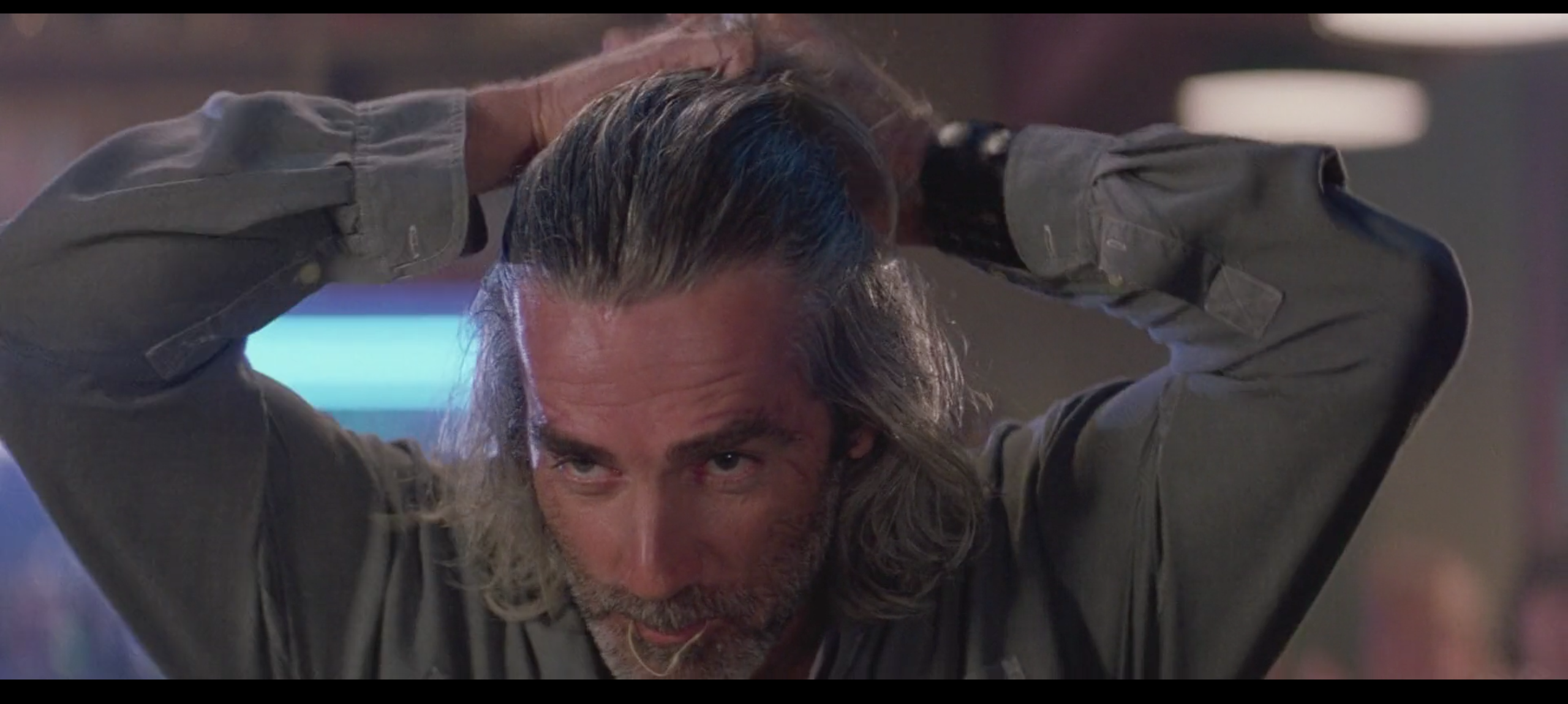
But—and I can’t believe I’m saying this given my strong anti-goon bias—goons sometimes see things the rest of us cannot. (Maybe it’s the sunglasses.) O’Connor and Tinker don’t see a man mellowing out despite all the signs surrounding him that he should not. They see a rattlesnake sunning itself on a rock. You ever seen something like that? They look pretty chill too. Pretty calm, pretty relaxed, pretty vulnerable. I’m not about to fuck with one though and neither are you, are you. We see the kinetic inherent in the potential. We remember the Good Book: The serpent is subtle.
There’s no way around it: I do not like this development at all. I don’t like the way it makes Rasmus even more of a superhuman dark-messiah figure. I don’t like how it pushes the boundaries of plausibility established by the series up until this point. I don’t like how it looks, as a visual effect. I don’t think it fits with the show’s quick yet fundamentally gentle and restrained tone. It just…doesn’t work. Not even having it unleashed under powerful circumstances—Sarah, grieving her brother and their friends, begs Patrick to kill her, and the virus emerges when she enters his room—can salvage it. My hope is that the show itself isn’t irrevocably infected as well.
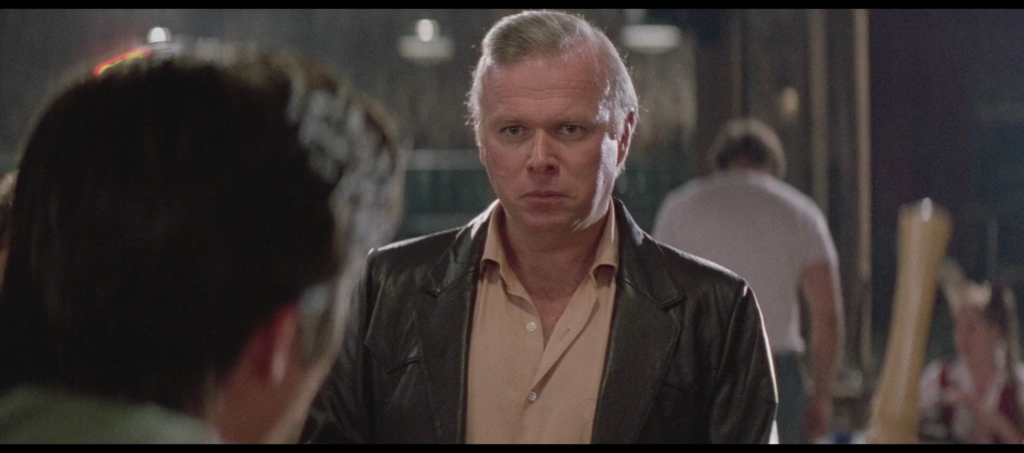
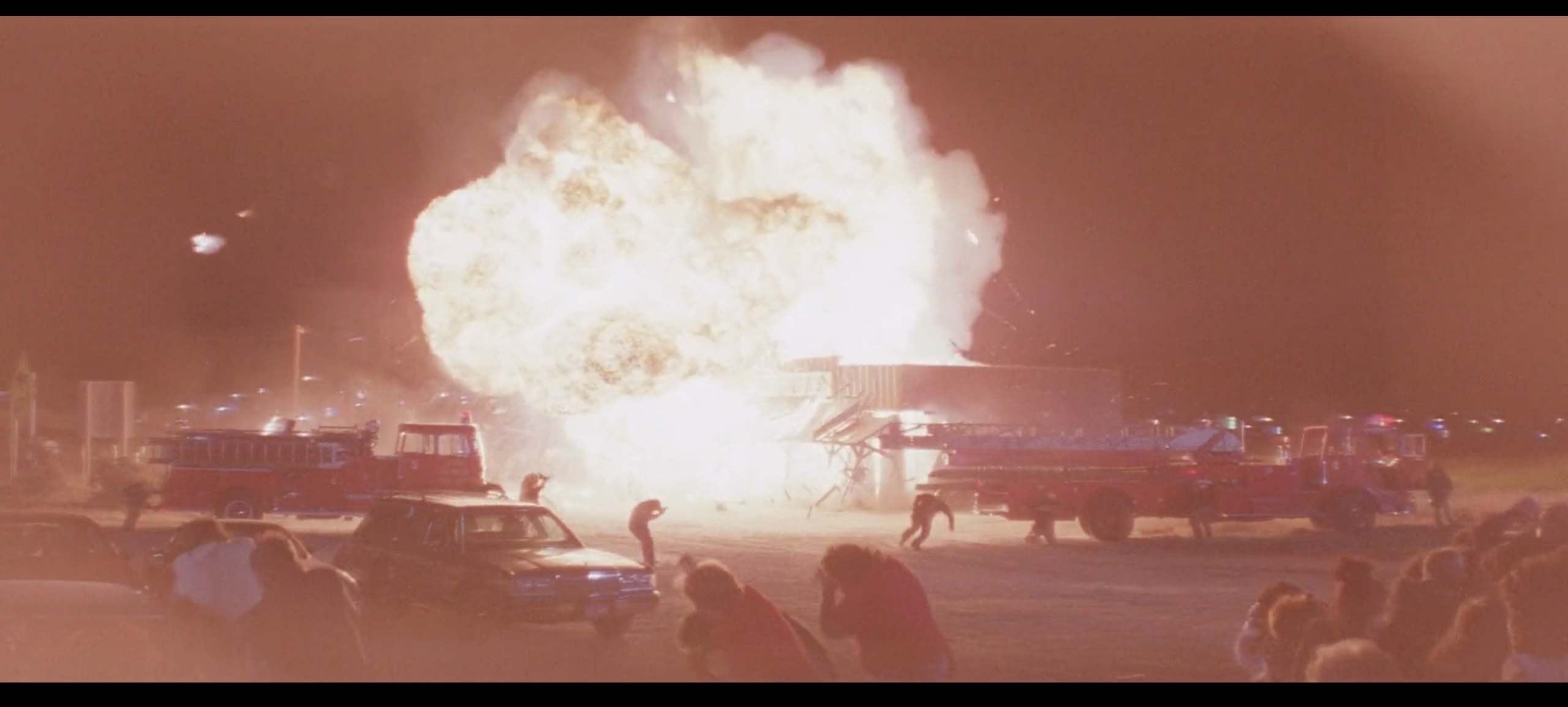
Here, in a quiet moment near the end of the film just prior to the situation coming to a head so to speak, we see the goon in his natural environment. O’Connor, Ketchum, Morgan, Tinker, Pat McGurn: All of them have tucked their favorite short-sleeved shirts into their favorite pairs of jeans and settled in on the front lawn of the mansion owned by the Peter Pan to their Lost Boys, Brad Wesley. As you can tell from the shooting irons, this is not a company picnic or a cookout with the boys; they’re here to protect Brad Wesley from Dalton, whom they rightfully assume is on his way to kill them all because they murdered his best friend. You’ll have cause to wonder why, given the predictability of and ease of access to Dalton’s whereabouts—he in fact receives a phone call taunting him about the impending murder in the very location where that murder eventually takes place in his absence—they did not simply cut out the middleman as it were and murder him instead. Perhaps, given their superior numbers and lack of compunction about bringing guns to a knife fight and so on down the fight escalation scale, they did not split up to murder them both. Just blue-skying here: One could even imagine a scenario in which the large quantity of explosives the Brad Wesley organization has used to destroy Red Webster’s place of business and Emmett’s cottage could instead have been employed to blow up the Double Deuce (across the street from Red Webster’s store) or Dalton’s barn apartment (approximately two hundred feet away from Emmett’s house). It’s almost as if the goal were to deliberately goad the best fighter in Jasper into a mano a mano with a demented old man who likes JC Penney, reckless operation of motor vehicles, and music with balls. And if that were the case—well then, one would wonder, wouldn’t one, whether the very orchestration of such a plan signals a wish on the part of Brad Wesley’s men, or Brad Wesley, or some other and still more nefarious figure working behind the scenes, the hole in things, the Enemy, the piece that can never fit, there since the beginning, that Brad Wesley and his men be removed from the playing field permanently, and that if Dalton himself should die in the process of that removal, well, so be it.
But that’s crazy talk, isn’t it.
<Swearengen voice>Anyways,</s> the goons and their paymaster are to be congratulated on the success of their plan, which does indeed lure Dalton into the Wesley estate, at full speed, no holds barred, no quarter asked and none given. Few things will get an experienced killer in a killing mood than killing one of the men who trained them in the techniques that allow them to kill, and once the experienced killer is in that killing mood, he needs must find the people he desires to kill, and a good place to check is if one of them owns a mansion, then it’s that mansion. So kudos are due in that respect.
Until Dalton drops by, however, the goons are left to their own devices. Their mixture of vigilance and utter disregard for firearm safety is the purest visual expression of the goonsmanship levels evidenced in this film. Ketchum and the Bleeder? Silent sentinels, eyes at nine and six, ready for anything. Morgan, Tinker, and the sister-son? Holding a pistol the way you hold your phone when you’re trying to check the text that just came in but you’re doing a million things and you grab it at kind of an awkward angle but now you’re stuck with it that way until you put something else down, eating a lolipop, and scratching his back with the butt of a shotgun while saying “Remember that blonde? Shhyew. She could suck-start a Harley.” Ruthless efficiency coupled with a generated sense of wonder that any of these men lived past high school: That is the Way of the Goon. Bask in it.
Bask in it while you can, anyway, since all but one of these men will be dead within two and a half minutes.
Bran, Arya, Sansa, Jon: In their final destinies, the heirs of House Stark all defy their house words, “Winter Is Coming.” After showing us a nightmare for eight seasons, Game of Thrones finally dares to dream of spring.