The 33 Best Industrial Albums of All Time

29. Lords of Acid – Voodoo-U (1994)

Debuting with 1991’s Lust, Lords of Acid were best known for Belgian new-beat bangers with humorously filthy lyrics, the kind of club floor-fillers that hormonal drama club kids could put on their mixtapes. But the rampaging breakbeats, screeching-siren vocals, and double-barreled guitar and keyboard riffs of Voodoo-U were less funny and more frightening. The needles-in-the-red sound was as loud, lewd, and cavernous as the come-hither cover art by the artist COOP, which depicts a fluorescent-orange orgy in the bowels of Hell. Indeed, standouts like “The Crablouse” (a paean to the orgasmic prowess of pubic lice) and the explicitly witchy title track lent the demonic urgency of a summoning ritual to music for people who just really wanted to fuck other people in black mesh tops and vinyl pants. Go ahead, judge this one by its cover.

I reviewed Lords of Acid’s Voodoo-U, Nine Inch Nails’ Pretty Hate Machine, and Killing Joke’s self-titled debut album for Pitchfork’s list of the 33 best industrial albums of all time.

167. Two pool tables

There are two pool tables in the Double Deuce. There are two pool tables in Wade Garrett’s topless bar. There are two pool tables in Brad Wesley’s foyer. Yes, it seems like you can’t swing an uprooted stop sign in this movie without hitting one of every location’s two matching pool tables.

You have to respect the preparedness here, particularly on the part of Brad Wesley. Frank Tilghman and the unseen owner of the strip club might reasonably expect that patrons looking to unwind with a game of skill and chance might want to play pool in numbers sufficient to require parallel pool tables.

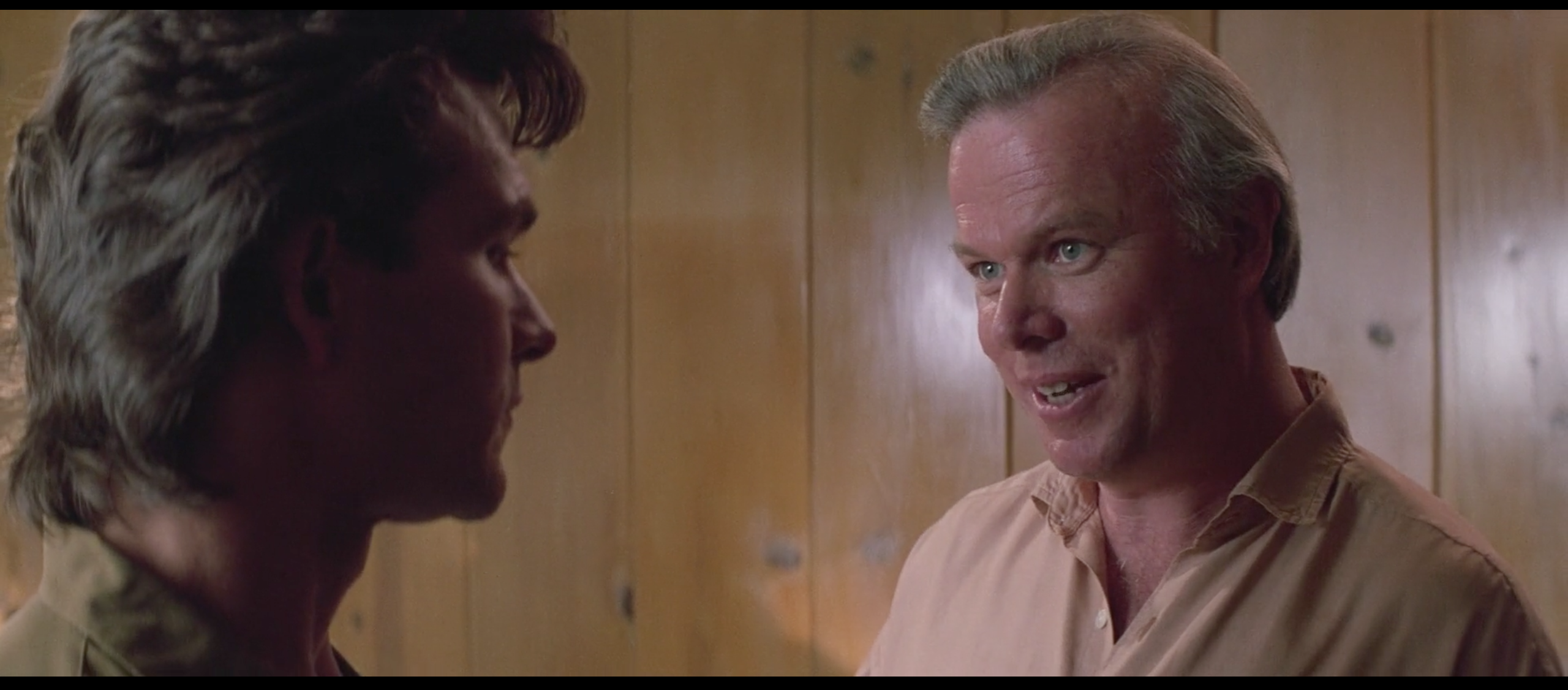
Wesley, though? That’s his home. His home! In his foyer where his mistress jazzercises, and his goons come to escort his nemesis. His home. The man has pool parties yes, but of an entirely different variety. And to go back to The Godfather, I can’t figure out a secondary meaning to their presence. Ceci n’est pas une orange.

Yet there they stand, the Jasper Argonath, the Pillars of the Fotomat Kings. They let all who pass between them know they have entered the realm the giver of gifts, the bestower of levity and liquor, the gamesmaster, building his parody of the recreations of every day folk, a grotesque satire, now perfected, the uruk-hai of billiards. Hither came Wesley, gray-haired, sullen-eyed, cigar in hand, a thief, a reaver, a slayer, with gigantic melancholies and gigantic mirth, to tread the JC Penneys of the Earth under his sandalled feet.

166. Details

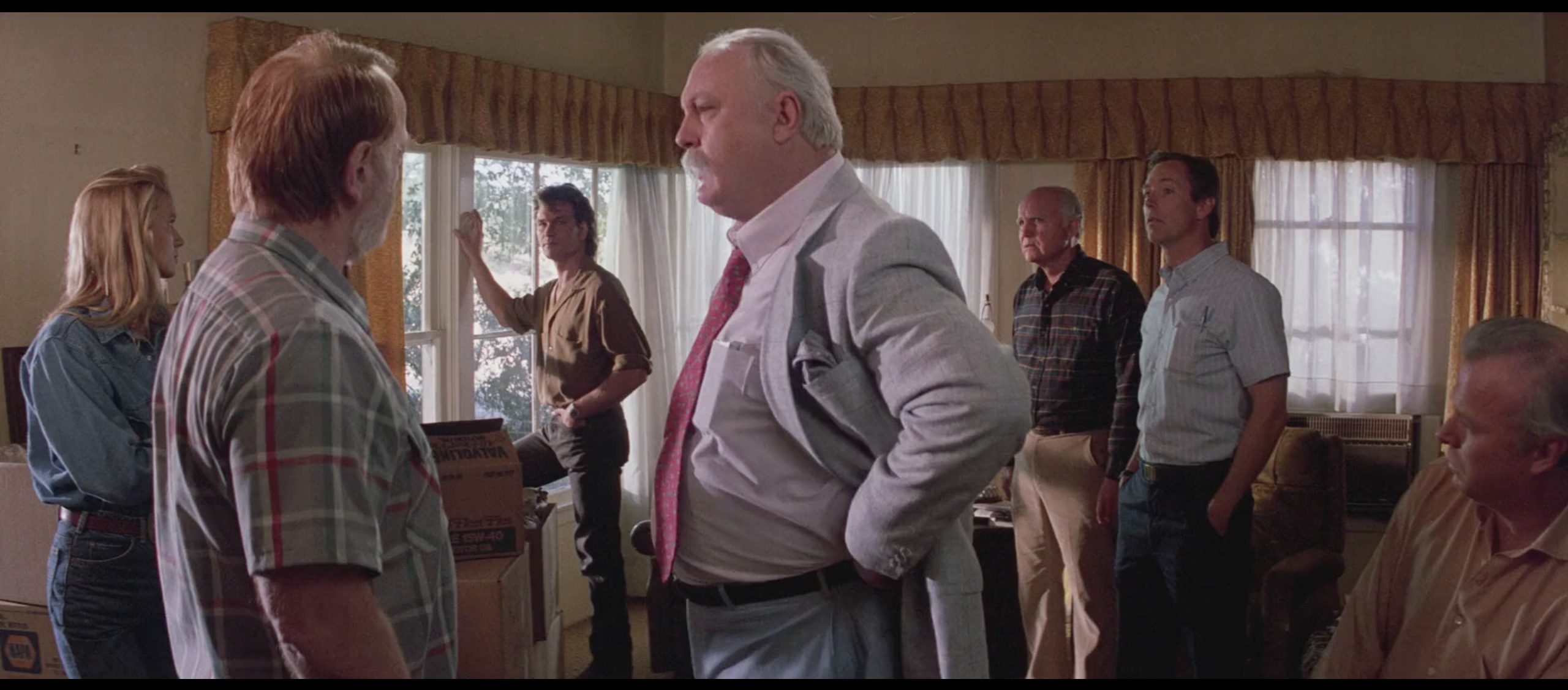
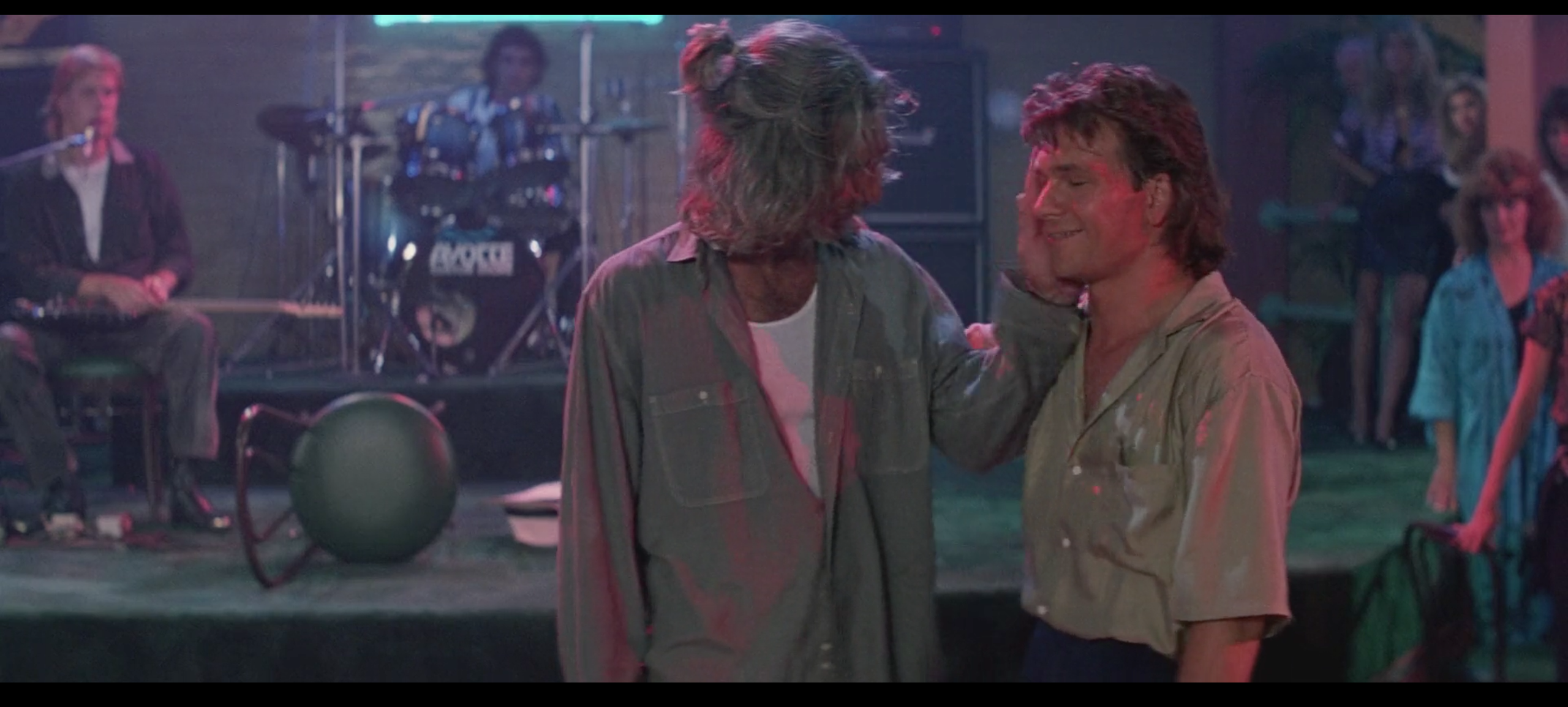
As a visual text, Road House is a chest of wonders. Look at this shot from early on in the film, on the night when Dalton first visits the Double Deuce. There he is at his familiar post, in his familiar shapeless beige jacket. There’s Pat McGurn and The Bartender Who Must Not Be Named behind him, conferring about whatever a sister-son and a working stiff who both happen to have the same job at the same place might confer about. (“So what’s it like working with Exene after the divorce? And this Mortensen kid she’s with, is he cool? Because he seems cool.”)

To the left is a power drinker, passed out on the bar; from this we can infer that Pat, ever conscious of the needs of his uncles liquor distributorship, refuses to cut off even the most obviously inebriated patrons, and most likely pressures the Nameless One into doing the same. Given the behavior of the comparatively sober customers, what does he have to lose, really.

To the right is a detail I’m just now noticing: the dry spongy exposed foam of the bar’s padding, chipped and peeled and torn away by the half-hearted vandalism of the drunk and the fixated. Back in the “everything is padded” days of restaurateurship, such artifacts of idle destructiveness were visible everywhere. I haven’t sat on an upholstered seat at an upholstered table in many a long year, but I can feel the satisfaction of ripping away a chip of covering and pulling at the porous brown stuffing underneath like my hands are doing it right now instead of typing this sentence. For all that Road House is rightfully dinged about its lack of realism, even as regards bar furniture specifically (the price of replacement tables alone from the fight about to ensue would put a normal establishment out of business), that’s some real shit.

And to the right of that? Why, that familiar fellow is none other than Brad Welsey’s own Tinker. Has he come to chat with fellow Wesleyans Pat and Morgan about the art of the goon over a few drinks when they have a moment to spare during their busy evenings of stealing from the cash register and erupting into violence over the slightest provocation? Is he additional muscle to make sure Mr. Wesley’s liquor flows without impediment? Is he simply a fan of the Jeff Healey Band? At another time during this sequence he’s seen chatting up some lovely lady; is the Double Deuce his fern bar, his Regal Beagle? Is this Tinker Tinder?

I’m reminded here of the extensive making-of documentaries included in the Lord of the Rings extended edition sets. I don’t remember the exact wording offered by the heads of the various costume and design and set departments regarding their lunatic attention to detail. I do remember the gist of it, though: They would produce intricate designs for the insides of garments and scabbards or for swords that would only be seen from a distance or for rooms no one would even enter or what have you not because the audience would see them, which they knew they wouldn’t. They did so because they were creating a world for the entire production to inhabit, not just the viewer. A cast or crew member who spent a few seconds admiring the embroidery of their breeches would be that much closer to convincingly conveying the reality of a world of orcs and elves and hobbits and magic rings. Look at the shot above, really look at it, and tell me if he war between the world’s most famous bouncers and the maniac mall devleoper who keeps their bar in Jim Beam seems as much of a stretch as it did before.

“Black Spot” thoughts, Season One, Episode Eight: “The End Is Only the Beginning”

From the start, Black Spot has been a case study in how the whole can be equal or less than the sum of its parts. Lush location filming and thoughtful character work that tells much of the emotional story simply via well lit closeups on their faces, juxtaposed with perfunctory mysteries and recycled horror imagery: The combination frustrates because anyone capable of pulling off the former ought to know better than serving up the latter.

Titled “The End Is Only the Beginning” with almost maddening bluntness, the show’s cliffhanger season finale offers yet more evidence of this irritating tendency. Yet for once, the surprise reveals are—almost—as good as anything else on the show. Making it work in the final hour is a mystery alright, but it’s a happy one despite it all.

I reviewed the surprisingly engaging season finale of Black Spot, which still isn’t the show it could be, for Decider.

“Black Spot” thoughts, Season One, Episode Eight: “The End Is Only the Beginning”

Black Spot has a strong, quiet cast that does great work with what they’re given. It’s as good at landscapes and intimate closeups as any show you’d care to name right now. I mean, look at this:

Black Spot Episode 8 INCREDIBLE LANDSCAPE SHOT

Black Spot Episode 8 LAUREN AND CORA

But as long as it keeps both telegraphing and pulling its punches, depending on the episode, it’s never going to feel worthy of the raw material with which it’s working. It will never see the forest for the trees.

I reviewed the season finale of Black Spot for Decider.

165. No hay banda

Essays connect. That is the fundamental aspiration of my writing in the form. Analogy, applicability, juxtaposition, recontextualization, “yes, and…”: When I’ve succeeded as an essayist it’s in using these techniques to draw meaning from the spaces between elements according to the order into which, after plucking them from their preexisting positions, I have arranged them. Essays are cohesive statements, derived from montage.

Every Road House/Mulholland Drive post I’ve put together since the idea first came to me has taken at least as much effort as writing a post does, sometimes more. I say this because I don’t want you to think these are a shortcut or a cheat, though you may anyway, or a joke, which if you know me seems somewhat less likely than the shortcut/cheat possibility. But it’s semantics, really. Even when I’m joking around in here I’m serious.

It may seem, it may be, funny to compare one of the great films ever made to one of the great bad films ever made. But even if it is, my brain doesn’t know it. After the connection first occurred to me I haven’t been able to get it out of my mind. When this kind of fire starts, it is very hard to put out.

Both movies are about a beautiful person who is new in town, who discovers love and sex with a beautiful woman with a dangerous past, who unearths corruption and violence under the surface of their new home, who dazzles onlookers with their talent, whose performance in their chosen role are echoed by the performers at the blue-neon nightclub they visit, who are threatened with annihilation by their inability to align the person they purport to be with the person they are. They retell the same myth about self-discovery and self-actualization, the great myth of the West.

Mulholland Drive destroys that myth in the end. Road House does not. Yet Mulholland Drive also lives the myth for the bulk of its length before shattering it. Perhaps Road House is best understood, then, as the adventures Betty and Rita to the Diane and Camilla death dance of our own real lives. It is the eject button, the escape hatch, the panic room for which an overwhelmed mind can reach before it destroys itself. No hay banda! It’s all a tape. Il n’est pas de orquestra! It is an illusion. Listen…

“Black Spot” thoughts, Season One, Episode Seven: “The Secret Behind the Window”

If you’ve watched six episodes of Black Spot so far, it’s a fair bet you can figure out what’s going on in the seventh. For the most part, anyway—and it’s that “for the most part” that’s the key.

While its done-in-one mystery is as simplistic as ever, “The Secret Behind the Window” (note: no windows are involved) is much more concerned with the overarching mysteries—the secret of the woodsman, the disappearance of Marion Steiner, the dirty deeds her father and grandfather are up to—and with the emotions of the main characters. You don’t have to be a great detective to figure out that this is a marked improvement over its predecessors.

I reviewed the penultimate episode of Black Spot Season One for Decider.

“Black Spot” thoughts, Season One, Episode Seven: “The Secret Behind the Window”

If you’ve watched six episodes of Black Spot so far, it’s a fair bet you can figure out what’s going on in the seventh. For the most part, anyway—and it’s that “for the most part” that’s the key.

While its done-in-one mystery is as simplistic as ever, “The Secret Behind the Window” (note: no windows are involved) is much more concerned with the overarching mysteries—the secret of the woodsman, the disappearance of Marion Steiner, the dirty deeds her father and grandfather are up to—and with the emotions of the main characters. You don’t have to be a great detective to figure out that this is a marked improvement over its predecessors.

I reviewed the penultimate episode of Black Spot Season One for Decider.

“Black Spot” thoughts, Season One, Episode Six: “Dark Heroes”

How many times can you say the same things about the same show, I wonder. Well, let me see. How many episodes does Black Spot run again? The awkwardly titled “Dark Heroes” is the sixth installment of the most aggressively mixed bag of a Netflix show I’ve seen so far. By now, if you don’t have its like-clockwork rhythms committed to memory, you should probably set your content filter to “Kids” to avoid complex narratives entirely.

I reviewed episode six of Black Spot for Decider.

“Black Spot” thoughts, Season One, Episode Six: “Dark Heroes”

How many times can you say the same things about the same show, I wonder. Well, let me see. How many episodes does Black Spot run again? The awkwardly titled “Dark Heroes” is the sixth installment of the most aggressively mixed bag of a Netflix show I’ve seen so far. By now, if you don’t have its like-clockwork rhythms committed to memory, you should probably set your content filter to “Kids” to avoid complex narratives entirely.

I reviewed episode six of Black Spot for Decider.

164. “Someone is in trouble! Something bad is happening!”

“This is Jack. I’m sure he meant well.”

“Black Spot” thoughts, Season One, Episode Five: “The End of the Road”

Two very, very different images of post-mortem movement bookend “The End of the Road,” yet another drearily predictable mystery wrapped in sumptuous cinematography and magnetic acting in Black Spot‘s ever-growing tally. It’s like taking Woodward & Bernstein and using it to wrap the catch of the day.

The real asskicker is that if creator Mathieu Missoffe had gotten half as creative with the script as the filmmakers and cast have gotten with what they’re doing, so many of the show’s problems would be nothing but dodged bullets.

I reviewed episode five of Black Spot for Decider.

“Black Spot” thoughts, Season One, Episode Five: “The End of the Road”

I dunno, folks, I really just don’t know. The more I watch the more I feel that Black Spot is just an extremely well-made primetime broadcast-network supernatural cop show that could be so much more. I suppose we’ll get to the bottom of it in the end.

I reviewed the fifth episode of Black Spot for Decider.

163. Bad goons

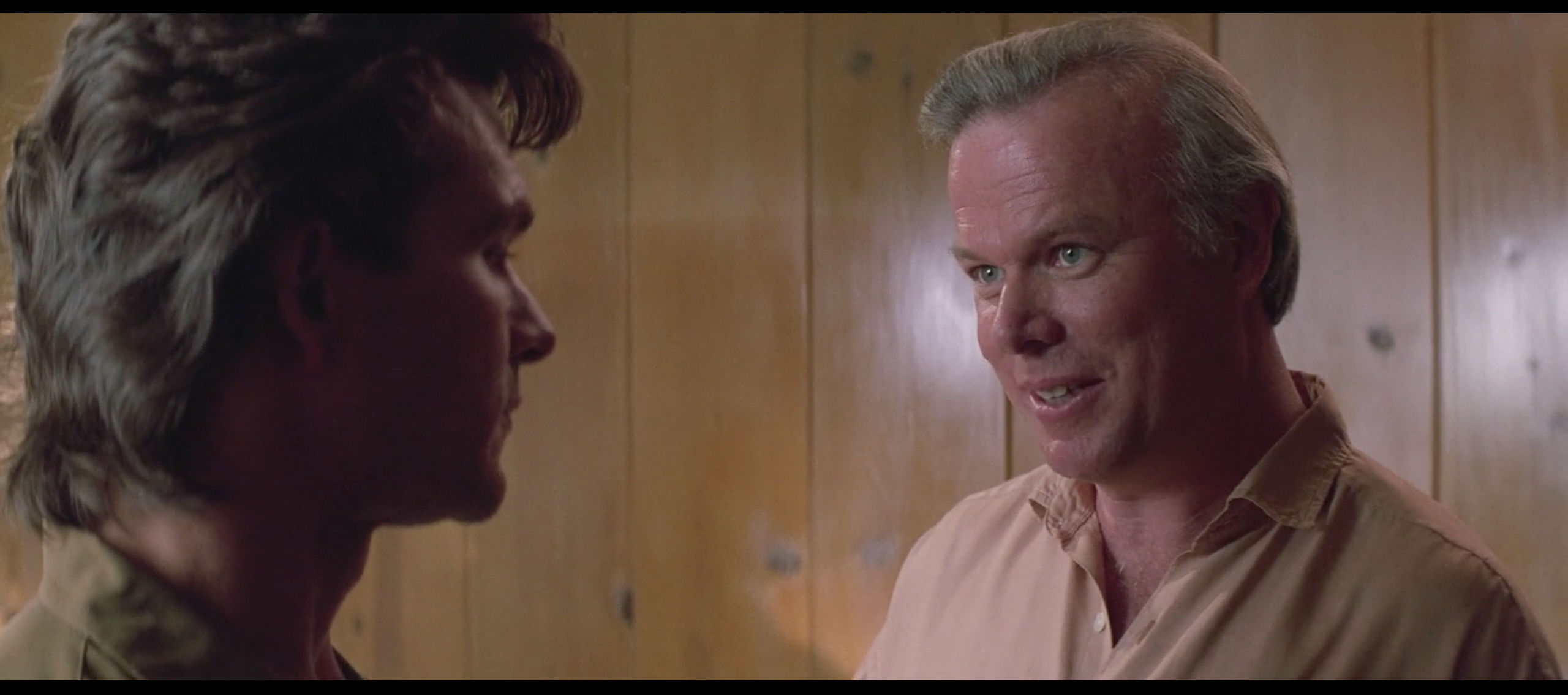
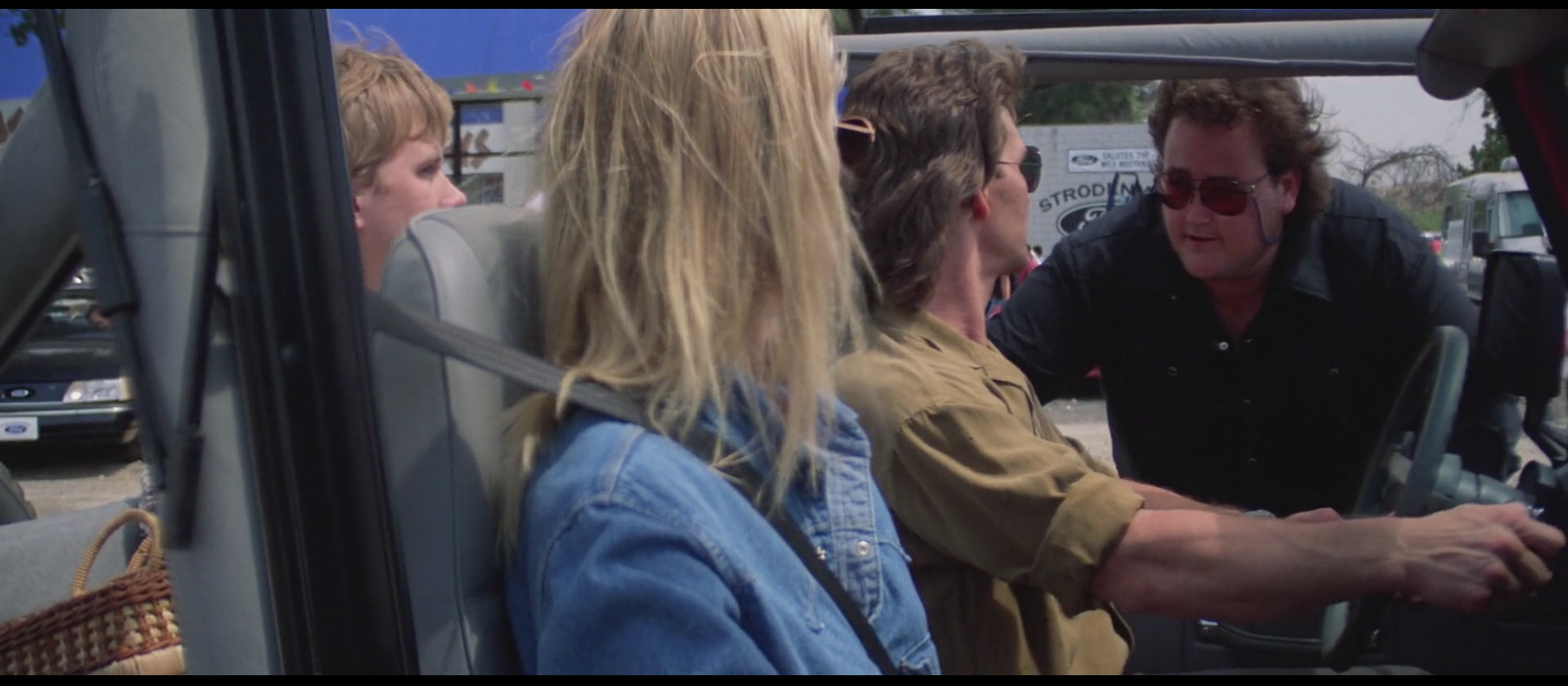
Call me old fashioned, but I believe that when the insane 7-Eleven franchisee who pays you to beat people up sends you to pick someone up and bring that person to him for a conversation, and that person gets up to go with you, you shouldn’t flinch like he just pulled out a gun. Yet that is certainly the reaction of Tinker and the Bleeder when, after Tinker says “Mr. Wesley wants to see you. Let’s go,” Dalton…gets up to go see Mr. Wesley.

This is the one time in the entire film when Tinker and O’Connor do a job that does not immediately go amiss, but their loser mindset has conditioned them to expect a beating no matter what. If they’d offered Dalton a handshake and he reached out to shake hands in response they’d burst out in flopsweat while pulling out a bowie knife. If they’d asked Dalton out on a date and he showed up to the date they’d shoot at him through the window of the diner.

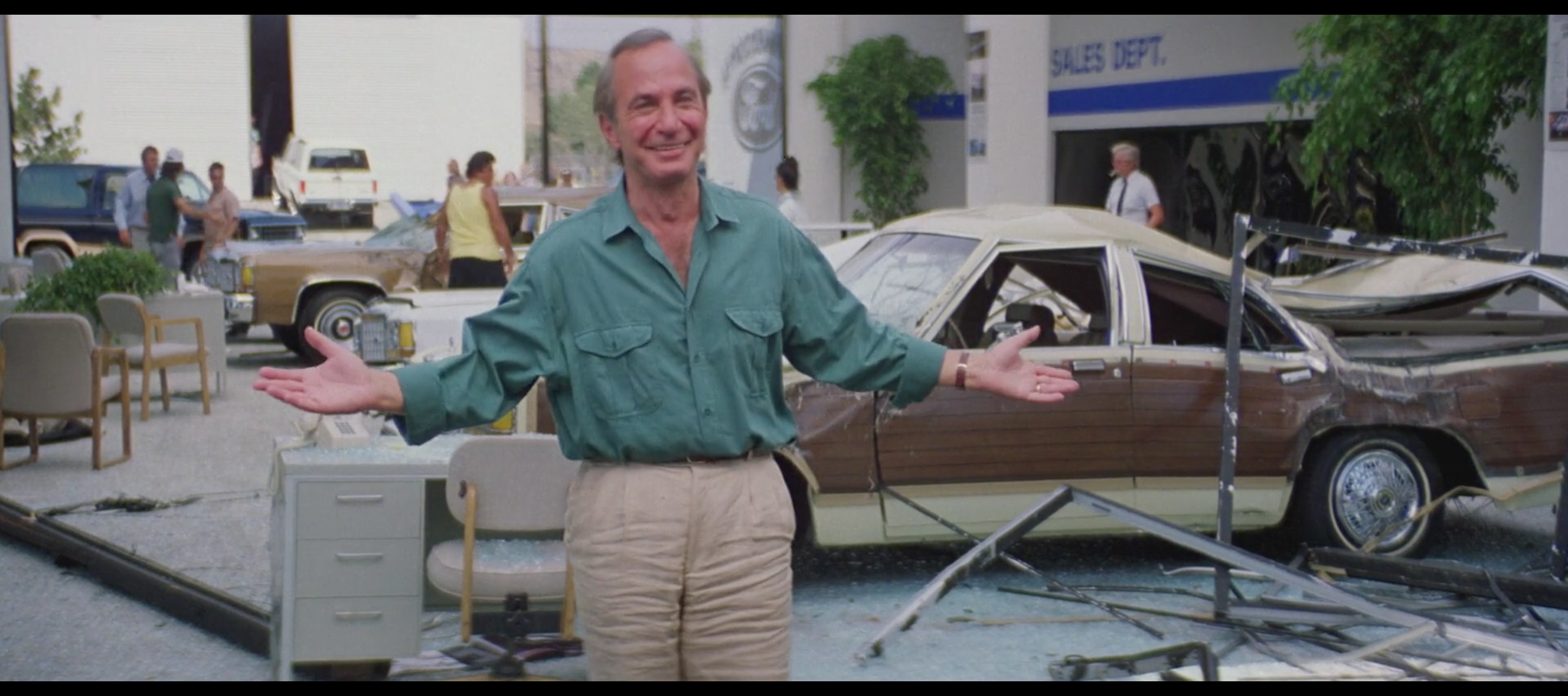
You could chalk this up to Dalton’s martial prowess, with some justification. I mean, you can see what happened to them the last time they tangled with the cooler the moment you look at them. But I think that when it comes right down to it, Brad Wesley does not have a good eye for talent. Does he not say so himself when, following the defeat of Tinker and O’Connor and Pat McGurn in their attempt to restore the sister-son to his job at the Double Deuce, he ruefully acknowledges he should have sent Jimmy, one of two or three goons in his employ who’s actually good at his job? (Karpis very effectively trashed Red Webster’s auto shop in his sole observable mission, and while Ketchum lost in humiliating fashion in the parking-lot brawl, he winds up running over a car dealership with a monster truck and murdering Sam Elliott.)

Small wonder the purpose of this go-see is to try and hire Dalton away from the Double Deuce. Wesley can read the bruises and gashes all over his employees just as well as Dalton can, though admittedly in O’Connor’s case he’s responsible for at least as much damage himself.

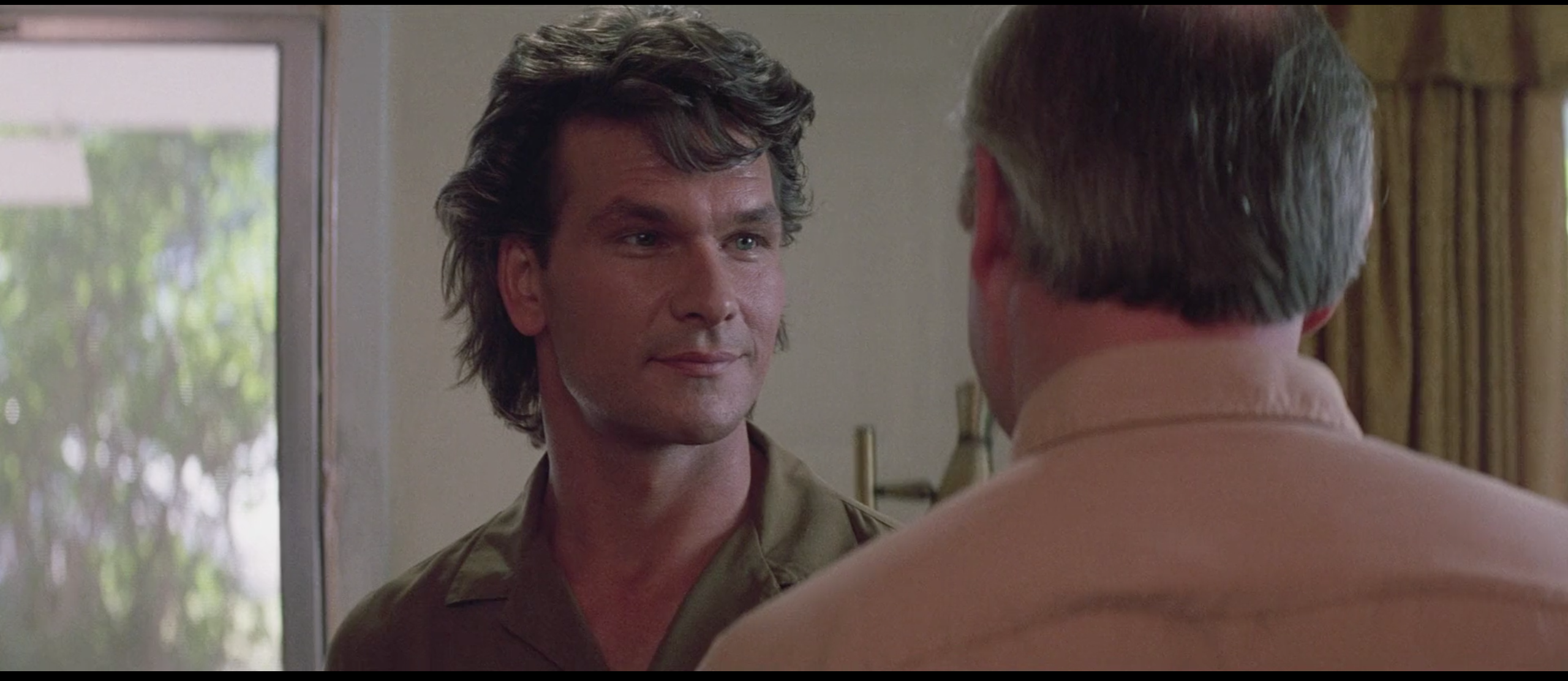
But that ship has sailed. By hiring Dalton as his first act in the creation of the new Double Deuce, and also by establishing a bridge to Wade Garrett via Dalton, Frank Tilghman once again proves himself the town’s true visionary. He is a man who builds power; Wesley, who parasitically feeds off the town just as he coasts on the hard work of the founders of JC Penney and Fotomat, can only buy it piecemeal. In the time it would take him to accrue enough Tinkers and O’Connors to take down the likes of Dalton, the fight would already be lost.

“Black Spot” thoughts, Season One, Episode Four: “No More Walks in the Woods”

I’m starting to think that I’d make an excellent addition to the Villefranche police department. Could I help them account for their town’s unusually high rate of violent crime? Free the people and the surrounding forest from the grip of the Steiner family? Figure out what the hell is up with the weird antler-man making all that infernal racket out there in the woods? No, no, and no. But I sure could solve murder cases a lot quicker than Major Weiss’s cuddly cops, I can tell you that much.

I reviewed episode four of Black Spot for Decider.

162. Kiss

Dalton and Elizabeth’s first kiss is as much a kiss of acceptance as of romance. Their awkward, oddly hostile first date concluded, they have returned to the parking lot of the Double Deuce so Dalton can pick up his car to drive it back to Emmett’s ranch. They find its tires flattened and its window impaled with an uprooted stop sign. Doc, quick-witted as ever, quips “Your fan club?”

“They are devoted,” Dalton chuckles.

“You live some kind of life, Dalton.” This is delivered as a summation of the night’s conversation. Whether he’s ever been bested, ever been put down, ever wondered why, ever thought about the morality of accepting money to beat people, ever considered whether or not his nice guy act works—in seeing that ruined car Elizabeth appears to realize that these questions are moot. Dalton is a man willing to martyr himself so the kinds of people who’ll fuck up some guy’s car just for doing his job don’t get to do it to other people more vulnerable, less capable of fighting back. She heeds the stop sign, in other words, and lays her doubts to rest, for now anyway.

Dalton doesn’t know this yet. He sees his ruined car and sees, well, a ruined car. Now that part of his life has been displayed to the Doc, along with his battered body. It isn’t a pretty picture. (Not even his perfect physique is necessarily that impressive to someone who’s stapled it shut.)

“Too ugly for you,” he says. In classic Road House fashion this is a statement, not a question. He’s offering an answer of his own.

Then comes the happy surprise, the eucatastrophe, from the mouth of the Doc: “I didn’t say that.”

The kiss that follows (after some awkward seatbelt fumbling) is soft, nearly chaste, one sustained contact with the lips and then a release. It’s a benediction. So much is said with this one kiss that when the time comes for Dalton and Elizabeth to make love, neither feels the need to kiss again until the act has been consummated. To the extent that a kiss is the physical expression of intimacy, what can be more intimate than “I understand”?

“Black Spot” thoughts, Season One, Episode Four: “No More Walks in the Woods”

It’s no fun at all to watch a mystery you’re halfway to solving by the time you actually see the crime. It’s especially no fun when the mystery in question is this well shot, well cast, and well acted. The cast, led by Suliane Brahim as Major Weiss and Laurent Capelluto as District Attorney Sirani, are warm and endearing—even Weiss and Siriani, the prickliest of the bunch. Meanwhile, director Thierry Poiraud is as proficient with landscapes as he is with closeups. Both are used to convey isolation and fear in a way that’s far more moving than the mystery material.

I reviewed the fourth episode of this frustrating series for Decider.

161. Terry Funk Trilogy

The same year he starred as Morgan, the man who tells Patrick Swayze he’d heard he has balls big enough to fit in a dump truck, in Road House, Terry Funk was a peripheral participant in what is widely considered to be the greatest series of wrestling matches of all time.

In 1989, “Nature Boy” Ric Flair and Ricky “The Dragon” Steamboat battled back and forth for the NWA World Heavyweight Championship in three major televised events: Chi-Town Rumble, Chicago, February 20; Clash of the Champions VI, New Orleans, April 2; and the inaugural Wrestlewar, Nashville, May 7. Each match ran over half an hour of continuous wrestling, significantly more so in the case of the Clash of the Champions fight, which was a best-2-out-of-3 falls encounter. Flair was a flamboyant bleached-blonde self-styled playboy and the greatest heel in wrestling; the contrast with Steamboat, with his raven hair, his presentation as a serious martial artist and working-class family man, and the purity of his babyface goodness, sold itself.

But the wrestling formed the real narrative and set a new standard. Naitch and the Dragon chopped, stretched, tossed, and slammed the holy hell out of each other in epic back-and-forths in which each individual body part being worked on felt like a pivotal supporting character. The trilogy charted Steamboat’s upset capture of the title from longtime champion Flair in Chicago, his successful defense of the belt in a controversial finish at the Superdome, and his almost anticlimactic defeat by Flair to regain the championship in Tennessee. (They fought each other at off-air “house shows” dozens, perhaps hundreds, of times; some of these fights, by their own account as well as those of contemporary observers, were even better than the big three canonical bouts.)

These matches are available on WWE’s proprietary streaming service, and may also be located with minimal google-fu on YouTube or one of its knockoffs. You can sit and watch all three matches back to back and feel as if you’re watching an intimate epic, The Return of the King crammed into the deliberation room from 12 Angry Men. If you want to be entertained and awed by the world’s most lucrative outsider artform, I can’t recommend “the trilogy” highly enough.

I bring this up not only because I just watched the trilogy for the first time, but because Terry Funk’s presence was such a treat for a Road House mark like myself. While absent for the Chi-Town Rumble fight, he was one of two ringside commentators during CotC, as well as a judge and…let’s say “audience participant” at Wrestlewar. I’ll tell you this, fight fans: Anyone who thinks Terry Funk isn’t one hell of an actor needs to listen to and watch those last two matches.

In the first, Funk is largely an offscreen presence, and an ebullient, gracious, and sweet-natured one at that. His distinctive, soft tenor rasp provides a sense of almost childlike delight at the herculean feats of Steamboat and Flair in the ring; if “I’m just happy to be here” had a voice, it would be Terry Funk’s during this match. Where is the man who called Dalton an asshole and a dead man?

He’s biding his time until the following month, that’s where he is. That is when, while Steamboat is still exiting the arena and his prior commentary colleague Jim Ross attempts to interview the triumphant Flair in the ring, Funk awkwardly inserts himself, repeatedly congratulating the new champ. It gets weirder and rings phonier as the segment goes on, and Flair, whose display of stamina and guts during the whole titanic series of matches had largely won over the crowd at a time when the line of demarcation between heel and face was much firmer than it is today, gets pricklier. When Funk says he’d like to be the first to challenge Flair for the title, it feels inevitable, and Flair’s pushback—that there’s an entire ranking system of top contenders, all of whom were around while Funk was off hobnobbing with Sylvester Stallone in Hollywood—feels justified.

Funk, as you might have guessed, disagrees, and goes absolutely apeshit.

He suckerpunches Flair, blasts him right out of the ring, and goes to town on him with the security railing, with a table, with a chair. In one spot that’s particularly frightening now, after a few intervening decades of broken necks and CTE, he piledrives Flair’s skull directly into the tabletop, toppling the whole edifice to the ground as they collapse onto it afterwards. Throughout, Funk is so furious he actually appears to start crying, tearing off his tuxedo jacket and screaming “You think you’re better than me???” at the defenseless champion while shrieking at the aghast and angry crowd.

Less than two weeks later, on May 19, Road House debuted. Along with the Clash and Wrestlewar matches, it comprises a Terry Funk trilogy of its own.

I feel I understand Morgan the bouncer a bit better now after watching Steamboat/Flair II and Steamboat/Flair III. After his genial turn as an announcer I can see how he might have sweet-talked Frank Tilghman into hiring him, and perhaps even initially persuaded his coworkers to like him. After his psychotic rampage, I can see why no one dared to fire him despite his manifest unfitness for the job, and why Brad Wesley kept him on the payroll to protect his nephew and his investments. After both, I see why Rowdy Herrington cast the person he cast for the role. You could say that Terry Funk brought a lot to the table.


“Black Spot” thoughts, Season One, Episode Three: “The Void”

Episode 3, “The Void,” illustrates a major potential problem with the show’s approach: If you’re going to have eight mysteries a season, you have to be good at writing mysteries.

I reviewed the third episode of Black Spot for Decider.

“Billions” thoughts, Season Four, Episode Twelve: “Extreme Sandbox”

But the grimmest thing about “Billions” in general, and about this episode in particular, is not the personal damage these characters do to the people they know and work with and even love. It’s the utterly impersonal destruction they visit on people, thousands of them, whom they don’t know at all.

Sure, Bobby broke Rebecca’s heart. But she can cry herself to sleep on a billion dollar bed as a result. The 50,000 employees of the store Axe annihilated along with his relationship? They’ll take what they can get.

“What they can get” is whatever Bobby, Sandy and the rest of these sociopaths, with their childlike nicknames and salt-of-the-earth affectations, deign to give them. To such men, the lives of the working class are worth less than a rounding error.

That they have working-class roots themselves appears only to harden their resolve not to care anymore. They got out; what’s everyone else’s excuse? The notion that their own cruelty might be what’s keeping their former peers down, and that their predecessors in the game helped create the very conditions they felt it necessary to escape, never occurs to them.

It’s not a lesson they have any incentive to learn. They’re earth movers. The world is their extreme sandbox, and they have the place to themselves.

Perhaps that’s why so many real-life billionaires are willing to appear on a show that makes them look like monsters. They can afford to.

I reviewed the season finale of Billions for the New York Times.