Carnival of souls

* The New York Comic Con panel schedule is up, mostly. (“Most” movie and TV panel information TK, annoyingly.) If you’re interested in seeing Sean T. Collins in his first comic convention panel ever, you’re welcome to come to the Twisted ToyFare Theatre panel on Saturday 2/7 at 5:30pm in room 1A17.

* U.S. District Judge Gary A. Feess will decide whether WB can release Watchmen on Inauguration Day, January 20th. Yes we can.

* Missed it: Quentin Tarantino’s World War II action flick Inglorious Basterds comes out on August 21st of this very year.

* Mickey Rourke and Sam Rockwell are going to be bad guys in Iron Man 2. Sounds good. Still no Mandarin, I guess.

* I get a kick out of how into year-end best-of list-making Dick Hyacinth gets. I’d guess I’ll have my own list ready in a couple weeks.

* Graeme McMillan on Dark Reign:

In a weird way, I can’t help but feel as if Dark Reign is really, really shittily timed. Dark Avengers, the core book for the branding, gets released the day after Obama gets sworn in as President of the United States, and it’s that cognitive dissonance that sticks in my mind. Marvel, for all their faults, are normally more in tune with the cultural zeitgeist than Dark Reign; it feels oddly… wrong, and somewhat DC-ish, to see them plunge into a depressing world of misuse of power at a time when we’re about to bring in a President who made the country believe in Hope and Change again. Maybe they know something we don’t… or maybe this is a sign that they’ve lost their touch.

This really is a problem. It’s not even a political issue, really–it’s that the guy has like an 80% approval rating, meaning that people in this country would have a hard time swallowing the idea that he’d put a mass murderer in charge of the American security apparatus. Seriously, Marvel Barack Obama just named the Green Goblin head of the equivalent of the CIA; Real World Barack Obama just named Leon Panetta. It’s really rather tone-deaf. This kind of thing doesn’t cut it, either.

* Kyle Baker makes the point I’ve tried to make, which is that there’s plenty of the stuff you’ll find in Frank Miller’s Spirit in Will Eisner’s Spirit, along with a lot of other things. Still haven’t seen the damn movie, though. (Via Heidi MacDonald.)

* Battle-damaged He-Man T-shirts? That’s pretty rad.

Photobucket

* Finally, who doesn’t?

Photobucket

Comics Time: Invincible Iron Man #8

Photobucket

Invincible Iron Man #8

Matt Fraction, writer

Salvador Larroca, artist

Marvel, December 2008

32 pages

$2.99

Here’s a good example of how event comics can hijack a perfectly good ongoing series. Matt Fraction’s take on Iron Man fortuitously jibes so neatly with Jon Favreau and Robert Downey Jr.’s that its opening arc read like an adaptation of a nonexistent movie sequel. It featured Iron Man/Tony Stark on top of the world but cognizant of his limitations and the danger of his war machines. Now, however, the events of Secret Invasion mandate that Stark be removed from his perch atop the S.H.I.E.L.D. defense/espionage agency, to be replaced by the publicly rehabilitated captain of industry and serial killer Norman “The Green Goblin” Osborn–instantly, Fraction must throw the character’s previous mien and milieu out the window. Indeed, everything that happens in the comic reminds us of the noxious ideas from other comics upon which they are contingent. For example, the presence of Osborn as Stark’s successor is due to a ludacris plot twist from Secret Invasion, best analogized by Newsarama commenter Old Doom as “…O J Simpson cuts off the head of Osama Bin Laden on tv, and they make him the head of the C I A.” Osborn and Stark tussle over the Superhero Registration Database, which owes its existence to a Civil War character turn in which Iron Man put his fellow heroes in black-site prisons, in service of implementing a superhero training and licensing program that would be perfectly reasonable if not for the event’s writers inability to grasp the basic contours of their central metaphor. Fraction does his best with what he’s been given, and his best is quite good. And as long as you can block out why everything that’s happening is happening, it’s fun to watch the superhero outthink the supervillain while surrounded by female characters who look like the movie stars they were photoreffed from. But it’s hard to stay invested in a character who works best as a confident, competent, self-aware genius when everything about his current situation is derived from him being a brutal, bumbling, oblivious asshole in other people’s comics.

When I say, when I say come on Ron, I say, I say come on Ron, I say come on Ron, now lemme, I say come on Ron, lemme hear ya tell em, lemme hear ya tell em how I, tell em how I, tell em how I, tell em how I, tell em how I, tell em how I feel.

I say, I say c’mon lemme hear you tell em, tell em how I feel. Yeah. Yeah. Yeah. Huh.

Ron Asheton, RIP.

Carnival of souls

* My latest piece on Marvel’s adaptation of Stephen King’s The Stand is up at Marvel.com–this one’s an interview with writer Robert Aguirre-Sacasa focusing on a look back at the project so far and where it’s headed next.

* There’s lots of good stuff in Tom Spurgeon’s interview with Matt Fraction–the final installment in his Holiday Interview series–but this is probably the juiciest bit:

SPURGEON: One of the more interesting about the art in your Iron Man is Salvador Larocca’s visual references to celebrities–in fact, you’ve worked with a number of strong stylists. Is there any way that you as a writer will respond to or make choices based on stylistic strategies undertaken by an artist with whom you’re working?

FRACTION: I can’t stand that stuff, personally — yanks me out of the story immediately. Not photo referencing, that’s not what bugs me, but using celebrities just… it’s as intrusive as someone standing over your shoulder reading the word balloons with funny voices. Bums me out.

Wow, on the record and everything. But it really does interfere with my enjoyment of the series, which is otherwise quite good. Hmm, Fraction must also love working with Greg Land on Uncanny X-Men, huh?

* Speaking of Spurge, here he reviews early Daredevil and notes how the creators’ uncertainty of what the point of the book was supposed to be gave them a lot of freedom. The funny thing about Daredevil as a character is that most of the great work done with the character, and there’s been a disproportionate amount of that, has been tonally consistent from one creative team to another, so it’s a momentary surprise to recall that it wasn’t always noir and ninjas.

* Don’t know why I’m just getting to this now, but the original Blog@Newsarama crew is back and blogging at Comic Book Resources under the moniker Robot 6. Welcome back!

* And on that note, here’s Robot 6’s Chris Mautner running down Fantagraphics’s Spring/Summer 2009 publishing plans.

* WoW Among the Ruins: Bruce Baugh takes a look at a less-traveled area of World of Warcraft, one that had once been the site of a lot of action, and notes its post-catastrophic ambiance.

* Jog reviews the first issue of Ed Brubaker and Sean Phillips’s supervillain noir Incognito, echoing my sentiments about the comic in two particulars: 1) It feels a bit shopworn, at least at the moment; 2) It’s like Brubaker wanted to see what Wanted would be like if it were written by a good writer.

* Finally, a welcome Real Life Torture Porn update:

We cannot and we must not use torture under any circumstances. We are better than that.

CIA Director-designate Leon Panetta. (Via Ezra Klein.)

Welcome back!

Greetings to all whose Internet usage declined somewhat during the holiday break. Here are some reviews I posted during that time that you may have missed.

* Breakdowns: Portrait of the Artist as a Young %@&*! by Art Spiegelman

* The Best of the Spirit by Will Eisner

* ACME Novelty Library #19 by Chris Ware

* Twilight directed by Catherine Hardwicke

* Let the Right One In directed by Tomas Alfredson

* ‘Salem’s Lot by Stephen King

* a discussion of event comics crticism centered on Grant Morrison’s Final Crisis and Batman: R.I.P.–check out the comment thread for thoughts from Tom Spurgeon, Tucker Stone, Tim O’Neil, Matthew Perpetua, Marc-Oliver Frisch, Bruce Baugh, Jon Hastings, Kiel Phegley, Ben Morse, Shaggy Erwin, Sean B. and more, I think

The posting of that Spirit review marked the successful completion of one full year of Comics Time comic book reviews going up on this blog every Monday, Wednesday, and Friday, without fail. I’m proud to have done what I set out to do a year ago. I had a lot of fun reading that many comics, and perhaps to my surprise I had a lot of fun writing about that many comics, too. I’m certainly a better comics writer than I was when I started, and I think the blog is better overall. For this I’d like to thank all my readers, particularly those who emailed or posted comments. I’d also like to thank all the publishers who generously donated review copies.

In the New Year I don’t think I’ll be reviewing comics with this same level of regularity. Prose books beckon, as do sizable runs of comics that are hard to fit into your schedule when you’ve got to have three reviews up a week. That said, you’ll see some backlog reviews popping up in the regular slots for a little while, and chances are good that if I read a substantial comic, it’s gonna get reviewed here on the blog. (The occasional insubstantial comic will be thrown in for good measure.) I’m going to work my way through the remaining 2008 notables in time to put up a semi-timely Best of 2008 list of some kind as well. But for now, a leisurely re-read of Ed Brubaker’s Captain America run beckons…

Comics Time: The Immortal Iron Fist #21

Photobucket

The Immortal Iron Fist #21

Duane Sweirczynski, writer

Timothy Green, artist

Marvel, December 2008

32 pages

$2.99

The Immortal Iron Fist as co-written by Ed Brubaker and Matt Fraction and drawn by an ace team of artists led by David Aja was the most acclaimed Marvel comic to come along in quite a while. It took a largely forgotten character, reimagined and expanded his mythos, carved itself a storytelling space far outside Marvel’s current military-industrial superhero idiom, incorporated video game and manga influences, looked lovely, and was both thrilling and funny, which is hard to pull off in superhero comics. (Usually they’re one or the other.)

But Brubaker, Fraction, and Aja left the title rather quickly, and pulp writer Duane Swierirczynski took over. I liked his opening storyline well enough. The antagonist, a mystical Iron Fist terminator of sorts, fit right into the kinds of things Frubaker were doing with villains and the Iron Fist legacy, and the tone was right as well. I might have tried to do more with all the other Immortal Weapons that had just been introduced–witness how well Brubaker juggles supporting super-characters in Captain America and Daredevil, for example–but hey, it’s his first shot. The much bigger problem was with the art, provided by Travel Foreman. With a wiry line that is often drowned out by thick, murky blacks, it bobbled the two balls that absolutely need to be kept in the air for this iteration of this character to work: character design and action choreography.

This stand-alone issue is more like it. Artist Timothy Green shares enough with Foreman that at first I thought that the latter artist had simply varied his style or had a different inker/colorist support team working with him. But Green’s work is both looser (meaning less cramped) and tighter (meaning more self-assured). Yes, the backgrounds often disappear, but that just gives more breathing room for his Seth Fisheresque design flourishes, and for Edward Bola’s pretty pastel colors. With the visual handicap removed, you can now really see that Swierczynski gets this character and this concept. A story that takes place a thousand years into the future, pitting a cyborg Fat Cobra against a nine-year-old Iron Fist who uses his chi to form a giant robot, and features as a key plot point a kung-fu punch that takes over twenty years to deliver? It’s the exact same blend of majesty, absurdity, and creativity that made the earlier IIF so much fun. If the rest of Swierczynski’s run looks like this, sign me up.

Carnival of souls

* Hooray! My old friend Josiah Leighton–the guy who kept me abreast of comics during my collegiate hiatus from ’em–is back with a bunch of posts about how different artists do what they do. Here he is on Anders Nilsen, Aron Wiesenfeld, and panel borders. Here he is on Wally Wood, Daredevil, and character design, with a bonus origin story for his own life as a comics reader that I think is my favorite such tale I’ve ever heard. And here he is on Erik Larsen and the joys of Savage Dragon.

* Jog presents his Top 20 Comics of 2008. I don’t wanna spoil it for you, but this bit from his write-up of Comic #1 made me laugh:

And I fucking liked the collage! Yeah, that’s goddamned right! In fact, I’m calling it now – 2009 is all collage! Fantagraphics? Collage! PictureBox? Collage! First Second? Children’s publishing collage! Kramers Ergot 8 is a 60-foot collage propped up against the Marriott Bethesda North Hotel & Conference Center! Ultimatum #5 is the Ultimate Collage! The Battle for the Cowl is won by writer/artist Tony Daniel and the fists of collage, via collage! Where’s my paste? My notebook? My pillow?? Where’s the Publish Post button?! I am personally killing 2008 with my two hands, right this second.

* Marc-Oliver Frisch picks the nits out of Marvel and DC’s March solicits.

* Top Shelf co-honcho Brett Warnock takes a gander at Twin Peaks.

* Anders Nilsen draws the devil, and other sketchbook delights.

Photobucket

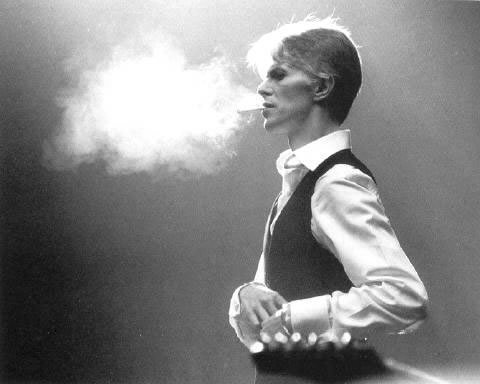
* Finally, via Sean B.’s sexy new photo tumblog A Stranger’s Candy, David Bowie and Iggy Pop. Toothy!

Photobucket

Carnival of souls

* Happy New Year, everyone. The Missus and I have kicked off 2009 by being as horribly sick as we’ve ever been. Interestingly, this was also how we kicked off 2000. I don’t know what it is about that damn ball dropping that it always has to land squarely on our immune systems.

* Before my life became a David Cronenberg movie, I wrote some things about event comics that kicked off a lengthy discussion in the comment thread by a galaxy of blogospheric stars, including Tucker Stone, Tim O’Neil, Tom Spurgeon, Marc-Oliver Frisch, Sean B., Matthew Perpetua, Ben Morse, Shaggy Erwin, Jon Hastings, Kiel Phegley, and Bruce Baugh. It was still going as of this morning, so pop in and see what you think. O’Neil and Dick Hyacinth have related thoughts at their own blogs.

* If you’re like me and you think Abhay Khosla’s be-boppin’ and scattin’ impedes rather than enhances his criticism, you’ll really appreciate Tom Spurgeon’s holiday interview with him–once you get past the opening answer, the schtick largely evaporates and leaves behind insightful commentary about a wide variety of comics. I particularly liked what he said about whether superhero fans “deserve” being taken advantage of. And even when he’s saying things I disagree with, like praising Civil War for being a bona fide “universe breaker” event comic–which is true, but it broke it in bad ways–he’s still on to something.

* Speaking of Tom (and over the holidays, when aren’t we? dude keeps the comics blogosphere alive singlehandedly between Christmas and New Year’s), here’s some shelf porn strait outta the Spurgecave.

Photobucket

* The gross thing about both Fox’s attempted derailment of Warner Bros.’ Watchmen movie and Tribune’s apparent scuttling of Drawn & Quarterly’s Walt & Skeezix collection of old Gasoline Alley strips (the original post is MIA) is how transparently little either has to do with what benefits the work, the audience, or the original creators.

* Jon Hastings, action-movie philosopher, tackles The Spirit.

* Tentacle update part one: More sessy drawings of girls, hair, and suction cups from Becky Cloonan.

Photobucket

* Tentacle update part two: Monster Brains presents a gallery of preserved cephalopods.

Photobucket

* Finally, get it before Lionsgate yanks it: the trailer for Crank 2: High Voltage. This is a real movie.

Comics Time: ACME Novelty Library #19

Photobucket

ACME Novelty Library #19

Chris Ware, writer/artist

The ACME Novelty Library/Drawn & Quarterly, October 2008

80 pages, hardcover

$15.95

Buy it from D&Q

Buy it from Amazon.com

My ability to track who visits this blog for what reasons is beyond rudimentary, but I know that there are horror fans who aren’t interested in the comics material, and comics fans who aren’t interested in the horror material, and general genre fiction fans who aren’t particularly interested in either, and so on. I’d like you all to stay tuned because this book concerns all of you. But first let me throw the superhero fans a bone by talking about Nightwing for a second.

A while ago there was a storyline in one of the Bat-books where the ex-Robin named Jason Todd (he had been dead, but he got better) spent a year pretending to be Nightwing, the current crimefighting alter ego of fellow ex-Robin Dick Grayson, and no one knew the difference. In real life this would be totally ridiculous, because a domino mask isn’t enough to prevent you from telling the difference between two different people. But in comics, you can’t hear people’s voices, and character likenesses from artist to artist, and sometimes even panel to panel, are so inconsistent that any two characters with the same basic skin tone and hair color might as well be doppelgangers. In other words, this is a story could only be done in comics is because it takes advantage of comics’ unique weaknesses.

The reason Chris Ware’s stories can only be done in comics, the reason Chris Ware is the best cartoonist in the world, is because he takes advantage of comics’ unique strengths. His is the most naturally comics way of seeing the world I’ve ever come across. For example: With a few meticulous lines he reduces the descent of a rocket through the Martian atmosphere to a silver circle, a red dot, and an expanding cloud. Through tricks of scale and perspective he then uses that same basic visual vocabulary to depict a ball in mid-flight, a button on an instrument panel, a door, a window, a helmet, a planet, thumbtacks, faucet handles, a tiny illuminated patch in a sea of darkness, a shining flashlight blown up to gargantuan proportions, the entire universe shrunk down and crushed between the silhouetted of two colossal fingers. And far from empty formalism, it’s done in service of a vicious, thrilling science fiction*/horror story about a sociopath–in other words, someone innately incapable of properly ascertaining scale and perspective in his own emotional life and that of those whom he hurts. (Perhaps the ancestor of this story’s omnipresent circle imagery is HAL 9000, then? Certainly the closet comparison I can think of to ACME #19’s horror images–world-class stuff involving freezing, corpses, dismemberment, and isolation–is the cabin-fever coldness of Stanley Kubrick’s 2001 and The Shining, and that’s even before we get to more specific points of similarity.)

In essence, these circular pictograms–and now that I think about it, Ware’s unique, complex, trademark panel layout and sequencing, the very stuff of his comics–have no inherent meaning; we determine their meaning through context and assign it to them. But that means that if we falter or get it wrong or simply say “fuck it,” it’s all quite literally meaningless, as devoid of worth and value as the bogus maps and video communications are to the story’s Martian colonists–or as human life is to murderers, or as existence itself is to those who’ve given up trying to make it mean something.

But there’s more. Ware then applies the same shifting-scale trick he’s done with the visuals to the entire story itself. He pulls back to reveal the story behind the story, that of its in-fiction author. Now we learn the source of this story’s seething rage and deadpan but visceral horror, providing it with context (loved the reveal of why the sci-fi story’s description of its female lead didn’t match her visual depiction) even as it continues to dismantle the semantic underpinnings of the very notion of context. In much the same way that the sci-fi story’s protagonist becomes morally adrift following a dual crisis in confidence over his mission and his fellow missionaries, his author is pushed to the emotional brink by his futile attempts to understand and possess his mercurial “romantic” interest, by his own inability to place his relationship’s true emotional content in the proper scale and perspective. Throughout this meta-narrative he literalizes this failing of vision, both physically (our hero’s glasses are shattered, leaving him looking at the world in part or in full as an assemblage of Benday dots–those circles again) and psychologically (a flashback sequence in which our hero’s life is depicted as leading inexorably toward this ill-fated series of sexual liasons, here viewed as the connection of soul mates).

The business we see in the author’s life is small beer compared to the life and death struggles and cosmic forces at play in that of his fictional protagonist, but that’s exactly what makes it so devastating. If all it takes to untether us so completely from the notion that our lives have and tend toward meaning is a shitty relationship with an emotionally unavailable and damaged person, what hope do any of us have? By the time you reach the alarmingly proficient prose sci-fi pastiche that ends the collection (it’s about time travel’s dissolution of the meaning of time and therefore life), or the uncharacteristically blunt and brutal political swipe on the back cover (it’s about how the causes, goals, means, ends, and legal framework of torture are completely nonsensical), you’ve already gotten the point. Gotten it, in fact, the first time you failed to tell the difference between the surface of a world and the tip of a finger.

Comics Time: The Best of the Spirit

Photobucket

The Best of the Spirit

Will Eisner, writer/artist

DC Comics, 2005

192 pages

$14.95

Buy it from Amazon.com

Will Eisner’s The Spirit is a virtual symphony of dudes getting socked in the head. I think that’s what I ultimately took away from my read of this best-of collection of 22 Spirit 7-pagers, assembled by persons unknown using criteria unknown. No matter how far Eisner stretches the parameters of his strip; no matter if it’s the masked vigilante/bounty hunter’s origin story, or a standalone tale about an ill-fated criminal or plastic toy tommy gun in which the Spirit happens to show up on the final spread; no matter if it’s a surprisingly psychologically astute portrait of a soldier who loses it after coming home from the war or society girl whose depression leads her to take up with criminals and then commit suicide-by-shootout, or a whacked-out EC riff about a killer granny with images and dialogue as crazy as anything Frank Miller could possibly put on screen–no matter what, somebody, somewhere, somehow, is gonna get clocked on the noggin.

That all but universal action beat, and the presence of the nattily attired Spirit himself, give you a throughline as you watch Eisner and his studio’s style evolve from the barely recognizable 1940 origin story to the trademark caricature, pantomime, and big-city atmospherics of the 1950 capstone strips. By the end, Eisner’s Gene Kelly-esque action choreography is at the height of its unique, humorous appeal; it tickles me to observe how naturally he’d apply the same play-to-the-balcony techniques he used for slobberknockers and machine-gun massacres to the body language of his late-period melodramas a couple-three decades hence.

I came into this collection expecting one dominant Spirit storytelling mode to emerge, one style to prove self-evidently definitive. But based on this sampling, the Spirit really could be all things to all funnybook fans: harsh or poignant, stark or silly, realistic or far out, surprisingly rich or divertingly slight, Humphrey Bogart or Tex Avery, a Hero or a Maguffin. Eisner’s experiments with form only reinforce the natural diversity of his subject matter. Everyone’s entitled to their Spirit. Me, I’ll go with the one that entails the most people getting cold-cocked.

This is my final comics review for 2008. Thank you for spending Comics Time with me this year! -Sean

I Got Dem Ol’ Konfuzin’ Event-Komik Blues Again, Mama

In thinking about the stuff Tucker Stone and I have been discussing in the comment thread here and the things Tim O’Neil is saying here, I laid out a few things in my own head in terms of where I stand on Batman: R.I.P. and Final Crisis. I thought writing them down would help clarify where I’m coming from on all this.

1) There’s “Batman: R.I.P.” the multi-title crossover Batman event and Batman: R.I.P. the Grant Morrison/Tony Daniel comic. Similarly, there’s “Final Crisis” the multi-miniseries DC Universe event and Final Crisis the Grant Morrison et al comic.

2) The sense that I get is that Morrison was barely involved with the planning of the wider R.I.P. event, if he was involved at all; it was a creation of editorial and the direction to the other titles involved was just “there’s some bad guys called the Black Glove, and eventually Batman disappears–go to town.” On the flipside, Morrison and his friend and sounding board Geoff Johns are writing virtually all of the Final Crisis event, so their involvement is obviously more extensive.

3) I think that the R.I.P. event was badly mismanaged as an event, with tie-ins that actively contradict the main storyline and each other. I’m not as grumpy about the way the main storyline apparently continues through two post-R.I.P. Batman issues and into the main Final Crisis comic, because I already planned to read all of that regardless and have been enjoying it thus far. However, I again think that this was a case of event mismanagement–it should have been made clear to readers far in advance how the story would proceed.

4) I don’t think the Final Crisis event has been as much of a mess, at least in terms of getting all the story ducks in a row. Some of the tie-in minis seem to have little to do with the central New Gods storyline, but they haven’t contradicted it, either. Obviously there are scheduling problems, but the main problems with this event stem less from stuff that’s going on within the Final Crisis umbrella and more with the stuff that’s going on outside it. Right now, its relationship to the rest of the line is impossible to ascertain. And there are also a lot of questions about the planned follow-through–all this “Faces of Evil”/”Origins and Omens” business afterwards. It probably shouldn’t take a multi-month, multi-event program to explain the status quo of your shared universe, not just after your big blockbuster but at any time.

5) That stuff being said, ultimately I couldn’t care less about any of that, either as a critic or as a consumer. That’s because, as both a critic and a consumer, I’m under no obligation to follow DC’s preferred method of following these stories. I’m quite happy to limit my involvement to those titles I choose to follow and evaluate their stories on their own terms. (One of the nice things about the tie-ins being so peripheral is that it makes such a decision even easier than it usually is, which for me is pretty dang easy.)

6) I’ve really, really been enjoying the Batman R.I.P. and Final Crisis comics proper. To the extent that they are confusing, I think those are deliberate storytelling choices, and I’ve gotten a lot out of them.

7) On a fundamental level I have no problem with event comics being demanding, because I simply do not believe event comics, or any kind of popular art, must be simplistic to be viewed as successful.

[ 7.5) For what it’s worth, I think you put yourself in an awkward position as a critic when your criticism is basically a thought experiment where you purport to speak for the needs of an audience you acknowledge to be slow, or at least slower than yourself, and interested in uninteresting things.]

8) But that doesn’t mean I don’t recognize that Batman R.I.P. event has been a head-scratching mess, the Final Crisis event less so but still pretty perplexing. They really should have been easier to follow.

9) The point is that there’s an important distinction to be made between the confusion that stems from Morrison’s scripting of the stories proper, which for me is fair game as a critic, and the confusion that stems from DC corporate/editorial/marketing’s handling of the events surrounding those stories, which seems to me like a separate and unrelated concern.

10) Even when you get right down to brass tacks and talk strictly about the stories, my attitude is to err in favor of the stories I enjoy the most. If Final Crisis contradicts Countdown to Final Crisis, if the Joker in Morrison’s Batman: R.I.P. is different than the Joker in Paul Dini’s Batman: R.I.P. tie-in, I’m going to ignore the latter, weaker story information in favor of the former, stronger story information.

11) Moreover, this is made possible because nothing in Batman: R.I.P. or Final Crisis proper forces the incorporation or acknowledgement of those weaker stories. It’s a different matter when the basic character or plot points of a story stem directly from some external source–that’s how most of Marvel now operates vis a vis their events, so that unless a creative team on an individual series comes up with a particularly clever write-around for the circumstances dictated by the event, you really do need to incorporate other comics into your reading of the comic at hand.

12) The point I really want to make is that we have far more autonomy as readers than most of the event-comics commentary (a term I prefer to criticism in this case given how much more than writing and art is being discussed) I’m seeing lately would let on.

Carnival of souls

* Tom Spurgeon keeps on posting terrific interviews with interesting comics figures. My favorite at the moment is with Kurt Busiek, in part because Tom used a question of mine about my favorite moment in one of my favorite Superman stories, Up, Up and Away!

* I found Tom’s interview with PictureBox’s Dan Nadel really informative in terms of how Nadel sees his company and his mission–not to mention the breaking news that PBI is closing its brick-and-mortar store.

* Tom got Eddie Campbell to talk a bit more about his belief that the big New York publishing houses will push comics/graphic novels (I’m not sure which, exactly–terminology means a lot more to Campbell than it does to me!) toward children’s literature. I don’t buy that anymore than I buy the notion that they’ll push it all toward boring memoirs. I just don’t think they have that kind of power or that level of investment.

* And if you’ve got two hours to kill, you’re encouraged to dig in to Tom’s astonishingly long interview with Tucker Stone about the year in mainstream comics. It’s a treat to hear Stone’s thoughts on the genre in snark-free mode. However, I do disagree with this assertion:

when you’re working on the biggest super-hero character of the year, and your job is to do that characters big bestseller of the year, then that isn’t the time for you to put out something that any Batman fan, even the dumbest one, calls “confusing.”

I don’t know what it is about superheroes that occasionally draws this sort of thing out of critics, but you rarely see people demand that the big summer movie or the big autumn hip-hop record be more simplistic lest some people get turned off. Keep in mind that even though Tucker’s not a fan of Batman: R.I.P. on a qualitative basis, that’s not what he’s talking about–this criticism would hold even if it were a great comic, as long as it was still confusing to some readers. That seems proscriptive and self-defeating to me.

* The Spirit came out and tanked. Questions of its quality aside, I was always perplexed by the decision to make it a Christmas movie. For what it’s worth, no one I know who’s seen it hated it, but I know very few people who saw it, which is part of the problem. (I’m at the in-laws’ and unlikely to see it till next week at the earliest.) Harry Knowles and Heidi MacDonald both point to problems with the editing as among the film’s more insurmountable, which again is different from the fanboy buzz about the film, which seems more related to a desire to make Frank Miller suffer personally.

* French director Pascal Laugier talks to AICN about his film Martyrs–part of a trinity of well-regarded, hardcore French horror films of late, along with Inside and Frontier(s)–and his upcoming Hellraiser remake. It’s interesting to hear him talk about how easygoing his working relationship with Bob Weinstein has been, that’s for sure. I also was struck by this passage about “cynical,” “self-referential” horror directors:

“I love the same films that you do, guys. We all know where it comes from, isn’t it fun?” Some people find it fun, [but] I don’t. I know it makes me sound like an asshole – very arrogant, very pretentious – but who cares? I don’t. I pay… I go to see movies to be amazed. I go to see movies to believe in what I see. So that’s why I love for example M. Night Shyamalan. He’s brave enough to take some risks to make the audience believe something amazing. You know? Sometimes he succeeds, sometimes he miss the points but I will always feel more respect for him than for A LOT of cynical directors.

* Jog takes the last vestiges of my post-“finding out the guy who wrote Benjamin Button also wrote Forrest Gump” interest in seeing the Brad Pitt/Cate Blanchett/David Fincher film out back and shoots them repeatedly at point-blank range. You’ve gotta love the American Beauty-style sexism about who’s allowed to follow their bliss.

* Matthew Perpetua talks a bit about Beck’s funk masterpiece, Midnite Vultures.

* The Vault of Horror’s B-Sol reviews Let the Right One In, referring to the central human/vampire relationship as “a pure and beautiful friendship.” I think we mistake codependence for pure and beautiful friendships at our own peril.

* Shaggy presents his favorite films of 2008, with an emphasis on “edge of your seat” filmmaking.

* Ben Morse reviews The Wrestler from the perspective of a life-long wrestling fan trying to sell the flick to non-fan audiences.

* Chris Ware is only 41 years old. Look on his works, ye mighty, and despair.

Comics Time: Breakdowns: Portrait of the Artist as a Young %@&*!

Photobucket

Breakdowns: Portrait of the Artist as a Young %@&*!

Art Spiegelman, writer/artist

Pantheon, 2008

72 pages, hardcover

$27.50

Buy it from Amazon.com

I wonder if Art Spiegelman really believed it when he wrote this:

Although Breakdowns figures prominently in my life and my development as an artist, I was still startled when Pantheon expressed interest in re-issuing the book. I couldn’t help but worry that, once the scarcity factor was removed, Pantheon would be lucky to sell as many copies as the 1978 edition.

The print run of that edition: approx. 2,500 usable copies.

I wonder if he believes this, too:

Arteests get to be shamans; us cartoonists are mere “communicators.” As Chris Ware succinctly put it years later: “When you don’t understand a painting, you assume you’re stupid. When you don’t understand a comic strip, you assume the cartoonist is stupid.”

I wonder because that same Art Spiegleman is the guy who wrote this:

[The young Art Spiegelman] was on fire, alienated and ignored, but arrogantly certain that his book would be a central artifact in the history of Modernism. Disinterest on the part of most readers and other cartoonists only convinced him he was onto something new in the world. In an underground comix scene that prided itself on breaking taboos, he was breaking the one taboo left standing: he dared to call himself an artist and call his medium an art form.

While the hard-won pages the self-important squirt gathered in Breakdowns were among the first maps that led to comics being welcomed into today’s bookstores, libraries, museums and universities, he wasn’t making a conscious bid for cultural respectability.

And this:

The discoveries I made while working on the strips in that book have somehow been absorbed by those interested in stretching the boundaries of comics over the past thirty years, even if only second or third hand.

Well, if you do say so yourself, Mr. Spiegelman!The thing is, it’s the Spiegelman of the latter two quotes who has history on his side. It’s entirely possible he really does possess a Ware-like self-esteem problem, but whereas Mr. Acme Novelty Library’s vicious self-deprecation is seemingly seamless and never-ending, Spiegelman alternates his “aw shucks who the hell’s gonna buy the best-of collection from the little old Pulitzer Prize winner” routine with bold–and largely substantiatable–claims about his work’s iconoclasm and import, and with impassioned defenses of its merit and his high opinion thereof.

It’s this collision of opposite levels of confidence even more so than Spiegelman’s oft-discussed High Art/Low Art dichotomy that characterizes this new edition of Breakdowns. Why else surround a re-release of his long out-of-print collection of experimental comics–really ground zero for “alternative comics” as we know them today–with a sizable autobiographical comics prologue (the “Portrait of the Artist as a Young %@&*!” of the title) and a lengthy prose afterword detailing his entire comics career through Breakdowns‘ initial publication? It’s as though today’s post-Maus, post-Pulitzer, post-New Yorker, post-9/11 Spiegelman can see that the early, seminal works of an artist of his stature deserve a high-end forum for public consumption, yet can’t quite bring himself to provide it without appending at least as many pages again of “wait–I can explain!”

I’m all for that explanation, by the way. Spiegelman’s a cartoonist whose biography is a familiar one–the seismic influence of MAD, emerging in the work of him and his underground comix contemporaries and passed on to another generation years later through his work on Wacky Packages and Garbage Pail Kids; his involvement with the undergrounds, his growing dissatisfaction with their emphasis on the shocking and scatalogical, and his efforts to carve out a space for comics as art/literature; and of course his parents’ suffering in the Holocaust, his mother’s suicide, and his at times crippling survivor’s guilt. But it’s enlightening to hear it all straight from the horse’s mouth, whether through the somewhat discursive comic memoir that kicks the book off or the linear who what when where why and hows of the prose afterword. His father’s frugality (and ignorance of prevailing beliefs regarding comics and juvenile delinquency) ends up leaving little Art in the possession of stacks of bargain-bought EC Comics instead of the more staid funnybooks he’d previously been exposed to. The rise of his friend R. Crumb convinces young Spiegelman that comics are in good enough hands for him to tune in, turn on, and drop out for a couple of years, culminating in a trip to the psychiatric hospital. Seeing his housemate Justin Green work on Binky Brown inspires him to ditch the fantastical outrages of the undergrounds for the based-on-a-true-story horrors of his first “Maus” strip. His girlfriend’s matter-of-fact self-defense during an argument–“I didn’t do anything!”–leads Spiegelman to realize he’s actually angry at his late mother, and thus produce his breakthrough comic, “Prisoner on the Hell Planet.” As a person whose own involvement with comics is owed just as much to a series of right-place-right-time coincidences and connections, it was fascinatingly familiar even when I was learning the details for the first time.

But what of the comics themselves? The original Breakdowns material is yet another illustration of Spiegelman’s warring tendencies. In some, he aims to make “art comics” by aping High Art styles–“Hell Planet”‘s Expressionism, “Don’t Get Around Much Anymore”‘s Cubism-cum-Art Deco, “Ace Hole: Midget Detective”‘s Picasso femme fatale. (Can you beat Pablo’s portraiture as a visual metaphor for “two-faced”?) In others, Modernist painting schools don’t enter into it, as he unapologetically guns for comics themselves, smashing them apart to see what makes them tick and rearranging them as he sees fit–“Nervous Rex: The Malpractice Suite”‘s non sequitur visual and dialogue sampling and splicing; “Day at the Circuit”‘s choose-your-own-moebius-strip panel layout; “Little Signs of Passion”‘s self-reflexive use of color, deferred-gratification sequencing, and distracting snippets of pornography; “Zip-a-Tunes” and the front and back covers’ monkeying with zipatone and color separations. Spiegelman jumps back and forth between attempting to demonstrate his place in the tradition and using form to display a disinterest or even antipathy for tradition, focusing instead on pulling apart the pieces of his chosen medium and angrily stitching them back together. I suppose that itself is a tradition, especially in 20th century art (and Spiegelman never quite peels himself away from his pissing match with the museums), but in comics it even now reads like a revelation.

It looks nice, too. Perhaps the biggest impact this volume will have is settling the question of whether Art Spiegelman can draw. That is a question, right? I’ve certainly heard emperor/clothes kvetching about Maus‘s cramped black-and-white panels and ugly figurework (as though those sorts of things never occurred to him when he was trying to determine how best to visually represent the Shoah). Maybe it’s those children’s books he’s done in the interim, but I found the comics in the prologue to be adorable little things, with an inviting color scheme of sky blue and cantaloupe orange and endearing caricatures of his parents. (Seeing the stars of Maus drawn as cute middle-aged human beings was unexpectedly poignant for me.) Meanwhile, the chops displayed in a variety of styles in the Breakdowns material, from underground-standard riffs on funny animals and old-time strips to those High Art pastiches to his experimental zeal with layout to a really rather breathtakingly bold choice of colors (especially for the time) are argument-enders. Dude could draw the hell out of a blowjob, by the way.

You don’t have to be a Pulitzer Prize winner to figure out that the title Breakdowns was selected by Spiegelman in 1978 for its double meaning. After all, about half the comics in the original collection dealt with Spiegelman’s personal and psychological traumas, while the other involved taking the unexamined stuff of a popular art form and, yep, breaking it down. Thirty years later, it feels even more apt. By now, Spiegelman’s had a chance to freak out over the success of the very kind of comics his work helped make possible–a breakdown over the breakdown, if you will. Indeed, you can’t help but wish he’d continued producing work of the caliber of Breakdowns‘ better pieces on a regular basis throughout all this time, instead of rather infamously backing away from it for years following Maus‘s smash success. You walk away from Breakdowns hoping he’ll pull himself together in time to continue pulling things apart.

And now a word about the only Stephen King novel mentioned in a Nirvana song

My favorite Stephen King books are The Stand, It, Night Shift, and Skeleton Crew, two epics and two short story collections. This gives rise to my oft-repeated maxim that King is at his best over 1,000 pages or under 100. But when recommending a King book of a more traditional length I always say ‘Salem’s Lot. It’s the most fondly remembered normal-length novel from my middle-school King-reading, though I never returned to it the way I frequently do with the other four. Thinking about it recently, I wondered why that was and what I’d think of the book now. I was already in the grip of my usual autumnal interest in horror apocalypses, fueled this year by working with Marvel.com on The Stand, watching the first-person zombie movies Diary of the Dead and [REC], and re-reading World War Z. Plus, I finally had the shelf space to take all my books out of storage, which meant that I had easier access to the thing. Put it all together and it’s a recipe for a re-read.

I was really delighted with how much I still enjoyed the book. It now seems obvious to me why it stuck out in my mind all these years even while King books I was really enthusiastic about at the time–Christine, say–receded: It’s a trial run for my two other favorite King novels. Like The Stand, it’s horror gone viral, and it centers on a black prince. Like It, it’s about how the lowercase-e evil of small towns can feed the uppercase-E Evil of monsters, and the idea that places can be evil too.

Unlike those two gigantic books, however, and unlike the other King novels with which I’ve had recent experience, the Dark Tower series, ‘Salem’s Lot is short. Things happen with a speed I’m unaccustomed to from King, even from his short stories. (Those tend to focus on a small cast and a simple idea, so they feel efficient rather than fast.) Sometimes this was, well, if not a bad thing then at least an awkward thing. The main character (and the first of King’s writer protagonists), Ben Mears, makes friends with somewhat unrealistic rapidity upon his return to the town he called home for a brief period during his boyhood; having the character note this himself as he meets cute with his love interest Susan is a worthy save attempt, and much less annoying than similar tactics tended to be in those damn Dark Tower books, but it’s still problematic. Mears and his acquaintances tend to speak in a clipped variation of King’s trademark just-folks banter during these encounters, and it can ring hollow, particularly during his chats with Susan’s dad and with the town’s English teacher.

Speaking of, King’s treatment of the townsfolk is more a series of sketches than the more fleshed-out town history and psychological geography he gave Derry in the very similar storyline of It. Most of the small-town types he introduces–the desperate housewife and her telephone-man romeo, the sleazy real-estate mogul, the teenage mother who beats her baby, the mean bus driver who I constantly pictured as Snake Eyes from You Can’t Do That on Television–are introduced to move the plot along and/or provide a vampire foot soldier somewhere down the line, while doing the bare minimum necessary to make the point that some shitty stuff goes on behind closed doors. Some–the school bully, the local dairy, the old guys down at the store, the town gossip–are hardly returned to at all. Though I think all these little portraits are effective and feel as true as King’s Maine men usually do, the negative ones don’t add up to “this town deserves to die” the way the similar elements in It‘s Derry did; in that book, a lot of the bad shit directly enabled the monster (race riots, lynch mobs, psychopathic lumberjacks and schoolchildren, the people who looked away when Beverly was threatened), whereas here it’s kind of just hanging there for purposes of metaphorical comparison.

Shakiest of all, and this won’t surprise the horror skeptics out there, is the speed with which Ben’s new English teacher pal Matt leaps to the conclusion that vampires are battening on the townsfolk. Aside from a joke with the doctor that we didn’t even hear until it was brought up after the fact, there really wasn’t anything that happened in Matt’s orbit to put him in mind of vampires with such speed and certainty. The two of them convince a lot of people really fast, too, and again, no matter how many times King makes his characters say “I know how hard this is to believe, but it’s the only explanation,” it still doesn’t make it work.

Amusingly, the one character with the sanest reaction to Ben and Matt’s belief, Susan (she believes them that something terrible is happening in town, and that maybe the person perpetrating these things has vampires on the brain, but she just has a hard time swallowing the notion that movie monsters are murdering people all around her), ends up paying the ultimate price for her lack of total confidence in their theory. And that’s part and parcel of where the speed of ‘Salem’s Lot really works for it: establishing that head vampire Kurt Barlow is not fucking around by having him kill and/or swallow the souls of main characters and their loved ones without breaking a sweat. Even though I knew what was coming, it was still shocking to see Susan killed and turned after making a grand total of one mistake, or junior protagonist Mark Petrie’s parents get their skulls smashed open (by slamming them together–what an image!) a matter of seconds after they’re first informed of the vampire threat. Indeed, the vampires take down the whole town in a matter of days. That’s the part that reminds me of The Stand–it’s not just that the vampires spread like a virus, it’s that the show is pretty much over for the Lot the second Barlow bit into his first schoolkid, just like how America clocked out the moment Charles Campion pulled into a rest stop for a burger.

In fact, what the book does best of all is convey that vampires are really, really scary. In this early work, King’s ability to demonstrate the terror of his monsters by describing just how scared shitless his protagonists are by them had lost none of its potency through repetition. When he talks about characters pissing and shitting themselves after their first undeniable vampire encounter, by god you believe that’s exactly what you’d do in their shoes. When he describes (over and over again until it feels like a drumbeat) how the sinister Marsten House sits black and crazy atop a hill overlooking the entire town, radiating waves of mystery and malice outward, you feel those waves. His characters’ bodies and nervous systems react to being close to the vampires the way your pets do to dangerous animals or strangers–it’s a feeling you can grok.

And the vampires themselves are memorably creepy. I loved how King describes their attempts to smile as a tightening of the mouth muscles that never reaches their eyes at all, how their voices may be capable of speech but sound no more human than the barking of a dog. I love the arrogance of Barlow, that awesome Dracula-esque letter he left behind to mock his pursuers. I love the never quite squared away linkage between Barlow, his late serial killer penpal Hubie Marsten, Marsten’s possible appearance as a ghost or zombie to a young Ben Mears, and the nature of the evil entity the two of them apparently worship (not to mention the tenuous continuity of all this with the Lovecraftian prequel story “Jerusalem’s Lot” which showed up in Night Shift years later but I think was actually written before the novel itself). I love mocking despair of the catchphrases: “I will see you sleep like the dead, teacher.” “Even now one laughs! Even now your circle is smaller!” For me that last one is up there with “WE ARE IN THE HOUSE OF THE DEAD NADINE”, and as I sit here in the dark writing it I’m getting chills.

I could be wrong, but I get the sense that vampires were pretty played out at the point that this book was written, and that ‘Salem’s Lot was an attempt to punch up their ability to terrify the way Night of the Living Dead gave a jolt to zombies. I’m really grateful for the attempt. One thing I’ve been thinking about a lot lately is that there’s no reason that supernatural magical entities can’t be just about the scariest things ever. From the Black Lodge to the Blair Witch to the Ring, the great thing about them is that they not only have the power to kill you, they can…I want to put this right…they can tear a hole in you. You know? And where you used to be they can put nothing, a seething black electric cackling nothing.

Carnival of souls

* Just to reiterate, Tom Spurgeon interviewed me about the year in alt/art comics. It was a hoot.

* Wow: a judge has granted 20th Century Fox’s copyright ownership claim over the Watchmen film. He appears to be encouraging Fox and Warner Bros., which made the movie, to work something out rather than giving the thumbs up to Fox’s stated goal of preventing the film’s release, though. And somewhere in Northampton, Alan Moore raises a chalice to Glycon in thanks.

* Shaggy reports that Gossip Girl Season One will be on sale at Target on Sunday for the low low price of $17. Mark your calendars.

* Speaking of bargains, Fantagraphics is having a 25% off/free shipping sale on orders of $50 or more at its website through the end of the year. Go blow some Christmas cash.

* A part of me is glad that They’re having trouble funding the next Narnia movie. A bit of this is due to me falling on the Tolkien side of the Tolkien/Lewis debate that dates back to Tolkien and Lewis themselves, but it’s also because everything I’ve seen about the Narnia movies so far looks like a desperate, transparent Tolkienization of the source material. (Via AICN.)

* Bloody Disgusting says they have some plot details about the Ron Moore-scripted prequel to The Thing, but it looks to me like they got their wires crossed and are reporting the plot of the original as the plot of this prequel. Seriously, what they’ve posted doesn’t make any sense. But hey, Ronald D. Moore and The Thing. That’s not too shabby.

* And Bloody D redeems itself with its annual Top 10 Best and Worst Horror Movie Posters lists. I certainly don’t agree with all their choices–I think Doomsday‘s logo approach stuck out in a sea of murky blue, for example–but they’re dead on when they call for one-sheets and posters to show more effort than just running a still through Photoshop.

Photobucket

* This is interesting to me: political blogger Matthew Yglesias, who is a bit of a comics nerd but not a huge one, disliked The Spirit but not in a venom-spewing, “fuck that douchebag” kind of way–he thought the plot was cockamamie, basically. Not a word about the crazy dialogue or the hambone acting or the tone vis a vis Eisner’s originals. I am really, really curious about this movie.

* AdHouse presents its 2009 release slate.

* I move in a couple of circles online: One consists of people who are apt to like Marnie Stern, the other consists of people who are apt to like Brian Chippendale’s Maggots. David Allison falls in the overlap of that particular Venn diagram, as demonstrated by the aforelinked post comparing the two.

* Frank Santoro reports that those expecting a screaming match or fisticuffs to erupt upon the Kramers Ergot 7 Tour’s Brooklyn stop-mandated meeting between Santoro and David Heatley have been let down. Alas, those of us expecting a heated discussion, followed by understanding, followed by the tender blossoming of friendship as two stalwart altcomix souljaz hugged it out once and for all are also let down.

* Seeing ADDTF blogfather Bill Sherman post about making it all the way to the 27th and final volume of Iron Wok Jan, a series he was blogging about perhaps even before I started this blog, made me feel incredibly old all of a sudden.

* Jon Hastings presents his best stuff of 2008 list. He took a cartooning class taught by Matthew Thurber???

* Finally, your quote of the day:

COVINA, Calif. – Six bodies were found Thursday in the ashes of a home where a gunman in a Santa Claus costume opened fire during a Christmas Eve party before setting the house ablaze, police said.

“Police: At least 6 dead in Christmas Eve shooting,” Christina Hoag, AP. Obviously I wanted to make some sort of joke here but the story is really awful and horrifying. Perhaps this, from later in the story, should be the real quote of the day, then:

She said she saw a teenage boy flee the house, screaming, “They shot my family.”

I’m sorry to be such a downer all the time with this stuff.

Spurgeon/Collins take two

Photobucket

Tom Spurgeon interviewed me about the year in alternative/art comics as part of his holiday interview series this year. Woo! Like last year when we did the same thing about the year in mainstream comics, I was super-flattered and had a lot of fun. Check it out, and also marvel about how the Boy’s Club is watching me on TV in the graphic Tom whipped up for it.

Comics Time: Planetary Book 3: Leaving the 20th Century

Photobucket

Planetary Book 3: Leaving the 20th Century

Warren Ellis, writer

John Cassaday, artist

DC/WildStorm, 2005

144 pages

$14.99

Buy it from Amazon.com

Originally written on October 23, 2005 for publication by The Comics Journal. I was an angrier person back then.

THE DUDE: How’s the smut business, Jackie?

JACKIE TREEHORN: I wouldn’t know, Dude. I deal in publishing, entertainment, political advocacy–

THE DUDE: Which one’s Logjammin’?

–Joel and Ethan Coen, The Big Lebowski

Warren Ellis wants you to take him seriously. I don’t. Partially it’s because he, the man who coined the term “pervert suits” to refer to superhero costumes, has heaped as much scorn on supercomics as the day is long, and noisily stormed away from the genre in a rage to try his hand at the wave of the future he dubbed “pop comics,” has spent most of his career as a Comics Superstar writing thinly veiled Super Friends fanfiction and is currently the author of Ultimate Fantastic Four, Iron Man, the “Ultimate Galactus” trilogy (!) and JLA: Classified. Partially it’s because this supposed anti-establishmentarian could not write a comic that didn’t feature a select group of badass illuminated übermenschen using their secret knowledge of the world to shape it into a better one for the good of the sheeplike plebes from whom this knowledge must be kept at all costs if his life depended on it. And partially it’s because his mobile-podcast-Delphi-forum digital-revolutionary comics-activist persona, his relentless touting of (say) Godspeed You Black Emperor! accompanied by diatribes about how (say) Avril Lavigne is bullshit, his name-dropping of his fetish-model friends and his close pal “Bill” Gibson, and his desire to utilize the Internet to cultivate groups of people who think and act exactly like he does coupled with his willingness to rage against the Internet when it cultivates groups of people who do not all remind me too much of an over-earnest black-clad Newcastle Brown Ale-drinking college sophomore who writes record reviews for the campus daily while not busy reading up on the connection between Terrence McKenna and the Rosicrucians at Disinformation.com. (I know this–because I was that college sophomore!!!)

But mostly, I guess, it’s the superhero thing. I feel for Ellis because he’s so obviously conflicted in his feelings about that which Siegel & Shuster and Lee & Kirby hath wrought. How else to explain the cognitive dissonance of his Jan. 8, 2005 “Streaming” column for the comics news website The Pulse, in which he dismissively proclaims the following:

“I think possibly [excellence] is measured in how something grabs at you, how it makes you feel, what it does to your brain, what it says to you. For some people, yeah, that’s going to be all about what’s in Green Lantern’s underpants or whatever, and that’s okay. Personally, I look for the Rock And Roll and the Manic Pop Thrill elsewhere. My point, if I have one at all, is that this year the majors are focussed [sic] on each other, and on making millions off the handful of old characters we already know. There are no surprises to be had out of “mainstream” DC and Marvel in the coming year. Which means it’s down to the rest of the medium to provide them.

This, of course, while Ellis was busy accepting Avi Arad’s dirty American dollars for rejiggering armored avenger Iron Man (he used to use repulsor rays–now he’s into the societally transformative power of cellphone technology!), armored dictator Dr. Doom (he used to rule an Eastern European nation with an iron fist–now he’s rules a commune of hipsters in Amsterdam with mind-controlling cyber-tattoos!), and godlike planet-eater Galactus (he used to be a big huge guy in a purple helmet–now he’s a virus-like swarm that’s the living embodiment of the Fermi Paradox! And oh, he’s called Gah Lak Tus now, because that’s less ridiculous somehow!).

The point, I suppose, is that people who developed a coterie of camgirl acolytes by shitting all over superhero comics probably shouldn’t write them without expecting to be hoist by their own petard, and not coincidentally creating some of the dullest freaking superhero comics in the history of forever. (Thank goodness Marvel has only managed to actually release two issues of Ellis’s Iron Man, as I think that’s about as much technophilic tedium anyone could take before pulling a Unabomber.) At the very least, such people should develop a much deeper cover for their closeted compulsion to write stories about metahuman do-gooders blowing things up with their awesomeness. And that, in a nutshell, is what Ellis has done in Planetary, the title that like as not is what enables people to refer to him in the same breath as an Alan Moore or a Grant Morrison without involuntarily giggling.

Planetary concerns a trio of superpowered individuals–a temperature-controlling albino named Elijah Snow (get it?), a superstrong/superfast/supertough PVC enthusiast named Jakita Wagner, and a long-haired technopath named the Drummer–who flit about the world investigating various bits of pop- and pulp-culture fictional ephemera that, it turns out, happen to constitute the world’s real “secret history.” Basically, there really is a Godzilla, a Doc Savage, an Incredible Shinking Man (a blacklisted Communist sympathizer subjected to cruel experimentation by the United States government, naturally)–it’s a bit like the plot of Return of the Living Dead, in other words–and it’s up to our trio of “mystery archaeologists” (to use the pretentiously juxtaposed job description assigned them by Ellis) to use this knowledge for good, or something.

Their primary opponents in this quest are the Four, a team of enormously powerful metahumans who rule the world and just happen to be badass what-if versions of the Fantastic Four. In many ways they resemble the titular superteam from another Ellis creation, The Authority, who are a team of enormously powerful metahumans who rule the world and just happen to be badass what-if versions of the Justice League, except that the Four are bad guys and the Authority are good guys. Now Ellis, that lovable scamp, has been known to claim that the Authority are the villains of their comic, but to paraphrase Harrison Ford, “You can say this shit, Warren, but you sure can’t type it”; you’d have to be a mystery archaeologist to unearth evidence of the Authority’s villainy from the text itself, which reads like a prolonged MASH note to the group’s hyperviolent Lefterventionism. (Shit, man, you wanna read a genuine critique of the superheroes-take-over idea, read Mark Gruenwald’s Squadron Supreme.) Regardless, that the man who’s derided supercomics as a go-nowhere culture of remixes has created at least two comics that revolve around Fatboy Slim dance versions of Big Two teams says more about Ellis than his inescapable “what I’m listening to/what I’m reading” lists, despite his efforts to portray things to the contrary.

Planetary has a couple of things going for it–neither of which is its endless recycled riffery on superior genre entertainment. “Hey, it’s the Hulk–only DEADLIER!” “Hey, it’s a John Woo movie–only WEIRDER!” “Hey, it’s Sherlock Holmes–only he’s the leader of the ILLUMINATI and he’s brought DRACULA as his MUSCLE!” “Hey, it’s Tarzan, only he FUCKS MONKEYS!”–you’ve now experienced the majesty of Ellis’s condescending chop-shop work on stuff he’s too embarrassed to straight-up enjoy. Perhaps the nadir of this tendency is the issue in which a troupe of Vertigo-character analogues appear and are rejected as the hopelessly dated relics of their Thatcherian era–after which Ellis’s Vertigo character, Transmetropolitan‘s Spider Jerusalem, shows up and is duly crowned the trail-blazing heir to Gaiman, Moore et al. In other words, pretty much everything sucks–until Ellis puts his stamp on it, at which point it’s the tits. This is morally and aesthetically superior to milking “The Death of Gwen Stacy” for thirty years how, exactly?

But everything’s drawn beautifully, which is Planetary‘s first virtue. Artist John Cassaday can get a little lazy with the backgrounds, but his figure work is astonishing (no pun intended, X-fans!), all warm curves shot from fascinating angles. He’s an excellent choreographer of action (see Chapter 16’s wire-fu homage) and a prodigious talent when it comes to conveying Ellis’s admittedly sharp pacing choices (as in the the silent five-panel sequence where the team’s attempt to infiltrate the Four’s headquarters is discovered and thwarted with literally earth-shaking violence). Cassaday’s go-to colorist Laura Martin is every bit as compelling here. Avoiding both the vomit-like palette of greenish browns that mars much of DC’s “serious” output and the Skittle-explosion Photoshop slop of the big guns, her sensible and sensual colors perfectly fill out the contours of Cassaday’s pencils. Her monochromatic work is always a sight to behold–like her contemporary Dave Stewart, she can do more with one color than most colorists can do with, well, all of them.

Virtue number two is a structural one. Earlier volumes of Planetary were interesting for the way Ellis bypassed the traditional climactic slugfest of superherodom for an approach that genuinely mirrored that of (yep) archaeology. More often than not, Snow, Wagner, and Drums would show up after the action took place–investigating gargantuan radioactive lizard corpses on Monster Island, watching a spectral flashback to a Hong Kong cop wrongly slain, and so forth. As Ellis’s subconscious yearning to write Secret Wars took over this tactic was mostly abandoned, but it’s been replaced by what may end up being the most drawn-out prelude to a final confrontation between protagonists and villains in superhero comics history. Each issue contains a small step forward or push backward for the Planetary team’s quest to thwart the Four, who are so powerful that they’re nearly omnipotent and therefore require a whole lot of planning and effort to thwart. Volume Three culminates with the team’s first successful mano-a-mano with a member of the Four (the Human Torch knockoff)–it’s taken eighteen issues for them to take out their adversaries’ weakest link. Ellis craftily builds the Four into such a formidable obstacle that we’re more than willing to follow the Planetary crew’s long and winding road for the sense that they’ll surmount that obstacle in the end.

It’d be nice if our drivers on that road were at all interesting, though, and that’s ultimately Planetary‘s fatal flaw. Swap the color schemes and the sex organs and you’d be hard pressed to spot the difference between main characters Elijah Snow and Jakita Wagner at all. Consisting of virtually nothing but the type of deadpan “I’m incredibly blasé about this outrageously cool thing that I’m looking at”isms that Ellis has somehow made a career out of, their dialogue is completely interchangeable; indeed, one of the few non-Cassaday pleasures to be had from Volume Three is the flashback sequence from back when Snow still spoke in a Claremontian down-home American dialect, since if there’s any other way in which Snow is different from Wagner–or Apollo, the Midnighter, Jack Hawksmoor, Jenny Sparks, etc etc etc–I’d love to hear about it. (I’m reasonably sure Spider Jerusalem smoked more, but of course tracking the number of times Ellis added “substance abuser” to “ubercompetent badass” and called it a personality would require a whole ‘nother essay.) Ellis characters are little more than dim echoes of things that made other characters interesting, wrapped in skin, adorned with a superpower and a kewl outfit, and pushed on-panel to kill a few hundred thousand people, kick someone in the junk, and recite whatever Ellis read on Metafilter that day.

They’re just superheroes with a slightly better iTunes playlist. One with lots of podcast subscriptions, no doubt. Sigh. Warren, call it “Galactus” and be done with it, already.

Sucking in rhythm and sorrow

I saw Twilight a couple weeks ago and Let the Right One In this evening, and frankly I’m panicking. Why? Because we are raising a generation of children that is woefully unprepared for the vampire threat.

Children, vampires are not your friends. They’re not your soulmates. They’re not your first love. They don’t glitter in the sunlight. They don’t solve Rubik’s Cubes and send you messages in Morse code. They will not protect you from bullies, runaway vans, or other vampires. They will not whisk you away from your coldly beautiful northern-latitude environment to be united with them forever. They will bite you on the neck and suck your blood out until you die. I really can’t stress that last point enough, children. The only thing to do when you run into the bloodsucking undead is to grab yourself a good sharp wooden stake and drive it straight through their hearts. This is because, as I said, vampires are not your friends.

I’ll be taking up a collection to purchase and mail copies of The Lost Boys to every 11-year-old in America shortly. For now, I suppose I’ll just have to talk about the movies, dangerous pro-vampire propaganda though they both may be.

I don’t run screaming from (or screaming at) Twilight the way a lot of horror fans do. The Missus really liked the books, for two reasons I think: 1) She enjoyed their vampiric mythos/hierarchy/taxonomy; 2) She enjoyed how they depicted the ideal teen-girl romance. A beautiful boy who loves you more than life itself, won’t have sex with you until you’re married, and never needs to sleep so he can stay up in your room all night holding you and talking? Sign the 16-year-old Missus up! And indeed I can appreciate those aspects of the story as well. True love among teenagers really doesn’t have a whole lot of pop-culture support at this point–god knows I could have used some when I was a kid–and there’s something, I dunno, rebellious about the notion that this girl knows her heart better than anyone else. Yeah, I suppose there’s a creepy Mormon subtext to all this, but the fact that its vampires we’re talking about will hopefully get some undergarments in a twist anyway.

I haven’t read the books so I can’t speak to how well the film does or doesn’t get it, but one thing it does very well is take advantage of gorgeous Pacific Northwest scenery. Watching our tormented young vampire bound around amid the Washington rainforests, all those rich greens and blues, makes you wonder why more movies can’t be set there. It also does high school pretty well: aside from the two leads, or really maybe just Robert Pattinson’s Edward Cullen, most of the kids you see are convincingly teenaged, awkwardly but not miserably coming to terms with becoming their own individual people. There’s a lot of nervous joking and showing-off of boobs and things like that. Credit director Catherine Hardwicke’s experience on Thirteen.

It’s not a terribly good movie for all that, though. To be blunt, Pattinson and Kristin Stewart as Bella deliver most of their lines like they’re barely holding in a bowel movement–every word feels forced out through clenched teeth and short breath. Bella is an aggressively uninteresting person, with the possible exception of her endemic clumsiness, but even that just makes her seem more Mary Sue-ish as half the guys in the high school, not to mention the drop-dead gorgeous vampire, fall all over her. I’ve heard complaints (including from the Missus, who found the movie very heavy-handed given that nearly everyone who saw it would have read the books and didn’t need things hammered home) that the romance and attendant “I’m a vampire” confession come on too fast, but I didn’t notice it. For me the big pacing problem was with the antagonist vampires, who have a few foreshadowing attacks, then basically come out of nowhere (in the middle of a vampire-family baseball game, of all things), upend the entire story, and get dispatched within the space of about 20 minutes total during the latter third of the film. It felt like the filmmakers just threw up their hands and spliced it in at random. The whole project feels a bit like the work of people who aren’t quite sure they’re gonna pull this thing off.

Let the Right One In, on the other hand, is a film that feels like every frame was considered and labored over. That leads to an extremely laconic pace–you really feel every one of its 114 minutes–but, at its best moments, a feeling like you’re watching No Country for Old Men with vampires instead of Mexicans and snow instead of desert. Like that film, and Twilight for that matter, it makes excellent use of its unique locale, in this case the snows of Sweden. The visual emphasis on the contrast between black night or gray day and white snow is constant and engrossing, and the opening-credits snowfall alone is a hall-of-fame image. I think that many of the memorable horror movies of recent years have been exceptionally well made and lovely as films, from The Descent‘s opening sequence and use of reds to I Am Legend, Cloverfield, War of the Worlds, and 28 Days/Weeks Later‘s use of ruined and abandoned cityscapes to The Mist‘s handheld immediacy to The Ruins fashion photography-derived cinematography, but this is the loveliest, the filmiest, of the lot. It is, in the words of Ricky Jay in Boogie Nights, a real film.

And lest you think it’s all landscapes and creatively framed portraits, there’s a plethora of memorable horror images to be found here as well. Indeed, the care given to making the non-horror material so beautiful seems to reinforce the similar attention paid to crafting unnerving scares, and vice versa. The murder set pieces are chillingly blasé, with a tinge of Hostel matter-of-factness. The few overt moments of vampire supernaturalism are subtle and freaky enough that at first I wasn’t even sure I’d seen them correctly. Gore is far from constant, but it’s creative and hard to shake when it does show up. The film has the power to shock using the basic tenets of vampire lore, which is saying something given how shopworn such things can be. And when it shifts gears into sequences involving more run-of-the-mill violence, particularly in the final scene with the bullies, it’s just as disturbing. The only unsuccessful moment involves an attack by a pride of CGI cats that stands out for its obvious special-effectness in a film where the digital work is frequently so subtle as to be in the “did I just see what I thought I saw?” category–it also has countless similar scenes of cute animals attacking people for laffs in shitty post-There’s Something About Mary comedy trailers for the past decade going against it. over. But even there I’m basically okay with it, since it jibes with the lore and since compared to what usually happens to cats and dogs and things in horror movies these days it’s refreshingly good-natured.

The visuals are deployed in service of a rewardingly complex story about a bullied tween and the girl next door, and there really isn’t any monkeying around about whether or not she’s really a vampire. We learn pretty damn quick that she sure is, which I again thought refreshing–after all, no one goes to a vampire movie like it’s a mystery. The pleasure and complexity of the film is following the basic plot as it intersects with three prominent and nuanced subplots.

First there’s the vampire girl Eli’s adult caretaker, who by the time we meet him is old and increasingly bad at his job of murdering people and supplying Eli with their blood. (Reminiscent of Mahogany in “The Midnight Meat Train,” even in methodology.) He’s a sad figure, but the film surprised me with how far it was willing to take that sadness, how furious it seemed to ultimately be about it. And bless its heart, it never comes right out and says what we all suspect about how his relationship with Eli began. It hangs there like a reproach against the film’s own resolution.

Then there’s the saga of Eli’s victims. Normally horror stories that take a sympathetic approach to their monsters “blame the victim,” as it were, showing the humans who the monsters hunt and then who eventually hunt the monster to be provincial, small-minded, and just as evil in their own way as the creatures they’re fighting. The humans are the real monsters, etc. Not so here, even when all the cues we’re receiving from their age and their rough-edged ways and their drinking and smoking signal us to expect otherwise. All told, the lives of three perfectly good-hearted people who genuinely care about each other are cruelly snuffed out by Eli. She’s not a bwa-ha-ha cacklingly evil vampire in the Dracula/’Salem’s Lot mode, she’s portrayed as someone whose well-being we should care about, but neither she nor the film make any bones about the fact that she murders innocent people to survive. As a result the movie plays with audience identification in the same unexpected, effective fashion as, say, The Wicker Man. Who are we rooting for, and what does that say about us?

Finally there’s our hero, Oskar, and the bullies who bedevil him. There’s plenty of comeuppance dealt out in all the right places, and it’s always pretty satisfying…for a time. But one bully cries, another is clearly miserable with his role as a Judas goat, and the ringleader is equally clearly doing unto others what has been done unto him. When their time comes, I snorted a “serves ’em right” laugh or two, but I didn’t laugh for long.

But even beyond the bully storyline proper, what they do is give Oskar a reason to do what he does and be how he is. Something that the bullying has done to him psychologically prepares him to fall into the arms of Eli, if you will–that’s something we never see with Bella and Edward. At age 12, an outcast clinging to fleeting moments of genuine happiness with his divorced parents, a hapless victim of children who are perhaps even more miserable than him and certainly less redeemable, an inability to see beyond the end of the school year…you can see why he would care so deeply for this little girl who shows him kindness, lets him in on her secrets. For that matter you can see why the reverse would be true (provided you’re willing to grant vampires that luxury, which for some reason seems to be a whole lot less of a problem for horror fans with this movie than with stuff by Stephenie Meyer or Anne Rice). Perpetually 12 years old, trapped in a relationship long past its expiration date, exposed daily to suffering, possibly the victim of abuse herself in some long-ago life…she needs a kindred spirit. If Bella and Edward’s relationship is a romantic ideal, Oskar and Eli’s is one grounded in personal psychological shortcomings and damage, as well as tenderness and vulnerability and play. Their relationship feels real. Doomed, sad, and real.

Comics Time: The Other Side

Photobucket

The Other Side #1-2

Jason Aaron, writer

Cameron Stewart, artist

DC/Vertigo, 2005

32 pages each

$2.99 each

Originally written on November 22, 2006 for publication by The Comics Journal. I went in for vitriol back then.

Agent Orange and The Other Side might seem different on the surface, in that the former is a chemical defoliant used during the Vietnam War and the latter is a comic book about the Vietnam War. But look a little deeper and you’ll find that they have two important characteristics in common: They both led to the destruction of trees, and they are both fucking awful.

No shopworn Vietnam shibboleth goes un-beaten-into-the-ground by writer Jason Aaron, who uses an apparent real-life friendship with author Gustav Halford, whose book The Short Timers was adapted into Stanley Kubrick’s Full Metal Jacket, as an excuse to pilfer every last sample-ready soundbyte from that film, strip it of context, and fire it like a Deer Hunter Russian-roulette bullet directly at the reader’s brain, with predictably hideous results. Nearly every line of dialogue seems to consist solely clichés strung together like a necklace of human ears: “IF YOU ARE NOT SQUARED AWAY AND BORN-AGAIN-HARD…THE GOOK WILL FUCK YOU UP BEYOND ALL RECOGNITION!” Complementing this one-dimensional portrayal of the American fighting man as an obscenity-spewing kill-crazy redneck motivated alternately by bloodthirsty chauvinism, pants-shitting terror and batshit insanity is the depiction of the Vietnamese everysoldier as a pristine holy warrior who talks like a cross between Mao and the Mandarin. The series’ parallel structure only highlights the unintentional hilarity of the characterizations. I couldn’t possibly illustrate this more clearly than by simply transcribing issue two, page one—which is split into two panels depicting the two main characters and their fellow soldiers—in its entirety:

[LEFT]

NARRATOR: The Twelfth Lunar Month in the Year of the Sheep. Vietnam. Somewhere between the coastal city of Vinh and the Laotian border. Deep within the holy sanctuary of the rain forest, we begin our historic journey with a cheer.

LEAD SOLDIER: For the liberation of our compatriots, the defense of our families, the defeat of our oppressors and the reunification of our fatherland…

ALL: Let’s march south!

[RIGHT]

NARRATOR: December 1967. Vietnam. Quan Nam province. Chest deep in the stinking mud of Danang, I begin my tour of duty digging holes for men to die in.

SOLDIER 1: Welcome to the exotic Indochinese Peninsula, new guy. Where heroes die young, and assholes live forever.

SOLDIER 2: Where dinks don’t die, they just go to hell and regroup.

SOLDIER 3: You think it sucks now? Just wait ’til you’re wasted.

SOLDIER 4: Whoopee, we’re all gonna die.

Can you guess which side is which? Holy Christ, it makes that scene from Platoon where the guy shows Charlie Sheen the picture of his sweetheart back home look inspired. Even poor Cameron Stewart gets fragged: His poppy, buoyant art has been a treat in semi-revisionist superbooks like Catwoman, SeaGuy and The Manhattan Guardian, but here his figurework goes from solid to stolid to squalid, losing all sense of movement and stripping the battle scenes (massacres all, naturally) of any power to grip, excite or terrify, not that they’d have much of a shot at doing so as written anyway. What was that quote from Full Metal Jacket again? Oh yeah: “I am in a world of shit.”