Farewell, FilmStruck: A Bittersweet Guide to the Movies to Catch Before It’s Gone

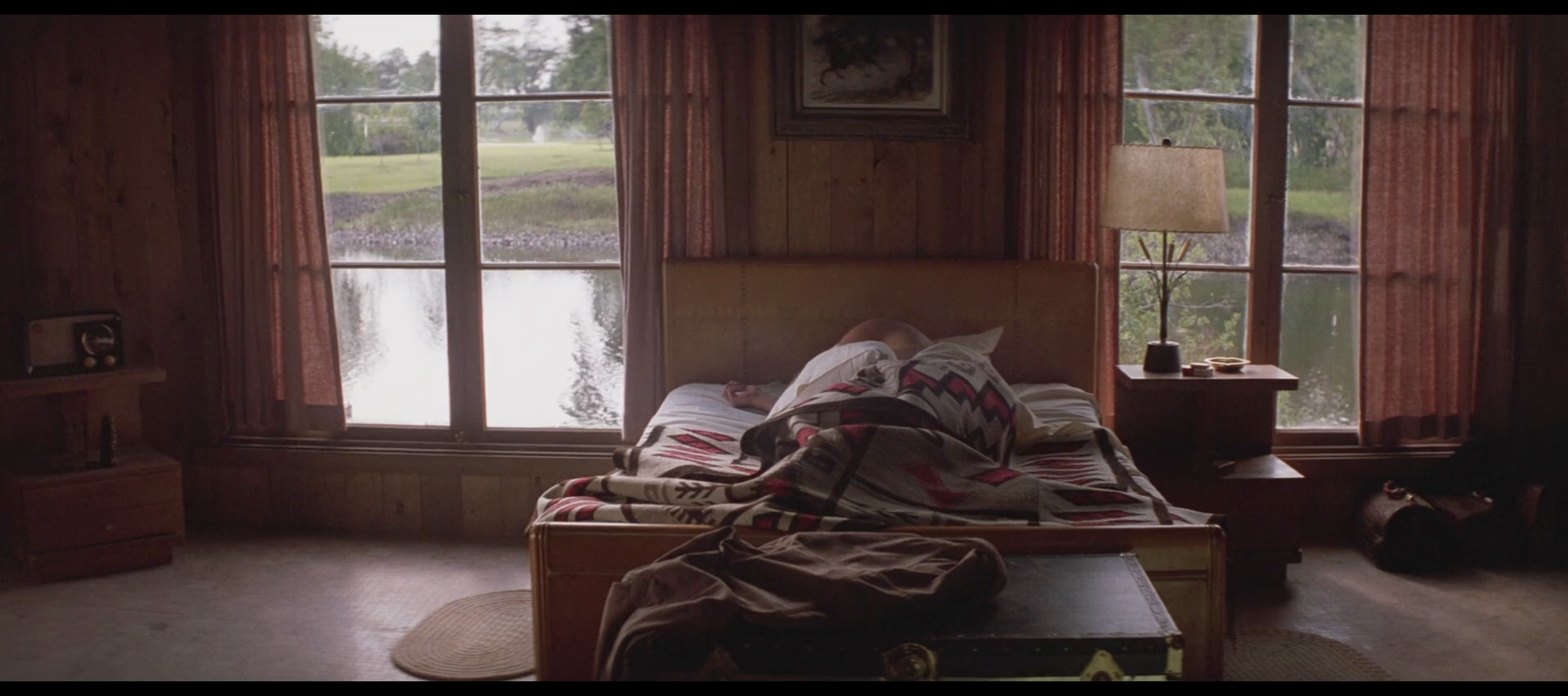
I don’t think I’ve seen “Naked” more than three times. And yet, “Naked” is one of my favorite films. How can both statements be true? Because like Johnny, the human vortex of misanthropy at the heart of this scathing, haunting film from Mike Leigh, “Naked” arrives unexpectedly and does enough psychic damage to mark you for life.

Played by David Thewlis in his breakout role, Johnny is a shuffling, shaggy-haired native of Manchester, now down-and-out in London after fleeing the consequences of the sexual assault that opens the film. (The merciless tone is established from the start.) With his cruel intelligence, dizzying monologues and trademark black trench coat, he upends the lives of old friends, acquaintances and total strangers alike.

The film’s devastating final shot casts Johnny as a sad-sack Satan wandering the world, unwilling to accept either punishment or forgiveness for his sins. When FilmStruck vanishes from the internet, it will take this unforgettable portrait of humanity as a failed state with it for now — but the film will remain lodged in my mind forever.

I wrote about Mike Leigh’s brilliant film Naked for the New York Times’ tribute to the late great streaming service FilmStruck, alongside a murderers’ row of other critics.

And since it’s been a while, I’ll note that I still contribute movie recommendations to the Times’ free streaming-advice newsletter Watching. I think I’ve covered The Love Witch and Eyes Wide Shut since last time. Click and subscribe for free!

“Daredevil” thoughts, Season Three, Episode Nine: “Revelations”

NUN SEX FLASHBACK!
*CLAP CLAP CLAPCLAPCLAP*
NUN SEX FLASHBACK!
*CLAP CLAP CLAPCLAPCLAP*
NUN SEX FLASHBACK!
*CLAP CLAP CLAPCLAPCLAP*

Okay, I lied: There isn’t any actual sex in the flashback sequence that dominates the first reel of “Revelations,” the ninth episode of Daredevil Season 3. And I’m sorry, but this isn’t just a dropped ball, this is a Bill Buckner–level debacle. It’s not just that Isabella Pisacane, the actor cast to play the young Sister Maggie as she falls in love with local boxer Battlin’ Jack Murdock, looks like a cross between actual young Joanne Whalley (the modern-day Sister Maggie) and Game of Thrones‘ Maisie Williams, which is to say she’s stunning. (Ol’ Battlin’ Jack is definitely punching above his weight class, if you’ll pardon the pun.) It’s that the tension between Catholic iconography and guilt on the one hand and raw physicality on the other is Daredevil‘s stock in trade. I believe it was Chekov (or perhaps Sasha Grey?) who said that if you have a sexy nun on the mantle in the first act, she’d better get off by the third.

I’m joking, but only a little. Co-written by Sam Ernst and showrunner Erik Oleson and directed by Jennifer Lynch, a name I remain amazed to see in television credits whenever it pops up, “Revelations” is another one of those oddly structured episode that feels more like a botched solution to the problem of Marvel/Netflix’s overlong seasons than a cohesive unit that needs to exist on its own. There’s some good stuff in here, and some stuff that could have been better, and some downright baffling stuff too.

I reviewed the Sister Maggie flashback episode of Daredevil for Decider.

“Daredevil” thoughts, Season Three, Episode Eight: “Upstairs/Downstairs”

Remember all the complaints I had about the Bullseye origin story? The gaps in plausibility, the slapdash psychology, the less-than-successful cinematography and staging? Well, you can say goodbye to that mess. You can, if you will, vacuum it right up.

“Upstairs/Downstairs,” the eighth episode of Daredevil‘s third season, did more to convince me — in the guts, more than in the mind — of Benjamin “Dex” Poindexter’s madness in this one shot of the man cleaning up his messy apartment in the Daredevil costume he wore to commit mass murder than it did in every other scene involving the character combined. I really can’t say enough good things about writer Dara Resnik and director Alex Zakrzewski, who spent the entire episode showing how Dex’s eggshell mind could be cracked, punctured, sucked dry, and refilled with nothing but trauma and violence, but who neatly (pardon the pun) summed up the whole thing in a single image. Here’s a very sick person clinging desperately to the simple instructions about routine and order that kept him semi-sane for years, while wearing the emblem of that routine and order’s complete and lethal disintegration. It’s a beautiful, horrible thing to behold.

I reviewed episode eight of Daredevil Season Three for Decider.

“Daredevil” thoughts, Season Three, Episode Seven: “Aftermath”

They call this episode of Daredevil “Aftermath” for a reason. As seemingly mandated by the by-now anachronistic 13-episode model all the main Marvel/Netflix series —the few that remain standing, anyway— follow, the seventh installment of the show’s third season is at least fifty percent conversations between characters about things that happened in the sixth installment of the show’s third season. At least Wilson Fisk gets to watch it on the news all at once instead of spreading it out over the course of 45 minutes of streaming television.

I reviewed the mixed-bag over-the-hump episode of Daredevil S3 for Decider. This series too is no longer standing.

“The Romanoffs” thoughts, Season One, Episode Four: “Expectation”

If I had to select a “Frank Sinatra Has a Cold” knockoff declarative lede for a glossy magazine-style profile of Julia Wells, the wealthily careworn protagonist of The Romanoffs’ latest episode, “Expectation,” it might be this: Julia Wells can’t settle down.

Played by Amanda Peet — who seems to somehow become fuller and realer in the role as time passes — Julia spends most of the hour, during which she is almost continuously on-screen, moving from one place to another, and always with another, further destination in mind. She takes a couple of subway rides, catches a couple of cabs, mills around in a couple of famous New York retail establishments, gets dressed for two separate meals out at two different restaurants. Her big errand for the day involves picking people up at the airport and dropping them off at their hotel. Her workout of choice is moving in place on the elliptical machine, and her post-workout visit to the gym locker room just entails her walking through it, navigating other women’s bodies. Even her job entails helping the homeless and the transient. And if she pauses for more than a minute, her mind does the wandering for her, flashing back to events from decades ago, years ago, hours ago, minutes ago; she daydreams about resolution and absolution that are not forthcoming. Wherever she goes, there she isn’t.

I reviewed the Amanda Peet episode of The Romanoffs for Vulture.

“Daredevil” thoughts, Season Three, Episode Six: “The Devil You Know”

Does Dex’s devolvement into a grinning mass murderer in someone else’s superhero outfit scan, as far as psychological motivation goes? Well, no and, uh, no. A hard “no” in the sense that, as witnessed last episode, his backstory and history of mental illness is kind of sketched-in and scattershot and hard to swallow. You can’t methodically pick apart a character who was never a cohesive whole to begin with, no matter how hard Daredevil showrunner Erik Oleson, writer Dylan Gallagher, director Stephen Surjik, and actors Vincent D’Onofrio and Wilson (!) Bethel work to prove otherwise.

But also a soft “no,” in the sense that no human being in the history of human beings has everdevolved into a grinning mass murderer in someone else’s superhero outfit, because there are no superheroes. There are also no supervillains whose unerring aim and throwing capacity enable him to turn any household object into a lethal weapon, whether they’re dressed up as Daredevil or have their own snazzy black-and-white costume to do their killings in.

The point I’m trying to make here is that this season, Daredevil decided it needed Bullseye, so Daredevil created Bullseye. It could have gone the route of both the comics and the original Ben Affleck/Colin Farrell movie version and had the Kingpin hire an out-of-town hitter with a badass reputation, but it tried to grow one organically from within, tying his origin directly to both the protagonist and the antagonist of the show. Is there any way to do that in a wholly realistic manner? Not when your show is Blind Radar Ninja, Attorney-at-Law there isn’t.

So, y’know, have a little fun with it! Do some creepy voices and camerawork, put some baggy eyes and flopsweat on your handsome new actor, give your main heavy a chance to play master manipulator and guide a new killer to follow in his footsteps a la Hannibal Lecter. Kinda churlish to complain that the end result isn’t in the DSM, no?

I reviewed episode six of Daredevil S3 for Decider.

“Daredevil” thoughts, Season Three, Episode Five: “The Perfect Game”

Dex’s brain is revealed to be a cocktail of conditions that sound spooky to the layperson: borderline personality disorder, psychotic tendencies, obsessive-compulsive disorder. He killed his beloved baseball coach for yanking him from a perfect game as an orphaned kid, and was laboring under the delusion that said perfect game would bring his parents back somehow while he did it. (I’m gonna guess he killed his parents, too, because why not.) The only person he’s ever really cared about since then was his therapist, who he threatened to kill when she was dying of cancer because he was so angry at her for leaving him. He worked at a suicide-prevention hotline, just like real-life serial killer Ted Bundy, and would occasionally steer suicidal callers into thoughts of homicide instead, or at least daydream about doing so. He’s a stalker, as we learned in the previous episode, but what we learn here is that the woman he’s stalking — a former colleague from the hotline, where he no longer works — is someone he barely knows. When she gets a job at the hotel where Dex is guarding Fisk (clearly his handiwork), she recognizes him from the hotline and asks him to meet her for dinner after their shifts; within about two minutes he’s letting slip all kinds of personal details about her he could only know if he stalked her, and he physically tries to stop her from leaving before she shouts loud enough to draw the attention of other diners and force him to let her go.

You can add all this to the fact that he uses unnecessary lethal force on the job — a job he has because none of this was picked up during the FBI’s background checks for some reason. He served in the military first, and that I can buy since the Forever War we’ve been fighting since 2001 has seen the standards for enlisting get lowered considerably, but the Bureau’s stringent requirements for its agents are already a plot point on the show, in the form of Agent Nadeem getting passed over for promotion because he’s too deep in debt and thus a recruitment target for enemy agents. I’d love to hear how a fairly obvious basketcase like Dex sailed through.

But then, there’s a lot going on this season that, shall we say, doesn’t stand up to scrutiny. (Blind ninja lawyer aside, I mean.) Fisk has used phones and computers while under house arrest. He was only convicted of RICO violations when he staged a gigantic lethal firefight against the police on a major metropolitan bridge. Despite having enough hitmen after him to level an entire FBI motorcade, he’s placed inside an operational hotel that’s open to the public for safekeeping. The Feds bust down Matt Murdock’s door on the basis of Fisk’s word and a single paycheck they found from when Murdock & Nelson accidentally represented someone on Fisk’s payroll, but the security-camera footage of him blind-ninja’ing his way through a prison riot apparently slipped their notice, even though they know he was there and that he used Foggy’s name to get in and that he saw a low-level Albanian soldier while visiting.

Well, whatever. You don’t come to Blind Ninja Lawyer for a tightly written procedural.

I reviewed the wonky black-and-white Bullseye origin flashback episode of Daredevil for Decider.

“Daredevil” thoughts, Season Three, Episode Four: “Blindsided”

You knew the time would come. Ever since Daredevil established the template in its first season, Netflix’s Marvel shows, good bad and indifferent, have staged elaborate single-take fight scenes in which their protagonists battle their way through hordes of assailants in cramped indoor spaces, typically hallways. (Stairways, warehouses, storage facilities, and hospital wards will do in a pinch.) I’m no statistician, but with a fight that spans one single unbroken shot that lasts for over ten and a half minutes, “Blindsided,” Daredevil Season 3 Episode 4, may have just taken the crown.

HALLWAY FIGHT! HALLWAY FIGHT! I reviewed, y’know, the big hallway-fight episode of Daredevil Season 3 for Decider.

“Daredevil” thoughts, Season Three, Episode Three: “No Good Deed”

There’s a bit in Daredevil Season 3 Episode 3 (“No Good Deed”) where the FBI agents assigned to guard Wilson Fisk after he’s been relocated from a prison to a stripped-down penthouse suite in a Manhattan hotel where they get McDonald’s to eat, since the hotel room service is out of the Justice Department’s price range. I don’t eat McDonald’s anymore because I’m a vegetarian, but I know my way around meatless fast food options, that’s for sure, so I can relate. It’s not just that it’s relatively cheap — it’s that it’s reliable. Once you’ve found an item or a meal you enjoy, you can order it basically any time you want to enjoy eating, and guess what? You’ll enjoy eating.

Daredevil works the same way. Despite all the people getting punched in the head until they lose consciousness, it’s comfort viewing. You know what you’re getting, and if you like it, you’ll like it. Reader, I like it.

I reviewed the third episode of Daredevil’s third season for Decider.

“Daredevil” thoughts, Season Three, Episode Two: “Please”

I’d imagine this episode will test the patience of anyone who isn’t as sold on the rhythms of this cast and this concept as I am. I know how they feel: Every time characters on Luke Cage are filmed walking half a block just to talk to someone and then leave, every time Jessica Jones had a scene of its dully sardonic protagonist making quips and shooting daggers at someone while wearing the same pair of jeans, every time one of these series stalls out seven or eight episodes into a season because they basically dispatched the most interesting villain and have to figure out how to drag it out for another school day’s worth of screentime, I rue the day superheroes went from nerd culture to monoculture too.

But the thing is I am sold on the rhythms of this cast and this concept. I love looking at the faces of Charlie Cox and Deborah Ann Woll as Matt and Karen, love their soft beauty, love their warm voices. I love how Elden Henson quickly grew into the roll of their friend Foggy, who turned from an obnoxious comic-relief character into a bonafide character with an engaging way of moving through their weird world while still seeming basically normal.

I reviewed episode two of Daredevil Season Three for Decider.

“Daredevil” thoughts, Season Three, Episode One: “Resurrection”

That simple pleasures are, in fact, simple makes them no less pleasurable. On the contrary! Drinking the last beer in the fridge at the end of a hard day, listening to the first ten or so Beatles singles, playing Rainbow Road in Mario Kart Wii for the 500th beautiful lunatic time — there is great satisfaction in the straightforward, great fun in the familiar. And as television, Daredevil is exactly that: satisfyingly straightforward, familiarly fun. Returning for its third season (third and a half, if you count the characters’ involvement in the Defenders crossover miniseries), it is simple, and it is pleasurable.

I covered Daredevil for Decider again this season, starting with my review of the premiere. 

“The Romanoffs” thoughts, Season One, Episode Three: “House of Special Purpose”

Horror is a genre in conversation with itself — more so, perhaps, than any other genre, because the topic of conversation is always ultimately the same. Horror filmmakers study the things that frighten them, then reimagine, refine, and revise them, the better to unleash their own specific fears upon new audiences. This is as true of capital “G,” capital “F” Great Films like Under the Skin and Hereditary as it is of derivative corn like Stranger Things, or of recent critical darling Mandy, which after the weed-scented glacial pacing and lush psychedelia of its first half has nary an original idea in its head and is basically just Stranger Things for heshers. The stuff that’s truly worthwhile does more than merely remix the past, because the people making it filter those fears through their own unique ideas about the present.

Among many other things, “The House of Special Purpose” is a horror film, and it is not Matthew Weiner’s first. As the creator and showrunner of Mad Men he presided over several eerie and gut-wrenching hours of television, primarily during the show’s death-haunted fifth season. The fever-dream murder (guest-starring Twin Peaks’s Mädchen Amick) and the real-life terror of mass murderer Richard Speck in “Mystery Date,” the car-crash scare tactics and the shadow of tower sniper Charles Whitman in “Signal 30,” the acid-trip creepiness and artificially lit missing-person freakout of “Far Away Places” — all this is before the season’s climactic death, which I prefer not to name-drop publicly if I can help it but to which the character’s fellow cast members reacted, by all accounts, with genuine horror. (Of course, let’s not forget the lawnmower scene, either.)

But the anthology nature of The Romanoffs enables Weiner to go deeper into the genre than ever before. A self-contained story, with no previously screened backstory for the characters and no need to write for their continued existence either, abrogates the need for Weiner to do anything but creep people out in his own idiosyncratic way. Working with writer Mary Sweeney, he does exactly that.

Playing long-overdue link catchup: I reviewed the Christina Hendricks episode of The Romanoffs for Vulture.

test

this is a test of the emergency STC system

The Love Song of Dril and The Boys

Dril and the boys wallow in the same miasma from which all our era’s reactionary movements have emerged — the MAGAs and Pepes, MRAs and incels, GamerGaters and ComicsGaters, Sad Puppies and Proud Boys and all the other doofuses with unwittingly infantilizing sobriquets.

With “the boys,” the humorist behind dril has tapped into the overall vibe in this country that there exists, somewhere out there ― perhaps in a TJ Maxx ― a lost masculine ideal. No one agrees on what it is, least of all dril, whose psyche is as piecemeal as his punctuation. It could be yelling at NFL protesters to stand for the national anthem or screaming at Disney for committing white genocide in the “Star Wars” films. It could be having sex all the time or having no sex at all. It could be respecting the majesty of the law or flouting it or both, depending on whom the law is meant to penalize. It’s the nightmare superego-id hybrid, 10 pounds of Blue Lives Matter shit in a five-pound “Live free or die” bag.

When men fail to live up to the puritanical amorality of the boys, they’re less than men, which is to say — as women have a lifetime to learn — they’re less than human. Such men earn sexualized insults like “betas” and “cucks.” They’re reduced to contemptuous acronyms like “SJWs” and “NPCs.” They make the soy face. They listen to dad rock. This blend of macho aggression and childlike vulnerability cannot be resolved in the real world, where it results in a racist, revanchist, minority party controlling all branches of government and installing sexual predators in every available position of power yet still acting like the David to the Goliath of Me Too, female gamers and the theoretical casting of Idris Elba as James Bond.

Dril and the boys reside in this all-American astral plane where the Large Son–Libtard civil war rages, where misandry is real and must be guarded against with magic spells. We recognize our own reality in their incoherent but nevertheless militant search for reasons to hoot and holler. As such, their romance presents us with an opportunity to convert the problematic into the pleasurable, just as surely as antihero dramas or even halfway decent kink.

I wrote about Dril, the funniest writer alive, and “the boys,” his best recurring characters, for HuffPost.

“The Romanoffs” thoughts, Season One, Episode Two: “The Royal We”

Two episodes in is too early to hazard a guess as to what ties Matthew Weiner’s anthology series The Romanoffs together. But there’s no reward without risk, right? So here goes. Based on “The Violet Hour” and its followup, “The Royal We,” The Romanoffs might be so titled not just because its lead characters share ancestry with slain Russian royalty, but because they have nothing else to share. Both episodes feature antagonistic protagonists as hollow as Anastasia La Charnay’s Fabergé egg; the drama, and in this episode’s case in particular the comedy, arises from what they choose to fill that egg with.

I reviewed the second episode of The Romanoffs, aka the one with Corey Stolle and the god Kerry Bishé, for Vulture.

“The Romanoffs” thoughts, Season One, Episode One: “The Violet Hour”

If you want to return to the world of Matthew Weiner, you’d best prepare for a rough reentry. We’re not just talking about the opening titles to The Romanoffs here, which replace Mad Men’s falling silhouette in a suit with the trickling blood of the massacred royal family of Russia as its connecting thread. Mere minutes after the last notes of Tom Petty and the Heartbreakers’ “Refugee” close out the credits, we’re subjected to an almost unbearable torrent of racist invective — in subtitled French, no less — from an aging descendant of aristocracy to her grin-and-bear-it Muslim caregiver.

The younger woman, Hajar (Inès Melab), has to stand there and take it as the older woman, Anastasia La Charnay (Marthe Keller) — Anushka to her friends, and there are precious few of those — rolls out her bigoted litany. Anushka accuses Hajar of terrorism, suspects her of assassination by poison, recites half a dozen historical military victories of Christendom over Islam, brags that the traditional French croissant is the West’s way of literally eating the crescent that symbolizes her faith, and tells her, as she admires the La Charnay family’s heirloom Fabergé egg, that she “will never, ever have that.”

To Anushka, the egg means literally everything: wealth, respectability, Paris, France, Frenchness, humanity. All of it, held perpetually out of reach of people like Hajar by sad old white folks clinging to triumphs (whole Arches of them, in fact) they themselves did nothing to earn except through accident of birth. Behind Hajar’s placid grin you can all but hear her thoughts in response: “Look, lady, I just work here.”

For all its initial, confrontational unpleasantness, “The Violet Hour,” the first self-contained installment in Weiner’s ambitious anthology series for Amazon, soon settles into a familiar story pattern. Too familiar, perhaps: From my notes, I see I first predicted where the story was going at the 18:05 mark, approximately 32 and a half minutes before the inevitable big reveal. Nevertheless, some stories are worth retelling, whether because they force us to confront unpleasant truths or comfort us with resolutions that, in the real world, are much harder to come by. This episode is a little from Column A, a little from Column B.

I’m covering Matthew Weiner’s new series The Romanoffs for Vulture, beginning with my review of the series premiere. Join me, won’t you?

‘Venom’: Everything You Need to Know About the Marvel Antihero

Before he was a character, Venom was a costume.

Imagine if the Joker started out as a clown outfit that Batman wore for circus-themed missions and you’ll have some idea of just how odd the path that this character took to antihero superstardom really was.

Back in 1982, comics reader Randy Schueller submitted an idea to Marvel for a storyline in which Spider-Man acquired a black costume (with a red spider logo, rather than the familiar white one) made of “unstable molecules,” i.e. the Marvel Universe material from which the Fantastic Four’s Reed Richards made his team’s uniforms. More than mere fabric, this outfit would be able to adjust to Peter Parker’s needs, as well as enhance his powers. Controversial Marvel editor-in-chief Jim Shooter bought the idea from Schueller for a cool $220.

It took a couple of years for the new white-on-black look to make its first chronological appearance in the pages of the company-wide crossover “event comic” Secret Wars #8, courtesy of a design by artist Mike Zeck and a script by Shooter that saw the Webslinger acquire the costume on an alien planet.

Though the issue came out in December 1984, the costume had popped up several months earlier — first as a sketch in March’s comic-length newsletter Marvel Age #12, then in a Spidey story set after the events of Secret Wars in May’s Amazing Spider-Man #252, plotted by Roger Stern, written by Tom DeFalco, and illustrated by Ron Frenz.

… And also an alien parasite.

During their Amazing Spider-Man run, DeFalco and Frenz fleshed out the origin of the liquid-like black outfit, which would respond to Peter Parker’s thoughts; it would even hijack him in his sleep for late-night crimefighting binges. Sure, it looks badass, but it’s not merely a futuristic crimefighting costume or the self-repairing clothes writer/artist John Byrne had devised for the martial-arts hero Iron Fist (an influence on Stern’s concept for the costume). It’s a sentient, symbiotic alien entity, one which bonds to a human host and bestows them with incredible powers while still maintaining a mind of its own.

That “mind of its own” thing is the rub. Though he digs the power-up, Parker quickly learns that this “Symbiote” wants to bond to his body permanently. By exploiting the alien’s vulnerability to fire and sonic energy — and with a little help from the Fantastic Four — Spider-Man separates himself from the costume, which slithers off to find another host to inhabit.

I wrote a quick cheat sheet to catch people up on the history of Venom in comics and film, just in time for the new Tom Hardy movie, for Rolling Stone. I like doing pieces like this because it’s a way to give some shine to the writers and artists who made this multibillion-dollar industry possible.

“Better Call Saul” thoughts, Season Four, Episode Ten: “Winner”

But this review, the last of this extraordinary season of television, isn’t, not just yet. There’s one more scene I want to discuss, one I believe is key to the entire thing.

Between the library dedication ceremony and the appeals hearing, Jimmy joylessly participates in a meeting of the charitable foundation Chuck set up to fund scholarships for promising young students with an interest in law; his spot on the board is one of the few things the elder McGill left him. Writers Peter Gould and Thomas Schnauz and director Adam Bernstein take an innovative approach to the proceedings: Within a second or two of each student beginning to answer one of Howard Hamlin’s jovial questions, they crash-cut away to the next one, as if the nature of what they’re saying means nothing compared to the nature of the process itself.

After all the interviews have concluded, Howard is prepared to offer the fund’s three scholarships to the three highest vote-getters. Then Jimmy interrupts. It was he, he says, who voted for the student who only received a single vote. “That’s the shoplifter,” one of the other board members replies, referring to the girl’s run-in with the law from a few years back. Jimmy points out that it’s precisely that experience that gave her an interest in the law in the first place, and that both her academic career and her personal essay have borne out the promise they’d be ignoring if they let that one event define the kid’s life.

Which they do. The three winners take home the scholarship, and young Kristy Esposito, shoplifter, gets the shaft. But when Jimmy races toward her outside the office to speak with her, we don’t know that yet. He breaks the news, and does so with gusto. “You didn’t get it. You were never gonna get it… You made a mistake, and they are never forgetting it. As far as they’re concerned, your mistake is who you are. It’s all you are.”

But she has an option, he tells the flabbergasted kid: beat them. Cheat. Cut corners. Hustle. Don’t play by the rules. Be smart. Be hated. “You rub their noses in it. You make them suffer… Screw them! The winner takes it all.” She walks away, the effect of this warped monologue on her uncertain.

Then a surprising thing happens. Back down in the parking garage where he used to loiter in his days working for Howard and Chuck’s firm, Jimmy’s car breaks down… and then he breaks down too. “No, no, no,” he sobs, crying for real for the very first time this season. Is he mourning his brother? The notion that his brother was right about him all along? The notion that he’s right about the hopeless odds facing him and the scholarship kid and anyone else who’s less than perfect? The idea that he’s become a person who shouts at children, encouraging them to become dirtbags and do whatever it takes to get one over on the so-called good guys? The fact that the law doesn’t benefit everyone equally, and that some people will get away with everything no matter what? That the law can be fooled? That amoral monsters can wield it as they see fit? That his life, and the lives of everyone he cares about, are slowly sliding into disaster?

Good questions, aren’t they? After the events of the past few weeks, weeks in which Better Call Saul aired its best season ever, do they sound familiar?

I reviewed Better Call Saul’s backbreaker of a season finale for TV Guide. A great season of television.

“Succession” thoughts, Season One, Episode Ten: “Nobody Is Ever Missing”

You know the bit in Monty Python and the Holy Grail where between the coconut jokes there’s a historian narrator who gets killed by a knight, and then there’s a modern-day police investigation, and then King Arthur gets arrested for murder? Succession is like that but for serious.

I reviewed the season finale of Succession for Decider. It makes a mistake it’s impossible for this show ever to recover from, no matter how good Jeremy Strong and Matthew Macfadyen and Nicholas Braun are. Just a shocking lack of perspective. I’ve never seen anything quite like it.

“Maniac” thoughts, Episode Ten: “Option C”

It comes down to the problem I spotted a few episodes ago: There’s an artlessness to the way this show discusses mental illness, and by extension the human condition. Think of exchanges like this:

Owen: “My mind, it doesn’t work right.”

Annie: “No one’s does.”

Or this:

Owen: “Annie, why are you here?”

Annie: “Because I’m your friend, and that’s what friends do.”

Or think of Owen describing his dilemma: “The same thing happens every time I meet someone, or get close to someone. I mess it up.”

Have all of us thought or said things like this? Yes, and that’s just it: All of us have thought or said things like this. What do we need Maniac for?

If you feel some kind of frisson from hearing actors on a Netflix-prestige show recite vanilla aphorisms about what life is like for people like you, fine, great, cool.

For me? It’s like reading one of those lovely Richard Scarry books for kids, where the little animal people in overalls and jaunty hats drive around a town where everything is labeled: “car,” “street,” “firehouse,” “hat,” “overalls.” It’s a My First Sony version of insight, rounding off all the hard edges of the psychological forces that drive and derange us until they’re so user-friendly that they represent no challenge at all to address or intake.

I reviewed the finale of Maniac for Decider. It wasn’t a good show.