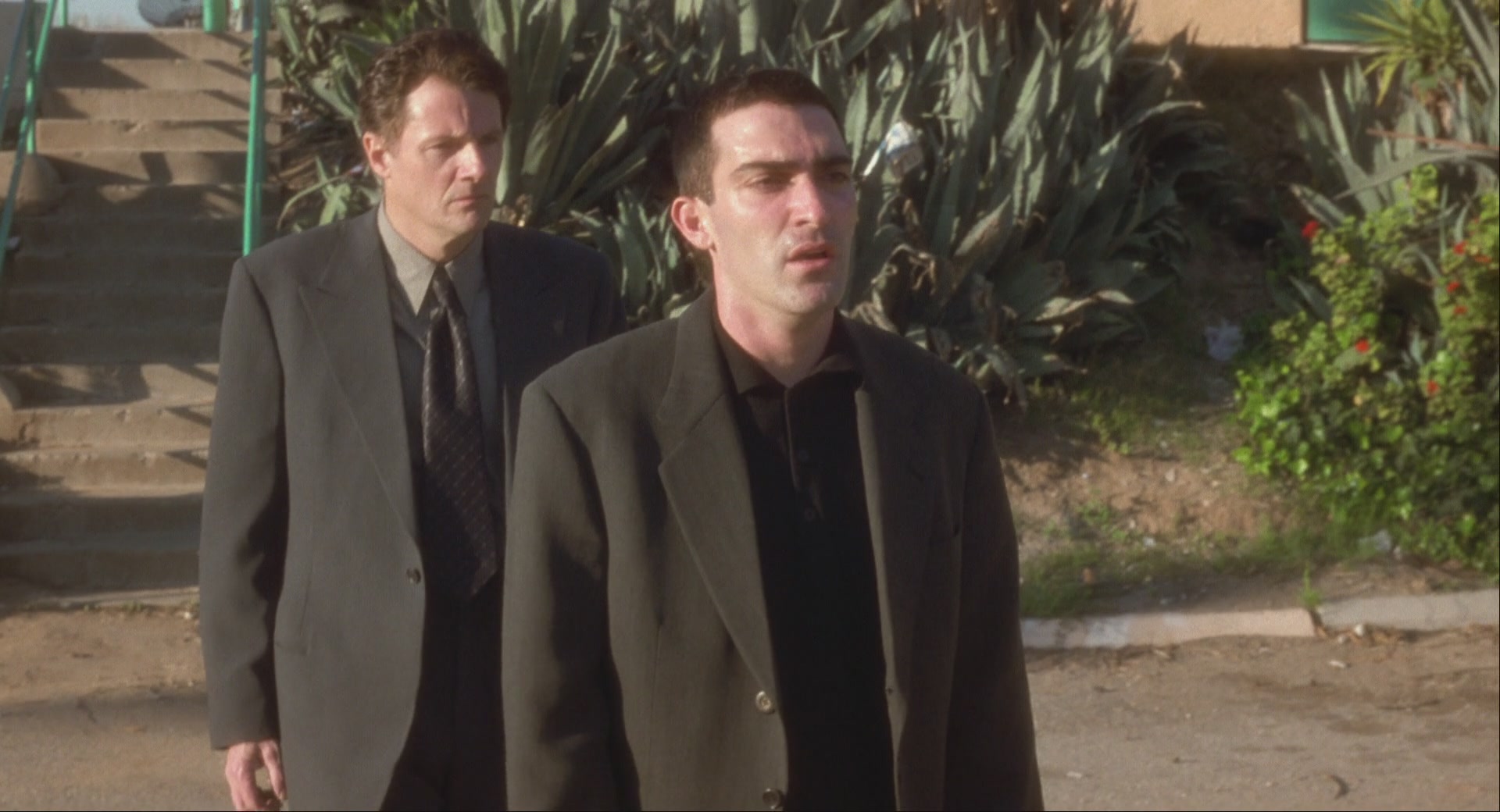
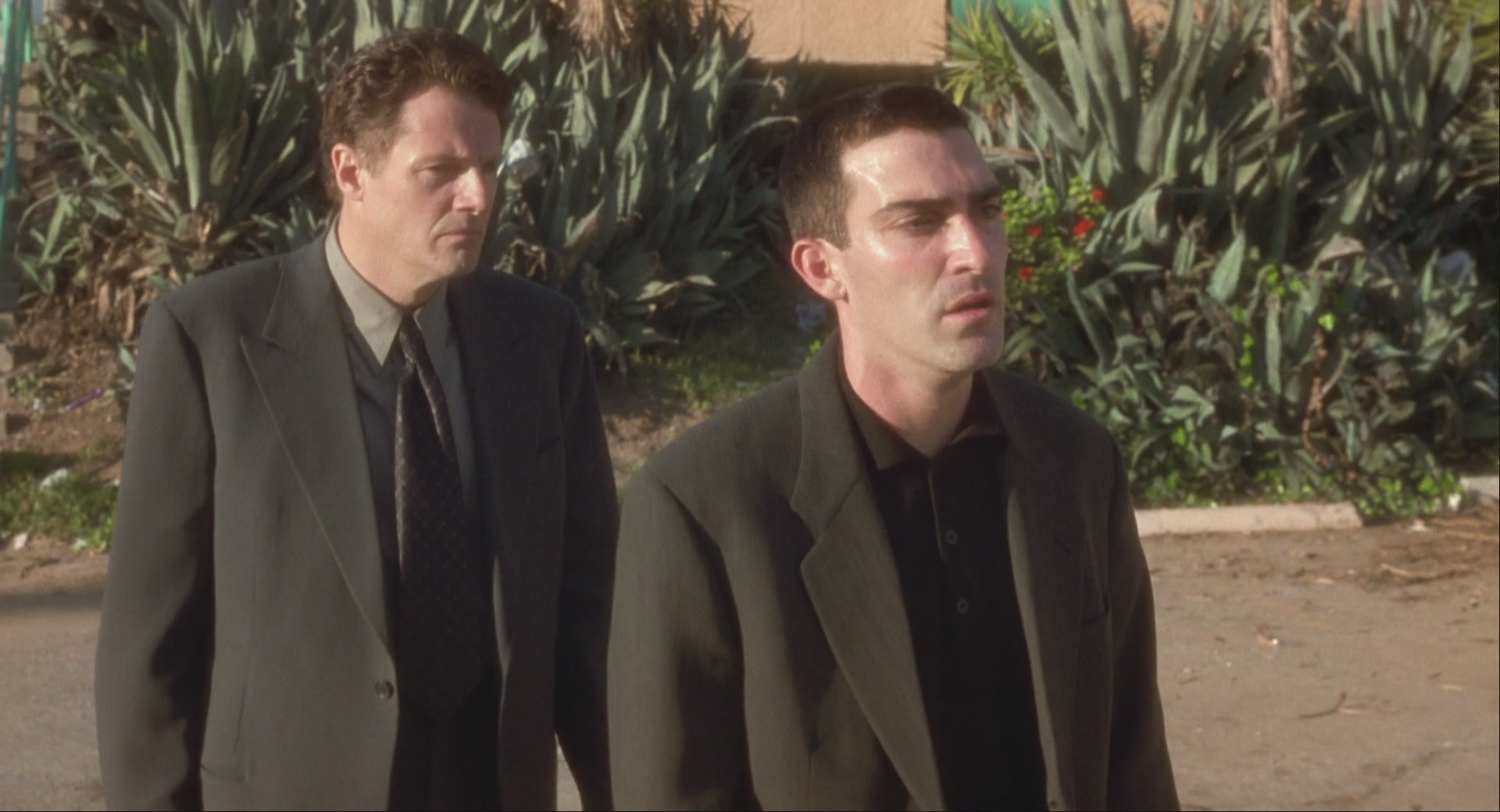
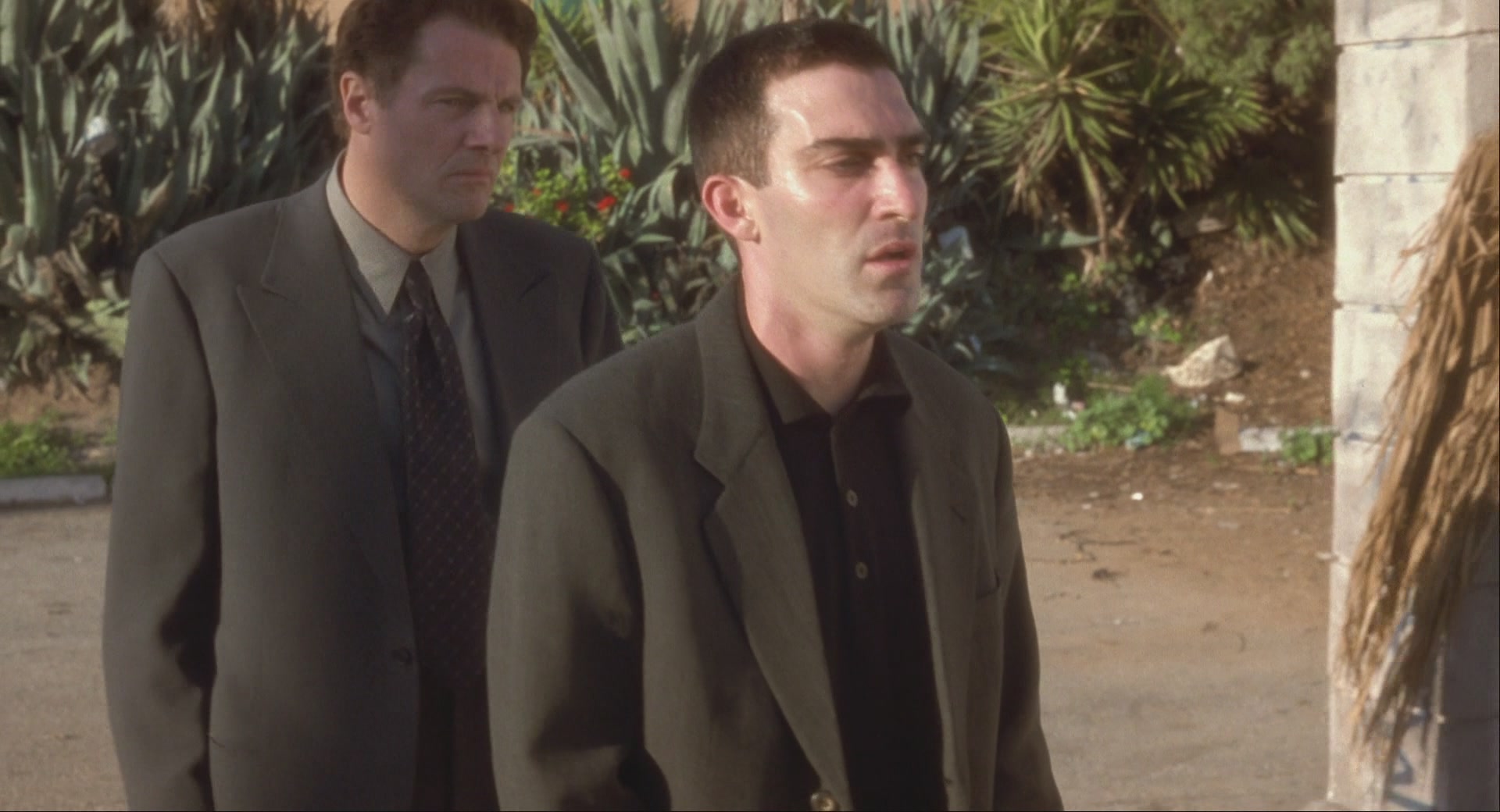
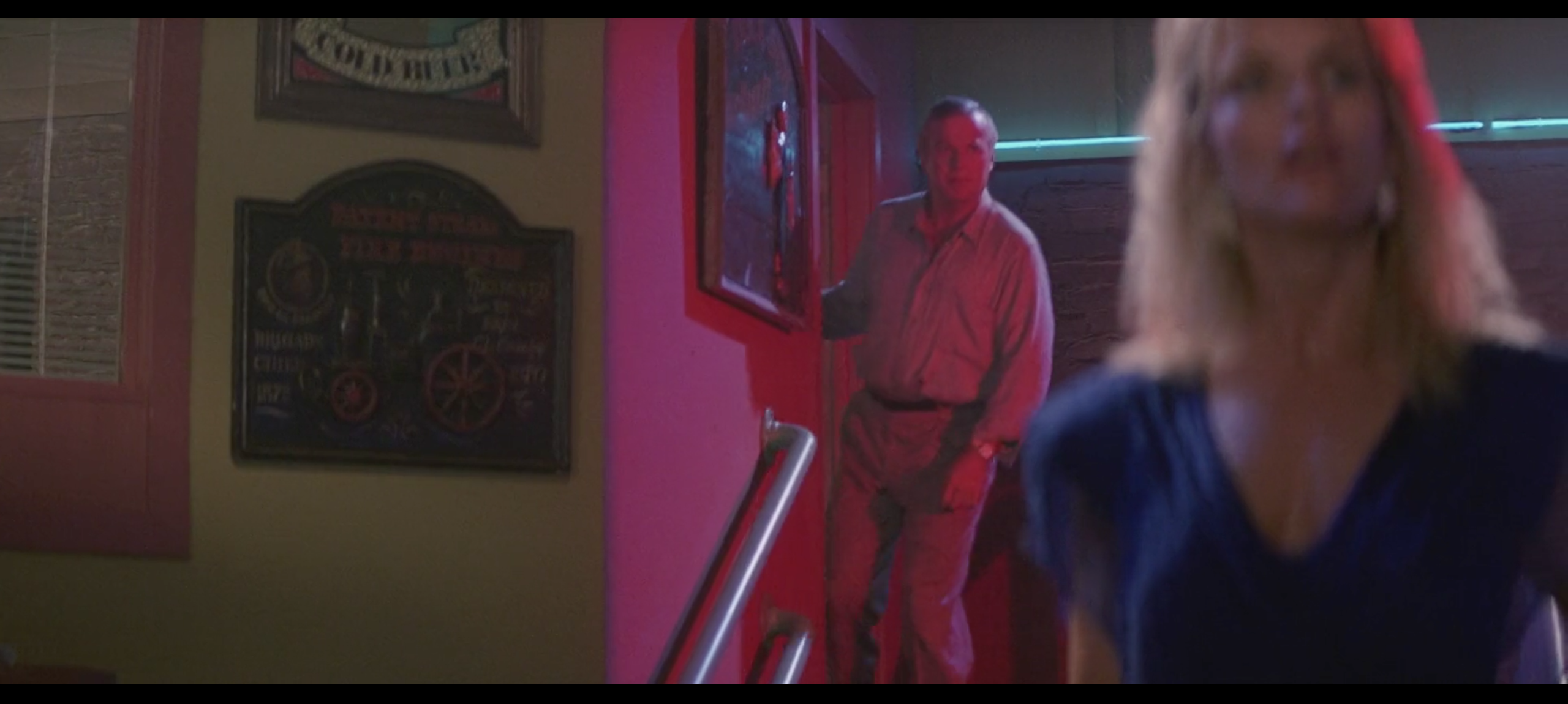
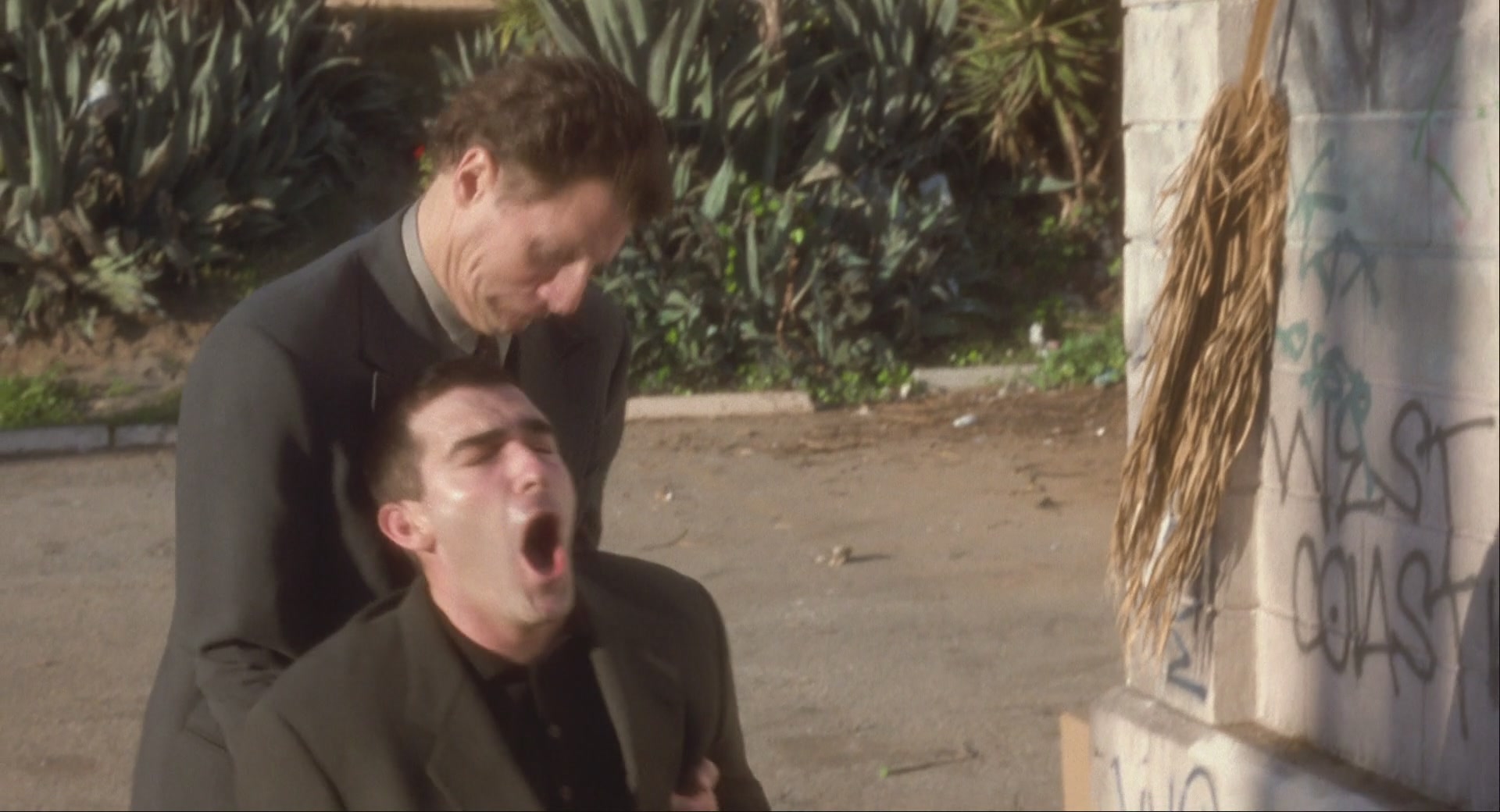
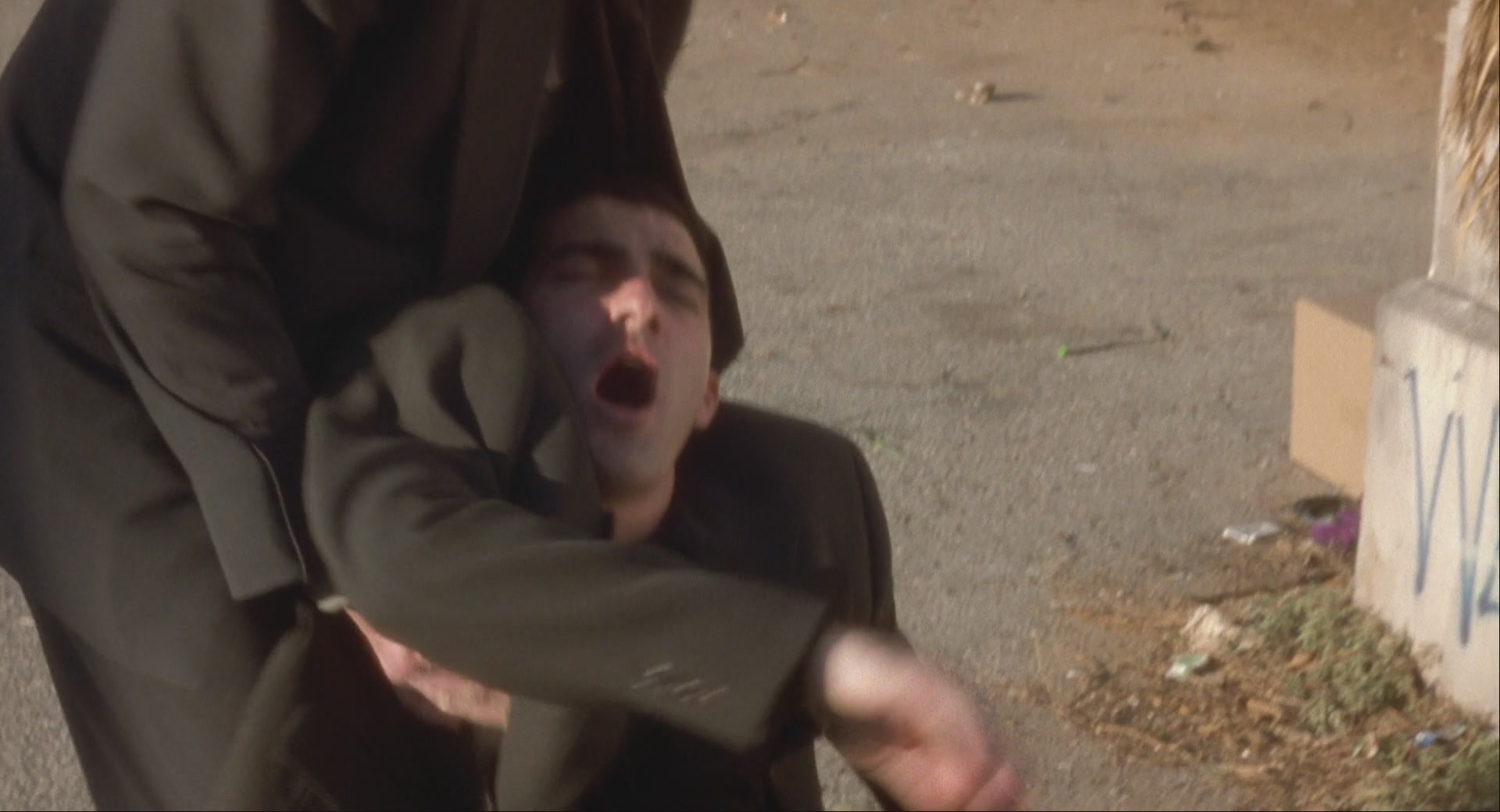
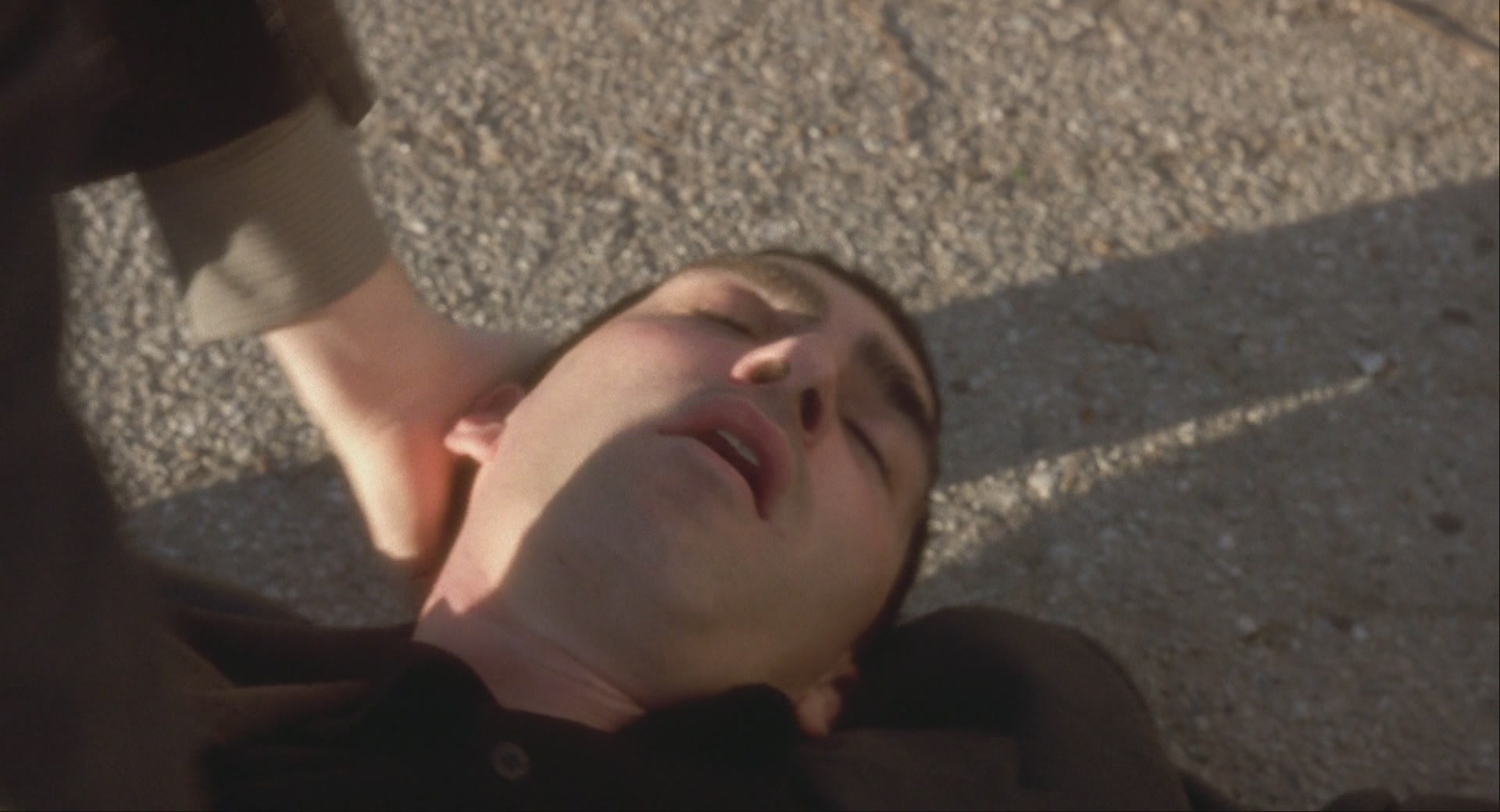
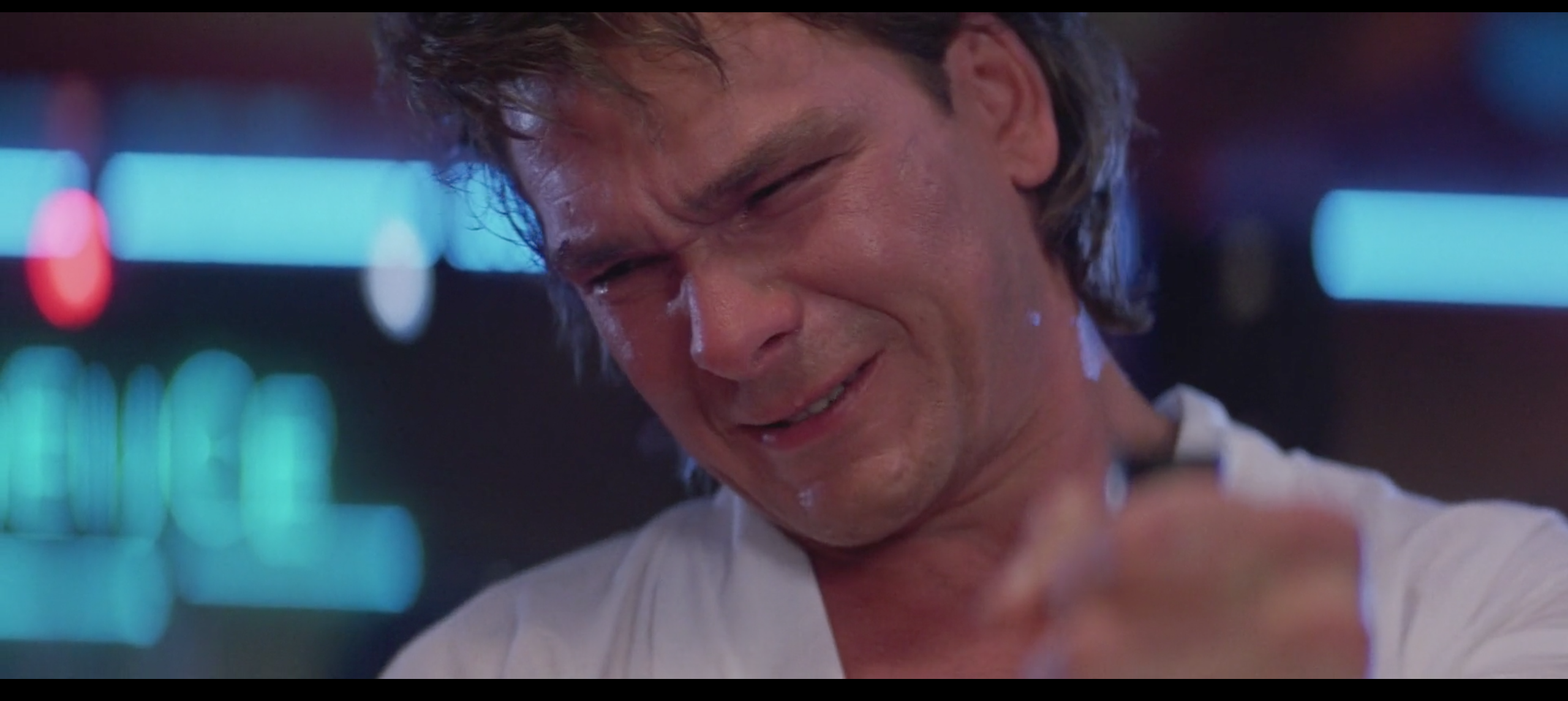
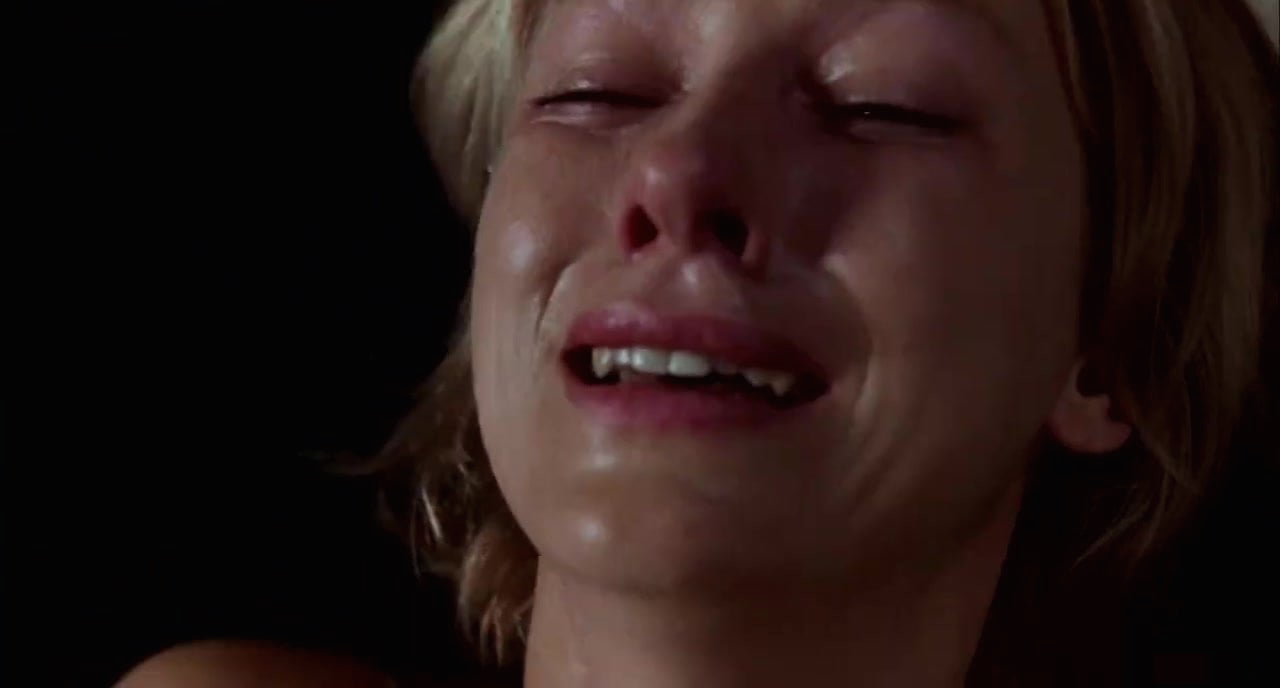
Two very, very different images of post-mortem movement bookend “The End of the Road,” yet another drearily predictable mystery wrapped in sumptuous cinematography and magnetic acting in Black Spot‘s ever-growing tally. It’s like taking Woodward & Bernstein and using it to wrap the catch of the day.
The real asskicker is that if creator Mathieu Missoffe had gotten half as creative with the script as the filmmakers and cast have gotten with what they’re doing, so many of the show’s problems would be nothing but dodged bullets.
“Black Spot” thoughts, Season One, Episode Five: “The End of the Road”
“Black Spot” thoughts, Season One, Episode Five: “The End of the Road”
I dunno, folks, I really just don’t know. The more I watch the more I feel that Black Spot is just an extremely well-made primetime broadcast-network supernatural cop show that could be so much more. I suppose we’ll get to the bottom of it in the end.
163. Bad goons
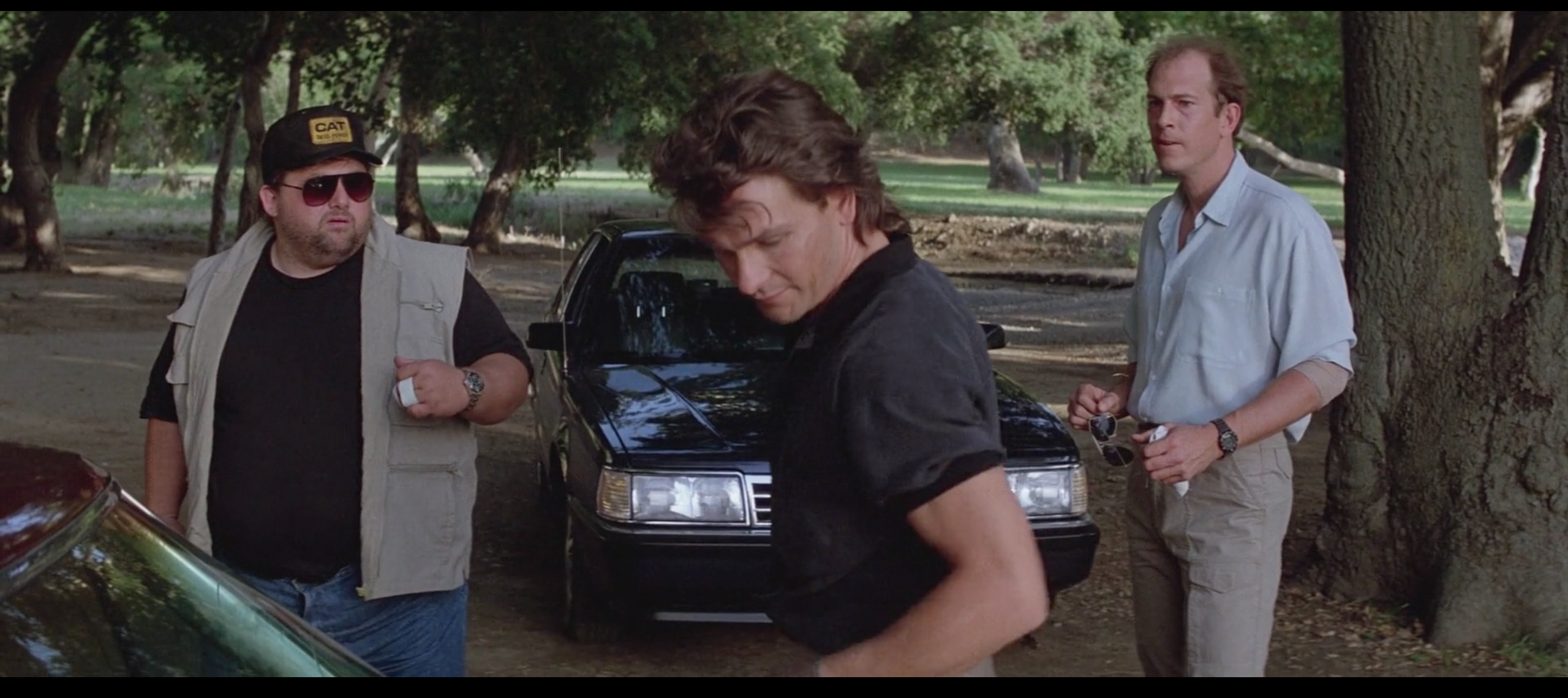
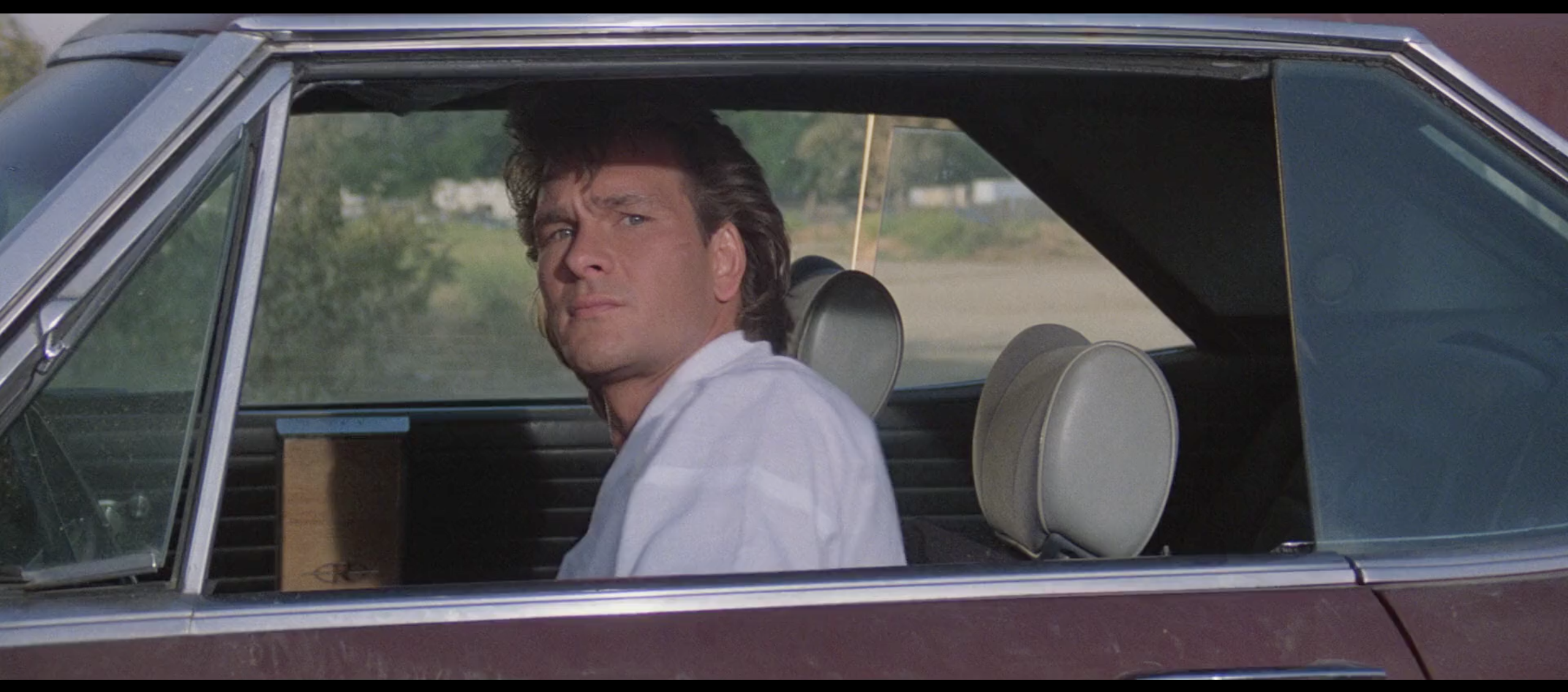
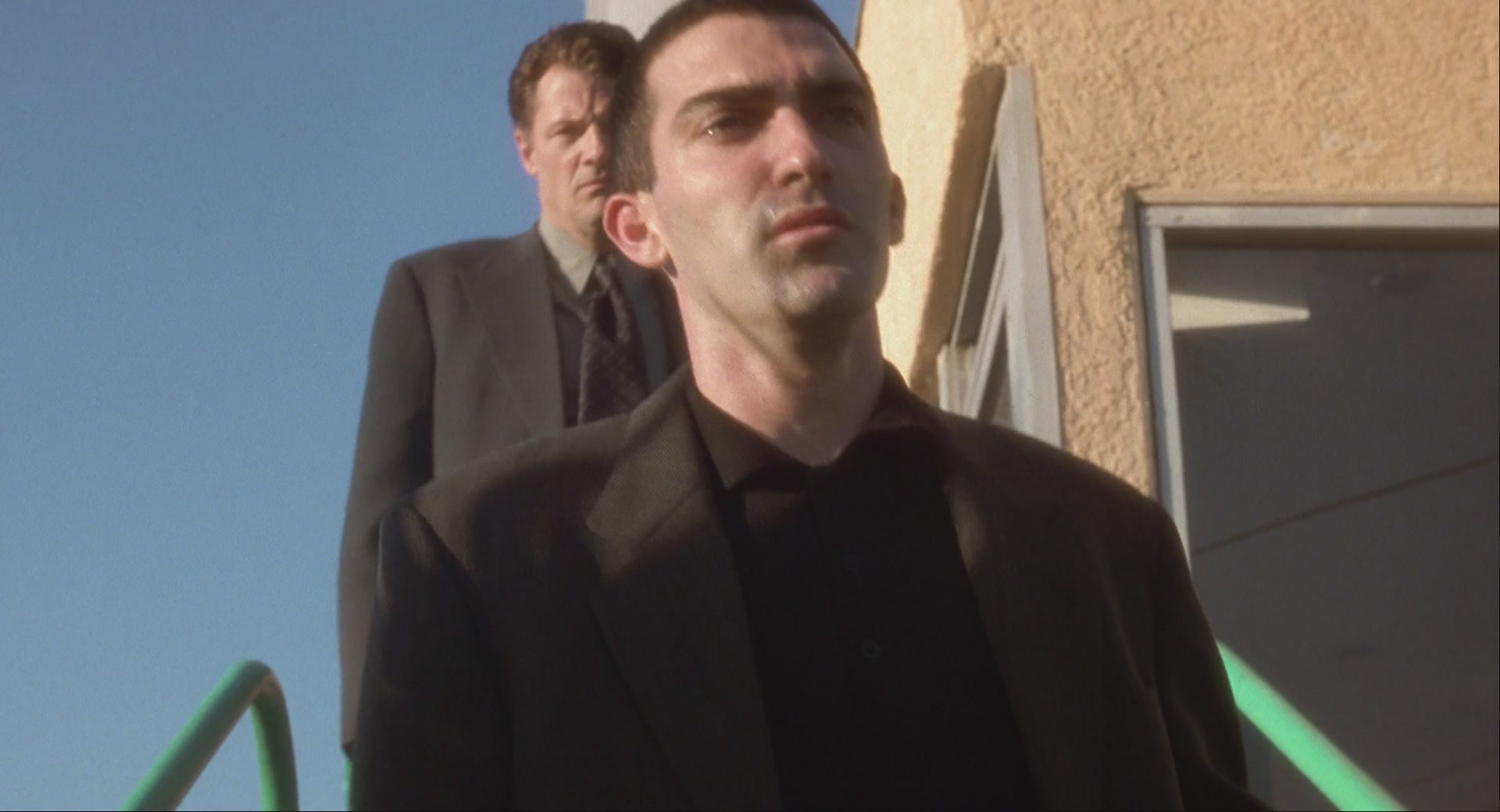
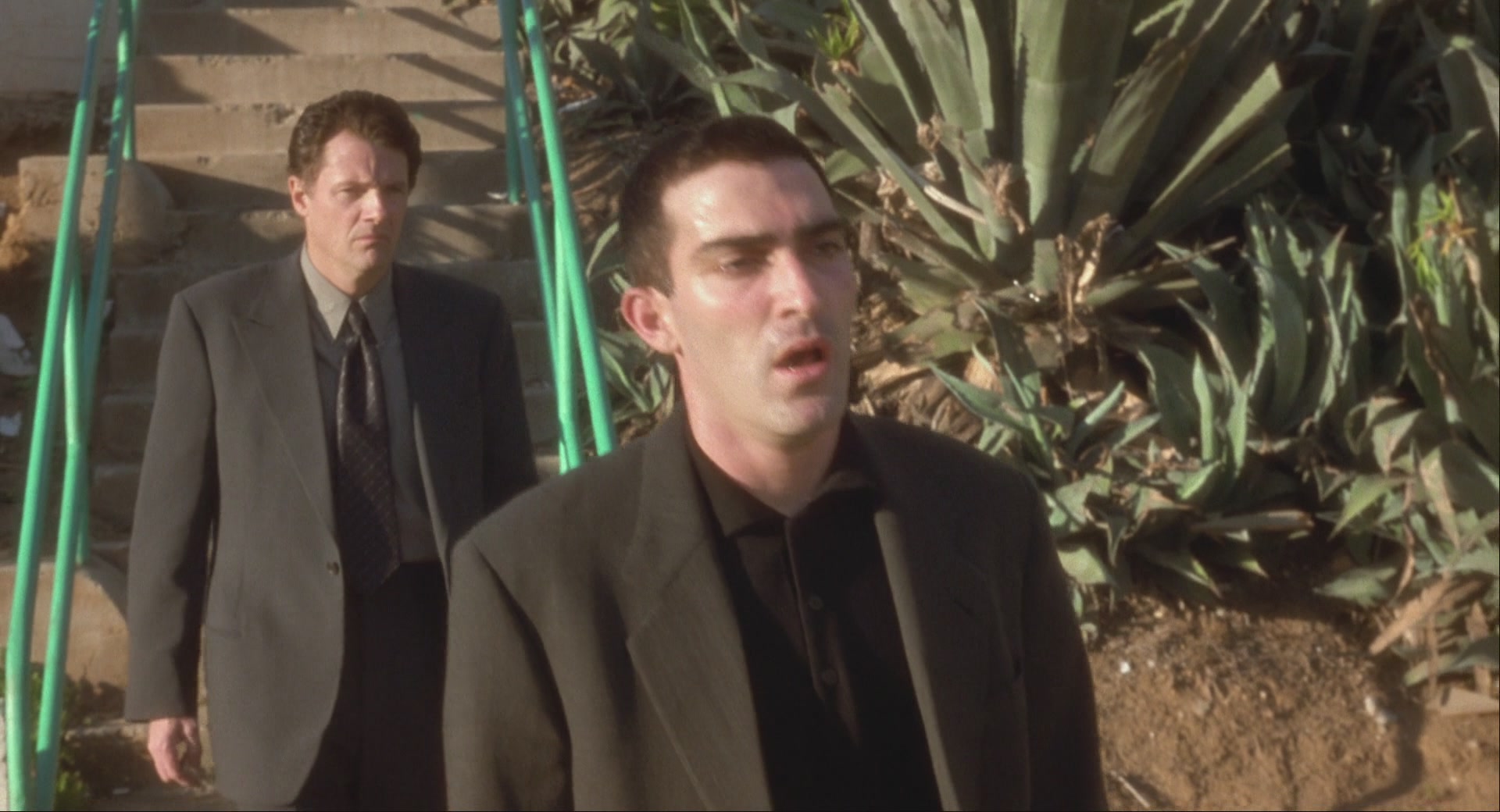
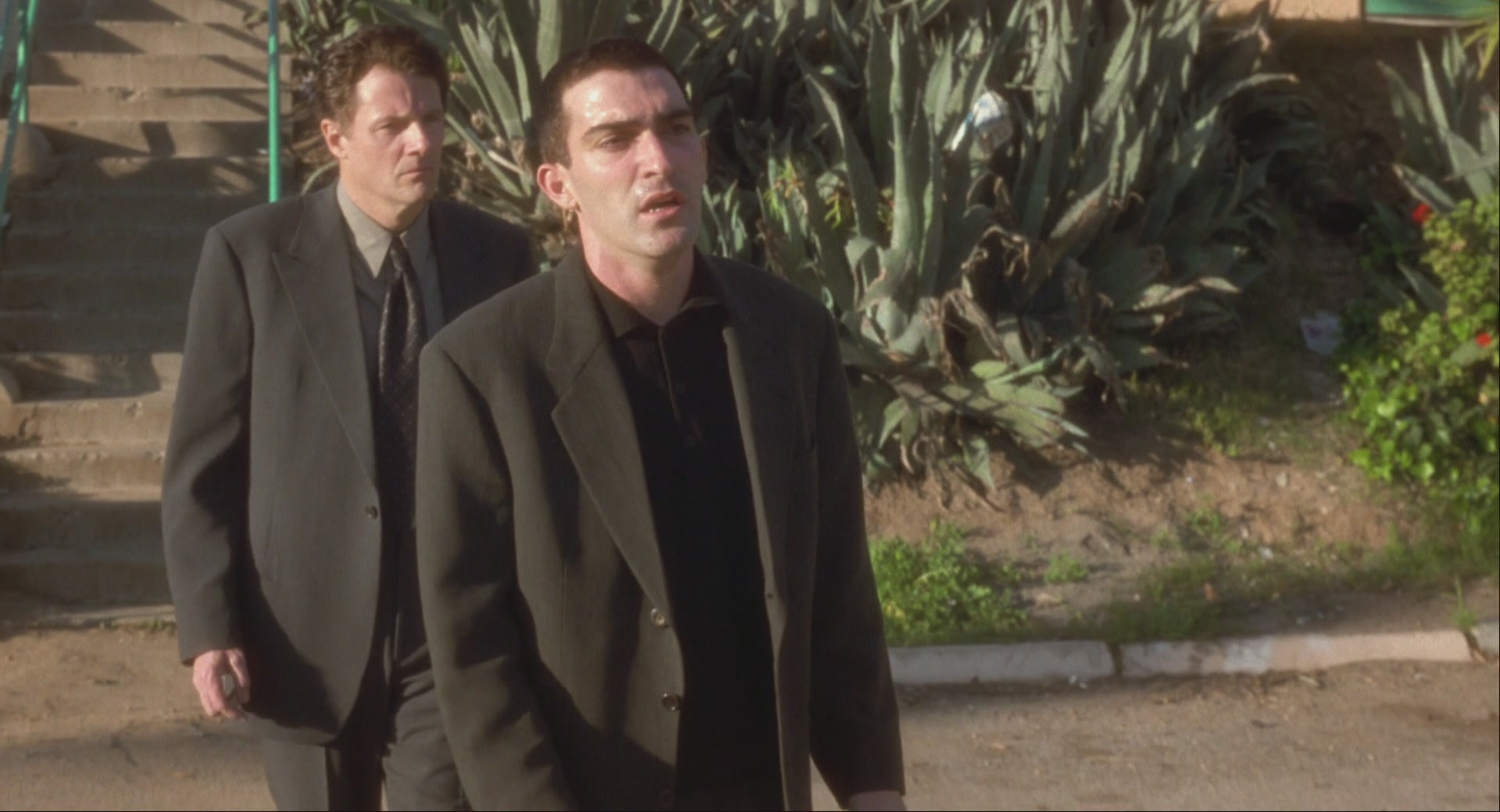
Call me old fashioned, but I believe that when the insane 7-Eleven franchisee who pays you to beat people up sends you to pick someone up and bring that person to him for a conversation, and that person gets up to go with you, you shouldn’t flinch like he just pulled out a gun. Yet that is certainly the reaction of Tinker and the Bleeder when, after Tinker says “Mr. Wesley wants to see you. Let’s go,” Dalton…gets up to go see Mr. Wesley.
This is the one time in the entire film when Tinker and O’Connor do a job that does not immediately go amiss, but their loser mindset has conditioned them to expect a beating no matter what. If they’d offered Dalton a handshake and he reached out to shake hands in response they’d burst out in flopsweat while pulling out a bowie knife. If they’d asked Dalton out on a date and he showed up to the date they’d shoot at him through the window of the diner.
You could chalk this up to Dalton’s martial prowess, with some justification. I mean, you can see what happened to them the last time they tangled with the cooler the moment you look at them. But I think that when it comes right down to it, Brad Wesley does not have a good eye for talent. Does he not say so himself when, following the defeat of Tinker and O’Connor and Pat McGurn in their attempt to restore the sister-son to his job at the Double Deuce, he ruefully acknowledges he should have sent Jimmy, one of two or three goons in his employ who’s actually good at his job? (Karpis very effectively trashed Red Webster’s auto shop in his sole observable mission, and while Ketchum lost in humiliating fashion in the parking-lot brawl, he winds up running over a car dealership with a monster truck and murdering Sam Elliott.)
Small wonder the purpose of this go-see is to try and hire Dalton away from the Double Deuce. Wesley can read the bruises and gashes all over his employees just as well as Dalton can, though admittedly in O’Connor’s case he’s responsible for at least as much damage himself.
But that ship has sailed. By hiring Dalton as his first act in the creation of the new Double Deuce, and also by establishing a bridge to Wade Garrett via Dalton, Frank Tilghman once again proves himself the town’s true visionary. He is a man who builds power; Wesley, who parasitically feeds off the town just as he coasts on the hard work of the founders of JC Penney and Fotomat, can only buy it piecemeal. In the time it would take him to accrue enough Tinkers and O’Connors to take down the likes of Dalton, the fight would already be lost.
“Black Spot” thoughts, Season One, Episode Four: “No More Walks in the Woods”
I’m starting to think that I’d make an excellent addition to the Villefranche police department. Could I help them account for their town’s unusually high rate of violent crime? Free the people and the surrounding forest from the grip of the Steiner family? Figure out what the hell is up with the weird antler-man making all that infernal racket out there in the woods? No, no, and no. But I sure could solve murder cases a lot quicker than Major Weiss’s cuddly cops, I can tell you that much.
162. Kiss
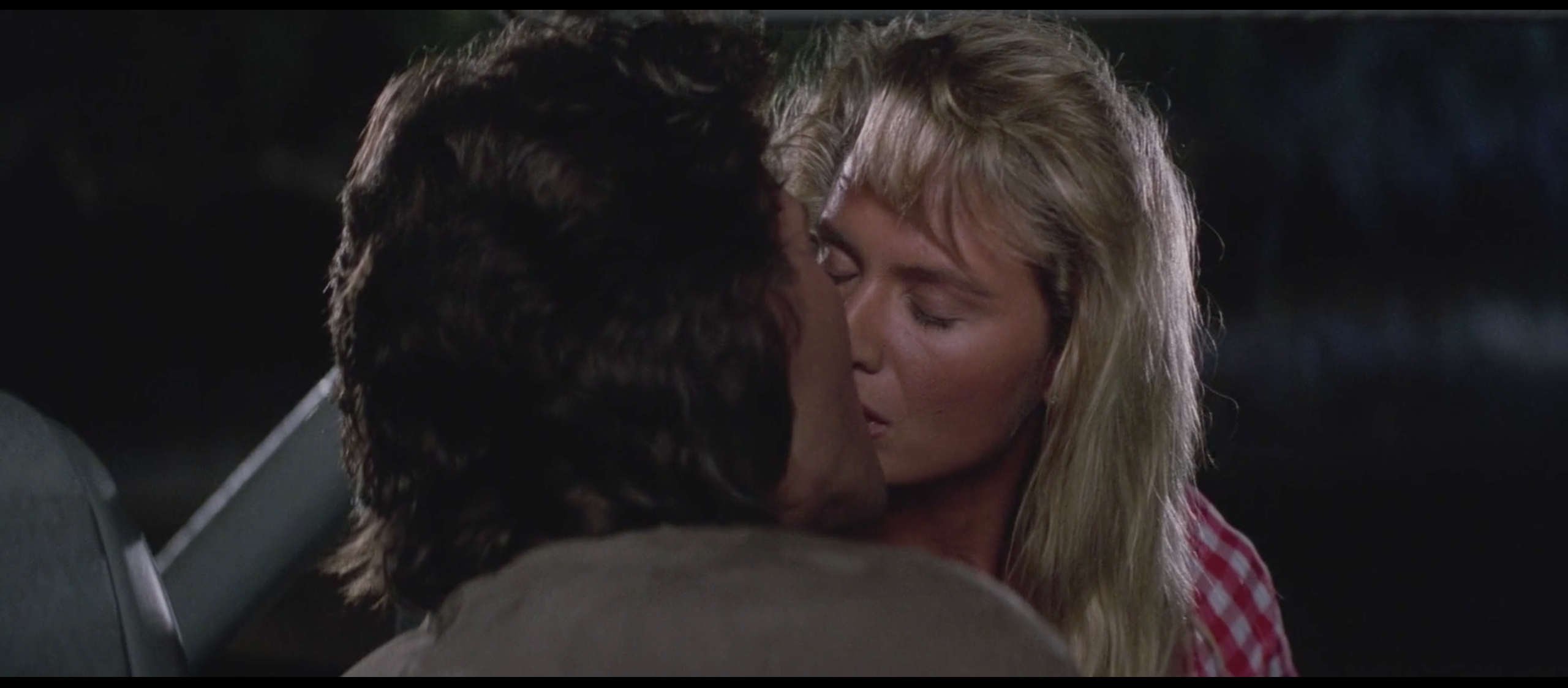
Dalton and Elizabeth’s first kiss is as much a kiss of acceptance as of romance. Their awkward, oddly hostile first date concluded, they have returned to the parking lot of the Double Deuce so Dalton can pick up his car to drive it back to Emmett’s ranch. They find its tires flattened and its window impaled with an uprooted stop sign. Doc, quick-witted as ever, quips “Your fan club?”
“They are devoted,” Dalton chuckles.
“You live some kind of life, Dalton.” This is delivered as a summation of the night’s conversation. Whether he’s ever been bested, ever been put down, ever wondered why, ever thought about the morality of accepting money to beat people, ever considered whether or not his nice guy act works—in seeing that ruined car Elizabeth appears to realize that these questions are moot. Dalton is a man willing to martyr himself so the kinds of people who’ll fuck up some guy’s car just for doing his job don’t get to do it to other people more vulnerable, less capable of fighting back. She heeds the stop sign, in other words, and lays her doubts to rest, for now anyway.
Dalton doesn’t know this yet. He sees his ruined car and sees, well, a ruined car. Now that part of his life has been displayed to the Doc, along with his battered body. It isn’t a pretty picture. (Not even his perfect physique is necessarily that impressive to someone who’s stapled it shut.)
“Too ugly for you,” he says. In classic Road House fashion this is a statement, not a question. He’s offering an answer of his own.
Then comes the happy surprise, the eucatastrophe, from the mouth of the Doc: “I didn’t say that.”
The kiss that follows (after some awkward seatbelt fumbling) is soft, nearly chaste, one sustained contact with the lips and then a release. It’s a benediction. So much is said with this one kiss that when the time comes for Dalton and Elizabeth to make love, neither feels the need to kiss again until the act has been consummated. To the extent that a kiss is the physical expression of intimacy, what can be more intimate than “I understand”?
“Black Spot” thoughts, Season One, Episode Four: “No More Walks in the Woods”
It’s no fun at all to watch a mystery you’re halfway to solving by the time you actually see the crime. It’s especially no fun when the mystery in question is this well shot, well cast, and well acted. The cast, led by Suliane Brahim as Major Weiss and Laurent Capelluto as District Attorney Sirani, are warm and endearing—even Weiss and Siriani, the prickliest of the bunch. Meanwhile, director Thierry Poiraud is as proficient with landscapes as he is with closeups. Both are used to convey isolation and fear in a way that’s far more moving than the mystery material.
I reviewed the fourth episode of this frustrating series for Decider.
161. Terry Funk Trilogy
The same year he starred as Morgan, the man who tells Patrick Swayze he’d heard he has balls big enough to fit in a dump truck, in Road House, Terry Funk was a peripheral participant in what is widely considered to be the greatest series of wrestling matches of all time.
In 1989, “Nature Boy” Ric Flair and Ricky “The Dragon” Steamboat battled back and forth for the NWA World Heavyweight Championship in three major televised events: Chi-Town Rumble, Chicago, February 20; Clash of the Champions VI, New Orleans, April 2; and the inaugural Wrestlewar, Nashville, May 7. Each match ran over half an hour of continuous wrestling, significantly more so in the case of the Clash of the Champions fight, which was a best-2-out-of-3 falls encounter. Flair was a flamboyant bleached-blonde self-styled playboy and the greatest heel in wrestling; the contrast with Steamboat, with his raven hair, his presentation as a serious martial artist and working-class family man, and the purity of his babyface goodness, sold itself.
But the wrestling formed the real narrative and set a new standard. Naitch and the Dragon chopped, stretched, tossed, and slammed the holy hell out of each other in epic back-and-forths in which each individual body part being worked on felt like a pivotal supporting character. The trilogy charted Steamboat’s upset capture of the title from longtime champion Flair in Chicago, his successful defense of the belt in a controversial finish at the Superdome, and his almost anticlimactic defeat by Flair to regain the championship in Tennessee. (They fought each other at off-air “house shows” dozens, perhaps hundreds, of times; some of these fights, by their own account as well as those of contemporary observers, were even better than the big three canonical bouts.)
These matches are available on WWE’s proprietary streaming service, and may also be located with minimal google-fu on YouTube or one of its knockoffs. You can sit and watch all three matches back to back and feel as if you’re watching an intimate epic, The Return of the King crammed into the deliberation room from 12 Angry Men. If you want to be entertained and awed by the world’s most lucrative outsider artform, I can’t recommend “the trilogy” highly enough.
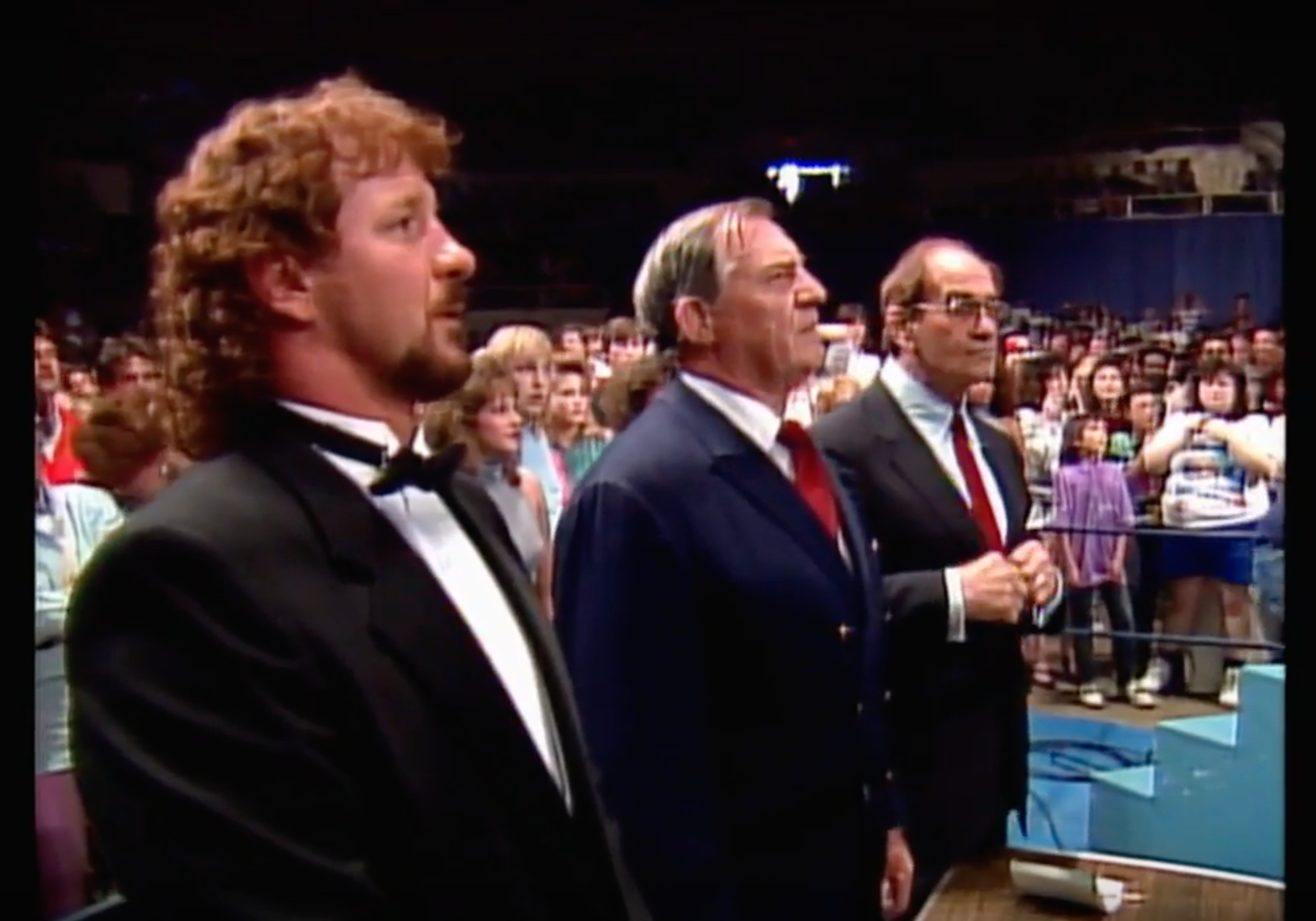
I bring this up not only because I just watched the trilogy for the first time, but because Terry Funk’s presence was such a treat for a Road House mark like myself. While absent for the Chi-Town Rumble fight, he was one of two ringside commentators during CotC, as well as a judge and…let’s say “audience participant” at Wrestlewar. I’ll tell you this, fight fans: Anyone who thinks Terry Funk isn’t one hell of an actor needs to listen to and watch those last two matches.
In the first, Funk is largely an offscreen presence, and an ebullient, gracious, and sweet-natured one at that. His distinctive, soft tenor rasp provides a sense of almost childlike delight at the herculean feats of Steamboat and Flair in the ring; if “I’m just happy to be here” had a voice, it would be Terry Funk’s during this match. Where is the man who called Dalton an asshole and a dead man?
He’s biding his time until the following month, that’s where he is. That is when, while Steamboat is still exiting the arena and his prior commentary colleague Jim Ross attempts to interview the triumphant Flair in the ring, Funk awkwardly inserts himself, repeatedly congratulating the new champ. It gets weirder and rings phonier as the segment goes on, and Flair, whose display of stamina and guts during the whole titanic series of matches had largely won over the crowd at a time when the line of demarcation between heel and face was much firmer than it is today, gets pricklier. When Funk says he’d like to be the first to challenge Flair for the title, it feels inevitable, and Flair’s pushback—that there’s an entire ranking system of top contenders, all of whom were around while Funk was off hobnobbing with Sylvester Stallone in Hollywood—feels justified.
Funk, as you might have guessed, disagrees, and goes absolutely apeshit.
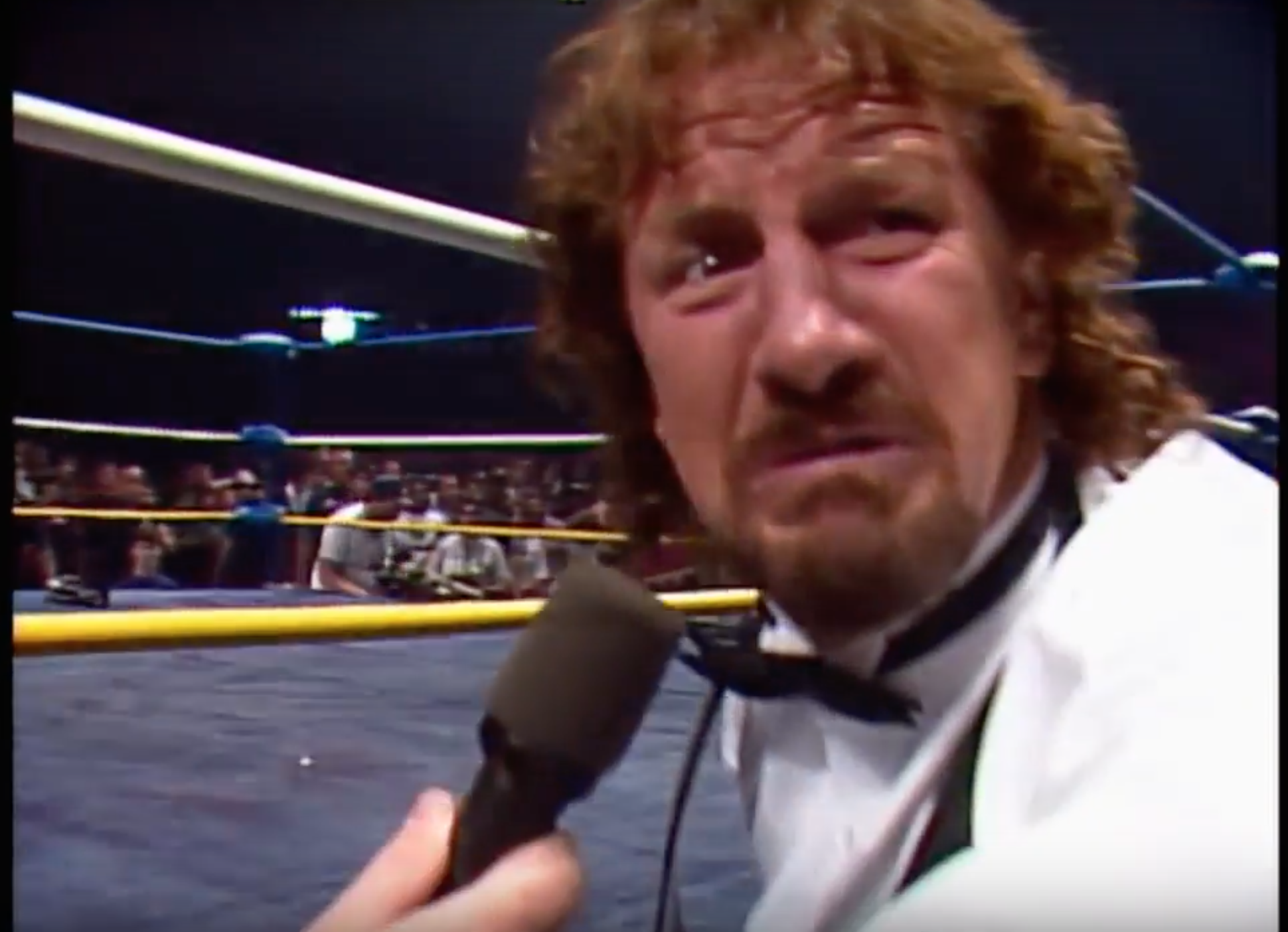
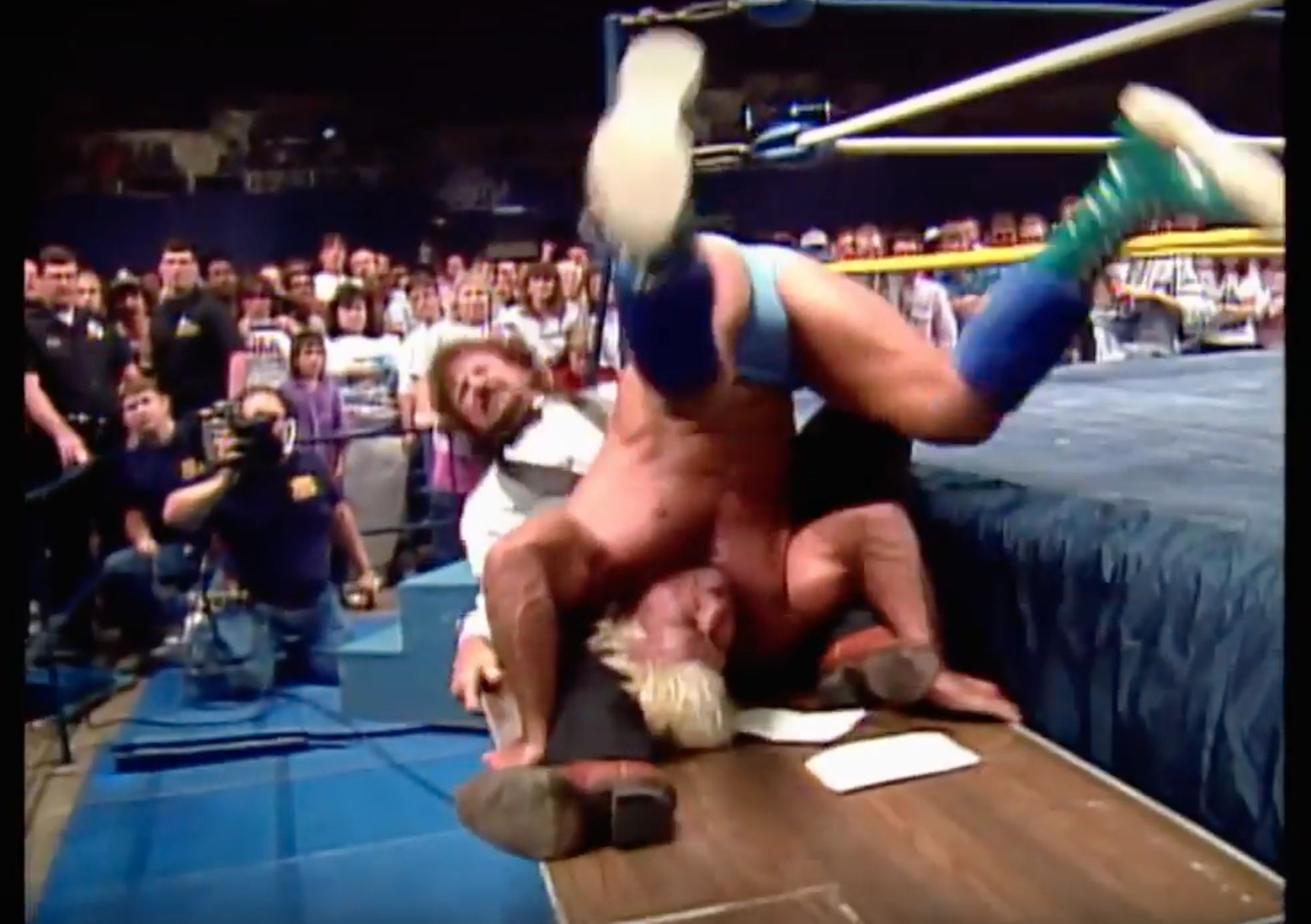
He suckerpunches Flair, blasts him right out of the ring, and goes to town on him with the security railing, with a table, with a chair. In one spot that’s particularly frightening now, after a few intervening decades of broken necks and CTE, he piledrives Flair’s skull directly into the tabletop, toppling the whole edifice to the ground as they collapse onto it afterwards. Throughout, Funk is so furious he actually appears to start crying, tearing off his tuxedo jacket and screaming “You think you’re better than me???” at the defenseless champion while shrieking at the aghast and angry crowd.
Less than two weeks later, on May 19, Road House debuted. Along with the Clash and Wrestlewar matches, it comprises a Terry Funk trilogy of its own.
I feel I understand Morgan the bouncer a bit better now after watching Steamboat/Flair II and Steamboat/Flair III. After his genial turn as an announcer I can see how he might have sweet-talked Frank Tilghman into hiring him, and perhaps even initially persuaded his coworkers to like him. After his psychotic rampage, I can see why no one dared to fire him despite his manifest unfitness for the job, and why Brad Wesley kept him on the payroll to protect his nephew and his investments. After both, I see why Rowdy Herrington cast the person he cast for the role. You could say that Terry Funk brought a lot to the table.
“Black Spot” thoughts, Season One, Episode Three: “The Void”
Episode 3, “The Void,” illustrates a major potential problem with the show’s approach: If you’re going to have eight mysteries a season, you have to be good at writing mysteries.
“Billions” thoughts, Season Four, Episode Twelve: “Extreme Sandbox”
But the grimmest thing about “Billions” in general, and about this episode in particular, is not the personal damage these characters do to the people they know and work with and even love. It’s the utterly impersonal destruction they visit on people, thousands of them, whom they don’t know at all.
Sure, Bobby broke Rebecca’s heart. But she can cry herself to sleep on a billion dollar bed as a result. The 50,000 employees of the store Axe annihilated along with his relationship? They’ll take what they can get.
“What they can get” is whatever Bobby, Sandy and the rest of these sociopaths, with their childlike nicknames and salt-of-the-earth affectations, deign to give them. To such men, the lives of the working class are worth less than a rounding error.
That they have working-class roots themselves appears only to harden their resolve not to care anymore. They got out; what’s everyone else’s excuse? The notion that their own cruelty might be what’s keeping their former peers down, and that their predecessors in the game helped create the very conditions they felt it necessary to escape, never occurs to them.
It’s not a lesson they have any incentive to learn. They’re earth movers. The world is their extreme sandbox, and they have the place to themselves.
Perhaps that’s why so many real-life billionaires are willing to appear on a show that makes them look like monsters. They can afford to.
I reviewed the season finale of Billions for the New York Times.
160. How to Build a Better Goon
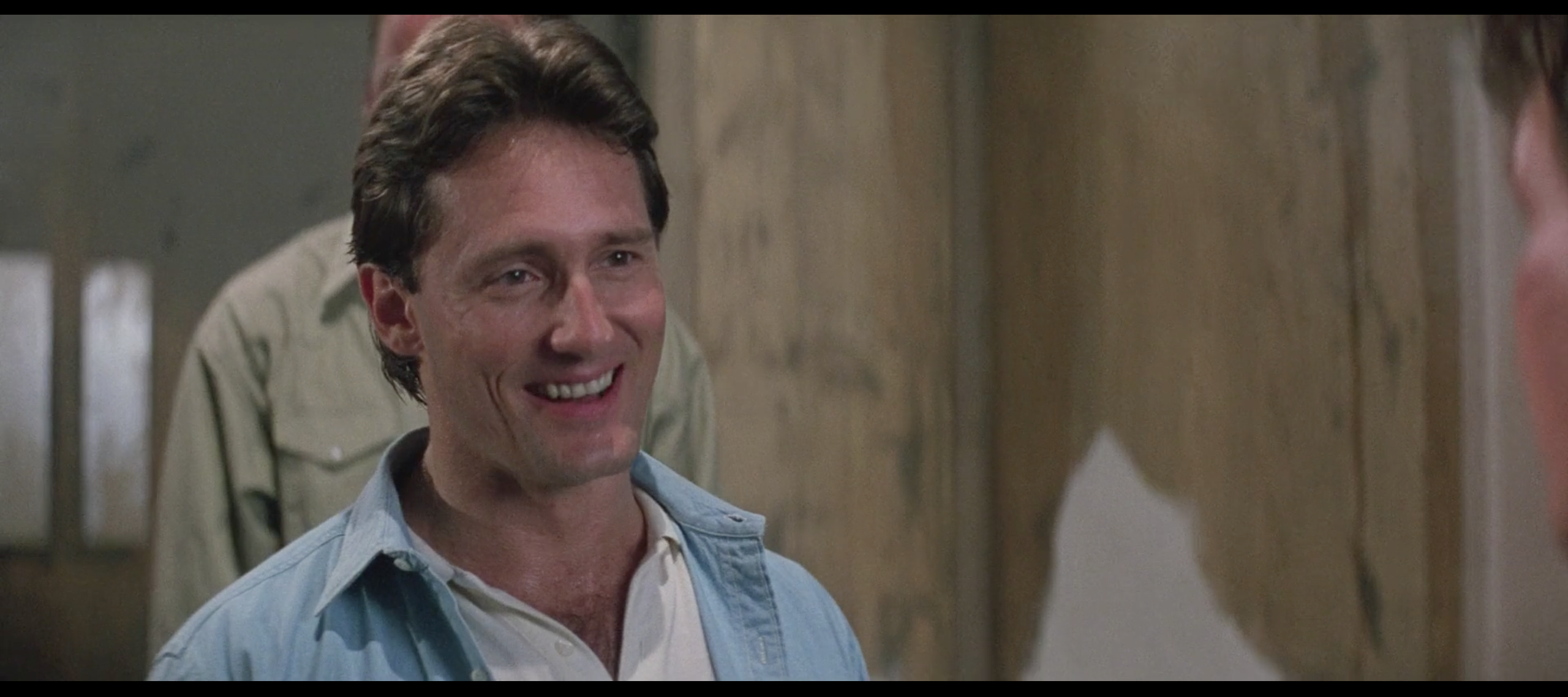
Ketchum is a forgettable goon. That’s just facts. I know who he is because I’ve watched Road House a million times, and you know who he is because you’re reading this series of daily essays about Road House. But it took me a long, long time, and many, many viewings, to put Ketchum together, as it were: that he drives the monster truck any time it shows up; that he’s the guy who tries to kick Dalton in the head with the knife in his boot and gets his ass kicked instead; that he’s the man who kills Wade Garrett, as evidenced by his retrieval of the knife used to kill him and insertion of that knife into a custom sheath on his hip; that he’s the last goon to tangle with Dalton hand to hand; that his name is Ketchum.
Alone among the goons present for the climax of the film, no one even says his name in the movie, a privilege afforded to Pat McGurn, Morgan, O’Connor, Tinker, and Jimmy. I’ve made a fuss about this over the past few months, alleging that it’s one of the reasons he’s so forgettable. But I’ve been thinking about that assertion lately, because I don’t think it has to be that way.
Consider the orcs.
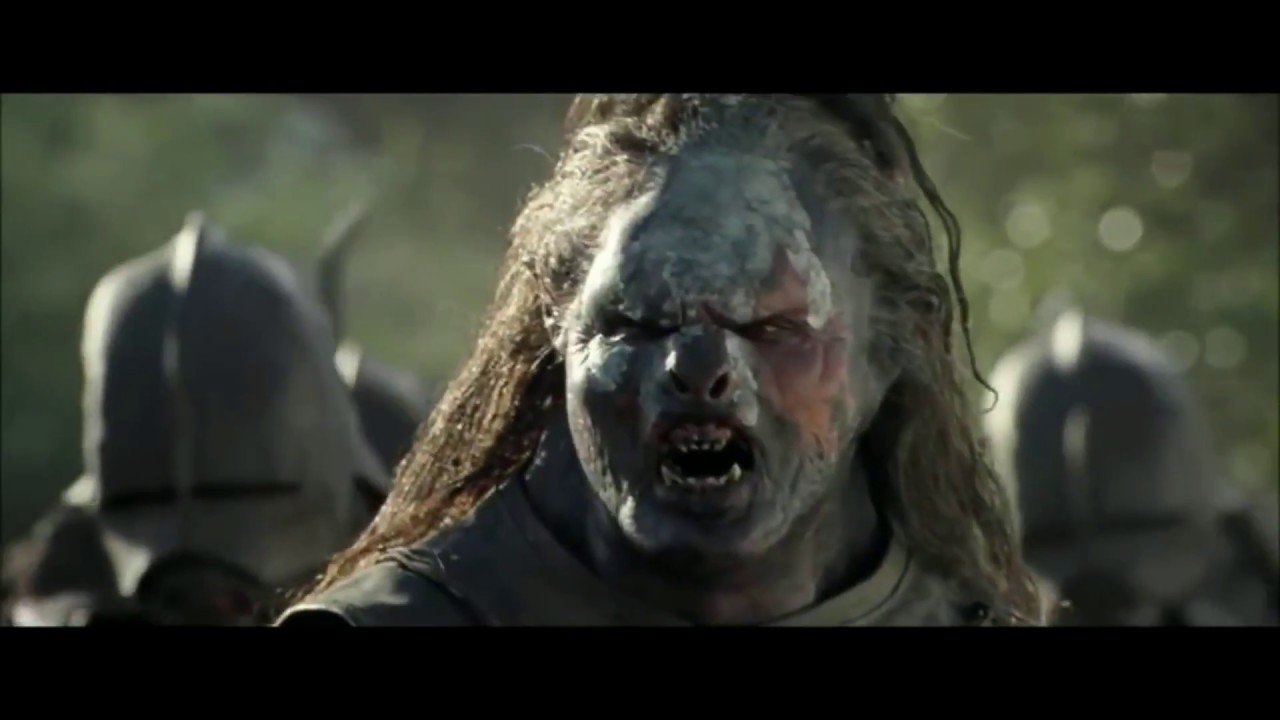
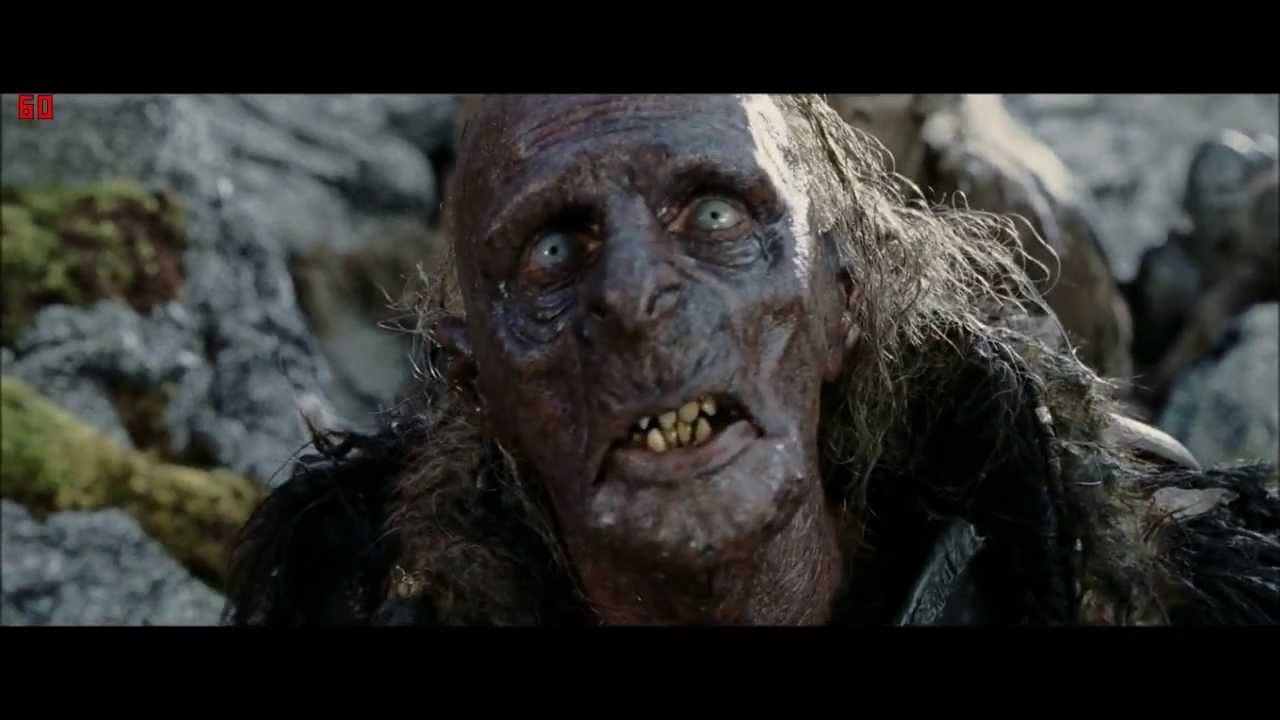
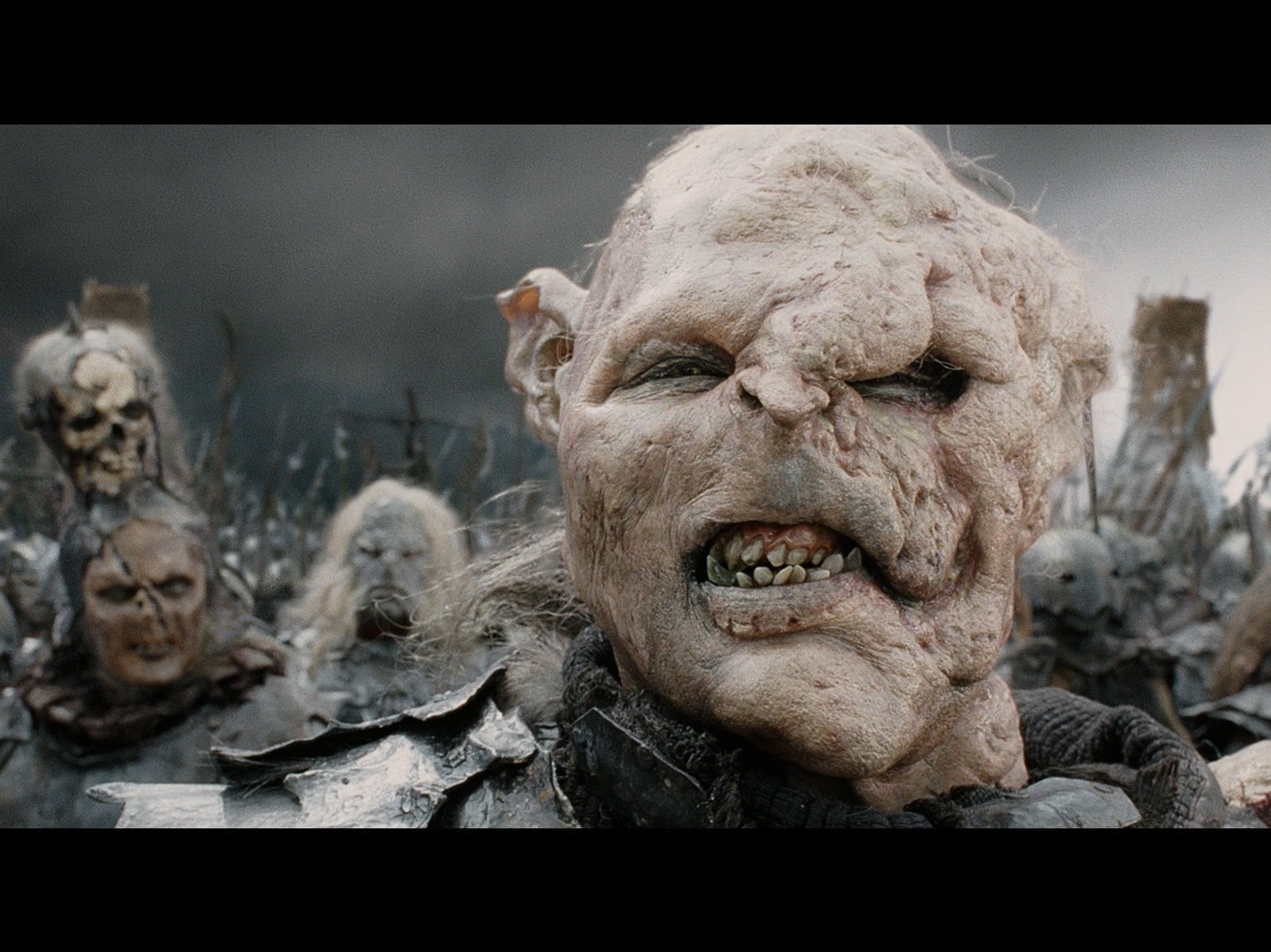
Remember these handsome fellas? Sure you do. That’s Lurtz, Grishnakh, and Gothmog, from Peter Jackson’s Lord of the Rings trilogy. No one says their names in the movies. No one says any orc’s name in the movies. For that matter, Lurtz is a made-up name for a brand-new character the filmmakers introduced, and Gothmog is simply their best guess as to what a Mordor commander from the books whose species isn’t even specified by Tolkien might be like.
But if you’ve watched those movies recently, or if you find them memorable at all, you probably recall them as the uruk-hai leader with the Ariana Grande hairstyle whose head gets chopped off by Aragorn after a big fight, the raspy-voiced weasel who tries to hunt and kill Merry and Pippin before Treebeard squishes him, and the leader of the orc assault on Minas Tirith with the big puffy pink face. You remember how they look, how they sound, and what they do, because Jackson and company made a big point of giving them memorable introductions, isolating them with distinct camerawork (closeups, angles, whatever the case), and having them do their most memorable stuff right there for all to see. Lurtz was created to give the uruk-hai chasing the Fellowship a distinctive leadership figure so the film’s climax would work as such. It’s a far cry from the aggressively nondescript Ketchum first showing up as a non-speaking background character wearing face-masking sunglasses during the Bleeder scene and eventually killing Road House‘s secondary protagonist off-screen.
For that matter, it’s a far cry from these fellows.
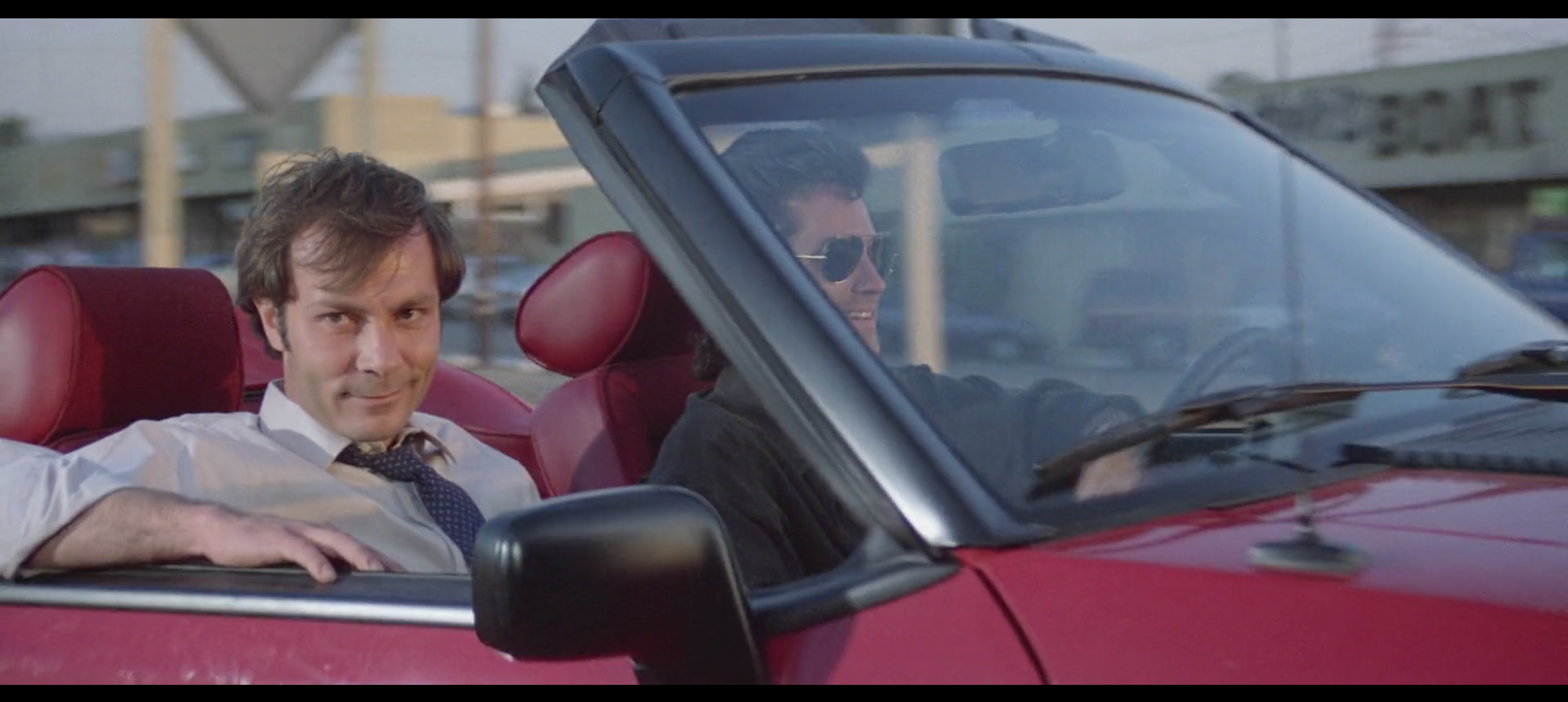
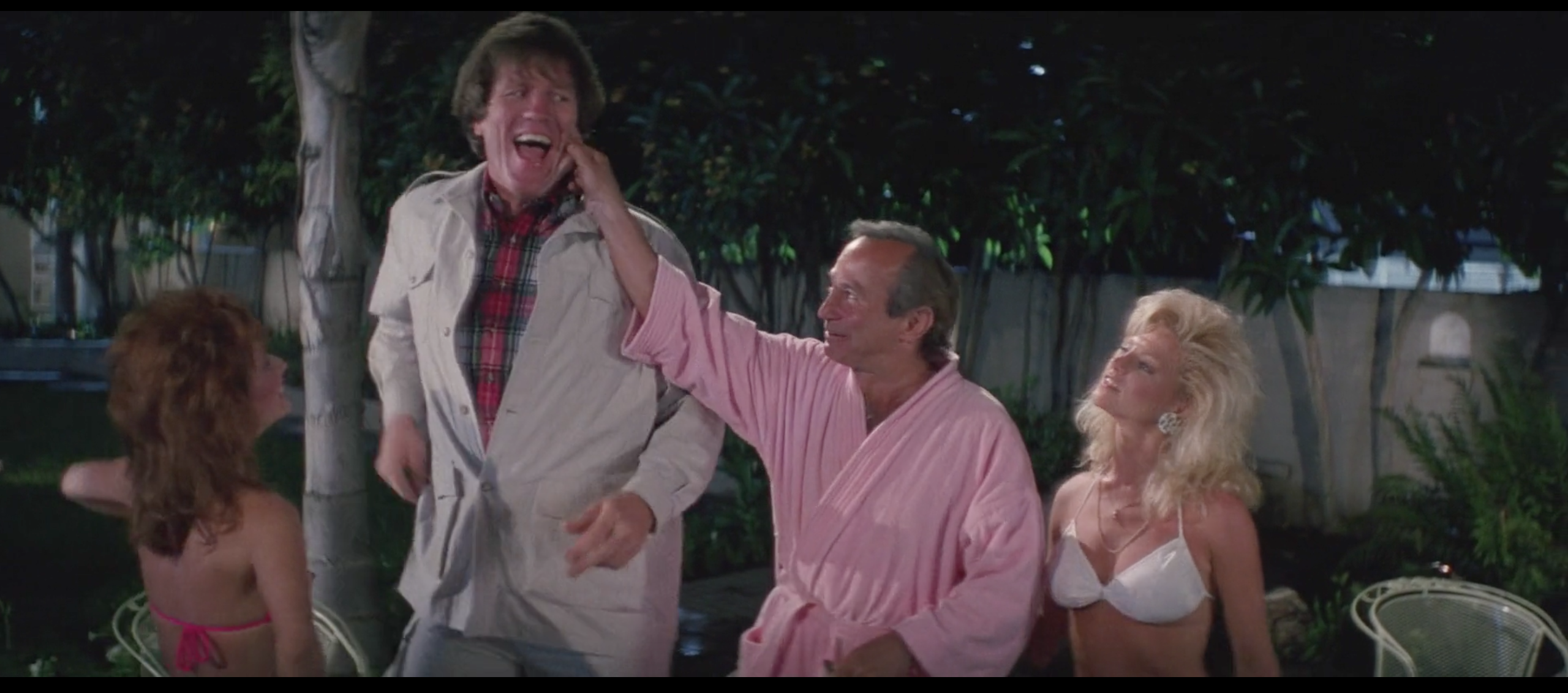
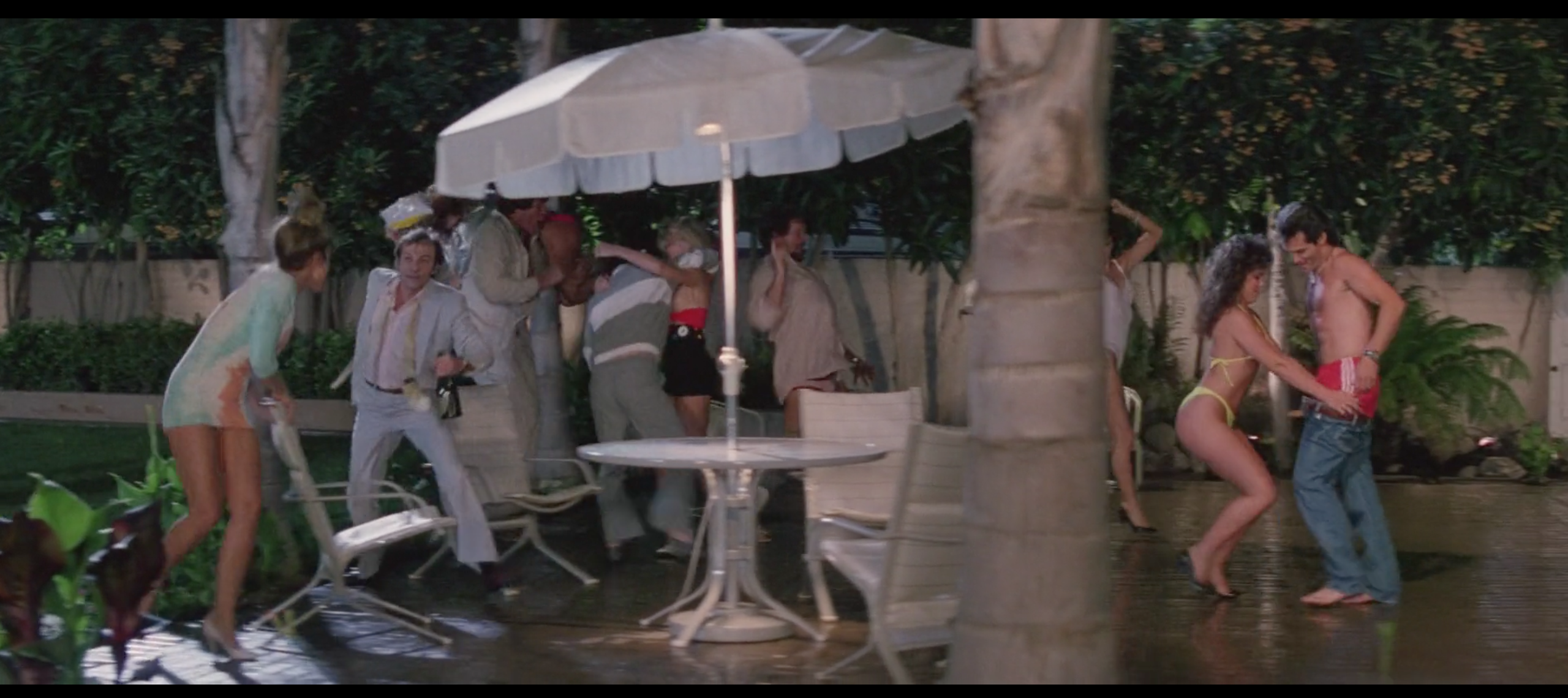
Karpis and Mountain are also never named. They’re only shown in close-up in couple of scenes apiece; in Mountain’s case, one of those scenes is a pool party (in which Karpis appears in the background). Neither of them make it to the film’s final reel but it’s not because they get killed—they simply stop showing up, because that’s how Road House rolls.
But you remember them, right? They each have a distinctive look, with Karpis’s clothes from the Bun E. Carlos collection and Mountain’s sheer size. They each do something interesting: Karpis stares down Dalton, and Mountain dances like an idiot and later Sam Elliott tells him “I sure ain’t gonna show you my dick” before taking him down. The camera makes a point of both of them: Karpis stares right into it in closeup, while Mountain becomes the focal point as it follows Wesley and Denise into the pool party.
When it comes to differentiating your goons, bothering to say their name during the film helps, especially if you name half a dozen comparable characters during the film and run the risk of drowning the unnamed one out. (That doesn’t apply to LotR.) But you need the look, you need a distinctive action, and you need a memorable trick with the camera to make the look and the action click in the viewer’s mind. It’s a bit unfair to compare Rowdy Herrington’s work with Ketchum to Peter Jackson’s work in The Lord of the Rings, which is better at this than any other film I’ve ever seen. My point is simply, what’s in a name?
“Black Spot” thoughts, Season One, Episode Three: “The Void”
Like all paranormal mystery series, Black Spot wants to be a “binge watch it until the answers are revealed” kind of show. That’s not a criticism—not of the show and not even of Netflix, the most binge-watch dependent of all TV networks. Before the concept of binge-watching even existed Lost was built this way on ABC, just like Twin Peaks was built this way on ABC before it (and on Showtime after it). From those two examples alone I hope it’s clear that you can do good things with this compulsive-viewing format. In the case of Twin Peaks you can do literally the best thing ever done on television with it. If Black Spot wants us to binge watch until we find out just what the hell is happening in Villefranche, more power to it.
Like some paranormal mystery series, Black Spot also wants to be an episodic procedural kind of show. That’s a bit more unusual. I’m not even talking about the “monster/killer of the week” structure like I’ve done in previous reviews; obviously that’s a pretty common approach to genre work on television, or at least it used to be. I’m referring here to the fact that in each episode there’s a small crime-based mystery in addition to the larger paranormal ones, and the police and district attorney who are our main characters investigate that crime, and then they solve that crime. That’s the way Black Spot is going from Point A to Point B with its overarching plot: by going from Exhibit A to Exhibit B until each individual episode’s mystery is solved.
Episode 3, “The Void,” illustrates a major potential problem with this approach: If you’re going to have eight mysteries a season, you have to be good at writing mysteries.
159. The future’s so bright, I gotta wear shades
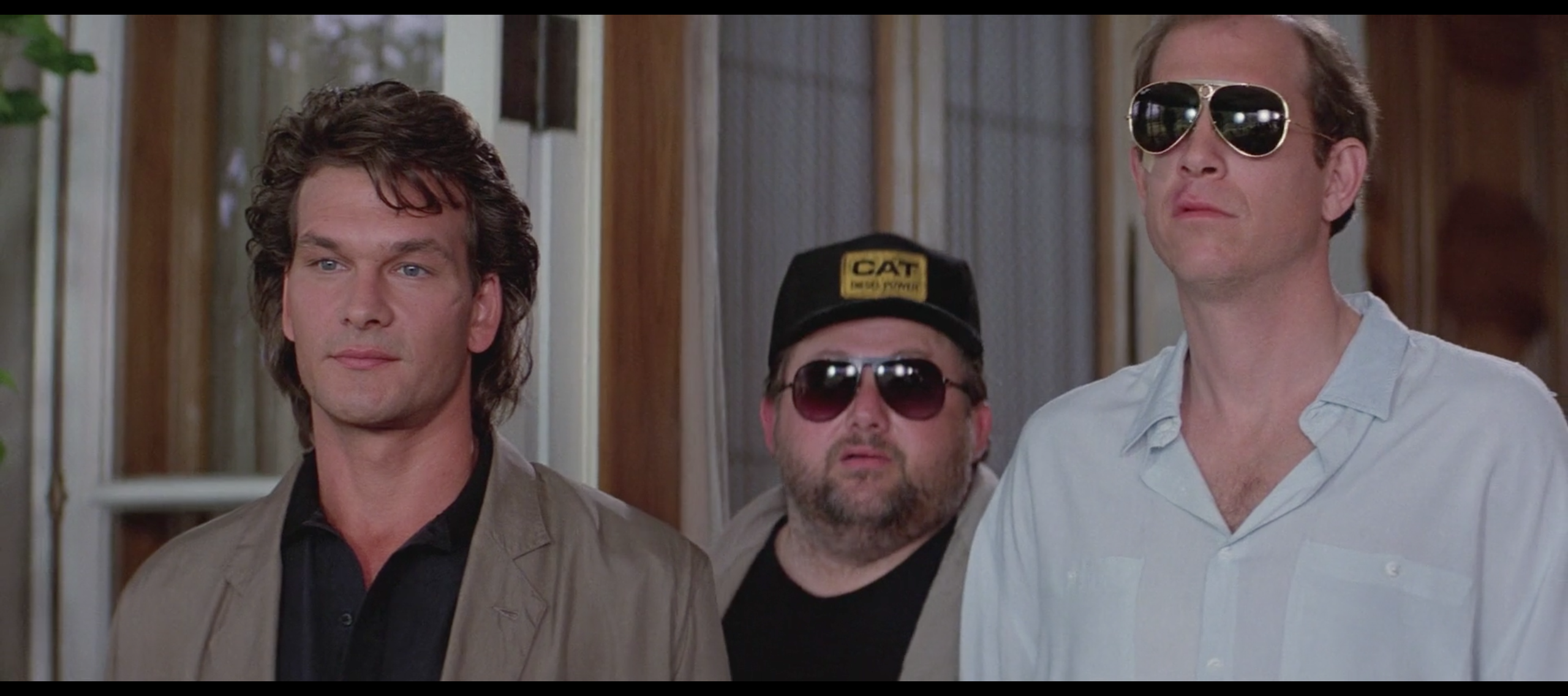
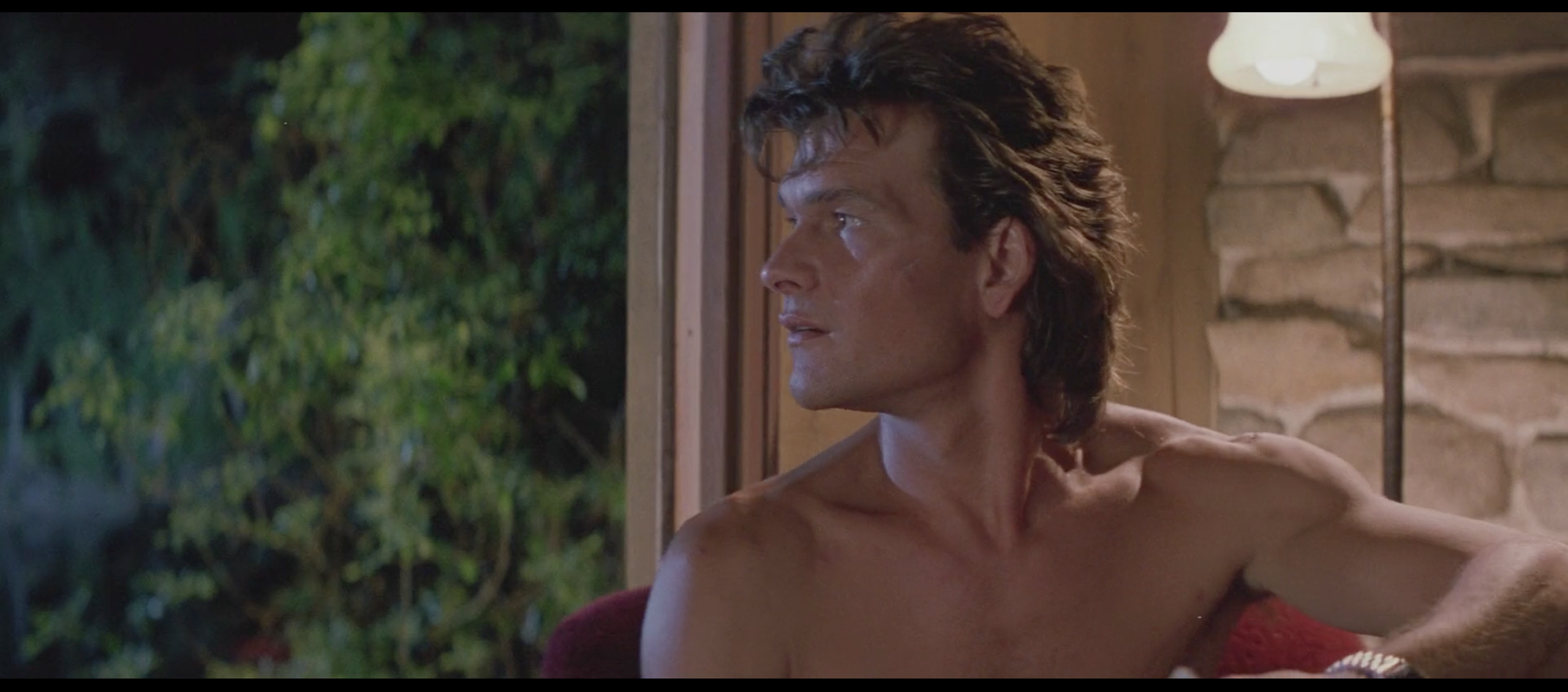
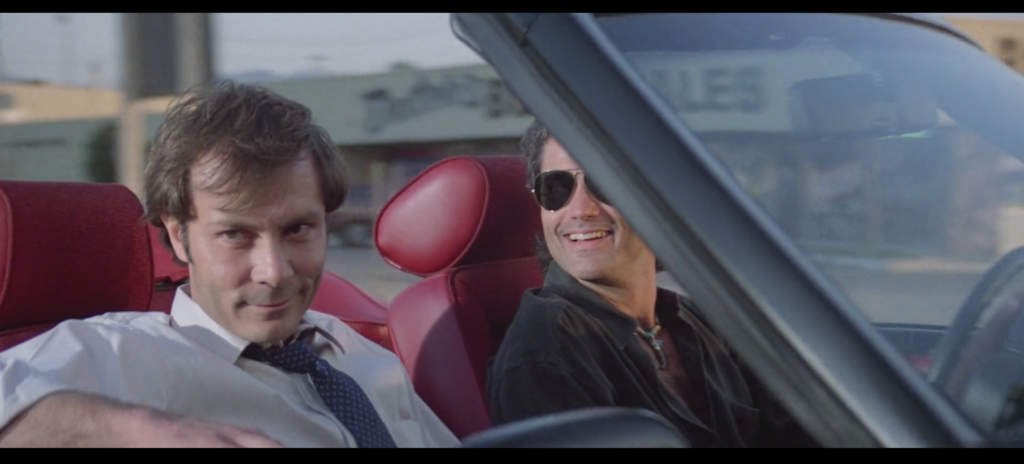
When Tinker and the Bleeder are sent to collect Dalton for an audience with Brad Wesley, they do so wearing bigass aviator sunglasses. It’s sunny out, I get that. But both these men have been badly beaten recently: Tinker by the bouncers at the Double Deuce, O’Connor by Dalton at the Double Deuce, and O’Connor again by his own boss, Brad Wesley, in the driveway of the very house to which he’s delivered his quarry. You can see a bandage sticking out from under the shades, in fact. Sadly he’s not the sort to wear concealer to cover up the bruise above his lip, but he’s trying his best to look healthy, together, and intimidating in front of two men who literally beat him unconscious on consecutive days. I get why: Abusers see weakness, and they hate it, and they exploit it, and it reminds them of the anger they felt when they inflicted the damage that caused the weakness and it makes them angry all over again, and god forbid word of what’s going on gets out.
I don’t mean to take this in such a heavy direction, but consider who else is in this scene.
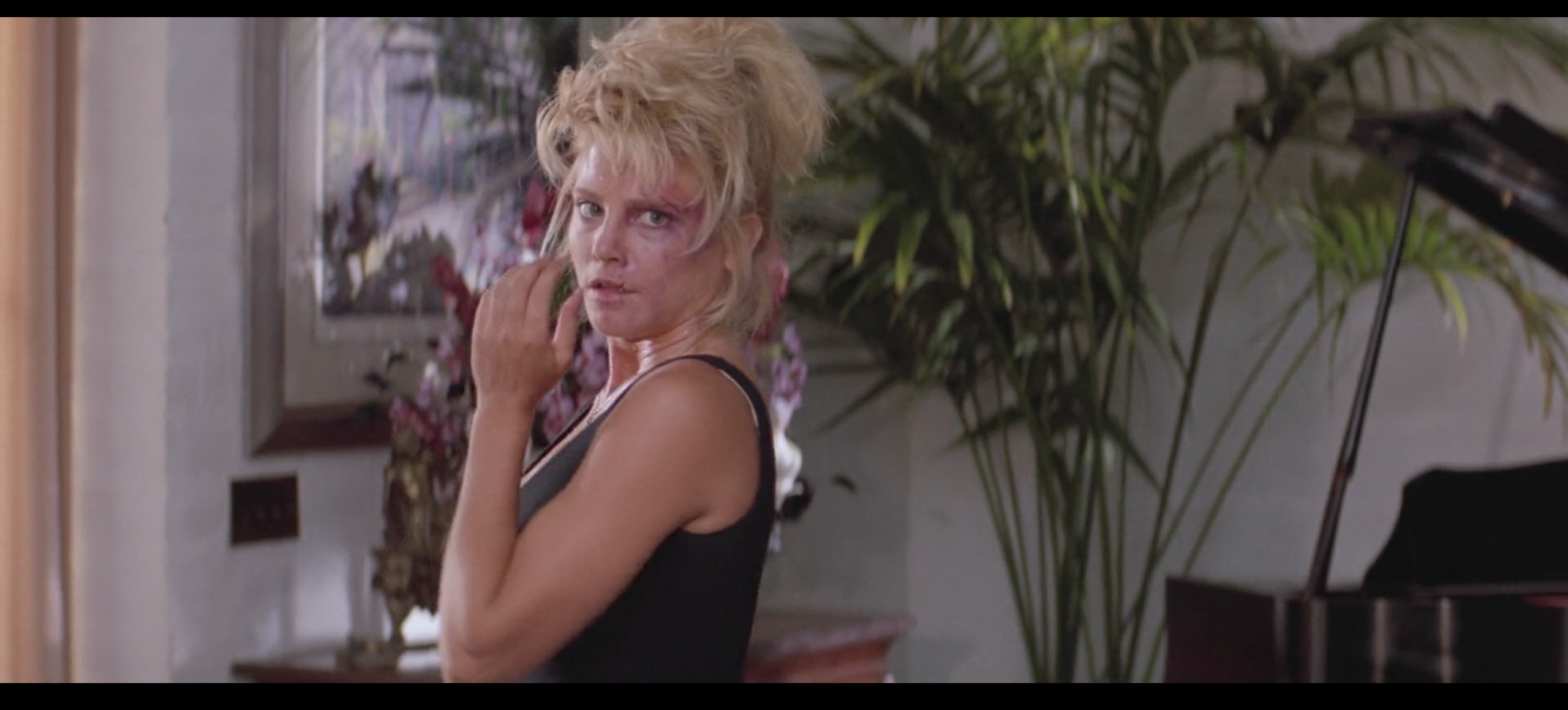
That’s Denise, charming horny vivacious together Denise. The night before, she hit on Dalton with no regard for subtlety whatsoever: She saw what she wanted and went for it. From a personal emotional perspective it’s one of the most impressive things anyone does with anyone else in this farkakte movie, which frequently bears the same relationship to actual human interaction that Lego minifigures have to actual human hands. But it takes place in front of Jimmy, Brad’s bastard son [citation needed], who drags her strugging out of the bar, through the parking lot, and into a nearby vehicle. Jimmy gives the high sign to Ketchum and his squad of men who’ve ordered the Rooty Tooty Fresh ‘n’ Fruity at IHOP after church on Sunday move in to attempt to assassinate the man she just hit on by kicking his skull with a knife. Denise, it appears safe to assume, is brought back to Brad Wesley’s house, where he and perhaps Jimmy beat the living fucking shit out of her.
I’ll give Dalton this much regarding his conduct toward Denise, a definite character lowlight in many other regards: Seeing what Brad Wesley did to her seems to factor into his last-straw decision to react to Wesley’s overtures with open hostility. I say “seems” because he’s most visibly pissed off when Wesley brings up the fact that Dalton killed a man who’d discovered he was fucking his wife, and that could be enough. I’m just giving him the benefit of the doubt is all.
Anyway, you’ll notice no sunglasses have been afforded to Denise. No warning that Brad would be receiving company, either. She’s in the middle of an aerobics routine with music blasting when Tinker and O’Connor roll in with Dalton in tow, because getting beaten bloody by your boyfriend is no justification for an off day.
In conclusion, O’Connor and Tinker get off easy, and O’Connor gets murdered by the end of the movie. Throw some sunglasses on his corpse.
“Black Spot” thoughts, Season One, Episode Two: “A Wolf’s Dream”
Here’s what we know about Black Spot as of the completion of Episode 2. Pretend I’m about a half dozen quirky law enforcement professionals piecing this together if that helps.
It’s a paranormal cop show that keeps an overarching mystery—who or what is stalking the people of the murder-happy forest town of Villefranche—on a low simmer while bringing a new case to a boil each episode. That places it more with the “monster/serial killer of the week” mold of Kolchak: The Night Stalker, The X-Files, and Hannibal Season One than with Twin Peakseven at its most episodic.
It’s not above tossing a crying baby off a cliff into a roaring river as a fakeout to drum up cheap heat.
It occasionally displays striking proficiency with horror-fantasy imagery and makes the absolute most out of its misty arboreal setting.
It’s not above buying slo-mo shots and horror-movie music cues wholesale to drive its points home.
It’s pretty good at setting its top cop, Laurène Weiss, apart from a bajillion other characters in her tough-as-nails-but-full-of-secrets vein, courtesy of actor Suliane Brahim, the head of an engaging, attractive, even amusing ensemble.
It’s not above dipping into horror-imagery wells—like mysterious symbols and antlered monsters and the proverbial wolf in the woods—you’d think would have run dry by now.
Seeing a pattern emerge just yet?
158. Salute
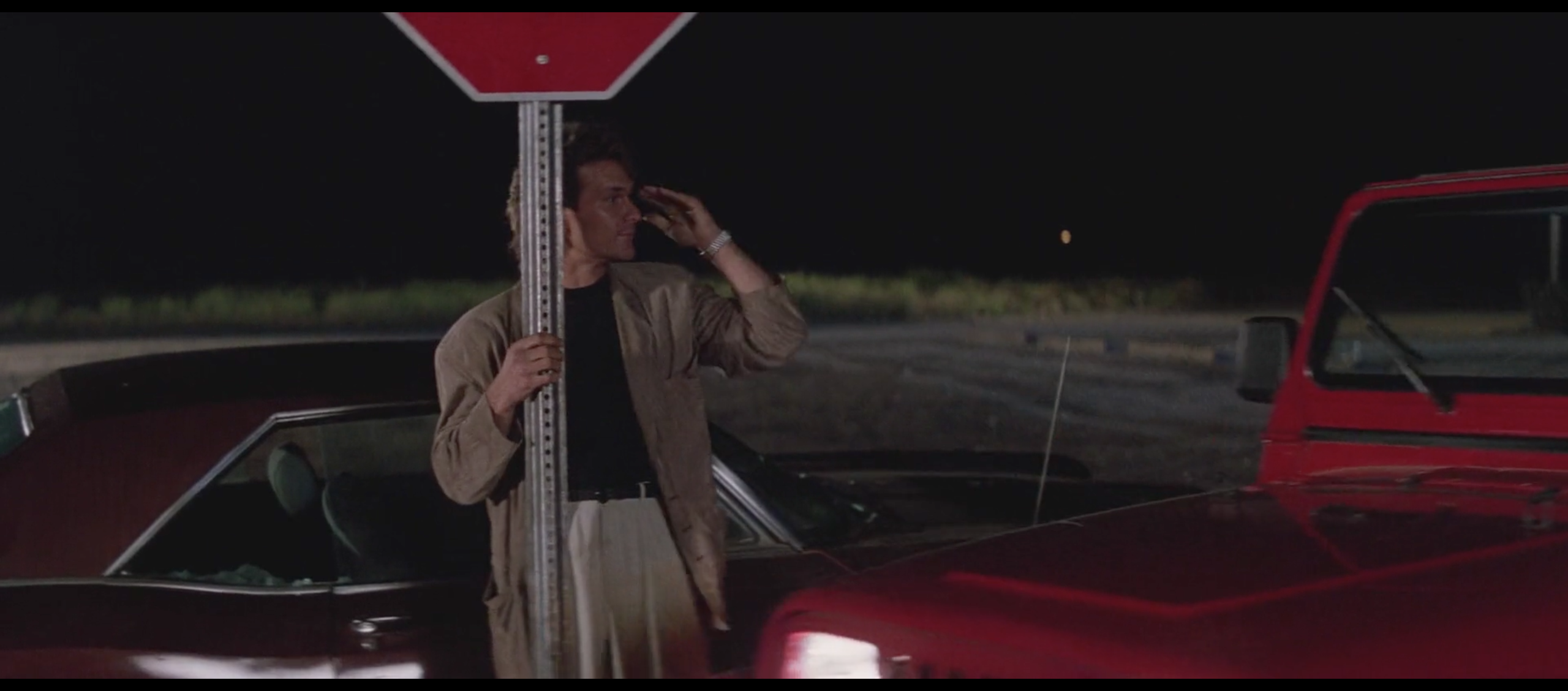
Some men see a bouncer who gets paid a low-mid six-figure yearly salary to beat up the agents of a local racketeer with a Fotomat in a dirt-parking-lot dive-bar shithole in Jasper Missouri conclude a date during which he got read to filth to his face multiple times by a woman he met in a trauma ward when she stapled his latest stab wound shut without anesthesia before showing up to their date while he was in the middle of a street fight by giving her a chaste kiss on the lips and then saying goodbye with a weird little half-assed naval salute while holding the stop sign his enemies jammed through his car window after slashing all his tires and say, why; I watch Road House and say, why not?
“Black Spot” thoughts, Season One, Episode Two: “A Wolf’s Dream”
Titled “A Wolf’s Dream” after the white wolf (“Ghost! To me!”) that keeps appearing to Major Weiss, and eventually just to the viewers at home, the show’s second episode feels indicative of both a high creative ceiling and a low creative floor. Creator Mathieu Missoffe, director Theirrey Poiraud, and company have a lot of things going for them, but originality isn’t one of them, and I worry that will come back to bite them in the end.
“Black Spot” thoughts, Season One, Episode One: “Black Spot”
In a remote logging town near a secluded forest, a young woman is found murdered. Her death is just the latest in a long string of crimes, including the disappearances of at least two teenage girls over a period of years. The wealthy owner of the town’s ailing sawmill isn’t telling everything he knows to the chief of the town’s slightly comic police department, who has secrets too.
Into the mix steps a quirky outsider, a lawman from the big city sent to get to the bottom of things. Something about the place intrigues him, so he rents a room in a local hotel. Looks like he’ll be staying in this little town for a while.
Sound familiar? Every bit as familiar as Angelo Badalamenti’s Twin Peaks theme song, I’ll bet.
David Lynch and Mark Frost’s three-seasons-and-a-movie masterpiece has cast a long shadow over television, with “weird events in a woodland town” at least as popular a dramatic subgenre as that post-Sopranos mainstay, “our protagonist is a gangster.” And Black Spot falls squarely within that macabre penumbra.
(Note: I’m playing catchup with links to my work so these review descriptions will all be pretty brief. I guess you’ll just have to watch the reviews!)
“Black Spot” thoughts, Season One, Episode One: “Black Spot”
In a remote logging town near a secluded forest, a young woman is found murdered. Her death is just the latest in a long string of crimes, including the disappearances of at least two teenage girls over a period of years. The wealthy owner of the town’s ailing sawmill isn’t telling everything he knows to the chief of the town’s slightly comic police department, who has secrets too.
Into the mix steps a quirky outsider, a lawman from the big city sent to get to the bottom of things. Something about the place intrigues him, so he rents a room in a local hotel. Looks like he’ll be staying in this little town for a while.
Sound familiar? Every bit as familiar as Angelo Badalamenti’s Twin Peaks theme song, I’ll bet.
David Lynch and Mark Frost’s three-seasons-and-a-movie masterpiece has cast a long shadow over television, with “weird events in a woodland town” at least as popular a dramatic subgenre as that post-Sopranos mainstay, “our protagonist is a gangster.” And Black Spot falls squarely within that macabre penumbra.
A loose almost anti-translation of the French title Zone Blanche, or “White Zone,” Black Spotrefers to the dead zone (that one’s taken) of cellular coverage in which the grim little town of Villefranche and its surrounding forest are located. If the pilot episode for this Netflix import proves anything, it’s that that particular zone is pretty roomy. Opportunities to color within the lines drawn by both Davids, Chase and Lynch, abound. You may not score any points for originality, but you can still paint an engaging picture.
(Note: I’m playing catch-up here so these review descriptions will be minimal moving forward. I guess you’ll just have to read the reviews!)