
Author Archive
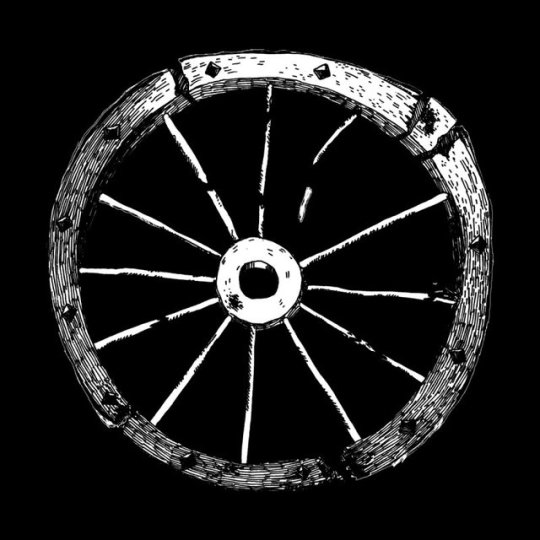
31 October T-Shirts by Julia Gfrörer, Day 24: Catherine Wheel
October 25, 2017
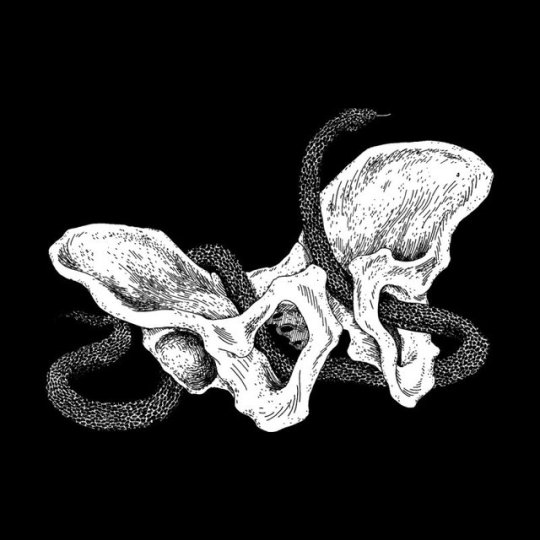
31 October T-Shirts by Julia Gfrörer, Day 23: Serpent Rampant
October 25, 2017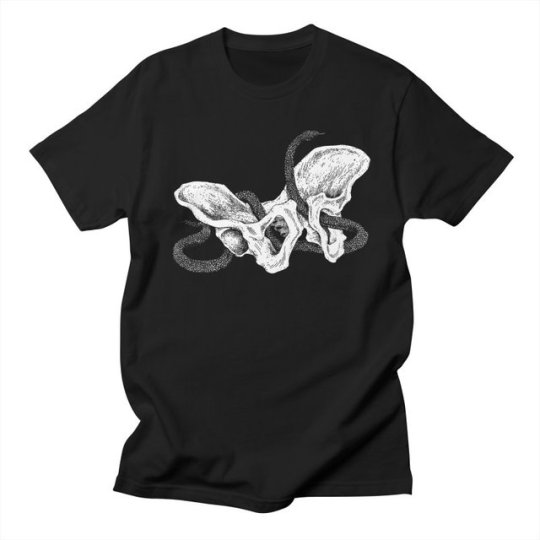
“Mindhunter” thoughts, Season One, Episode Nine
October 23, 2017For the Behavioral Science Unit, it was the best of times, it was the worst of times. The penultimate episode of Mindhunter Season 1 shows the team operating at the peak of their powers, working in in tandem to create the term for which they’ll go down in history: “serial killer.” It also depicts faultlines forming that could jeopardize the whole project (if this weren’t verifiable historical fiction, anyway). If you’ve been following along, it’s not hard to understand why the former aspect of “Episode 9” works much effectively than the latter. Mindhunter is always better when its characters are all on the same side.
The “serial killer” scene is the most satisfying example of this phenomenon yet—a conference-room scene between Holden Ford, Greg Smith, Bill Tench, and Wendy Carr that feels like watching a tight jazz quartet trade eights. Wendy tries to come up with a term for murderers who carefully prepare for their kills versus those who go on a spontaneous rampage. Smith asks if that isn’t simply organized versus disorganized killers. Wendy says, no, that refers to the process during the crime, not the pattern behind it. Killers like Charles Whitman or Richard Speck, she says, take random victims during rapid-fire rampages, so their existing term of art “sequence killer” doesn’t work. “Whitman was on a spree,” Holden says, with Wendy and Greg backing him up. Bill agrees too, but then expresses doubt about the “sequence killer” label for a killer like Ed Kemper: “It feels too…cadenced,” he explains, starting to actually sound like a musician. Debbie thinks he might be on to something. “It should feel like a long story,” Holden follows up, “continually updated.” “A series of killings,” Bill replies. “Serial?” Holden murmurs. “Serial murderer?” Greg suggests. “Serial killer?” Bill says, refining the concept, and you can see on everyone’s face that he’s hit the mark. “That’s better,” Wendy says, impressed. “Let’s see if it sticks.” Yeah, let’s see!
The Boiled Leather Audio Music
October 23, 2017Sean, as a patreon subscriber to the Boiled Leather Audio Moment I was wondering if you could post a track listing to the songs you use in your intro/outro for the BLAM eps, some of them I recognize/know but others not so much and would like to know. You have a good taste in music, unless it’s Stefan picking tracks in which case he has good taste! Thanks Sean (or Stefan)
31 October T-Shirts by Julia Gfrörer, Day 22: Crumbling Castle
October 23, 2017

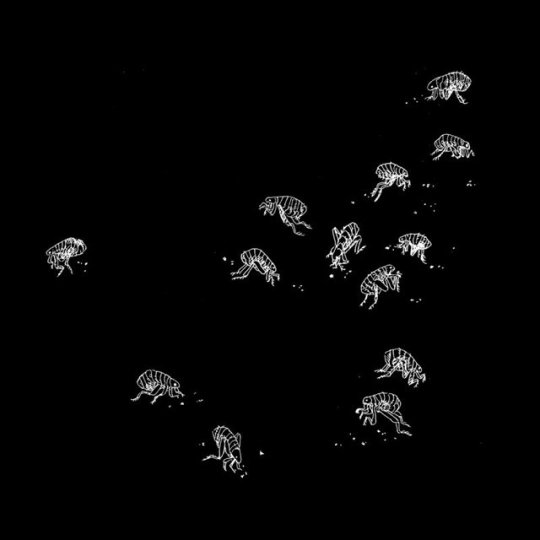
31 October T-Shirts by Julia Gfrörer, Day 21: Fleabag
October 23, 2017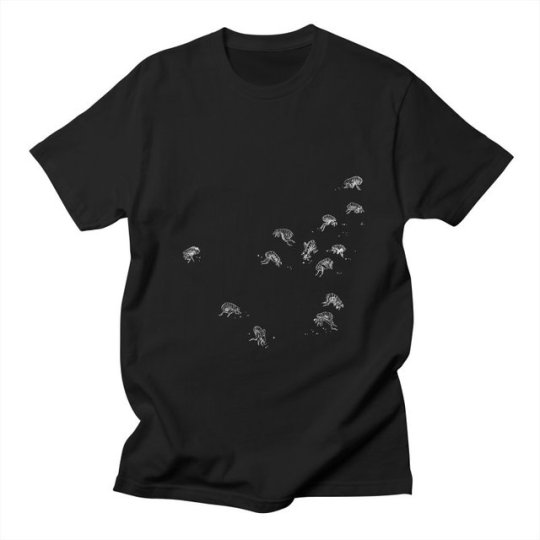
“Mindhunter” thoughts, Season One, Episode Eight
October 23, 2017For Mindhunter to succeed, its investigations have to be successful too. That doesn’t mean Holden, Bill, and Wendy need to solve every case or understand every unique pathology they encounter. It simply means that the temperament and technique that help them produce their best work — the blend of curiosity, cooperation, openness, and uncertainty I spelled out last time, during an episode where those traits were largely absent — help the show produce its best work as well. Given what came before, “Episode 8” makes the biggest leap in that direction since the series began, in what for my money is its most riveting and revealing interview with a serial killer to date.
“The Deuce” thoughts, Season One, Episode Nine: “Au Reservoir”
October 23, 2017Let’s get this out of the way: What we have just witnessed was, hands down, the best episode of The Deuce yet. By a lot. Titled “Au Reservoir,” it’s funny, scary, sad, sexy and entertaining as hell from start to finish. How did this so-so show get so damned good so suddenly?
The answers may lie behind the scenes. This episode was directed by co-star James Franco, who previously helmed one of the series’ better installments. Judging from his two turns in the driver’s seat, he’s got a knack for finding the warmth and humor in the characters and their plights; you can see the kind of actor he is reflected in the work he gets out of others.
Screenwriter Megan Abbott likely deserves the lion’s share of the credit. Along with George Pelecanos, Richard Price and Lisa Lutz, she’s part of the murderers’ row of crime novelists who share the show’s scripting duties. But her writing delivers in ways even the best bits of previous episodes never did.
Honestly? Watching shows written by the most acclaimed novelists in the crime genre hasn’t done much for me beyond make me wonder what the hell is going on in the crime genre. I guess pretty much the same thing that goes on in every genre. Patrick Rothfuss is well-reviewed, you know? But Abbott’s work on this episode redeems the field as far as I’m concerned.
“Mindhunter” thoughts, Season One, Episode Seven
October 21, 2017To paraphrase the great Yakov Smirnov, on Mindhunter, case cracks you!
I reviewed episode 7 of Mindhunter, in which the team meets cartoonishly nasty serial killer Jerry Brudos and starts to lose their shit because of it, for the A.V. Club. I get why the show did what it did here—I just don’t enjoy it as much.
31 October T-Shirts by Julia Gfrörer, Day 20: Full Moon
October 20, 2017

“Mr. Robot” thoughts, Season Three, Episode Two: “eps3.1_undo.gzh”
October 20, 2017Now, however, Elliot’s mission is reform rather than revolution. In this new worldview, “Evil Corp” is “a necessary evil that just needs to be kept in check.” Get rid of “the corrupt, moronic managers” — “purge Evil Corp of all their shitbags” — and the company will “no longer be evil, because changing the world is never about tearing E Corp down — it’s about making them better.” These could be Obama or Clinton campaign slogans. Meanwhile, of course, CEO Phillip Price is igniting a global currency war with China in order to make himself the supreme ruler of the world’s economy. Elliot’s reformist bromides are the kind of technocratic liberal bullshit we’ve been hearing for the better part of a decade as the entire planet goes to shit and billionaires fund fascist takeovers. The sequence is a savage own of empty centrism, just as Elliot’s dismissal of his previous motives as “dorm-room philosophizing” is a fuck you to critics who levied that charge at the show. Look around you, folks. The dorm-room philosophers were right.
I reviewed this week’s vicious episode of Mr. Robot for Decider.
“Suburra: Blood on Rome” thoughts, Season One, Episode Ten: “Call It Sleep”
October 20, 2017Honestly, it’s a minor miracle that a finale so clearly designed to set up a second season, let alone lead to the feature film for which the whole affair serves as a prequel, is this rich and challenging. But Suburra has been punching above its weight class from the jump. With any luck, this gorgeous, big-hearted, marvelously acted gangster story will find the word-of-mouth audience it deserves. Take a bow, you crazy kids. You’ve earned it.
I reviewed the season finale of Suburra: Blood on Rome for Decider. Man was this thing a hoot!
“Suburra: Blood on Rome” thoughts, Season One, Episode Nine: “Pitch Black”
October 20, 2017“Pitch Black,” the penultimate episode of the show’s first season, cements my already firm belief that this is the best crime show Netflix has done by a mile. When you see the kinds of emotional climaxes Suburra can deliver for its main characters despite the fact that nearly all of them are likeable, even lovable, you have to wonder if it’s working so well because nearly all of them are likeable, even lovable, and not despite it at all.
This runs counter to the approach of nearly every post–Breaking Bad crime thriller on television. The best ones, like Breaking Bad itself, work hard to make their characters empathetic on some level, but they want you to think “christ, what a fucking bastard” as often as possible. The mediocre-to-shitty ones don’t have the depth to do empathy, so you wind up with a lot of miserable assholes grimacing all the time between horrible murders. Aureliano, Spadino, and Lele have all done their fair share of frowning and yelling and crying, but any single one of them has visibly enjoyed themselves on screen — not sociopathically, at the expense of others, but simply delighting in one another’s company — more than the equivalent players on every other Netflix crime saga combined. That gives Suburra a leg up on even its relatively solid sister series, like Ozark or Narcos or even Daredevil. These people have a lust for life, dammit, which gives their life and death struggles an irresistible magnetic charge.
I reviewed episode nine of Suburra: Blood on Rome for Decider. I’m telling you folks, whatever other Netflix show you’re watching, you’ll have a better time watching this one, I promise.
“Mindhunter” thoughts, Season One, Episode Six
October 20, 2017But once again, Mindhunter refrains from the mistake it made in its earliest episodes, where Tench and Ford’s boss was a mouthpiece for outdated and ignorant views—a convenient obstacle to be overcome by the real visionaires. It’s true that the D.A. doesn’t quite grasp the complex interplay of impulses and triggers that shaped Benjy, Frank, and Rose’s respective involvement in the murder and its aftermath. But it’s not that he can’t understand it, or doesn’t want to understand it. Wendy, Holden, and Bill simply haven’t figured out how to express it in a way that will get a guilty verdict out of a jury. When Wendy asks him “How do we translate this so you can use it?”, it’s neither a rhetorical question nor a passive-aggressive dig—she really wants to find a way to make their findings useful outside the laboratory conditions of their office.
And when the D.A. approaches them after allowing Frank to cop a plea, he’s sincere when he tells them why his hands were tied. It’s a utilitarian numbers game—“the lowest cost for the highest quality justice”—and he couldn’t take the risk of confusing a jury and letting justice of any kind slip away. Even when Holden and Bill grumpily reject his offer to take them out for dinner by way of an apology, they still shake his hand when he offers it. There are no hard feelings. How can there be? “What difference does any of this make if we can’t communicate it to the people who matter?” Holden asks Bill before they drive away. “I don’t know,” Bill sighs. Their own uncertainty about the trail they’re blazing makes them more forgiving when others demur from following.
I reviewed episode six of Mindhunter for the A.V. Club. Solid and thoughtful.
“Mindhunter” thoughts, Season One, Episode Five
October 20, 2017The late great Halt And Catch Fire famously took a while to actually become great. It got there because its writers figured out a new way to create personal and professional dilemmas for its characters. Rather than present black-and-white choices in which someone was clearly in the right and someone else in the wrong, or follow the shades-of-gray antihero-drama approach where the interest lies in studying why people do the wrong thing to begin with, Halt took a third route: It constructed scenarios in which the protagonists faced two equally compelling options and had to choose between them with no clear-cut right answer at all. For example, should they gut the creative innards of their new computer, lowering the price tag and guaranteeing competitiveness in the marketplace at the expense of what made the product special? Or should they keep their innovative interface intact and take a shot at something great, risking not just their livelihoods but those of everyone who worked for them in the process? Each path had its partisans, each argument was persuasive, and in the end they had no more idea of what would be best than any of us do when we face turning points in our own real lives. The show’s total lack of hand-holding for either its characters or its audience made for riveting viewing.
I thought about this a lot while watching this episode of Mindhunter. Focused almost exclusively on the murder and mutilation case that Bill Tench, Holden Ford, and local cop Mark Ocasek started working in the previous installment, it’s the story of three investigators hashing things out as they go, testing competing theories of the crime with no slam dunks in sight. It’s not about winnowing out false leads until the one true answer is found—even though they make an arrest by the end of the hour, the exact circumstances of the killing remain a mystery. Rather, it’s about trying to figure things out in a field, and a world, where there are no sure things. It’s a very different way to write a procedural.
I reviewed episode five of Mindhunter for the A.V. Club. It’s become a much better show. There are still music-cue misfires and problems with Debbie galore, but it’s settled into a highly watchable groove, particularly if you’re a serial-killer buff and are interested in seeing how the conventional wisdom got hashed out conversation by conversation.
31 October T-Shirts by Julia Gfrörer, Day 19: Fig Branch
October 20, 2017

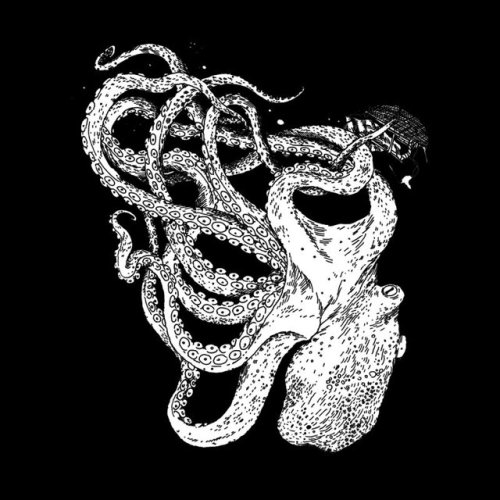
31 October T-Shirts by Julia Gfrörer, Day 18: Sea Monster
October 19, 2017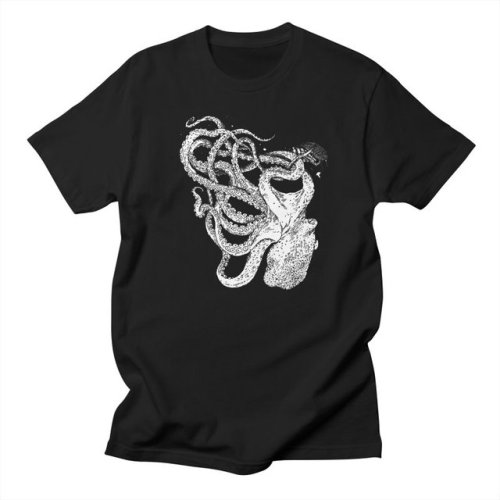
“Suburra: Blood on Rome” thoughts, Season One, Episode Eight: “A New Man”
October 19, 2017Well, that was fast. As predicted, Suburra: Blood on Rome’s relatively placid seventh episode was just the calm before the storm. “A New Man,” its eighth installment, ends the breather by piling up the betrayals, revelations, and patricide so high that you practically need to blackmail the Vatican for a building permit. We’re getting close to the end now, and it shows.
I reviewed episode eight of Suburra: Blood on Rome for Decider. This show fuckin’ rules.
“Mindhunter” thoughts, Season One, Episode Four
October 19, 2017Twitter is a portal straight into hell, but every so often a li’l angel of insight manages to spread its wings and fly out of its maw. So I offer a sincere thank you to the twitter userwho put into words something I might not have been able to put my finger on otherwise: The more like a procedural Mindhunter becomes, the better it gets. Sure enough, the show’s fourth episode spends nearly all of its time watching Holden Ford, Bill Tench, and their new partner Wendy Carr at work, and it’s the best episode yet.
I reviewed episode 4 of Mindhunter for the A.V. Club. It’s like VH1 Classic Albums, but about the concept of serial killers.
“Suburra: Blood on Rome” thoughts, Season One, Episode Seven: “Last Customer”
October 17, 2017Episode seven in fact marks a significant slowdown in the heretofore breakneck speed of the story. A calm before the storm? Perhaps. Whatever the case, it’s more about consolidating the status quo than shaking things up….That’s not to say that it’s boring. Come on, this is Suburra—it doesn’t do boring.
Not a ton to say about episode seven of Suburra: Blood on Rome, which I reviewed for Decider. But the review contains some gifs that’ll show you what I mean about how the show’s visual component makes it feel alive even in a breather of an episode like this one.