
Author Archive
“Rolling Stone had some great ones”
November 9, 2017Did I not mention that Kyle MacLachlan read and enjoyed my weekly Twin Peaks reviews for Rolling Stone?
Twitter and anger
November 6, 2017One thing I’ve noticed since I stopped using Twitter regularly is that the compulsion to tweet is most often associated with complaint. I think all of the times I’ve actually broken my self-imposed embargo since it began and tweeted something other than promoting work by me, my friends, or people I admire have been to say something negative. I complained about commenters who don’t understand how criticism works. I complained about “grade inflation” among critics who overvalue heartwarming work. I complained about an article that outed an anonymous tumblr weirdo just because this person may possibly be a little too weird. I complained about Chuck Schumer praising George W. Bush for “bringing the country together” after 9/11. I complained about the billionaire fuck who shut down a whole raft of journalism sites he’d purchased a few months ago because the employees voted to unionize.
All of these touch on my career, my politics, or both, and these things are important to me. But it’s noteworthy, I think, to isolate the emotion Twitter seems to count on to drive you back to that empty white box. Yesterday, for example, it took all I had to stop myself from kvetching about people saying Mad Max: Fury Road is the greatest action movie ever made when it’s, maybe, the third-best Mad Max movie ever made. (Now I’m doing that here where you suckers have to see it instead.) Again: career-related, sure. But my desire to use Twitter is directly correlated to how much I think my career fucking sucks at any given moment. Can you think of any other business or activity that functions in this way?
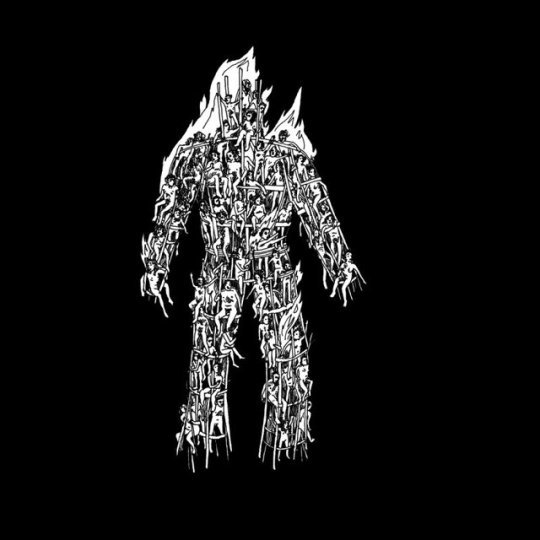
31 October T-Shirts by Julia Gfrörer, Day 31: Wicker Man
November 3, 2017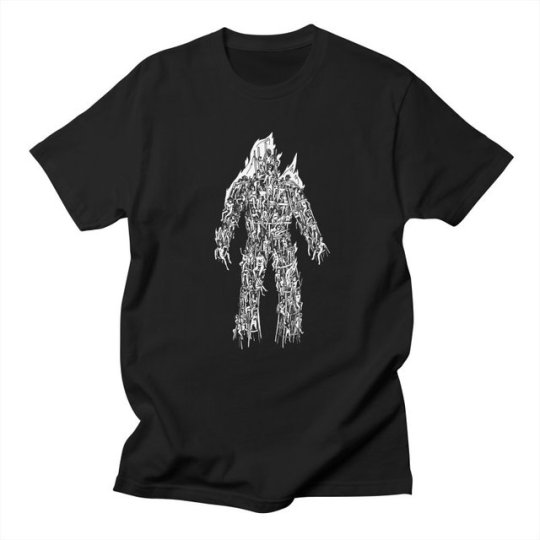
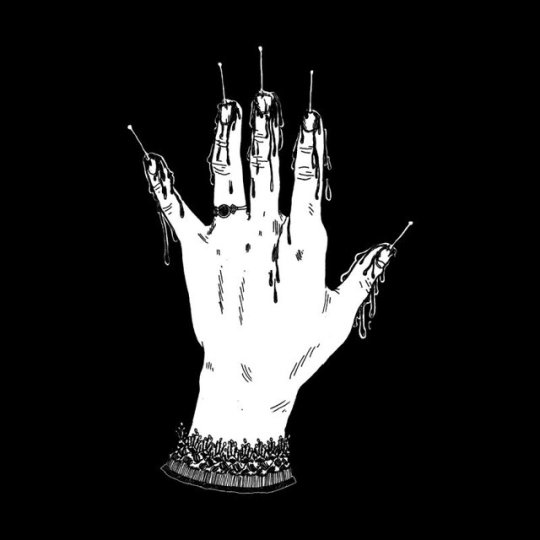
31 October T-Shirts by Julia Gfrörer, Day 30: Torture Hand
November 3, 2017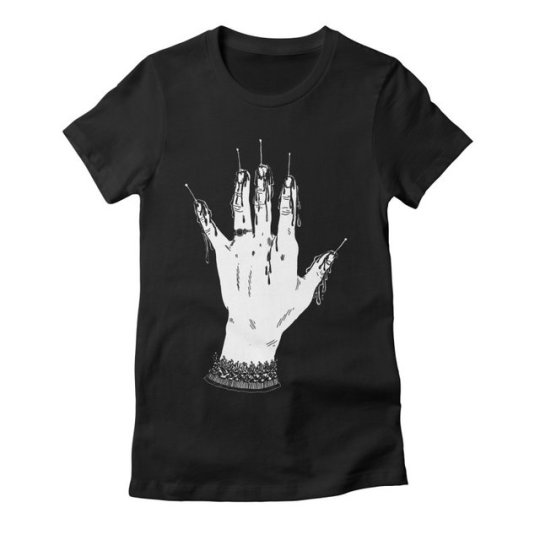
31 October T-Shirts by Julia Gfrörer, Day 29: Ominous Cloud
November 3, 2017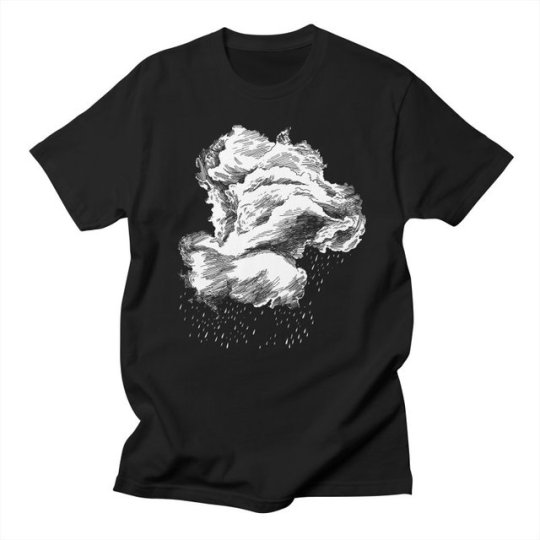


31 October T-Shirts by Julia Gfrörer, Day 27: Aurochs Bones
November 3, 2017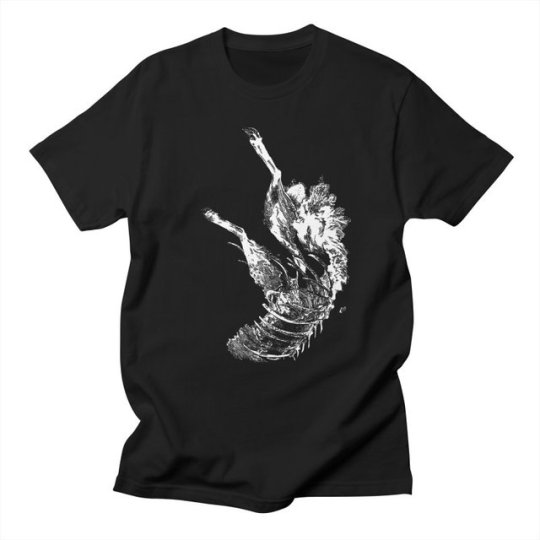

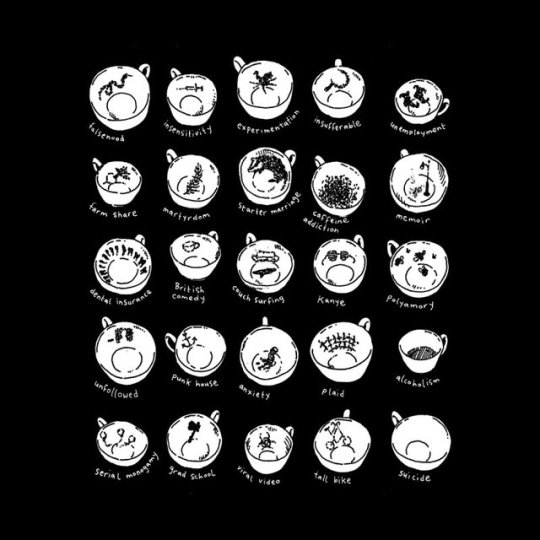
31 October T-Shirts by Julia Gfrörer, Day 26: Mundane Tasseomancy
November 3, 2017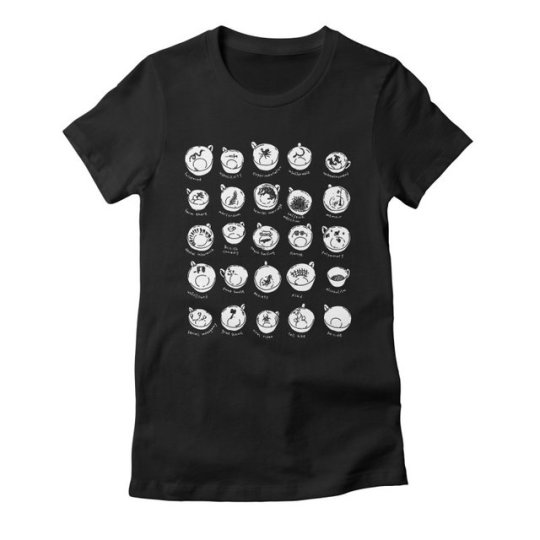
In my time on twitter during early October, an anonymous account responded to a photo of my six-year-old daughter by calling her a bitch and a cunt, adding “I hope nothing bad happens to her.” Despite multiple reports, the account was not banned. When I responded to the first wave of accounts of Harvey Weinstein’s sex crimes by saying I felt special solidarity with Asia Argento as a fellow horror person (to get very specific, Troma Studios distributed her film The Stendahl Syndrome the summer I interned for them), a handful of accounts opted to interpret this as me saying I didn’t care about other victims. A similar thing happened when I expressed horror about the climate of fear Weinstein must have established if figures as powerful as Angelina Jolie and Gwyneth Paltrow still felt unable to speak out; I was told I only cared when it happened to powerful people, while on the flip side I also received many responses saying they were cowards at best and complicit at worst for not speaking out. Such responses continued even after I said that I was a victim of childhood sexual abuse myself, and my responses were shaped by that shared experience. Effectively, I was told I was being a victim wrong, an experience that triggered traumatic memories of the abuse itself that cost me two solid days of work. This had never happened to me before. Finally, anime Nazis, who’ve dogged me on and off since G*merG8te and flared up during pile-ons orchestrated by right-wing media figures after comments I made about Trump’s election and inauguration and the health-care debacle, told me they were glad I was sexually abused as a childhood, because I deserved it.
After that I decided to drastically curtail my use of the site. I’ve limited my interactions, I’ve tweeted almost but not quite completely just to promote my own work and that of friends and heroes of mine, and I’ve cut back really hard on reading time, favoriting, retweeting, replying, and so on. While I’m still on there more than many people who’ve simply established a less extreme usage pattern and are continuing as normal, for me it represents a radical reduction. It’s improved my life for sure, but that’s not the point of this post.
The point is this: After that final incident spurred me to start detaching myself from Twitter, I realized that I’d fallen victim to its business model, which is nothing more or less than to (theoretically) profit from inducing me and everyone else to write up as many of our thoughts and feelings as possible, without pay, on a website where racist fascists up to and including literal Nazis and the President of the United States of America can and do attack other users and spread their filth with impunity. I can’t think of any real-life circumstance where I would voluntarily subject myself to that kind of labor exploitation and emotional abuse. I’m going to start applying that standard to what I do online, and to where I do it.
“Mr. Robot” thoughts, Season Three, Episode Four: “eps3.3_m3tadata.chk”
November 3, 2017It’s all gussied up in cyberthriller drag, but what Mr. Robot is now really forcing us to confront is whether or not bringing down the hypercapitalist backers of American hegemony — ending its endless death dance of credit-card debt and drone strikes — is worth the risk, and the cost. Who is the hero of this story? Elliot, with his humane reluctance to kill? Or Mr. Robot and those conspiring with him to keep Elliot down, with their insistence that in this case, killing is humane? Placing Elliot’s good-hearted, if broken-spirited, friend Angela on the side of the sociopaths is an indication that Mr. Robot sees this question as harder to answer than it looks.
How should we see it, though? How do we see it? Who’s seeing it at all? Normally I don’t pay much attention to how a given show I care about is going over with the general viewing public, mostly because I don’t give a shit. In a world where we can get four miraculous seasons of Halt and Catch Fire despite an audience size not much larger than the cast, how much does it really matter? I’m much more concerned about shows I dislike (the empty Reaganite culture recycling of Stranger Things, the fascism of The Walking Dead) getting more attention than they deserve than shows I like getting less.
But I am curious about how this season of Mr. Robot is playing with the people who are watching it, and the people who watched the first two seasons (in varying quantities) as well. There’s a bleak, enervated energy to this year’s run so far that resonates so closely with the relentless awfulness of life under the Trump regime that I wonder if it’s hard for some viewers to take — like two notes nearly identical in pitch but off just slightly enough to become discordant and abrasive.
Though this season has been both stylistically and narratively straightforward compared to the previous outings, it’s no less challenging a viewing experience. Watching it so far, this episode included, feels like wandering around a big empty room, where the walls are gray and your voice falls flat and the light is an eye-clouding haze and rising up from the floor is the faint but unmistakable smell of death. Tonight’s episode ended to the tune of Elliott (ahem) Smith’s grindingly grim “Everything Means Nothing to Me,” a song he wrote while blood from a self-inflicted injury was literally dripping on to the keys of the piano he was playing, from the final album he released before he is believed to have stabbed himself to death. If you’re of a certain mindset that values the catharsis of hopelessness, this can be a nice place to visit. Mr. Robot is asking you to live there.
I wrote about death, hopelessness, and the most recent episode of Mr. Robot for Decider.
“The Deuce” thoughts, Season One, Episode Eight: “My Name Is Ruby”
November 3, 2017The Deuce saved its best, and its worst, for last.
The final episode of the show’s first season is called “My Name Is Ruby” – a title that serves as an assertion of humanity, a prophecy of doom and famous last words all at once. Written by series co-creators David Simon and George Pelecanos and directed by Michelle MacLaren, it’s technically about the moment that the selling of sex became part of the American mainstream. But more importantly, it’s about the people left behind as surplus to the transition. As such, it contains two of the show’s most powerful and upsetting scenes.
I reviewed the strong season finale of The Deuce for Rolling Stone. Your basic B-grade prestige drama overall, with hints of greater promise in the final two episodes.
who watches the watchmen
November 3, 2017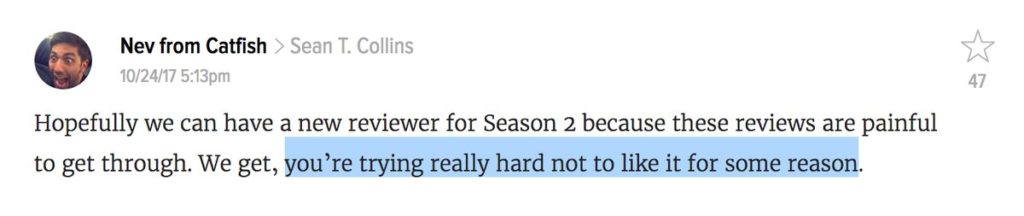
I know it shouldn’t, but it shocks me how people who devote time to criticizing arts criticism can understand so little about arts criticism.
BTW, not that you should go by letter grades, but my averaged-out grade for the show I tried really hard not to like for some reason? B.
(PS: That’s not really Nev from Catfish)
The Boiled Leather Audio Hour is now available on Stitcher!
October 30, 2017The Boiled Leather Audio Hour Episode 67!
October 30, 2017The Sons of the Dragon
Sean & Stefan review George R.R. Martin’s latest historical novella set in the world of Ice and Fire, “The Sons of the Dragon”! Found in The Book of Swords, the latest (and allegedly, until The Winds of Winter is published, the last) genre anthology co-edited by GRRM and Gardner Dozois, “TSotD” chronicles the lives of Aegon “The Conqueror” Targaryen’s two large adult sons, Aenys and Maegor. Being named “anus” and “meager” wound up being the least of their problems, as we soon learn. Sean & Stefan discuss the most striking aspects of the failsons’ stories, as well as the political and supernatural status quo of the era in which they take place; debate the quality and merit of this and other faux-historical texts in the setting; and end with commentary on Martin’s writerly priorities. Enjoy!
Additional links:
Stefan’s review of “The Sons of the Dragon” at the Tower of the Hand.
Our Patreon page at patreon.com/boiledleatheraudiohour.
Our PayPal donation page (also accessible via boiledleather.com).
The Boiled Leather Audio Moment #11!
October 30, 2017Moment 11 | Chekhov’s Wildfire
Welcome to an explosive edition of our subscriber-only mini-podcast! This time around BLAM is truly living up to its onomatopoeic acronym with a question from Matthew, a subscriber at the $5 level, who writes: “What do you think of the Chekhov’s Wildfire theory; that King’s Landing will be destroyed by Dany, Cersei, or someone else?” It’s a cool question, because it lets Stefan & Sean answer in ways that are fundamentally the same but with very different details. Pledge $2 a month, tune in, and find out what they are! And don’t forget: If you want us to answer your question on-air, pledge $5 a month to go in the queue, or $10 a month to go to the front of the line!
BLACK FRIDAY II: HALLOWEEN MIX 2017
October 27, 2017“Mr. Robot” thoughts, Season Three, Episode Three: “eps3.2_1egacy.so”
October 27, 2017Aside from the unusual time-jumping, it’s one of the most narratively straightforward episodes of Mr. Robot since Season One. It just gets you from point A to point B, is all, even if it had to backtrack a bit to do so. It satisfies a narrative itch, nothing more.
Primarily, it’s a showcase for Martin Wallström as Tyrell Wellick. The character and performance alike have their diehard partisans and their dismissive detractors. For my money, when you add Tyrell’s mental, moral, and professional collapse to his fixation on doing right by both his family and the man of his dreams, you get a whole different sort of sociopath from either the Patrick Bateman one-percenter murderers or the Phillip Price/Whiterose puppetmasters. Wallström lacks the golfball-sized convex eyes of his castmates Rami Malek, Portia Doubleday, and Carly Chaikin, but man those things are blue, and the person behind them seems to be in almost agonizing psychological pain at all times.
That’s the key to Tyrell Wellick, really. Despite being one of the ostensible archvillains of the piece, he’s more emotionally open and expressive than any of the fsociety “good guys”—Elliot, Angela, Darlene, Cisco, even Mr. Robot himself. He’s the only one who embodies the sense of dislocation and terror on a permanent basis that characters like Elliot and Darlene can only access during acute breakdowns. In a weird way, he’s the heart of the show, and that heart is warped as hell. In that light, the standard-issue storytelling of the episode can be forgiven, even if you suspect it’s part of a slight creative retrenchment in the face of the vituperative reaction to the show’s fearless fuck-you of a second season. A character this peculiar can take all the time to fill in the blanks he needs.
I reviewed this week’s backtracking episode of Mr. Robot for Decider.
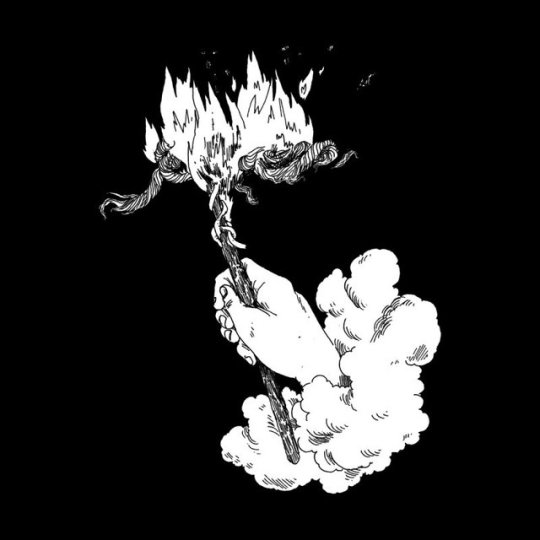
31 Days of October T-Shirts, Day 25: Hand of Glory
October 26, 2017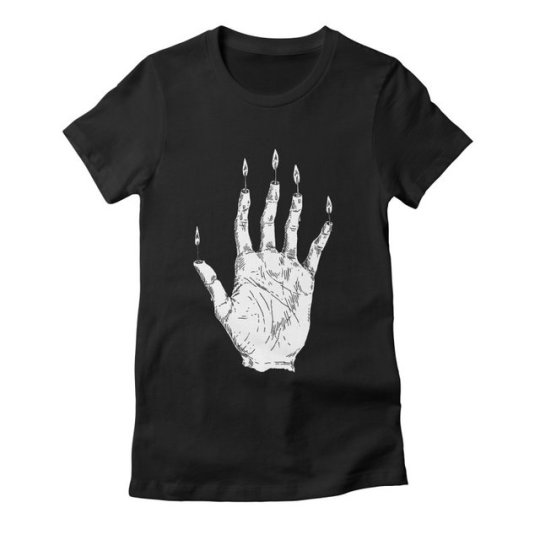
“Mindhunter” thoughts, Season One, Episode Ten
October 25, 2017Holden’s meeting with Ed Kemper, who attempts suicide and names Ford as his medical proxy in order to force another meeting, is the first time any of his conversations with murderers has felt like something out of a serial-killer-as-supervillain movie. It’s not actor Cameron Britton’s fault—he plays Kemper with the same unnervingly conversational affect as ever. Rather, it’s the mechanics of the meeting: revealing the stitches from his suicide attempt like he’s a breath away from one of the Joker’s “Do you wanna know how I got these scars?” speeches, leaping from his hospital bed with cat-like reflexes, threatening to murder Holden and make him akin to the “spirit wives” he gained when he killed his previous victims, then reversing course and hugging Holden, thanking him for his honesty. When Holden says he doesn’t know why he came, it turns Kemper into a criminal mastermind, luring the FBI’s best and brightest into a potential deathtrap just to show he could. I’m sure it’s supposed to say something about Holden’s increasingly agitated state of mind, but it just makes him look dumb and indecisive, two things he’s never been.
The follow-up is even more of a misfire. The instant Holden hits the door out of Kemper’s hospital room, Led Zeppelin’s “In the Light” kicks in. The song’s creepy-cool John Paul Jones synthesizer opening had been used to great effect during Holden’s flight to California, but this time the track is fast-forwarded to Jimmy Page’s triumphant, upward-climbing riff. The transition is so abrupt, the musical sentiment so poorly matched to the moment, that I actually laughed out loud—yet that’s not even the half of it. Holden staggers down the hallway and collapses, in the grips of a full-fledged panic attack so severe he thinks he’s dying. As the hospital staff frantically tries to aid him, he hears the voices of other characters in his head, reliving times they called him on his bullshit and warned him about his behavior: Bill, Shepard, Wendy, Kemper, even Principal Wade. “Wait,” you may be thinking, “you mean like the ‘I made my family disappear’ scene in Home Alone?” Yes, exactly like the “I made my family disappear” scene in Home Alone. Add a few floating-head visions and a “You’re what the French call les incompétents” and not even David Fincher and Chris Columbus could tell the difference. The device is so hackneyed it comes across like a joke from a children’s comedy.
Worse, it’s unnecessary. Did we really need to hear people telling Holden he fucked up for us to understand, while watching him have a panic attack brought on by a serial killer who took advantage of him and could easily have murdered him, that Holden fucked up? I can’t remember the last time I saw a season finale swing and miss this hard.
I reviewed the season finale of Mindhunter, which I did not care for, for the A.V. Club.
30 Movies to Watch If You Like ‘Stranger Things’ [or Don’t!]
October 25, 2017The Last Unicorn (1982)
One of the most beautiful, melancholy, magical, and genuinely adult animated features in American film history. This adaptation of fantasist Peter S. Beagle’s novel comes to us courtesy of Rankin/Bass Productions and Japanese animation studio Topcraft — the former responsible for the stop-motion Christmas classics Rudolph the Red-Nosed Reindeer and Santa Claus Is Comin’ to Town, the latter eventually evolving into Hayao Miyazaki’s Studio Ghibli. Together, they produced the J.R.R. Tolkien cartoons The Hobbit and The Return of the King, plus this gut-punch of a film, about a unicorn who becomes trapped in the body of a young human woman. With a body-horror subtext worthy of Cronenberg and a ridiculously impressive voice cast (Mia Farrow, Jeff Bridges, Christopher Lee, Angela Lansbury, and Alan Arkin), it’s like a cross between Stranger Things and a story from the Dungeons & Dragons game its characters play.
Paperhouse (1988)
Directed by Bernard Rose — who would later adapt Hellraiser writer-director Clive Barker’s short story “The Forbidden” into the acclaimed urban-horror film Candyman — this harrowing supernatural/surrealist film centers on an 11-year-old girl who discovers her dreams and drawings are coming to life and consuming her reality. She’s got to figure out how to take charge and reassert control. Paperhouse is what I think of when Stranger Things is at its best.
Recast the relationship between Eleven and Mike Wheeler as a tragedy instead of a heroic fantasy, and you might wind up with this morbid proto-romance between a bullied kid and the young vampire who simultaneously befriends, protects, and uses him. There’s stuff going on here about abuse and loneliness, for characters of all ages, that digs way deeper than anything Stranger Things has done; if Netflix’s series is a 101 entry-level course, this is graduate work.