‘Twin Peaks’ thoughts, Season 3, Episode 15: ‘Part 15’
“I’m dying.”
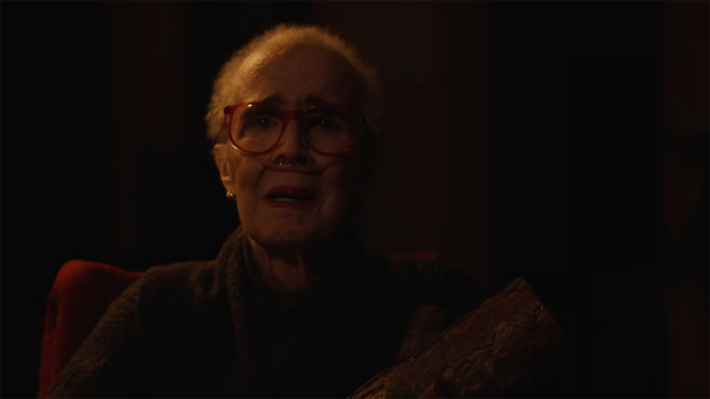
She was. Catherine E. Coulson, the actor who turned the Log Lady from a bit part into an icon of Twin Peaks, was dying of cancer when she delivered this final performance. It is impossible to divorce my feelings about this from my feelings about the Log Lady’s final scene. I cannot help but see it as a farewell from Coulson herself, courtesy of her old friends and collaborators Mark Frost and David Lynch. Hearing her last phone call to Hawk feels like hearing the last words of a loved one.
Hawk, I’m dying….You know about death, that it’s just a change, not an end. Hawk, it’s time. There’s some fear, some fear in letting go….Hawk, my log is turning gold. The wind is moaning. I’m dying. Goodnight, Hawk.
“Goodnight, Margaret,” Hawk says before the call ends. “Goodbye, Margaret,” he adds afterwards. He gathers Andy, Lucy, Bobby, and Frank in the conference room, and tells them that Margaret has died.
“The Log Lady’s dead?” Lucy asks. You can hear the disbelief in her voice. The Log Lady has always seemed like a woman out of time, eternal.
But when those tears fall, they’re not just the tears of Lucy Brennan. That’s Kimmy Robertson, crying for her old friend. You can see it, you can hear it. She’s mourning a woman she really has lost.
All of us are. Coulson’s Log Lady was the soul of the show, one of the white wizards, a gentle force for good. Even among her dying words she finds time to warn Hawk to watch out for “the one under the moon on Blue Pine Mountain,” which feels instantly important. Such was her power that she transcended the fourth wall, providing a series of extracanonical introductions to each episode of the first two seasons that were written by Lynch for reruns of the show on Bravo. (It was a different kind of network back then.) Perhaps this is why she alone has received “In Memory Of” tags both for the actor and, in this episode, the character herself. It somehow feels that the Log Lady existed in both worlds at once.
This is television of astonishing power, honoring both a real person who mattered to people and the art she made, which also mattered to people — in many cases, mattered more to those people than any other art.
And this occupies, what, a tenth of the runtime of this episode, if that? These 55 minutes include some of the most ecstatic emotional highs and most abject emotional lows we’ve ever seen on this show. If you told me it was your favorite Twin Peaks ever, I wouldn’t argue with you for a second.
This entry was posted
on Monday, October 19th, 2026 at 5:44 pm and is filed under Uncategorized.
You can follow any responses to this entry through the RSS 2.0 feed.
You can leave a response, or trackback from your own site.