
Posts Tagged ‘TV’
Under the Dome with Brian K. Vaughan
June 20, 2013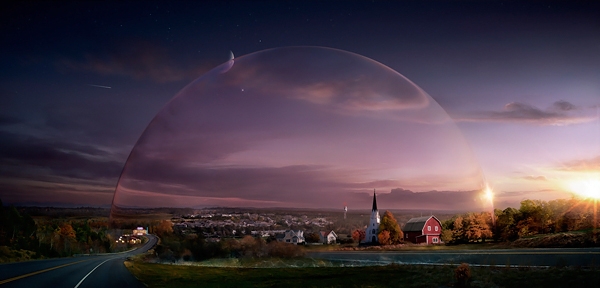
Over at Rolling Stone, I spoke with writer/showrunner Brian K. Vaughan about Under the Dome, his ambitious summertime 13-episode adaptation of the Stephen King novel of the same name. I’ve interviewed Brian for a pretty wide range of publications — Wizard, Maxim, a cover story for The Comics Journal, and now RS — and the local-boy-made-good feeling I got when I saw his name listed right after Stephen King and Steven Spielberg in the executive-producer credits was pretty delightful.
XOXO: A Gossip Girl Tribute
June 19, 2013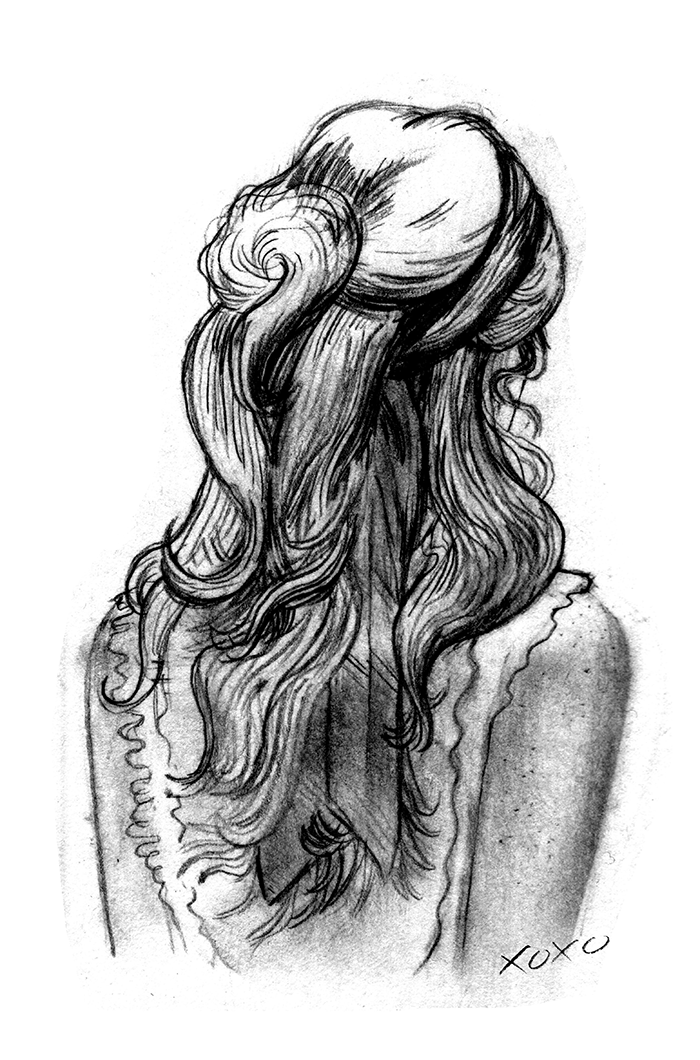
Go read XOXO, a collection of comics and art inspired by Gossip Girl, edited by Robin McConnell and featuring contributions by Maré Odomo, Brandon Graham, Warren Craghead, Jacob Ferguson, Benjamin Marra, Mike Myhre, Jen Vaughn, and myself & Dan White. It’s online in its entirety at Study Group.
“You’re a monster”: Seeing Mad Men through its ads
June 19, 2013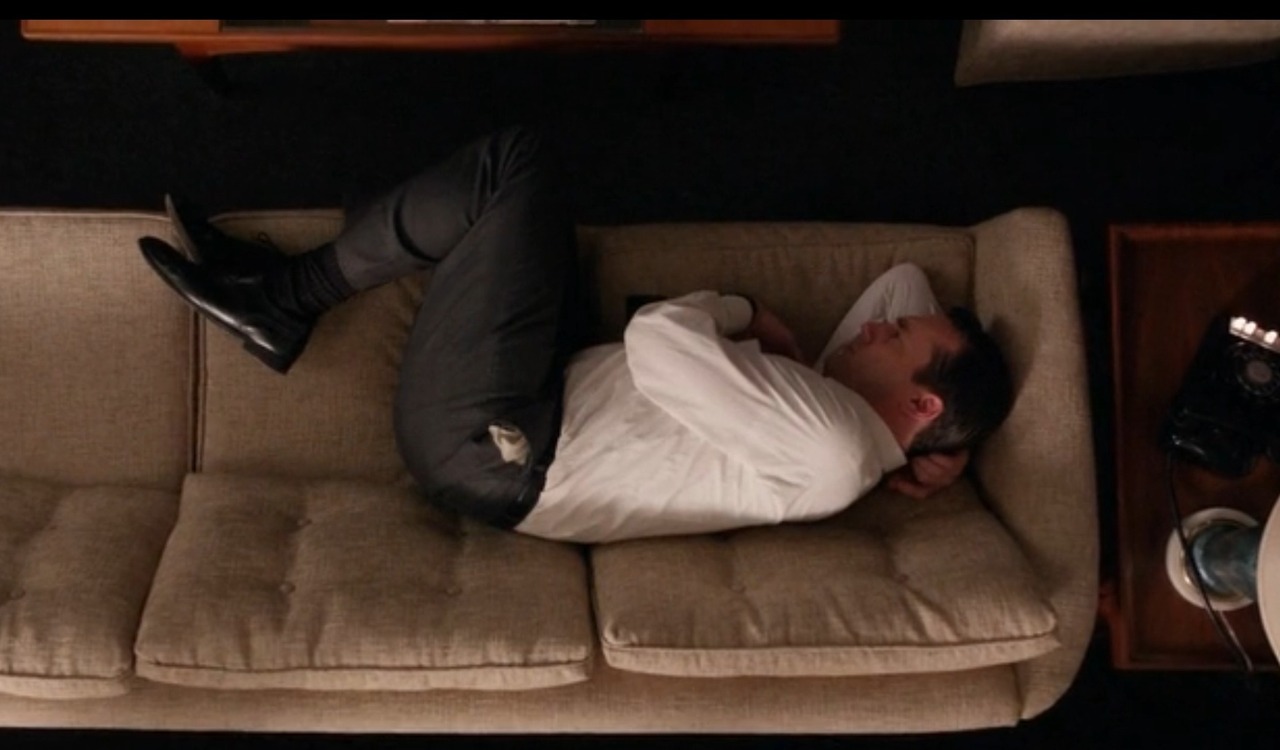
Forgot to post this the other day, but my weekly column on the world of Mad Men as viewed through its ad campaigns is up. This week: Don Draper, Bob Benson, Rosemary’s Baby, and other monsters.
“Mad Men” thoughts, Season Six, Episode Eleven: “Favors”
June 11, 2013* What an episode. Hilarious and heartbreaking. Best of the season.
* I wonder what it says about this episode that it began with Peggy getting scared by a rat. Like, of all the storylines in this episode, hers was the least immediately consequential, right? So…something about the best-laid plans of mice and men? Preparing for another visit from the rat only made things worse?
* “Not all surprises are bad,” says Roger Sterling as he spontaneously learns to juggle.
* Peggy looked legitimately pleased to meet Pete’s mom. Aw.
* And now it starts getting funny. “Trudy dear, don’t deny him. Don’t reject his caresses. I hope one day you can one day find what Manolo and I have found. I’ve waited long enough to experience the physical satisfaction of love.”
* I wrote down “Bob is a wonderful salesman” and I’m not even sure what I was referencing, but obviously we later reach the limits of this gift.
* “Like everything else in this country, model diplomacy is just an excuse to make out.” Like visiting your son at summer camp, Betty?
* “He can’t spend the rest of his life on the run.” With that take on the plight of Mitchell Rosen, Don admits his own life is untenable.
* How delightful it was to watch Ted, Peggy, and Pete have such a jolly time! Yeah, there’s some jealous moments here and there, but she’s so good in each of their company, and so open even with Pete. “You really know me.” “I do.” A pleasure to watch, particularly compared to the debacle of a California trip that nevertheless netted Roger, Don, and Harry a shot at Sunkist comparable to the one Ted’s group just earned with Ocean Spray.
* And my god, how funny! “Did your father ever give her spa treatments that released a fire in her loins?” “Ohh, ohh, ohhh!” “I don’t even want to think about her brushing her teeth!” “I have never been less afraid of flying in my life.” I was laughing as hard as they were.
* The saddest thing about Don and Arnold’s relationship is what legitimately good friends they could be if things were different. Listen to the ease and articulacy with which Arnold describes to Don the problems in his marriage, the plight of young soldiers, and his love for his own son despite seeing the kid’s imitations. Later in the episode, Ted tells Don that he probably doesn’t have a lot of friends — man, what a waste.
* In a way, Ted’s relationship with his wife parallels Don’s relationship with Arnold. Mrs. Chaough responds to Ted with evident thoughtfulness and concern, accurately seeing how much his work means to him, and which aspects of that work he finds particularly engaging. She just wishes he found her just as engaging.
* Roger on the cost of his trip: “I have a lot of receipts, I haven’t figured it out yet!” Story of his life.
* “Imagine if every time Ginger Rogers jumped in the air, Fred Astaire punched her in the face.” A funny line from Ted, but also a revealing one. That’s how he sees the potential of his and Don’s relationship — Rogers and Astaire, dancing on air. And that’s how he sees Don’s neglect of that relationship — as a deliberate assault.
* “I don’t WANT his juice! I want MY juice!” “It’s all your juice.” hahahahahahahaha
* I feel like I’ve spent a disproportionate amount of the season just writing down great dialogue, but Mad Men is a very funny show!
* To wit: the exchange between Pete and his mother. All these wonderful flavors of humor. Shade-throwing: “I suppose there’s a way I could mistake your tone for concern.” Cringe comedy: “Manny has awakened a part of me that was long dormant. Don’t you think I’m entitled to the pleasures of love?” “Don’t be any more specific.” Mad Men style personality demolitions where you laugh out of shock: “You were a sour little boy, and you’re a sour little man. You’ve always been unlovable.” Chuckling because it’s kind of sad: “I have carfare, and a piece of paper with my address, written in his elegant handwriting.” And Pete hands her her purse. Christ.
* Don, do not fuck up the client dinner with ‘Nam talk, you doofus.
* Somehow I knew the first thing they liked about Mitchell was his ass.
* Of all the things I expected to find in Satan Rizzo’s apartment, a giant poster of Moshe Dayan wasn’t one of them.
* “Maybe I’ll make it worth your while if you come over.” “No you won’t.” Do you think she would have? I kind of wonder!
* Don and Ted’s grand compromise was a marvel to watch. Ted’s obviously making things about him that aren’t about him, which explains Don’s disbelief that scratching his back in this way is all it’ll take to get the favor out of him. Yet Ted also legitimately has Don’s number regarding his self-aggrandizement. “I can’t stop the war, Ted.” “Don’t be an asshole, Don.”
* And how satisfying for Don to affect a rapprochement with Ted, solve the Sunkist/Ocean Spray conflict, rescue Mitchell from his own land-war-in-Asia fate, and do a good deed for his ex-mistress Sylvia without actually even expecting to talk to her about it, all in one fell swoop. But that’s the problem: It was too satisfying. The moment he lit up a cigarette in the middle of his tearful conversation with Sylvia, you knew he was in trouble. He’s back in business.
* Mad Men Presents: Bob Benson Doing Things! “Calm down, sit down.” Bob Benson taking charge! “I did some digging, and — ” Bob Benson doing some digging! “Is it really so impossible to imagine? Couldn’t it be that if someone took care of you, very good care of you, if this person would do anything for you, if your well-being was his only thought, is it impossible that you might begin to feel something for him. When there’s true love, does it matter who it is?” Bob Benson…proclaiming his love for Pete Campbell? Okay, that mystery’s solved. “Tell him I’ll give him a month’s pay. And tell him it’s disgusting.” And he never broke his smile.
* Oh no. Sally. Oh no.
* Sylvia pounding on the mattress.
* Sally witnessing Don doing the thing Don witnessed his stepmother doing.
* Don turning around in the lobby, unsure of what to do. Don wandering out into the street.
* Peggy got a cat! Mrs. Olson, thou art avenged.
* Ted came home. Aw.
* Pete threw a box of Raisin Bran. Man, there’s a lot you can read into that gesture.
* The entire scene at dinner with Arnold and Mitchell was excruciating. Sally gets to see, first hand, that sometimes every other world in an adult conversation is bullshit, and it’s nightmarish. Contrast her reaction here to her world-weary sigh of “dirty” when she caught Roger and Megan’s maman in flagrante. This time it hurt, because the nightmare came from the man who supposedly supported all her dreams. “It’s complicated.” It sure is now. But she kept the secret. She’s her father’s daughter.
Why Boards of Canada are the Game of Thrones of Electronic Music
June 11, 2013Two great tastes that taste great together: Over at BuzzFeed Music, I wrote about the ways in which the music and career of the great Scottish eletronic-music duo Boards of Canada, whose excellent first album in eight years Tomorrow’s Harvest came out this week, mirrors the A Song of Ice and Fire/Game of Thrones phenomenon.
“I Want My Juice”: Seeing Mad Men through its ads
June 10, 2013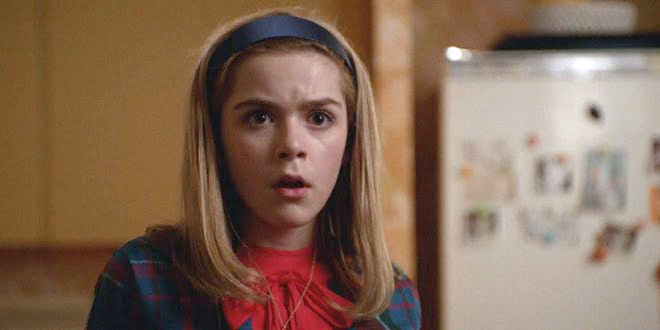
My weekly column on the world of Mad Men as viewed through its ad campaigns is up. This week: good surprises and bad surprises.
“Game of Thrones” thoughts, Season Three, Episode 10: “Mhysa”
June 10, 2013Was it enough to make up for the tone-deaf moments? I’m not sure. The show’s previously been careful to maintain a heterogeneous look for most of the cultures Daenerys encounters in her travels through the eastern continent of Essos, so the uniformly brown skin tone of the freed slaves worshipping the blondest possible savior figure was surprising and disconcerting – doubly so since, in the books, much is made of just how many different kinds of people had been forced into slavery by Yunkai and then freed by Dany when she took the city. This uncomfortable contrast kneecapped what could otherwise have been the most purely uplifting and cathartic moment in the series so far. Plus it gave the episode its title and was, you know, the final shot of the season – a rough one to go out on.
The “Mhysa” sequence will receive the most scrutiny, and rightfully so, but Dany’s triumph outside the gates of Yunkai came with its fair share of visual and narrative warning signs that we’re not to take it at face value. There’s that conqueror/liberator exchange between Dany and Jorah, which sounded like something you’d hear on a Meet the Press interview with Dick Cheney circa March 2003. The grinning joy on her face was carefully contrasted with Jorah’s concern; yeah, that could have been simply his regret that the khaleesi now has tens of thousands of admirers just as ardent as he, but it can also be read as fear that it won’t all be crowdsurfing and dragon flyovers forever. Add in the separate conversations between Tywin and Tyrion, and Stannis and Davos, about whether the ends (victory in the War of the Five Kings, peace in the realm) justify the means (the Red Wedding, burning some poor kid alive), and I half expected Drogon to be trailing a “MISSION ACCOMPLISHED” banner behind him.
I reviewed the Game of Thrones season finale for Rolling Stone. A compelling, sometimes stunning, sometimes troubling episode.
“Game of Thrones” Q&A: Joe Dempsie on Gendry’s long, strange trip
June 6, 2013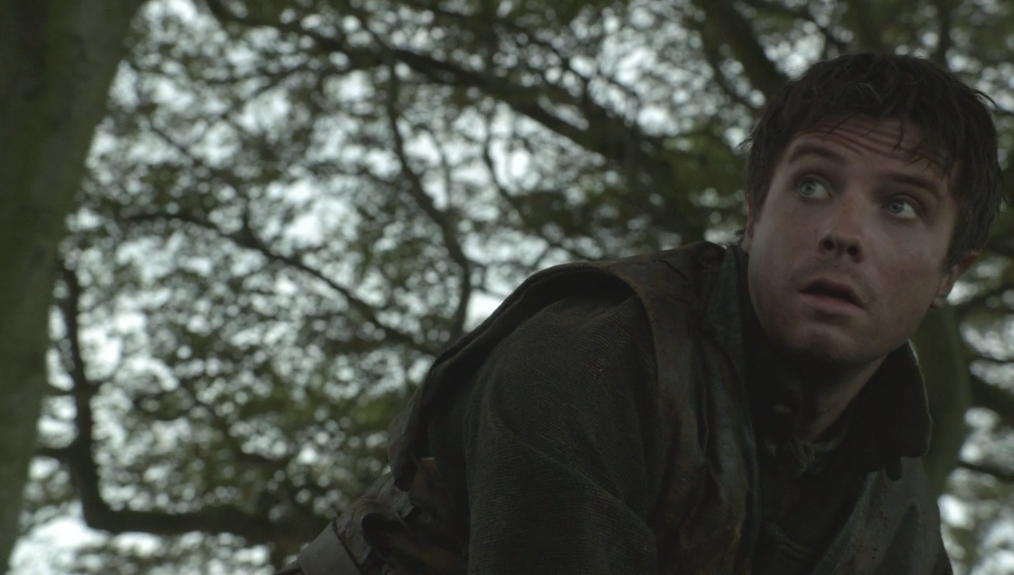
This is awkward to bring up, but you’re a good-looking guy. I think that’s safe to say.
[Laughs] Thanks, Sean.
My pleasure! There’s a sense that with your character, and then this season also with Robb and Jon and Jamie, that there’s now a movement within the show to show off the male characters the way the female characters have been shown off. When you have those scenes where you take your tunic or whatever off, people go berserk. I’m curious what that’s like as an actor.
It’s kind of weird, because from my personal point of view, you don’t really want to do nudity unless it’s appropriate, and unless it’s relevant to the storyline and it makes sense to do it in the scene. There’s a scene in Season Two where I’m forging a sword with no top on for no apparent reason. It’s amazing what a bit of soot and shaving can do for muscle definition, honestly. I didn’t recognize that torso.
I think David [Benioff] and Dan [Weiss, the showrunners] still try to … there is a bit of a responsibility to try and even up the balance a little bit. You can’t let the ladies do it all. But I think they do try and keep it within reasonable parameters. That scene where I’m forging the sword, I’m saying that it’s gratuitous, but the idea they wanted to convey was that … it was more for Arya than anything to do with my character. It was them trying to imply that Arya’s becoming a woman now and she’s dealing with feelings that she’s maybe not experienced before. I think they just want to hint at that – I’m saying “subtly,” but … [Laughs] But it’s not something I want to make a particular habit of.
When I was cast as Gendry, I didn’t have any of the physical attributes the part required. I was astounded that I got the role, to be honest. But David and Dan said, “We need to die his hair black … and it’d be great you hit the gym before we start filming.” So I was told to get in shape. I suppose you’ve got to look like you’re made of steel for nudity. You’ve got to get some arms on you. The reaction is not something I pay too much attention to. You don’t want to be a torso. You don’t want that to be what you’re known for. I think if it’s overshadowing your acting, you need to up your game a little bit.
I interviewed Joe Dempsie, aka Gendry, for Rolling Stone. Another thoughtful, insightful, articulate, engaging actor from this cast. It’s really been eye-opening, talking to these people.
Bloggingheads: Game of Thrones and Mad Men
June 5, 2013I had a nice long conversation about two of my favorite shows with one of my favorite critics, Alyssa Rosenberg, on her Bloggingheads.tv show Critic Proof. Topics include the Red Wedding (of course), Catelyn Stark, spectacle and gore, the horrors of war, world-historical events as “monster of the week,” whether character growth is necessary, repetition vs. novelty, and much more. At the link, you can even download an mp3 version if you don’t feel like watching it as a video. Enjoy!
‘The Whole World Is Watching’: Seeing Mad Men Through Its Ads
June 4, 2013
My weekly column on the world of Mad Men as viewed through its ad campaigns is up. This week: Hippies don’t even wear makeup.
“Mad Men” thoughts, Season Six, Episode Ten: “A Tale of Two Cities”
June 3, 2013* “Not in primetime.” Don sees bad things as important only to the extent that they’re well marketed.
* “I made the biggest mistake of my life.” “I hate actresses.” The truth comes out in jest?
* Is Don still good at his job? This is something Molly Lambert has been calling into question all season long, and I’ve been skeptical of her skepticism, but when the first words out of your mouth when you sit down at a partners’ meeting you forgot was taking place are “Are we done here?”, it makes one wonder.
* What a bunch of babies, arguing about the initials of the agency. I love how long that was drawn out — well past the point of it being a conversation worth having.
* Cutler’s bit about how delay in renaming the agency “will take it out of our hands and leave it up to the world” has the sound of him realizing he needs to take charge of the merger by any means necessary if “his side” is to come out on top, even if he doesn’t realize this is what he’s realizing just yet.
* “Leave the drudgery to Ted Chaough and the rest of the underlings.” Plenty of us-and-them from the other side, too, if Roger’s any indication.
* “Be slick. Be glib. Be you!” Point #1: Roger sure idealizes Don, doesn’t he. Point #2: That’s what the ideal Don looks like to Roger.
* “Our biggest challenge is not to get syphilis.” Boy oh boy, lots of good lines in this episode. It’s a Roger showcase, in part, so that makes sense. Sterling Silver-Tongued rides again.
* Everything about the blow-up between Cutler and Ginsberg was, like, this season in a nutshell — its unique, non-marquee players and conflicts given the spotlight. Stan’s strategic retreat (“This is my stop.”), Ginsberg’s hyperbolic angst, Cutler’s sociopathy, Bob Benson To The Rescue…what a strange little microcosm.
* “WHY ARE YOU ALWAYS DOWN HERE! GO BACK UPSTAIRS!” She doesn’t even go here!
* Yes, you could smell the wood burning as Joan shifted gears from thinking she was on a date to realizing she was on a business dinner, but it was no less satisfying for seeing the gears turn. The woman gave Harry Crane the hard sell, for god’s sake. She’s a professional, and given enough time by herself and by the agency, she’ll be a good professional.
* “You’re not going anywhere.” “I was, but then you appeared.” Cutler had previously attempted to banish BOB, but it is not his custom to go where he is not wanted. “I believe in you, Bob.” Oh, Jim — especially important is the warning to avoid conversations with the demon.
* Does Pete even realize how insufferable he’s become? I get it — he feels he’s Cassandra, and his warnings are going unheeded. But he’s really that oblivious to Joan, with whom he’d appeared to have something of a rapport this season? His tirade at the end of the episode indicates that this has something to do with clinging to the Rules. Perhaps you can see some continuity between this and his reaction to the murder of Martin Luther King earlier in the season: Both events violated the way these things are supposed to work.
* Peggy gives good stank face.
* Wow, Roger and Don and Harry are really staring into the abyss with those wingnut Carnation execs. Who was scarier to you, the cackling “Democrats are over” guy or the fire-and-brimstone “Dutch Reagan is a patriot” guy?
* Adults don’t eat cereal, but hippies don’t wear makeup. The generation gap as demographic research. “What if we were to say we find the conflict unresolvable?”
* “We believe in the wholesomeness of both your intentions and your products,” says Don. The professional is political.
* Joan and Peggy’s relationship may be the trickiest in the whole show, because they were never clear-cut enemies and thus it’s hard to see them as clear-cut friends. Each resents, envies, admires, and enjoys the other in equal measure for different things.
* Bob’s listening to self-help recordings in his decorationless office. WHAT COULD GO WRONG
* Ginsberg, with characteristic calmness: “I’m a thug, I’m a pig, I’m a part of the problem. ‘Now I am become death, destroyer of worlds.'” If this is what he’s like pitching Manischewitz, I’m glad SDCP never picked up Volkswagen.
* Another hasty retreat from Rizzo: “I can’t watch this.”
* And another bizarre, protean performance from Bob Benson. The mystery of Bob is more confounding because it’s not the usual “mystery” where the show headfakes in one direction only to reveal the opposite. It’s not really faking in any one direction at all.
* This is Don’s happening, baby, and it freaks him out!
* My contention is that this Boogie Nights/Austin Powers/Dragnet drug episode/”Mama Told Me Not to Come” Hollywood party was deliberately cartoonish on the part of the show. Danny’s return as a ridiculous homunculus avatar of ’60s LA, the outfits straight out of Hair‘s wardrobe department, the hookah, the pool, the bikini girls, the one-named zoned-out ingenues — if Don nearly collapses in as prefab a version of the counterculture as this, what hope does he have amid the real thing? This despite him being a more efficient mental codeshifter than Roger, who spends the party trying to reenact his bullying of Burt Peterson with a guy who could have hooked him up with Warner Bros.
* Don conjures up a pliant, pregnant, I would assume unemployed/unemployable Megan, and a maimed, dead soldier. These are the kids today, and this is how Don feels when he thinks of them.
* “My wife thinks I’m MIA, but I’m actually dead.” Chills. “Dying doesn’t make you whole. You should see what you look like.” MAJOR chills. That’s a horrifying line. “Man overboard!” Straight-up Rosemary’s Baby dream-sequence “Typhoon! Typhoon!” shit.
* Roger saved Don’s life, so I ship them now.
* “The job of your life is to know yourself. Sooner or later you’ll love who you are.” Through acid, Roger has gotten to know that he is an actual child. He’s perfectly happy about it.
* Good to see Creeper Peggy back in action — now with intercom powers!
* Peggy saves Joan with the power of copywriting.
* SC&P. Pete’s right: Don’s been reeled in without even feeling the hook in the eye.
* I laughed out loud at the final sequence of Pete smoking a joint in slow motion to the accompaniment of Janis Joplin. Pure Scorsese, and in Mean Streets Scorsese was one of the first filmmakers (preceded by Dennis Hopper on Easy Rider, and Kenneth Anger on Scorpio Rising if you wanna go there) to replace a score or original music with found pop songs, just like the exec Don was talking to at the party was talking about. Thank you, Film Studies major, for giving me a good laugh.
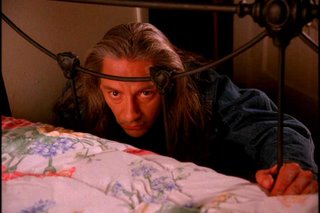

“Game of Thrones” thoughts, Season Three, Episode Nine: “The Rains of Castamere”
June 3, 2013The death of an idea can hurt just as badly as the death of a person. People are mortal, after all, and come with an expiration date – it’s the cost of doing business with them. But ideas often have a wider impact than any one person. They’re passed down and passed around, like heirlooms or viruses. It’s easy to convince ourselves that an idea that gives our life meaning will outlast our life, any life, in turn. To lose an idea like that leaves us adrift, with no shore in sight.
Premium Brands in the Bedroom: Seeing Mad Men through its ads
May 28, 2013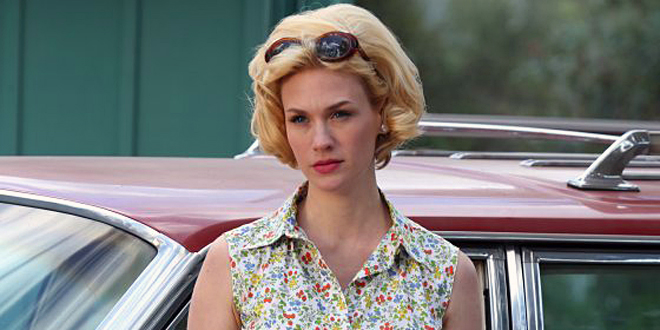
My latest column for Wired on the world of Mad Men as viewed through its ad campaigns is up. This week: “It tastes better because it’s more expensive.”
“Mad Men” thoughts, Season Six, Episode Nine: “The Better Half”
May 28, 2013* “It tastes better because it’s more expensive. It’s the premium brand, and it’s priced accordingly.” Those two sentences could be unpacked endlessly. Thanks, Ted.
* “Don–I agree with you!” Pete’s on the pay-no-mind list.
* It’s funny to me with the benefit of the entire episode in hindsight, but I actually wrote “Peggy has to choose between Ted and Don” as a note on this scene, as if this wouldn’t be the explicit subject matter of the hour.
* Mad Men‘s soap within the show is in the grand tradition of such things, most notably Invitation to Love on Twin Peaks, the show of which this show becomes more redolent with each passing season.
* Peggy on her two bosses: “You’re the same person sometimes.” But she’s convinced Ted values things other than himself. Perhaps he just has a more palatable way of presenting his self-interest to those close to him. “He never makes me feel this way.” “He doesn’t know you.”
* Abe gets stabbed, part 1 of 2. Taking his muggers’ side in the argument — that’s marvelous, because he’s both totally right and infuriatingly wrong in terms of understanding the role he plays in the life of the person who cares about him: “Fuck those unfortunate teenagers, I love you and you’re supposed to love me!” How can Peggy trust someone who’s on board with his own potential annihilation?
* “They’re two halves of the same person and they want the same thing but they’re trying to get it in different ways.” Mel-via-Megan delivers us another doozy. In a way, Mad Men Season Six has become sort of like All Star Superman, Grant Morrison and Frank Quitely’s superhero-comic masterpiece. That comic primarily pitted a dying Superman against thinly veiled analogues of himself: Bizarro’s the one that would be most famous to non-superhero people, but he also faced the mythical strongmen Samson and Atlas; Zibarro, the one smart person on Bizarro World; superpowered Lois Lane; superpowered Lex Luthor; a small group of fellow Kryptonian survivors, and so on. The drama came from seeing Superman juxtaposed against these non-Superman supermen, discovering what they had to offer that he didn’t and vice versa. Superman always came out on top, because that is his essential superpower. That of course has been Don Draper’s superpower up to this point as well, as drawn out by Don Doppelgangers like Henry Francis and Ted Chaough and Pete Campbell, but mostly those men exist to show us how someone else goes about doing the kinds of things Don does without being Don, and where that gets them relative to where it gets him.
* Case in point: Henry getting revved up by other men’s desire for Betty. His demands that she tell him exactly how his creepy colleague hit on her were very Dom Draper, but remember that Don was always mortified when Betty made her attractiveness evident for the enjoyment of others (or herself).
* Roger Sterling’s a grandpa! Ha, you knew that wouldn’t end well, though I figure the kid really does love his Grandpa Roger, nightmares notwithstanding.
* I am inordinately pleased to see Duck Phillips again. Always am. I love seeing characters continue to live on in the tapestry of a show they’ve departed, for one thing, but I also simply enjoy seeing how Duck’s career marches on in the face of his repeated flameouts. And hey, he landed poor Burt Peterson a plum gig! And hey, he’s doling out life advice! Pete’s in a bad enough place that he might well take it.
* Betty’s a knockout again. When I saw where things were headed with her and Don, I simply typed “Uh-oh.”
* “Is this all me? Because that’ll help.” “…I think about it.” That’s an intense little exchange from Ted and Peggy. I’ll admit I was surprised to see him lay it all on the line like that.
* Bobby Draper gets a scene!
* So both the Drapers have a “let the right one in” situation going on. Arlene sweats her way into Megan’s apartment, while Don is the vampire being allowed into Betty’s motel room. “Close the door. You’ll let the bugs in.” Oh, Betty, there are all different kinds of bloodsuckers.
* “What did you think when you saw me?” “That you are as beautiful as the day I met you.” Good answer, apparently!
* “Fine….No, I’m ‘fine’ with being a tease.” Arlene’s advances and Megan’s rebuffs were endearingly clumsy, if only because I still tend to believe Arlene that she and Mel won’t take it out on Megan.
* “Status quo antebellum: Everything as it was.” Cut to Don and Betty, post-coital. Nice.
* “I can only hold your attention for so long.” Jeez, that whole bit about the look in his eyes was so good, especially because Jon Hamm’s eyes are unusually communicative in a sexual context. I’ve written before that he never looks more human or more vulnerable than when he makes a move, his eyes all hazy and cloudy with lust and hope just like anyone.
* I typed this out as fast as I could: “Why is sex the definition of being close to someone?” “I don’t know, but it is for me. It is for most people.” “Just because you climb a mountain doesn’t mean you love it….If we lied here together with you in my arms I’d have felt just as close. But the rest of it, I don’t know, I don’t know, it doesn’t mean that much to me.” That’s a huge piece of the Don Draper puzzle, right there.
* Roger follows Don to the movies, then uses Don as an explicit reason why it was okay to do so. Adorable! I guess that vision in the mirror during his LSD trip wasn’t a one-off.
* The transformation of sleepy morning-after Don into PERFECT DON was just tremendous.
* Joan and Bob! The reveal of his shorts — we see them only after Roger does — was too fucking funny.
* Abe gets stabbed, part 2 of 2. He can forgive random dudes from the neighborhood, but not his girlfriend of several years. And he just annihilates her with resentment. I’m semi-surprised she didn’t grab the knife and finish the job.
* Megan on the balcony in a t-shirt and underwear. Ohhhhh, alright.
* Joan’s got poor Roger’s number like you wouldn’t believe. Worse than Betty had Don’s by telling him loving him is the worst way to get to him, worse than Abe had Peggy’s by telling her she’ll always be the enemy. Roger really can’t be relied upon by anyone except the agency.
* Final note of the night: “Who ARE you, Bob Benson???”
“Game of Thrones” Q&A: Gwendoline Christie on the Education of Brienne of Tarth
May 23, 2013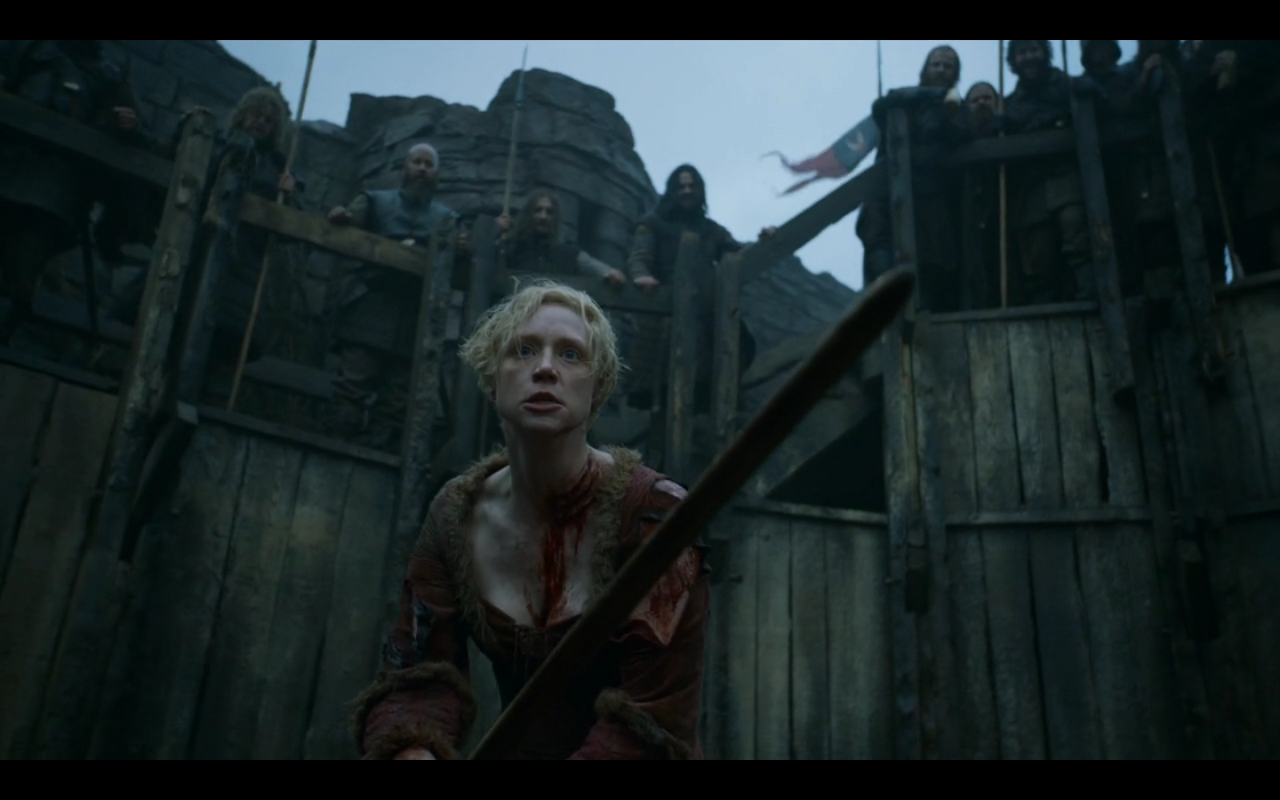
You’ve spoken very frankly about how your unusual height has affected your life, and some of your modeling work seems to touch on this as well – taking ownership of your physical body. Brienne has struggled with her physicality as well. She’s gone a different road, obviously – she’s a warrior, not an actor – but I wonder if you see overlap between her and yourself.
Absolutely. That’s why I wanted to play the part so much. I never thought I’d ever come across a part like this. I was always told about this in drama school, that occasionally you might come across a part where you say, “Yeah, I know that. I know it. I don’t have to pretend to try and get there. I know this.” As soon as I read about the character, I had to play it.
And it’s a character that we don’t see that often. I’m certainly really rather tall at 6 foot 3, and I’ve been this way since I was 14, but for years women who are even 5 foot 10 have come up to me in the street and said, “Oh, it’s so nice to see a woman who is taller than me. I’ve always felt like a giant.” They describe it to me like outsiders. It sounds a bit worthy, but I genuinely feel that as an actor part of my job is to highlight those recesses of human life and human psychology that we don’t see that often. And if I have the opportunity, which I very luckily have, to play the part of an outsider, then I felt like I might be doing some good. Occasionally I get messages from women saying that I’ve brought them some joy, and that’s unbelievably thrilling.
An additional wrinkle for Brienne is that she’s pretty much universally seen as ugly. When you’re made up to look that way, when you change your hair and your demeanor and your physicality to look that way, does it change how you feel?
Yeah, totally. As a woman, we all want to feel attractive. We all want to feel that we’re making the very best of ourselves so we can accept ourselves. It’s like all of these gorgeous, devastatingly beautiful actresses in the show, and then there’s me harrumphing around. [Laughs] So it can be tough to look like that.
But you have to step outside of that and think about what these things really mean. I am still a person with a sense of superficiality that I’m trying to challenge. I hope that it makes us examine exactly what “unattractive” is. Perhaps it’s not the conventions that we have or the blueprint in our minds. And if it makes people question for a minute what unattractive is, and the way in which we may respond as people to what we think unattractive is, then it’s worthwhile.
I interviewed Gwendoline Christie, aka Brienne of Tarth, for Rolling Stone. Man, this interview. Even by the high standards of this (in my experience) extraordinarily insightful cast, this was something.
“Because you know what he needs”: Seeing Mad Men through its ads
May 20, 2013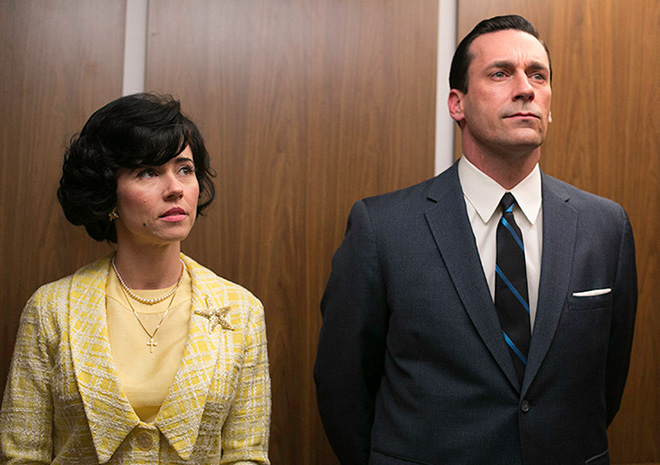
My latest column for Wired on the world of Mad Men as viewed through its ad campaigns is up. This week: The ultimate Draper Pitch.
“Game of Thrones” thoughts, Season Three, Episode Eight: “Second Sons”
May 20, 2013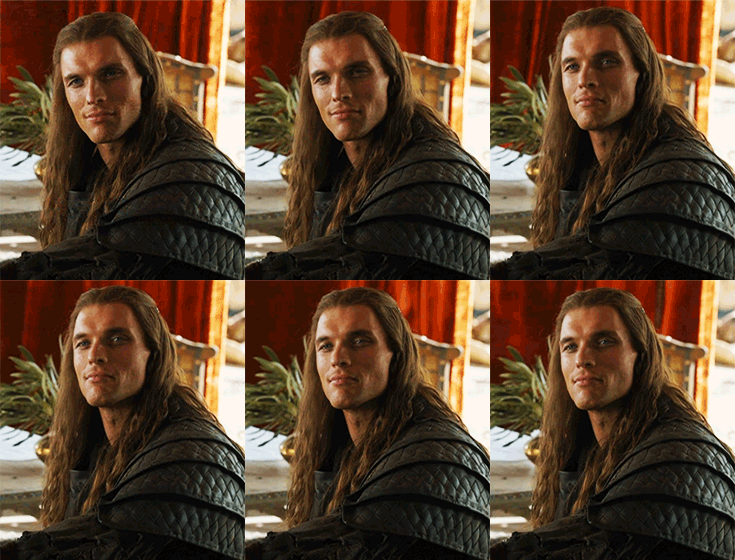
Newcomer Daario Naharis is a man the Hound would recognize – a killer for cash. Unlike the Hound, he seems to take pleasure in the badass trappings of a successful sellsword – the rep, the women, the tricked-out dagger hilts – while the Hound himself takes pleasure, and barely, in the act of killing itself. But because of this, Naharis has the flexibility to bend before he breaks. Confronted with a physically stunning, tactically advantaged opponent in the form of Daenerys Targaryen, he kills his comrades and switches sides rather than toss himself into the fray on behalf of a wealthy but likely defeatable city. (As an aside, a show that can find time for an extensive visit to the camp of the Second Sons ought to be able to give Catelyn Stark more to do this season than scold her dopey son Robb. Okay, moving on.) Duty to his captains and his client would appear to leave him little choice, but “Daario Naharis always has a choice,” he tells Daenerys. Judging from her outrageously pulp-fictional bathtub dismount, he chose wisely.
I reviewed last night’s superb episode of Game of Thrones for Rolling Stone.
“Mad Men” thoughts, Season Six, Episode Eight: “The Crash”
May 20, 2013* Maybe every episode should begin in medias res with Ken Cosgrove being forced at gunpoint to drive a carful of drunken Chevy execs down a dark road at 80mph. I truly thought he might have died.
* Don standing around smoking outside Sylvia’s apartment. Not taking this well, I see.
* Chevy is turning out to be a poisoned chalice. Everyone’s exhausted, and Don’s tearing into Kenny like he’s Pete.
* Even before I knew what he meant, I heard Jim Cutler say “I’m gonna get everybody fixed up” and thought “Cutler, you magnificent bastard.” A lot of the best Mad Men lines are the best because they have a recognizable emotional or narrative tone even though you haven’t been able to locate the context yet. (Cf. last season’s “Far Away Places,” which produced this phenomenon by showing events out of order.)
* I haven’t been crazy about Linda Cardellini as Sylvia, to be honest. I suppose I see what she represents to Don — age, experience, a housewife rather than a budding celebrity; perhaps even her ability to experience guilt and therefore the taboo are appealing — but as a performance…I don’t know, kind of…not a lot of zest to it? That changed last night, during her teary, desperate phone call with Don. Don’s looking for a big romantic moment, but Sylvia’s willing and able to boil their bad romance down to a growled “KNOCK IT OFF!”
* And Don is totally powerless before it. Seeing him in his mighty, Olympian office, hanging on the telephone because he can’t bring himself to hang up, a master of all he surveys except this one thing…it’s rough.
* Coughing fits. “Your face looks like a bag of walnuts.” Yeah, it’s rough on the guy alright.
* Betty’s blonde again. Okay.
* Poor Dawn. Her skill at Don management (Donagement?) is both a blessing and a curse.
* Ted Chaough on Frank Gleason: “He’s a piece that cannot be replaced.” Don, of course, was just replaced.
* A conversation between Roger and Stan! Alright!
* Cutler’s a cold customer, as it turns out. Doesn’t really care about Frank. Didn’t see that coming, frankly. Not that I saw the opposite coming mind you — just that it’s revealing of his character.
* I loved all the build-up to the doctor. They’re talking about him like he’s Col. Kurtz. Turns out he’s Dr. Robert.
* Mad Men excels at build-up, though, so I shouldn’t be surprised. I liked how the nature and effects of the drug were doled out in installments as well: Cutler leaping merrily around, then Cutler and Stan racing, then Don zoning out/zoning in, and so on.
* Don sees Peggy taking care of Ted and then flashes back to a sequence in which his mother failed to take care of him. Hm.
* “Do we know each other?” Hoo boy. “I meant from somewhere other than from this moment.” Zooms. Bells. It’s a drug episode! Hold all my calls!
* “Some kinda love transaction between a parent and a child and the greatest gift of all: a Chevy.” Ginsberg: straightedge by nature, messianic in his approach to crafting ad copy.
* “I hate how dying makes saints out of people.” Solid, true line, but I prefer the way it reveals the complexity of the workplace. Frank’s been painted as the perfect friend/partner by Ted, so to learn he was a dick to his underlings reminds us that everyone’s story has different heroes and villains.
* “I wanna write stuff down so it looks like I’m working.” Ginsberg nails it.
* “I’ll have 15 campaigns for you by then but you have to get me in a room so I can look them in the eye. The timbre of my voice is as important as the content. I don’t know whether I’ll be forceful or submissive, but I must be there in the flesh.” “You understand that I have no power whatsoever….I’m their favorite toy.” My first thought upon hearing this Don-Ken exchange: This drug transforms your subtext into text!
* “I know you’re all feeling the darkness here today, but there’s no reason to give in. No matter what you’ve heard, this process will not take years. In my heart, I know we cannot be defeated, because there is an answer that will open the door. There is a way around this system. This is a test of our patience and commitment. One great idea can win someone over.” I feel like that first sentence should be written on an anonymous notecard and pinned above Don’s hospital bed someday, Tony Soprano-style.
* Soup! Don’s looking for chicken soup for the soul.
* Whoa, it’s the next day, suddenly. That came as a shock.
* “Her name is Wendy.” I thought we were going to push the age limit for Don’s thing for brunettes, but he’s not feeling it, and in retrospect it’s easy to see why: He’s crafting the ultimate Draper Pitch, his product is Don Draper himself, and he’s got a target audience of one in mind.
* “I’ve got six hundred and sixty-six ideas!” HAIL STAN
* Complaints about Mad Men trying too hard or being too obvious or god help us being on the nose miss the point because that is the point. Symbolist TV. It’s all right there, dredged to the surface. If it’s obvious, well, aren’t we all, when that happens? Case in point: Wendy the would-be psychic, wearing a stethoscope while telling Don he wants to know if someone loves him. “I wanna hear your heart. Oh — I think it’s broken.” “You can hear that?!” “I can’t hear anything. I think it’s broken.” I mean, the show’s making a joke of it. This is not Matthew Weiner trying to be subtle but screwing it up.
* “You’re on TV every day. Don’t they know that?” Bobby Draper gives Megan the validation Don Draper can’t deliver.
* The old William Tell trick!
* “You’re pretentious, you know that? I love that.” Again, this is not Matthew Weiner making a mistake.
* “But you hate him!” “…I hate apples more.” Ginsberg’s great in this episode.
* Jesus, Don, not at Sylvia’s again!. Then an endless, immobile closeup of his head against her door. “Out of my head over you.”
* Doors: Don knows the perfect idea can open the door. His ultimate Draper Pitch involves telling Sylvia not to shut the door. He tells Ginsberg he’s got it when Ginsberg says he has to get his foot in the door. He tells Sally it’s all his fault since he left the door open.
* “You’re lucky I don’t like beards.” “Women say that, but they don’t act like it.” YESSSSSSSSS, PEGGY AND STAN / YESSSSSSSSS, BEARDS
* “You’ve got a great ass.” “Thank you.” is this generation’s “I love you.” “I know.”
* Sally’s reading Rosemary’s Baby. Girl, you’ll be a woman soon.
* Whoa, who is this lady? Grandma Ida? It was clear she was robbing the joint, but when she asked “Your daddy Mr. Donald Draper, or not?” I thought she was trying to rip off a very different Don Draper. That was a creepy moment.
* “Because you know what he needs.” And thus begins a game of connect the dots with beauty marks, from Amy the prostitute to the oatmeal mom to Sylvia.
* “Do you wanna know what all the fuss is about?” “No.” Famous last words, Don.
* Don’s first is a blonde. He marries a blonde, but spends his free time chasing brunettes like the mother who badly beat him for having sex while screaming at him that he’s filth. So there you go.
* “Are we negroes?”
* Don’s ultimate Draper Pitch uses history to attract its audience, even while Don’s lack of history is being used to bamboozle Sally and Bobby into giving up the goods to the world’s kindliest catburglar.
* “Have you been working on Chevy at all?” And that was the moment I finally realized what he was preparing to sell.
* Don finally opens the door, and walks into a nightmare tableau of broken domesticity — his ex, the wife he’s cheating on, his replacement, his abandoned kids, a cop. Lights out.
* That elevator ride. I was happy for both of them when it ended.
* Woof, Wendy was Frank’s daughter. Cutler is Roger if Roger were a sociopath rather than merely a nihilist.
* “Every time we get a car, this place turns into a whorehouse.” The door into Don Draper is shut.
“You Exist for My Pleasure”: Seeing Mad Men through its ads
May 14, 2013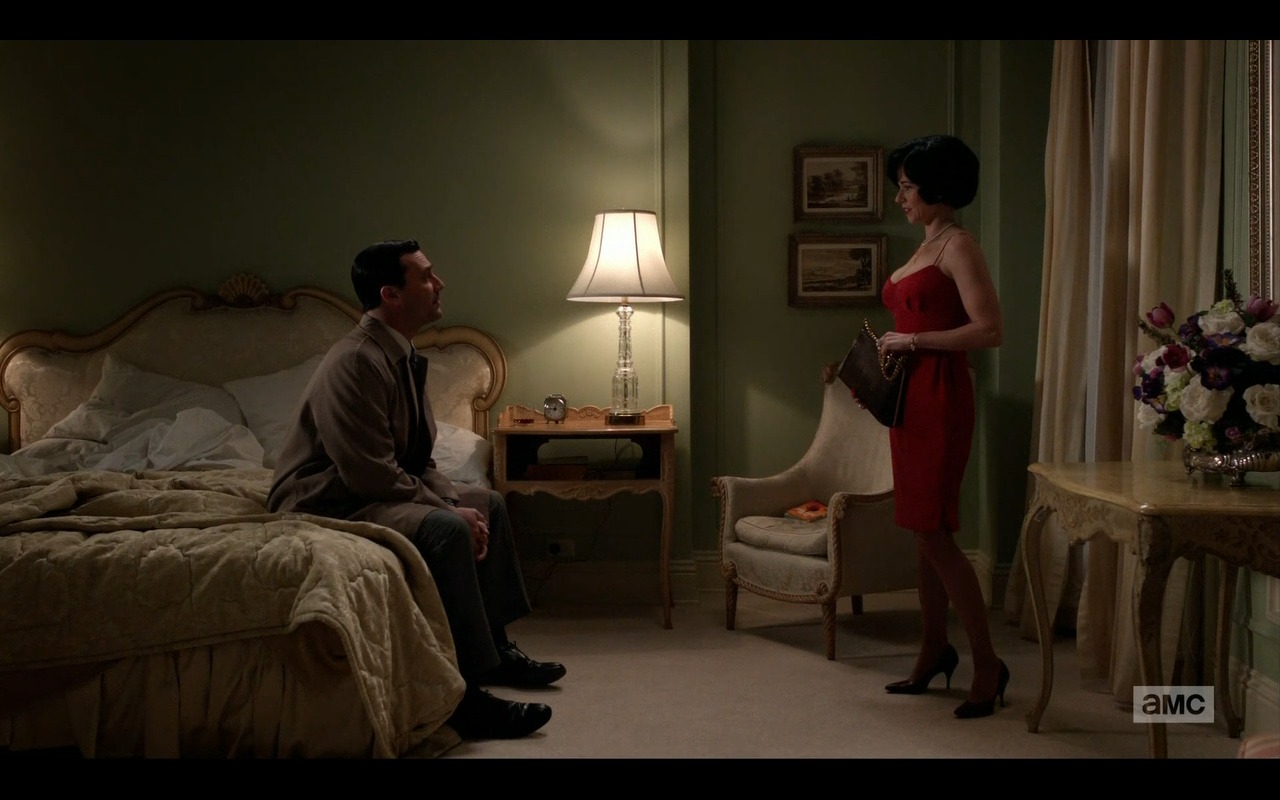
My latest column for Wired on the world of Mad Men as viewed through its ad campaigns is up. This week: dominance, submission, and margarine.