
Posts Tagged ‘horror’
This Valentine’s Day, Watch ‘The Love Witch’
February 14, 2017But the most romantic thing about The Love Witch is the existence of the film itself. To call a work of art “a labor of love” is to imply a sort of jejune passion, an amateur’s enthusiasm, but nothing could be further from the case here. Taking the concept of the auteur to a whole new level, Anna Biller not only wrote, edited, scored, produced, and directed this movie — she also served as the production designer, the set decorator, the art director, and the costume designer. She personally built, knit, sewed, collected, or otherwise provided many of the film’s key props, from the witches’ altar to the characters’ jewelry to a rug that took her months to make. If the lengthy and thoughtful essays and interviews on her blog are any indication, she also served as the movie’s on-set philosopher. Short of starring in the movie herself, there’s no way The Love Witch could be more Anna Biller’s vision.
The result is unmistakably familiar. To watch The Love Witch is to enter the headspace and heartspace of another human being as surely as falling in love.
This becomes crystal clear barely five minutes into the film. After an opening driving sequence that’s a loving homage to similar scenes in Hitchock’s Psycho and The Birds, we enter the Billerverse in earnest — a world where every detail is deliberate and delightful. Tucking her cherry-red cigarette case into her cherry-red purse, Elaine emerges from her cherry-red car in her cherry-red dress, then takes her cherry-red suitcase out of the cherry-red trunk to enter an apartment full of occult artwork so colorful it’d make a Crayola 64-pack blush. Next, we’re off to a sumptuously appointed tea room in which every one of the all-female clientele is clad in cotton-candy pink; the matching floral-patterned tea set, hand selected by Biller herself, looks like something made of marzipan in the sugar-spun home of a fairy-tale cannibal witch.
By the time I hit this point in the movie, I was laughing out loud in sheer joyful admiration. Whether working in true independent form like Biller or blessed with the carte blanche freedom afforded to established and acclaimed names like Scorsese, Anderson, Tarantino, or Coen, few filmmakers have anything close to this level of confidence in their own taste and vision. Pulling this off for a single scene would be reason to celebrate. Constructing an entire film from a single intelligent, idiosyncratic worldview is close to a miracle. And from its first scene to its last, from the font choice in its opening titles to the music over the closing credits, that kind of miracle is exactly what The Love Witch delivers. Watch it with some witch you love.
Artcrime: What “Beware the Slenderman” Says About Blaming Artists for Violence
January 25, 2017There is no artist behind Slender Man, not in the panoptic, memetic form in which Morgan and Anissa encountered him. Slender Man’s “author” is the internet and the army of artists and writers and filmmakers and game designers who inhabit it. Only the accident of history, in which the original posts can be tracked down, enables us to put names to the faceless being at all. A few decades ago Slender Man would just be Bloody Mary or the killer with a hook for a hand who disrupts teenagers necking in their cars. A few centuries ago and he’d be the vampire a town feared enough to dig up graves and behead the corpses inside, or the witch who lures wayward children to their doom. With no artist in play, it becomes clear how fallacious it is to pin the blame on artists for the actions of disturbed individuals who consumed their art at all.
This is not to say art never affects society or inspires terrible things. When Jared Kushner crows about targeting ads for his odious father-in-law Donald Trump’s presidential campaign to viewers of The Walking Dead because of their concerns about immigration, he’s recognizing the fascist ideology that underlies both the show and the current administration. But art with an ideological vector connects the reader or viewer to a cohesive worldview, which, right or wrong, helps explain society and prescribe remedies for its ills. Action and reaction are to be expected.
That’s different from a movie about a pair of abused kids who become mass murderers and media superstars, or music by a glam-influenced Satanist, or creepy internet posts about a demon with no face. These merely provide monsters who embody fears and desires, not a political program. Those monsters will always exist in one form or another, and disturbed kids like Morgan and Anissa will always find them and use them as the mold into which they pour their crumbling sanity or mounting bloodlust. In blaming the art or the artist, we commit the exact same error, looking for a boogeyman to help us explain the inexplicable. We’re finding our own Slender Man to serve.
“Taboo” thoughts, Episode One
January 10, 2017As of this premiere, Tom Hardy himself is the best thing about Taboo. He’d better be, since he’s pretty much the only thing about Taboo. Everyone and everything else on the show simply reacts to his menacing presence.
What a presence it is, though. Your mileage may vary regarding Hardy’s mumble-mouthed machismo, but I find the way he carries himself a delight to watch. As Delaney, Hardy saunters across the screen like he’s en route to an ass-kicking contest that starts in ten minutes and it’s a leisurely five-minute walk away. Call it “brute casual,” a trait that he’s got it in spades, and Taboo allows him to dole it out by the shovelful.
[…]
Taboo suffers from the dull, expensive look that’s endemic to prestige TV generally and its period-piece iteration specifically. Director Kristoffer Nyholm, late of the original Danish version of The Killing, captures a few magical moments on the muddy, sun-streaked London riverbank, but beyond that, you could swap entire sets and shots with Penny Dreadful or The Knick or Peaky Blinders and only students of historical fashion would be the wiser. Moreover, the show shares its rich yet sickly “realistic” lighting and color palette with everything from The Night Of to any scene involving gangsters on Marvel’s Netflix shows; you get the sense it looks this way simply because this is how TV shows look now. (I’m no fan of The OA, but how refreshing was it to watch a drama that was brightly lit?) There’s nothing here you haven’t seen before.
Hey look, it’s my first review for Vulture! I’m talkin’ Tom Hardy and the series premiere of Taboo, which I’ll be covering for Vulture all season. (I’m exceedingly proud of that “Hardy saunters across the screen like he’s en route to an ass-kicking contest that starts in ten minutes and it’s a leisurely five-minute walk away” bit.)
They Lie About ‘They Live’: John Carpenter and the Neo-Nazi Quagmire
January 4, 2017My heart goes out to John Carpenter, a thoughtful, talented, humane artist whose contributions to our culture dwarf those of every single one of these wannabe Goebbelses combined. I can’t imagine how infuriating it must be to see your art—let alone a work of outright anti-capitalist agitprop like They Live—twisted into its ideological opposite by bigots and charlatans. I’d almost certainly have spoken out, too.
But I’m not convinced it will do any good. I’m not convinced it won’t outright hurt, in fact. Like Hillary Clinton’s “alt-right” speech during the campaign, this has now elevated the neo-Nazi smears and lies into the realm of debatable topics, the stuff of “meet the dashing new face of the extreme right” puff pieces.
“They Live is about International Jewry” is something that had never occurred to non-piece-of-shit people before this week. Now it’s a sick, sad footnote in the film’s history, a slug in its Wikipedia entry, a scratch on the lens of the sunglasses that help us see reality for what it is. That’s the goal of the racists and fascists, after all: Distort our vision until everything is as ugly as they are.
The 10 Best Horror Movies of 2016
December 16, 2016A shape-shifter, a baby-killer, a forest predator who communes with the Devil himself – the title character of Robert Eggers’ Puritan “folk tale” is a Satanic hag of the first order. And when this monster gets her claws into a 17th-century New England family excommunicated by their righteous religious neighbors, it feels less like a cathartic comeuppance for old-world bible-thumpers and more like a vicious assault on people trying their best to live and love in an unforgiving world.
MIRROR MIRROR II
December 13, 2016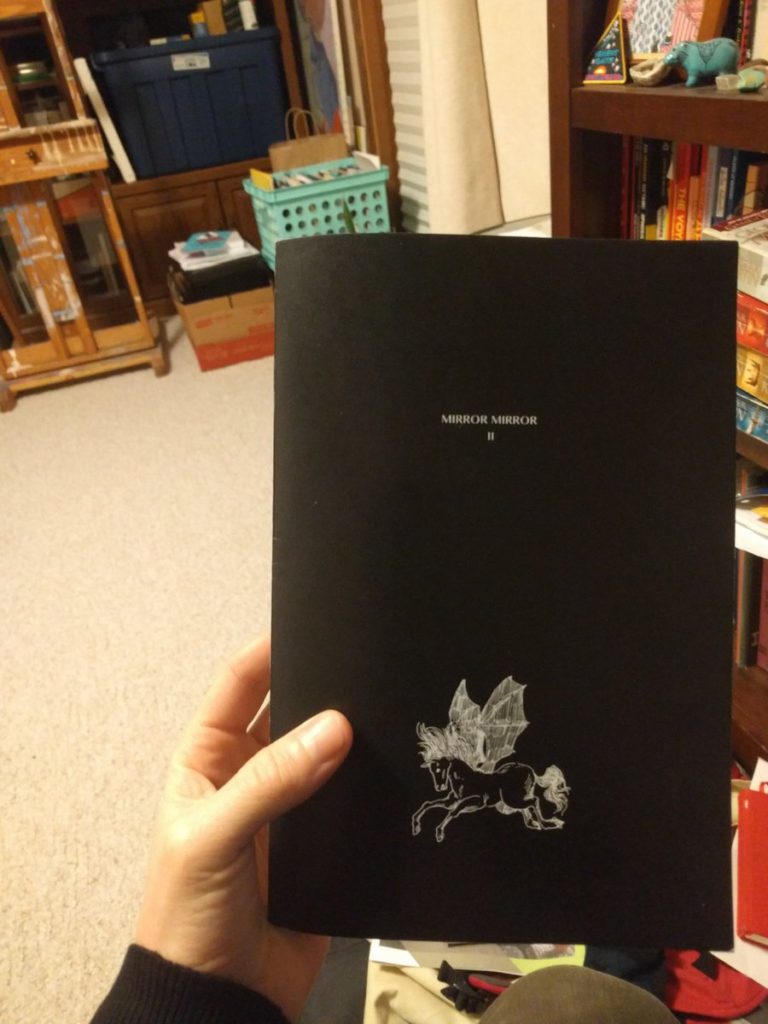
This is the preview sample for MIRROR MIRROR II, edited by me and Julia Gfrörer, coming from 2dcloud next year.
Featuring new and unpublished comics and art by Lala Albert, Clive Barker, Heather Benjamin, Apolo Cacho, Sean Christensen, Nicole Claveloux, Al Columbia, Dame Darcy, Noel Freibert, Renee French, Meaghan Garvey, Julia Gfrörer (with Claude Paradin), Simon Hanselmann (with Sean T. Collins), Aidan Koch, Laura Lannes, Céline Loup, Uno Moralez, Mou, Jonny Negron, Chloe Piene, Josh Simmons, Carol Swain, and Trungles, with an introduction by Gretchen Alice Felker-Martin.
“A thought-provoking, richly entertaining collection from some of the most exciting comic artists working today. A must read for fans of the horrific and perverse.” —Bryan Cogman, co-executive producer/writer, Game of Thrones
“An impressive collection of beautiful depictions of grotesque things and grotesque depiction of beautiful things.”—Alan Resnick, writer-director, Adult Swim’s Unedited Footage of a Bear and This House Has People in It
“Mirror Mirror II invites the most innovative creators working in the form today and proves just how expansive the pornographic and gothic can be, encapsulating the pop cultural, fantastical, and realistic in one fell swoop.” —Rachel Davies, Rookie Magazine
“Editors Sean T. Collins and Julia Gfrörer have assembled an exquisitely creepy and seductive new collection of comics with Mirror Mirror II. From Uno Moralez’s pixilated noir to Dame Darcy’s ornate Gothic ghost stories, the wide range of horror here is fantastic, as characters creep and fuck in the shadows of unimaginable darkness throughout. It’s certainly the perfect, freaky anthology for you, your lover, and all the demons in your mind.”—Hazel Cills, MTV News
The Fascism of ‘The Walking Dead’
December 13, 2016“We can boil fascist ethics down to one word: Dominate,” says professor Stephen Olbrys Gencarella of the University of Massachusetts at Amherst, who has taught about the show as well as written about it for the academic journal Horror Studies. “It’s true that fascist aesthetics anchor many shows and films, especially in the sci-fi and fantasy genres. And of course violence is nothing new; it’s the norm in American media. Other shows out there are hitting similar themes, and that shouldn’t surprise us given the anxieties of our times. But so many of those other shows demonstrate the consequences for violence or debate the ethical complexities of living with others who are different, or show the moral turmoil of people who enact or suffer violence. The Walking Dead is the only show that actively courts, rather than critiques, fascist ethics, and suggest that it’s the only viable solution to perceived threat.”
What do those ethics entail? “In fascist mentalities, kindness, empathy, and sympathy are seen as weaknesses, critical self-reflection is seen as a danger to security, and discussion and negotiation is seen as failure,” Gencarella says. “Existence is a tragic struggle to be won or lost.” This mentality can be traced back to the fascist Ur-text, The Doctrine of Fascism, ghostwritten for Benito Mussolini by his Minister of Education Giovanni Gentile. “The Doctrine is clear that perpetual war is the preferred mode of existing with others who are different, and especially to crush the weak in order to demonstrate that one is strong,” Gencarella says. “Fascists want the apocalypse. And the history of actual fascist movements has always been cemented by the kind of storytelling that TWD valorizes and perpetuates.” It’s this perspective, and the political doctrines likely to be appealing to those who respond to it, that the Trump campaign seemingly recognized when targeting the show’s viewers. “Watching Trump and Negan on television at the same time makes perfect sense,” Gencarella says. “I don’t say that because I think all Trump supporters are fascists. But it’s also telling that the campaign thought The Walking Dead viewers would readily equate immigration with an apocalypse for which violence is the only solution.”
I wrote about the fascism of The Walking Dead for Vulture. This is a longstanding bugbear of mine as you know, and this is the first standalone piece I’ve written about it.
The Mirror
December 12, 2016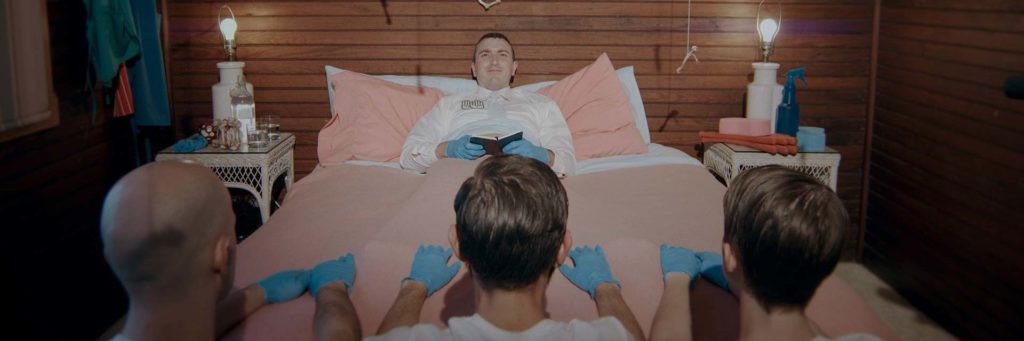
The makers of Unedited Footage of a Bear and This House Has People in It are back with a new project called The Mirror for IFC. I don’t want to give much away, but let’s just say that given my recent reading habits as discussed elsewhere on this blog, I was very, very excited by this. Perhaps you will be too.
“Westworld” thoughts, Season One, Episode Ten: “The Bicameral Mind”
December 5, 2016SPOILER ALERT
We’ve reached the center of the Maze. It’s not a physical location, a place in the park where the safety catch comes off and the guests can play for keeps. It’s a metaphor for consciousness, the inward journey required for an android to become truly alive. In the case of Dolores, it’s also the downward spiral to her buried identity, i.e. Wyatt, the genocidal maniac destined to create a new robot-friendly world from the human blood of the old.
But tonight’s movie-length season finale – “The Bicameral Mind” – proves that the Maze isn’t such a bad image for the show itself. For all its faults, Westworld‘s first season wasn’t an affront or a disaster. There’s enough entertainment value in each episode, particularly if you just so happen to enjoy sci-fi thrillers, no matter how skeptical you are of their overall philosophical or dramatic merit. But the journey from the starting point to the center of it all reveals just how distant “enjoyable” can be from, you know, good. Right up to the end, the show’s inaugural season was watchable – and ultimately dismissible.
I reviewed last night’s season finale of Westworld for Rolling Stone. Like I said, it was never a show I dreaded watching — I was never like “oh god, here we go, time to watch another fucking Westworld,” you know? I actually kind of looked forward to it each time. I just never looked backward to it afterwards.
Anyway, as I try to explain in the review, the show succeeded best as a straightforward genre thriller and foundered in its attempts to be more than that. In terms of the twists and revelations, the problem was less their existence and more the simultaneously slovenly and byzantine way in which the storylines that led to them unfolded. Basic structural stuff.
“Westworld” thoughts, Season One, Episode Nine: “The Well-Tempered Clavier”
November 28, 2016It’s not the content that’s to blame for the episode’s shortcomings, but the delivery mechanism. From start to finish, the hour’s events move in fits and starts, with the herky-jerky rhythm of a malfunctioning host. How else could it work, when nearly all its focal-point characters are constantly moving in and out of awareness? Teddy wakes up from being shot with an arrow, then is promptly killed again. The Man in Black watches all of this smugly, until he gets knocked out; the next morning he realizes he’s about to get hanged from a tree courtesy of a noose and a skittish horse. He narrowly escapes, but only to have his narrative stopped in its tracks once again by a visit from Charlotte Hale, one of his fellow members of the park’s board of directors. Logan torments his estranged brother-in-law-to-be and Dolores until the latter escapes and the former pretends to forgive him. Cue the smirking asshole waking up the next morning with all his robotic Confederado comrades massacred and the born-again-hard William firmly in charge.
The self-aware hosts go through even more fake-outs and double-backs. Dolores shifts back and forth between locations, time periods, and states of consciousness so frequently that it’s impossible to keep track of – deliberately so, but that doesn’t prevent it from undercutting the emotional impact of her discovery that she murdered her maker. And poor Bernard splits his time between getting switched on and off by Maeve and Ford on the one hand, and being jolted in and out of his robotic consciousness and memories. Many of said memories involve killing other characters, like Theresa and Elsie, just to add to the staccato storyline. Sometimes he’s not Bernard at all, but Arnold … or at least Dolores’s deep-rooted memory of him. His Doctor-ordered suicide at the end of the episode comes as sweet relief after the mindfucks he’s been through. When the storyline that suffers the fewest interruptions of this sort (i.e. Maeve’s rebellious arc) involves our heroine breaking down a fellow robot’s mind before deliberately burning them both to death en flagrante delecto, you know things have gotten way too complicated.
Add it all up and it’s like watching a version of The Usual Suspects in which both Chazz Palmintieri and Kevin Spacey’s characters are constantly getting hit in the head with a baseball bat. (And are then forced to try and pick up the story where they left off hours later.) There’s just no way for it to sustain momentum, tension, or suspense – let alone make its plot twists and shocking revelations work properly – when every character is so busy just trying to stay sentient and upright.
“Westworld” thoughts, Season One, Episode Eight: “Trace Decay”
November 21, 2016The episode is less persuasive when it shifts its gaze from the robot mind to the human one. Before Ford wipes his secret android minion Bernard’s memories of his murder of, and relationship with, Theresa Cullen, the perplexed ‘bot asks his maker what separates his pain and experiences from that of a normal person. If all of this stuff ultimately exists in the brain and nowhere else, who’s to say where the line is drawn between the stuff of life and the merely “lifelike”? Noting that his old frenemy Arnold was tormented by the same question, the Doctor dismisses it. There is no difference, he says, because human consciousness is just as much an illusion as that of the hosts. We too are locked in loops and routines, rarely challenging our drives and desires, perfectly happy to follow orders. The only difference between machine and man is that the latter can at least be aware of his plight, and holds the remote control over the former.
Which is true, so far as it goes, but that’s not very far at all. The question of “what makes us truly human” has always been one of the least interesting ones science fiction asks because the answer is all around us. Love, happiness, suffering, memory, anticipation – even if they’re all just part of our brains’ core code, it’s the only code we have. It’s not as if we’re living a lie when we experience these things, since there’s no way to access any other deeper “truth” about reality. False or not, our consciousness is inescapable. No matter how much Ford sneers about it as he uses his iPad or whatever to reprogram his Frankenstein’s monster, it doesn’t give him, or us, an escape route.
“Westworld” thoughts, Season One, Episode Seven: “Trompe L’Oeil”
November 14, 2016SPOILER ALERT
For sheer entertainment value, the biggest shift isn’t in Bernard, but his creator. Nearly a quarter-century after his star turn as Dr. Hannibal Lecter in The Silence of the Lambs — a role he revisited twice, to diminishing returns, amid a virtual buffet of ham-based entries on his IMDB page — it’s easy to forget just how menacingly minimal Anthony Hopkins can be. The “I ate his liver” speech and the face-peeling shenanigans have the biggest pop-culture footprint, of course. But his Hannibal was at his most ominous when he was standing still, the ghost of a smile on his face and fire in his eyes, quietly tearing people to mental shreds with just his words.
The brilliance of his take on that iconic killer is visible in Ford’s full-fledged heel turn. Gone is the cryptic old-man-of-the-mesa routine, dispensing wit and wisdom in a bemused British accent. In his place is a stone-cold lunatic, and if Bernard’s very existence is any indication, he’s been mad as a hatter for literally decades. Staring into that face — which is positioned almost, but not quite, to look directly into the camera, a la Lambs‘ Lecter v. Clarice conversations — you can feel hope evaporate in the heat of his squinty glare. This guy’s too smart, to prepared, too ruthless, and too insanely dedicated to his mad project to possibly be beaten in the basement of his own sanctum sanctorum. It takes Ms. Cullen longer to realize this than it takes us, and the Doctor has no patience with it: The look of combined boredom, impatience, and condescension as he watches her try to call for help is a thing of dark delight. The brutal murder that follows is almost an afterthought; you could see her death reflected in his eyes long before he gave his robotic right-hand man the order. You wanted an “adversary”? You’ve got one.
“Westworld” thoughts, Season One, Episode Six: “The Adversary”
November 7, 2016Westworld is a show about androids, but the titular theme park’s biggest problem is – let’s face it – its H.R. department. Delos, the corporation behind the theme resort, has based its staffing structure around a system of checks and balances – though in practice it’s more like Republican and Democrat zero-sum party politics, or a Hobbesian war of all against all. The boffin-y behavioral scientists, the temperamental artists who craft storylines, the hardcases who handle security, the grunts in the basement chop shop: They work against each other far, far more than they work together. According to Theresa, who breaks up with Bernard because the conflict of interest their relationship represents, that’s by design.
Okay, fine. After all, this might explain the constant backbiting and infighting we were complaining about last week. (Explain, mind you, not excuse: Just because it has an in-story reason for happening doesn’t make non-stop conflict any less boring to watch.) But in this week’s installment – “The Adversary” – this policy winds up raising more questions than it answers. In a theme park this paranoid, how the hell can so many people get away with breaking the rules?
[…]
Obviously, science fiction requires suspensions of disbelief – otherwise it’d just be “science” – and few stories of any kind are so flawless that there are no plot holes to overlook. In that light, all this nitpicking about lousy stop-loss practices by park staff could be seen as just that: nitpicking. But logical gaps are easier to cross when we’re given enough material of value to build bridges, and that’s where Westworld fails time and again.
There’s nothing wrong with the Westworld theme park a few security cameras couldn’t fix, and other observations: I reviewed this week’s Westworld for Rolling Stone.
Preorder MIRROR MIRROR II
November 2, 2016
Mirror Mirror II, the comics and art anthology I’m coediting with Julia Gfrörer, is now available for preorder on Amazon. The book contains new and unpublished work from Lala Albert, Clive Barker Heather Benjamin, Apolo Cacho, Sean Christensen, Nicole Claveloux, Al Columbia, Dame Darcy, Noel Freibert, Renee French, Meaghan Garvey, Julia Gfrörer (with Claude Paradin), Simon Hanselmann (with Sean T. Collins), Aidan Koch, Laura Lannes, Céline Loup, Uno Moralez, Mou, Jonny Negron, Chloe Piene, Josh Simmons, Carol Swain, and Trungles, with an introduction by Gretchen Felker-Martin.
But you don’t have to take my word for it:
“A thought-provoking, richly entertaining collection from some of the most exciting comic artists working today. A must read for fans of the horrific and perverse.” —Bryan Cogman, co-executive producer/writer, Game of Thrones
“Editors Sean T. Collins and Julia Gfrörer have assembled an exquisitely creepy and seductive new collection of comics with Mirror Mirror II. From Uno Moralez’s pixilated noirs to Dame Darcy’s ornate Gothic ghost stories, the wide range of horror here is fantastic, as characters creep and fuck in the shadows of unimaginable darkness throughout. It’s certainly the perfect, freaky anthology for you, your lover, and all the demons in your mind.” —Hazel Cills, MTV News
“Westworld” thoughts, Season One, Episode Five: “Contrapasso”
November 2, 2016Granted, Logan has no redeeming qualities in any capacity, so his behavior toward his colleague shouldn’t come as a surprise. But it speaks to the fundamental misapprehension Westworld has about what makes a compelling workplace drama. You need tension and conflict and even the occasional full-fledged feud. But neither the show nor the fictional business it portrays will come together if that’s all you’re getting. Both Mad Men and Sterling Cooper would have collapsed had Don Draper not been a charming companion and a surprisingly good mentor in addition to everything else. The Wire would have had no story if McNulty and Daniels, or Stringer and Avon, had always been at each other’s throats. Halt and Catch Fire, AMC’s little-watched but much-admired series about the dawn of the Internet age, spent an entire season with its main characters screaming at each other, before realizing show would seem less grating if they worked together.
Unless and until Westworld realizes the same thing, it’s always going to feel like a fraction of the series it could be. Yes, you get your requisite gory violence and copious nudity, including HBO’s second clinical close-up of a black man’s penis this year after The Night Of (and a ridiculous robot orgy soundtracked by a chamber-music version of Nine Inch Nails’ “Something I Can Never Have”). You get all the guessing games about multiple time frames and hidden programming, the doppelgangers of Dolores and Lawrence, and the truth about the late great Arnold. All of this will only get you so far. To quote George Costanza, “We live in a society!” even if the employees’ role in it is to create a lawless version thereof. People need to work together, at least sometimes, for that society to function. The humans on the show need to acting like humans for us humans on the other side of the screen to truly care.
I reviewed this week’s Westworld for Rolling Stone, ignoring the clues and theories in favor of talking about a far more fundamental problem. We’re all free to do this kind of thing! Nothing says we have to “solve” a show constructed as a puzzle box.
“Westworld” thoughts, Season One, Episode Four: “Dissonance Theory”
October 28, 2016The point is this: Given what happens to every character who tries to solve the puzzle, perhaps it’s best to just enjoy things as they unfold, if you can indeed “enjoy” a story this grim.
Unfortunately, the majority of the show isn’t making this easy. While the horror elements pack a jolt and the “conversations” between robots remain enthralling, everything else is shooting blanks. The human characters are still a major flaw: Aside from Ford and his lunatic zeal, everyone who works at the park is utterly joyless and unpleasant. When Bernard and Theresa smile at each other in his bedroom, it almost feels like a continuity glitch.
In particular, the loathsome black-hat Logan is all but unwatchable in his clichéd obnoxiousness; “You’re gonna grow to love me, I promise,” he says to his dully good-hearted companion William, but we have our doubts. In some clunky exposition, he also raises the idea that the two of them are part of the family that owns the park, which means they’ll be even more important to the story as it progresses. Great.
Perhaps to compensate for the undercooked dialogue, the score is omnipresent and obnoxious, telegraphing every emotion we’re supposed to have during every scene: ominous hums in the production facility, lugubrious strings during Dolores’ touching moments with the menfolk, jangly Mexicana when the bad guys and bandits are on the scene, the ironic use of “La Habanera” for a slow-mo massacre. Hey, Westworld: Have some faith in your players – ahem, viewers. We can figure this out ourselves.
I reviewed last weekend’s Westworld for Rolling Stone. Amazingly, Ramin Djawadi does the music for this show, and the difference in quality between the theme and score here and that of Game of Thrones is just night and day.
The 50 Greatest Horror Movies of the 21st Century
October 17, 20169. The Descent (2005)
Years before he redefined TV action with his work on Game of Thrones, British director Neil Marshall earned his place in the horror pantheon with this merciless survival-horror story. One year after a car accident shatters their bonds, a group of women go spelunking in a remote Appalachian cavern and unearth far more than they bargained for. The claustrophobic setting is intense and the creature effects genuinely disturbing, but the film’s greatness lies in its use of its main character’s raw, red grief as emotional kindling for the catastrophe that follows. Few of even the greatest genre movies dare to go places this deep.
Alongside a murderers’ row of critics, I wrote about some of the best horror films of the new millennium for Rolling Stone. (For the record, I was on the “Mulholland Drive IS a horror movie” side of the argument referenced in the intro.)
“Westworld” thoughts, Season One, Episode Three: “The Stray”
October 17, 2016Three episodes deep into Westworld, it’s become clear that there’s a problem with the user interface. Theoretically, our deepest interest in this increasingly dark sci-fi parable should be with the characters best capable of sustaining it: the humans. After all, the guests and the staff of the theme park are the ones with actual, honest-to-god (or honest-to-Darwin) consciousness. They’ve lead real lives with real experiences, instead of having fake memories uploaded into their brains. Their emotions can’t be switched off with a command. Their bodies can’t heal from fatal wounds after a quick overnight trip to maintenance. They’re people, damn it.
So why do they feel like lines of computer code, stuck in a loop?
I reviewed this week’s Westworld for Rolling Stone. The human characters are faltering while the robot “characters” are fascinating.
“Westworld” thoughts, Season One, Episode Two: “Chestnut”
October 12, 2016“I know you think that you have a handle on what this is gonna be: guns and tits and all that mindless shit that I usually enjoy. You have no idea.” When Logan, a handsome, sleazy young veteran of multiple trips to Westworld, says this to his milquetoast first-timer companion William, he’s ostensibly referring to misconceptions about the park. But for all his subsequent blather about the place helping you find “who you really are,” who Logan really is turns out to be a guy who enjoys, well, guns and tits and mindless shit. He indulges in multiple male and female partners twice in his first day of vacation, pulls out a gun in a restaurant to test whether a fellow diner is real or an android, and brutally stabs an elderly “host” he finds annoying. Despite what he told his coworker, this creep’s robot-resort experience lives down to expectations.
But the real target of his words is quite clearly us, the audience. In Westworld‘s second episode – “Chestnut” – co-creators/co-writers Jonathan Nolan and Lisa Joy continue to take an “as below, so above” approach to their material. The same ethical dilemmas posed to the park’s visitors – the gratuitous violence, the literally dehumanizing sex, the freedom to indulge in absolute cruelty with complete invincibility – are the same ones set forth by the show to its viewers. The implicit promise is precisely the one Logan makes to William: There’s more to this onslaught of nudity and brutality than meets the eye, even if for the time being we mostly have to take their word for it.
“Fear the Walking Dead” thoughts, Season Two, Episodes 14 & 15: “Wrath” and “North”
October 5, 2016Not that any single fucking thing on this show matters, because we know what the outcome and the moral will be every single fucking time. Kindness is always weakness, brutality is always morality, outsiders are always animals, and at a certain point everyone will try to kill everyone else, so you’re never wrong to kill first.
Fear the Walking Dead is fascist.
I reviewed the season finale of Fear the Walking Dead for Decider. This franchise has way bigger problems than lousy cliffhangers and superfluous spinoffs. It’s hugely popular and deeply toxic. It should be talked about.