
Posts Tagged ‘horror’
The 50 Best Film Soundtracks of All Time
February 19, 201946. Paul Giovanni – The Wicker Man (1973)
The Wicker Man is never what you expect it to be. Like its hero, a Scottish police sergeant trying to find a missing girl in a pagan community, the New York musician Paul Giovanni was a stranger to the old Celtic folkways he was hired to investigate for Robin Hardy’s haunting horror film. His outsider’s ear for both the then-booming British folk scene and its ancient antecedents made the music he composed the ideal mirror for such a twisted journey. The opening song is a tightly harmonized adaptation of Scottish poet Robert Burns’ “The Highland Widow’s Lament,” nearly abrasive in its mournful mountain-air beauty. Sex is a frequent topic for the film and music, rendered in forms both profane (the absolutely filthy drinking song “The Landlord’s Daughter”) and sacred (“Willow’s Song,” the set’s dirty-minded but gorgeous standout). Rousing community singalongs and sparse hymns of ritual sacrifice weave conflicting narratives of their own. It’s a soundtrack that casts strange shadows and remains ungraspable, like a tongue of flame.
“Kingdom” thoughts, Season One, Episode Six
January 31, 2019With Kingdom, no one is tuning in tomorrow, same Chang-time, same Chang-channel. Gratification must be delayed until Season 2. And while the show is to be commended for steering the genre away from The Walking Dead‘s reactionary “us against them” politics in favor of a story where the real heroes are those who risk their own safety and comfort to defend the lives of the less fortunate, what are you really gonna get in the second go-round besides a mashup of your favorite genre franchises but with very nice robes. In the end, that’s Kingdom for you. Decent politics and lovely wide shots aside, it never delivers more than the minimum it needs to.
“Kingdom” thoughts, Season One, Episode Five
January 30, 2019Kingdom is doubling down on its The Lord of the Rings vibe. Does this shot of three heroes running across the fields in pursuit of their quarry look familiar to you, for instance?
How about this supreme badass hacking his way through the monstrous hordes arrayed against him?
Or perhaps the giant column of heavily armored warriors marching toward a fortified location to seal the doom of everyone inside?
And that’s not all! There’s starving peasants, flaming arrows, last-minute rescues by wise men with beards, a kingdom overthrown from within by an evil advisor, a descendant of royalty who’s prepared all his life for one final confrontation with his arch-enemy. If you ever wanted to know what The Two Towers would look like if everyone had better hats, Kingdom has you covered.
There’s no reason to believe this isn’t sincere admiration on the part of the filmmakers, if indeed it’s even deliberate. (I have a hard time believing the beacon-lighting thing that’s appeared in two episodes is the handiwork of people who haven’t watched LotR, but I have the White Tree of Gondor tattooed on my arm, so my mind tends to go there regardless.) But there’s still a whiff of cynicism to the whole thing. Like Stranger Things before it, Kingdom is a mash-up of the world’s most popular entertainment. It’s a layup.


I reviewed the penultimate episode of Kingdom Season 1 for Decider.
“Kingdom” thoughts, Season One, Episode Four
January 29, 2019Goddammit, they’re still killing kids in this thing. And I just…I just don’t think the material quite justifies the extremity.
[…]
I’ve listened to multiple little girls scream in terror about their impending death, and I’ve seen an adorable kid lie dead with an arrow in her back from a government soldier and then get gently laid to rest by the woman she spent about one day viewing as the replacement for the mother she watched eat her sister alive. And for what? A six-episode Netflix zombie thriller? Doesn’t The Walking Dead abuse serious tragedy for cheap sentiment in much the same way? You can count apocalyptic or post-apocalyptic stories that put the suffering of children at the center and deal with it in a worthwhile way on two hands,maybe. Could Kingdom possibly be headed anywhere worth that journey?
“Kingdom” thoughts, Season One, Episode Three
January 28, 2019A few seasons into the run of Mad Men it was briefly voguish to speculate that one of Don and Betty Draper’s children would die. (People also thought that about Megan Draper, and Roger Sterling, and Don himself I believe. They also thought Don Draper was legendary airplane-heist perfect-crime architect D.B. Cooper. TV criticism gets weird sometimes.) I can never find the quote when I’m looking for it, but creator Matthew Weiner said something in response that has stuck with me for years. He said he’d never kill off a child on Mad Men, because any show in which children die must, in the moral-imperative sense, become a show about children dying. Anything less, he argued, is not commensurate with the life-remaking magnitude of such an event on the survivors. To do it for shock value, or for an individual story arc in a show that remains about, like, advertising or working in an office or whatever, is insufficient justification.
Weiner, it should be said, has not always taken his own advice on ethical issues, but on this one at least he practiced what he preached. In the episode of The Romanoffs that came closest to centering on such an event, in which an American couple had to decide whether to adopt a promised Russian infant who turned out to have severe developmental disabilities or abandon her to the orphanage system, was about the momentousness of that choice, and the cruelty of a world that makes such choices possible. To the extent that series ranging from Breaking Bad to Game of Thrones have involved the murder or attempted murder of children, the specter of those crimes informs everything that comes afterward. They are meant to demonstrate the inhumanity against which such stories warn us.
Whatever noises Kingdom makes about the evils of the aristocracy or the cruelty of the class system—and in this episode it makes plenty—are seasoning, not the main ingredient. The rich and powerful villains are so feckless and cowardly as to serve primarily as comic relief; their maltreatment of the poor is sledgehammer-subtle. What Kingdom really is is a show in which zombies eat people and people behead zombies with swords while wearing cool costumes, because these things are exciting and fun to watch.
You know what’s not exciting and fun to watch? You know what’s the kind of thing your period-action-horror-fantasy swashbuckler shouldn’t do unless it plans to dig way, way deeper into the subject that it clearly has any intention whatsoever of digging? Putting a terrified little girl on camera and having scream “Mommy, what is wrong with you? You’re scaring me! Stop it!” before her mother eats her alive.
“Kingdom” thoughts, Season One, Episode Two
January 26, 2019A six-episode season is too short to delve deep into character and give them room to breathe, the way a longer run would allow; and it’s too long to get away with having slight, sketched-out characters (likeable or loathsome though they may be, as befits their status as faces and heels). Without getting to know them all—and I mean see how they act when the cameras are off, so to speak, not just “here’s a scene where they have some camaraderie, now here’s a scene where they argue, etc.” With all-out zombie warfare on the horizon, I don’t see the show pulling that off. In addition to human flesh, zombies devour screentime.
“Kingdom” thoughts, Season One, Episode One
January 25, 2019If you like this sort of thing, here’s the sort of thing you’ll likehas been Netflix’s mantra for a minute now. It’s not just the original programming that works this way, either. When ’80s nostalgists run out of Stranger Things or ’90s nostalgists run out of Maniac or people who love Pablo Escobar run out of, like, five different shows about Pablo Escobar, they can always watch the Big Red Machine’s library of the most popular shows on broadcast network television from the past couple decades, which not coincidentally are also the majority of the most popular shows on Netflix.
I’m not saying this approach never pays off creatively. Narcos is a fun show with a great theme song, a great performance in Wagner Moura, and an occasional Great Episode. The troubling German science-fiction show Dark snuck in on a wave of “It’s kinda like Stranger Things” early press (tonally they’re worlds apart but plotwise, yeah, a bit) and became its own engrossing thing. The Punisher, the best of the Marvel/Netflix shows, is a direct Daredevil spinoff from a line of six interconnected series set in the most popular franchise of all time. Still, if you’re looking for something to kick down the doors the way The Sopranos did…well, here are some cooking shows!
But you’ve gotta hand it to them with Kingdom, this sweeping new original Korean-language series. Plenty of networks and plenty of shows have tried and failed to capture the magic of Game of Thrones, the show on TV that is the sort of thing the most people like out of pretty much all the shows on TV at this point, and bellyflopped. (MTV’s The Shannara Chronicles, anyone?) But for whatever reason, none of them isolated one of the most instantly appealing elements of George R.R. Martin, David Benioff, and Dan Weiss’s baby, a concept so brilliant in its simplicity that it shows up before the opening credits of the pilot even roll and will be the subject of the entire final season. Yes, Game of Thrones is “The Sopranos with swords,” as the early buzz hailed it. But it’s also, and on a much larger and more immediately, nerdily impactful scale, The Lord of the Rings with zombies.
Kingdom has cracked the case.
I reviewed the series premiere of Kingdom for Decider.
(NOTE: These review summaries will be brief while I play link catch-up. Just read the reviews!)
Music Time: Trent Reznor/Atticus Ross – Bird Box (Abridged) Original Score
January 16, 2019Starting with 2008’s sprawling collection of instrumental work Ghosts I-IV (released under the Nine Inch Nails aegis) and accelerating with 2010’s Oscar-winning score for David Fincher’s The Social Network, the instrumental side of Trent Reznor has effectively shared equal billing with the more traditional industrial rock that made him a superstar. Never one for half measures, Reznor clearly sees the film-soundtrack work done alongside his longtime composing partner Atticus Ross as a chance to flex. “We aim for these to play like albums that take you on a journey and can exist as companion pieces to the films and as their own separate works,” Reznor wrote recently. He’s not kidding: The duo’s score for Fincher’s 2011 film The Girl with the Dragon Tattoo, for instance, is 15 minutes longer than the movie itself.
In announcing the release of Bird Box, the score for Netflix’s treacly Sandra Bullock survival-horror film of the same name, Reznor described it as a way of presenting the audience with “a significant amount of music and conceptual sound” that didn’t make the film’s final cut. Even then, that “Abridged” parenthetical in the title points toward “a more expansive” version of the album due later this year. It’s just as well since what Reznor and Ross have created is better than the movie they created it for. It does exactly what good soundtracks are capable of doing, and what they expressly intend for it to do: Emerge as a rewarding experience in its own right.
I reviewed Trent Reznor & Atticus Ross’s Bird Box score for Pitchfork.
‘I literally have nightmares and put them on screen’: Channel Zero creator Nick Antosca on 2018’s scariest show
January 8, 2019We had a small, very passionate writer’s room, and everybody in it brought their own fears to each story. And we just we had certain guidelines: Keep it personal. Draw from character. If something feels right then explore it, even if you don’t know what it means right away. That, to me, is what great horror does. It makes you dig deeper, makes you explore the parts of yourself that you’re afraid of, that you’re traumatized by.
STC on “28 Weeks Later…” for NYT
January 8, 2019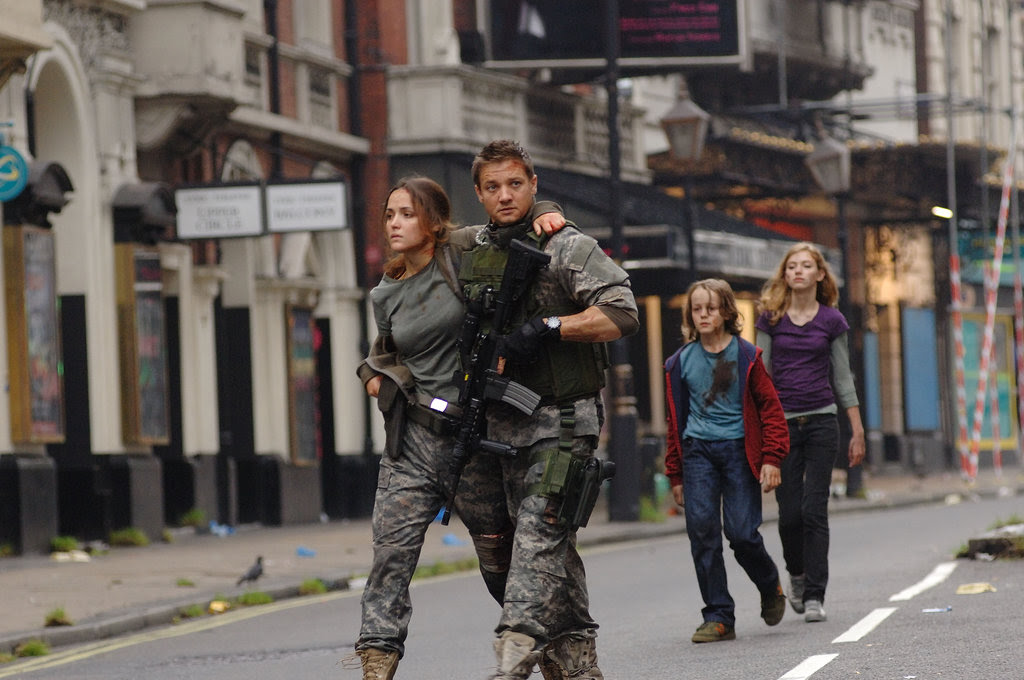
I wrote about 28 Weeks Later… in the context of Bird Box and A Quiet Place and survival-horror films with children at the center for the New York Times’ free Watching newsletter, which you can subscribe to here!
‘I literally have nightmares and put them on screen’: Channel Zero creator Nick Antosca on 2018’s scariest show
January 3, 2019Polygon: The first scene of the first episode of the first season of your show scared me more than other horror shows have during their entire runs.
Nick Antosca: You mean the interview at the beginning of Candle Cove? Sooo frequently, we were told to cut that scene. I’m not going to disparage, at all, the people who’d give us notes; we have a really supportive network and studio. But every round of notes on that, we were told “Cut that scene, cut that scene, it’s bad!” I knew that we were going to be asked to do that when I wrote it, so I put all of the exposition that would be necessary to understand the show in that scene so you couldn’t cut it.
The scene is like the opening of David Cronenberg’s The Brood, when Oliver Reed is having that weird therapy session onstage. Everything is dark and you have no idea what’s going on.
Antosca: You know, our show references The Brood in multiple seasons in other places, but that was not a deliberate reference to it. In the script, that was written as being interviewed by Dr. Phil at one point, then it was written as being interviewed by Charlie Rose and then Matt Lauer. We asked them both to do it and they wouldn’t do it. Thank God.
As frightening as that first scene was, the series basically never lets up.
Antosca: The idea of the show was always to capture a sense of dread, and we felt it was very important to establish that in the first scene, in a way that was different from other horror shows that I’m familiar with.
I interviewed Nick Antosca about his phenomenal horror anthology series Channel Zero for Polygon.
“Channel Zero” Is the Scariest Horror Show You’re Not Watching
January 1, 2019Everything I’ve ever heard about Channel Zero, I’ve heard from other people on the internet. Perhaps that’s the way it should be. This rich, gorgeous, and astonishingly frightening horror anthology series takes the story lines for each of its four seasons so far from creepypasta — scary short stories in the form of faked message-board posts and comment threads. They’re the online era’s equivalent of urban legends, passed around from one terrified reader to the next. That’s how Channel Zero reached me, pretty much: from other impassioned viewers, desperate to persuade me to watch it too. The show infected them like a virus, until they passed that virus to me. And now … well, if you’re reading this, it’s too late.
But there’s so much more to the series than that slightly cutesy high concept, which I suspect turns as many people off as it turns on. Created by Hannibal veteran Nick Antosca, Channel Zero is full-service Good Television. It’s engrossingly beautiful and austere filmmaking, as shot by a different promising director every season. It’s a showcase for intriguing and surprising performances by a wide variety of talented actors, particularly women, who’ve led three of its four seasons. It’s a merciless autopsy of suburban disconnection, and how the few intimate bonds that are formed in that environment — with friends, with family, with lovers — can harm as well as help.
And above all, it’s scary. Just incredibly scary. I say this as a horror person, who crammed all four seasons down my gullet as fast as I could, alongside my partner, another horror person, and was flabbergasted by its singular, consistent, and prolonged ability to frighten, disturb, disgust. Take it from someone who endured several prestige-y limited-series adapted from famous horror novels/novelists this year: I was scared more, and more often, by the first scene in the first episode of the first season of Channel Zero alone than I was by quite a few other horror shows combined.
I came late to Channel Zero, but Julia and I burned through all four seasons in October and November and I’ve taken to it with the zeal of the converted. I tried to explain why in spoiler-free fashion (except for mentioning some characters and monsters) for Vulture. You’ve got to watch this thing.
How the Act of Dying Made “The Terror” One of the Year’s Best Shows
January 1, 2019The men of The Terror did not, as they say, die as they lived. They lived as interchangeable cogs in the machine of empire—sailors in the Royal Navy of Great Britain, the largest imperial project ever undertaken by humanity between the ride of the Khans and the Pax Americana currently dying all around us. So the show based on their final misadventure dresses them in their blue uniforms, swaddles them in shapeless and face-covering winter gear, allows the cold to redden their faces and lengthen their beards, until distinguishing between them requires an expert’s eye and ear. (Or at least a thoroughgoing knowledge of English and Irish character actors.)
They lived their final years trapped in the frozen waters and barren lands of the Arctic, searching for an open lane of water that would bridge the Atlantic to the Pacific without the need for Her Majesty’s Ships to sail around the tip of South America to get there—the fabled Northwest Passage. (Only one of them would actually live, and not for long, to see the Passage, and only by accident.) So the show shoots them against endless uniform vistas of white and gray, with snowblinding daylight or soulcrushing darkness alternating for periods that lasted months at a stretch.
And in the end, they lived their final weeks, days, hours, minutes, moments dying from the same things: malnutrition, food poisoning, disease, starvation, exposure to the cold, murder at one another’s hands…and, in some cases, mutilation and consumption by ferocious hulking thing on the ice, out for their English blood. (Fee-fi-fo-fum.)
But when they died? When they died, it was different. They were different. Replacing the uniforms and the uniformity were visions as unique and beautiful and terrible and individual as people are themselves, deep down inside.
I wrote an essay on the many deaths of The Terror for Decider. As you’d expect for a piece on character deaths, there are many spoilers. I tried to do this magnificent show justice and I hope you enjoy the result.
Farewell, FilmStruck: A Bittersweet Guide to the Movies to Catch Before It’s Gone
December 31, 2018I don’t think I’ve seen “Naked” more than three times. And yet, “Naked” is one of my favorite films. How can both statements be true? Because like Johnny, the human vortex of misanthropy at the heart of this scathing, haunting film from Mike Leigh, “Naked” arrives unexpectedly and does enough psychic damage to mark you for life.
Played by David Thewlis in his breakout role, Johnny is a shuffling, shaggy-haired native of Manchester, now down-and-out in London after fleeing the consequences of the sexual assault that opens the film. (The merciless tone is established from the start.) With his cruel intelligence, dizzying monologues and trademark black trench coat, he upends the lives of old friends, acquaintances and total strangers alike.
The film’s devastating final shot casts Johnny as a sad-sack Satan wandering the world, unwilling to accept either punishment or forgiveness for his sins. When FilmStruck vanishes from the internet, it will take this unforgettable portrait of humanity as a failed state with it for now — but the film will remain lodged in my mind forever.
And since it’s been a while, I’ll note that I still contribute movie recommendations to the Times’ free streaming-advice newsletter Watching. I think I’ve covered The Love Witch and Eyes Wide Shut since last time. Click and subscribe for free!
“The Romanoffs” thoughts, Season One, Episode Three: “House of Special Purpose”
December 31, 2018Horror is a genre in conversation with itself — more so, perhaps, than any other genre, because the topic of conversation is always ultimately the same. Horror filmmakers study the things that frighten them, then reimagine, refine, and revise them, the better to unleash their own specific fears upon new audiences. This is as true of capital “G,” capital “F” Great Films like Under the Skin and Hereditary as it is of derivative corn like Stranger Things, or of recent critical darling Mandy, which after the weed-scented glacial pacing and lush psychedelia of its first half has nary an original idea in its head and is basically just Stranger Things for heshers. The stuff that’s truly worthwhile does more than merely remix the past, because the people making it filter those fears through their own unique ideas about the present.
Among many other things, “The House of Special Purpose” is a horror film, and it is not Matthew Weiner’s first. As the creator and showrunner of Mad Men he presided over several eerie and gut-wrenching hours of television, primarily during the show’s death-haunted fifth season. The fever-dream murder (guest-starring Twin Peaks’s Mädchen Amick) and the real-life terror of mass murderer Richard Speck in “Mystery Date,” the car-crash scare tactics and the shadow of tower sniper Charles Whitman in “Signal 30,” the acid-trip creepiness and artificially lit missing-person freakout of “Far Away Places” — all this is before the season’s climactic death, which I prefer not to name-drop publicly if I can help it but to which the character’s fellow cast members reacted, by all accounts, with genuine horror. (Of course, let’s not forget the lawnmower scene, either.)
But the anthology nature of The Romanoffs enables Weiner to go deeper into the genre than ever before. A self-contained story, with no previously screened backstory for the characters and no need to write for their continued existence either, abrogates the need for Weiner to do anything but creep people out in his own idiosyncratic way. Working with writer Mary Sweeney, he does exactly that.
Playing long-overdue link catchup: I reviewed the Christina Hendricks episode of The Romanoffs for Vulture.
“Castle Rock” thoughts, Season One, Episode Ten: “Romans”
September 14, 2018Which leaves us to wonder: What, exactly, was the point?
It’s not just that you can find more compelling (and bewildering) horror-tinged alternate-reality dramas without breaking a sweat, from Lost to Twin Peaks to The Leftovers. It’s not even that the ending cribs so hard from The Shining (and, from non-King country, The Babadook) that you feel déjà vu. It’s that Castle Rock undermined its own big twist — the introduction of the whole parallel-world concept and the idea that the Kid might be a hero rather than a monster — almost immediately after introducing it.
As a drama, the show boasted intelligent, understated performances from Holland, Skarsgård, Spacek, Melanie Lynskey, Scott Glenn and more. As a Stephen King riff, it understood and updated his concept of everyday American evil better than any adaptation of his work in recent memory. But as a horror story of its own, the series made promises then all but went out of its way to avoid delivering in the end. A finale that seemed destined for dark magic was just a bait and switch. The show has been renewed and a new tale will be told. Let’s hope our next visit to this terrible Maine town lives up to its potential.
I reviewed the final episode of Castle Rock’s first season/storyline for Rolling Stone. The bottom line is that it never really got scary for more than a moment or two, and it doesn’t amount to much as a head-scratcher either. The acting is there, and the attention to American evil too, and both were handled with smarts and restraint, but it was pretty much exactly the sum of its parts.
“Castle Rock” thoughts, Season One, Episode Nine: “Henry Deaver”
September 14, 2018Have you guys seen Henry Deaver around? You know — tall skinny guy, floppy hair, big Gollum eyes, white as the Swedish snow? The renowned Alzheimer’s researcher who fled Castle Rock when his mother escaped his abusive preacher father? The guy who found a little boy locked in a cage in his old man’s basement, where the kid has apparently lived without aging for nearly three decades? The one who realizes that this little boy’s name is also Henry Deaver?
You have now.
Titled “Henry Deaver” after not one but two of its main characters, the penultimate episode of Castle Rock‘s first season takes the biggest storyline swerve the show has seen yet. It relocates us to a different version of the town, one that’s still marked by tragedies like helicopter crashes and schoolbus accidents but noticeably healthier and wealthier overall. (Best gentrification joke: That awful dive bar is now a “gastropub.”) Here, Molly Strand isn’t a pill-popping real-estate agent, but a member of the city council who’s got serious clout with folks like the police department — and their top cop, Dennis Zalewski.
Most importantly, Castle Rock 2.0 is the hometown of Henry Deaver — not the African-American defense attorney played by Andre Holland as an adult and Caleel Harris as a teen, but a white neurologist played by Bill Skarsgård, a.k.a. The Kid. You thought Lost had some wild timeline-shifting tricks up its sleeve? Hold Castle Rock‘s beer.
I wrote about episode nine of Castle Rock for Rolling Stone. As narrative sleight-of-hand, and as a showcase for the surprisingly wide range of Bill Skarsgård as an actor, it worked. As horror? Not really, and that’s the show’s biggest problem.
“Castle Rock” thoughts, Season One, Episode Eight: “Past Perfect”
September 1, 2018Saying this episode continues the show’s hot streak isn’t telling the whole story. It doesn’t rely on the introduction of world-building sci-fi/fantasy concepts like “The Schisma” and “The Filter,” nor is it carried on the back of an Academy Award winner given an entire hour to herself. It simply expresses the horror of sublimated violence and the ability of the supernatural to unleash it — the stuff that drives so much of the Master’s work — in its own voice.
If you’ve ever watched a show like Boardwalk Empire or The Americans, you might recognize the vibe. Like the Prohibition-era mob in the former and Cold War espionage in the latter, the particular strain of horror on display here is the mannequin that writer Mark Lafferty and director Ana Lily Amirpour (of the modern horror classic A Girl Walks Home Alone at Night), as well as showrunners Dustin Thomason and Sam Shaw, can position into new shapes of their own devising.
I reviewed this week’s episode of Castle Rock for Rolling Stone. It was my favorite to date.
Struggle Session Episode 96 – Alien w/Sean T. Collins
August 26, 2018I’m a guest on the latest episode of Struggle Session, a terrific left-wing pop-culture podcast starring Leslie Lee III, Jack Allison, and Jonathan Daniel Brown! On this episode I join the gents to talk about the entire Alien franchise — all eight movies, from the original quadrilogy to the Alien vs. Predator spinoffs to the Ridley Scott prequels. In space no one can hear you debate the space jockey, but down hear on earth all you have to do is subscribe and listen!
“Castle Rock” thoughts, Season One, Episode Seven: “The Queen”
August 22, 2018The most striking thing about the performance is, well, that it isn’t that striking at all. Eschewing straight-up tear-down-the-sky “tour-de-force” emoting, the veteran actor keeps Ruth’s reactions well within the range of normal human experience. When she’s sad, she cries rather than wails. When she’s angry, she yells rather than screams. When she’s frightened, she’s furtive and trembling rather than panicked and flailing.
It’s a rewarding approach. By rooting her performance in recognizable everyday reactions and emotions, Spacek avoids playing Ruth’s dementia as a source of horror itself. What’s happening to her brain isn’t treated as somehow creepy or gross, the way mental illness often comes across in projects like these. She is still a “normal” person, just one who’s no longer in control of how her mind processes space and time. Sure, it’s a frightening condition to suffer from. But both series co-creator Sam Shaw’s writing and the acting emphasize that it’s mainly emotionally exhausting.
I reviewed this week’s episode of Castle Rock for Rolling Stone. It’s a straight-up showcase for Sissy Spacek that she underplays beautifully. I remain at arm’s length from the show as a whole for reasons I get into later in the review, but across the board the performances are thoughtful and quiet.