
Posts Tagged ‘a thousand blows’
The Best TV Shows of 2025
December 23, 202518. The Wheel of Time
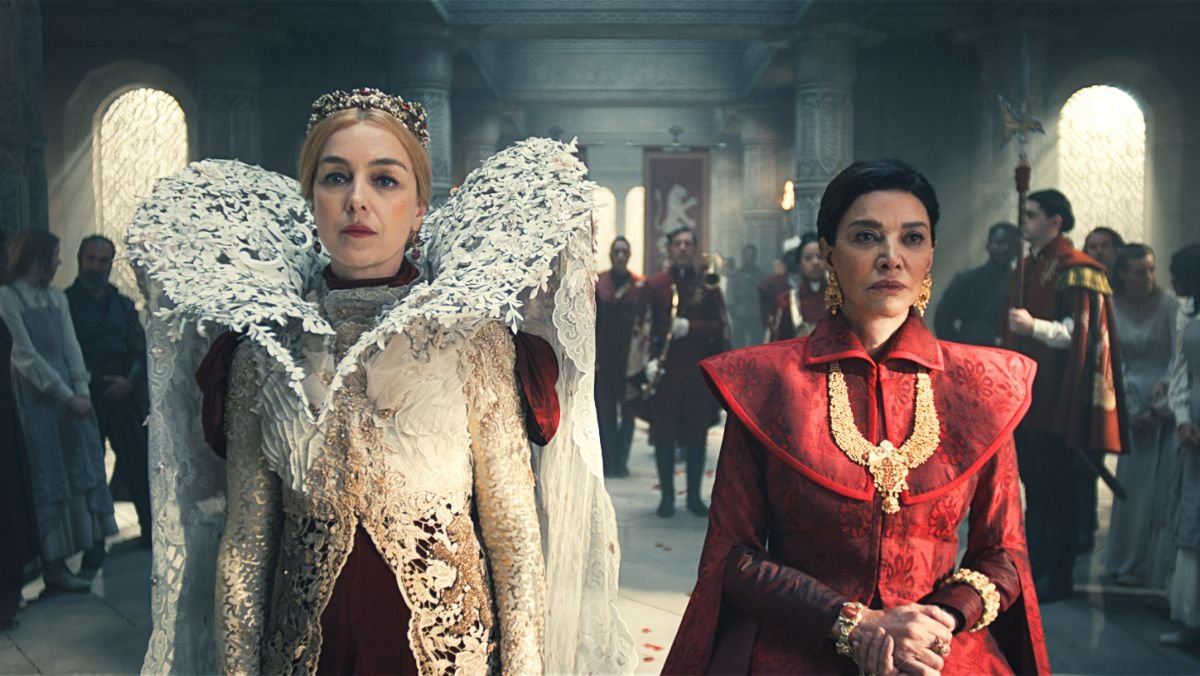
Created by Rafe Lee Judkins; based on the books by Robert Jordan (Prime Video)
In assembling this list of the year’s best shows I decided not to hold the total number of entries to some arbitrary multiple of five. Any show where I’d say to a loved one “You know what you should watch?” makes the cut. Getting canceled immediately after this season makes The Wheel of Time a tougher series to recommend, which costs it some points through no fault of its own. It’s a shame, because Wheel, aka the High Fantasy That Fucks, had really come into its own. Its ornate, colorful design, high-camp dominatrix villains, increasingly impressive cast (we’re missing out on Shoreh Aghdashloo as a main antagonist!), prog-album-art visuals, and occasional rousing lesbian drinking song about how great the locals’ tits are all made it a show I eagerly anticipated; its pleasures are still worth sampling.
17. A Thousand Blows
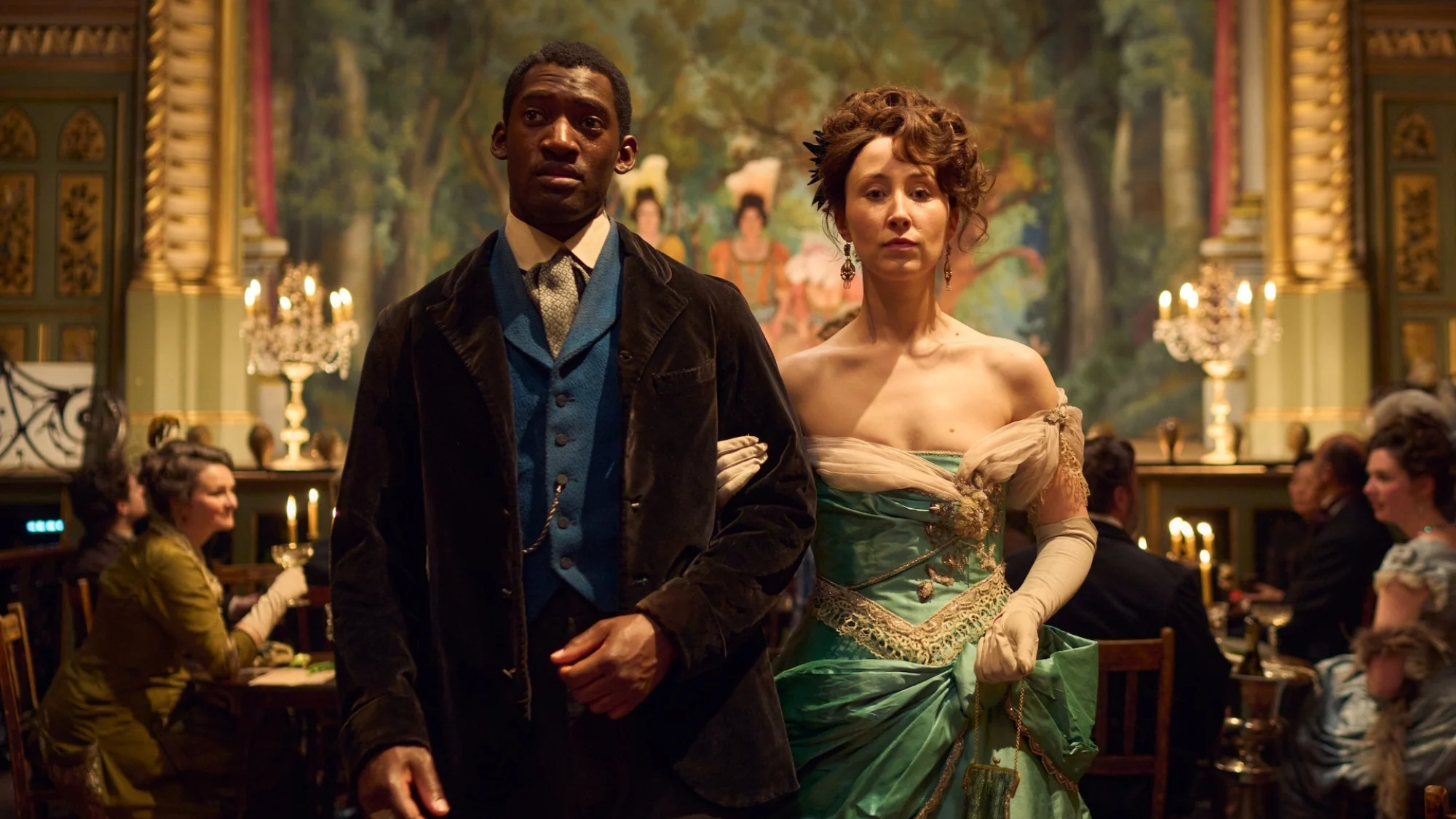
Created by Steven Knight (Disney+/Hulu)
My primary memory of watching A Thousand Blows, just one entry in creator Steven Knight’s long list of period crime dramas, is being knocked flat on my back by Erin Doherty. As Mary Carr, leader of the all-women’s gang of thieves the Forty Elephants, she projects a raw need under the viciousness that’s frighteningly intense. (Anthony Boyle wowed similarly in Knight’s House of Guinness.) Stephen Graham and Malachi Kirby are deeply impressive, too, as the bareknuckle boxers whose paths intertwine with Mary’s. You want to see these people win, which is why it’s so compelling to see what they do when they lose.
16. Pluribus
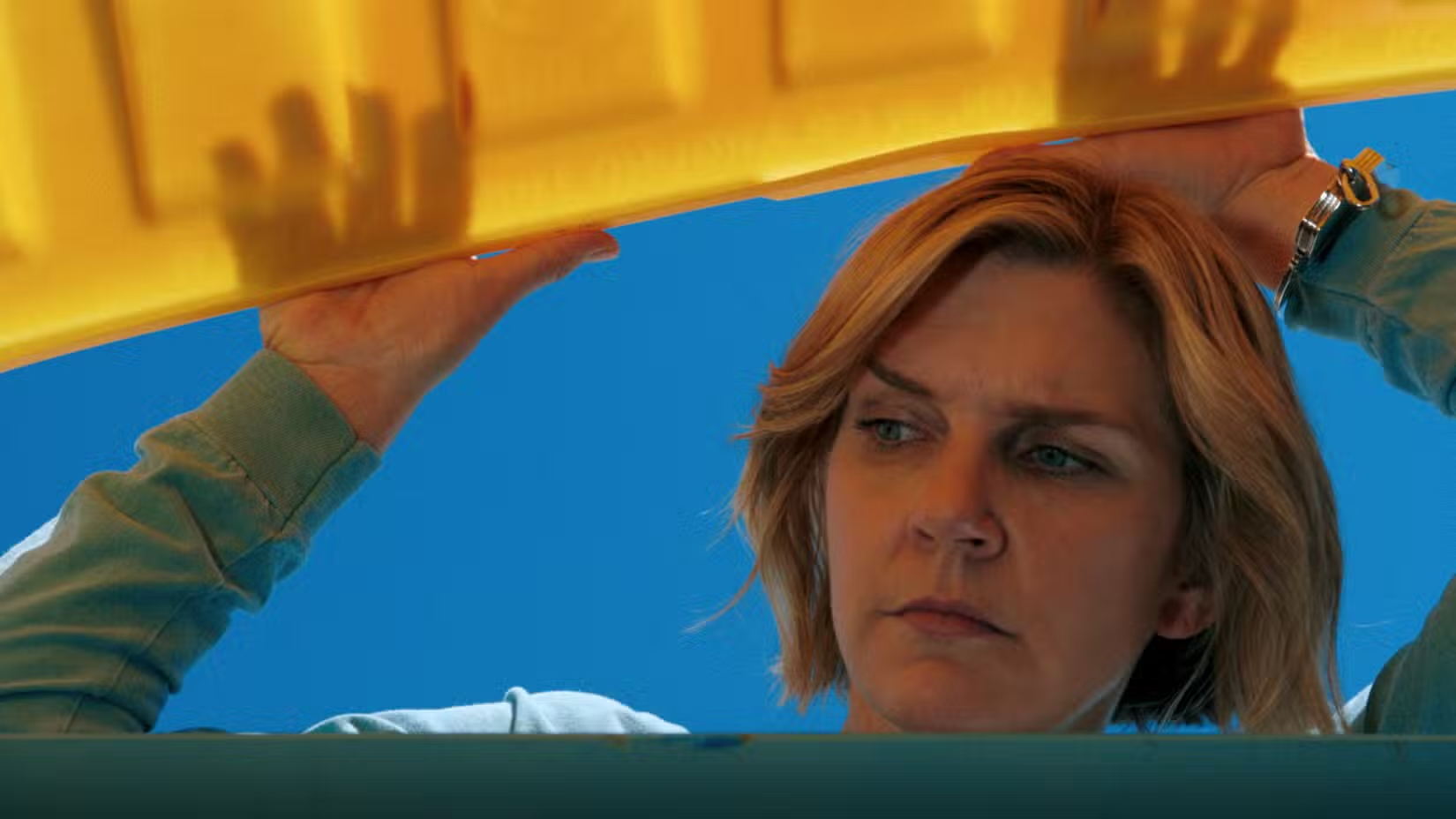
Created by Vince Gilligan (Apple TV)
Particularly on television, where the genre has thrived ever since Lost landed on that island — and its roots can be traced even further back, to The X-Files and Twin Peaks and The Prisoner — the sci-fi mystery combines two genres that invite audience speculation to create a Frankenstein’s monster of theory-mongering. For a critic who prefers to write about what’s on screen now instead of what might end up on screen several episodes or seasons later, these shows are frustrating, particularly when all the speculating requires one to overlook holes in the here and now. But after creator Vince Gilligan shook off the broad comedy that tends to mark his shows’ early going and drilled into just how deranging being one of the Last People On Earth would be, the juice finally seemed worth the squeeze. The show is augmented immeasurably by its million-dollar visual, its bold use of composition and color, and the work of Rhea Seehorn, who can make a deliberately insufferable character easy to spend time with.
15. Last Samurai Standing
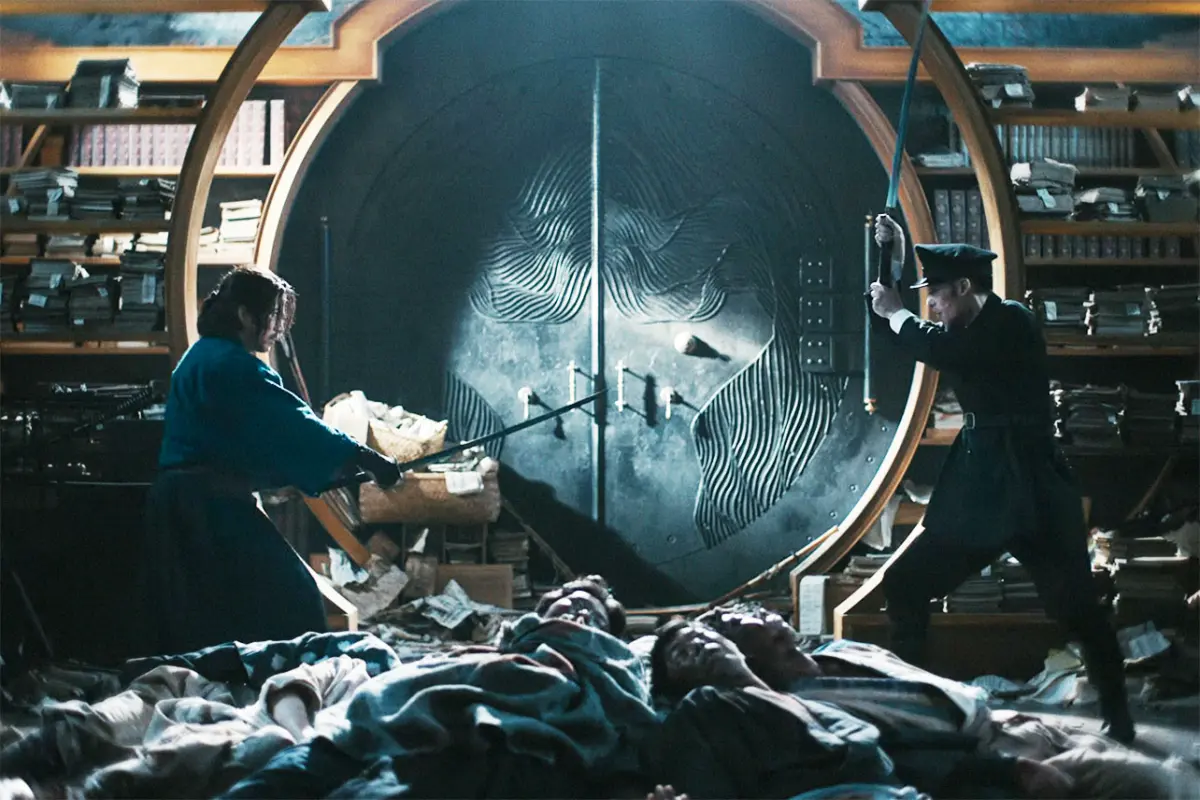
Created by Kento Yamaguchi and Michihito Fujii; based on the book by Shogo Imamura; Creative Director: Junichi Okada (Netflix)
Are you a fan of Takashi Miike samurai films like 13 Assassins and Blade of the Immortal? How do you feel about end-of-the-Old-West stories like The Wild Bunch and Red Dead Redemption 2? What about the way Yuen Woo-Ping rewrote the rules of on-screen combat in The Matrix, Kill Bill, and Crouching Tiger, Hidden Dragon? If any of this sounds intriguing to you, let alone a combination of all three, make a point of seeking out this stellar samurai series. Choreographed by star Junichi Okada, every fight and battle is completely different from its predecessors, and somehow better. As a bonus, it’s the kind of rousing action-adventure story you can sell to the non-sickos in your family over the break.
14. The Pitt
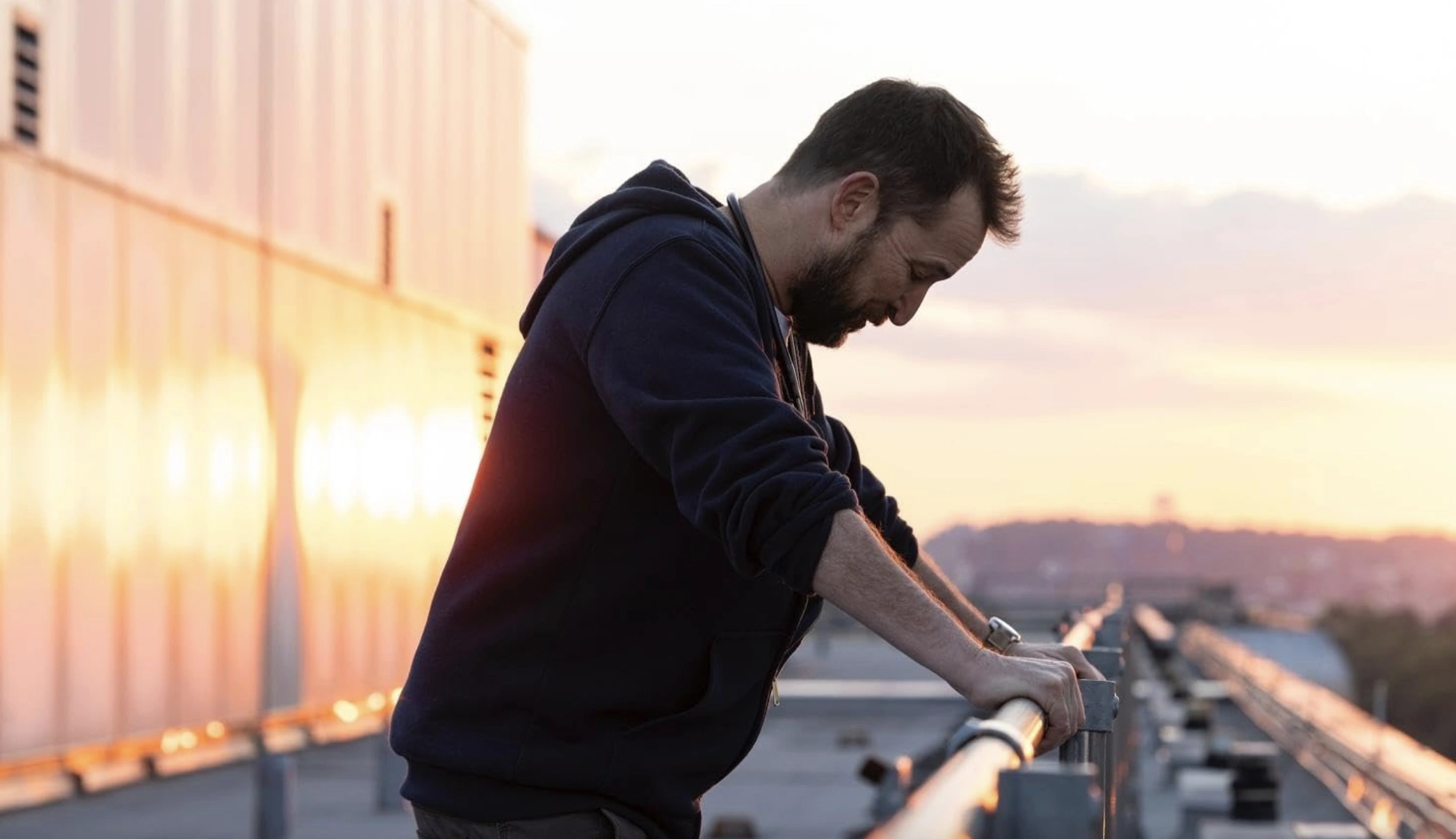
Created by R. Scott Gemill (HBO Max)
More stylistically and narratively straightforward — more downright broadcast-networkian, even — than anything else on this list, The Pitt was a tough sell for me at first. It was only a matter of a few episodes. Once the show gets past the unavoidable surfeit of “Here’s this doctor or nurse and here’s their name and here’s their deal” dialogue and digs deep into the physical and psychological labor involved in keeping both a hospital emergency room and its traumatized staff up and running, its game cast and real-time gimmick make it nigh irresistible viewing.
13. Task

Created by Brad Ingelsby (HBO)
Everything everyone else saw in Mare of Easttown, Brad Ingelsby’s previous drama/thriller about crime in the downwardly mobile Philadelphia suburbs, I saw here. Tom Pelphrey, perhaps the single most endearing actor working today, plays a small timer who draws big heat by trying to do the right thing after a home invasion goes horribly wrong; Tom Ruffalo, Fabien Frankel, and Alison Oliver are among the messy, endearing cops (sorry) trying to track him down. Directors Jeremiah Zagar and Salli Richardson Whitfield shoot the woods of DelCo as if drawing forth their very life force, creating a mood best labeled fentanyl transcendentalism.
12. The Lowdown
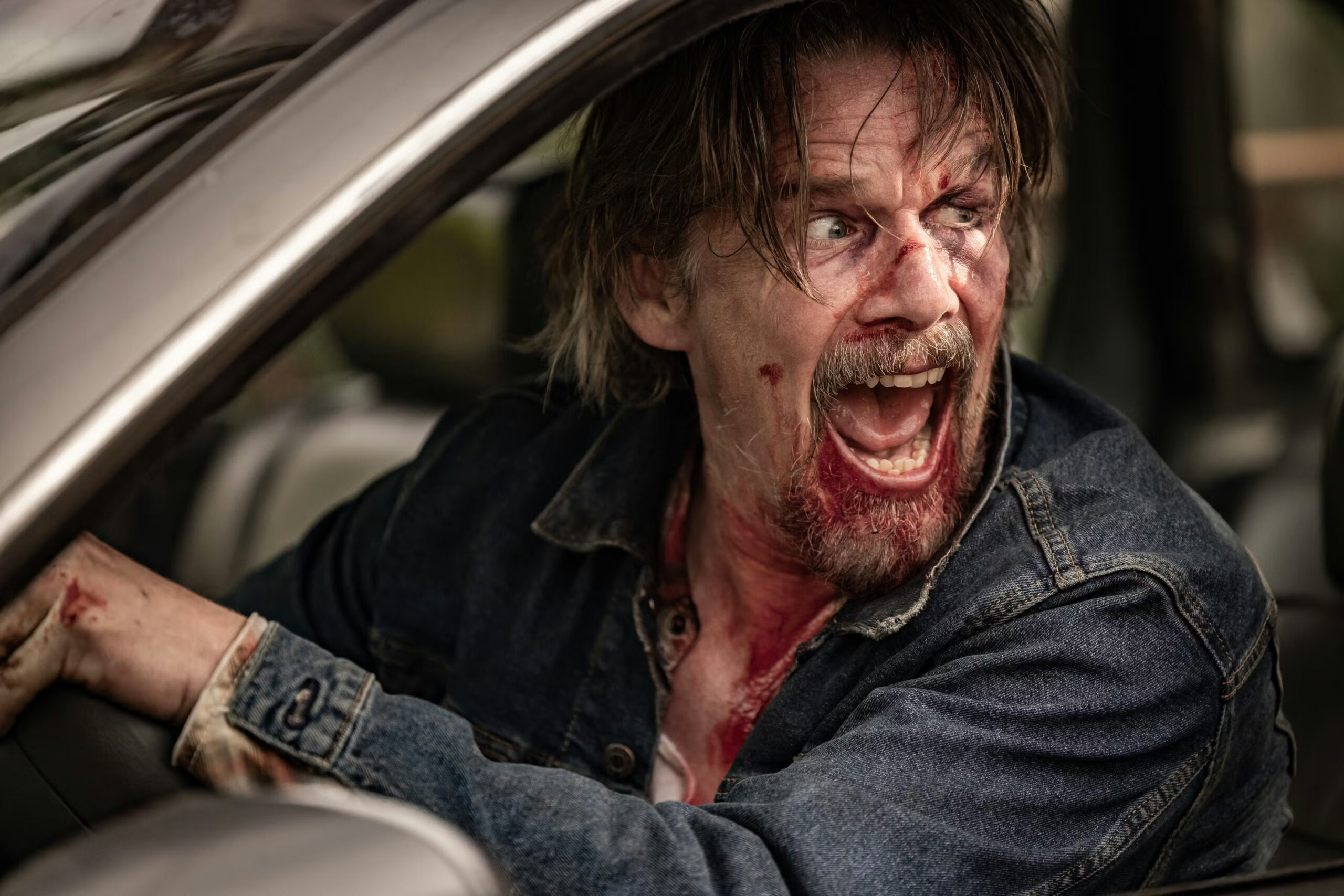
Created by Sterlin Harjo (FX/Hulu)
Unless the Dude himself is involved, sun-baked South/Western neo-noir is generally not my scene. I wear all black all the time, and this is a “guys who wear brown” genre. Oil and water, you know? Imagine my surprise, then, as The Lowdown steadily won me over. As a comedy it’s rock solid, its jokes and sight gags — more often than not at the expense of Ethan Hawk’s Lee Raybon, the good-hearted, down-on-his-luck “truthstorian” investigative reporter at the center of it all — landing with a high hit rate. The supporting cast is killer: Kyle MacLachlan, Jeanne Tripplehorn, Peter Dinklage, Keith David, Tim Blake Nelson, and Paul Sparks, just to name a few. Ethan Hawke plays Lee as what George R.R. Martin might write as hedge knight — a hardscrabble servant of the public good, whether or not he earns either money or appreciation for it (though he’d be happy for either). The Lowdown is a poignant plea to do the right thing in an era that rewards the opposite, even considering the cost.
11. Daredevil: Born Again
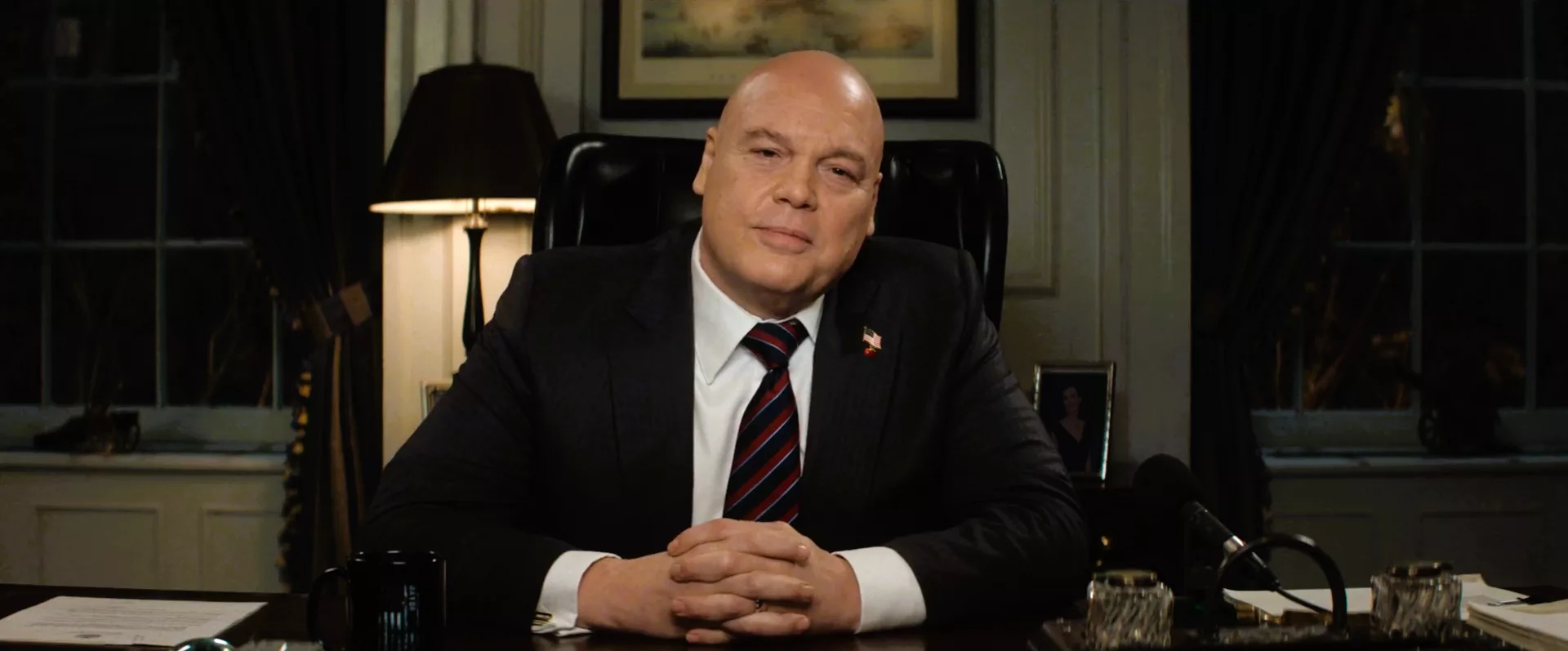
Created by Dario Scardapane and Matt Corman & Chris Ord; based on the work of Bill Everett, Jack Kirby, Stan Lee, Gerry Conway, John Romita Sr., Frank Miller, David Mazzucchelli, Charles Soule, Christos Gage, Ron Garney, Stefano Landini, and others (Disney+)
Daredevil: Born Again is about a blind vigilante ninja lawyer called Daredevil teaming up with his frenemy, a serial killer called the Punisher, to take down Donald Trump and his army of sociopathic cops. That’s it. That’s what it’s about. It’s as clear as day. It’s the reason Garth Marenghi called writers who use subtext cowards. This show is the best thing Marvel had put out in years, despite its many growing pains during development and production. Arriving early in the year, it was a welcome sign of artistic resistance to fascism via one of the most popular franchises on the planet; in that category, though, it would soon be topped.
10. It: Welcome to Derry
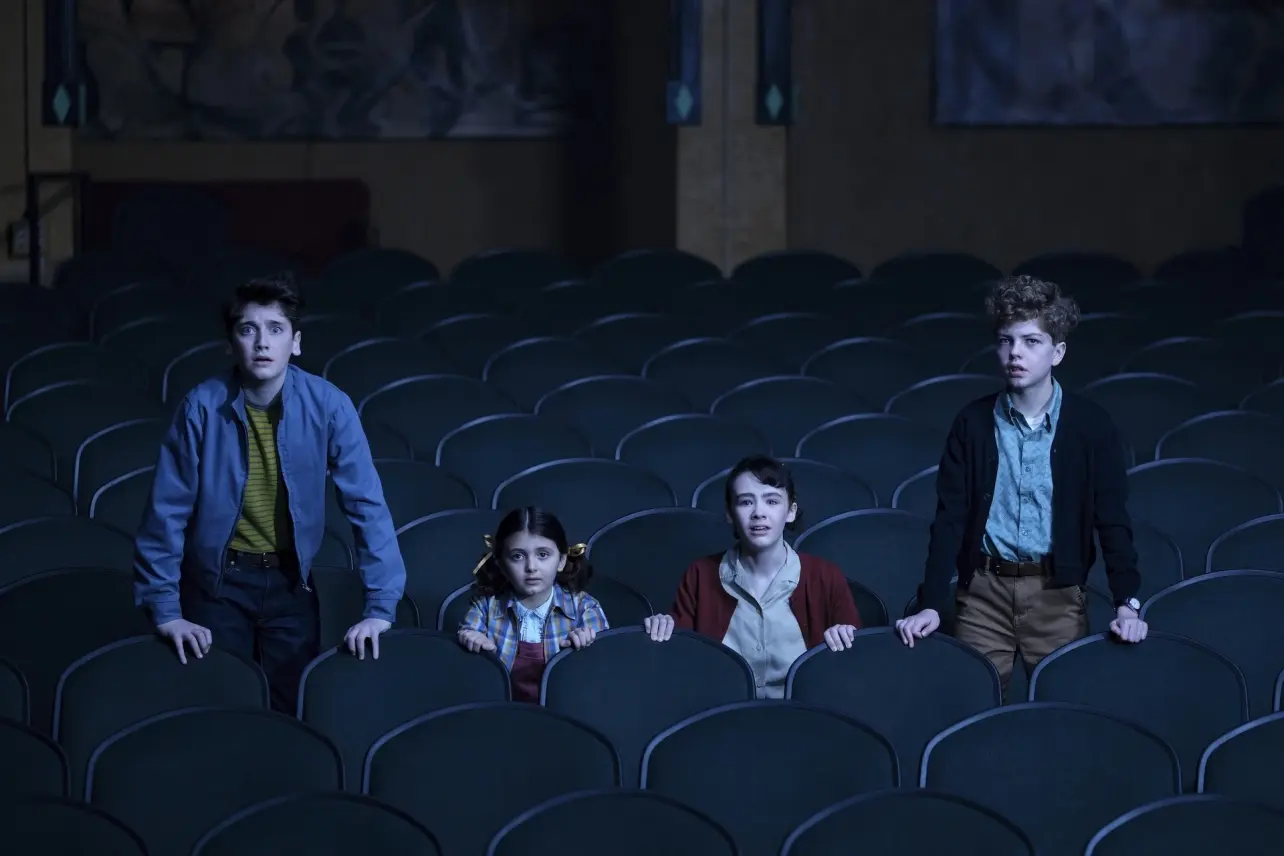
Created by Andy Muschietti, Barbara Muschietti, and Jason Fuchs; Showrunners: Jason Fuchs and Brad Caleb Kane; based on the work of Stephen King (HBO)
To paraphrase myself talking about the similarly strong start for Nick Antosca’s Channel Zero way back when, the first scene of the first episode of It: Welcome to Derry is grosser, scarier, weirder, more pointedly political, and just plain meaner than everything in director Andy Muschietti’s two It feature films combined. The show almost feels like penance for those movies, in a way — as if Muschietti and his collaborators were determined to get the queasy mix of nostalgia and brutality found in Stephen King’s masterpiece right this time. They succeed in large part thanks to a surprisingly strong lineup of child actors, led by Clara Stack and Matilda Lawler, and, amazingly, an adult cast that can command audience interest just as well as the adorable kids and the killer clown (played once again, and better than ever, by Bill Skarsgård). Jovan Adepo, Taylour Paige, Madeleine Stowe, and especially Chris Chalk as recurring King character Dick Hallorann aren’t acting like they’re in a Halloween haunted house, but rather in a place where their families, sanity, and souls are legitimately at stake. Despite some needlessly Hollywood plotting, it’s a testament to the power of cruelty in art.
9. Monster: The Ed Gein Story
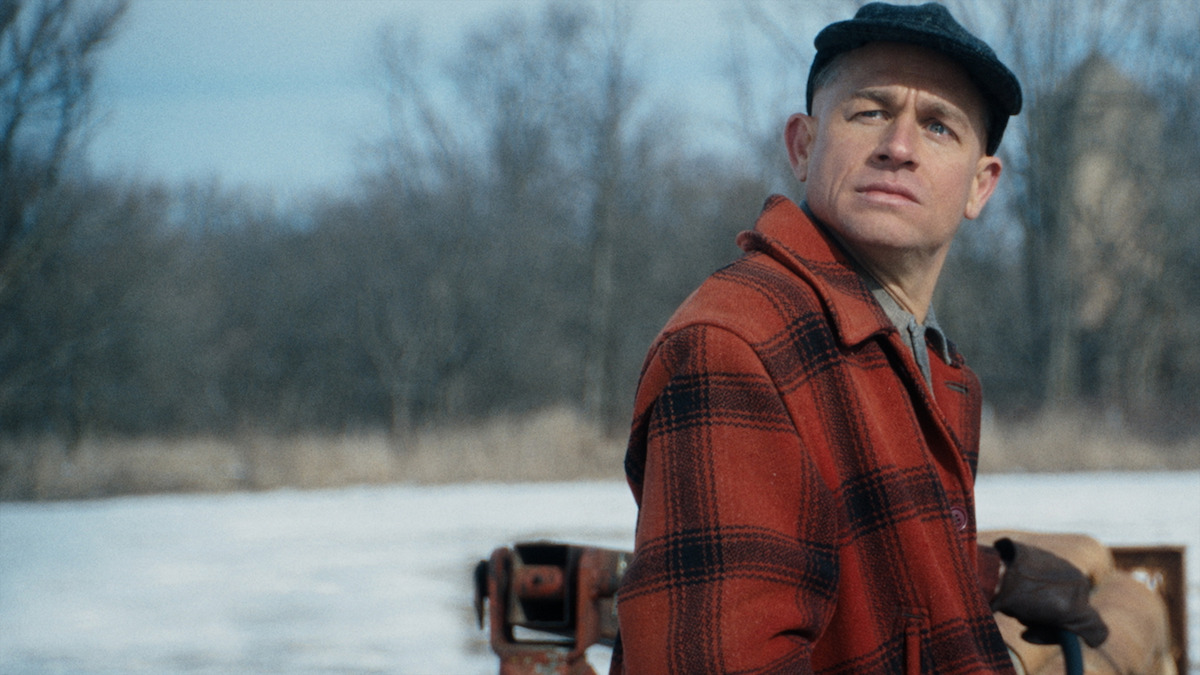
Created by Ryan Murphy and Ian Brennan (Netflix)
Between The People vs. O.J. Simpson, The Assassination of Gianni Versace, Dahmer, and Monsters, Ryan Murphy and his collaborators are responsible for the four best true crime dramas I’ve ever seen. Murphy and Ian Brennan’s latest Monster show, about the Wisconsin killer and grave robber Ed Gein, feels less tightly focused than the other four shows, but this is to be expected due to The Ed Gein Story‘s expanded scope. Bluntly gruesome and woven through with surreal flourishes, it really is about the Ed Gein story — not just the killer’s life, his crimes, and the media circus immediately surrounding their discovery, as was the case with O.J. Simpson and Andrew Cunanan and Jeffrey Dahmer and the Menendez Brothers, but the legend that grew up around him. Psycho, The Texas Chain Saw Massacre, The Silence of the Lambs, and the true-crime industry itself can all be traced, in one way or another, back to Ed’s lonely heart.
8. The Chair Company
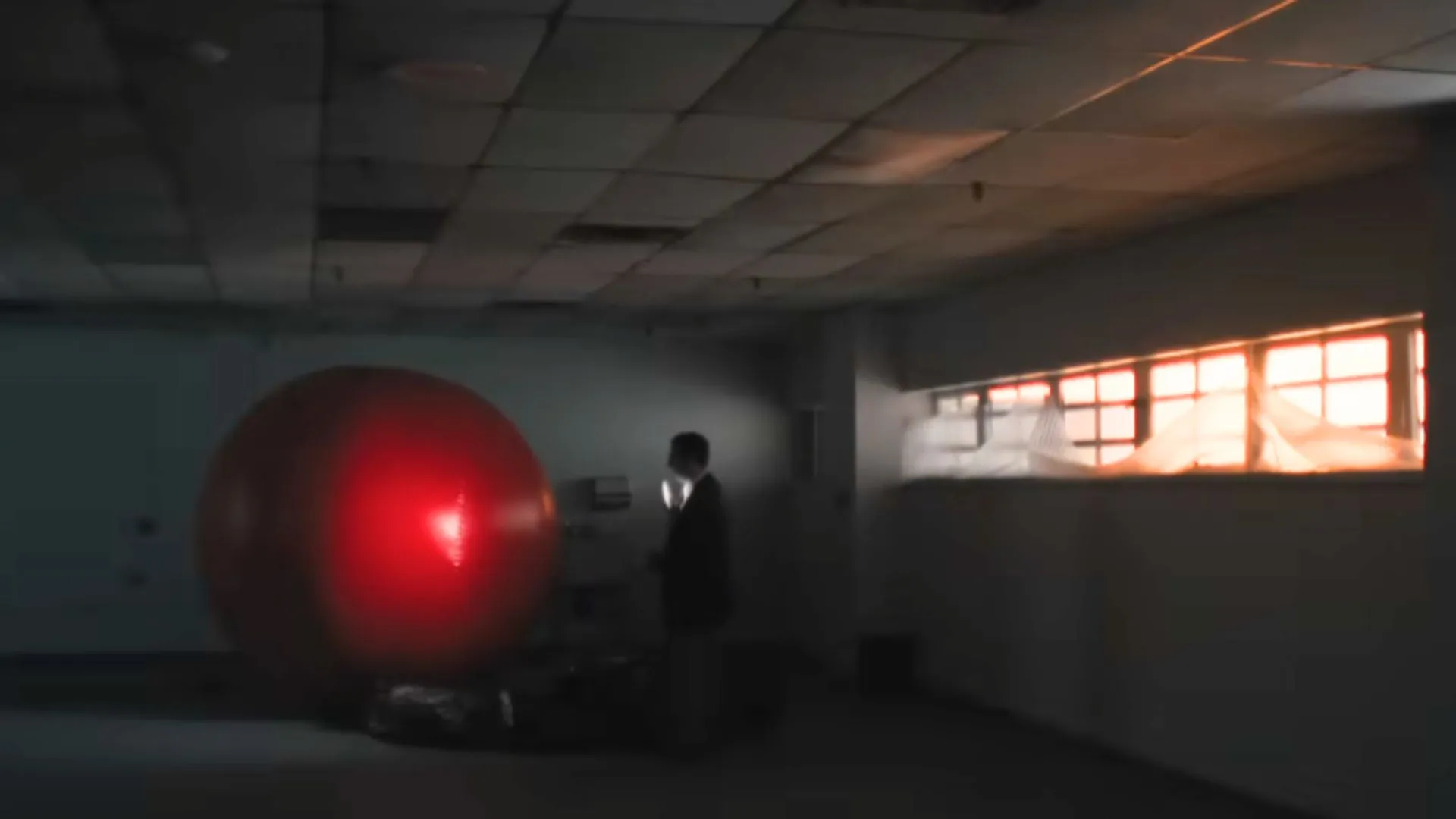
Created by Tim Robinson and Zach Kanin (HBO)
The original concept behind Robert Kirkman, Tony Moore, and Charlie Adlard’s comic book series The Walking Dead — which I liked quite a bit, as opposed to the TV show — was simple: What if a zombie movie never ended? “What if an I Think You Should Leave sketch never ended?” works well as a description of The Chair Company. ITYSL creators Tim Robinson and Zach Kanin trap Robinson’s senior-manager everyman Ron Trosper in a labyrinth of fraud and corruption that he uncovers more or less by being monomaniacally insufferable. I get the impression from the season’s cliffhanger ending that the plan here is to follow the original roadmap for Twin Peaks, whose creators David Lynch and Mark Frost never intended to solve their central mystery, using it instead to draw us deeper and deeper into their weird world. Will Ron ever get to the bottom of why that chair fell out from under him? Does it matter?
7. Foundation
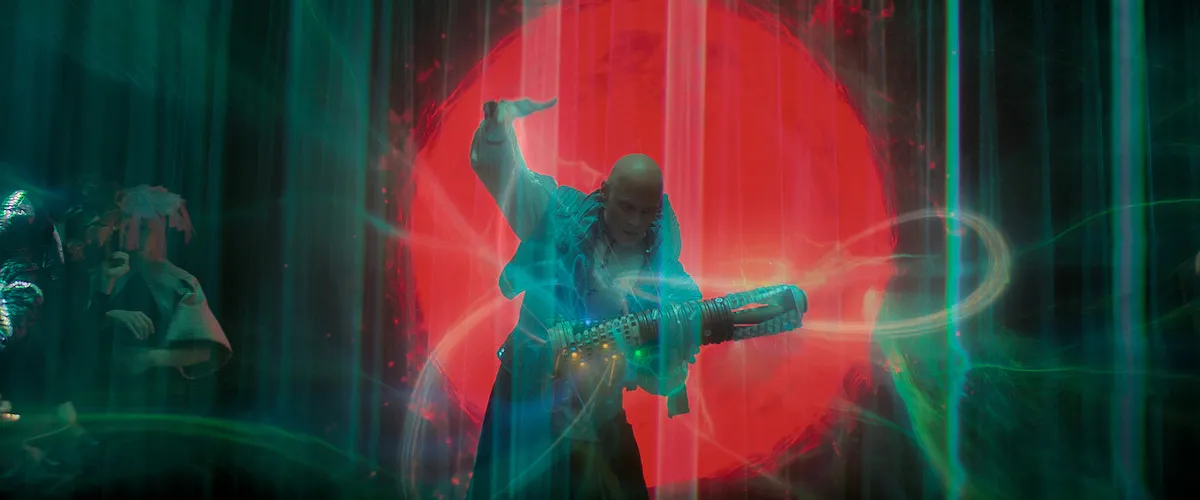
Created by David S. Goyer and Josh Friedman; based on the books by Isaac Asimov (Apple TV)
There’s no other…okay, there’s one other science fiction show on television that looks as good as Foundation. (More on that in a bit.) Everything from space travel to psychic powers to genocidal superweapons are rendered as kaleidoscopic and beautiful, while owing very little to the obvious genre antecedents. There’s heroism and sadism, derring-do and body horror. There’s mid-century SF’s usual obsession with scientifically measuring and predicting the broad movements of human society. There’s sex appeal galore. Right at the apex of it all are the strange, engrossing performances of Lee Pace, Terrence Mann, and Laura Birn as the immortals cursed with the burden of Empire, turned into monsters by wielding more power than any being should hold. There’s a lesson here about personalist regimes that’s too loud, and often too blackly funny, to ignore.
6. Murdaugh: Death in the Family
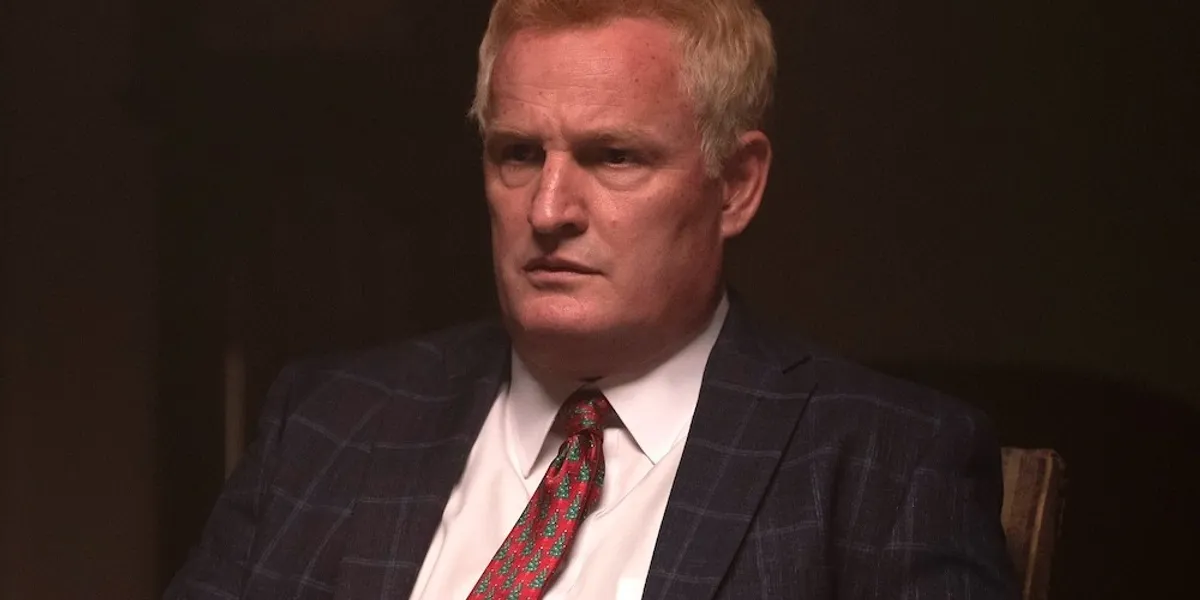
Created by Michael D. Fuller and Erin Lee Carr; based on the podcast by Mandy Matney (Hulu)
I’ve deliberately avoided using the word “mesmerizing” during any of these write-ups so far, despite it being a go-to superlative for someone in my line of work. (Well, for me anyway.) This is because there is one performance out of everything I watched this year that deserves “mesmerizing,” and it’s Jason Clarke as Alex Murdaugh in this true-crime drama from under the Nick Antosca umbrella. With his Christmas-ham face, his good ol’ boy charm, and his mountain of criminal secrets, his dynamic with his kind but enabling wife Maggie (Patricia Arquette, proving the weakness of her work on Severance is just a writing issue) resembles nothing so much as that of Tony and Carmela Soprano. Both stories are about the insatiable maw at the heart of the American dream, and who gets fed into it, and by whom. A sharp, tight, sensational show.
5. Alien: Earth
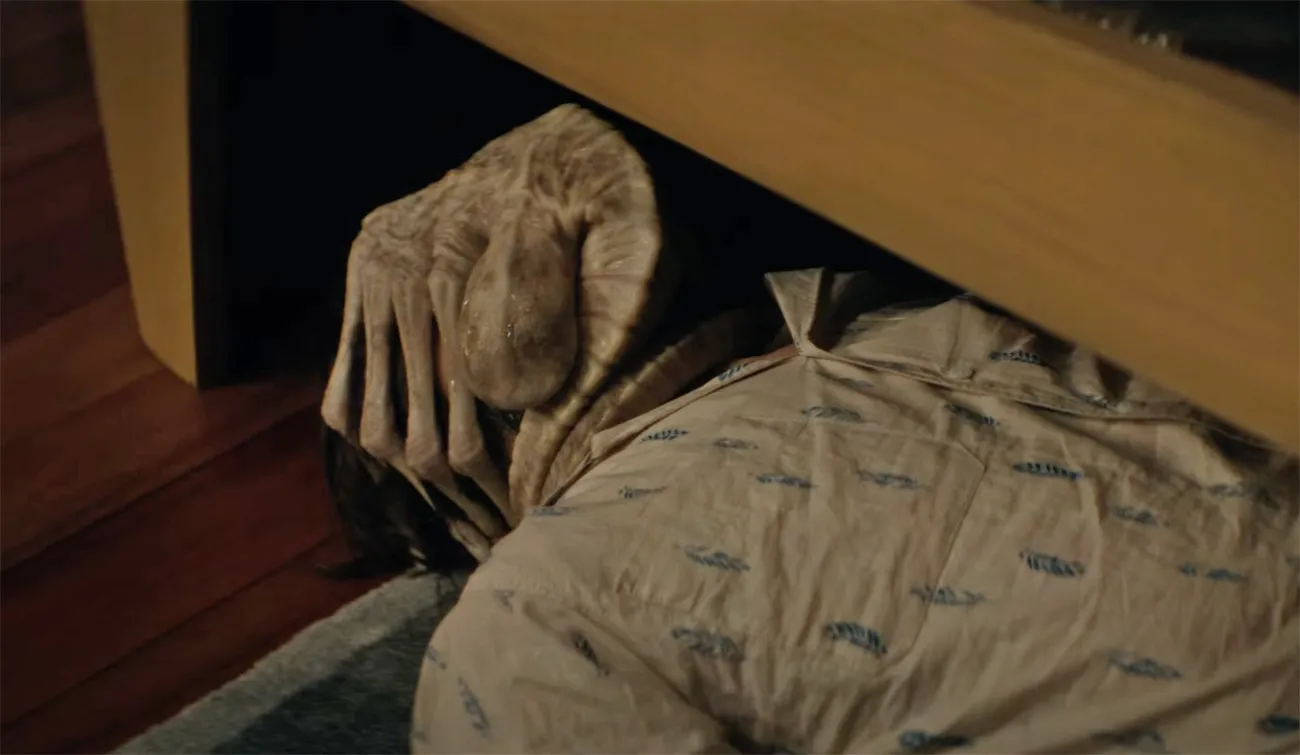
Created by Noah Hawley; based on the screenplay by Dan O’Bannon and Ronald Shusett (FX/Hulu)
An unconscious man with an alien parasite attached to his face, hastily stashed under a child’s bed. A sheep with one bulbous eye, gazing coolly at its surroundings. An android with a shock of white hair, observing the sheep-creature right back. A wide-eyed billionaire manchild, vibrating with sociopathic glee. A child in a woman’s body, cooing at an apex predator from outer space. A glowering working stiff with nothing left to live for, and no morality to govern that life, save the completion of his mission. A xenomorph in full flower, running through the forest canopy, basking in the hot sun like a jungle cat. By stitching together memorable images in an almost ruminative way while never skimping on the all-out monster action, Noah Hawley has added a third entry to the Alien canon, behind only Ridley Scott and James Cameron in the originality and impact of his vision of the creature and the world it invades.
4. The White Lotus
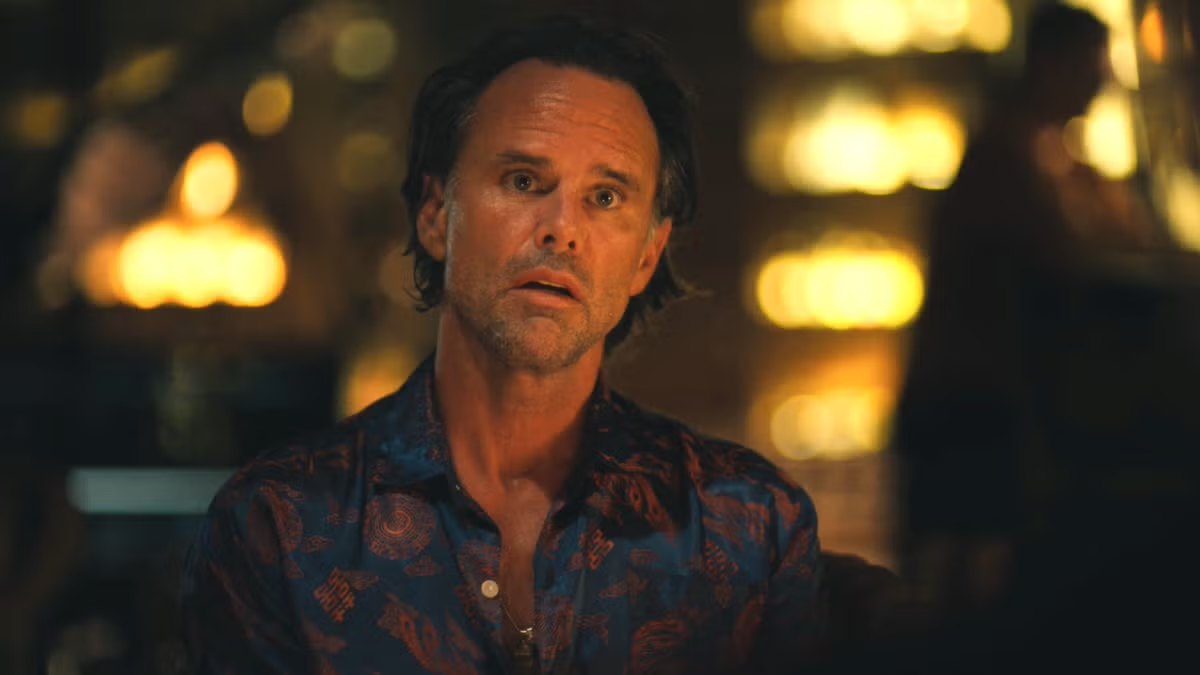
Created by Mike White (HBO)
From the moment the show’s new and improved theme song began playing, it was clear something different was going on with The White Lotus this season. I’d previously found its broad satire of the leisure class smug and insufferable, but this season it opened up its tonal range to its great benefit. There’s a grand doomed love affair. There are characters who aim to do the right thing as much as there are who take the easy way out. There’s an astonishing monologue about the nature of desire by Sam Rockwell that has a decent claim on being the scene of the year. Lavish shots of the natural world and its animal inhabitants serve as the lifeblood of the thing, flowing between scenes and lending the whole sordid thing an air of mystery and danger.
3. Chief of War
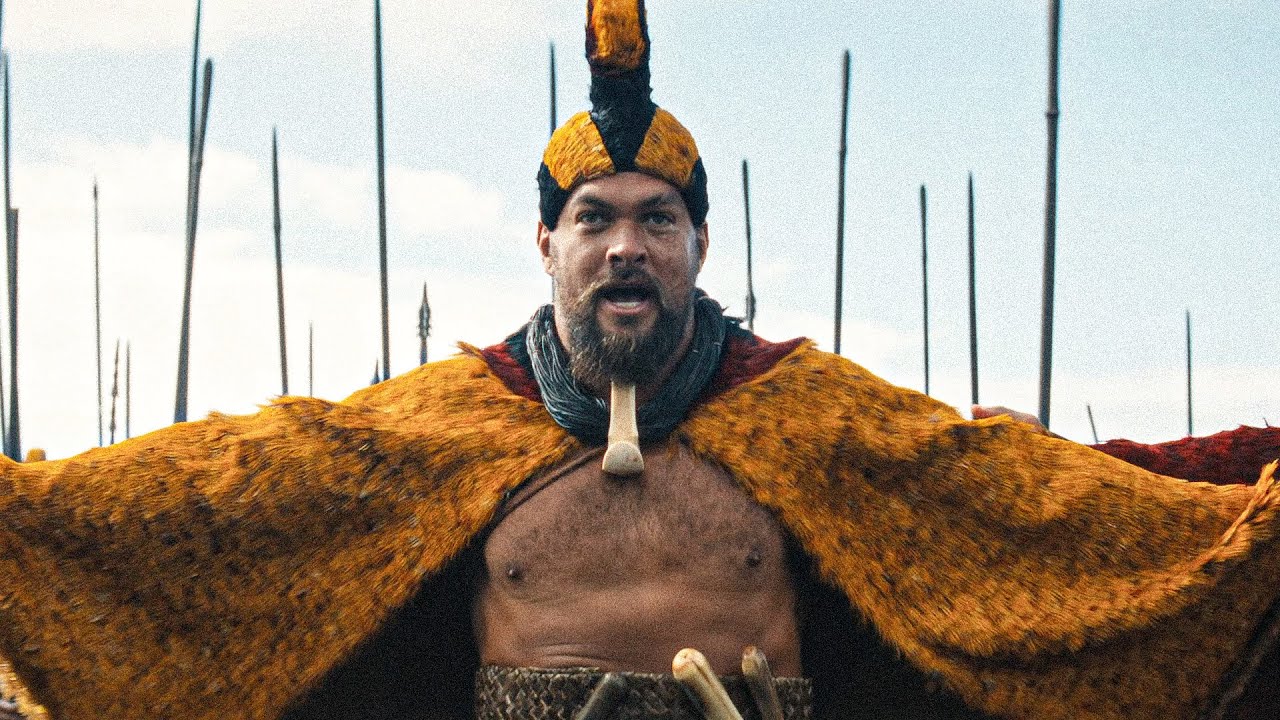
Created by Thomas Pa’a Sibbett and Jason Momoa; showrunner: Doug Jung (Apple TV)
Jason Momoa, man. Jason goddamn Momoa. Star, co-creator, co-writer of every episode, director of its absolutely breathtaking finale, a landmark achievement in screen combat — watch Chief of War and you’ll find his achievements nearly as impressive as those of Ka’iana, the painfully ethical warlord of the show’s title. Torn between two women, at war with two kings on behalf of another — and all these characters are fully fleshed out to the point where you feel they could sustain the show as the lead themselves — Ka’iana is a real-life figure turned legendary. That’s Momoa and Thomas Pa’a Sibbett’s overall approach to the material: a myth for the Hawaiian Islands, an answer to King David or King Arthur. Appropriately, the visuals are mythic in scope, using greens and reds and yellows in painterly fashion; Momoa does things with digitially color-graded orange in the finale I’ve simply never seen on screen before, the way Danny Boyle put new shades of green on camera in 28 Years Later. It’s that kind of story, almost, right down to the presence of a Bone Temple. The finale delivers the climactic battle the show’s been promising all along, too — no false advertising here. An epic like few others.
2. Adolescence
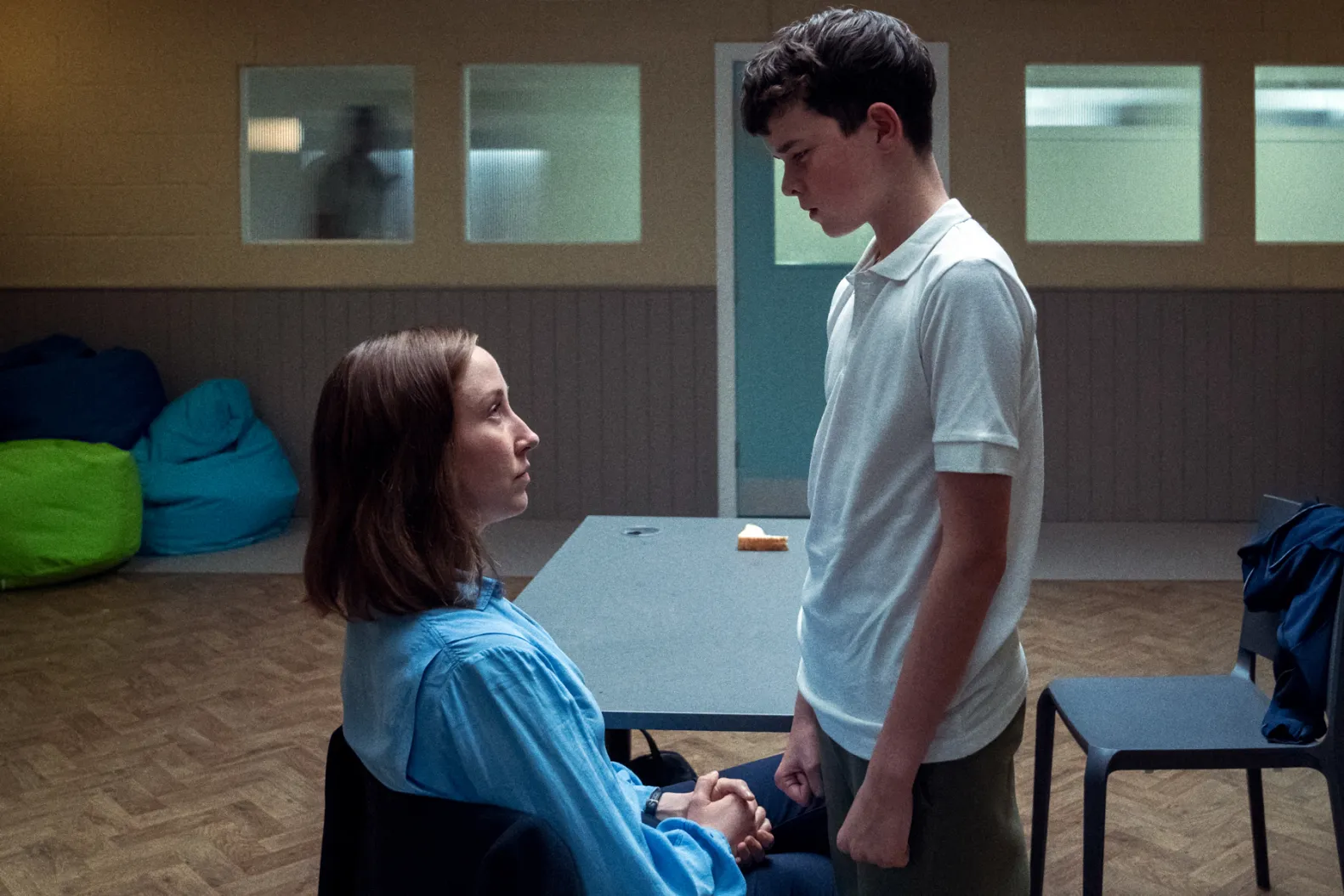
Created by Jack Thorne and Stephen Graham (Netflix)
You forget about the stunt aspect. That’s the highest compliment I can pay Adolescence, considering how impressive the stunt aspect is. Director Philip Baratini shoots each of the show’s four episodes as a single continuous take, immersing us in the lives of a Liverpool family being detonated by their young son’s shocking, misogynistic crime. A Thousand Blows stars Stephen Graham (the show’s co-creator and co-writer) and Erin Doherty knocked me out once already; in this they’re almost too luminous with the terrible truth of their characters’ circumstances to look at. Owen Cooper, who plays the boy at the heart of it all with precocious power, is the acting find of the year. This show is a triumph.
1. Andor
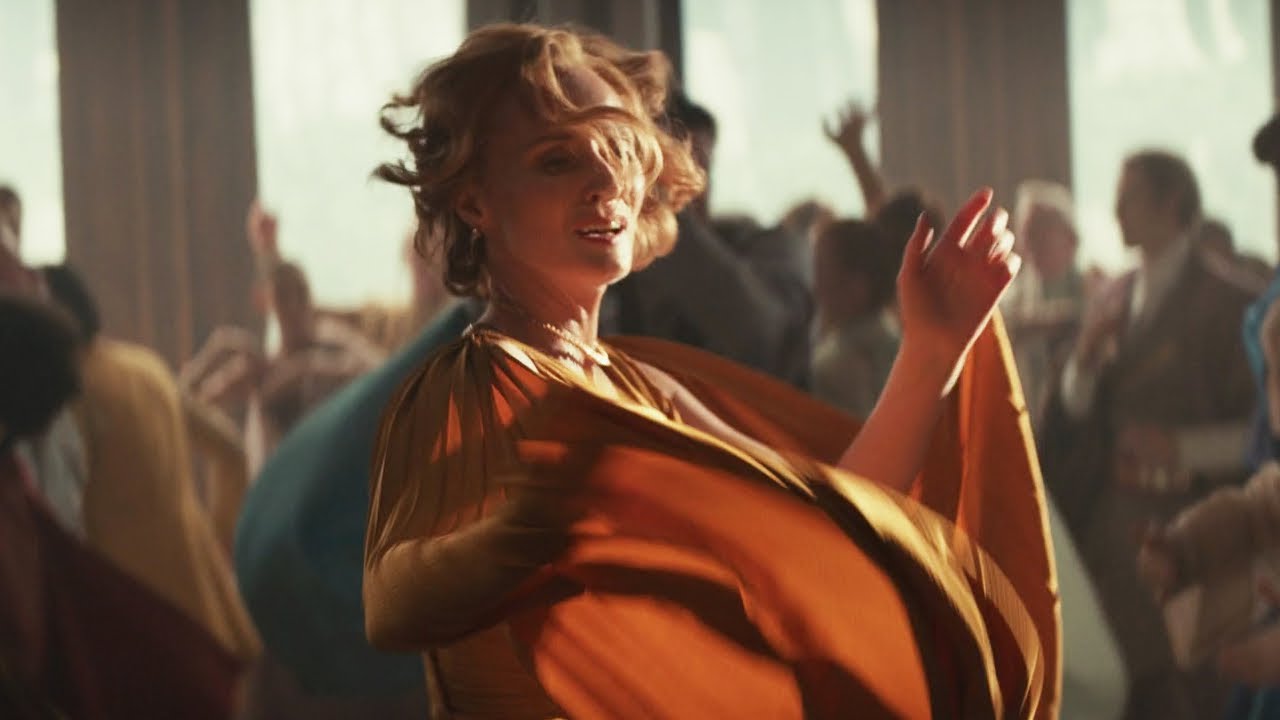
Created by Tony Gilroy; based on the work of George Lucas and others (Disney+)
“Andor,” I wrote on Bluesky partway through watching the show’s second season via advance screener copies provided to me by the Mouse, “is a stone cold masterpiece. There’s stuff in Andor Season 2, images, moments, as good as anything on television ever. Not grading on the Mandalorian curve, grading on the Mad Men curve.” I stand by every word, and I’ll go further. Andor isn’t just the best show of the year, it’s one of the ten best television shows ever made.
I believe Andor is the most expensive television series ever made, and every penny is visible on screen. Tony Gilroy and his collaborators have created a fully fleshed out society from the sketched out structure left behind by George Lucas as the bridge between his prequel trilogy and the original films. He crafts a bright, shiny dystopia of propaganda, ecocide, and genocide — one that countless viewers were all too able to recognize as our own — then examines what enforcing that regime, or fighting back against it, would really look like.
The result is a Star Wars show that treats the existence of something called the Death Star as the moral obscenity it really is. It explores the strangely compelling sexual neuroses of fascist apparatchiks, and is unsparing about the kind of sexual violence the servants of the Empire would inflict on civilians. It tells a terrifying story of genocide from start to finish. It shows the sacrifice of personal happiness inherent in a life lived for the cause. When it finally introduces the Force, a subject from which the series stays away for nearly its duration, the concept regains its power as the animus within all living things. “Life will defeat you,” Winston Smith insisted to the Party in 1984; Andor says the same thing, and means it. Vital, elegiac, magnificent.
‘A Thousand Blows’ thoughts, Season 1, Episode 6
March 5, 2025It’s a pretty terrific closing salvo for A Thousand Blows’ first season. (Based on the teaser that follows the “To be continued…” title card, the second has already largely been shot.) It places the emphasis right where it’s been and belonged the whole time: on Erin Doherty’s work as Mary Carr, once (and future?) Queen of the Forty Elephants. Doherty has spent the entire season challenged to hold down her end of the screen against guys who literally trained to beat people up to play their roles. She has to answer their physical charisma with the kind that can only come out of your voice, your eyes, the set of your jaw. She clears the bar without so much as brushing it with the hem of her dress. It’s early yet, but this is one of my favorite performances of the year.
I reviewed the season finale of A Thousand Blows for Decider.
‘A Thousand Blows’ thoughts, Season 1, Episode 5
February 28, 2025A Thousand Blows remains an enjoyable show thanks to the physically commanding performances of its three leads. Stephen Graham, Erin Foster, and Malachi Kirby swagger across the screen so vibrantly now that the de rigeur digital teal-and-apricot color palette that plagues TV these days obscures their emotions. Overall, however, things are looking so dire that it’s hard to figure out how any of our heroes or antiheroes turn it around. Maybe that’s fine, and it’s crime doesn’t pay narrative, or a story about how the masses can never beat the classes. But I think snatching victory from the jaws of defeat would do this show well. These people are all survivors, bottom line. I wouldn’t mind seeing them thrive, for a change.
I reviewed the fifth episode of A Thousand Blows for Decider.
‘A Thousand Blows’ thoughts, Season 1, Episode 4
February 27, 2025Perhaps most importantly, at least if you’re an audience member, Hezekiah is growing closer than ever to Mary herself. On at least one occasion during this episode they come with in a finger’s breadth of kissing before Mary calls it off, openly saying she’s not quite sure if this is a relationship she wants or not. Cue that Dumb and Dumber “So you’re saying there’s a chance” gif, only for real this time. And well there should be: The chemistry between these two gives off a lot of steam, perhaps because Mary is the only person around whom Hezekiah really comes out of his shell and starts acting like a future world champion. If you find someone who brings that out of you, lock that shit down, my friends.
‘A Thousand Blows’ thoughts, Season 1, Episode 3
February 26, 2025Neither Mary nor Sugar got where they are without self-confidence in the face of long odds. The same of course is true of Hezekiah, but he hasn’t yet had the chance to parlay his willpower into actual success the way the Queen of the Elephants and the King of the East End have managed to do. Despite being a physically striking guy, actor Malachi Kirby is still visibly holding much of his magnetism in reserve; Hezekiah, who can’t run long distances without collapsing from a stitch in his side, similarly needs to train himself in the art of swagger before Kirby can be free to command the screen the way Erin Doherty and Stephen Graham do. A Thousand Blows isn’t a perfect show — some dialogue (“Most men feel threatened by ambition in a woman.” “I am not most men.”) feels a bit undercooked, and the teal-and-apricot color palette can be grating. But the smart choices of its talented cast have me looking forward to each new round.
I reviewed the third episode of A Thousand Blows for Decider.
‘A Thousand Blows’ thoughts, Season 1, Episode 2
February 25, 2025Series premieres, even of very very good shows, often suffer from what I call “pilot-itis.” It’s a tendency to go a bit big and broad in hopes of catching and capturing the audience’s attention. Right from its resumption mid-cliffhanger, with Jamaican immigrant Hezekiah Moscow preparing to face off against Sugar Goodson in the boxing ring, A Thousand Blows shakes free of the “newcomers in the big city” clichés that marked its opening act.
With poetry-of-the-gutters dialogue that owes a lot to David Milch’s Deadwood — Sugar even presides over the square from his perch on a balcony, lest you thought writer-creator Steven Knight was trying to hide his influences — this episode follows the fallout of Sugar and Hezekiah’s big fight. It’s a nasty three-round sprint filmed in lurid detail, with little of the back-to-the-camera punch-hiding or fast editing the first episode used to dull the impact of Alec and Treacle’s bout.
I reviewed the second episode of A Thousand Blows for Decider.
‘A Thousand Blows’ thoughts, Season 1, Episode 1
February 24, 2025The first thing we see Mary Carr do is lie. In front of Jamaican immigrants Hezekiah Moscow (Malachi Kirby) and Alec Munroe (Francis Lovehall) — two fresh-faced but not necessarily wide-eyed newcomers to London, capital of the empire that rules their home with an iron fist — she pretends to be a pregnant woman giving birth on the street. Even as a crowd of lookie-lous gathers, though, her henchwomen are busily picking their pockets. When someone says a cop is on his way to help her, she just gets right up and vanishes, her minions along with her. Unless you knew exactly where to look you’d have no more luck finding her than locating a single specific rat. She’s a creature of the streets.
A Thousand Blows, the new period piece from Peaky Blinders creator Steven Knight, stars Erin Doherty as Mary, Queen of the Elephants. (More on that sobriquet in a moment.) Doherty is interesting casting, because she has an interesting face. Most lead actors on TV shows have beautiful faces, and Doherty is certainly no exception there. But Doherty’s face has the long, curvilinear structure of a Modigliani portrait. When Mary’s temperament grows dark, her face becomes inscrutable and frightening and hard to maintain eye contact with. When it warms up, whether over money or men, you’d be hard pressed to look away. Doherty and her imposing performance instantly level A Thousand Blows up.