Carnival of souls

* More holiday interviews on the books of the decade at Spurge’s: Chris Mautner on Scott Pilgrim and Tim Hodler on In the Shadow of No Towers. The latter’s the first of these interviews to focus on a book the interviewee doesn’t care for.

* I linked to this in passing yesterday, but here’s the Robot 6 crew’s Best of 2009 post.

* More decade in review from Matt Maxwell, mostly on his favorite and least-favorite superhero material.

* Disney owns Marvel.

* Real-Life Horror: According to rightwing polling outfit Rasmussen, Americans would love to torture the underpants bomber. Happy New Year!

* Not Real-Life Horror: My friend Matthew Perpetua concocted a little flight of fancy about what would happen if a gaggle of Pitchfork bands were hired to play covers at the Insane Clown Posse’s Gathering of the Juggalos. Sample quote: “I probably wouldn’t be alive today if Will Oldham hadn’t rescued myself and Antony and shepherded us to safety on a John Deere tractor.”

* Coming soon: Night Business #3!

Comics Time: Pluto: Urasawa x Tezuka Vols. 1-3

Pluto: Urasawa x Tezuka Vols. 1-3

Naoki Urasawa, writer/artist

Takashi Nagasaki, writer

Based on Astro Boy: The Greatest Robot on Earth by Osamu Tezuka

Viz, 2009

200 pages each

$12.99 each

Buy them from Amazon.com

I take back everything I said about Naoki Urasawa. Well, okay, no I don’t, but everything I said about Naoki Urasawa definitely does not apply here. Finally, one of his series contains visual elements that exist for more than simply conveying the information of the story as clearly and dramatically as possible. And I didn’t think that was in the offing, by the way, since in the first few pages you get a “guy with a gun turns a corner, does a half-turn and whips the gun at the camera” sequence that struck me as an unimaginative, un-comicsy rip from the cinema. But a few pages later our straight-laced, sad robot detective Gesicht informs a robot-maid wife that her robot-cop husband has been killed in the line of duty, and Urasawa gives us a series of close-ups of the grief-stricken robot’s machine face, which, of course, never changes. And blam, I was hooked.

In Pluto, a contemporary-superhero-comics-style “reimagining” of a classic < i>Astro Boy story by Osamu Tezuka, Urasawa uses the presence of robots as embodiments of surrealism. From the bereaved wife’s static expression, to the towering North No. 2 in his judge’s robe, to sinister Brau 1589’s mangled scrap heap of a body, to a revamp of Astro Boy (aka Atom) that makes him less like a jaunty short-pantsed slugger and more like an eerie kid out of The Shining, they’re the flourish of Weird, the touches of visual poetry, that I always wanted from my limited experience with Urasawa’s work. That his line and design sensibility is otherwise such a just-the-facts affair only heightens their “thing that should not be” effect.

And they seem to have unleashed more where that came from. The series of murders that are the series’ central mystery are themselves like staged art installations, sort of like the theory that holds the Black Dahlia’s murder as a macabre Surrealist masterpiece. Elsewhere, jagged black lines emerge from transmission static as a literal representation of despair; a huge black thing slouches half-unseen through the smoke and sand of a war-ravaged Persian town, the sight of it driving a young boy mad; traumatic memories of war are represented by indistinct flurries of the violent clash of robotic limbs, or a decontextualized and repeated offer of money for bodies; a sentient teddy bear sits immobile, a puppet master at the mercy of whoever moves it around; a tiny figure is captured leaping from rooftop to rooftop in the final images recorded by a dying robot, its blurry body silhouetted against the sky.

You add all this to Urasawa’s usual page-turning panache, and suddenly what had felt like mere proficiency gains the power to haunt and to move. There are the usual resonances with and/or swipes from other genre-art touchstones: Brau 1589 is Hannibal Lecter with microprocessors, there’s an Iraq War riff as is custom with science fiction that wants to be taken seriously this decade, and the plot–super detective believes that other super beings of his acquaintance are being hunted by a serial killer so he travels around to warn them with varying degrees of success–is straight-up Watchmen Chapter One. Plus, the whole thing is an adaptation of a story about Japan’s Mickey Mouse/Superman cultural juggernaut. (“Flying boy robot in shorts” is the extent of my knowledge of Astro Boy, so what Urasawa is taking from Tezuka narratively or visually is beyond me.) But instead of coming across like button-pushing, all of this, and all the chases and clue-hunting and races against time and unsuspected reversals that are Urasawa’s thriller trademarks, now feels like ammo in the arsenal of someone taking aim at some big old-fashioned sci-fi questions about war, technology, human rights, friendship, childhood, and that old chestnut, what it means to be human. The thing that fills me with delight here is that when you look at that robot maid just standing and staring, unable to express her emotion, you get the sense that for once, this master penciller and plotter doesn’t have all the answers.

My Top 25 of 2009

For real this time. As seen on Robot 6!

25. CAPTAIN AMERICA & CAPTAIN AMERICA REBORN (Ed Brubaker et al, Marvel)

24. REYKJAVIK (Henrik Rehr, Fahrenheit)

23. PRISON PIT (Johnny Ryan, Fantagraphics)

22. RED RIDING HOOD REDUX (Nora Krug, Bries)

21. INVINCIBLE (Robert Kirkman, Ryan Ottley, and Cory Walker, Image)

20. COLD HEAT & COLD HEAT SPECIAL (Frank Santoro, BJ et al, PictureBox)/SCOTT PILGRIM VOL. 5: SCOTT PILGRIM VS. THE UNIVERSE (Bryan Lee O’Malley, Oni)

19. INVINCIBLE IRON MAN (Matt Fraction & Salvador Larroca, Marvel)

18. FUNNY MISSHAPEN BODY (Jeffrey Brown, Hyperion)

17. THE SQUIRREL MACHINE (Hans Rickheit, Fantagraphics)

16. YOU ARE THERE (Jean-Claude Forest & Jacques Tardi, Fantagraphics)

15. BATMAN & ROBIN (Grant Morrison & Frank Quitely, DC)

14. TALES DESIGNED TO THRIZZLE (Michael Kupperman, Fantagraphics)

13. GANGES (Kevin Huizenga, Coconino/Fantagraphics)

12. PLUTO: URASAWA X TEZUKA (Naoki Urasawa et al, Viz)

11. WEST COAST BLUES (Jacques Tardi & Jean-Patrick Manchette, Fantagraphics)

10. NIGHT BUSINESS & GANGSTA RAP POSSE (Benjamin Marra, American Tradition)

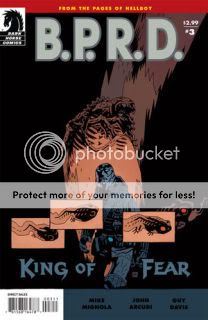
9. B.P.R.D. and related titles (Mike Mignola, John Arcudi, Guy Davis et al, Dark Horse)

8. ASTERIOS POLYP (David Mazzucchelli, Pantheon)

7. MULTIFORCE (Mat Brinkman, PictureBox)

6. BOY’S CLUB (Matt Furie, Buenaventura)

5. BIG QUESTIONS (Anders Nilsen, Drawn & Quarterly)

4. FINAL CRISIS (Grant Morrison, Doug Mahnke et al, DC)

3. COCKBONE (Josh Simmons, self-published)

2. DRIVEN BY LEMONS (Joshua W. Cotter, AdHouse)

1. PIM & FRANCIE: THE GOLDEN BEAR DAYS (Al Columbia, Fantagraphics)

I did pretty good this year in terms of reading what I wanted to read, but there were still a bunch that slipped past me: GoGo Monster, Crossing the Empty Quarter, George Sprott, Footnotes in Gaza, Map of My Heart, What a Wonderful World, The Book of Genesis…Still, at some point you gotta fish or cut bait, and the CBR and Robot 6 best-of submission deadlines gave me an excuse to fish.

There were many many many great comics released during this final year of comics’ greatest decade. I think you’ll enjoy the ones above, which I enjoyed more than all the others. Woo!

My Top 10 of 2009

10. A Father’s Gift

9. Brule’s Rules

8. Channel 5 Kid Break

7. Whoopsie Daisy

6. D-Pants

5. The Best of Pusswhip Banggang

4. Prices

3. Channel 5 Presents The Human Body with Dr. Steve Brule

2. Free Real Estate

1. The Cinco Urinal Shower

Tiny li’l carnival of souls

* I have a few more entries in Comic Book Resources’ Top 100 Comics of 2009 countdown today: Anders Nilsen’s Big Questions (#70), Grant Morrison etc.’s Final Crisis (#61), and Josh Simmons’s Cockbone (#53).

* I don’t know what to call what it is that Matt Maxwell does, but he’s the best there is at it, and now he’s doing it about His Comics Decade.

* I tried to buy Avatar tickets today and almost did but for discovering that in two of the three IMAX theaters available in NYC, the “IMAX” label is utter hogwash. That is some serious bullroar right there, man.

Comics Time: You’ll Never Know Book One: A Good and Decent Man

You’ll Never Know Book One: A Good and Decent Man

C. Tyler, writer/artist

Fantagraphics, 2009

104 pages, hardcover

$29.95

Buy it from Fantagraphics

Buy it from Amazon.com

You’ll Never Know is a memoir about creating a memoir. In it, the affable but scatterbrained Carol Tyler, buffeted by her separation from her cheating, indecisive husband and by her own memories, finds solace in attempting to construct for her father a scrapbook chronicling his military service during World War II. As becomes clear during a climactic dream sequence in which Hitler proclaims that the trauma inflicted on her father during the War warms his heart from beyond the grave, doing this is much more to Tyler than an attempt to set the historical record straight or satisfy her own curiosity (though it is both of those things as well). It’s the product of a realization that something vital was taken from her father, whom she sees as hard-working, lovably ornery, and an incorrigible cut-up, yet also distant and damaged in a way that suggests a missing puzzle piece she might be able to reconstruct.

Therein lies the problem. So personal is the project to Tyler that in some basic ways it fails to translate to the reader. Her dad, Chuck, is a gruff dude to be sure, but funny and lively. He’s apparently a brilliant handyman, a helluva dancer, he swept the hottest girl in the base’s secretarial pool off her feat, he tears it up at the Pop Hop to which he escorts Carol as a teen, he’s undyingly romantic toward her mother, and most importantly he eventually unloads his previously unspoken military memories for her not once but several times–and yet Tyler insists upon the notion that the horror of his experiences in Italy broke him. It’s just not present in the text. In recounting the plot just now I realized how very similar it is to Art Spiegelman’s experience with his own father in Maus, which is a solid point of comparison–compared to the nightmarish psychological scarring the Holocaust inflicted upon Spiegelman’s parents, and how painfully Spiegelman evokes it, what Tyler’s up to in her depiction of her father remains obtuse.

Tyler’s confidence in the face of this lacuna is reflected in her buoyant but ramshackle art. Her comics’ landscape layout and dashed-off line and lettering (complete with blue-pencil guidelines) evoke a mid-tier slice-of-life webcomic; they’re pleasant and likeable, but they make this very serious and personal project feel slightly airy and inconsequential. They’re not helped in this regard by their presentation as a supplement to the actual scrapbook she’s putting together for her father, nor by her presentation of herself in an always slightly humorous fashion even when literally prostrated by her husband’s infidelity and departure. Transitions and juxtapositions, too, feel under-considered, from the cuts to and from her own life story to this volume’s abrupt cut-off point. I’m not saying her familial war story needs to be the unrelenting legacy of horror that was Maus–their experience was and is different and so should be Tyler’s book about it. But the effect of her writing and drawing serves to cut the tale’s gravitas off at the knees. I know it’s a story she needed to tell; I’m not convinced it’s a story that needed to be told, or perhaps more to the point, that I needed to hear.

Carnival of souls

* Comic Book Resources began posting its Top 100 Comics of 2009 list today. I’ve got two write-ups in this first installment: Mat Brinkman’s Multiforce (#90) and Matt Furie’s Boy’s Club (#79). I apologize for the egregious mixing of metaphors in that last one in advance, but in my defense, I was super-baked.

* At Josh Simmons’s hilariously named blog he links to a whole bunch of comics of his you can read online. Merry Christmas!

* Anders Nilsen salutes James Cameron. Not kidding.

* Heidi Mac helpfully links to almost all the Comics Journal #300 cartoonist conversations. It’s kind of funny how they’re easier to find on the Beat than on TCJ.com. Funny sad.

* More Tom Spurgeon books-of-the-decade holiday interviews: Rob Clough on Chris Ware’s Acme Novelty Library #19, which is maybe the best comic of the decade, and Jeet Heer on Chester Brown’s Louis Riel, which if this were one of those holiday-weekend classic-rock radio mega-countdowns would be played in the final hour of the marathon, no doubt.

* Speaking of Ware, the latest Our Comics Decade post at The Cool Kids Table features Jimmy Corrigan, which is the “Comfortably Numb” to Acme #19’s “Stairway to Heaven” or vice versa depending on what mood I’m in. Also, the story of how Ben Morse ended up at Wizard, which is one of the better stories of its kind.

* Christopher Allen’s year-in-review piece is a treat.

* Congratulations to newly minted Xeric Grant winner Lane Milburn! Really looking forward to what he can do with it.

* An undiscovered Fletcher Hanks story has surfaced. Wunderbar!

* A Field Guide to Lovecraftian Fauna. Or flora, or whatever the hell those things are. My favorite bit right now is a toss-up between the advice on what to do if you encounter a shoggoth and the way to tell the difference between Yog-Sothoth and Shub-Niggurath.

* Flying crocodilians: a visual history.

* Today on Robot 6: a cool guitar gods poster and a Prison Pit doll.

* I enjoyed this Laura Clawson piece on being a fan of romance novels–a lot of it seems applicable to any kind of fandom or nerddom.

* Related: A couple of quick things about Abhay Khosla’s latest essay. First, it’s a lot easier to score points off of opinions when you ascribe them to “Internet” than it is when you properly attribute them to, say, Tom Spurgeon. Second, discovering that certain kinds of comics no longer deliver the same thrills you got from them when you were a younger and less experienced reader and subsequently proclaiming that Comics Has Failed Me This Year is neither news nor analysis, it’s flounce.

Hardbodies

There’s an awful lot to love about the video for Miles Fisher’s cover of Talking Heads’ “This Must Be the Place.” I mean, there are layers and layers of things to love.

1) The spot-on recreation of Mary Harron’s adaptation of Brett Easton Ellis’s American Psycho

2) Fisher’s spot-on impression of Christian Bale’s Patrick Bateman

3) How Fisher’s resemblance to Tom Cruise teases out the fact that Bale himself impersonated Cruise as the basis for this role

4) The fact that Fisher literally impersonated Cruise in a movie

5) All the additional weight and resonance Bale’s subsequent role as Batman and subsequent freakout on the set of Terminator Salvation bring to anything having to do with this role

6) Fisher’s bio

7) The identity of Fisher’s co-stars

8) Fisher’s most recent role

9) The fact that the image for Fisher’s homepage appears to be an homage to the cover of Ministry’s Filth Pig, which in turn is an homage to something I forget

10) Talking Heads’ epigrammatic role in the original novel

11) The cover itself, which at this point I prefer to the original

(Via Matthew Perpetua)

Happy Birthday to Stan Lee and Chris Ware

Without them I would not be here.

Comics Time: The Photographer

The Photographer

Didier Lefevre, story/photographs

Emmanuel Guibert, writer/artist

Frederic Lemercier, colors/layouts

First Second, 2009

288 pages

$29.95

Buy it from Amazon.com

The high point of The Photographer is literally the geographical high point of The Photographer. After chronicling a Doctors Without Borders mission into the war-torn country–then occupied by the Soviet Union–lensman Didier Lefevre makes the ill-advised decision to leave his more experienced Western colleagues and return through the mountains to Pakistan alone. Abandoned by guides who barely knew the way themselves, Lefevre finds himself stranded at the summit of a mountain pass. In the gloom he desperately tries to make it through by nightfall, and is reduced to beating his exhausted, dying horse until he realizes neither of them can go any further. He bivouacs beneath his horse’s body, melting snow in his mouth in an attempt to stay hydrated, cursing his recklessness and the fecklessness of his escorts. Realizing that he will most likely never make it down the other side of the mountain, he writes a note to his girlfriend and then takes the most beautiful, dramatic, and chilling photographs of his journey, capturing his emaciated horse and the nightmarish wasteland that surrounds them, believing in his heart that they are the last things he will see. In the several pages that chronicle this most dire stretch of Lefevre’s memoir, artist Emmanuel Guibert manages to capture the photographer’s initial panic at being left alone in an unfamiliar place, contrasting his nervous movements and increasingly desperate drive to move on against the cold and motionless stones of the land and small dwelling where he was abandoned. And as Lefevre and his horse reach what he believes to be their final resting place, they are depicted solely in silhouette, black against the icy twilight blues provided by colorist Frederic Lemercier. The effect is a perfect evocation of Lefevre’s Sisyphean plight–frantic effort colliding with unyielding futility and ultimately despair. Gorgeous, frightening, powerful comics.

Alas, it’s one of the only sequences in the whole of The Photographer‘s 288 pages to which any of those four words apply. The story of Lefevre’s trip into and out of Afghanistan is plodding journey through a featureless wash of minutiae about his companions, their hosts, their jobs, and the land. Obviously, the choice to leech the proceedings of nearly any drama–save for Lefevre’s near-death at the mountaintop and a trio of gut-punch accounts of war-wounded children, nothing cuts through the haze of tedious detail–was a conscious one, meant to evoke the reality of life in a desperately poor and brutalized country, and how no grand Orientalist gestures are possible, only the quotidian work of traveling there, setting up shop, and treating those who can be treated. However, a flawless evocation of boredom is still boring.

Meanwhile, memoirists of conflict like Joe Sacco and Art Spiegelman have shown that dull horror can make for compelling comics. But Guibert’s work here is tough to classify as comics at all. Yes, there are panels, word balloons, caption boxes, but his visual contribution is essentially an unending series of stiff minimalist portraits that look like they were produced with a photoshop filter, or one of those dreadful animation projects that take live action footage and boil them down to a “cartooned” style. They demonstrate the story rather than tell it. Even on top of Guibert and layout artist Frederic’s lack of attention to image-to-image flow or to the composition of a page, big blocks of narrative text and the interspersal of Lefevre’s actual photographs all but prevent the effects of accumulative or juxtaposed meaning that are so crucial to the book’s nominal medium of comics. Backgrounds are frequently dropped altogether, replaced with a baffling, uncommunicative palette of pea green and acidic yellow; one rare sequence where backgrounds were present stands out for its wrongheadedness, with rocky terrain all but obliterating the conversation in which Lefevre argues the head of his expedition into letting him return by himself. That Guibert had it in him to produce that knockout climax makes the lack of energy and life in the rest of the book all the more depressing. Nobly intentioned though it may be, bad comics is bad comics.

Carnival of souls

* WHOA WHOA WHOA WHOA WHOA Jordan Crane, Sammy Harkham, and Ted May have a new webcomics site up in which pretty much every page of every Jordan Crane comic that isn’t The Clouds Above is available to read for free. HOLY SHIT. (Via Tom Spurgeon.)

* Tom Spurgeon’s interview with Chris Allen about Powers is my favorite installment in that books of the decade series so far. The way Chris unpacks what made that book such a stand-out, its place in Bendis’s oeuvre, the stuff he says about Bendis’s later Marvel work, the line about the three-man superhero-crime subgenre–really phenomenal. Meanwhile I’m saving Shaenon Garrity’s take on Achewood until I get around to a long-planned catch-up session with the strip.

* Jog’s Brooklyn Comics and Graphics Festival con report, part two of which is now up, is sort of like a holiday fruitcake in that there’s all sorts of shit jammed in there. Scans from various manga, an interview with Tucker Stone reviewing various comics, his own reviews of stuff he got at the show, actual con-report material here and there…

* Grant Morrison on Joe the Barbarian and Grant Morrison on Batman & Robin. Sounds like his 12-issue run has expanded to 16, not even counting the separate Return miniseries.

* Let Chris Mautner tell you which R. Crumb books to buy first. This is super-helpful.

* Kevin Huizenga’s “Postcards from Fielder” continues.

* I didn’t know Kate Beaton had this in her.

* When Old Gods create natural resources.

* Road House: the video game? Please tell me it had a “time to not be nice-o-meter.” (Image and link via Chris Ward.)

Merry Christmas to all

And to all a good Monster Squad t-shirt!

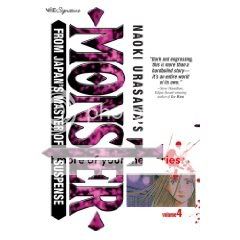
Comics Time: Naoki Urasawa’s 20th Century Boys Vols. 4 & 5

Naoki Urasawa’s 20th Century Boys Vols. 4 & 5

Naoki Urasawa, writer/artist

Viz, 2009

200 pages, Vol. 4

216 pages, Vol. 5

$12.99 each

Buy them from Amazon.com

There are two major developments in these installments of Urasawa’s cult-conspiracy thriller. The first is the introduction as a secondary protagonist of Wolverine. The gruff longhaired badass who plays by his own rules but has a heart of gold and so on–named Shogun, in case you didn’t pick up on his awesomeness–was technically introduced in Vol. 3, but here we find out who he really is, get an origin story involving a wise old sensei, and connect him to the main thread of action. The second major development, which is interesting because it upends the first, is a big honking shift of the whole territory of the story that came waaaaaay quicker than expected. I won’t spoil it beyond the spoilage that is announcing its existence, but it’s what longtime watchers of Lost might call a “game-changer.” And if you opt to look at Shogun as the Sawyer figure instead of the Wolverine figure, that may be even more helpful in terms of establishing just how expertly Urasawa plays with genre tropes, insofar as these same tropes would later be key to the greatest work of American pop/pulp fiction this decade. 20th Century Boys has a lot in common with Lost, a neutral observation that doubles as an endorsement.

PS for readers of the series: The first lyrics in T. Rex’s “20th Century Boys” are “Friends say it’s fine, friends say it’s good.” Ha!

Merry Christmas from MODOK and Tori Amos

Not even kidding a little bit.

Carnival of souls

* Tom Spurgeon keeps rolling out his holiday interview series on the books of the decade: Here’s Bart Beaty on Marjane Satrapi’s Persepolis, and here’s Kristy Valenti on Peter Maresca’s reprint of Winsor McKay’s Little Nemo in Slumberland strips, So Many Splendid Sundays. In both cases we have critics touting the greatness of works for which there was massive popularity and acclaim but against which there’s been something of a backlash. Of the two I think Valenti does a better job in making the case for Nemo‘s greatness–I would have liked to hear Beaty argue for Satrapi’s art beyond his assertion that the book’s gradually improving draftsmanship mirrors Marjane’s personal growth. But the story of Persepolis‘s reception in France and what it’s meant to L’Association was something I’d never heard, and it’s fascinating.

* Josh Simmons teases “White Rhinoceros,” the graphic novel he and Shaun Partridged will be serializing in MOME. Sounds staid and conservative just like all of his work. [/kidding]

* Theo Ellsworth has a blog!

* So does Ron Rege Jr and he’s always posting lovely images like this one on it.

* Aside from strange TCJ.com messageboard-style digression about the evils of assembly-line corporate comics that equates collaboration with corruption, this Ken Parille piece on Daniel Clowes’s Ice Haven–in its original form as Eightball #22, probably the best single issue of any comic ever–is quite good.

* Future time travelers have my permission to revisit me at any point throughout the preceding few years and read this to me aloud, punching me in the face once per word.

Comics Time: Naoki Urasawa’s 20th Century Boys Vols. 1-3

Naoki Urasawa’s 20th Century Boys Vols. 1-3

Naoki Urasawa, writer/artist

Viz, 2009

216 pages, Vols. 1&2

200 pages, Vol. 3

$12.99 each

Buy them from Amazon.com

I don’t like to read manga series until I have the whole thing. It’s not like superhero serials that are ongoing in perpetuity, or TV shows where the same thing is theoretically the case–these stories are serialized but they’re of a finite length, and I find that if I try to read a little here, a little there, I end up forgetting half of what’s going on by the time I catch up with later volumes. This isn’t really the fault of the material, mind you, it’s just because I’m not terribly bright.

Anyway, sometimes needs must, and so I found myself reading the three volumes of 20th Century Boys I have in my possession at the moment. (Without having Vols. 4-6, or god help me, without having finished Monster, since I’m missing about six volumes in the middle of the run and totally can’t remember what happened in the three or four volumes I already read. Like I said, not the sharpest knife in the drawer.) And this probably comes as a surprise to no one, but they’re a lot of fun. The story’s like a cross between Stephen King’s It and the Aum Shinrikyo Tokyo subway attack, with thirtysomething go-nowhere convenience-store franchisee Kenji discovering that the heroes-and-villains game he helped concoct as a kid is being used as a how-to manual for murdering people by a shadowy cult, most likely led by one of his childhood friends. The drill so far is one of watching bodies pile up and the revelations slowly accumulate, often in sublimely unexpected ways. There’s at least one supporting character who gets offed way before I’d have seen it coming, a lot of the secrets are way more out in the open than I’d have expected them to be at this stage in the game (a lot of “so, now you know that I know what you know”), there’s a wooly subplot involving a psychic bum, there’s a very cool t-shirt-ready symbol for the death cult…a thrill a minute, baby, and dammit, I wish I had the other three volumes.

That said, I think what prevents the Urasawa I’ve read from springboarding off its obvious proficiency with genre into the realm of genuinely great art is that his actual art, his drawings, are strictly functional. Actually, that’s not quite the word for it. “Strictly functional” implies “merely adequate,” and it’s more than that. The visual storytelling is crystal-clear, which is a huge help for a mystery translated from a foreign language with its own cultural cues. The character designs are easy to keep track of even as childhood friends are reintroduced at a dizzying pace. The line is as slick as manga gets, retaining energy during quieter scenes like a coiled spring that boings back up during confrontations and action sequences. But it only has style in the sense that, say, your basic Hollywood thriller has: The goal of the art is to stay out of the way of the story. I’m reminded of Pia Guerra’s work on Y: The Last Man–Urasawa would never draw anything that stiff, of course, but that kind of nondescript conveyor-of-information-type art is the sort of thing that works really well for a comic with this kind of broad civilian appeal. Are you here for an art class, or are you here to find out if Kenji can save the world?

Carnival of souls

* Recently on Robot 6: Disney goes Juxtapoz, Chip Zdarsky tells us how to get to Sesame Street, Iron Man 2‘s trailer makes the movie look like a lot of fun, and long may Tom Brevoort reign.

* Tom Spurgeon’s Books of the ’00s holiday interview series continues with Frank Santoro on Mat Brinkman’s Multiforce. His earlier post on the book is worth a revisit too; I like how he differentiated the ways Brinkman and Brian Chippendale depict contiguous space, and how he shares my appreciation for Brinkman’s facility with scale.

* Speaking of Frank–Go, read: “Motorway from Roswell” by Frank Santoro and Bill Boichel. Tell me you don’t want to ride in that car.

* Dig on The Cool Kids Table’s “Our Comics Decade” series, in which Ben, RIckey Purdin, and Kiel Phegley discuss the comics that hit them hardest year by year.

* Here’s a fine Jeet Heer post on fine comics anthologies.

* Noel Freibert link #1: In the comment thread for my review of Freibert’s My Best Pet, he and I hash out the issue of animal cruelty in art.

* Noel Freibert link #2: “Even Death May Die”…Freibert and “the ghost of Howard Phillips Lovecraft” collaborate on a very cool text-comic hybrid.

* Noel Freibert link #3: In the comments for this already awesome Monster Brains post about the great ’80s toy/puppet line Boglins, Freibert notes that both the Boglins and the decade’s other great toy/puppet/monster hybrid, the Sectaurs, were created by the same person, Tim Clarke. I can think of a couple people reading this blog who’ll flip out about this.

Comics Time: You Are There

You Are There

Jean-Claude Forest, writer

Jacques Tardi, artist

Fantagraphics, 2009

196 pages, hardcover

$26.99

Buy it from Fantagraphics

Buy it from Amazon.com

Wow, what a turnaround I made on this book in the space of a few pages. One of the perils of being so hung up about spoilers that you go into a book without even knowing what it’s about is that oftentimes it turns out you’ve got an idea in your head of what it’s about anyway, and that idea can be wrong. My only experience with Tardi was his adaptation of Jean-Patrick Manchette’s daylight-noir West Coast Blues, so when I saw a guy in a bowler hat standing there in a graveyard on the cover I figured “okay, a period-piece crime novel, like The Black Diamond Detective Agency or something.” Instead, right from the first page, you just get smacked with this torrent of verbiage from this daffy annoying tall skinny guy as he runs around atop the walls of some crazy little village opening gates for people. What the fuck is this?

It’s an absurdist satire, is what it is, and a pretty terrific one. And good God is it French. Once I realized what was up, my dim memories of Jarry and Ionesco and Beckett flickered one by one back to life. Delusions of grandeur, farcical authority figures, goofily symbolic names, talk talk talk that says nothing, all atop a fundamentally ridiculous premise.

Arthur There, the heir of a long-defunct line of aristocrats, has lost his ancestral estate but gained the legal right to erect walls between the properties of all the people who now live on it and control their comings and goings. Only by “control” I mean “run when they ring a bell for him to open the gate.” A Strangelovian element is injected when the president of France, on the verge of losing his bid for reelection, settles upon the unique legal status of There’s labyrinthine fiefdom as the perfect pretext for setting up a rival government-in-exile. He’d heard of the place thanks to Julie Maillard, the squint-eyed and slatternly daughter of the neurotic There’s chief rival–she once had a watersport-heavy affair with the President, though now her sights are set, for reasons obscure even to her, on There. And some other dudes too. It’s easy to picture it as one of those long-form fourth-season Monty Python episodes, with Eric Idle as There, Michael Palin as the President, and Carol Cleveland as Julie, if that helps.

So like I said, once I figured out what was up–once I realized that the dialogue was overwhelming and annoying on purpose, once I realized that the characters were deliberately ridiculous and their motivations purposefully flimsy and absurd–I was all the way on board. Kudos for that must go to Jean-Claude Forest’s full-bore commitment to writing like that. After a while it feels like the most natural thing in the world to watch There talk to himself on the verge of hysteria for paragraph after paragraph. But the real magic is in watching what Tardi does with Forest’s set-up. The fool’s kingdom of Mornemont is an unforgettable comic-book locale, and the riot of walls and fences and gates that crisscross it provide a perfect visual hook on which to hang the similarly profligate dialogue and nonsensical story. Tardi’s lanky design for There; his recurring motif of vertical stripes everywhere from the gates There opens to the wallpaper of his comically tiny house; his use of tall rectangular panels and layouts that emphasize the page’s verticality; truly masterful rainstorms and snowstorms–it’s seriously a master class on creating a sense not just of place but of a claustrophobic, chaotic, unsustainable state of mind. It isn’t hard to see this on your bookshelf next to Brian Chippendale, Mat Brinkman, or Hans Rickheit: environment and emotion are one and the same here as there. What’s more, the main effect is so clear that the contrasts are all the stronger: Mornemont’s white walls with the President’s black curtains; There’s googly eyes, stovepipe limbs, and funereal suit with Julie’s bovine expressionlessness, swooping curves, and frequently nude white body; the sealed-off snowglobe isolation of Mornemont throughout the book with the sudden border-smashing invasion by the outside world at the book’s climax. It’s a parade of comics effects astutely selected and deftly executed. Killer stuff, and more fun than you remember it from French class.

Oh the weather outside is frightful, but falling in love with a girl you met at Bible camp is so delightful

I’m told this is just a fortuitous coincidence, but on this very snowy Sunday Tom Spurgeon has posted an interview with me about Craig Thompson’s Blankets, the very snowy and very good graphic novel. This is part of a whole series of interviews Tom’s doing with various writers and critics, each one focusing on a particular “book of the decade.” I was surprised how much I enjoyed Blankets after several years away from it–if anything I appreciate it even more. It’s really different than most of what’s out there! Anyway I hope you enjoy the interview.

Comics Time: Plague Hero

Plague Hero

Tunde Adebimpe, writer/artist

Suciotone, December 2009

28 pages

$4

I can’t find anyplace to buy it–let me know in the comments if you know of one

I’m not going to lie: I checked out the comic Tunde Adebimpe was selling at a table at BKCGF because of his day job. But come for the “Staring at the Sun,” stay for the, bright, fun, and effective painted fight comic. Printed on thick, glossy paper, Adebimpe’s paints really leap off the page as they illustrate his simple set-up, subtitled “A Few Notes on Being and Not Being Myself”: A pink horse guy and a green bird guy (his name’s Myself) square off from the left- and right-hand side of each spread in a boxing match narrated by a strip of playfully metaphorical first-person text running across the bottom. The anthropomorphic fighters are built like characters from an all-ages boxing video game, and indeed the simple two dimensional plane of the action reinforces that feel: Since all they can do is move forward, move back, and punch each other, it’s easy to feel like you’ve got a ringside seat to an all-action button-masher/slobberknocker. When the combatants land a blow, their wounded opponents explode with color at the point of impact; a similarly visually explosive cut to a pair of audience members (“prospective employers, future ex-wives”) manages to convey the roar of the crowd with similar effectiveness. Adebimpe’s writing bounces along with the hardboiled patter of an old-school sports columnist: “That’s when I decided to step in…and Reagan ’84 the poor jerk”; “It was our pan, and we were flashing.” In the end one of the fighters is declared the “WINNAH!” by knockout, which depending on how much you’re willing to play along with the Myself/Not Myself metaphor could Mean Something. But really it’s an exercise in convey action and movement through color and telling a story with a memorable voice–and a successful exercise at that. I hope to see more.