
Archive for the ‘Uncategorized’ Category
Boiled Leather/Best of 2011
December 26, 2011The second episode of my A Song of Ice and Fire podcast, The Boiled Leather Audio Hour, is up! This time out Stefan Sasse and I discuss morality, leadership, and reform in the context of such august personages as Jon Snow, Daenerys Targaryen, Cersei Lannister, Roose Bolton, and Tywin Lannister. Enjoy it with your leftovers.
Meanwhile, I contributed a couple of entries to the first installment of Comic Book Resources’ Top 100 Comics of 2011 countdown: Ben Katchor’s The Cardboard Valise at #80 and Tom Neely’s The Wolf at #78. Enjoy them with your gift cards.
Comics Time: The Armed Garden and Other Stories
December 23, 2011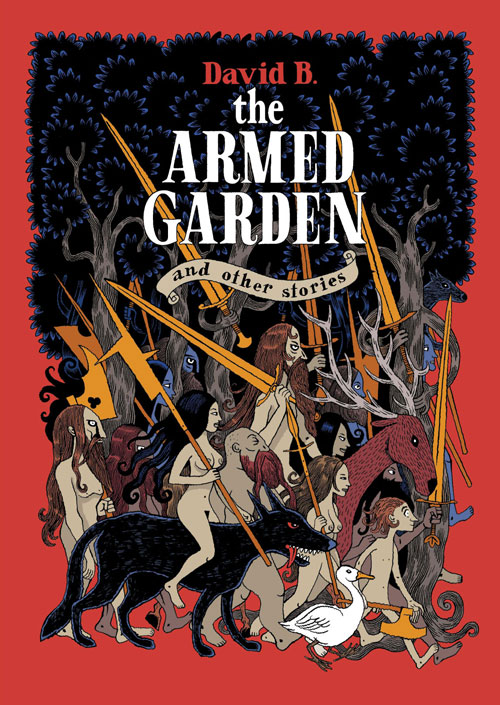
The Armed Garden and Other Stories
David B., writer/artist
Fantagraphics, 2011
112 pages, hardcover
$19.99
Read a 10-page preview and buy it from Fantagraphics
Buy it from Amazon.com

About the only things impeding my completely unfettered enjoyment of and admiration for everything David B. achieves in The Armed Garden and Other Stories are familiarity — all three of the stories collected here appeared in the late, lamented Mome anthology at some point; and, because I am a morose and unpleasant person, the happy-ish ending — after a book of unremitting, near-ecstatic horror and slaughter, ending on a wistful up-note felt not so much unearned as simply unwanted.
But that’s it. Other than that, this collection is absolutely marvelous, a gorgeous and searing series of comics from an artist who earns the description “freakishly talented” as completely as anyone this side of his trans-Atlantic fellow in crafting dreamy/nightmarish parables of violent spirituality, Jim Woodring. These comics are just as lovely and just as frightening, and just as singularly the work of their creator and no other.
For one thing, they’re beyond gorgeous. B. has developed a form of expressionism that relies on curves rather than angles; simultaneously he’s fleshed out the stark intensity of his high-contrast black-and-white brush art with a lush duotone gold. The result is battle scenes that have the sharpness and savagery of a woodcut and the graphic simplicity of a Dark Ages tapestry, tied to prophetic visions and hedonistic reveries among the faithful peopled by characters you want to reach out and hug, so sensuous and inviting they seem. It’s almost unfair that the same guy who’s developed a visual language for battle that eloquently reduces its participants to interlocking graphic elements, a nigh-undifferentiated sea of swords, spears, grimaces, and gouts of blood, also maybe draws the sexiest pale naked women I’ve ever seen in a comic. But from a thematic perspective these stories are all about the way that religious fervor lends an air of all-consuming certainty and nobility to mankind’s most animalistic pursuits, from fucking to killing, so I suppose it’s only fitting.
Each of The Armed Garden‘s three stories — “The Veiled Prophet,” the title tale, and “The Drum Who Fell in Love” — is a transmission from the heightened reality of the legends surrounding various medieval religious cults, one from Arab Islam and two warring ones from European Christianity. As I mentioned when the first of these, “The Veiled Prophet,” hit our shores in Mome, they at first appear to all the world like an expressionistically drawn work of historical fiction, until the supernatural elements slowly take over. By focusing on the individual actors in each drama rather than the overall sweep of the history surrounding them, B. allows the reader to experience the awe and terror of divine/demonic intervention as a first-hand phenomenon; within the world of the stories, it’s as easy to swallow as are the more run of the mill sources of conflict with rival Popes and caliphs and so on. We get swept up in the madness and terror along with everyone else. And in all three cases, the fire of divinity burns too bright, consuming those who fan its flames. Provided you don’t buy its actual intervention in actual real life — and by situating each story within rejected, discredited cults, B. effectively removes the need to consider the more popular and lasting religions in this light — the message is clear: Belief in this shit, actualized into violence, will drive you as crazy and destroy you as completely as the real deal will. Gazing beneath the veil of the prophet, building your own paradise on earth, peering into the secrets of creation, communing with the dead, slaughtering out a path for God to tread — these things will kill you, blind you, drive you insane, leave you stranded with only the music of your mind for company. Ugly truths, presented as beautifully as is humanly possible.
Carnival of souls: Lala Albert, the best of Pitchfork’s guest best-of lists, more
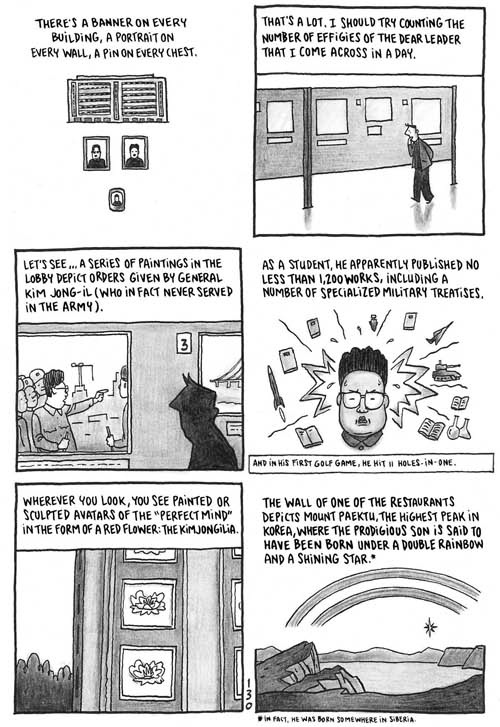
December 21, 2011* Pyongyang author Guy Delisle takes a few parting shots at Kim Jong-il.
* Brian Chippendale, ladies and gentlemen.
* Okay, Lala Albert’s definitely on the radar now. Thanks, Same Hat!

* The 5 Best Things about Pitchfork’s Guest List Best of 2011 feature:
5. The weird way in which Colin Stetson runs down like four or five of my favorite deep cuts from my music library, including the Aphex Twin song during which I discovered that my baby daughter loves to dance
4. One of the Fleet Foxes really likes the X-Men books
3. Seeing which beloved indie rock acts let humanity down by listing Chris Brown songs
2. Seeing which of the Big Three chillwave acts each of the other Big Three chillwave acts does or doesn’t list
1. The concluding paragraph of the list from Ishmael Butler from Shabazz Palaces
Seanmix | Best of 2011
December 21, 2011DOWNLOAD VOLUME ONE
Live Those Days Tonight – Friendly Fires // Party Rock Anthem – LMFAO // Blow – Ke$ha // It’s Up There – The Field // Michael Jackson – Das Racist // Generation – Liturgy // Powa – tUnE-yArDs // Kaputt – Destroyer // 1+1 – Beyoncé // Holocene – Bon Iver // Super Bass – Nicki Minaj // Hurts Like Heaven – Coldplay // Loop the Loop – Wild Beasts // Take Care (feat. Rihanna) – Drake // Is Your Love Strong Enough? – How to Destroy Angels // Why I Love You (feat. Mr. Hudson) – Jay-Z & Kanye West
DOWNLOAD VOLUME TWO
Marry the Night – Lady Gaga // Over My Dead Body – Drake // Niggas in Paris – Jay-Z & Kanye West // Never – Orbital // Schoolin’ Life – Beyoncé // The Wilhelm Scream – James Blake // Are You… Can You… Were You? (Felt) – Shabazz Palaces // I Care – Beyoncé // Deeper – Wild Beasts // Marvins Room – Drake // No Church in the Wild (feat. Frank Ocean) – Jay-Z & Kanye West // Riotriot – tUnE-yArDs // Veins of God – Liturgy // True Faith – George Michael // Beth/Rest – Bon Iver // End Come Too Soon – Wild Beasts
DOWNLOAD VOLUME THREE [UPDATE: new file host]
Poor in Love – Destroyer // Party (feat. André 3000) – Beyoncé // ∞ ∞ / Romance Layers – Gang Gang Dance // Coastin’ – Cities Aviv // Recollections of the Wraith – Shabazz Palaces // Stay Away – Charlie XCX // Hurting – Friendly Fires // Claudia Lewis – M83 // Andro – Oneohtrix Point Never // Limit to Your Love – James Blake // BTSTU – Jai Paul // The King’s New Clothes Were Made By His Own Hands – Shabazz Palaces // Under Ground Kings – Drake // Before – Washed Out // It Takes Time to Be a Man – The Rapture // Sacer – Gang Gang Dance // The Ride – Drake // Separator – Radiohead
DOWNLOAD VOLUME FOUR
Born This Way – Lady Gaga // Bizness – tUnE-yArDs // Down On Me (feat. 50 Cent) – Jeremih // Show Me Lights – Friendly Fires // The Magic Place – Julianna Barwick // Zoo Station – Nine Inch Nails // Free Press and Curl – Shabazz Palaces // Replica – Oneohtrix Point Never // I Never Learnt to Share – James Blake // Glass Jar – Gang Gang Dance // Sexy and I Know It – LMFAO // Till the World Ends – Britney Spears // Downtown – Destroyer // A Real Hero (feat. Electric Youth) – College // Heavy Pop – Wu Lyf // The Edge of Glory – Lady Gaga
After making best-of mixes in 2009 and 2010, I knew I’d be doing it again this year. What I didn’t count on is going from three discs to four! But I listened to and loved a lot of music this year and quickly realized there was no way I could bring myself to cut a whole disc’s worth of material from my favorites. So I’m giving them to you at no extra charge!
If I had to rank my favorite releases this year, it’d be as follows:
9. Beyoncé – 4
8. The Field – Looping State of Mind
7. Shabazz Palaces – Black Up
6. Jay-Z and Kanye West – Watch the Throne
5. Friendly Fires – Pala
4. Lady Gaga – Born This Way
3. Wild Beasts – Smother
2. Drake – Take Care
1. Destroyer – Kaputt
I basically could have kept putting song after song from these suckers on there (especially Kaputt, a stone masterpiece) and left it at that. Meanwhile there was sort of a three-way tie for tenth place between James Blake, Gang Gang Dance, Bon Iver, Oneohtrix Point Never, and tUnE-yArDs, about whom you could pretty much say the same thing. So that explains the need for the fourth volume.
But only partially. You may also have noticed an increase in the amount of both hip-hop and radio dance-pop in the mix. I think you can attribute both to the birth of my delightful daughter Helena. Helena spent the first six weeks of her life in the hospital, stuck in the neonatal intensive care unit. Her mother spent the preceding three months either in the hospital as well or on bedrest at home. So I ended up spending a lot of time in the car, driving to and from the hospital or running enough errands for two people. New York currently has two pop radio stations, both of which are increasingly indistinguishable from the dance station it also has, so a lot of that kind of music was drilled into my head almost by default. While I never ever ever want to hear the voices of Usher or Pitbull ever again, I still found many of these songs astonishingly entertaining. Months later, when my daughter came home and grew strong and healthy and old enough to enjoy dancing around the room with me, a lot of them doubled as a soundtrack for our Daddy Dance Parties. So yes, LMFAO is close to my heart. (Seriously though, that group is perfectly harmless, and those songs are good-natured and fun to dance to.)
As for hip-hop, it’d been years since I listened to as much new stuff as I did this year. I don’t think it’s a coincidence that the records from which I drew most heavily sort of followed in the footsteps of My Beautiful Dark Twisted Fantasy from last year and treated the album format like the rock album format, with an emphasis on atmosphere and a journey from A to B and less obvious filler. I also don’t think it’s a coincidence that some of the big commercial acts are starting to audibly question and complicate commercial hip-hop’s enormously boring lockstep subject matter of sex, money, not caring for haters, and the artist’s own awesomeness, with a dollop of “life is hard” to take the curse off it. (I don’t say that to deny that life is, in fact, hard, or at least used to be, for a lot of these guys. Obviously a lot of rappers (though certainly not all of them, and more specifically not all of them at the top of the charts these days) come from circumstances involving pervasive poverty, the shadow of criminality, and institutionalized racism, circumstances I’m fortunate not to have an experience with whatsoever. My point is just that boring art is boring art.) This also helps mitigate against all the “bitch” business, which is the kind of thing that I and most everyone I know finds totally unacceptable in any other field (I mean, presuming you’ve followed the discussion of superhero comics this year, you know how (appropriately!) low people’s tolerance is for misogynistic nonsense there) and is becoming increasingly difficult for me to excuse, let alone enjoy, in hip-hop too.
But again, it’s the baby what did it, really. Most of the time I’m listening to music I’m also doing something else — reading, writing, working. I’m pretty good at multitasking where music listening is concerned, but hip-hop’s the great exception. Unless it’s an old album I basically have memorized and can thus sort of tune out as an immediate presence, I find the constant flow of spoken words too distracting to get anything else done, especially the writing that occupies most of my work time. Meanwhile, even if I managed to only semi-pay attention to the lyrics, that’s no way to listen to an art form that’s predicated on wordplay and lyricism. I’m not a lyric person with any music, almost to a fault — the sounds hit me first and foremost — but with hip-hop you have to make an exception to an extent or you’re missing out. Put it all together and you get me listening to way less hip-hop than I did in the mid-to-late ’90s, when it was the lingua franca for me and all of my friends.
But now that the baby’s home, my wife, who has problems with sleep at the best of times, goes to bed by herself while I hang out downstairs with the sleeping baby — this way she (my wife) can drift off to sleep in a bedroom she knows won’t be disturbed by a restless baby before she (my wife) is able to fall into a deep sleep. I wait a couple hours, usually doing work and chores, and then bring the baby up and go to sleep myself. During that time I wash dishes and bottle parts by hand since we don’t have a dishwasher. And that’s the perfect time to listen to music, particularly hip-hop, since I’m in a quiet house with a stretch of time at my disposal, and the work I’m doing is mindless and won’t distract from listening to an album-length torrent of wordplay. It’s been exciting to slip back into the genre a bit, even if only via the big acclaimed records everyone listened to. I don’t need to reinvent the wheel or blaze any trails, I just want to expose myself to as much good music as I can.
Hopefully this mix will help you do the same!
PS: If you like what you hear, please purchase it from the artists. People who make music you like deserve your money!
IT’S THE HOBBIT TRAILER
December 20, 2011GANDALF TAKE THE WHEEL
Carnival of souls: Joe Simon, Inkstuds, Tom Spurgeon, more
December 20, 2011* I should have noted this last week, but I lost the link in my RSS reader: Captain America co-creator Joe Simon has died. In addition to his achievements as a writer, artist, and editor, and his role as one of Jack Kirby’s first and finest collaborators, as a font of first-hand information about the dawn of comic books — I interviewed him myself a couple of years ago; the sensation was like getting to ask Peter about the Last Supper — he was invaluable to journalists and historians. He also tenaciously fought Marvel Comics for his best-known creation very late in his life, and appears to have won, as he would define it. An inspiring figure.
* The Inkstuds Best of 2011 Critics Roundtable, featuring Tim Hodler, Joe McCulloch, Matt Seneca, and host Robin McConnell, could easily make a Best Comics Criticism of 2011 roundtable somewhere else. Radio really suits all four figures, and the discussion is lively, with each critic clearly springboarding off the others’ ideas.
* Tom Spurgeon’s Holiday Interview series has begun! This is seriously one of my favorite things about the holidays now — curling up on the couch with my in-laws’ dogs and reading one of the best in the business interview some of the best in the business. First up this year is Art Spiegelman and Tom Neely, Emily Nilsson, and Virginia Paine of Sparkplug Comic Books.
* Guy Delisle on Kim Jong-il. I need to re-read Pyongyang.
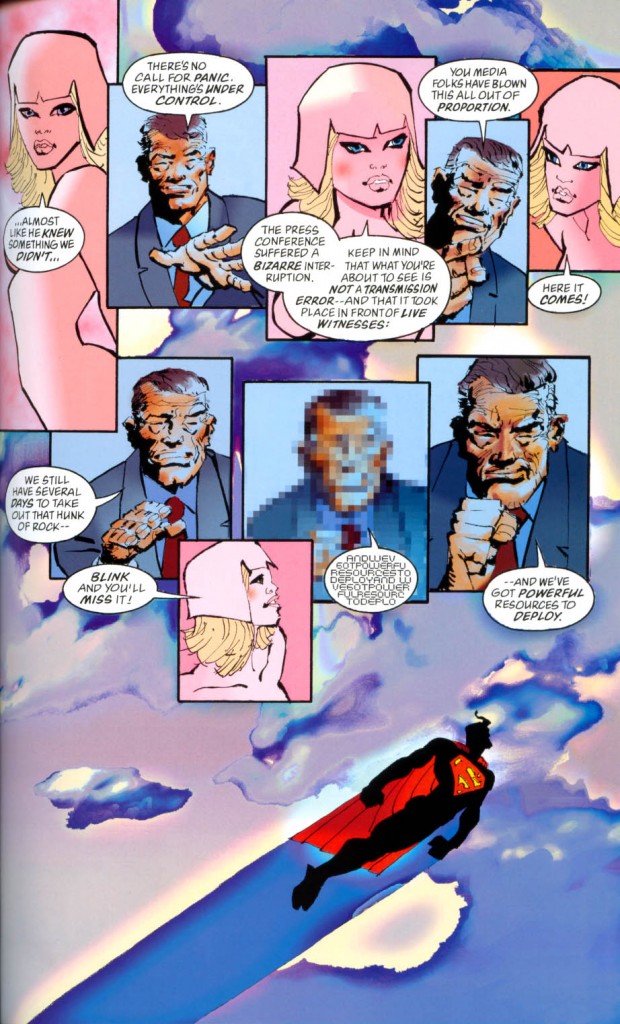
* Frank Miller on late capitalism (unintentionally). (PS: Jesus were he and Lynn Varley ahead of their time, artistically.)
* Happy ninth birthday, AdHouse Books!
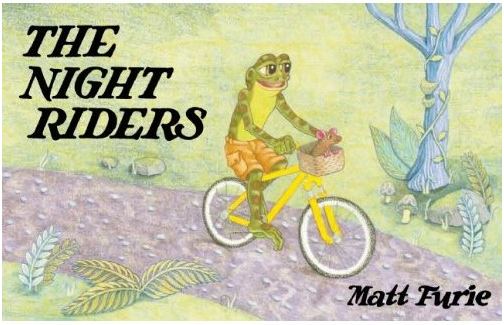
* Matt Furie and Lisa Hanawalt are doing children’s books for McSweeney’s. My daughter seems to love froggies, so I’m thinking I’ll check these out.
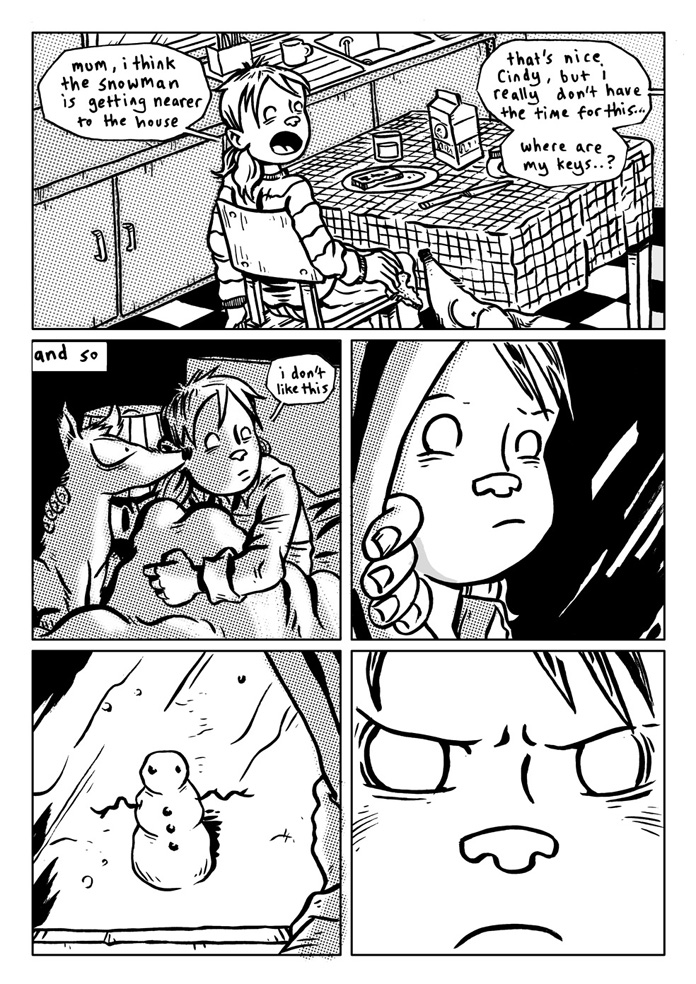
* It’s the Cindy & Biscuit Christmas Special! Dan White is crazy talented.
* “Marvel already seems to have origin series galore; they just don’t seem very interested in keeping them in print.” So true. Every Christmas I think about trying to snap up the great Silver Age runs in some easy way — through the giant omnibuses; through the trade paperback versions of the Marvel Masterworks collections — and every year I discover this is next to impossible because nothing’s ever kept in print. You can’t go on Amazon and buy the entire Lee/Kirby Fantastic Four or Lee/Ditko Amazing Spider-Man in a handful of clicks, and that’s a crime. You in fact can’t do it at all, which is worse than a crime, as they say.
* Tom Brevoort’s Formspring has yielded the clearest encapsulation of fannish desire for fiction to work like a rulebook that I’ve ever had the misfortune of reading. I dunno how he puts up with these folks.
* I love that Tom Kaczynski loves the ladies.
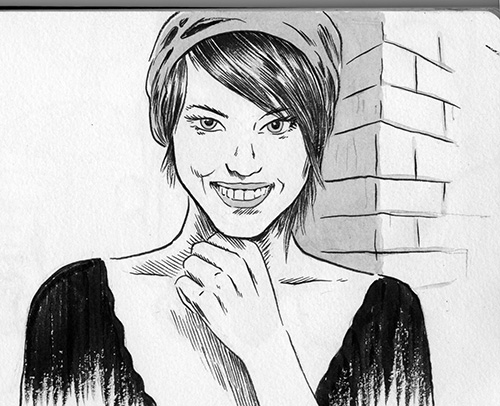
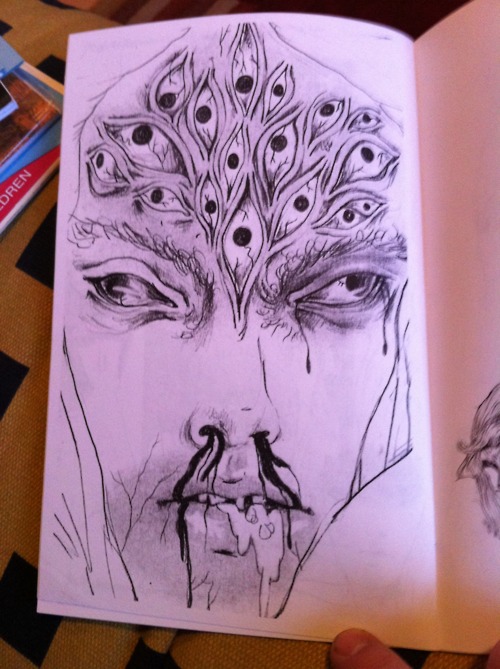
* And on the flipside of the loveliness coin — although they do have the crazy eyes in common — this is some strikingly gross art from Lala Albert.
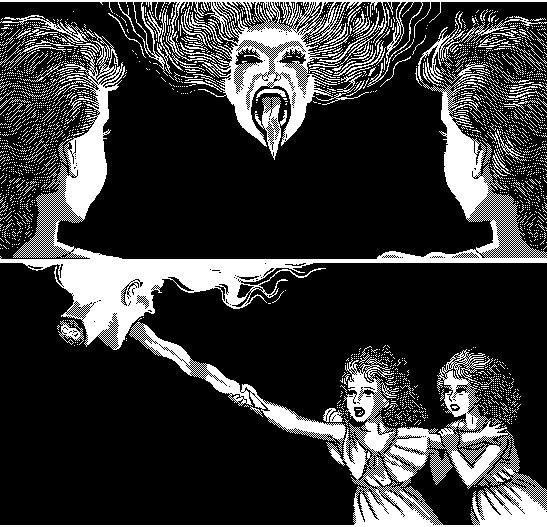
* Finally, Uno Moralez’s comic from Chameleon #2 is now up on his LiveJournal. It’s as luminous and odd as everything he does.
Real Life Horror Special: Hitch and Kim
December 20, 2011Kim Jong-il, by all accounts a terrible, terrible man who helped make the country he ruled the consensus choice for worst place on Earth, died. The Orwellian cast of life in North Korea never ceases to fascinate and horrify, and Kim died as its architect, with a great deal of blood on his hands. A miserable person.
The timing of his death alongside Christopher Hitchens’ is darkly fortuitous.
Thinking about Hitchens, I wonder if his fatal flaw — literally, sadly enough — was machismo. For all his erudition, you can’t help but notice a stubbornly incurious streak in him where matters of non-hetero- or non-dude-ness were concerned. Perhaps this was a generational artifact, but what can you say about someone who apparently needed “persuad[ing],” to hear Andrew Sullivan tell it, that being gay has an emotional and romantic component beyond sex? Or who argued, at length, recently, in a publication intended for a very wide audience, with a straight face, that women aren’t funny? Or who dismissed the panoply of thought on abortion with a pro-life wave of the hand, as if talking to an actual woman or doctor about it had never crossed his mind? (See Katha Politt on these last two matters.) The life of the mind was something Hitchens celebrated every day and in nearly every essay or article, and that was one of the great pleasures of reading him. But his prodigious drinking, the evident relish with which he fought with people, and especially his tendency cheer violent conflict if he felt that people whose ideas he disliked would die in it, are when taken in tandem with the above attitudes toward women and homosexuality indicative less of a public intellectual and more of a meathead picking fights with the opposing team’s fans in the tailgate parking lot.
Unfortunately, when couched in antifascist, pro-human rights language, this macho belligerence was in many ways exactly the siren song I wanted to hear after 9/11. Hitchens was, if not the sole, then certainly the most prominent and to my mind persuasive person on either side of the debate who was talking about the virtue of toppling dictatorships and crushing violent religious fanatics. Years and years and years of genre and conspiracy-theory reading, plus a passionate anti-religious streak, plus the mentally destabilizing trauma of the murder of thousands in the city I worked in and loved so much, primed me for this message. I ate it right up and spat it back out at anyone who’d listen, and anyone who wouldn’t. At last, I thought, after decades of using our power to keep dictators in place, America was finally going to use it to take them down! I shared Hitchens’ dark glee at the prospect. Indeed, no one was more influential over my support of the wars in Afghanistan and Iraq than Hitchens. He gave me what I needed to do it at all, I think. I remember telling people that if not for Hitchens, I’d have felt like I’d gone completely insane. Which, perhaps, I had.
In the end, life isn’t a fucking Authority comic book. I can’t, as a person who found himself thrilling to the burning of the churches in Homage to Catalonia, say that Hitchens’ infamous delight in cluster bomb fragments that will tear right through a Koran on the way to some benighted al-Qaeda fuck’s heart is alien to me. But those bombs found a lot of other people as well. Hundreds and hundreds of thousands of them. And in dropping them we also unleashed an atavistic tide of brutality, torture, state surveillance and oppression, and endless global warfare waged by an unaccountable executive branch; those bullets tore through not just Korans, but nearly every document we enlightened Westerners hold dear back through the Magna Carta. I’m no longer capable of performing the elaborate mental arithmetic necessary to excuse all this, and to excuse the deceptive and criminal way it was ushered in, because other people are bad. This is bad! When you’re primarily animated by hatred, as Hitchens was — and even though he generally hated genuinely hateful things — making the bastards pay is paramount. But the bastardry gazes also.
So Hitchens went to his grave quite literally praising endless war — a morally shameful philosophy that if adhered to would basically ruin civilization. But you don’t need to take my word for it. You can take the word of Hitchens’ hero, George Orwell, who wrote a book you may have heard of in which perpetual war was the core evil. Or you can take the word of Hitchens himself. I remember vividly his definition of terrorism: Demanding the impossible, and demanding it at gunpoint. How else to describe Hitchens’ call for a state of unceasing violence as some sort of curative for the other, wrong kind of violence?
I also recall (though I can’t find an exact link; take my word for it, please) Hitchens repeatedly admonishing anti-war forces for, in effect, acting according to the wishes of the enemy. But Hitchens died arguing that “we do have certain permanent enemies—the totalitarian state; the nihilist/terrorist cell—with which ‘peace’ is neither possible nor desirable,” calling for a war against them “that seems destined to last as long as civilization is willing to defend itself.” That’s a grandiose way of describing a struggle against a ragtag bunch of rogue states and a bunch of isolated bands of theocratic thugs who are lucky if they can set off a car bomb anymore, which is part of the problem, but putting that aside, is this not allowing the enemy to set terms? We must keep killing as long as people want to kill us?
But — and this gets back to the point about mindless machismo — this prospect, horrifying though it is and should be to most people, held no special unpleasantness for Hitchens. “Human history seems to register many more years of conflict than of tranquility,” he shrugs. “In one sense, then, it is fatuous to whine that war is endless.” By that perverted logic, since human history also seems to register many more years of, say, dictatorship, or torture, or slavery, or racial war, or holy war, then it is equally fatuous to whine about any of that. Or to dedicate one’s life, supposedly, to the cause of human rights and human freedom. But in order to cling to his argument, Hitchens was forced to implicitly reject all the arguments he’d ever made leading up to this one.
Which brings us back to the North Korea of Kim Jong-il. Last year Hitchens recalled his own visit to the country on the occasion of a book about North Korea’s manic chauvinism by B.R. Myers. “Myers makes a persuasive case that we should instead regard the Kim Jong-il system as a phenomenon of the very extreme and pathological right,” Hitchens wrote. “It is based on totalitarian ‘military first’ mobilization, is maintained by slave labor, and instills an ideology of the most unapologetic racism and xenophobia.” Later he notes, “Every child is told every day of the wonderful possibility of death by immolation in the service of the motherland and taught not to fear the idea of war, not even a nuclear one.”
Does this sound familiar?
Glenn Greenwald makes the case against Hitchens, and more specifically against remembrances of Hitchens’ virtues that don’t grapple first and foremost with this appalling stain on his legacy and what he might hesitate to call his soul, far more eloquently and devastatingly than I am. (He includes more cases where Hitchens is hoisted by Orwell’s petard, a grimly satisfying business.) But that’s no surprise, even aside from Greenwald being Greenwald and me being me. My heart’s not in this. It’s a strange thing, to think back on a man whose work I indelibly associate with sensations of great intellectual and philosophical pleasure, and to know despite those sensations’ lingering reverberations, it was poison all along.
Into the city
December 20, 2011
Comics Time: Mome Vol. 22: Fall 2011
December 20, 2011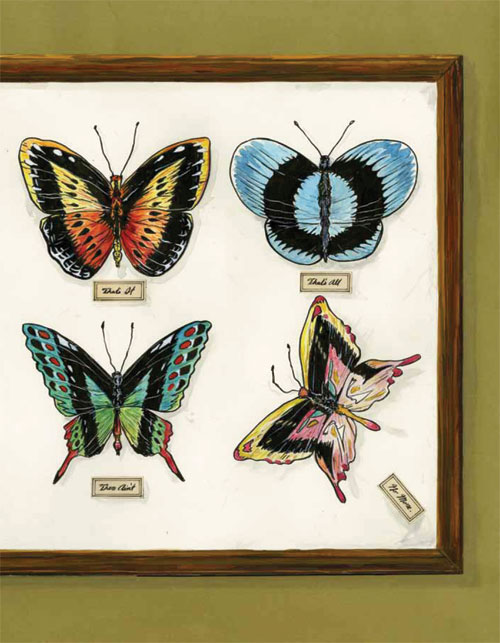
Mome Vol. 22: Fall 2011
Zak Sally, Kurt Wolfgang, Jordan Crane, Chuck Forsman, Steven Weissman, Sara Edward-Corbett, Laura Park, Tom Kaczynski, Joe Kimball, Jesse Moynihan, Josh Simmons, The Partridge in the Pear Tree, Malachi Ward, Eleanor Davis, James Romberger, Derek Van Gieson, Michael Jada, Tim Lane, Nate Neal, Wendy Chin, Anders Nilsen, Tim Hensley, Lilli Carré, T. Edward Bak, Nick Drnaso, Joseph Lambert, Paul Hornschemeier, Sergio Ponchione, Nick Thorburn, Dash Shaw, Ted Stearn, Jim Rugg, Victor Kerlow, Noah Van Sciver, Gabrielle Bell, writers/artists
Eric Reynolds, editor
Fantagraphics, 2011
240 pages
$19.99
Buy it from Fantagraphics
Buy it from Amazon.com

For today’s Comics Time review, please visit The Comics Journal.
BLAH, BLAH, BLAH: Introducing the Boiled Leather Audio Hour
December 19, 2011I’ve started an A Song of Ice and Fire podcast! It’s called the Boiled Leather Audio Hour, because who could resist that acronym, and its first three episodes, to be rolled out over the course of the holidays, were the brainchild of Stefan Sasse, the hugely insightful writer behind some of my favorite ASoIaF essays. Stefan noticed that he and I share a focus on issues of morality when discussing the books’ warriors and leaders, so he suggested we just get on Skype and start talking about it. I’m glad he did; this was a ton of fun.
Part one is up now at my ASoIaF/Game of Thrones blog, All Leather Must Be Boiled. Part two will go up next Monday, and part three the Monday after that.
Enjoy!
Comics Time: The Man Who Grew His Beard
December 19, 2011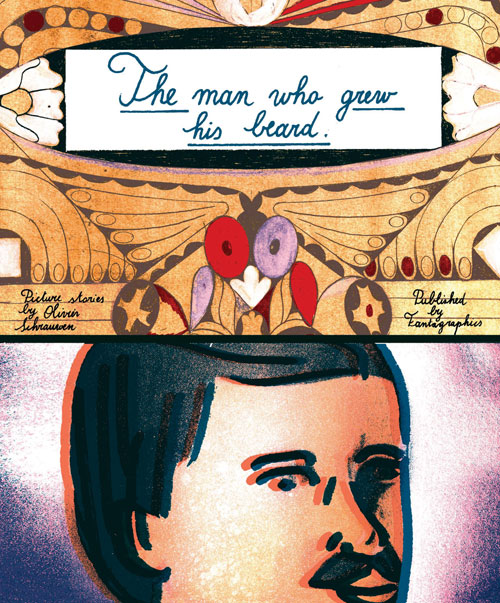
The Man Who Grew His Beard
Olivier Schrauwen, writer/artist
Fantagraphics, 2011
112 pages
$19.99
Buy it from Fantagraphics
Buy it from Amazon.com

I love the disconnect between how big and broad this substantial softcover feels in your hands — at 8.5″ x 10.25 ” it’s just wider enough than your average graphic novel for you to notice it — and how tiny the little mustachioed men who people most of its stories feel on those big pages, even when they’re blown up big enough to occupy most of that real estate. It makes it feel even more alien than it already does, like you’re reading a giant’s minicomic.
I don’t know how he does it, whether it’s something to do with how he puts his lines down on paper or some treatment he gives them afterwards, but Flemish cartoonist Olivier Schrauwen makes images that look like…like they’ve been transmitted from a great distance, both temporally and spatially. He’s playing with style and design that looks like it predates the Great War, and his line and coloring has a hazy feel to it that could be a copy of a copy of a copy, or the unlikely discovery of some microscopic cartooning culture blown up to many times its original size. There’s something off about it just as surely as there’s something off about Al Columbia’s rotted vintage visuals, only here that off-ness is used in service of a comic surrealism rather than a horrific one. He can stick it to the foibles of the 19th-century culture whose style he’s swiping quite effectively — savagely satirizing Belgium’s bloody misadventures in Africa, parodying the West’s penchant for physiognometric pseudoscience with a look at what your hairstyle says about your mental capacity, lampooning the world-conquering bravado of transcontinental rail, and so on. But he’s just as likely to seize upon some strange effect or idea and run with it as hard and as fast as he can — nearly literally, in once case, in a strip consisting more or less solely of a guy running to catch a train for as long and as far as the train would have taken him to begin with. Elsewhere, he shatters sexual idylls into a fractal feedback loop or draws its participants as lounging subjects of some kind of weird cubist stained-glass art style; portrays a man who can paint things into existence by trotting him through a series of guffaw-inducing mock-heroic poses, as if his miraculous creative abilities were only secondary proof of his awesomeness compared to his theatrical, bare-chested machismo; and uses bright color and titanically ornate architecture against bland ones to paint a portrait of a catatonic man’s rich and adventurous interior life of fun with a beautiful woman and a beloved child, in a story that ended up being actually quite moving. These are deeply strange short stories, centered on ideas and effects I’m not sure I’d have come up with even with the proverbial infinite number of monkeys at my disposal; even in this short-story-saturated alternative comics climate, there’s nothing else like his gestalt of finely calibrated nonsense. It’s good to see that comics can do things you’d never think to ask of them in the first place.
Comics Time: Mome Vol. 21: Winter 2011
December 16, 2011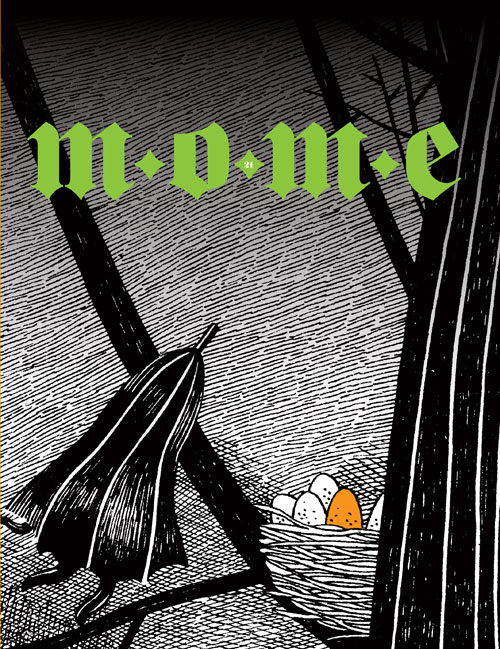
Mome Vol. 21: Winter 2011
Sergio Ponchione, The Partridge in the Pear Tree, Josh Simmons, Dash Shaw, Steven Weissman, Kurt Wolfgang, Sara Edward-Corbett, Nicolas Mahler, Tom Kaczynski,
Josh Simmons, Jon Adams, Nate Neal, T. Edward Bak, Michael Jada, Derek Van Gieson, Nick Thorburn, Lilli Carré, writers/artists
Eric Reynolds, editor
Fantagraphics, 2011
112 pages
$14.99
Buy it from Fantagraphics
Buy it from Amazon.com

It was the best of Momes, it was the worst of Momes. Alright, that’s not quite accurate, and not quite fair, either. But this unwittingly penultimate issue of Fantagraphics’ long-running alternative-comics anthology — page for page the longest-running such enterprise in American history! — is a hit-or-miss affair in the mighty Mome manner. In the miss column you can place Sergio Ponchione’s bombastic, cartoony fantasy about an imaginary childhood friend brought to life; there’s really not much more to it than that description would indicate. Ditto Kurt Wolfgang’s next “Nothing Eve” chapter, which continues to work the “people still act pretty much the same even though the end of the world is coming” buttons it’s been mashing since issue #1. T. Edward Bak’s “Wild Man” remains awkwardly paced due to its split-up narrative captions; Nicolas Mahler’s autobio strip remains of limited interest to people not Nicolas Mahler; Lilli Carré’s contribution is nicely colored in reds and blues but otherwise insubstantial.
A few contributions are both hit and miss at once. Sara Edward-Corbett’s near-wordless reverie involving inanimate objects romping around the outside of a house comes across more inscrutable than mysterious, but at the same time her crosshatching and linework are an absolute marvel, and she’s playing with forms (and with form) in a fashion reminiscent of John Hankiewicz, if not as successful. Steven Weissman’s deadpan “Barack Hussein Obama” strips fall flat when they merely parody the rhythms of four-panel gag comics, but spring to surreal and oddly scathing life when he injects a healthy dose of the sinister supernatural into them. I’ve never quite cottoned to the way Jon Adams’s razor-thin line and labored-over character renderings sit against the large white expanses of his pages, and his writing feels overwrought to me, but he does give his blackly humorous tale of a hunting expedition gone bad a laugh-out-loud visual punchline. And Nate Neal’s caveman morality play makes much better use of his meaty cartooning than his lukewarm slice-of-lifers do, though the conceit of gibberish dialogue from the cavepeople conceals more than it illuminates.
So that leaves the hits, and they’re strong enough to make the book worth checking out. Dash Shaw continues his seemingly ongoing series of adaptations of “reality” programming, this time an excerpt from a making-of documentary about Jurassic Park; he has a really sharp and off-kilter eye for people observing and commenting on their own behavior for a camera, and his transition from talking heads to full documentary “footage” is a gleeful one. Nick Thorburn’s take on Benjamin Franklin, a first-person monologue in which Ben lets us in on a dirty little secret, is anachronistically absurd (“In Seventeen-Sumthin’-Er-Other, right before I invented electricity and just after I’d sired my illegitimate son, I received an e-mail from Lord Sandwich about comin’ to London to take part in this new secret society known as ‘The Hellfire Club.'”) and very funny, with a great undergroundy character design for Franklin himself. Derek Van Gieson’s murky World War II period piece continues to stun from page to page. Tom Kaczynski examines home ownership during terminal-stage capitalism as only he can, casting it as a catalyst for powerful erotic and apocalyptic impulses and proving himself once again to be one of the most stealthily sexy cartoonists working today. “Stealthy” isn’t a word I’d use for Josh Simmons, but he doesn’t need it: His weird psychedelic fantasia on racism “The White Rhinoceros” is as bold and bulldozing as the giant slugs who stampede across its pages, and the elliptically concluded short story “Mutant” ends with an image of an enraged creature in the form of a human female, her nude body shadowed but covered in glistening sweat, that may as well symbolize the workings of Simmons’s entire brain. You gotta take the rough to find the diamonds.
Christopher Hitchens
December 16, 2011Few writers had more of an impact on me, for better and for worse. Enjoy oblivion, man.
Carnival of souls: Tom Neely, Craig Thompson, BCGF aftershocks, more
December 15, 2011* Wow, Kristy Valenti interviewed the bejesus out of Tom Neely for The Comics Journal. It’s certainly a must for fans of The Blot or The Wolf, but even if you’re not it’s worth your time just as a portrait of an artist. I explain a bit more about that over at Robot 6.
* Craig Thompson is working on three new books: one’s all-ages, one’s non-fiction, and one’s erotica. It’s like he got zapped with that beam that split Superman into Superman Red and Superman Blue back in the day.
* Bill Karatlopoulos’s essay on Daniel Clowes’s superhero comic The Death-Ray doubles as an excellent capsule history of comics’ rise to pop-cultural and media prominence in the early to mid ’00s. That New York Times Magazine cover story was a true “Made it, Ma! Top o’ the world!” moment; I’m not sure it’d be possible for people who entered comics after it to appreciate what an Event it was.
* Massive BCGF haul review/report from Kevin Czap. And it’s only Part One!
* Ryan Cecil Smith’s stealthy BCGF debut SF Supplemental File #2B is now available outside the Closed Caption Comics #9.5 box set. It looks purty. Riso printing, amirite?
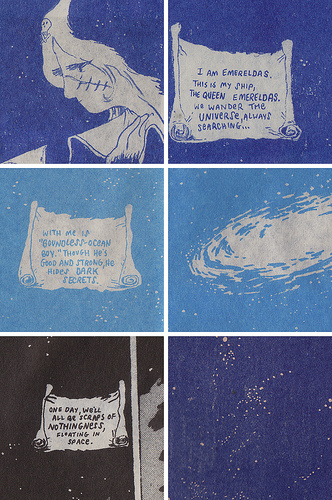
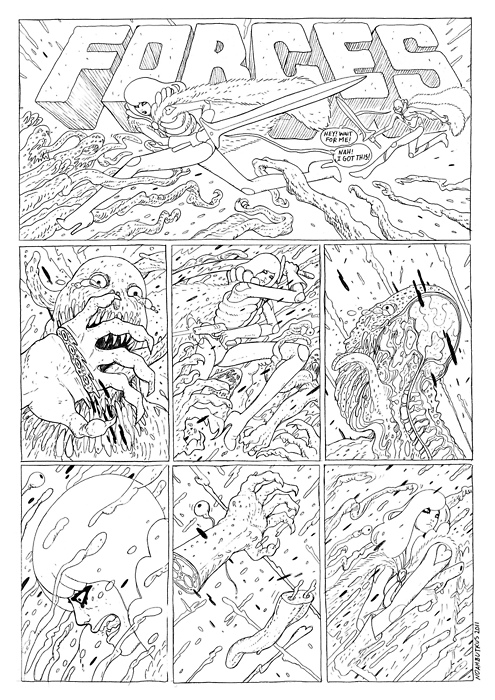
* Excuse me while I wolf whistle at this page from “Forces” by Noah Butkus, out of the Happiness Comix anthology that I now wish I’d made a point of picking up at BCGF. Good gravy!
* Real Life Horror: Drones in America.
* But let’s end on a couple of up notes: In light of the news that Christopher Meloni is joining the cast of True Blood, Jason Adams asks the only question that matters.
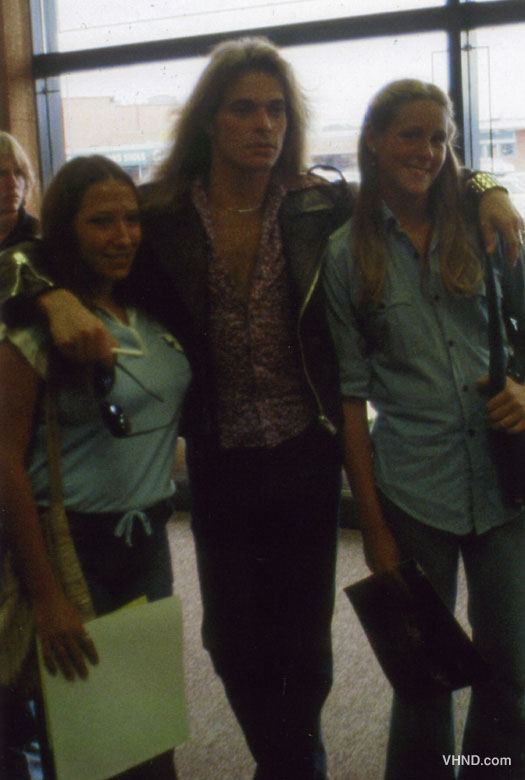
* And there’s nothing I could say about this selection of photographs from a Van Halen in-store signing appearance from 1978 that could possibly top 33 1/3’s John Mark’s assessment for accuracy: “The kids in these pictures are the very definition of ‘at-risk teens.'”
Comics Time: Like a Sniper Lining Up His Shot
December 15, 2011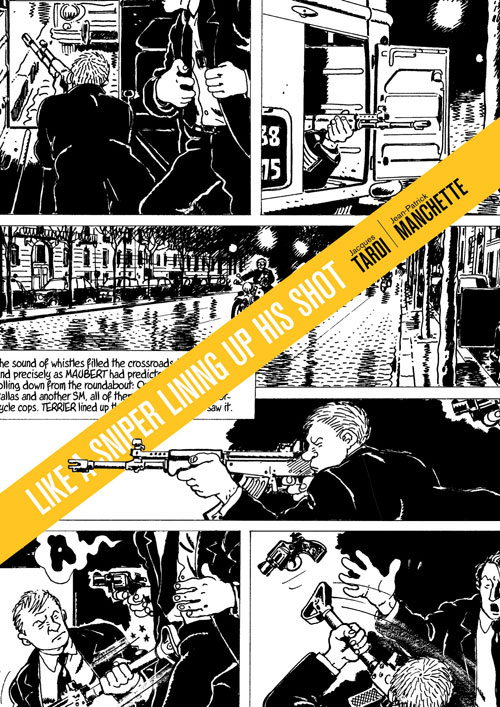
Like a Sniper Lining Up His Shot
Jacques Tardi, writer/artist
Adapted from the novel by Jean-Patrick Manchette
Fantagraphics, 2011
104 pages, hardcover
$18.99
Buy it from Fantagraphics
Buy it from Amazon.com

Fantagraphics keeps churning out lovely translated editions of the work of French comics master Jacques Tardi at a truly admirable clip. This is the fourth in what I would consider the “main” Tardi/Fanta line of slim hardcovers, distinguished by no-nonsense Adam Grano cover designs that juxtapose key sequences from Tardi’s ink-soaked black-and-white interior art with bold slashes of color and block-caps for title and credit information. If there’s a better mesh of form and function in comics right now this side of, well, Fanta’s similarly designed Love and Rockets digests, I’d sure love to see it. In much the same vein as Tardi’s previously released adaptation of a crime novel by author Jean-Patrick Manchette, West Coast Blues, Like a Sniper Lining Up His Shot is a grimly economical story of a man on the run from killers, with bursts of violence that slash in out of nowhere. In other words, you can judge a book by its cover.
The two books have much in common beyond their common language of men hunted by hitmen across the length and breadth of France. Both protagonists are bizarrely taciturn about their predicaments, almost to the point where you’re left to wonder if there’s some sort of mental disability involved. Sniper‘s Martin Terrier (great name) at least has the excuse of being a mercenary and assassin to explain his flat affect where killing’s concerned, as opposed to West Coast Blues‘ wrong-man family-guy George. But he more than makes up for this in his personal life, a disaster area predicated entirely on his deeply weird belief that the women with whom he involves himself can switch their affections for him on and off after years of one setting or the other based solely on his say-so. The woman for whom he “risks it all” — Tardi and Manchette’s interpretation of this trope ladles those sneer quotes all over it — is an equally weird and unpleasant character, ricocheting from emotion to emotion when Terrier’s intrusion into the life she’d been leading without him violently upends her status quo, until finally settling on some weird sneering sex-hungry brand of derision for him and his life of crime and adventure.
In all honesty, these emotional and behavioral patterns are so difficult to recognize even when allowing for the remove between a hired gun and a comics critic that they get in the way of Tardi and Manchette’s underlying indictment of society’s casual savagery, and its propensity for covering up that savagery with bullshit that pins it on The Other Side. But upon reflection, I wonder if these terrible people’s wholly alien way of interacting with the world isn’t just the writing equivalent of Tardi’s nimble, scribbled line and sooty blacks — a heightened reality in which things are rendered at their loosest, darkest, ugliest, and weirdest at all times. God knows both creators can rigorously focus when they want: Manchette squeezes a quite believable custody battle between Terrier and his now-ex girlfriend over a beloved cat into the proceedings, while Tardi’s backgrounds and lighting effects are a realist’s dream and his action sequences and set-pieces are choreographed tighter than a drum. The absurdist demeanors may prevent everything from gelling as well as they might have done, but overall the book delivers a fastball to your face so hard that you barely have time to notice that some of the stitches need straightening.
Boardwalk Empire thoughts: Season Two finale
December 12, 2011SPOILER WARNING! SPOILER WARNING! IT’S A SPOILER WARNING
* Aw, y’know, I really don’t have a lot to say about this episode that isn’t self-evident. It was a gutsy, “My god, they’re really gonna do it” hour of television, and between this episode and the last it’s really taken on a horrific new life of its own. It seems to me that Nucky’s final act against Jimmy was as much the show embracing its identity as Nucky doing so. I imagine it has to be really, really freeing to be a show willing to do what it did last night. What have they got to be afraid of now, creatively speaking? This is going to be a magnificently dark and wild new thing if they keep at it.
* I’m also struck by creator Terence Winter’s willingness to admit (“admit”) in the various interviews you’ll find online that Jimmy’s murder by Nucky wasn’t planned from the beginning — not even from the beginning of this season. Hell, not even from the middle of this season! It’s nice to see that nerd culture’s insistence that the execution of a blueprint is the highest form of fiction can still go unheeded in some quarters. Try to imagine, say, Damon Lindelof and Carlton Cuse saying they winged something of this magnitude at any point after Lost Season Two, or the writer of a major superhero-comics event eschewing “we’ve been planting the seeds for this for four or five years now” in favor of “three issues ago we just figured ‘what the hell.'”
* Matt Zoller Seitz is on to something when he says that this episode was Boardwalk Empire embracing its own lack of depth, but only in a sort of backwards way. The other day I wrote the following about the artsy genre-based comics available at the Brooklyn Comics and Graphics Festival:
…the genre work and genre pastiche on hand felt neither safe nor slick, hiding behind the safety net of retro or “coolness.” It felt raw, a little ugly, a little exhibitionistic, even a little unpleasant. The closest comparison I can think of is the early short stories of Clive Barker: impressionistic, sexualized stuff that re-awoke the horror in horror. To dismiss it all as shock tactics is to make a pretty big mistake, I think.
And this is sort of what Boardwalk Empire reminds me of now, too. I think that when genre material gets sufficiently dark or weird, when its tropes become a form of sinister spectacle rather than just hitting the marks required by convention, that’s a depth all its own — a way to communicate the emotional and philosophical themes more commonly articulated by plot and dialogue, if at all. Boardwalk Empire the balls-to-the-wall engine of gorgeously shot death that perverts and slaughters its characters in periodic fits of nihilism is saying at least as much as some theoretical Boardwalk Empire the meticulously drawn character study, or Boardwalk Empire the rigorously developed allegory for contemporary political issues.
* I’m going to echo everyone in wishing that this could have happened without eliminating Michael Pitt from the show. That guy was magic in this role; I’m not sure I can be any more articulate about it than that. Just look at the way he commanded the camera, and our emotions, simply by standing there being silent — looking out the window and smoking a cigarette, watching with tears in his eyes as his son rides a pony while his mother waits nearby, standing unarmed in the pouring rain in front of an unfinished war memorial while men of the generation that sent him to kill and die in the trenches gather around to execute him. His limp is already one of my favorite things on any TV show.
* But! Think of all the oxygen this move frees up for the show’s other characters. It’s clear the filmmakers realize they struck gold with Jack Huston’s Richard Harrow — now there’s nothing stopping them from making him as big a role as Jimmy was, if they want. The major organized crime figures — Chalky White or Arnold Rothstein or Al Capone or Luciano & Lansky — will have more room to breathe. The attractively repellent sidekicks Dunn Pearnsley and Owen Sleater can get their days in the sun too. Eliminating Jimmy, Angela, the Commodore, Lucy, and a couple of the aldermen this season ought to enable the show to reshuffle things according to its more recently developed strengths. (I was briefly convinced/concerned that Van Alden had ridden off into the sunset as well, until I read interview after interview in which Winter said it was no coincidence that he’d “retired” to the Illinois town that is soon to be come Al Capone’s stomping grounds.)
* My one complaint about the finale is that in screwing Nucky over by giving away his highway land, Margaret gave it to the one organization less sympathetic than that of organized crime, the Roman Catholic Church. I get the sense that that act is meant to be a period for that whole plot thread and not an ellipsis, and thank god for that because in addition to being less sympathetic than the mob, the Church is about forty seven thousand times more boring. What I’m really curious about is whether this augurs a new Lockhorns model for the Nucky/Margaret marriage, or if this was one last fuck-you she had to get out of her system after his transparent bullshit about the deaths of Neary and Jimmy, and now she’ll be less adversarial but more canny.
* Nucky, Lucky, Jimmy, Mickey, Manny, Waxy, Chalky, Tommy, Lucy.
* There was something truly awful about that final flashback to the trenches. For one thing it implies that even in death Jimmy could not escape the war. But worse is that we never actually see the horror Jimmy experienced. The vision ends when Jimmy climbs over the lip of the trench. What he endured can never be shared with anyone, not even the audience watching omnisciently as he dies. As someone once said, “In the end, you die in your own arms.”
* Finally:
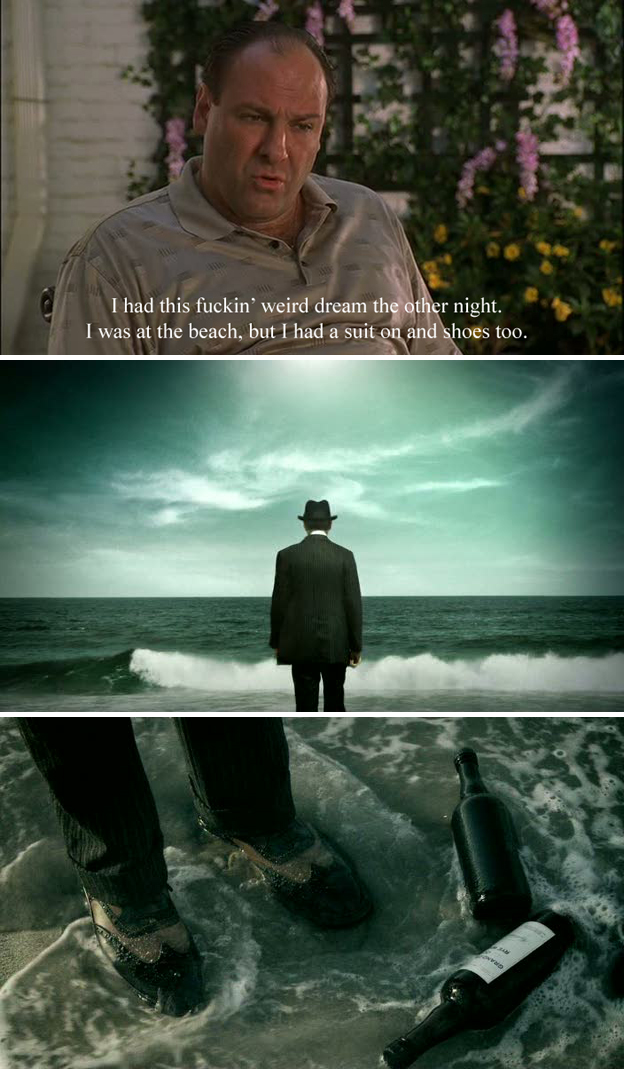
Don’t stop believing. (Via Bohemea.)
Carnival of souls: Game of Thrones, BCGF, more
December 12, 2011* There’s a new teaser trailer for Game of Thrones Season Two. It centers on one of the new characters being introduced this season, which puts me in mind of several other shows that have introduced major new antagonists after their debuts and how they’ve positioned them relative to the preexisting players.
* Related: I’m not sure if I’ve ever mentioned this, but my A Song of Ice and Fire tumblr All Leather Must Be Boiled has a whole lot of ASoIaF/GoT art/fanart on it. Today I posted this grim painting of the Riverlands by Rene Aigner, which says a whole lot about the series.
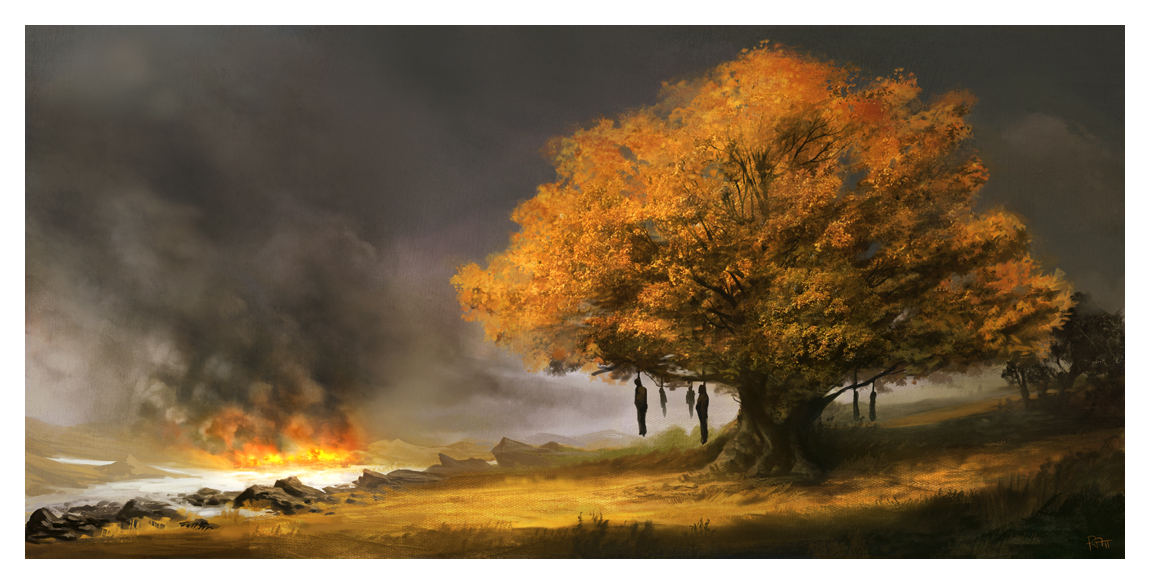
* More BCGF: L. Nichols flips the eff out over the show;
* and PictureBox stocks up on many of its highlights and hidden gems for its online store.
* More Jerusalem preview pages from Guy Delisle. This is shaping up to be a really lovely book.
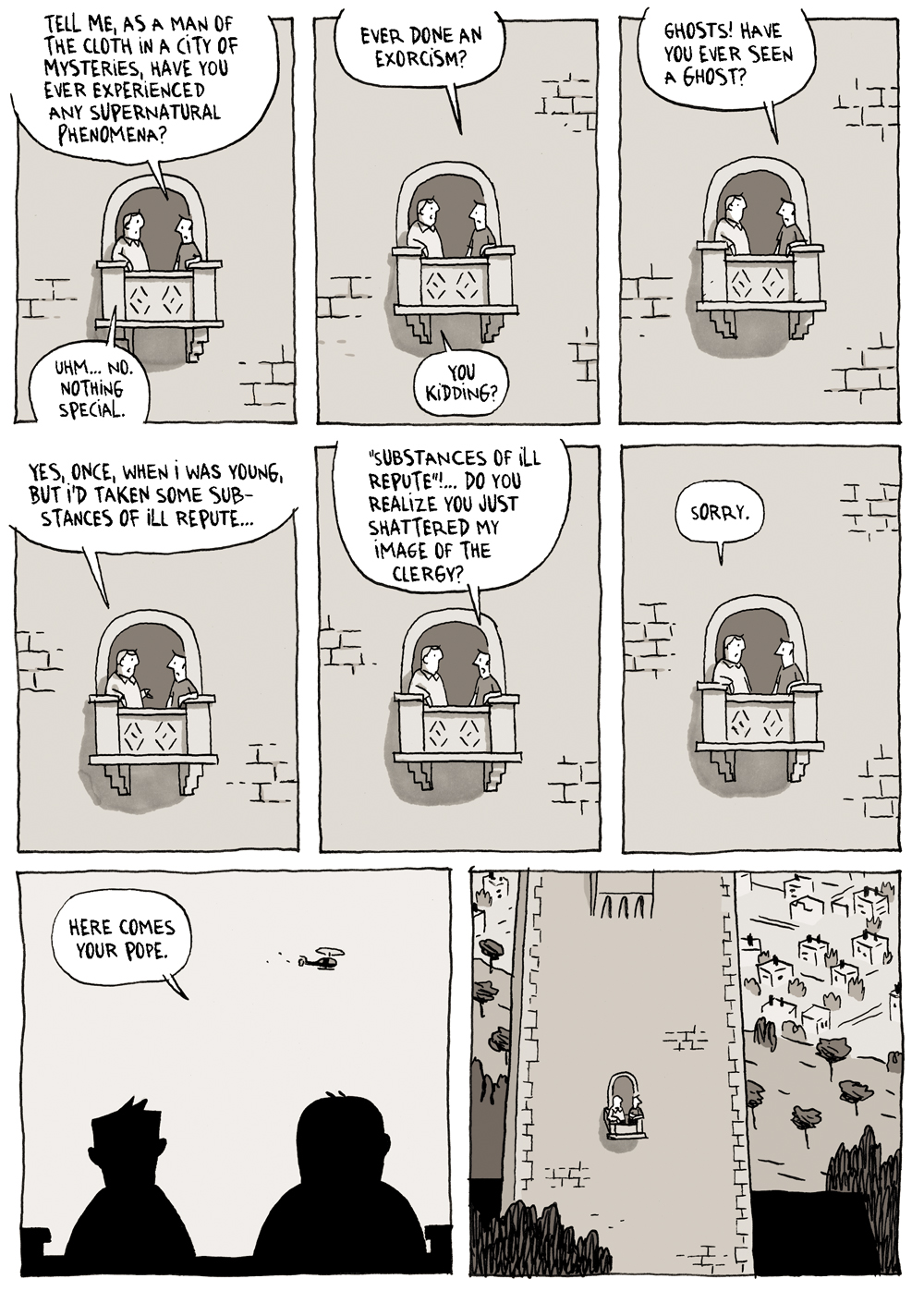
* I don’t think there’s an easy way to link you to all of it, but sniff around Benjamin Marra’s Traditional Comics tumblr for a lot of art from his series of American Psycho tribute booklets.
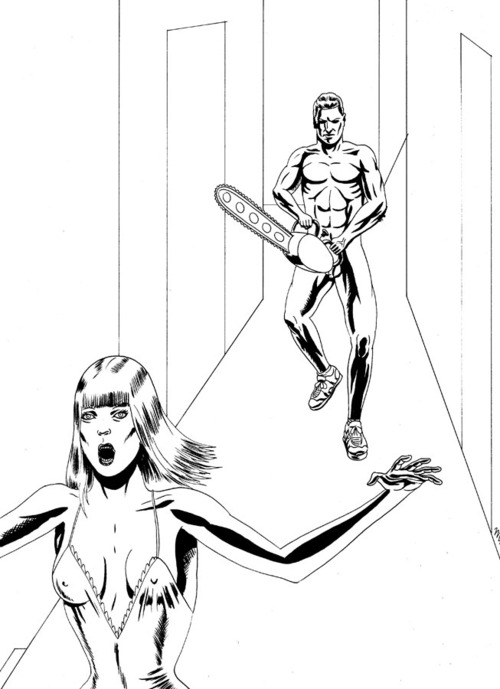
* The Comics Journal presents a look at four prominent alternative-comics retailers by Patrick Rosenkranz. The amount of thought and creativity they put into promoting the comics they sell and attracting the audience that buys them is both inspiring and a little depressing, in terms of how much time and energy you need to invest if you wanna make a go of this sort of thing.
* Entertaining speculation about the evolutionary origins of monsters in the human mind, the idea being that early man’s brain combined features of all the animals it was worried about getting attacked by into creatures like dragons and such, as a kind of shorthand for “LOOK OUT, DANGEROUS ANIMAL!” (Via Andrew Sullivan.)
Carnival of souls: Jerry Robinson, my BCGF con report, more
December 9, 2011* Cartoonist Jerry Robinson has died at age 89. In addition to creating the Joker, co-creating Robin, and basically co-creating what we all picture as “Batman” in terms of the concept’s look and cast, he was a pioneering comics historian and creators’ rights advocate — proof that even those who benefited from the system didn’t have to shy away from trying to better it.
* My BCGC con report can be found at Robot 6. I really like this show — a mainline hit of exactly what I love about comics today — and tried to articulate what sets it apart from comparable cons.
* Secret Acres’ dynamic duo of Barry and Leon always whip up the most well-written con reports, and this time is no exception. I don’t know how they do it. You really get a sense of their whole experience — creative, commercial, cultural, communal.
* Kevin Czap had one heck of a con haul! His brief overview articulates something I’d sort of picked up on myself, which is that Kramers Ergot is now the elder statesman of artcomics anthologies rather than the place you go to find shit you’ve never seen before. It’s interesting how the new volume’s more restrained and refined approach feeds into that vibe.
* And Nick Gazin at Vice has the best of the photo parades. Plus, if you are interested in finding out whether or not he personally finds a given woman cartoonist physically attractive, then boy howdy is it a treasure trove of information. No word on how hot he finds Dan Nadel, pictured below. (Via Jonny Negron.)
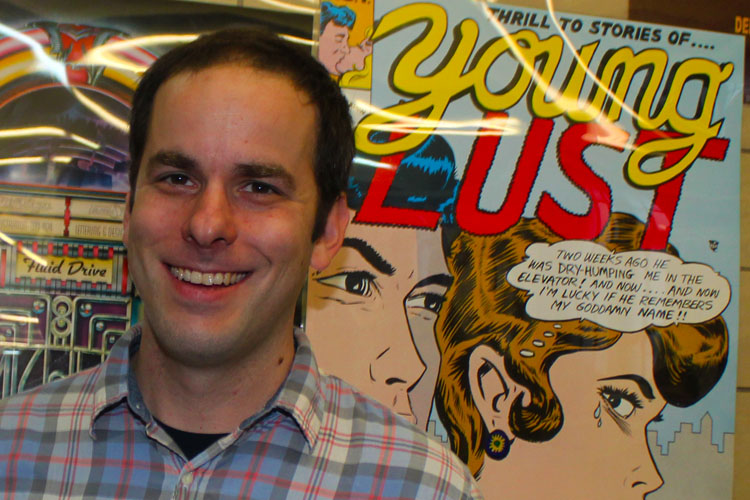
* Big get alert: Drawn and Quarterly is picking up Gilbert Hernandez’s forthcoming semiautobiographical graphic novel Marble Season. This could be a pretty interesting effort — I mean, okay, it’s Beto, so it’ll definitely be a pretty interesting effort. But what I mean is that a) the stuff he does for publishers other than Fantagraphics is usually off-brand for him in ways that demand examination, and b) by the sound of it, it’s an account of his childhood love of comics, which means it probably will eschew the extreme sex and violence of most of his Love and Rockets and Fritzverse work these days, and thus may help the audience appreciate just how good he is lately without those potential impediments if that’s not their thing.
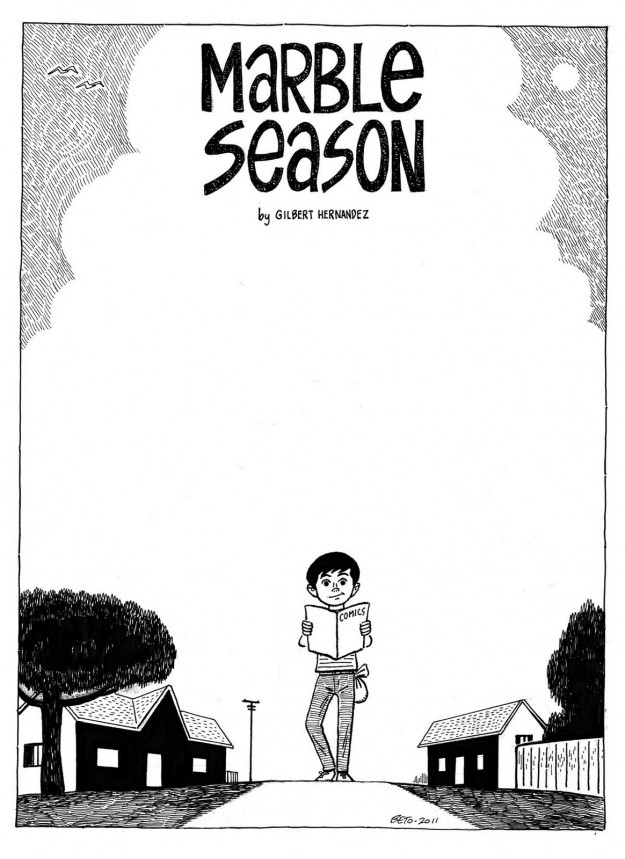
* Holy — The 2011 and 2012 J.R.R. Tolkien Calendars featured Cor Blok?? It’s so refreshing to see artists interpret epic fantasy without working in the hyperreal visual tradition — cf. yesterday’s Danger Country review — and Blok was one of the best at it. The first time I saw his Tolkien art was a true revelation. Look what you could do with this material! (Via Tom Spurgeon.)
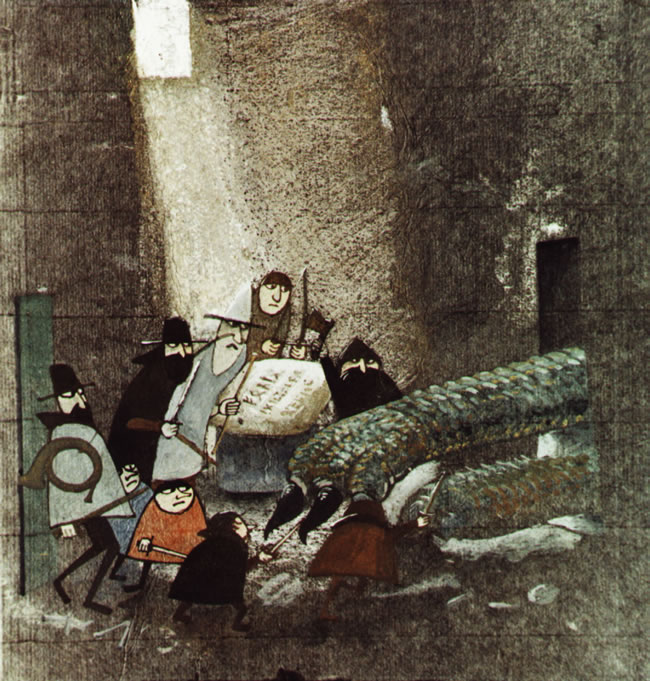
* I love it when Zak Smith/Sabbath just tosses out dozens and dozens of great fantasy storytelling ideas like it ain’t no thing. Today he’s doing it with barbarian cultures. Come for the ideas, stay for the oblique George R.R. Martin diss!
* Here’s a sharp little essay from Matt Seneca on John Romita Sr., “the quintessential Marvel artist.” The other week Tom Spurgeon got some José Luis Garcia-Lopez DC character art going around, so I said something on twitter about how José Luis Garcia-Lopez is to DC what John Romita Sr. is to Marvel, that they’re equivalently definitive artists for their respective publishers’ visual identities. Matt says the same thing in the comments. (Romita trumps Garcia-Lopez in terms of the comics themselves.)
* Whoosh, this Sam Hiti piece is hot stuff. (Via Sam Bosma.)
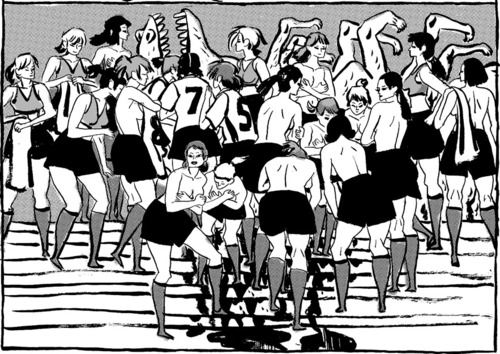
* My favorite band, Underworld, have been named music directors for the opening ceremony at the 2012 Olympics in London. Their longtime collaborator Danny Boyle is the artistic director. And so I’ll be watching some of the Olympics!
* A Goldfrapp singles collection could go a long way to showing just how strong their repertoire is. Most underrated band of the ’00s.

* Kiel Phegley reminds us that this is what Yvonne Craig looked like.

* I feel I’ve been lax in my duty to direct you to my tumblr for photographs of Beyoncé Knowles and David Bowie, Bowie Loves Beyoncé. Perhaps this will remedy that in some way. Some wonderful way.

* Finally, start the weekend off right with an Uno Moralez image/gif gallery.
Comics Time: The End of the Fucking World Part One
December 9, 2011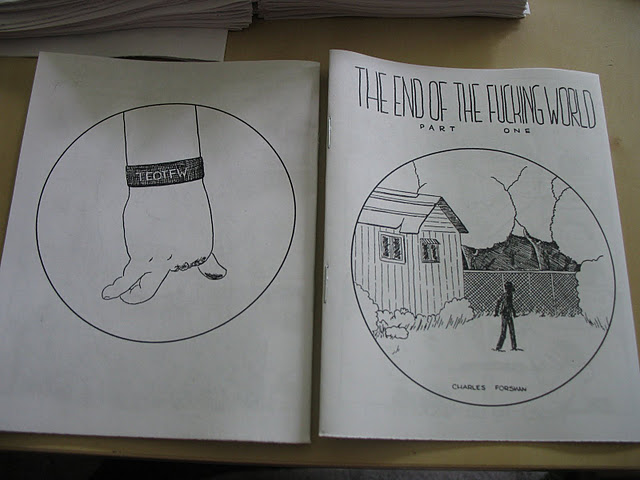
The End of the Fucking World Part One
Chuck Forsman, writer/artist
self-published, December 2011
12 pages
$1
Buy it from Oily Boutique
How’s that for a title? And I’m pleased to say the contents are just as good. Forsman has become a must-read talent for me; each new minicomic shows growth. He’s a cartoonist of great restraint, in terms of both visuals (this is all slight, feathery lines and quiet, flat-affect “acting” from the characters) and pacing (this is all no-nonsense page-long vignettes, with dialogue and captions strategically deployed for a steady beat-beat-beat rhythm). His characters themselves feel considered and lived-in. The lead character here is a believably blasé creep recounting his childhood, marked by killing animals, mutilating himself, and discovering his inability to feel love or have a sense of humor. But thanks to a terrific hesher character design, his evident sociopathy come across not like some heavy-handed depiction of a budding Ted Bundy but like a satire of run-of-the-mill teenage-dirtbag-ism. He’s like Beavis Bateman.
These two potentially opposing views of our hero come together in the story’s centerpiece, the four pages dedicated to his going-through-the-motions relationship as a 16-year-old with his pretty, forward girlfriend Alyssa. It’s easy to see how his aloofness could come across as attractive, and the resulting, detailed depiction of skewed adolescent sexuality is as skeevy and funny and sexy and creepy as they come. He fantasizes about strangling her as she tells him “God, I want you” takes off her shirt; their tongues intertwine like snakes on a caduceus; he presses his face to the convex arc of her stomach as she presses his head down toward her underwear; they have the following amazing exchange as they snuggle on the couch watching TV:
“Have you ever eaten a pussy before?”
“Sure.”
“I want you to eat mine.”
“Right now?”
The awkwardness, the urgency, the sense of discovery, the sense of revulsion — it’s all true, even if you’ve never stuck your own hand in a garbage disposal on purpose or crushed a stray cat with a stone. Where those aspects of the story will take us is something I’m greatly looking forward to seeing in future issues, given where we’ve gone here.
More Breaking Bad thoughts
December 8, 2011I finished the third episode of Season Two today. SPOILER WARNING
* Three episodes into Breaking Bad Season Two and it already feels almost like a different show. A better show, for sure. Tighter, quieter, more serious.
* A whole lotta factors go into that. For starters, this story arc — call it “Travels with Tuco” — isn’t just technically the payoff for the work done in the seven-episode season one, it’s literally the intended culmination of that work. As I found out from my illustrious commenters after I wrote my post, Season One wasn’t that short by design, but due to the writers’ strike. So if I got to the end feeling a bit uncertain about what the show had said, there was a good reason for it: It hadn’t gotten the chance to finish talking. Here, it did.
* The funny thing about that metaphor, though, is that what it said, it said pretty quietly. Each episode began with a wordless interlude of pure sound and vision: a charred pink stuffed animal and its severed eyeball floating in the Whites’ black-and-white pool as approaching sirens wail; Jesse’s bullet-ridden lowrider mindlessly hopping up and down in the middle of nowhere; a worm’s eye view of Jesse and Walter burying a gun, then trudging through the sun-soaked wilderness. The first two openings warn of impending doom (we still haven’t seen how that first glimpse of the future comes to be); the second is two guys stranded with their thoughts and their consciences, just putting one foot in front of the other in hopes that they’ll get somewhere eventually. It all seems pretty apt.
* Each episode also had a goal-oriented plotline. Walter and Jesse needed to survive their meet-up with Tuco now that they’d seen him kill a man. Walter and Jesse needed to escape Tuco’s clutches now that he’d kidnapped them. Walter and Jesse needed to get home and get clear of the law now that they’d been traced to Tuco and potentially involved in the events leading to his death. This didn’t just keep me focused from moment to moment — it kept them focused, which in turn kept Walter from getting too absent-minded professor and Jesse from getting too juggalo. It was a leavening influence on their behavior that I appreciated, besides being a heck of an incentive for me to keep watching.
* There are many examples of this: The tense moments as they stand around with Tuco while his minion takes care of the body; Jesse and his prostitute friend’s interrogations by Hank and Gomez; Walt’s dealings with his doctors; Jesse’s attempt to get Tuco to snort the poisoned meth. But the best example of this? Tio Salamanca and his tell-tale bell. I’m always happy to see that cadaverous-looking assassin guy from Scarface, and this was a wonderfully awful use for him — a way to coax mounting dread out of Walter and Jesse, and mounting anger and frustration out of their captors, be it Tuco at first or Hank and Gomie later on. And again, it shows how good Breaking Bad is at using film’s aural dimension. (I forgot to mention this during my Boardwalk Empire piece yesterday, but I think a big reason why I was so fond of last week’s episode was that it did things with sound that favorably reminded me of BB.) Edge of your seat stuff, often triggered by just the slightest cues: a look in the old man’s eyes as Tuco wheels him to the dinnertable, a disembodied “ding!” and a knock on the interrogation room door from Hank.
* And hey, let’s talk about Hank, too. When he’s broad, he’s very very broad, even now — the jocular racism, the macabre trophy from his big kill. But in these episodes we saw dimensions of him that may not quite compensate for these lapses in character, but at the very least flesh him out so he’s not just some grinning macho buffoon. As we’d previously seen in the intervention scene last season, it’s clear that Hank really does love and care about Walt, and that’s really endearing. He’s not just trying to find him to placate Marie and Skyler, he obviously really likes the guy and wants him to be okay. Just the force of effort it must have taken him to gain Jesse’s mom’s trust rather than bluster her defenses down is proof of that.
* Moreover, this is a guy who’s actually pretty good at his job, and that brings out some of his best and most interesting qualities. He’s dogged, focused, and intuitive in tracking down Walt — he’s able to turn off his bluster in order to win Jesse’s mom’s trust, which surely took some effort, and he’s able to jerry-rig a way to track Jesse down simply from hearing what kind of car he has. When we see him reviewing the break-in at the chemical plant or attempting to piece together the connection between the burglary, the new pure varieties of meth going around, and the deaths of Crazy Eight and Tuco, you can see he’s thoughtful, curious, attentive to detail, able to see the forest for the trees. Whatever his other shortcomings, and whatever the wisdom or morality of the drug war generally, it’s appealing to see him behave in this intelligent, competent, likeable manner. (He’s friendliest with Gomie during these interludes, too. And hey, you figure Gomie puts up with him for some reason despite all his piggishness, which also helps humanize the guy.)
* Ultimately, my main takeaway from this opening arc is that I might have had the wrong idea of what the show is even about. Going in, I really knew only the bare bones, a la “mob boss goes to therapy” or “plane crashes on a mysterious island”: “dying science teacher sells crystal meth to make money.” I assumed that meant that after seeing his initial decision to do this, we’d spend some time with the “new normal”: He’d make meth and sell it and keep it all a secret from his family and friends, and this would be the status quo until the end of the season or so, when something would happen. That’s how these things typically work: the cops and dealers on The Wire, Tony and friends on The Sopranos, the men and women of Sterling Cooper on Mad Men — not to mention the mobsters in GoodFellas and Casino, from whence all these shows can be traced via Scorses’s influence on David Chase — did basically their normal thing for a while, until something sends them off the tracks. But Walter never got on them! From the moment he decides to cook meth, he’s simply careened from one catastrophe to the next. He kills a guy in the first episode! And it’s been a series of cascading disasters ever since. That’s a very, very different way to approach this subject than what I expected — and I feel like in these last few episodes, the enormity of Walter’s situation is stripping down the show’s occasional goofiness quite a bit. When stripping naked in a grocery store and being taken to the hospital for neurological and psychiatric evaluations is your protagonist’s best-case scenario, you really don’t have time to monkey around. The seriousness of purpose really suits the show. I hope it keeps it up.