
Author Archive
Carnival of souls
March 24, 2009* Eve Tushnet reviews the bloody blue bejesus out of Zack Snyder’s Watchmen here and here. (That second link is weird, but it should show you four separate posts on the movie.)
* Speaking of Watchmen, Curt Purcell continues to insist, Linda Richmon-like, that the “logical conclusions” of the superhero genre are neither logical nor conclusions. Discuss. Actually, I agree with Curt that “logical conclusion” is overstating the case a bit, since as he points out with a clever comparison of Dr. Manhattan to the Squadron Supreme’s Hyperion, there are any number of ways “what would superheroes really do?” can be taken. But I think he brushes it all off a bit too completely. Most the the superhero stories we’re discussing are self-contained; they can’t take place in the corporate shared universes that exist, like DC or Marvel’s, because they upset the delicate balancing act required by those universes. For example, Marvel prides itself on being a more “realistic” universe than DC’s, so you can’t have a President Nighthawk and you can’t have Reed Richards phase out fossil fuels by having us fill our tanks with Kirby Krackle instead. DC has a set hierarchy in terms of which superheroes are the biggest deals, so you can’t have a godlike supervillain like Black Adam just walk up to Batman and pull his head off, nor can you have Golden Age Flash be more popular than Wally West even though, as Tom Spurgeon once put it, that would sort of be like Babe Ruth coming out of retirement but people are still more interested in Derek Jeter. What the superhero stories that purport to take the genre to their “logical conclusions” do is take certain ideas inherent to the genre much, much further than the shared-universe structure could ever allow them to do without falling apart at the seams. In that sense they really would be “concluding” stories for those universes as we know them–which is why many of them are literally apocalyptic or Ragnarokian in nature even when removed from those universes. So there’s definitely something more to such stories than simply being “a tour-de-force that takes superheroes remarkably far in a relatively unusual direction”–in many cases, certainly in the better cases, they really would break the average superhero comic if they were attempted in that context. But of course that’s because of the various business considerations and weird historical quirks that led to the creation of the Marvel Universe and the ad hoc assembly of the DC Universe, and thence what was considered by superhero creators and fans to be “normal,” not anything inherent to the genre per se.
* Here are seven clips from Caprica, the upcoming Battlestar Galacitca prequel-pilot-movie. I’m not watchin’ ’em but I hope they’re good.
* Wow, terrible news about shoddy subtitle translations on the DVD version of Let the Right One In. (Via Jason Adams.)
* Finally, here are some pictures of Patti Smith, who is attractive in them.

(via)

(via)
Lick My Love Pump
March 24, 2009To me, “Lick My Love Pump” is the single funniest gag in This Is Spinal Tap, because it’s just so very, very, very, very, very, very stupid. The other night I came across it on the Internet and laughed so hard my stomach muscles got sore and I hurt my throat, and this is after seeing it however many times in the past.
Here’s how to play the song on the piano.
Gossip Girl thoughts
March 24, 2009* This ep was something of a return to form, no? Right down to the old-school Gossip Girl nature of the central shenanigans: Nate being rich, Vanessa being insufferably bohemian, Blair wearing lingerie and wrecking shop, Chuck oozing in and out of Serena’s room while making gross comments, Lily the Former Nine Inch Nails Groupie and Rufus the Human Turtleneck being bad at romance, etc. It felt much more like Gossip Girl than that unfortunate school play/secret sex society tag-team last week.
* And yet I still find I don’t have much to talk about. I mean, we’re not exactly in “series finale of Battlestar Galactica territory here.” God, how funny would that be? Still, “All of this has happened before, and all of it will happen again” is a pretty good mantra for Gossip Girl.
* Once again, with that grifter guy already back off the show after just two episodes, you see how fast GG burns through storylines, particularly ones that involve guest stars. I wonder how long Grandfather and Cousin Trip will last.
* The thing I enjoyed the most about last night’s episode was that Nate’s family estate was filmed at Old Westbury Gardens, a lovely lovely old mansion with enormous and elaborate gardens here on Long Island that the Missus and I visit fairly frequently. She recognized it immediately.
* I also like how Serena slapped Dan for having sex with a teacher in the costume closet during the school play, then immediately thought the whole thing was hilarious, because that’s what I thought!
Carnival of souls
March 23, 2009* My pal Josiah Leighton returns to close-read a few action sequences within an inch of their lives. First up is a Chris Ware action sequence (seriously) from Quimby the Mouse, and also a scene from Jason Pearson’s Body Bags; this is the first time in human history that these two comics have been discussed in tandem. Next up is a Rob Haynes spread from Daredevil. Nobody does what Josiah is doing better than Josiah does it.
* Tom Spurgeon presents the writer Ben Schwartz’s take on Alan Moore’s recent pronouncements regarding comics the art form and comics the industry. it’s gratifying to see somebody else describe those comments as dictionary-definition “ignorant,” and who knows, maybe the way Schwartz tackles it will get people to consider whether Moore’s similar comments regarding Hollywood filmmaking are different not in kind but in degree, rather than taking both trains of thought and just saying “hey, he’s an artist not a critic, and plus I agree, and plus calm down Sean.” Ahem.
* I report this out of a sense of obligation rather than any actual interest, but Sam Raimi says he still wants to do Evil Dead 4 and says he’d drag Bruce Campbell with him. Typically, MTV Movies Blog oversells this by blaring EXCLUSIVE and headlining it “Raimi insists Bruce Campbell and he will be back for a fourth ED film” when Raimin in fact does no such thing. This is annoying, and perhaps actively misleading given how firmly Campbell recently came out against the prospect of doing ED4. Please stop doing stuff like that, MTV Movies Blog.
* Jason Adams highlights some, uh, highlights from the Battlestar Galactica finale. I’ve enjoyed seeing which storylines hit various fans the hardest, and this is no exception.
* When T-shirt blogging and real-life horror blogging collide: Ha’aretz reports on some of the gruesomely violent, even warcrime-endorsing T-shirts being made by members of the Israeli military to commemorate the completion of various training courses. I bet you I could find a lot more stories along these lines on behalf of virtually every nation and political persuasion on Earth, sadly. It seems like a rich vein to tap given how amenable T-shirts are to sloganeering of the most vile variety. (Via Andrew Sullivan.)
* Finally, the second installment in an irregular series: The Best of Bowie Loves Beyoncé!




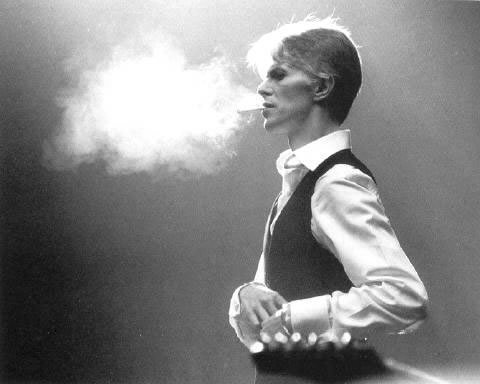

Remember: The prettiest stars are always in your Bowie Loves Beyoncé tumblelog.
Carnival of Battlestar/Vastly less brief Battlestar Galactica thoughts
March 23, 2009SPOILERS FOR THE ENTIRE FRAKKING SERIES AHEAD
* First, this seems like as good a place as any to collect the links to all my Battlestar Galactica posts for this final half-season.
* Episode 4.5.1: Sometimes a Great Notion
* Episode 4.5.2: A Disquiet Follows My Soul
* Episode 4.5.4: Blood on the Scales
* Episode 4.5.7: Someone to Watch Over Me
* Episode 4.5.8: Islanded in a Stream of Stars
* Episode 4.5.9: Daybreak Part 1
* Episode 4.5.10: Daybreak Part 2
* Here’s a link to that promo for Battlestar Galactica: The Plan, the Jane Espenson-written (boo), Edward James Olmos-directed (yay) BSG movie that will air sometime this fall. It’s about what was going on with the Cylons all this time. Amusingly it doesn’t seem to feature Lucy Lawless as D’Anna/Three, which should be funny to see them try to explain. I wonder what it will reveal.
* Unless they work it in during post, apparently it won’t really address Daniel, the mysterious 7th Cylon model whom Ellen revealed to have been destroyed by Cavil: Ron Moore says that was just a throwaway bit of backstory to give Cavil some Cain/Abel mojo, and that he was taken aback to see speculation take off that Daniel was Starbuck’s deadbeat musician father or something. Obviously, if you were counting on getting an explicit resolution to that plot point in the finale, you were disappointed. But even before I read this interview, I just assumed Daniel was, in fact, Starbuck’s dad, making Starbuck, in fact, a hybrid (or “hylon,” in the parlance of our times), and that this was never going to be explicitly confirmed, just like in Revenge of the Sith (in another opera house scene, amusingly) when the Emperor implies that he was responsible for Anakin’s immaculate conception but never comes right out and says it, yet that’s obviously what we’re supposed to take away from it. We’re grown-ups, we can handle that. I still may prefer believing that to not believing it, I dunno. I read a really interesting interview with Harley Peyton, one of the writers for Twin Peaks, along those lines, where he was like (paraphrasing here) “oh, we never had a master plan that led up to that final image, we came up with that sitting in the writers’ room working on the final episode, but by all means concoct a master plan based on what ended up on the screen–that’s the important thing, not what we were or weren’t thinking all along.”
* You can read some post-finale interviews with Ron Moore at SciFi Wire and with the Chicago Tribune’s Maureen Ryan, probably the biggest BSG blogger around. Her interview is just one part of a massive post-finale post including some details about which episodes will be expanded in the DVDs, additional interview snippets with various cast and crew members, and her own thoughts.
* I’ve continued to think about–you might almost say “dwell on”–the finale, and the more I do so the more impressed I get. I don’t think even the Sopranos finale made me feel this way. What’s really sticking in my gut is trying to get there from here, trying to mentally and emotionally link the early episodes where there were terrorist attacks in restaurants and arguments about abortion and rigged elections and such with a finale where the two warring societies essentially give up, disperse, and fade away into history, becoming barely a memory to anyone. Talk about a finale that makes you reevaluate the entire series! It’s just about as gutsy as I’ve seen television get.
* I think this is due to what Malcolm Sheppard says in this thoughtful post (link via Jim Henley):
In the end, both cultures collapse and their bearers don’t resist it. This is a hard pill to swallow because we’ve been acculturated (ha!) to believe there’s a transcendental value in cultural continuity, that a cultural collapse is by nature apocalyptic, and that it won’t happen to us, but none of these things are necessarily true.
In much the same way that Starbuck’s greatest fear was to be forgotten, our greatest fear as a culture is the same thing. We cling to the narrative of human progress that shows a steady build toward knowledge and freedom from the Stone Age to the present day, ignoring any number of separate strains and cultural-evolution cul-de-sacs along the way, even within Western culture (we barely made it out of ancient Christianity’s dark-age deathgrip!). Our great collective horror story is the apocalypse, brought about by any number of factors–nuclear war, biological weapons, disease, climate change, aliens, technology run amok, zombies, you name it–but always with the same result: the story of humanity coming to an abrupt end. We care about the survivors of such stories at least as much for whether or not they survive to continue telling that story as we do for their survival in and of itself. Naturally we saw Battlestar Galactica in that same light, and so did the show’s characters, desperately attempting to perpetuate the social and political institutions that characterized their lives before the fall. For them to say “enough” and willingly fade away…that is a hard, hard pill to ask your audience to swallow, but I’m glad I’ve been respected enough by the creators to be asked to do so. It’s certainly made me re-think things a lot more than a traditional truce or victorious ending would have. This was a truce and a victory in its own unique way.
* And now for some barely coherent musings on “God” and Its role in the finale.
* It’s interesting to see how different people’s expectation for the show’s ending was from what the show had been basically promising to deliver all along, which was a heaping helping of honest-to-gods mysticism. I think you’ll see several different cultural forces converge in terms of people who vocally don’t like “God”‘s direct involvement in the finale in the persons of Head Six, Head Baltar, and Kara:
* First, there’s your basic internet-fandom contingent, which insists that everything must be SERIOUS BUSINESS and have logical explanations that can be “solved” like a puzzle; to the extent that “God” is a supernatural force, it is less serious and less solvable than, say, a science-based explanation like hallucinations or brain implants from the Final Five. These folks appear to have believed that all the god-talk all along was a fake-out, that the show didn’t really mean it. For a lot of them, having the “divine” play a role in the finale, any finale, is automatically a deus ex machina in the pejorative sense–you see that phrase everywhere.
* Second, I believe there’s a goodly chunk of hardcore SF buffs to whom the word “angel” is automatically STUPID in all caps. The Tor.com roundtable on the episode has to be the ne plus ultra of this particular subgenre–the very thought of how the Head characters and Starbucks resurrection were explained seems to have sent them into caps-locked apoplexy. Seriously, you really have to see it. Again, an active role for the divine is an automatic deus ex machina. NB: Please forgive me if I’m mischaracterizing the participants in the Tor roundtable as serious science fiction experts–I really don’t know, I’m just assuming given the site. Maybe they’re like AICN talkbackers, I dunno. Certainly the fact that many of them watched it in a group, screaming at the screen all the while, reminds me more of Internet fandom than people who read Foundation a lot. Also NB: Not all serious SF fans are like that. For example, Jim Henley, for whom speculative fiction is but one of many many topics about which he is much much smarter than I am, liked that aspect of the finale, and by extension the entire series, better than pretty much any others. He also locates it in a rich tradition of SF literature about humanity, divinity, and the spirit.
* Third, there are people who misinterpret a lot of what was actually said and depicted in the finale and base their most vehement criticism on that. For example, there’s a popular notion that the episode was explicitly Luddite, with the Fleet’s survivors reject all technology, not just jettisoning their ships. This was demonstrably untrue.
* Another example: People who felt like the closing montage of increasingly sophisticated humanoid robots here on present-day Earth (well, “Earth”) meant that the whole point of the show was that Ron Moore is warning us against making robots. (I think someone said exactly that in the Tor.com roundtable.) To me, it’s pretty obvious that the robots here were used the same way the Cylons were used all along: as symbolic shorthand for everything the human and Cylon cultures did wrong, not just “technology run amok,” let alone “don’t make androids, they’ll kill you.”
* Another example, and perhaps the most fundamentally mistaken: Over religiosizing/spiritualizing “God” and “the angels” as presented in the finale. To hear some people talk about it, you’d think Jesus of Nazareth entered “All Along the Watchtower” into the nav computer and jumped the ship, or that human and Cylon reached a truce by proclaiming their shared belief that there is no god but Allah and Muhammad is His Prophet. But the “God” posited by Battlestar Galactica is a very, very weird one, far both the Biblical/Koranical God of our understanding and the gods of the Colonials and the One True God of the Cylon Centurions and skinjobs. In his speech in the CIC, Gaius Baltar argues that “God” is “beyond good and evil–we invented those.” Head Baltar later tells Head Six that “God” “doesn’t like that name,” implying that It is something very different than the deities worshipped by Colonials, Cylons, and Earthlings alike–perhaps even another physical species, albeit one so advanced that its doings look like magic to us. Meanwhile, take the behavior of the “angels” themselves. We never saw what Head Baltar and Caprica Six got up to, but Head Six’s primary angelic activity was giving Gaius Baltar handjobs and encouraging him to save his own bacon by getting other people killed (and occasionally saving their lives, but only when it suited her). The two Head characters were both pretty smarmy and sinister, even at the end. And Kara? She was an “angel” who had no idea that she was an angel, and was pretty miserable–borderline crazy–over it. These are not traditional Gabriel or Christ figures by any stretch of the imagination, and it’s both reductive and incorrect to imagine them as such.
* Related: My biggest eureka moment since watching the finale came (unsurprisingly!) when I read the great Todd VanDerWerff’s review of the episode, in which he said this:
Battlestar has always had a weird strain of Gnosticism running through it (particularly in Baltar’s sermons), so the notion of God as a sometimes altruistic and sometimes destructive force that operates independently and can never be fully comprehended by our characters managed to plug into the series mythos fairly well.
I think I literally cheered and smacked my head when I read that. Why? Because one of the hardest parts of the last two half-seasons to swallow was Baltar’s religious…whatever you’d call it. Conversion? Hucksterism? You couldn’t even tell. At times he seemed utterly, even frighteningly sincere, and then next time you saw him he’d be his old scheming cowardly manwhore self. You’d see invisible Head Six feeding him his lines, even physically manipulating his body to get him to rise up after a beating from a Marine in one episode, and then she’d disappear for half a season. But most importantly, you’d get mixed messages in his sermons themselves. The two that really hit home with me were the one from last half-season where he told his followers that God loved them because they were all perfect–a total absolution of responsibility, really some breathtaking theology–and then the one after the discovery of the ruined Earth where he says we’re right to be angry with God, that God in fact owes us an apology. Discovering that God is really “God”–some inscrutable force that isn’t the omnipresent, omniscient, omnipotent, omnibenevolent deity we know, but is instead “beyond good and evil,” “sometimes altruistic and sometimes destructive” as VanDerWerff puts it–squares the circle with all this contradictory information and makes the Cult of Baltar finally make sense.
* The final group of naysayers that I can see at work don’t really have an underlying philosophical or aesthetic program in terms of their objections: They just don’t like all the coincidences and “fate” stuff that added up to create what happened in the finale. Racetrack’s dead hand hitting the button to nuke the Colony…Starbuck using the music to enter the right coordinates…a second Earth…Hera as mitochondrial Eve…Baltar’s speech being enough for sociopathic Cavil to change his mind, and Adama and the rest of the gang buying that change…the Chief/Cally/Tory storyline bubbling up again just in time to destroy the truce and ignite the final confrontation…Starbuck being resurrected to get the fleet to Earth-1 and Earth-2 and then just disappearing…the opera house visions perfectly syncing up to the chase for Hera in the Galactica…it’s all just a bit too much for these folks to swallow. I think I have the least beef with this objection than with any of the other. Battlestar Galactica has never been the most subtle of shows, but up until now its bluntness has generally been in the service of entropy, atrocity, catastrophe, depression, disillusion, failure, things falling apart. All of a sudden you’re required to be okay with everything lining up just so to create…a happy ending?
* Now, don’t get me wrong, I think this is simplifying it too much. The “happy ending” that would have been easiest for the show to do would have been the truce between the Fleet and Cavil’s Cylons actually working out–they get the resurrection technology, we get left alone, everyone goes their separate ways, the end. The show complicated that by having Chief fuck it all up, straight-up murdering Tory for straight-up murdering Cally, who I’m given to understand is one of fandom’s least favorite characters. Then there’s all the complicating details about the role of the divine and the approach to technology that I listed above. Then there’s the fact that the “happy ending” can only be understood as such if you put aside cultural conditioning regarding the importance of cultural continuity. So it really isn’t just a bunch of too-neat, sledgehammer-subtle coincidences forcing us where the show wants us to go.
* In fact, the biggest risk the show takes in the finale is sending us in so different a direction in the first place. The audience of Battlestar Galactica has been trained to expect the worst–and now, in the finale, we’re required to accept the best, however briefly it ends up lasting. In fact I’ve seen many complaints about that alone–that it’s too happy an ending, that it’s like kumbaya or something, that not enough non-“evil” characters die, and so on. I think that’s the toughest thing for many people to swallow: Not only must you accept the coincidences or fate or whatever you call it, but you must accept them on behalf of an ending as emotionally wide-open and optimistic as those vistas of our unspoiled planet. You’re either in the mood to resign yourself to hope, or you’re not. I am.
Comics Time: Ojingogo
March 23, 2009
Ojingogo
Matthew Forsythe, writer/artist
Drawn & Quarterly, September 2008
152 pages
$14.95

Ojingogo reminds me of the immersive, action-intensive creature comics of Fort Thunder alums Brian Ralph and Mat Brinkman released by Highwater Books earlier this decade, books like Cave-In and Teratoid Heights. Heck, you could lump Brian Chippendale’s Maggots in there too if you wanted. Little critter guys wander around meeting other weird critters who grow or shrink or try to eat them in various configurations. There’s some video game logic to it, some children’s book overtones too. It’s a fun template.
But where Matthew Forsythe falls short of the Fort Thunder gang is in creating interpretable, continuous environments in which these adventures take place. Teratoid Heights, for example, was rigorously laid out from panel to panel; no matter how odd the protagonists or how nightmarish or isolated the space in which they moved, you could easily see the continuity from one panel to the next, to the point where he could cut to another character for panels or pages at a time and the second he returned you to the original character you still knew where you were. In Cave-In, Ralph’s sumptuous, textural backgrounds provided a sense that you were moving through a concrete, cohesive space. Maggots‘s frequently blacked-out backgrounds removed that tool from Chippendale’s continuity-of-action arsenal but provided a strange sense of unity all their own, while his intuitive Chutes ‘n’ Ladders layouts literally forced you to increase your concentration on continuity.
Ojingogo offers no such aid. Cuts between characters are frequent and sudden, with little to indicate why we’re switching viewpoints or where we’re switching our viewpoint to. This in turn makes it difficult to string together behavioral causes-and-effects for the characters and what they do. I was frequently at a loss as to why characters who seemed friendly were now fighting or vice versa, or why characters who were together were now separate, and so on. And when you have that much trouble figuring out basic things like the relationships between the protagonists, the creature-feature flights of fancy–growing, shrinking, transforming, etc.–become even more difficult to contextualize. By the end of the book I was just kind of turning the pages and looking at the pictures as much as I was reading the comic. There are certainly pleasures to be had in reading the book that way: Forsythe’s Koreana (is there such a word?) character designs are delightful, his line and use of graytones are pretty much perfect for this kind of comic, he has a real knack for body language (there was one sequence in which a Brinkman-esque giant squatted down to take a look at something that really strcuk me), and there are occasional moments of humor that made me chuckle (like when a pair of characters set up one of those box/stick/string traps to try and capture another creature, but it turns out he’s now like five times as big as they are, and he bounds past them, and as they stand there stunned, the box-trap falls shut on nothing). But with so little in the way of continuity of action or imagery, it’s a lot like reading little vignettes at random–you just couldn’t immerse yourself in it if you wanted to. Maybe this is a function of the book’s original life as a webcomic, but it makes for a frustrating read as a graphic novel, because you know how well it could work.
Seanmix – Cigarettes, Ice Cream, Figurines of the Virgin Mary: A Personal Best of King Crimson
March 21, 2009Emphasis on “personal best” this time, most definitely. This is by no means anything close to an authoritative Crimso mix–it simply contains songs from the four albums I own: In the Court of the Crimson King, which is the debut with the famous album cover everyone’s seen and features Greg Lake on vocals with lyrics by Peter Sinfield; and Larks’ Tongues in Aspic, Starless and Bible Black, and Red, the three 1972-1974 albums featuring several configurations of musicians but all including the core lineup of KC mastermind Robert Fripp on vocals and keyboards, John Wetton on bass and vocals, and Bill Bruford on drums and percussion, with lyricist Richard Palmer-James and violinist David Cross. But while my overall knowledge of King Crimson may run an inch wide, my affection for this material is a mile deep. I listen to the tracks on this mix more than pretty much any other heavy guitar-based music I own. For some reason, when I’m feeling particularly charged up (especially with creative energy), this music is exactly what I want to hear. I think this is a solid (and brief–under an hour!) introduction to what makes the band’s material from this era so dynamic, intelligent, and lacerating.
Cigarettes, Ice Cream, Figurines of the Virgin Mary: A Personal Best of King Crimson
The Great Deceiver / Lament / Red / The Court of the Crimson King (Including The Return of the Fire Witch and The Dance of the Puppets) / Fallen Angel / 21st Century Schizoid Man (Including Mirrors) / Easy Money / Starless
Not newsprint
March 21, 2009Wednesday Comics isn’t going to be on newsprint, I’m told. Attentiondeficitdisorderly Too Flat regrets the error.
Very, very brief Battlestar Galactica thoughts
March 20, 2009SPOILERS
* Well. Well, well, well.
* A while ago I wondered aloud whether the final act of the show would end up having been about what happens to a society when it gives up. Turns out I was right, but not in the way I expected. ‘Tis a consummation devoutly to be wished, I think.
* In general I think the show went with the ballsiest possible “out” for each of its central conundrums. The Colonials’ “Earth” wasn’t our “Earth”! They really were angels! Kara just disappears! The inevitable rapprochement between humans, rebel Cylons, and hardline Cylons is scuttled because of freaking Cally! Hera is only kinda sorta the key to survival, all the visions about the opera house were really just set-up to make sure that a bunch of people saved this kid’s life…but then as it turns out, she’s Eve! Tack on a good old-fashioned thought-provoking science-fiction ending and I’m sound as a pound.
* It was a very, very good decision to spend so much of the end focusing on Gaius, my favorite character and my favorite performance in the series. I found myself wishing a bit that he was given as much close-up time as he was during that episode a few seasons back where Adama tortured him, which was where I really fell in love with him, but what he did with what he had was just lovely. When he said “I know about farming” and cried, that’s when I finally teared up. I love that poor man.
* Other things I liked: Tory getting her comeuppance and the Chief’s lonely denouement in Scotland. Tigh saying if someone had done that to Ellen, he’d have done the same thing Chief did, when of course someone DID do that to Ellen–Tigh himself. (Ellen seemed to notice.) All the climactic battle stuff, particularly the fate of Racetrack and Skulls and the Centurion-on-Centurion violence. The whole cockamamie plan for the attack. Cavil’s last word. Anders’s fate. Apollo finally getting something of weight to do once again: a) guide the human and Cylon civilizations into a new dawn; b) see Kara off. Laura getting laid (HOT). Kara and Lee nearly doing it (also HOT, and also a callback to the fact that those two were never meant to wind up together, godsdammit). Seeing Bulldog (I think???) among the Marines boarding the Cylon Colony. Admiral Hoshi and President Lampkin, no matter how ridiculous that might have been. The fact that the Baltar Army subplot went nowhere except as a headfake. The randomness and camaraderie of the Apollo/Doc Cottle/Baltar/Hoshi/Tigh/Adama scouting party. Giving the last words to Head Six and Head Baltar.
* Unsolved mysteries: What happens to the hardline skinjob Cylons? What happens to the freed Centurions?
* And of course, “You know it doesn’t like that name.”
* Oh, Battlestar Galactica, I will miss you very much.
Carnival of souls: special “the fruit’s at the bottom” edition
March 20, 2009* Here’s that follow-up Grant Morrison interview mentioned yesterday, and here’s what it says about his project with the Charlton characters, the same ones that inspired Watchmen:
I’ve just been doing an Earth Four book, which is the Charlton characters but I’ve decided to write it like ‘Watchmen.’ [laughs] So it’s written backwards and sideways and filled with all kinds of symbolism and because of that it’s taking quite a long time to write.
It sounds like it’s not a standalone book at all, but part of a larger series about the DC Multiverse. And that’s about the extent of what he says about the project–the interview is mostly about Seaguy Vol. 2…of which he says “This is my ‘Watchmen,’ really.” Sometimes I wonder why he doesn’t just build a house in Alan Moore’s backyard and make rude gestures at him over the fence.
* Speaking of which! Morrison’s seemingly abortive stab at the one-time Alan Moore series Wildcats is actually going to come out! This collaboration with creator Jim Lee managed to produce all of one issue before going dormant and basically taking the entire WildStorm Universe down with it; now it’s being prepped as a graphic novel that will be solicited upon completion. It beats having Lee do random covers, that’s for sure; I’ve read the pitch/outline and it sounds like the rest of the series will be a hoot.
* Also at that link there’s some info on DC’s next weekly comic, a 12-issue summer project called Wednesday Comics that will serialize 15 stories by various prominent creators one page per newsprint-broadsheet issue. On the one hand this is a really neat idea, especially since it’s going to contain a Paul Pope comic and that ridonkulously good-looking Kyle Baker Hawkman project, but on the other hand I remember how much I hate newspaper comic books–they’re chintzy and unpleasant to look at and touch. I can’t imagine collecting a book that looks like the Comic Shop News.
* Ed Brubaker is leaving Daredevil with issue #500; Andy Diggle is taking over. This robs the weekly comics reviewers of the world of the opportunity to call the book “solid” or “boring” once a month. (I was definitely on the “solid” side.) Brubaker seems to be paring down his projects somewhat–he obviously left Immortal Iron Fist a while ago and even before that Matt Fraction was really scripting it, he’s leaving Daredevil, and since I haven’t cared for his Uncanny X-Men work I haven’t been following it but I think he handed that book off to Fraction too. But man–Captain America, Daredevil, Immortal Iron Fist, and Criminal? That was a solid line-up, the best since Bendis’s Alias/Powers/Daredevil/Ultimate Spider-Man halcyon days.
* Tim O’Neil keeps on halving the infinite distance between him and a Kingdom Come review. This time around he provides a visual contrast between KC and Marvels‘ Alex Ross visuals what else you could find on the stands at the time, and it’s truly striking.
* In a mind-meld of wildly talented curmudgeons, Tom Spurgeon says he’s tempted to agree with Alan Moore and Eddie Campbell that the comics industry is a lost cause. I think that this stems at least in part from some disagreeable “Where has it gone, the beautiful music of our grandparents?” sentiments on the aesthetic end, and I’ve expounded upon that in the past to pretty much everyone’s chagrin, but Tom mainly focuses on the business end: How corporate executives essentially loot the creative legacies of an army of craftsmen and geniuses and are applauded for it, while striving to maximize short-term profits in a way that may have already sown the seeds of future irrelevancy or insolvency.
Since I returned to comics blogging I’ve tried to steer clear of these kinds of arguments, because I really don’t know what I’m talking about and lack the access and intelligence to learn. As a result, while I occasionally agitate about ethical matters and business matters that pertain directly to ease of access to good comics, it’s really that last point–access to good comics–that is all that matters to me. I tend to believe, for whatever reason, that good comics will continue to come out and I will continue to be able to read them.
However, looking around me right now, I see that we’re probably witnessing the death of the newspaper, and with it two historically prominent forms of comics: the funnies and editorial cartoons. This hasn’t fazed me all that much, because I haven’t read the funnies with any regularity ever, and not even semi-regularity since the end of The Far Side, really the only strip that was even close to “appointment reading” for me. Meanwhile, I actively dislike editorial cartooning as a discipline; I think it inherently dumbs down complex issues into strident preach-to-the-choir imagery in a way that is very bad for overall political intelligence, like Glenn Beck with crosshatching, and I think there have been maybe half a dozen consistent exceptions to that rule in the form’s entire history. But comic books and graphic novels are things I do care about. Now I see that something that once seemed untouchable can in fact be lost, and comic books haven’t seemed untouchable for decades. I don’t want to wake up one day and realize “wow, comics really were a lost cause, and now we’ve lost them.”
* Curt Purcell continues his own series of posts on superhero comics, this one examining the notion that deconstructionist superhero comics like Watchmen and Brat Pack take the genre to its “logical conclusions.” The thing is, I usually understand the use of that term in that context to refer to the in-story ramifications of the existence of superhumans, costumed vigilantes, super-science and the like. How would a group like the Justice League deal with quotidian social and political crises? How would godlike beings and scientific geniuses interact with the military or the automotive industry? So, you get books like Squadron Supreme and The Authority where the heroes just say “fuck it” and take over the world; you get books like Watchmen where Dr. Manhattan singlehandedly creates a viable electric-car industry. The ideas are what’s been taken to their “logical conclusions.” I think where people go wrong–creators and critics alike–is by conflating those conclusions with the idea that the genre itself reaches its “conclusion” with such stories. I believe the idea is that once we see what superheroes would “really” do, we can never go back; in reality, I think most readers made their peace with the idea that superheroes are an impossibility just like vampires or zombie apocalypses or alien invasions, so following the logical ramifications of their existence further down the track than we usually go doesn’t do anything that the standard suspension of disbelief we employ when we read superhero stories can’t undo the next time we want to read a more traditional super-tale. Of course, the big difference between superheroes and other fantastic fiction is that superheroes require a certain suspsension of disbelief not just in terms of what’s physically possible, but in terms of basic human behavior. There’s really nothing preventing someone from becoming Batman, for example, and yet nothing like that has ever happened in the entire course of human history. But generally speaking, that’s not what the books that take superheroes to their “logical conclusions” are usually addressing. Sometimes they take to task the kinds of personality traits that might lead one to wear a mask and assault strangers, but that’s not saying anything we don’t already know about people in positions of authority who use violence as part of their jobs–if you were to directly address the implausibility of the kind of costumed one-man-war-on-crime represented by Batman, you couldn’t actually do the comic.
…and the rest: Lost thoughts extra
March 20, 2009During an email discussion with some friends about the most recent episode of Lost, someone brought up Rose, Bernard, and the rest of the surviving castaways, and how they’ve disappeared, and what happened to them. Some of my friends basically just said “jimmy crack corn and I don’t care.” Others said that their disappearance matters to them, because it ought to matter to the main characters. My pal Kiel Phegley put it like this:
…if Lindelof, Cuse and the rest want me to think that Jack and company are doing something of worth and are worth my support and investment, then I can’t just accept that the only people it’s important for them to save are the ones they’ve either slept with or who have mind powers.
This is really interesting to me.
Back in Season One, as it became apparent that of the 48 castaways we’d only ever be focusing on about a dozen or so, and as it became apparent that there was something really weird about the Island, and as certain characters like Locke argued that they were “meant to be here,” the question of why it was the above-the-credits cast that mattered and not the extras, aka redshirts, first popped into my head. Obviously, the real answer here is “because that’s how TV works,” but what diegetic explanation would the show concoct? The first time this was addressed in-show was with Dr. Arzt, who complained to Hurley or Charlie or whoever it was about the main characters’ “adventure club” or whatever he called it. I was fascinated that characters within the show’s world had realized that some of them were more important than others. At that point, though, we still didn’t really know why this was, or even IF it was actually true.
As the seasons progressed, the show began to reinforce the notion that these characters we’re following were in fact the most important ones, using various plot points to make this argument. They were the characters who had to press the button. They were the character’s on the list given to Michael. They were the characters giving birth to babies, or who had children with special powers. They were the characters on “Jacob’s list.” And so on and so forth. The reason we were following them rather than Scott, Steve, Frogurt and the other randies really WAS because they were more important, or at least seen as being more important by the Others and/or the Island itself.
By the time we’ve reached where we are now, that’s been taken even further. These are the characters who comprise the Oceanic Six. They’re the characters that Ben, Christian, and by extension Jacob INSIST must return to the Island in order to save it. They’re the only characters even CAPABLE of returning to the Island. They’re the characters that traveled through time and are therefore having double the impact on the Island’s history. By comparison, the redshirts mean less and less.
But here’s the thing. As we learn that they really don’t mean anything to the Island, they mean less and less within the world of the show; that is to say they mean less and less to the plot, they mean less and less as plot drivers. And therefore, the creators of the show seem to believe they mean less and less in terms of the audience’s emotional investment in them versus our emotional investment in the main characters, simply given the amount of relative screentime and story importance each group has been given.
However, main characters, and the audience, are NOT the Island. Whatever the redshirts’ lack of importance may be in terms of the Island and what its powers mean for those who try to harness them and for the world at large, we the audience understand on some level that they’re supposed to be actual, full human beings. We may not have seen Kate go swimming with them or Sawyer play golf with them or Jack treat their headaches and splinters and so on, but presumably that happened. Presumably they had campfire singalongs with Charlie, presumably they traded some notes with Hurley about who the hell Desmond and Juliet were, presumably they wondered whether Boone and Shannon were doing it and asked other characters if they thought they had a shot, and so on and so forth. And most importantly, presumably the recent actions of Locke, Jack, and Sawyer were intended to save these anonymous souls along with the main characters–heck, it seems like Sawyer spent three years organizing grid-pattern searches of the Island just to track them down.
Here’s my point: The Island is a harsh mistress and doesn’t care about any of that. It seems as though the show is training us not to care about it all that much either. But sometimes we can’t help but do so, and when that happens, it becomes weird to realize that the main characters apparently don’t. They’re supposed to be full human beings too.
Comics Time: Cold Heat #2 & 4
March 20, 2009

Cold Heat #2 & 4
BJ and Frank Santoro, writers/artists
PictureBox, Inc., 2006/2007
24 pages each
$5 each
Read it for free at ColdHeatComics.com
Originally written I don’t remember when for WizardUniverse.com’s Thursday Morning Quarterback feature
COLD HEAT #2
The deliberately crude art style of this indier-than-indie miniseries will no doubt turn many readers of Big Two comics off. That’s a damn shame, because BJ and Santoro have created a unique and addictive hybrid of thrilling sci-fi murder mystery and drugged-up punk-rock coming-of-age tale. Continuing the story of a high school girl named Castle who’s reeling from the death of the lead singer of her favorite band and from getting dumped and fired simultaneously by the CEO of the company she was interning at, this issue introduces the man who’ll doubtlessly be the series’ big bad: Senator Wastmor. In his crazed search for the ‘killer’ of his dirtbag son—i.e. whoever provided him the drugs he O.D.’d on, at a party where Castle was the last person to see him alive—he’s the perfect portrait of the power-crazed politician: He mouths platitudes about how ‘the war on illegal drugs and underage drinking is now at its own D-Day’ on TV, while spewing obscenities and violent threats against the kids of Castle’s hometown when the camera’s off. Meanwhile, the pink-and-blue art nails the feeling of being really, really messed up as Castle takes way too many pills and gets embroiled ever deeper in the strange events befalling her town. If you can put aside your preconceptions and track down this comic, you’re in for a treat.
COLD HEAT #4
Like a 6-year-old trying to describe the awesomeness of Space Mountain at Disney World, this indie tale of sex, drugs, rock, conspiracies and alien abductions draws its strength from the contrast between the epic nature of its subject matter and the childlike way it’s presented. With its simple pink and blue color scheme and deliberately lo-fi linework, this issue’s revelation of presumed-dead rock singer Joel Cannon’s ‘2001’-style contact with extraterrestrial beings has a purity that makes up for its lack of detail, making its mystical vistas as powerful as those of any mainstream artist.
Carnival of souls
March 19, 2009* There isn’t much in this rather sycophantic Wired.com interview with Grant Morrison you haven’t heard the writer say before, but good gravy, take a look at the cover for the collected edition of Final Crisis by J.G. Jones.

* Actually, he does say one thing that strikes me as being some serious horror blogosphere-bait:
Wired.com: Like continuity, is crisis itself becoming obsolete? Disaster scenarios seem to just get heavier and more mind-blowing, but they also are becoming more ubiquitous. Are we too inured to apocalypse and crisis these days to be scared of it anymore?
Morrison: I don’t know if we’re so much inured to apocalypse as almost sexually obsessed by it. We could only love apocalypse more if it had 4 liters of silicone in each tit. Think of all those videogames where the Earth’s overrun by insect-aliens or there’s been an atomic war and we’re stumbling in the ruins with a gun we stole from a zombie. We should be grateful that we live in a culture so insulated from true horror it can afford to play with fear as entertainment.
That’s a rather egregious misreading of the role and provenance of horror art and entertainment, no?
* Meanwhile, the pullquote from Morrison’s interview at Comic Book Resources isn’t from Morrison himself, but from the “tune in next time” text at the bottom:
Check back with CBR News on Friday for a new interview with Grant Morrison, where he discusses “Seaguy: The Slaves of Mickey Eye,” and some other projects he’s currently writing for DC Comics including one book about the Multiverse and a second in the vein of “Watchmen” featuring the heroes of Earth-Four, who are all former Charlton Comics characters.
Emphasis mine. The war of No-Beard against All-Beard continues!
* Speaking of Alan Moore, read this conversation between Carl Wilson and Peli Grietzer about Gossip Girl. (Seriously, it has something to do with Alan Moore, I promise. The thesis they tease out is that much of the “trash culture” you see enthusiastically consumed by, oh I don’t know, ex-Ivy League pop-culture bloggers–from Gossip Girl to Britney Spears’ recent albums–is actually produced with precisely that audience in mind, often by creators who come from that demographic themselves. Given my ambivalent feelings toward “poptimism,” this quote from Grietzer stuck me:
i guess my general thought here is that so much of what’s taken to be literati\hipsters\whatever breaking beyond taste-barriers [some but not all of what ‘poptism’ delineates] is more about a certain generation taking over the production of popular culture and catering to its own tastes rather than a generation shifting its tastes towards ‘the people’.
…as did this from Wilson:
There’s research on the reasons for the “omnivorism” shift among elite consumers, some of which credit it to globalization and multiculturalism – that in the post-industrial economic order, it’s more important to demonstrate your code-switching skills, and not to seem married to a single set of cultural markers.
I resemble that remark! This is part of why I was so taken aback by Alan Moore’s dismissive comments about Hollywood filmmaking, superhero comics, and the like–the bulk of my cultural consumption and conversation takes place in a space where the more voracious a polyglot you are, and the lower your barriers to low culture, the better. (Via Matthew Perpetua.)
* And speaking of Gossip Girl, I have my problems with Terry Richardson, but this is not one of them.

* Tim O’Neil continues slouching toward a Kingdom Come review, this time by pinpointing the rise of Alex Ross as the moment where DC in particular began drinking the “heroes as icons” Kool-Aid. I think you continue to see that play out everywhere from Kurt Busiek’s approach to the Batman/Superman/Wonder Woman trifecta in Trinity to the company-wise fixation on “legacy heroes.”
* This new Vertigo series Sweet Tooth from Jeff Lemire seems interesting. It doesn’t like like An HBO Original Series at all.

* Hey, here’s what Marc Bell looks like these days: A psychotic drifter! And Chris Oliveros looks like Gary Groth’s cousin as always.

* What is wrong with people? Something is very wrong with people.

* Finally,
Lost thoughts
March 19, 2009SPOILER ALERT – SORRY I FORGOT TO ADD IT LAST WEEK BUT I IMAGINE YOU ALL KNOW THE DRILL AT THIS POINT
* Another delightful episode. It literally filled me with delight. I can’t remember exactly when–I think it was when Sawyer told Jack, Kate, and Hurley “It’s 1977”–but at one point I just leaned back and laughed, I was having such a swell time.
* With that in mind, I wish the episode were twice as long as it was. As it stood, it was an unusual episode in that there were no big revelations or dramatic reversals or other big moments. It was more a series of necessary conversations and events to bring various characters up to speed and establish a new status quo among the various groups. What happens to Jack/Kate/Hurley? What happened to Sayid? How did the Ajira plane land? Where did Frank and Sun go? How did Ben get injured? How do Sawyer and Juliet react to the return of their previous love interests? How does Jin find out about Sun’s return, and what does he do about it? How does Miles handle it? Now we know the answers to all those questions and we can move on from there.
* The episode also threw in a bonus answer or semi-answer here and there for questions we weren’t expecting the answers to just yet. For example, we learn that Horace and Amy’s baby is everyone’s favorite doctor-slash-killing-machine, Ethan. This led to maybe one of the greatest moments in the history of the show, where Juliet finds this out and her “aww wook at the widdle baby” facial expression curdles as though she just realized she’s holding the world’s most adorable giant maggot.
* We also get some more hints as to the origin of the uber-important Pearl station, as the long-rumored Radzinsky (who made the blacklight map on the blast door in the Pearl hatch) appears and is revealed as a bit of a paranoid who is apparently responsible for designing the Pearl in the first place.
* And we also discover that Young Ben Linus is in fact roaming around Dharma Village during Sawyer, Juliet, Miles, and Daniel’s back-in-time sojourn there–though that then raises the question of how the time-displaced characters have been handling that bit of awkwardness.
* And oh yeah, where’s Daniel at?
* This episode also deftly managed multiple tonal shifts. You had the light ’70s-spoof comedy that happens any time we go back to the Dharma days. You had the interpersonal drama of Our Heroes and Heroines meeting up once again. You had the Season Two/Three capture-and-interrogation throwback storyline with Sayid and Jin. You had the Season One throwback storyline with the new castaways in the present day (one assumes). You had Frank’s pulse-pounding and heroic Sully Sullenberger moment. You had some really creepy moments in abandoned New Otherton with Jack’s ghostly dad. You had Scheming Sun, which gave me another favorite moment–Sun braining Ben with a paddle in a long-overdue act of comeuppance. (I always love it when Ben gets caught with his pants down.) This show can do a lot of things well.
* As far as false notes go, the only one that stuck out to me was Sawyer’s sudden upbraiding of Jack during their brief conversation at the Sawyer/Juliet residence that night. I know Jack is overbearing (to say the least!), and I know his comment about reading a book was out of line, and I know that the two have a history of pissing contests, but a) we’ve just established that Sawyer is a much more mature and content guy, and seeing him revert to form so quickly felt wrong; b) poor Jack just went from pill-popping, banned-from-the-hospital mess to desperate rescue-mission organizer to time-traveling Dharma janitor in the space of a few days–cut him some slack, James!
* As far as I’m concerned, the Castaways straight-up murdered that co-pilot. They all got on the plane knowing what could happen, and his blood is on their hands. I hope the show directly addresses how many people have died so that these clowns could have their little adventures, and does so in a way where there are actual emotional consequences for that, rather than a lecture from a bad-guy character that can be quickly shaken off and forgotten.
* I hope we don’t see a whole lot of “John Connor sending his own father back in time to conceive him”-style time travel paradoxes, but after reading Todd VanDerWerff’s excellent-as-always review/recap, I wonder if Ben and the Others were building that runway in Season Three specifically so Frank could land on it in the future.
Comics Time: Cold Heat #1
March 18, 2009
Cold Heat #1
BJ and Frank Santoro, writers/artists
PictureBox, Inc., 2006
24 pages
$5
Read it for free at ColdHeatComics.com
Originally written on November 22, 2006 for publication in The Comics Journal
Cold Heat is a terrific comic for people who don’t think of their adolescence as having been particularly adolescent. That is to say, the prevailing approach toward reminiscing about one’s teenage years seems to be one of cringing embarrassment–no, actually, more one of condescension: “Ugh, what a little idiot I was then, I can’t believe I listened to Stone Temple Pilots,” etc. Writer-artists BJ (aka Ben Jones, he of those dog comics) and Frank Santoro say “fuck that noise” and instead choose to emphasize the rapturous beauty that adolescence’s grandiose melodrama and edge-of-disaster emotion constantly infuses into everyday life, particularly where music and romance are concerned. In doing so they craft a comic that is impossible not to compare to both arenas. Cold Heat‘s wispy, barely-there linework, the visual leitmotif of swirling and the rock-centric storyline–the events of the first issue revolve around our heroine Castle’s reaction to the fatal overdose of Joel Cannon, beloved lead singer of the noise band Chocolate Gun–don’t so much suggest as demand references to the blindingly happysad guitar maelstroms of Sonic Youth, My Bloody Valentine and M83. Moreover, readers of a certain age will no doubt remember the whirlwind of emotion they were caught up in upon the death of Kurt Cobain, the likely inspiration here. I still remember storming away from the dinner table when my dad dared to agree with Andy Rooney’s “good riddance” assessment of Kurt’s passing; Cold Heat is a little like remembering that incident in comic book form. But the romance angle is important too. The book starts out with an almost anti-romantic vignette–Castle is callously informed by the CEO of the company at which she is an intern that the outfit has gone belly-up after just having had sex with him. “I forgot my CD player there,” she realizes after she leaves–one more regret. But soon the wide-eyed, upturned-face beauty of Jones and Santoro’s portraiture of Castle takes hold, suggesting a lo-fi–or more accurately, doodled-during-math-class–approximation of romance-era John Romita Sr. The simplistic pink, white and blue color scheme adds to the “just hadda get it down on paper before study hall ended” feel so effectively that you might not notice the subtlety with which a sort of crayon shading is used to evoke smoke-filled, drug-addled parties and the lonely, scary darkness of suburban nightfall. And the hints of craziness–a murder mystery, a potential World War III, a minotaur carrying a severed head–somehow combine to evoke teenagedom much more accurately than a strict slice-of-life comic would. Add in the slick cover stock, a letters page (called “Heat Waves!”), a letter from editor Dan Nadel that reads like liner notes from that old Temple of the Dog CD you’ve been meaning to rip to your iTunes and a short prose story by Timothy Hodler about falling in love with the office superhero fan, and you’ve got a comic that feels like a cable from a world where the only thing that exists is a dimly lit bedroom in which you’re wearing ripped jeans and you just keep listening to and rewinding “Teen Age Riot” over and over again. Outstanding.
Carnival of souls
March 17, 2009* Boody Rogers’ Boody., Ivan Brunetti’s Ho!, the Greg Sadowski-edited Supermen!–that’s an impressive, and oddly punctuation-heavy, assortment of books now out from Fantagraphics.
* Real-world water monster update: Meet Predator X, a 50-foot prehistoric sea monster with four times the biting power of Tyrannosaurus rex–the most powerful jaws of any animal in the history of the planet.

* Curt Purcell ponders cultists vs. critics, liking something vs. “getting” something, and other issues of fandom and buffdom and whatnot. I think this is the key paragraph:
The basis for this difference of experience comes down to different patterns of directing attention. Attention–both what it’s focused on and what is filtered out of it–makes all the difference. Where I, a fan, see a werewolf in a Paul Naschy movie, non-fans see a bad actor in bad makeup. Well, he is a bad actor in bad makeup, and I’m not surprised that’s where most people’s attention comes to focus. If I see him as a werewolf in these movies, it’s not because I think he’s a great actor in amazing makeup. And I haven’t adopted some weird critical standard whereby I pay the same attention as non-fans to his bad acting and cheap makeup, and declare it awesome anyway. What I do is focus my attention much more intensely than most on the werewolf he’s trying to depict, and filter out or disregard as much as I can of anything that would compromise or spoil that experience.
To what extent do you offer a work you like the benefit of the doubt? To what extent does offering it the benefit of the doubt determine whether or not you like it to begin with? That seems to be the chicken-and-egg question with which Curt and his interlocutor here, CRwM, appear to be grappling.
* This brief review of Watchmen by Not Coming to a Theater Near You’s Eva Holland, a total Watchmen virgin, is for some reason my favorite entry in that particular Watchmen review subgenre, for its brevity and its lack of concern with finding the “correct” opinion w/r/t the book or the movie.
* Troubling image of the day #1: A still from a film adaptation of Paul Hornschemeier’s Return of the Elephant, god help us.

* Troubling image of the day #2: Renee French, ladies and gentlemen.

* Delightful image of the day #1: Olga Kurylenko in Neil Marshall’s upcoming Picts. vs. Romans epic Centurion. (Via Jason Adams.)

* Delightful image of the day #2: Kate Winslet, ladies and gentlemen.

Gossip Girl thoughts
March 17, 2009SPOILER WARNING–DON’T LET ME RUIN THE SHOW’S ELABORATE MYTHOLOGY FOR YOU
* Weaksauce. That episode felt like a contest to see which storyline could be the most boring.
* First of all, you return from this ungodly long hiatus, and your first episode back is the school play episode? Besides feeling ridiculous in that every character is required to perform in the school play, I just sort of liked it better when they did Hair on Head of the Class.
* Age of Innocence, yes, we get it.
* I don’t care if the pretentious artsy-fartsy director character was intended as the show’s self-parody of the pretentious artsy-fartsy visual artist from earlier in the season, he was still intolerable. During that conversation at lunch I actually had a Dr. Cox from Scrubs moment where I burst out yelling “OH MY GOD, THIS IS THE MOST BORING SCENE IN THE HISTORY OF RECORDED MEDIA.” The Missus turned to me and said, “Oh, I haven’t even been paying attention. Too long; didn’t read.”
* Also, you could see the stupid drama critic misinterpreting the crash-and-burning of the show, and the annoying director guy claiming it was deliberate, a MILE away.
* I did kind of like the nervous lesbian stage manager, though.
* When it finally cut over to Chuck I said “Meanwhile, on a better show…” but I’d forgotten that he was in the middle of a student production of his own, Eyes Wide Shut Jr., which ended as randomly and pointlessly and unimaginatively as it began.
* Was it me or did they keep on implying Dorota was leaking to Gossip Girl? Was that just a red herring? They seemed to resolve all that stuff by pinning it on Rachel. (I still think Dorota IS Gossip Girl.)
* Speaking of Rachel, the one bright spot in the show was the hotness of the Hot for Teacher storyline. Something about the girl they cast in that role is really realistically adorable, which makes it even hotter. I totally called “they’re gonna do it in the costume closet,” btw. Of course they then had to go and write her out of the show, when they easily could have begun a Blair/Rachel romance, goddamn them.
* Seeing the teaser for next week’s episode, I’m starting to wonder whether the show’s rapid cycling and recycling through all the possible main-cast pairings is actually the major structural problem we’ve all kind of joked that it might be. The more you mix and match Dan, Serena, Chuck, Blair, Nate, and Vanessa, and sometimes Jenny, the less rewarding it gets. (Unless you did something nutso like Chuck/Serena or Dan/Blair, which I would support fully and which I assume we’ll get to eventually.) Meanwhile, the show’s attempts to bring aboard outside love interests have been three-eps-and-done affairs from the get-go, whether lame (that horrible artist guy) or kinda awesome (Madchen Amick, Hot for Teacher). The outsiders can’t bring the weight that the main cast does, but the main cast can’t sustain the novelty that the outsiders bring, and around and around we go.
Carnival of souls
March 16, 2009* Your first must-read of the day: Tom Spurgeon presents the best comics of 2008. It’s interesting to see how much emphasis Tom places on the importance of weighing works qualitatively against one another as a goal of criticism–I suppose that goes without saying when it comes to a year-end ranking, but even in that case, I tend not to place so much importance on qualitative distinctions myself. And again, it makes me wish I’d read as much about Acme Novelty Library #19 as I have about Final Crisis (which I liked!). Tom also takes his fellow critics to task for their lack of engagement with books like What It Is and Kramers Ergot 7, a bit unfairly if I recall correctly, but hey, it takes different strokes to move the world.
* Your second must-read of the day: At MCAD’s “MOMEntum” exhibition, the great Eric Reynolds of Fantagraphics holds forth on the evolution of alternative comics from comic book to graphic novel, and what that means for young cartoonists like those in the audience. (As a side note, it always does my heart good to see Jordan Crane’s NON given credit alongside Sammy Harkham’s Kramers Ergot. Had more people been able to see it, I don’t doubt NON #5 could have had the impact of Kramers Ergot 4–it certainly did on me.) (Via Dirk Deppey.)
* Speaking of Kramers, Dick Hyacinth reviews Kramers Ergot 7 practically story-by-story. I think my favorite thing about the review is the way his photos of the scanner-busting pages make everything look big enough to be hung on gallery walls. Elsewhere, Dick does the world the public service of creating an actual working Kramers Ergot 7 table of contents.
* Sopranos creator David Chase’s next project will be called A Ribbon of Dreams. It’s an HBO miniseries with a sweeping story about the rise and presumably fall of two producers from the dawn of Hollywood to the present day. Sold.
* Todd VanDerWerff all but takes a mulligan on critically evaluating the penultimate episode of Battlestar Galactica until he sees its concluding episode this week. Which, wow, that’s going to take some getting used to. Anyway, he tentatively likes what he saw this week, as did I. He also takes the time to unpack why Baltar’s cult/conversion storyline has been so frustrating, perhaps my biggest pet peeve of the show’s final two half-seasons.
* In the latest installment of his continuing, awesome series of posts on ’90s superhero comics, What Ifs?, and other extraordinarily geeky topics, Tim O’Neil explains the difference between the “alternate worlds” of What If? and the “analogue worlds” of Elseworlds. Some of you just shrugged your shoulders, and some of you aren’t even reading this sentence because you’ve already clicked over. He also continues to promise a review of Kingdom Come, which I’m looking forward to because I like that book.
* Speaking of Watchmen, will the film’s relative failure adversely affect the prospects for more full-frontal male nudity in Hollywood films? Given the really egregious and unnecessary Penis Panic that gripped critics both mainstream and geek-centric, to say nothing of modern geek culture’s bizarre, bullying hypermasculinity, my guess is that the answer is yes. What a country. (Hat tip: Matthew Perpetua.)
* “Tom Neely sure can draw” update: Tom Neely sure can draw.

* The last gasp of torture porn? Jason Adams gives pretty high marks to the remake of The Last House on the Left.
* Speaking of torture porn: Take some time, if you’re not some phony 24 tough guy and you don’t mind having your soul kicked repeatedly in its kidneys for a while, to read the International Committee for the Red Cross’s report on torture at America’s network of terror-war prison sites. It’s the involvement of doctors whose job it was to ensure that everyone was tortured just enough to not die (they weren’t always successful) that will be haunting me to my grave. And of course, the repulsive likes of Khalid Sheikh Mohammed and Abu Zubaydah–real-life horror stories themselves–never deserved the emotional martyrdom that their treatment now forces us to grant them.
* Meanwhile, Glenn Greenwald wonders if the Obama Administration isn’t the new boss, same as the old boss in several important respects. Faith in good intentions, as we’ve learned (as I’ve certainly learned), is just not enough.
Comics Time: The Last Lonely Saturday
March 16, 2009
The Last Lonely Saturday
Jordan Crane, writer/artist
Red Ink, 2000
80 pages
$8, softcover or hardcover (!)

For today’s Comics Time review, please visit The Savage Critic(s).