Author Archive

Carnival of souls

October 1, 2009

* My guest in the Strange Tales Spotlight today is Jim Rugg.

* For those of you keeping score at home, I think I’ll be ponying up three more SPX posts: A Carnival of SPX link post (hurry the fuck up Jog, I’m on a deadline here), a “here’s what I got” post (which, honestly, are the most important posts, because they’re about comics!), and probably, because I’m a glutton for punishment, a transcription of the Critics’ Roundtable panel.

* This seems like news a lot of you can use: Sammy Harkham is facilitating the sale of original art from Bart Simpson’s Treehouse of Horror. Make him an offer, Simpnerds!

* “Is this a musical table?”: They can nominate him for all the Oscars in the world, but to me, Richard Jenkins will always be Agent Paul Harmon, Bureau of Tobacco, Tobacco, and Tobacco, from David O. Russell’s Flirting with Disaster–one of my all-time favorite comedies, and one of my all-time favorite comedic performances. Lebowski-level shit, dude. Anyway he’s going to be in Cloverfield director Matt Reeves’s egregiously titled remake of Let the Right One In, Let Me In. So I’m interested.

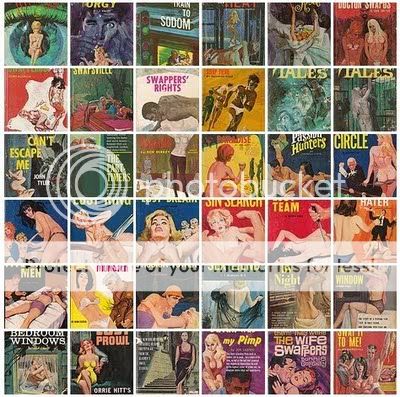
* Yeah, you’re gonna wanna peruse Curt Purcell’s gorgeously sleazy Flickr gallery of vintage paperback covers. Trash! Go pick it up!

* Holy shit, Nine Inch Nails’ Broken movie is on YouTube? Um, how is that possible? Trent Reznor was torture porning when torture porning wasn’t cool.

* Paul Pope adapts Dune, Wednesday Comics-style. Lovern Kindzierski’s colors kill.

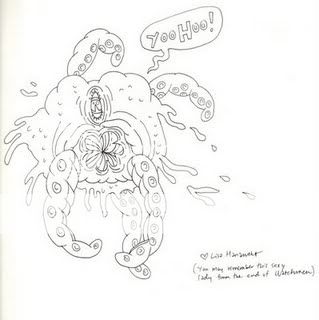
* You should check Renee French’s blog every day, because every day she posts things like this:

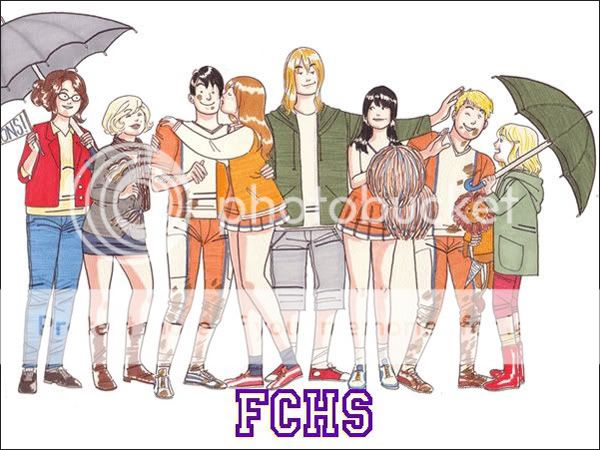
* My friends at The Cool Kids Table celebrate their one-year blogiversary once again with a cover gallery of comics they loved over the past 365 days.

* Ceri B. kicks off a month of daily horrorblogging with a post on a killer paragraph from Edgar Allan Poe’s “The Masque of the Red Death.”

* Real-Life Horror: Meet Fouad al-Rabiah, the innocent man we knowingly tortured for the express purpose of extracting false confessions. (Via Andrew Sullivan.)

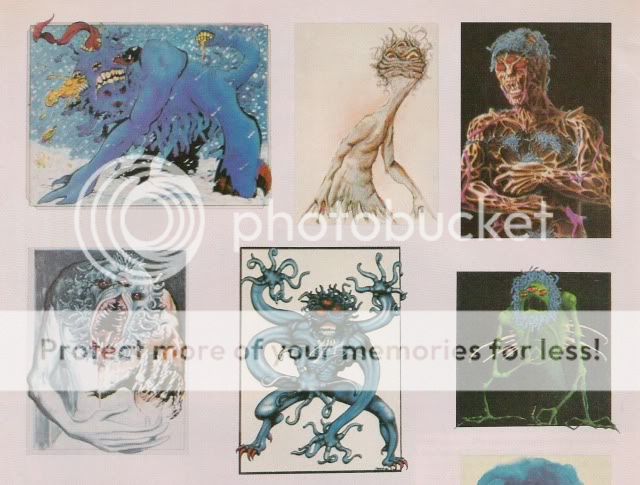
* Do I ever just stop and say what an amazing, consistent blogger Aeron Alfrey of Monster Brains is? Eye-popping images day after day after day. Today’s gallery is the latest in a series of posts on monstrous video game art. God how I loved Karnov and Rygar! You really, really need to stick Monster Brains in your RSS reader.

SPX 2009: The New Action

October 1, 2009

Below is a transcription of the panel I hosted on the new wave of alternative-genre comics, featuring Frank Santoro, Benjamin Marra, Kazimir Strzepek, and Shawn Cheng. You can listen along by downloading an mp3 recording of the panel here.

—–

Sean T. Collins: Well, welcome everybody. Thanks–I appreciate your patience for our late start here. My name is Sean T. Collins. I have a blog called Attentiondeficitly–bleh, even I can’t pronounce it–Attentiondisorderly Too Flat at AllTooFlat.com. I also cover comics for Maxim and I’ve written for The Comics Journal, Wizard, The Comics Reporter, Robot 6, and The Savage Critic. This panel is about “The New Action,” and this is our New Action Pack, as I’ve taken to calling them. [Laughter] Here on my left:Frank Santoro is the–

Frank Santoro: [begins clapping] They’ll never know on the tape. [Laughter]

[audience applause]

Sean: He’s the author of Storeyville, Chimera, and Incanto. In terms of the relevant comic here, he’s the coauthor with Ben Jones of Cold Heat, and the coauthor with a murderer’s row of talented young cartoonists of the Cold Heat Special series.

To his left is Benjamin Marra. [audience applause] Ben is the author of Night Businessand Gangsta Rap Posse, which are all on sale for a whopping $5 total upstairs, so I definitely recommend that when this panel is over, you go to his table and purchase them.

Kaz, I’m not even gonna try with your last name…

Kazimir Strzepek: “Strepek.” The “z” is silent.

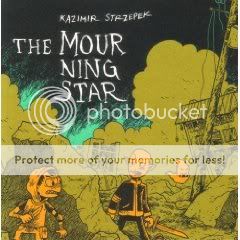
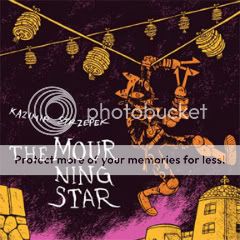
Sean: Oh, that’s easy! Oh wow, how about that! Kazimir Strzepek. [audience applause] He is the author of The Mourning Star, two volumes of which are currently available; also, his stories have appeared in various anthologies.

And to his left is Shawn Cheng. [audience applause] Shawn is one of the co-founders of the Partyka group of very talented minicomics creators. Kid Coyote & Whiskey Jack vs. the King of Stink–did I get that title right?

Shawn Cheng: Yes.

Sean: Wow! [It’s actually Kid Coyote & Whiskey Jack Meet the King of Stink–STC]…and The Would-Be Bridegrooms are two of his more action-related comics. He is also one of the artists, along with Zak Smith and Nicholas DiGenova of the webcomicOn the Road of Knives, which you can tell from the title is pretty exciting.

So this panel came together when Bill Kartalopolous saw that I had frequently listed some of the comics done by this group in various posts I’ve done online. It seems to be an informal school of comics that are based on action/adventure/fantasy genre elements but are also defiantly and definitively not a part of the mainstream action-adventure tradition that’s dominated North American comics for decades now. One thing I’m curious about with all the panelists, particularly those of you who might have started out doing comics of a different direction: How did you come to start doing this type of material, versus non-genre fiction or nonfiction or autobio or things like that? The genesis of these particular works or just your interest in it in general…

Frank: Kaz? [Laughs] I know for me, I did a comic called Storeyville in the ’90s. It was an attempt at–I had seen Chris Ware and this was my reaction to Chris Ware. It was really straightforward. I was trying not to do a genre thing. I did a story about a hobo in the Depression. So I was trying to get out of genre and try to do a short story, but the stuff I did for fun looked like Jack Kirby. The stuff that I did for fun, to draw to warm up for my book for drawing every day–my serious comic book, my serious novel short-story wannabe–I remember Chris having a big impact on me, but for fun I drew Kirby robots. They were just these Kirby characters, and they just fought each other in a Danger Room kind of setting. I never published them; they were just fun for me. The current project I’m working on now was the idea of my co-creator, my co-conspirator Ben Jones. We said “let’s collaborate,” and he said “I wanna do a story about a girl ninja.” This was after the movie Kill Bill. It was a curveball to me, and I wasn’t doing work like that, and for me it felt like a challenge: “Can I make a comic in this tradition? How would I do it? And it was promptly rejected by the biggest distributor who distributes comics. [laughter] I obviously didn’t hit the mark according to what the mainstream desire for that kind of work is. But then it’s been really fun for me. A project that was supposed to be a year long turned into four years, and now I’m still having fun working on this material because there’s a lot of room to play with conventions in this material.

Benjamin Marra: I was living in Philly for four years, and I lived in a really terrible apartment for a long time. I’d come home from work–I was working at a newspaper–and I Netflixed like nobody’s business. And I also had this really great–

Frank: What’s Nobody’s Business?

Ben: Netflix.

Frank: What IS Nobody’s Business?

Ben: I don’t–

Frank: Oh, you mean–I thought it was a movie! “I Netflixed Nobody’s Business.” I’ve never heard of that movie!

[Laughter]

Ben: No, I’m using Netflix as a verb. [Laughter] So I did a ton of Netflix, and I had this great video place in Philly that had this insane wall of Eurotrash. I rented a ton of Italian ’70s thrillers called giallo. I rented so many of those things and watched them all. I was like, “I wanna make a comic that’s like these movies.” They’re all sort of similar: It’s always these hot chicks getting killed by some mysterious slasher. They’re really sexy and they really have no story whatsoever. [Laughter] There’s really gratuitous violence. I was like “Man, this is awesome.”

But the other thing was it was also a reaction, I felt, to a lot of what was on my radar for indie comics–a lot of, like you mentioned, autobiographical stuff. I was like, “I don’t really care.” A lot of that stuff, formally, is really excellently crafted, but the subject matter–I just didn’t care about some wimpster’s life and how he couldn’t get chicks. I just couldn’t stand that. I wanted to make some action comics that were a little bit more, I don’t know, visceral, and a little bit more base in what their ambitions were, which was just sex and violence and revenge and killing and stuff. [Laughter] And nudity. [Laughter]

Kaz: I started just drawing comics with some friends in my area. We did a comic calledPM for “Project Masturbation.” It was pretty much just us–kind of like an Eightballanthology for our local town. Just little weird things happening, little short stories, but no reoccurring characters or anything like that. I always felt like I was going to try to exercise and try different ways of expanding drawing comics for myself. After that I did a comic called Spaz, which was more Johnny Ryan influenced. It’s mostly potty-humor one-gag strips, some recurring characters, kind of situational, based off of two neighbors and their cat. It’s really embarrassing stuff. When people bring it up to me now, I don’t like to look at it. But I thought, “Okay, I have these reoccurring characters and they’re kind of generic and flat, but I want to exercise and expand some more.” So I wanted to make a story that was a lengthy thing. I didn’t really, back then, realize what I was getting into with The Mourning Star, which is kind of an epic. [Laughs] It’s a really long comic, and I don’t know if I’ve bitten off more than I can chew. It’s kind of swordfighting creatures in this post-apocalyptic world. I really wanted to exercise and try more with character development and action and fun, and really incorporate the joy that I get from drawing. I really love drawing things exploding and people getting in fights and different dynamics. The attraction to comics, for me, is being able to render these different series of actions and movement. That’s what really attracted me to doing The Mourning Star. So yeah, I’ve been drawing all the time. [Laughs] Or trying to. And drinking. [Laughter]

Shawn: For me, I kind of, like the rest of these guys, stumbled onto this genre, I guess. It wasn’t really a conscious choice. I had been drawing a bunch of weird monster creatures and posting it on our website. One day, my friend Zak called me and said, “I notice you’ve been drawing a bunch of weird monster creatures. What’s your plan with them? What are you gonna do with these guys?” “I don’t know. I don’t have a plan. I’m just drawing these guys for fun.” He suggested, “Well how ’bout you draw a monster and then post it on some website, and then I’ll draw another monster, and then you can draw the two monsters fighting each other. We can go from there.” I said “Sure, why not?” Now we’ve been doing that for about two years. We have a bunch of stuff going on. There’s some narrative in there, though you have to look at it pretty carefully sometimes to suss it out since it’s more a narrative corpse-like exchange kind of thing. It’s not a traditional action comic where there are choreographed scenes, because I don’t know what’s gonna happen next.

Frank: That’s interesting.

Shawn: I can just do a set-up and see what happens when Zak gets the drawing. The best sequences so far are when we do rapid-fire exchanges. I’ll do one and he’ll do something almost right away. But a lot of the time, it’s more results like I’ll show two monsters jumping at each other, and then in the next panel one has already decapitated the other. [Laughter] And you have to fill in the blank. I don’t think we’re consciously defiant of any standard out there. It’s just we’re doing things that we like and that come naturally. It’s a little bit adolescent, I guess.

Sean: Well, On the Road of Knives is literally a game in one way, and I’ve heard from all of you that it’s about doing what’s fun. Is it recapturing an element of the childhood joy you got from drawing, at all? That’s something I’ve thought about recently, having read Brian Chippendale’s Ninja, which I would say is a New Action comic if ever there was one–it literally takes the comics he did when he was 12 and builds, in the present, a narrative off of them. Is that something, in terms of bringing in video game influences or comic influences or movie influences that you liked when you were a kid, or just the act of drawing?

Kaz: Definitely, for me. I was really into Legos as a kid, and I used to build little mountainscapes and have my warriors get ambushed. There’s kind of playing God, playing, making things happen, your own adventures in your mind–I stole that. That’s how drawing comics is for me: I’m able to create these stories and meld different events to happen. It’s a fun play for myself, and then I let people read it and hope people like it.

Ben: For me, I feel like the two comics I make are definitely speaking from a 13-year-old voice that is still inside me. Tone is a really important element in what I’m making, so I definitely wanna hit this chord where it’s this idea of adulthood or idea of the city or urban landscape where it’s from a kid’s or an adolescent’s understanding of that world that they don’t really have a whole lot of contact with or understanding of outside the media they’re bombarded with.

Frank: I just wanna talk about–I’m really resisting trying to talk about Hitchcock movies or Fritz Lang or genre movies or Westerns, stuff like this, but I want to speak to the conventions that are there within something like a romance comic or a Western or a sci-fi comic. There are these very specific, traditional structures that exist for comics. Somebody like Kirby, who invented the romance comic, more or less invented the superhero comic, had a big hand in the sci-fi comic, the Westerns, and everything–by the ’70s, he was combining all this stuff. He’s just telling “Boy meets girl, boy loses girl, boy gets girl”–it’s just like any traditional movie structure like that, like Hitchcock or Fritz Lang or something–but for me as a maker, there’s a plug-in structure that I directly connect into. So I’m attempting to break down the way they’re structured. Most comics are 24 pages, that was the way they were always made back then–not back then, but still to this day for the most part–so I try to have arcs that go up and down these 24 pages. But now people make 700-page graphic novels, and it’s a very different way of presenting your work, it’s a very different way of executing your work. So for me, I used to make, and still make, kind of Fellini-esque art-comic riffs, where I go on and on and on and on. I like to be indulgent in my drawing. But in 24 pages, to tell the story that I wanna tell, I can’t be indulgent. I have to open the throttle. So I’m trying to plug into very specific narrative structures.

Ben: Just to add on to that–even a lot of mainstream comics, this whole decompression way of writing comics these days–I found that really really frustrating. I remember reading this issue of New Avengers by Bendis, and it was just a long monologue by Spider-Woman. I was like, “Twenty-four pages, I’m reading this one character, and hardly anything fucking happens? Man, this sucks! I can’t get into any sort of story here.” I don’t know what they’re writing for, but they’re making these really long, epic, blown-out superhero stories, and it’s really gotten away from those 24–

Frank: Yeah. It used to be you’d get a comic and it’d be contained. Even if it was aFantastic Four comic, it was contained within that. Romance comics, Western comics, everything–whether it was four stories in 24 pages or one 24-page story, it’s a different way of being in the narrative structure.

Sean: Does the fact that you are doing action enable you to do something visually that you wouldn’t be able to get at without that sort of activity going on, in terms of character design or layout or just how you’re conveying what’s happening on the page?

Kaz: I would like to do a romance comic with my characters. That’d be kind of interesting, I think. They’re warriors, but they’re like “We fight, but we love, too!”

Frank: If anybody here hasn’t read Jack Kirby’s New Gods, that’s what that is. It’s a romance story in the guise of a really weird sci-fi epic. He invented romance comics, so thirty years later, instead of doing romance comics, he’s doing this bizzarro science fiction story and it’s just about the pathos of these characters. It’s a remarkable achievement, but people just see it as, “I don’t wanna read that–that’s a superhero comic” or “I don’t wanna read that–that’s a sci-fi comic.” He’s playing with conventions, he’s tricking you. It’s just a boy meets girl story, and that’s what interests me. But in terms of character design, I just want to…Everyone’s familiar with David Mazzucchelli, right? David Mazzucchelli said he was going to school for traditional figure painting and drawing and he got a job at Marvel Comics because he was really good at drawing figures in space. He wanted to draw dynamic action, figures in space, so he draws Daredevil. But look at the evolution: He’s now doing a completely different style of cartooning. He’s gone the other way, whereas the alternative guys now want to go toward what David did. They wanna be this mainstream guy. I find that really interesting.

Sean: That’s another thing I was gonna bring up: I think Jaime Hernandez was probably the last big alternative cartoonist who got away with unabashed enjoyment of genre comics. After that, you had story elements like the guy dressing up like Superman and killing himself in Acme Novelty Library, or Eightball #23–

Frank: You mean like an irony?

Sean: Sort of a critique of superheroes, mainly, but that kind of storytelling in particular. I don’t really see that in any of you guys’ work. Shawn, I barely see a reaction to that material of any kind at all in yours. Why do you think you guys don’t feel that need to comment in a negative way like a Clowes or a Ware has done?

Shawn: For me, I don’t feel that there’s that tension between indie and mainstream comics, or that the superhero and action genre is a fringe thing. You have primetime TV shows about vampires and superheroes now. It’s expanded to a certain degree so that you can be doing this kind of work without it automaticall being a critique.

Frank: Yeah. May I interject–I think that this generation, the younger generation, doesn’t have the same sense of self-loathing that the Clowes generation had. My comic Cold Heat is a complete, sincere statement. There is no irony whatsoever in it. It’s total fun. It’s not an ironic take on these characters.

Ben: It’s like a celebration of those points.

Kaz: And being able to do it on their own.

Frank: Yeah, but having fun with it. They, that whole generation, was trying to get away from that. I think at least my peer group, and younger, doesn’t have the same kind of issues with that.

Ben: I think Chris Ware probably really loves superheroes in a lot of ways, that genre.

Frank: No. [Laughter]

Ben: I love superheroes, but–

Frank: But it alienates people! The more we talk about it. Like, the last panel [the Critics Roundtable]–I don’t wanna hear critics like, “But then superhero comics! But thenAcme!” It just alienates people. The new readership for comics don’t wanna talk about superheroes! Especially girls. They don’t wanna hear it! So the more we’re like “But we love superhero comics”–the problem with that is that it just becomes this mantra, and the work suffers for it. I don’t have a problem for it, you don’t have a problem with it, but for the most part, there’s still this desire to be engaged in the mainstream–

Ben: Well, I do have a problem with it, because I hate the way superhero comcis are written. The stories are all just this property management system.

Frank: It’s the corporate work system.

Ben: They’re not actually making any interesting stories at all that are engaging or compelling, they’re just trying to manage this whole spectrum of intellectual properties in a certain way that they can. So when you read some of these superhero comics today, they’re not the same as they once were. I mean, if I’m gonna read a superhero comic, I’m gonna go read a Curt Swan Superman

Frank: Right right right, I know, but it’s tough because the new readership doesn’t get that. They go into Barnes & Noble and they see what there is and there’s so much of this and so little of that. I mean, that’s a whole different discussion, but I think that what we’re trying to do–and I’m not trying to speak for everybody–this is just a new branch in this tree. This is what we’re all trying to figure out. We’re trying to go out on new ground, you know?

Sean: One thing I see that I think is going on in several different ways–perhaps in the publication of the Fletcher Hanks collections and even Supermen!, the old-school Golden Age superhero collection that Fantagraphics put out–some of what you guys are doing, and correct me if I’m wrong or if I’m overstating the case, is reclaiming action-adventure tropes away from that sort of [traditional] material and exploring other venues in which it’s done, whether it’s manga, action movies, video games in particular… I’m curious as to whether these are things you guys are thinking about when you’re making your comics. Bringing in other ways of showing action.

Frank: I just wanna say I think that’s a great point, because those two books are a big deal for the general public’s understanding that there were weird comics, weird quote-unquote “outsider” comics, before the Silver Age Marvel stuff. You know what I’m saying?

Ben: Totally.

Frank: There’s a reclamation of this older pulpy weirdness in comics that could be monster, could be sci-fi, could be Western, whatever, and weren’t just costumed heroes.

Ben: Yeah. Those two books, the Fletcher Hanks books, were really influential on me as far as coming at comics from a naive way of working, a fundamental way of working. But to talk about action and other things I’m thinking about–I love a lot of action movies that were created in the ’70s and ’80s. Those are things I think about constantly. Especially Rambo: First Blood Part II. [Laughter] I love that.

Sean: I know what you mean! [Laughs]

Ben: You know what I mean? When the music starts and he shoots that guy on the waterfall with the bow and arrow and the guy explodes? [Laughter] It doesn’t get any better, for me. That type of action? At the time, I think they were just like, “This is not ridiculous at all.” But now, looking at it from the prism of time, it looks totally humorous. I like that. That’s the type of action I’m–

Frank: But he’s talking about video games like–

Ben: Grand Theft Auto?

Frank: Yeah.

Sean: Well, not even Grand Theft Auto. I was thinking…I remember when I first readTeratoid Heights by Mat Brinkman–just the way that the characters explore space, the sense that you’re moving on to different levels. I think that Brian Ralph, who was supposed to be here but could not be here as I’m sure people have noticed, did a similar thing with Cave-In.

Frank: Oh, totally.

Sean: To the point nowadays where you have guys like Bryan Lee O’Malley who’s doing an action-romance comic in Scott Pilgrim that’s almost like video-game realism. In the middle of this twentysomething drama, a guy will fight a ninja and get a 1-Up and then move on and go to a bar someplace or play a show.

Frank: I agree with that, yeah, totally.

Sean: I see elements of that with some of your character designs, but also Kaz’s characters moving around and exploring environments, and Shawn’s comics which are, in a certain way, a game to play. Is that something you guys are conscious of, just as a part of your vocabulary?

Shawn: Yeah, definitely. My friends and I have just recently started playing Dungeons & Dragons, the old ’70s version that’s really complicated. We spend a lot of time doing math and looking things up.

Ben: You’re talking about Advanced Dungeons & Dragons. [Laughter]

Shawn: That’s right, AD&D. [Laughter] I think it’s definitely related to what you were talking about with video games. People are playing World of Warcraft and it’s the same kind of thing, but it’s become more formulaic, and what you’re doing is pressing the attack button and walking around. Whereas I think there’s a bit of a reclamation project in being able to say, “Well, instead of just charging at this monster and hitting the button, I’m gonna do something different, I’m gonna walk behind him and do this other thing too.” It’s taking that structure and that world and doing something that you would like to do with it, instead of what we’re seeing on TV or on the movie screen, which always leaves me feeling like, “Wait, they took Transformers and that’s what they did with it?” [Laughter]

Ben: Wait–I love Transformers 2!

Frank: But what about Kevin Huizenga’s Fight or Run?

Kaz: Ah, I love that comic!

Frank: But it’s like abstract shapes. You know that comic? It’s one of Kevin Huizenga’s more recent comics, and it’s sort of a video game, but he breaks it down into almost modern-art shapes of things in space. It’s interesting because he’s breaking the actual cartooning language down and then he’s using, again, a narrative structure of video games and plugging into that. But I wanted to talk about, or get you to talk about, Brian Chippendale and Brian Ralph again, because they come out of a similar school. If you guys are familiar with these comics, Ninja and Cave-In and Fireball and everything? With those guys, their drawings are just so pretty, but they just plug it into a really simple “follow the main character around this adventure land,” and by doing that, they get to do a lot of interesting things formally.

Sean: Yeah. I remember the first time I saw The Lord of the Rings: The Fellowship of the Ring, I saw some 20-minute preview that the movie studio was doing for press. There was this shot when they’re running down the big bridge underground: Legolas shoots an arrow, and the camera follows the arrow until it hits the orc, who then dies. When that happens, the angle switches, and you see that just by following the arrow, you’ve visually described this whole space and opened this whole vista up. I think that’s one of the things that action can do really well, and is perhaps underappreciated when people focus on the genre aspect or the narrative aspect. It’s a way to get you around the page that’s different than more straightforward comics.

Frank: That’s a great point.

Shawn: Yeah. I think there’s definitely an aspect of world-building. Instead of just describing very procedurally, “This happens and then this happens, and as a result this is possible,” I think what Zak and I have realized in doing our project is that it’s actually much more interesting to describe the context that these characters are in, the grimy setting that they’re walking around in. Where this monster’s coming out of, or how he’s revealed, is more interesting than the fracas that ensues a lot of the time.

Sean: Kaz, world-building strikes me as something that’s probably hugely important to you.

Kaz: Yeah. I was hoping with the first Mourning Star…People say “Who’s the main character? Who are we following? Who stands out?” I wanted the whole environment to be a character. You’re learning about their world through them, and they’re kind of like the body parts of this dimension or this place. You learn by reading the comic about the whole world. But they’re not really that special, and I’m trying to express, in a way, that anybody can die. It’s a ruthless survival world, and even if the guy’s a main character, they can be entirely maimed. Just because they’re somebody that’s important in the story at that point–anybody can die for any kind of reason. I’m not trying to be a standard kind of story.

Sean: That’s the perfect transition to what was going to be my last question before I can start opening it up to the audience, if you guys are up for that. I wanted to talk to you about violence. Violence is obviously a core component of an action comic. I’m curious as to whether you think violence–having characters fight, having characters hurt each other and kill each other–does that enable you to say something, and you can interpret that however you want, that you can’t say with comics that don’t have fighting and killing?

Frank [presses a button on his Mr. T talking keychain]: “Don’t gimme no backtalk, sucka!”

[Laughter]

Frank: I don’t know. That’s weird. That’s an interesting question. I know that in autobiographical comics, for example, whether it’s romance or just life or whatever it is, it’s just two people in a room talking. Dave Sim said, “How many car chases have you ever seen in your life? How many fistfights have you ever gotten into? So how do you tell that story from a personal perspective?” So more to your question, does violence…what do I think…My comic is a big Maguffin, though. It’s a big joke. There’s really no fighting in my comic, so much. It’s all this eerie set-up and I’m trying to trick you that there’s going to be some big lightsaber fight at some point, but there really never is.

Kaz: You’re spoiling it, man! [Laughter]

Frank: Exactly! It happens, but I’m trying to trick you, that’s what I’m saying. I’m using those genre conventions, and I’m saying the violence I’m going to depict is more almost psychological.

Kaz: That guy’s guts came out, though.

Frank: Yeah, that’s right. His head exploded. [Laughter]

Ben: For me, I think the reading experience I’m trying to get across is dependent a lot on the violence that occurs in the story. But I think the violence wouldn’t carry the same weight if I didn’t, like with Frank, if I didn’t set it up in a certain way. I have to create a context for the violence to occur, so the soap opera that’s happening–

Frank: Is way more fun.

Ben: Yeah, is actually a lot more fun to develop–the characters’ interactions and their relationships and then the reason why the violence would occur.

Frank: We’ve gotta tell you guys, Ben has tearjerker operating-room scenes where people are dying…

Ben: Right, yeah, it’s super over-dramatic, melodramatic. I don’t know if it necessarily is, like, for other comics that don’t have violence in them…I think the experience we’re trying to create is different. I think we’re probably commenting more on genre itself and less on real-life interpersonal experiences.

Shawn: For me, the violence is more of a stylized–they’re more like tropes. It’s not really–like, the way that Tarantino treated violence in Kill Bill. It’s almost camp. I’m not reveling in the blood. That makes it more, what is it, horror, like Saw VI or whatever? For me, the violence is just a way to release the energy that I’ve hopefully been able to set up in the scene. It allows more for formal play, I guess. I think about it as choreographing the characters.

Sean: Right, it’s more spectacle than some sort of commentary.

Shawn: Yeah.

Kaz: Yeah. For me, actually, I don’t like too much violence–even though my comic has lots of decapitations. [Laughter]

Sean: It does have a lot of decapitations!

Kaz: I just think of different ways of people…when you’re fighting, what if something hits your sword and your sword hits yourself in the head? I think it’d be kind of funny to draw, and so… [Laughter] But stuff like Saw or the Hostel movies that are out–I can’t really watch those. I get really squeamish when somebody’s guts are being poured out and they’re like laughing in their face, like “I’ve got your innards!” “Noooooo!” [Laughter] It’s like, “Oh my God, I can’t! This is too…shock.” I’m afraid, also, as a creator drawing comics, that people think I’m trying to be like “Ah, I’m gonna do a decapitation–it’s in your face!”

Shawn: Body count.

Kaz: It’s not really that. Personally, for me, my story is in a world where I’m just trying to depict survival and the fear of people in this world. Violence is happening, you have to survive, there’s awful people. And also I get mad at work sometimes. I’m sitting in the office all day, and I just wanna draw somebody with a giant sword. I don’t have a sword at home, so I can’t just fling it at people and stuff. [Laughter]

Sean: Well, I’d be happy to take any questions from the audience if anybody has anything they’d like to ask. Yes sir?

Audience Member #1: I’ve got a question going back to what you were saying about video games and multiple levels and all that kind of stuff. Something I’ve been thinking about lately is open-endedness in comics, as opposed to what we’ve seen in quote-unquote graphic novels over the last 10 or 15 years, where you know you’re getting into something that’s like a movie or a novel with a beginning, middle, and end. That’s not the same as what you’re getting in, like, Chris Claremont/John Byrne X-Men where there’s this whole universe to explore, and as a kid, the joy of it is being in there and knowing that anything can happen. There’s a special magic about comics being one panel to the next; to me the best comics are ones where whatever happens in the next panel, you didn’t expect it, and anything can happen. I’m wondering if that open-endedness is something you guys are trying to get back to–get back to that joy of comics you felt when you were a kid.

Frank: Just really quickly, I know that for me that’s hard with Cold Heat, because there’s such a desire to…Everyone’s asking for the collection, but they don’t buy the issues, and they didn’t. I mean, whatever, I don’t expect everybody to buy these issues, but I don’t want it to end. I like putting a comic out twice a year. Forty-eight pages twice a year is pretty great. I want that to keep going, but everyone’s just waiting for it to be collected. I could collect a story arc and put that out, but I want it to be a self-contained thing because that’s what the culture is right now. I need it to be, maybe even financially. It’s a really strange conundrum. [Laughter]

Ben: When you mentioned video games in your question, it made me think of Final Fantasy VII and the way it relates to comics. You’re creating this world, like you’re saying, and there’s this sense of discovery you can have with this episodic story that occurs in this self-contained imaginary world. My friends and I used to sit around in college and watch my friend play Final Fantasy. [murmurs of assent] It would be super-entertaining because there’d be something around the next corner that was revelatory and great. That’s one of the things about having a comic that’s a periodical that’s great–you know you can look forward to that next issue where you’re gonna learn something new. You know it’s not necessarily going to have an endpoint in sight. From a creative standpoint, it’s really a lot of fun to not know. I know where certain things are gonna happen in my story, but I don’t necessarily know how I’m gonna get there, so it’s really fun to try and figure out how those pieces are gonna fall into place within those 24 pages of these serialized issues.

Sean: I just want to interject that in terms of comics that are spiritually akin to the ones we’re discussing, Johnny Ryan’s Prison Pit and C.F.’s Powr Mastrs–those are two books where I literally had no clue what the fuck was going to happen on the next page! [Laughter] And that’s really exciting. Even though Powr Mastrs is serialized and eventually it will be collected, and I guess there’ll be another episode–or volume–episode!–of Prison Pit eventually, that’s the sense that I got. I have no idea where this is going, and that’s exciting to me. Shawn, even you don’t have any idea where On the Road of Knives is going most of the time.

Shawn: No. I thought it was just a year-long thing at first. So when the time came, I talked to Zak and said, “So, how should we start to think about wrapping this up? When does this end?” And his response was, “Well, when one of us dies!” [Laughter] Maybe then we’ll just find someone else, but it’ll just keep going. I think that is really liberating in a way. You don’t have to hesitate to introduce random stuff.

Sean: Do you think–and I hate to monopolize again–but it seems to me that the economic and logistical pressures on you, since you and Zak and Nicholas do this on the web, are much much different than what Frank is dealing with publishing a pamphlet-format comic and trying to get it out there to an audience in this day and age, with Diamond–

Frank: [in a booming voice] It’s over! Just forget it! If there’s somebody out there who wants to do comics, just start doing your iPhone application! [Laughter] Just forget it, you know? I’m telling you, it’s over! Take it from me, I’ve been doing it for 20 years: Just forget about it! [Laughter]

Ben: You might not be able to make a living doing it, but you can still do it.

Frank: Yeah, and you’ll just wanna kill yourself. I like doing my blog because I can upload the drawing right after I do it, like, “Woo! Done! Okay!” Like, scan, done, everyone gets on the RSS feed: “Hey, I love that comic you put on your blog last night!” “Thanks!” “When’s your Cold Heat coming out?” “Uhhh, I dunnoooo….” [Laughter] I’m just telling you–forget it.

Sean: Kaz–again, I’m sorry–but your format is different. It’s not a pamphlet like Ben and Frank’s, it’s not on the web, it’s perfect-bound. The dimensions are different from what you might expect from, like, a manga thing, but it’s basically that size and that amount of content. Do you feel a different set of expectations than these guys do?

Kaz: It’s really stressful, yeah, because I’ll be contained in my room drawing for almost two years, and then it’s sent, mailed out, and it’s published, and I’m like, “Alright, you guys–is it cool? Is it alright?” [Laughter] “I spent two years on this!” Especially with an epic comic. I like these characters, I like the series and working on it, and there’s this constant–I gotta send it out. I have friends who I bounce off ideas and show things to, but people will just move on if I fuck up, and then it’s gonna be…who knows? [Laughter]

Sean: Anybody else?

Audience Member #2: You were kind of getting at this. I don’t see you having as much of a problem with the web, but Frank, when you’re dealing with pamphlets, you’re going for an ideal market that’s kind of–

Ben: Gone.

AM #2: Well, if it’s not gone, part of this is that you guys are floating in between. It’s why when you get a Cold Heat you know what it is and you buy it and you love it. IT’s the action, it’s fucking movement there, which has been gone from superhero comics forever, but at the same time you’re floating somewhere between the indies, and the indies, there is still, as much as people will say they’re tracking down Kirby or Steranko–

Frank: You’re in between these two worlds, totally.

AM #2: Exactly. Do you find that you’re losing your audience?

Frank: I’m trying to gain an audience! Honestly, as an “art-comic guy,” quote-unquote, this was a conceit to all my friends who didn’t like my bullshit arty comics. [Laughter] “Okay, watch this! I’ll make a fun thing for you! Watch this!” It was kind of like a joke at first, and then it becomes real. But I think I have more of an audience now. Even though the alternative comics and SPX–that’s a whole ‘nother discussion, but we’re not living off of this body of comics anymore. They’ve moved on and gone corporate and this is what’s left of fandom. Really, this is fandom. Comics has split, so now we really are in a no man’s land. So it’s an interesting time, though. It’s fun to chart out this territory without–like, the book publishers want 700-page graphic novels. That’s the thing Kaz was speaking to: If you mess that up, and that one page, for whatever reason…The benefit of the pamphlets is you can put out 24 pages at a time, 48 pages at a time, and then collect it, edit in the meantime, see people’s reaction, stuff like that. But when you put it out in one go, it totally changes the expectations of it and the way it works.

Kaz: That’s why you should do minicomics. The first Mourning Star, I did self-publish the first two and sold them. I was able to actually edit it before it was published into a binding.

Sean: That’s an aspect I’ve barely talked about with you, Shawn, but minicomics are obviously as important to you as the web stuff, it seems.

Shawn: Oh yeah. I think the web is a way for me to organize my thoughts before I put it into print form. We’ve discussed how to get Road of Knives into a print format. I think it probably requires some going back and doing some in-betweens, because right now we have, like, key frames of this large storyboard. But publishing on the web is a way for me to feel like I’m getting somewhere, like people are still seeing this and I’m not just off on my own with no feedback.

Audience Member #3: This is for Frank. Have you ever thought about trying to contact more mainstream talent to work with on a Cold Heat Special?

Frank: Oh yeah! I’m working with Jim Rugg. Anybody familiar with Jim Rugg’s work? Jim Rugg’s great. He lives in the same town that I live in. I literally approached Jim: “I’llpay you to draw Cold Heat.” [Laughter] “I’ll rewrite it for you and we’ll pitch it to Image.” And he’s just like, “Okay, I will, but I’m really busy right now!” So I have, but that’s a whole ‘nother ball of wax. I’m working with Jon Vermilyea, I’m working with people that have a broader appeal, and then [readers] sort of come back to the original series. I want Cold Heat to be like Batman, you know? I want Cold Heat: Black and White! [Laughter] I want all these different people to do their takes. So absolutely.

AM #3: Have you thought about more, maybe, classic mainstream artists? I know you’re a big fan of Trevor Von Eeden…

Frank: Yeah, yeah, and Mike Kaluta, all those people. I would love to. That’s the cool thing about comics, too–those people are around. It’s just that I can’t pay Mike Kaluta’s page rate, and my publisher can’t really either, or doesn’t want to. That’s another discussion, but yeah, sure. That used to be way more popular back in the day– someone would do a Madman pin-up or something. That’s possible. Absolutely.

Audience Member #4: How much do you feel confined by your format? Whether it’s the big sprawling manga or the 24-page pamphlet or the webcomic, does that really change the kind of story you’re trying to tell?

Frank: I think so, absolutely. I make everything I make specifically for the format. I’m doing an iPhone comic right now, and I’ve broken down all the dynamics of what that form is. I teach classes on this, Ben took one of my classes–everything is for the format. There’s certain limitations per format but there’s such a broad choice in comics that I don’t feel limited by it.

Ben: For me…Frank is really into process and the way that all relates to the story. For me it’s a lot less of a concern. But I do try and always end on a cliffhanger, so setting that up, I need to measure out how many pages I’m going to do. The way I work is I actually open up an email to myself and make numbers down the left side, 1-22, and then I write in less than two sentences what happens on each page. Then I just sort of formulate…well, I’ll have to measure out, like, “Okay, I need three pages to get to this point, and I’ve got three pages that I need to fill here, so I’ll extend this scene, and I’ll back this scene up.” That’s the only constraint that I feel. As far as the overarching narrative that the story is taking, no, I don’t feel confined. In fact, I really like having just 22 pages to operate within. I’m a really big fan of HBO TV shows, like The Wire and True Blood, and the way that those operate within a 40 minute, 42 minute time frame.

Frank: Ooh, and now the thing with iPhones: They’re not talking about how many pages, they’re saying, “It should be a five-minute to ten-minute reading experience.” [Laughter]

Ben: Really? Wow.

Frank: No joke. That’s what editors are coming back with. I was like, “Well, how many pages do you want it to be?” “Well, you wanna think about it in terms of you’d be sitting in a doctor’s office and you would download an episode of your comic.” [pause] “Okay–got it.” [Laughter] That’s the constraint, you know? Some people are gonna go through that like “click-click-click-click.” Anybody looked at Bone on the iPhone? It actually looks pretty cool. I’m the biggest print guy in the world, but I’m just saying there’s so many possibilities that I don’t feel at all constrained by formats. It’s fun to play with formats.

Kaz: Do these iPhone comics–do they pan and stuff?

Frank: There’s all kinds of different things. You can–that’s a whole ‘nother discussion. [Laughter] It’s actually pretty cool.

Ben: There’s cool stuff happening with that.

Audience Member #5: You guys have been talking about superhero comics now and why you’re doing what you’re doing. I was wondering what you all thought about manga as a whole. In manga, there’s romance, there’s Western manga, there’s cooking manga now–

Frank: Golfing.

AM #5: Yeah, there’s golfing, baseball, everything. Where do you guys see that, especially the super-violent stuff, the Narutos, and the general manga scene?

Frank: Kaz? [Laughter]

Kaz: Uh, I don’t know. I’m, just…I’m not really rich, and so I don’t… [Laughter] I’m sorry, I’m not rich at all! But I can’t afford, like, when I see a wall of manga, I’m just like, I don’t know…

Frank: Okay, but what do you think about all the genres. The stuff you’ve read, what did you think?

Kaz: Oh yeah! It’s exciting. It’s really interesting that they can find stories to tell in different environments. Golf!

AM #5: But in terms of action comics, does that change the way you guys write action comics? Because that’s “The New Action.”

Frank: Oh, totally. There’s a lot of stuff that’s been available recently that was never available. You’d see it in bits and pieces, but…For me that’s been kind of overwhelming at times, because I know this sounds really weird, but I liked absorbing Tezuka through something like Speed Racer more than I liked actually reading Tezuka. Does that make sense?

AM #5: You’re getting the more honest sense of it.

Frank: I’d rather read the tenth generation of the original manga thing. There were all these weird American mangas in the ’80s that were trying to do manga. You couldn’t even get–when I was younger, the only manga I ever saw was Barefoot Gen, Akira had just come out, Maya the Psychic Girl, Aria 88. Now all this stuff from the ’70s is getting published, like Tezuka and Drifting Classroom, and you realize–or I realize, I should say; I speak for myself–that American comics are so behind the curve in terms of what’s possible narratively. Japanese comics and Asian comics in general just blow American comics out of the water visually. That’s how I feel, and I just feel overwhelmed by that. I think something like Scott Pilgrim and a lot of Dash Shaw’s work–they just absorbed that as youth, and it’s a completely different take then where I’m coming from. I’m coming from John Buscema, How to Draw Comics the Marvel Way, and Jack Kirby and Ben Katchor, a whole different thing. These kids are seeing stuff so differently–it’s just incorporated right into it. There’s no–

Ben: It’s second nature.

Frank: Yeah. Framing styles…I don’t know if you guys are familiar with Rick Mays, he used to do Kabuki and he did a comic called Nomad. We went to high school together. When he started working for Marvel and he had a manga-esque style and he’d leave a nose off a character, which is really common in manga, they’d take him to task. “You aren’t allowed to do that stuff!” Then the tide turned. It’s overwhelming how much material there is. It’s beyond comprehension. And somebody like Yuichi Yokoyama, who does a comic called Travel, is like modern-art manga, and not ironic or anything.

Sean: It’s pure action.

Frank: It’s pure action, but it’ll be like giant machines fighting each other, no people. He wants to tell comics from a bird’s-eye point of view with no human emotion, practically, and they’re just images. What’s interesting about that is how that’s different from emotional manga. There’s just a lot of purity out there.

Lane Milburn [from audience]: It’s interesting that when I read Slam Dunk, the action in that is so informed by fighting comics.

Frank: That’s that basketball comic?

Lane: Yeah, basketball, but it reads exactly like a regular, genre, fighting manga or ninja comic. It shows you that they have no problem taking those storytelling strategies and applying them to a completely different situation, like sports or basketball.

Kaz: Is it really interchangeable, though? Is it like this basketball comic pretty much could be a golf comic if you just…

Frank: Yeah, because the ball’s going through space superfast, like “whoooosh!” [Laughter]

Lane: Well, what you’re saying is that people who want to do indie comics throw away everything from the past. Action storytelling, they think it’s totally irrelevant to what they want to do, and so they can just linger on stuff. I think it’s good [manga creators] use that quick fighting storytelling, because it shows you there’s value there. It shows you how to make things happen.

Frank: Well, it’s almost like melodrama. Like what Sean was talking about: You follow the arrow through space–it’s like a melodramatic, subjective camera.

Sean: Shawn, I remember seeing some of your comics in our school paper when we were in college, and there was a much more direct manga influence if I remember correctly than I see now in your stuff.

Shawn: Yeah. I mean, I grew up with manga. I lived in Asia for part of my childhood. So to me there’s no…Here, we talk about manga as a separate genre, but to me it’s just comics that are from Japan. I think the fact that they have all these different subject matter speaks more to their audience and how mature and wide the audience is out there, that they can support cooking manga and basketball manga, rather than–there’s no formal or structural difference to me. You might see more speedlines in a Japanese comic, but I don’t think it’s a completely separate genre. I think it’s all fair game to me as a comics maker. I enjoy drawing the sweat beads flying off and things like that. [Laughs]

Sean: Well, we’ve reached the hour mark, so I wanna thank our panelists for taking the time to speak with us.

[audience applause]

Sean: All four of these gentlemen are upstairs hawking their wares, all of which I highly recommend if you are interested in a thrilling, visceral comics experience. You really cannot go wrong with these guys’ stuff.

Frank [pressing a button on the Mr. T keychain]: “Quit your jibber-jabber!”

[Laughter]

Sean: Thank you Mr. T, and thank you everybody–you were a terrific audience. I really appreciate it. Thank you.

Carnival of souls

September 30, 2009

* There has been a pretty high volume of posts around here over the past couple days in addition to the usual Carnival of Souls linkblogging. In case you missed anything, I reviewed Boy’s Club #3 for The Savage Critic(s), posted my weekly Gossip Girl thoughts, wrote up my SPX 2009 report, and posted MP3s of the Critics Roundtable and New Action panels from the con.

* My goodness, Drawn & Quarterly’s big sale really is offering some nutso discounts, and it ends Friday. I gotta sniff around; you should too.

* Robert Kirkman talks to MTV Splash Page about Frank Darabont and AMC’s Walking Dead TV series. It all augurs well. Can you imagine if there was a post-apocalyptic zombie series that people could talk about in the same breath as Mad Men and Breaking Bad? Can you imagine?? (Via Heidi MacDonald.)

* Superhero-comic tyro Rob Bricken of Topless Robot and his chum Matt Wilson review Wednesday Comics, breaking it down into lists of the Best, Worst, and Just Okay strips. As much fun as it can be for me to bust on Rob when he whiffs on the “facts” of the current Marvel and DC Universes–and believe me, that’s a lot of fun–I still really love when he writes about superhero comics, because in a lot of way’s he’s such low-hanging fruit for those publishers. He’s a giant nerd in virtually every other regard but superhero comics, he has a rudimentary knowledge of the basics, but he’s basically coming to them afresh–can they hook him? I won’t spoil the answer, although perhaps you can guess.

* R. Crumb gave a two-hour press conference on The Book of Genesis in France. Man was it fun writing that sentence.

* Real-Life Horror 1: Should there be a military “solution to the Obama problem”?

* Real-Life Horror 2: I suppose I should weigh in on the Roman Polanski arrest, huh? How’s this: Rosemary’s Baby is one of the all-time great horror movies, Chinatown is overrated, what he went through during the Holocaust and with the Manson murders is awful beyond imagining, and people who drug, rape, and sodomize 13-year-olds as they scream “no” should go to fucking prison.

Gossip Girl thoughts

September 30, 2009

* This episode could have ended right after Blair failed to understand the sock-on-the-doorknob “sexile” signal and walked in on Dan and Geogina dry-humping. Fuck, the whole show could have ended right there. If I wasn’t quite sold on the potential of “Gossip Girl Goes to College” before then, I sure am now: Besides offering an endless array of scenarios in which we can watch beautiful young people do it, it also presents Blair and the gang with their greatest challenge yet. How can someone who’s accustomed to occupying presidential hotel suites for her trysts get used to sleeping on a twin bed just a few feet away from where a couple other kids just banged one out? Brilliant. I am so on board for this.

* I think it’s funny how Blair looks like this fresh-faced little munchkin all the time while Serena usually looks like an attractive 40-year-old.

* I did not like Blair’s dress during the second half of the episode at all! It looked like a Deee-Lite video threw up on her.

* I did like how ambitious and ridiculous the big schemes were in this episode. Chuck and Blair hiring various people to ruin Carter’s relationship with Serena, Georgina orchestrating a pair of elaborate ruses to pit Chuck and Blair against one another–it was like that Mark Waid JLA run where someone uses Batman’s contingency plans for rogue JLA members against them. When I saw where the Chuck and Blair photo thing was going I was ready to turn against another goofy done-in-one storyline, and indeed it seems like the writers can’t quite figure out what else to do with that pair right now other than stand-alone hijinx, but it was so baroque and silly I couldn’t stay mad.

* You know, I was really pulling for Georgina. I wanted her turnaround to be legit. Okay, so I suppose there have been an awful lot of redemption arcs on this show: That’s Serena’s story, which is easy to forget since her real rampages took place prior to the pilot. To an extent it’s also Chuck and Blair’s stories, as they slowly transformed from heartless monsters into…monsters with hearts, I guess. Jenny had a rise and fall and rise arc as well. And now you’ve got reformed bad boy Carter, too. But there’s something about Georgina’s potential redemption that would have really worked for me. Here’s someone whose behavior was bad enough to horrify even the likes of Chuck, who the whole gang had to team up against to stop; then she became a Jesus-freak punchline; I think it would have been interesting to see her as someone now more or less comfortable between the two extremes, really trying to keep on the straight and narrow. I dunno, maybe that’s what we’ll get eventually, but I was a little bummed out that she was puppet-mastering Chuck and Blair. It’s also tough to tell if we’re supposed to interpret her Dan wallpaper as sweet or stalkerish–I hope it’s the former.

* Man, that was a poorly acted reveal between Scott and Vanessa, wasn’t it? Maybe it was the editing, though–it felt rushed. I really don’t understand why Vanessa didn’t out Scott there at the auction. Who is this kid to her, compared to the Humphreys? But hey, at least we found out the reasoning behind that weird professor-recommendation party freakout last week. That was baffling!

* When they finally got around to showing Nate, it was like, “MEANWHILE, on another show…” But boy is he beautiful. I hope this Capulet/Montague storyline gives him something to do. Maybe he’ll tangle with Carter? He needs an antagonist other than his father or grandfather, is what I think it is–someone that reveals him as his own person rather than someone constantly reacting to the people who got him where he is.

* I don’t know what it was, but I thought Ed Westwick was a fucking scream in this episode. I mean, he always is, but The Missus and I found ourselves rewinding and rewatching certain moments that weren’t even laugh lines or whatever, just watching him smile or listening to him talk or watching him walk around. He’s truly magnificent.

* Regarding the auction scene, watching three hot kids spend thousands of dollars on things they don’t even actually want is almost erotic.

Comics Time: Boy’s Club #3

September 30, 2009

Boy’s Club #3

Matt Furie, writer/artist

Buenaventura Press, 2009

40 pages

$4.95

Buy it from Buenaventura Press

For today’s Comics Time review, please visit The Savage Critic(s).

Carnival of souls

September 29, 2009

* My latest Strange Tales Spotlight interview is with Jhonen Vasquez. He’s doing a MODOK comic!

* Honestly? Spike Jonze’s Where the Wild Things Are is not for me. I like Maurice Sendak’s original picturebook as much as the next guy, but because I’ve been a brilliant genius from a frighteningly young age I got through my picturebook phase pretty quickly and never latched onto any of them as hard as I did, say, The Hobbit. Meanwhile the whole indie-whimsy, Yo Gabba Gabba, “fairy tales for grown-ups” thing is very, very much not my thing–you can take your Arcade Fire-soundtracked wide-eyed wonder and pound it up your sister’s ass, to be blunt. So there’s that. On the other hand, Vice Magazine’s Johnny Ryan-curated comic tribute to Where the Wild Things Are, featuring Ben Jones & Christina Gregory, Benjamin Marra, Dan Zettwoch, Esther Pearl Watson, Frederic Fleury, Hellen Jo, Jordan Crane, Josh Simmons, La Merde, Lisa Hanawalt, Mark Todd, Martin Ontiveros, Matt Furie, Matthew Thurber, Nick Gazin, Ray Sohn, Ron Rege Jr, Sakabashira, Sammy Harkham, Shintaro Kago, Skinner, Ted May, Tony Millionaire, and Vanessa Davis? That very much is my thing. (Via Ben Marra.)

* My find of SPX: Cold Heat Special #6 by Chris Cornwell, which only made it to the show on Sunday. Suck it, Saturday-only-ers!

* I was really glad to see Acme Novelty Library #19, the best graphic novel of the year, be named the best graphic novel of the year at the Ignatz Awards. And since I kvetched during the Critics Roundtable panel about how little discussion we saw of that book, I’m gonna link to my review again. (I stole this idea from Ken Parille.)

* Gitchyer Predators plot summary here.

* The secret origin of The Groovy Age of Horror: Curt Purcell reveals the history of his horror fandom in the League of Tana Tea Drinkers’ “Meet the Horror Bloggers” interview series.

* Elsewhere, Curt reviews Jeph Loeb & Jim Lee’s Batman: Hush, mostly by way of comparison to the way, ahem, I reviewed it. I was so much older then; I’m younger than that now.

* Brian Chippendale on the Fantastic Four: He reviews some Millar/Hitch and Hickman/Eaglesham issues, argues that Mat Brinkman deserves a huge Pantheon book deal (agreed!), then assembles his own FF with Frank Santoro, Richard Corben, Jungil Hong, and Rashied Ali. It is a fucking awesome post.

* Happy one-year blogiversary, The Cool Kids Table! To celebrate, Ben Morse highlights Nova’s rogues gallery, not a single member of which I’ve ever heard of.

Wow. They’re like Savage Dragon villains, and I mean that as a compliment. Money quote:

If today’s writers can’t find a place for a Chinese genius vampire hunter turned brain in a mechanical body who can pose as a Sherlock Holmes robot at will, perhaps they aren’t really earning their paychecks.

* Real-Life Horror: Prominent Republican Liz Cheney loves torture, and Republicans love her for it.

* I have no idea why COOP sent me a picture he took of an Andy Warhol Star Wars bounty hunter action figure, but I’m very glad he did.

My 2009 SPX Report

September 29, 2009

Report? Ha! “Report” implies that I’ve got some sense of the gestalt of the show this year, and I definitely don’t. Between driving down on Saturday morning rather than Friday night, traffic, getting lost (me only!), getting locked out of our hotel room because the lock’s battery died, and doing two panels back to back, my friends and I ended up with a lot less time to prowl and browse than we normally do. Any big-picture view of the con I might have could be only be pieced together from a small handful of hurried circuits of the show floor, plus what turns out to be the very limited perspective one has from being “on stage” during panels or award shows.

That said:

1) It sure looked crowded! When my buddies and I rolled into the show floor on Saturday afternoon around 2:15 or so, I basically did a vaudevillian double-take upon seeing just how many people were packed in there. Maybe I’m just mentally comparing it to the wider aisles (and cavernous environment) of this year’s MoCCA, but I don’t think so–it seemed much busier than the last two SPXs I went to, both in this same venue. I talked to one exhibitor who met his sales goals for the entire weekend before day’s end Saturday, and another who said foot traffic was up but sales were flat, and somewhere between those poles were a lot of people who said things were going very well indeed. More support for my theory that cons and festivals and whatnot are going to continue to do well throughout the Great Recession even as the industries they’re tied to struggle because they offer not just a commodity but a community, not just a purchase but an event?

2) This was one of those shows where I didn’t end up buying anything I’d never heard of before. I know a lot of people NEVER have that happen to them, they always come away with some kind of hidden treasure, and honestly that’s probably the right thing to do, or try to do. But man, I was just soooooo overwhelmed by the amount of high-quality product by creators and publishers I was already following. Three new Cold Heat comics, for pete’s sake! New comics from Theo Ellsworth, Kevin Huizenga, Jeffrey Brown, John Porcellino, James McShane, Matt Wiegle, Tom Neely, the whole Buenaventura Press altcomic revival…it was nuts even if you stayed away from the big, readily available elsewhere book-format debuts from Porcellino and Al Columbia and Gahan Wilson and Carol Tyler and so on and so forth. (Which I did, with the exception of a personalized copy of Driven by Lemons that Josh Cotter was nice enough to comp me, so it didn’t count anyway.) I spent a lot of money at this show and feel like I barely scratched the surface.

[2.5)Speaking of barely scratching the surface, only four new Bowie sketches this time around. But they’re doozies. Stay tuned!]

3) Man, people love this show. Multiple presenters at the Ignatz Awards talked about how great it felt to go to a place where everyone knew what a minicomic and a graphic novel was. And it’s true! That’s a major selling point for a show like this. There’s not a huge local contingent here the way there is at MoCCA or many of the other altcomix-friendly shows, so it really does feel like a weekend retreat for people who make and like good comics. In my case I’m traveling five-plus hours each way for a 24-hour immersion in looking at, buying, reading, and talking about comics, basically. It feels like a vacation.

4) Now here’s the punchline: Looking over my 2008 SPX report, I see I said many of the same things! “Busy, bustling show filled with happy altcomix creators and fans with tons of killer debuts to the point where you end up feeling dazed and dizzied and unable to take it all in” appears to be the default mode for SPX at this point. No one seems to be reminiscing over the old Friday/Saturday cookout/softball game/Dean Haspiel’s Topless Revue-model SPX anymore, either. When you look up “undisputed highlight of most attendees’ con season” in the dictionary, you’d find SPX’s picture, basically.

5) People asked me how the Critics’ Roundtable panel went and I had to tell them “Good!…I think.” It turns out that it’s hard to tell how a panel went when you’re on it–you’re sitting there listening to the questions, listening to the other panelists’ responses, and formulating your own answers when you aren’t busy actually saying them. It was a big group up there, but I was surprised with how well things flowed and how much everyone was able to speak when it suited them. I didn’t get the sense that anyone dominated the conversation or that anyone just disappeared into the background.

In terms of what was discussed, it seems like it focused a bit more on the ins and outs of writing criticism, as opposed to focusing on the state criticism itself, if you follow me. We talked a lot about the advantages and disadvantages of writing online versus writing for print, the blogging format, the pace of production, the back and forth between critics online, and so on. If I recall correctly, the last couple of panels had a lot more discussion of whether or not there was enough valid criticism out there, how it stacked up compared to criticism in other fields, etc. This group appeared to take for granted that yes, there’s plenty of valid comics criticism out there (even Gary!), and we’re doing just fine, thank you.

There were a couple of topics I’d have liked to get a few more words in on, though. The one that comes to mind right away is Tucker Stone’s dismissal of the notion of “critical discourse,” likening it to the mouthbreathers who leave comments on YouTube. I don’t remember exactly who said what, but someone else added that much of the “critical discourse” online consists of people reviewing the week’s superhero comics. But I doubt anyone on the panel was thinking of either of those things when using that term. Actually, I doubt anyone on the panel even reads any of those things. For me, the only critical discourse worth talking about is the other people on that panel, and critics like them–people whose work I like and respect, in other words. Why would you care what people you don’t respect think about anything? You can pick and choose what “critical discourse” you participate in, and do what you can to advance it.

This actually ties in with an earlier topic of discussion: the need to write for an audience. I said that I couldn’t keep track of my hit counts if I wanted to, which is true. I mainly write for me. But there is a form of feedback I can monitor, and which does matter to me: the responses of other people I respect. For a long time I’ve said I judge how my blog’s doing by who shows up to comment–it’s pretty much all my friends and bloggers I like, which makes me feel like I’m doing something right. Heck, at this point my favorite comics critic, my favorite music critic, and my favorite film critic have all told me they like what I’m doing around here. Not only is that the critical discourse that matters, that’s the hit count that matters.

While we’re on the subject of audience, though, this one was packed. It was flattering!

Note: Check out Johanna Draper Carlson’s panel report, which recounts much of what was discussed. And you can find a recording of it here.

6) If anything, I have even less of a sense of how my “New Action” panel went, since it was up to me to host it and shape it and keep it moving. With four participants–plus a late assist from the audience from the great Lane Milburn of Closed Caption Comics–it was a manageable size, so again, everyone who wanted to weigh in on a subject could. Moreover the four guys on the panel–Frank Santoro, Ben Marra, Kaz Strzepek, and Shawn Cheng–were each coming at the “alternative action comic” from a different direction, with different goals, and producing different results, so it ended up being very interesting to me to hear how similar their motivating inspirations were given how different their output was. I think the way the panel came to focus on issues like recapturing the joy of childhood, play, games, the thrills that genre art once gave you, the simple act of drawing, and so on (hopefully) gave the audience a hook on which what was a fairly oblique concept could be hung. I mostly hope that what they took away was that they should go upstairs and buy Cold Heat, Night Business, The Mourning Star, and The Would-Be Bridegrooms–not to mention Prison Pit, Powr Mastrs, Scott Pilgrim, Street Angel, New Engineering, The Mage’s Tower, Daybreak, The Comics of Fletcher Hanks, Ninja, and any number of similar comics that combine visceral thrills with deeply rewarding approaches to character, art, and world-building. (Listen to the panel here.)

7) I loved the Ignatzes! I’d never gone before, and I have to say it felt nice to see an award show where a) so many people and books who would have been my choices for nominees for awards were in fact nominees, and b) so many of those nominees won! And instead of a giant half-empty room it was a small room filled with an SRO crowd, most of whom were drinking beer and all of whom were thrilled to be there and thrilled for the winners. I presented the award for Outstanding Series, which gave me an opportunity to vent a little bit about how Diamond’s decision to raise its order minimums disproportionately stuck it to these kinds of comics, which elicited some appreciative whoops from some people in the audience, which made me feel like a rabble-rouser. Best of all, Jordan Crane’s Uptight wound up winning that award–Jordan’s work played an indispensable role in making me a reader of alternative comics in general, and in a very real sense I wouldn’t have been up there presenting that award at all if it weren’t for his comics, so it was a huge personal thrill and privilege for me to be able to make that announcement. Congratulations, Jordan!

8) Great job, SPX 2009!

Comics Time: Two Panels from SPX 2009

September 28, 2009

In lieu of our regularly scheduled Comics Time review, I’m happy to present mp3 recordings of the two panels I participated in at SPX this past weekend.

First up is the Critics’ Roundtable, featuring moderator Bill Kartalopolous, Rob Clough, Sean T. Collins, Gary Groth, Chris Mautner, Joe McCulloch, Tucker Stone, and Douglas Wolk.

DOWNLOAD IT HERE

And next is The New Action, featuring moderator Sean T. Collins, Frank Santoro, Benjamin Marra, Kazimir Strzepek, and Shawn Cheng.

DOWNLOAD IT HERE

Enjoy!

Carnival of souls

September 25, 2009

* SPX starts tomorrow! Tom Spurgeon presents a mini-guide to the show in the vein of his epic San Diego advice posts but much shorter, while Chris Mautner lists some must-see books, tables, artists, and panels. And here’s what I’ll be up to if you missed it.

* Paranormal Activity had some midnight screenings here and there last night and was the talk of Twitter this morning; lots more “SCARIEST MOVIE EVER”s to chew on. On the “first-hand reports from people I trust” tip: Jason Adams, Stacie Ponder, Jason Adams again. Nutshell: Jason says it’s really scary, but that’s all it is; Stacie says it’s really scary, and that’s exactly what it should be. I love a horror movie that’s so intensely suspenseful and frightening it’s a physical experience, but the last time I got one of those it was [REC], and for me that was just a particularly effective movie-long jumpscare. It has a certain naive charm, but no muscle. If you’re going to compare something to The Blair Witch Project, I want it to traumatize me the way The Blair Witch Project did. Is it too much to ask for horror art to inflict emotional damage?

* Jeffrey Brown takes us behind the scenes for the making of his Bart Simpson’s Treehouse of Horror strip. This is particularly interesting if, like me, you’ve dug the holy hell out of Jeff’s magic-marker coloring technique over the past couple years.

* He-Man and the Masters of the Universe dressed as hipsters. Complete with captions listing the clothing label for each garment. These are by artist Adrian Riemann. I have no idea why these exist; I think I’m glad they do? Teela looks hot as hell, but that’s a given. (Hat tip: Dustin Harbin.)

* Pandorum is good? Didn’t see that coming.

* Real-World Horror: Some people cannot wait until they have an excuse to excuse torture.

* The Incredible Hercules team of Greg Pak and Fred Van Lente talk about (separate) work on Incredible Hulk. That book hasn’t been doing it for me, certainly not on the level that Herc does, but those guys are worth paying attention to. Also, suddenly I have a vision of the original Hulk himself making a return to this franchise and having a big storyline involving him fighting every other Hulk and Hulk-esque character one at a time until he’s the undisputed King of the Hulk People again: Red Hulk, Skaar, the other Son of Hulk guy, A-Bomb, Abomination, the Blue Hulk if there’s a Blue Hulk someplace, Thundra, Lyra, She-Hulk, let’s throw Juggernaut and Colossus and Hercules and Thor and the Thing and the Blob in there too, just non-stop giant dudes and chicks whaling away on each other until the Hulk stands atop them all in purple pants. I would buy each issue three times.

Comics Time: Storeyville

September 25, 2009

Storeyville

Frank Santoro, writer/artist

PictureBox, 2007

48 pages, hardcover

$24.95

Buy it for just $15.95 from PictureBox

Buy it from Amazon.com

As dense and rough-hewn as his more recent comics are spacious and delicate, yet some how retaining an easy, breezy, open feel, Storeyville is an object lesson in how to create and maintain an immersive atmosphere in comics. On giant pages stamped with a gutterless 3-by-5 15-panel grid and colored with admirable restraint by the extremely effective Katie Glicksberg, Santoro traces the progress of his protagonist Will through shantytowns, railways, and harbors as he searches for his old friend and mentor Reverend Rudy in order to make amends for some mysterious past transgression. Nearly every panel-sized vista we receive into Will’s journey is a deep-focus wonder, perspective leading us down roads, over fields, through cities, onboard ships, the characters frequently popping against the background like figures in some sort of altcomix View-Master. Realism and impressionism engage in a constant back-and-forth, leading to subtle shifts in your visual and emotional focus during any particular scene as well as reflecting, one assumes, similar shifts for Will himself. The nearest point of visual comparison is Ben Katchor, but while Katchor’s surround-sound POVs and time-faded inkwashes are used in the service of a surrealist magnification of vanished urbanity in which a slightly deranged objectivity is constantly maintained, Santoro’s subjective use of some of the same tools paradoxically gives Storeyville a WYSIWYG tone to it, as though he’s telling it like it is. The reason for this becomes clear when Will and the Reverend finally meet up, and both Will’s supposed crime against his pal and his ensuing need to atone are shrugged off. Consumed with both guilt and a hope that the act of alleviating it will open up a new path for his future, Will couldn’t possibly be an objective observer of his surroundings; his view of himself really did determine his view of the world and his possible place in it. Highly recommended.

STC at SPX

September 25, 2009

Tomorrow I’ll be heading down to Bethesda with the illustrious Rickey Purdin, David Paggi, and Matt Powell for this year’s Small Press Expo. I’ve got a few official duties to attend to while I’m there, and I’d love to see you at them:

Critics’ Roundtable (3:30pm, Saturday | Brookside Conference Room)

A murderers’ row of comics critics will address general issues facing comics criticism today and will candidly discuss several new and recent works in a lively, no-holds-barred, roundtable conversation. Rob Clough, Sean T. Collins, Gary Groth, Chris Mautner, Joe McCulloch, Tucker Stone and Douglas Wolk will share their acute critical insights with moderator Bill Kartalopoulos.

The New Action (4:30pm, Saturday | Brookside Conference Room)

For decades, independent cartoonists have labored to distinguish their work from the corporately-controlled material popularly associated with the form. In the process, artist-driven comics have frequently avoided genres such as adventure, fantasy, and science fiction. Recent years, however, have seen a wave of cartoonists who embrace genre and have explored new ways to activate comics’ ability to depict movement, action, and spectacle. Sean T. Collins will discuss these topics and more with Shawn Cheng, Benjamin Marra, Brian Ralph, Frank Santoro and Kazimir Strzepek.

(Yeah, sorry, Brian Ralph had to bow out, unfortunately. Still not too shabby, though, huh?)

In addition, I will be presenting the award for Outstanding Series at the Ignatz Awards on Saturday night at 9pm. (Not sure where–just follow the trail of starry-eyed cartoonists I guess.) Here are the nominees:

Danny Dutch, David King (Sparkplug)

Delphine, Richard Sala (Fantagraphics/Coconino)

Interiorae, Gabriella Giandelli (Fantagraphics/Coconino)

Reich, Elijah Brubaker (Sparkplug)

Uptight, Jordan Crane (Fantagraphics)

And of course I’ll be traipsing all over the show floor, black San Diego Comic Con tote bag and David Bowie sketchbook in tow. See you there!

Carnival of souls

September 24, 2009

* Today the Strange Tales Spotlight falls on R. Kikuo Johnson. Elsewhere on Marvel.com: Preview pages for issue #2 from Johnson, Tony Millionaire, Matt Kindt, and Jonathan Hickman, plus (wait for it) Peter Bagge’s variant Red Hulk cover.

* Kiel Phegley speaks with comics-related legal-issue expert Michael Lovitz about the Kirby copyright reclamation case. So many fundamental misconceptions about the situation are cleared up in this thing that I’m not even going to paraphrase it and risk muddying them up again–just go read it.

* Jog gives two thumbs from two four-fingered hands up to the the Kramers Ergot-ified Bart Simpson’s Treehouse of Horror. He detects a looser editorial grip, or perhaps just a more sympathetic editorial sensibility, on this material than on the comparable Strange Tales project from Marvel, which in turn I’ve been told is loosey-goosier than DC’s Bizarro World. It looks gorgeous and ridiculous, that much I can tell you–the Ben Jones thing is a fucking phenomenon–but not being a Simpsons person at all, I’m not the audience for it.

* Now They’re making a He-Man & the Masters of the Universe movie at Sony/Columbia instead of Warner Bros. I share Rob Bricken’s skepticism about this project given that the template for successful live-action adaptations of ’80s action-figure franchises is Michael Bay’s Transformers and Stephen Sommer’s G.I. Joe. I feel about it the same way I feel about the news that They’re rebooting Fantastic Four with a guy who wrote for Heroes–there’s some gonzo magic in the originals here (not that Lee/Kirby FF is comparable to He-Man, mind you, but you get what I mean) and it’s gonna be dumbed down and smoothed out unless I’m gravely mistaken.

* Writer Jeff Parker talks about the Agents of Atlas/X-Men and Agents of Atlas/Incredible Hercules crossovers. Sounds like the former is one of those mix-up deals, but while I’m pretty skeptical of that set-up for crossovers at this point, I guess that’s built right into the AoA’s M.O. right now: Everyone thinks they’re a criminal empire. Parker’s earned the benefit of the doubt in my book.

* Jason Adams is going to see Paranormal Activity tonight. Would you believe I had passes too but wussed out because of SPX this weekend? Would you also believe I had chances to see The Hurt Locker and Gamer this week but decided to go home and veg out instead? I am such a lousy genre-film fan. Jason, please tell me how it is without spoiling it.

* Matt Maxwell reviews Cloverfield. Contra Matt, for me it’s precisely Cloverfield’s use of a ground-level POV that reinforces the enormity of the monster and the damage it does. It stops look like a model and starts looking like the neighborhood I work in getting leveled.

* Re: reviews—What Tom said. I don’t get the merest fraction of the grief a blog with the Comics Reporter’s reach must get, but the reason I always warn people who send me their work that I can’t guarantee to review everything I read is to spare them any anguish and aggravation if I don’t review it–I’ve told them this sort of thing happens right from the jump–and hopefully spare them the cash if they don’t think it’s worth their while to send it in the first place based on that warning. I genuinely cannot read and review everything I receive or buy or acquire–there’s just too much of it! I’m up front about this because I don’t want struggling creators or publishers to waste money anymore than they do!

And with me in particular, there’s another aspect of the situation worth noting: it’s a rare day indeed where I’ll feel inclined to force myself to read and review a book I suspect I’ll find unappealing–I’m not getting paid for this, life’s too short, there are too many comics I like that deserve the attention, I just prefer to read things I enjoy over things I don’t, etc etc etc. So at least occasionally (not all the time, people who’ve sent me books I haven’t reviewed! but occasionally), not reviewing everything I’m sent is doing the sender a favor, unless they’re of the “all publicity is good publicity” school of thought. (An unaccredited school if you ask me!)

* Lately on his blog, Andrew Sullivan’s been debating various atheists and scientists on pain, suffering, and theodicy. His sparring partner today, Evolutionblog’s Jason Rosenhouse, brings us our quote of the day:

If you treat theology as a game in which you begin with the assumption of an all-loving, all-powerful God and then devise such arguments as you can to respond to seemingly contrary data, then you can come up with theoretically possible replies to the problem of evil. The trouble is that all such explanations must compete with the atheist alternative. If the universe seems completely indifferent to human needs and wants that is because it is. If our bodies can fall prey to all manner of crippling, awful diseases it is because evolution is a messy process that did not have us in mind.

If all of this suffering, pain and death seems so pointless that is because it is.

Have a nice night everybody!

Carnival of souls

September 23, 2009

* Standing in the Strange Tales Spotlight today: Jacob Chabot.

* While we’re on the self-plugging tip, it’s only one comment long as of this writing and already the comment thread at my latest Savage Critic(s) post is awesome beyond words.

* Finally, I think there have been like four Marvel.com What The–?! videos released since I last linked to them: You can find the full YouTube playlist here. If you’ve ever wanted to hear the Blob say “Keep fucking that chicken,” now’s your chance!

* Big sale at the Drawn & Quarterly store. 40-50% off everything! (Via Tom Spurgeon.) I went looking for Crickets #2 but it’s out of stock. Does anyone have a copy they’d be willing to part with?

* Wow, Watchmen‘s DVD release pattern seems actively designed to alienate the movie’s relatively few fans. After releasing a “director’s cut” that was not, in fact, the everything-and-the-kitchen-sink cut that director Zach Snyder had been promising for as long as the movie’s been in production, Warner Bros. is now finally putting out that “Ultimate Cut”–but it doesn’t include DVDs of the theatrical or “director’s” cuts, charges you for a digital copy and the motion comic each on its own disc, tosses in some extras that apparently were already available on the other editions, and tops it all off with the goofiest cover imaginable. Aggressively irritating.

* This manga may supposedly stink, but the cover sure doesn’t. Wolf whistle. Stomach fat wrinkles are so sexy.

* Dang, Andrew DeGraff! (Via JK Parkin.)

* My friend Zach Oat’s list of his favorite Bruce Willis robots had me laughing out loud. I like the Squinty 5000 myself.

* Please oh please let a Gary Numan/Trent Reznor collaboration get off the ground. Still, I don’t get the impression that Trent likes when his potential collaborators let the cat out of the bag too early.

* For a long time since the advent of near-universal cellphone usage I’ve thought about old movies that depended on people not being able to get in touch and how some entire plots wouldn’t work if the characters could just reach into their pockets and pull out a cellphone. Turns out a lot of horror and thriller screenwriters have thought about this problem to, and their solution is just to drop coverage. Leave it to Rich Juzwiak, pop culture’s leading obsessive compulsive, to compile all the “shit–no signal!” scenes he could find into one 4 minute 56 second montage.

Comics Time: “Superhero comics worth your time today”

September 23, 2009

For today’s Comics Time reviews, please visit The Savage Critic(s).

Gossip Girl thoughts

September 22, 2009

* Back by popular demand! Not even kidding.

* After watching the season premiere last week I was pretty sure I wasn’t gonna do this again. I’ve got a lot on my plate and that thing was kinda lackluster. I appreciate Serena riding a horse like Gandalf or Goldfrapp, but it was mostly lame shit like the done-in-one non-story with Chuck and Blair’s roleplaying and Vanessa getting angry at Dan for, essentially, being a character on Gossip Girl. Whatever coolness Vanessa’s vagina absorbed from Chuck’s penis last season got burned through pretty quickly. I was glad they seemed to be introducing new main-ish characters for what seemed like the long haul–Chuck and Serena’s secret brother, Georgina, Carter, that redhaired girl from the CW show that got cancelled last year–but other than that, meh.

* This, on the other hand, was more like it. Backstabbing, secret plots, hookups, comedies of manners, Chuck referring to his apartment as “the Basscave,” someone asking Blair her opinion on Battlestar Galactica…swell!

* I fully support Deorgina, or Georgdana, or whatever you call it. But the funny thing was that when Blair asked Dan to take her to the party, I was ready to fully support Dair or Blan or whatever you’d call it. I realized that I’m basically just very, very excited by any new pairing. If Cherena or Serenuck or whatever you’d call it happens, I’m going to be fucking thrilled about that too. Not as thrilled as I would be by Chate/Nuck, but thrilled.

* I thought having all of Blair’s usual crazy snobby stuff turn her into a pariah in the college world of pizza and big red plastic cups was really funny and clever.

* College girls of the world, please don’t follow Dan’s advice about not dressing like Blair dresses. Dress like Blair dresses.

* Oh Nate, keeping the boarding pass in your pocket? You are too beautiful for this world.

* Serena is getting really, really annoying. Poor, misunderstood Serena, doing all kinds of stupid impulsive annoying shit and then later standing there looking and sounding half asleep issuing explanations and pseudoapologies while barely making eye contact with the aggrieved parties. If she keeps screwing shit up for Chuck I hope he has her assassinated.

* I liked how when the Bible-thumpers showed up they ruined everything. Because they do!

* Can anyone figure out why Secret Brother gave Vanessa a bum steer on that professor and then flipped out about it? How does that advance his plot? The Missus and I were totally baffled.

* Man, Phoenix can’t whore “1901” out hard enough, can they?

Carnival of souls

September 22, 2009

* The Kirby heirs are indeed seeking a piece of Spider-Man in their copyright claim. Wouldn’t you? Tom Spurgeon offers some thoughts on the still-developing story, which I will be substituting for my own as is custom.

* Frazer Irving says he is indeed the artist on Grant Morrison’s Batman & Robin #10-12. Something tells me DC didn’t intend for the news to come out this way. Still, Frazer Irving!

* Drawn & Quarterly and PictureBox unveil who and what they’ll be bringing with them to SPX this weekend. Their collective bounty includes John Porcellino’s Map of My Heart, the Sammy Harkham-edited Bart Simpson’s Treehouse of Horror, and the ultimate con debut, Lauren Weinstein and Tim Hodler’s brand new baby. Congratulations! Dig John P.’s convention badges, too:

* Wow, I’m digging this Monster Brains gallery of monster art by Skinner. More here.

* Longtime ADDTF fave Robert Burden returns with another time-lapse video of one of his colossal action-figure paintings, this time around a 6 foot by 8 foot portrait of Battle Cat. Someday I’m taking the mirrors off my bedroom ceiling and replacing them with one of these things.

Comics Time: Clive Barker’s Seduth

September 21, 2009

Clive Barker’s Seduth

Clive Barker, Chris Monfette, writers

Gabriel Rodriguez, artist

Ray Zone, “3-D conversion”

IDW, October 2009

32 pages

$5.99

Ordering information from IDW

“Surprise”: I love Clive Barker. Actual surprise: I was not looking forward to reading this Clive Barker comic. Despite its being touted as Barker’s first straight-to-comics work in two decades, the presence of a co-writer dampened my enthusiasm. So too did the 3-D aspect–we’ve all been burned by gimmickry. As for IDW’s involvement, I’d been mightily impressed by Kris Oprisko and Gabriel Hernandez’s lovely, lyrical Thief of Always adaptation, but Seduth artist Gabriel Rodriguez’s cartoony art on the company’s Great and Secret Show–admirable though it may have been for committing a full 12 issues to the effort–struck me as project-deflatingly wrong for the work. In my head, I see Barker as his own adapter, whether as filmmaker or painter or drawer; after that, I cut to the Gothy Hellraiser/Tapping the Vein aesthetic of the Epic Comics days, or to an altcomix style like C.F.’s that has never actually been applied to his stuff. Dude’s transgressive; let’s keep him that way.

Rarely have I been as happy to be wrong as I was about Seduth. Story first: Holy smokes, is this dark. It’s as savagely nihilistic as anything Barker’s done since the Books of Blood, or the story of Hellbound: Hellraiser II, which in its potentially apocalyptic nature and certain specific geometrical and extradimensional imagery is perhaps its closest point of comparsion. Heck, Seduth‘s done-in-one short-story nature makes it feel like an adaptation of a lost BoB outtake. But whereas most adaptations belabor the point, ladling unnecessary prose atop redundant illustrations for an oomph-sapping length of time, then suddenly eliding entire sections, this thing just leaps out of the gate and proceeds at an inexorable pace to its hopeless conclusion. If anything, it’s almost too rapid-fire, rather than the usual tedious legato-staccato juxtaposition you’ll find in comics versions of prose writers’ works. And whatever the division of labor between Barker and Monfette, the transitions are seamless, even to this seasoned observer of Barker’s work. After well over a decade of fantasy from the man, not even of the “dark” variety in many cases, I’d all but forgotten he had this kind of thing in him.

Meanwhile, whatever his deviation from my platonic Barker-adpatation ideal, Rodriguez steps up big-time. Yes, his work is cartoony rather than romantic or abstracted, the directions I’d go in, but its cartooniness is rock solid and reminiscent of some of the form’s most skillful current practitioners–some Tony Moore here, some Philip Bond here. Most of all it relies on a thick, confident line, which turns out to be perfectly suited to 3-D. From what I’ve been told, 3-D effects specialist Zone was involved in the project nearly from its conception, consulting with Barker, Monfette, Rodriguez, and project major domo Robb Humphreys on what kind of effects he’d like to employ in a perfect world. Barker appears to have given him carte blanche, because there’s nary a jump-scare “look out, a hand’s reaching out at you and a knife’s flying at your face!” cliche in sight. Instead, it’s all about layering, playing off the congruences and tangents of Rodriguez’s line to draw the eye in and around the page; the effect is dazzlingly unpleasant in all the right ways. Perhaps it’s just all the Chippendale and Rickheit I’ve been reading talking, but it struck me as an extremely effective and, yes, alternative way of exploring space on the page, to the point where I’m now curious to see what a Fort Thunder alum might do with this particular toolkit. But it can be used for spectacle as well, and it is, particularly in one back-to-back splash-page sequence in which Rodriguez, Zone, and colorist Jay Fotos produce an effect reminiscent of Dr. Manhattan’s line about the light taking him to pieces in Watchmen. Barker, who’s been vocally mainlining the work of Grant Morrison, was surely inspired by Morrison’s Final Crisis tie-in Superman Beyond both in the use of 3-D in the first place and its narrative role as a sign of extradimensionality, but I think the special effect is more nuanced, more effective, here.

So three cheers for Seduth; it made a believer out of this skeptic. Barker has long been thwarted by obstacles in terms of getting his ideas out to the public, from a studio sitting on his movie to a publisher rejecting his photography collection as too explicit to his own overflow of ideas getting the better of him to the point where he advances many projects but completes few. Comics famously has one of the lowest idea-to-finished-product thresholds in the arts; here’s hoping he continues to make such good, focused, no-nonsense use of it as he does in this short, sharp shock.

Carnival of souls

September 21, 2009

* Happy birthday to two of my favorites: Craig Thompson and Stephen King. Over at his blog, the former explains how the latter’s insights helped him rescue his long-gestating graphic novel Habibi from a creative impasse.

* League of Extraordinary Gentlemen, Lost Girls, and Tom Strong author Alan Moore complains about today’s comic-book writers turning to decades-old stories for inspiration.

* Whoa whoa whoa whoa whoa: Jim Woodring wrote a Star Wars comic? About a potential mate for Jabba the Hutt threatening to eat him after sex? Oh, indeed.

* Jason Adams has great things to say about Total Film’s list of the 20 Greatest Horror Films You’ve Never Seen, but I have neither the time nor the inclination to inflate their hitcount by paging my way through their one-movie-per-page slideshow this afternoon. Maybe later.

* Two posts in a row might be too few to refer to as “a roll,” but Tim Hensley sure is on something–jiminy christmas look at these Samm Schwartz spreads from Tippy Teen. Wow, Hensley is to the Archie aesthetic what CF, Frank Santoro, Ben Jones, Kaz Strzepek et al are to ’80s action-adventure comics, isn’t he?

* Ta-Nehisi Coates explains the sexual side of Michael Jackson’s “Thriller.” I feel pretty strongly about the power of the song myself.

* Ten years ago today, Nine Inch Nails released their (his) sprawling double album The Fragile. If it weren’t for various world-historical releases like Nevermind and OK Computer, I’d say it was the best album of the ’90s. Listen to the whole thing for free at Last.fm. (Via @nineinchnails.)

* Meanwhile, Trent (?) reports that a deluxe edition of some kind is coming in 2010. I have an iTunes playlist consisting of every original track and NIN-created remix coming from that entire period, up through and including the mostly-acoustic Still EP, placed in logical order based on the extended vinyl version of The Fragile as well as general euphoniousness, that I call “The Complete Fragile.” Hopefully it’s something like that.

Carnival of souls

September 20, 2009

* Never a dull moment: Jack Kirby’s heirs are pursuing legal action to reclaim copyrights on his co-creations. You’ve got to wonder how much of the $4 billion Disney’s spending on Marvel would be in play without him. (Via Robot 6.)

* Manga and Muhammad, Iron Man and the Internet: Tom Spurgeon on five fundamental ways the comics industry has changed over the past five years.

* Brian Hibbs presents the case for Paul Levitz.

* Anders Nilsen previews Big Questions #13–coming soon! And as always, Nilsen says two issues remain after this one.

* Speaking of great stuff on the way from Drawn & Quarterly, Tom Devlin says John Porcellin’s Map of My Heart (a) will be out at SPX, and (b) contains Porcellino’s real star-making material from King-Cat. Heck yeah.

* Happy belated birthday to the best comics (co)publisher, Gary Groth!

* Tim Hensley reveals that the secret inspiration for Wally Gropius is…Phil Donahue? For real, what a fascinating idea for the post: the unlikely reference source for the Gropius strips’ near-Ditkoesque proficiency with interestingly posed hands.

* Frank Santoro sure can draw!

* Remember when superhero events flowed from series to series rather than relying on a central tentpole with tangential tie-ins? Curt Purcell does, and in his latest Blackest Night post he discusses the pros and cons.

* My Strange Tales Spotlight interview series at Marvel.com is about to kick into high gear again in anticipation of issue #2. First up: Jonathan Hickman.

* The secret origin of Miss Martian: She’s my friend Ben Morse’s fiancee! Seriously.

* WHOSE RESPONSIBLE THIS? made the Guardian, in an article that also discusses the Downfall/Hitler Reacts and Kanye Interruption memes. It refers to WRT? as “crowdsourced bullying” of poor Brickhousebunny21, the incestuous pedophilic bestiality enthusiast who coined the ungrammatical cri de coeur in the first place. I can promise that as the person who first pointed out the comedy/meme goldmine that that phrase is, it had nothing to do with trying to pick on BHB21 and everything to do with celebrating ridiculousness. Meanwhile, Rob Bricken collects another Best of the Best post for Topless Robot. For his part, Brickhousebunny21 showed up in my comments again to call me “a homo.” Gotta lvoe it!

The Manly Movie Mamajama Rides Again

September 18, 2009

In light of recent events–namely the passing of Patrick Swayze and the release of Crank 2: High Voltage on Blu-Ray–my friends and I are convening for the first time since last October for a three-movie marathon of mirth, mayhem, and manliness: The 14th Manly Movie Mamajama. The booze, the junk food, the heckling, the gratuitous violence and nudity, the homoeroticism…it’s all so close I can taste it. What better time to take a stroll down MMM memory lane?

THE MANLY MOVIE MAMAJAMA

MMM1: ROADS AND/OR WARRIORS

1. Road House

2. The Warriors

3. The Road Warrior

MMM2: DYSTOPIAN FUTURES AND/OR KURT RUSSELL

4. The Running Man

5. Escape from New York

6. Big Trouble in Little China

MMM3: VERHOEVEN IN VER-GOSHEN

7. RoboCop

8. Total Recall

9. Starship Troopers

MMM4: GET WELL, FIDEL

10. Red Dawn

11. Invasion U.S.A.

12. Rambo: First Blood Part II

MMM5: SCHLOCKTOBERFEST

13. The Monster Squad

14. Hellraiser

15. The Thing

MMM6: FEMININE FILM FEST

16. Terminator 2: Judgment Day

17. Aliens

18. The Descent

MMM7: STALLONE IN THE DARK

19. Over the Top

20. Death Race 2000

21. Rocky IV

MMM8: MMMY BUDDY

22. Dead Heat

23. Point Break

24. Tango & Cash

MMM9: NIGHT OF THE LIVING NIGHTS

25. Night of the Comet

26. Night of the Creeps

27. Nightbreed

MMM10: MONSTER MOVIE MAMAJAMA

28. Tremors

29. King Kong Lives

30. Reign of Fire

MMM11: SWAYZE FROM THE HEAT, OR “THEY SAVED PATRICK SWAYZE’S PANCREAS: A VERY SPECIAL MMM”

31. Road House

32. Steel Dawn

33. Point Break

MMM12: THE MODERN MANLY MOVIE

34. Crank

35. Doomsday

36. Rambo

MMM THE 13TH: SUFFERING IN SUFFERN

37. The Lost Boys

38. Slumber Party Massacre II

39. Dead Alive

MMM14: MEN. MOVIES. MAYHEM.

40. Crank 2: High Voltage

41. Road House

42. RoboCop

Alert readers will note that both Road House and RoboCop are re-runs. In Road House‘s case–our first threepeat–the reasons are obvious. In both cases we figured there’s no possible way a new film could follow the nigh impossible to fathom insanity of Crank 2. We went with the familiar and awesome instead.

For a full explanation of the MMM phenomenon, click here. But to fully understand, you have to be there.