
Author Archive
“Mad Men” thoughts, Season Six, Episode Six: “For Immediate Release”
May 6, 2013* Pete and Joan, flirting? Relatively convincingly? Don’t that beat all.
* It’s Mother’s Day, everyone.
* Going public surprised me, for sure. But for all the nattering about how Don doesn’t change, Sterling Cooper (Draper Pryce) sure has, over the years. Independent, then bought out and wholly owned subsidiaried, then rogue and independent, then established and independent but small, then maybe publicly held, then merged and big.
* Roger goes Littlefinger, sexing a stewardess spy. It’s unorthodox, to be sure, but bedding down an airline employee so she can keep track of arrivals and departures from Detroit is some next-level thinking for an accounts man. But it’s not really a surprise that Roger’s good at his job, albeit in the most Roger way imaginable (“Good idea.” “I’m full of ’em!” He’s right!), any more than it’s a surprise that Joan keeps impeccable books. One of the great pleasures of Mad Men is that you get to watch people who, with rare exceptions, are quite good at their jobs.
* “But my mother just died.” You can practically see the insincere frowny-face emoticon after that line.
* Pete is exceptionally oily when he attempts to, I don’t know what you’d call it, “seduce” Trudy on Mother’s Day morning. Amazing how quickly she goes back to her usual cheery, gently nose-tweaking approach to interacting with him (“I’ve taken note of your efforts,” with a big smile), but routine is powerful.
* Maman is a piece of work.
* Great summary of Pete Campbell #1: Asking Don to dinner, getting rejected, Don walks into his office and Roger’s already in there. Pete is the man outside.
* I loved our little glimpse of Cutler Gleeson Chaough. I liked Frank when I thought he was just a high-strung depressive artist type, I liked him even more when we found out he’s dying, and I like that Ted is mean to his enemies but truly kind to his friends.
* “Everybody loves astronauts! I gotta go lie down.”
* Maman remains a piece of work, but she knows Don well enough to give Megan what turns out to be solid advice for their relationship. I mean, sort of — he’s at least as turned on by defenestrating Herb the Jaguar Asshole as he is by Megan’s high hemline.
* Best gasface of the night: Megan and Marie staring at Herb’s dopey wife, or Don staring at Herb after he quotes “The Girl from Ipanema”?
* I was kind of surprised Pete’s joke about serving Bert laudanum went over. But Pete’s not bad at everything all the time. It just doesn’t come as easily to him as it does to the true alpha males. He can work at it, and he can get there, but he just happens to fail.
* Do you think Herb was aware that he was insulting Don by telling him to learn from the kid who does their flyers at the lot? I’m not sure where I come down on that. Oh well, it was his mistake to tangle with a guy who loves nothing more than to use contempt as a blade to slice portions of his life away when they no longer serve him.
* Is it me or has it been a good long while since we had a good old-fashioned Mad Men last-minute save? When Roger called Don from the airport in Detroit, I almost got giddy.
* Oh shit. Trudy’s dad. Poor Pete — not even a rock-solid doctrine like Mutually Assured Destruction works out for him. He’s Dr. Strangelove on that shit.
* Also, uh, maybe not quite as enlightened about race as I gave him credit for last week, at least not when he’s pissed, which is when it counts.
* Pete Campbell summarized, #2: Falling down the stairs. Sometimes I think Matthew Weiner wants to give good .gif as much as Dan Harmon did on Community, at least where Pete’s concerned.
* Joan is devastated by Don’s caprice, how it took away her agency and rendered her choices meaningless. Don shakes it off and within minutes is doing what he does best, Roger smiling by his side. “How ’bout that.” “How ’bout it?”
* Ted has felt, all season long, like someone with a Draper-sized backstory behind him. That image of him sitting on the floor, failing to get his TV to work — that could have been the climax of an entire parallell Mad Men episode in which he’s been the main character all along.
* “Do not say I’m nice. I hate it when people say I’m nice.” “I was going to say strong.” Yeah, I can see the appeal those two people have for each other.
* “I don’t believe in fate. You make your own opportunities.” Says the guy who destroyed a client relationship in a fit of pique, only for dumb luck to pull his bacon out of the fire.
* “I love you like this.” “Desperate and scared?” “Fearless. And I want to do whatever I can to make sure you don’t fail. Then you can jump from the balcony and fly to work like Superman.” Superman, suicide, sex — is it just me, or did that scene with Megan perfectly summarize what we think about when we think about Don Draper?
* Don deliberately fucks with a client and is rewarded. Pete stumbles bass-ackwards into a relationship-destroying accident. Pete Campbell Summarized, #3.
* “Roger will handle it,” says Bert. Sure enough, Roger takes the call, hears the news, sits down, jokes around with his temperamental artiste friend, swallows it, keeps it to himself. Good at his job.
* Trudy’s dad tells Pete he’ll do the right thing. He doesn’t. It doesn’t make any difference.
* Wow, that was some goopy fantasy sequence with Peggy and Ted! Ha, sure, why not, let’s go full soap in Peggy’s head. I’m sure she could use some of that from time to time.
* Ted’s ad: optimistic, all-american, adventurous. Don’s ad: driven by awe, another ad that wasn’t there.
* “‘We.’ That’s interesting.” Called it!!! I am very excited about this merger because nothing in fiction excites me like talented rivals overcoming their differences to respect and cooperate with one another.
* “Hey, Lieutenant — wanna get into some trouble?”
* Peggy enters Ted’s office, and Don’s voice is there to greet her. Don materializes. The past comes back to haunt her. What an amazing scene.
* “Make it sound like the agency you wanna work for.” Good luck with that, Peggy.
“So be it…Jedi.”
May 4, 2013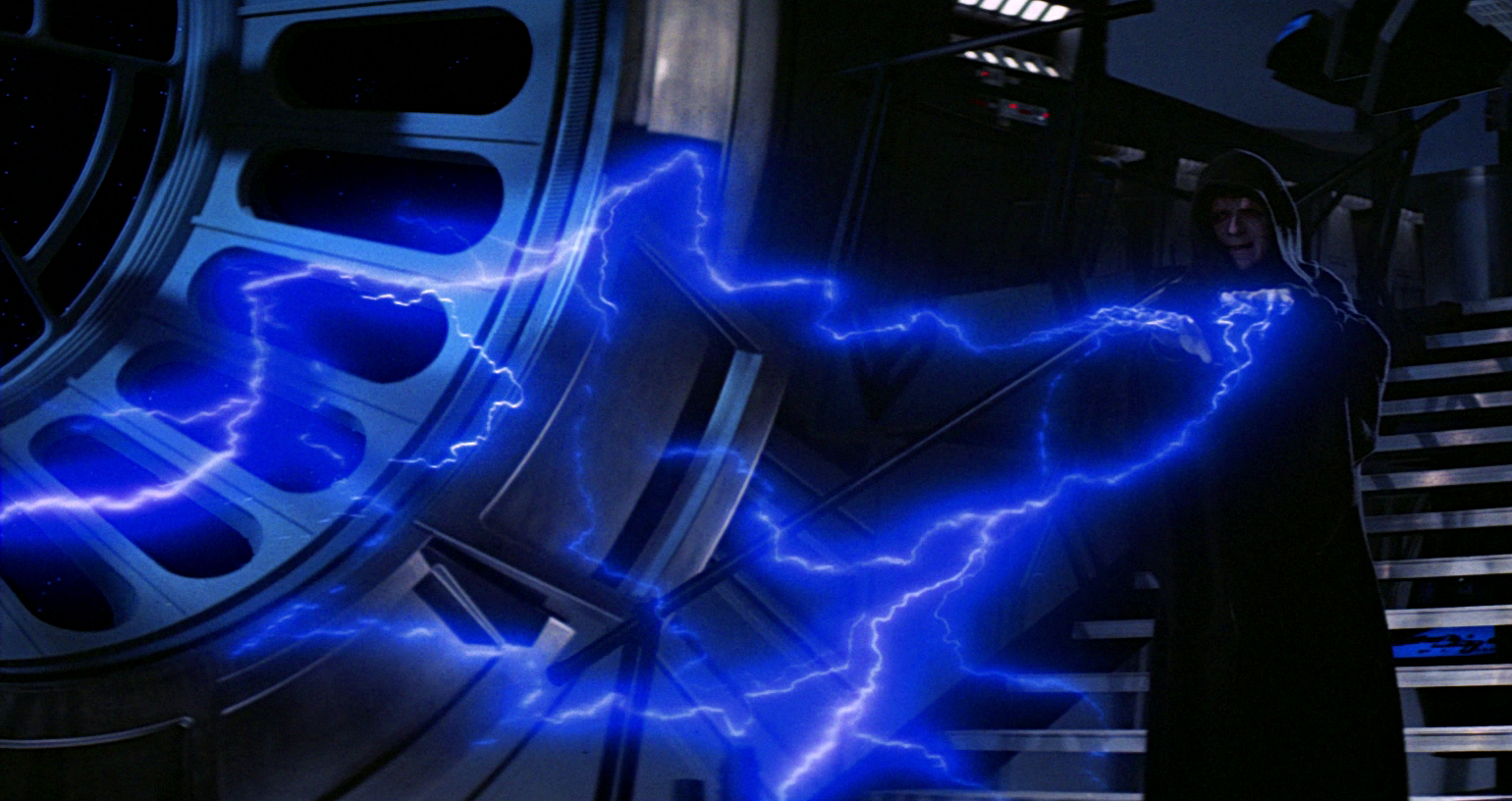
I wrote six or seven little essays about Star Wars for the May the Fourth festivities over at my dayjob tumblr, Vorpalizer. They’ll be rolling out all day long. Check ’em out.
“Game of Thrones” Q&A: Maisie Williams on Arya Stark’s trial by fire
May 2, 2013She obviously has family on her mind in this episode. But when she tells Gendry “I can be your family,” it sounds like she might mean something very different – even if she herself barely realizes it yet.
When I first read that scene, it really got to me. I always knew that Arya and Gendry were going to take separate paths, but when you actually see it… I was really getting on well with Joe [Dempsie], and it was just like “Oh, this is going to end now.” Then you go in do it. At first I read it as “You can come to Winterfell, I’ll show you how everything goes, and you can come and sit at the table with us.” I thought it would be a bit like Theon. But when I was doing the scene, [director] Alex Graves said “When you say that last line, ‘I can be your family,’ say it like ‘I love you.’” And that’s the take that they used. On the day, we didn’t cut in between. We kept going, and going, and going again, which I really liked; otherwise, you get out of it and you have to try and build yourself back up to that point again. Sometimes I was really crying, and then we’d pull it back. I don’t know how many we did, but the last one we did…We settled on the one when I said it like “I love you,” and it really works.
Comics Time: Baby Bjornstrand
May 2, 2013
“All the tears in the world”: Seeing Mad Men through its ads
April 29, 2013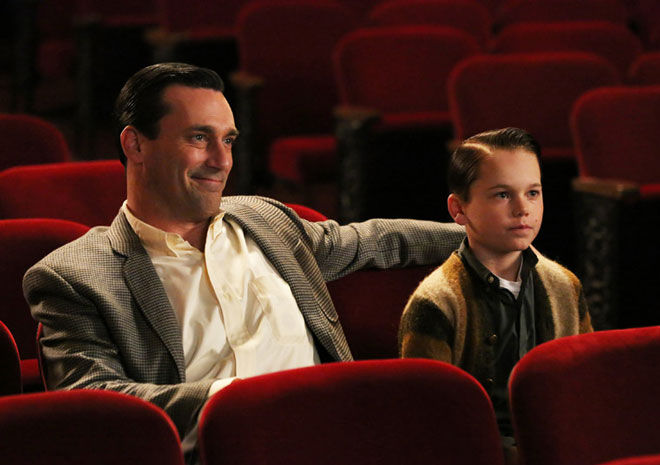
My latest column on the world of Mad Men as viewed through its ads is up. This week: the comfort of violent imagery.
“Game of Thrones” thoughts, Season Three, Episode Five: “Kissed by Fire”
April 29, 2013It was an emotionally merciless episode throughout. Delirious from pain and heat and 17 years of bitterness, Jaime reveals to Brienne that he slew the Mad King to stop him from burning King’s Landing to the ground, but refused to tell anyone because he was so outraged by Ned Stark’s pre-judgment that he couldn’t even bear to defend himself with the truth. “By what right does the wolf judge the lion?” he demands, weeping through the dirt and shit caked on his face. As if his system can’t withstand honesty he then passes out, his nude body cradled against Brienne’s own in a shot that rivals last episode’s Jaime-and-his-hand tableau. “My name is Jaime,” he insists, at long last deciding to be less, and therefore more, than his reputation would make him out to be.
I reviewed last night’s episode of Game of Thrones, which I absolutely loved, for Rolling Stone. All-time Top 5 episode.
“Mad Men” thoughts, Season Six, Episode Five: “The Flood”
April 29, 2013* Mad Men doesn’t usually go for this kind of “we know something they don’t know” gag anymore, not since those happy golden bygone days of “there’s no magic machine that makes copies” back in Season One, so I have to admit a twinge of cheap-date delight when I heard “When they finish the 2nd Avenue subway this apartment will quadruple in value.” LOL
* Bobby Draper hates his misaligned wallpaper. I’ll bet.
* “Come Monday morning it’ll all be a dream.” Lovely line from Sylvia.
* I’m not sure where you come down on Ginsberg, but I find him very funny. “Am I interrupting something?” is a great thing to say when you walk in on your old man and the girl he obviously brought home to set you up with. And all the business at his dinner: “I mean, you’re a sexy girl, and you smell great…”; “What am I doing? I ordered soup, I just said that…”; his delayed-reaction “…I am?” when his date tells him he’s handsome…funny and endearing. And he’s a virgin, too!
* Harry Hamlin! Giving Megan the eye, no less. I still ship Megan and Ginsberg, but “Roger with bad breath” would be an interesting road to take.
* Ethan Rom! I’m sorry, William Mapother! Here’s the thing about Lost: It’s very easy to forget in light of the later seasons, which wiped away much of the first few seasons’ early mystery (read: writers tap-dancing as fast as they could) regarding the Island and its inhabitants, but Lost was a terrifying show when it wanted to be, and it often wanted to be. The Lynch comparisons could run a lot deeper than just “It’s a stylish drama on ABC with an overarching mystery and a touch of the supernatural,” is what I’m saying. And some of the performers involved with that side of the show, Mapother among them, take on a similarly luminous/numinous quality to actors from Twin Peaks when you see them elsewhere, as Mad Men has taken advantage of multiple times (Leland Palmer, Shelly Johnson, Winkie’s dream guy). Ethan, I’m sorry, Mapother’s character Randall Walsh winds up being a bit of a joke, or more than a bit, but it’s perfect casting for someone you want to seem unusual in an imposing, slightly upsetting way.
* Tensions run high in House Chaough, I see.
* Very very smart misdirection with the Paul Newman sequence. Make it a joke about how SDCP is far away from the action, have Joan put on her glasses…then have Newman hijack the ceremony to endorse Gene McCarthy…then have a barely intelligible voice in the distance shout out that Martin Luther King has been shot. Even when you think the scene has revealed its true face, there’s another beneath.
* Mad Men does the spread of terrible news as well as anything I’ve ever seen. I got chills as the broadcast started reaching the diner, patrons dropped their silverware, employees collapsed into chairs. Actually, I started to cry. It’s not the first time the show’s done that to me.
* “They’re really still having the awards?” “What else are they gonna do?” Don and Megan stay for her award.
* “Why are you destroying this house?” Oh, Betty.
* Ginsberg’s father’s reaction to the news about King is to slowly put his sweater over his head. That’s awfully easy to relate to.
* It took the episode a while to acknowledge and inquire after the actual feelings of actual black people about King’s death — “Do you think your secretary’s okay?” from Megan was the first, I believe — but its portrayal of that yawning gulf between sympathy and empathy on the part of the white characters toward their black coworkers and acquaintances was sticky and prickly in all the right ways.
* The best reactions, in terms of maybe for a moment making you feel like the world isn’t a gigantic pile of shit:
** Roger: “Man knew how to talk. I don’t know why but I thought that would save him. I thought it’d solve the whole thing.” Roger believes in nothing but the gift of gab.
** Phyllis: “I knew it was going to happen. He knew it was going to happen. But it’s not going to stop anything.”
** Pete: “How dare you. This cannot be ‘made good.’ It’s shameful! It’s a shameful, shameful day!” First of all, he borrowed “shameful” from Trudy, which is deeply sad. Second, Pete’s on the level with this. He’s an asshole in so many ways, but ever since the “Negro TV company” debacle way back when, it’s been clear that he simply cannot comprehend or countenance why anyone would choose to be an asshole in this particular way.
* Harry just gets more loathsome with each episode.
* What a marvelously weird little setpiece Randall Walsh’s acid-casualty ad pitch turned out to be. I loved how even Don’s go-to guys, Stan and Ginsberg, couldn’t hide their amusement. “The ad sales guy didn’t like that?”, Stan openly giggling…man. But the guy’s deadly serious, and every once in a while something upsettingly real comes out: “There is a tear, and in that tear are all the tears in the world. All the animals crying. ” “This is an opportunity. The heavens are telling us to change.”
* Beautiful sound design as Don talks to Peggy on the phone about picking up the kids, then drives them back to his apartment. Phones, alarms, sirens, sewing machines.
* So Ginsberg’s bachelorhood is a sore spot with his father. Ginsberg’s like an exposed nerve in boxer shorts.
* When you see it in the context of an awestruck audience seeing it for the first time, the ending of Planet of the Apes is removed from cliché and camp and familiarity and becomes chilling — literally, this was another chills-up-and-down moment for me — and extremely powerful. In Bobby’s words, “Jesus!”
* “Stop being such a martyr. You’re having the time of your life.” Abe and Bobby both understand the appeal of apocalypse. “Everybody likes to go to the movies when they’re sad.”
* Henry wants to govern on a law & order platform? Oh brother.
* Don’s speech about his kids was…I didn’t see it coming. I’m not sure what to make of it. On a less self-assured show it could come across like a misstep (cf. Catelyn Stark’s similar recent monologue on Game of Thrones), but here…another piece of the puzzle.
* I wondered why Betty’s face fell when Henry told her he couldn’t wait for people to meet her, “really meet her.” Then she held the dress up to her body in the mirror.
* “What if somebody shoots Henry?” “Henry’s not that important.” Oh, Don.
* Don’s on the ledge again.
Horrorshow
April 26, 2013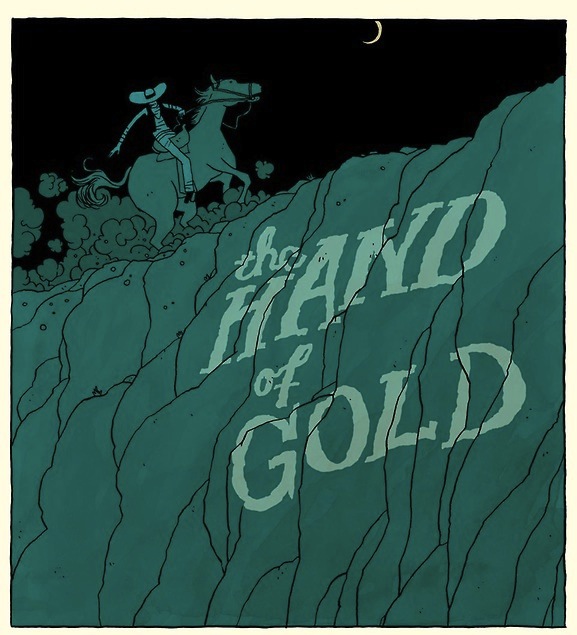
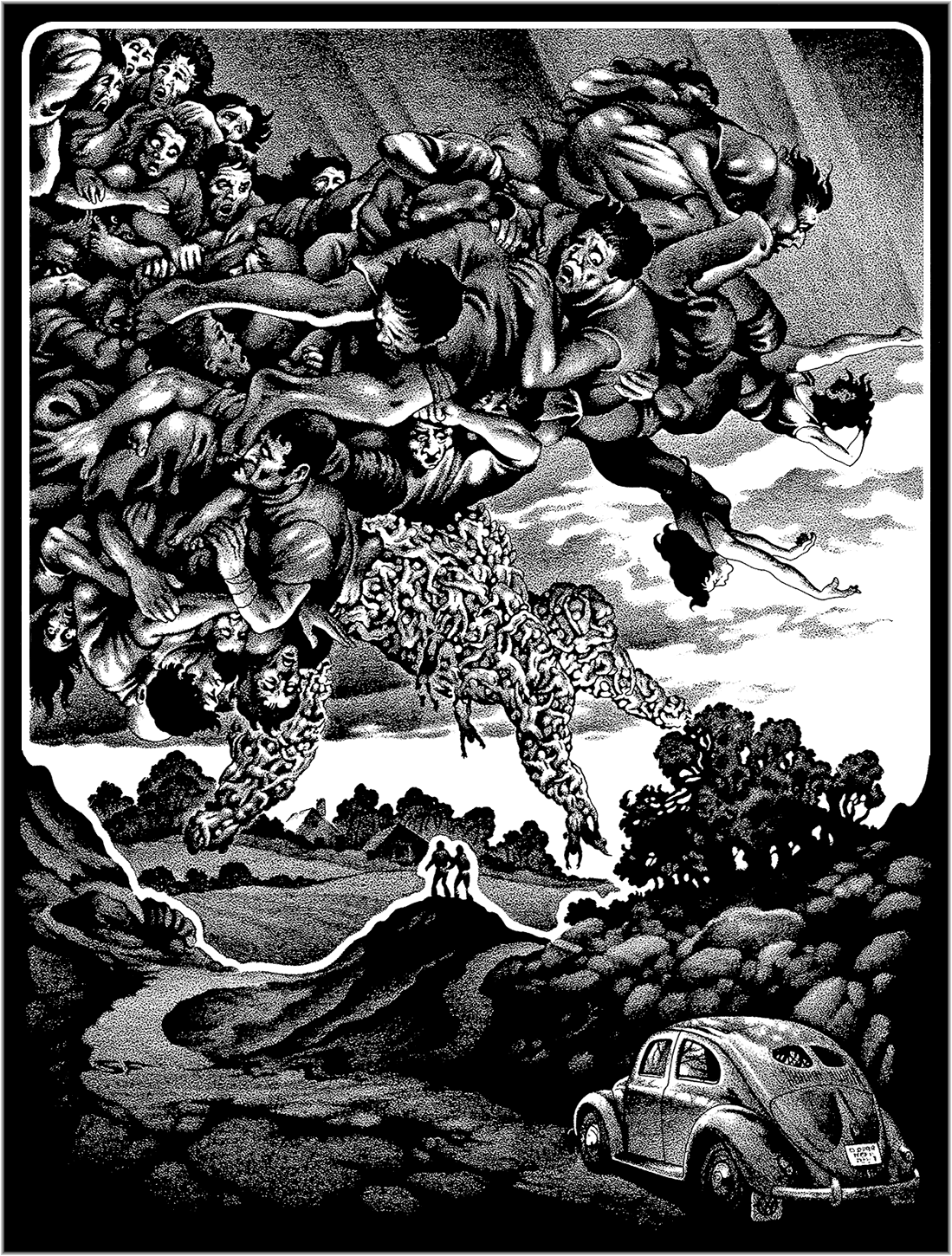
Over at Vorpalizer, I wrote about Jordan Crane’s excellent weird Western comic “The Hand of Gold,” and about my favorite short story, Clive Barker’s “In the Hills, the Cities.”
Ego Te Absolvo
April 26, 2013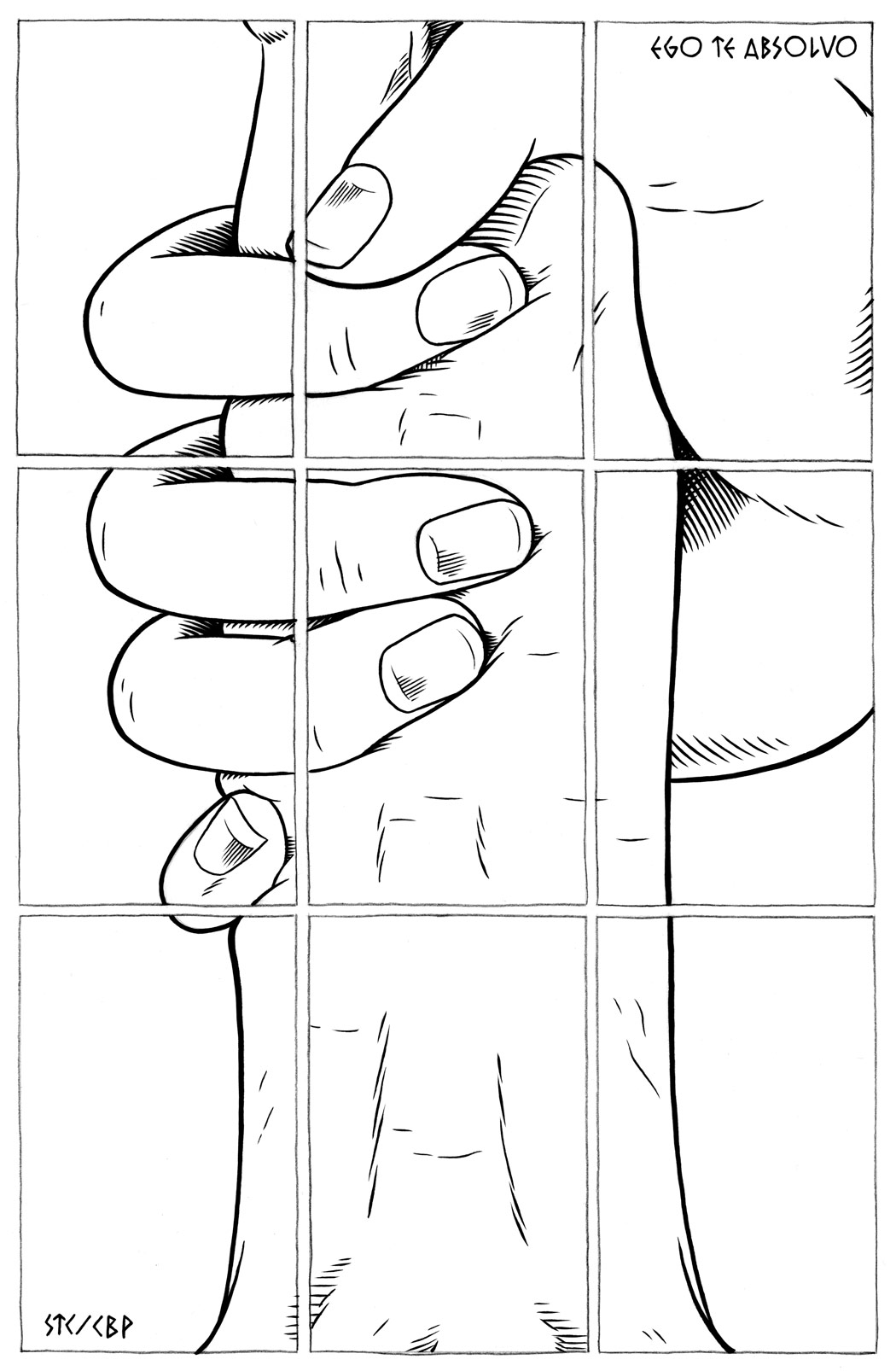
Ego Te Absolvo
Sean T. Collins, script
Colin Panetta, art
The Boiled Leather Audio Hour Episode 19!
April 24, 2013The latest episode of my Game of Thrones/A Song of Ice and Fire podcast is up. This week my co-host Stefan Sasse and I talk about three powerful women of Westeros: Margaery Tyrell, Melisandre of Asshai, and Lysa Arryn. Enjoy!
“Game of Thrones” Q&A: Alfie Allen on the Passion of Theon Greyjoy
April 23, 2013When you look at Theon’s situation, where do you come down on what he wound up doing? Do you find fault with it? Aside from the child-murdering, of course, which I’d hope you do.
I would say that the worse thing he does is the kids, yeah, but I definitely think he’s just trying to prove himself in a really fucked-up way. With the child-murdering … I’ll be honest with you, mate. When I was shooting it, I had a bit of a problem. There’s this look of regret that I gave when the bodies of the two children bodies get raised on the ropes. I look torn about it. And I always thought Theon would just enjoy playing the trick on the whole village. That’s how I would’ve liked to have played it. Then we sat down with David and Dan and [director] David Nutter and decided that there needed to be some sort of regret there, to make it morally correct. But I always thought for Theon that he would just sort of enjoy playing the trick on Winterfell.
I interviewed Alfie Allen about playing Theon Greyjoy in Game of Thrones for Rolling Stone. It got kind of dark.
“Hating What You’re Selling”: Seeing Mad Men Through Its Ads
April 22, 2013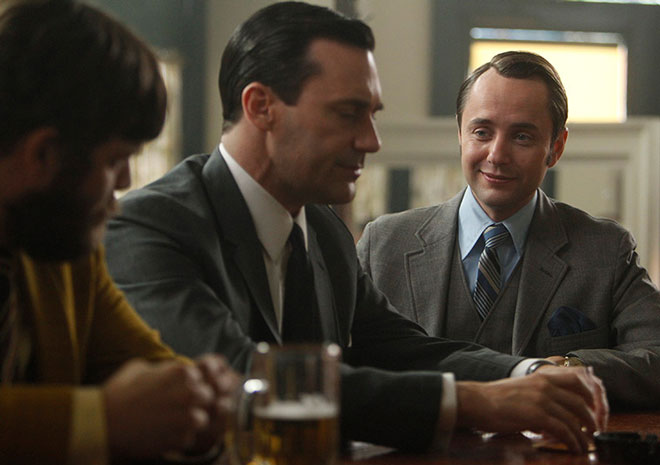
My latest column for Wired on the world of Mad Men as seen through its ads is up. This week: The Heinz that wasn’t there.
“Mad Men” thoughts, Season Six, Episode Four: “To Have and to Hold”
April 22, 2013* “The prestige that comes with ketchup.”
* Pete’s apartment: good for backroom deals as well as affairs. And Pete as part of the three-man braintrust along with Don and Stan? You know my soft spot for teamwork and rapprochement, so they sure were playing my song there.
* Dawn’s initial conversation with her friend was the first time Mad Men ever had two not-white people talk to each other, right? Is there a not-white-person equivalent of the Bechdel Test? But I think that was simply the most dramatic example of what this episode was about, which was how people who aren’t Alpha Males navigate the world built by and for Alpha Males. Dawn, Scarlett, Harry, Joan.
* Always nice to return to Joan’s apocalyptically orange apartment. She has an older sister? And she was married before?
* A good old-fashioned elevator door closing on Don shot. Love it. Love that Don seemed more intrigued than irritated by Sylvia’s refusal to tell him what she was up to.
* It’s easy to forget that Ken Cosgrove was once the biggest creep in his cohort, because now he seems like such a mensch, especially in comparison to everyone else but also, I think, because maybe he became one over the years. I mean, he is legit shamefaced that he just came into Harry’s office just to complain.
* “Harry has great ideas!” She’s not wrong, as far as it goes, yet Harry’s incapable of capitalizing on them in anyone’s eyes but his clients and the networks, I suppose.
* “So…Project K. What does it stand for.” “Project Kill Machine! “That’s not what it stands for.” Bob and Ginsberg, now there’s a dynamic.
* “I’m tellin’ ya, it clears the cobwebs,” Stan says, looking like he’s been awake for six days.
* “I think a hot dog and a hamburger are too similar. Plus, a hot dog cries up for mustard.” DON STONED
* Megan in a French maid outfit. You’ve got to be FUCKING kidding me.
* “Megan, I don’t care.” Don’s response when Megan tries to tell him about her storyline from an in-world perspective was hopefully completely devastating to anyone who’s ever worked in a creative field ever, or really just anyone who’s ever wanted to talk about the minutiae of their job and been shot right down.
* Casting Leland Palmer as a Dow exec is so next-level brilliant I can hardly stand it. Sell that, Don.
* Scarlett’s dress could not have been more orange.
* My favorite, laugh out loud, pump my fists in delight moment during Harry’s boardroom freakout? “No, please. Let him go on.” Roger Sterling just wants to watch the world burn. Of course, this fire got out of control.
* My least favorite moment? Pretty much every moment, after a certain point. Harry, you piece of shit. Going for the jugular of someone who really has nothing to do with what he’s so resentful about.
* So is Joan’s deal an open secret? Or is Meredith the mousy secretary made prominent in this episode because she’ll be the one who leaks it to the office? Or does Joan’s newfound self-confidence (as represented by a blue power suit instead of her usual floral-display palette) negate that whole potential storyline?
* Don’s against the war. It doesn’t surprise me that he is, but it does surprise me that he says so.
* “You’re worried about people hating what you’re selling.” Life!
* “I’m sure he’s a man who plays many roles.” Life!
* “Let’s go back to our pad, smoke some grass and…see what happens.” Don’s face during every second of the scene from that point forward is worth a price beyond rubies. I mean, the whole scene was marvelous, a head-on collision of two brands of debauchery from opposite ends of the decade, but watching Don Draper react to being propositioned for a foursome? Goodness gracious.
* I loved that the exec and his wife were basically “hey, it’s cool, don’t worry” and apparently meant it. I loved that Don’s lines around appropriate and inappropriate forms of sexual indiscretion are so bright and red. I loved the Drapers’ mutual bafflement that the swingers have been married for 18 years.
* “What did I say?!” “What did he say?” “He said I’d want you.” Phhhhheeeewwwwwwwwwww, that is sexy.
* “I was different than you, Mr. Crane, in every way.” BERTMERKED
* I don’t like that Joan feels forever alone. I mean I don’t like it for her, not I don’t like the writing. I want her to be happy, more really than any of these other assholes, since she is not an asshole herself.
* I’m not 100% convinced I buy her sartorial and attitudinal turnaround following the pep talk from her sister, but maybe that’s seeing such makeovers in a million shitty shows and movies talking, rather than how it works within the Mad Men context.
* Don serves Heinz another ad that isn’t there, another absence. There is no man at Royal Hawaiian. There is no ketchup in the Heinz ketchup campaign. In “The greatest thing you have going for you is not the photo you take or the picture you paint — it’s the imagination of the consumer. They have no budget. They have no time limit. And if you can get into that space, your ad can run all day.” What’s running in Don’s imagination-space all day?
* The great Heinz staredown. This is a funny show.
* OH MY GOD I JUST REALIZED THAT’S THE FIRST TIME DON SAW PEGGY SINCE SHE QUIT, OH MY GODDDDDDDDDD [they saw each other at the movies, I’ve been told 🙁 ] and he stops and listens to hear what she says and she quotes him and ugggggggh the FEEEEELS
(* sorry, I’ve been spending a lot of time on tumblr)
* “Heinz, the only ketchup.” Peggy tries to directly inflate their ego, Don tries to get them to have enough faith to let go of it?
* I saw an animated gif of Stan flippin’ Peggy the bird before I even started writing this.
* Hey, I just met you, and this is crazy, but when Ted tried commiserating with Don about the disadvantage their firms are at due to their smaller size, I wondered if there’s some merger storyline coming, so call me maybe?
* Don staring daggers at Megan following her love scene was deeply alarming. More alarming to me than the chase around the apartment after she disappeared from the Howard Johnson’s last season.
* “I’m sick of tiptoeing around you everytime something good happens to me.” Yeah, she’s got Don’s number.
* “You kiss people for money. You know who does that?” Yeah, Don’s got Don’s number.
* “I pray for you…For you to find peace.” I’m not optimistic.
“Game of Thrones” thoughts, Season Three, Episode Four: “And Now His Watch Is Ended”
April 21, 2013Started strong, ended strong, maybe a little shaky in the middle but who cares: I reviewed tonight’s episode of Game of Thrones for Rolling Stone.
“No way to control it”
April 19, 2013Comics Time: Road of Knives
April 18, 2013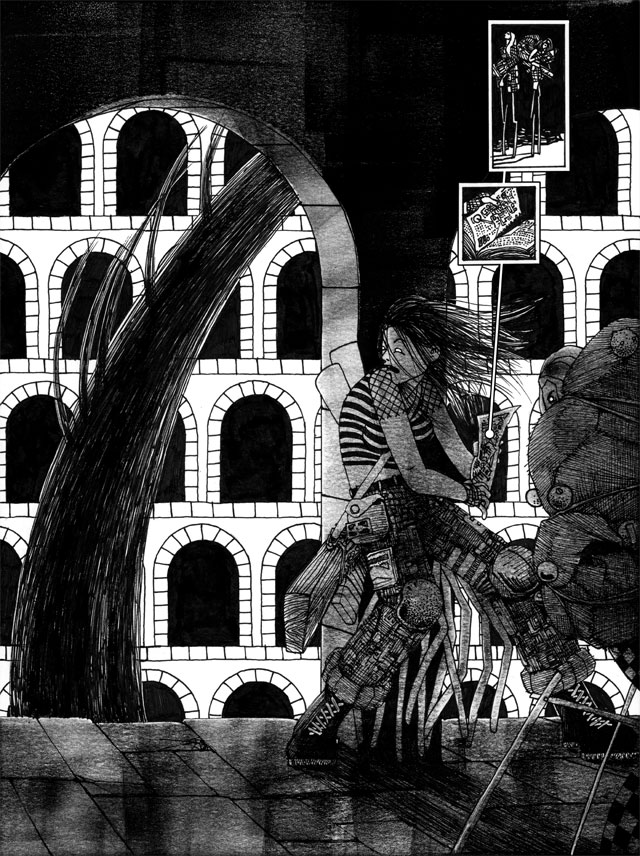
“Game of Thrones” Q&A: Nikolaj Coster-Waldau on the Hand of the Kingslayer
April 16, 2013[NIKOLAJ COSTER-WALDAU:] The thing that I love about all these things that happen – some of these really horrible incidents – is that the characters actually are really truthful. I can totally understand why Locke gets so angry with Jaime. I mean, I don’t know anything worse than when I meet someone who has a sense of entitlement just because of who they are – “Hey, I’m famous, so I should be treated differently.” When you meet people like that, you just want to punch them. And that’s exactly what Locke does. Granted, he takes it to an extreme because he’s also a bit of a psycho, but I think you still understand where he comes from.
Same with some of the things that Jamie says to other characters, like Brienne. They’re very hurtful, but most of the time he actually comes from a coarse truth, which makes it bite so much harder.
[ROLLING STONE:] That’s what was devastating about what happened to Jaime: For the first time we see him perform a truly selfless act, putting himself on the line to save Brienne from Locke and his men, and he’s immediately punished for it.
[Laughs] I know, I know. Now, what if the question was put to Jamie – “You can either save this lady or you can save your hand.” I’m pretty sure he would save his hand, I’m sorry to say. Maybe losing his hand will make him answer that question in a different way later on in his life. For him as a character, for him as a person, I think, he needs to lose that hand.
“This Is How Wars Are Won”: Seeing “Mad Men” Through Its Ads
April 15, 2013
My new column for Wired.com on the world of Mad Men as seen through its ads is up. This week: the Jaguar war.
“Mad Men” thoughts, Season Six, Episode Three: “The Collaborators”
April 15, 2013* Yeah, the two-hour first episode counts as the first two episodes again. Hey, I don’t make the rules.
* The opening Welcome Wagon scene = orange as FUCK. And Pete and Trudy are BALLIN’. I don’t know why I thought that both of them being very attractive at the same time but to two different sets of people would unite rather than divide them, but I did. Call me a cockeyed optimist.
* That was some stare from Don when Sylvia opened the door. Thousand-yard stare.
* Young Dick Whitman looks like Moe Howard. Didn’t see that coming.
* You know Jon Hamm’s directing when you get a fade from one scene to the next. Hooray!
* “I don’t think about it. They’re both good company.” Don to Sylvia on eating with Dr. Rosen and Megan. That’s…phhhhew, that’s something, Don.
* The Tet Offensive, Munich…miscalculations and underestimations all over this episode. Herb didn’t see Don coming. Stan didn’t see Peggy (or, really, Ted) coming. “This is how wars are won!”
* Peggy’s awkwardness as a boss is endearing in large part because she’s in no way a lovable loser. This is just the one part of it she’s not that good at.
* There were two moments in this episode that made me laugh so hard I actually pumped my fists as if to tell the show “way to go!” The first was the reveal of the blue and green glass partitions walling off the bedroom in Pete’s affair apartment. HOLY SHIT. I kind of imagine the set designer unveiling that to Matthew Weiner and just bringing the house down with it.
* “Sometimes you gotta dance with the one that brung ya.” Oh, Don.
* Pete’s assignation was attractive. Actually, Pete isn’t looking so terrible anymore himself. I think he lost weight?
* Megan’s miscarriage knocked me for a loop. That was an extremely well-crafted scene from top to bottom, in fact. The initial fake-out with the soap-opera storyline, Megan’s adorable red nose, watching Sylvia’s reactions knowing what we know, “I’m such a horrible person,” Sylvia brutally dressing Megan down because of how she was raised (lol), Don giving Sylvia the stare again upon his return home.
* I know the Quest gag bugged Peggy, but her reaction — “Of course, when you want them to be funny, they’re useless” — was so perfectly crushing, all the more so for them not even being there to hear it and her not delivering it to be some epic smackdown, that I feel like she totally triumphed over it, even if she herself doesn’t think so.
* That Jaguar asshole. Ugh. Joan’s eyes as he leaves, and once Don leaves her in his office. 🙁 I think it’s kind of wonderful that Don hates this guy.
* “Jesus christ watching Joan walk into Don’s office, I want to throw a parade for these two human beings” – from my notes.
* No one calling the cops about Brenda’s spousal abuse was crushing.
* “You know, we’re losing the war.” “You wouldn’t know it from looking around here.” Plus ça change.
* Pete’s affair panic was exquisite to behold. All that waiting for the other shoe to drop, all not even knowing if the first shoe dropped.
* “You enjoy how foolish they both look.” “You will feel shitty right up until the point where I take your dress off.” Crash cut to later when he’s doing exactly that. “Because I’m going to do that. You wanna skip dinner? Fine. But don’t pretend.” Don’s confidence in this scene borders on cruelty — “Well then that’s news. Isn’t it.” — and is absolutely magnetic. When Sylvia told the waiter “We’re in a bit of a hurry” I gasped.
* Loved the cut from Trudy walking into her bathroom to Don walking into his apartment.
* Jim Garrison on Carson delayed for a report on the Tet Offensive. The most ’60s film clip ever?
* “If you so much as open your fly to urinate, I will destroy you.” Honestly, I’ve never really thought Trudy as a character did Alison Brie any favors as an actor — separately they both come across like something created in a laboratory to be seen as perfect to men of their era, and when the two are overlaid you don’t get the depth you see in Brie as Annie on Community, where the idea is that her perfectionism made her crazy — but this ferocious scene was a new thing entirely.
* Ted’s seemed so kindly and rational so far this season that it was weirdly comforting to watch him carpe diem with the Heinz ketchup story he gleaned from Peggy. That’s a little more like the Ted who tweaked Don a couple seasons back.
* Second-best thing about Don blowing up Herb the Jaguar Asshole’s local ad campaign pitch: Herb was too stupid to realize he did it on purpose.
* BEST thing about Don blowing up Herb the Jaguar Asshole’s local ad campaign pitch, and the second thing in the episode that made me laugh so hard I raised my fists aloft in triumph: Roger smiling at it.
* Is it just me or did we get a li’l bit of realness from Brown-Nose Bob when he talked about the family business?
* “It’s all about what it looks like, isn’t it?” Poetic Pete is good Pete.
* Don watched his pregnant mom fuck. Okay, sure.
* Don collapses outside his front door. In Roger’s words, “It means we gave the Germans whatever they wanted to make them happy, but it just made them want more.” In his own words, “And so we keep saying yes, no matter what, because we didn’t say no to begin with.”