
Author Archive
“Better Call Saul” thoughts, Season Three, Episode One: “Mabel”
April 13, 2017The slowness and silence of Mike’s side of the story is a stupendous choice for several reasons. First, it aims the spotlight directly at the facial expressions and body language of Jonathan Banks as Mike. As an actor, he doesn’t perform so much as he oven roasts, slowly and quietly allowing the characters skill, determination, ruthlessness, patience and weariness to flavor his every move. Second, it provides composer Dave Porter with a blank canvas on which to paint an engrossing post-rock musical accompaniment, miles away from the jaunty country-western kitsch of the soundtrack. Third, it gives director Vince Gilligan—working here with cinematographer Marshall Adams—the chance to let the visual dimension do much of the talking. Mike’s sections of the show are basically oceans of darkness, surrounding islands of warm yet sickly yellow glowing light in which Mike moves or sits like a castaway; that yellow color beams “CAUTION” at our brains like the lights from a roadside construction project on a rainy night. It’s a powerful contrast with the black and white of the flash-forward opening sequence, showing Jimmy’s eventual fate as Gene the Omaha Cinnabon manager; with the Office Space aesthetic of Jimmy’s 2002-era material; even with the dark wood paneling and bright “natural” daylight that characterize scenes starring Jimmy’s Luddite brother Chuck. It’s tough to think of a series with as distinct a visual aesthetic as Better Call Saul which is also willing to vary that aesthetic so much in a single episode.
Finally, Mike’s slow and steady story gives lie to the claim that Better Call Saul is becoming Breaking Bad Redux. Perhaps Breaking Bad’s magisterial final season (minus that regrettable punch-pulling finale, of course), which moved toward the destruction of Walter White with the grace and grandeur of the inevitable, makes the chaos of that show harder to remember. But from literally the first scene of the first episode of the first season, Walt’s story showed him careening from one calamity to another, creating new disasters to extricate himself from the old ones nearly every time. Mike’s story may involve Breaking Bad heavies like the Salamanca Family and, presumably, Gus “The Chicken Man” Fring; it may have more in common with that show’s violent stock in trade than the white-collar crimes of Jimmy McGill or the mental illness of his hotshot older brother Chuck; but in pacing and in tone it remains a very different proposition indeed.
I reviewed the season premiere of Better Call Saul for the New York Observer. Eff what you heard about the show getting too close to Breaking Bad; other than the characters and the overall skill involved they have very little in common.
“Billions” thoughts, Season Two, Episode Eight: “The Kingmaker”
April 13, 2017Before we really get into this, I want us to take a moment—you and me, just us two—to talk about David Costabile and Mike “Wags” Wagner.” I want you to think about the way his face crinkles with joy when he learns his boss Bobby Axelrod wants to take on Black Jack Foley, the most powerful man in New York. “Rough him up?” he says, beaming like a kid on Christmas morning. “I’m all for it!” I want you to consider how, when his underling Maffee razzes him for his pathological partying, he not only verbally menaces the guy but raises his leg and puts his foot on his desk while he does it, like a dog about to mark his territory. I want you to savor the way he turns to the brokerage goons who are courting Axe Cap’s business, insists on ditching their boring business dinner for something more…exciting, and fucking says “Fire walk with me” like a David Lynch demon. I want us, you and me, to treasure this man, this character, this performance. He is a delight undeserved, and yet here he is.
That’s more or less the way I feel about Billions in toto. How this show became one of the tightest, smartest, and most entertaining series on television this year is a mystery I don’t think I’ll ever get to the bottom of, but I’m not about to look a gift horse in the mouth. As of “The Kingmaker,” this week’s episode, Billions is serving up a type of tight, aphoristic writing we haven’t seen since Mad Men. It’s not looking to tear your guts out the way Matt Weiner’s classic drama was, (though as we’ll see, it may occasionally do so anyway), but that’s fine. We could all use an unimpeachably written drama about the evil that capitalist men do right about now, don’t you think?
I reviewed this week’s Billions for the New York Observer. I’m just apeshit for this show this season. Never seen a turnaround like it before.
FLASH FORWARD
April 10, 2017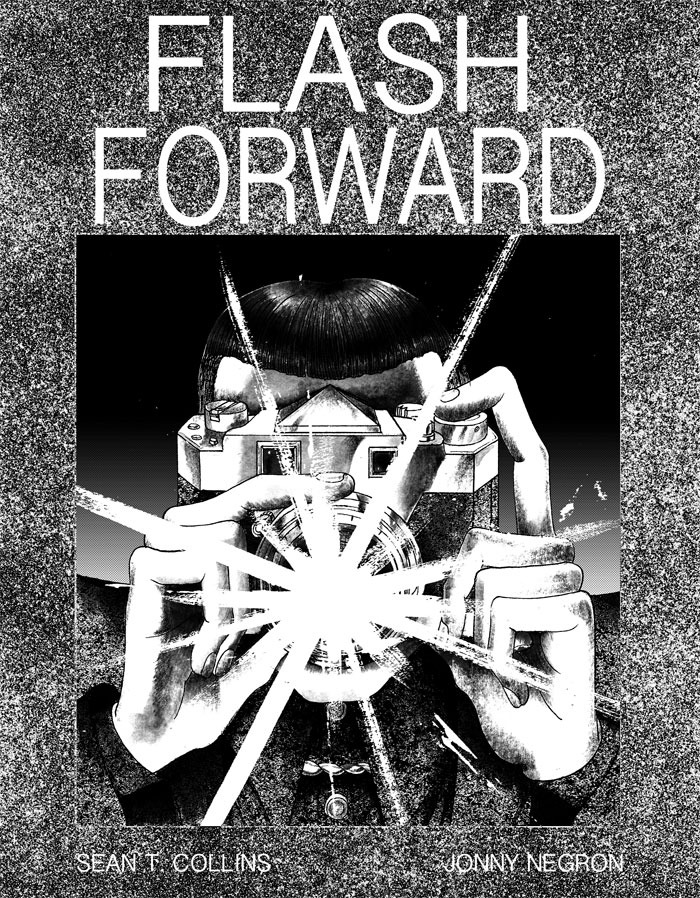
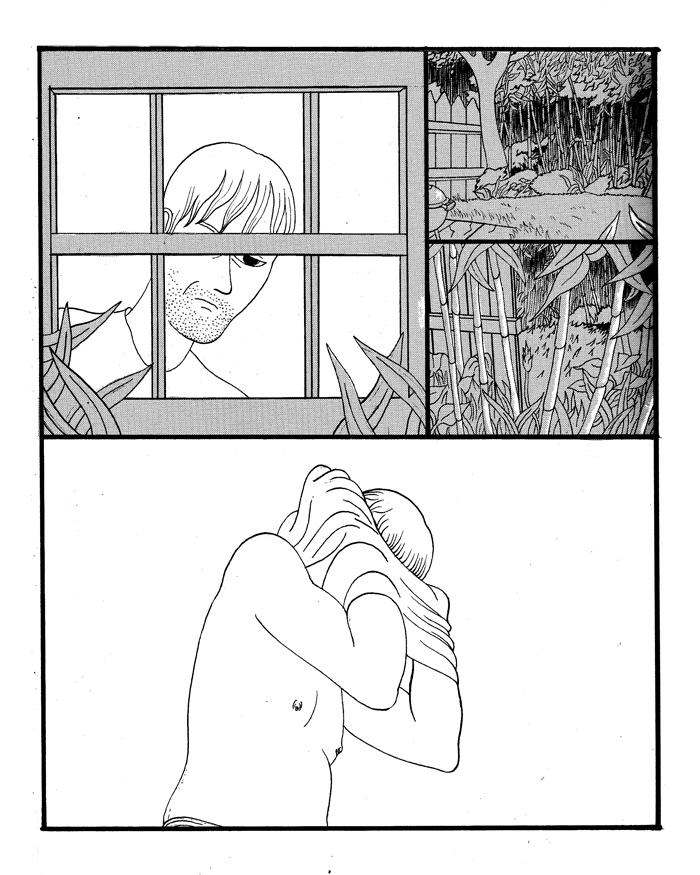
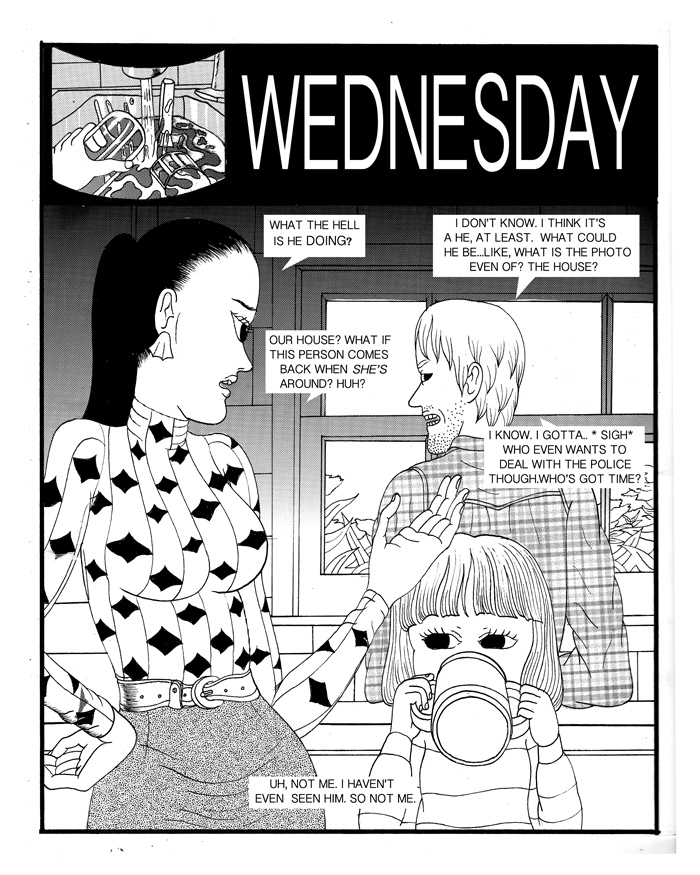
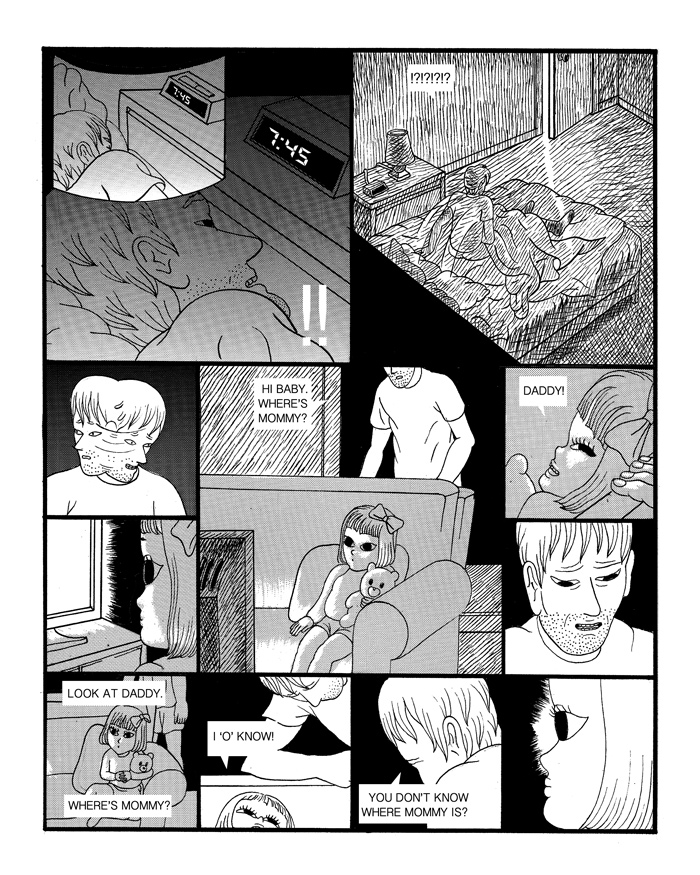
FLASH FORWARD by me and Jonny Negron. Final 10 copies. $8. First come first served. Click here and note your mailing address.
“The Path” thoughts, Season Two, Episode Twelve: “Spiritus Mundi”
April 5, 2017“I’m lost, man,” disgruntled undercover FBI agent Abe Gaines tells disgruntled ex-Meyerist/messiah Eddie Lane at the beginning of this week’s episode of The Path. “I’m in someone else’s story.” He’s not the only one. I have one question for The Path at this point: Why isn’t — excuse me, why wasn’t — Richard the main character?
“The Americans” thoughts, Season Five, Episode Five: “Lotus 1-2-3”
April 5, 2017“I’d like to lay a little bet / That you don’t even know the meaning of regret / And if I’m even just a tiny bit correct / I doubt that you would ever think to pay your debt / I’m suspicious / Suspicious of you.”—Psychic TV, “Suspicious”
“Just because you’re paranoid don’t mean they’re not after you.”—Nirvana, “Territorial Pissings”
“It is worse than a crime, it is a mistake.”—Joseph Fouché, frequently misattributed to Talleyrand
“Lotus 1-2-3,” this week’s episode of The Americans, had me reaching for my mental quote book. (Not many physical ones contain Psychic TV.) It’s hard to narrow down which of the above phrases best encapsulates what went on here, so we’ll take them one by one.
We’ll start with the last, though it’s a quote I’ve always hated. No, actually, a mistake is not worse than a crime. A crime is bad enough in and of itself. This is the sort of blustery self-justifying bullshit that enables bad actors in political conflicts across the centuries to push morality to the side as, if not entirely irrelevant, then at least incidental to the allegedly more important practical considerations. You’ll recognize this mentality from the 2016 presidential debates, perhaps, when Donald Trump responded to a question from a Muslim member of the audience with his usual senile-dementia neofascism about evil Islamic fundamentalists, only for Hillary Clinton, the supposed avatar of American progressivism, to say that no, actually, we need to be good to Muslims…so that they’ll serve as our eyes and ears among the aforementioned evil Islamic fundamentalists. The idea that fomenting Islamophobia is itself evil, that it’s bad in and of itself, that it’s morally wrong and therefore curtailing it requires no practical justification, was nowhere to be found.
This week Philip Jennings shoots this whole way of thinking down with a sardonic facial expression and a flatly incredulous sentence. It turns out that their investigation into American attempts to destroy Soviet crops was completely off-base, and that the virulent strain of midges they’d discovered is being used to make wheat more resistant to pests. This means that the lab tech whose spine he snapped in Kansas for the crime of looking the other way had really done nothing wrong at all. “That guy in the lab,” Philip says to Elizabeth, as they sit wearing the clothes and wigs of fake people in a fake house. “That can’t happen ever again.” “We’ll be more careful,” Elizabeth reassures him. “ ‘More careful’?” he repeats, the look in his eyes and the tone of his voice making his concern and contempt clear. To Philip, who says he’s been having problems with the wetwork they’re required to do for a long time, “careful” doesn’t enter into it. The problem wasn’t that they were sloppy, it’s that they murdered an innocent man. It was worse than a mistake, it was a crime.
“Billions” thoughts, Season Two, Episode Seven: “Indian Four”
April 5, 2017You can’t swing a gatefold Dark Side of the Moon album cover without hitting a TV music cue meant to BLOW YOUR MIND these days. What a joy it was, then, to stumble across a needle-drop on Billions meant to do nothing more and nothing less than make you crack up? The honor goes to “Sex and Candy,” the ‘90s alt-pop staple from Marcy Playground that turned lust into something that sounded sleepy and skeezy and, well, smelly. In that sense, it’s perfect for the sex scene it soundtracked: a poolside oral tryst between the Axelrods’ skeezebag personal chef and his tattooed lady friend. But did Billions start the song when it first cut to these two hardbodies getting it on? Hell no—those first “only ‘90s kids will remember” notes rang out, incongruously and ironically, over Chuck Rhoades and his son Kevin and their football, posing for the all-American photo shoot intended to launch his political career. The moment I recognized it I started literally lol’ing. Deflating Chuck’s pretensions to righteousness and segueing into the show’s filthiest romp so far this season (Wags’s tattooed ass notwithstanding)? Take fucking notes, Legion and Stranger Things—that’s how music direction is done.
And as far as the kind of “the part stands in for the whole” moments that we TV critics can’t get enough of, it’s almost too good to be true. Directed by John freaking Singleton and written by Alice O’Neill and series co-creators Brian Koppelman and David Levien, “Victory Lap” is the episode in which this extraordinarily, improbably entertaining season of Billions rips off the capitalism scab to reveal the exploitation pus beneath.
I reviewed this week’s Billions, maybe the best of its very strong season so far, for the New York Observer. Okay, so Legion was still irritating me, but that aside this had one of the most gut-level upsetting story turns I’ve seen in a long while. Great stuff.
“Legion” thoughts, Season One, Episode Eight
April 5, 2017“Don’t be afraid to care,” advises the Pink Floyd singer-guitarist David Gilmour in the prog-rock titans’ dreamy anthem “Breathe.” It’s a signature track on “The Dark Side of the Moon,” the perpetually best-selling concept album about modern life and mental illness that has soundtracked many a dorm-room bull session and chemically enhanced “Wizard of Oz” screening.
And given the propensity of “Legion” to make subtext text, I probably shouldn’t have been so surprised that the show would use this jaw-droppingly literal music cue for a pivotal scene in its season finale. Why not use a song with the lyric “All you touch and all you see is all your life will ever be” for an astral-plane confrontation in which David Haller’s life literally flashes before his eyes? Why not mesh the lyrics’ fatalistic take on the inescapable nature of death with a sequence in which David discovers how lethal it would be to free himself from the grasp of his nemesis, the Shadow King? Why not cap off a show renowned for its surreal, spacey visuals and structure with a song that comes pre-loaded with four and a half decades of psychedelic nostalgia?
The answer is right there in Gilmour’s line “Don’t be afraid to care.” Creator Noah Hawley and company crafted a show that stood out against its drab and unadventurous superhero peers, to be sure, and maybe that’s good enough. But it could have been great with a little more willingness to avoid the obvious, to go for magic rather than parlor tricks, to not use one of the most famously trippy songs in the history of rock ’n’ roll to tell the audience, “Wow, man — trippy, isn’t it?” A little more care is exactly what this episode, and the show in general, really needed.
I reviewed the season finale of Legion for the New York Times last week. I didn’t like the finale, or the season. I’ve seen semi-convincing arguments that the show is enjoyable when looked at as a silly fun superhero show with some unusual visual flair, but as that’s neither how it was sold nor, quite clearly, what its creators intended it to be, they must remain only semi-convincing.
STC & MMII @ MoCCA
April 1, 2017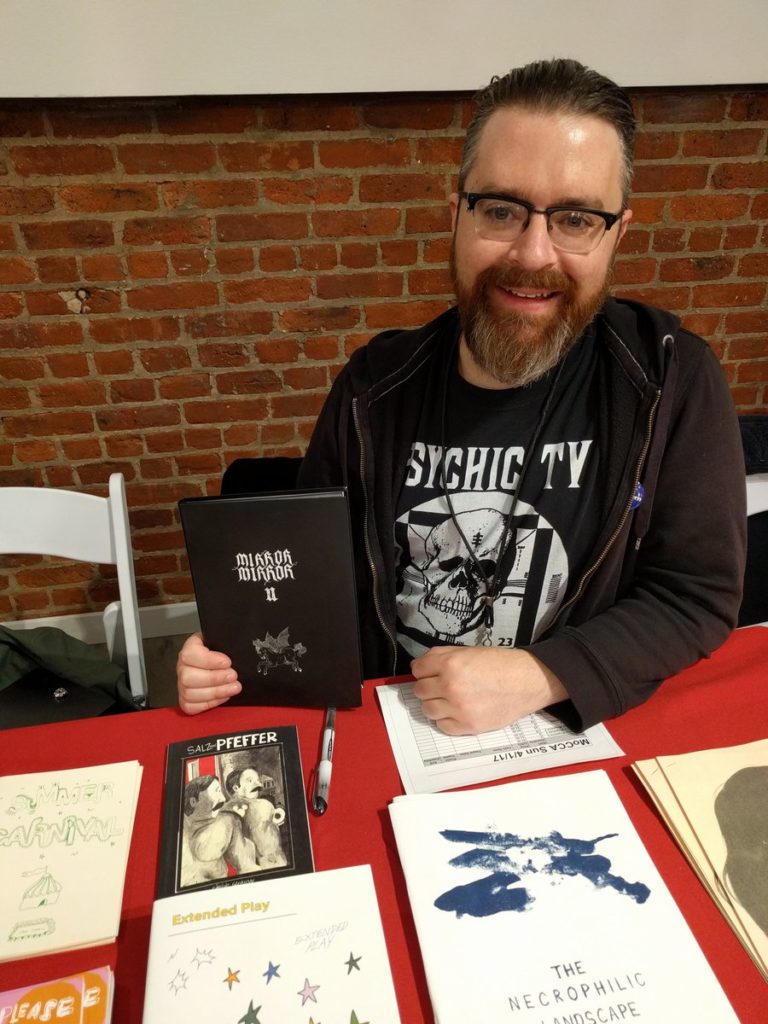
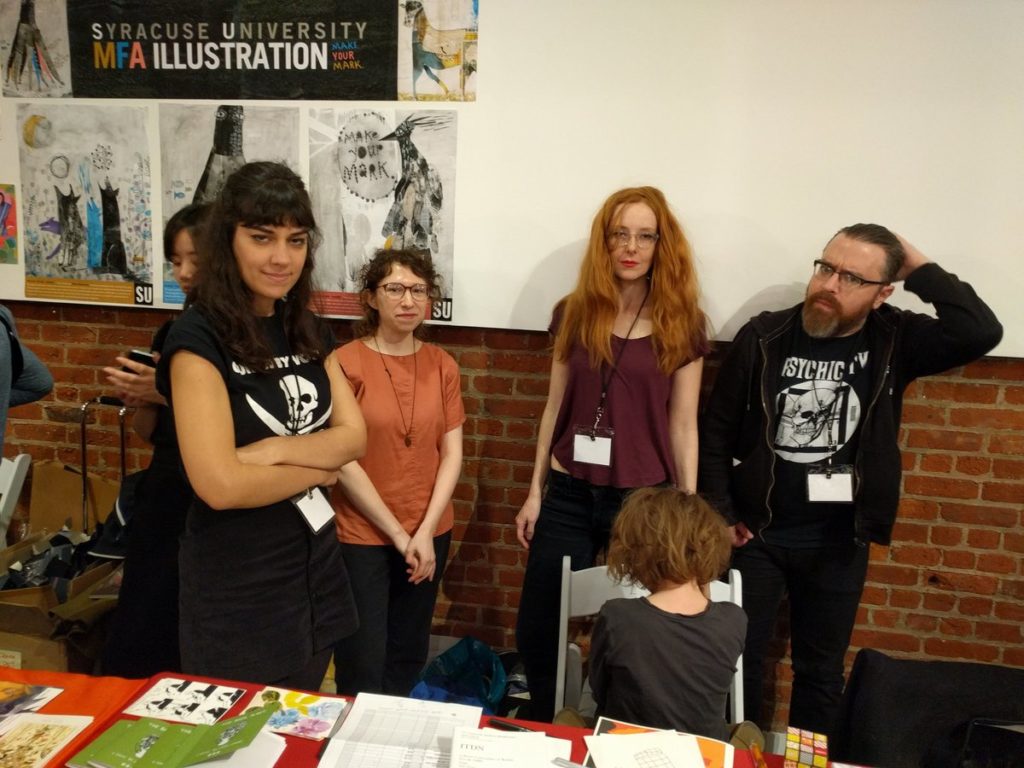
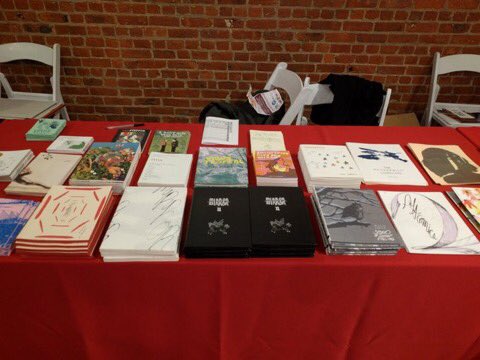
Some pics from Day One of MoCCA Fest 2017 in New York, where me and the MIRROR MIRROR II crew (that’s Laura Lannes, Lala Albert, Julia Gfrörer, and me in the middle picture) sold and signed the book. I had to leave early due to illness but I hope to be back tomorrow and I hope to see you there if i am! Either way, the kickstarter for MMII and the rest of our publisher 2dcloud’s spring lineup is entering its final hours. Now’s your chance to snap up the whole line for a pittance, but whether or not you order the books, of course every bit donated helps!
The Boiled Leather Audio Hour Episode 61!
March 31, 2017The Boiled Leather Children’s Hour
BLAH is for the children! In this episode, Sean and Stefan take a look at two issues uniquely relevant to the younger characters of A Song of Ice and Fire: bullying and education. Inspired by our recent re-reads of A Game of Thrones, our conversation touches on the pervasiveness of verbal and physical bullying, the degree to which it is or isn’t encouraged by adults, and how the ideas passed on to children by their parents and teachers through the official education system (for nobles, anyway) impact those receiving them. It’s a topic close to our hearts, and to our understanding of what the whole series is really about. Enjoy!
And remember, if you like what you hear, subscribe to our Patreon to hear more of it via our subscriber-exclusive Boiled Leather Audio Moment mini-podcast!
Additional links:
BLAH 09: Our episode on violence against children.
BLAH 11: Our episode on sexualized violence and violence against women (with Alyssa Rosenberg).
The latest BLAM mini-episode (click to subscribe).
Our Patreon page at patreon.com/boiledleatheraudiohour.
Our PayPal donation page (also accessible via boiledleather.com).
Goldfrapp: Silver Eye
March 30, 2017It takes Alison Goldfrapp more than a full verse into Silver Eye’s leadoff track “Anymore” before she utters a single word with more than one syllable: “You’re what I want. You’re what I need. Give me your love. Make me a freak.” Reductive? Considering her and collaborator Will Gregory—whose past lyrics would gussy up their earthy emotions and desires in hazy surrealism like, “Wolf lady sucks my brain” and, “Now take me dancing at the disco where you buy your Winnebago”—you might be tempted to think so. Prior to “Anymore,” Goldfrapp hid their most verbally explicit expression of lust (“Put your dirty angel face between my legs and knicker lace”) in an elaborate fantasy about a tryst with a traveling carny titled, appropriately enough, “Twist.”
But the direct approach suits this new album, the group’s first since 2013’s Tales of Us. Ever since the pair swapped the John Barry ambience of their debut album Felt Mountain for the electro-glam of its successor Black Cherry, they’ve staked their identity on being able to assume new identities at will. Wanna double down on that sexy “Spirit in the Sky” shimmer? There’s Supernature. Wanna go pastoral? Check out Seventh Tree. Wanna trade Gary Numan and Marc Bolan for the Pointer Sisters and circa-“Jump” Van Halen? Head for Head First. By contrast, Silver Eye is a synthesis—a combination of all the things the group has done well. “Become the one you know you are,” commands a key track, and they’re teaching by example. Who needs many syllables to express something so fundamental?
Our Kickstarter is fully funded!
March 30, 2017
Thanks to everyone who pitched in or spread the word. It means so much to us! Now our beautiful book just needs to find its way into your hands. Order today!
Bad at Sports Sunday Comics with Julia Gfrörer
March 30, 2017Max Morris: Your most recent project is co-editing Mirror Mirror II with Sean T. Collins, which is set to be released by 2D Cloud for their Spring 2017 collection. To my knowledge, this is the first anthology of comics work you’ve edited, but please let me know if I am incorrect. How was your experience of putting this book together?
Julia Gfrörer: It certainly deepened my empathy for people who regularly curate anthologies—it’s a lot of work, like herding cats. But it was also really a pleasure to work on, and gave me and Sean an opportunity to hone our vision of what matters most to us in art, writing, and comics. We’re honored to be able to work with so many incredible artists, many of whom are already well-known but have very different audiences, and get new eyes on their work.
Julia spoke to Max Morris at Bad at Sports about Mirror Mirror II, which you can purchase via our Kickstarter.
Interview: Sean T. Collins
March 30, 2017First off: wow! I haven’t had a book challenge me this much in a long time, in the sense that it tapped into some deep desires that I most often prefer to keep in the back rather than the forefront of my mind. Is this an effect that you were hoping to have on your readers?
Since I take that all as very high praise indeed, I suppose the answer is yes, it’s exactly the effect we were hoping to have. Julia and I share a lot of things—in addition to co-editing Mirror Mirror II, we live together and have a family as well—and one of them is the belief that when done right, dark and difficult work can push the reader in the direction of empathy. And our conviction is that it’s precisely by forcing the reader—and the artist, too—to confront parts of both the world and their own minds that they’d perhaps otherwise ignore or prefer to remain hidden that this kind of work makes real empathy possible. Instead of coming away reassured that you and the artist are in a sort of Good People Club where you agree that Behavior A is bad and Behavior B is good and aren’t we all enlightened to think so… I dunno, you can coast on that kind of work, you know what I mean? It lets you off the hook—again, meaning both the creator and the audience here. So in that sense we hope that the comics and art in Mirror Mirror II keep you on that hook, and I’m glad to hear it seems to have turned out that way for you.
I talked to Sarah Miller at Sequentialist about Mirror Mirror II, which you can order via our Kickstarter.
Interview: Sean T. Collins Talks Mirror Mirror II, 2D Cloud and their Kickstarter
March 30, 2017Rob: There are so many awesome horror comics. It’s one of my favorite genres, too. What makes comics such a great art form for horror?
Sean: That’s a tough question for me, because a lot of what people think of when they think of “horror comics” don’t move or frighten me at all. Mirror Mirror II is basically a who’s who of the artists who have scared us–Al Columbia, Uno Moralez, Renee French, Josh Simmons, and Julia too. Have you ever watched a horror movie, gotten to a really intensely scary part, and then been unable to resist rewinding and watching again? I definitely have, and I think the best horror comics make that compulsive instinct to face what frightens and disgusts us easy to give in to. You control the speed at which you pass through the images, so when something really sinks its claws into you, it’s entirely up to you how fast you pull those claws back out by turning the page.
I spoke to Rob McGonigal at Panel Patter about Mirror Mirror II, the horror comics and art anthology I co-edited with Julia Gfrörer. The kickstarter where you can order the book is right here.
They Are ‘Legion’: Tracking the Superhero Show’s Key Horror References
March 30, 2017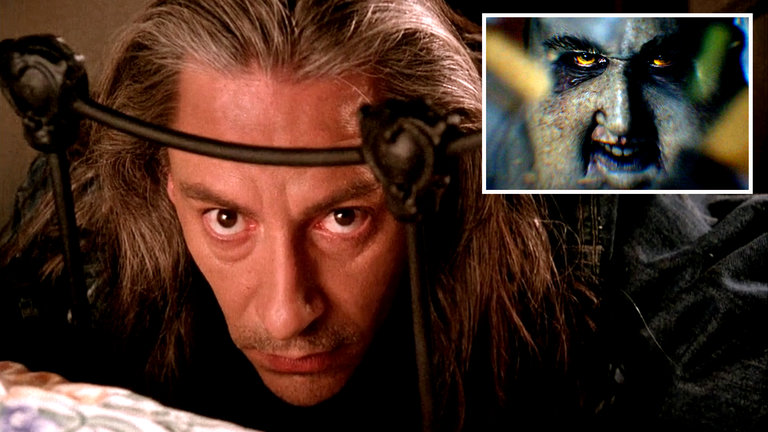
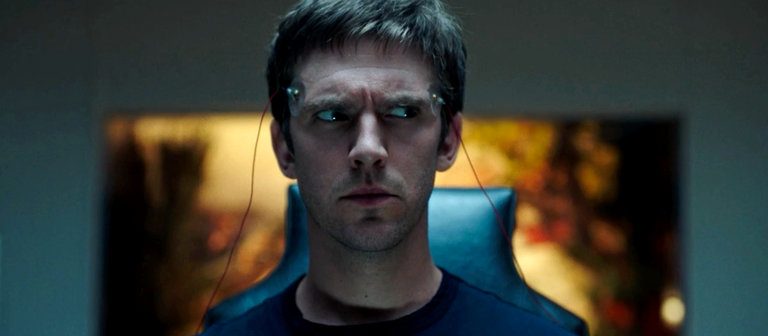
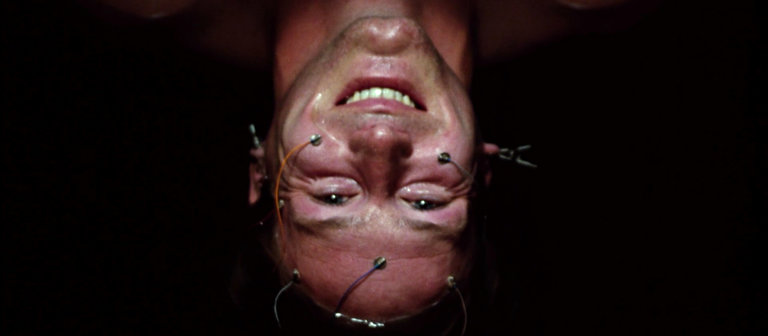
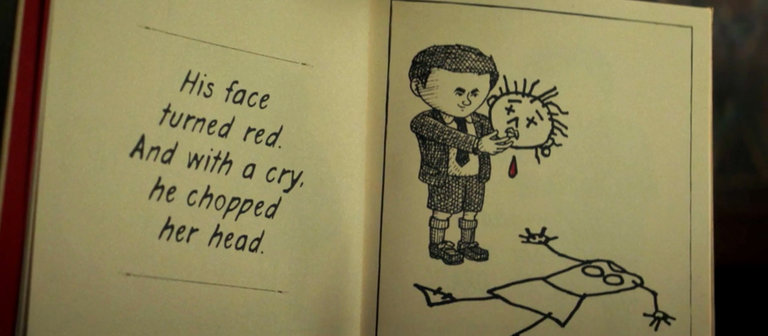
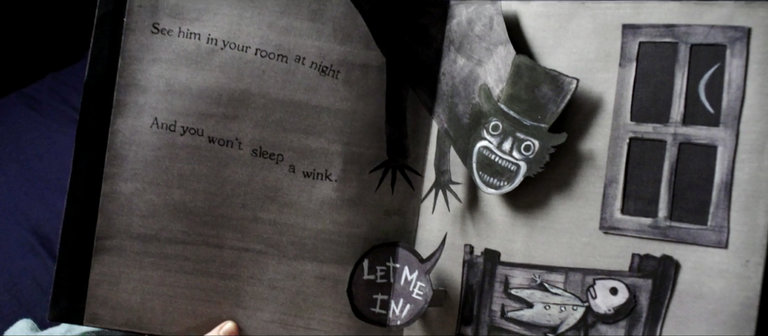
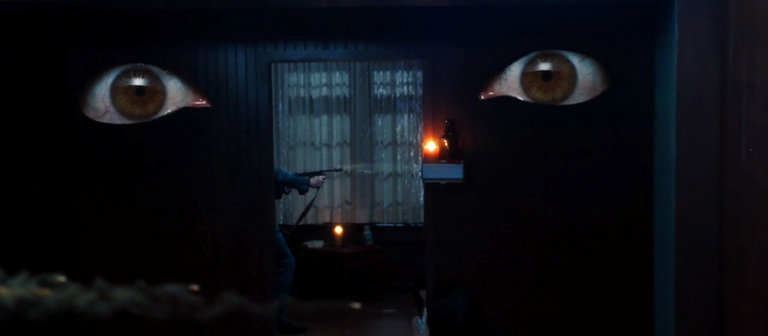
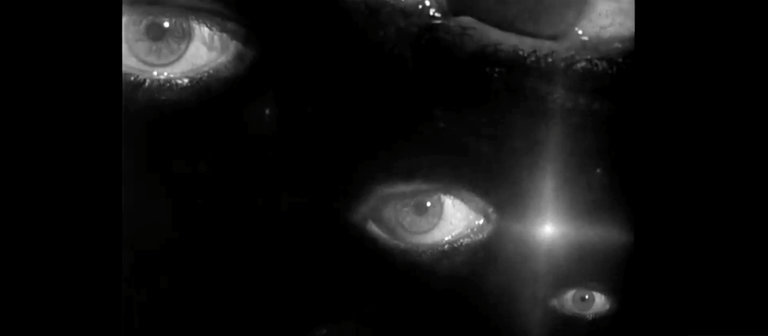
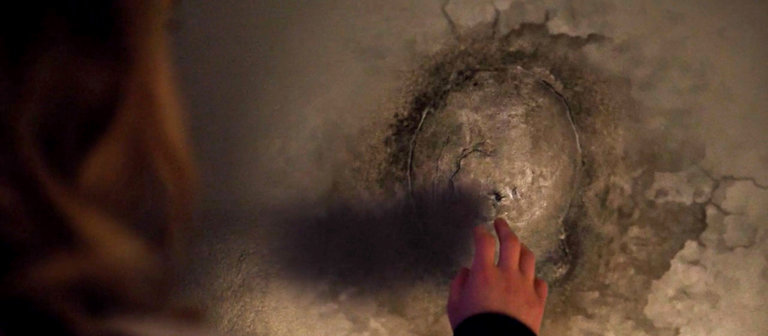
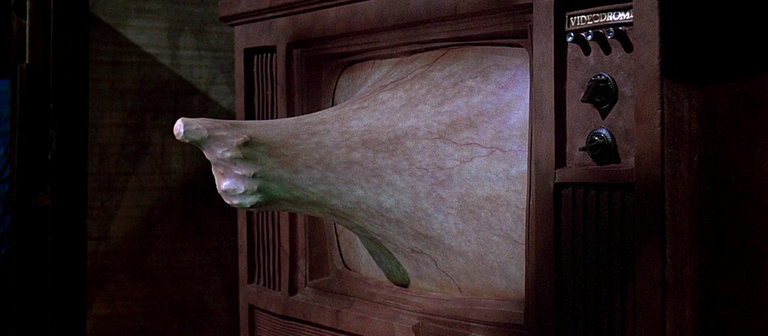

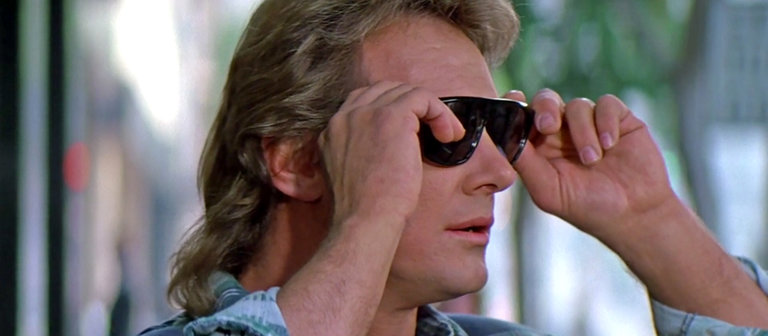
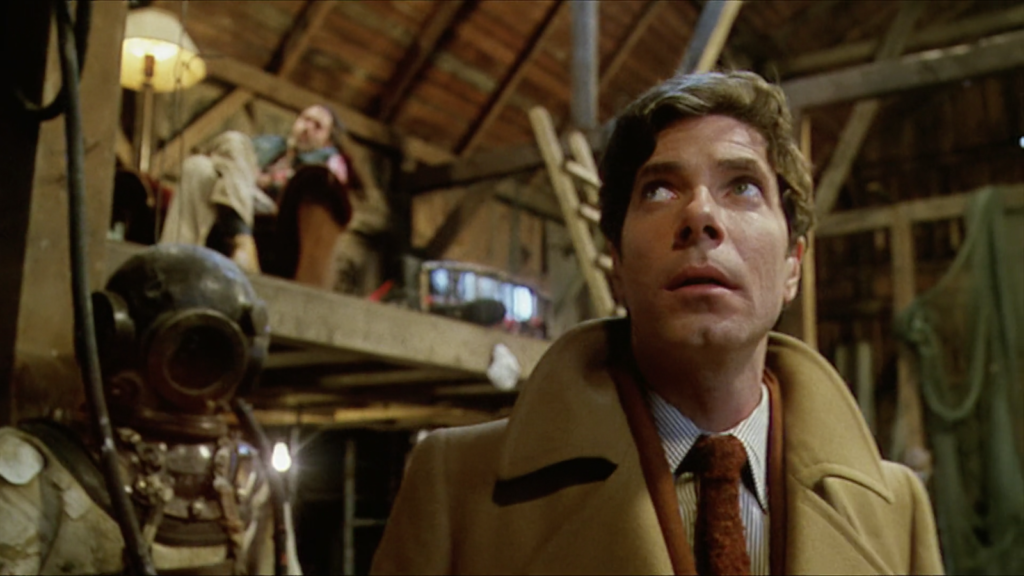
While Lynch gets the “Legion”-related headlines, another director named David seems to have left an even deeper mark. That would be David Cronenberg, who made a name for himself with a series of body-horror films that depicted the disturbing interplay between mind and matter, often with a conspiratorial backdrop of sinister secret agencies or killer corporations out to harness psychic power for their own ends.
“Legion” paints in shades of Cronenberg’s “Videodrome,” with its pulsating inanimate objects; “Shivers,” with its parasite imagery; “The Brood,” with its story of a powerful telepath under the care of a manipulative therapist (played by Oliver Reed, who may have lent both his name and his machismo to the guru figure Oliver Bird); and most especially “Scanners,” with its all-out war between rival psychic factions and a protagonist who’s telepathically tormented by the voices in his head. (“Scanners” also features a blink-and-you’ll-miss-it appearance from a very familiar-looking deep sea diver suit).
I wrote about David Cronenberg, David Lynch, and Legion’s other major horror influences for the New York Times. I have my beefs with Legion, but it’s porting its horror references into a whole different genre, as opposed to Stranger Things, which is just reheating them in the microwave and trying to pass of leftovers as a fresh-cooked dish.
“The Path” thoughts, Season Two, Episode 11: “Defiance”
March 29, 2017But all the business-y bullshit that everyone has to go through to get to any of these points — all the car rides and hallway lurkings and door knockings and arguments on the threshold — it’s just pure wasted space. As a practical matter it makes next to no sense in a world where phones exist. But more importantly, it posits a world in which human beings only interact with one each other for reasons of righteous indignation or naked duplicity. You go to someone’s house, you bully them or bullshit them, and you leave. It’s a lot like Eddie’s silly blindfolded needle-threading exercise — the focus is on getting everything where the story needs it to be rather than asking why it’s going there in the first place. For a show that’s ostensibly about the deep truths of human existence…well, I kinda want to pop into the writers’ room and tell them what’s going wrong.
I counted damn near a dozen Seinfeld-style “pop-ins” used to advance the plot of this week’s episode of The Path, which I reviewed for Decider. This is no way to write a show, man.
“The Americans” thoughts, Season Five, Episode Four: “What’s the Matter With Kansas?”
March 29, 2017I’m concerned about Renee. You know, Renee—Stan Beeman’s beautiful blonde gym buddy and new girlfriend, played by ex-Walking Dead lead Laurie Holden? The woman whose magnetism ate up a ton of Stan’s screentime through his descriptions of her to his buddy Philip Jennings and his partner Agent Aderholt alone, even before she made her on-screen debut? The woman who, during a double date with Stan and the Jennings, provides the kind of highly detailed backstory that we’ve learned from experience with our Soviet spies in this very episode (“What’s the Matter with Kansas?”) is just the sort of bubbe-meise secret agents concoct for their false identities? The woman who elicits weirdly stiff smiles from Philip and Elizabeth, implying that they sense something is off, but without the show ever confirming that implication by having the Jennings say something like “Wow, that was weird, wasn’t it?” during the car ride home or whatever? Yeah, that Renee. The beautiful thing about all this is that it all works no matter what pans out. Maybe we’re right to be suspicious and this person is up to no good—KGB, CIA, or some other alphabet agency seeking to compromise one of the FBI’s best and brightest. Or maybe our years-long immersion into the lives and lies of Philip, Elizabeth, Stan, Oleg et al have us jumping at shadows. Either way, you couldn’t ask for a finer demonstration of The Americans’ power to generate paranoia.
I reviewed this week’s oddly worrying episode of The Americans for the New York Observer.
“Billions” thoughts, Season Two, Episode Six: “Indian Four”
March 29, 2017Isn’t it nice to have a show that can legitimately outsmart you—not just bury some easter-egg clues in a storyline and wait for you to find them, but convincingly construct characters whose intellect, talent, and emotional acumen keep them several steps ahead of your own?
Julia Gfrörer items for sale
March 24, 2017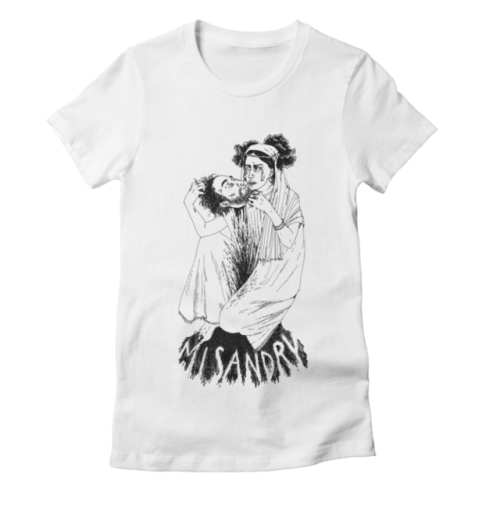
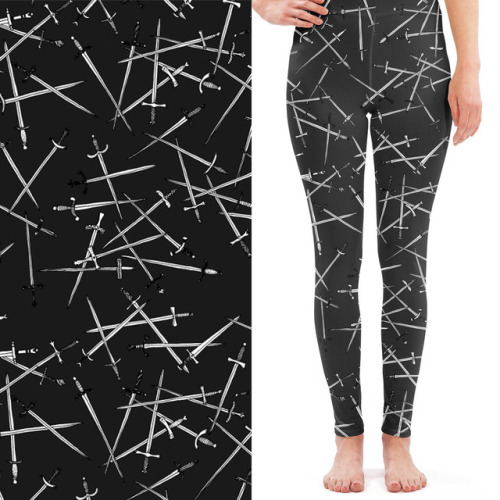
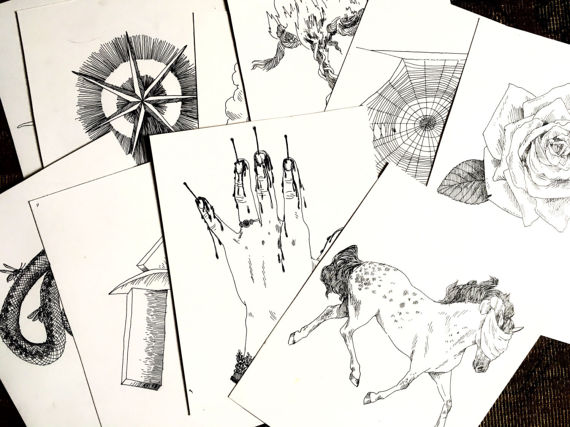

My partner Julia Gfrörer has really opened the floodgates for amazing things to purchase this week. In addition to the MIRROR MIRROR II kickstarter, she’s selling a host of t-shirt designs through her newly opened Threadless shop, including the coveted MISANDRY shirt (now available in black, white, or pink!). She’s entered a contest at Threadless for her leggings design, TEN OF SWORDS, as well, so please go vote for her. Finally, she’s selling the original art for her MMII contribution, her illustrations of medieval French heraldic devices by Claude Paradin, at her Etsy store. These things are unspeakably gorgeous up close, and it’s rare for Julia to part with this much original art all at once, so take advantage!
And please, if you haven’t done so already, consider ordering MIRROR MIRROR II through our kickstarter, or simply donating to it, and spreading the word far and wide across social media or to your friends. We’re about 65% of the way through with 9 days remaining, and we need your support. Just look at those beautiful books up there!
“Legion” thoughts, Season One, Episode Seven
March 24, 2017Fortunately for David, diagnosis is nine-tenths of the cure. Now that he knows the source of his sickness, he’s able to shake it off and break through the barriers of his mind. With a little help from his mutant friends, he shuts down the hospital hallucination they’ve all been experiencing, seizes control of his own body, subdues the Shadow King, stops the bullets fired at him and Syd mid-flight and lives to fight government mutant-hunters another day. Simple, really!
No, seriously. The real secret of “Legion” is that it is a simple story, when all is said and done. Unlike, say, “Westworld,” none of the show’s countless Easter eggs, deliberate details and plot-twist trickery are essential to understanding the story. They’re aesthetic elements, not narrative ones; they exist not to convert the show into a puzzle-box but to make it an objet d’art, successfully or not. The simplicity of David’s origin and of his nemesis, as revealed in this episode, should make that clear. (Even a passing knowledge of the Marvel comics upon which the show is based — in which the writer Chris Claremont established the founder of the X-Men, Professor Charles Xavier, as David’s father and cocreated Farouk as one of their most powerful enemies — would have made it clear to a sizable chunk of the audience already.)
But while this simplicity allows “Legion” to cut through the Gordian knot of needlessly byzantine plotting that has plagued other genre shows of recent vintage, the blade is double-edged. Lacking narrative necessity, the show’s stylistic flourishes are free to sink or swim on their own. By that standard, they too often hit bottom.
The climax of tonight’s episode is a case in point. It’s an all-roads-converge kind of deal, in which Syd and Kerry’s battle with Farouk’s alter ego Lenny in the hospital simulation; Cary, Melanie and Oliver’s struggle to shield Syd’s and David’s bodies from the bullets in the time-frozen real world; and David’s attempt to psychically shatter the doors of his mind-prison all sync up successfully at the last second, saving their skins and stopping the bad guys simultaneously.
But all that action should be enough to stand on its own without the cutesy context the filmmakers provide. What is gained by having the fight play out like a silent movie, shot in black and white with dialogue printed as intertitles and Lenny gussied up in Charlie Chaplin’s Little Tramp meets Johnny Depp’s Edward Scissorhands drag? Why is the musical accompaniment an EDM version of Ravel’s “Boléro”? Irony has its place in the frequently too portentous superhero subgenre, but here it undercuts the tension and terror without providing much compensatory value.
I reviewed this week’s penultimate episode of Legion for the New York Times. This show isn’t the worst thing on TV or anything like that, but at this point I am truly stunned that anyone thinks it’s great and am starting to mistrust critics who allege that it is.